
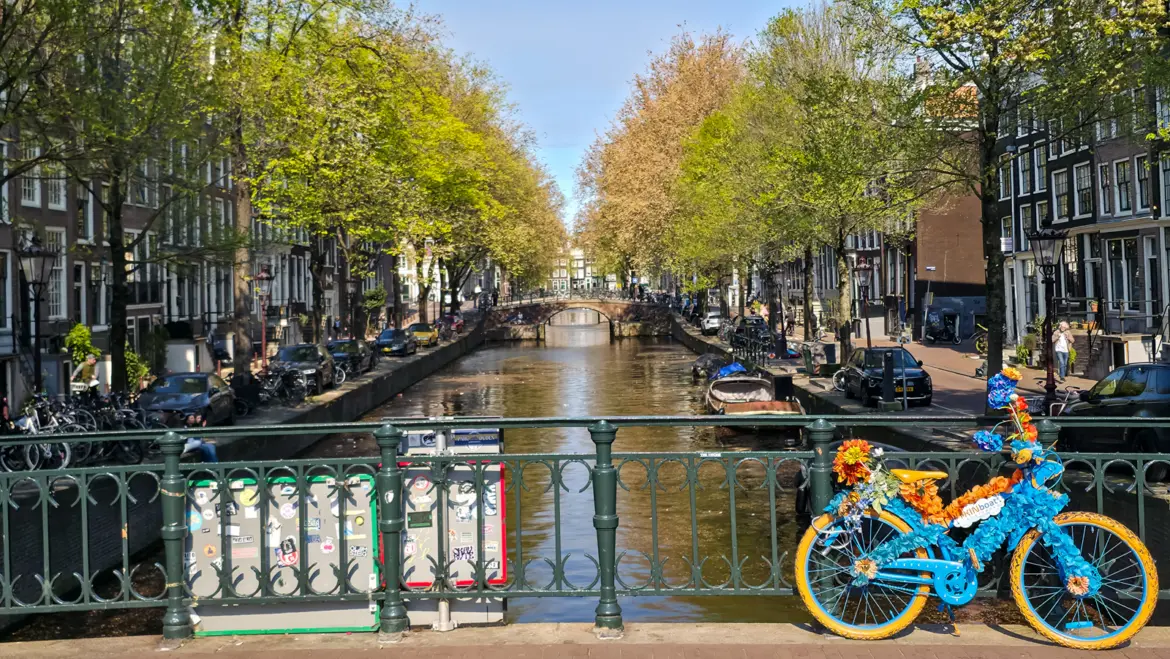
Amsterdam rewards a plan. The Night Watch, Almond Blossom and the canal ring are all here, but so are the timed tickets, the terraces where nobody gives up a table on a sunny day, and the bikes, which do not wait for pedestrians like me to make up our minds.
The good news is that the centre is smaller than it looks on a map. Tram 2 runs from the Dam to the Rijksmuseum in one ride, and De Pijp is a short walk from Museumplein, so three days is plenty if each day sticks to one part of the city.
Day 1 is the Dam and the canals, ending with dinner at FuLu Mandarijn on the Rokin (more on that below). Day 2 is museum day: the Rijksmuseum, a break in Vondelpark, then the Van Gogh Museum. Day 3 starts with pancakes in De Pijp, stops for a beer at the Heineken Experience and finishes with Banksy at Moco.
Amsterdam in 3 Days — The Plan
📅 Day 1 · Dam & canals · Greenwoods breakfast, Dam Square and the Royal Palace, a small-boat canal cruise, dinner at FuLu Mandarijn.
📅 Day 2 · Museums · Rijksmuseum (book an early slot), a break in Vondelpark, then the Van Gogh Museum.
📅 Day 3 · De Pijp & Museumplein · Pancakes in De Pijp, the Heineken Experience, and Banksy at Moco.
🚆 Getting around · Walk, plus tram 2 between the Dam and Museumplein; tap the same contactless card in and out.
🎟️ Book ahead · The Van Gogh Museum and Rijksmuseum are timed online tickets (Museumkaart holders too).
🏨 Stay central · Near the Dam or Museumplein keeps each day on foot — we were at the W Amsterdam, behind the palace.
Day 1: Dam Square and the Canal Ring
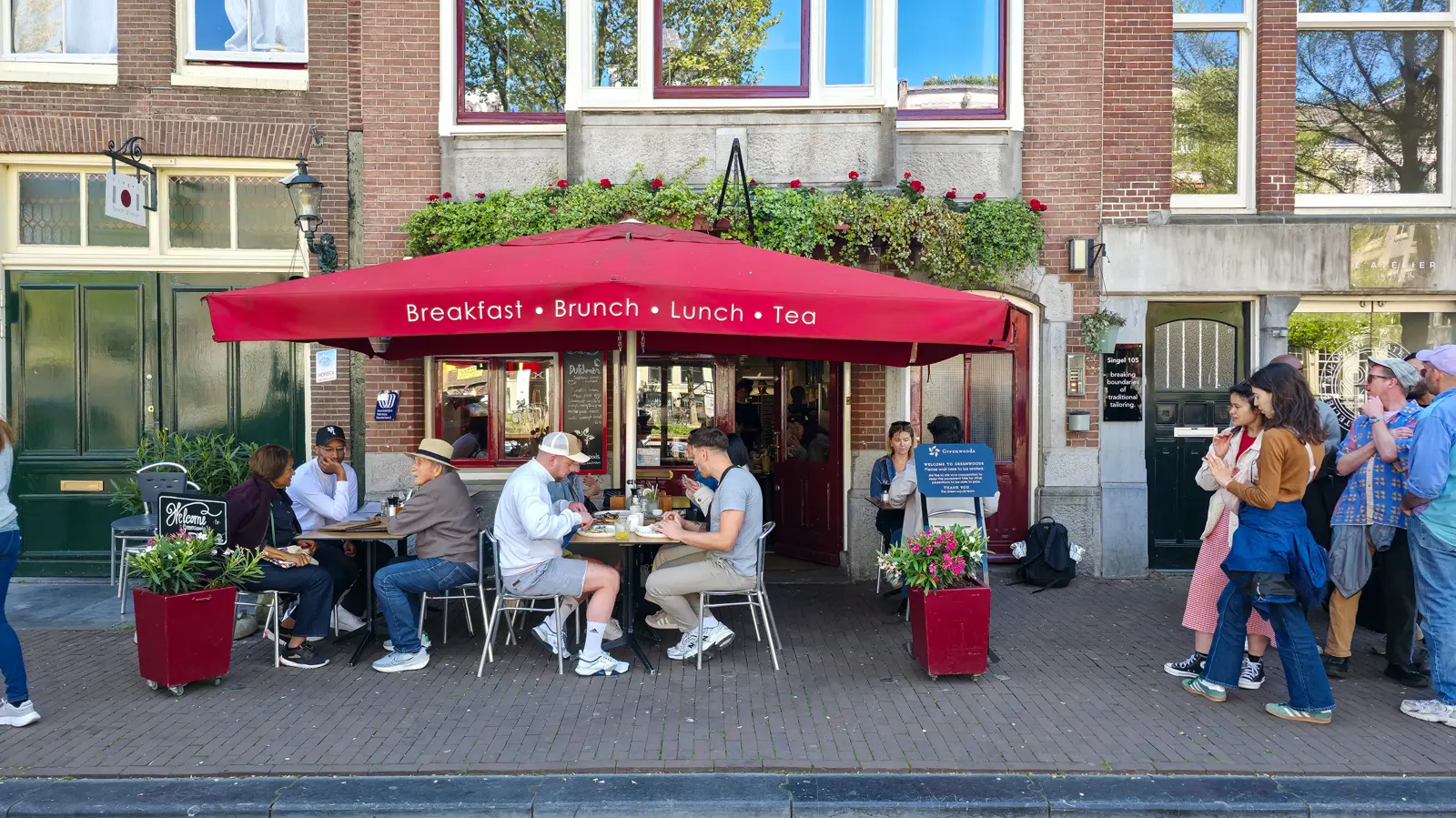
Start with breakfast at Greenwoods, at Singel 103. The Singel is the innermost canal of the ring, and Greenwoods has been serving breakfast here since September 1988, all day, every day. On a Friday at noon, the queue ran along the pavement next door.
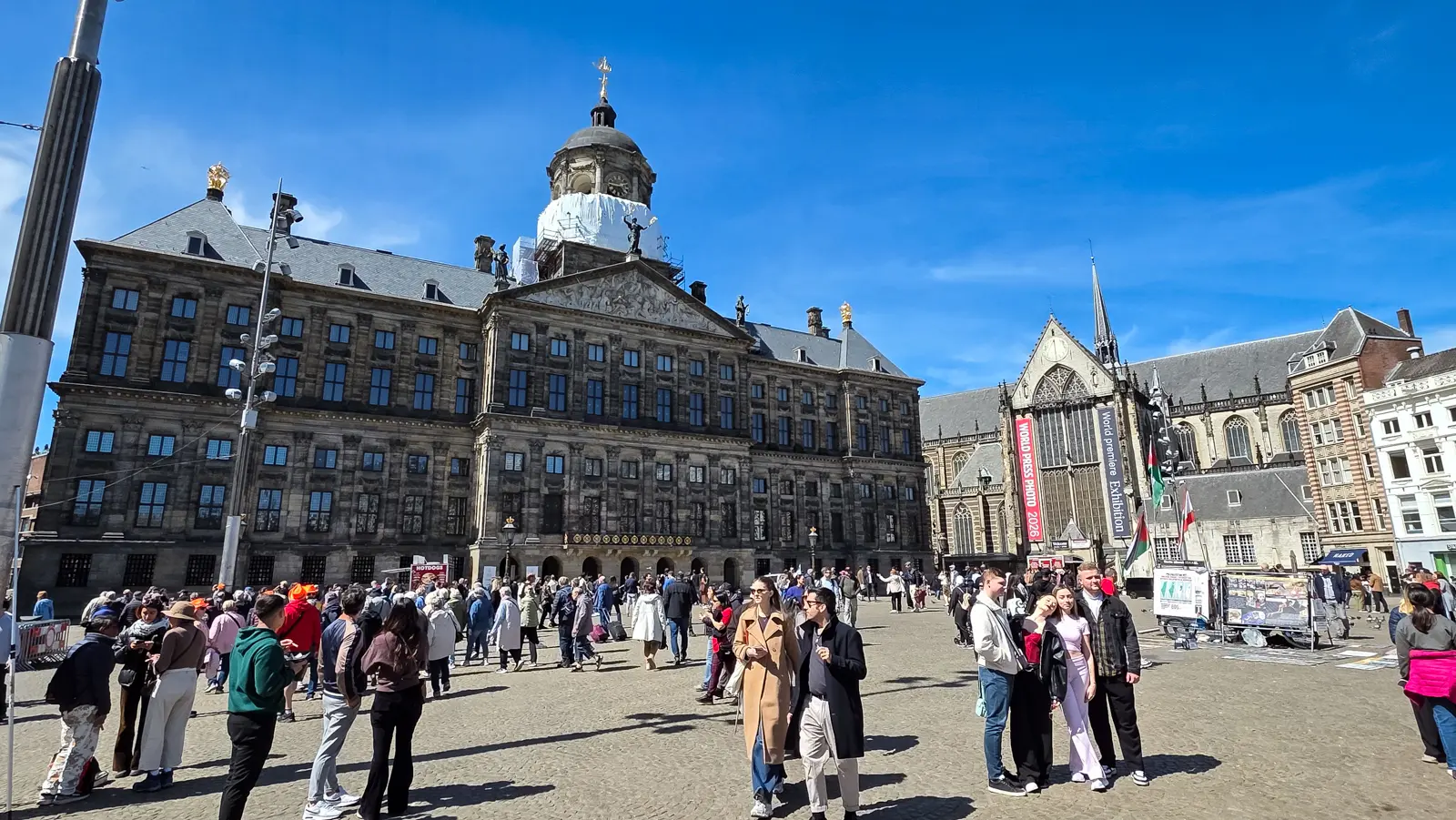
From the Singel, Dam Square is a short walk. The Royal Palace was built as Amsterdam’s town hall to a design by Jacob van Campen, with construction starting in 1648. Louis Bonaparte, Napoleon‘s brother, turned it into a royal palace in 1808. The palace opens to the public when it is not in use for royal events.
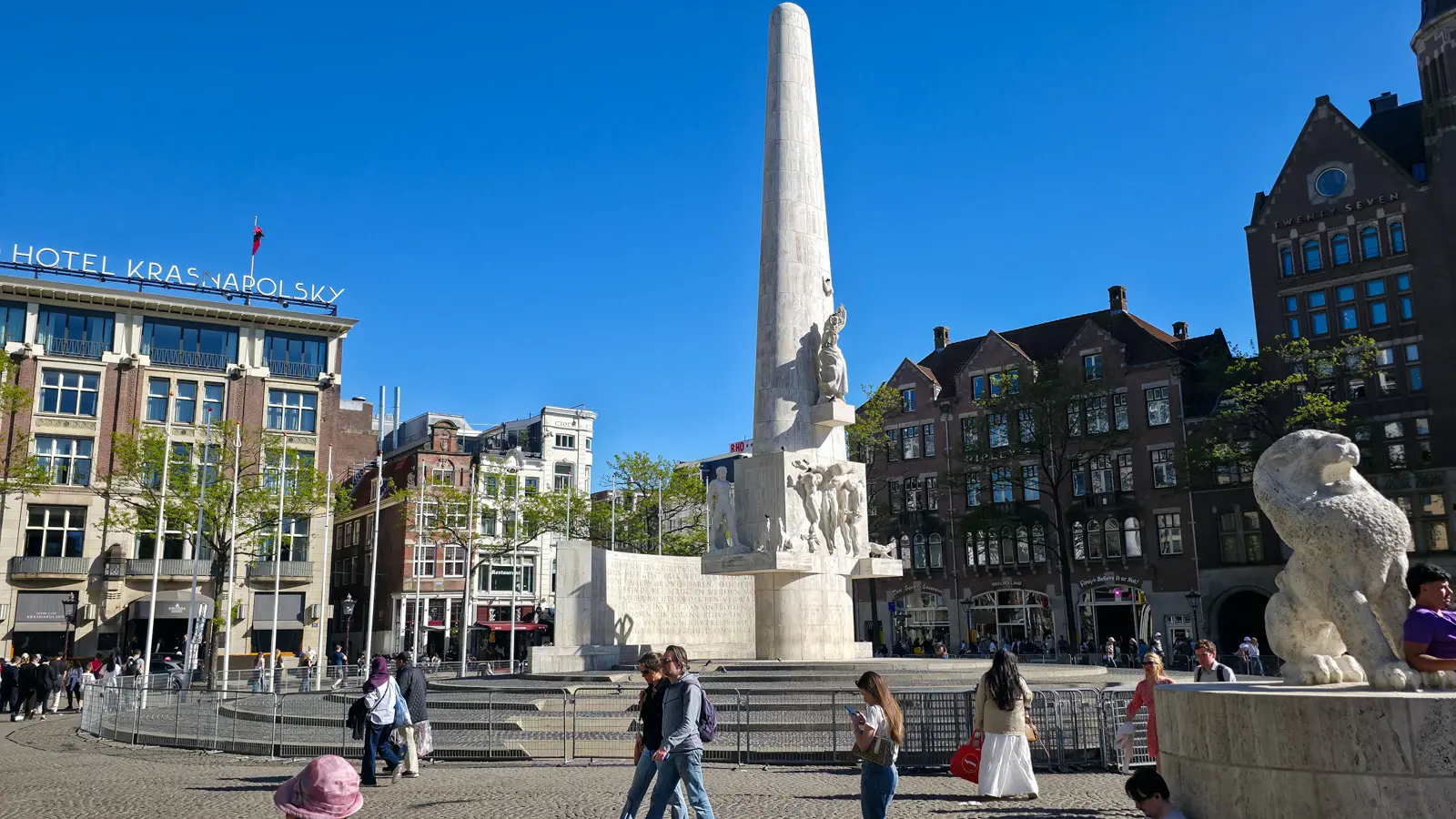
Across the square stands the National Monument, a 22-metre white stone pillar designed by J.J.P. Oud, with sculpture by John Rädecker. Queen Juliana unveiled it on 4 May 1956.
Next to the palace, ‘t Nieuwe Kafé occupies part of the Nieuwe Kerk and has a large terrace facing the square. It gets sun for most of the day and fills up quickly on warm afternoons, so it works best as a drinks stop between sights.
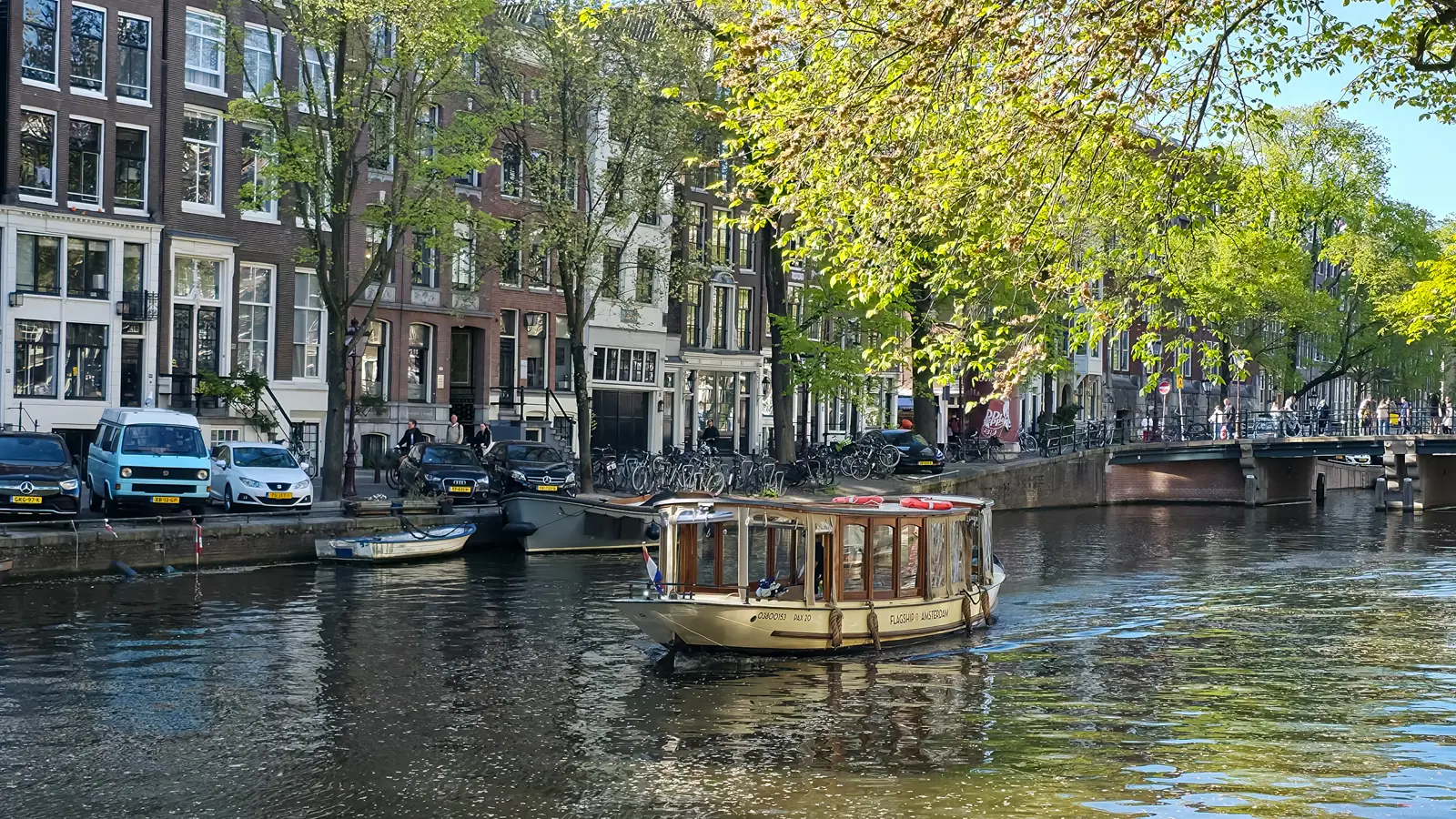
Later in the afternoon, take a canal cruise. The canal ring was dug in the 17th century and became a UNESCO World Heritage Site in 2010. Flagship Amsterdam runs small, fully electric boats, with departure points that include Prinsengracht 263 and Museumbrug 1, in front of the Rijksmuseum. The houseboats moored along the quays are easiest to see from the water.
For dinner, walk to FuLu Mandarijn at Rokin 26, a Sichuan restaurant one flight of stairs up from the street. Ordering happens on a tablet with a photo of every dish and drink, which takes the guesswork out of a long menu. My favourite was the honey mustard chicken, and the dry pot prawns had a real kick. We went for a late lunch and were seated straight away.
The Chinese food there beat what I have had in Montreal, in New York, and even at Chinacy in Vienna.
Day 2: Rijksmuseum, Vondelpark and the Van Gogh Museum
Tram 2 runs from Centraal past Dam Square to the Rijksmuseum, the Van Gogh Museum and Vondelpark, so Day 2 can start with a short ride rather than a long walk.
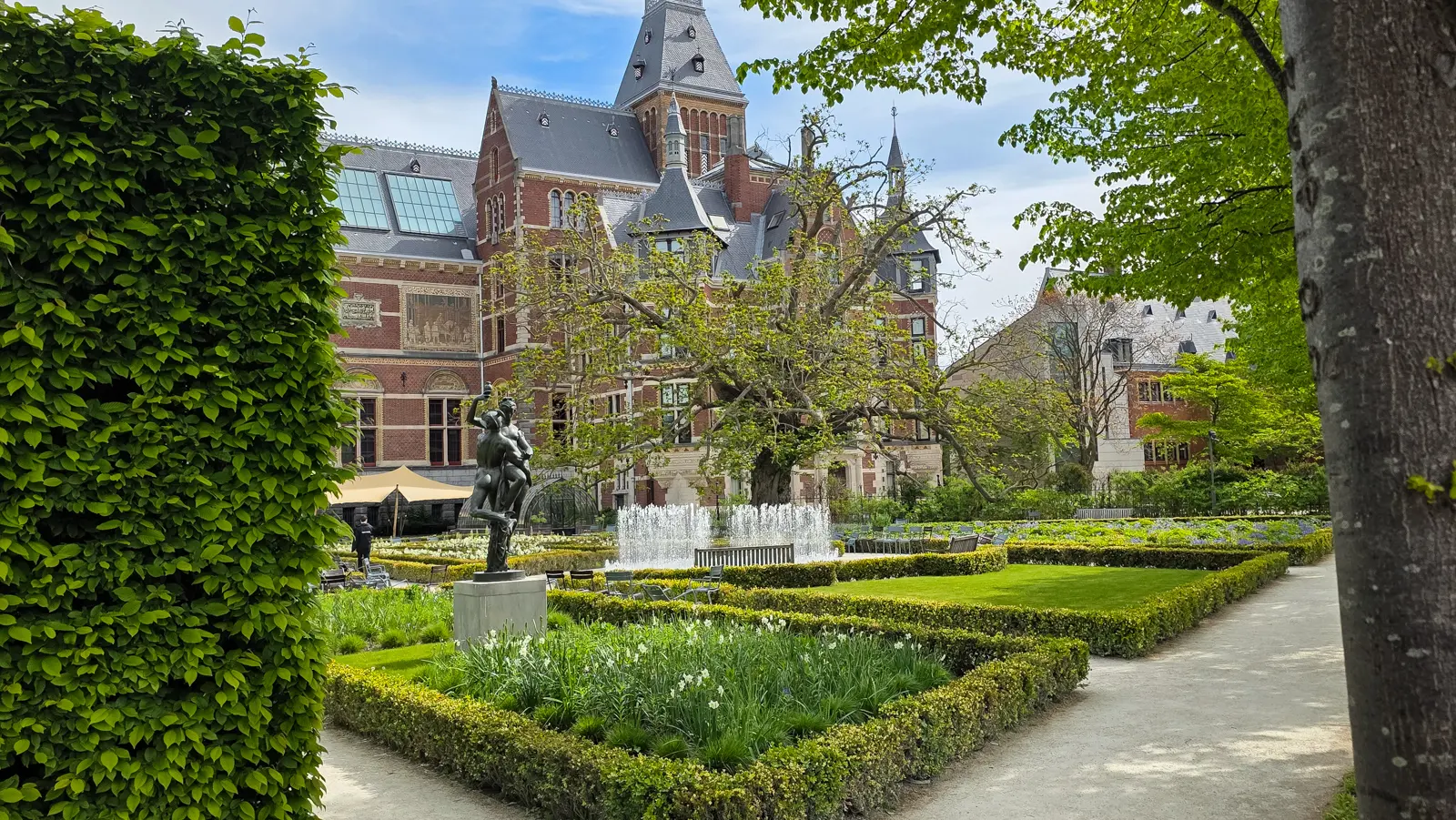
Spend the morning at the Rijksmuseum. Pierre Cuypers designed the building, which opened in 1885. Every visit needs a booked start time. The museum keeps a limited number of tickets for sale at the entrance, but they go while stocks last, so book a slot online, and the earlier the better: the busiest stretch runs from late morning into the afternoon.
Allow two to three hours for the highlights. Go straight to the Gallery of Honour on the second floor, where the Night Watch hangs at the far end and four Vermeers hang along the way. After that, head for the maritime gallery and its ship models, including the William Rex, a warship model built in Vlissingen in 1698.
Before or after, walk through the gardens, which are free to enter without a museum ticket.
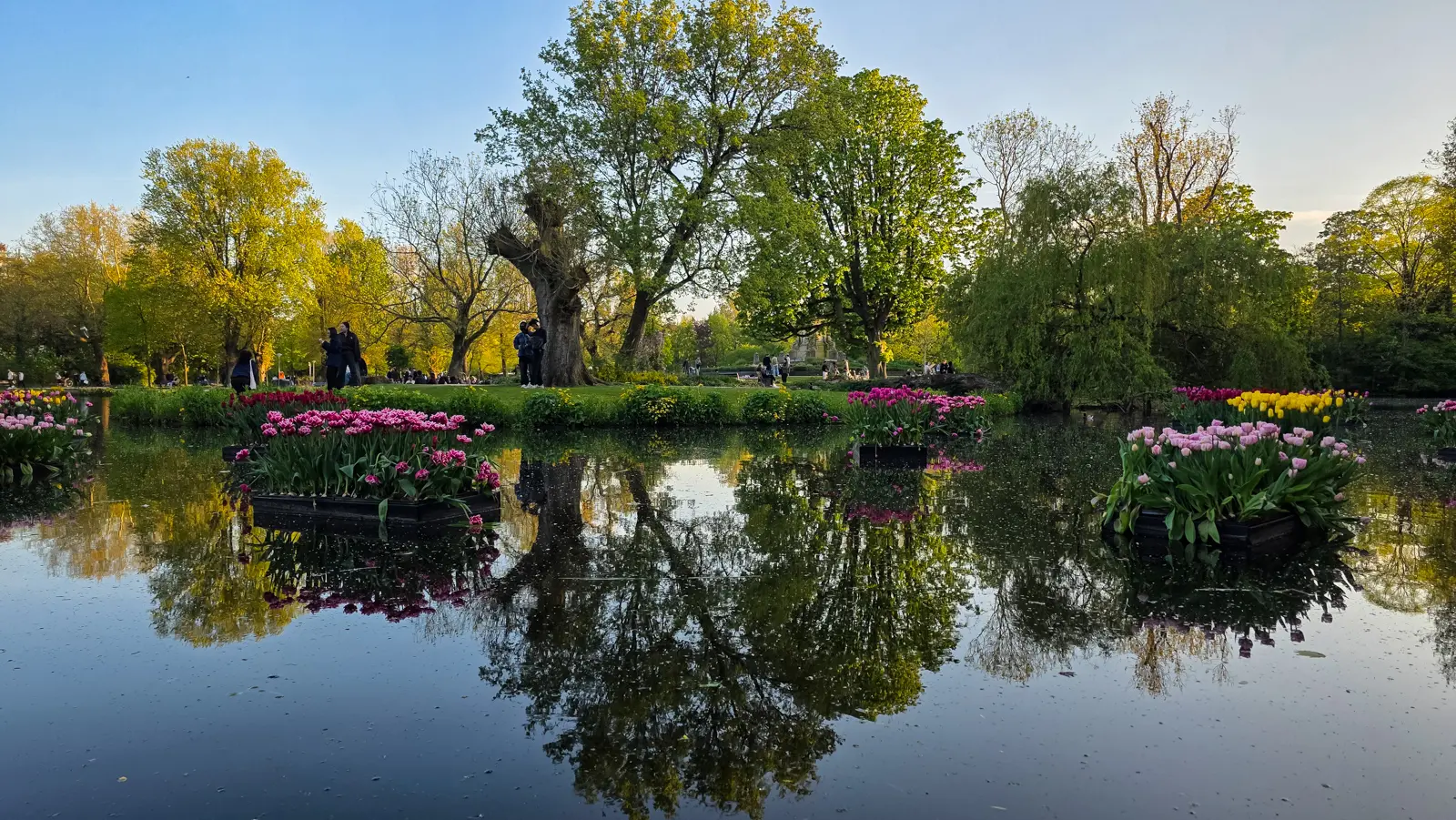
At midday, take a break in Vondelpark, a few minutes’ walk away. It opened in 1865 and is named after the 17th-century poet Joost van den Vondel. In late April, one of the ponds had floating planters of pink, purple and yellow tulips, part of the Amsterdam Tulip Festival. On a sunny evening, the lawns around it were full of people sitting out until the light went.
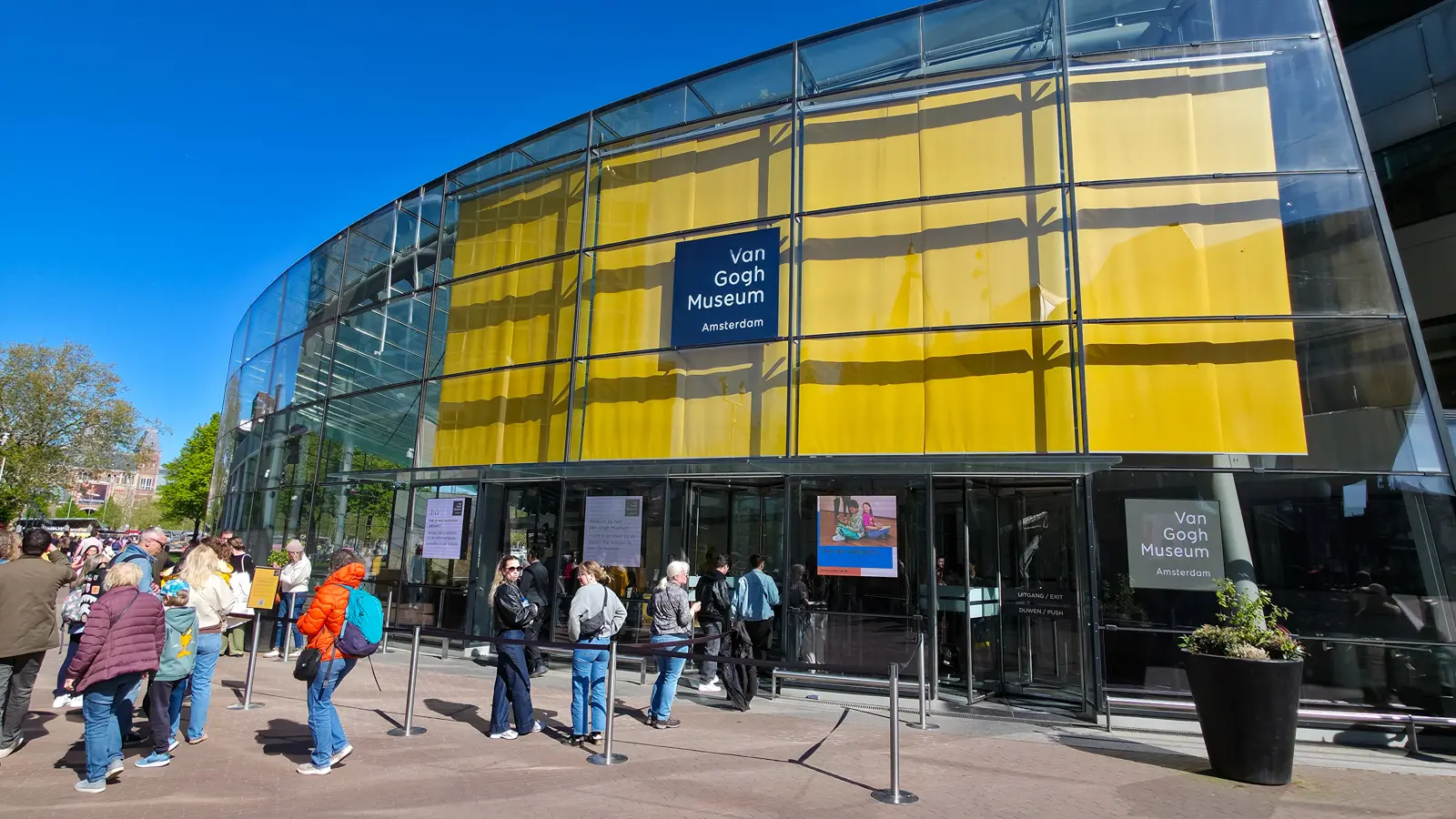
Spend the afternoon at the Van Gogh Museum, on the other side of Museumplein. Tickets are sold online only, with timed entry slots, and a slot after 3pm usually means thinner crowds than the morning rush. Allow 90 minutes to two and a half hours.
The collection hangs in chronological order, so the visit follows his life. It starts with the dark peasant paintings from Drenthe and Nuenen, moves through the Paris self-portraits, where his colours begin to brighten, and on to the Sunflowers and the late work from the south of France.
Almond Blossom is my favourite painting in the collection. He painted it in Saint-Rémy as a gift for his newborn nephew, and I liked it enough to bring home the magnet and the coaster.
Day 3: De Pijp and Museumplein
Day 3 starts on Eerste Jacob van Campenstraat in De Pijp, a street with three breakfast places on it. Locals is at no. 27 and Flow at no. 47, and the two are run by the same operation. Bakers & Roasters, at no. 54, is independent and describes itself as a New Zealand-style café with a strong Brazilian influence. On the morning after King’s Day, the wait at Flow ran past an hour.
De Pijp is also home to the Albert Cuyp Market, held Monday to Saturday on Albert Cuypstraat. It is a good detour between breakfast and the Heineken Experience for anyone with room for stroopwafels.
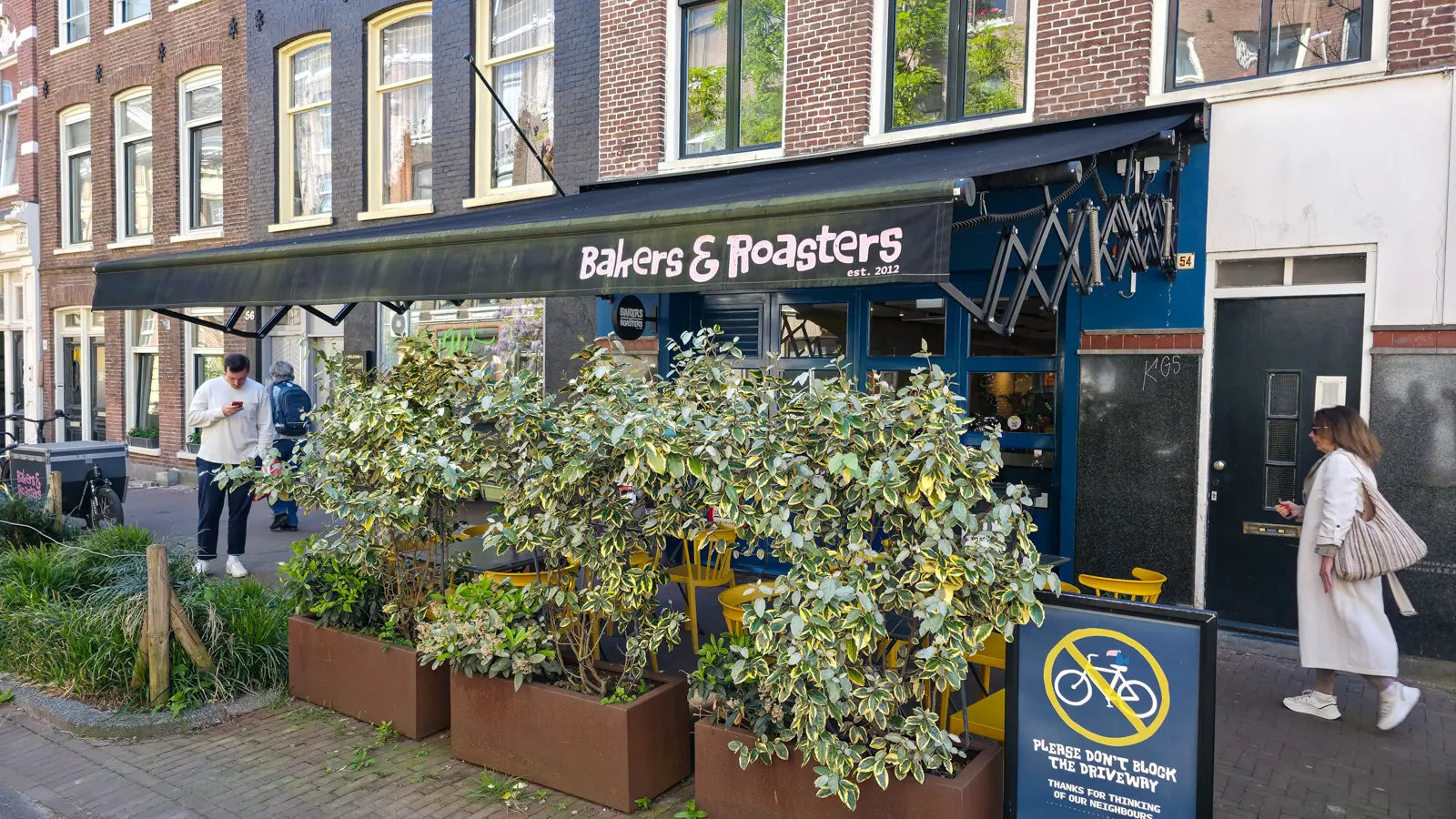
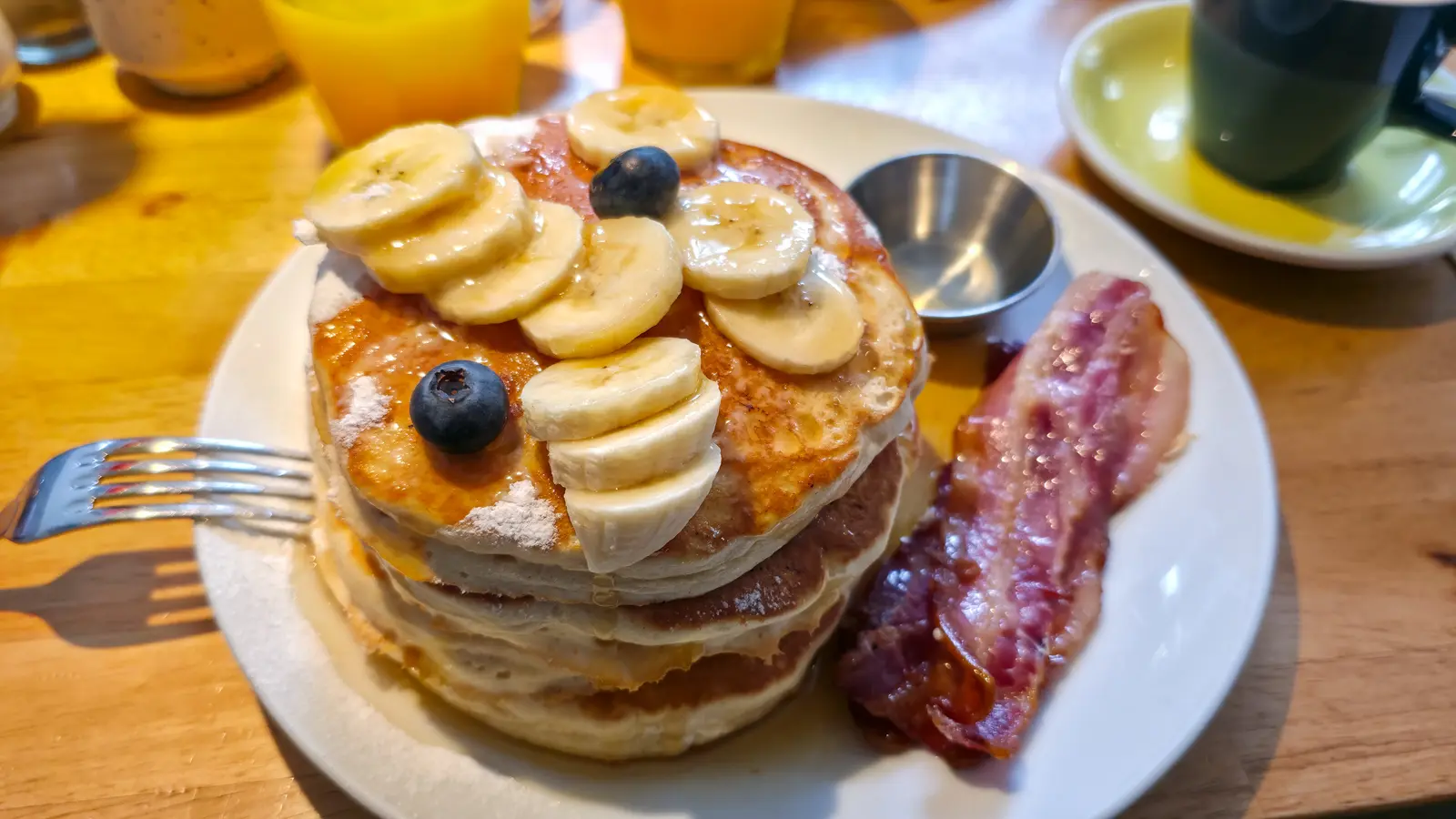
At Bakers & Roasters, the pancakes came stacked with sliced banana, blueberries and a strip of bacon, with a small metal cup on the side.
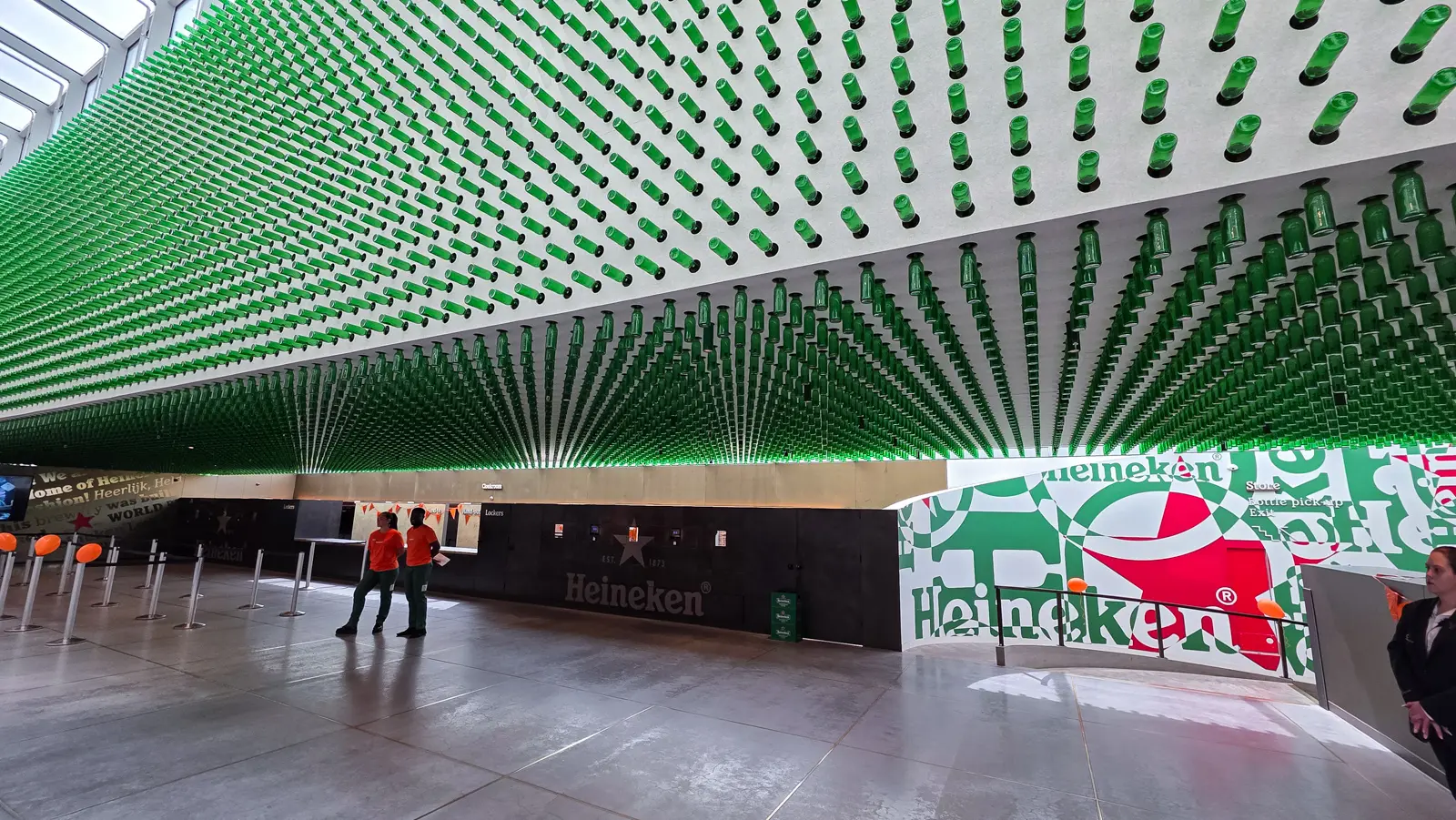
From De Pijp, walk to the Heineken Experience on Stadhouderskade, at the northern edge of the neighbourhood. Heineken stopped brewing here in 1988, and the building opened to visitors in 1991. Our visit fell on King’s Day, so the entrance hall had orange balloons and the staff wore orange shirts. The tour runs from the old copper brewing kettles to the tasting bar. We took the VIP tour, and the F1 room, the games room and Freddy’s Bar are all worth looking out for.
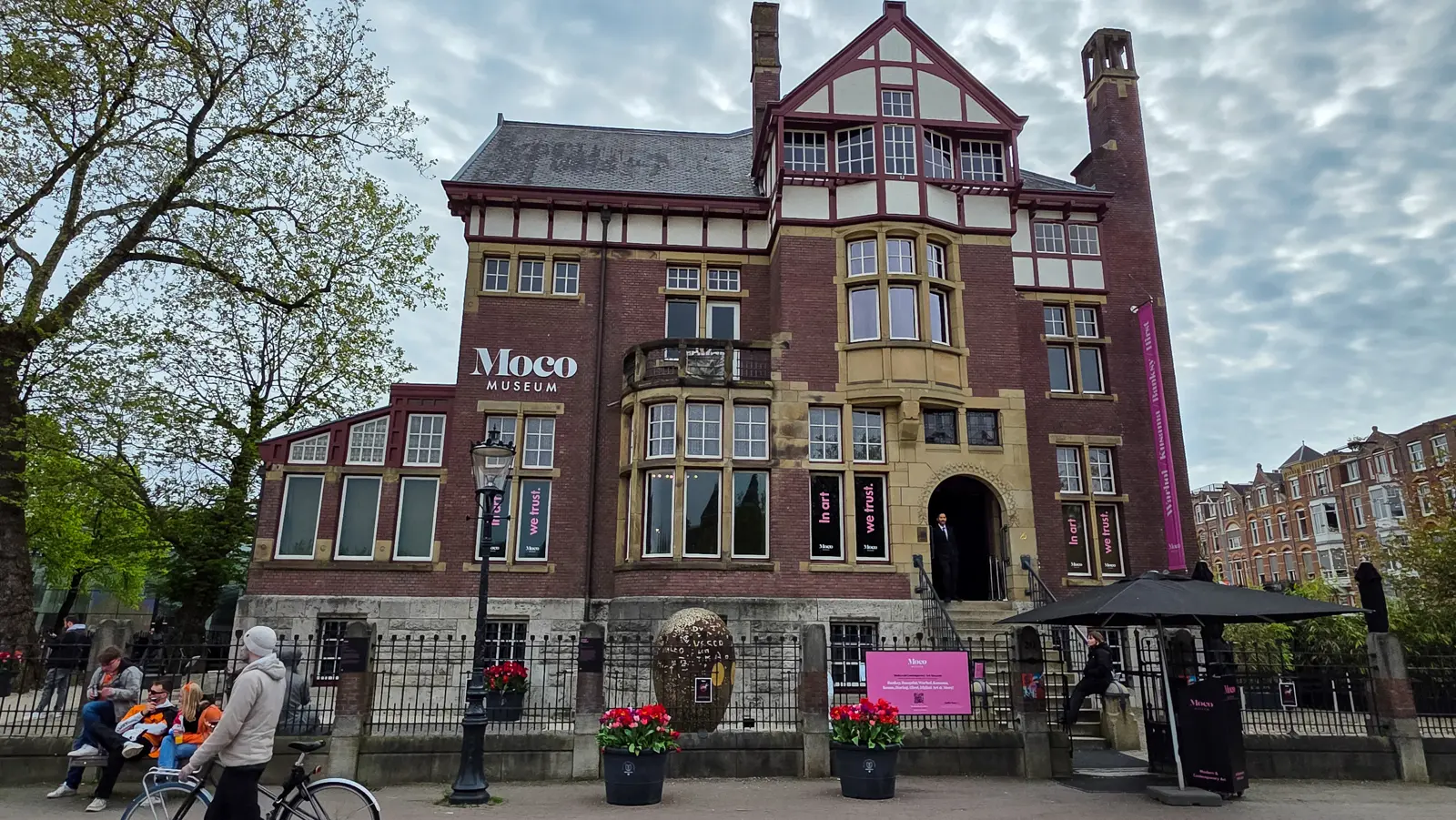
Finish the day at Moco Museum, back on Museumplein, between the Rijksmuseum and the Van Gogh Museum. It opened in April 2016 in Villa Alsberg, a townhouse designed in 1904 by Eduard Cuypers, the nephew of Pierre Cuypers. The uncle designed the Rijksmuseum, so the two buildings sit almost opposite each other. Inside, the collection runs from Warhol and Haring to Banksy and Basquiat. I went for Banksy, late on King’s Day afternoon, and it was a welcome break from the orange crowds on the canals. Leave time for the Moco Garden on the way out.
Where to Stay
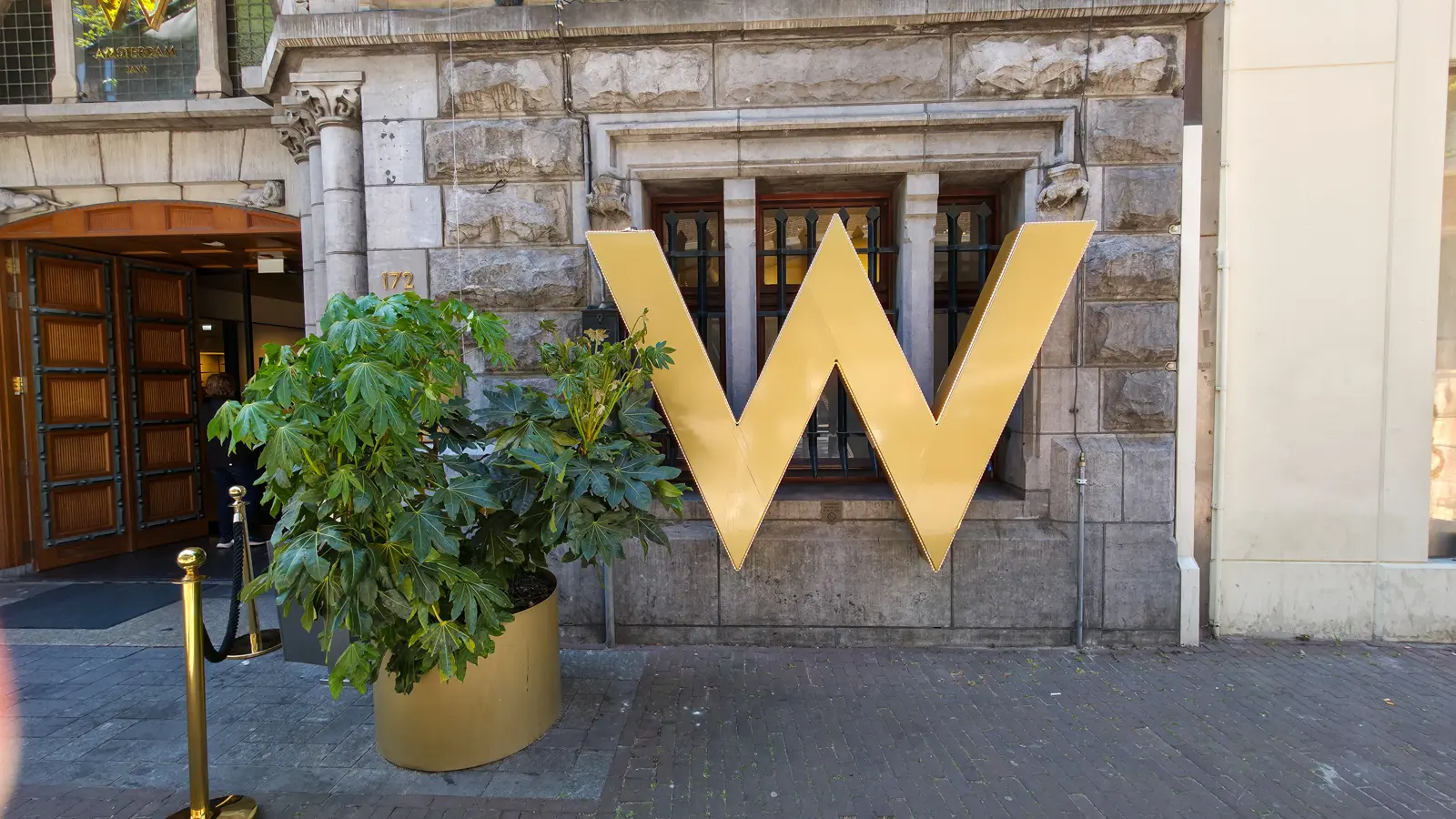
The W Amsterdam sits just behind the Royal Palace, which puts all of Day 1 on the doorstep. The hotel is split across two historic buildings: the former Telephone Exchange and the former KAS Bank on Spuistraat. It opened in October 2015.
The hotel was changing operator when we stayed, and I worried the service would suffer. It did not. The service was attentive and excellent.
I was not impressed by the Exchange building from the outside, but walking in changes everything. The rooms are modern and groovy, and the W Lounge on the roof, with its outdoor terrace, is stunning. The bank building across the street is the more classic of the two, and we had a wonderful dinner there at The Duchess.
Getting Around
Walking covers most of this itinerary, and tram 2 fills the gap between the Dam and Museumplein. Paying is simple: tap a contactless bank card or phone on the reader when boarding and again when getting off, using the same card both times.
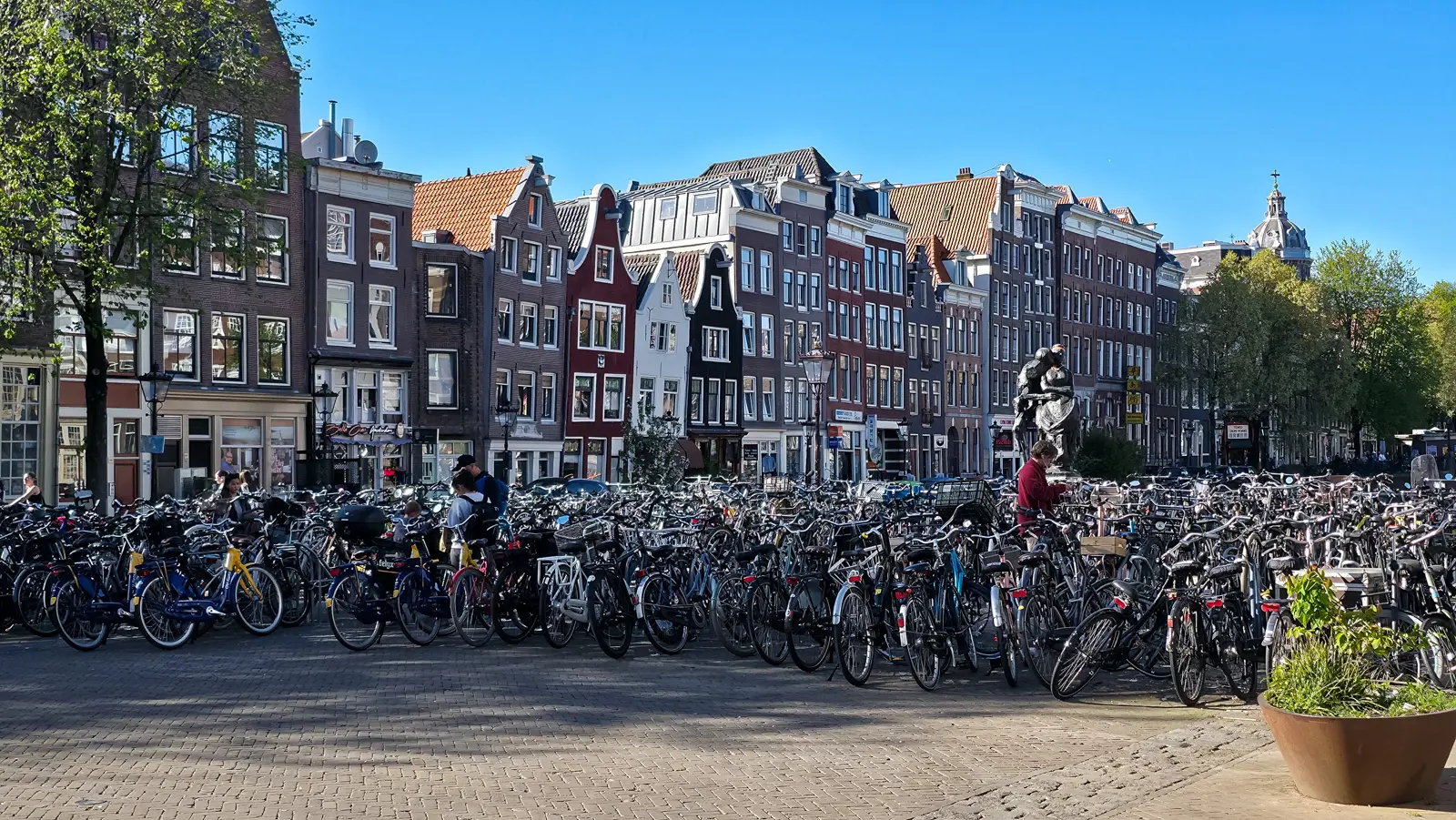
Amsterdam has an estimated 881,000 bikes, more than it has residents, and the bike racks near the canals are proof of it. For pedestrians, the main rule is to watch for bikes before stepping off the pavement.
Visiting on King’s Day
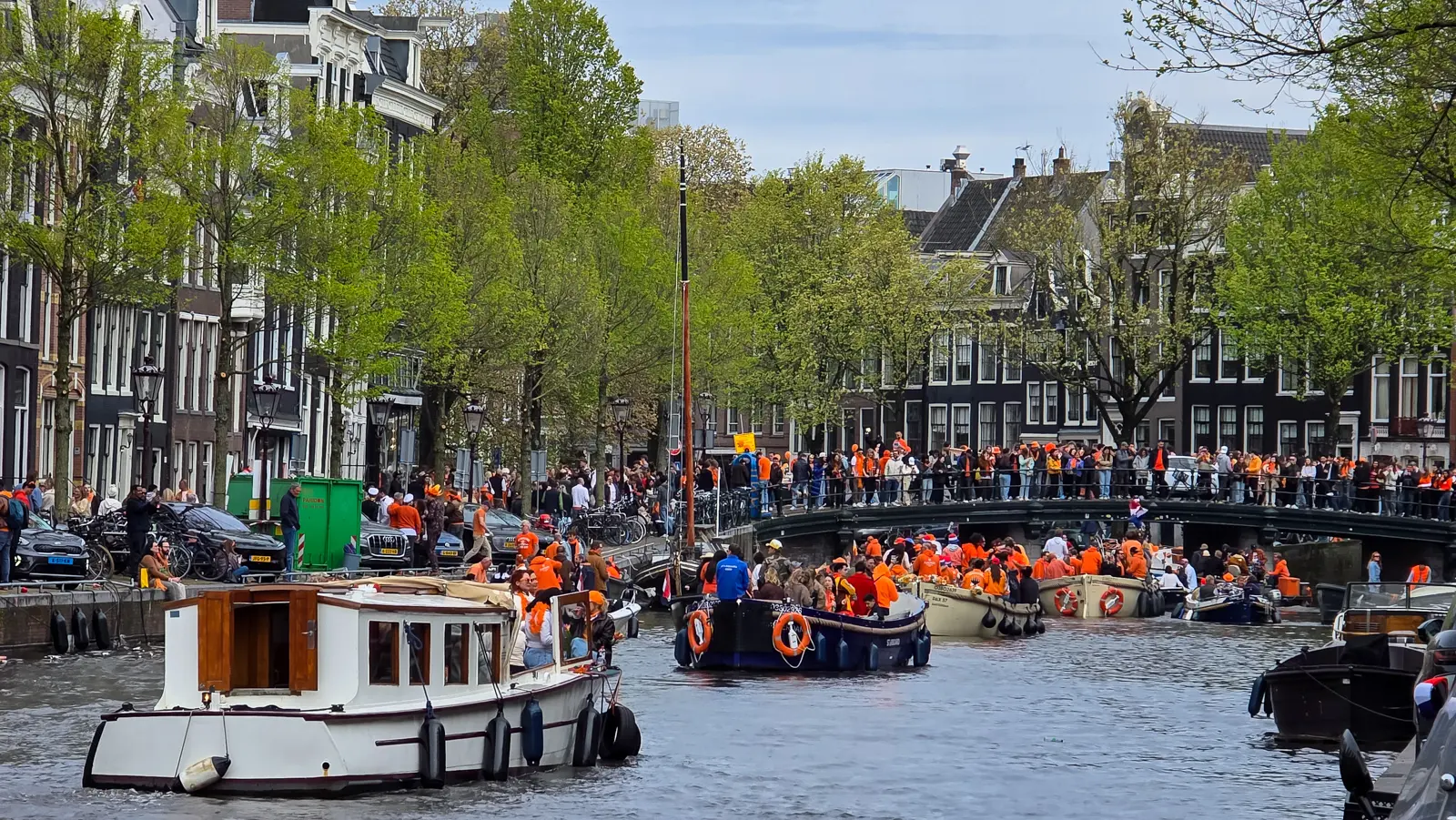
King’s Day falls on 27 April, or 26 April if the 27th is a Sunday. The whole city dresses in orange, the streets fill with the vrijmarkt, a citywide second-hand market, and the canals fill with party boats. Hotels fill up early for it, so book well in advance.
I did not plan the trip around King’s Day, and it turned out to be the best day of it. The thing nobody told me is where it happens. Around the Museum Quarter it was fairly quiet. Along the canals and the streets beside them, the bridges were packed and the boats moved at a crawl.
Trams through the centre stopped running for the day, so walking was the only way around. We still fitted in the Heineken Experience and Moco that day, both on foot.
Bubbly Tips
- Book the Van Gogh Museum before you travel. Tickets are sold online only, with timed slots, and Museumkaart holders need to reserve a slot too.
- Check the palace agenda. The Royal Palace closes to visitors during royal events and state visits, sometimes at short notice.
- Tap in and tap out. On trams, use the same contactless card or phone for both taps. Forgetting to tap out means paying a flat maximum fare.
- Use the Rijksmuseum gardens as a free break. No ticket is needed, and they sit right on the walk between the museum and Vondelpark.
- Get to Greenwoods early. It opens at 9am, and the queue builds by midday.
- Board the canal cruise at the Rijksmuseum if it suits you better. Flagship’s Museumbrug stop works just as well for a Day 2 cruise as Prinsengracht does on Day 1.
- Swap Moco and the Van Gogh Museum if your time slot demands it. The two are a short walk apart on Museumplein.
- Know about 4 May. The national Remembrance of the Dead ceremony takes place at the National Monument on the Dam every 4 May, and the Nieuwe Kerk has closed to visitors on that date in past years.
- Take an early Rijksmuseum slot. The Gallery of Honour gets crowded from late morning, and the first slots of the day give the Night Watch some breathing room.
- Mind the bike lanes. Cyclists move fast and expect pedestrians to stay on the pavement.
Final Thoughts
Three days is enough to see the core of Amsterdam if each day stays in one part of the city. The Dam and the canals on Day 1, the two big museums and Vondelpark on Day 2, and De Pijp with Moco on Day 3 keep the walking short.
Leave a gap somewhere in the three days for a terrace on the Dam. Tables are hard to come by on a sunny afternoon, but nobody in Amsterdam rushes anyone off one.
Until next time!

🌟 Everything You Need to Plan Your Dream Trip in 2026
- 🌟 Luxury Hotels - Find premium stays with Booking.com & Hotels.com
- 🏡 Vacation Rentals - Discover unique properties on VRBO
- 🏞️ Guided Tours - Explore with Viator or GetYourGuide
- 🎫 Attraction Tickets - Skip the lines with Tiqets
- 🚢 Ocean Cruises - Set sail with Cruise Direct
- 📱 International SIMs - Stay connected with Saily
- 🚗 Car Rentals - Budget-friendly options from Discover Cars
- 🌐 Secure VPNs - Browse safely with NordVPN
- 💶 Currency Exchange - Best rates with Wise
- 🗣️ Learn Languages - Master the local language with Babbel and Rosetta Stone