
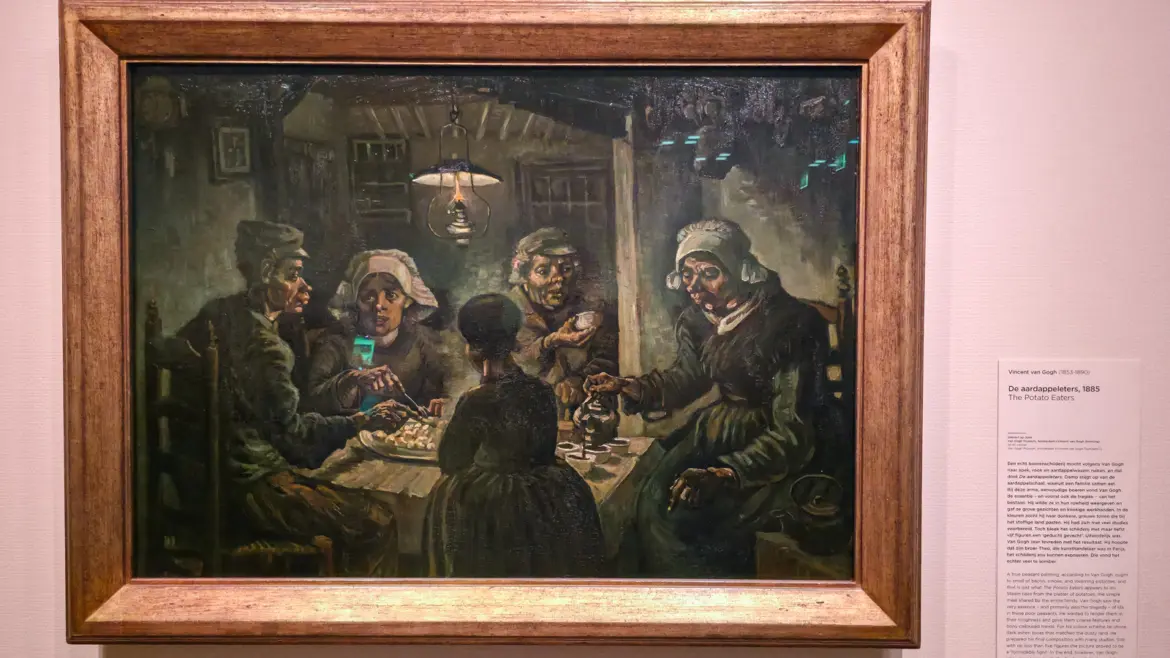
I went to the Van Gogh Museum in Amsterdam for the self-portraits and found a room I had not expected at all.
Five people round a table in a dark cottage, eating potatoes by the light of one oil lamp. It is one of the most reproduced paintings in the world and I had somehow never registered what it actually shows. Van Gogh spent his first working years painting farm labourers, peat cutters, weavers and their wives, and he did it for roughly five years before he ever saw Paris.
That room turned out to be the more interesting half of the visit.
Van Gogh’s Peasant Years at a Glance
🥔 The picture · The Potato Eaters (Nuenen, 1885): five people eating potatoes by one lamp. Van Gogh wanted it to “smell of bacon, smoke and potato steam,” and thought it would make his name. It was never exhibited in his lifetime.
🎨 Five dark years · Before Paris he spent roughly five years on labourers, peat-cutters and weavers, in the browns and near-blacks of his Dutch period — Scheveningen, Drenthe, and the “fifty heads” of Nuenen.
👥 He didn’t invent it · Jozef Israels made the peasant meal a known Dutch subject; his 1882 version hangs nearby and may have prompted Van Gogh’s. Van Gogh chose the gritty version on purpose.
🖼️ Stolen twice · Works in these rooms were stolen in 1991 (recovered 35 minutes later) and in 2002 (two canvases, gone more than thirteen years, recovered in Italy).
💡 Tip · Walk the early rooms first. The peasant work makes everything after it — Paris, Arles, the colour — legible.
The Potato Eaters
He finished it in Nuenen in 1885, working from the De Groots, a local family he had been drawing all winter. He wanted a painting that smelled of bacon, smoke and potato steam, and he said so in a letter. Nothing in it is prettified. The hands are enormous and knuckled, the faces coarse, the light too weak to reach the corners of the room.
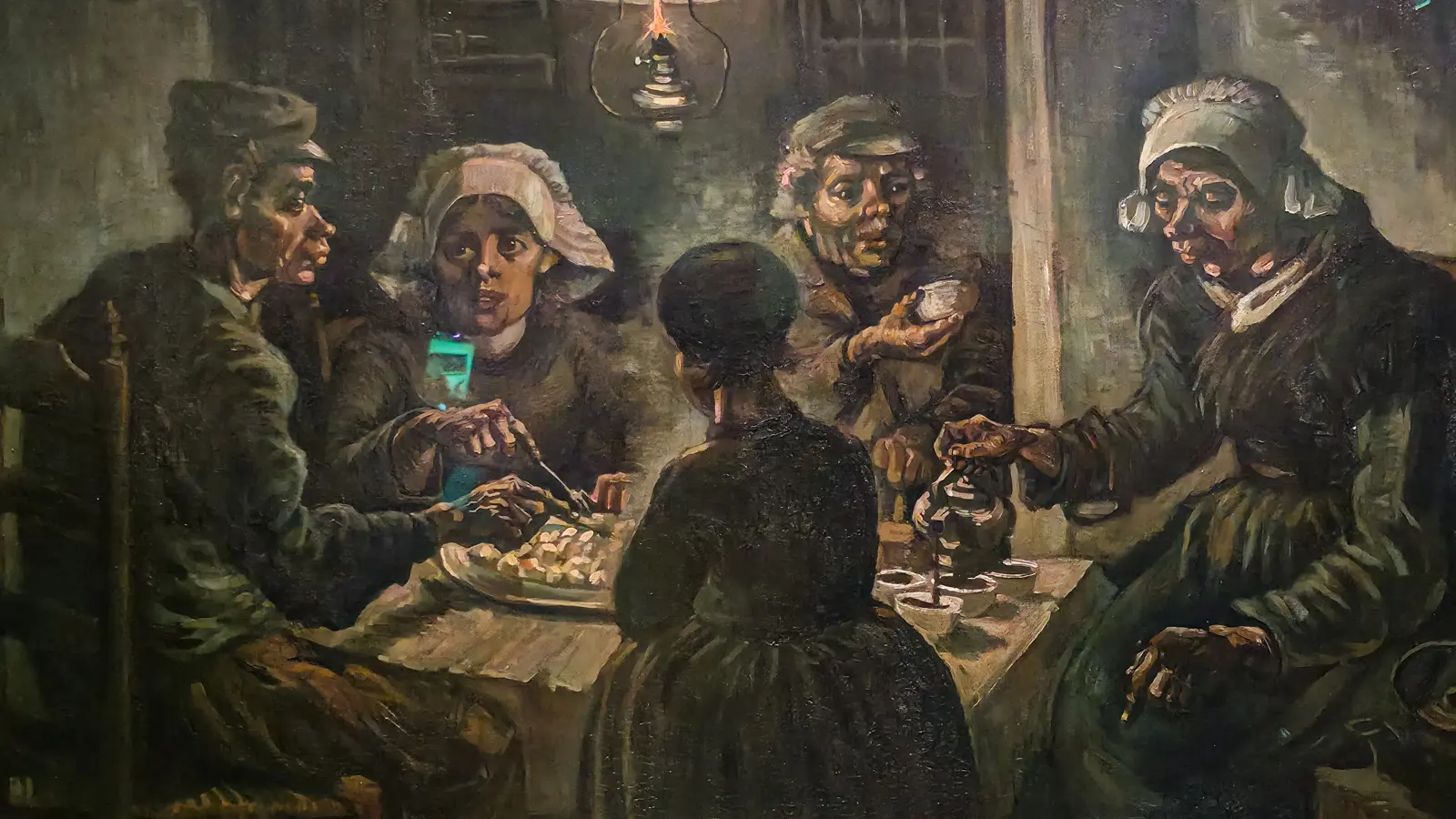
He thought it would be the painting that made his name. It was never exhibited in his lifetime. It hung above the fireplace in Theo’s apartment in Paris instead, and he went on defending it for years to anyone who would listen. He was right about it eventually and wrong for the whole of his life.
Before Nuenen
The peasant subject did not begin in Nuenen. It starts three years earlier, in the wind.
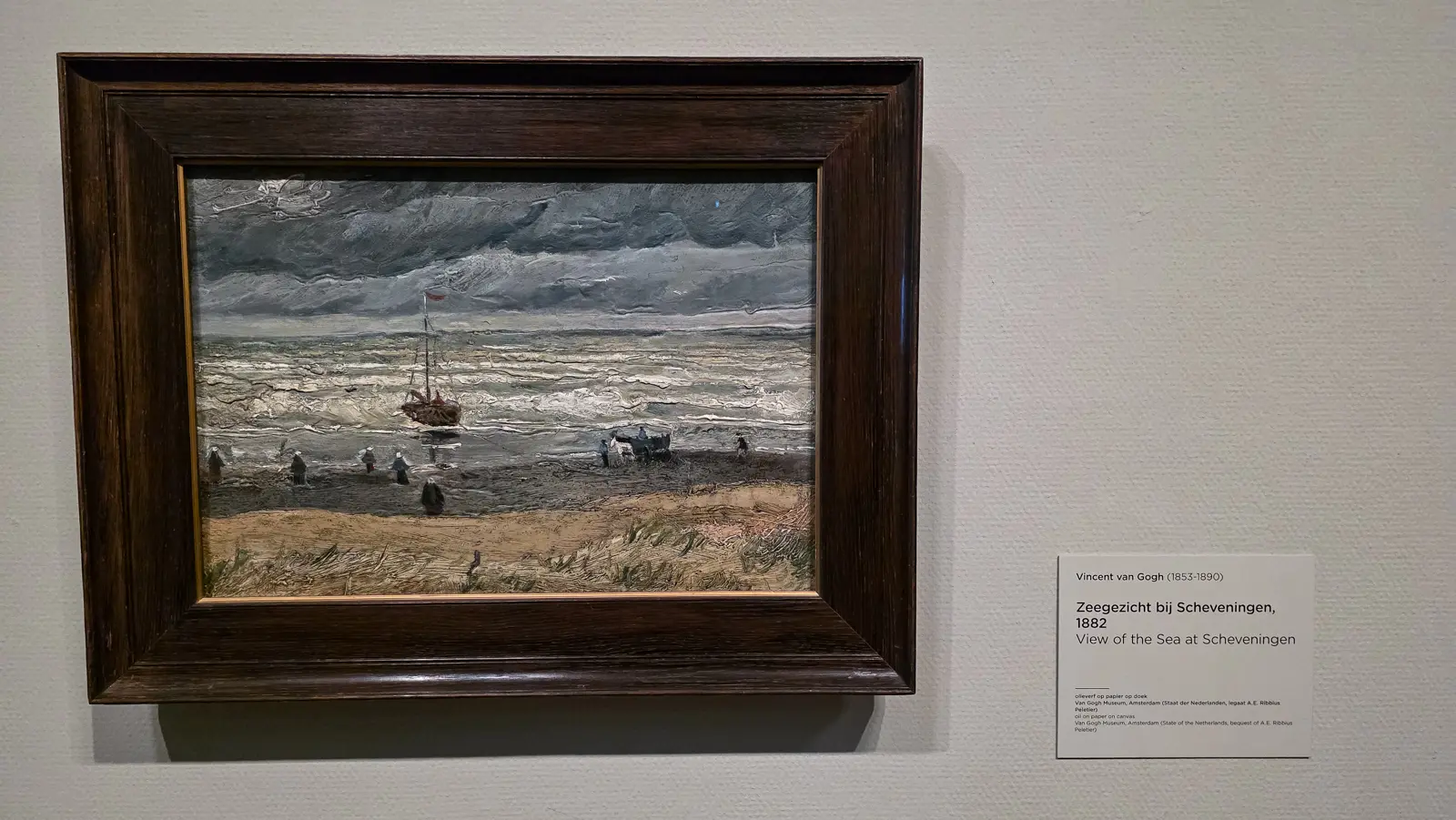
A fishing boat, a low grey sea, and small figures on the sand who are not there for the view. They are working. Even in a seascape the subject is labour.
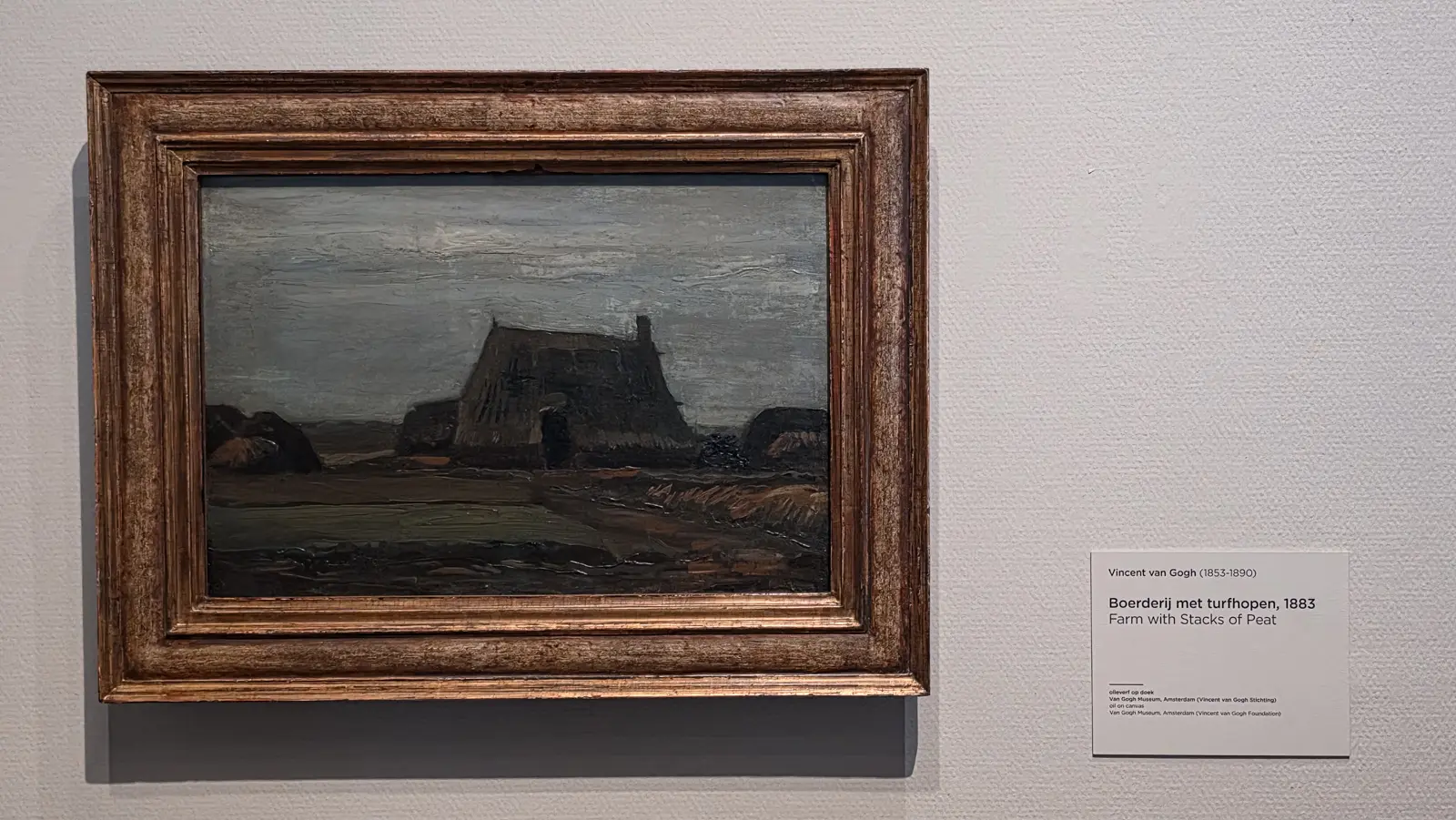
Drenthe was peat country, and this is what he went there for. A turf-roofed farmhouse, stacks of cut peat, a figure in the doorway so small the building swallows them. There is almost no colour in it beyond brown, grey and a single strip of dirty green.
Fifty heads
Back in Nuenen, living in his parents’ house, he set himself a project.
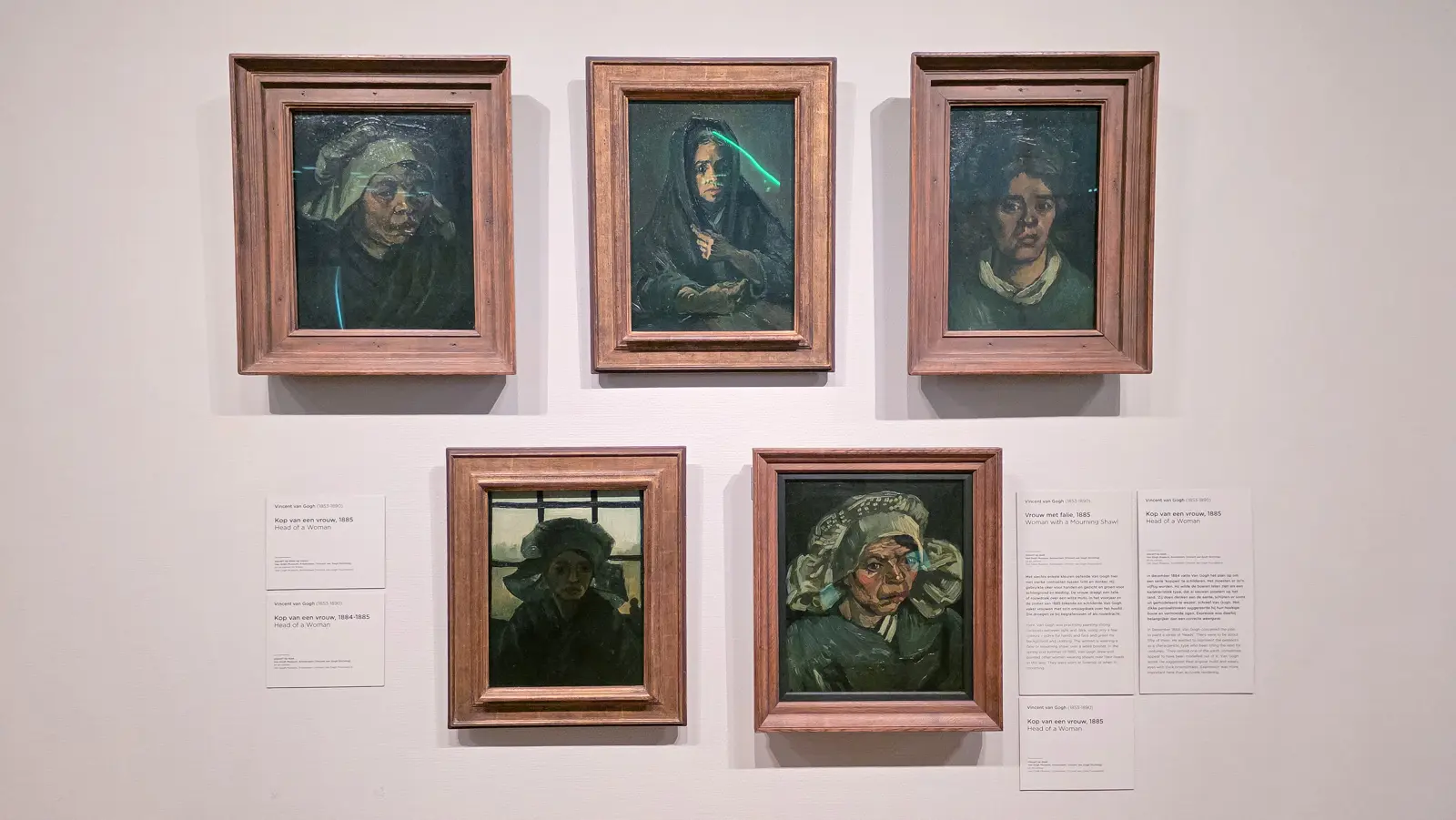
He planned about fifty heads and made them through the winter of 1884 and into 1885. Five of them hang together here, four women and one more, in identical pale frames.
This is where I had to correct myself. I had read these faces as an honest record of tired people, and that is not quite what they are. The museum’s own label says he suggested their angular build and weary eyes with thick brushstrokes, and that expression mattered more to him than accurate rendering. He was not transcribing exhaustion. He was exaggerating it on purpose, coarsening the features until they carried what he wanted them to carry. That is a choice, and it is a much more interesting one than accuracy would have been.
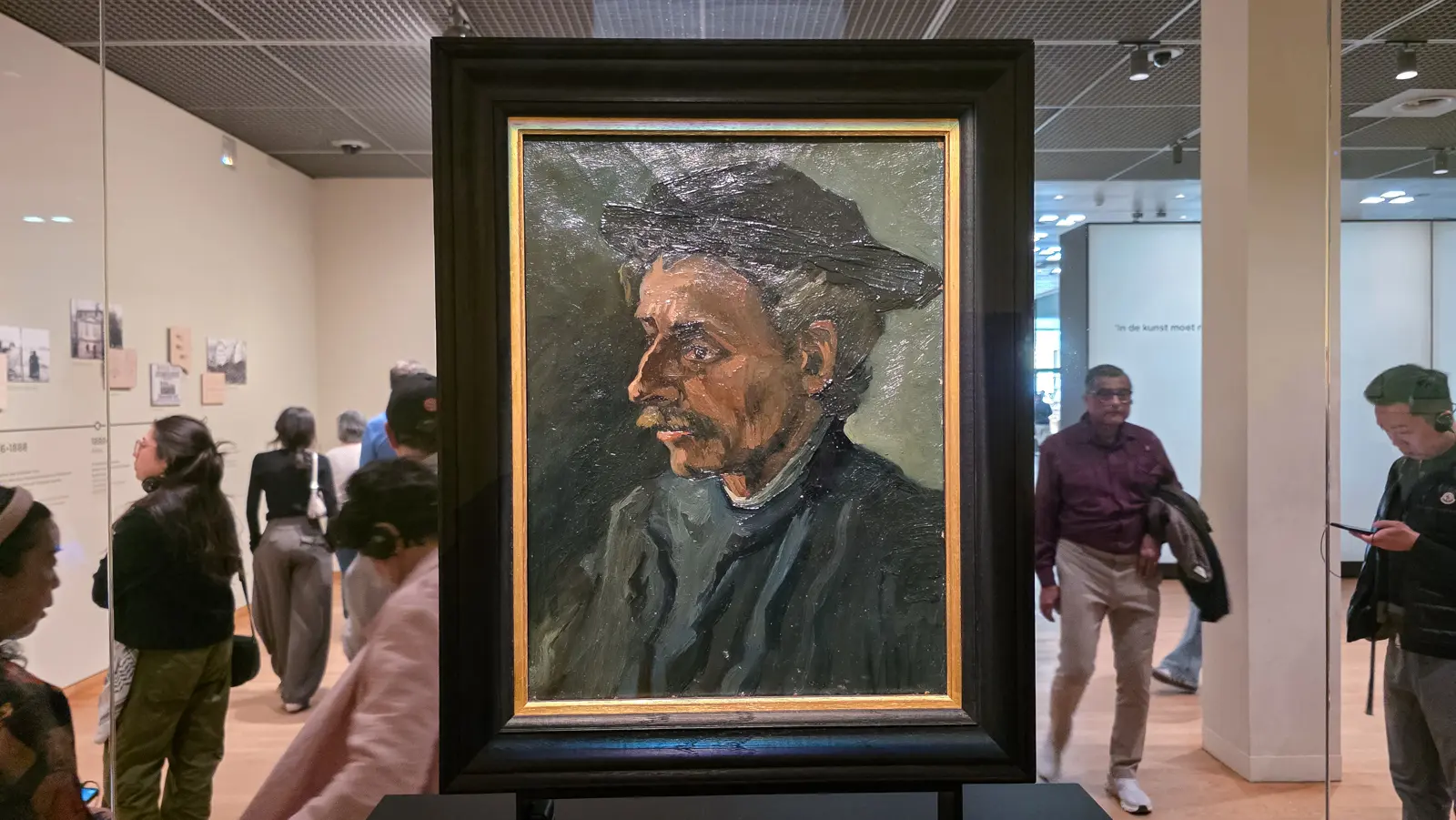
Thick paint, a dark cap, a moustache, a face built out of ridges. He is looking slightly past the viewer, and his name is not known. Van Gogh recorded almost nothing about the people who sat for him, so a face given weeks of attention belongs to somebody nobody wrote down.
Potatoes, again
By the autumn of 1885 he was painting the food as well as the people eating it.
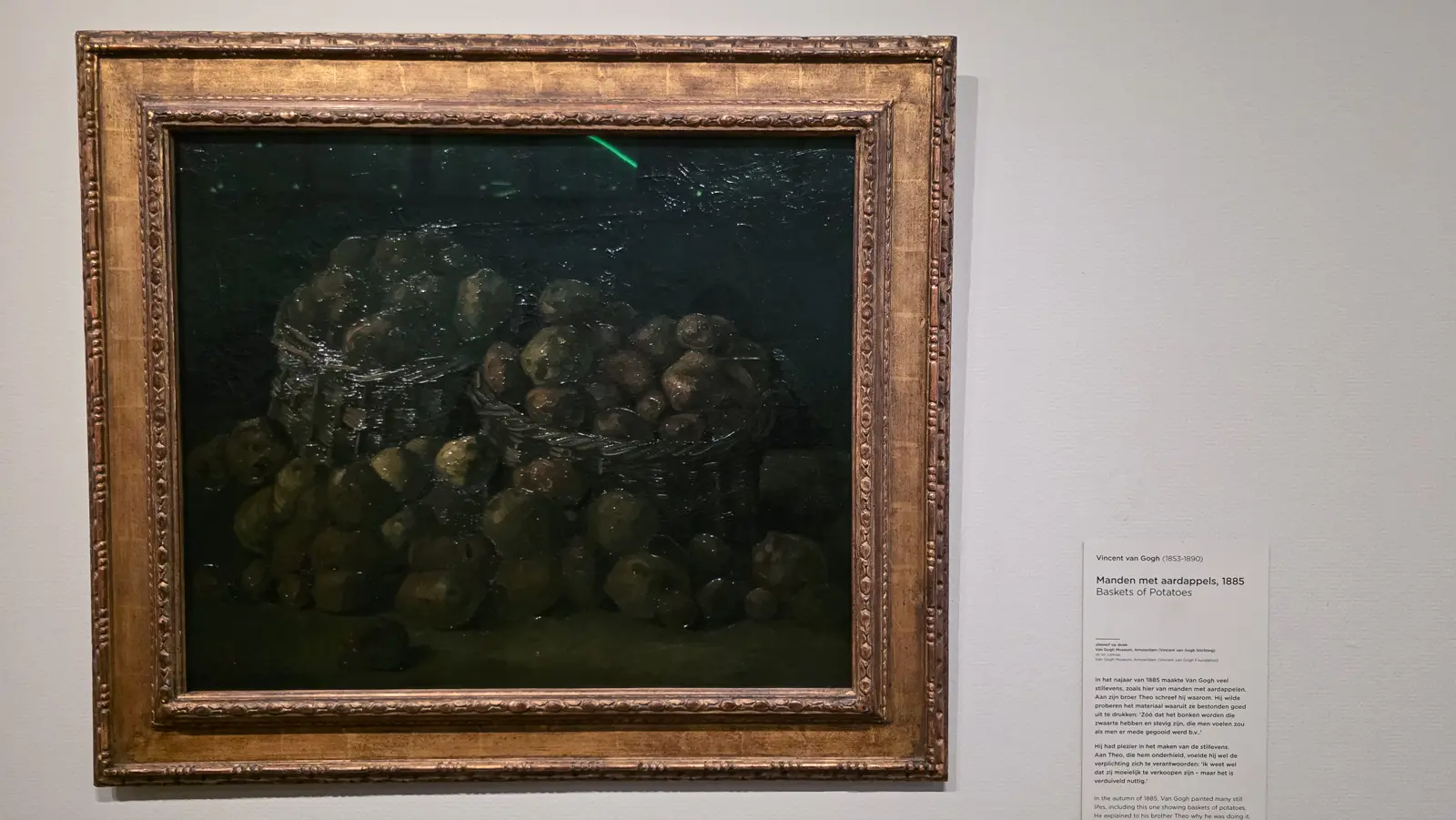
Two wicker baskets, potatoes spilling out and heaped on the ground. The whole canvas is brown on brown on darker brown. It is a painting of the cheapest food there is, made with total seriousness.
A present for his mother
The one picture in the room that was not painted to prove a point.
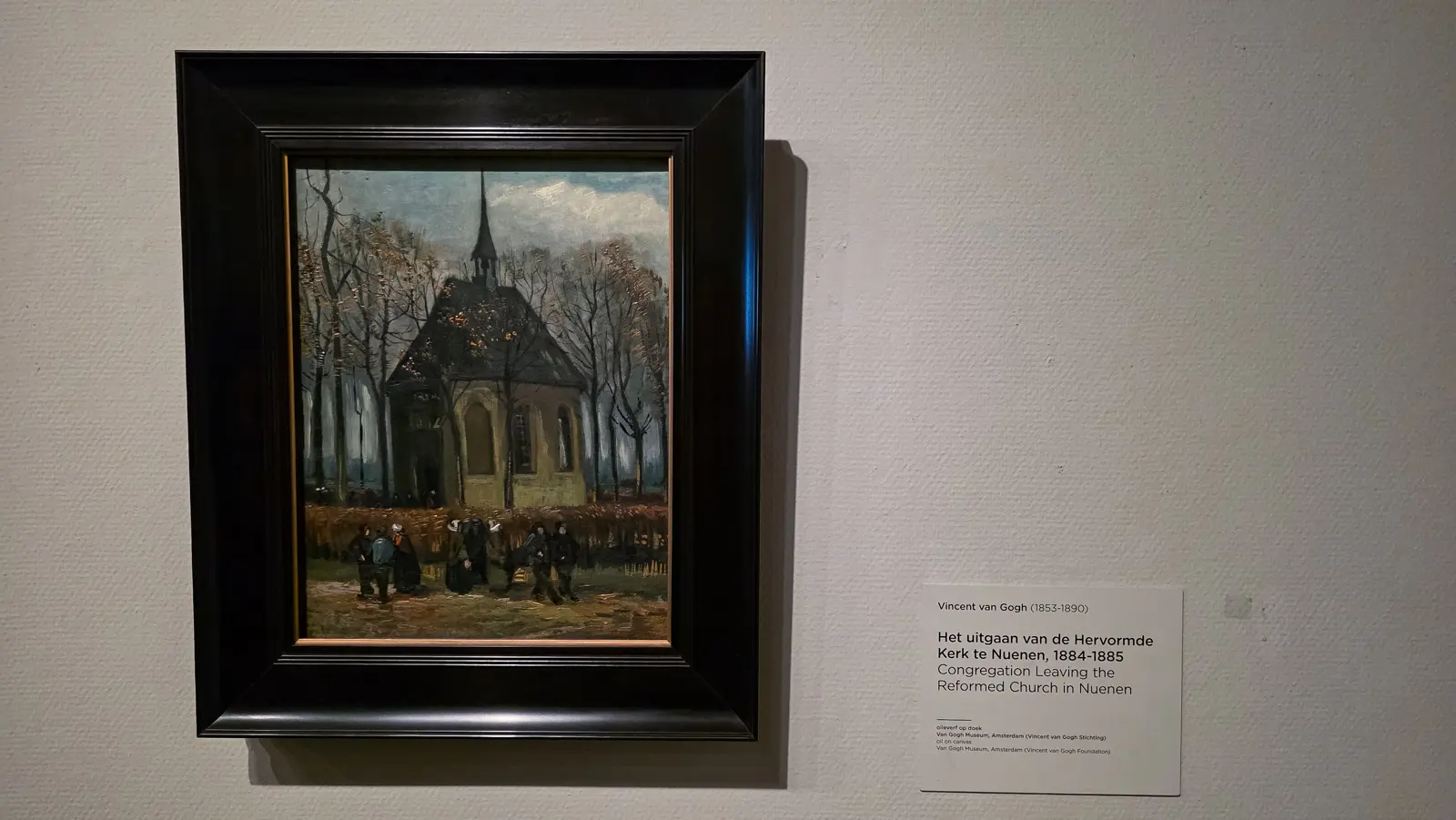
Congregation Leaving the Reformed Church in Nuenen was painted in January 1884 as a present for his mother, who had just broken her thighbone. It shows the church where his father was the minister. His father died in March 1885, and the churchgoers Van Gogh added in the reworking include women in mourning shawls.
This painting and the Scheveningen seascape have a second life the labels do not mention. On 7 December 2002 two men put a ladder against the side of this museum, went in through a window with a sledgehammer, and took these two canvases and nothing else. They were missing for more than thirteen years and turned up in January 2016 in a house near Naples connected to a Camorra cocaine trafficker. They went back on display in April 2019, which is the only reason either of them was on the wall for me to photograph.
He did not invent this
This was the part I got wrong while standing there, and the museum answers it on two labels in the same room.
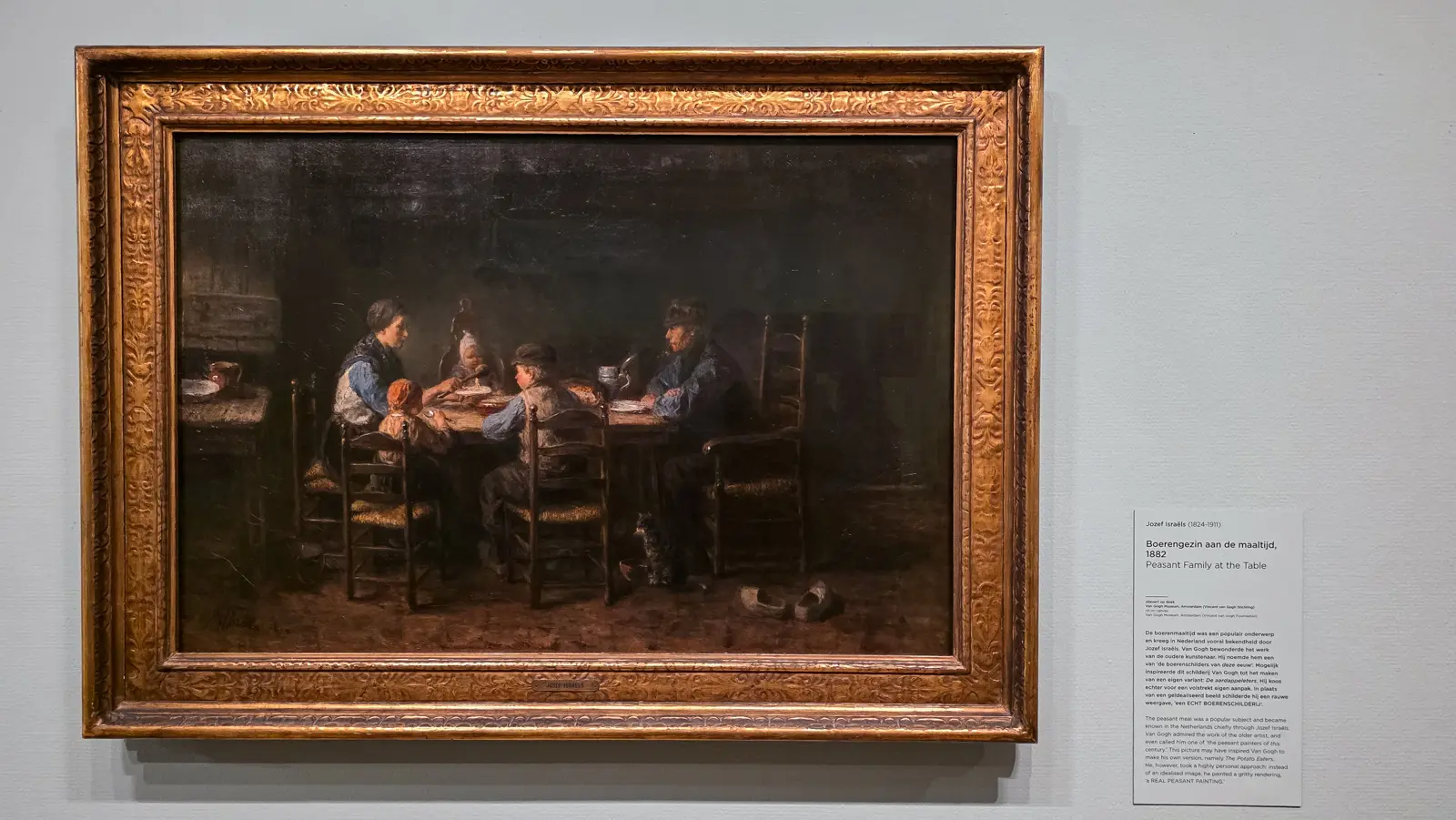
A family round a table, a child, a dog, wooden shoes kicked off on the floor. It is the same scene as The Potato Eaters and it was painted three years earlier. Van Gogh admired it, and the museum says it may well have prompted him to make his own version. The difference is deliberate. Jozef Israels gives an idealised family. Van Gogh chose the gritty one on purpose and called his a real peasant painting, in capitals.
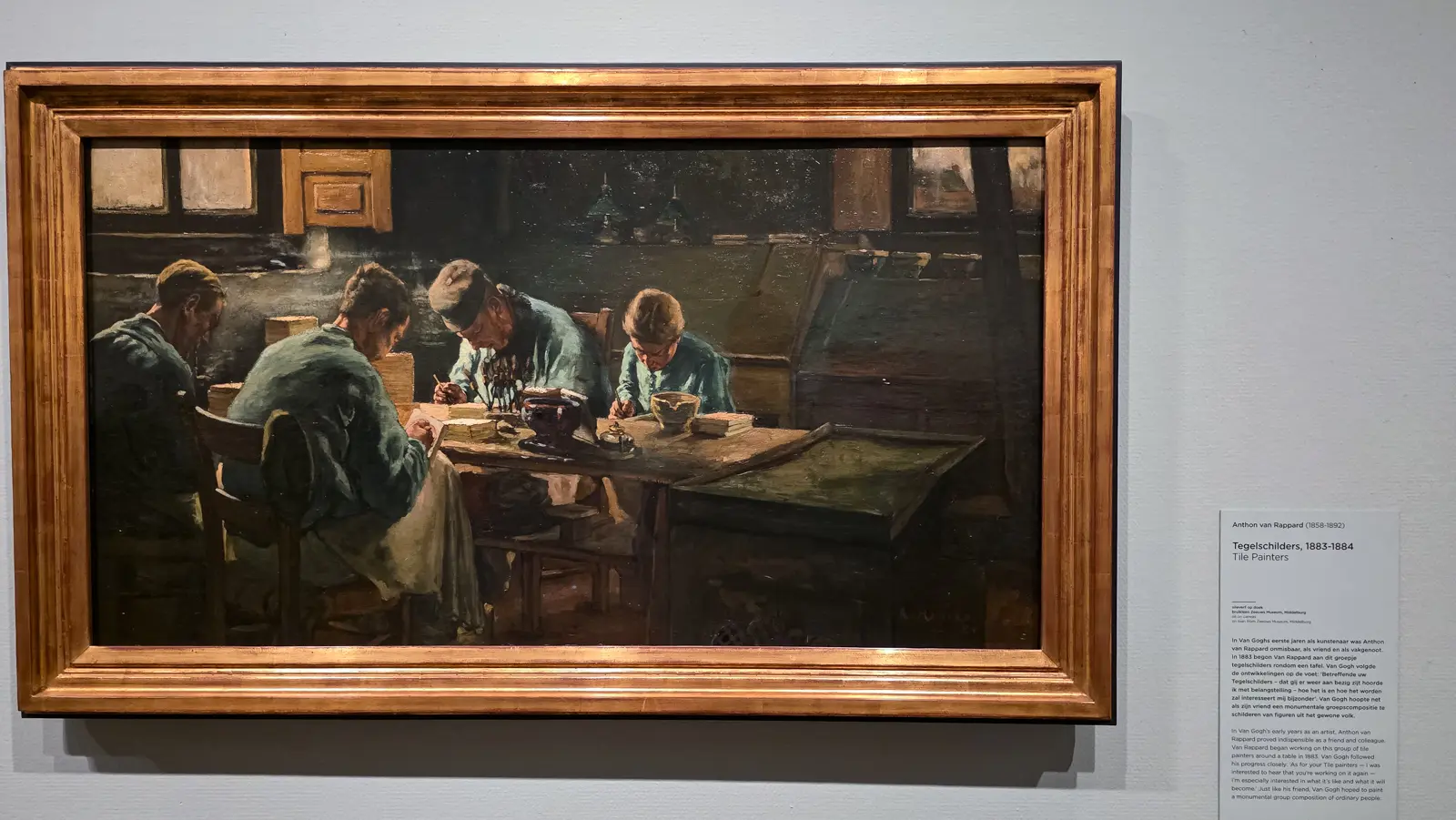
Then van Rappard saw The Potato Eaters. He wrote asking why the man on the right had no knee, belly or lungs, and why his arm was a metre too short, and told Van Gogh that art was too important to be treated so cavalierly. Van Gogh wrote back that he had no right to condemn the work that way. The friendship ended and never recovered.
So the two paintings hanging near The Potato Eaters are not by followers. They are by the older painter who made the subject famous and by the friend who worked alongside him and then broke with him over it. Anthon van Rappard is very likely the artist friend whose advice started the fifty heads, and his Tile Painters hangs here on loan from the Zeeuws Museum in Middelburg. The museum puts them in the same rooms and lets anyone who reads the labels work it out.
What he took with him
He left for Antwerp and then Paris, and the palette changed completely. The subject did not.
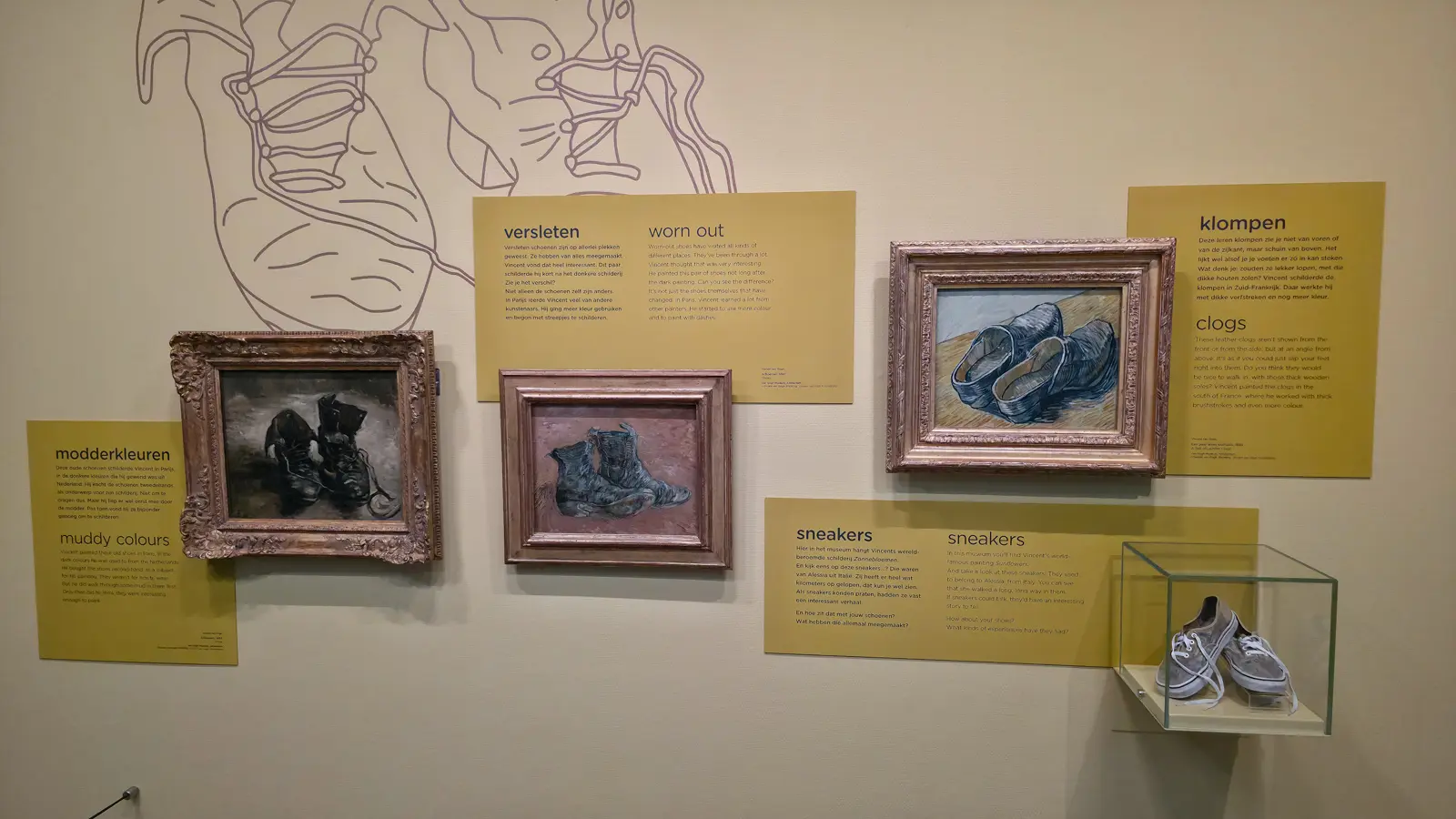
Three pairs on one wall, and the whole argument of the museum in miniature. Muddy boots painted in 1886 in the dark colours he brought from the Netherlands. The same boots again in 1887, lighter, built from separate dashes of colour after a year in Paris. Then leather clogs from 1889, painted in the south of France in thick strokes and brighter still. Worn-out working footwear, three times, across four years of a palette transforming.
Under the last panel, in a small glass case, sits a pair of a visitor’s own scuffed canvas trainers.
Bubbly Tips
- Start with the early rooms, not the famous ones. The peasant work is the first part of the collection chronologically and it makes everything after it legible. Walking in at Sunflowers and working backwards gets the story upside down.
- Read the labels on the paintings that are not by Van Gogh. The Israels and the van Rappard are the two most useful things in those rooms, and they are easy to walk past as filler.
- Look at the hands before the faces in The Potato Eaters. That is where the exaggeration is most obvious and where his argument about peasant life sits.
- Give the dark rooms time to work. These canvases are genuinely murky and reproductions flatter them. Five minutes in front of one does more than twenty photographs of it.
- Two of the paintings in these rooms were stolen and recovered. Neither label mentions it. If you want the story on the spot, it is worth reading up before you go rather than after.
- Photography is allowed without flash in the permanent collection, but the dark early canvases behind glass are very hard to shoot cleanly. Stand to one side of the reflections rather than square on.
- Book a timed ticket well ahead. The museum regularly sells out and same-day entry is not something to count on.
- Pair it with the Rijksmuseum only if you have two days. Both are on Museumplein, both deserve a morning, and doing them back to back turns the second one into a blur.
Final Thoughts
I came for the self-portraits and left thinking about a man whose name nobody wrote down. Head of a Man got weeks of somebody’s attention in 1885 and the museum can give the month it was painted, the size of the canvas and the town it was made in, but not the name of the man in it.
That is the whole of these rooms, really. Van Gogh spent five years painting people the art market had no interest in, in colours nobody wanted to buy, was told by his closest painter friend that the result was careless, and kept going. The picture that came out of it now sits behind glass with a queue in front of it. The De Groots ate their potatoes and went to bed.
Until next time!

🌟 Everything You Need to Plan Your Dream Trip in 2026
- 🌟 Luxury Hotels - Find premium stays with Booking.com & Hotels.com
- 🏡 Vacation Rentals - Discover unique properties on VRBO
- 🏞️ Guided Tours - Explore with Viator or GetYourGuide
- 🎫 Attraction Tickets - Skip the lines with Tiqets
- 🚢 Ocean Cruises - Set sail with Cruise Direct
- 📱 International SIMs - Stay connected with Saily
- 🚗 Car Rentals - Budget-friendly options from Discover Cars
- 🌐 Secure VPNs - Browse safely with NordVPN
- 💶 Currency Exchange - Best rates with Wise
- 🗣️ Learn Languages - Master the local language with Babbel and Rosetta Stone