
I met the Dutch Golden Age twice before I understood it. The first time was in London, in December 2025, in the National Gallery‘s Dutch rooms. The second was in Amsterdam in April 2026, at the Rijksmuseum, the Royal Palace and on a canal cruise past the maritime museum. Between a Vermeer in London and a model warship in Amsterdam, the pieces fit together.
This post is the big picture: what the Golden Age was, where the money came from, why the Dutch painted kitchens instead of altarpieces, and the darker side of the wealth that paid for it all. Every painting here is one I stood in front of.
The Dutch Golden Age at a Glance
🕰️ When · Roughly the 17th century, after the Dutch Republic broke from Spain (recognised at the Peace of Münster, 1648).
⚓ The money · Trade by sea — the VOC, founded 1602, one of the first multinationals, rich on the Asian spice trade.
🖼️ Why the art looks different · A Protestant republic with no altarpieces and no royal court, so merchants bought portraits, landscapes, still lifes and scenes of ordinary life for their own walls.
⚖️ The other half · The wealth rested on slavery and colonial violence — the Rijksmuseum now adds that history to familiar paintings.
💡 Where · The Rijksmuseum and Royal Palace in Amsterdam; the National Gallery’s Dutch rooms in London (free).
What Was the Dutch Golden Age?
The name covers roughly the 17th century, when a small republic on the North Sea became one of the leading commercial and maritime powers in Europe. The Dutch Republic had broken away from Spain, and the long war of independence ended with the Peace of Münster in 1648, when Spain finally recognised it as sovereign.
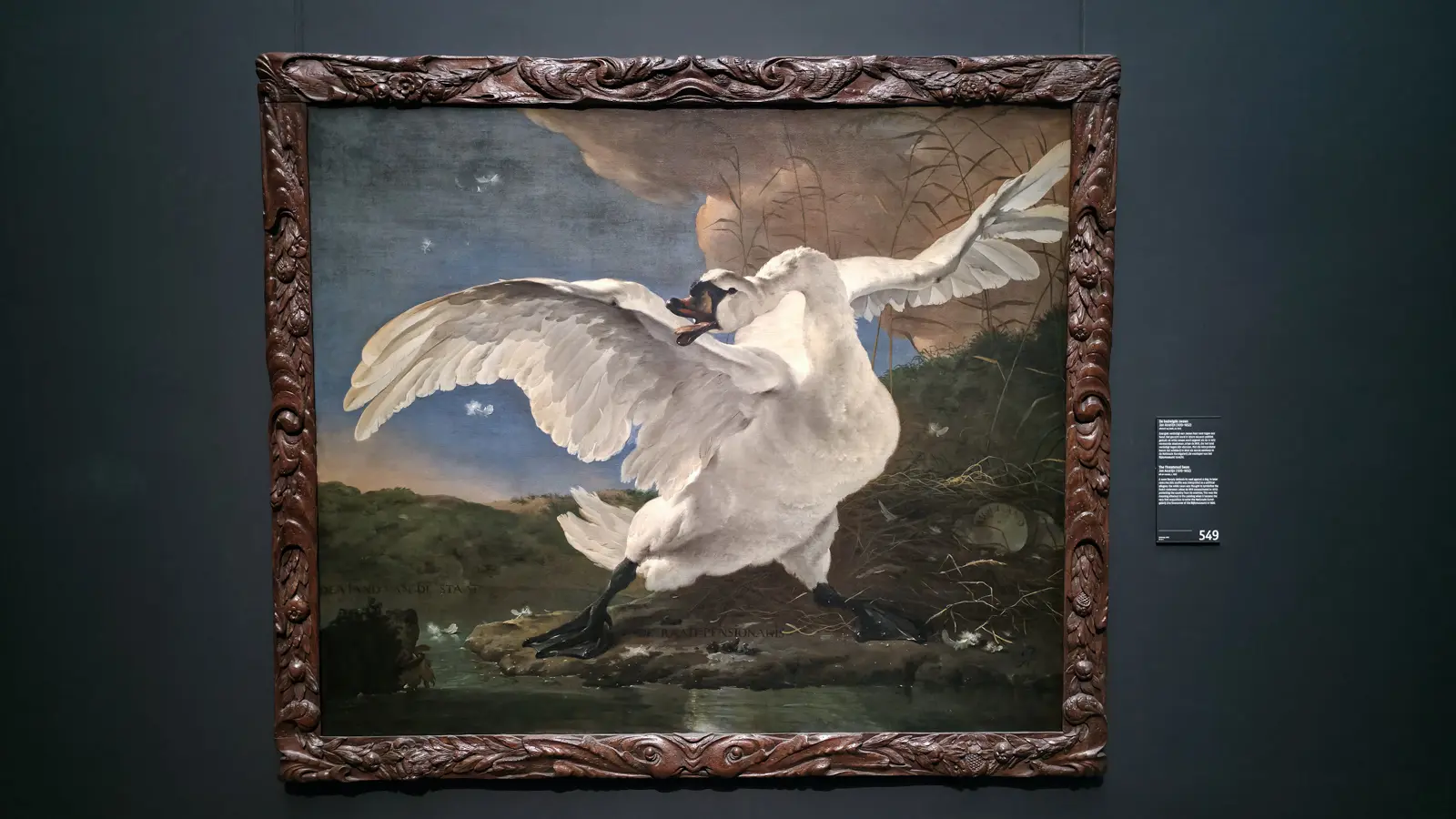
The Rijksmuseum’s very first painting captures the mood of that young country. In Jan Asselijn’s The Threatened Swan, from about 1650, a swan defends its nest against a dog. Later generations read it as a political allegory, with the swan as the statesman Johan de Witt protecting Holland from its enemies, and that was the meaning attached to it when it became the first acquisition of the national art gallery in 1800.
Built on Trade
The money came from the sea. In 1602 the Dutch East India Company, the VOC, was founded. It was one of the first multinational corporations, financed by shares traded in Amsterdam, and it held a monopoly on Dutch trade with Asia. Spices in particular brought in enormous profits.
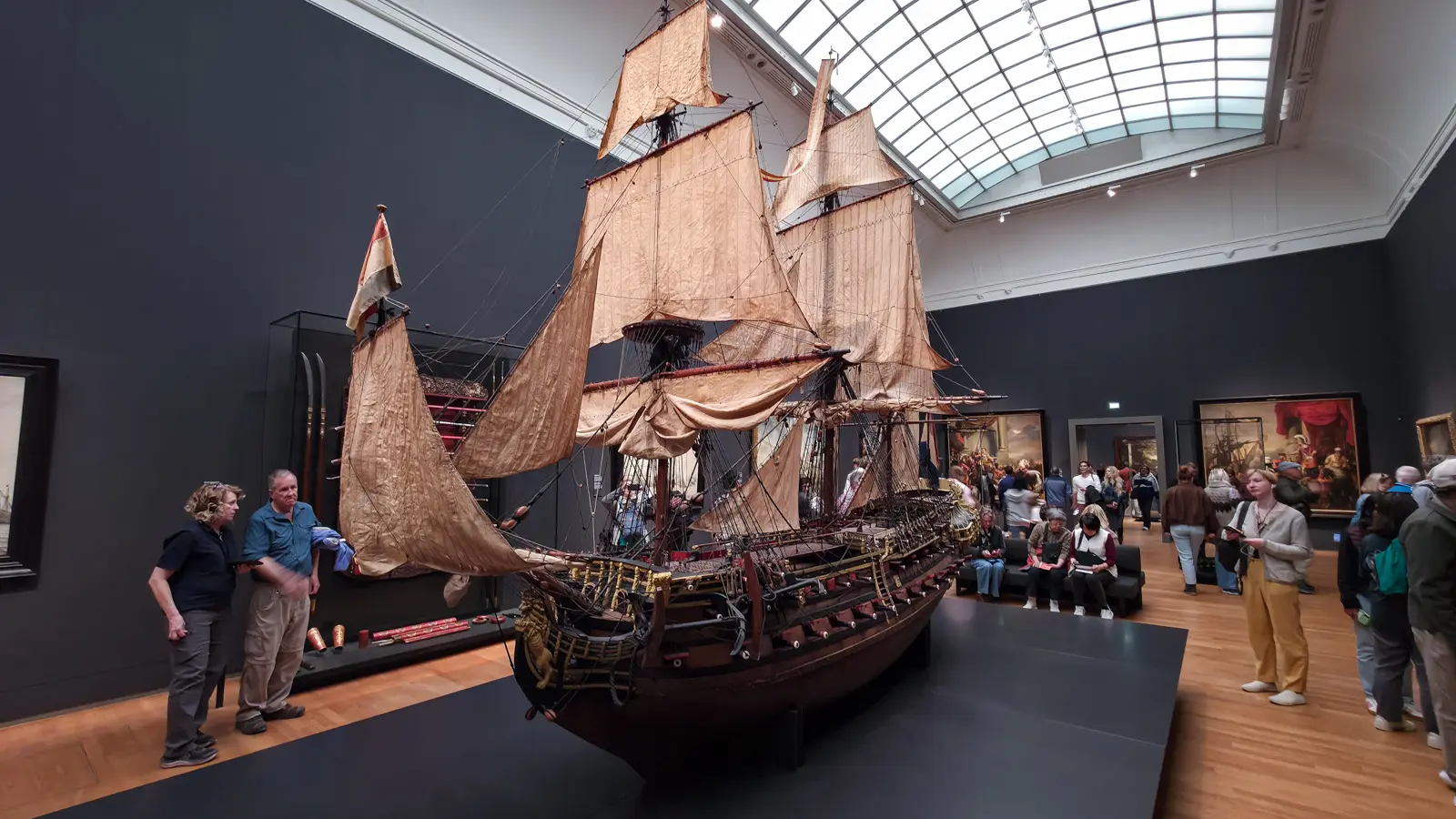
The Rijksmuseum’s maritime rooms make that world visible. A full-rigged ship model stands in the middle of one gallery, its topmasts reaching most of the way to the skylight.
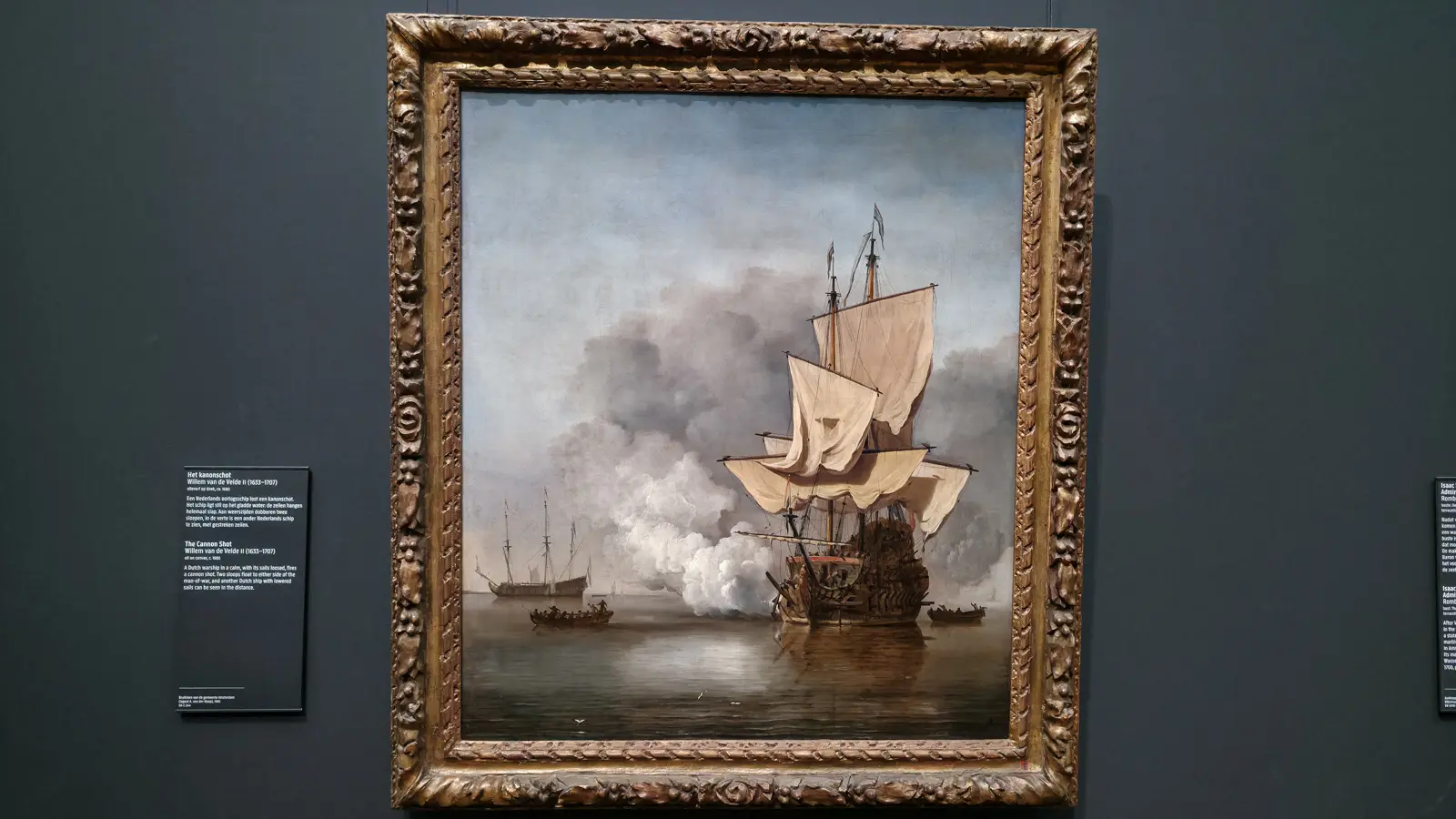
On the wall nearby hangs a painting of that navy at rest. In Willem van de Velde the Younger’s The Cannon Shot, from about 1680, a Dutch warship fires a single gun in a flat calm, its sails hanging loose. There is no battle at all, just a cloud of white smoke drifting across still water.
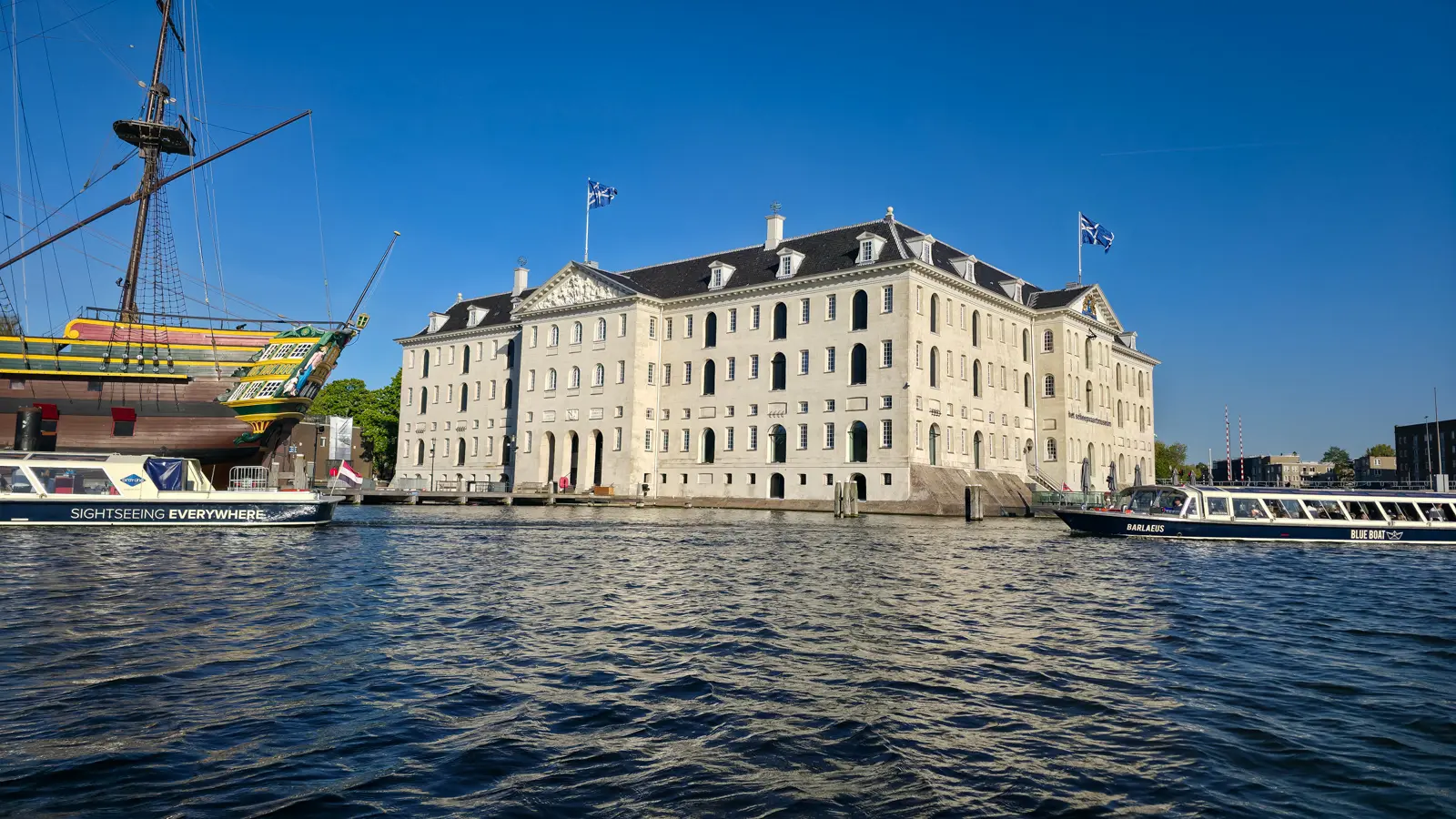
The navy’s storehouse still stands. On my canal cruise we passed Het Scheepvaartmuseum, the national maritime museum, which occupies a naval storehouse built in 1656, with a full-size replica of an East India Company ship moored beside it.
A City Hall Fit for a King
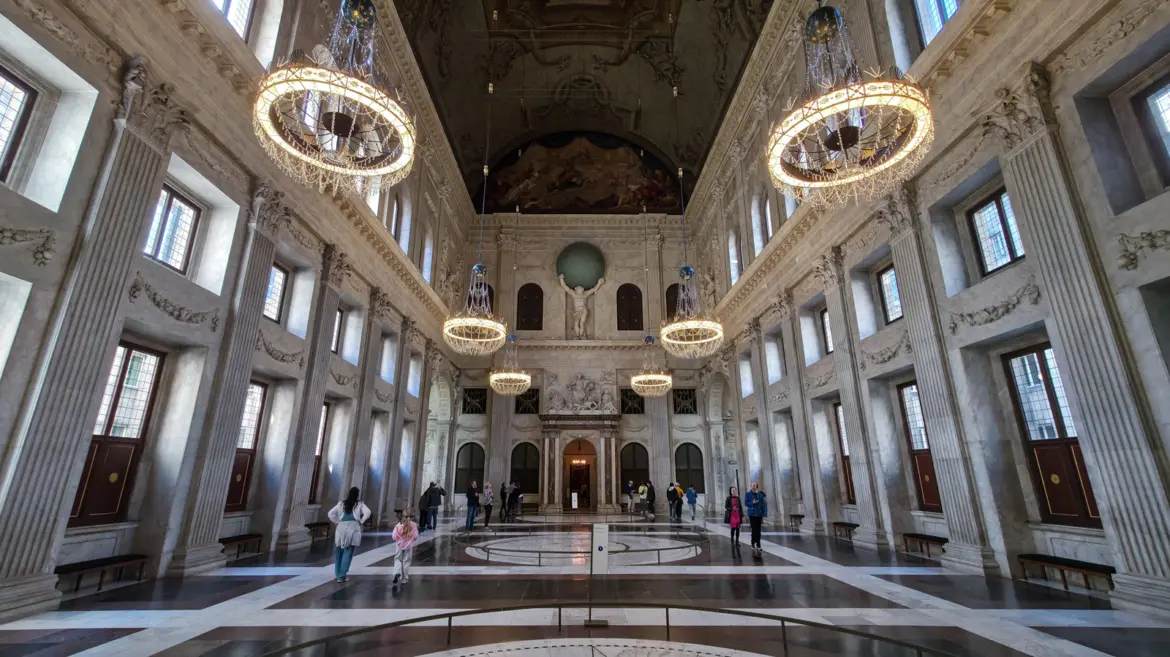
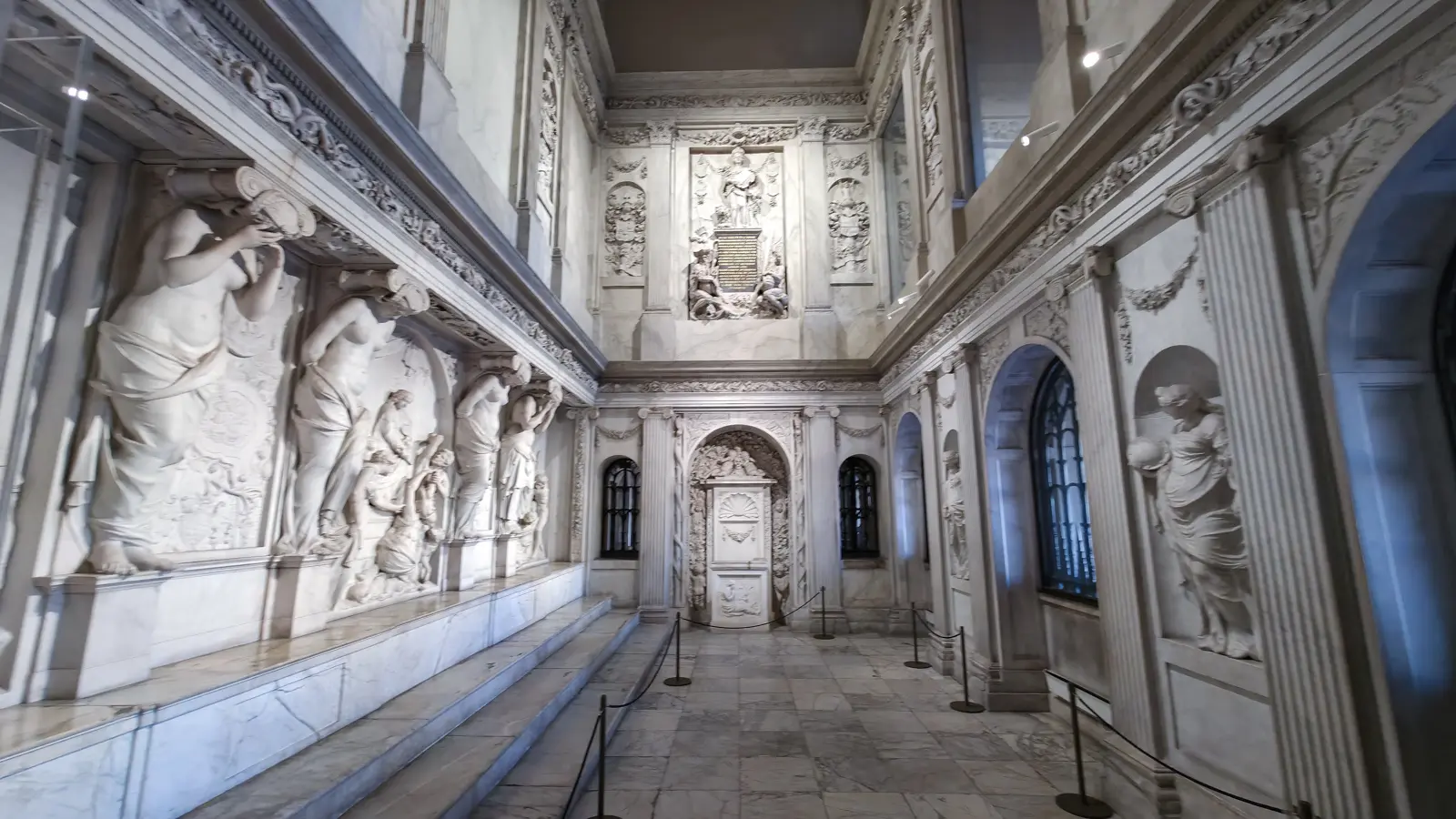
All that money needed somewhere to show off. Amsterdam built a new city hall on Dam Square from 1648, the same year as independence, designed by Jacob van Campen and opened in 1655. Its Burgerzaal, at the top of this post, has maps of the world inlaid in its marble floor and a statue of Atlas carrying the globe. It became the Royal Palace only in 1808.
Downstairs, the Vierschaar shows the other face of civic power. It was the tribunal where death sentences were pronounced in public.
A New Art for a New Nation
This is the part that explains the paintings. The Republic was Protestant, so the churches no longer commissioned altarpieces, and there was no royal court to speak of. The buyers were merchants, guilds and city families, and they wanted pictures for their own walls: portraits, landscapes, still lifes, city views and scenes of ordinary life.
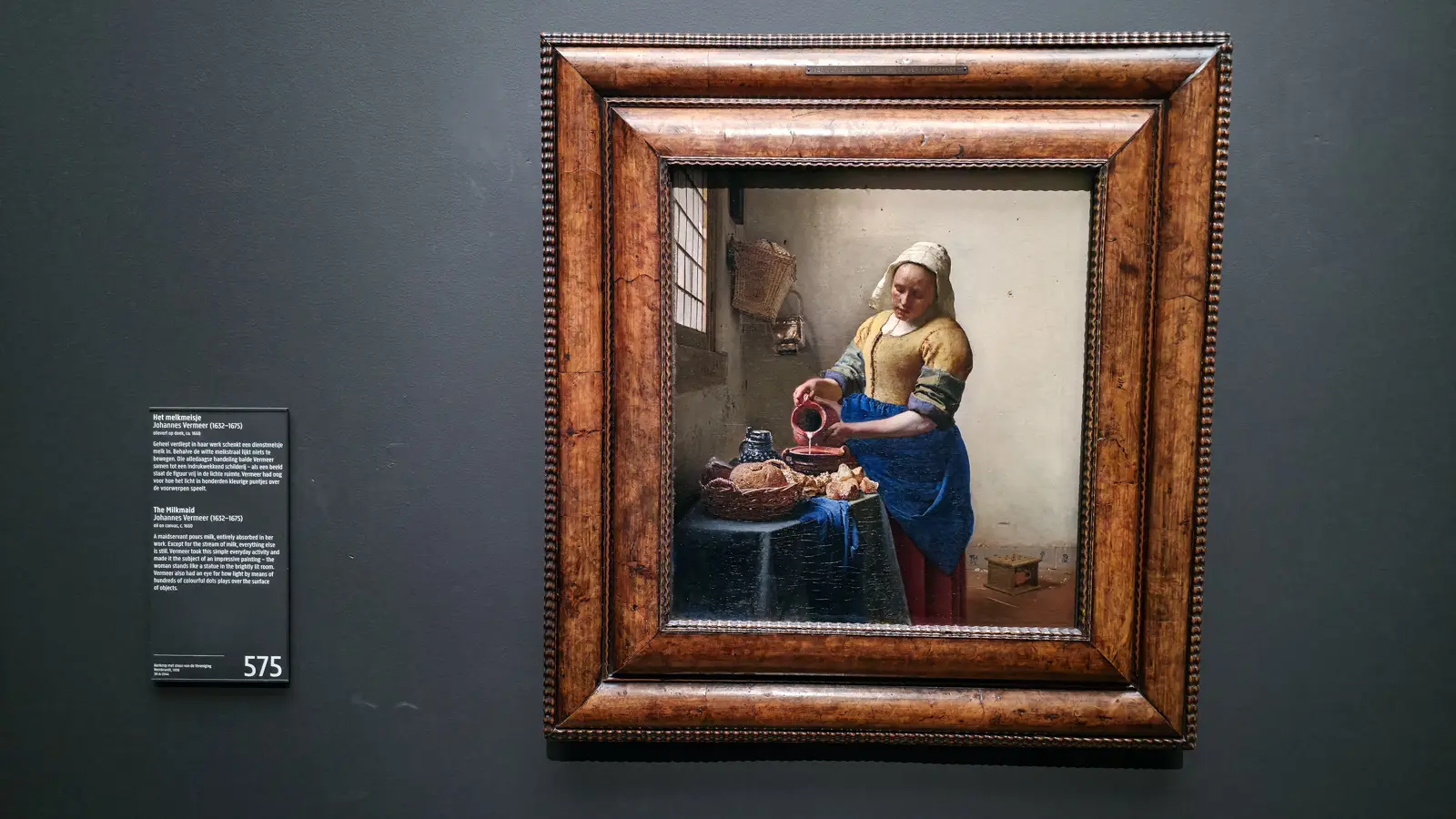
Vermeer is the master of that ordinary life. In The Milkmaid, from about 1660, a maid pours milk into a bowl and nothing else in the room moves. Up close, the light on the bread and the rim of the jug is built out of tiny dots of colour.
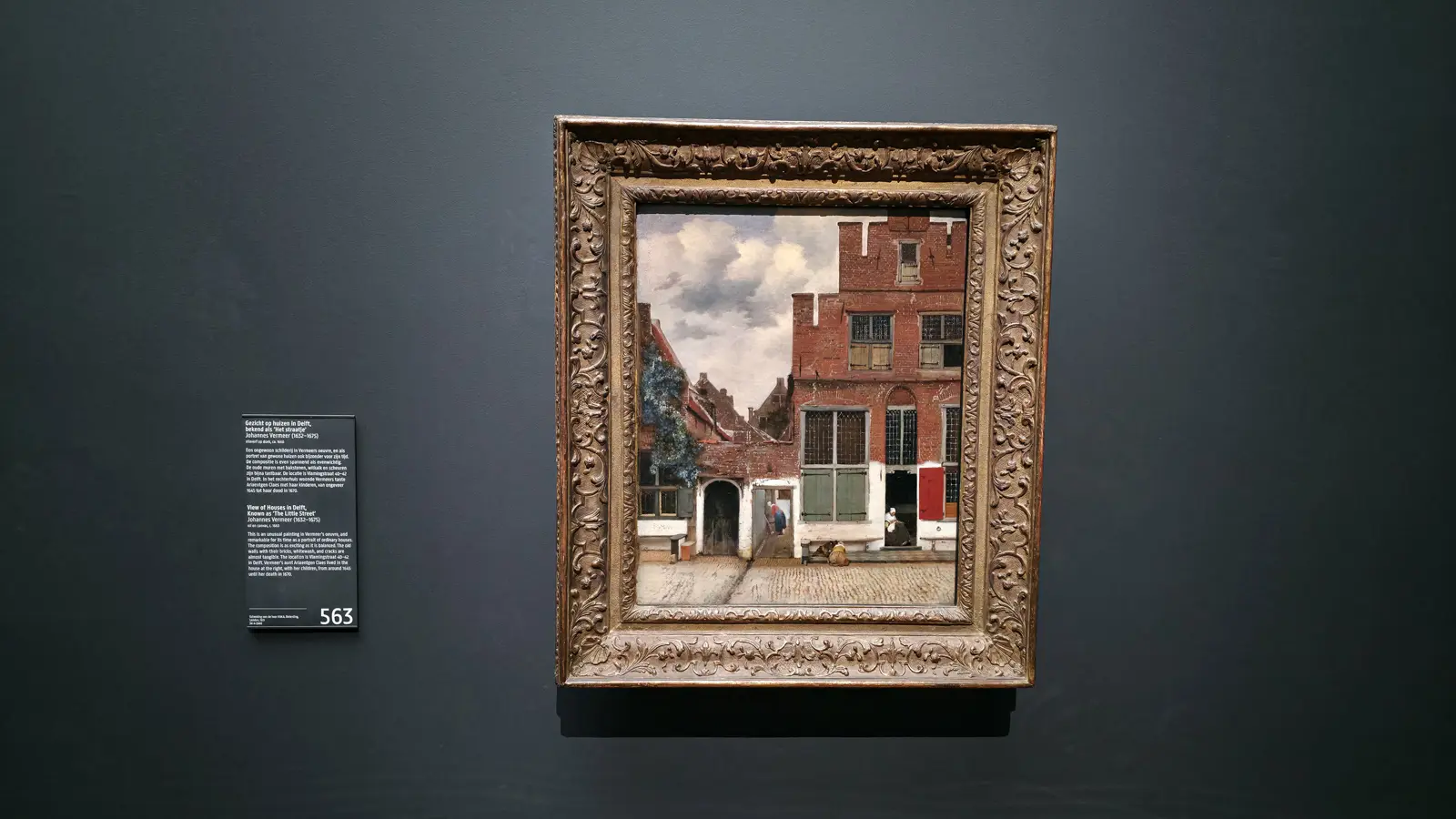
The Little Street is even quieter: two ordinary houses in Delft, cracked brick and whitewash, a woman sewing in a doorway. The museum label gives the address, Vlamingstraat 40 to 42, and says Vermeer’s aunt lived in the house on the right.
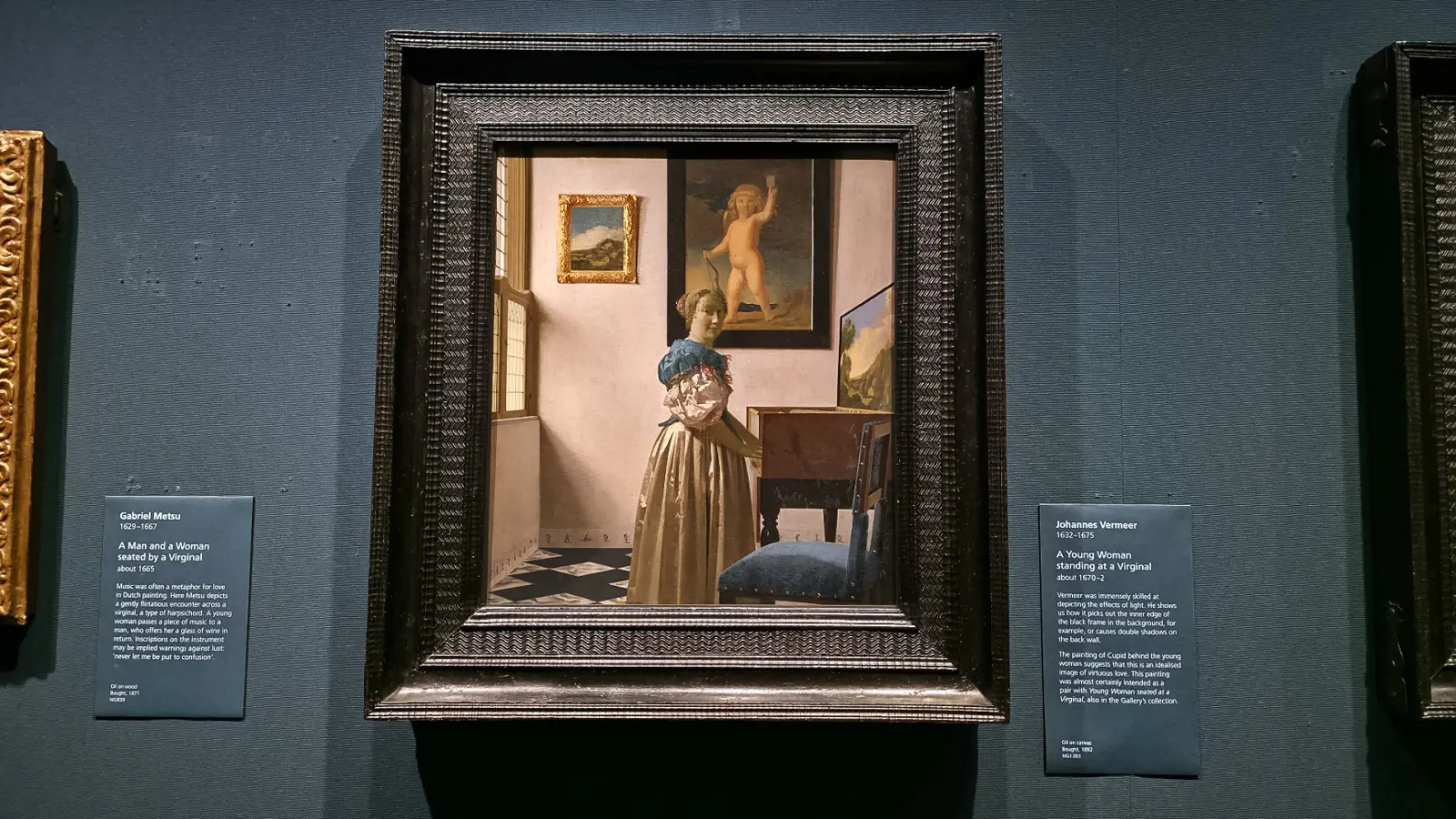
In London, the National Gallery‘s Vermeer shows the same world indoors. A Young Woman standing at a Virginal, from about 1670 to 1672, stands at a keyboard instrument with a painting of Cupid on the wall behind her. The label reads the Cupid as a sign of idealised, virtuous love.
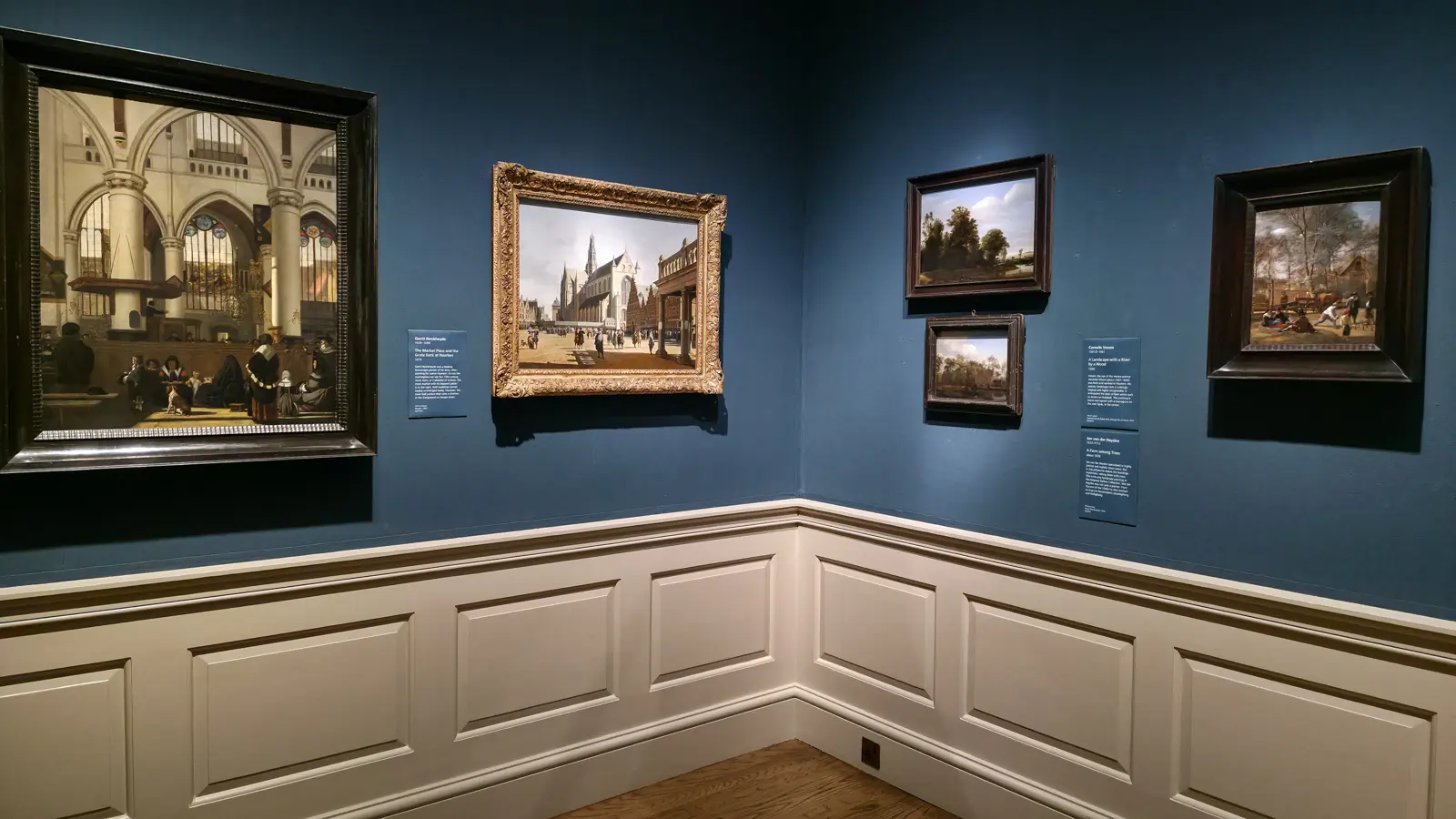
The same room in London shows how wide the new market was. Gerrit Berckheyde painted The Market Place and the Grote Kerk at Haarlem in 1674, a sunlit square under the great church. Beside it hang small landscapes by Cornelis Vroom and Jan van der Heyden: woods, a river, a farm among trees.
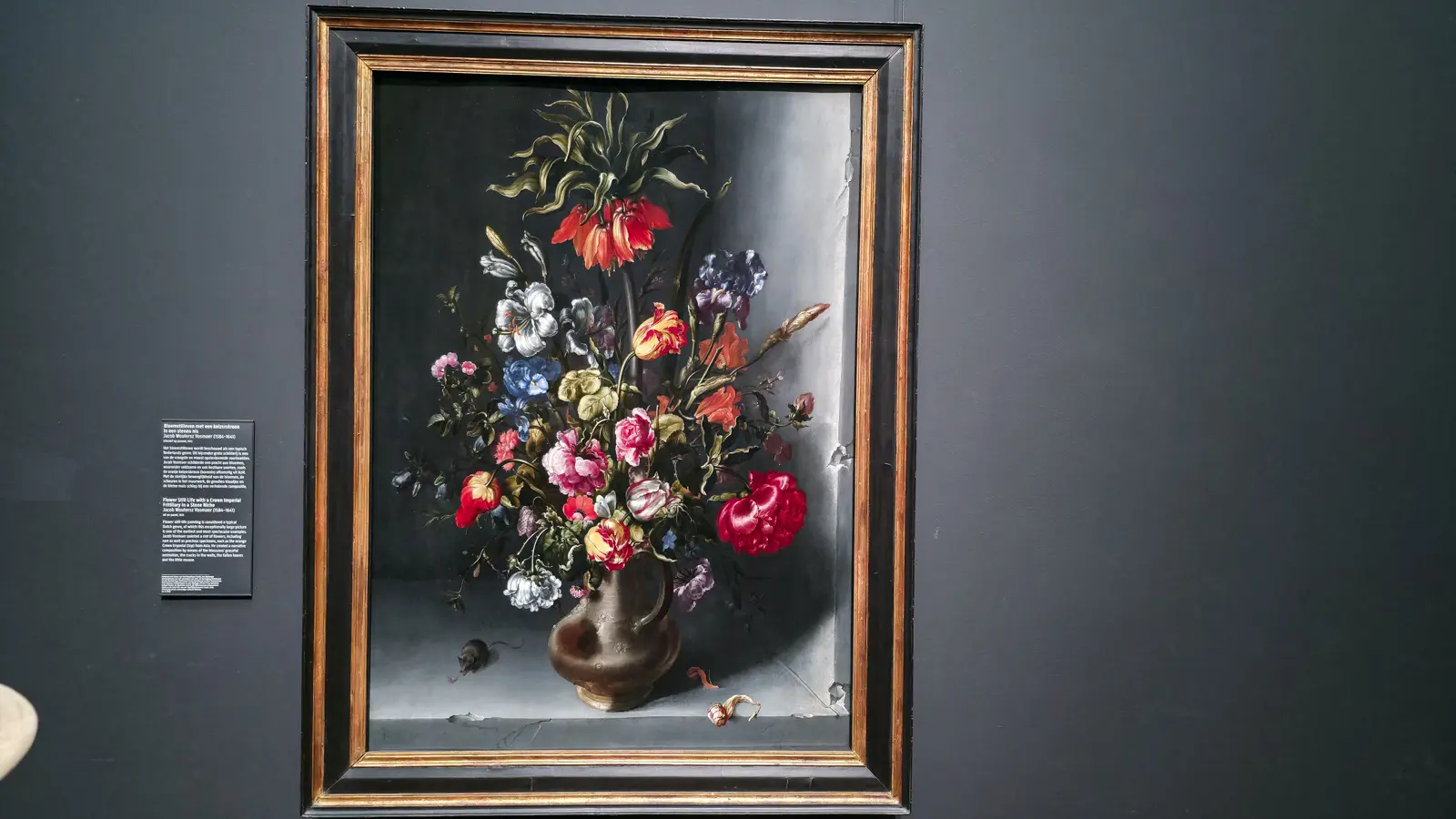
Still lifes sold too, and the best of them hide a sermon. Jacob Vosmaer’s flower piece from 1613 tucks a mouse, cracked stone and fallen petals beneath a bouquet that could never have bloomed together.
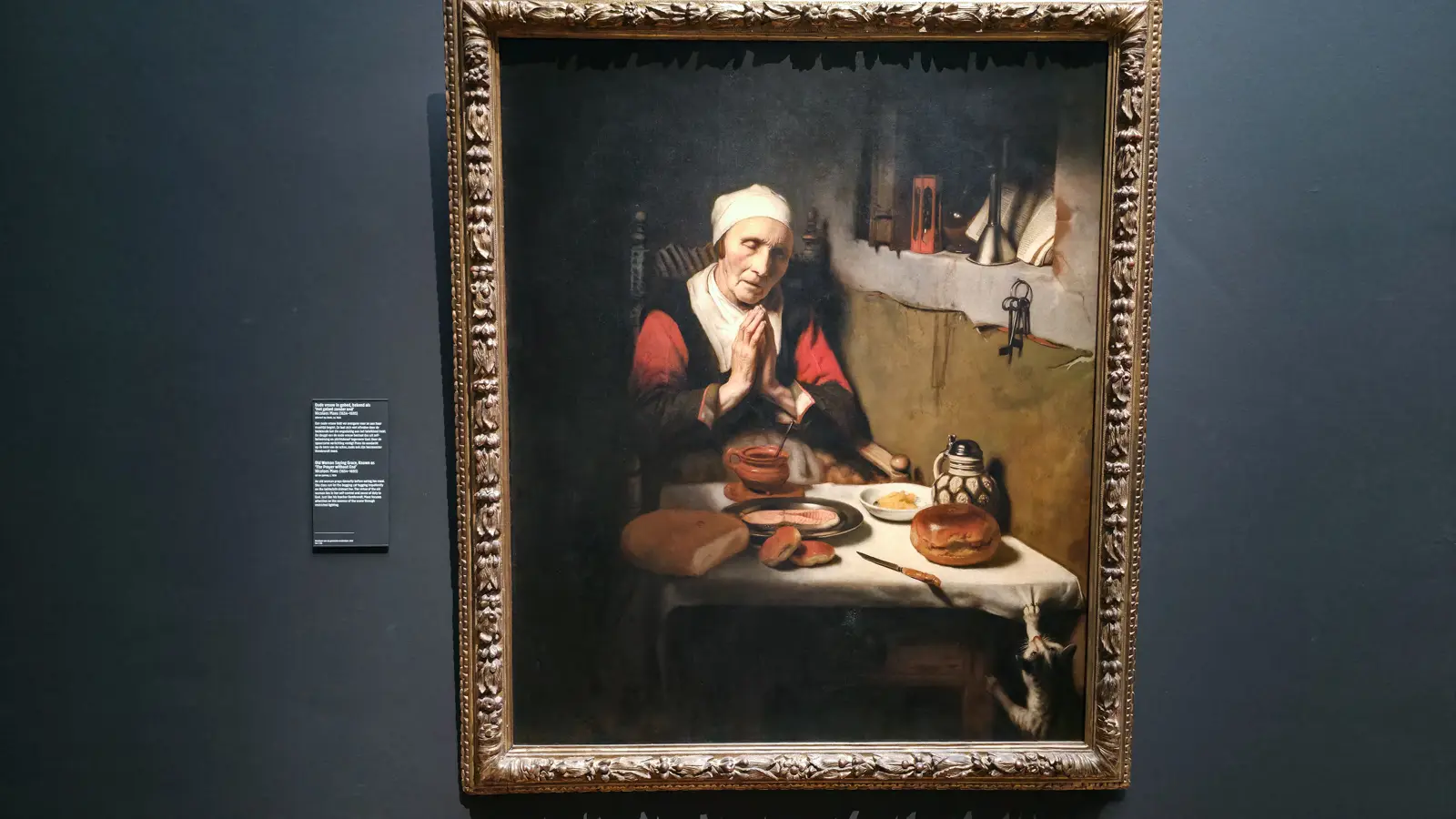
Even a scene of prayer became a domestic picture. In Nicolaes Maes’s Old Woman Saying Grace, from about 1656, a woman prays over her bread and fish while a cat tugs at the tablecloth.
Rembrandt, at the Top and After
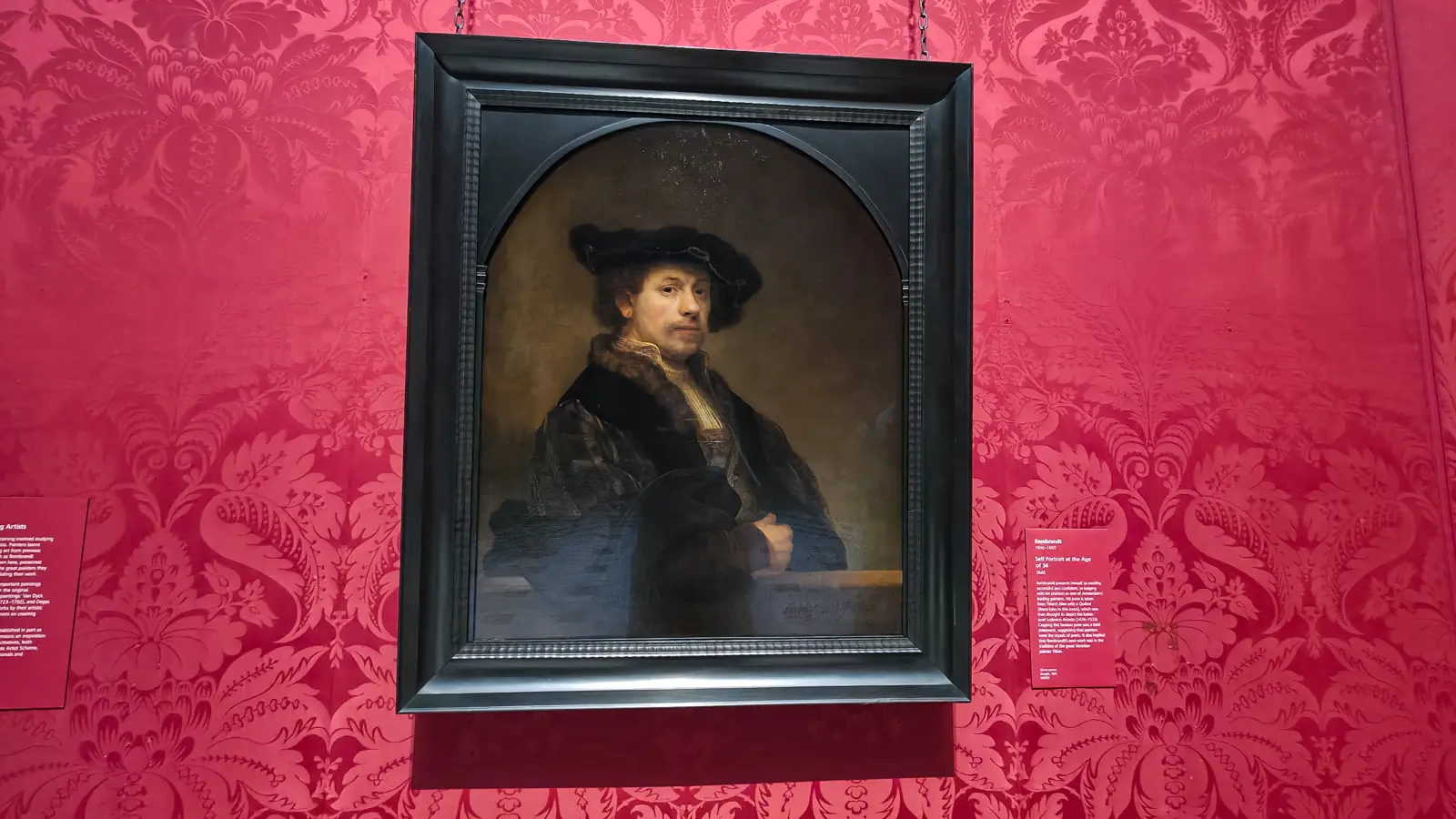
Rembrandt is the Golden Age in one career. In London, his Self Portrait at the Age of 34, from 1640, shows him at the peak: fur, velvet, a confident gaze, and a pose borrowed from a famous Titian.
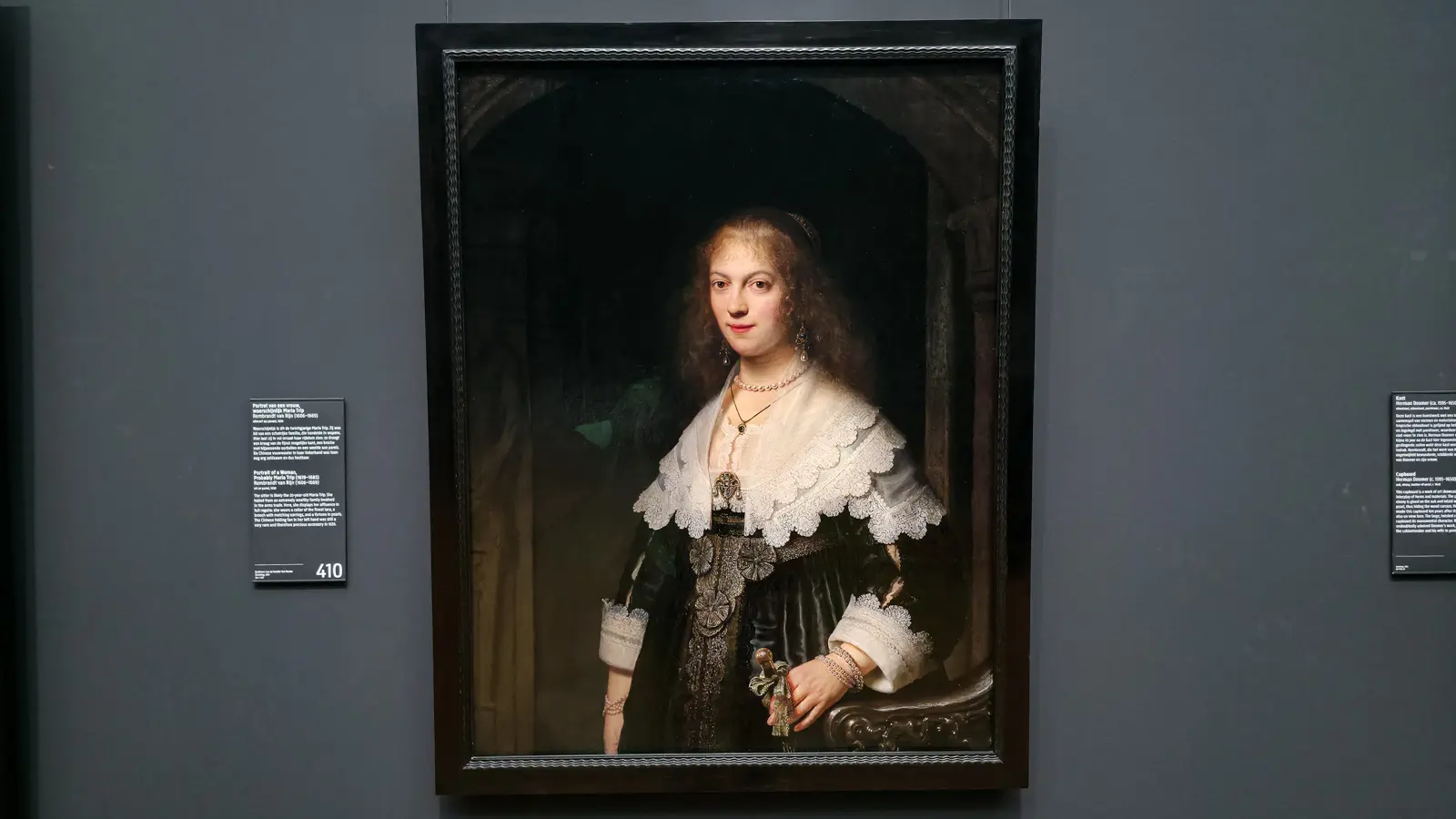
He painted the city’s elite too. His Portrait of a Woman, Probably Maria Trip, from 1639, shows a daughter of a family grown rich in the iron and arms trade, dressed in lace, pearls and a gold brooch.
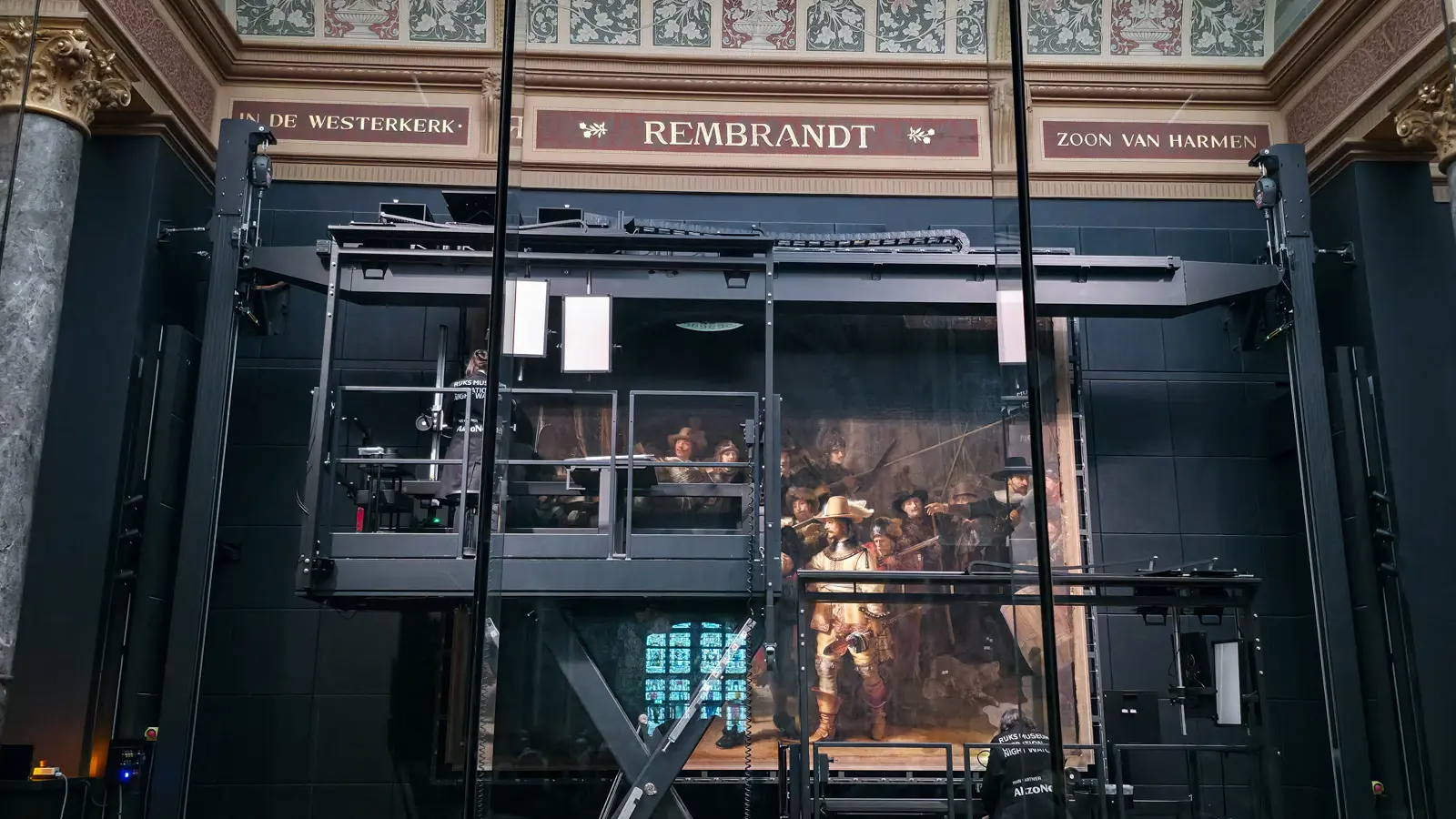
His most famous painting is still being studied. Rembrandt finished the Night Watch in 1642 for a company of Amsterdam’s civic militia. Since 2019 the Rijksmuseum has been researching and restoring it in a glass chamber in the gallery, in full view of visitors, and when I was there conservators were at work on a platform in front of the canvas.
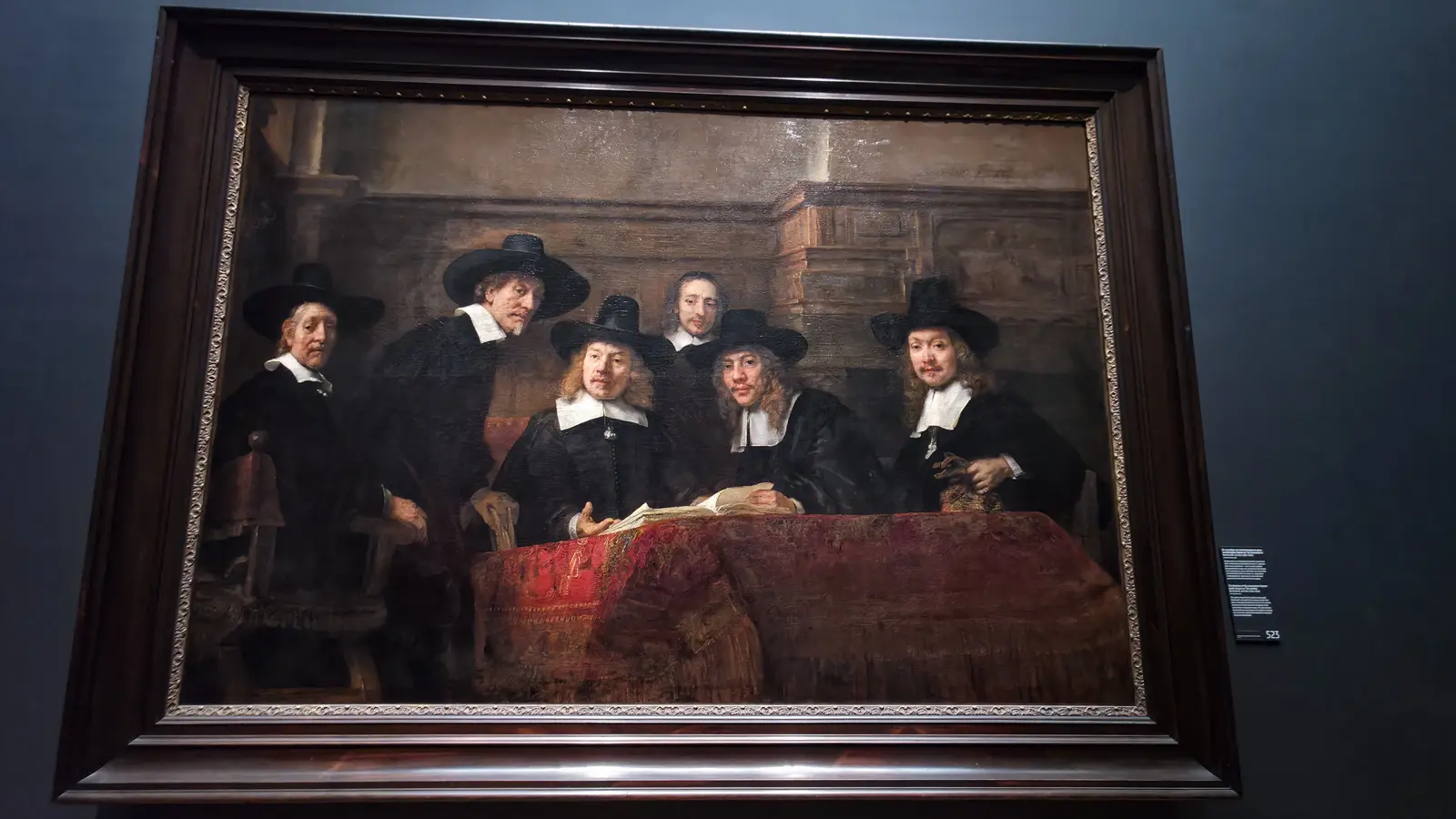
Twenty years later, he was still painting Amsterdam’s officials. The Syndics, from 1662, shows the officials of the Amsterdam drapers’ guild who checked the quality of dyed cloth, gathered around a red Persian rug and looking up as if someone has just walked in. It is Rembrandt’s only corporate group portrait.
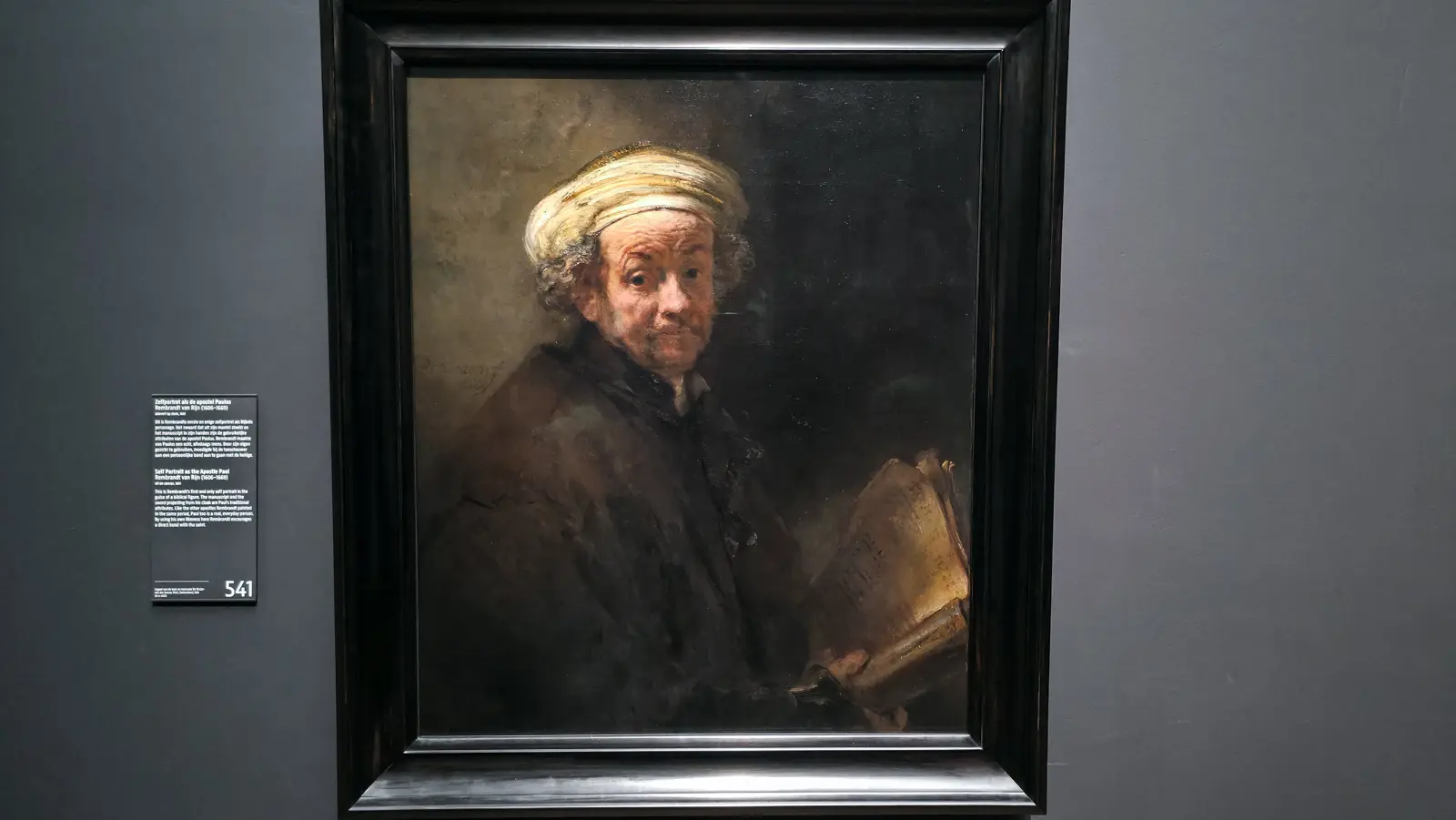
A year earlier he had painted himself very differently from the confident 34-year-old in London. His Self Portrait as the Apostle Paul shows an older, unsentimental face, holding a manuscript, with a sword hilt just visible in his cloak.
A Woman at the Top of the Market
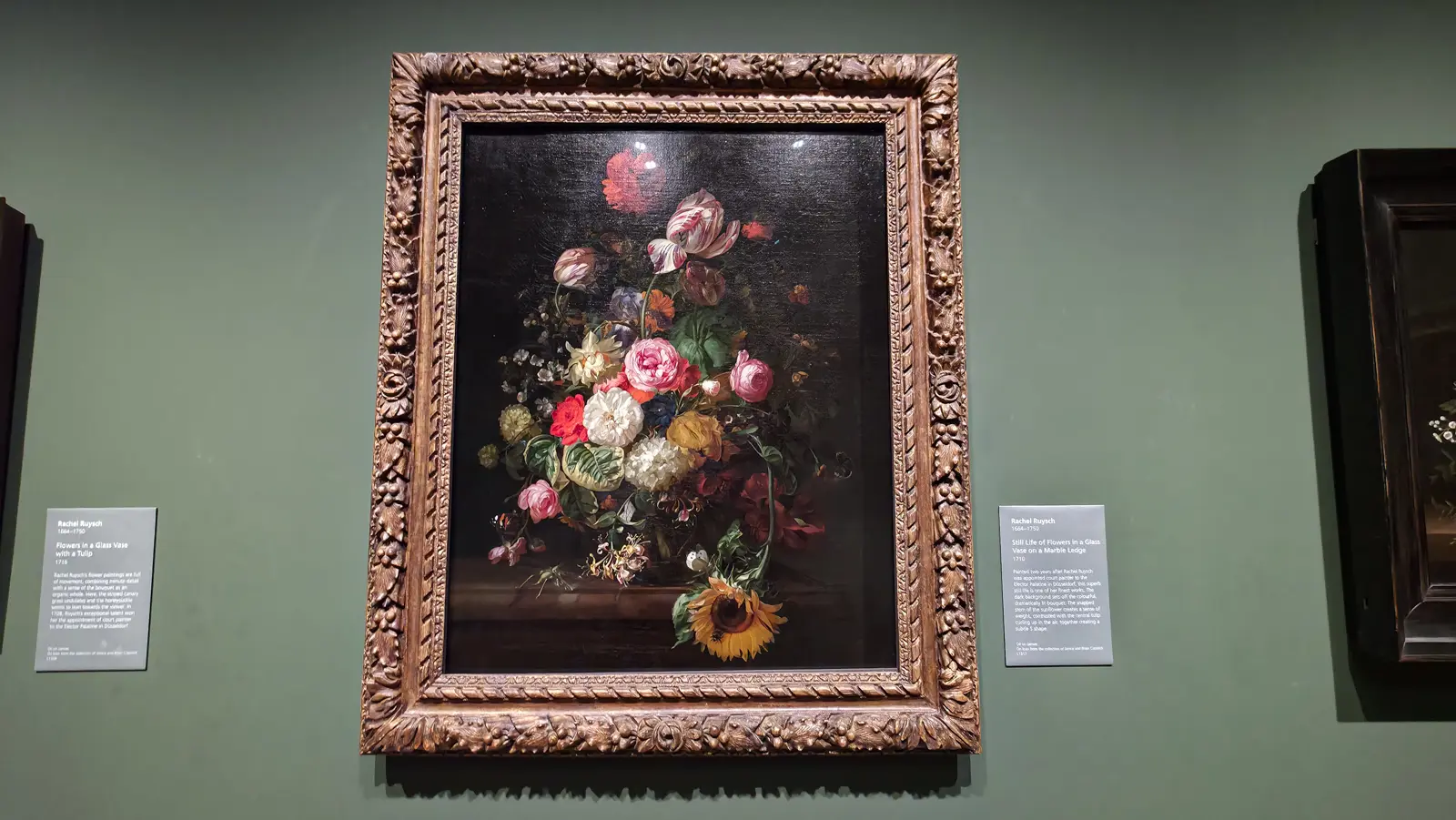
One of the best-paid painters of the age was a woman. Rachel Ruysch‘s flower pieces sold for more than 1,000 guilders, and in 1708 the Elector Palatine appointed her his court painter. I saw her work in both cities, including this Still Life of Flowers in a Glass Vase on a Marble Ledge, from 1710, in London.
Tulip Mania
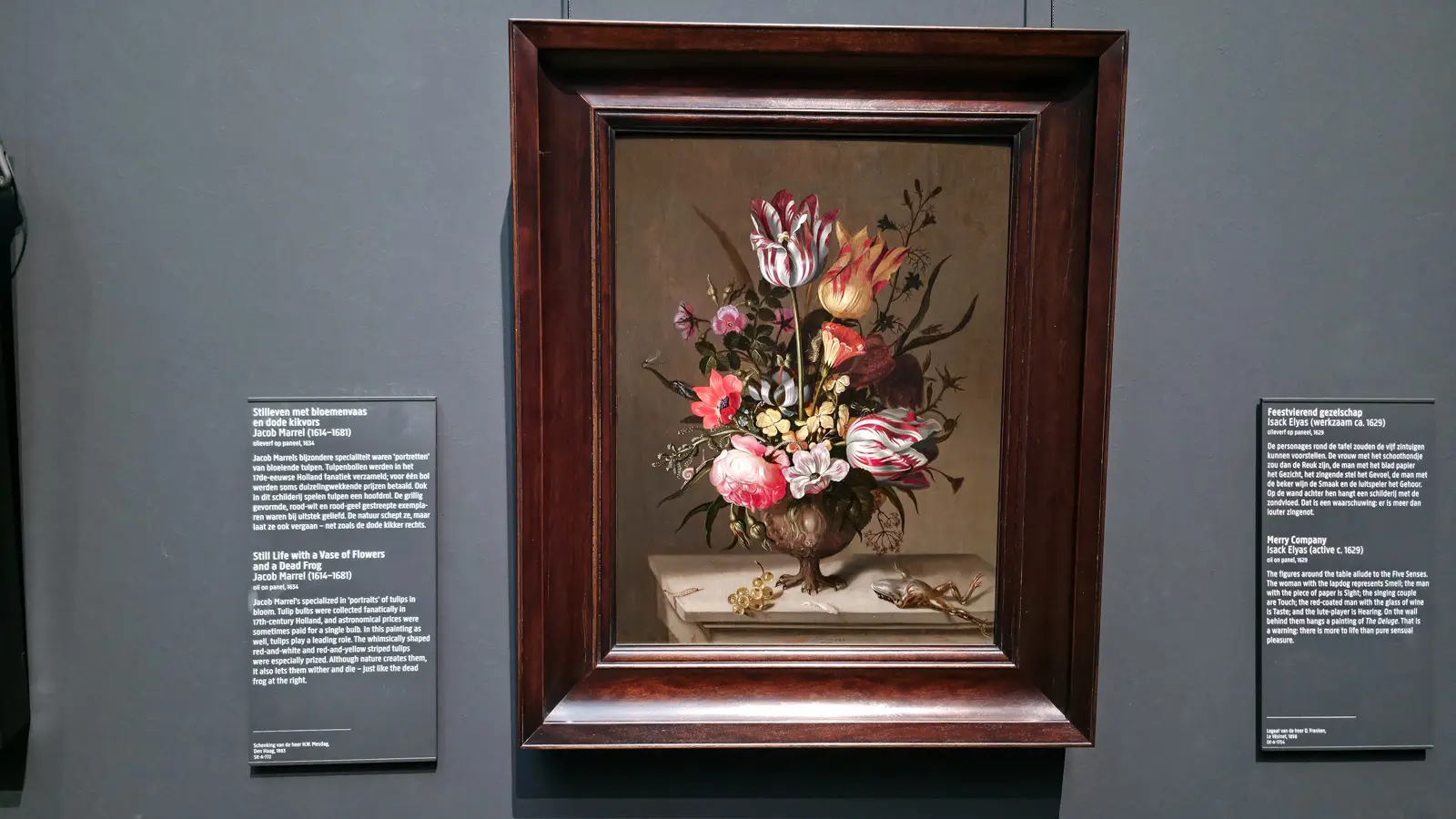
Not every fortune was made at sea. Tulip bulbs were collected fanatically in 17th-century Holland, the striped ones were the most prized, and some single bulbs sold for astronomical sums before the market crashed in 1637. Jacob Marrel specialised in “portraits” of tulips, and his vase of 1634 sets them beside a dead frog, a reminder that beauty does not last.
The Other Side of the Money
A post about this era would be incomplete without the cost. The spices that made the VOC rich came at a terrible price. Nutmeg grew in the Banda Islands, which the Dutch seized by force in 1621, killing and enslaving thousands of islanders. The Republic was also deeply involved in slavery and colonialism.
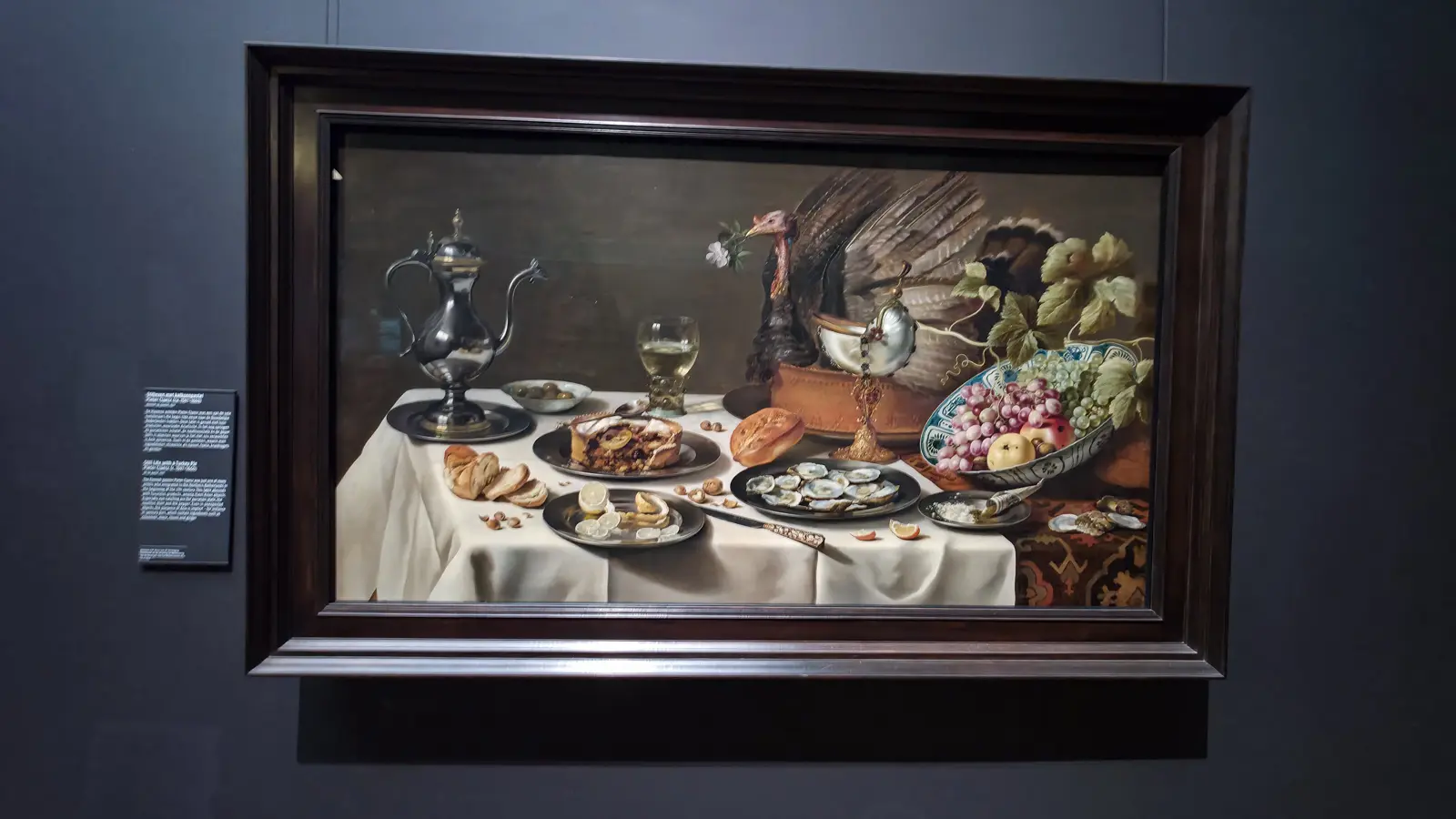
Pieter Claesz’s Still Life with a Turkey Pie, from 1627, sets out the luxuries this trade brought to a Dutch table: oysters, lemons, a nautilus cup, porcelain, and spices.
The name itself is now debated. Because of the slavery and colonialism behind the wealth, some Dutch museums have moved away from the term “Golden Age” altogether. I still use it here because it is the term most readers search for, but the paintings make more sense with the whole story attached.
Where to See It
The Rijksmuseum is the place to start. Its Gallery of Honour was designed around the Night Watch, with Vermeer and the Dutch masters in the bays leading up to it.
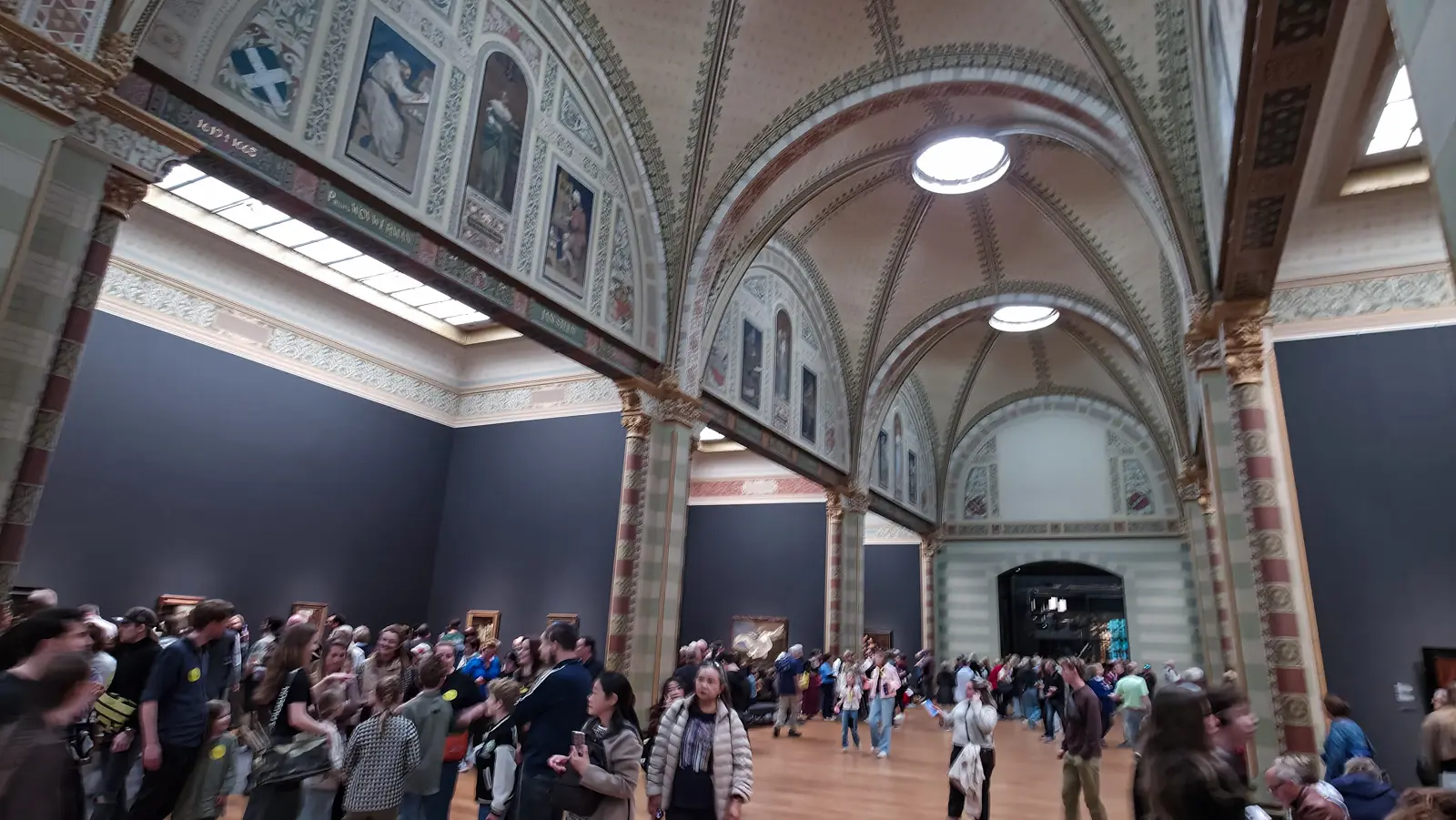
The Royal Palace on Dam Square is the Golden Age’s own showpiece. Het Scheepvaartmuseum tells the story of the ships, and the Rembrandt House on Jodenbreestraat is where Rembrandt lived and worked from 1639 to 1658. In London, the National Gallery‘s Dutch rooms hold Vermeer, Rembrandt and the townscape painters, and its permanent collection is free.
Bubbly Tips
- Book the Rijksmuseum online. Tickets are sold with a time slot, and there is no ticket desk at the door.
- Watch the Night Watch being restored. The conservators work in a glass chamber in the gallery, so you may catch them at work on the platform.
- Read the swan’s graffiti. On The Threatened Swan, look for the words painted under the swan, on the egg and above the dog.
- Find the foot warmer. In The Milkmaid, the little wooden box on the floor at the right is easy to miss.
- Count the hats in The Syndics. Five officials wear them; the man at the back without one is their servant.
- Visit the National Gallery for free. Entry to the permanent collection costs nothing, so the Dutch rooms make an easy drop-in.
- Pair the Royal Palace with the Rijksmuseum. The city hall shows the wealth and pride of the same merchants who bought the paintings.
- Look for Vermeer’s address in Delft. The Little Street’s label gives Vlamingstraat 40 to 42, worth a detour on a day trip.
- Read the extra labels when they appear. The Rijksmuseum has used temporary labels to add the history of slavery to familiar paintings.
Final Thoughts
The Dutch Golden Age is a story of ships, shares and spices, of a city hall built like a palace and a painter who borrowed Titian’s pose to say he had arrived. Its paintings are full of milk jugs, market squares and flowers that never bloomed together, because the people buying them wanted their own world on the wall.
It is also a story with victims, and the best museums now tell both halves. Seeing the paintings in London and Amsterdam, months apart, gave me a fuller picture than either gallery alone.
Until next time!

🌟 Everything You Need to Plan Your Dream Trip in 2026
- 🌟 Luxury Hotels - Find premium stays with Booking.com & Hotels.com
- 🏡 Vacation Rentals - Discover unique properties on VRBO
- 🏞️ Guided Tours - Explore with Viator or GetYourGuide
- 🎫 Attraction Tickets - Skip the lines with Tiqets
- 🚢 Ocean Cruises - Set sail with Cruise Direct
- 📱 International SIMs - Stay connected with Saily
- 🚗 Car Rentals - Budget-friendly options from Discover Cars
- 🌐 Secure VPNs - Browse safely with NordVPN
- 💶 Currency Exchange - Best rates with Wise
- 🗣️ Learn Languages - Master the local language with Babbel and Rosetta Stone