
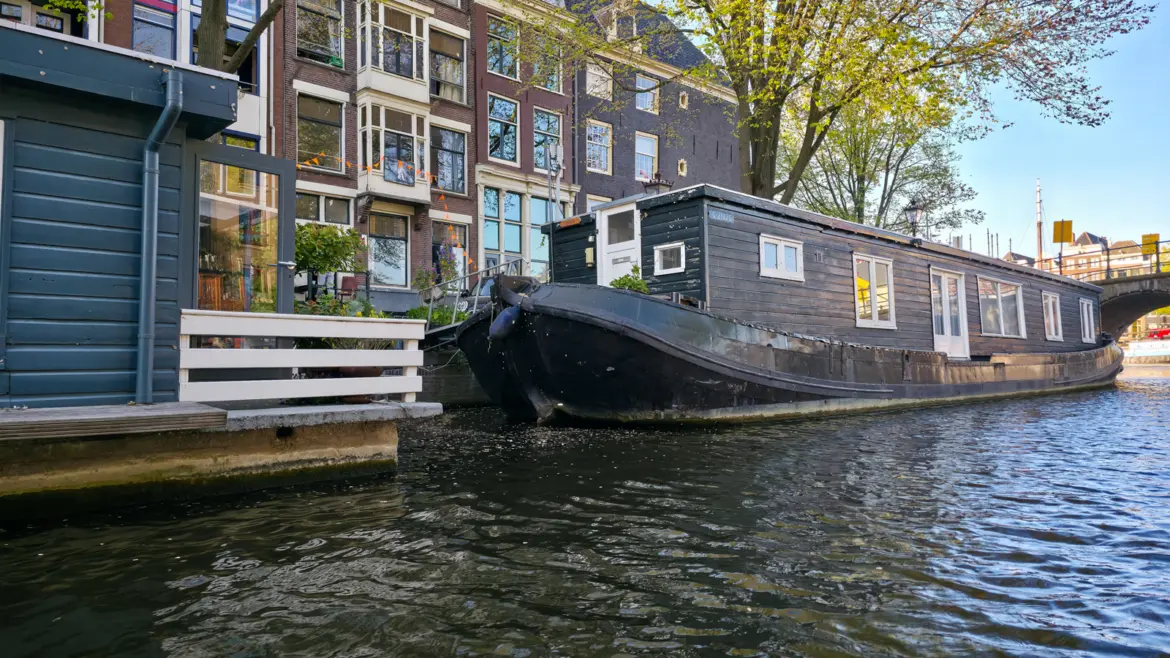
I had heard about Amsterdam‘s houseboats. I had even watched Rebecca fall into a canal in Ted Lasso and spend the night on one. What I had not grasped was how many there are, or how completely they are part of the city.
On 29 April, on a two-hour canal tour, I spent a good part of the evening looking for Rebecca’s houseboat. I never found it. By the end I had stopped minding, because I had a new appreciation for the people who live on the water and the way they look after their homes.
Amsterdam’s Houseboats at a Glance
🚤 How many · Around 2,500 households live on Amsterdam’s houseboats, each with a real street address and house number.
⚓ Two kinds · A woonschip is an old cargo barge converted into a home (black steel hull, portholes, rudder); a woonark is a purpose-built house on a floating pontoon.
📋 How you live on one · You need a mooring permit (ligplaats). They’re scarce, so in practice you buy a boat that already has one — and the mooring is part of the price.
🎬 The Ted Lasso truth · Rebecca’s houseboat was a set built in a London studio. The same episode (“Sunflowers”) did film at the Van Gogh Museum.
💡 Tip · See them from a small-group boat (it sits low, close to the hulls), and remember they’re homes — don’t photograph into windows or step onto decks.
Looking for Rebecca’s Houseboat
The episode is Sunflowers, season 3, episode 6, when AFC Richmond travels to Amsterdam. Rebecca falls into a canal and is pulled out by a houseboat owner, played by the Dutch actor Matteo van der Grijn, who lets her dry off on his boat.
There was a good reason I could not find it. Most of the episode was filmed on location in Amsterdam, including a scene at the Van Gogh Museum, but the houseboat was a set built in a London studio.
So I gave up on the fictional one and looked at the real ones instead.
Two Kinds of Home on the Water
There are roughly two types. A woonschip is usually an old inland cargo vessel with the hold converted into a home. A woonark was built to be lived on from the start: a house on the water.
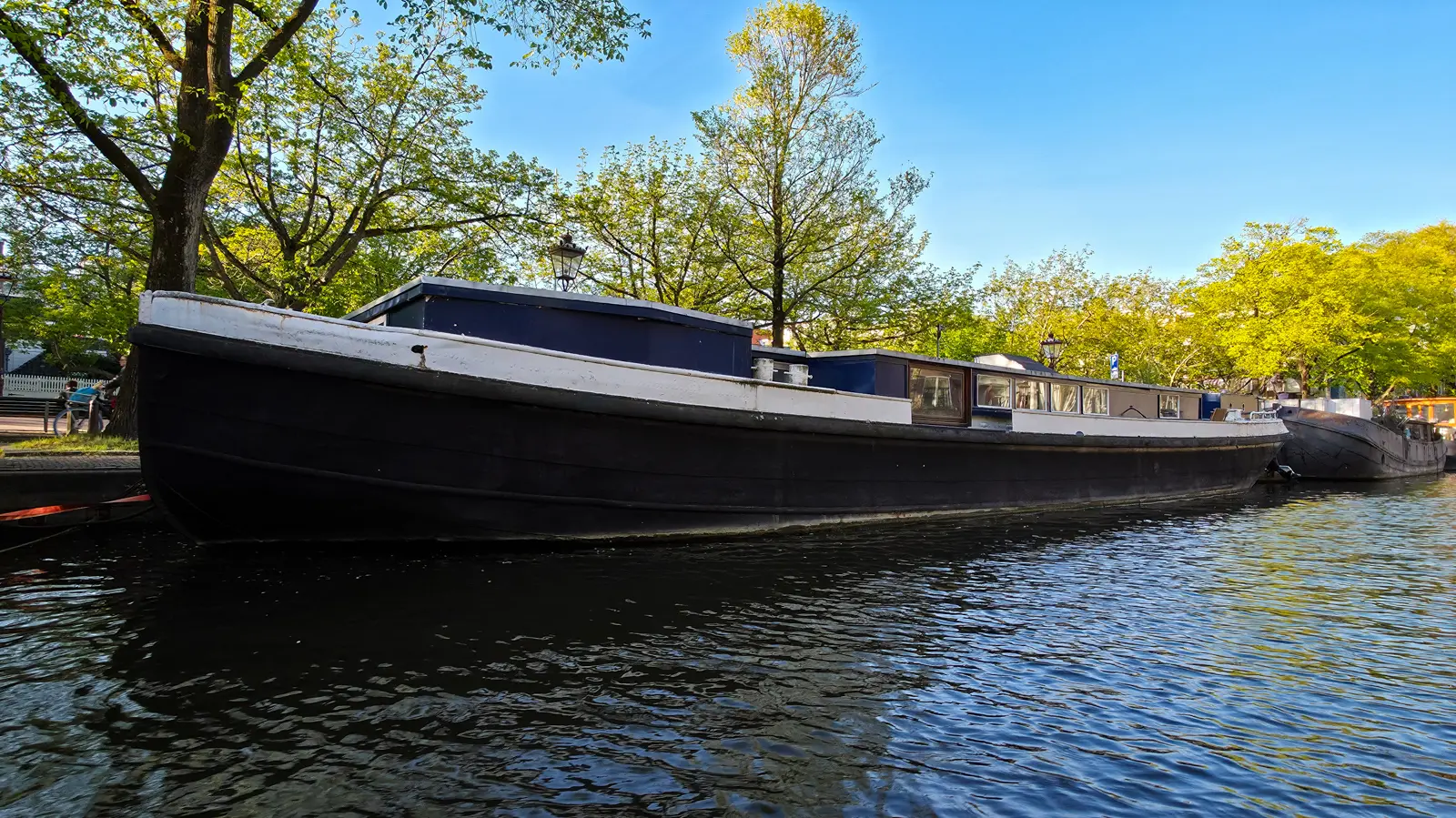
The woonschepen are easy to spot. They have curved steel hulls, portholes and rudders, and most of them are painted black.
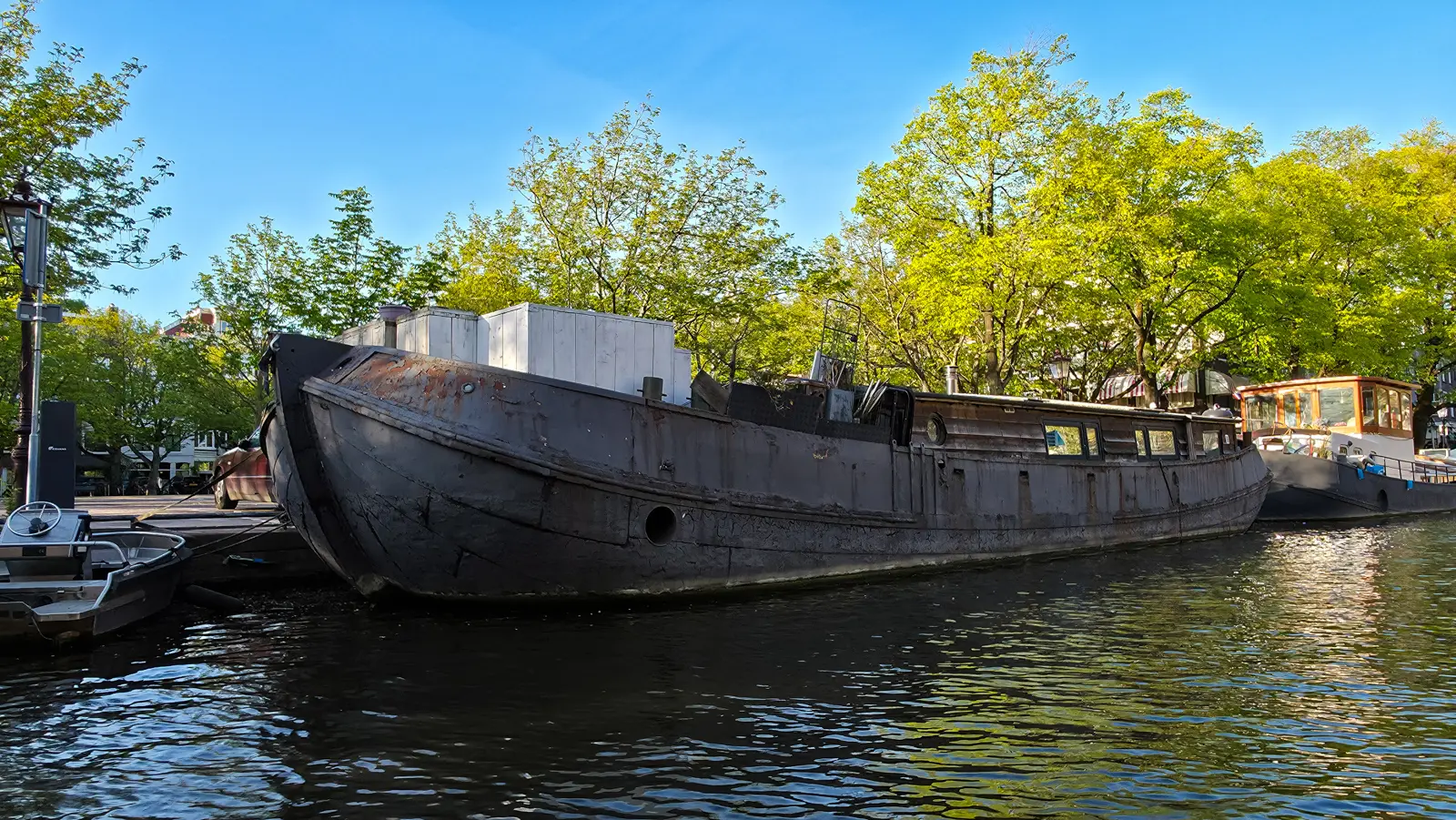
Some wear their age openly. This one had rust showing through the paint at the bow and white timber boxes stacked on deck.
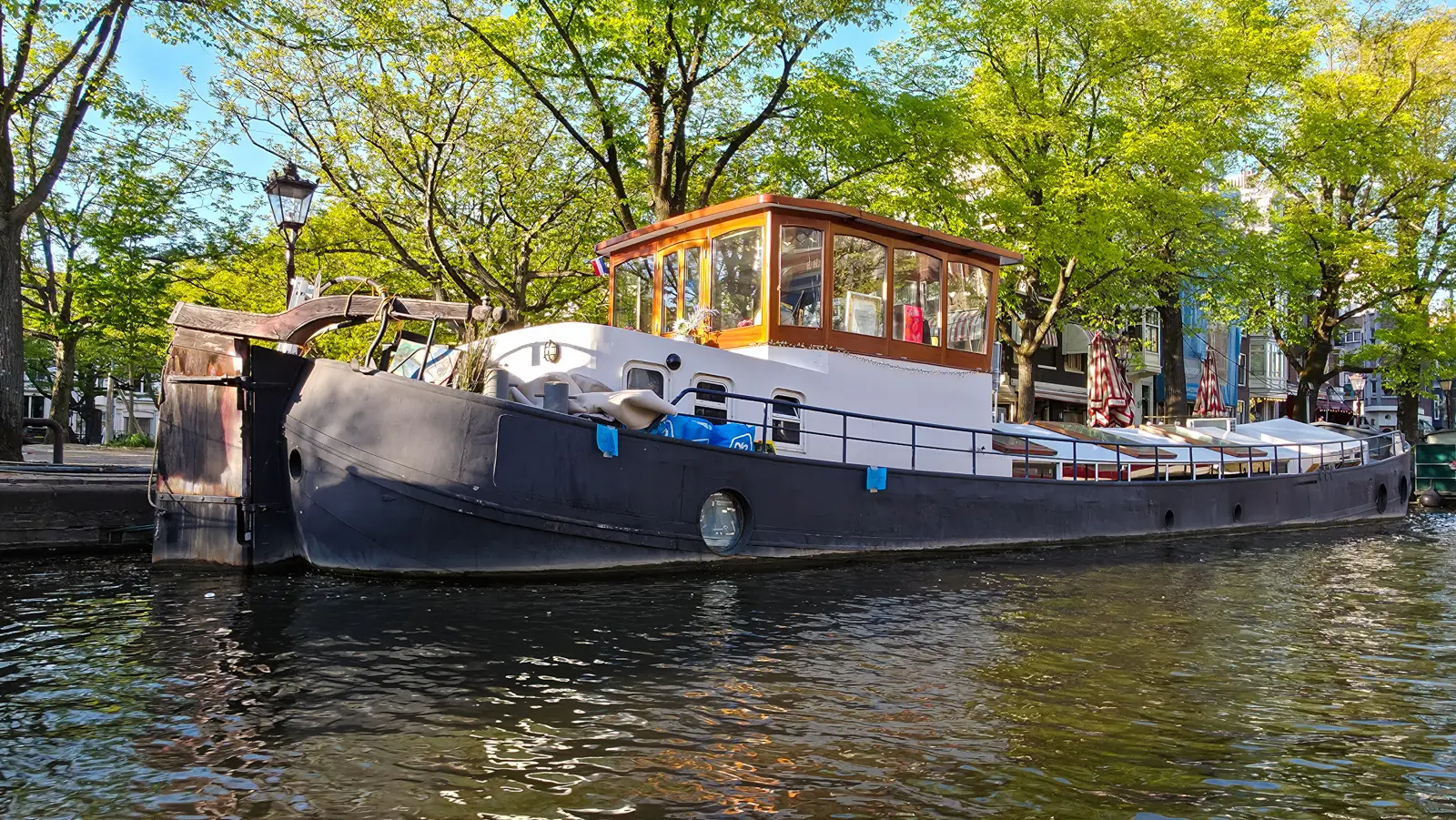
Others have been rebuilt with real care. This one had a varnished wooden wheelhouse, a Dutch flag and its rudder still in place at the stern.
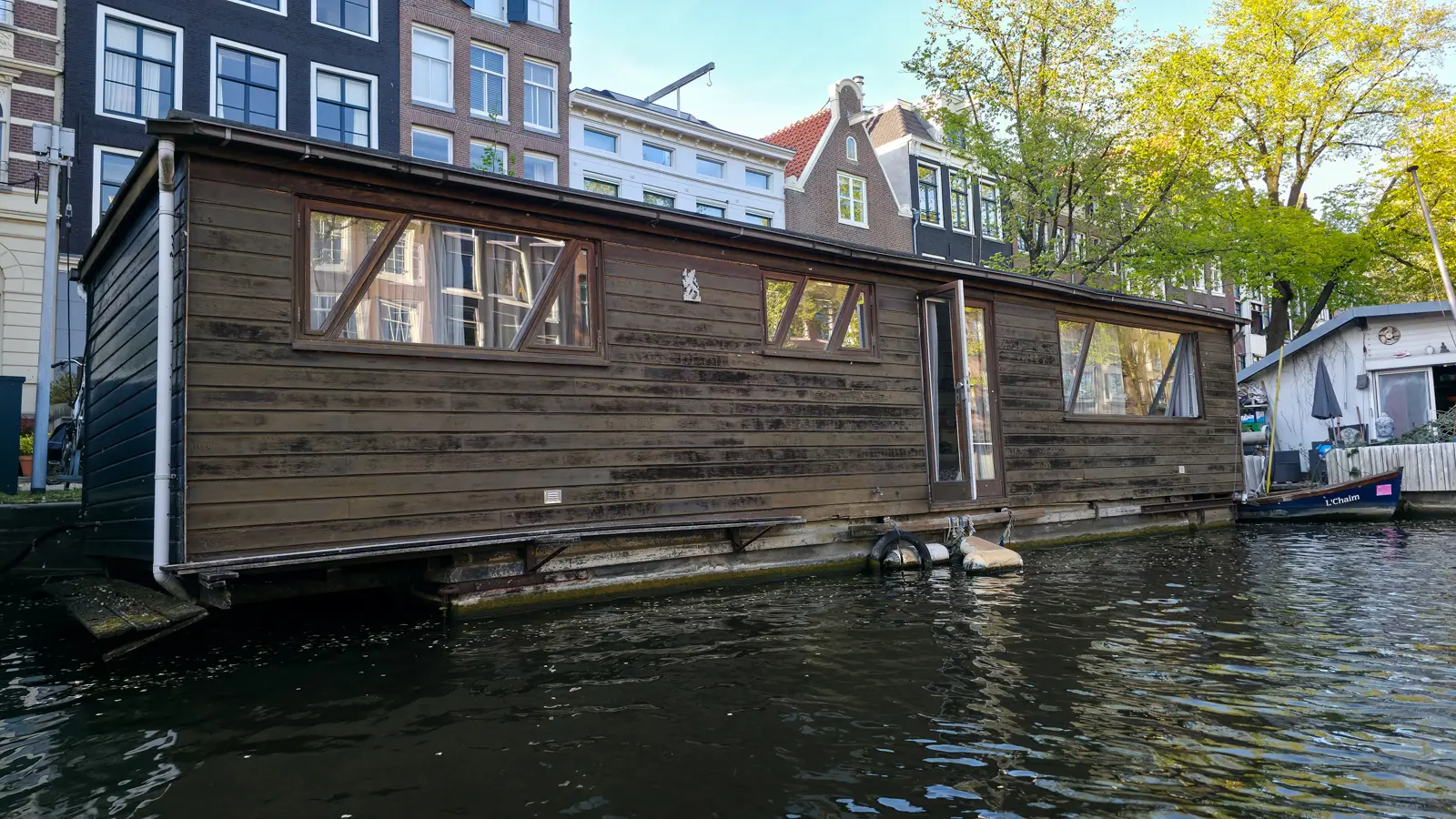
The arks look more like cottages or garden sheds set on the water. This one had angled window frames and its glass door standing open to the canal.
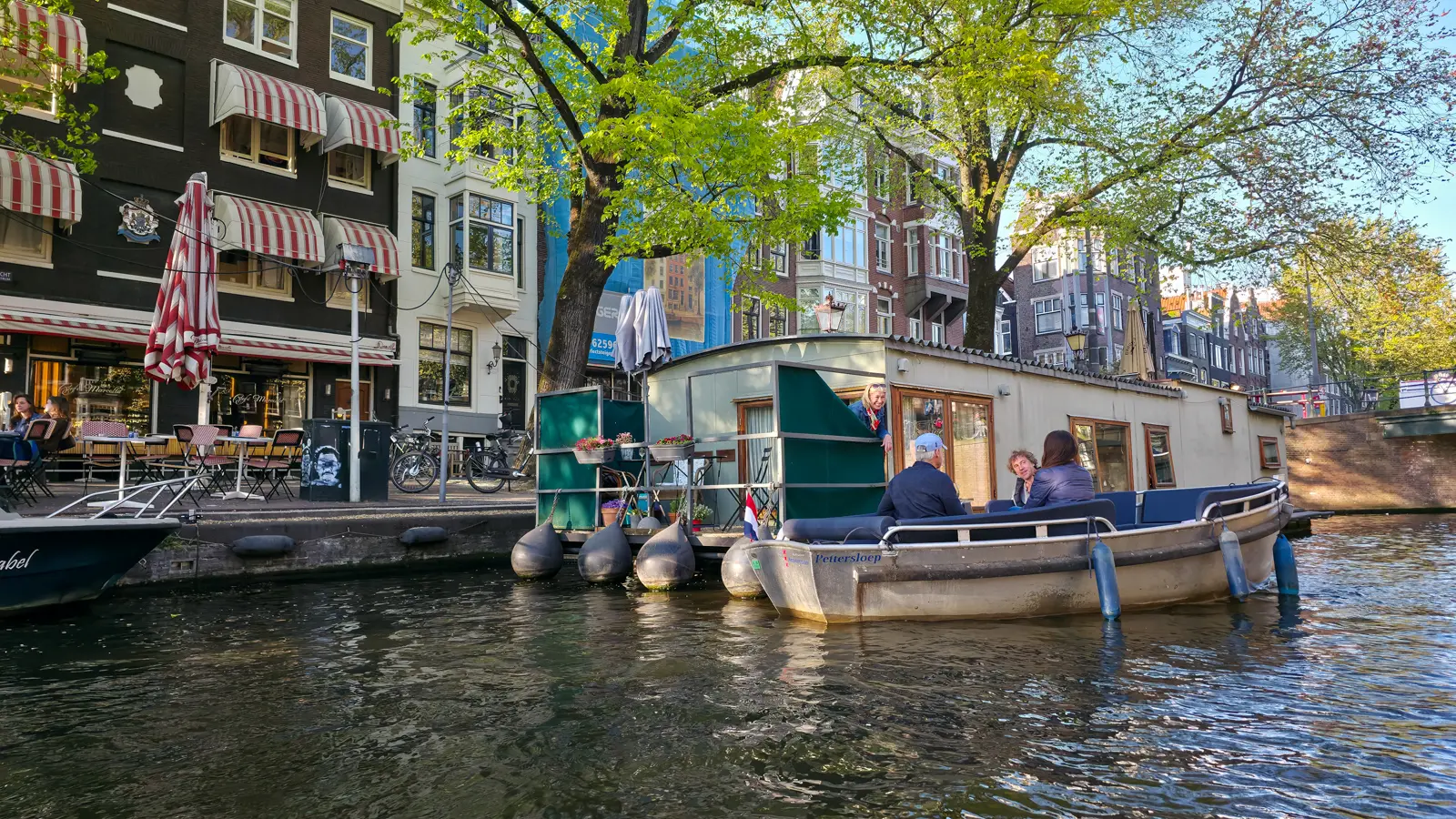
Another had flower boxes along its terrace, and as we passed, a woman leaned out of the window to talk to the people in a small boat alongside.
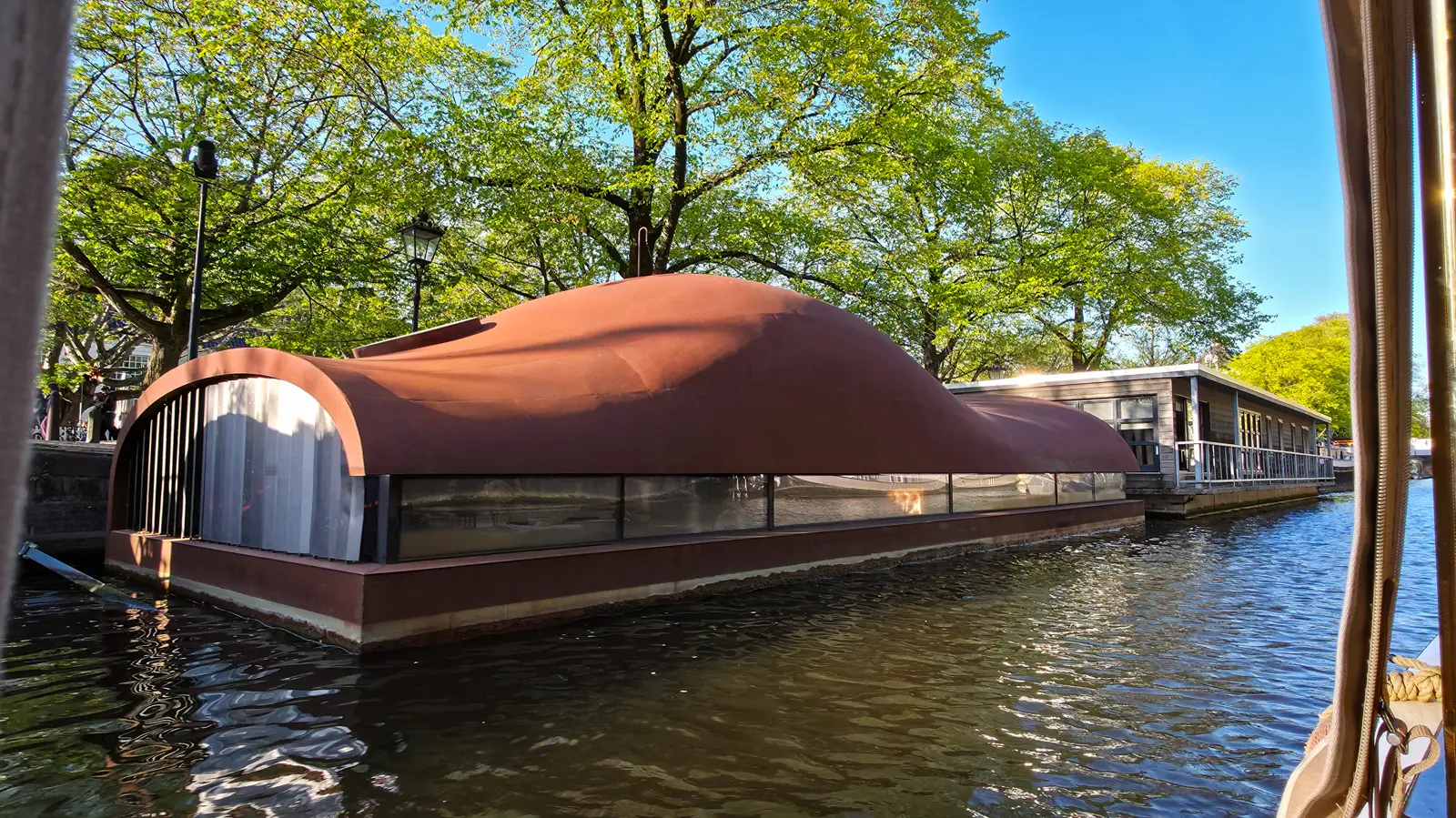
Then there are the new ones. The most striking houseboat of the evening had a curved roof in rust-red metal over a long band of glass.
Addresses, Permits and Upkeep
Around 2,500 households live on houseboats in Amsterdam, about 750 of them within the Singel, the innermost canal. Each houseboat has an address and a house number like any other home.
Living on one takes a mooring permit, called a ligplaats. The number of permits is limited and demand is high, so in practice the way in is to buy a boat that already has one. Since 2005, houseboats have also had to connect to the city’s sewer system.
Licences and upkeep are required, and it shows. Almost every houseboat I passed was cared for: fresh paint, planted boxes, chairs set out on the roof or the terrace.
Life on the Canal
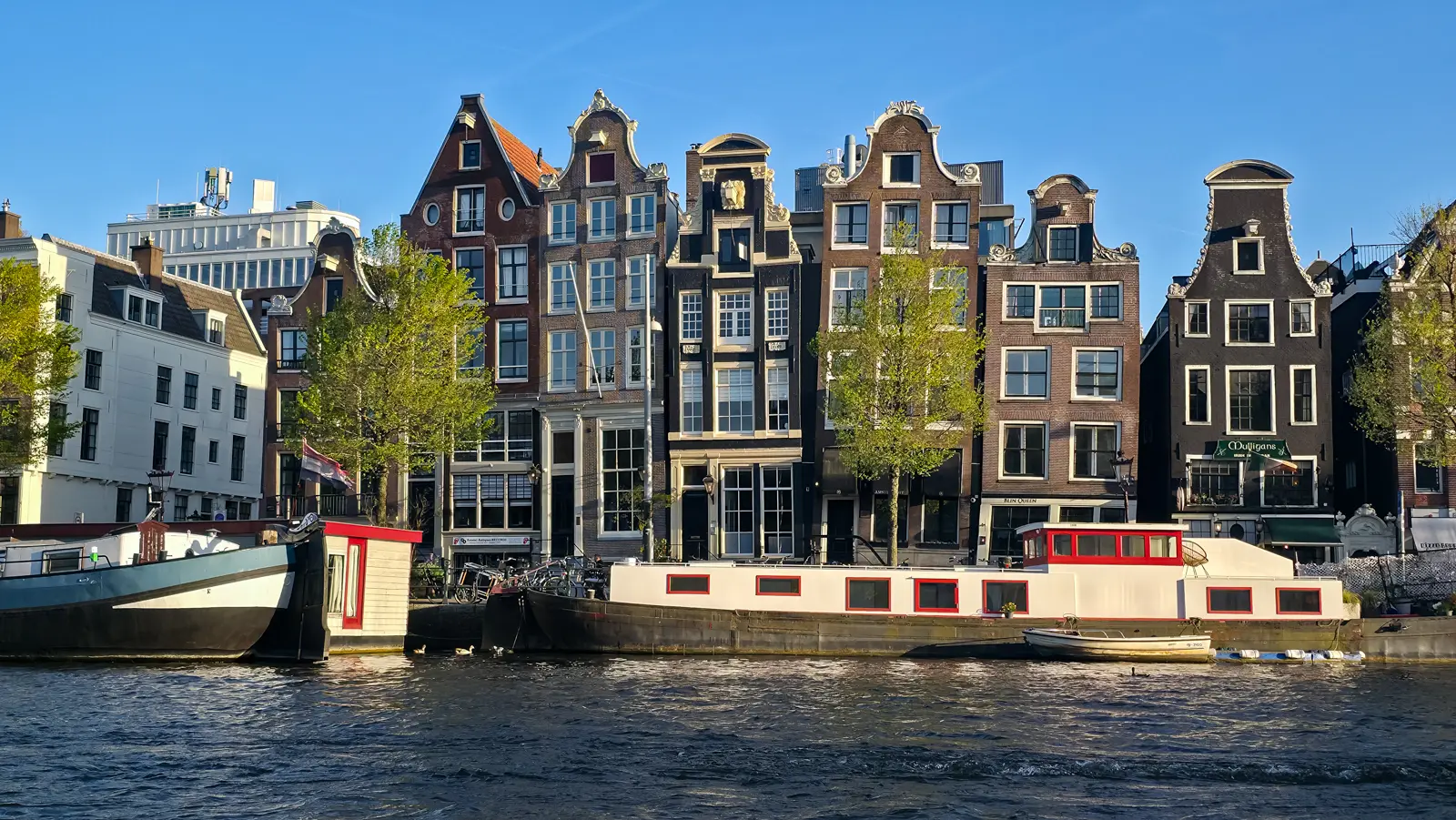
Life appears calmer on the water. Out on the Amstel, where the river is wider than the canals of the ring, the houseboats sit low beneath the gabled houses and the traffic seems a long way off.
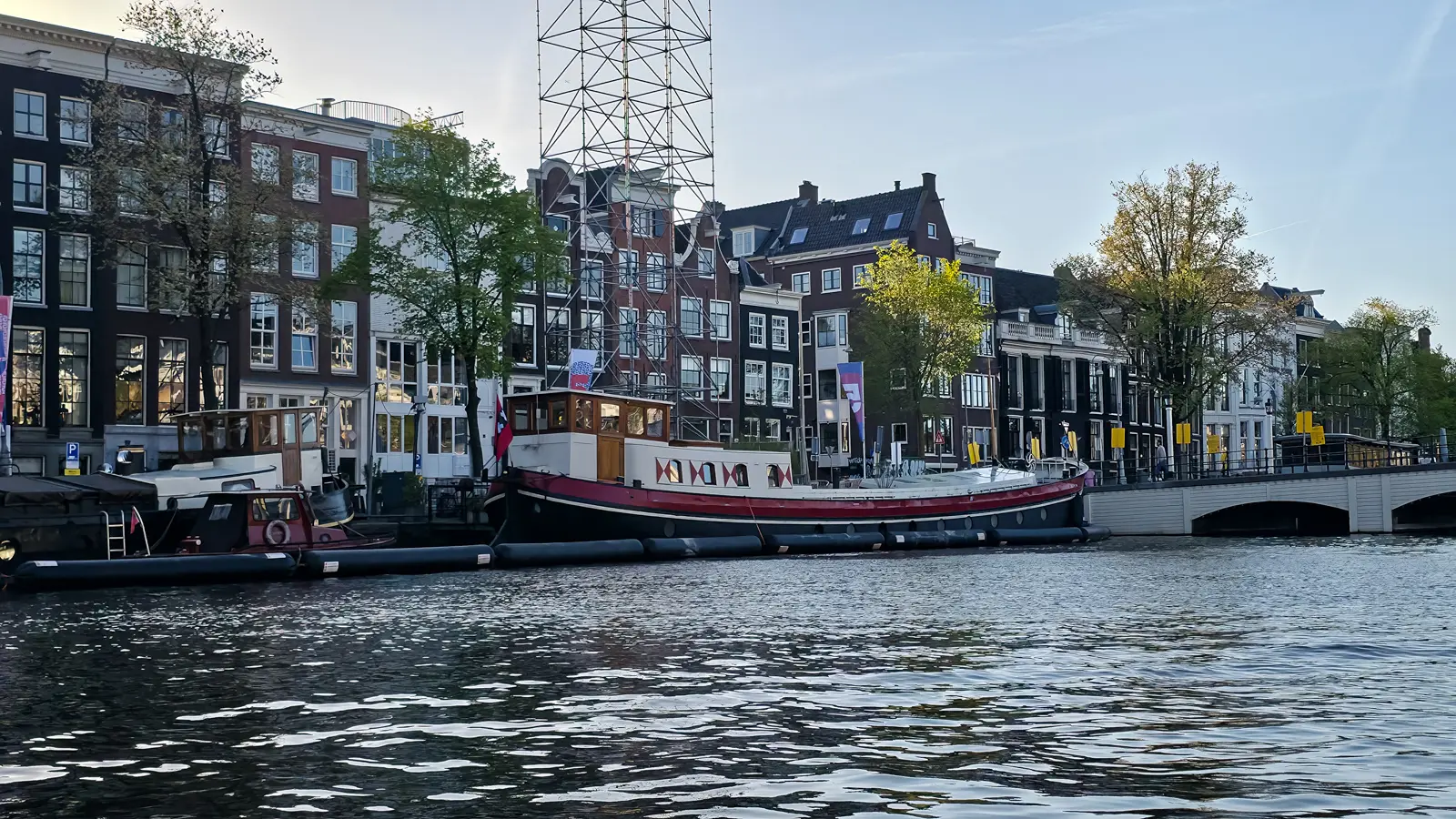
I envied that lifestyle a bit. The people I caught a glimpse of on their houseboats appeared to be loving it.
One houseboat on our route was not a home at all. The Catboat (De Poezenboot), a sanctuary for stray cats on the Singel, has been on the water since the 1960s.
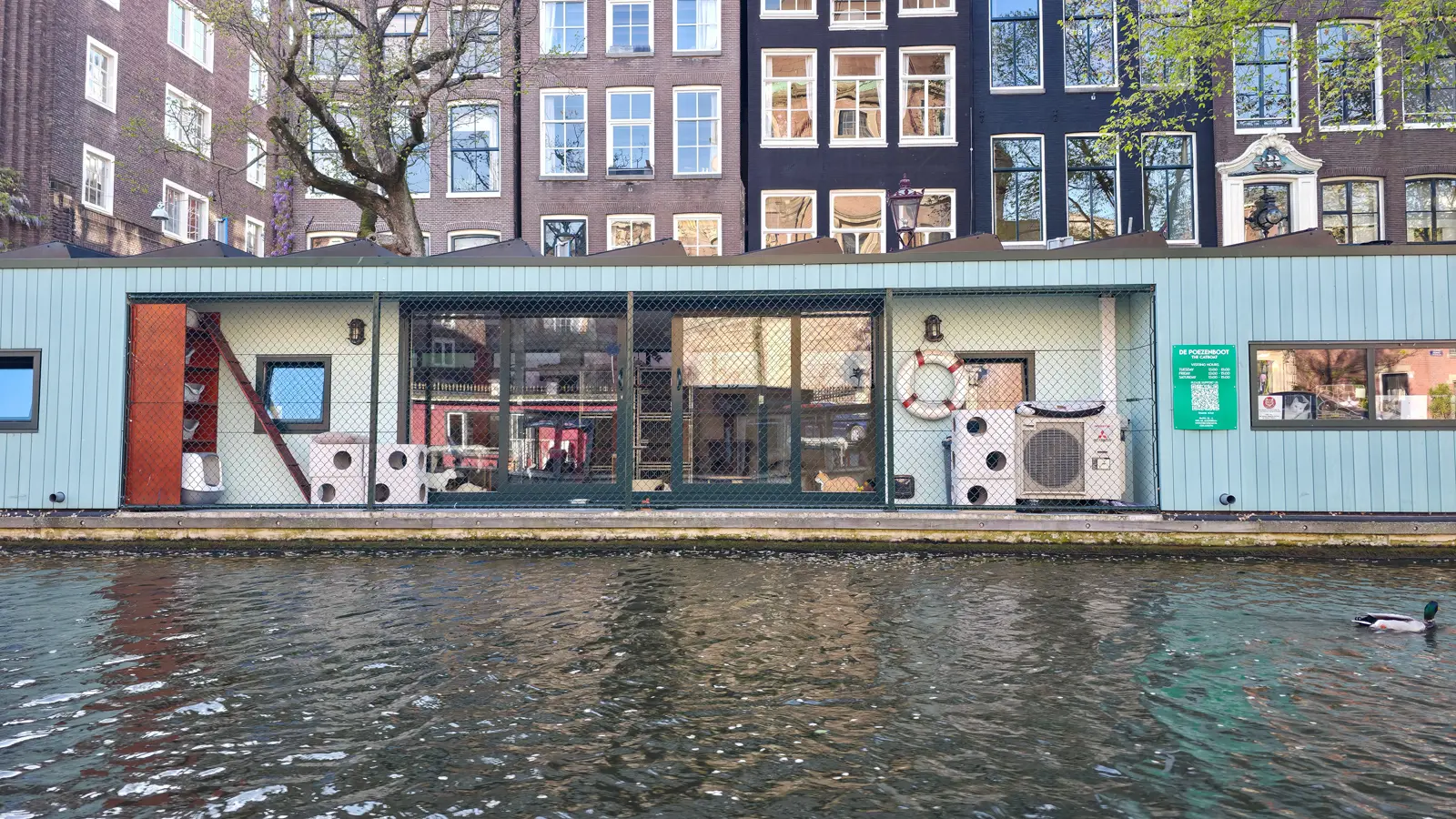
When we passed, the green sign on its side listed the visiting hours: Tuesday, Friday and Saturday, 1 to 3 PM.
Bubbly Tips
- See them from the water. Our trip was the Flagship Amsterdam small-group cruise, two hours on a covered boat for 20. A small boat gets much closer to the hulls than the big glass-roofed tour boats.
- Go in the evening. We were on the water from about 7 PM in late April, and the low sun lit the hulls and the trees along the canals.
- Visit the Houseboat Museum. The Hendrika Maria, a former cargo ship moored on the Prinsengracht, is open to visitors. It shows how a houseboat connects to the city, how the permits work and what maintenance involves.
- Look for the house numbers. Houseboats have addresses, and the numbers and registration plates on their cabins are easy to spot from a passing boat.
- Remember they are homes. Do not photograph into windows or step onto decks and gangways. The people on board are at home.
- Stop by the Catboat. It is free to go aboard, and the hours are short because it runs on volunteers.
- Skip the hunt for Rebecca’s houseboat. It was a London studio set. For a real Ted Lasso location, the same episode filmed at the Van Gogh Museum.
Final Thoughts
I never found Rebecca’s houseboat, and it turns out nobody could have. What I found instead were thousands of real ones, most of them looked after with more care than I expected, and people on board who seemed very happy to be there.
Next time, I would like to spend a night on one.
Until next time!

🌟 Everything You Need to Plan Your Dream Trip in 2026
- 🌟 Luxury Hotels - Find premium stays with Booking.com & Hotels.com
- 🏡 Vacation Rentals - Discover unique properties on VRBO
- 🏞️ Guided Tours - Explore with Viator or GetYourGuide
- 🎫 Attraction Tickets - Skip the lines with Tiqets
- 🚢 Ocean Cruises - Set sail with Cruise Direct
- 📱 International SIMs - Stay connected with Saily
- 🚗 Car Rentals - Budget-friendly options from Discover Cars
- 🌐 Secure VPNs - Browse safely with NordVPN
- 💶 Currency Exchange - Best rates with Wise
- 🗣️ Learn Languages - Master the local language with Babbel and Rosetta Stone