
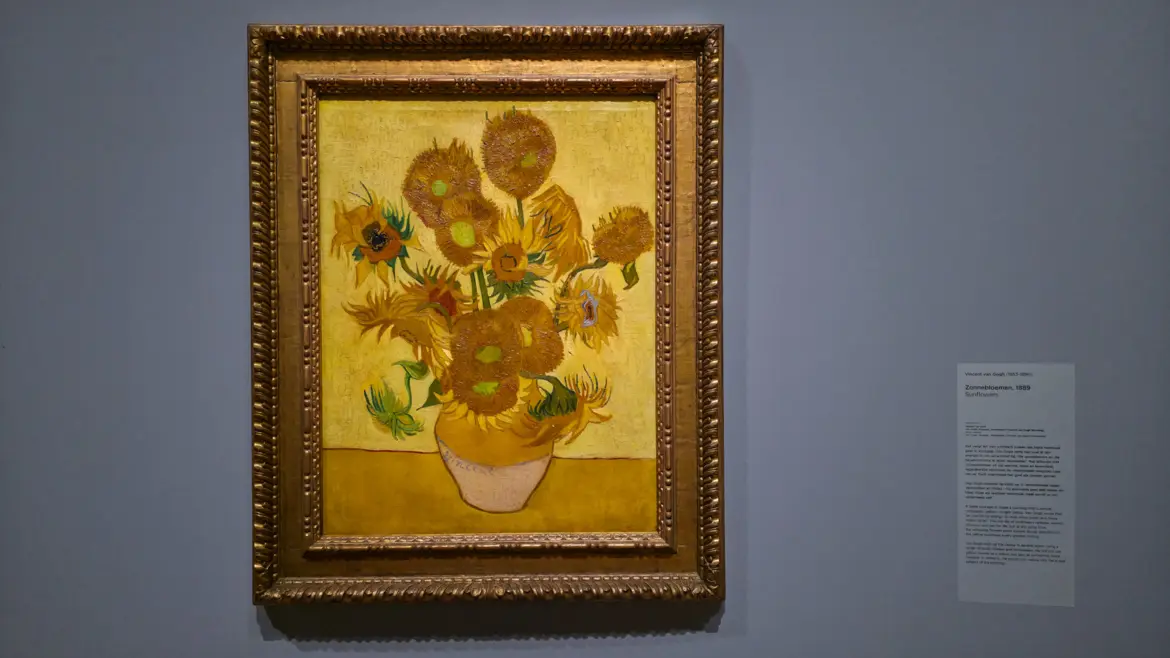
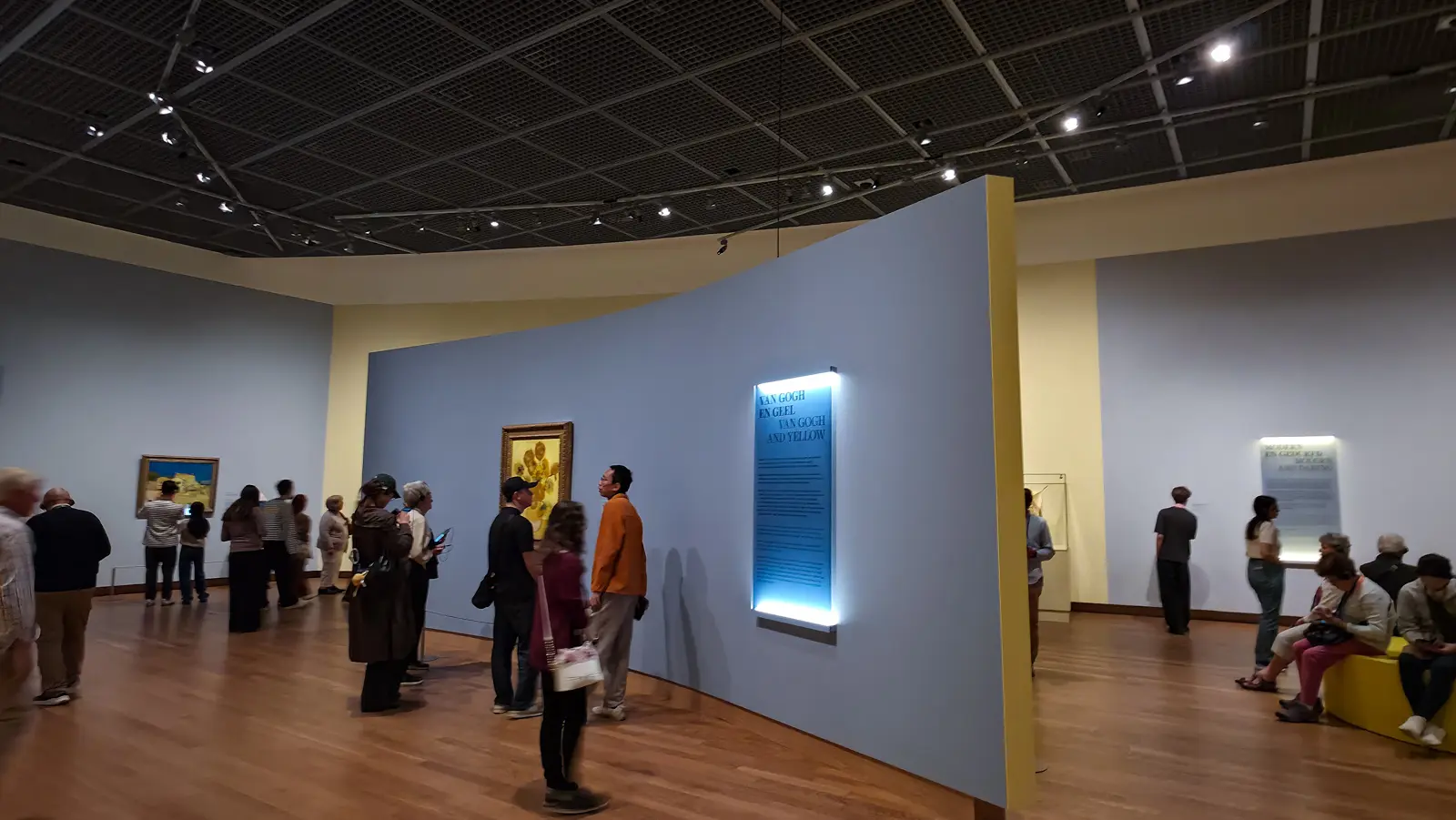
Most people come to the Van Gogh Museum in Amsterdam for one painting. I did too. On May 2nd I finally stood in front of the Sunflowers, and my first thought was how much smaller it was than I expected.
It is not actually small. The canvas is 95 by 73 centimetres. It is just smaller than its reputation, like the Mona Lisa in Paris, which at 77 by 53 centimetres is smaller still. All this fuss for an average-sized painting, and it holds so much more than its size.
Van Gogh’s Sunflowers at a Glance
🌻 Which one · The Amsterdam Sunflowers dates from 1889 and is one of five surviving vase-of-sunflowers canvases (the others are in London, Philadelphia, Munich and Tokyo) — the only one in the Netherlands.
📏 How big · 95 × 73 cm — not small, just smaller than its reputation (the Mona Lisa, at 77 × 53 cm, is smaller still).
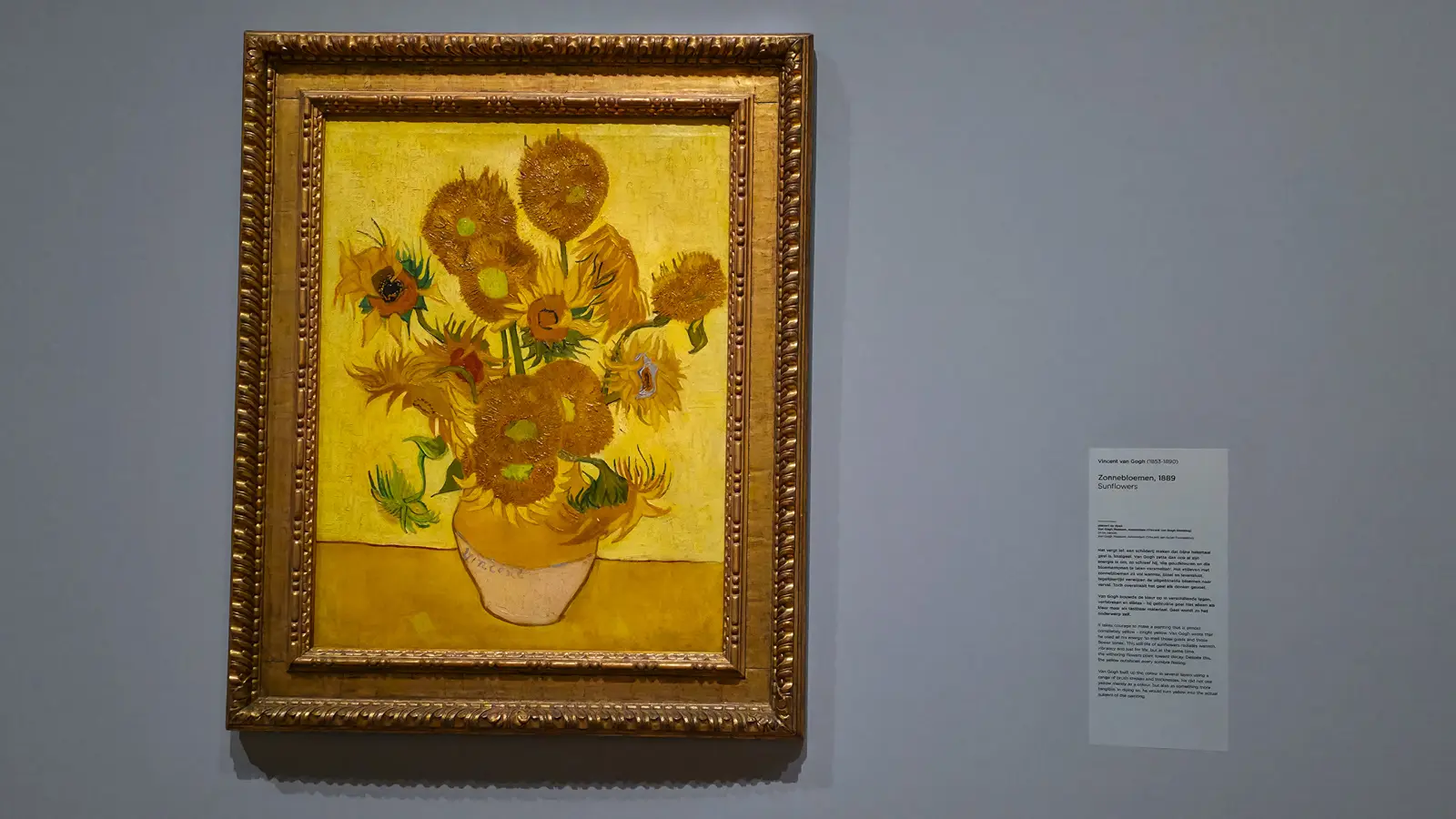
✍️ Look closer · It’s signed “Vincent” in blue on the vase, and it shows sunflowers at every stage, from full bloom to gone-to-seed.
🟡 The theme · Yellow was Van Gogh’s colour before the Sunflowers, and in his time it stood for everything modern and daring — the “yellow nineties,” the yellow novels, The Yellow Book.
💡 Tip · Go at 9 AM or on a Friday evening; the midday crush is worst around the Sunflowers.
The Sunflowers
The museum’s version dates from 1889. It is almost entirely yellow: yellow flowers, a yellow vase and a yellow wall, with Vincent written across the vase in blue.
The flowers are not all in their prime. Some are full and open, some are dropping their petals, and some have gone to seed. The museum label puts it plainly: the painting is full of warmth and life, and at the same time the withering flowers point towards decay. The yellow still wins.
That is what I love about it. It shows a sunflower at every stage of its life and still comes across as cheerful. Van Gogh wrote that he had to use everything at his disposal to reach “the high yellow note”.
A Whole Exhibition in Yellow
When I visited, the Sunflowers opened a temporary exhibition, Yellow. Beyond Van Gogh’s Colour, which ran from 13 February to 17 May 2026. It was the first exhibition to explore what yellow meant to Van Gogh and his contemporaries, with work by more than fifteen other artists alongside his own.
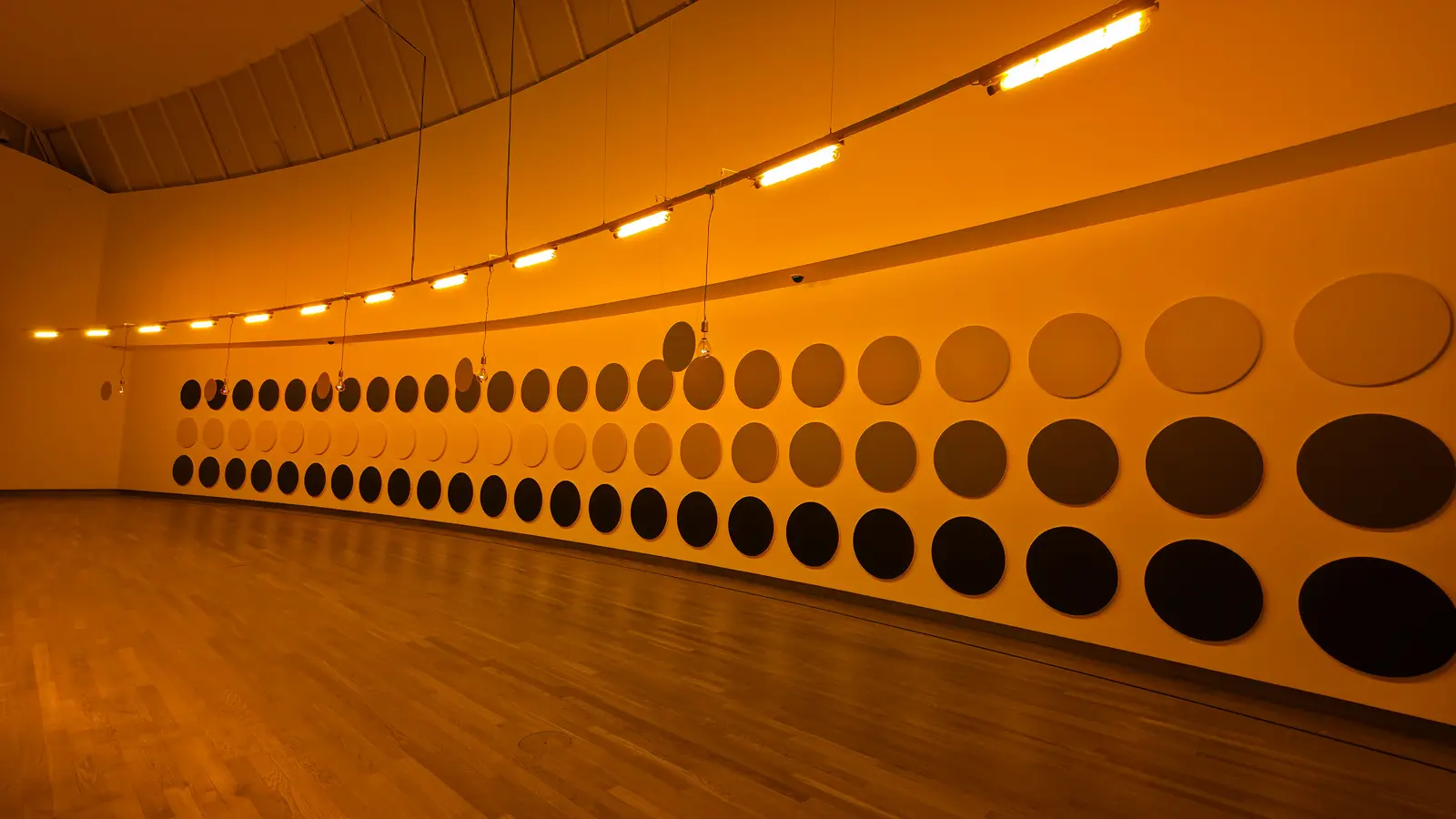
On the first floor, the exhibition ended with two light installations by Olafur Eliasson, the Danish-Icelandic artist best known for The Weather Project, the giant artificial sun he built in the Turbine Hall of Tate Modern in London in 2003. The larger one combined his painting Colour experiment no. 78 (2015) with the yellow mono-frequency lamps of Room for one colour (1997). Under that light, every other colour drops away. A long wall of painted circles reads only as shades of yellow, grey and black. Eliasson describes the colour this way: “I see red, I see blue, but I experience yellow”.
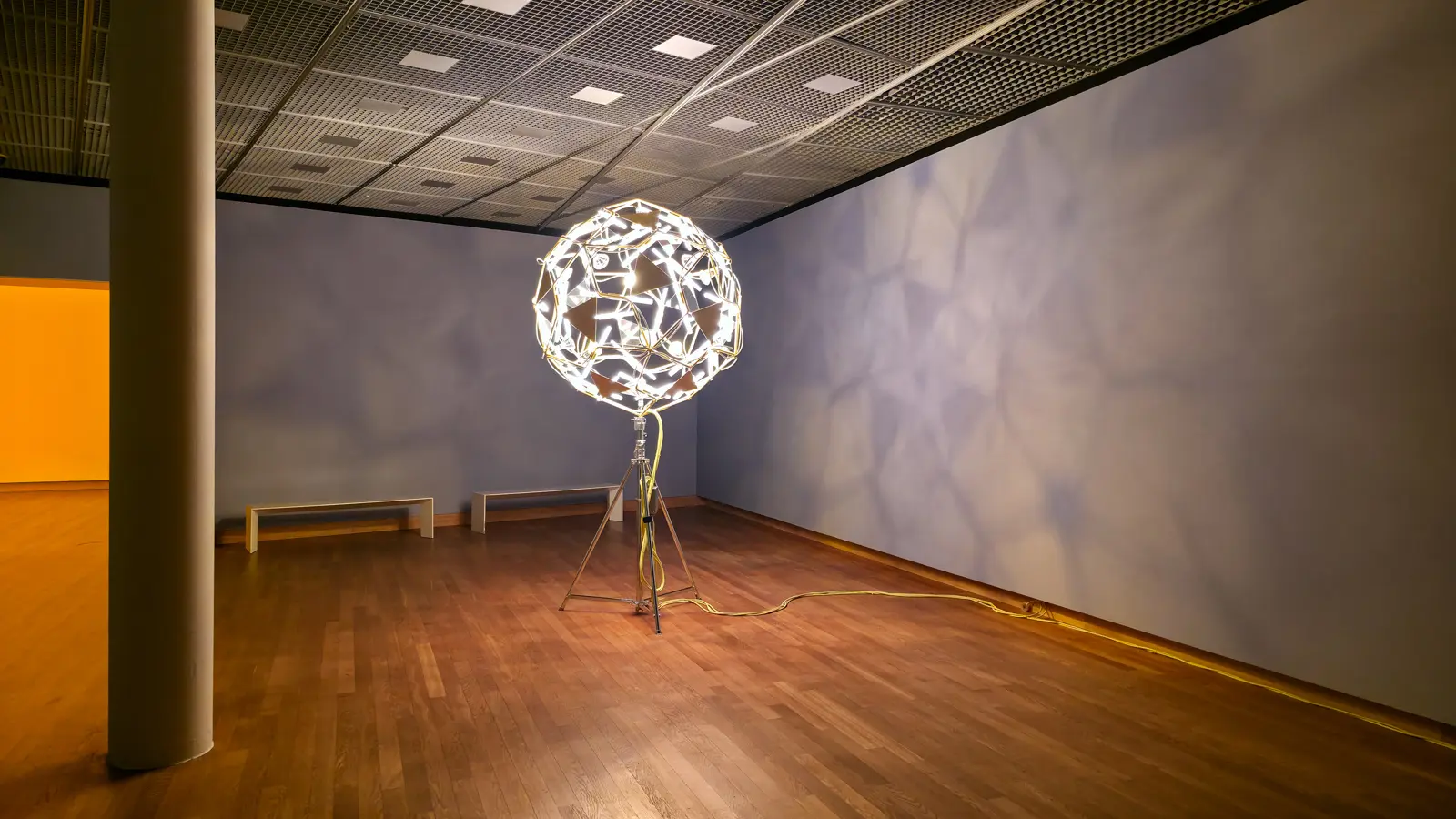
In the next room stood his second work, Who is afraid yellow flower ball from 2006: a ball of lights and small mirrors on a tripod, throwing a web of shadows across the walls.
The exhibition has closed, but the Sunflowers belongs to the museum and stays in Amsterdam.
Van Gogh’s Yellows
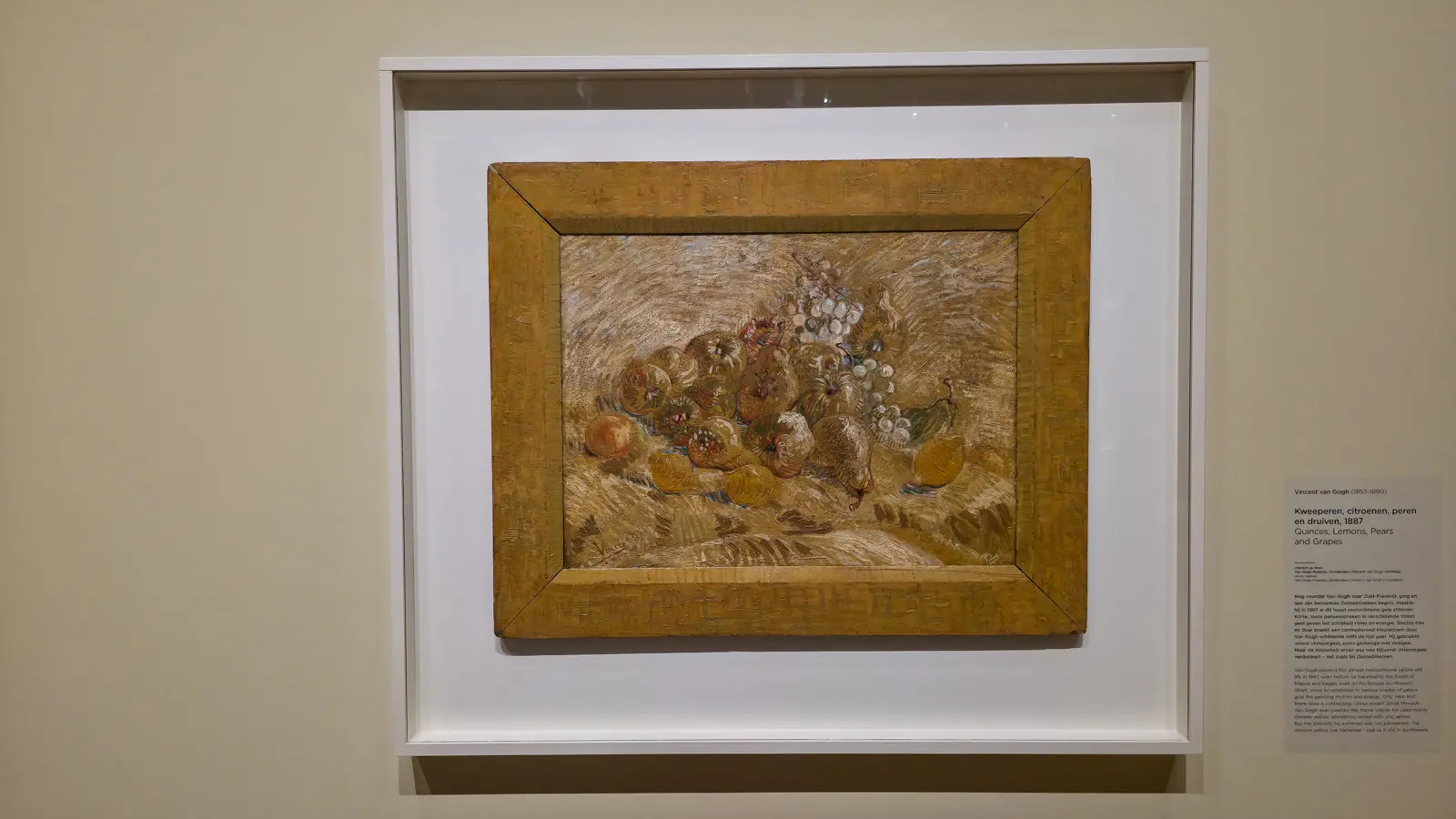
The exhibition made the case that yellow was his colour before the Sunflowers. In Paris in 1887, before he ever went south, he painted Quinces, Lemons, Pears and Grapes as an almost monochrome yellow still life. He painted the frame yellow too.
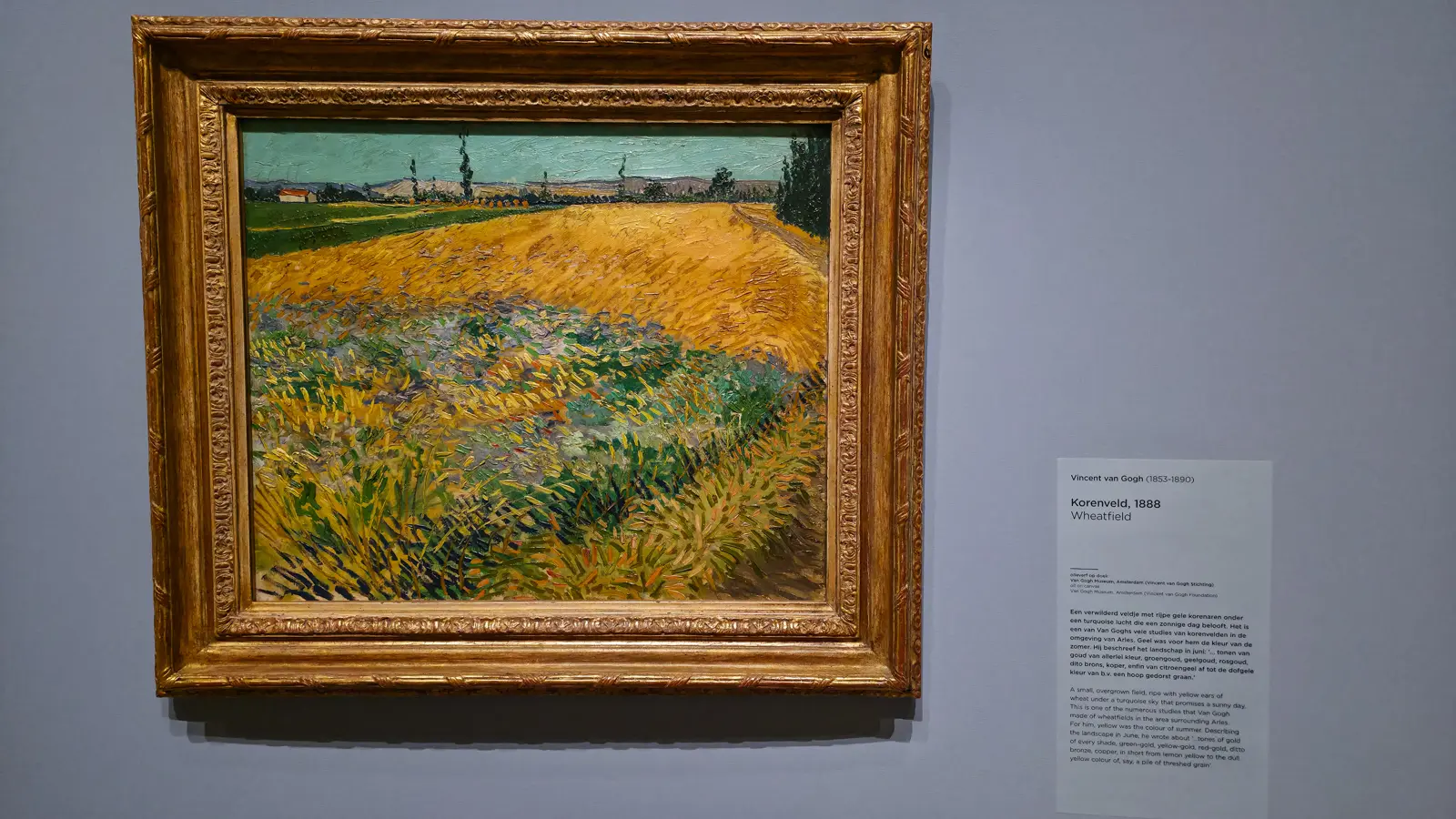
In Arles the colour took over. “How beautiful yellow is!” he wrote from the south of France. For him, yellow was the colour of summer, and Wheatfield, from 1888, is a small field of ripe wheat under a turquoise sky.
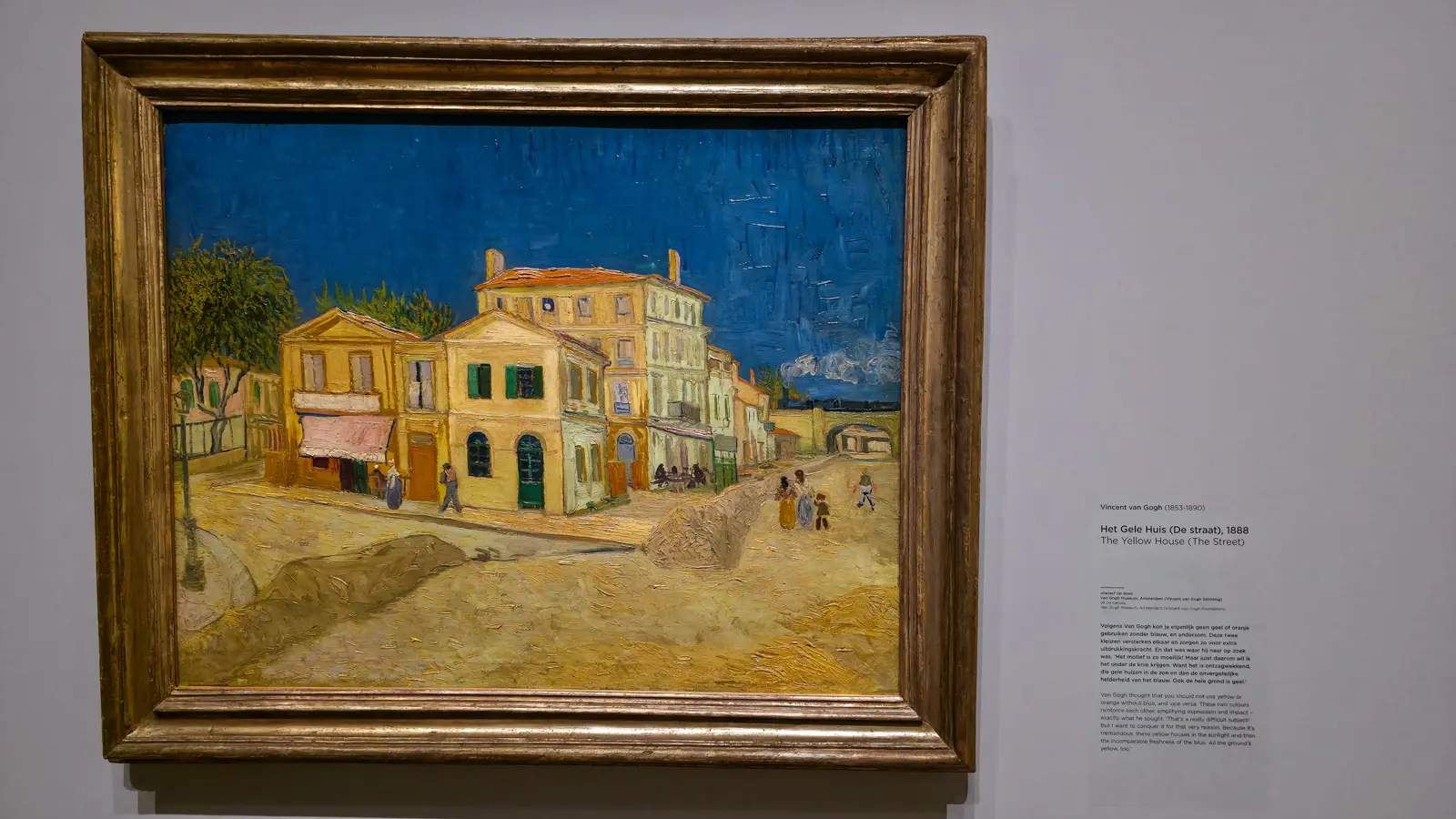
He also believed yellow needed blue. He thought neither yellow nor orange should be used without blue, because the two make each other stronger. The Yellow House (The Street) shows why: yellow buildings and a sandy yellow street under a sky of deep blue.
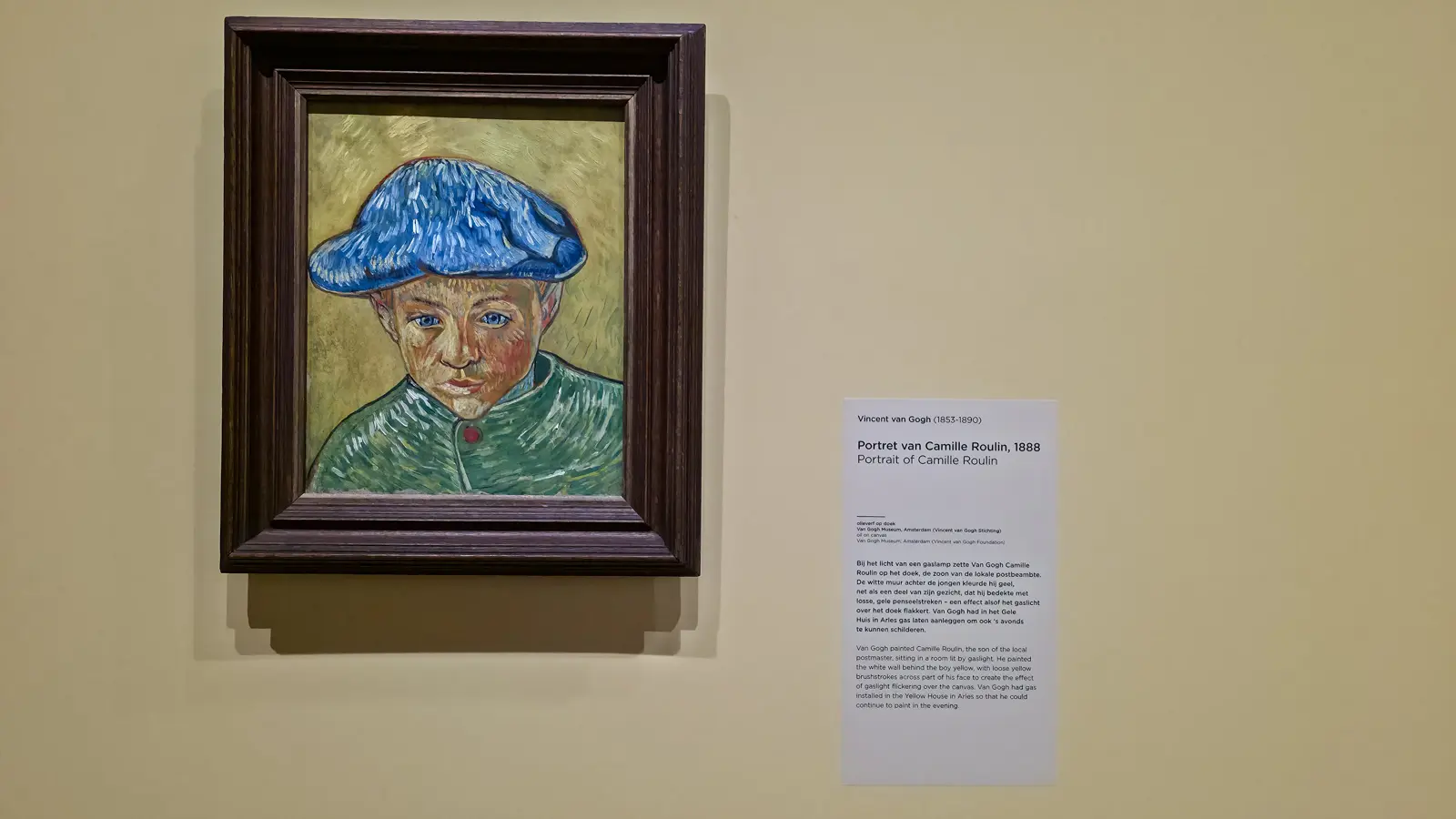
Yellow worked indoors too. For the Portrait of Camille Roulin, he painted the white wall behind the boy yellow and brushed loose yellow strokes across part of his face to capture the flicker of gaslight.
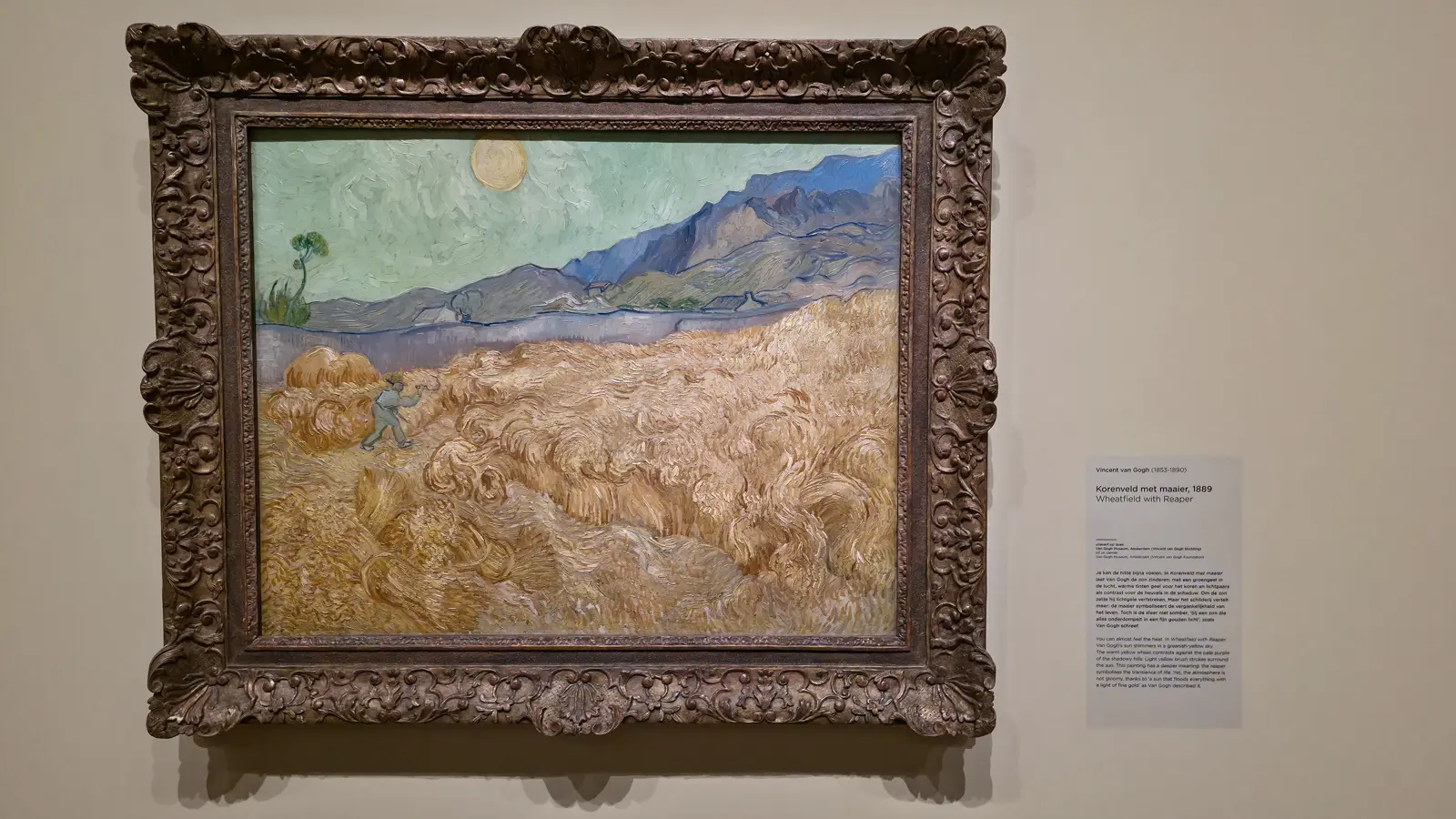
The label for Wheatfield with Reaper, from 1889, opens by saying the heat is almost tangible. A pale sun sits in a greenish-yellow sky above the wheat, ringed by light yellow strokes.
When Yellow Was Modern
This was the part that surprised me most. I had no idea how fashionable yellow was. In the late 19th century, the colour stood for everything modern, daring and decadent.
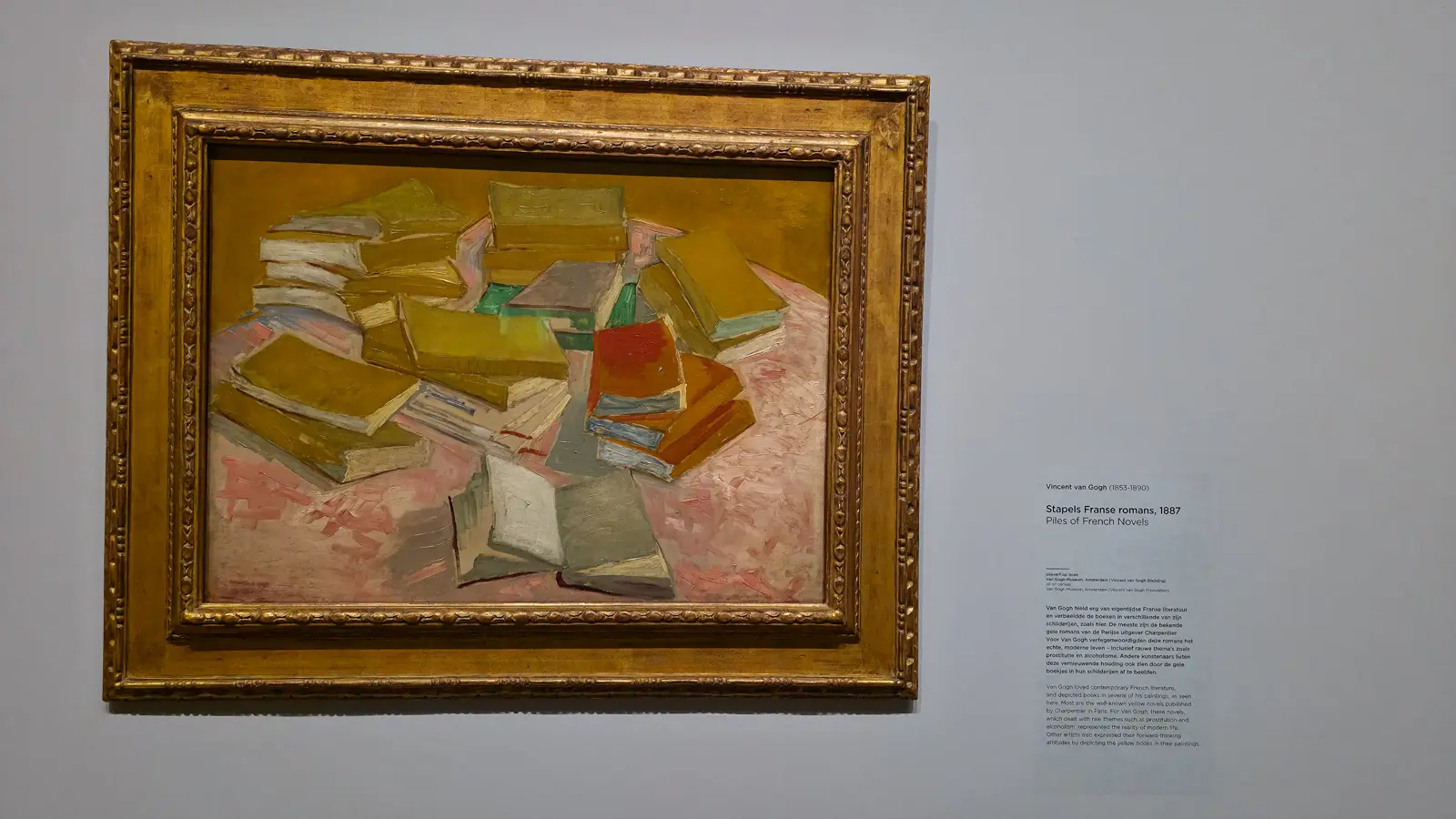
It started with books. Groundbreaking novels by writers such as Émile Zola were published in France with yellow covers, and women who read them were considered independent and rebellious. Van Gogh loved contemporary French literature. Piles of French Novels, from 1887, spreads a heap of them across a pink surface.
In England, the reputation of the yellow novels inspired a magazine, The Yellow Book, with covers designed by Aubrey Beardsley. The decade became known as “the yellow nineties”. Yellow moved into fashion, interiors and advertising, and one journalist called it the colour of the hour.
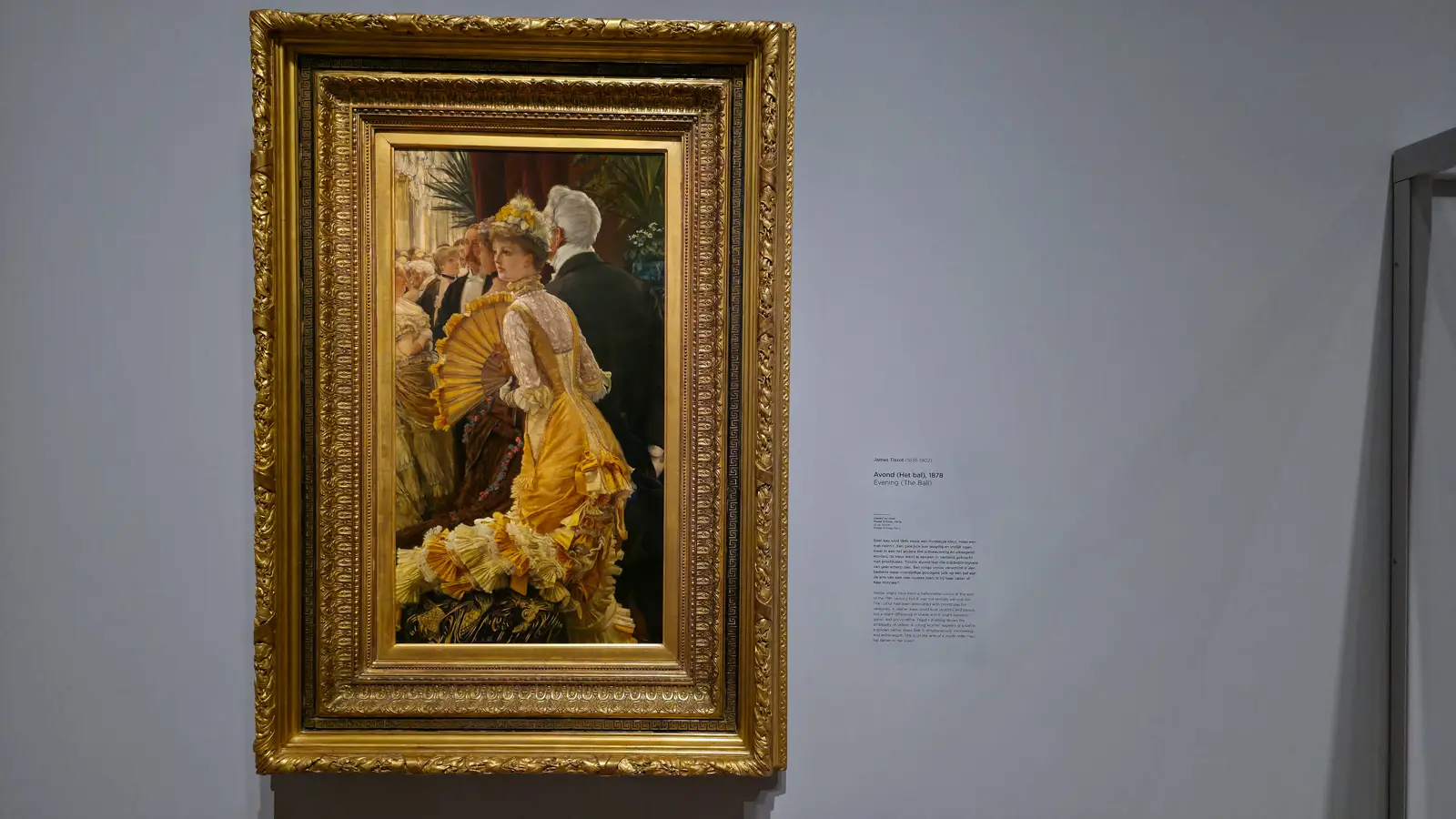
It was not a safe choice, though. A yellow dress could look youthful and joyous, but a slightly different shade could tip into garish and provocative, and the colour had been associated with prostitutes for centuries. James Tissot’s Evening (The Ball), from 1878, plays on exactly that: a young woman at a ball in a golden yellow dress that manages to be modest and extravagant at once.
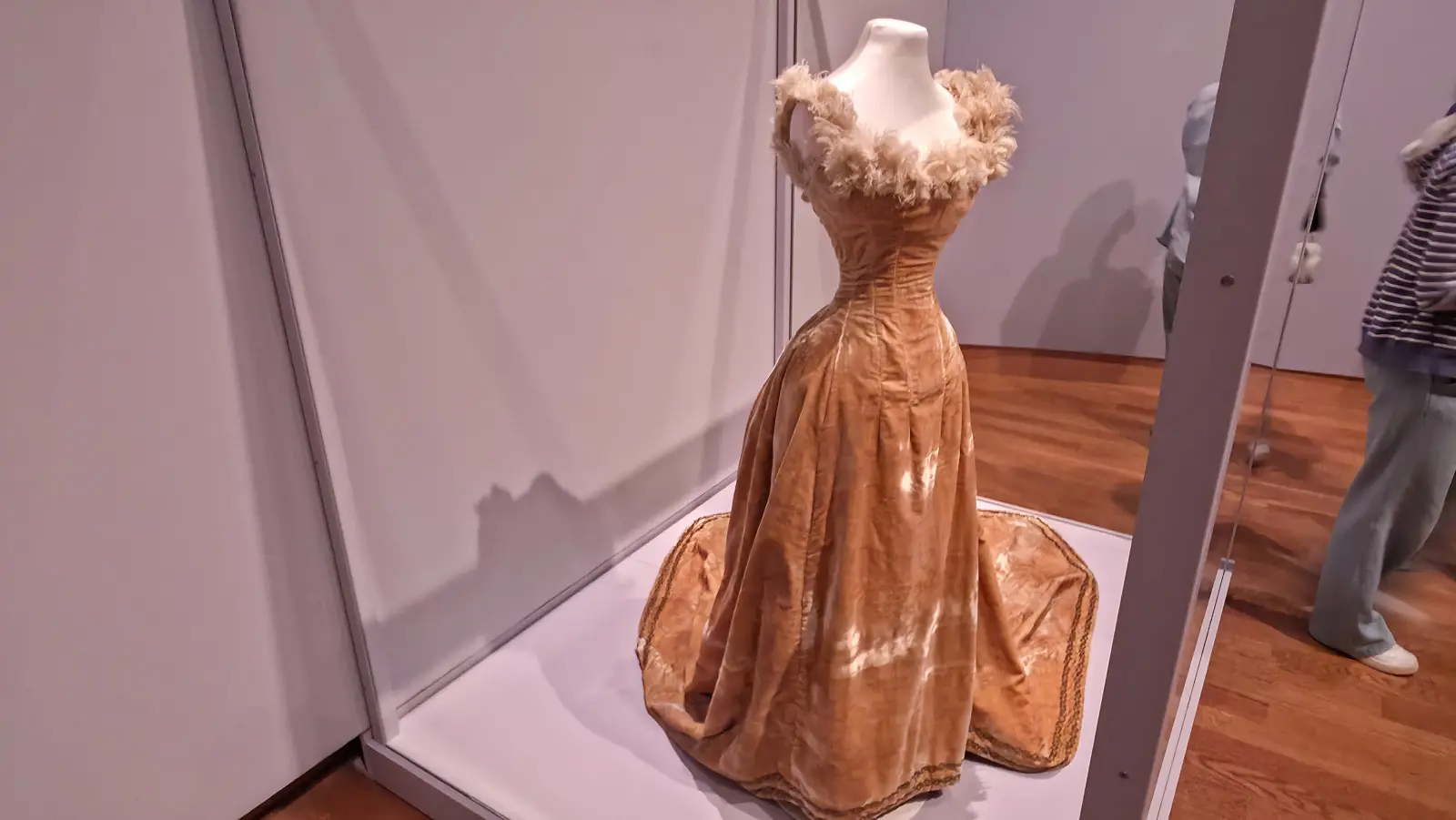
The exhibition put real clothes beside the paintings. One glass case held a pale gold velvet evening gown with a feathered neckline and a long train.
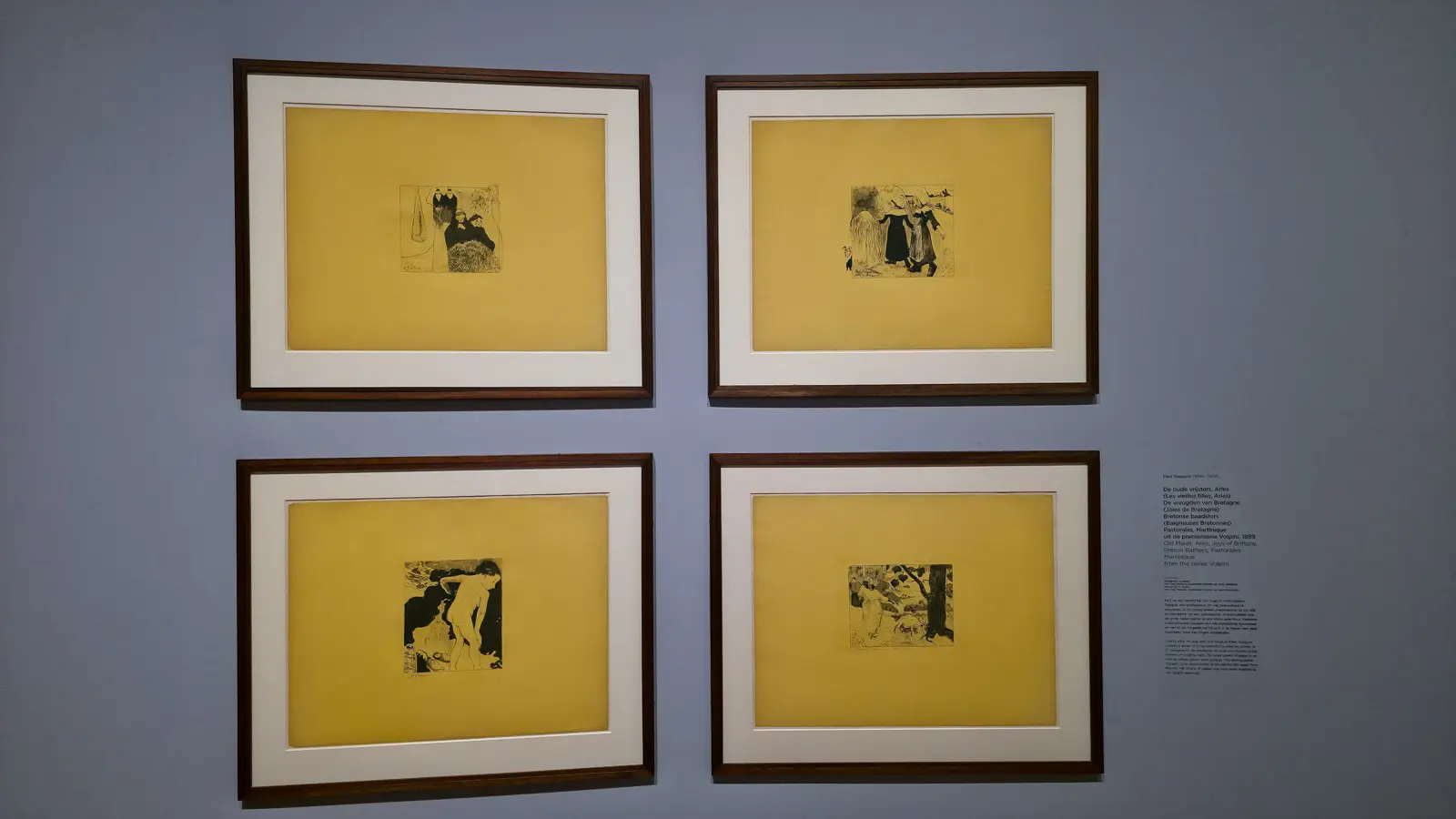
Artists used it to stand out. Paul Gauguin printed his Volpini series on large sheets of bright yellow paper.
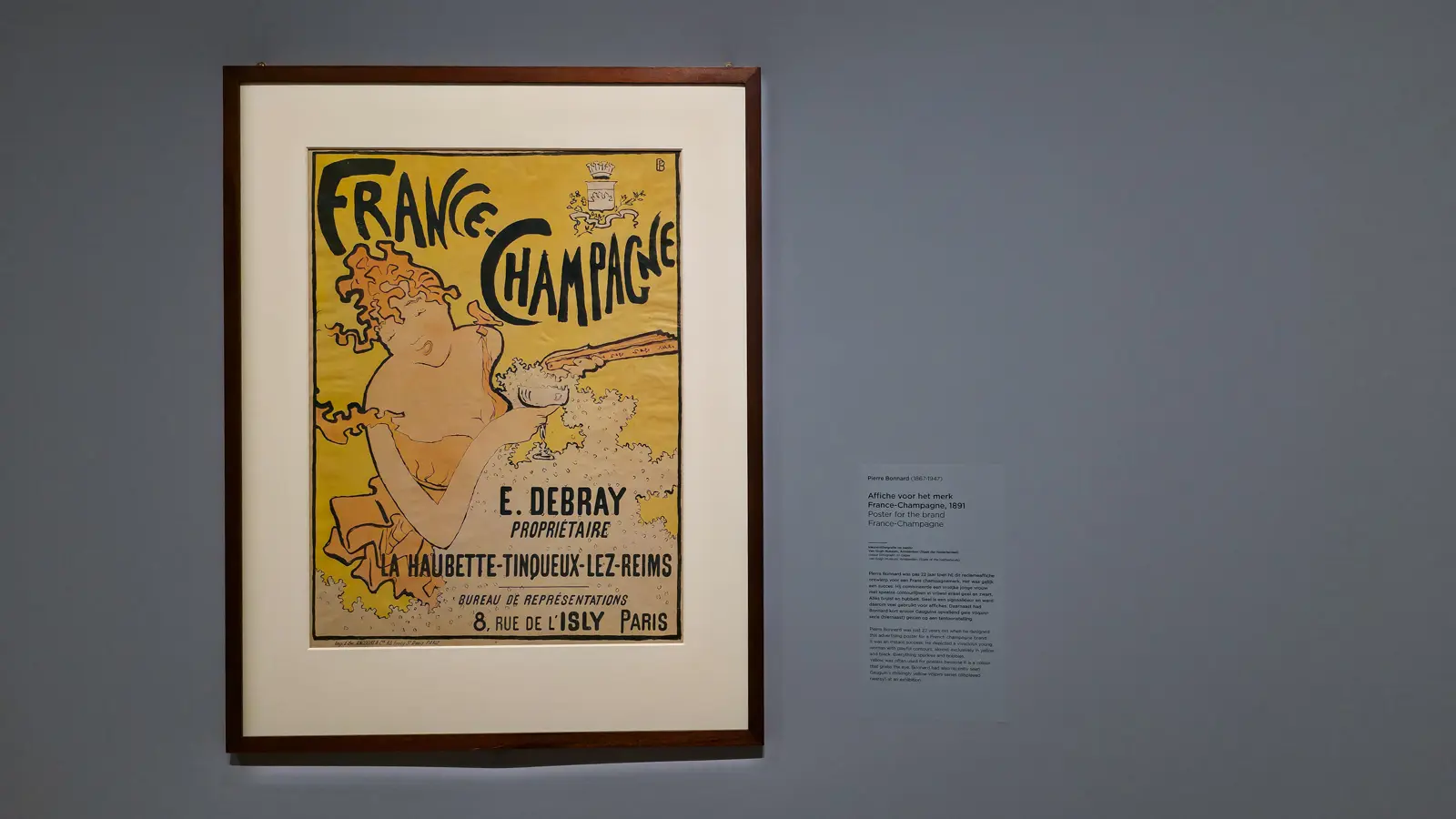
Advertisers noticed too. Yellow grabs the eye, so it was a common choice for posters, and Pierre Bonnard’s France-Champagne poster is almost entirely yellow and black.
Yellow Around Van Gogh
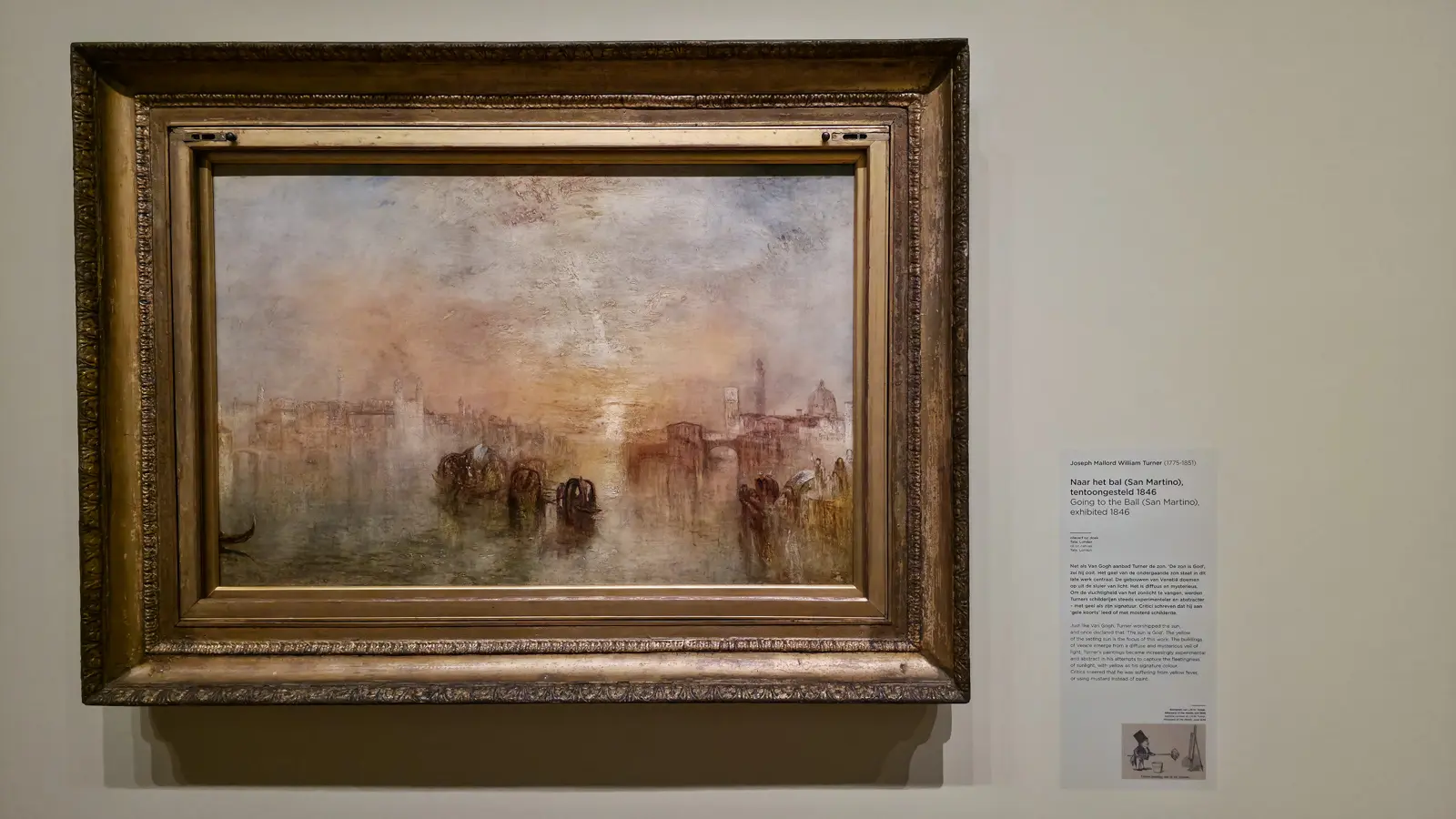
The exhibition also placed Van Gogh among other painters of yellow. J.M.W. Turner came first. In Going to the Ball (San Martino), exhibited in 1846, Venice dissolves into a veil of yellow light. Critics sneered that he must be suffering from yellow fever, or painting with mustard.
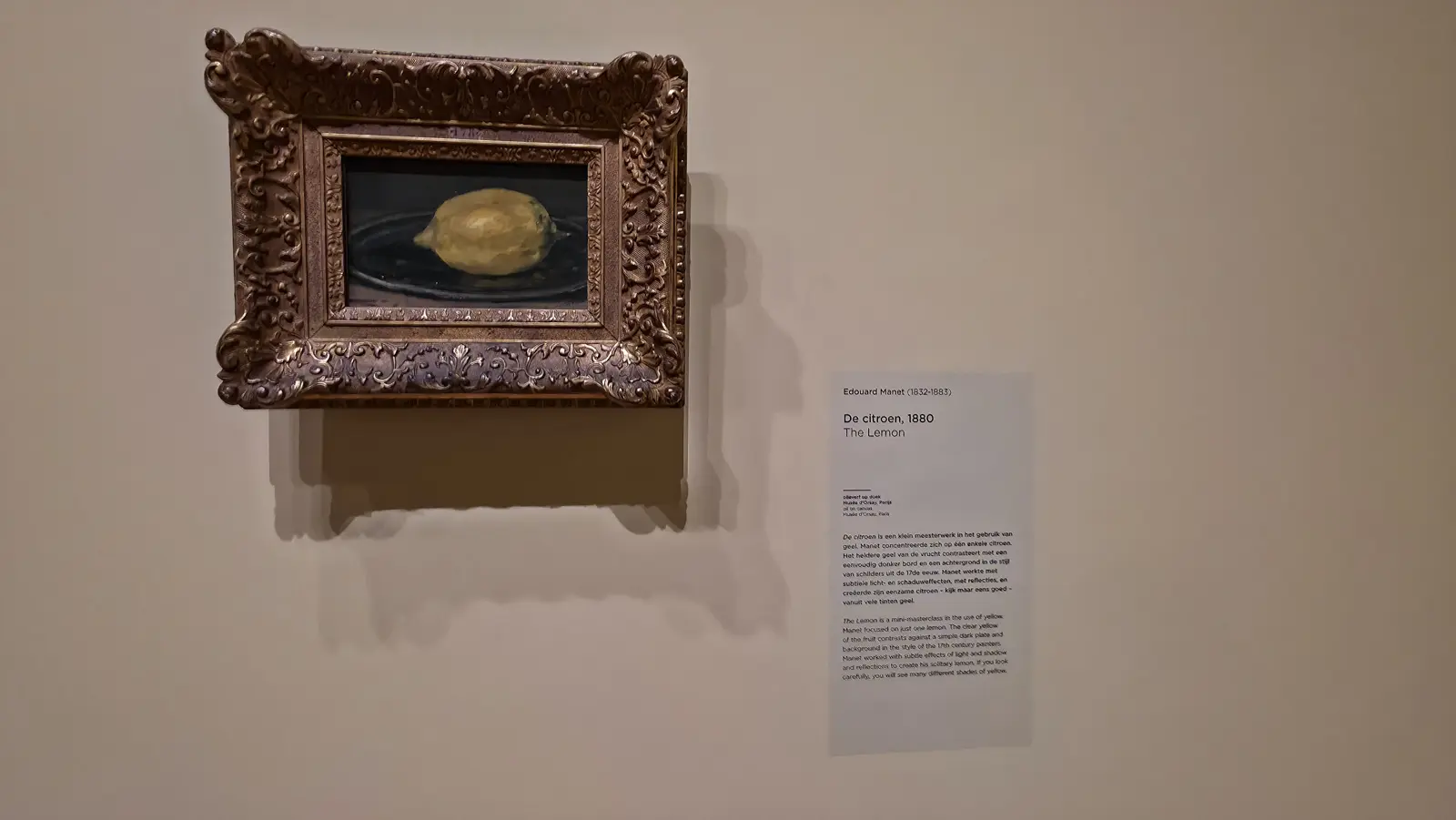
Édouard Manet‘s The Lemon, from 1880, reduces the colour to a single piece of fruit.
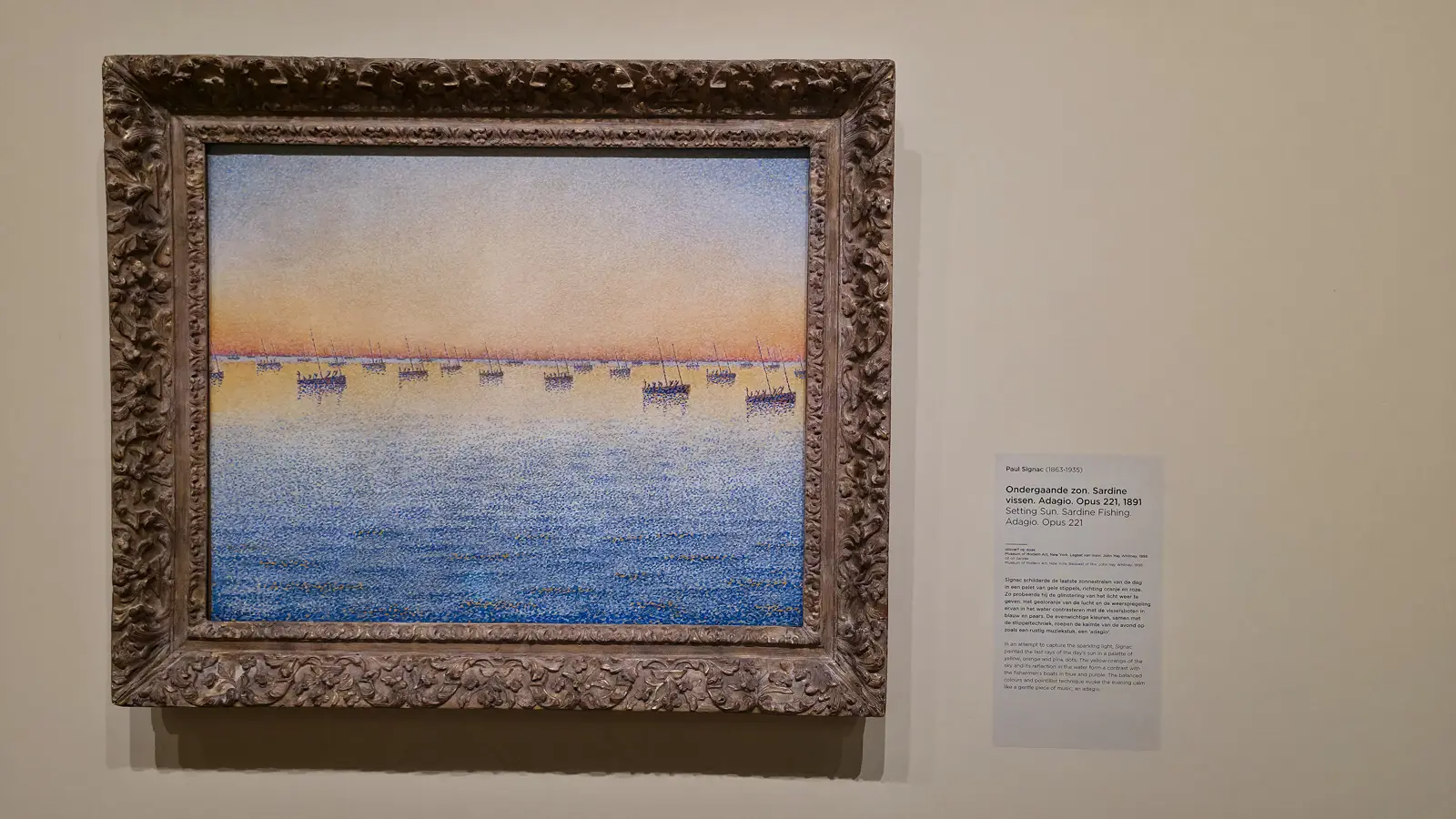
In Setting Sun. Sardine Fishing. Adagio. Opus 221, from 1891, Paul Signac painted the last rays of a sunset in yellow, orange and pink dots above a blue sea.
There was also Marc Chagall’s The Yellow Room from 1911, painted shortly after he moved from Saint Petersburg to Paris. A cow, a white samovar and two figures share a room glowing yellow and green.
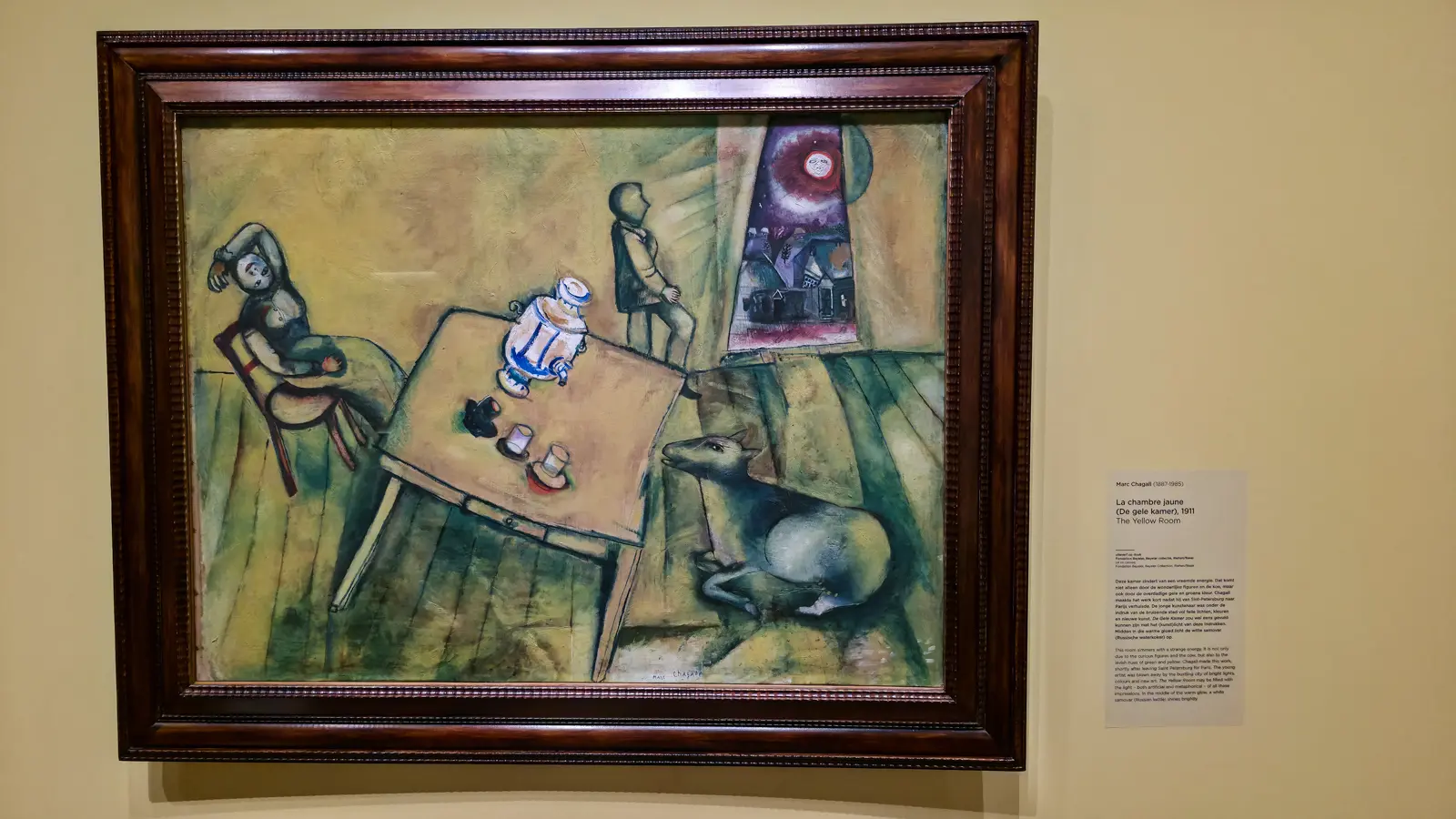
Chagall painted it 22 years after the Sunflowers, when a Paris full of bright lights, colour and new art had just swept him off his feet.
Bubbly Tips
- Go early or on a Friday evening. The museum opens at 9 AM, and midday is the busiest stretch around the Sunflowers. On most Fridays it stays open until 9 PM.
- Find the signature. Van Gogh signed the Sunflowers on the vase itself: look for Vincent written in blue.
- Check the temporary exhibitions before booking. The Sunflowers opened the Yellow exhibition in 2026, and the museum builds shows around its own collection. The website lists what is on.
- See its sister in London. The Amsterdam Sunflowers repeats a version from August 1888 in London’s National Gallery. It travels on loan, so check before planning a visit around it.
- Book a timed ticket online. Tickets are sold online only, with a start time.
- Photos are fine, flash is not. Personal photography is allowed, but not flash, tripods or selfie sticks.
- Leave the big bag behind. Anything larger than a small handbag goes to the cloakroom.
Final Thoughts
All that fuss for an average-sized painting. I understand it now. The Sunflowers holds a whole life cycle in one vase, and the Yellow exhibition showed how much a single colour could carry in Van Gogh’s time: wheatfields, a gaslit portrait, scandalous novels and a champagne poster.
I came for the flowers and left with a new respect for yellow.
Until next time!

🌟 Everything You Need to Plan Your Dream Trip in 2026
- 🌟 Luxury Hotels - Find premium stays with Booking.com & Hotels.com
- 🏡 Vacation Rentals - Discover unique properties on VRBO
- 🏞️ Guided Tours - Explore with Viator or GetYourGuide
- 🎫 Attraction Tickets - Skip the lines with Tiqets
- 🚢 Ocean Cruises - Set sail with Cruise Direct
- 📱 International SIMs - Stay connected with Saily
- 🚗 Car Rentals - Budget-friendly options from Discover Cars
- 🌐 Secure VPNs - Browse safely with NordVPN
- 💶 Currency Exchange - Best rates with Wise
- 🗣️ Learn Languages - Master the local language with Babbel and Rosetta Stone