
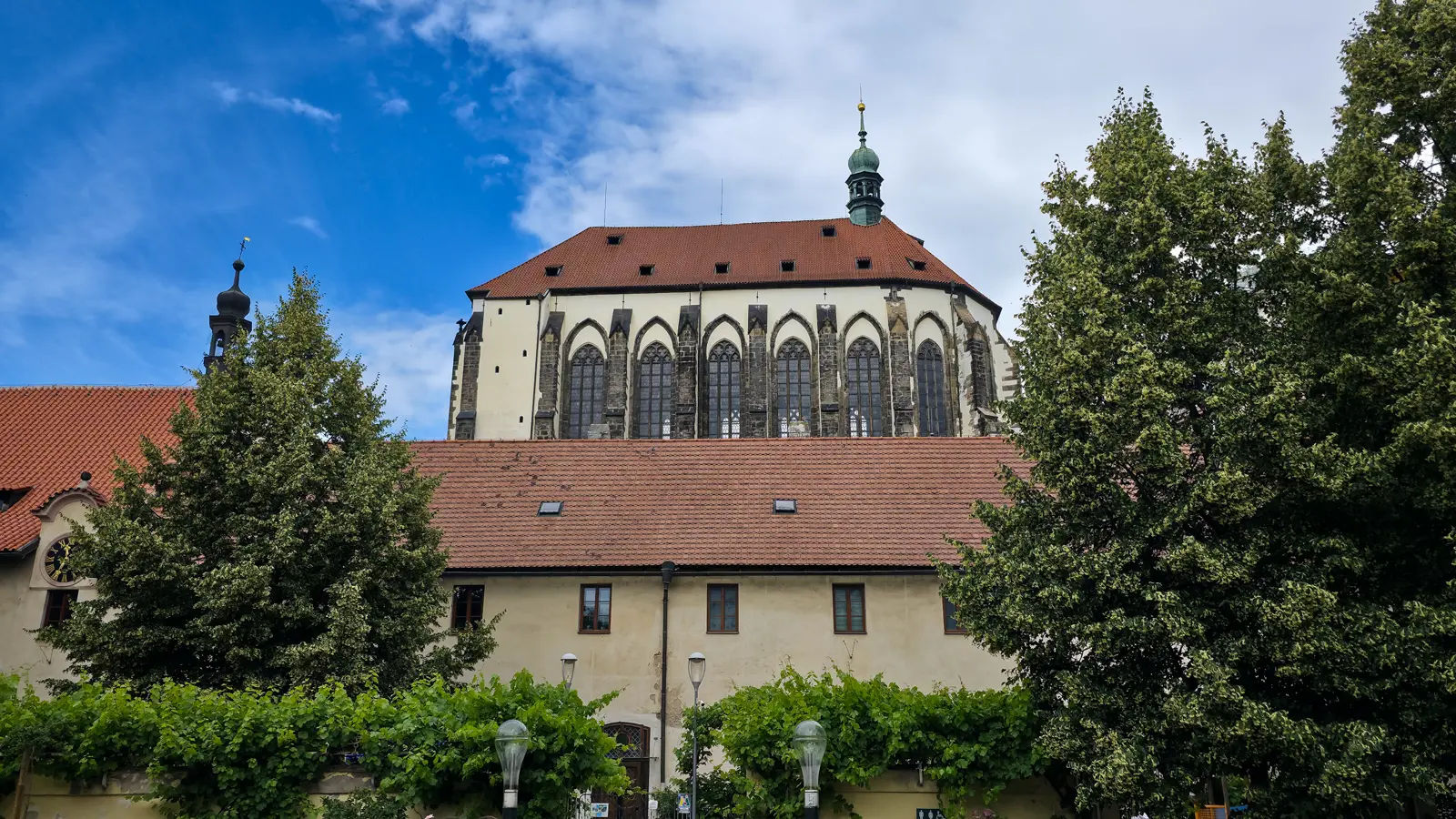
After the Franciscan Garden, our guide had one more treat for us. Over the hedges, we had glimpsed a huge Gothic church towering above the rooftops. Now we were going inside.
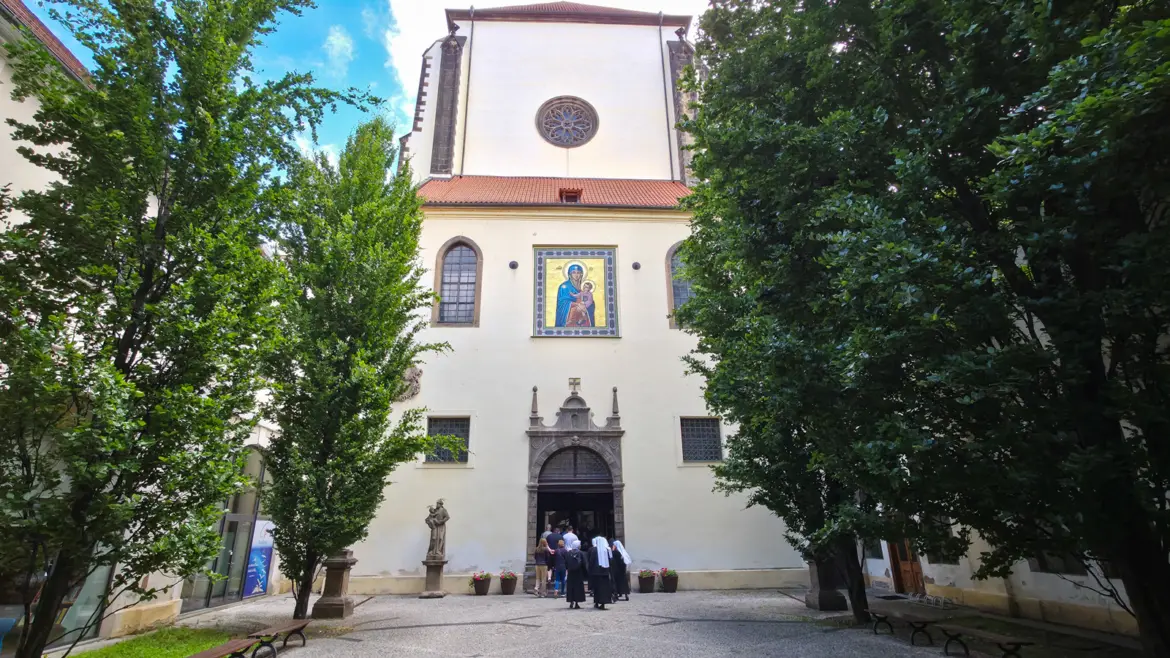
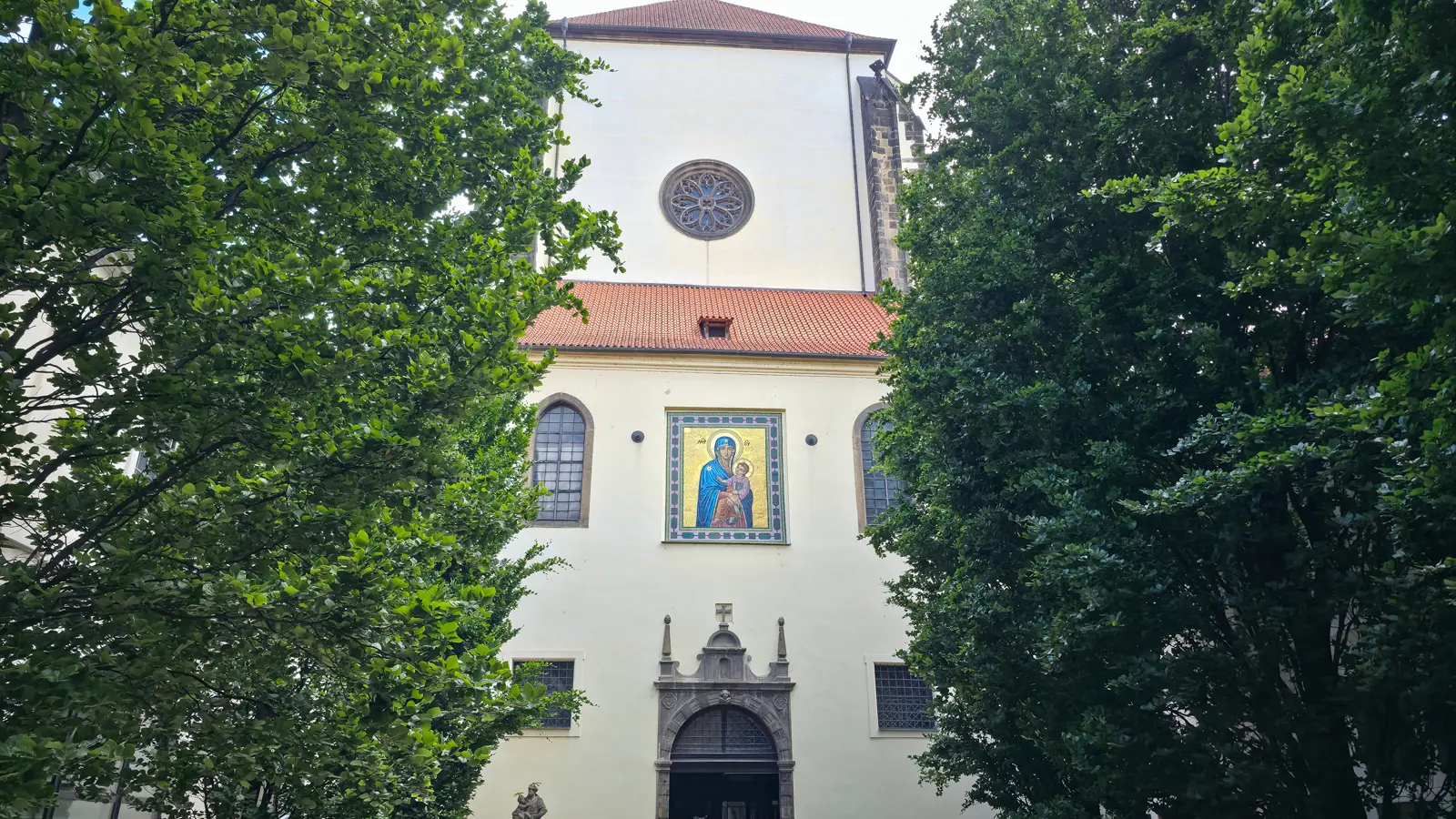
From the street, the Church of Our Lady of the Snows is easy to miss. It sits behind a quiet courtyard, its white façade framed by trees, with a gold mosaic of the Virgin and Child above the door. Inside, it is breathtaking: soaring white walls, tall windows, a star-painted ceiling and an enormous black-and-gold Baroque altar.
I was also surprised that it had been so well preserved, and even stayed open, through Prague’s communist years. As our guide explained its history, the art and the architecture, the story turned out to be every bit as dramatic as the building.
Our Lady of the Snows at a Glance
⛪ An unfinished giant · Only the chancel of Charles IV’s 1347 church was ever built — it was meant to rival St Vitus.
📏 Two Prague records · The highest church vault (34 m) and the tallest column altar (29 m) are both inside.
🔥 Where the Hussite Wars began · A fiery 1419 sermon here led to the First Defenestration of Prague.
🖤 A towering Baroque altar · Black and gold, 29 metres high, built 1649–1651 and crowded with saints and angels.
🕊️ It survived communism · The friars were expelled in 1950, but the church stayed open; they returned in 1991.
📍 Next to the Franciscan Garden · A quiet courtyard off Jungmannovo náměstí, a few steps from Wenceslas Square.
An Unfinished Giant
The church goes back to Charles IV, who founded it in 1347 to mark his coronation. It was meant to be enormous. Plans called for a church about 110 metres long, big enough to rival St Vitus Cathedral at Prague Castle.
It was never finished. What stands today is only the chancel, the eastern end of the church that was planned. Seen from the Franciscan Garden, it looks like a fragment of something much bigger, and that is exactly what it is. Dark stone buttresses frame a row of tall pointed windows, and a small green copper turret sits on the steep red roof.
Even unfinished, the church holds two records among Prague’s churches: the highest vault and the highest column altar. Both are inside.
The entrance is far more modest. A carved stone portal leads in from the courtyard, beneath two arched windows and the shimmering mosaic.
Inside, the first thing that stands out is the height.
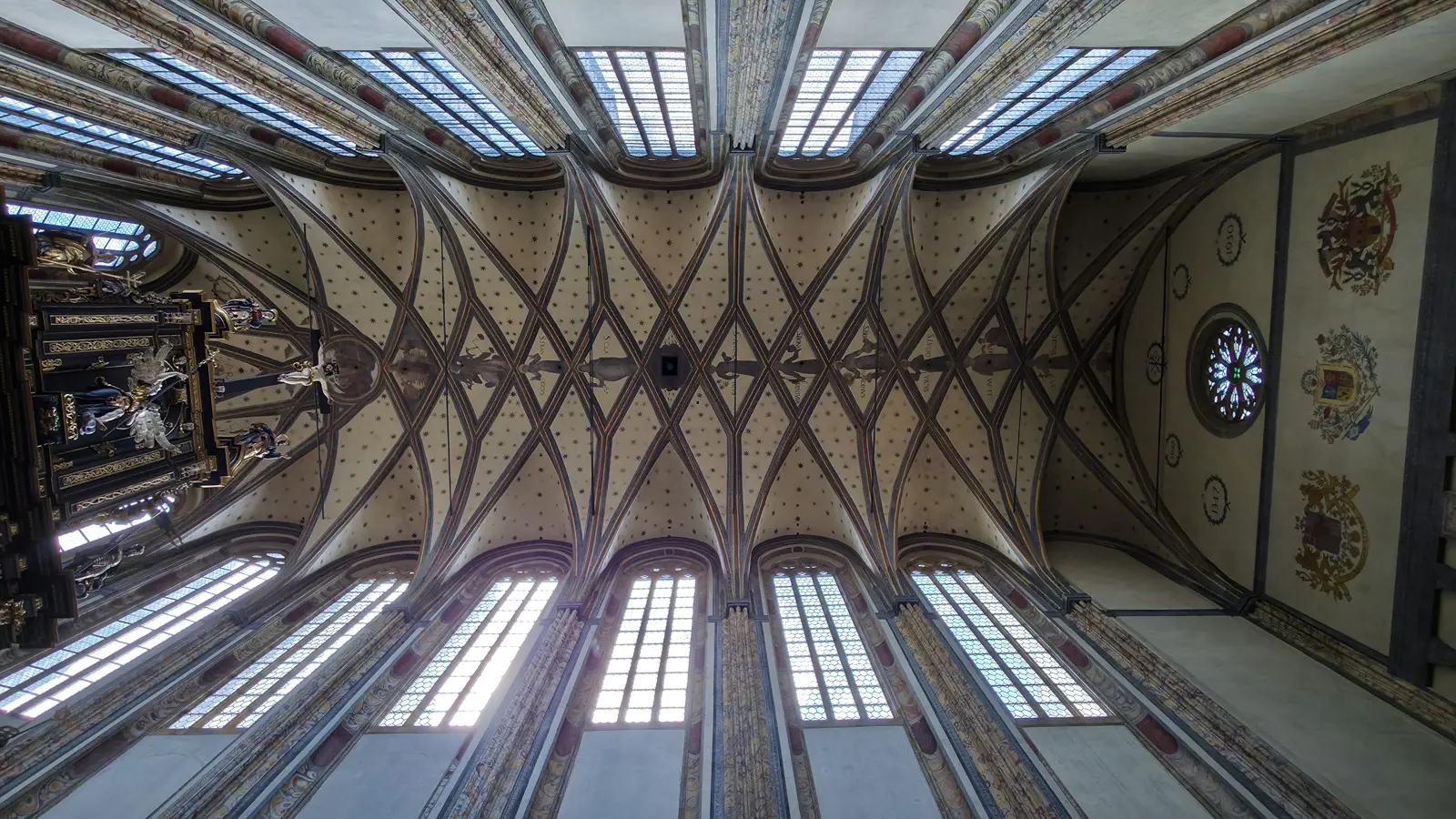
The vault of the Church of Our Lady of the Snows reaches 34 metres, the highest of any church in Prague. Because the building is so narrow, it looks even taller. Rows of tall windows run up the walls, flooding the white interior with light, and the painted ribs of the ceiling are scattered with stars.
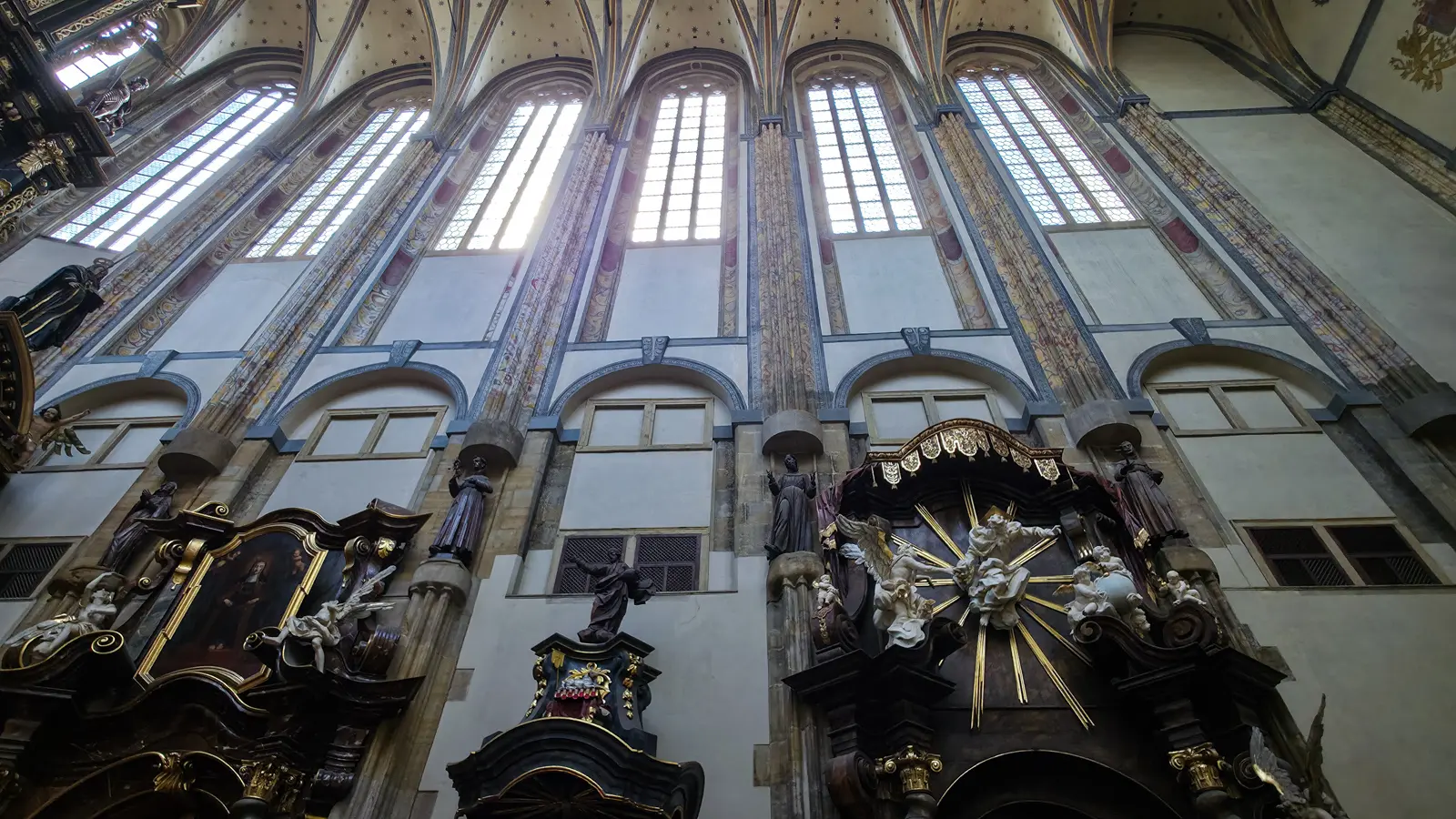
Looking straight up, the ceiling is a web of ribs painted in red, gold and grey, with small stars dotted across every panel.
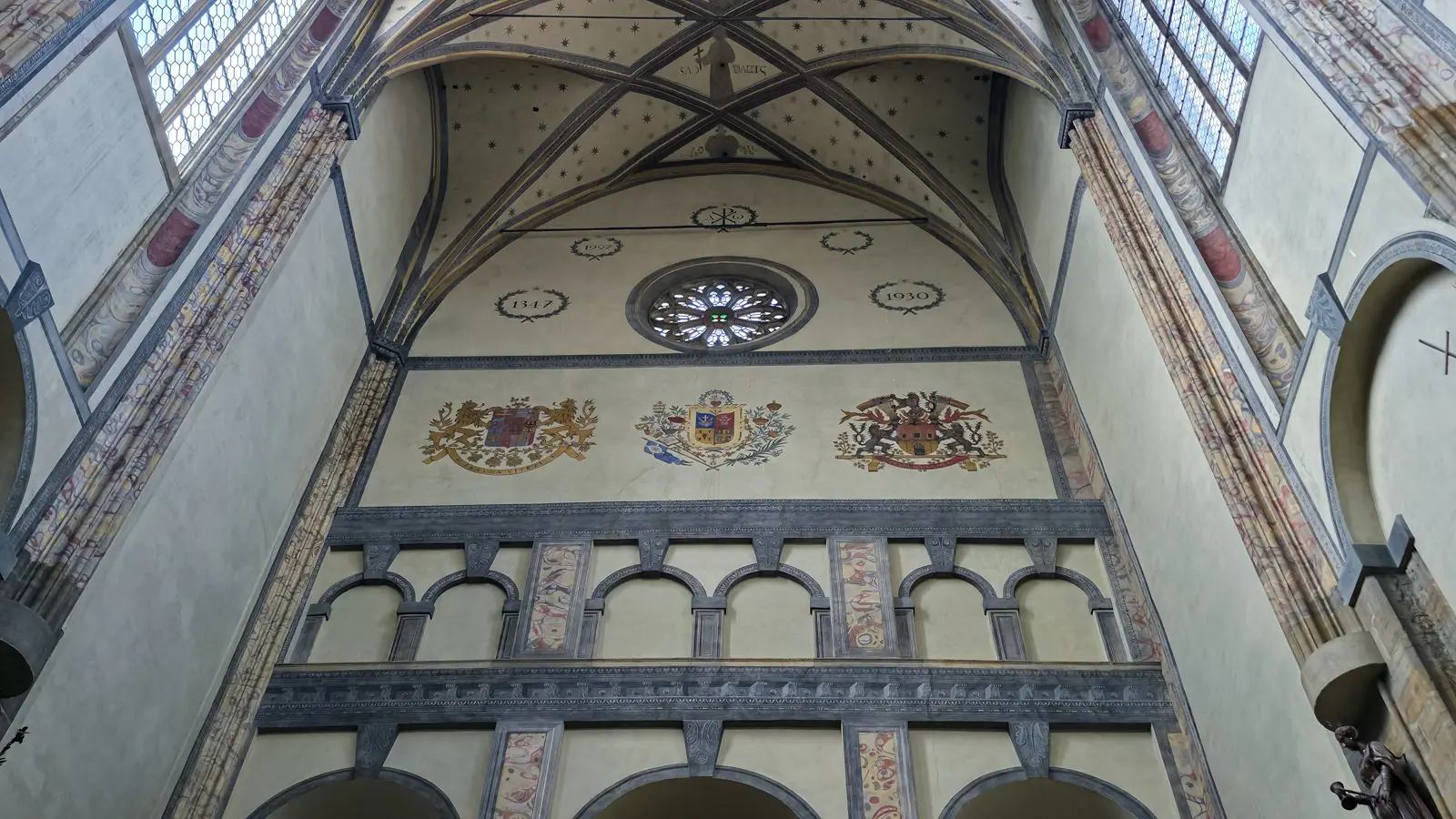
At the back of the church, above the organ loft, the wall is painted with three colourful coats of arms and a rose window.
Where the Hussite Wars Began
This is where the history turns dark. In 1419, the church was the base of Jan Želivský, a radical Hussite preacher. On 30 July 1419, after a fiery sermon here, he led a procession through the streets of the New Town to the New Town Hall. The crowd stormed the building and threw councillors from the windows.
That was the First Defenestration of Prague, and it set off the Hussite Wars. Želivský himself did not survive them. He was executed in 1422 and brought back here for burial.
The Tallest Altar in Prague
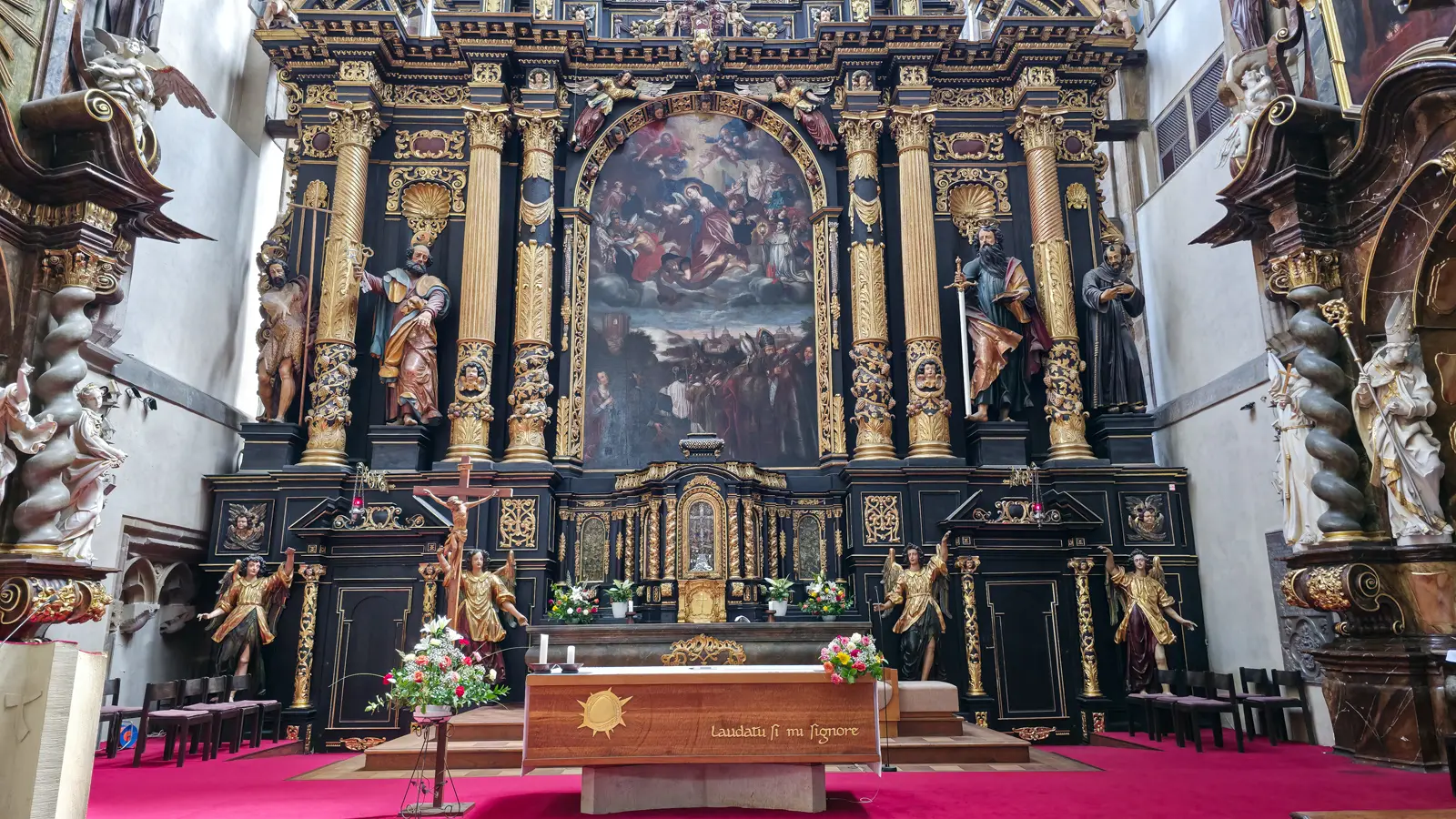
The main altar is the showstopper. It rises 29 metres in black and gold, crowded with saints, angels and paintings, and it is the tallest column altar in Prague. It was made between 1649 and 1651 by an unknown artist, so it is more than 370 years old.
The altar is built in tiers, like a gilded wall of carvings. Large painted statues stand between the columns, including a saint holding keys and another with a sword, the traditional symbols of St Peter and St Paul. At the bottom, four golden angels stand on the red carpet, facing the pews.
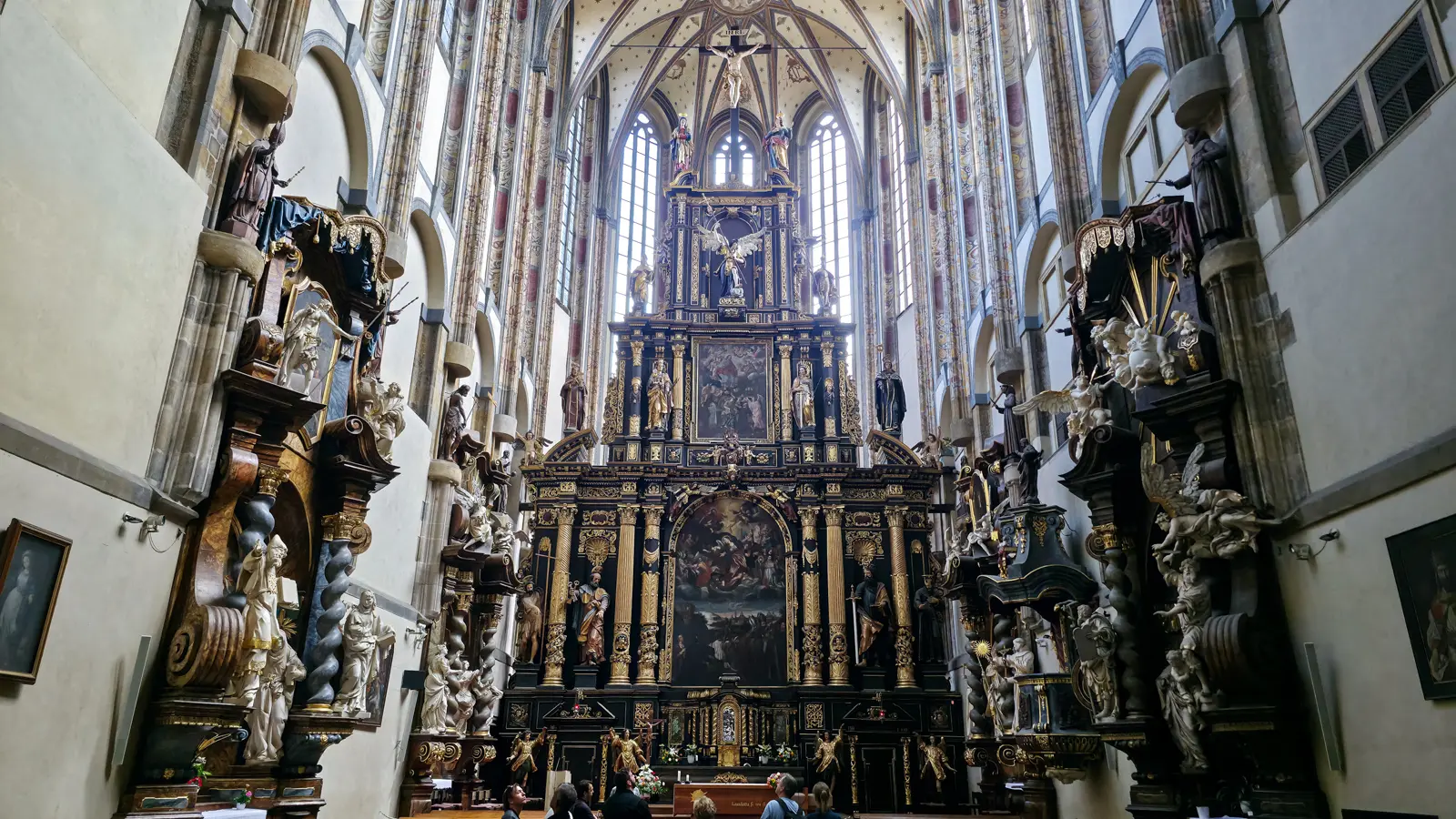
Closer up, the detail is dazzling: gilded columns, carved fruit and vines, life-size saints and golden angels standing guard at the base.
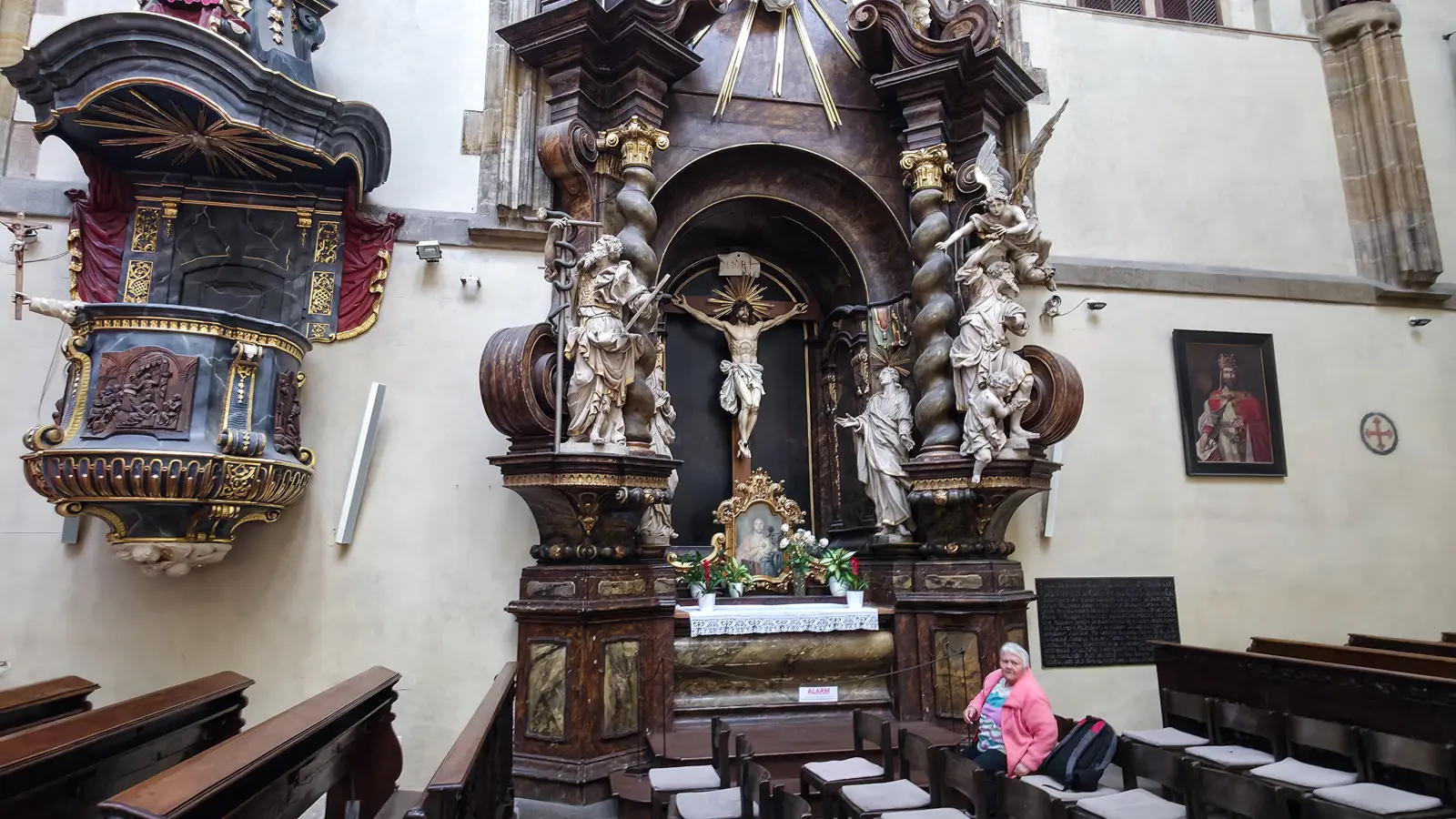
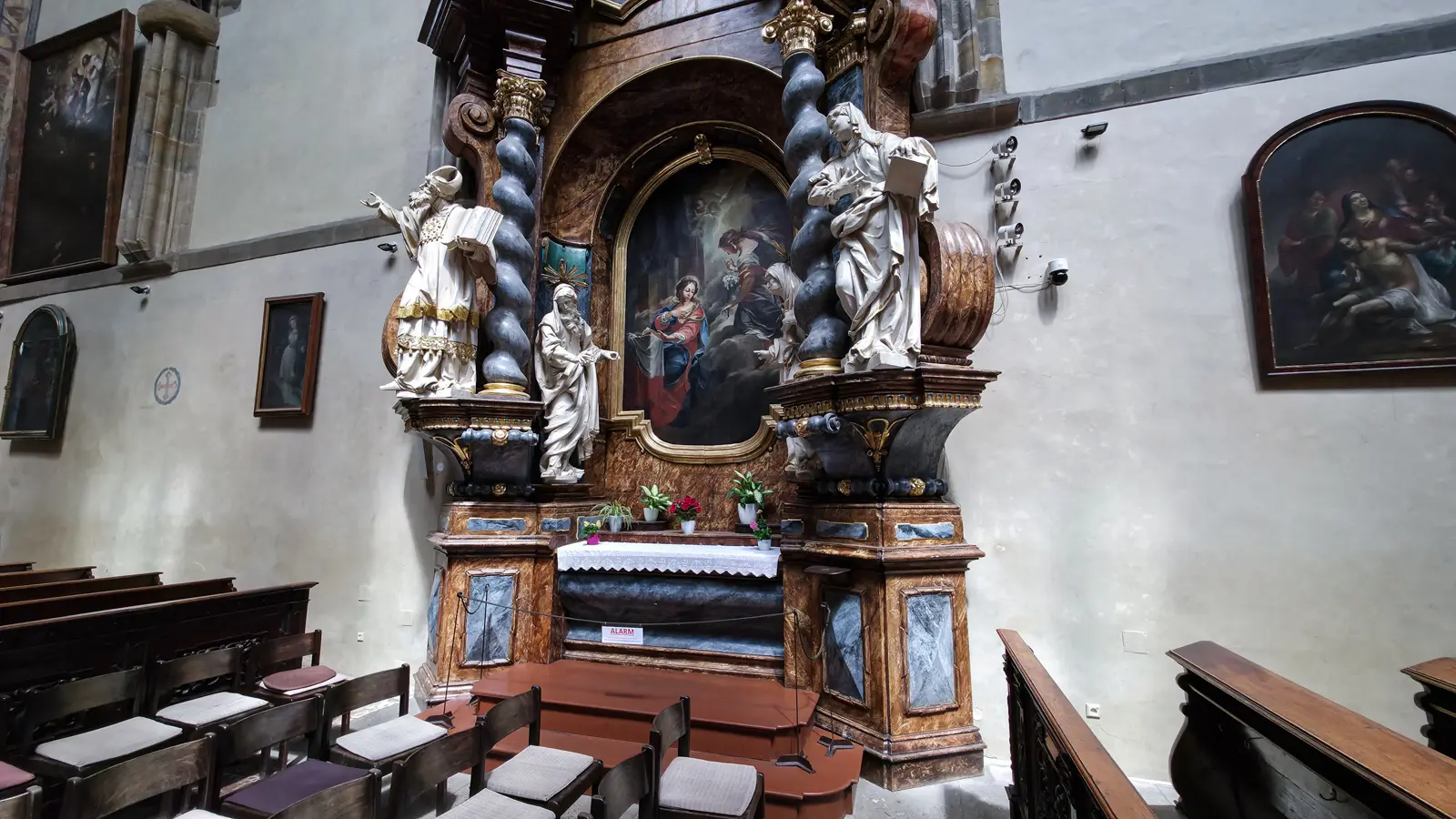
The side altars are works of art in their own right. One of the most striking is the Baroque Annunciation altar, with white and gold figures standing on either side of the painting.
A Relic and a Glimmer of Candles
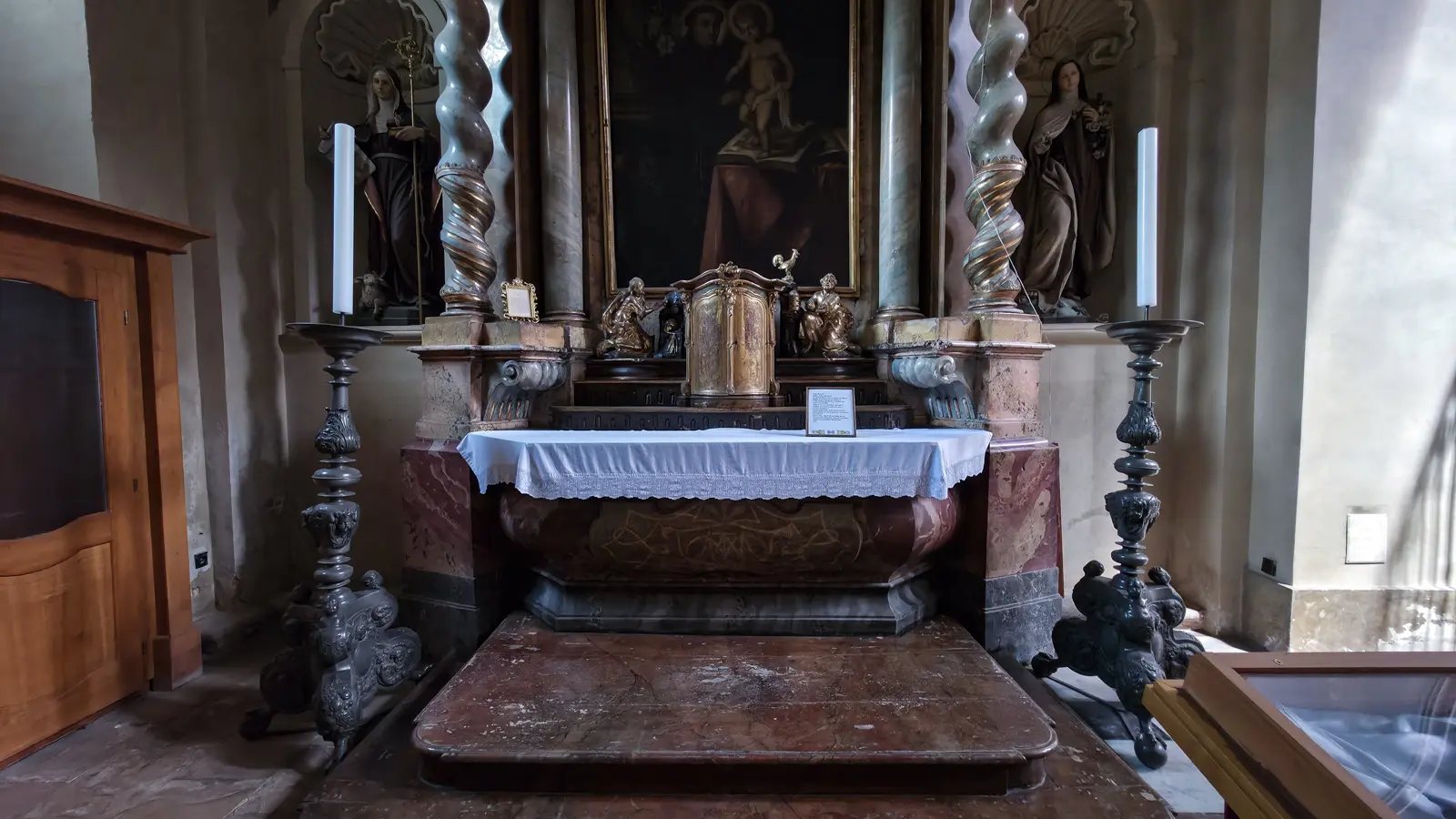
In one corner, a small Baroque side altar stands beside a glass case draped in pale blue silk. Inside is a relic and a printed story, in Czech, about Blessed Odoric of Pordenone, a 14th-century Franciscan missionary.
The side altar itself is lovely up close: twisted marble columns, two painted statues of female saints in shell-shaped niches, gilded figures around a small golden tabernacle and, perched on top, a little golden rooster. Two tall white candles stand on carved metal candlesticks on either side.
According to the card, Odoric was the son of a soldier of the Bohemian king Přemysl Otakar II. He set out from Venice and travelled through Persia, India and Southeast Asia, reaching China in 1325 and Lhasa after that.
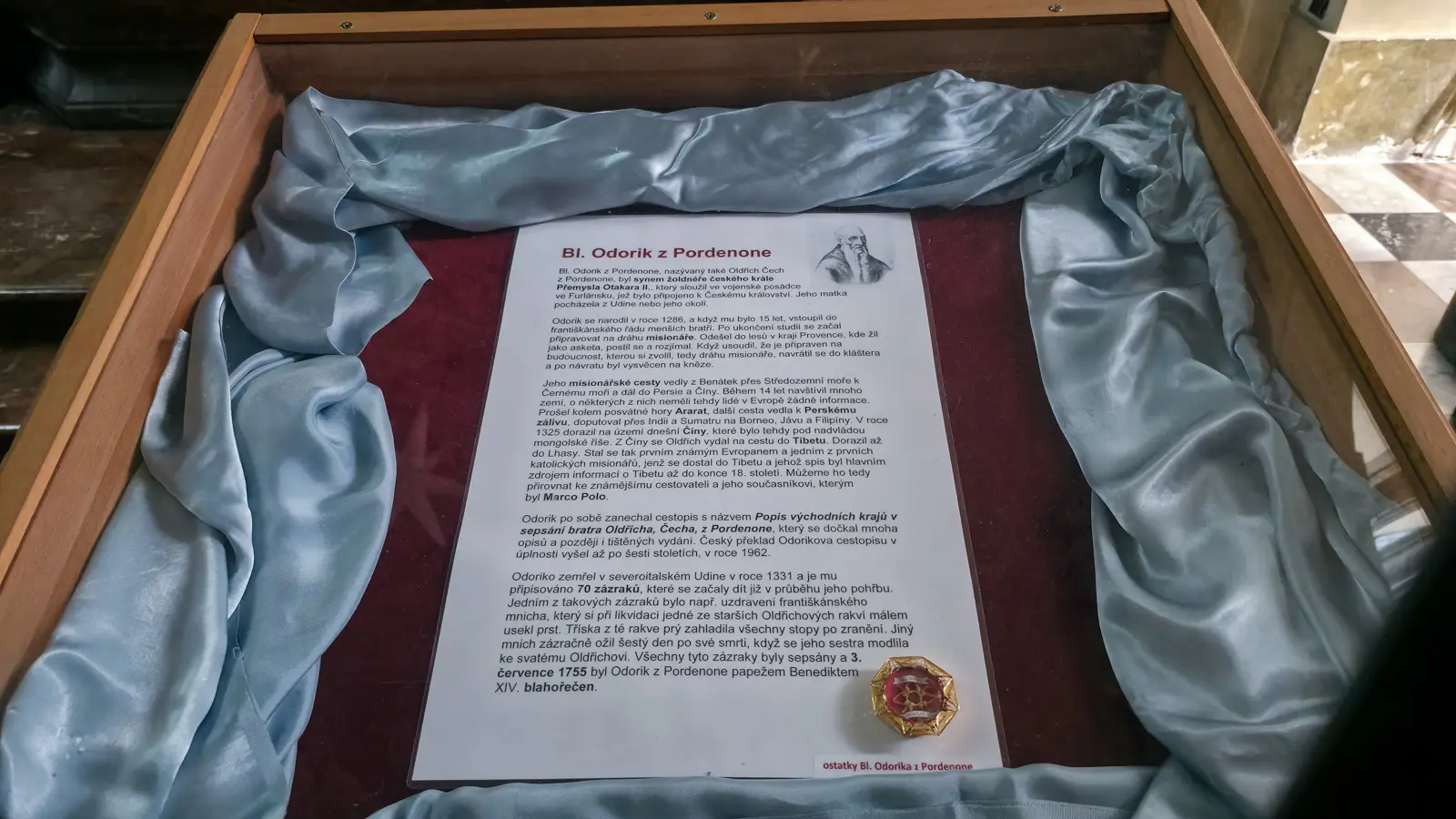
The relic itself sits in a small gold star-shaped reliquary in the corner of the case, on top of the printed card, which carries an engraved portrait of a bearded friar.
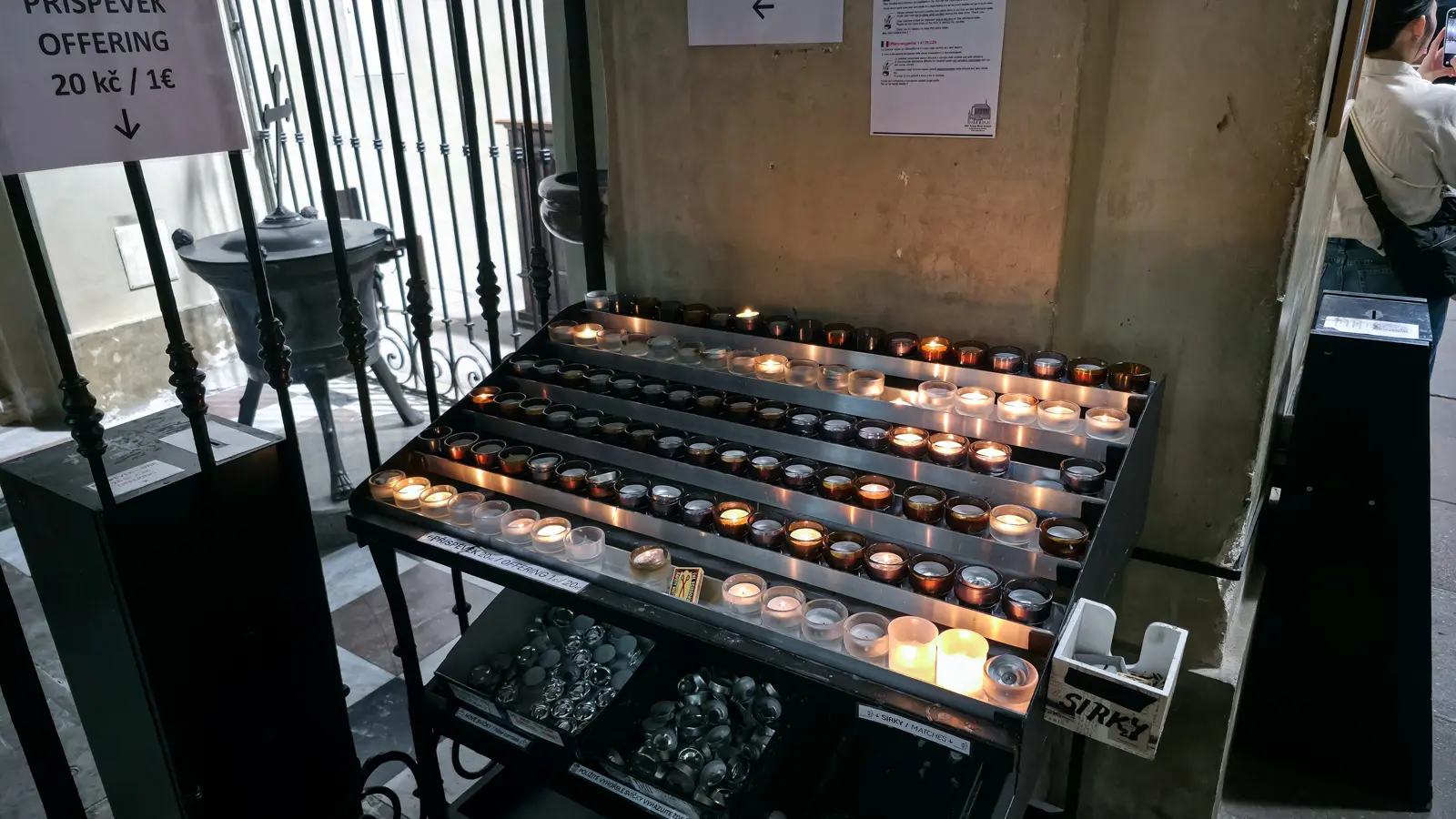
Elsewhere in the church, rows of small candles flickered on a metal stand, some lit by earlier visitors, others already burnt out. A sign asks for an offering of 20 Kč or €1 per candle.
How the Church Survived Communism
I had assumed a church like this would have been closed or damaged under communism. The truth is more complicated.
On the night of 13 to 14 April 1950, the communist regime raided monasteries across Czechoslovakia in what became known as Operation K. The Franciscans here were expelled and their monastery was taken. The church itself, though, stayed open. It continued to hold services, run by a priest assigned to the parish who was loyal to the regime.
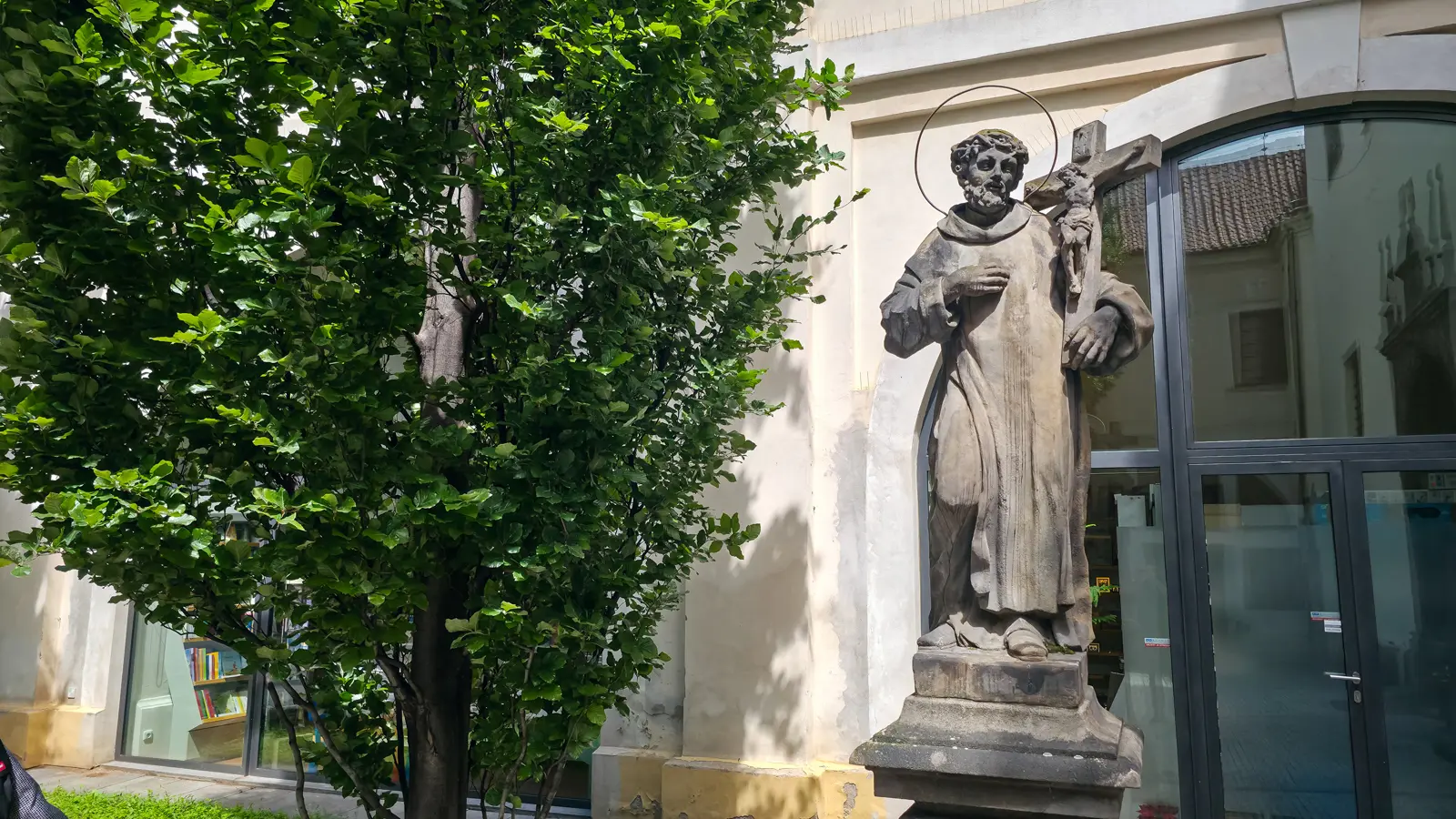
After the fall of communism in 1989, the monastery was returned to the Franciscans, who took it back in 1991. Today, a stone statue of a saint in a friar’s habit, holding a crucifix, stands in the courtyard, right beside a bookshop.
Sisters at Prayer
Czechia is a very secular country. In the 2021 census, more than two-thirds of the Czechs who answered the question said they had no religious belief, and most of the people in the church that day were visitors like us.
The day we visited, though, a group of sisters had come to pray. They walked in just ahead of us.
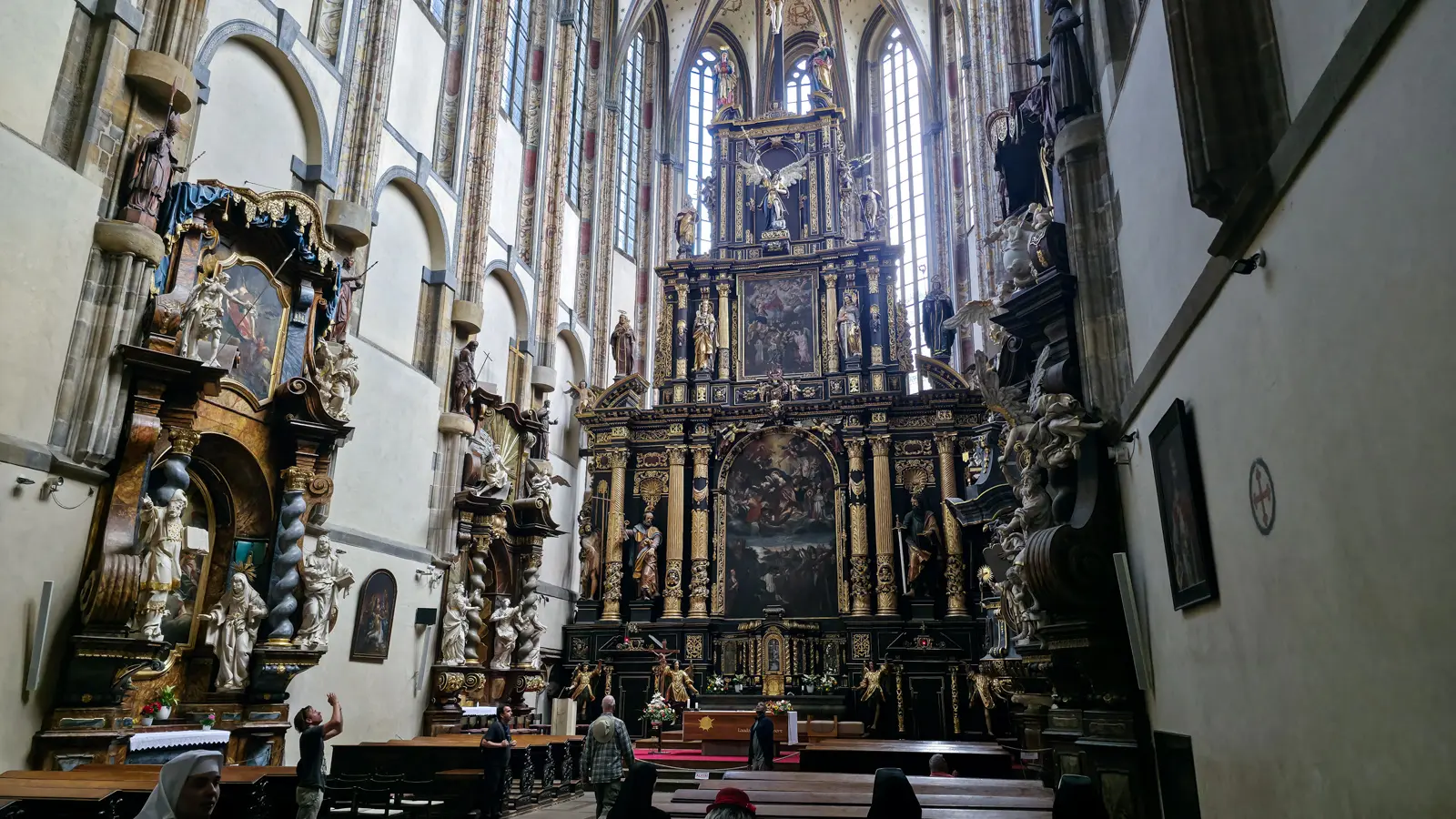
Honestly, I was a little uncomfortable taking photos and filming reels while they were praying. For me, churches are historical places. They give me a sense of peace, yes, but I also love documenting them. The sisters, though, were there for the right reasons.
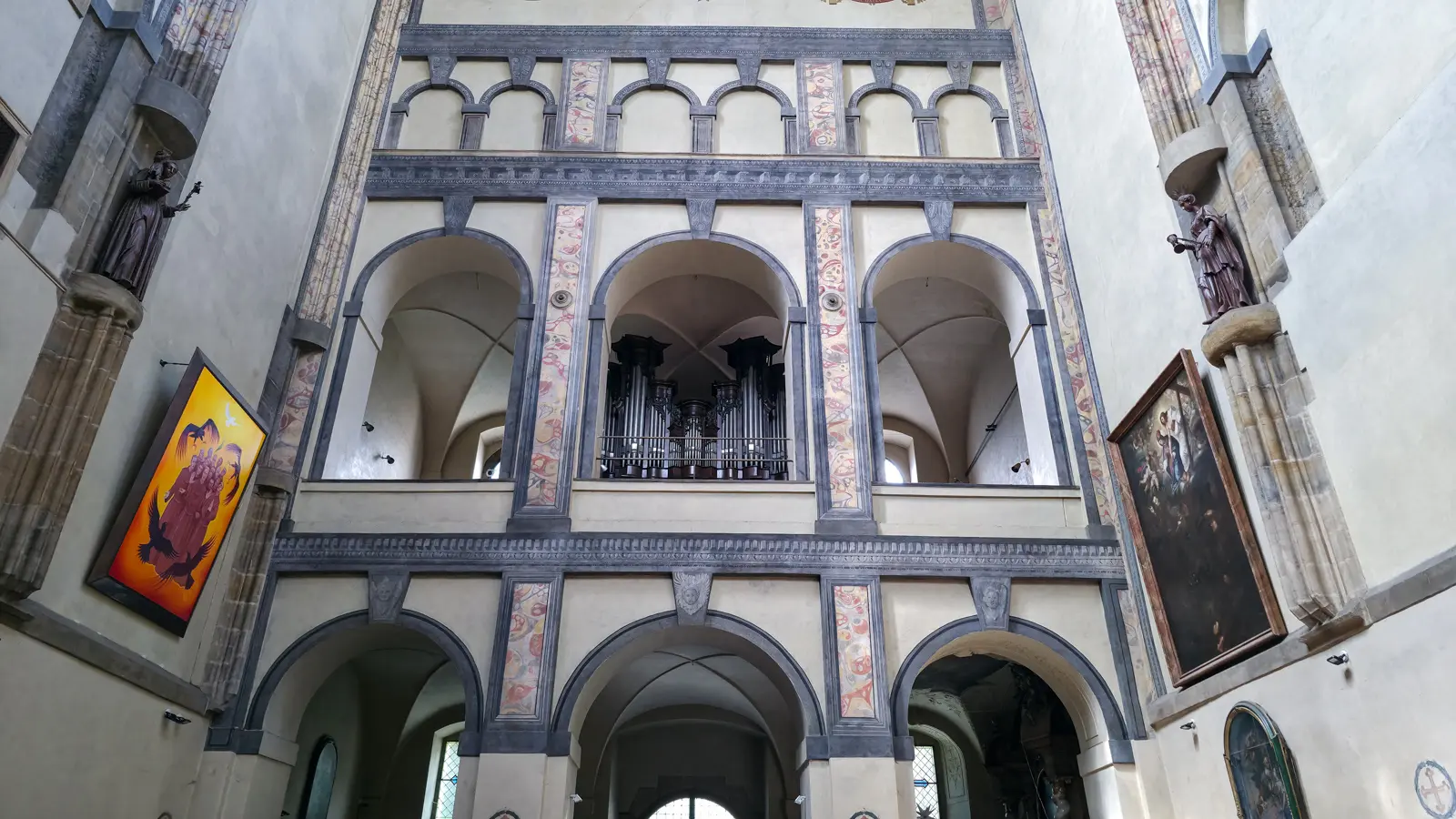
At the back of the church, above the entrance, the organ sits high in a painted arcade. I wish I had had more time just to sit in the quiet and take it all in.
Bubbly Tips
- Combine it with the Franciscan Garden. The church stands right beside the garden, and its tall chancel is easiest to appreciate from there before you go in.
- Look up first. The 34-metre vault is the highest of any church in Prague, so take a moment to look straight up at the star-painted ceiling.
- Be discreet with your camera. Turn off the flash and avoid photographing people while they pray. Services and private prayer come first.
- Bring small change for a candle. The suggested offering is 20 Kč or €1.
- Find the pulpit. Jan Želivský, who sparked the Hussite Wars from this church, is buried beneath the spot where the pulpit stood.
- Visit the relic of Blessed Odoric. The glass case in the corner tells the story of a 14th-century Franciscan who travelled as far as China and Tibet.
- Go with a guide if you can. A historian-led walking tour gave us the story behind what we were seeing.
- Allow time to sit. It is worth slowing down here. I wish I had.
Final Thoughts
The Church of Our Lady of the Snows is an unfinished giant with a dark past: the sermons that started the Hussite Wars, centuries of plunder and rebuilding, and four decades under a regime that closed its monastery.
And yet it is still open, still beautiful and still a place where people come to pray. Next time, I hope to have more time simply to sit in the quiet.
Until next time!

🌟 Everything You Need to Plan Your Dream Trip in 2026
- 🌟 Luxury Hotels - Find premium stays with Booking.com & Hotels.com
- 🏡 Vacation Rentals - Discover unique properties on VRBO
- 🏞️ Guided Tours - Explore with Viator or GetYourGuide
- 🎫 Attraction Tickets - Skip the lines with Tiqets
- 🚢 Ocean Cruises - Set sail with Cruise Direct
- 📱 International SIMs - Stay connected with Saily
- 🚗 Car Rentals - Budget-friendly options from Discover Cars
- 🌐 Secure VPNs - Browse safely with NordVPN
- 💶 Currency Exchange - Best rates with Wise
- 🗣️ Learn Languages - Master the local language with Babbel and Rosetta Stone