
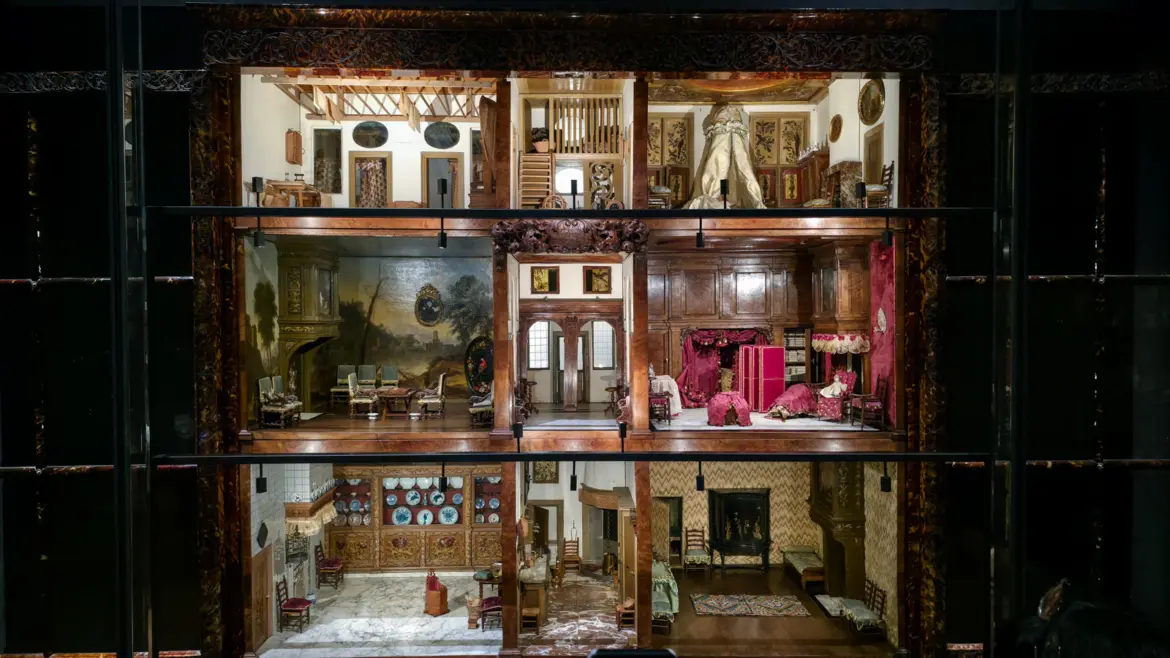
Dolls’ houses take me straight back to my childhood and my Barbie dolls’ houses. I never imagined they would end up in a national museum. I never knew they were a thing for adults, something to collect, something that equated to wealth.
So when I walked into a room of dolls’ houses at the Rijksmuseum, I was amused and a bit surprised. My first thought was: wow, wealthy women were into this? And my second: was this only a Dutch thing?
The answers turned out to be yes, very much, and not quite.
The Rijksmuseum’s Dolls’ Houses at a Glance
🏠 The star · Petronella Oortman’s dolls’ house (c. 1686) — nine furnished rooms in a tortoiseshell cabinet, from attic to kitchens.
💰 Not a toy · A display piece for wealthy women; Oortman’s cost as much as a real house on an Amsterdam canal.
🎨 See it twice · Jacob Appel’s painting of the house (c. 1710) hangs nearby — spot which dolls are now missing.
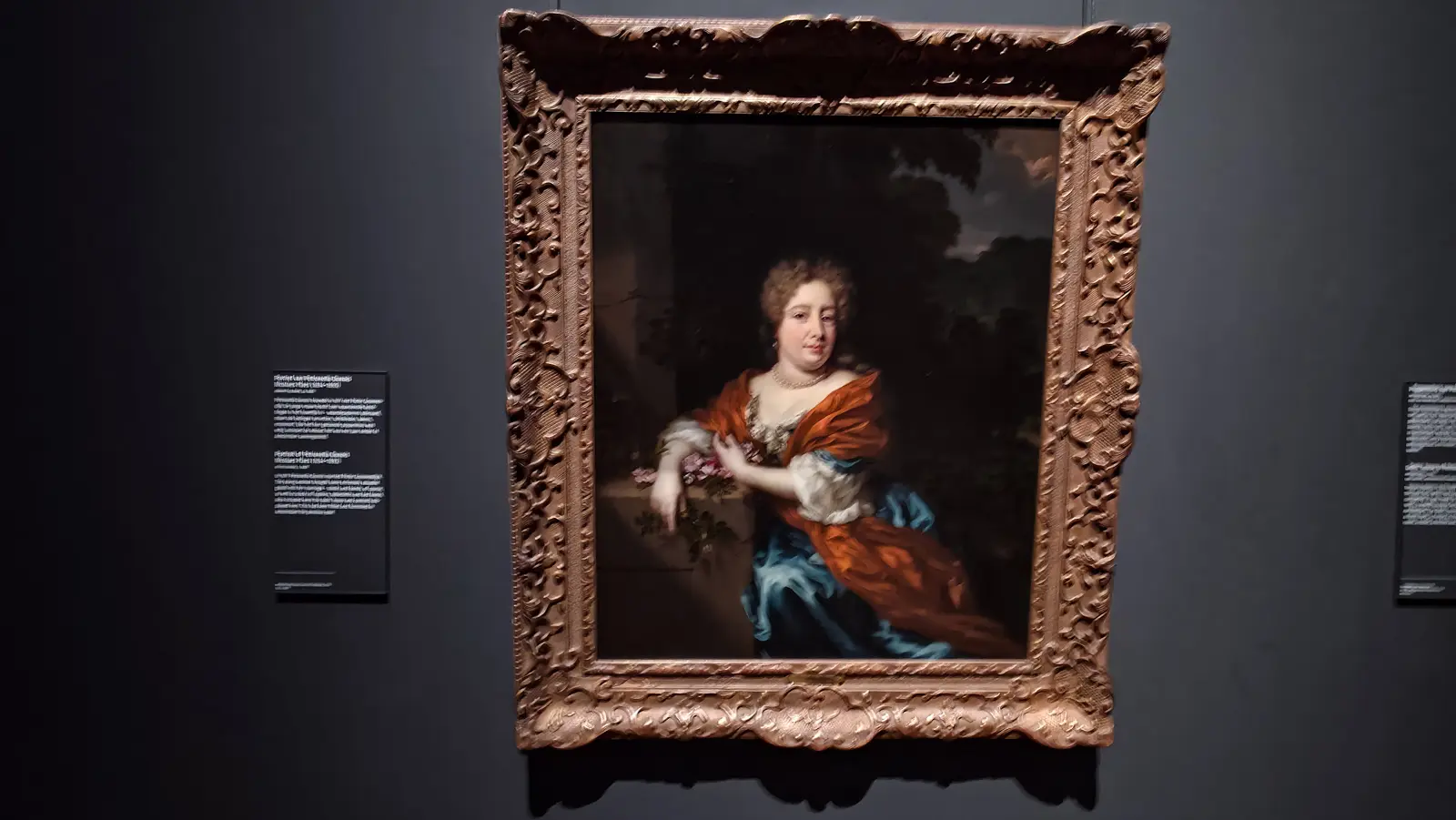
👓 The other Petronella · Petronella Dunois’s house is here too, with a portrait of her by Nicolaes Maes.
💡 Tip · Explore Oortman’s house online first — the Rijksmuseum’s tour is narrated by Helena Bonham Carter — and read The Miniaturist before you go.
Not a Toy
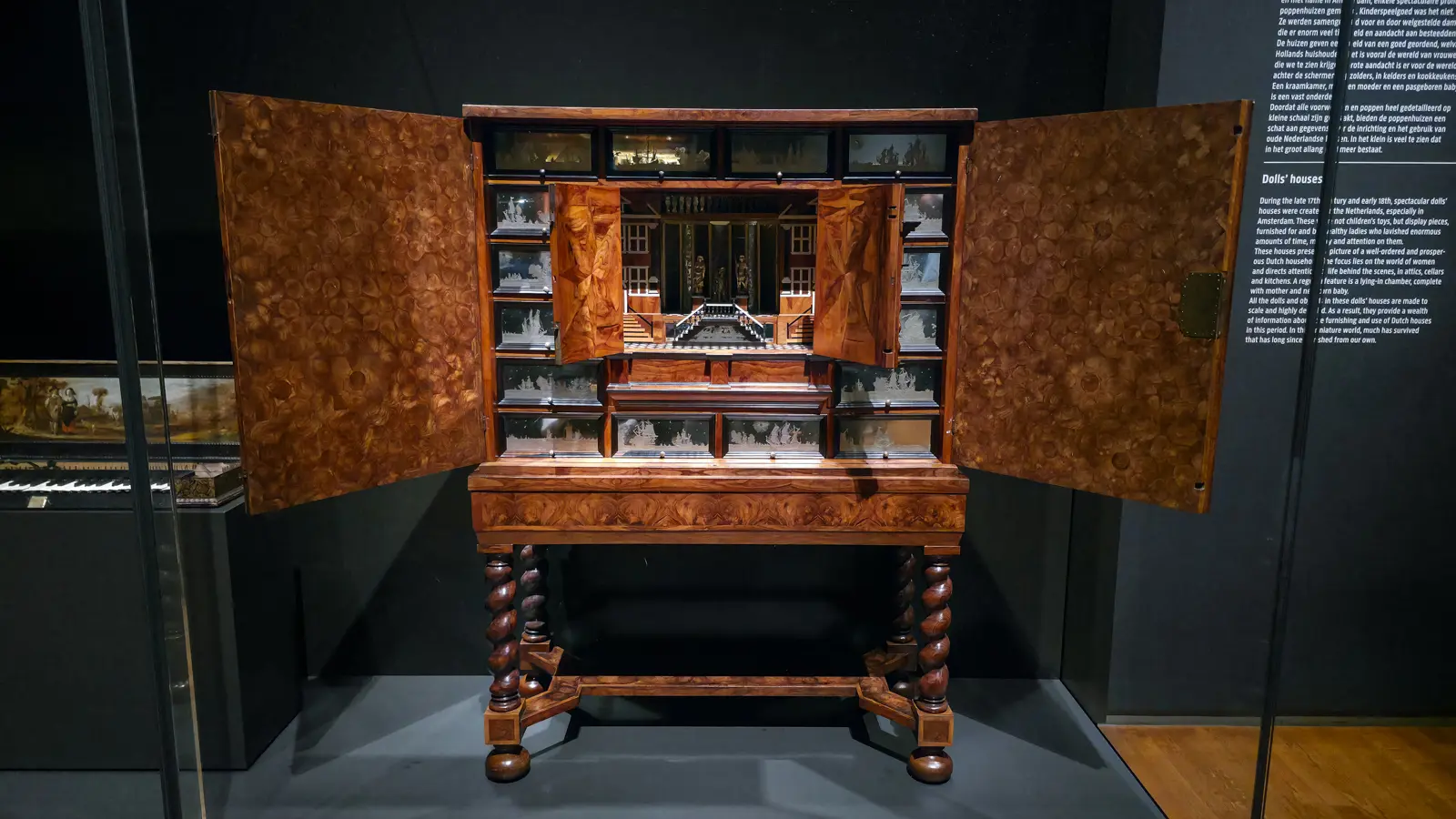
The wall text in the room spells it out. During the late 17th and early 18th centuries, spectacular dolls’ houses were created in the Netherlands, especially in Amsterdam. They were not children’s toys but display pieces, furnished for and by wealthy women who spent enormous amounts of time and money on them.
The Rijksmuseum describes them as a hobby, the female equivalent of the collection cabinets that men kept. One of those men’s cabinets stands in the same room, with rows of small drawers fronted by engraved mirrors.
Petronella Oortman’s House
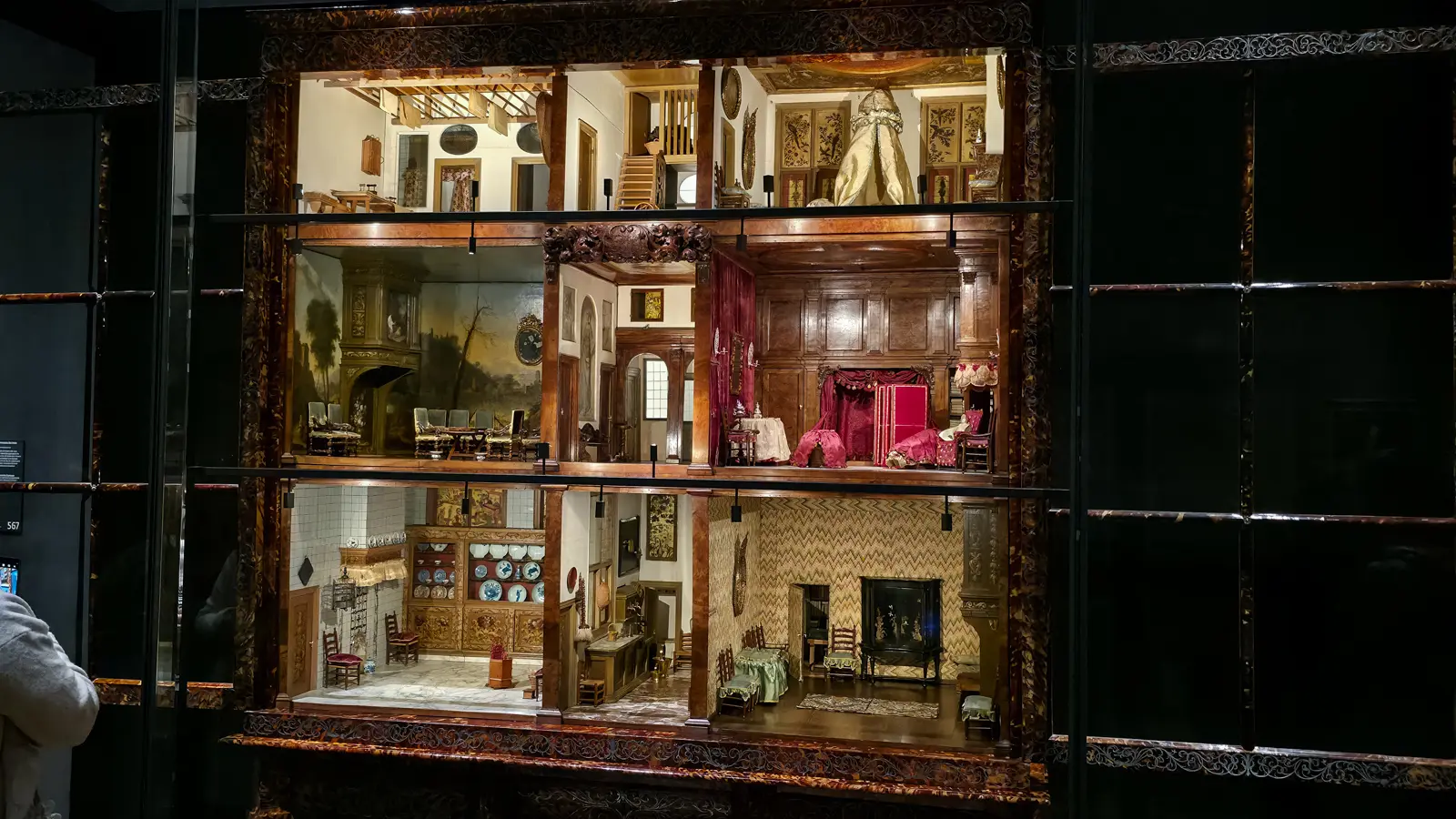
The star of the room is the dolls’ house of Petronella Oortman, the wife of the Amsterdam silk merchant Johannes Brandt. She had it made around 1686 and spent years furnishing it, nine rooms from the attic down to the kitchens.
Nothing in it was bought off the shelf. Oortman commissioned cabinetmakers, glassblowers, silversmiths, basket weavers and artists, and ordered miniature porcelain from China. The whole project cost as much as a real house on a canal.
Up close, the detail is astonishing. There are blue-and-white plates lined up on the kitchen dresser, a bed hung with red curtains, chairs with tiny cushions, and what looks like laundry hanging in the attic.
A Portrait of a Dolls’ House
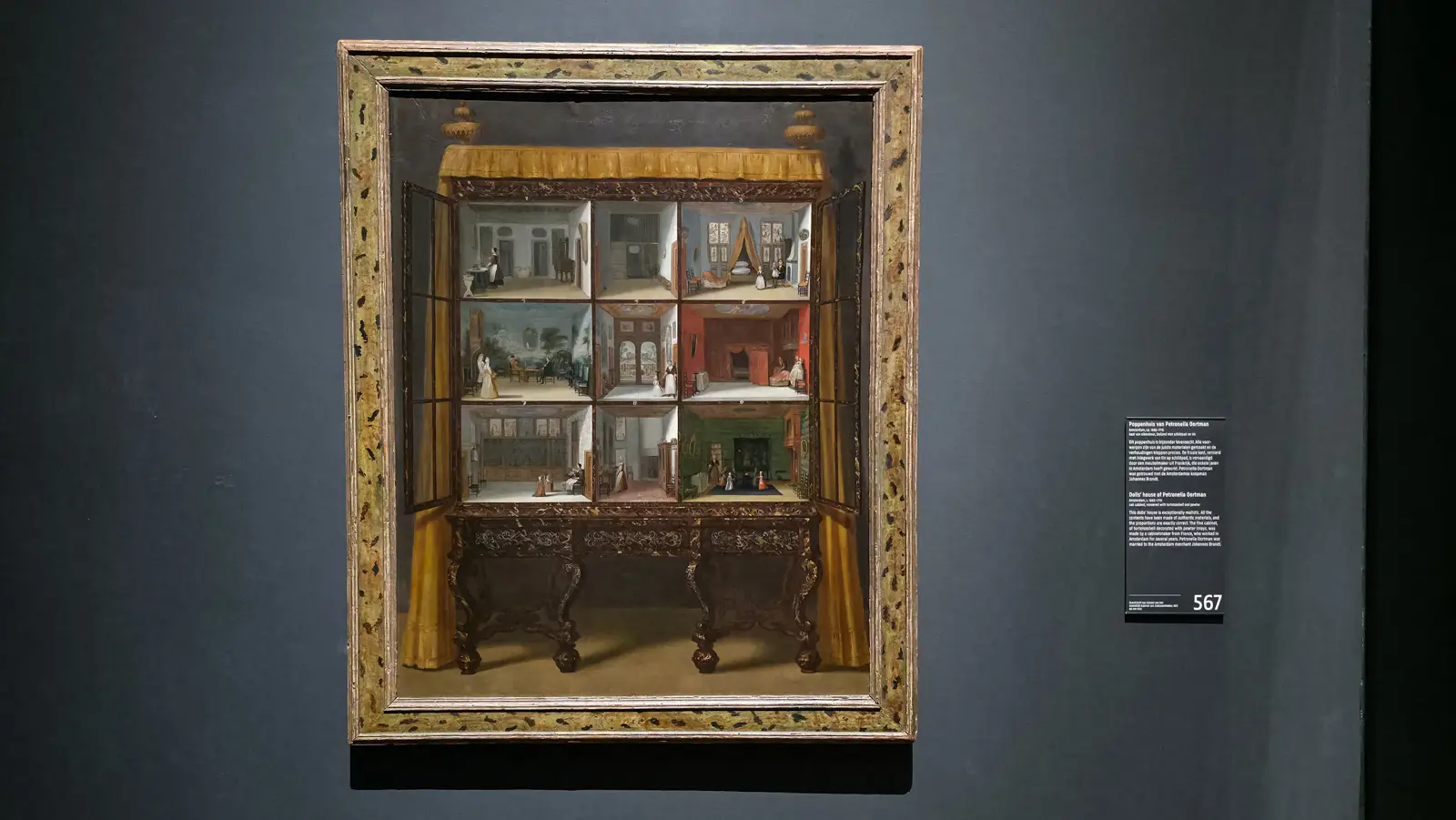
Oortman was so proud of her dolls’ house that she had it painted. Jacob Appel‘s painting, from around 1710, hangs nearby, and comparing the two is half the fun. The painted rooms are full of little figures, maids, ladies and children, most of whom are now lost from the real house.
The Other Petronella
Oortman was not the only one. Nearby hangs a portrait by Nicolaes Maes of Petronella Dunois, painted between 1677 and 1685. She too assembled a dolls’ house, commissioning craftsmen for each component, and hers is also in the Rijksmuseum.
When she married Pieter Groenendijk, an official in the Leiden city government, her dolls’ house was listed among the most valuable possessions she brought into the marriage, alongside her securities and an impressive amount of linen. Unlike Oortman’s made-to-order rooms, Dunois’s house was filled with ready-made furniture, including a large amount of miniature silver.
Real Furniture in the Same Room
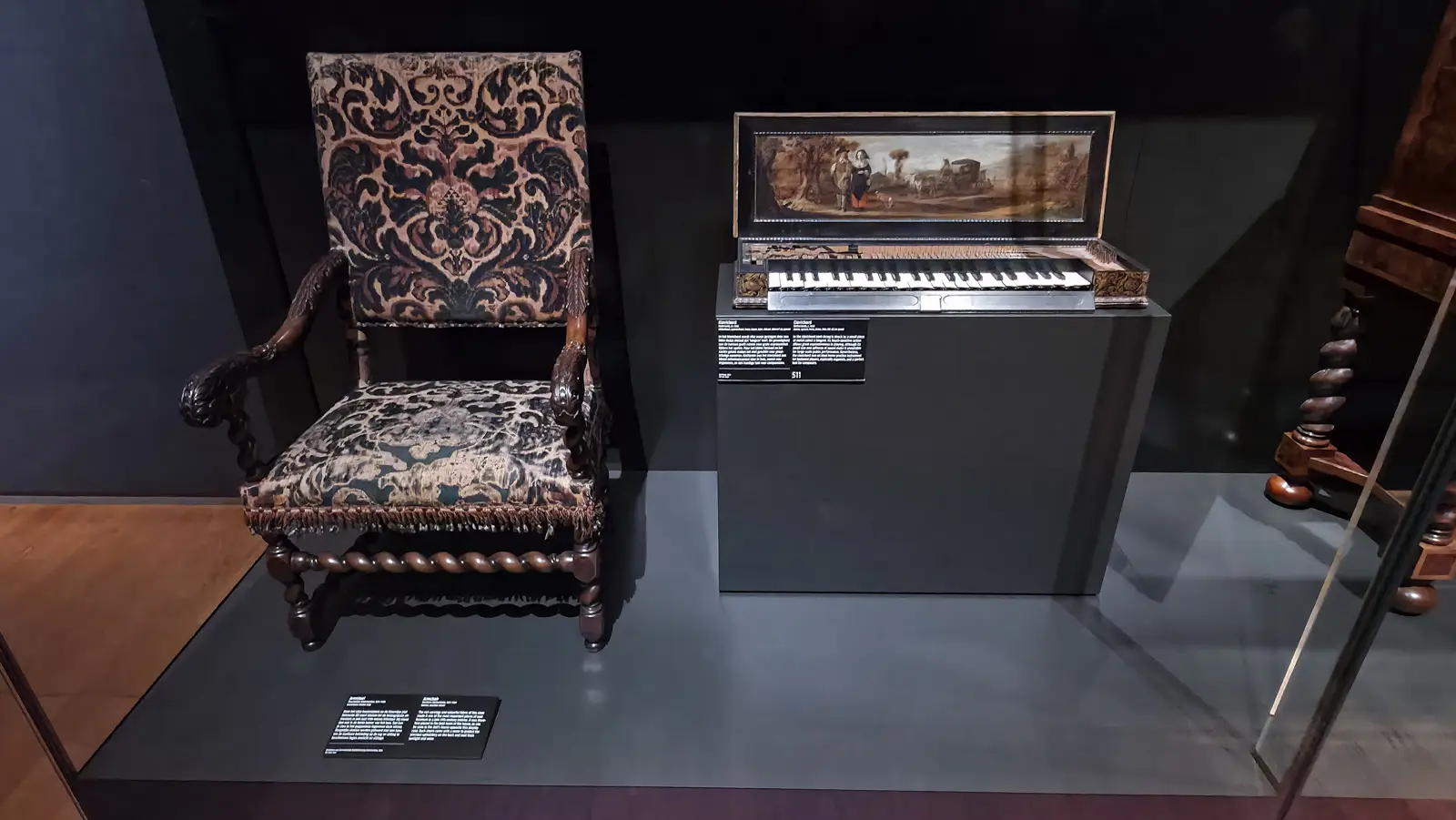
Some of the full-size furniture from homes like these stands nearby. A carved armchair with richly patterned upholstery was one of the most important pieces of seating in a late 17th-century home, so it went in the best room. The label points out that the same kind of chair can be spotted in the dolls’ house opposite.
Was It Only a Dutch Thing?
Not quite. The earliest known dolls’ houses are German. Four 17th-century houses from Nuremberg date from 1611 onwards, built in an architectural style. In 1631, a woman named Anna Köferlin in Nuremberg even charged admission to women, girls, children and servants to come and learn from the house she had commissioned.
What made the Dutch version different was the cabinet. Dutch dolls’ houses were built as cupboards whose doors opened onto the treasures inside. England followed in the 18th century with its own “baby houses”, often modelled on the owners’ real homes.
And my Barbie dolls’ houses? They are the very end of the story. Dolls’ houses only became popular children’s toys in the 19th century, once mass production made them affordable.
The Miniaturist
If the dolls’ house looks familiar, it may be from a bookshelf. Oortman’s house inspired Jessie Burton’s best-selling novel The Miniaturist, set in 17th-century Amsterdam.
Bubbly Tips
- Book your Rijksmuseum ticket online. Tickets are sold with a time slot, and there is no ticket desk at the door.
- Find the dolls’ houses near the maritime rooms. On my route through the 17th-century galleries, they came between the ship models and the Gallery of Honour.
- Compare the house with its painting. Stand in front of Jacob Appel’s painting, then go back to the house and spot which dolls are missing.
- Look for the last doll. One small doll still sits in an armchair in Oortman’s house.
- Spot the chair twice. Find the full-size armchair, then look for its miniature in the dolls’ house opposite.
- Look for the lying-in room. The wall text notes that a room with a mother and newborn baby was a regular feature of these houses.
- Explore it online first. The Rijksmuseum has digitised Oortman’s house, with an English tour narrated by Helena Bonham Carter.
- Read The Miniaturist before you go. Seeing the real house after the novel is a treat.
Final Thoughts
Between the Rembrandts and the Vermeers, I did not expect a room that sent me straight back to my childhood dolls’ houses, or the discovery that 300 years earlier, wealthy Amsterdam women had poured a canal house’s worth of money into the same idea.
Petronella Oortman’s house was never a toy, and neither was Petronella Dunois’s. They were portraits of the perfect home, and more than three centuries later the Rijksmuseum counts Oortman’s among the most important objects in its collection.
Until next time!

🌟 Everything You Need to Plan Your Dream Trip in 2026
- 🌟 Luxury Hotels - Find premium stays with Booking.com & Hotels.com
- 🏡 Vacation Rentals - Discover unique properties on VRBO
- 🏞️ Guided Tours - Explore with Viator or GetYourGuide
- 🎫 Attraction Tickets - Skip the lines with Tiqets
- 🚢 Ocean Cruises - Set sail with Cruise Direct
- 📱 International SIMs - Stay connected with Saily
- 🚗 Car Rentals - Budget-friendly options from Discover Cars
- 🌐 Secure VPNs - Browse safely with NordVPN
- 💶 Currency Exchange - Best rates with Wise
- 🗣️ Learn Languages - Master the local language with Babbel and Rosetta Stone