
Amsterdam is a bicycle city. That part of the reputation is accurate, and it makes sense. With the canals, the density of the centre, and the environmental case for leaving the car at home, the bike is the obvious way to get around. The city has an estimated 881,000 of them, and in late April they were everywhere I looked.
I come from Montreal, a city that also gives a lot of room to pedestrians and cyclists. I thought I knew what to expect. I didn’t. In Amsterdam I spent most of my time watching out for cyclists, not cars.
Amsterdam on Foot at a Glance
🚲 The scale · An estimated 881,000 bicycles, and about 58% of residents over 12 ride one every day. The bike-city reputation is accurate.
🟥 The red lane · Red-surfaced lanes are for bikes — treat them like a road. Cross the bike path first, then the cars.
⚡ The speed · Since December 2023 cars are capped at 30 km/h on ~80% of roads, but there’s no legal speed limit on separate bike paths — so on many streets the bikes are the faster traffic.
🔒 Theft is real · Around 11,000 bikes are reported stolen a year (the city estimates the true figure near 28,500). Lock a rental to something fixed.
💡 Tip · E-bikes are nearly silent — listen as well as look, and park a rental in a garage (the underwater one at Centraal holds 7,000 and the first 24 hours are free), not on a bridge.
The Red Lane
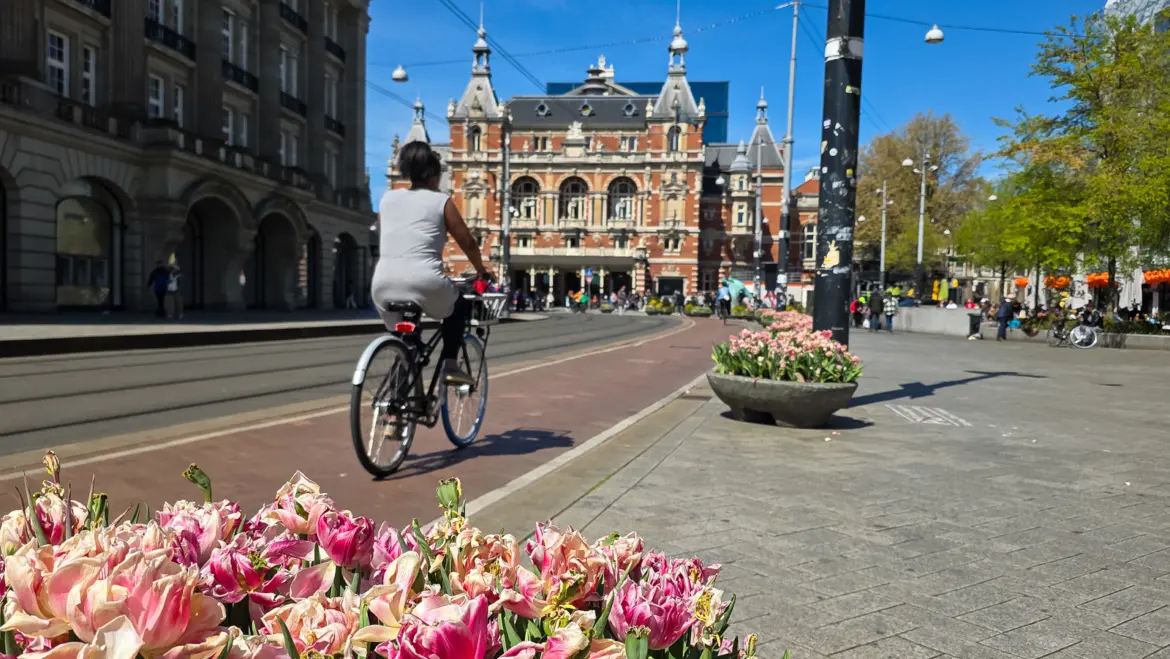
Amsterdam’s bike paths are easy to spot. On Leidseplein, the lane in front of the Stadsschouwburg is surfaced in red. A low kerb separates it from the pavement on one side, and a white line separates it from the tram tracks on the other.
Stepping onto that red surface by accident is the quickest way to learn how seriously the locals take it. God forbid a pedestrian drifts into it while checking a map. Many of the local riders get visibly annoyed when someone on foot strays out of place, and they don’t slow down to make the point.
The rule I ended up following was simple. Treat the red lane like a road, and look for bikes before looking for cars.
How Fast Is Fast
The speed was what surprised me most. Some of the cyclists moved faster than the cars, which sounds like an exaggeration until standing at the edge of a bike path in the centre.
Officially, it is the cars that have been slowed down. Since 8 December 2023, the speed limit on roughly 80 per cent of Amsterdam’s roads has been 30 km/h, down from 50. It applies to every vehicle on the roadway, including cyclists in a bike lane painted onto the road. On a separate bike path, cyclists have no legal speed limit at all. The city has looked into setting one, but Dutch law does not yet allow it. So on most streets the cars are capped at 30 and many of the bikes are not. From the pavement, it was the bikes that made me step back.
Locals and Visitors
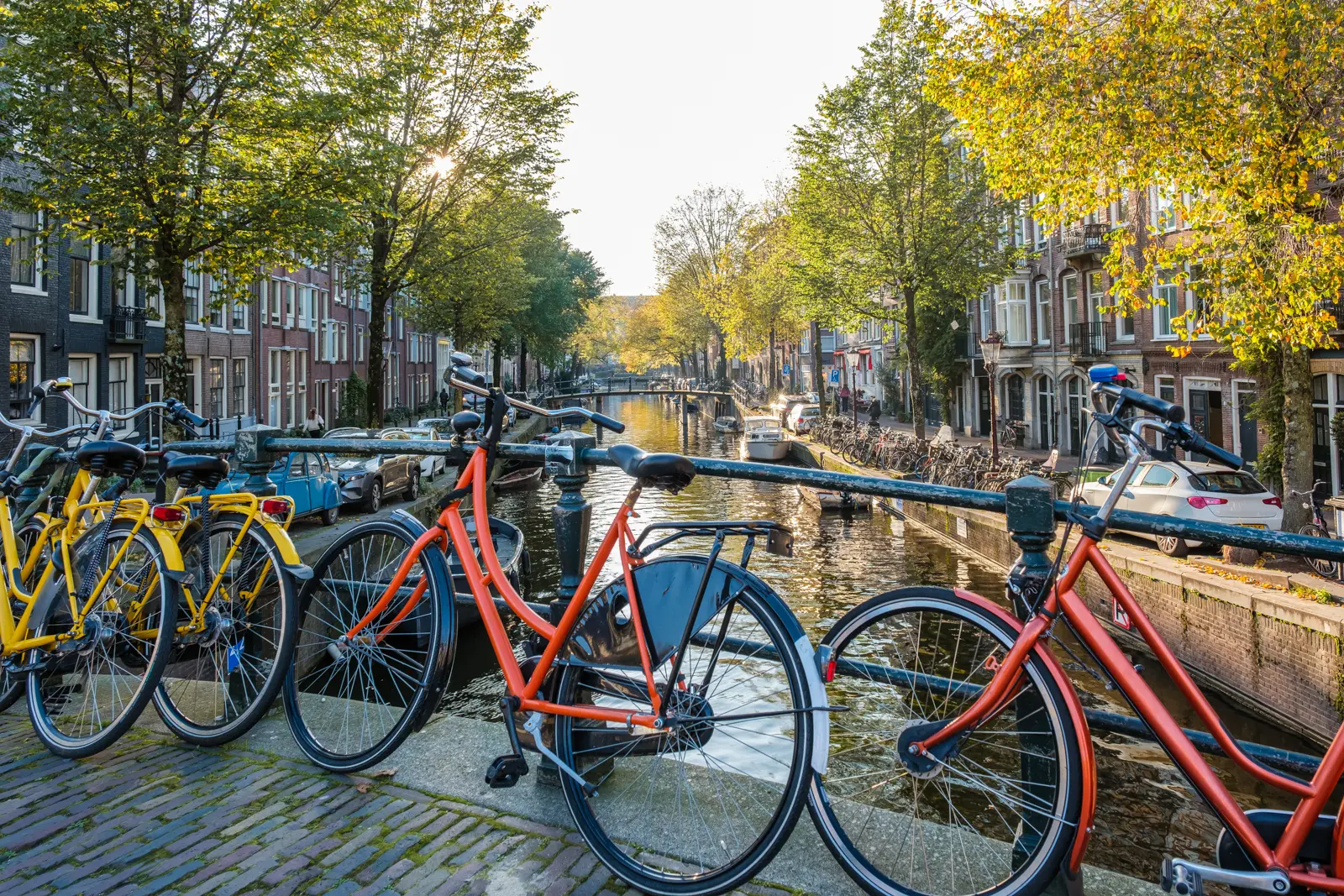
To be fair, not everyone rides like that. There were plenty of civilised cyclists, and from what I could tell most of them were tourists. The impatience came mostly from the locals, and mostly when someone didn’t stay in their lane.
Montreal also prioritises pedestrians and cyclists. I have never seen cyclist rage there on this scale. I respect the system in Amsterdam. I just learned to stay out of its way.
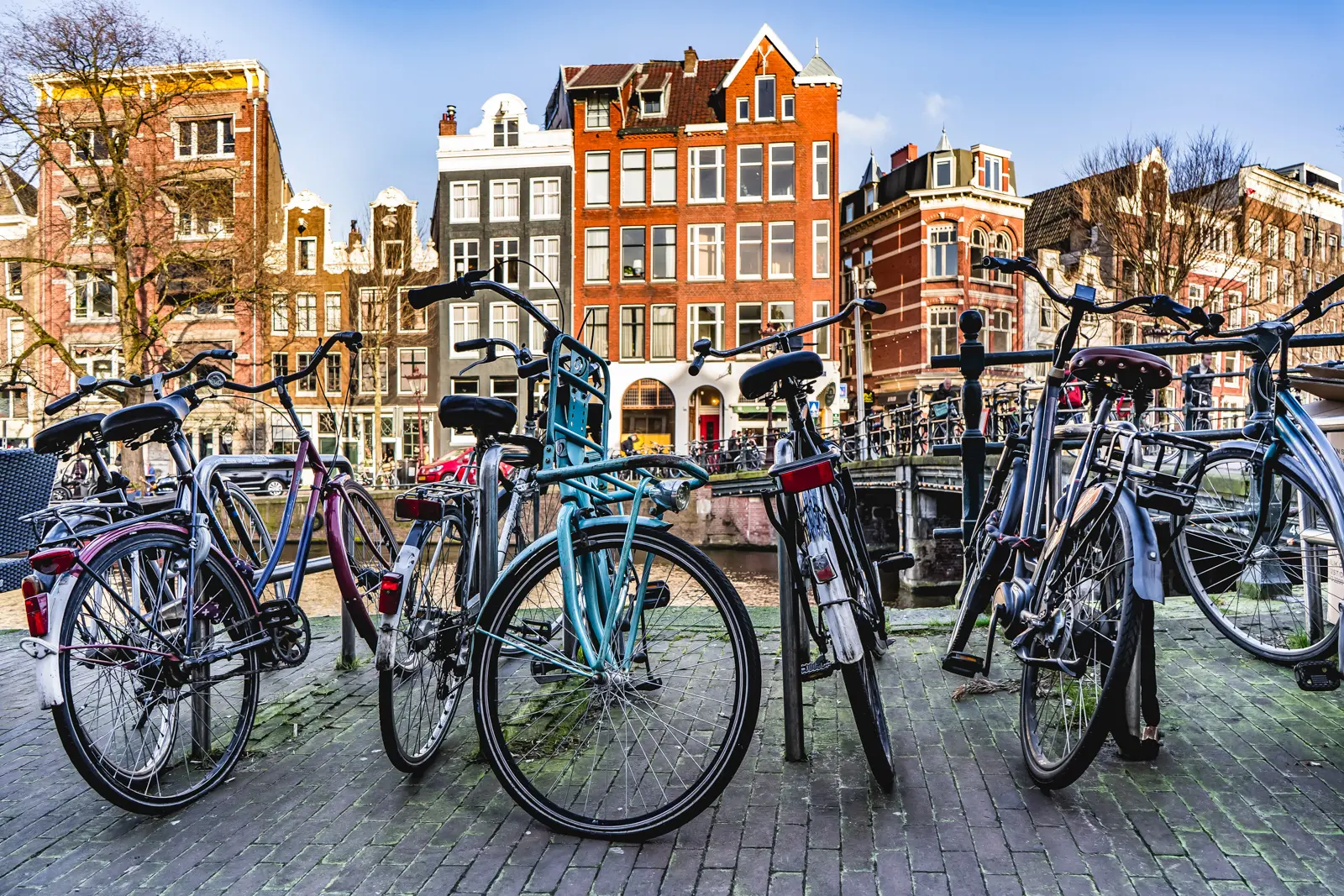
Most of the bikes in the city look like these: upright, heavy, with a rack on the back and nothing fancy about them.
Parked on Every Corner
If the moving bikes were the hazard, the parked ones were the scenery. They lean on bridge railings, fill racks along the quays, and stack up in numbers that are hard to take in.
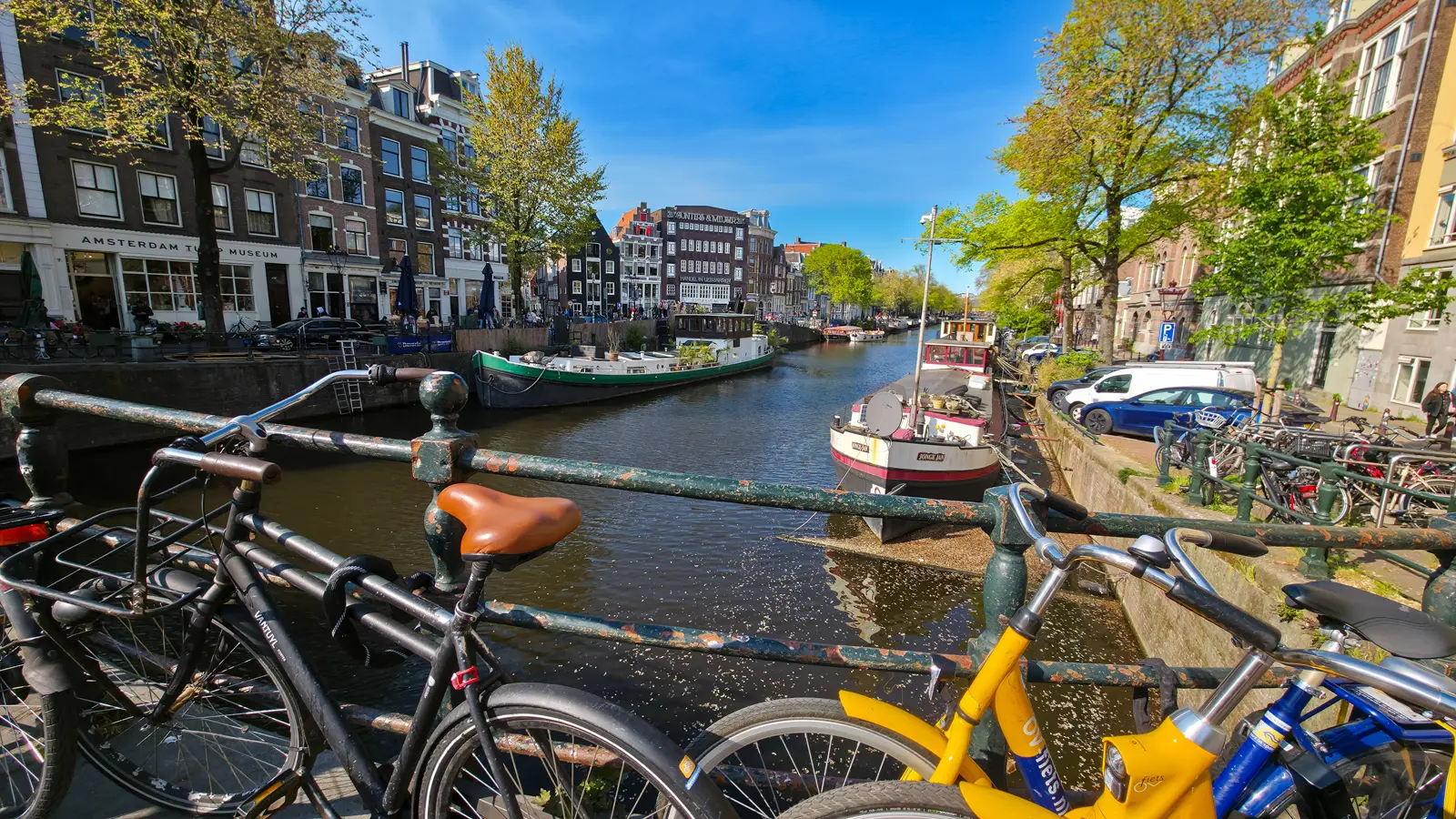
Gunters & Meuser sits on the corner of Egelantiersgracht and Prinsengracht. It is a hardware building from 1917 to 1918, designed in the Amsterdam School style by Pieter Vorkink and Jacobus Wormser. The company name runs across the top in wrought-iron letters, with “Handel in IJzerwaren” (hardware trade) above the shop windows. On 29 April, the quay across the water had a full rack of bikes in front of it.
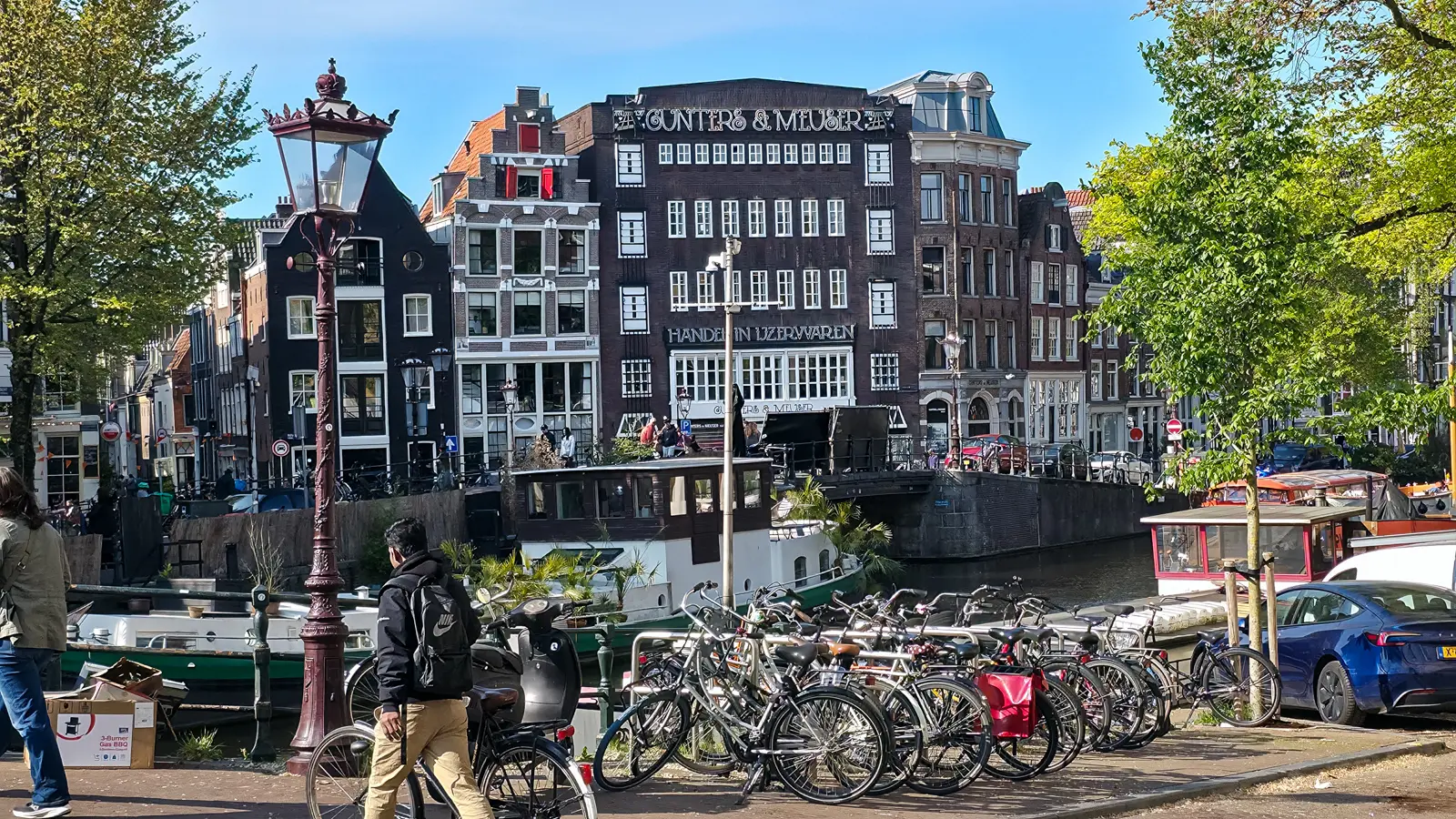
What amazed me was how casually the bikes are left. Rows of them line the canals, locked to railings, lamp posts and each other. I assumed theft simply wasn’t a worry here. It is. Around 11,000 bikes are reported stolen in Amsterdam every year, and the city estimates the real figure is closer to 28,500.
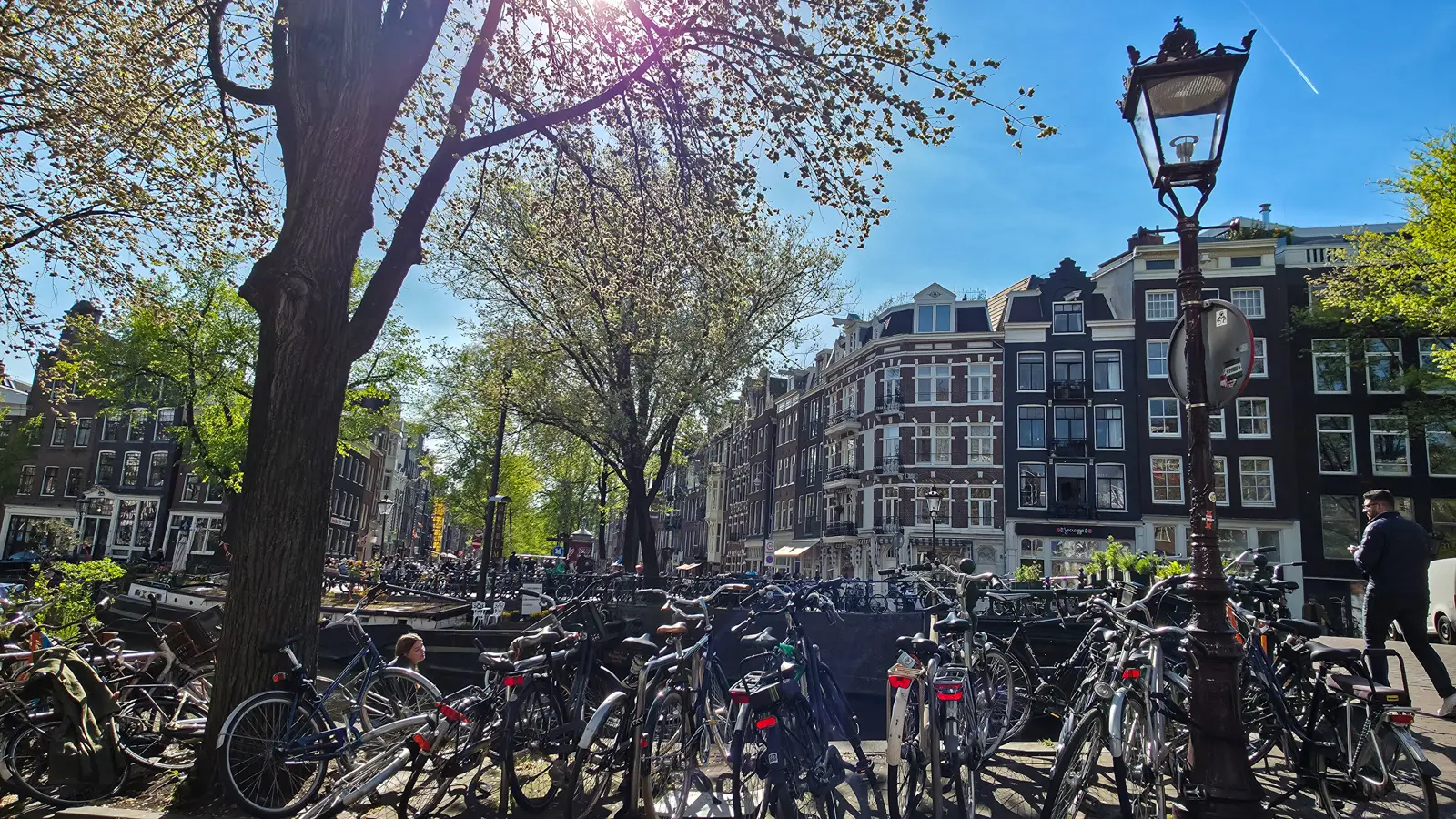
That explains the locks. A little further along, one bike on a bridge railing had a heavy chain wrapped around its frame, looking down the canal towards Gunters & Meuser.
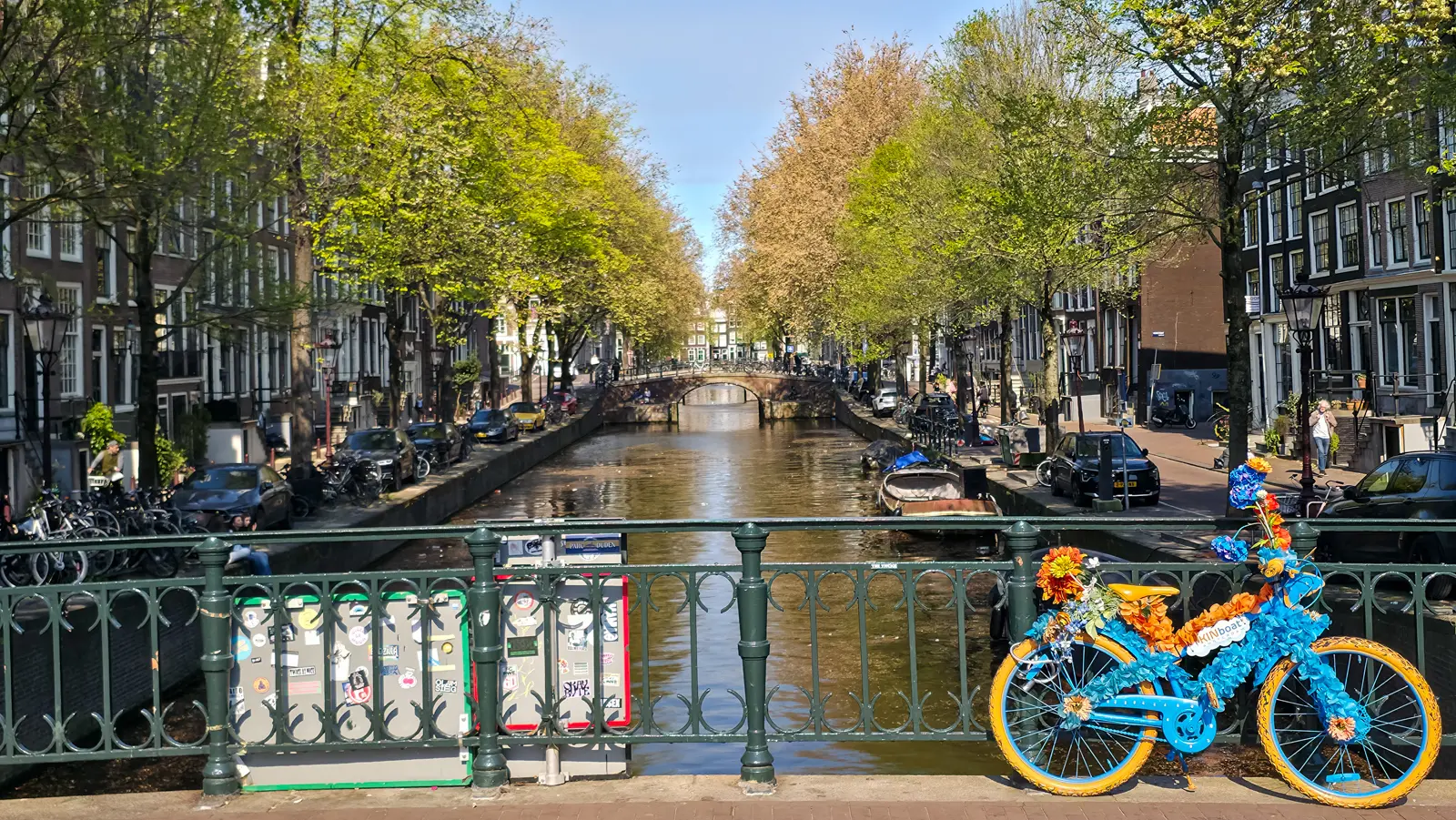
Some bikes are parked with more ceremony. On a canal bridge in the centre, two days after King’s Day, one had been covered in blue and orange flowers, with a KINboat sign on the frame.
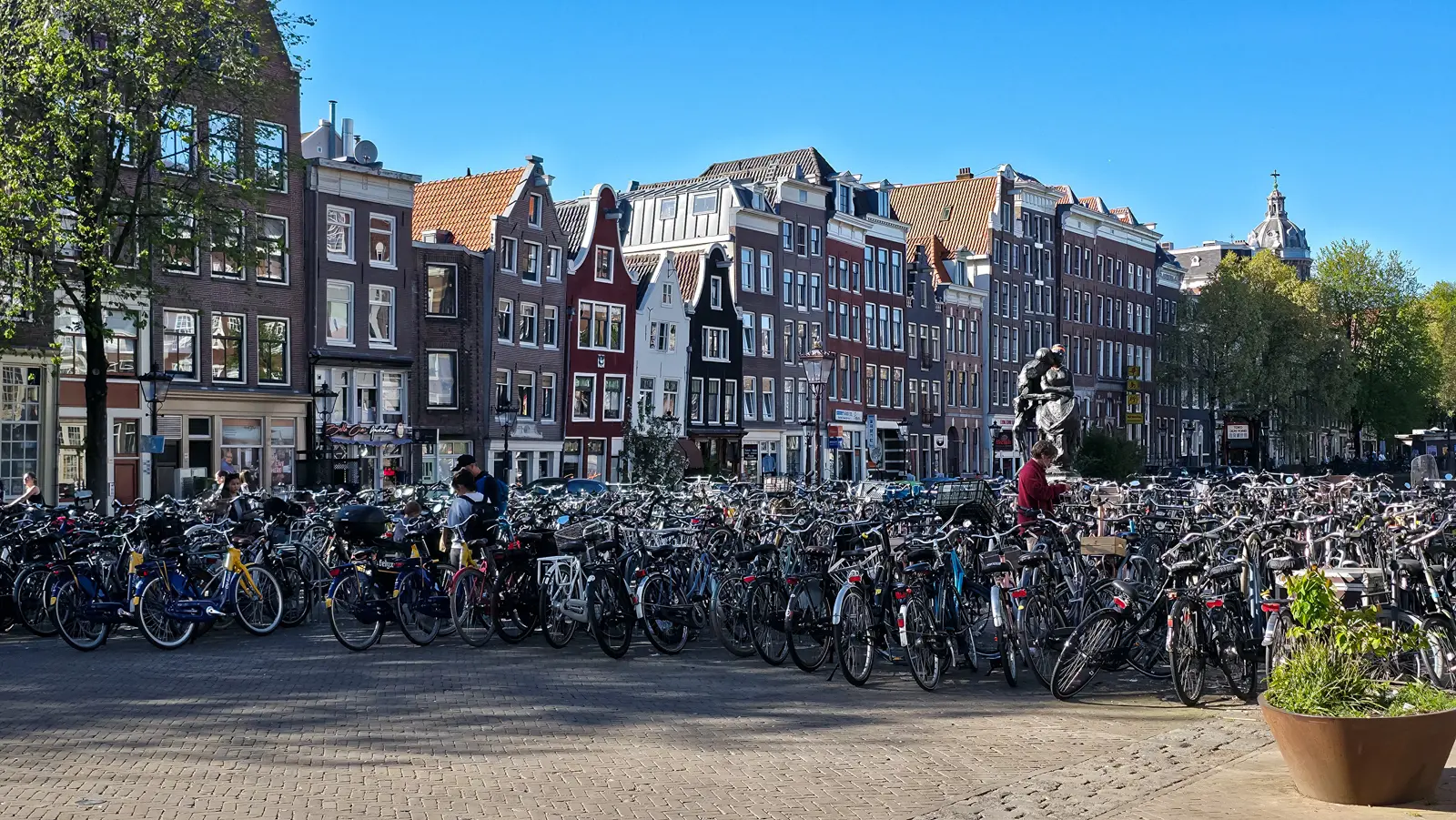
The biggest crowd of bikes I saw was on 30 April. It was a paved square filled with parked bikes, rack after rack, with a few people working their way between the rows to reach their own.
Away from the canals, bike parking is plainer: rows of steel stands along brick walls and pavements.
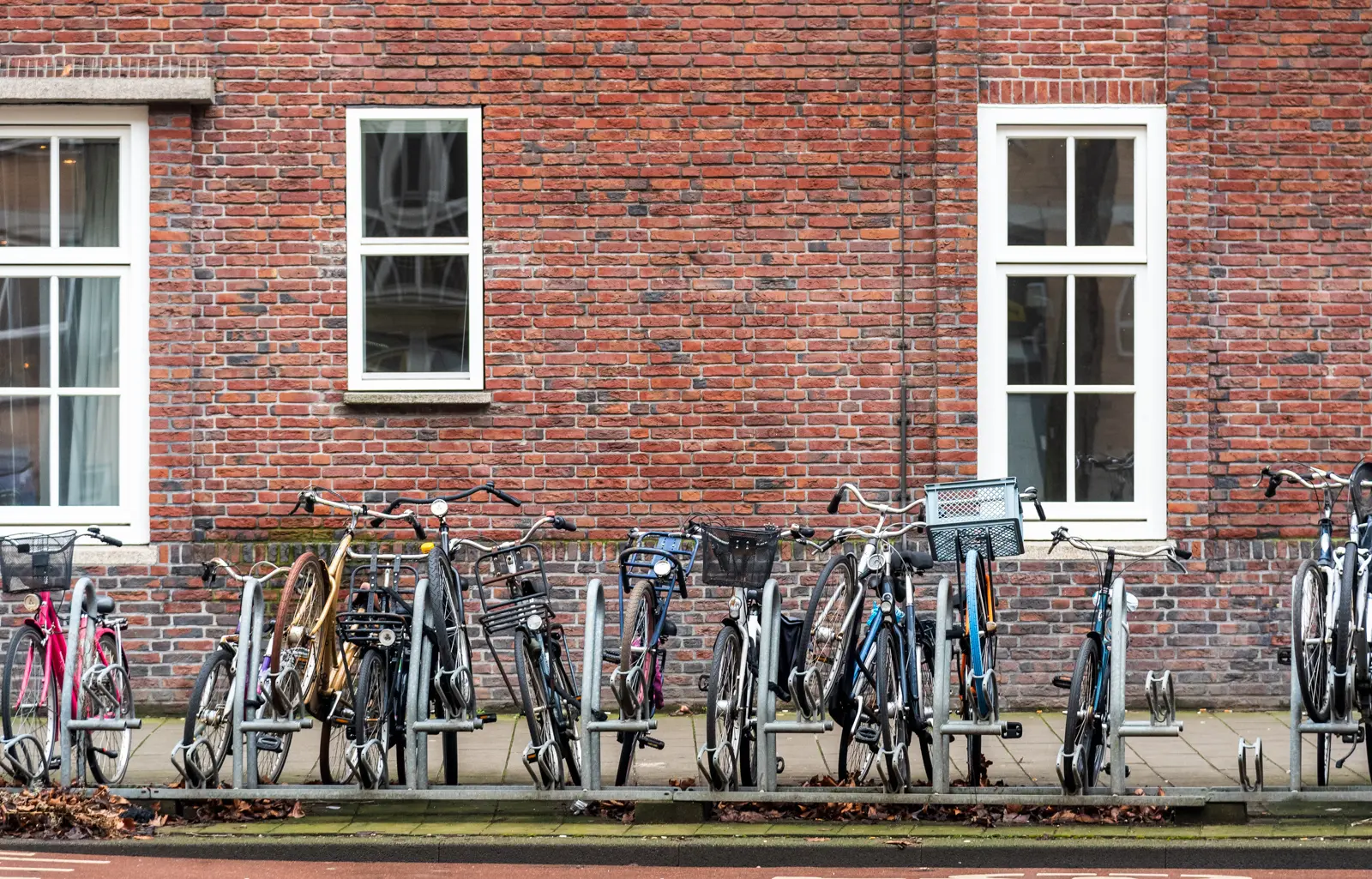
Around Centraal, the street racks have gone altogether. Since the new garages opened there in 2023, bikes near the station are meant to go inside them.
Bubbly Tips
- Treat the red lane as a road. The red-surfaced lanes are for bikes. Stand on the pavement to check a map or take a photo, never on the edge of the lane.
- Look for bikes before cars. Crossing a street usually means crossing a bike path first, and the bikes arrive faster. Check the lane, then the road.
- Check both directions on one-way streets. Many one-way signs carry a small plate reading “uitgezonderd” with a bike symbol, meaning “except for bicycles”. Cars go one way; bikes can come from either direction.
- Watch the tram tracks on Leidseplein. The bike lane in front of the Stadsschouwburg runs right beside the tram lines, so there are two kinds of traffic to clear before you step off the kerb.
- Listen as well as look. E-bikes make very little noise. Don’t count on hearing one coming.
- Get your canal and bike photos from the bridges. A bridge gives you a straight line down the canal with bikes along the railings. Stand against the railing, clear of the cyclists crossing behind you.
- Park a rental in a garage, not on a bridge. The underwater Stationsplein garage at Centraal holds 7,000 bikes, and the first 24 hours are free.
- Ask about the brakes before you ride off. Many traditional Dutch bikes stop with back-pedal brakes rather than handlebar levers.
- If you ride, hold a steady line and let locals pass. Nobody minds a slow tourist nearly as much as an unpredictable one.
- Lock a rental to something fixed. A rack or a railing is safer than a lock through the back wheel alone. Theft is common, and a bike that is only locked to itself is easy to carry away.
Final Thoughts
Amsterdam’s bikes were everything the reputation promised, and a little more than I bargained for. The speed and the impatience are real, and they are the one thing I would warn a first-time visitor about. Coming from Montreal did not prepare me for it.
I still like how the bicycle defines the city. It is on the bridges, in the racks, outside a 1917 hardware building and in every square. I just learned to admire it from the pavement.
Until next time!

🌟 Everything You Need to Plan Your Dream Trip in 2026
- 🌟 Luxury Hotels - Find premium stays with Booking.com & Hotels.com
- 🏡 Vacation Rentals - Discover unique properties on VRBO
- 🏞️ Guided Tours - Explore with Viator or GetYourGuide
- 🎫 Attraction Tickets - Skip the lines with Tiqets
- 🚢 Ocean Cruises - Set sail with Cruise Direct
- 📱 International SIMs - Stay connected with Saily
- 🚗 Car Rentals - Budget-friendly options from Discover Cars
- 🌐 Secure VPNs - Browse safely with NordVPN
- 💶 Currency Exchange - Best rates with Wise
- 🗣️ Learn Languages - Master the local language with Babbel and Rosetta Stone