
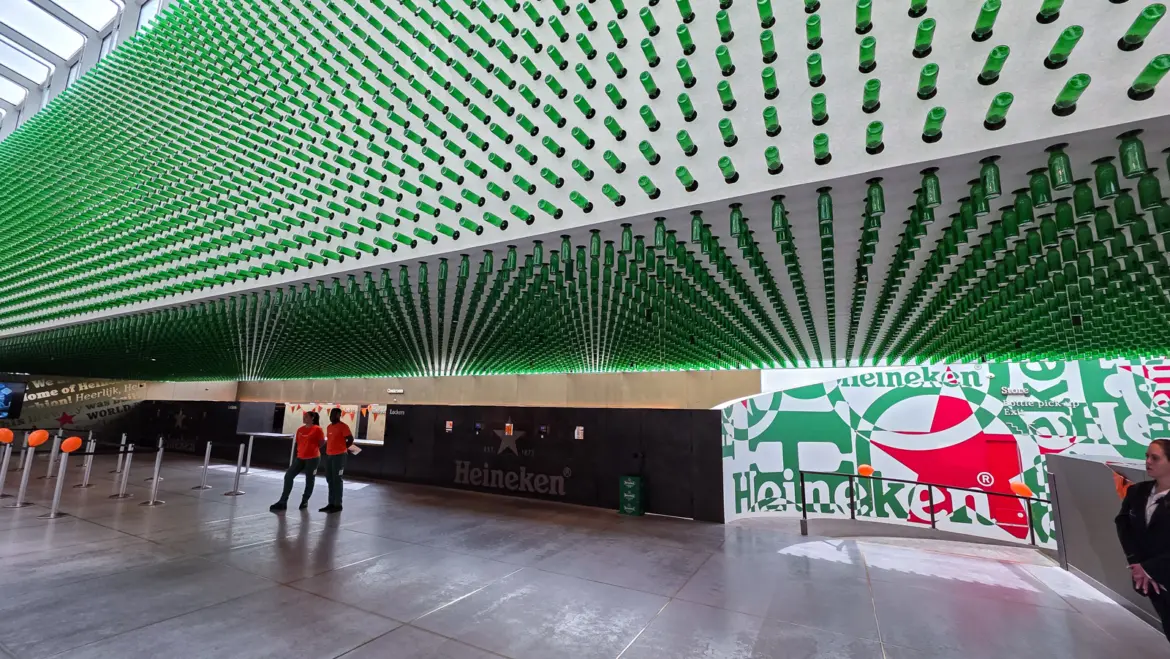
We had breakfast first, at Locals, a few minutes away, and then walked over to Stadhouderskade because the tour was booked for a specific time and the VIP one does not wait for stragglers.
The address matters more than it looks. This is not the museum quarter. The Heineken Experience sits at number 78, on a wide, busy road at the northern edge of De Pijp, with traffic going past and the Rijksmuseum about ten minutes’ walk in the other direction. It is a working city street with a very large red brick industrial building on it, which is exactly what the place was for a hundred and twenty-one years.
I should say this early rather than pretend otherwise: I am not much of a beer drinker. I booked this for the building and the history. I went in expecting to enjoy the brew house, tolerate the interactive parts, and find the tasting at the end largely wasted on me.
Two of those three predictions turned out to be wrong, and the one about the tasting was the most wrong of all.
The Heineken Experience VIP Tour at a Glance
🏭 The building · Heineken’s original 1867 brewery on Stadhouderskade, a national monument, brewing on this spot until 1988.
🎟️ VIP vs standard · The standard tour is ~90 minutes, self-guided. The VIP is ~2.5 hours with a guide, a hidden bar, five matched beers and a named bottle. Both are 18+.
🧪 The best fact · In 1886 Dr Elion, a pupil of Pasteur, isolated the “A-yeast” here. It’s still why every green bottle tastes the same.
🍺 The honest verdict · From someone who barely drinks beer: the tasting was the best part, and the alcohol-free one was the winner.
💡 Tip · Eat first (there’s no restaurant inside), and add the rooftop if you’re on the standard ticket.
What the ticket actually buys
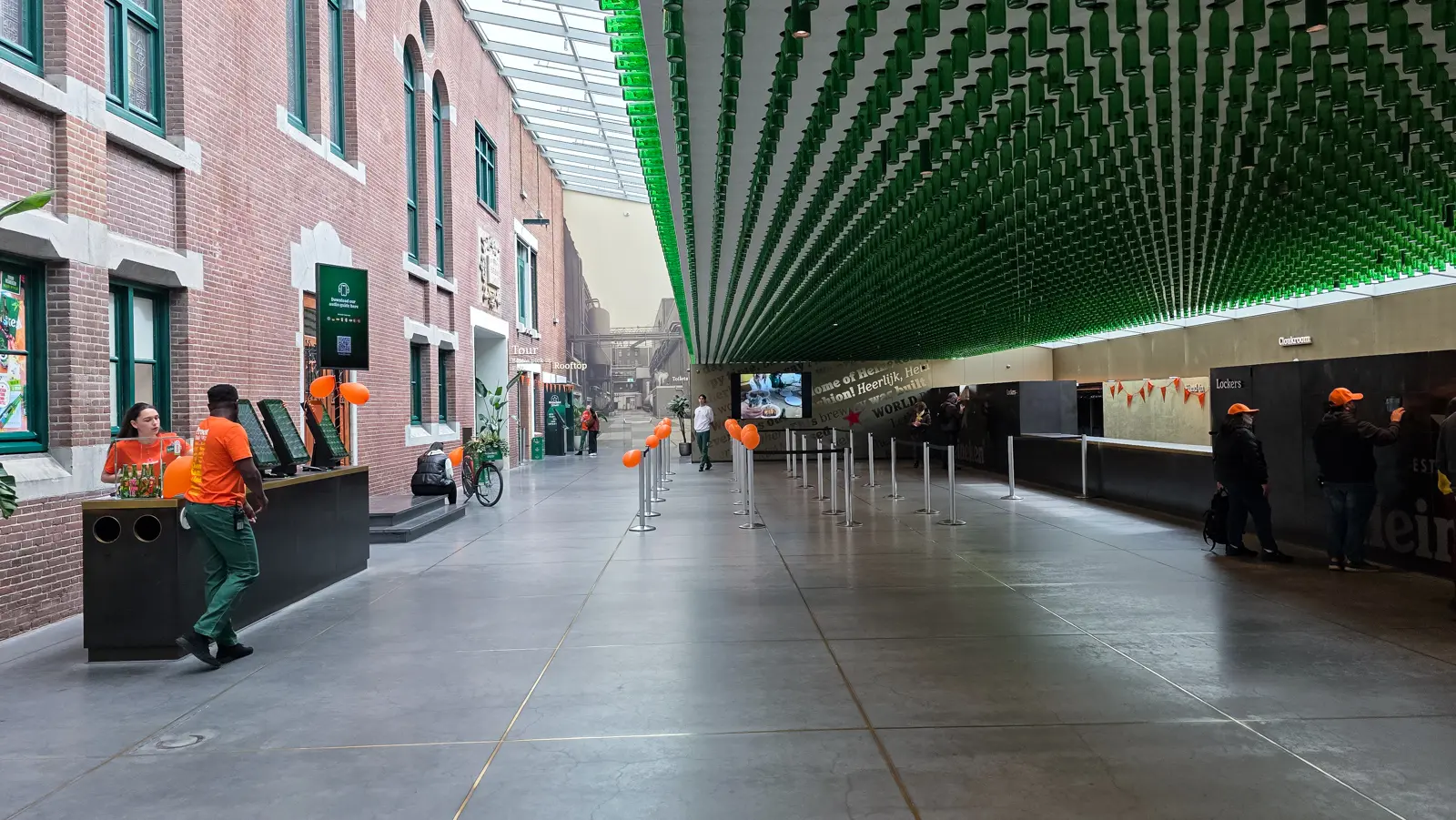
The standard ticket is a self-guided route through the building, roughly ninety minutes, ending with a couple of beers on a wristband at the bar downstairs. It has existed in some form since 1991, when the company opened the closed brewery to the public as a reception and information centre rather than demolish it. It was renamed the Heineken Experience in 2001 and rebuilt again in 2008 into the four floors of multimedia the standard route now runs through.
The VIP tour is a different proposition. It adds a guide, roughly two and a half hours instead of ninety minutes, access to parts of the building the general route does not reach, one of the two hidden bars, five beers from the Heineken portfolio with bites chosen to match them, and a bottle with the visitor’s name printed on the label at the end. Groups are small, which is the part that makes the difference: the guide answers what the group actually asks rather than delivering a script.
The two hidden bars are called Freddy’s and Henry’s, and the names are not decoration. Henry Pierre Heineken was Gerard’s son. Freddy was Gerard’s grandson, the man who turned a Dutch lager into a global brand, and he died in 2002. We were taken into Freddy’s, which is worth a post of its own and will get one.
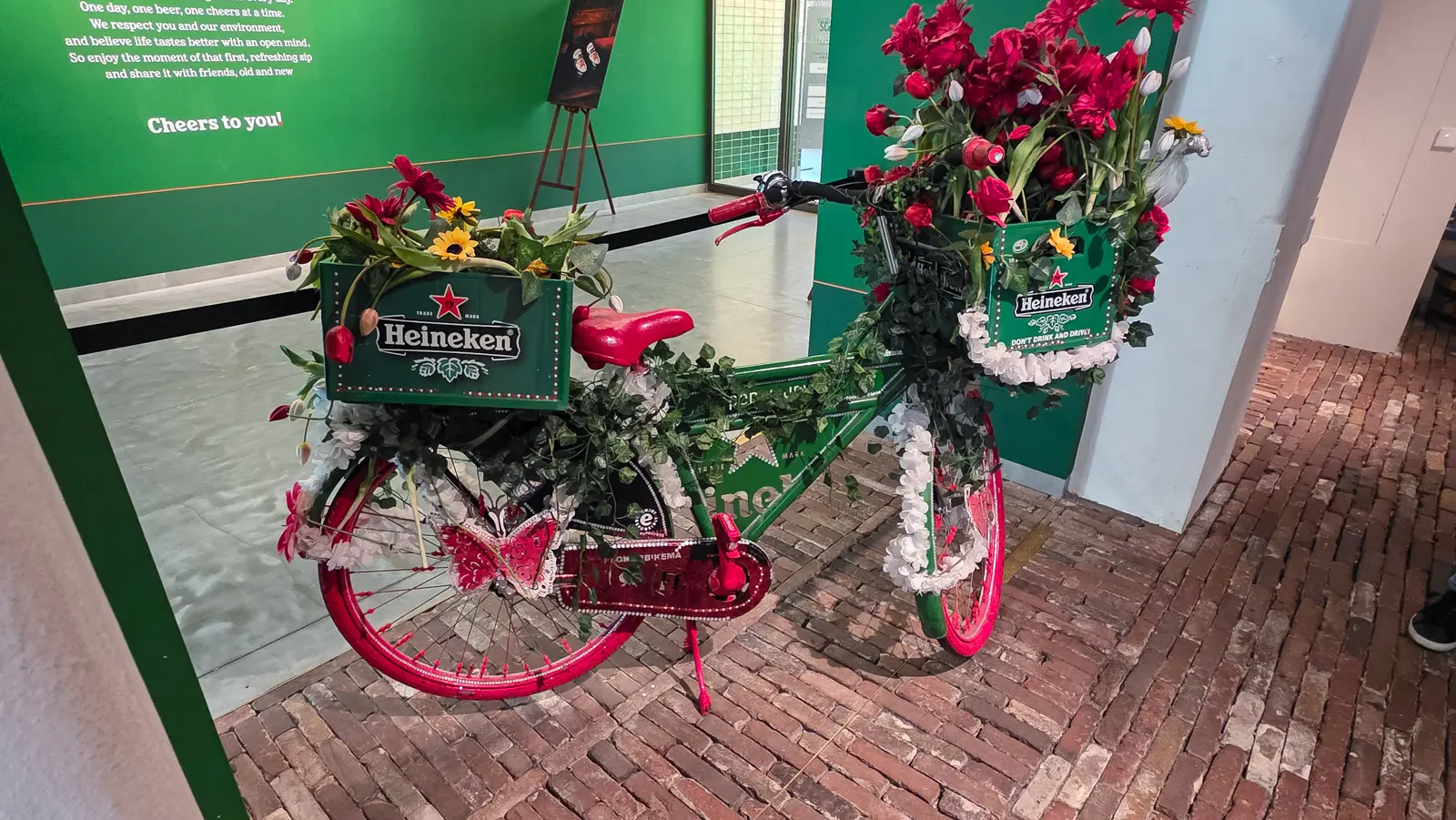
Not everything in the building is that serious. A bicycle in the entrance passage has been painted, flowered and hung with crates until it stopped being a bicycle, which is a fair warning of the register the first ten minutes are pitched at.
The Haystack, and then this building
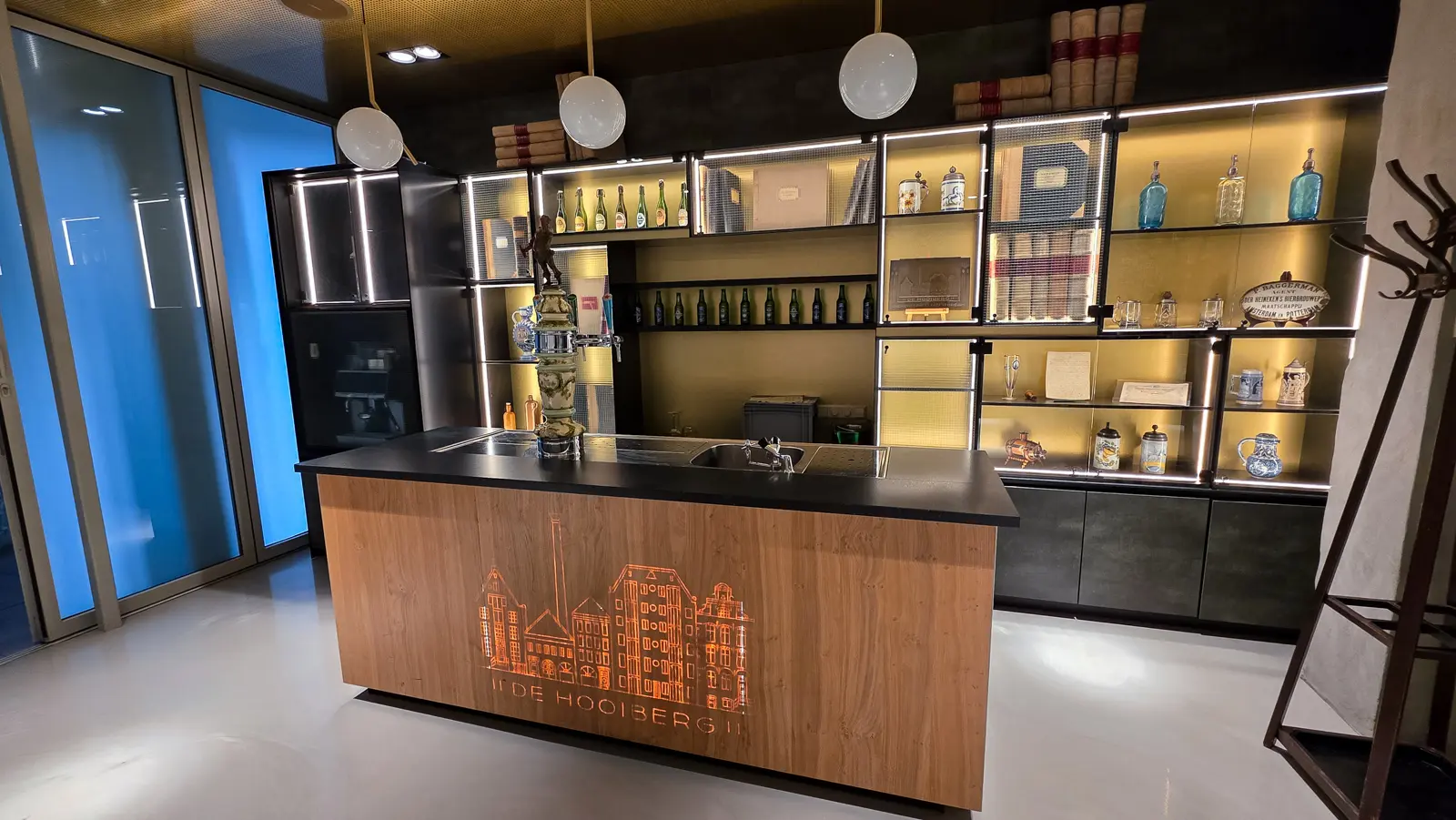
There are two starting dates for this story and both are correct, which took me a while to sort out.
On 15 February 1864, Gerard Adriaan Heineken bought a brewery called De Hooiberg in the centre of Amsterdam. He was twenty-two, he had no brewing background, and he did not have the money. He wrote to his mother to get it.
The building the tour takes place in is not that brewery. Three years later, on 17 May 1867, Gerard opened a new, larger, steam-powered brewery on the Stadhouderskade, on what was then the edge of the city. That is the red brick the tour walks into. It brewed here until 1988, when production outgrew the site and moved to Zoeterwoude. So the company starts in 1864 and the building starts in 1867, and the room named De Hooiberg on the tour is named after the one Gerard left behind.
What he was actually gambling on
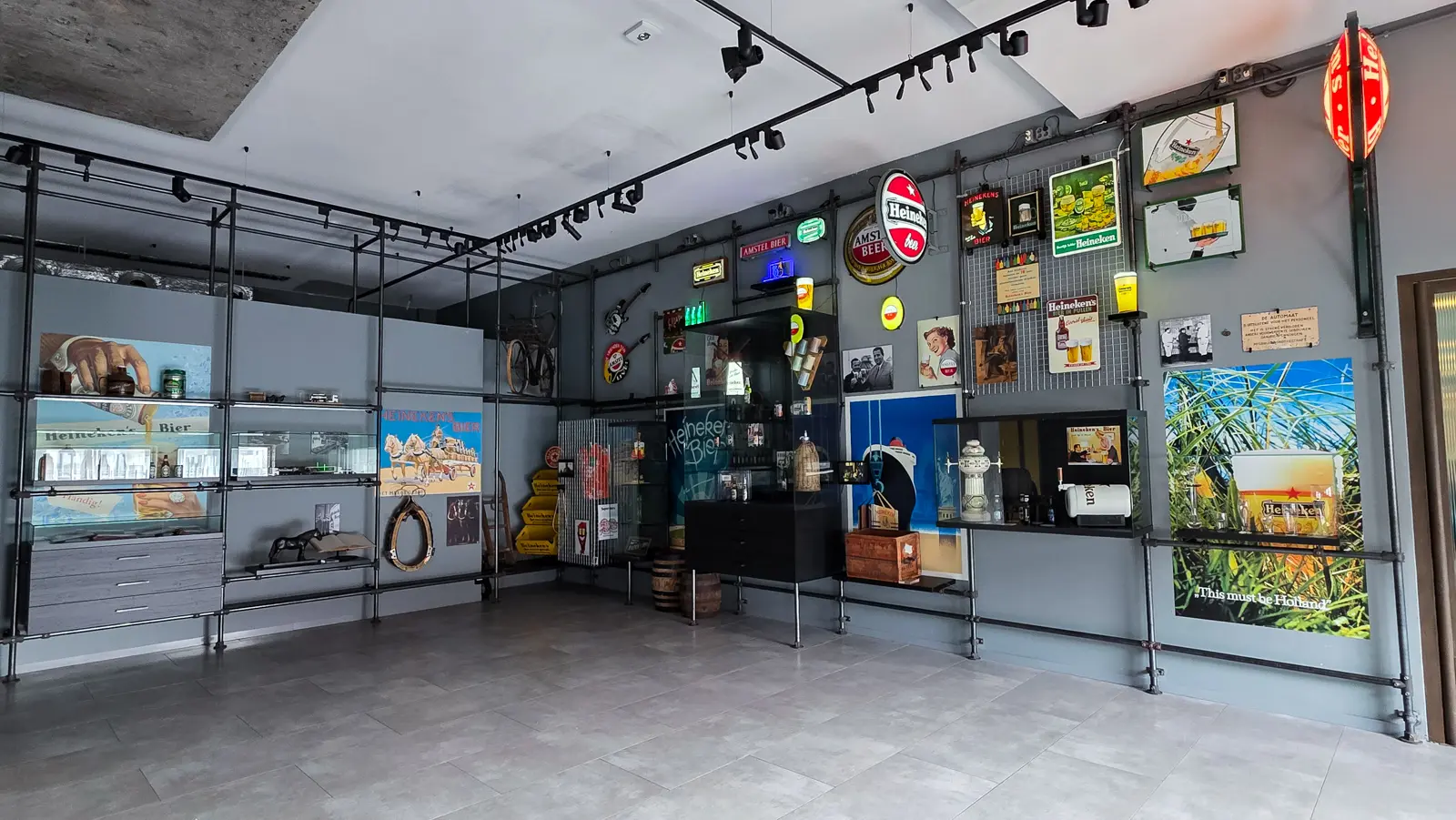
The Dutch in the 1860s were good at ale, porter and brown beer. Gerard decided to brew lager instead, in the Bavarian bottom-fermented style, which was clearer, kept longer and was not what his countrymen were drinking.
It is easy to read that backwards, knowing how it turned out. At the time it was a young man with his mother’s money betting an entire business on a foreign method, in a country whose drinkers had shown no particular appetite for it.
The bet paid off quickly enough that he opened a second brewery in Rotterdam within a decade, and the company was formally incorporated as Heineken’s Bierbrouwerij Maatschappij in 1873. By the 1880s the beer was being exported to France in serious quantities.
Gerard did not see most of what followed. He died of a heart attack in March 1893, at fifty-one, with the company still growing and the two generations that would make the name global still ahead of him.
The bit that genuinely surprised me
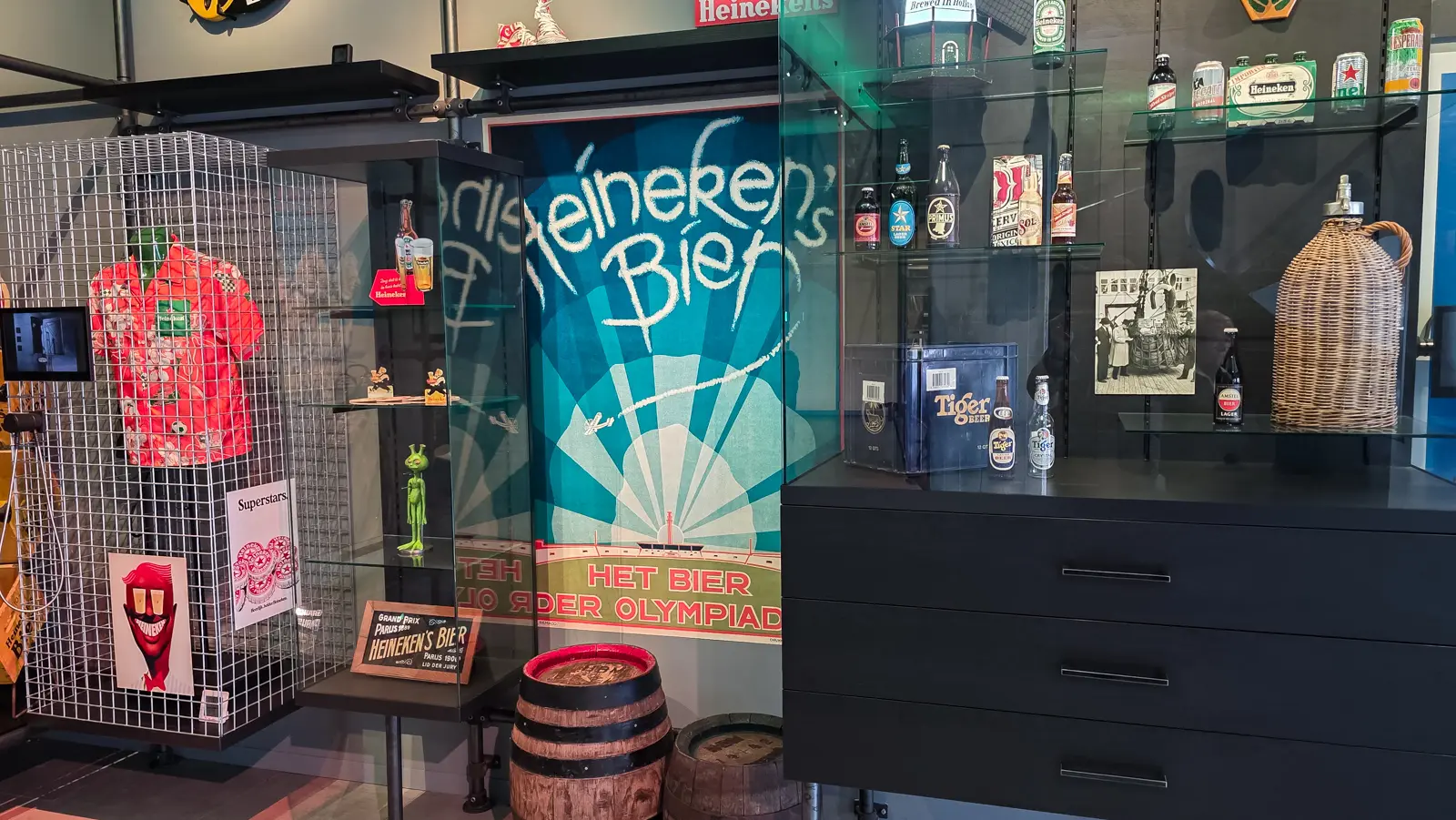
In 1886 a scientist called Dr Elion, who had trained under Louis Pasteur, isolated a single yeast strain in the brewery’s laboratory. It is called the A-yeast, and it is still what Heineken brews with.
This is the fact I keep coming back to. Nineteenth-century brewing was inconsistent. Batches varied, sometimes badly. Isolating one strain and keeping it alive meant a bottle in Rotterdam tasted like a bottle in Amsterdam, and later like a bottle in Lagos or Montreal. The reason the green bottle is the same everywhere is a piece of laboratory work from 1886 that most people drinking it have never heard of.
The copper
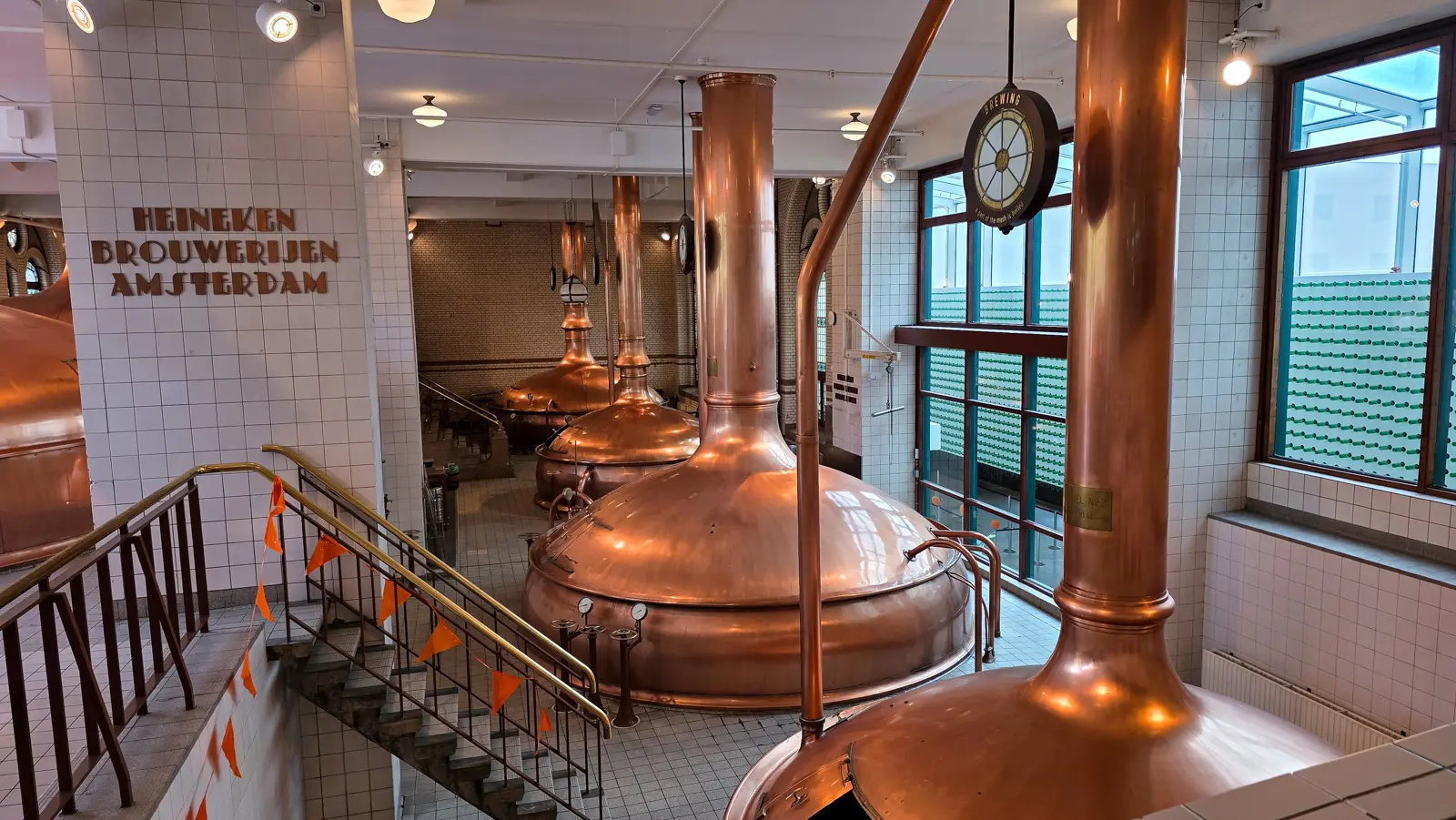
The brew house is the best room in the building and it is the one part that needs no interpretation. Enormous copper vessels under white tile, lettering picked out on the wall, natural light coming in from one side. It looks like what it was.
Standing in it, the scale of the operation is obvious in a way no display panel manages. This was a factory in the middle of a residential neighbourhood for a hundred and twenty-one years, with deliveries, noise, smell and a workforce, on a street where people lived.
That is the part the conversion cannot quite convey and the room does anyway. The brewery did not close because anyone tired of it. It closed in 1988 because the company had outgrown a site hemmed in by houses, and moved to Zoeterwoude, where there was room. What is left here is the shell of the thing that got too big for the street it was built on.
Five beers, and the one I liked
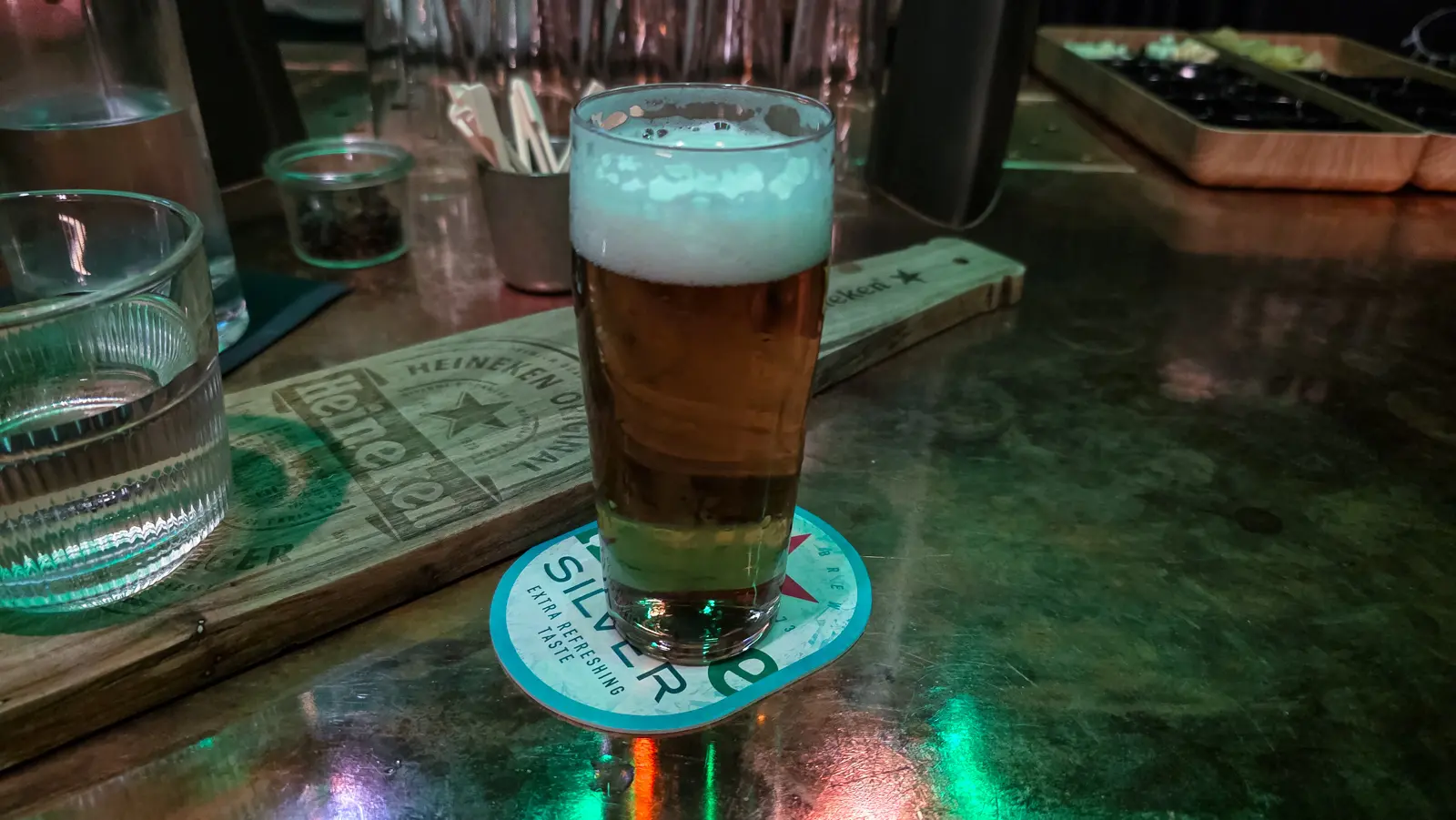
The tasting is five beers from the Heineken portfolio with bites chosen to go with them. Ours came with crisps, chorizo and cheese, among other things. The list rotates seasonally, so anyone booking now will not get exactly what we got.
And here is my honest verdict, which is not the one I expected to be writing. The beer I liked best was the non-alcoholic one.
I am aware how that sounds from someone who has just admitted she barely drinks beer. But that is the useful information, not a disappointment. What the tasting demonstrates is that the thing sold under this name is a range rather than a product, and that a fair amount of it does not taste like the bottle on the supermarket shelf at home. I cannot get most of these in Canada. That, more than anything else in the two and a half hours, is what I took away.
What this place actually is
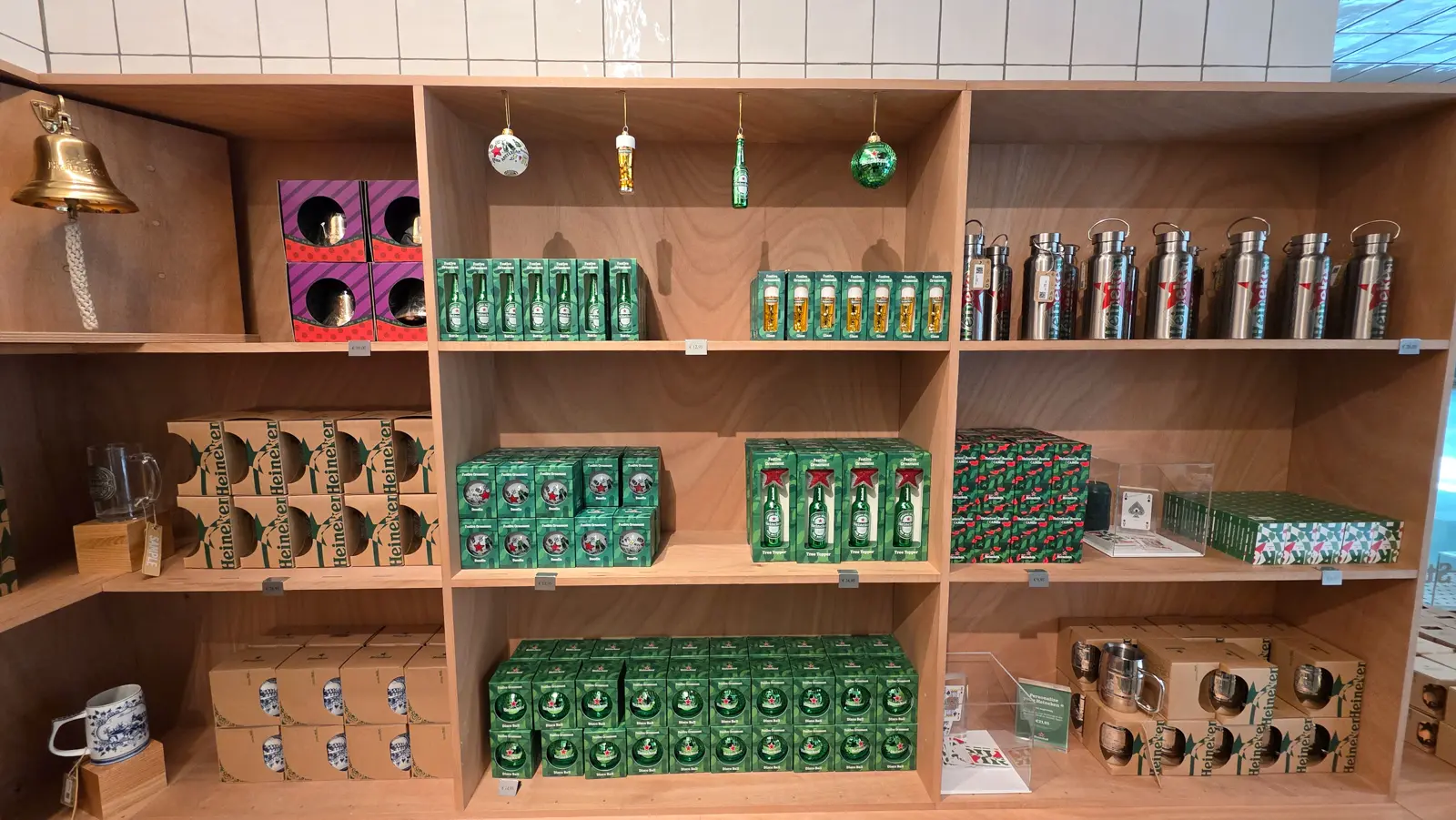
Heineken’s own website describes this building as a brand experience inside its oldest brewery. Not a museum. Their word.
I think naming that plainly is fairer to the place than pretending otherwise. It is a very well-made piece of marketing built on top of genuine industrial heritage, and both halves of that sentence are true. The history in the archive rooms is real. The shop is enormous. Neither cancels the other out.
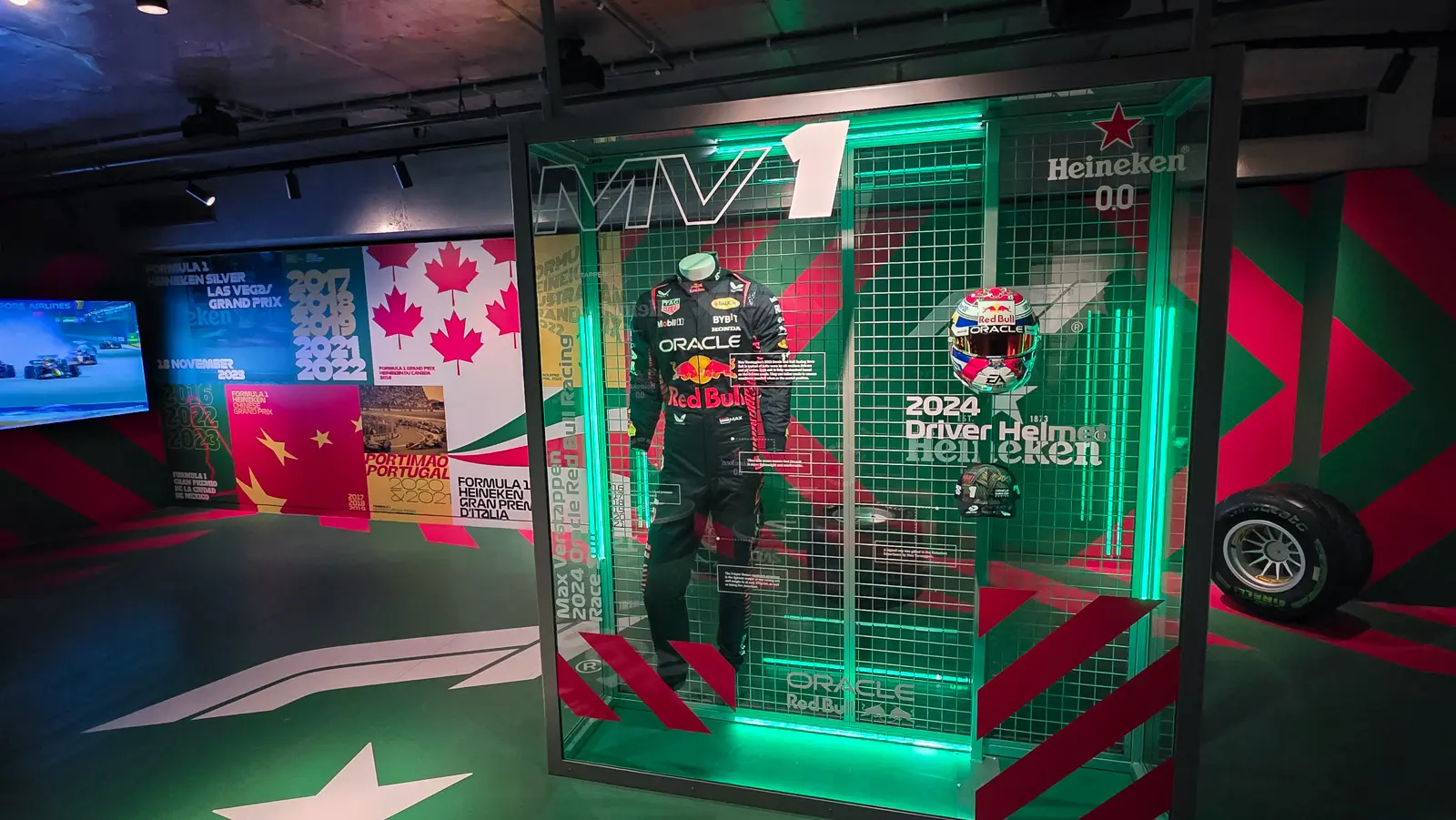
The tour ends in the interactive and games rooms, and that is where the sponsorship material lives: Formula One, football, a racing suit and helmet in a case. It was good fun and there is enough of it to write about separately.
It also makes the point better than any wall panel could. The first half of the building is about how the beer is made. The last room is about where the name is put.
Upstairs
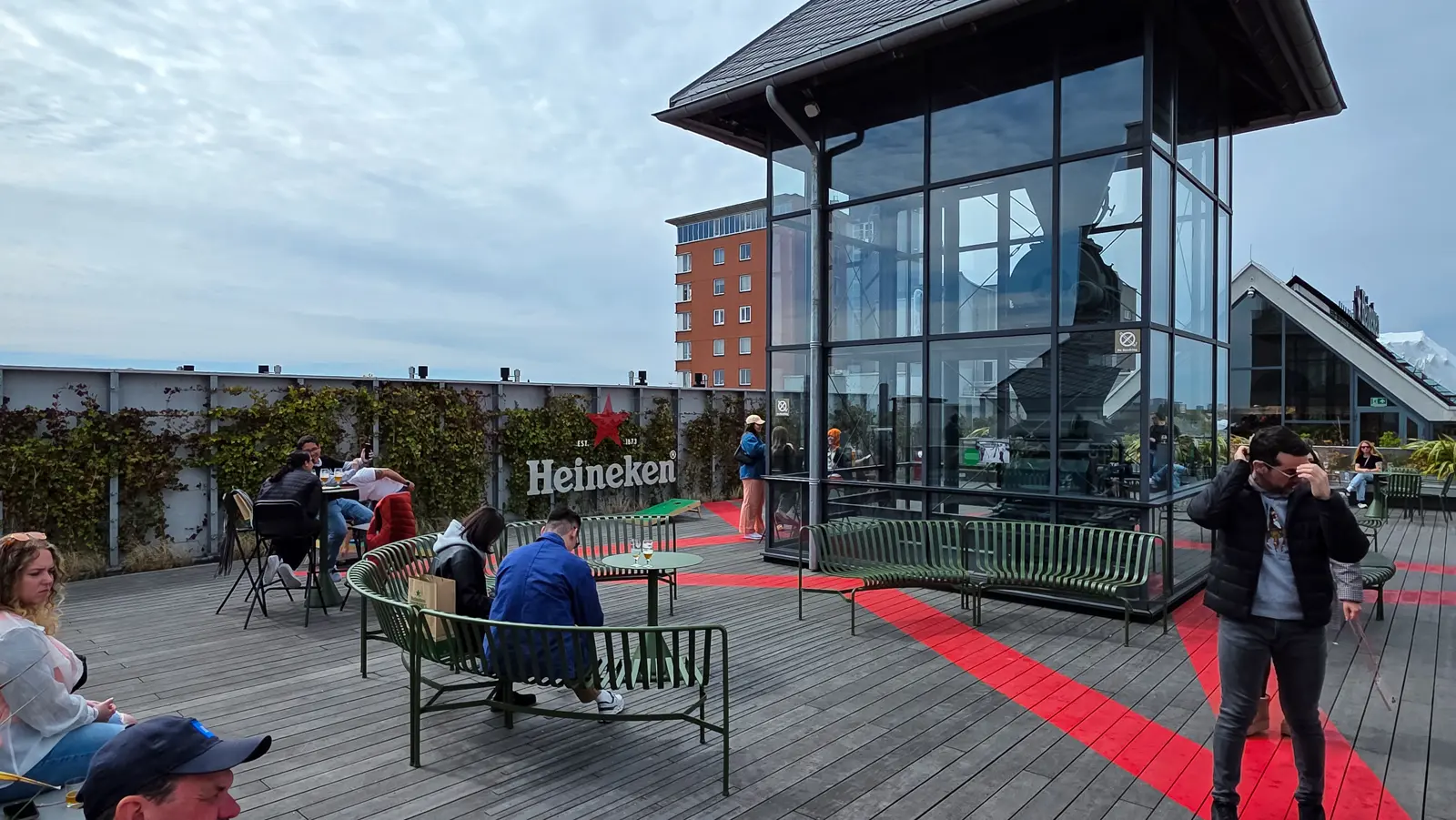
The rooftop is a separate ticket on the standard tour and it is worth the difference. Green benches, planting along the parapet, a glass enclosure over old plant machinery, and Amsterdam laid out beyond the wall.
It was overcast the afternoon we were up there and the view was still the best thing about the last half hour. Amsterdam from roof height is low and flat and brick, with very little interrupting it, and the contrast with the enclosed rooms below is worth the climb on its own.
The company also uses the space to put its newer products in front of people, which is consistent with everything else about the building. Even the terrace is doing a job.
Bubbly Tips
- Eat before you go. There is no restaurant inside. Five beers with small bites, and then two more downstairs on the standard wristband, lands very differently on an empty stomach.
- Book the VIP tour ahead, not on the day. Group sizes are small and the times sell out. It is roughly two and a half hours against ninety minutes for the standard tour.
- Everyone entering must be eighteen or over. The company also advises against the tour for anyone pregnant, so check before you book for a group.
- Ask your guide for the history, not the highlights. The VIP guides go as deep as the group wants. If you steer towards the 1860s and the yeast, you will get it.
- The brew house is the room to slow down in. Original tiling, original clock faces, the copper kettles in place. It is the least interpreted space in the building and the most impressive.
- You will not be told which five beers in advance. They rotate seasonally, so treat the tasting as a surprise rather than something to research beforehand.
- Try the alcohol-free one properly. Do not treat it as the throwaway in the flight. It may be the one you remember.
- Add the rooftop if you are on the standard ticket. It is an extra cost and it is the best view in the building.
- Allow time for the shop. It is large, it is at the end, and you can get into it without a tour ticket if you only want to buy something.
- Pair it with De Pijp rather than the centre. The brewery sits on the edge of the neighbourhood, so build the afternoon around the area rather than trekking back to the canals.
Final Thoughts
I went for the building and I got the building. The brew house alone justified the ticket, and the story underneath it is better than I expected: a young man with his mother’s money, a bet on a beer style his own country was not drinking, and a laboratory discovery in 1886 that made every bottle since taste the same.
What I did not expect was to spend the walk home thinking about the alcohol-free one. That is not a conversion. I still do not drink much beer. But I went in assuming the tasting would be the part that was wasted on me, and it turned out to be where I learned the most.
Until next time!

🌟 Everything You Need to Plan Your Dream Trip in 2026
- 🌟 Luxury Hotels - Find premium stays with Booking.com & Hotels.com
- 🏡 Vacation Rentals - Discover unique properties on VRBO
- 🏞️ Guided Tours - Explore with Viator or GetYourGuide
- 🎫 Attraction Tickets - Skip the lines with Tiqets
- 🚢 Ocean Cruises - Set sail with Cruise Direct
- 📱 International SIMs - Stay connected with Saily
- 🚗 Car Rentals - Budget-friendly options from Discover Cars
- 🌐 Secure VPNs - Browse safely with NordVPN
- 💶 Currency Exchange - Best rates with Wise
- 🗣️ Learn Languages - Master the local language with Babbel and Rosetta Stone