
I passed through Museumplein more times than I can count on this trip. It sits between the Rijksmuseum, the Van Gogh Museum and Moco, and it is a short walk from the brunch places on the edge of De Pijp, like Locals and Flow. Every time I headed to one of them, I crossed the square.
I expected tulips. Specifically, I expected the long pond in the middle of the square full of water, with tubs of tulips floating on it. Instead, I got a drained basin and a construction site. No worries. People in Amsterdam know how to celebrate, and they made the most of the food trucks and picnic tables instead. It was nice to see.
Museumplein at a Glance
🏛️ The museums · The Rijksmuseum, Van Gogh Museum, Moco and Stedelijk ring the square, with the Concertgebouw closing the far end.
🌳 The square · A big lawn and a long pond, laid out around the Rijksmuseum (1885) and redesigned by Sven-Ingvar Andersson in 1999.
🧺 Free to enjoy · Picnic on the lawn, rest in the free Rijksmuseum gardens, and take in the architecture without a ticket.
🚧 In 2026 · The pond was drained for construction in late April (normally floating tulips in spring, an ice rink in winter).
💎 Nearby · Royal Coster Diamonds on Paulus Potterstraat — a reminder Amsterdam was once the City of Diamonds.
The Square Itself
Museumplein is the open square, lawn and pond at the heart of the Museum Quarter, or Museumkwartier. It was laid out after the Rijksmuseum was completed in 1885, on a street plan by the museum’s architect, Pierre Cuypers. The landscape architect Sven-Ingvar Andersson redesigned it in 1999, giving it the lawns, the pond and the tree-lined edges it has today.
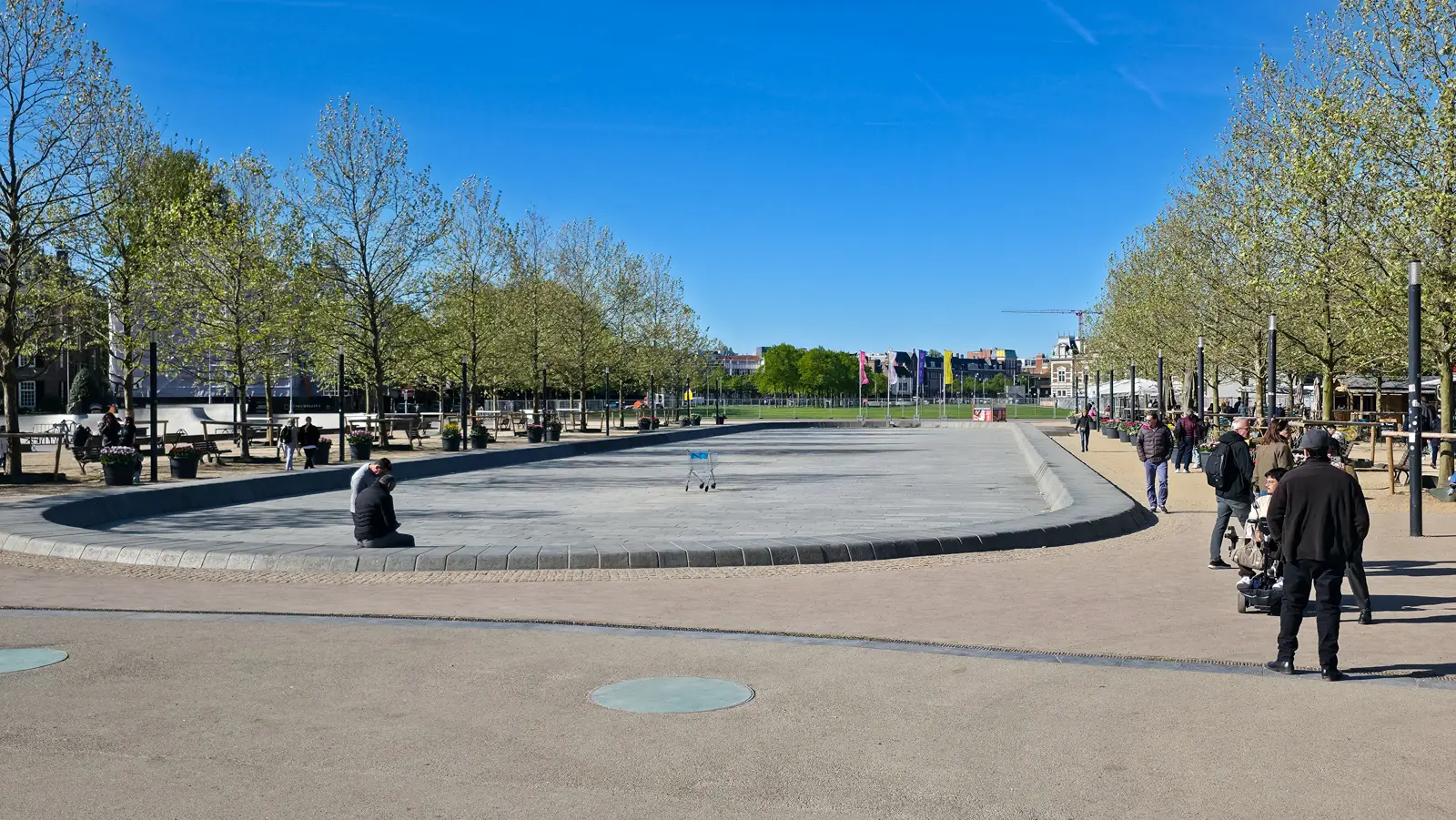
In late April, the pond was empty. Someone had left a shopping cart standing in the middle of the dry basin, which summed it up.
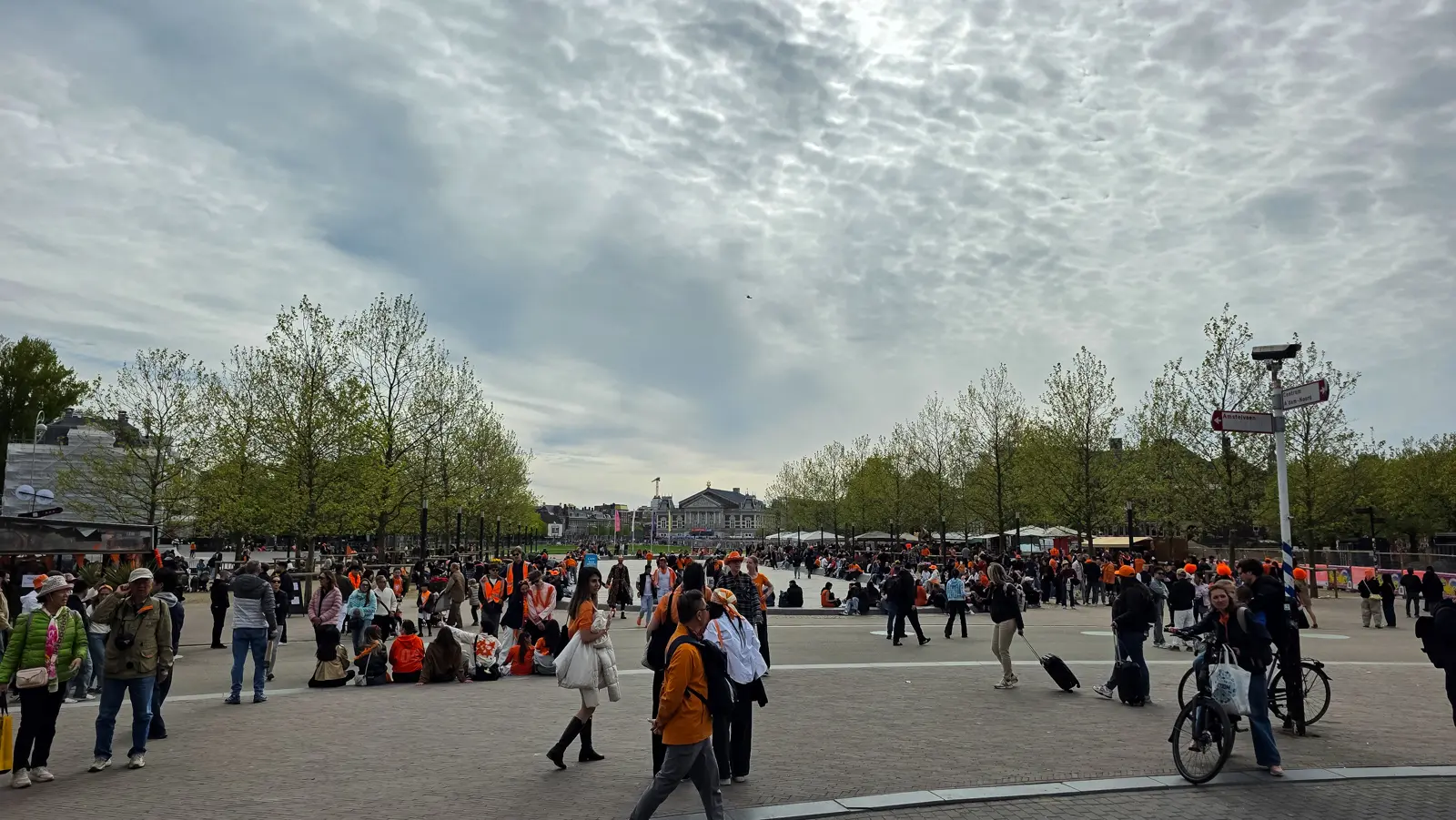
On King’s Day, the empty pond became a giant bench. People in orange sat along its rim and filled the paving around it, and the Concertgebouw closed off the view at the far end of the square.
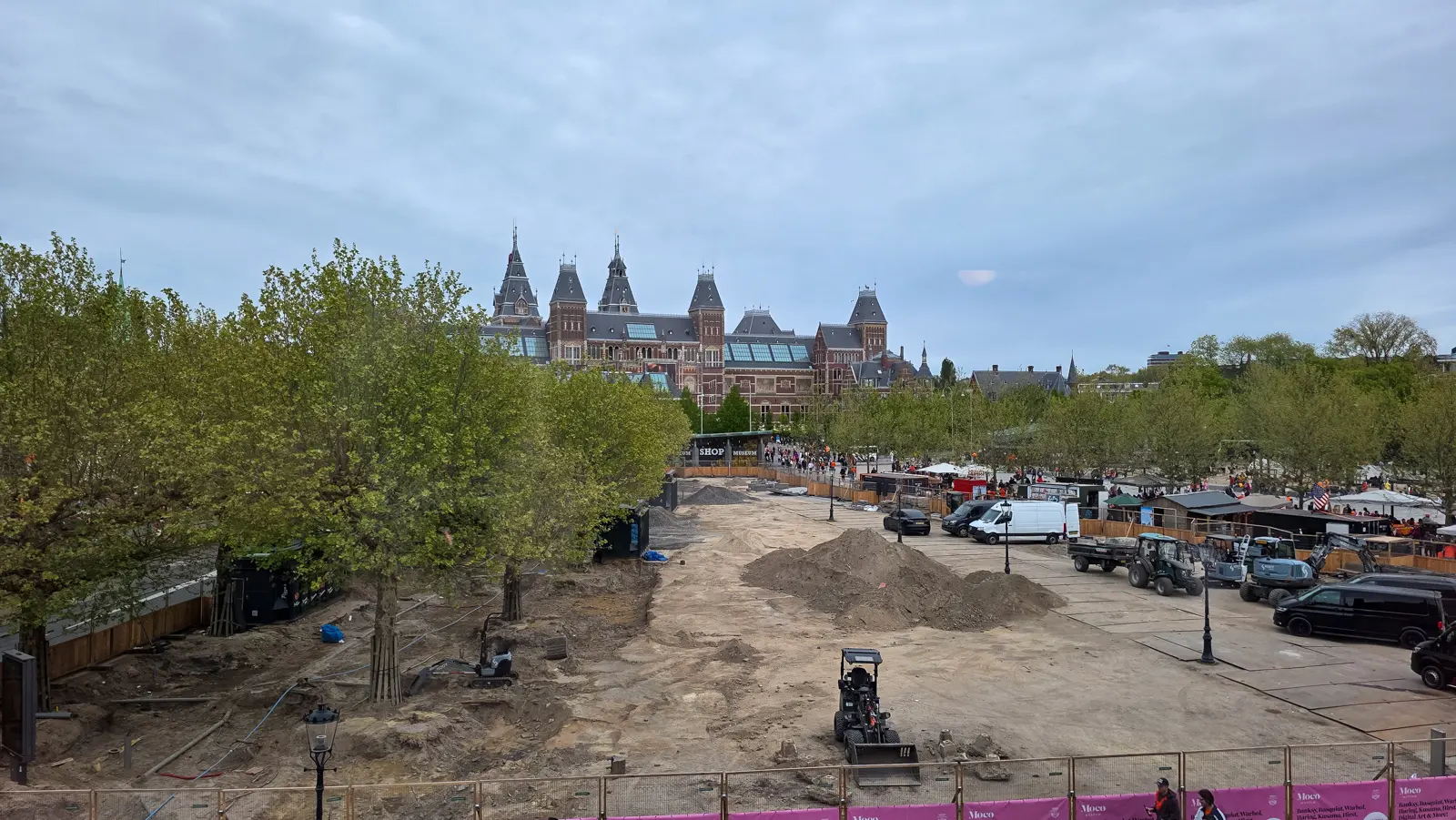
The construction ran along the side of the square near Moco and the Van Gogh Museum. From Moco, I could look straight across it: churned earth, mounds of sand, diggers and vans, with the Rijksmuseum standing behind it all. It was a big site, and I look forward to seeing the finished product.
Food Trucks and Picnic Tables
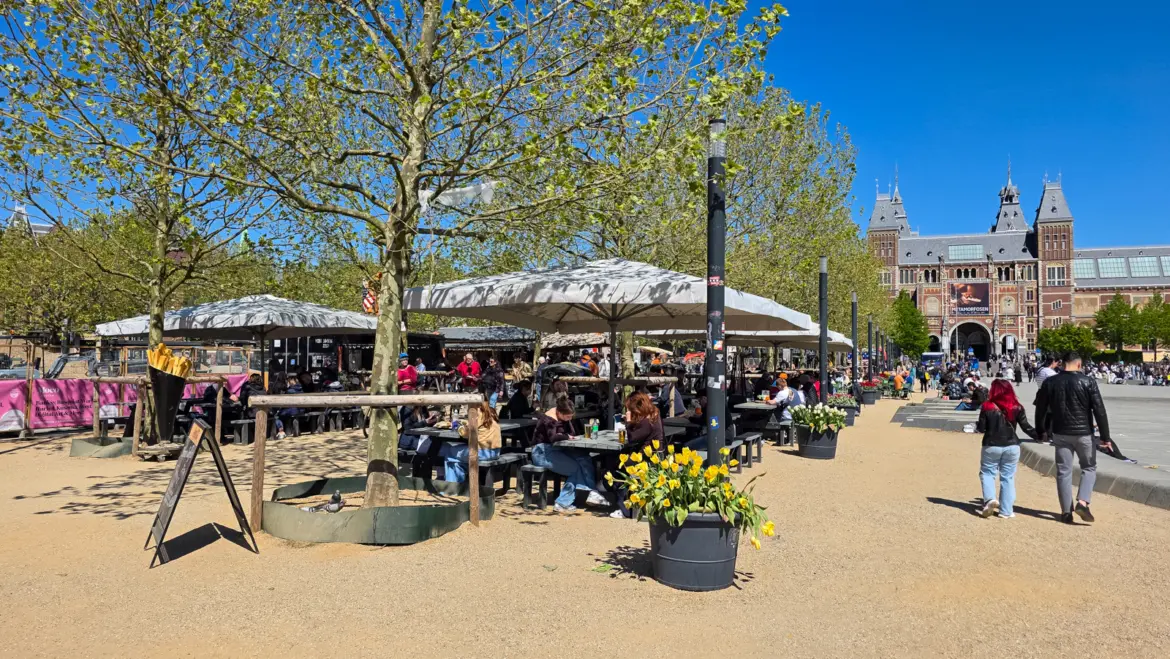
The square had not stopped working because of the construction. Food trucks and kiosks lined the gravel paths, with folding tables and green chairs set out beside them, and canal cruise ticket booths in between.
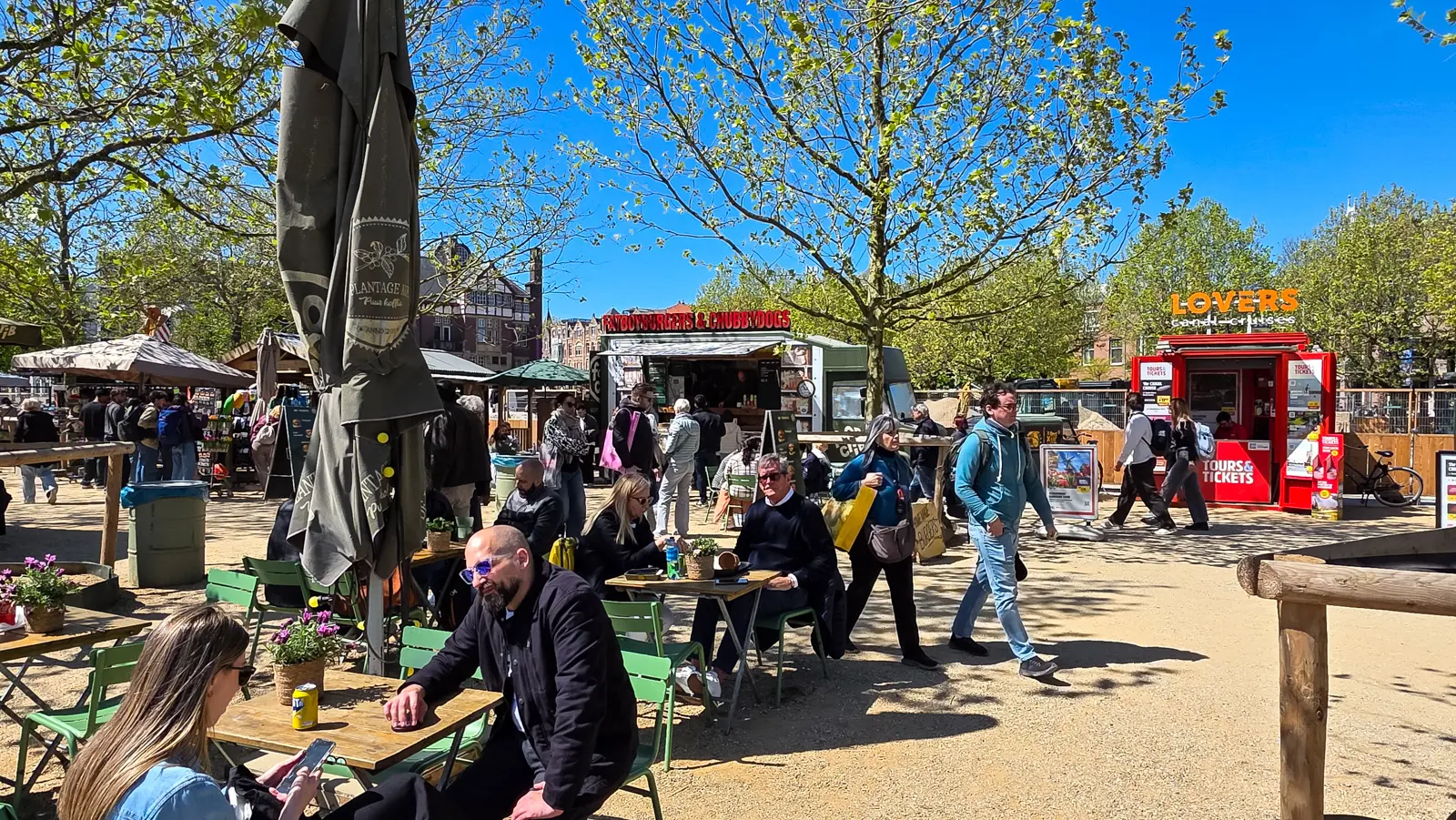
On a sunny afternoon, every picnic table seemed to be taken, and the tubs of tulips along the paths made up for a little of what was missing from the pond.
The Museums Around the Square
The Rijksmuseum
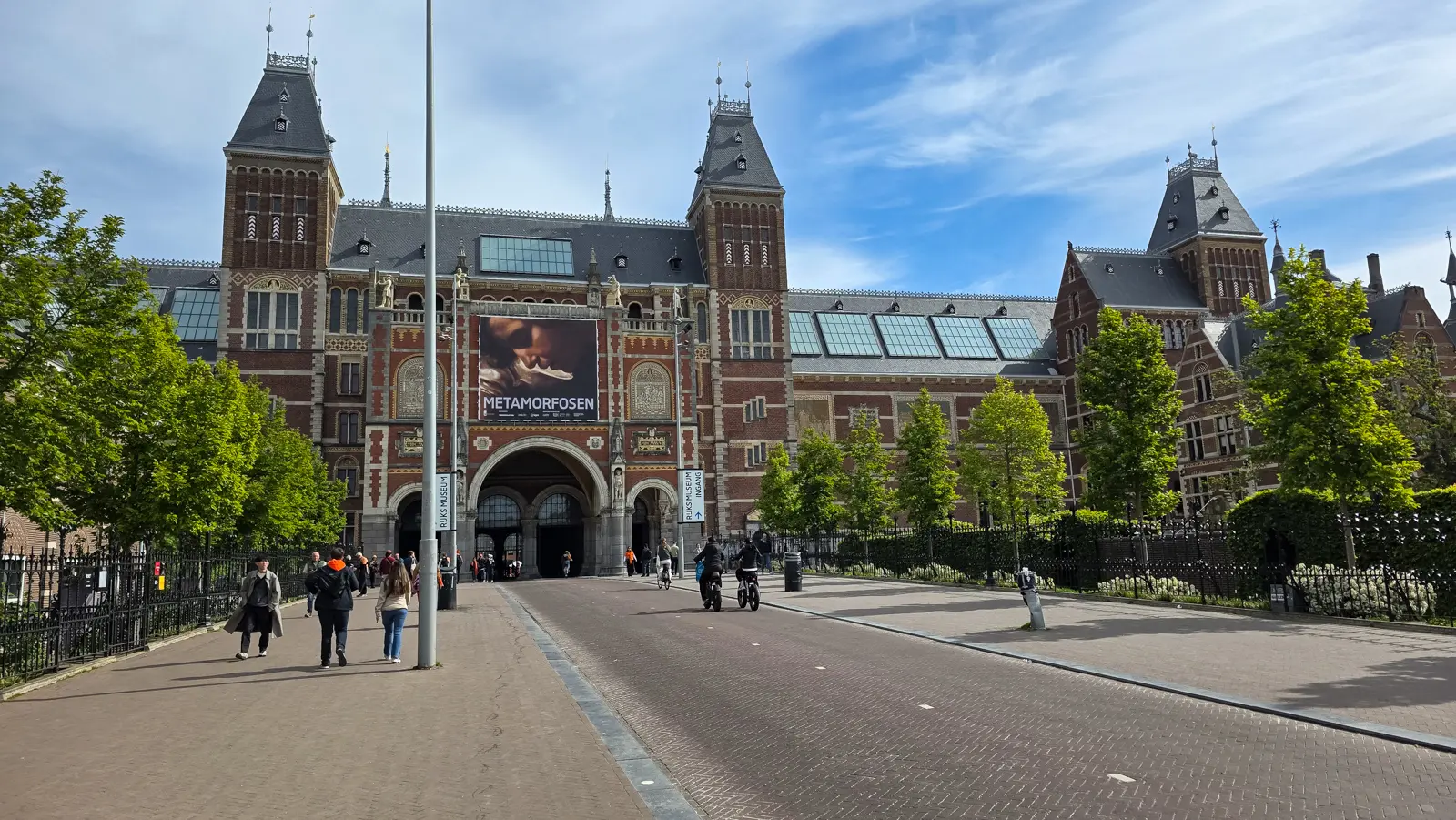
The Rijksmuseum closes off one end of the square. On King’s Day, a huge Metamorfosen banner hung above its central arch, and cyclists rode straight through the passage under the building.
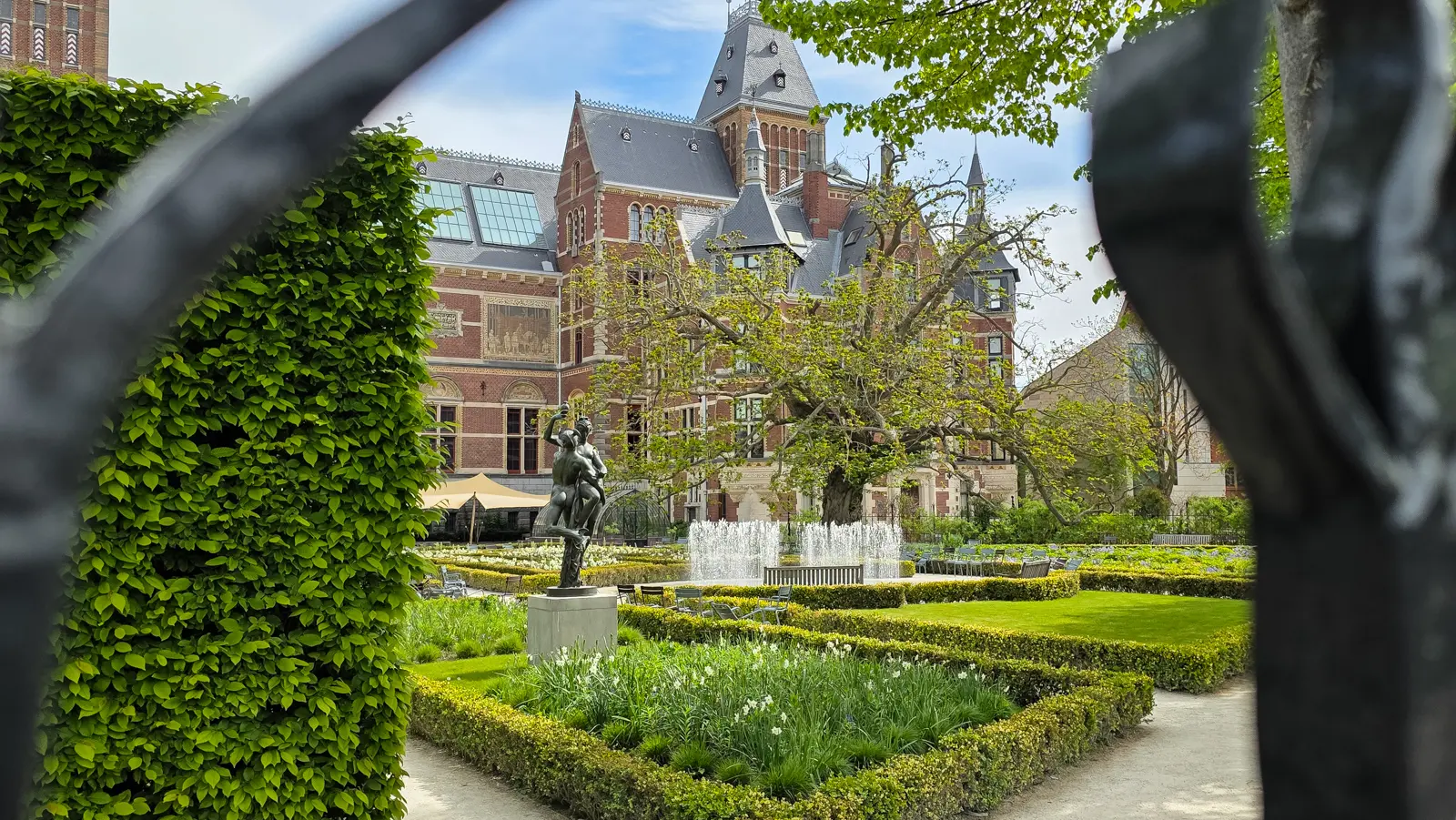
The gardens around the Rijksmuseum were the calmest place on the square. They were peaceful and serene, and people were unwinding there, chatting and reading their books. After a few hours inside the museum, it was a lovely spot to rest.
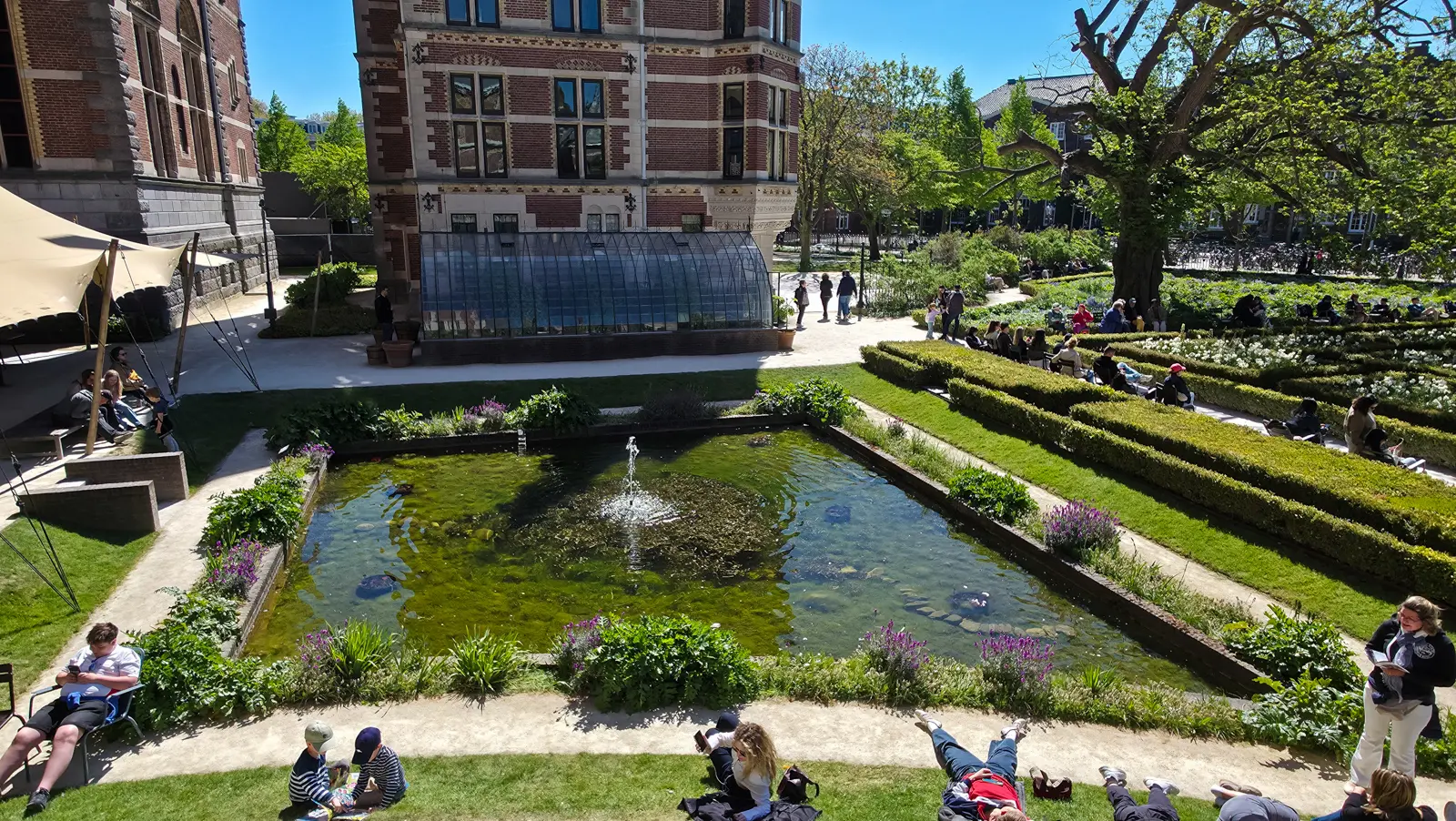
Further along, a square pond with a small fountain sits below a glasshouse, with lawns where people lie in the sun.
The Van Gogh Museum
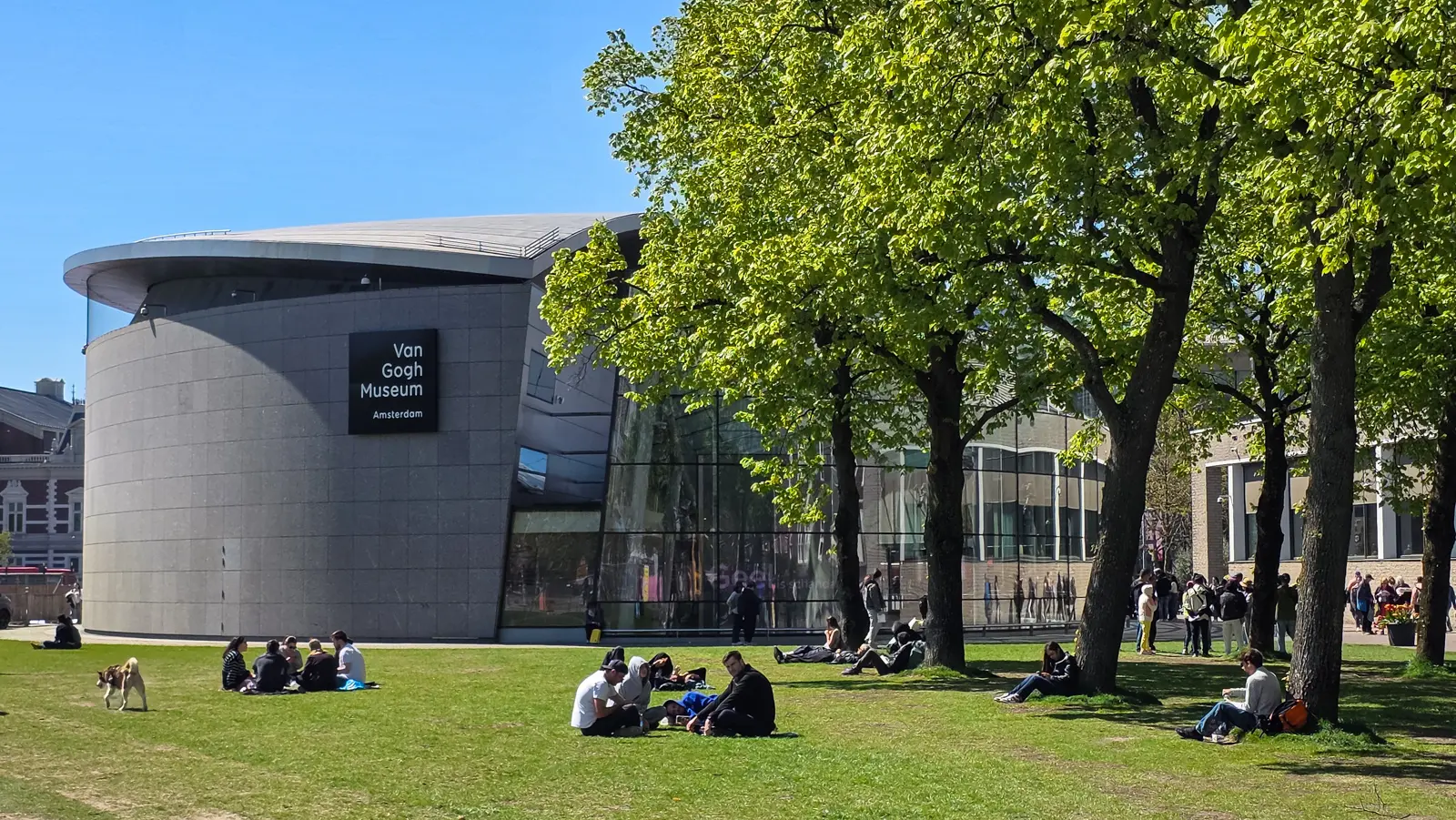
Behind the Van Gogh Museum, the lawn was dotted with picnickers, and someone’s dog wandered between them. The museum’s original building, by Gerrit Rietveld, opened in 1973. The curved grey wing facing the lawn was added in 1999, designed by the Japanese architect Kisho Kurokawa.
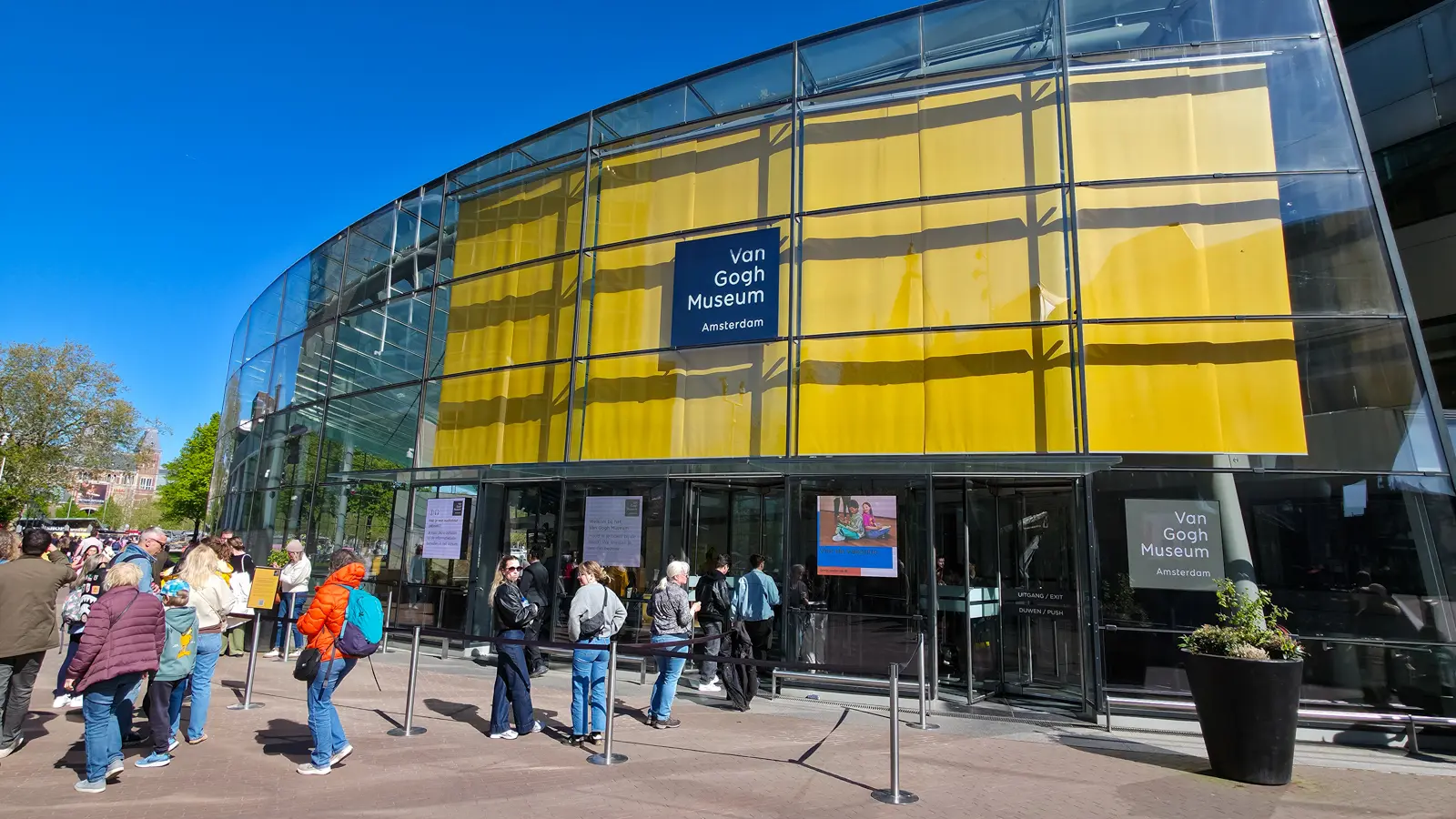
The museum’s glass entrance hall faces the square, and the queue at the stanchions forms there.
Moco Museum
Moco is in Villa Alsberg, a townhouse on the edge of the square designed in 1904 by Eduard Cuypers, the nephew of the Rijksmuseum’s architect.
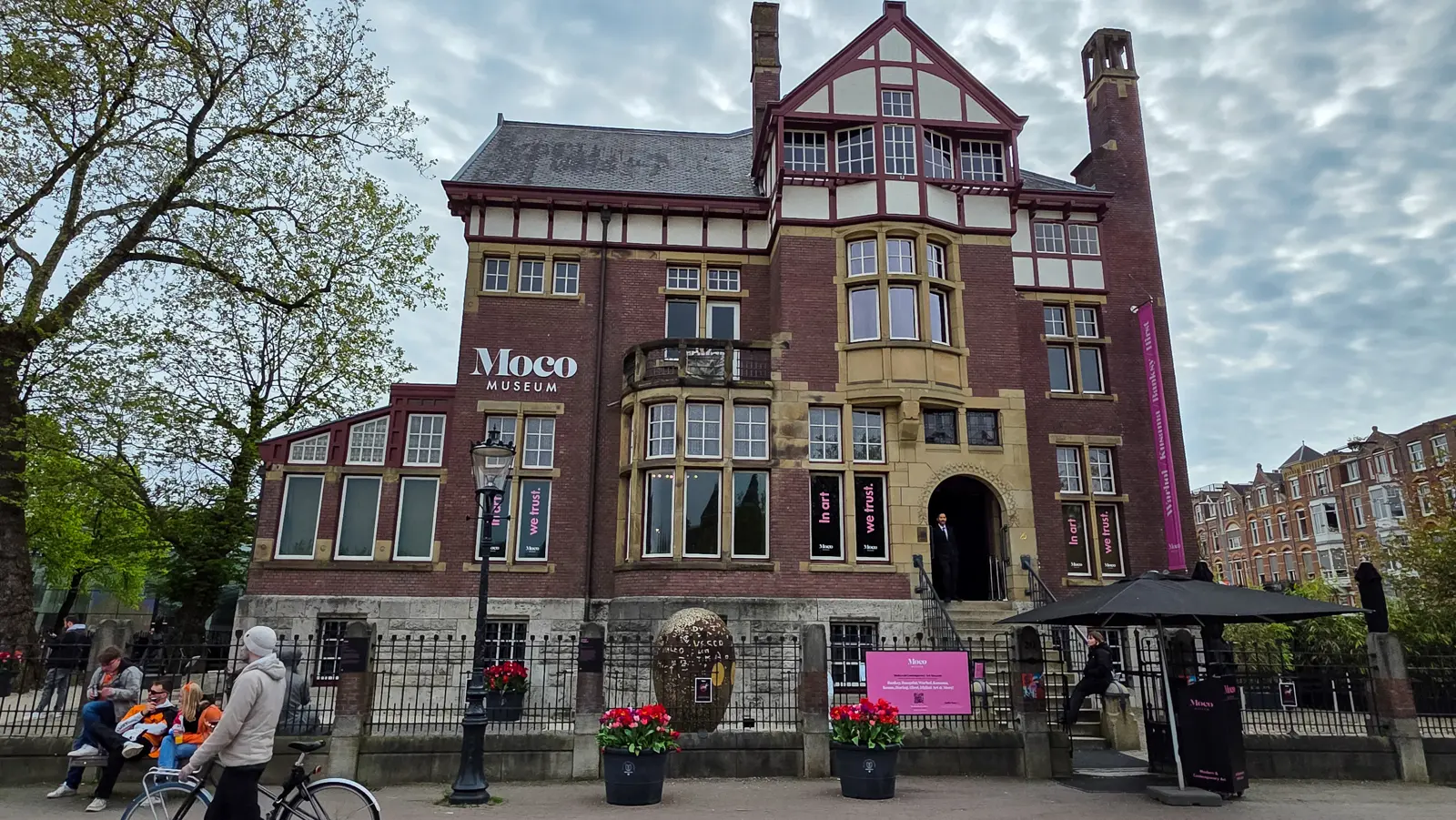
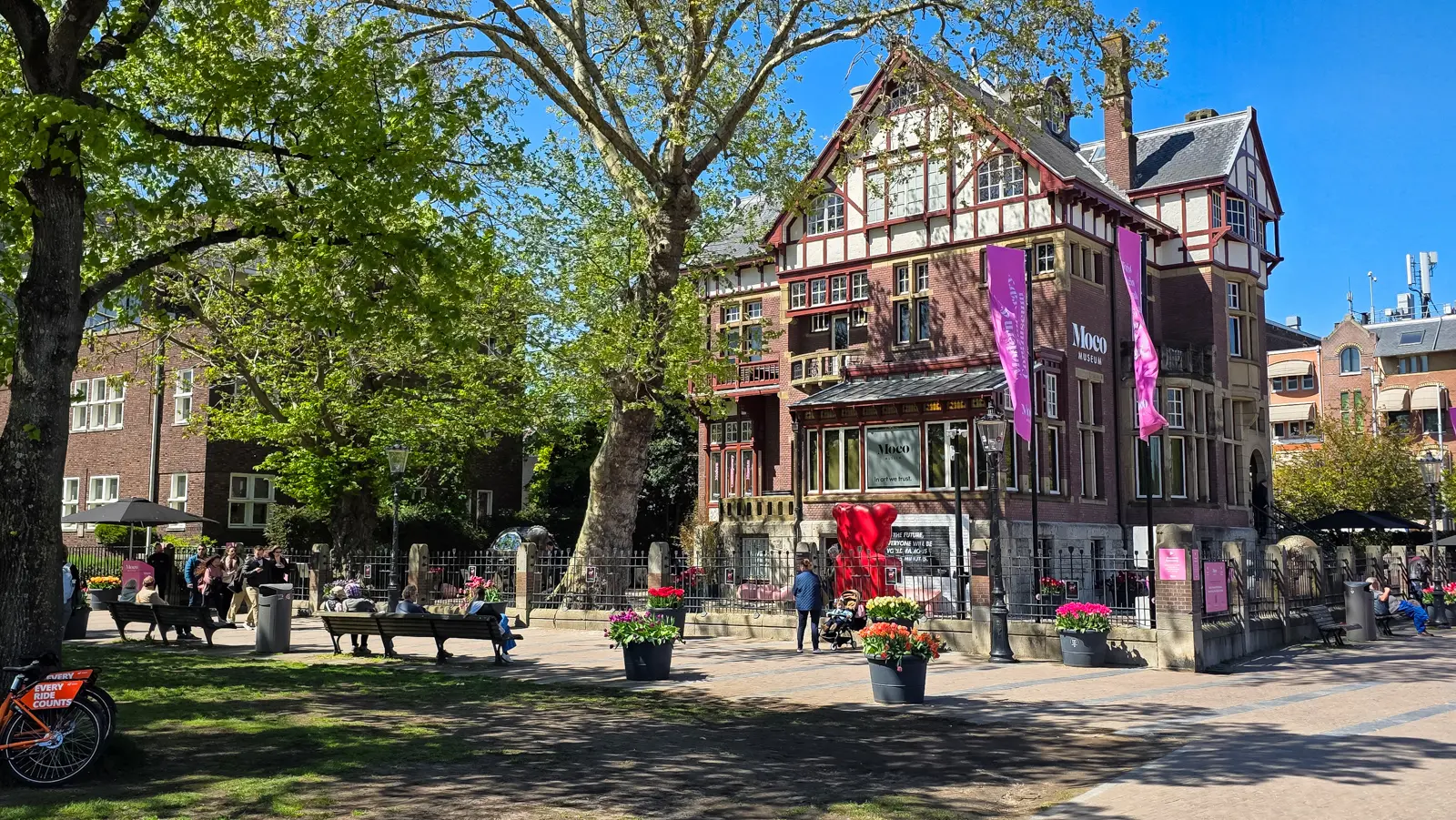
From the park side, the villa looks more like a large family home than a museum, with benches under the trees and tubs of tulips along the fence.
The Stedelijk Museum
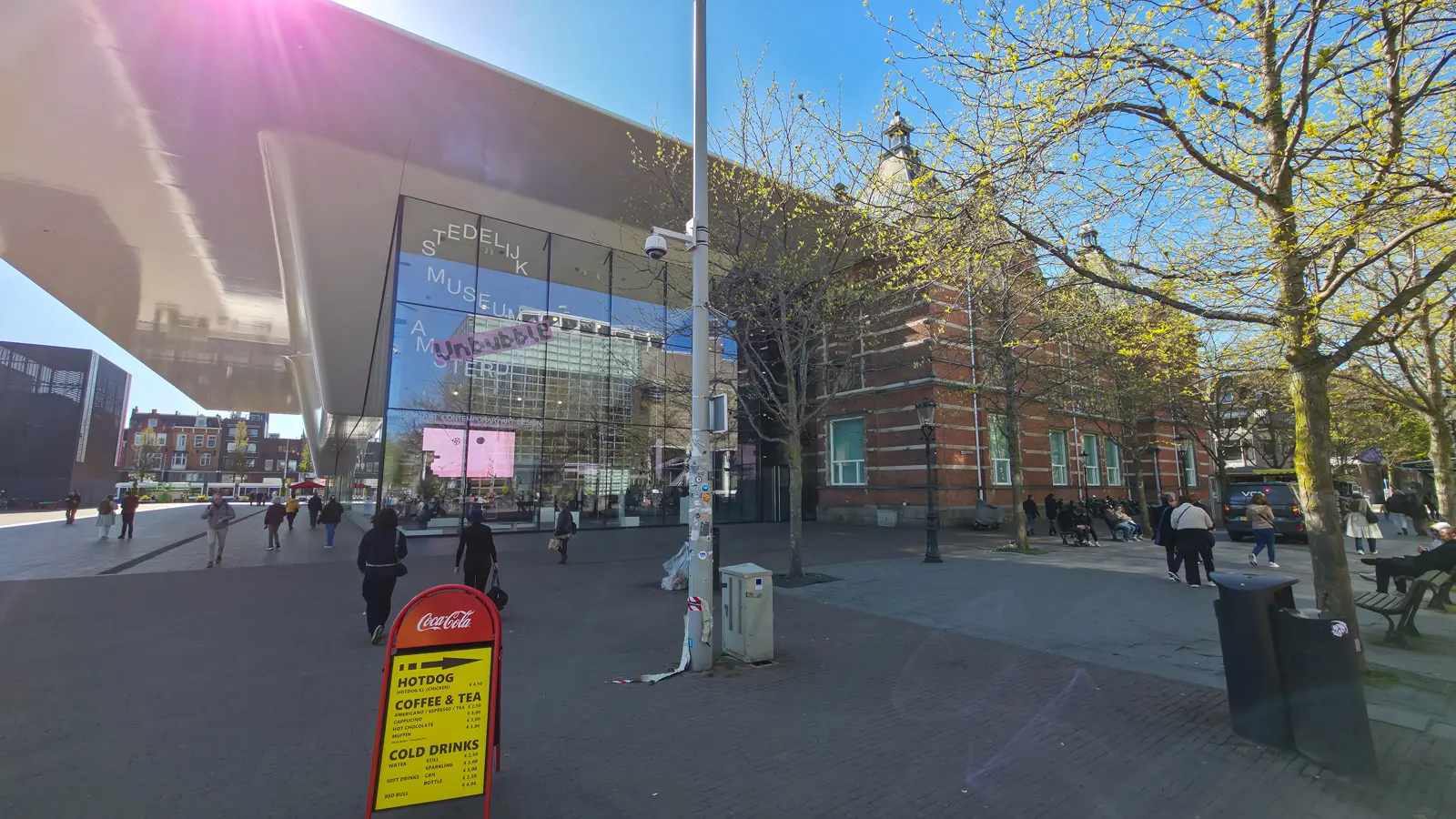
I did not go into the Stedelijk Museum, but its architecture stopped me outside. The original red-brick building, by A.W. Weissman, dates from 1895. In 2012, the architects Benthem Crouwel added a smooth white extension that the architect himself nicknamed the bathtub, and it moved the entrance round to face Museumplein. It is a striking contrast: a sleek modern shell pressed right up against a 19th-century building.
Diamonds on Paulus Potterstraat
I walked past one building a few times on my way to the museums: an entire villa dedicated to diamonds, with a blinged-out silver bunny outside. It is Royal Coster Diamonds, and it got me thinking about the Dutch diamond trade, which I never knew existed.
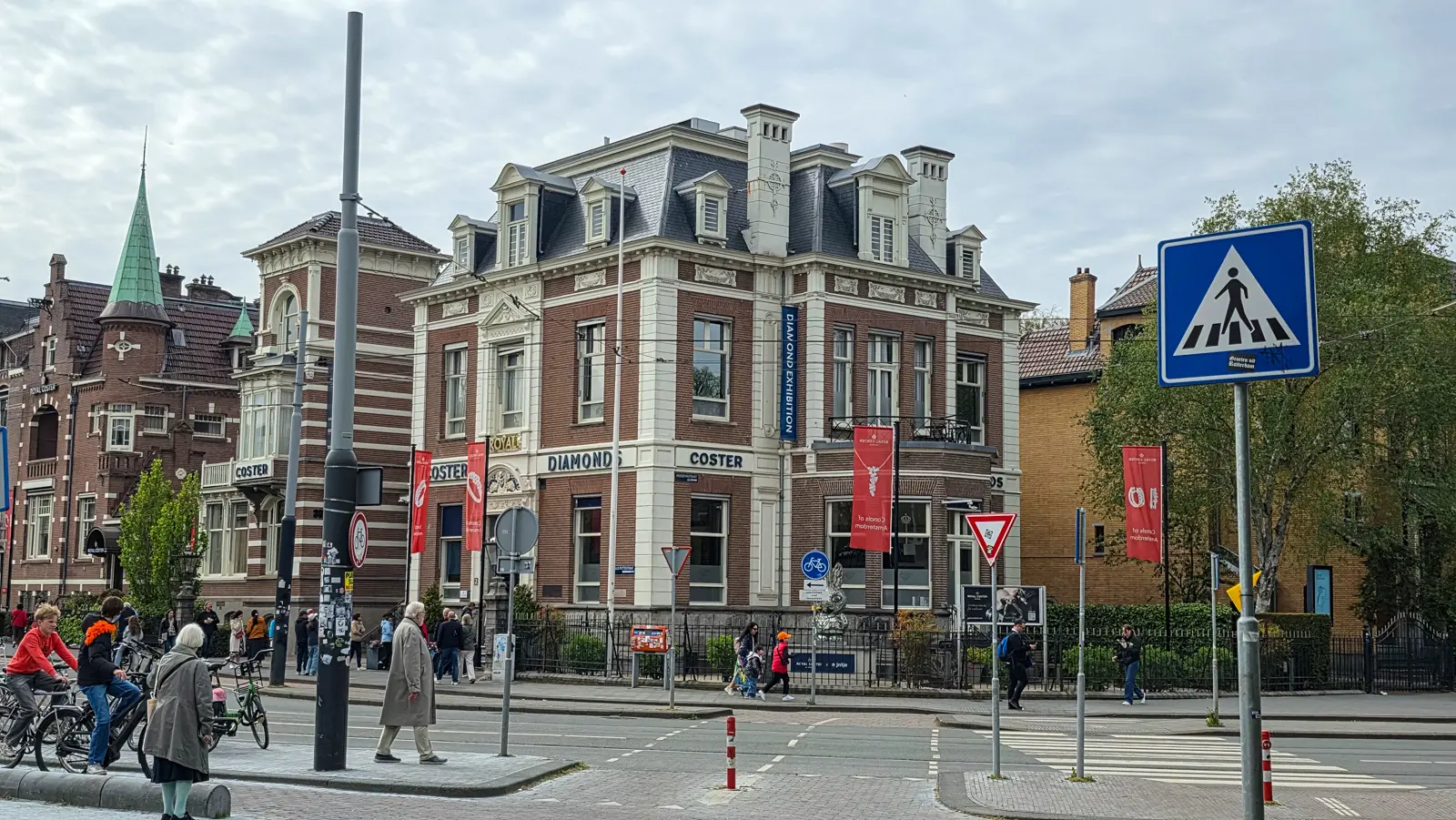
It turns out Amsterdam once called itself the City of Diamonds. After Antwerp fell in 1585, many diamond workers moved north to Amsterdam, and Jewish merchants and craftsmen followed in the early 17th century. Jews were excluded from the city’s guilds, so the diamond trade was one of the few open to them. By the second half of the 17th century, Amsterdam was the diamond capital of the world. Much of the rough stone reached the city through Portuguese and Sephardic trade networks, from India and later Brazil.
That world ended in the Second World War. The industry was largely Jewish, and thousands of Amsterdam’s Jewish diamond workers were deported and murdered in the Holocaust. With them went Amsterdam’s place at the centre of the trade.
A Quiet Corner on King’s Day
Museumplein was laid out in the middle of a smart residential area, and the streets around it are still mostly homes. That made it noticeably quieter on King’s Day than the rest of the city. There were people in orange on the square, but nothing like the crowds on the canals.
Bubbly Tips
- Bring a picnic, or buy one on the square. The underground supermarket and the food trucks mean there is no need to leave Museumplein to eat.
- Rest in the Rijksmuseum gardens. They are free, and they are the calmest spot in the Museum Quarter after a few hours inside a gallery.
- Do not count on the pond. The floating tulips depend on the pond being full, and in late April 2026 it was drained for the construction work.
- Come back in winter for skating. The pond becomes an artificial ice rink in the colder months.
- Look at the Stedelijk from the square. The contrast between the 1895 building and the 2012 bathtub is worth seeing even without a ticket.
- Book the Van Gogh Museum ahead. Tickets are online only, with timed slots.
- Pair the museums with brunch in De Pijp. Locals and Flow, on Eerste Jacob van Campenstraat, are a short walk away.
- Choose Museumplein for a calmer King’s Day. The square and the streets around it were far quieter than the canals.
- Walk down Paulus Potterstraat. The Royal Coster building is a reminder of Amsterdam’s diamond history, right beside the museums.
Final Thoughts
I came to Museumplein expecting a pond full of floating tulips and found a dry basin with a shopping cart in it. The square did not seem to mind. The picnic tables were full, the gardens were calm, and the museums were busy all around it.
I look forward to seeing it finished, with the water back and the tulips floating on it. Until then, it is still a lovely place to sit in the sun between museums.
Until next time!

🌟 Everything You Need to Plan Your Dream Trip in 2026
- 🌟 Luxury Hotels - Find premium stays with Booking.com & Hotels.com
- 🏡 Vacation Rentals - Discover unique properties on VRBO
- 🏞️ Guided Tours - Explore with Viator or GetYourGuide
- 🎫 Attraction Tickets - Skip the lines with Tiqets
- 🚢 Ocean Cruises - Set sail with Cruise Direct
- 📱 International SIMs - Stay connected with Saily
- 🚗 Car Rentals - Budget-friendly options from Discover Cars
- 🌐 Secure VPNs - Browse safely with NordVPN
- 💶 Currency Exchange - Best rates with Wise
- 🗣️ Learn Languages - Master the local language with Babbel and Rosetta Stone