
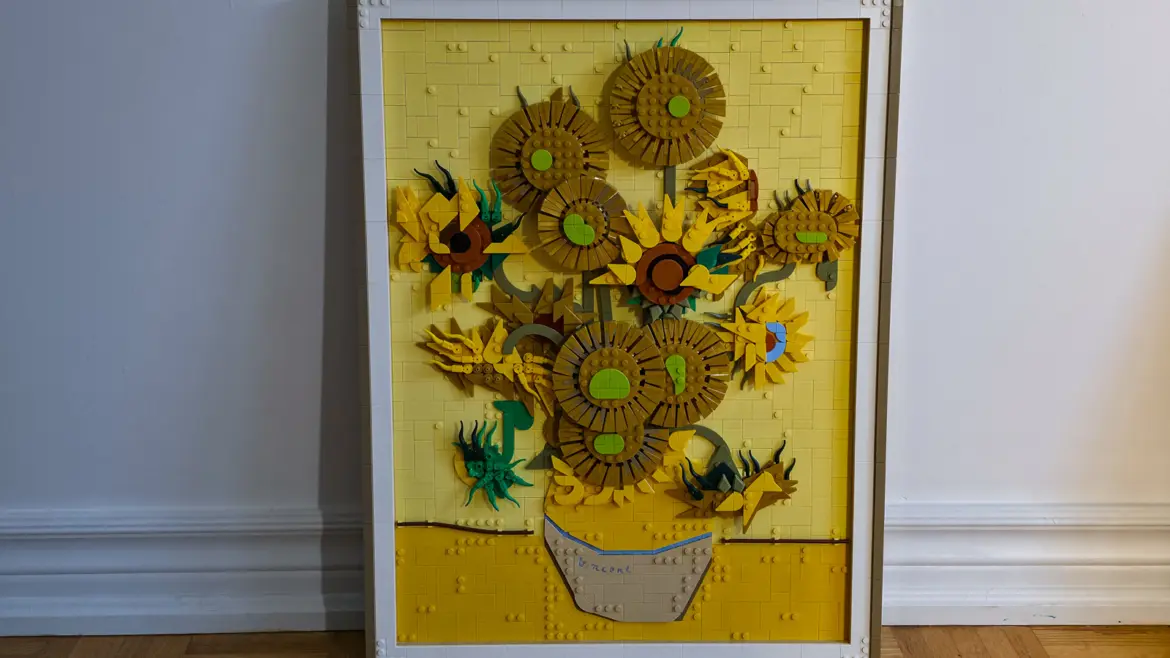
Vincent van Gogh is the reason I went to Amsterdam. He is the reason I went to the Van Gogh Museum twice in one week, and the reason a LEGO Art version of his Sunflowers leans against a wall in my home. I have been in awe of him since I was a child.
I have written about his paintings many times on this blog: the self-portraits, the peasant years, the landscapes, the Sunflowers, the blossoms. This post is about the man himself, and about why he has stayed with me for so long.
Why Van Gogh, at a Glance
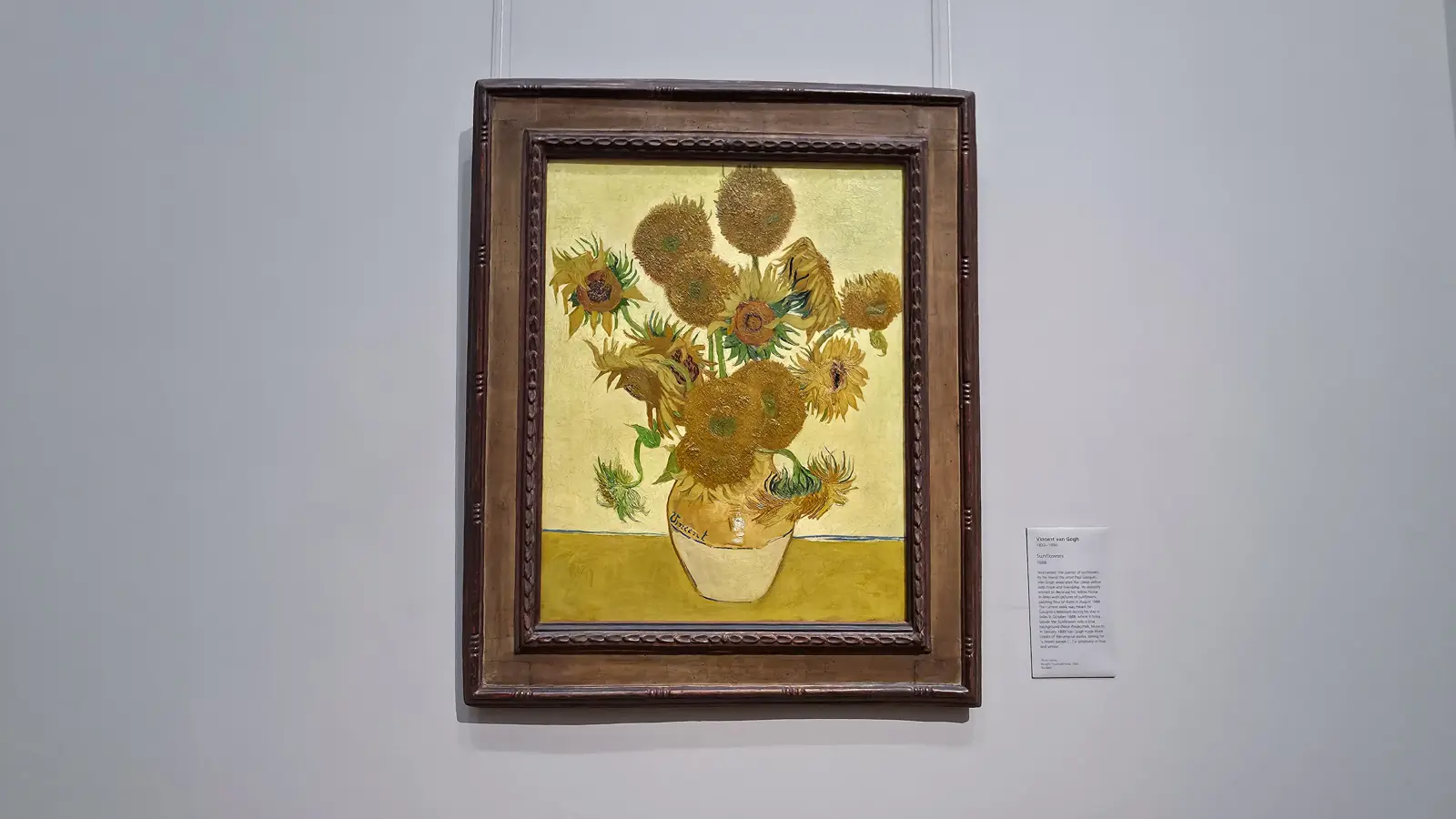
💛 The nickname · As a child I called him “the yellow painter” before I knew his name. Gauguin called him “the painter of sunflowers.”
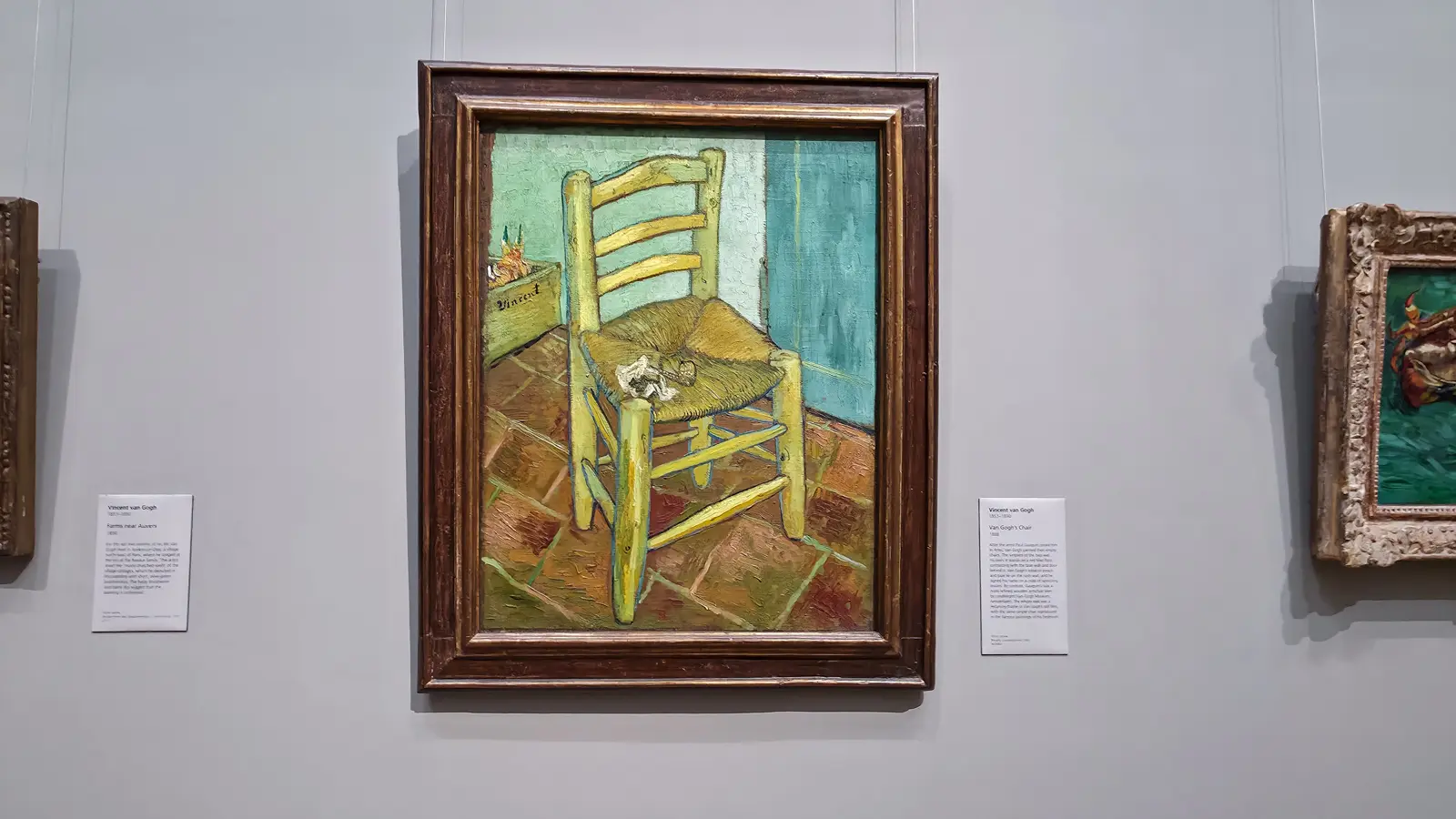
🪑 The pairs · Van Gogh’s Chair is in London, Gauguin’s Chair in Amsterdam; the three Bedrooms are split between Amsterdam, Chicago and Paris.
🌸 My favourite · Almond Blossom (1890), painted as a gift for his newborn nephew — new life, from a man struggling with his own.
🖼️ Where I’ve stood · The Van Gogh Museum (Amsterdam, the largest collection), the National Gallery (London) and the Musée d’Orsay (Paris).
💡 Tip · Visit the Van Gogh Museum more than once, read the wall texts — many quote his own letters — and remember the colours have faded (The Bedroom’s walls were once violet).
The Yellow Painter
It started with a book. As a child I leafed through a collection of Impressionist and Post-Impressionist paintings, far too young to understand any of it. I just thought the pictures were pretty.
Two of them stayed with me. One was a chair. The other was a yellow room that looked oddly out of proportion, and I remember wondering why anyone would paint a bedroom at all. I thought it was pretty cool anyway. I did not know his name, so I called him the yellow painter. I loved that he painted in yellow, and I still do.
The Chair and the Room, Found Again
Years later, I found both of them.
The chair is Van Gogh’s Chair, and it hangs in the National Gallery in London, where I stood in front of it in December 2025. It is plain wood painted yellow, with a rush seat, standing on red tiles. His pipe and a twist of tobacco rest on the seat. He painted it in Arles in late 1888, while Paul Gauguin was staying with him in the Yellow House, as one of a pair. Gauguin got a grander armchair, painted at night by candlelight.
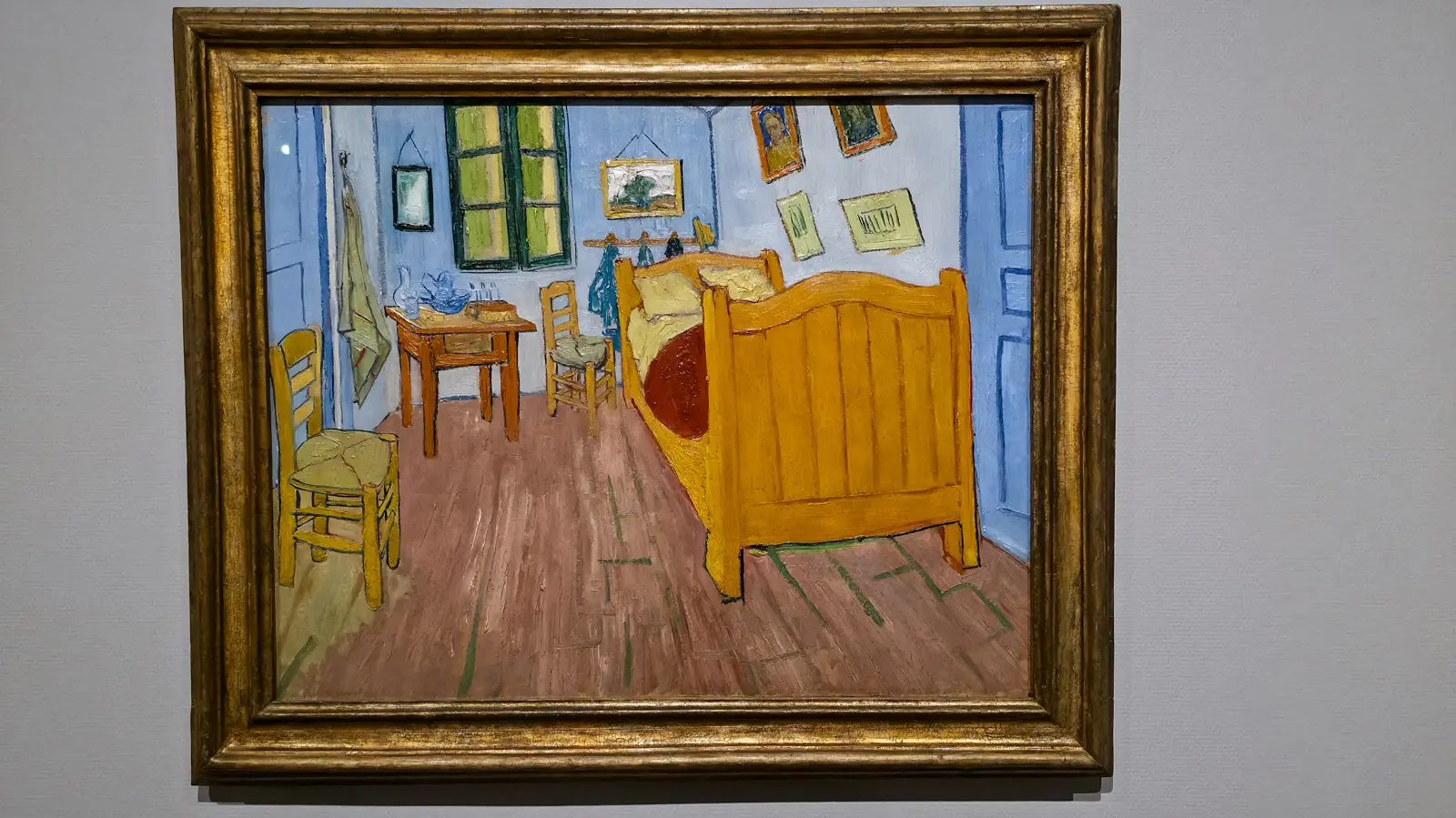
The room is The Bedroom, and I found it in Amsterdam in 2026. It was his own bedroom in the Yellow House, painted in October 1888, with the same kind of rush-seated chair standing by the bed.
My childhood instinct was right. The room does look out of proportion, and for two reasons. The real room was not rectangular but trapezoid, so the back wall really did meet the side walls at odd angles. And Van Gogh told Theo he had deliberately flattened the interior and left out the shadows so the picture would resemble a Japanese print. There is one more surprise: the walls were painted violet. The blue we see today is the result of the colour fading over time.
The Painting on My Wall
The book was not the only Van Gogh in my childhood. A framed replica of Starry Night over the Rhône hung at home, and I grew up looking at it. I found it dreamy. There was something whimsical about it: the stars, the lights on the water, the couple walking along the bank.
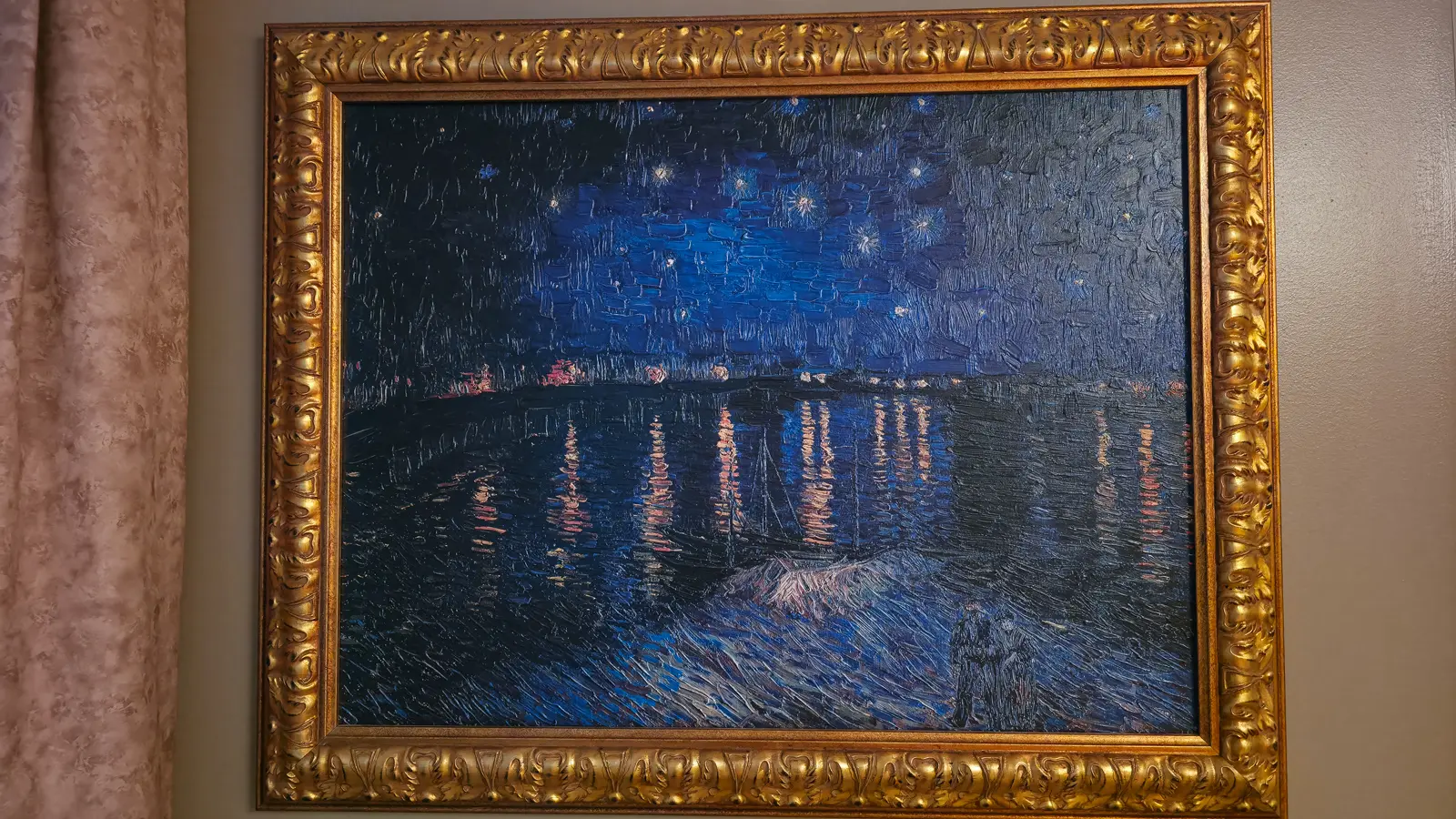
The replica was darker than the real thing, which I only learned when I saw the original at the Musée d’Orsay in Paris in June 2023. The real painting is brighter, bluer and greener, and I preferred it straight away. Standing close enough to see the paint after all those years of looking at the copy was a delight.
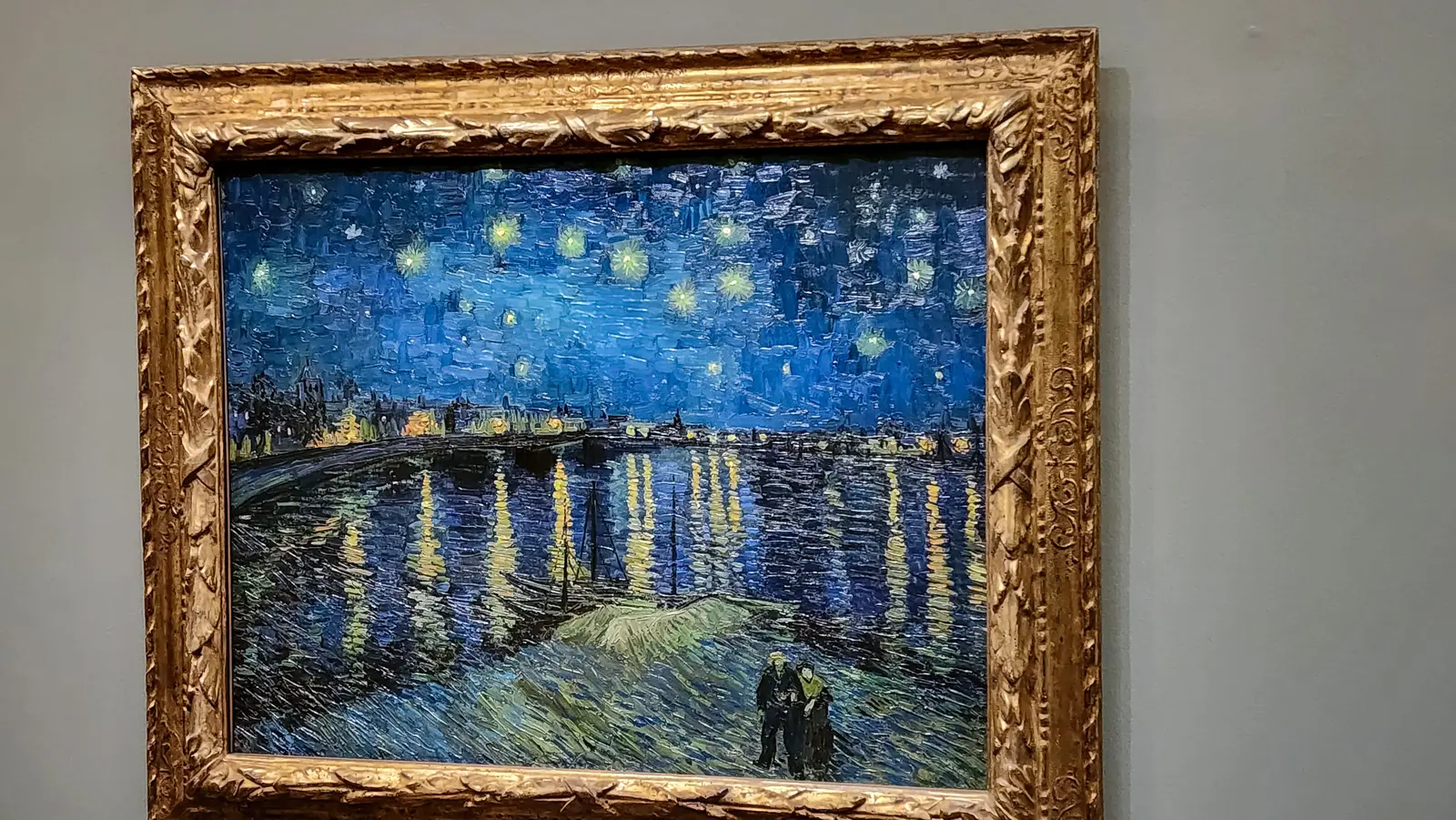
He painted it in Arles, the same town and the same year as the chair and the bedroom. Without knowing it, I had grown up with three paintings from a single year of his life.
Who He Was
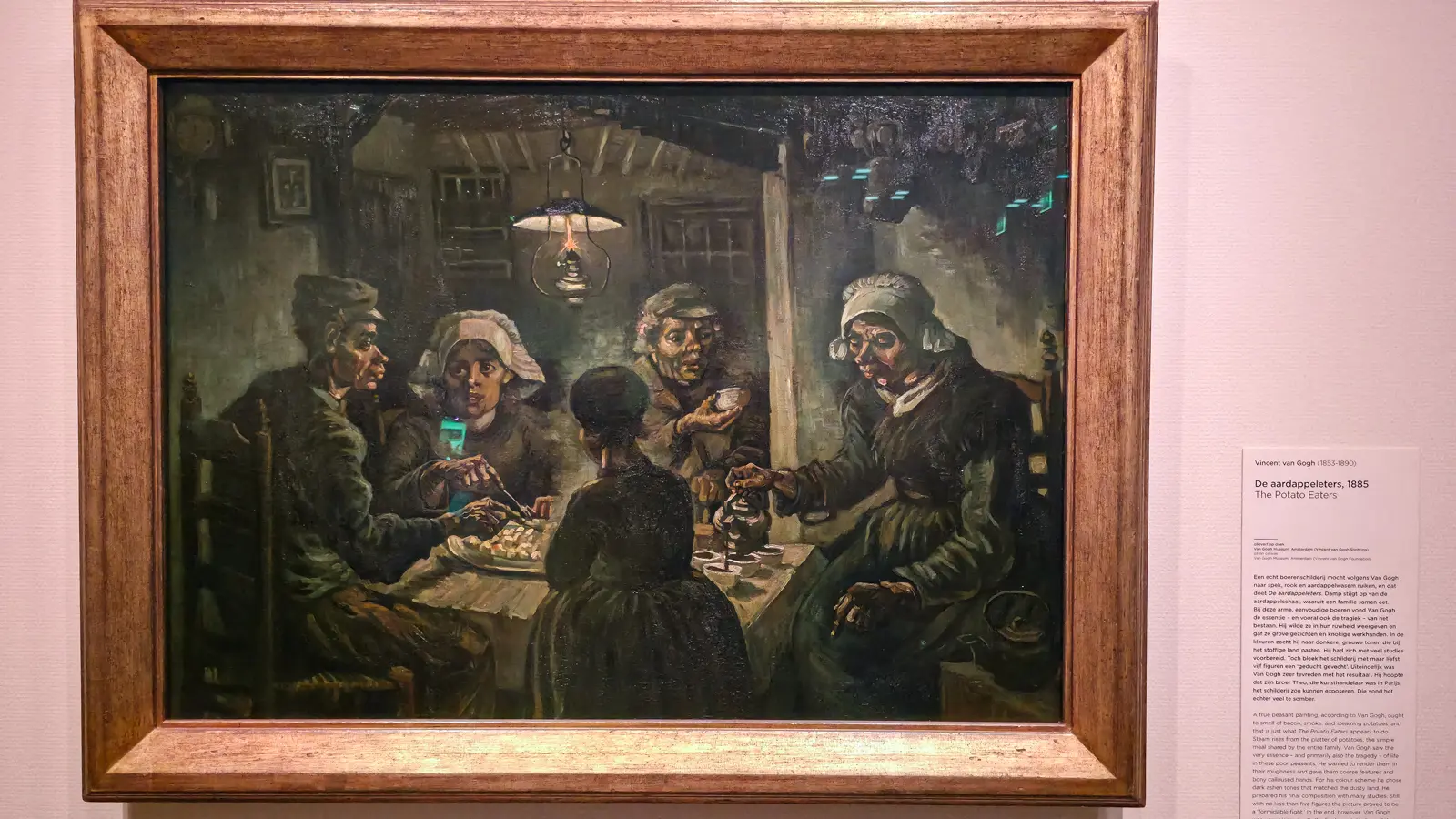
Vincent van Gogh was born on 30 March 1853 and decided to become an artist only at the age of 27, after earlier attempts at other careers. His first paintings, made in the Netherlands, are dark and earthy, full of peasants, potatoes and heavy browns.
The best known of them is The Potato Eaters, from 1885: a peasant family around a table under a single oil lamp, sharing a dish of potatoes with bony, work-worn hands.
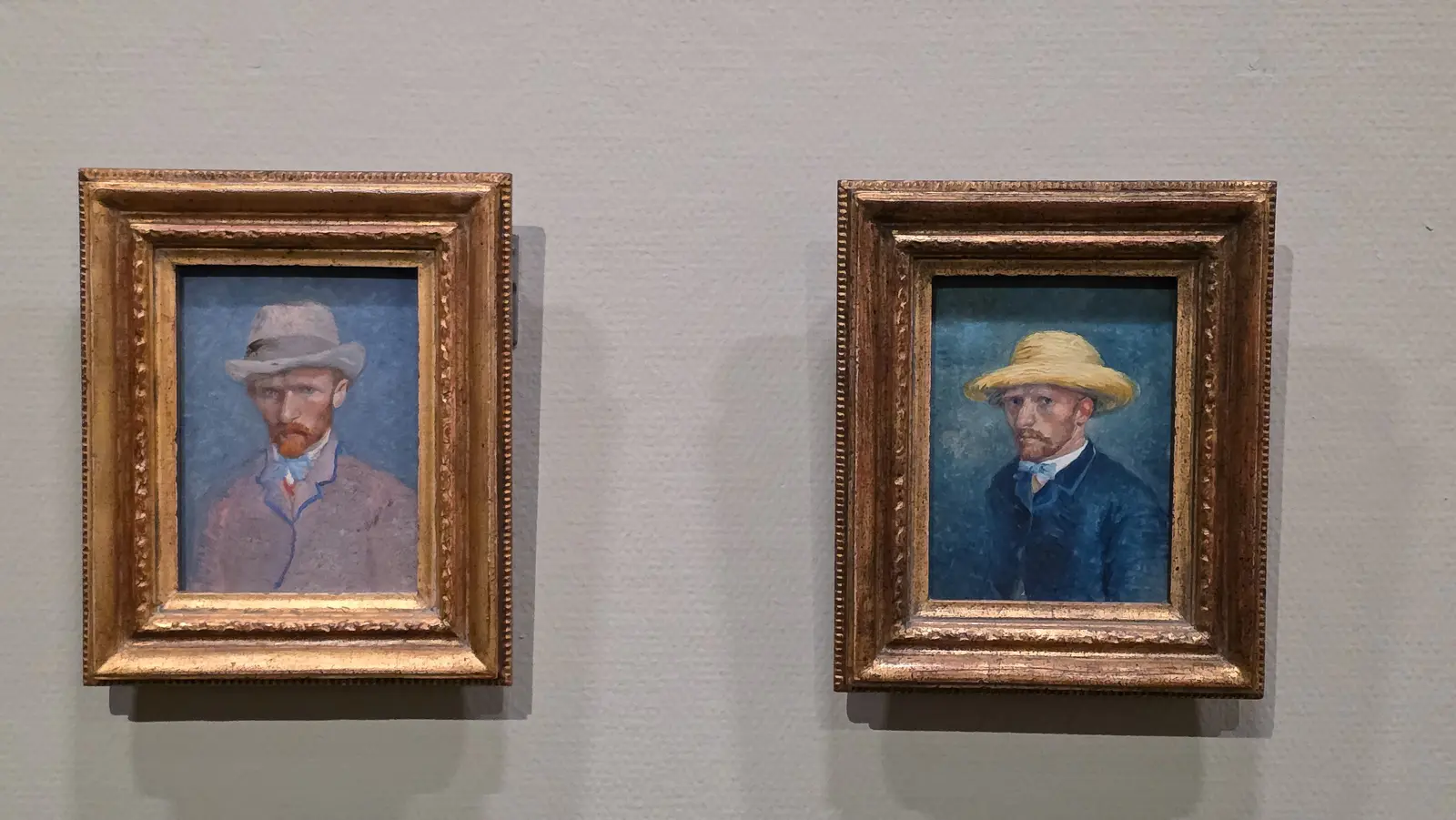
In Paris, his colour changed. Living there with his brother Theo from 1886, he discovered the Impressionists and Japanese prints, and his palette brightened. He painted himself again and again, partly because he could not afford models. At the Van Gogh Museum, two small portraits from 1887 hang side by side: one in a grey hat, one in a straw hat. The museum is no longer sure the second one is Vincent at all. It may be Theo.
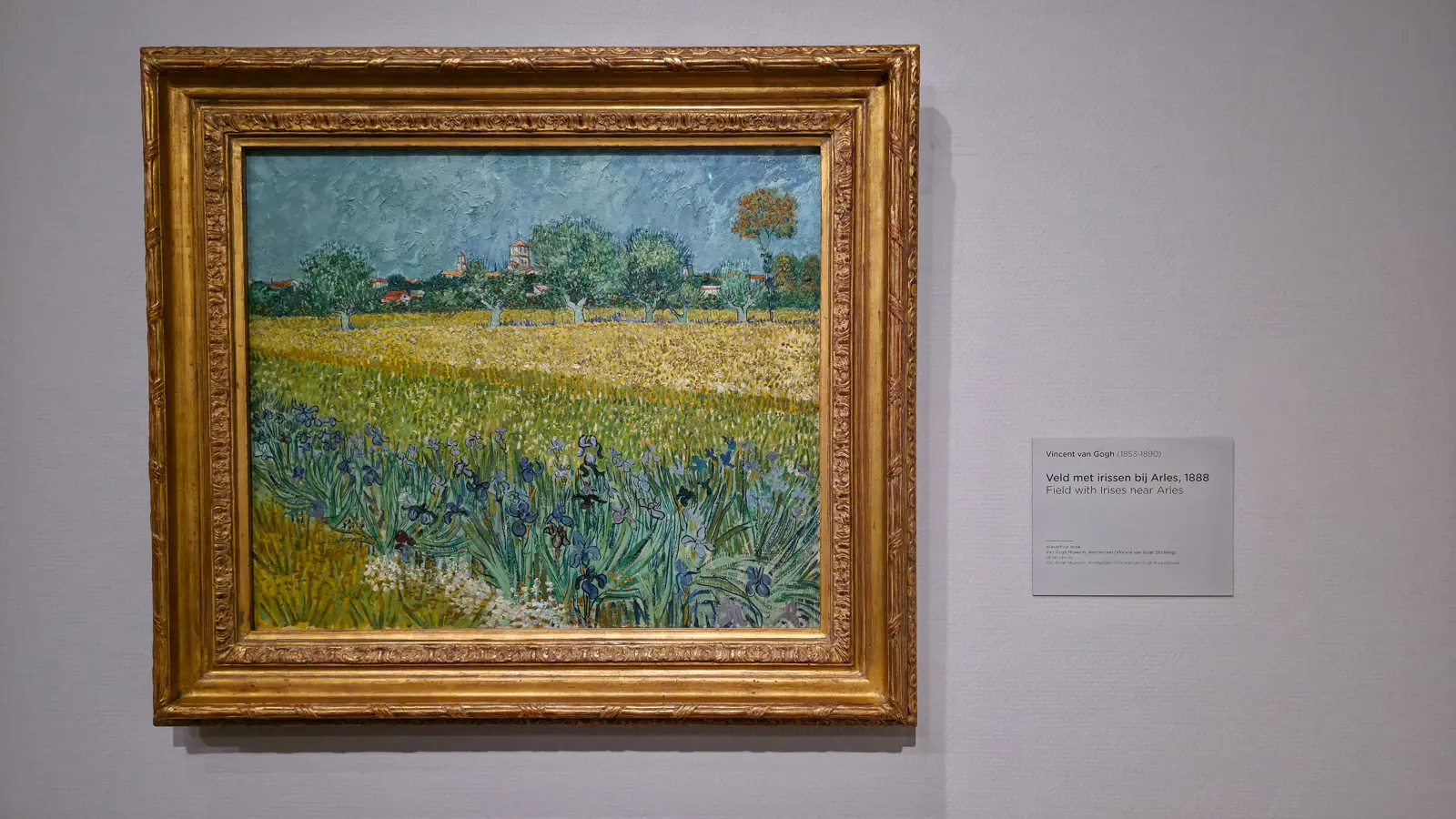
In February 1888 he moved south to Arles, and the yellow arrived: sunflowers, wheat fields, the Yellow House, the chair and the bedroom. Within weeks of arriving he was painting fields of irises and buttercups on the edge of town, as in Field with Irises near Arles.
It ended badly. After Gauguin’s visit turned into a violent quarrel in December 1888, Van Gogh suffered a breakdown and cut off part of his own ear. In May 1889 he admitted himself to the asylum at Saint-Rémy, where he kept painting through repeated attacks of illness.
In the spring of 1890 he moved to Auvers-sur-Oise, north of Paris. He died there by suicide on 29 July 1890, aged 37. His career as a painter had lasted about ten years.
Almond Blossom
My favourite Van Gogh is not yellow at all.
On 31 January 1890 Theo and his wife Jo had a son, and they named him Vincent after his uncle. Van Gogh had been at the asylum in Saint-Rémy for almost ten months. He was in a fragile state, and this was happy news. He answered it with a painting: branches of almond blossom against a turquoise sky. Almond trees flower in the south as early as February, one of the first signs of spring, and he painted them as a gift for the baby. I saw the original at the Van Gogh Museum on my first visit.
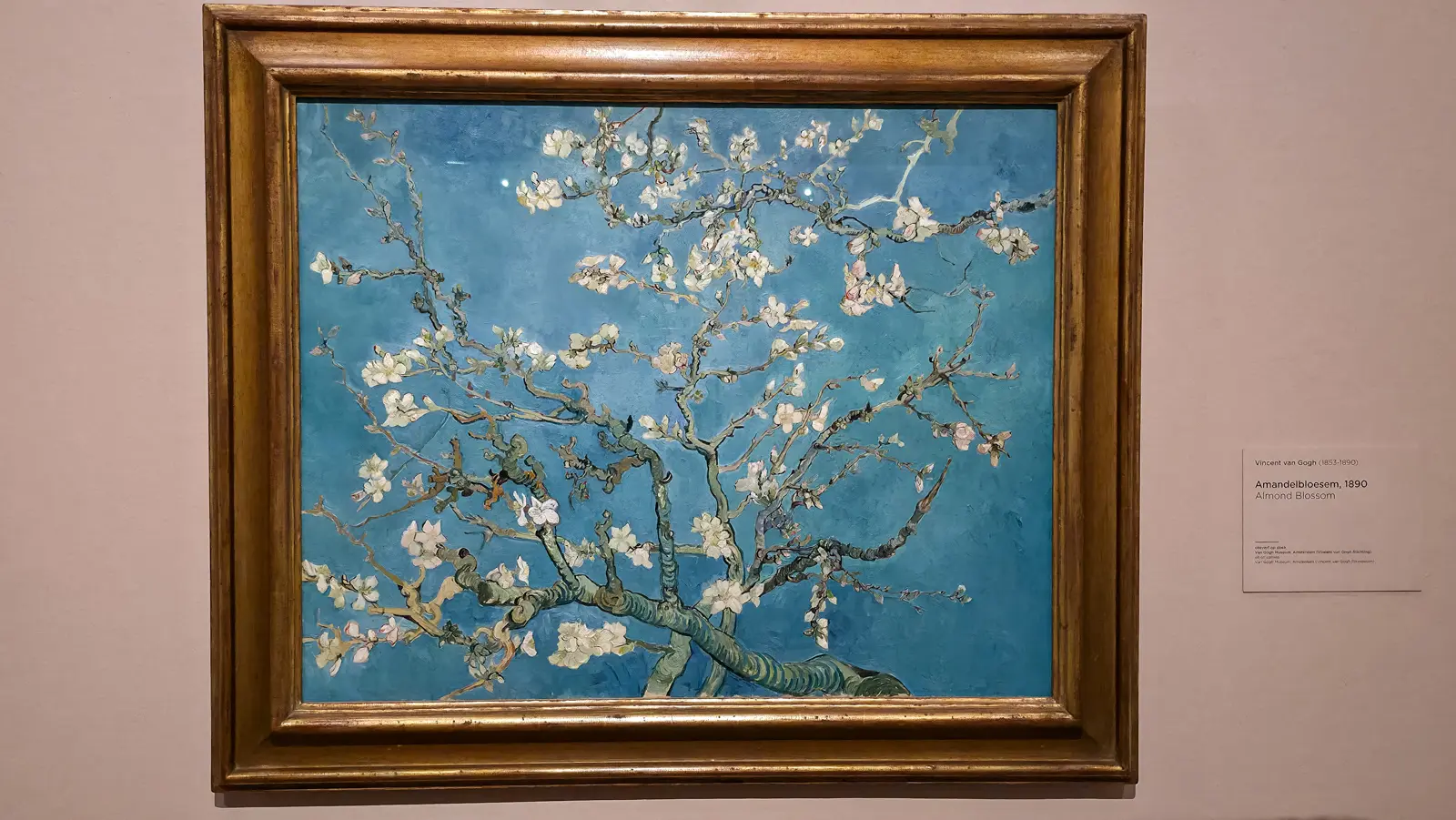
When I learned that story, I was amazed. Something so delicate, so different from all that yellow, and so right for a newborn nephew. It is the symbolism that moves me: new life, painted by a man who was struggling with his own.
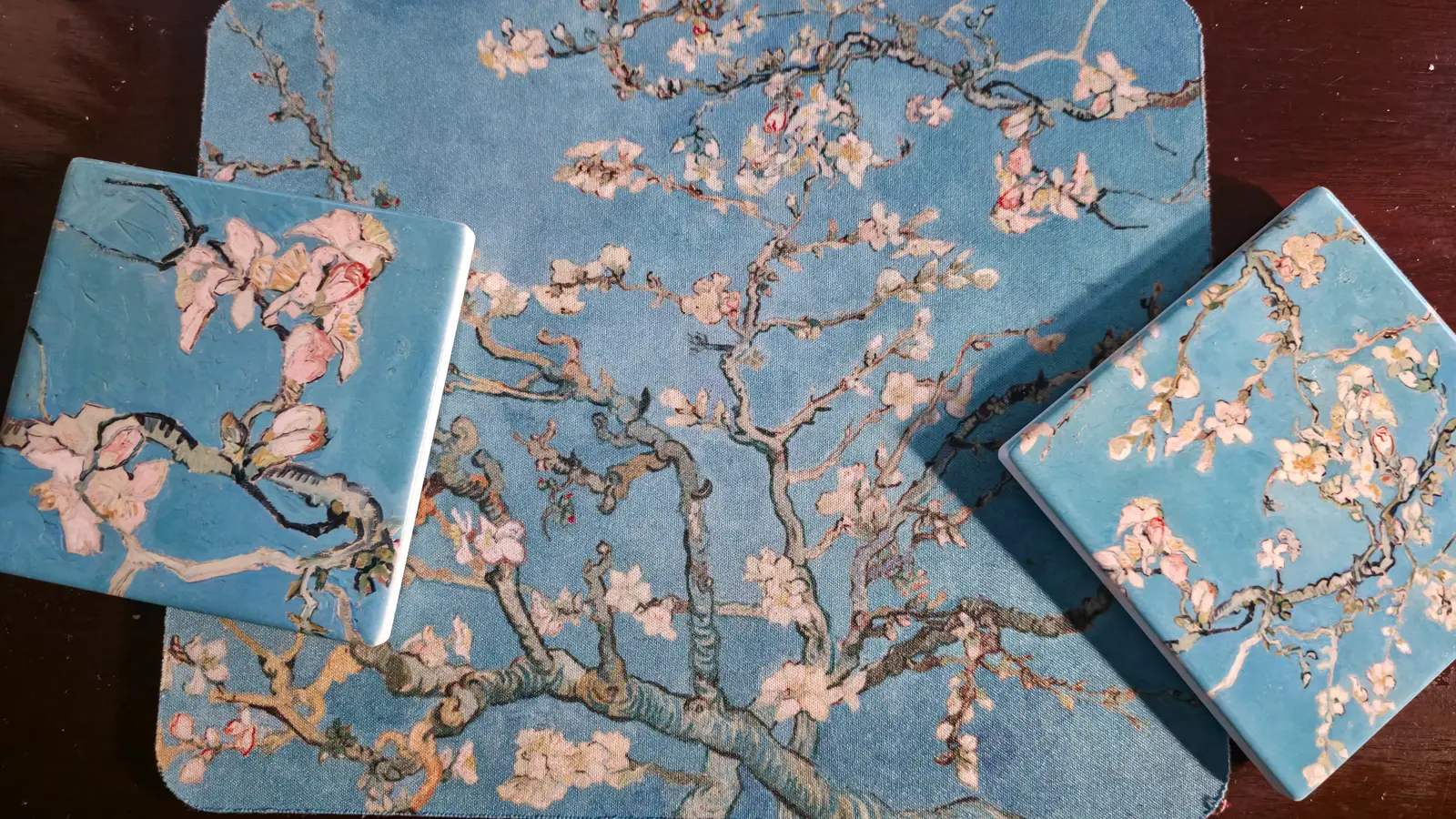
I own the coasters, and a mouse pad, because who does not need a tenth mouse pad.
Theo and Jo
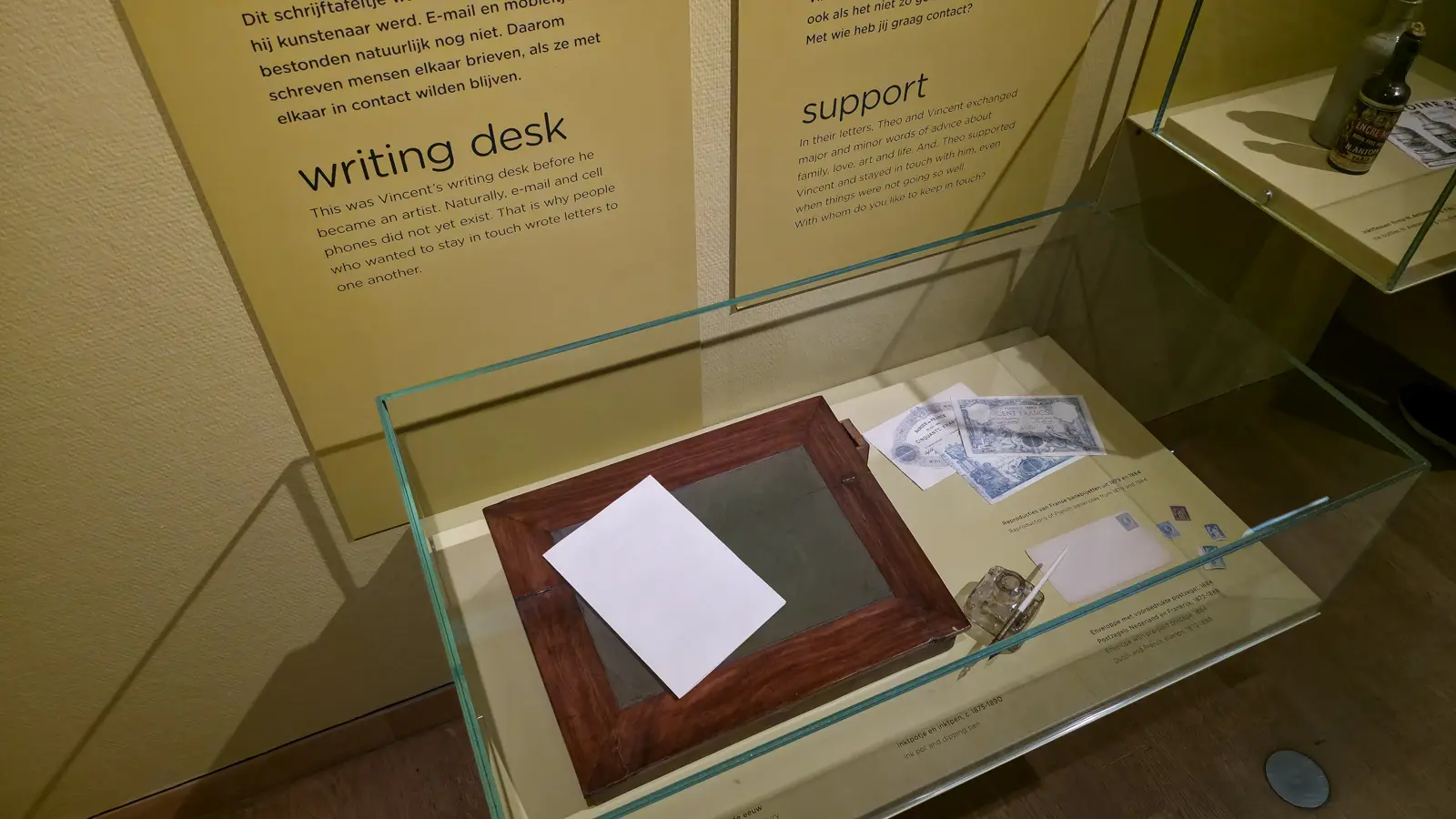
Van Gogh would not be famous without two people. The first is his brother Theo, an art dealer in Paris, who supported him with money and with hundreds of letters. Theo died in January 1891, barely six months after Vincent.
The second is Theo’s widow, Jo van Gogh-Bonger. She was left with a baby and hundreds of paintings by a little-known artist. She spent the rest of her life making sure the world saw them. She lent works to exhibitions, sold paintings, and in 1905 organised an exhibition at the Stedelijk Museum in Amsterdam with 484 of his works. In 1914 she published Vincent’s letters to Theo, and that same year she had Theo’s remains moved to Auvers-sur-Oise and buried beside his brother.
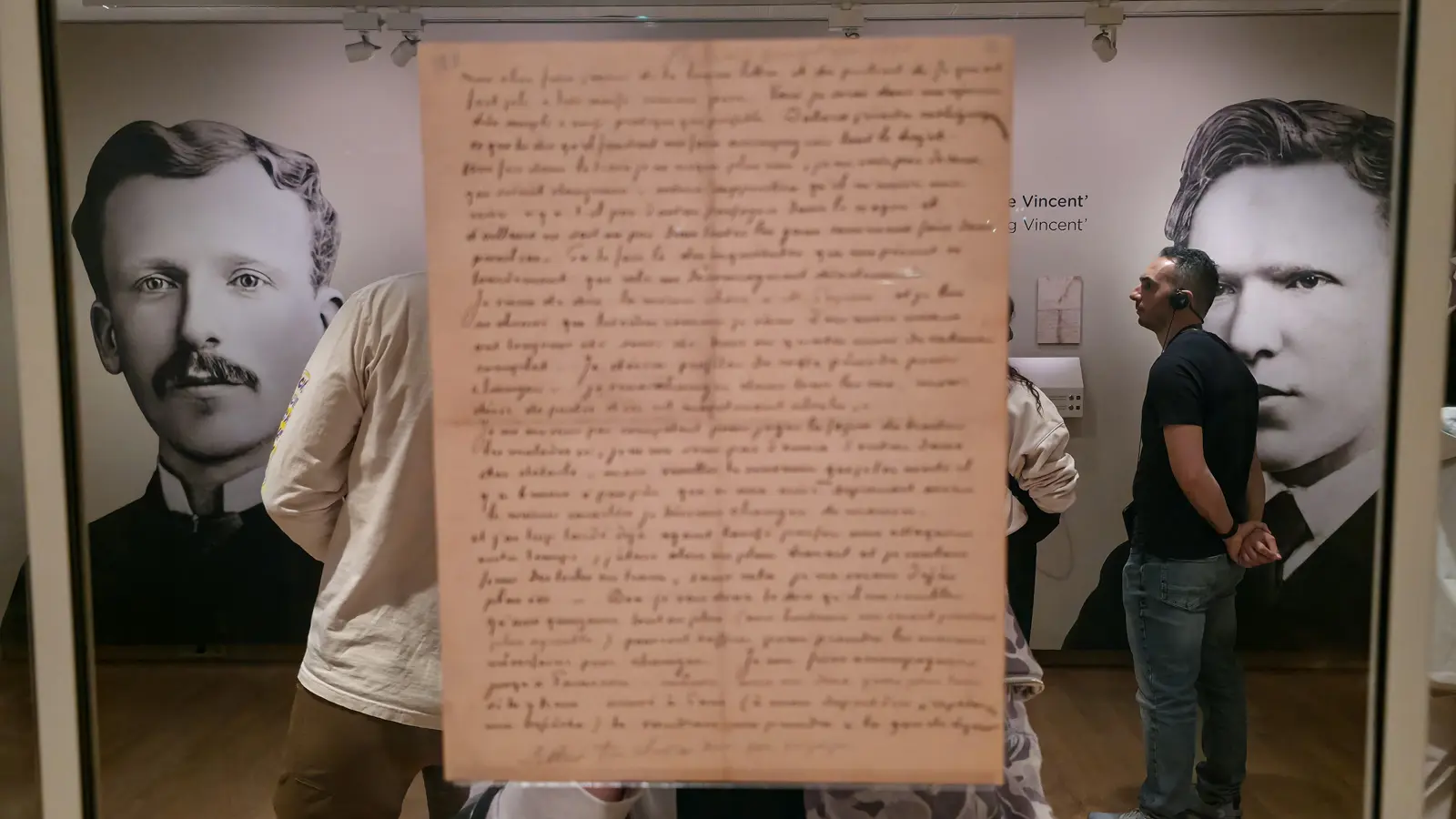
When Jo died in 1925, the collection passed to her son, the baby the almond blossom was painted for. He became an engineer, transferred the collection to a foundation in 1962, and was there when the Van Gogh Museum opened in 1973. The museum I visited twice exists because of that family.
Where I Have Stood in Front of Him
I have now seen his work in three cities. In Amsterdam, the Van Gogh Museum holds the largest collection of his work anywhere, and the Rijksmuseum has a self-portrait of its own.
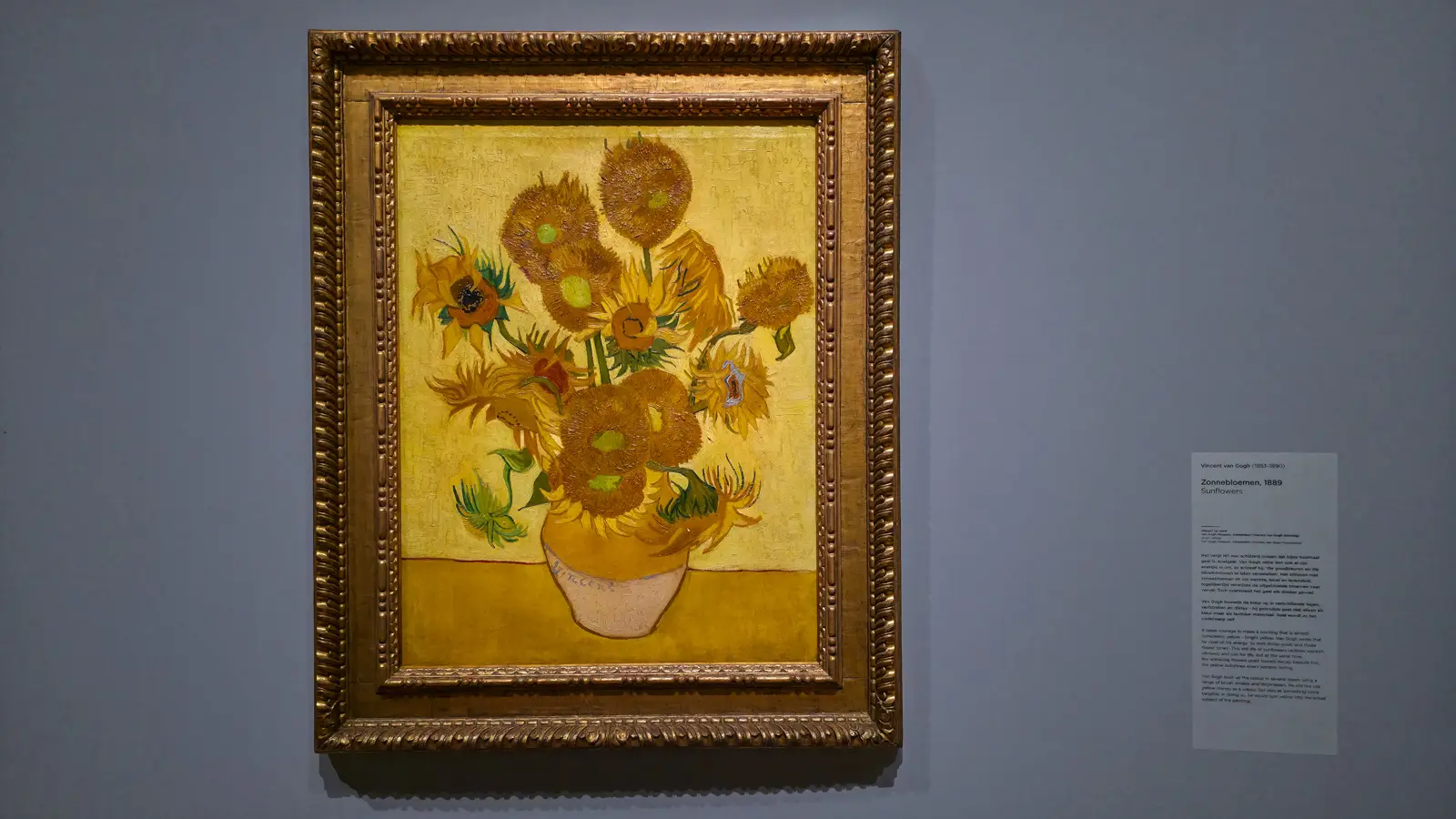
In London, the National Gallery has his Chair and another version of the Sunflowers. Gauguin, who stayed with him in the Yellow House, called him the painter of sunflowers. As a child I called him the yellow painter, and I was not far off. In Paris, the Musée d’Orsay has the original of the Starry Night over the Rhône I grew up with.
I am going back to the Orsay in December, when the queues are shorter, to take my time with its masterpieces. Its version of The Bedroom will be on my list.
Bubbly Tips
- Visit the Van Gogh Museum more than once if you can. I went twice in one week, and the collection is large enough to justify it.
- Read the wall texts. The Van Gogh Museum holds around eight hundred of his letters, and many of its labels quote him directly.
- Look for the pairs across countries. Van Gogh’s Chair is in London and Gauguin’s Chair is in Amsterdam. The three Bedrooms are split between Amsterdam, Chicago and Paris.
- Go to the Orsay in winter. I am going back in December to avoid the long queues.
- Check what is on show before a special trip. Major Van Goghs travel for exhibitions, so check the museum’s website before you plan a visit around one painting.
- Look at the colour, then remember it has changed. The Bedroom’s walls were once violet. Several of his colours have faded, so what you see is not quite what he painted.
- Read his letters. They are published in full, and they explain his paintings better than any guidebook.
- Spot the same chair twice. The plain rush-seated chair in London is the same kind that stands beside the bed in The Bedroom.
Final Thoughts
A child who called him the yellow painter grew up to find his yellow chair in London and his yellow room in Amsterdam, and to meet the starry river from her childhood wall in Paris. I did not plan any of it. He simply kept turning up.
The paintings I love most come from the last few years of a short and difficult life. The yellow is what drew me in as a child. The almond blossom is what keeps me there now.
Until next time!

🌟 Everything You Need to Plan Your Dream Trip in 2026
- 🌟 Luxury Hotels - Find premium stays with Booking.com & Hotels.com
- 🏡 Vacation Rentals - Discover unique properties on VRBO
- 🏞️ Guided Tours - Explore with Viator or GetYourGuide
- 🎫 Attraction Tickets - Skip the lines with Tiqets
- 🚢 Ocean Cruises - Set sail with Cruise Direct
- 📱 International SIMs - Stay connected with Saily
- 🚗 Car Rentals - Budget-friendly options from Discover Cars
- 🌐 Secure VPNs - Browse safely with NordVPN
- 💶 Currency Exchange - Best rates with Wise
- 🗣️ Learn Languages - Master the local language with Babbel and Rosetta Stone