
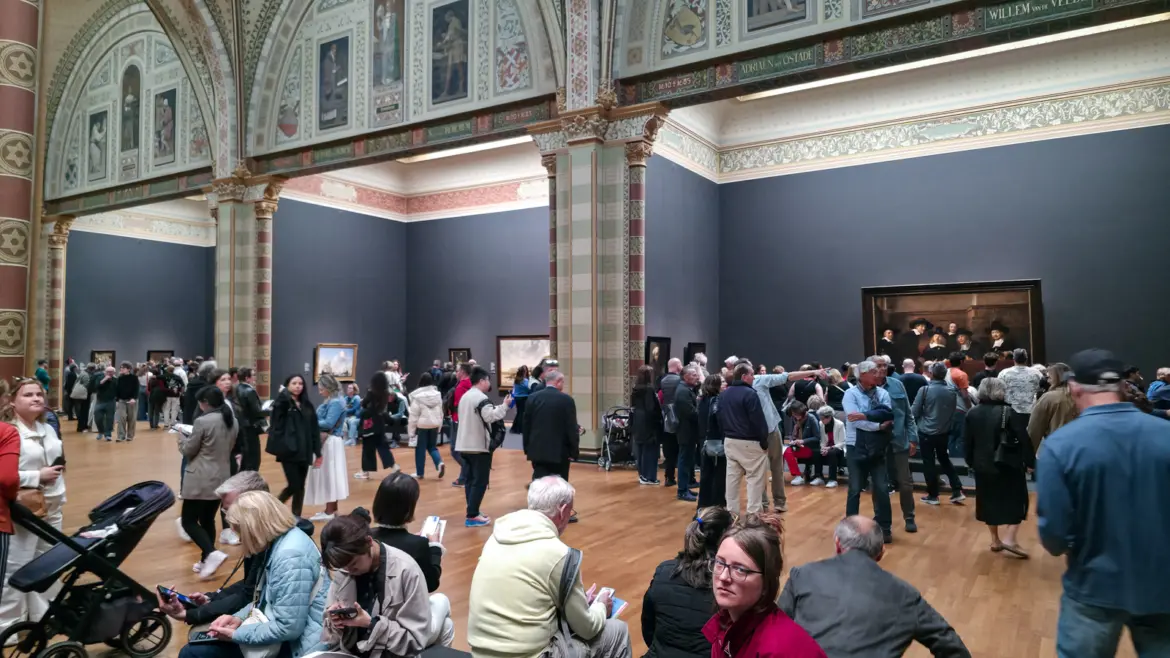
After the Night Watch, I thought the rest of the Gallery of Honour would be a breeze. The Night Watch hangs in its own room at the far end of the gallery, so the masterpieces in the bays leading up to it are only a few steps away.
It was not a breeze. It was packed. There were queues at almost every major painting, partly because several tour groups kept converging on the same sections at the same time, and everyone wanted a turn in front of the canvas and a photo. Even with a guide, I could barely hear a word.
But the Dutch masters are all here, and up close the attention to detail is what stayed with me. I had never seen a Vermeer in person before. My only regret is that I did not have the time to stand and stare.
The Gallery of Honour at a Glance
🏛️ What · Pierre Cuypers’ vaulted arcade (1885), lined with Dutch Golden Age masterpieces and leading to the Night Watch.
🎨 The Vermeers · Three of the Rijksmuseum’s four — The Milkmaid, The Little Street and The Love Letter — hang here, small and worth getting close to.
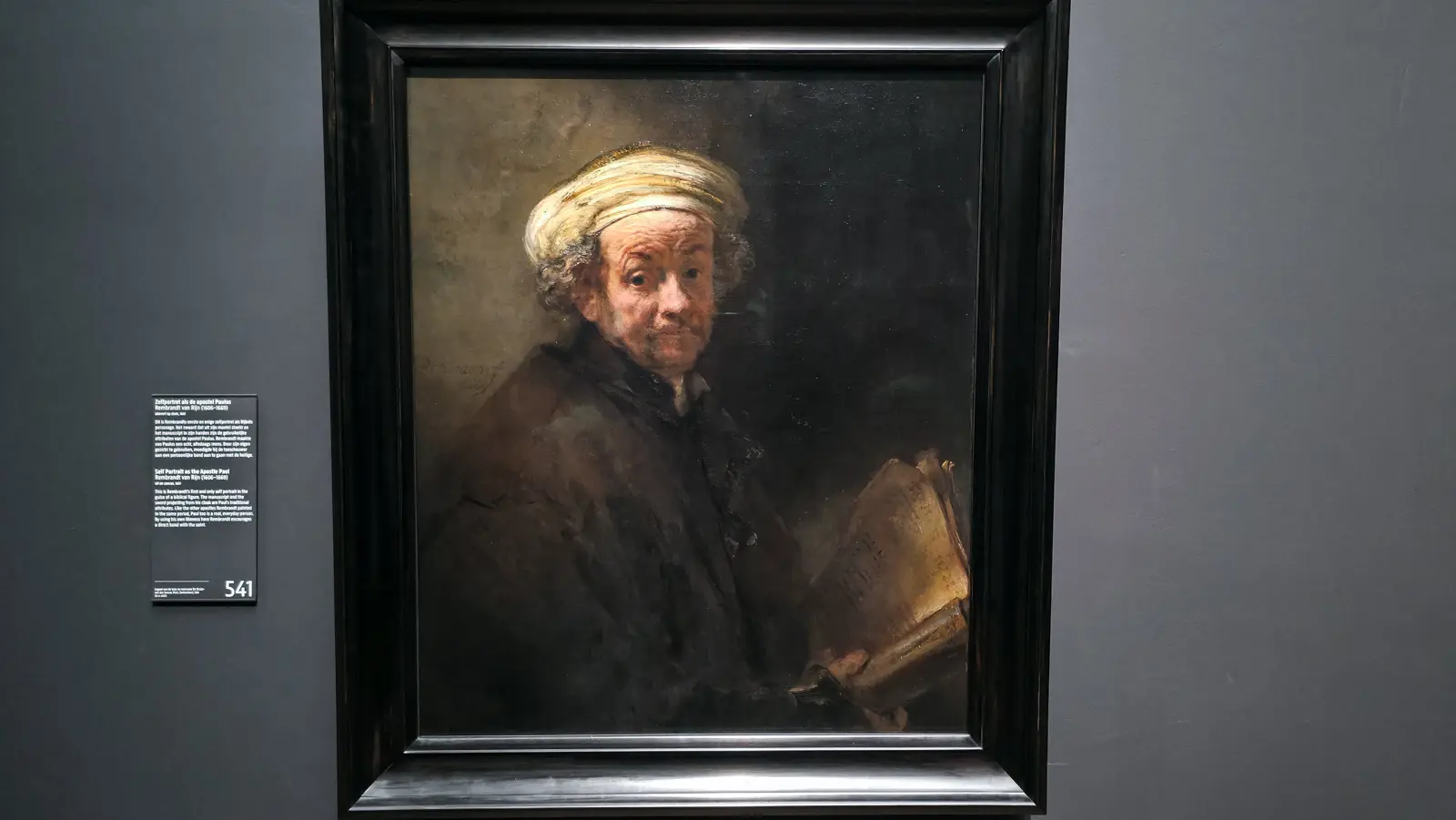
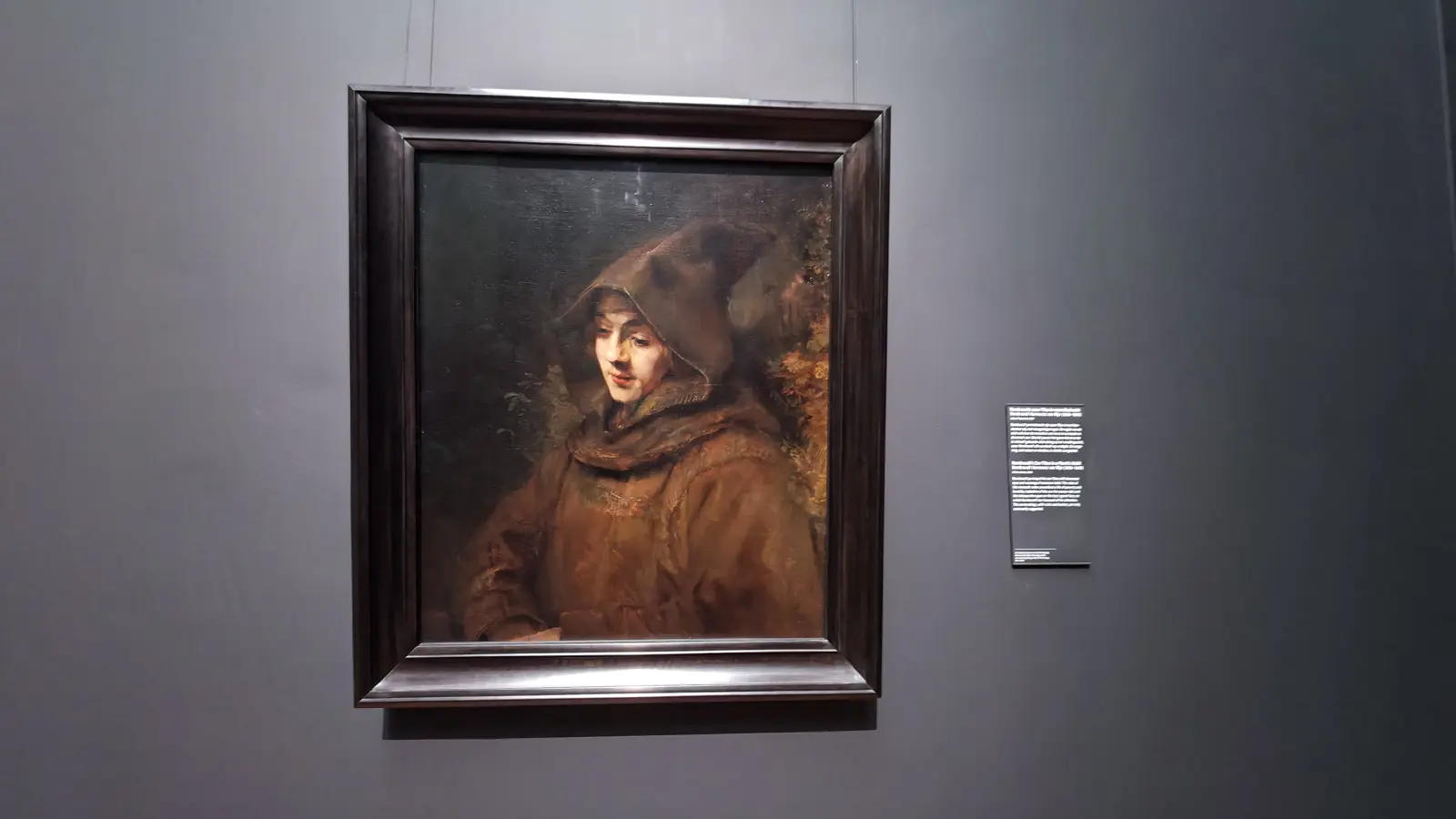
🖼️ Rembrandt · The Syndics, the late Self Portrait as the Apostle Paul, and his son Titus, plus the Night Watch in its own room at the end.
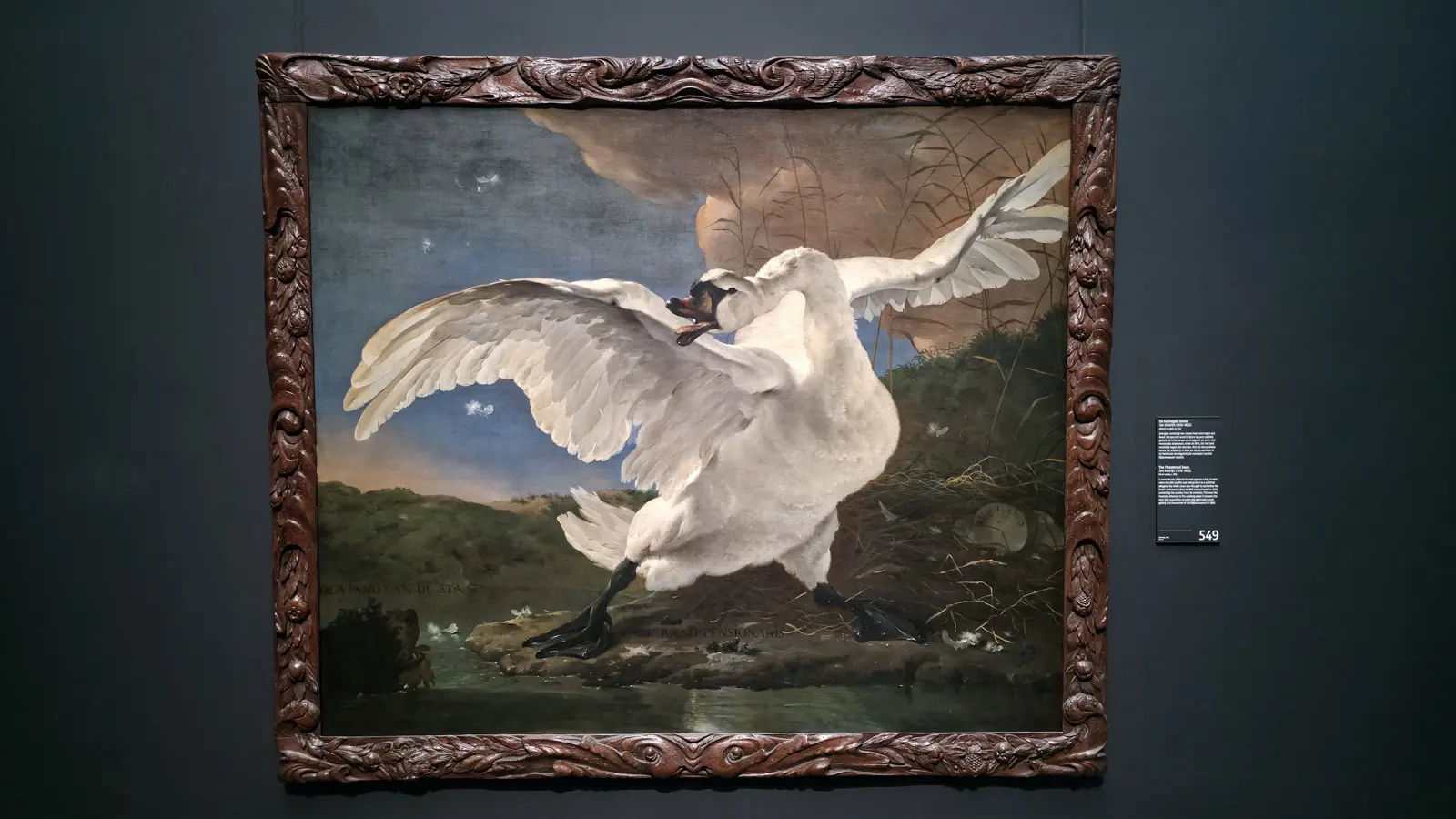
🦢 Don’t miss · The Threatened Swan — the first painting ever acquired for the national collection (1800).
💡 Tip · Go at the earliest slot and see the Vermeers first; tour groups converge on the same canvases from late morning.
The Gallery Itself
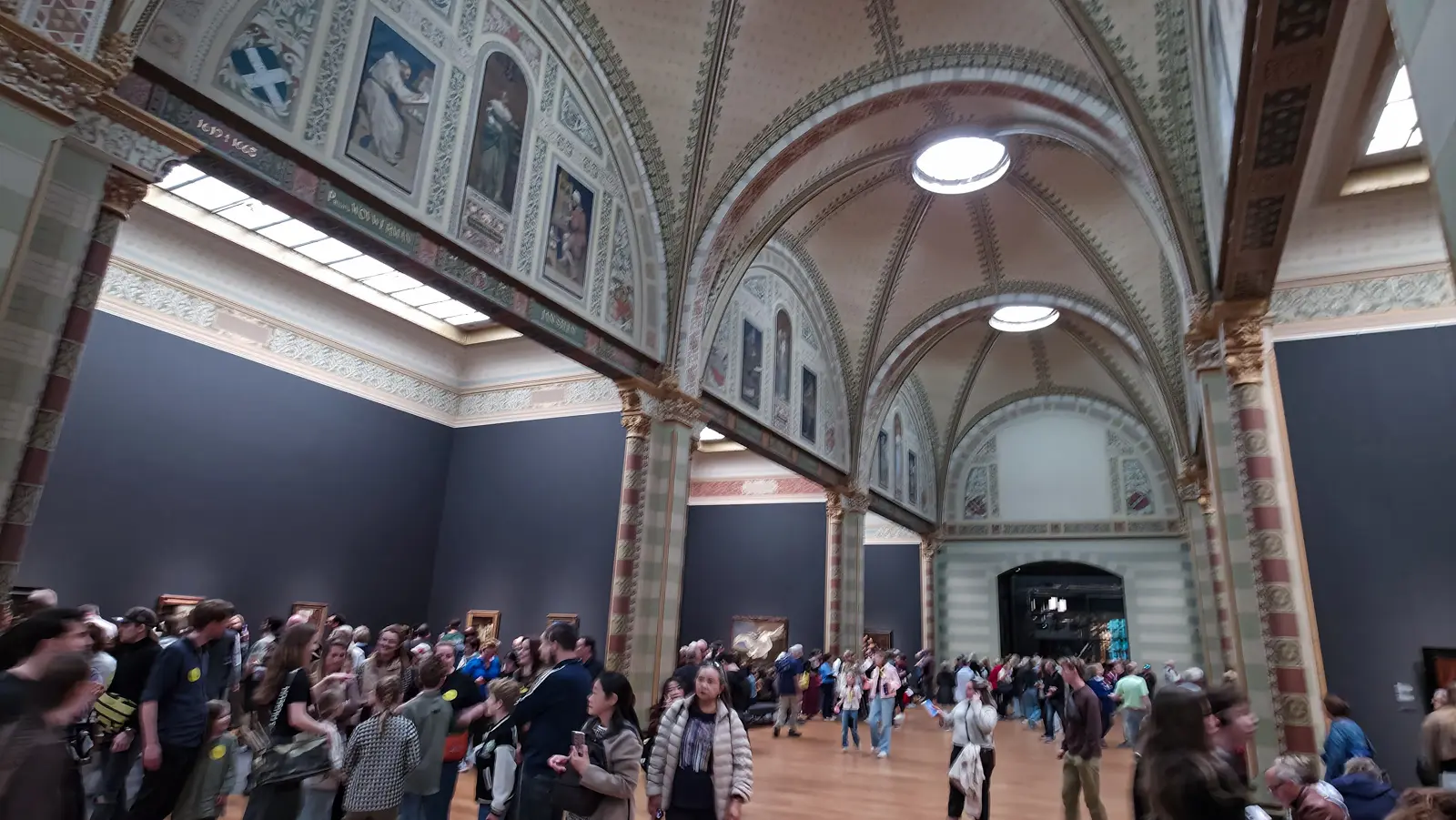
The Gallery of Honour is a long, vaulted arcade with bays opening off both sides. Pierre Cuypers designed it as the centrepiece of the building, which opened in 1885. The vaults are painted with figures and coats of arms, skylights let daylight in from above, and the frieze over the bays carries the names of Dutch painters with their dates.
Vermeer, Up Close
Vermeer was the reason I slowed down, or tried to.
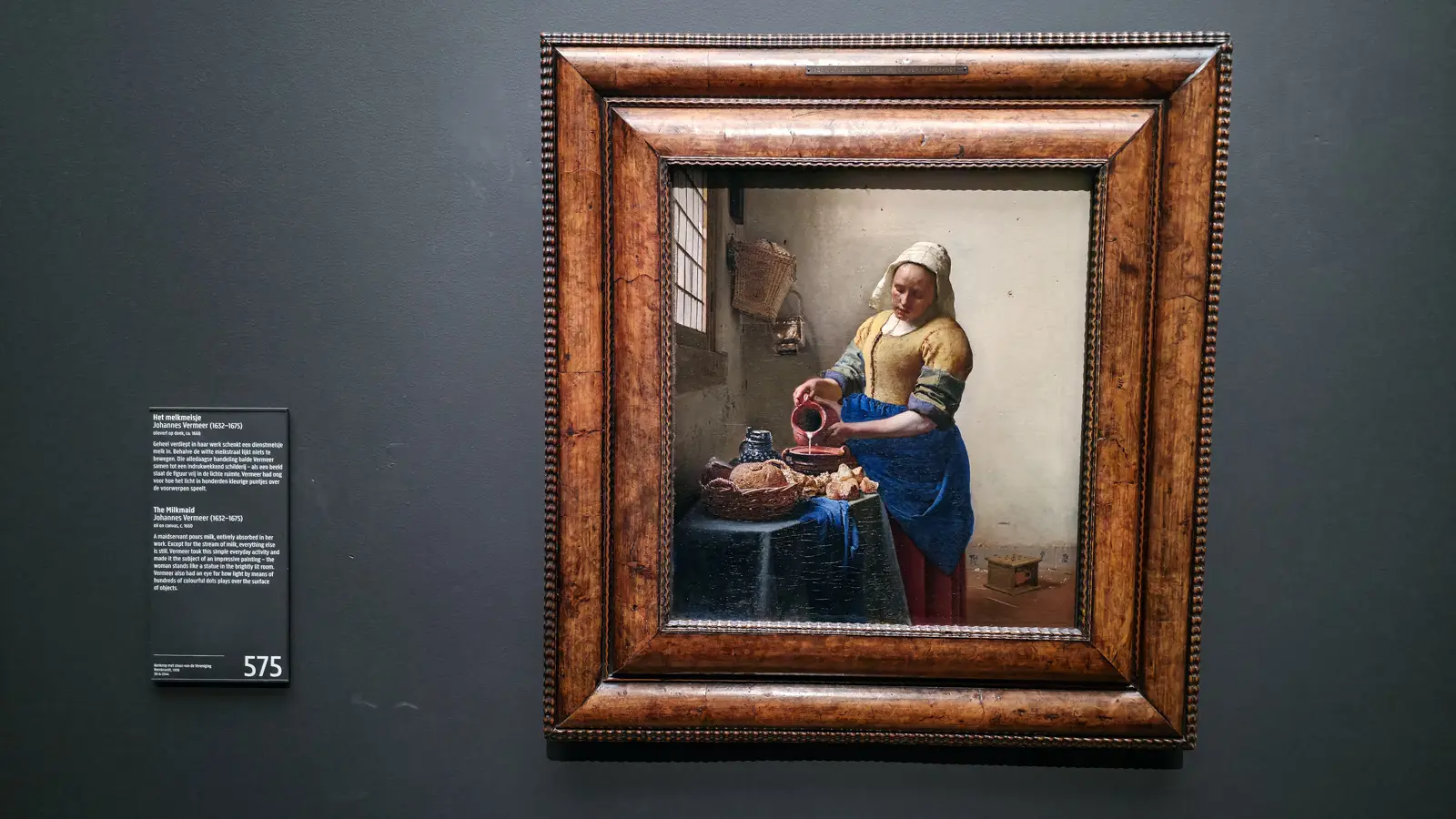
In The Milkmaid, a maidservant pours milk into a bowl, and nothing else in the room moves. Up close, the light on the bread and the rim of the jug is built out of tiny dots of colour.
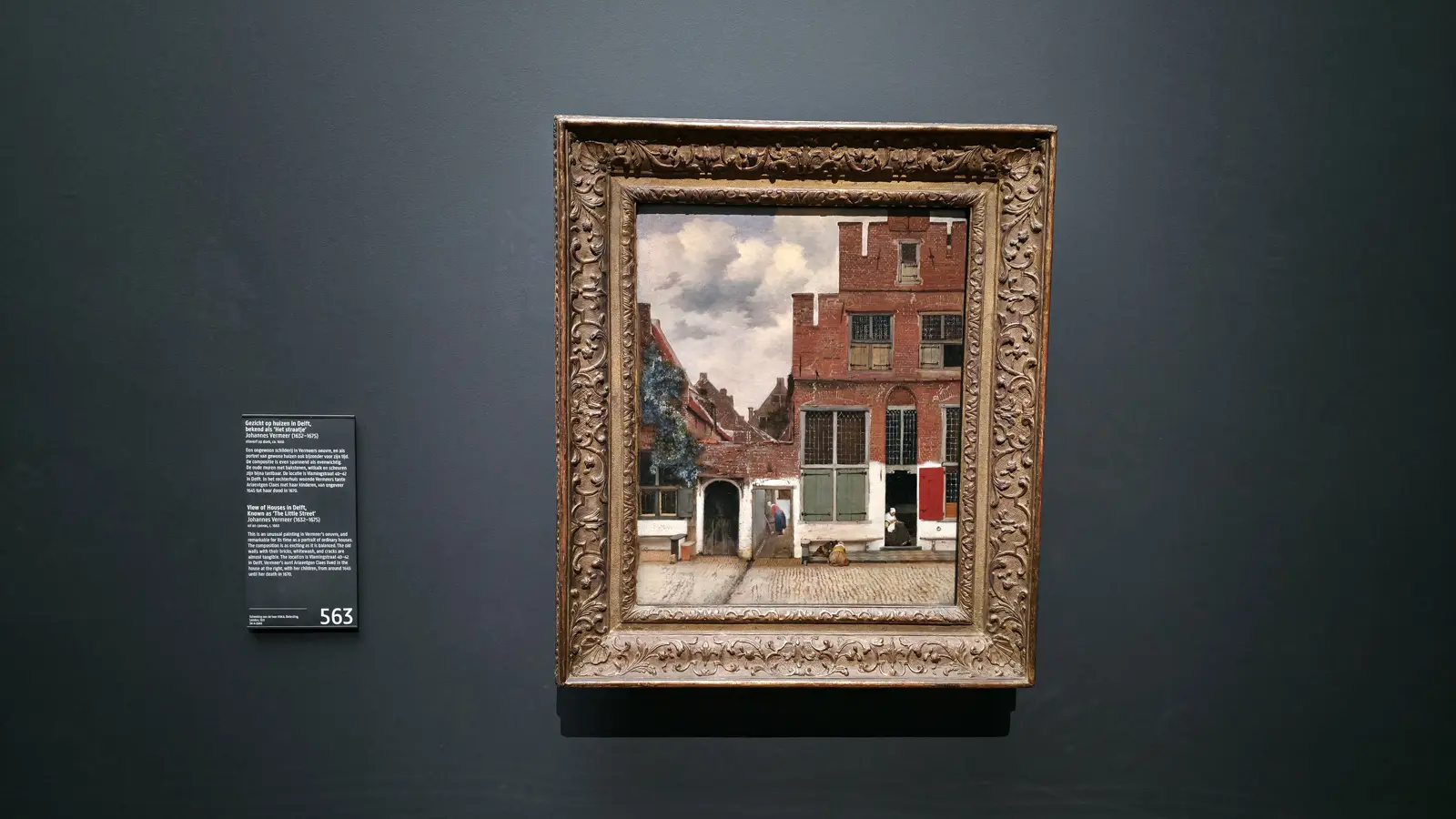
The Little Street shows two ordinary houses in Delft: cracked brick and whitewash, a woman sewing in a doorway, a maid bent over a tub in the alley. In 2015, the art historian Frans Grijzenhout traced the scene through 17th-century records to Vlamingstraat 40 and 42 in Delft. The house on the right belonged to Vermeer’s widowed aunt, Ariaentgen Claes van der Minne.
The Love Letter plays a trick with the viewpoint. Vermeer puts us in a dark room, looking past a curtain through a doorway into a bright one, where a maid has just handed her mistress a letter. It has survived a theft, too. In 1971, while on loan to an exhibition in Brussels, it was cut from its frame with a potato peeler. It was recovered, restored and back on display in Amsterdam a year later.
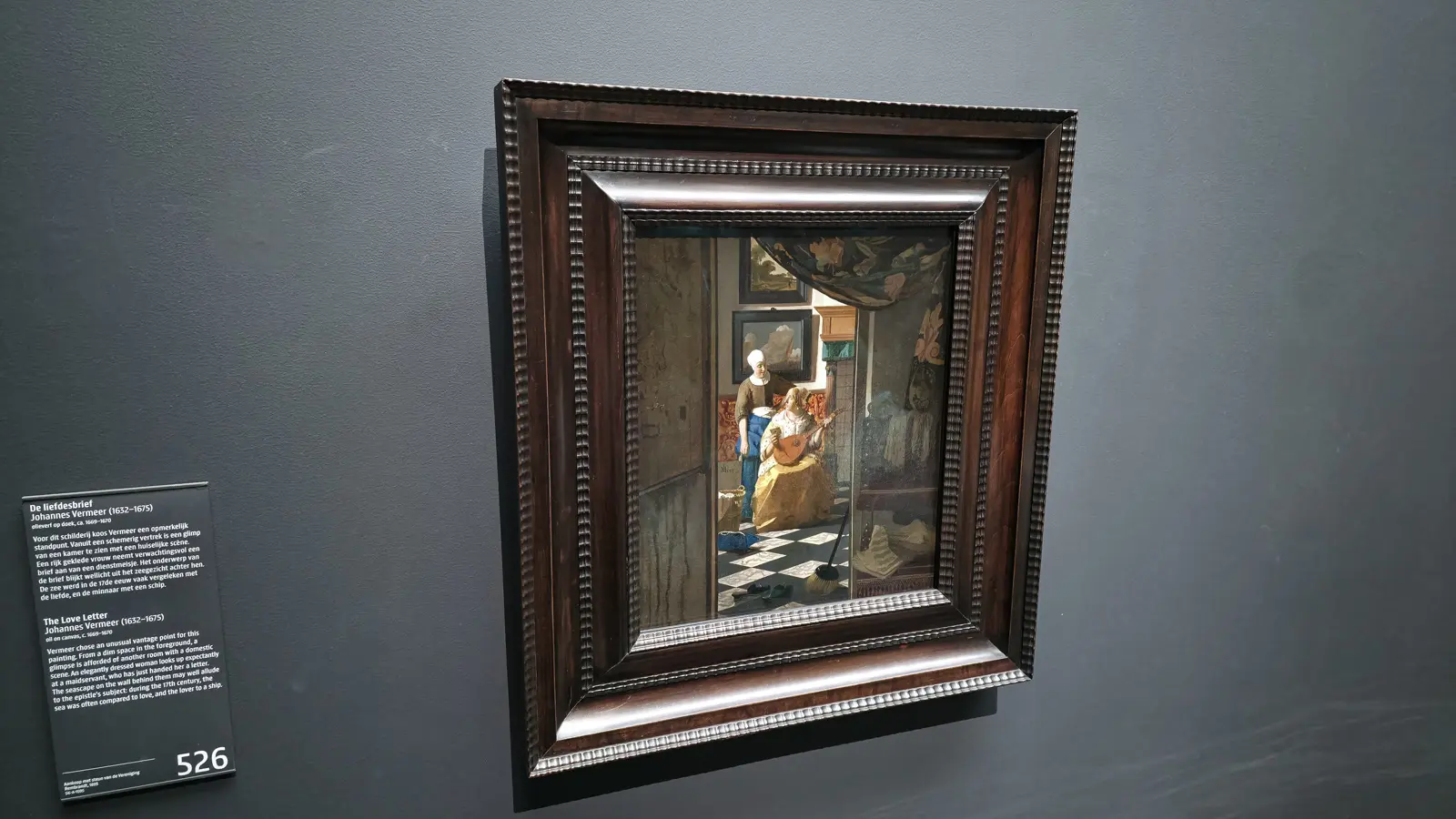
Part of the reason for the queues is scarcity. Vermeer died in 1675, aged 43, and only 37 paintings by him are known to exist. When the Rijksmuseum brought 28 of them together in 2023, the exhibition sold out within days and drew 650,000 visitors from 113 countries, a record for the museum.
That is not why I wanted more time with them, though. Little is known about Vermeer’s life, but the way he treats light is unlike anything I have seen. And every scene is an intimate moment. The people in his paintings are caught doing ordinary, everyday things, a maid pouring milk or a woman sewing in a doorway, as if they have no idea anyone is painting them.
The Threatened Swan
The swan did something to me. We always see swans presented as elegant creatures. This one is rattled and protective, wings spread wide, hissing at a dog creeping up from the water towards its nest. It intrigued me.
Jan Asselijn painted The Threatened Swan around 1650 as an animal scene. Later owners turned it into politics. After his death, words were added to the canvas: “the grand pensionary” between the swan’s legs, “Holland” on one of the eggs and “the enemy of the state” above the dog. The swan became Johan de Witt, the Dutch statesman, defending the country. The pun helps, since wit means white in Dutch.
Rembrandt, Late in Life
Rembrandt painted his Self Portrait as the Apostle Paul in 1661, when he was 55. He looks older than that: deep lines, heavy eyes, a turban over grey curls. It is touching to see how a painter saw himself, without flattery, late in his career.
A year earlier, in 1660, he painted his son Titus in the brown habit of a Franciscan monk, eyes lowered, his pale face set against dark leaves.
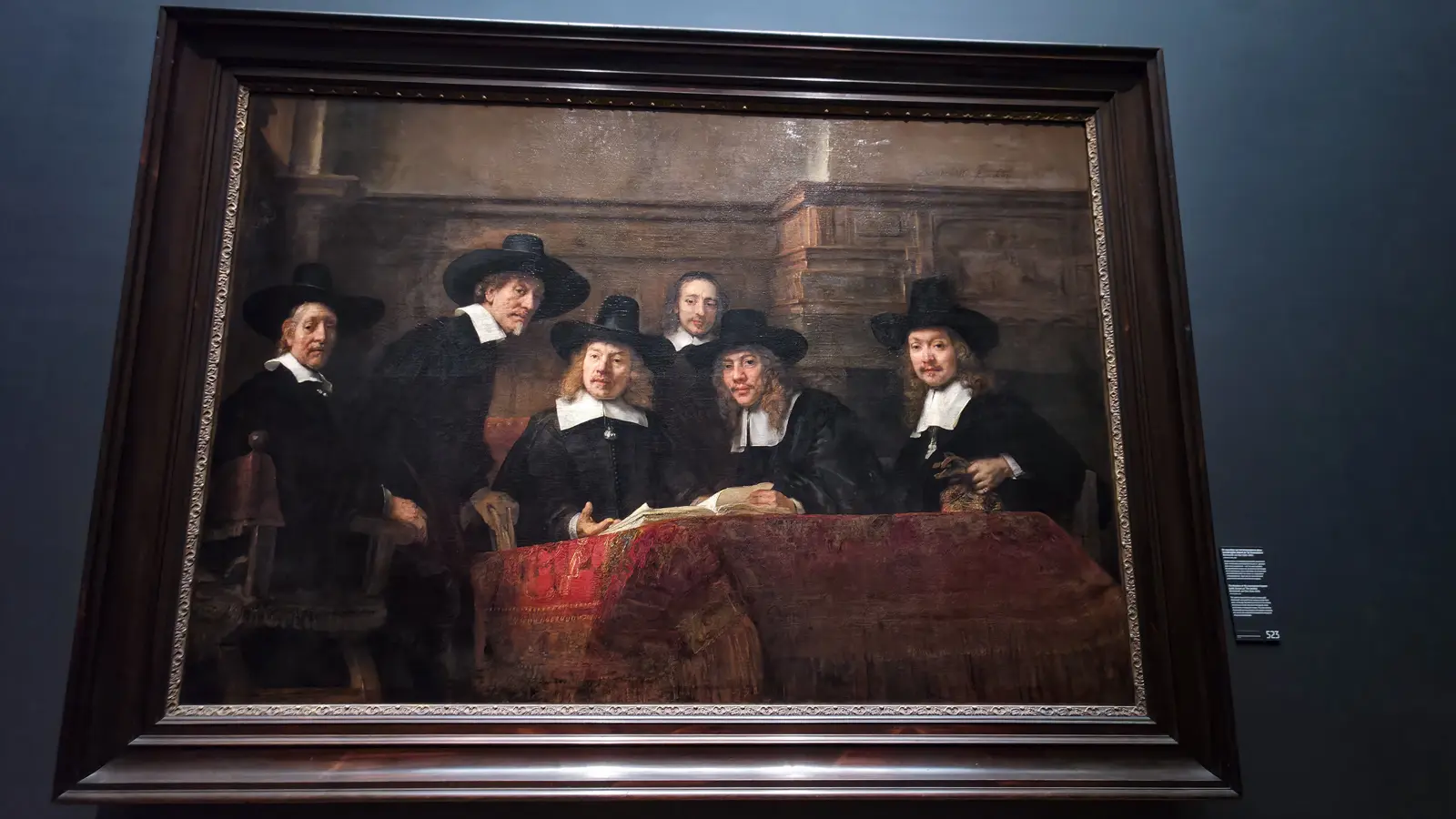
Then the Syndics, the group portrait with the biggest crowd when we reached it. Five men in black hats sit around a table draped in a red rug and look straight out at the viewer, as if we had just opened the door and interrupted their meeting. That trick is a large part of its fame. The other part is the cigar box: these are the faces on Dutch Masters cigars.
Two More Worth Finding
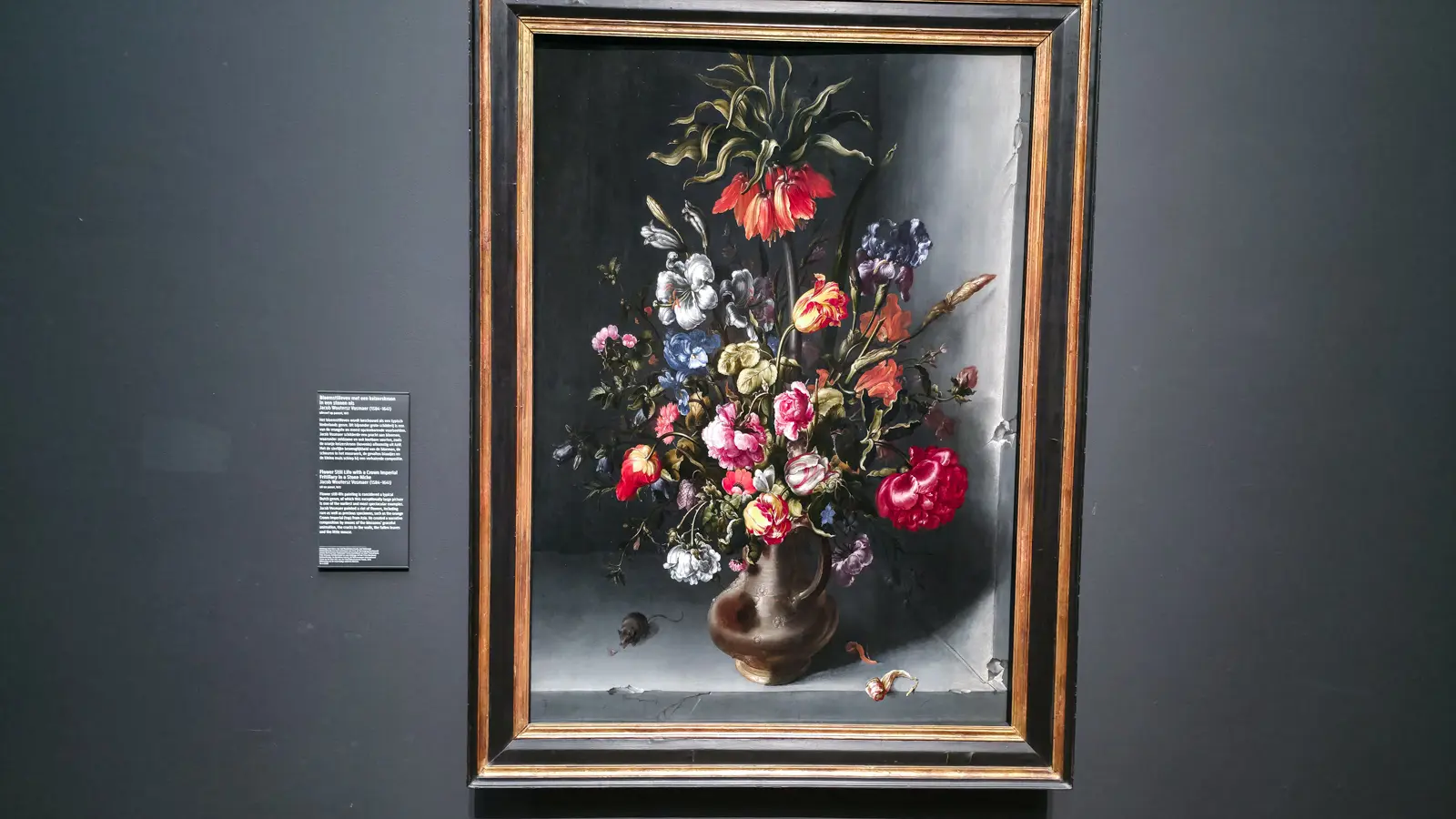
Jacob Vosmaer’s Flower Still Life from 1613 is one of the earliest large Dutch flower paintings. An orange crown imperial, a flower from Asia, towers over tulips and irises in a stone niche. At the foot of the niche, near the vase, sits a little mouse. Find the mouse.
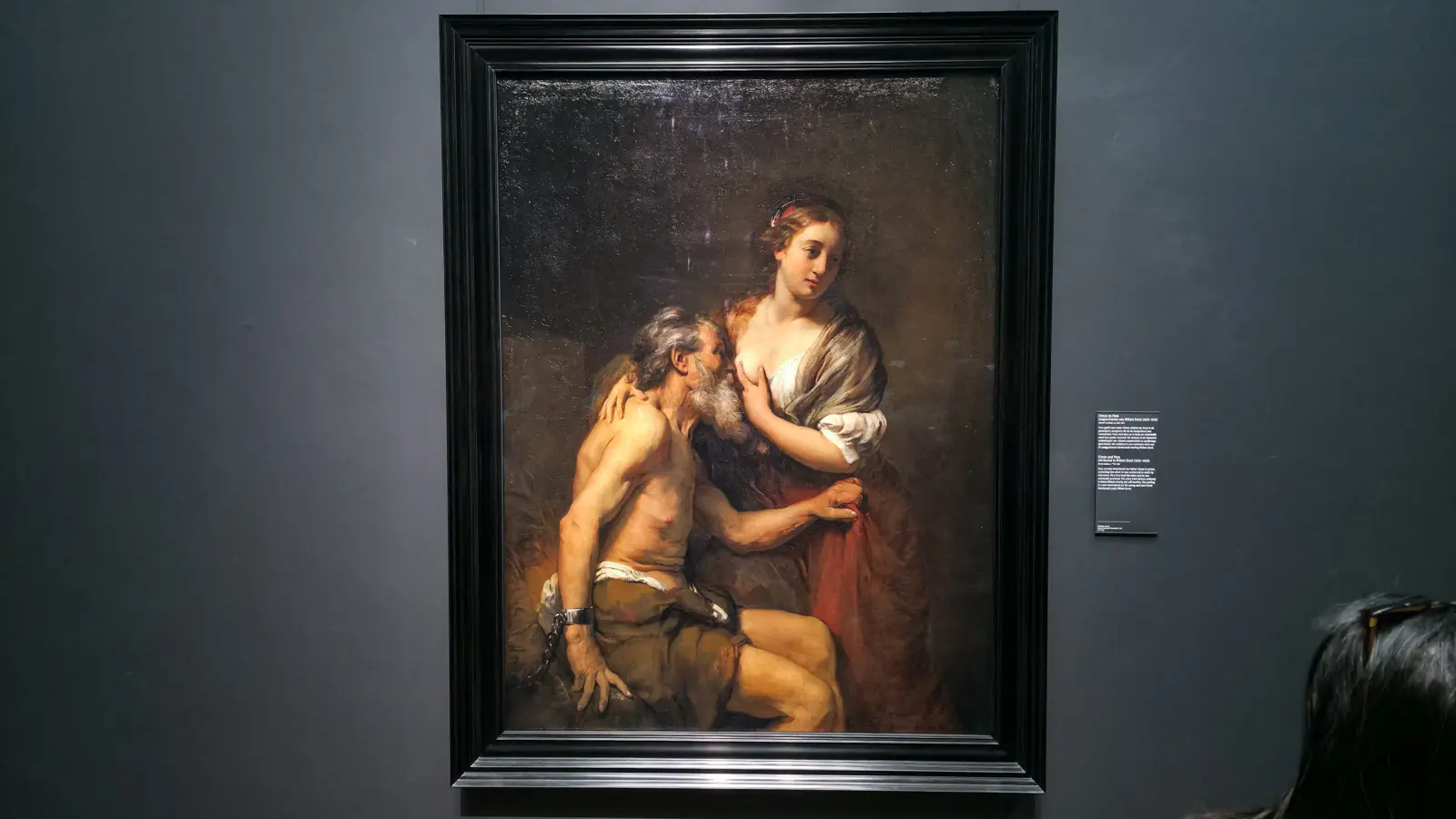
Cimon and Pero is the painting in the gallery most likely to draw mixed reactions. A young woman is breastfeeding an old man in chains. The story comes from the Roman writer Valerius Maximus. Cimon was sentenced to death by starvation, and his daughter Pero kept him alive by secretly feeding him when she visited him in prison. For centuries it stood as an image of a child’s devotion to a parent, known as Caritas Romana, or Roman Charity.
Bubbly Tips
- Go early. The Gallery of Honour is at its busiest from late morning into the afternoon, so an early time slot gives you the best chance of space in front of the paintings.
- Book your Rijksmuseum slot online. Every visit needs a booked start time, and the limited tickets at the entrance go while stocks last.
- See the Vermeers first. Tour groups converge on the same paintings, so get to the Vermeers before the groups do.
- Get close. The Milkmaid is only 45.5 by 41 centimetres, and the dots of light only show up close.
- Stand right beside your guide. A guided tour is worth it if Dutch art is new to you, but in this gallery the noise drowns out anyone more than a step away.
- Use the benches. There are benches in the middle of the bays, and they give you a clear view over the crowd.
- Give it more time than you think. The gallery is a short walk, but between queuing for each painting and waiting for a clear photo, it takes far longer than its length suggests.
Final Thoughts
Between the queues and the tour groups, there was never enough time to stand and stare in the Gallery of Honour. Still, I left having seen my first Vermeers up close, a swan that refused to be elegant, and Rembrandt looking his age.
Those three are the reason to go early and give this gallery the time we could not.
Until next time!

🌟 Everything You Need to Plan Your Dream Trip in 2026
- 🌟 Luxury Hotels - Find premium stays with Booking.com & Hotels.com
- 🏡 Vacation Rentals - Discover unique properties on VRBO
- 🏞️ Guided Tours - Explore with Viator or GetYourGuide
- 🎫 Attraction Tickets - Skip the lines with Tiqets
- 🚢 Ocean Cruises - Set sail with Cruise Direct
- 📱 International SIMs - Stay connected with Saily
- 🚗 Car Rentals - Budget-friendly options from Discover Cars
- 🌐 Secure VPNs - Browse safely with NordVPN
- 💶 Currency Exchange - Best rates with Wise
- 🗣️ Learn Languages - Master the local language with Babbel and Rosetta Stone