
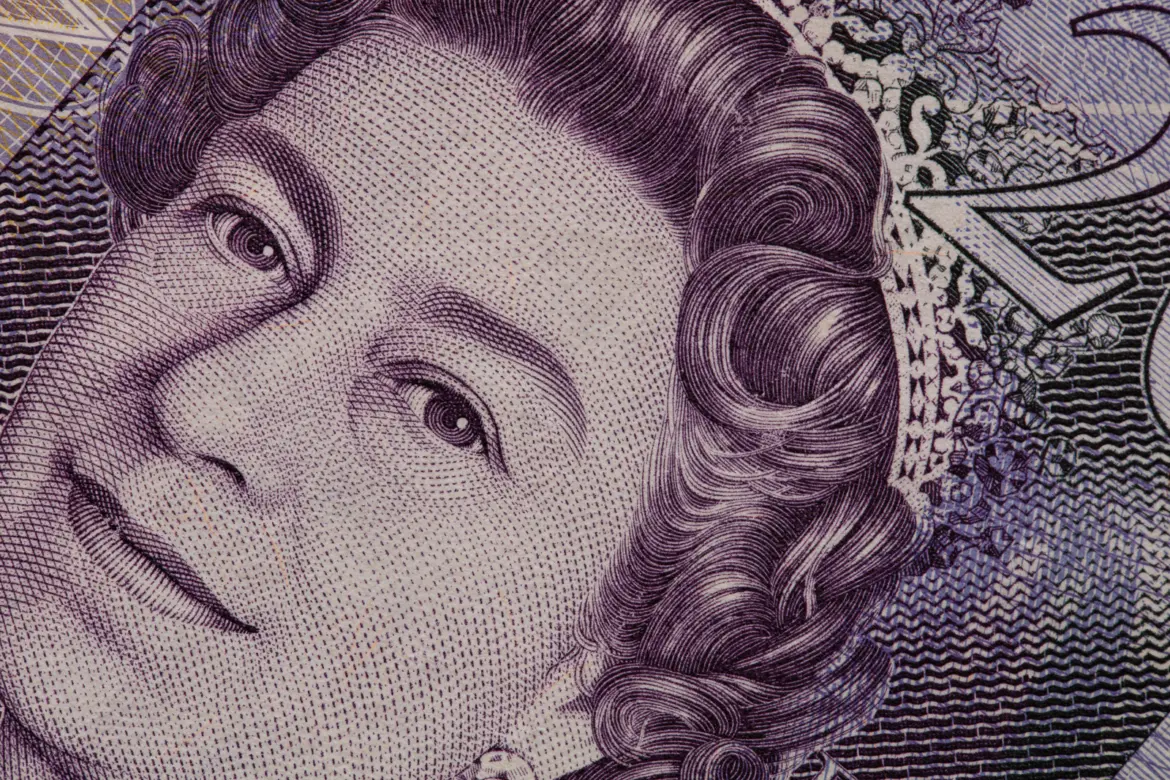
For most of my life, the Queen was in my wallet. I grew up in Canada, where Elizabeth II was head of state, and her face looked out from the twenty-dollar bill and from the coins in my pocket. For almost every Canadian alive today, she was the only monarch we had ever known. That is starting to change. The new King Charles notes are due to reach Canadian wallets in early 2027, so her portrait is only now stepping aside.
So when I am in London, I notice her everywhere. Not the woman herself, but the places that carried her seventy years on the throne. This is a walk through the London and Windsor places that defined her, from the palace balcony to the chapel where she lies.
Seventy years on the throne
She was not born to be queen. Elizabeth was ten when her uncle, Edward VIII, abdicated in 1936 to marry Wallis Simpson, which made her father king and put her first in line. From that day the throne was her future, and she grew up preparing for it.
The war shaped her early. As a teenager she made radio broadcasts to steady other children through the Blitz, and at eighteen she joined the women’s branch of the army and trained as a driver and mechanic. On her twenty-first birthday, in 1947, she broadcast from Cape Town and pledged that her whole life, however long it proved, would be given to service. She was not yet queen. She kept that promise for seventy-five years. It was made to the whole Commonwealth, Canada among them, so in a small way it was a promise to people like me, long before I was born.
She came to the throne in 1952 at twenty-five, on the sudden death of her father, and was crowned the following year. What followed was the longest reign in British history. In 2015 she passed Queen Victoria’s record, and by the end she had worked with fifteen prime ministers, from Churchill to Truss, across a Britain remade many times over.
It was not all smooth. She called 1992 her “annus horribilis”, the year of the Windsor Castle fire and the public collapse of three of her children’s marriages. When Diana died in 1997, the country wanted its grief shown and she was slow to show it, the sharpest criticism she faced. But she tended to absorb the hard years rather than be thrown by them, and the steadiness wore down a great deal of doubt. By the time she told a locked-down country in 2020 that better days would return, that constancy had become the thing people valued most.
Queen Elizabeth II’s London at a Glance
👑 Buckingham Palace · Her London home and the working heart of the monarchy; the balcony for the big national moments. The Royal Standard flies when the sovereign is in.
⛪ Westminster Abbey · The bookends of her life: married here in 1947, crowned in 1953, her funeral here in 2022.
🕊️ St Paul’s Cathedral · Her jubilee thanksgiving services, from the Silver in 1977 to the Platinum in 2022.
🏛️ Westminster Hall · Where she lay in state in 2022, with more than 250,000 people filing past in “The Queue.”
🏰 Windsor Castle · Her weekend home and final main residence; she is buried in St George’s Chapel beside her parents and Philip.
💷 Canada connection · She first appeared on the Canadian twenty-dollar note in 1935, aged eight; the King Charles notes are due in early 2027.
Buckingham Palace, the public heart
Buckingham Palace was her London home and the working centre of the monarchy. It is where the family gathers on the balcony for the big national moments, where the jubilee crowds filled the forecourt, and where the flag still tells you whether the sovereign is in. When the Royal Standard flies, the King is home. When the plain Union flag flies instead, he is away. I always look up to check, a habit left over from her reign, when I would scan the roofline half hoping the Queen was somewhere behind those windows.
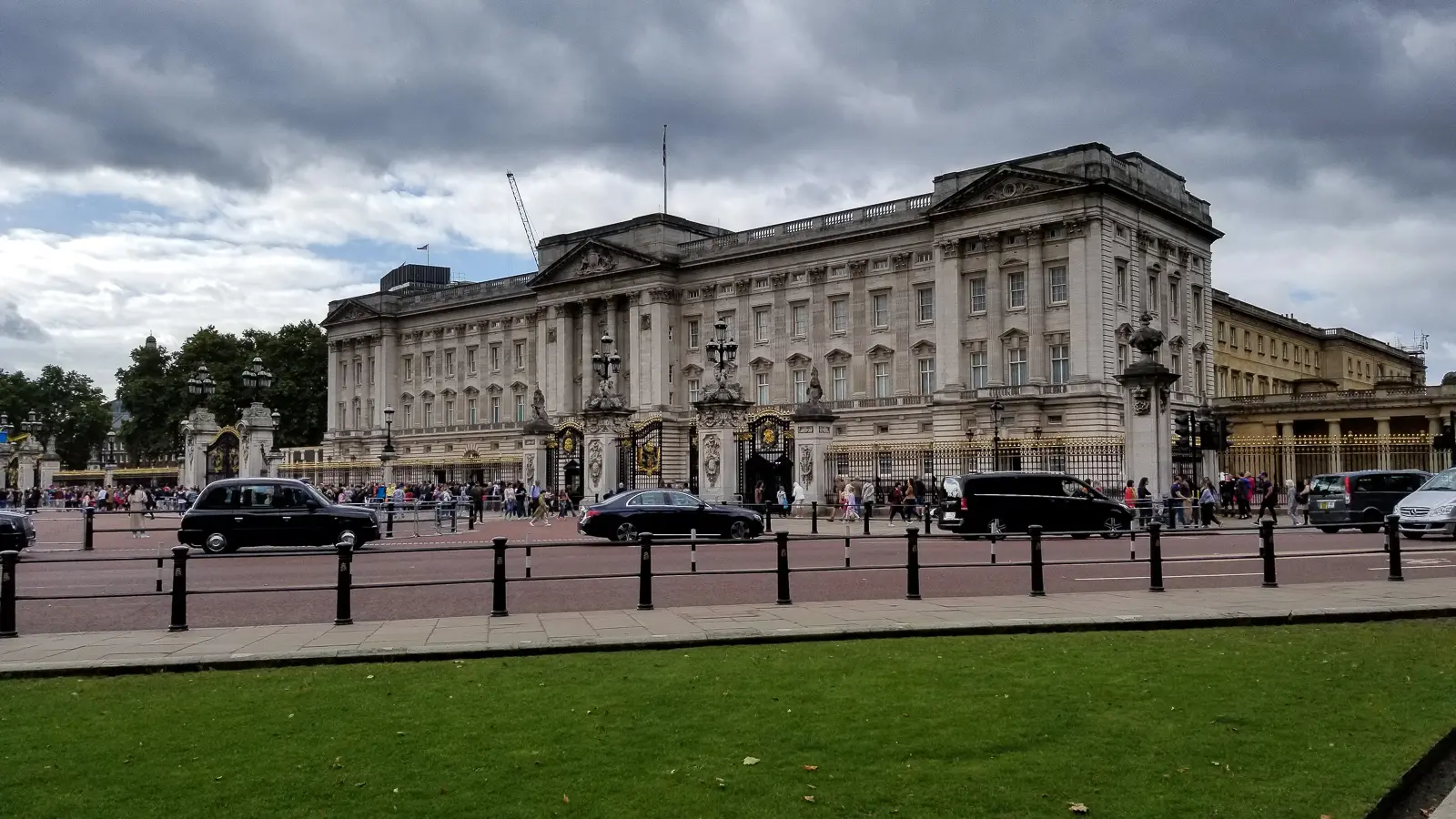
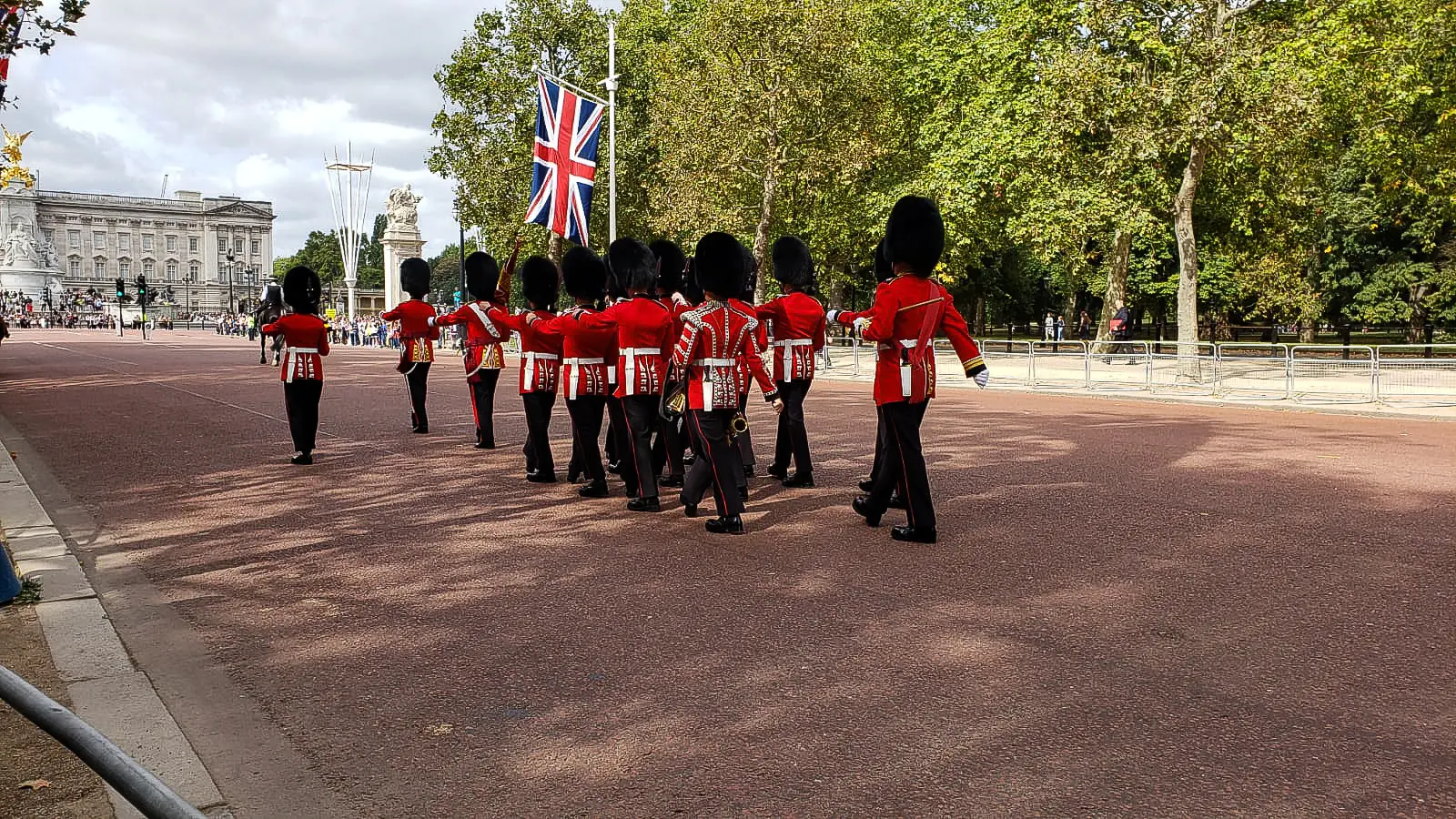
The pull of the place is the ceremony around it. The guards in red, the bearskins, the band coming down the Mall, the whole careful machine of it. It takes me straight back to the late Queen, and now to the King. There is a formality here, and a tradition, that is as much a part of London as the river.
Westminster Abbey, the bookends
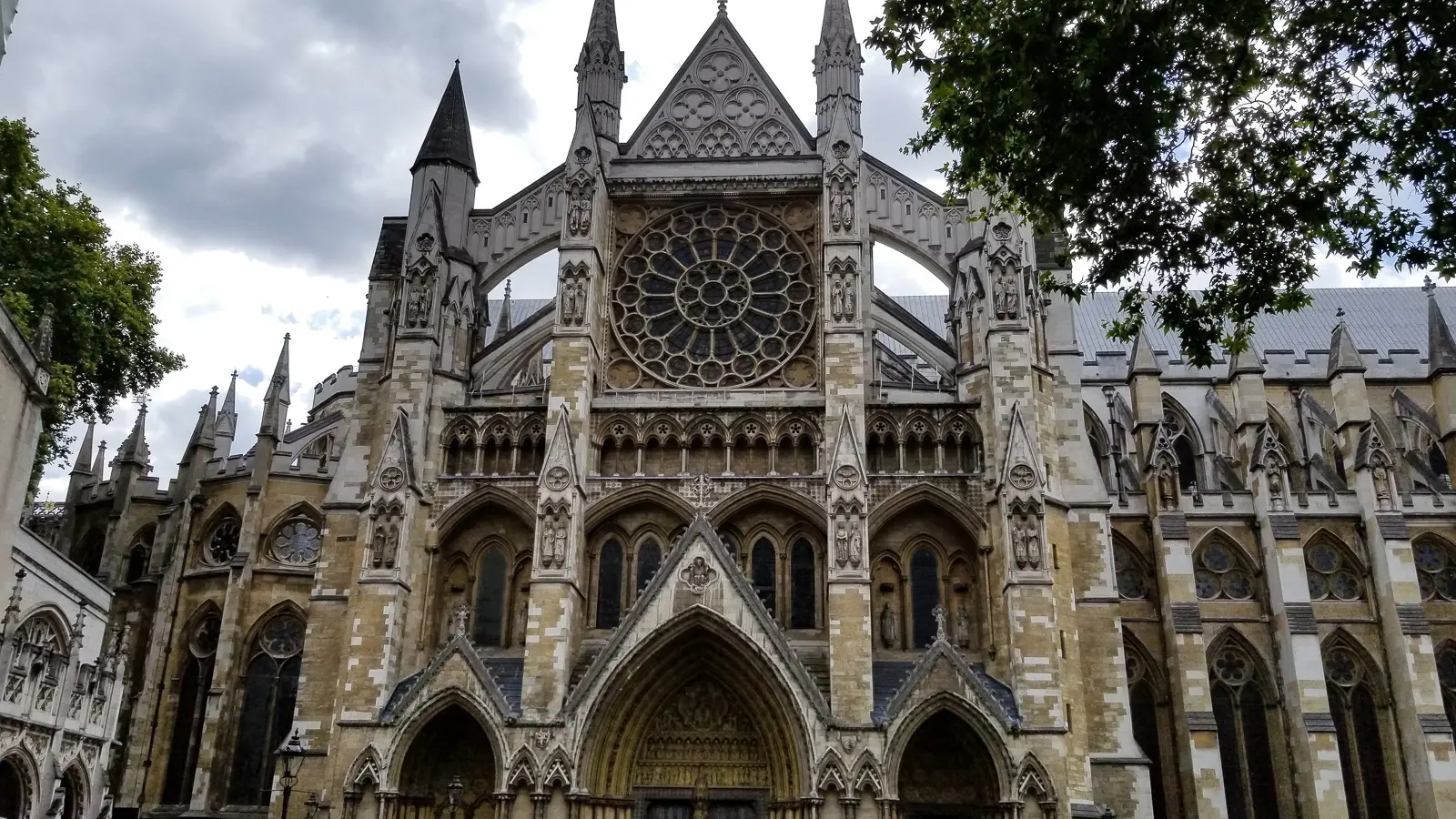
If one building holds her whole life, it is Westminster Abbey. She was married here to Philip in 1947, crowned here in 1953, and her funeral was held here in 2022. Three of the days that defined her, all under the same roof.
The Abbey has been the coronation church of England’s monarchs since 1066, so to stand in front of it is to stand in front of a thousand years of these moments, the crownings, the weddings and the state funerals, one after another. I never walk past it quickly.
Ceremonial London, the public life
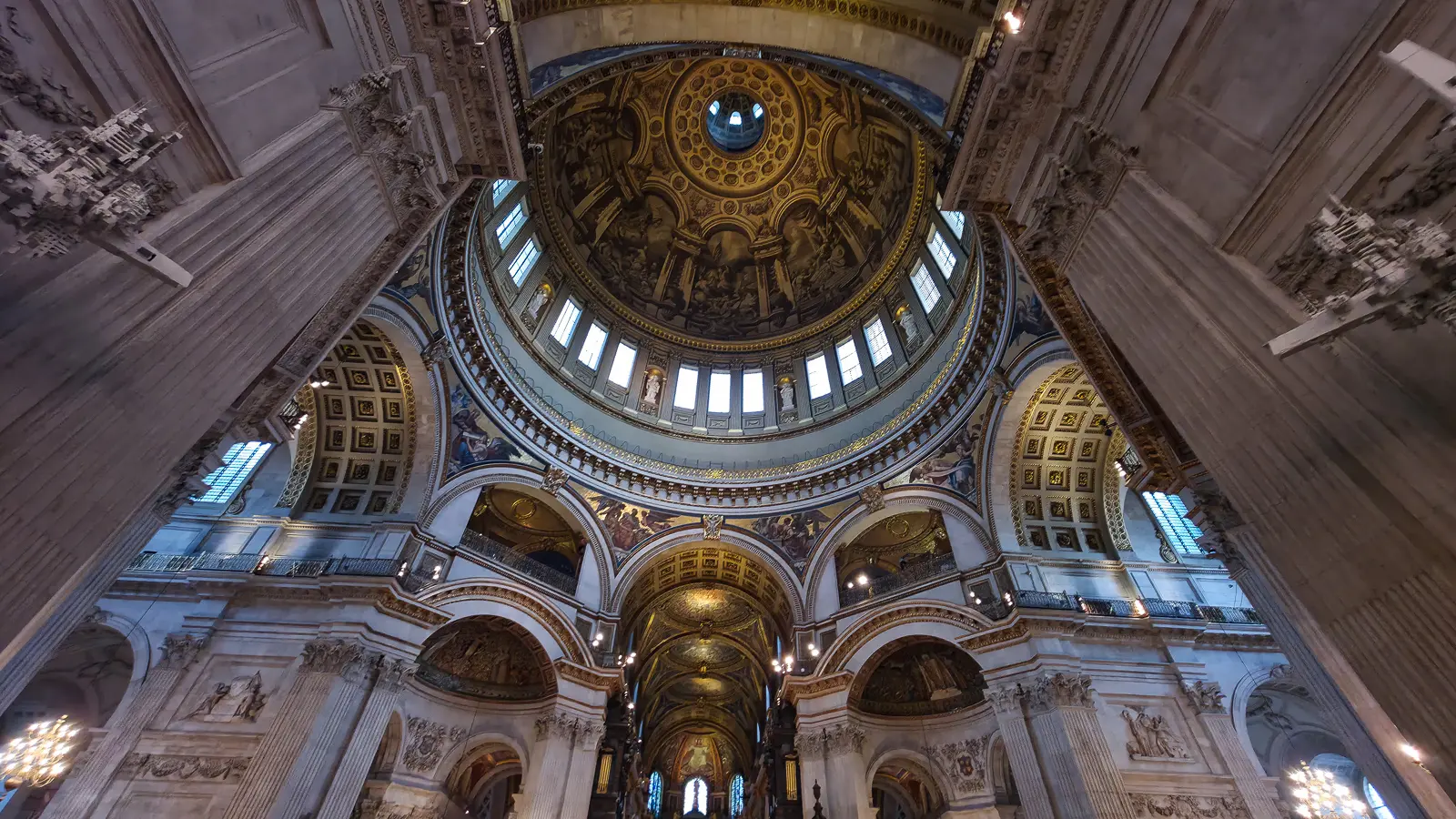
Away from the palace, her public life played out across a handful of ceremonial landmarks. The grandest is St Paul’s Cathedral. Her jubilee thanksgiving services were held here, from the Silver in 1977 to the Platinum in 2022, the national celebrations that marked each stretch of the reign. A church has stood on this hilltop since 604, but the domed cathedral you see now is Sir Christopher Wren’s, finished in 1711 after the Great Fire destroyed the old one. I always end up under the dome with my head tipped back. It is that kind of building.
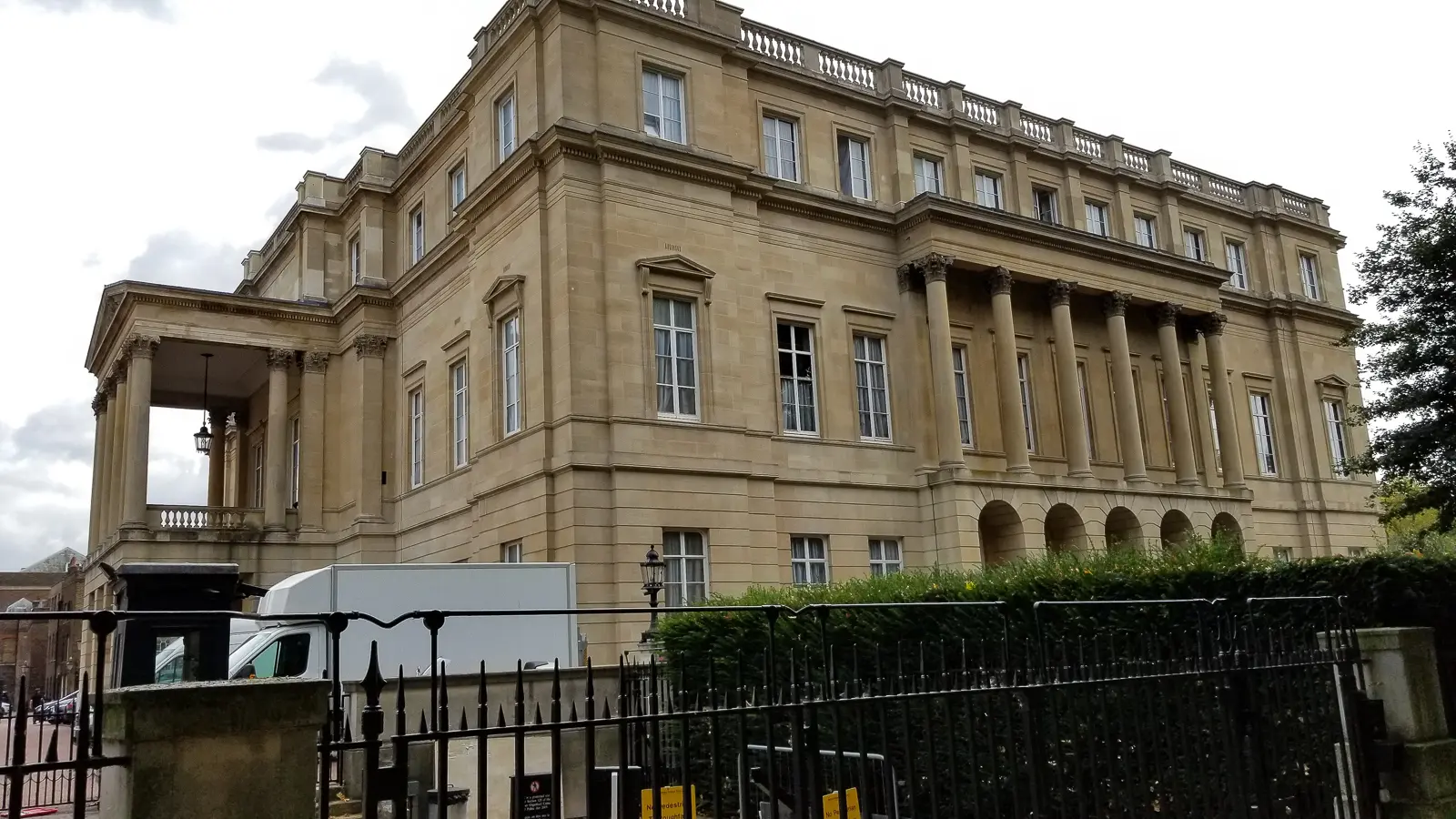
A short walk away is Clarence House, a quieter royal address. I saw it on a tour, from the outside, while Charles and Camilla were living there and the Queen was still on the throne. I remember standing at the railings trying to get a clean photo past the security post, which was half the fun. It was Princess Elizabeth’s first married home with Philip, from 1949 until she became queen in 1952.
Close by sits St James’s Palace, the senior royal palace, where the Accession Council formally proclaimed her queen in 1952, as it later proclaimed Charles. These are not the addresses the crowds head for, but they are where the machinery of the monarchy actually turns.
Westminster Hall, the farewell
The reign ended at Westminster. I never went inside, but like millions of people I watched it on television. After she died in September 2022, Elizabeth II lay in state in Westminster Hall, her coffin raised on a catafalque and guarded around the clock. Outside, the public formed a line that ran for miles along the Thames and took many hours to reach the hall. People queued through the night to file past in silence. It became known simply as The Queue, and more than 250,000 of them reached the hall.
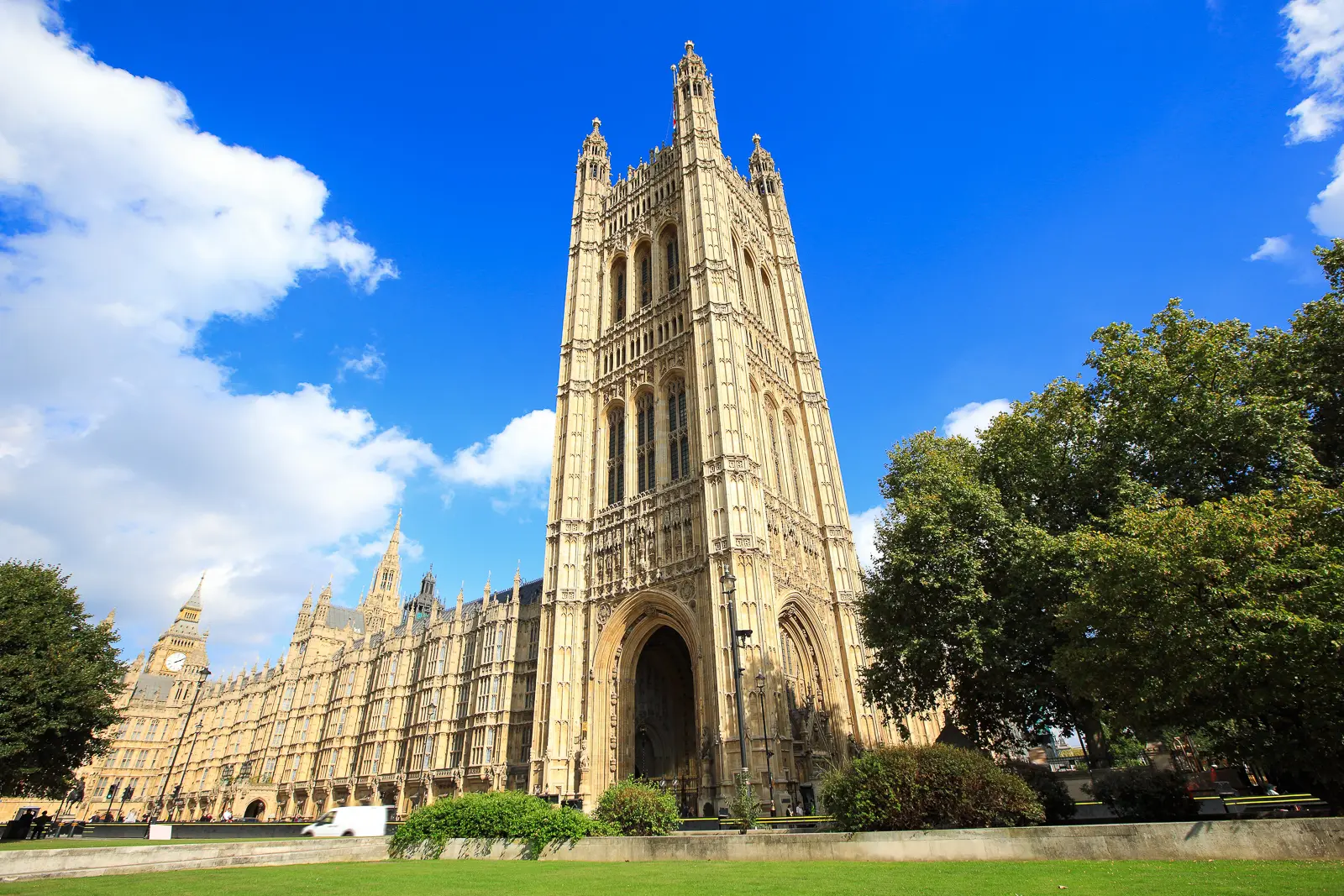
What gave the sight its weight was the room itself. Westminster Hall has stood since 1097, and for centuries it was the stage for the country’s biggest moments. Coronation banquets were held here for newly crowned monarchs, the last of them for George IV in 1821. So were the great state trials, Sir Thomas More, Guy Fawkes, and Charles I, who was condemned to death in the hall in 1649. To see the Queen lying in that same space, under the same medieval roof, was to watch more than nine hundred years of history close a circle.
Windsor, home and resting place
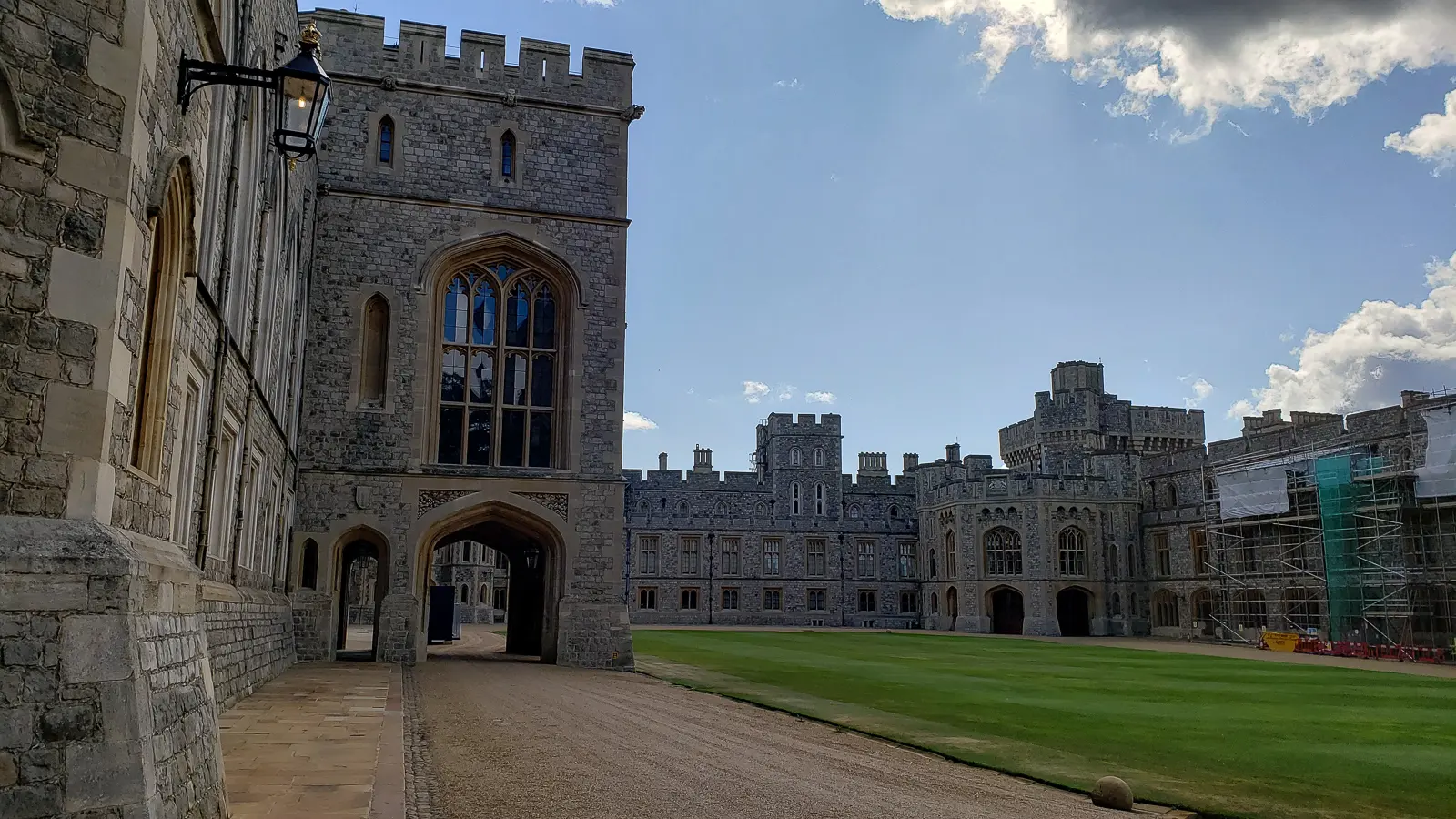
Windsor Castle is where it ends, and where she was perhaps most herself. It was her weekend home and her refuge, and it is where she chose to be buried. After her funeral in 2022, she was laid to rest in St George’s Chapel, inside the castle walls, beside her parents and her husband Philip.
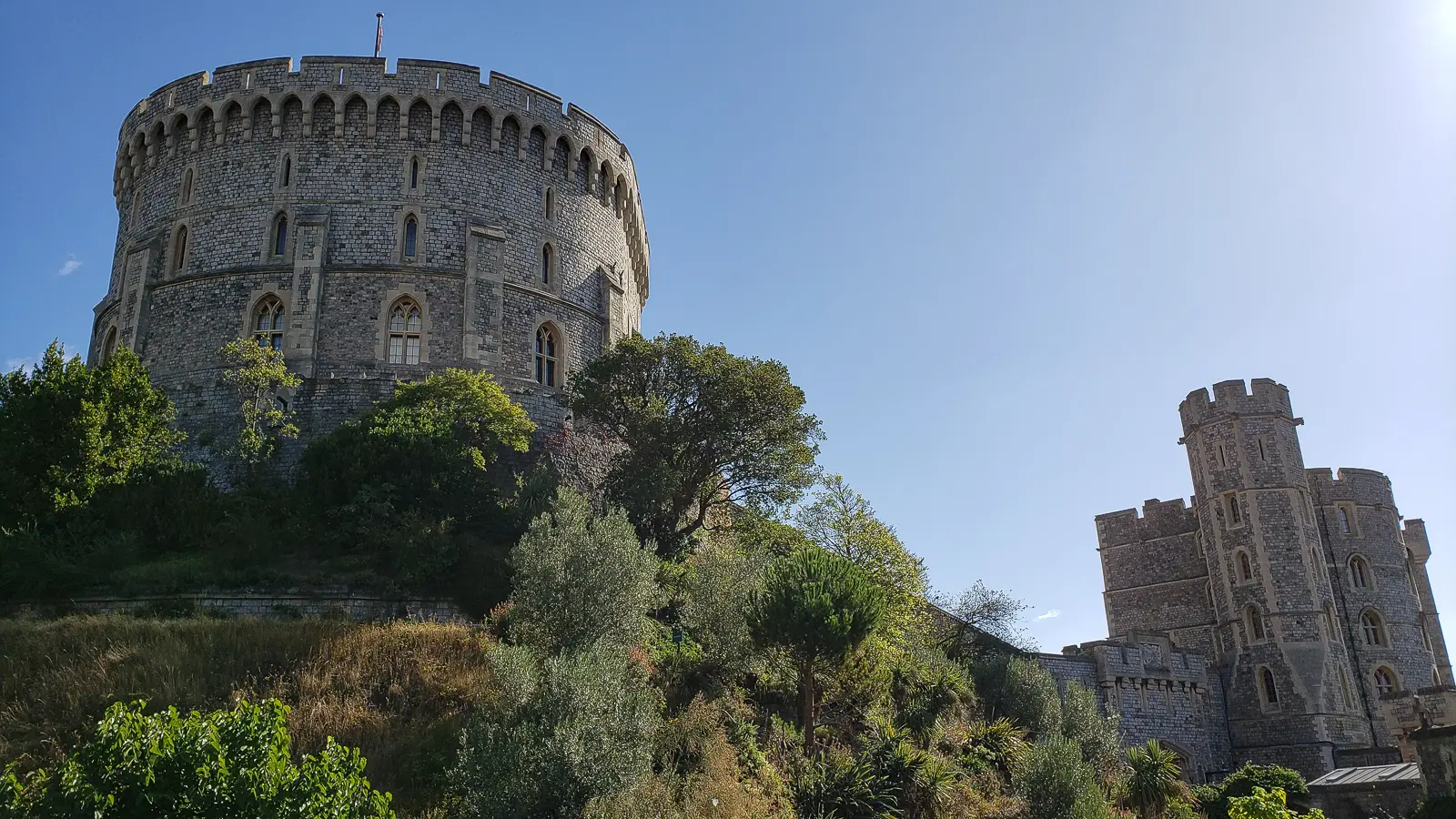
It is the oldest and largest occupied castle in the world, begun by William the Conqueror, and the round keep on its mound has watched over nearly a thousand years of monarchs. When I visited, I caught myself doing what I always do at a royal residence, scanning for a flag, a window, any sign of the family. St George’s Chapel is also where Harry and Meghan married in 2018, one more royal moment in a place full of them.
Bubbly Tips
- Check the flag at Buckingham. The Royal Standard above the palace means the monarch is in residence; the plain Union flag means they are away. It is the quickest royal fact to teach the kids.
- Time the guards. The Changing of the Guard does not run every day and the crowds build fast, so check the schedule and arrive early if you want a spot at the railings.
- Book the big three ahead. Westminster Abbey, Windsor Castle and St Paul’s are all ticketed and all get busy, so buy timed tickets before you go rather than queuing on the day.
- Treat St James’s and Clarence House as exteriors. You cannot go inside either, so build them into a walk between the Mall and St James’s rather than planning a visit.
- Look up inside St Paul’s. The dome is the whole point, and if your knees are willing there is a climb to the upper galleries for views back down and out over the City.
- Do the Westminster sites in one loop. The Abbey, Westminster Hall and the Houses of Parliament sit within a few minutes of each other, so see them on a single walk.
- Walk the Long Walk at Windsor. It is free, and it is the long tree-lined approach the Queen’s funeral procession travelled up to the castle.
- Check photography rules at each site. Interior policies differ from place to place and change over time, so look for the current signage before you lift your phone.
Final Thoughts
Seven decades is a long time to be a fixed point, and that steadiness is what I think of when I see these places.
Back home the change is quieter, but it is real. The twenty-dollar bill in my wallet still carries her face, but the King Charles notes are coming, and one day soon she will have stepped out of Canadian pockets for good. For now she is still there, the way she has been my whole life. These London places will hold her far longer.
Until next time!

🌟 Everything You Need to Plan Your Dream Trip in 2026
- 🌟 Luxury Hotels - Find premium stays with Booking.com & Hotels.com
- 🏡 Vacation Rentals - Discover unique properties on VRBO
- 🏞️ Guided Tours - Explore with Viator or GetYourGuide
- 🎫 Attraction Tickets - Skip the lines with Tiqets
- 🚢 Ocean Cruises - Set sail with Cruise Direct
- 📱 International SIMs - Stay connected with Saily
- 🚗 Car Rentals - Budget-friendly options from Discover Cars
- 🌐 Secure VPNs - Browse safely with NordVPN
- 💶 Currency Exchange - Best rates with Wise
- 🗣️ Learn Languages - Master the local language with Babbel and Rosetta Stone