
London is a city that could fill a lifetime and still hold more. And yet some of my favourite days there were the ones I spent leaving it. There is a particular pleasure in an early train out of the city, the streets giving way to fields through the window, being somewhere completely different by mid-morning and home again for dinner, as though the day had stretched far longer than it really did.
These are the three day trips I have taken so far, each one written from my own visit and shot with my own camera: Windsor, Stonehenge and Bath. A castle, a circle of standing stones and a Roman spa, three different worlds within easy reach of the capital, and every one worth the early start. I have written all three up in full elsewhere on the blog, so this is the shorter map that ties them together. There are more I want to do, and I will add them here as I go.
Day Trips from London at a Glance
🏰 Windsor Castle · The oldest and largest occupied castle in the world, about 30 minutes west by train. St George’s Chapel, the Round Tower, and around a thousand years of royal history.
🗿 Stonehenge · A 4,500-year-old stone circle on Salisbury Plain, about 90 miles west, roughly two hours each way. Often paired with Bath on a coach tour.
♨️ Bath and the Roman Baths · A Roman spa from around 70 AD, still fed by its hot spring, about 90 minutes by train from Paddington.
🚆 Getting there · All three work by train or organised coach. Stonehenge and Bath sit on the same route west and make the classic combined day.
💡 Tip · Book timed tickets before you travel. All three use timed entry and sell out in summer.
Windsor Castle
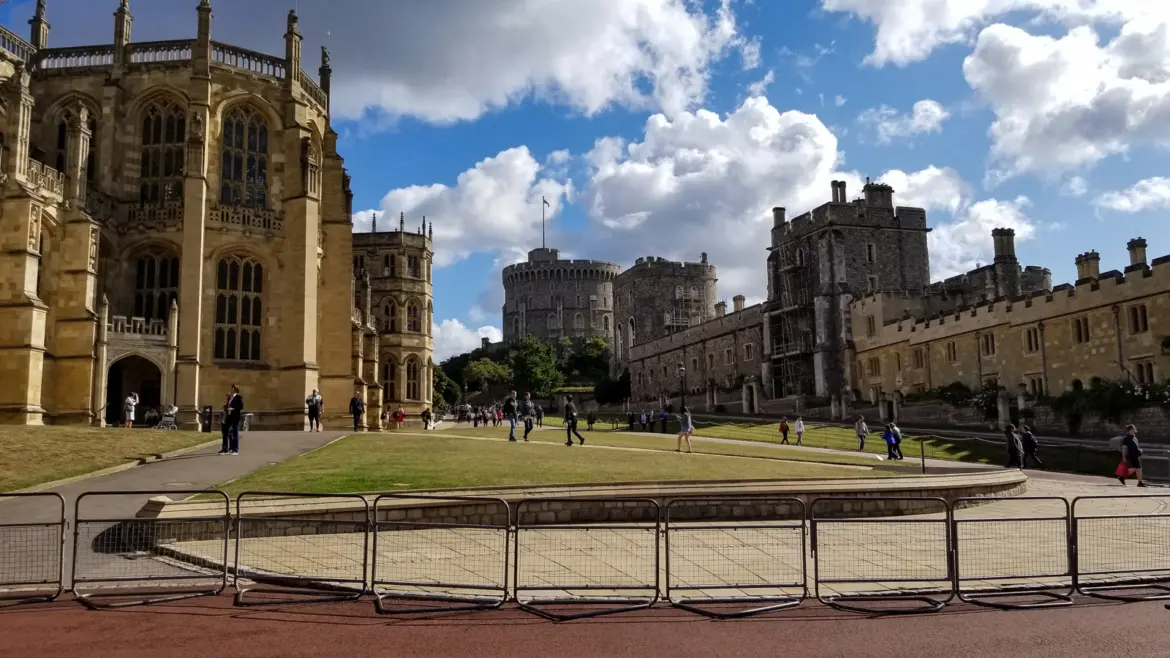
Windsor was the one that caught me off guard. I went expecting a grand day out and came away a little stunned by the sheer depth of it all. I walked the same wards the court has used for nearly a thousand years, past a chapel where Henry VIII and Elizabeth II both lie, in a town quiet enough that I kept forgetting the capital was half an hour away.
William the Conqueror raised the first castle here around 1070, one of a ring of forts built roughly a day’s march apart to guard the approaches to London. His timber motte and bailey was rebuilt in stone under Henry II a century later, and nearly every monarch since has added to it, which is how it grew into what is now the oldest and largest occupied castle in the world. Around 40 kings and queens have called it home.
The castle climbs its ridge in three wards, and the route runs up through all of them, from St George’s Chapel at the bottom to the State Apartments at the grand end. The chapel alone is worth the trip: a high point of Perpendicular Gothic, and the home of the Order of the Garter, the oldest order of chivalry in Britain, founded by Edward III in 1348. A fire tore through the State Apartments in 1992, and the repairs took five years, so part of what stands today is careful reconstruction. Photography is allowed outside in the precincts and gardens but not indoors, so I saved my shots for the towers and the long green views.
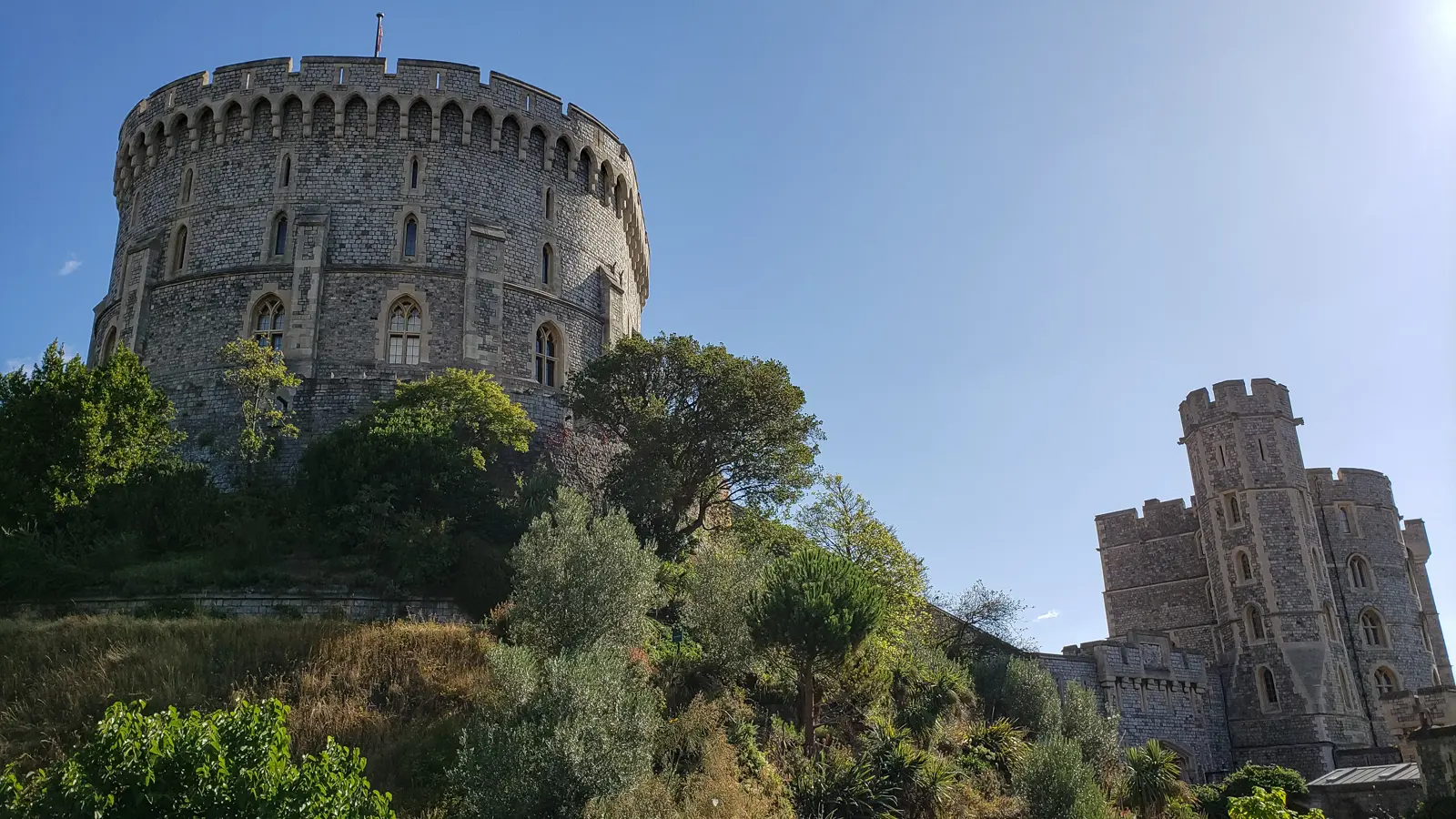
Getting there is half the appeal. Trains from Paddington, changing at Slough, or direct from Waterloo, reach Windsor in about thirty minutes to an hour and arrive minutes from the gates.
Stonehenge
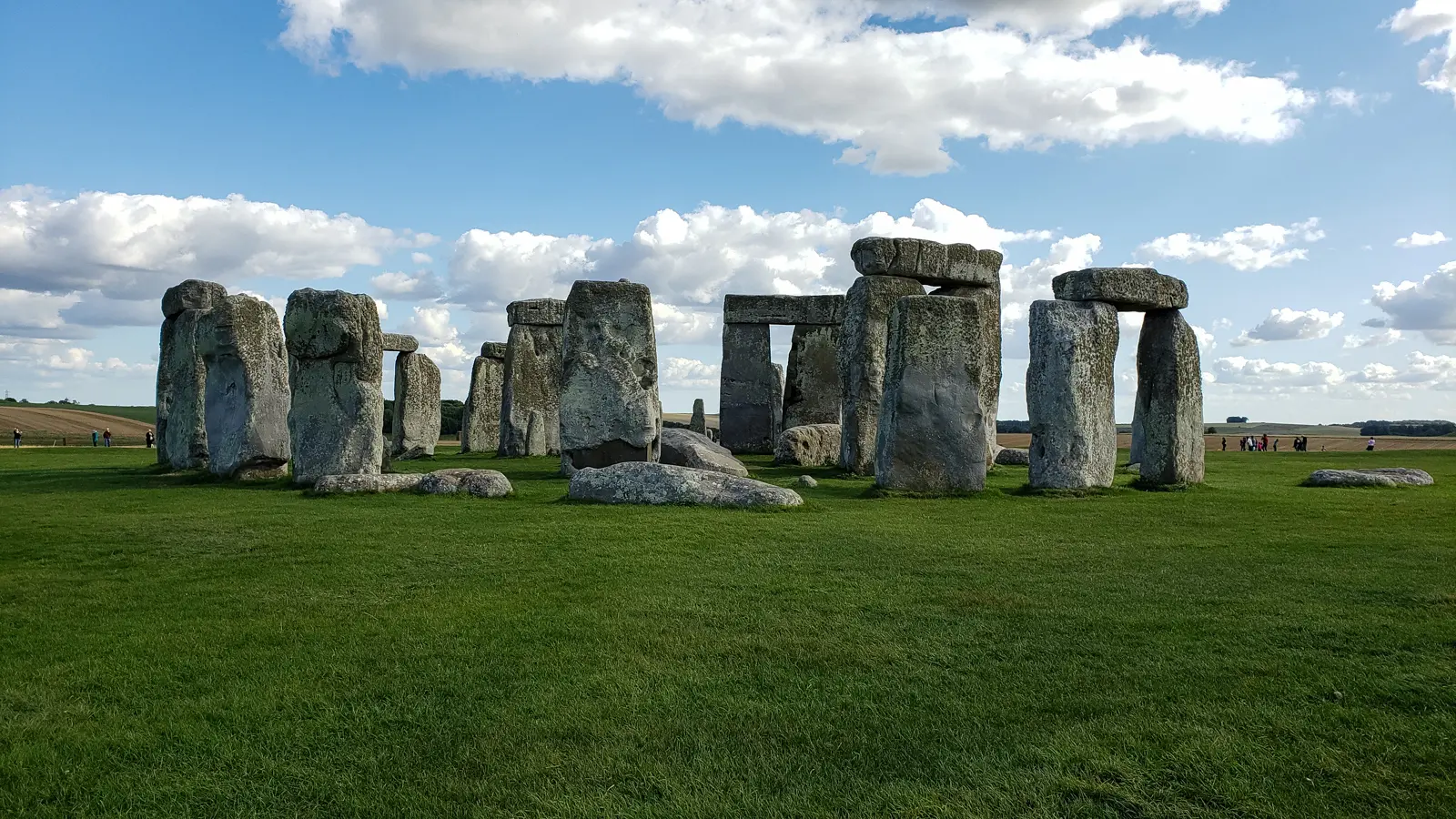
Nothing quite prepared me for standing in the wind on Salisbury Plain, in front of something people raised about 4,500 years ago and still cannot fully explain. Before any of the history sinks in, the honest response is awe. I had seen it in photographs my whole life. In person, on that open plain, it lands differently.
Up close the stones split into two families. The giant uprights are sarsens, a hard local sandstone dragged about 15 miles from the Marlborough Downs, each one needing hundreds of people to move. The smaller inner stones are the bluestones, and those came from the Preseli Hills in west Wales, more than 140 miles away, by a route no one has ever fully worked out. The monument went up in stages across roughly 1,500 years, and its axis is set to the rising sun at midsummer and the setting sun at midwinter, which is why the solstice crowds still gather.
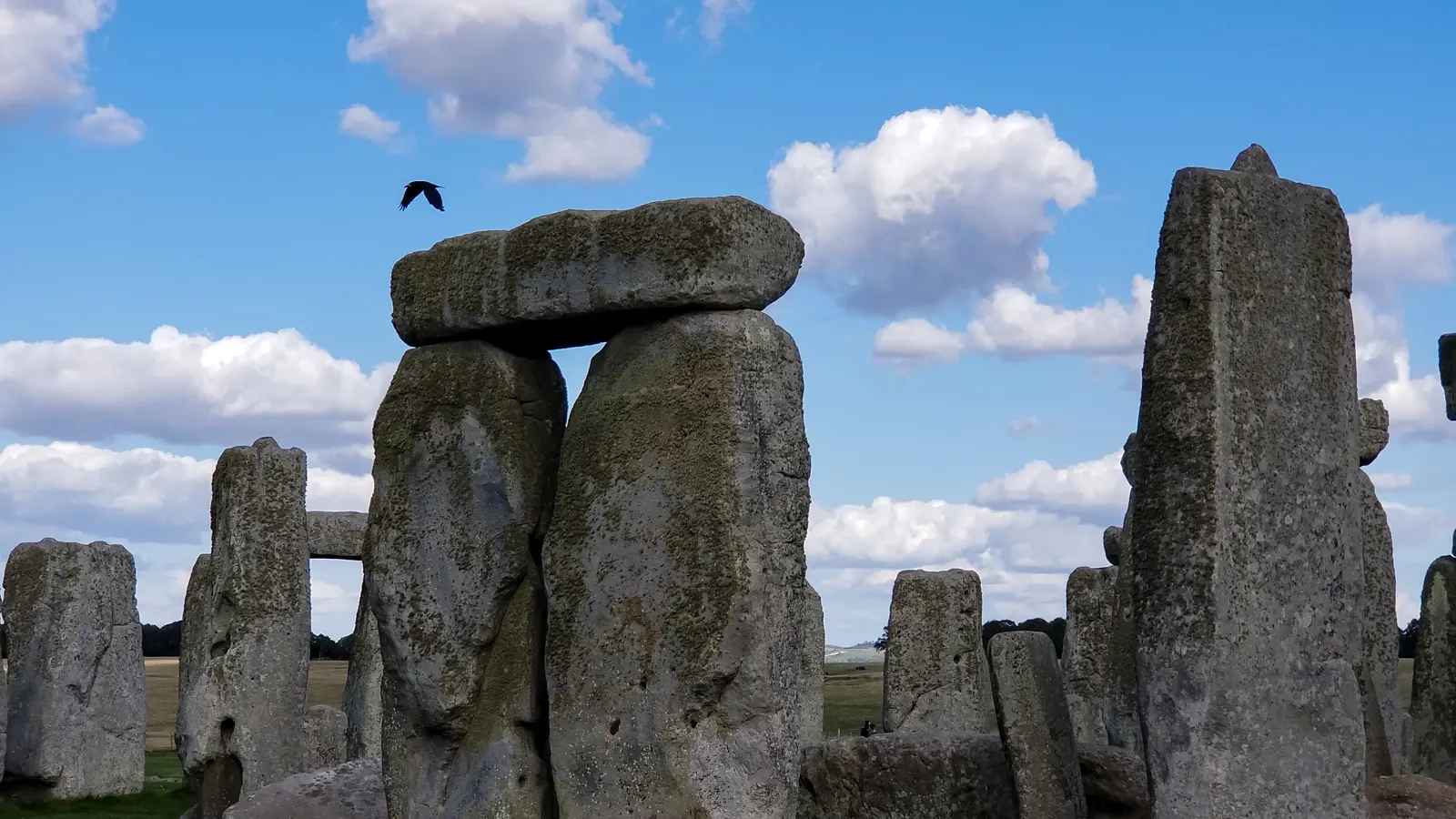
Stonehenge sits about 90 miles west of London and makes a comfortable day trip, roughly two hours each way. Most people come on an organised coach tour, which often pairs the stones with Bath or Windsor, or independently by train from Waterloo to Salisbury and the Stonehenge Tour bus from there. Standard tickets keep visitors on the marked path around the circle. The early-morning and evening slots that let a small group walk in among the stones are booked separately and sell out well ahead.
Bath and the Roman Baths
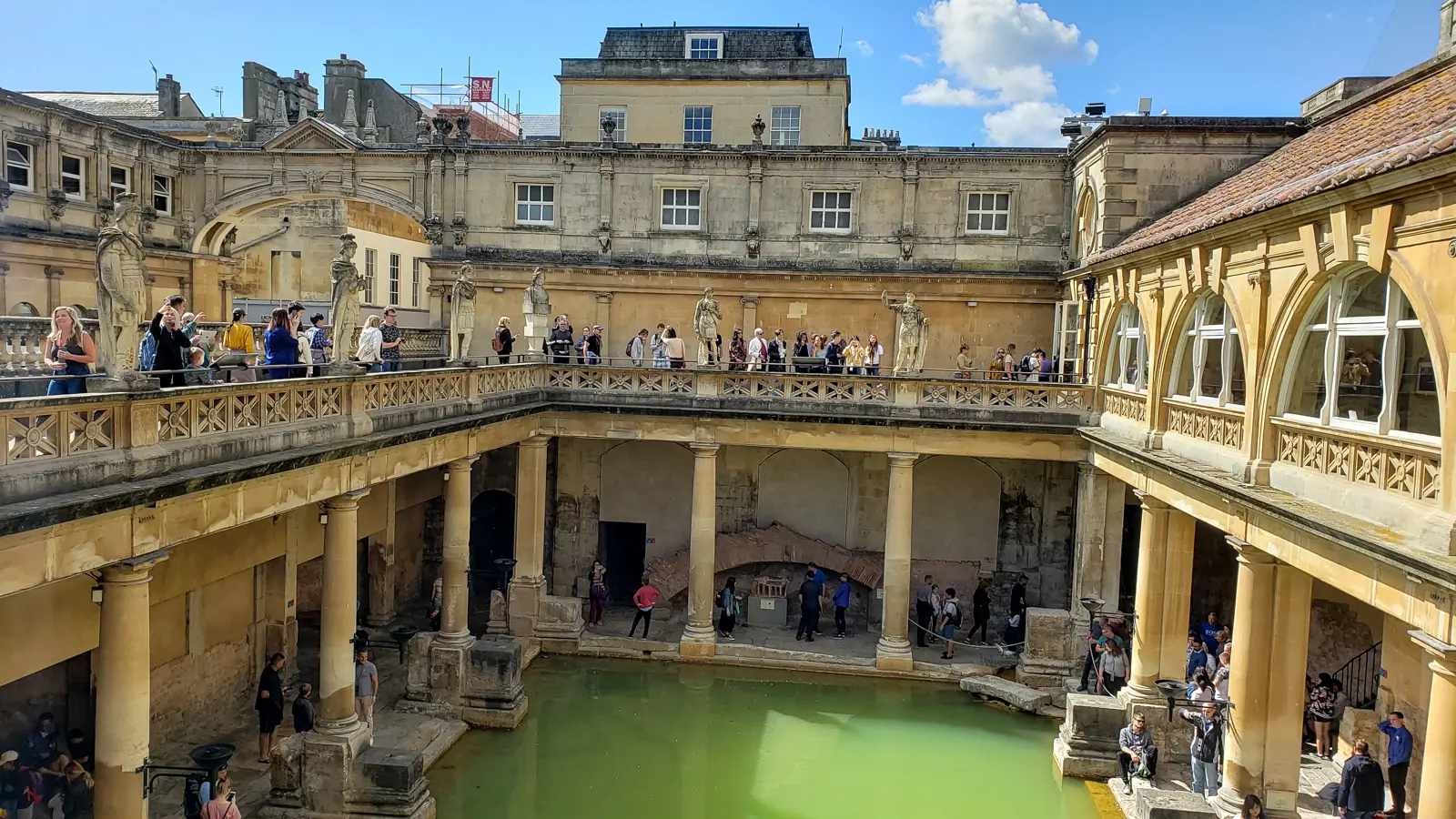
I did not expect Rome to have reached this far. I knew the Romans came to Britain. I had just never pictured them building a spa this far from home, in a quiet green corner of Somerset, and meaning to stay. Around 70 AD they raised a temple to Sulis Minerva beside the hot spring, folding a local Celtic goddess into one of their own, and called the town that grew up around it Aquae Sulis. The Great Bath still holds its green thermal water, open to the sky, fed by a spring that pushes out more than a million litres a day at 46 degrees, exactly as it did two thousand years ago.
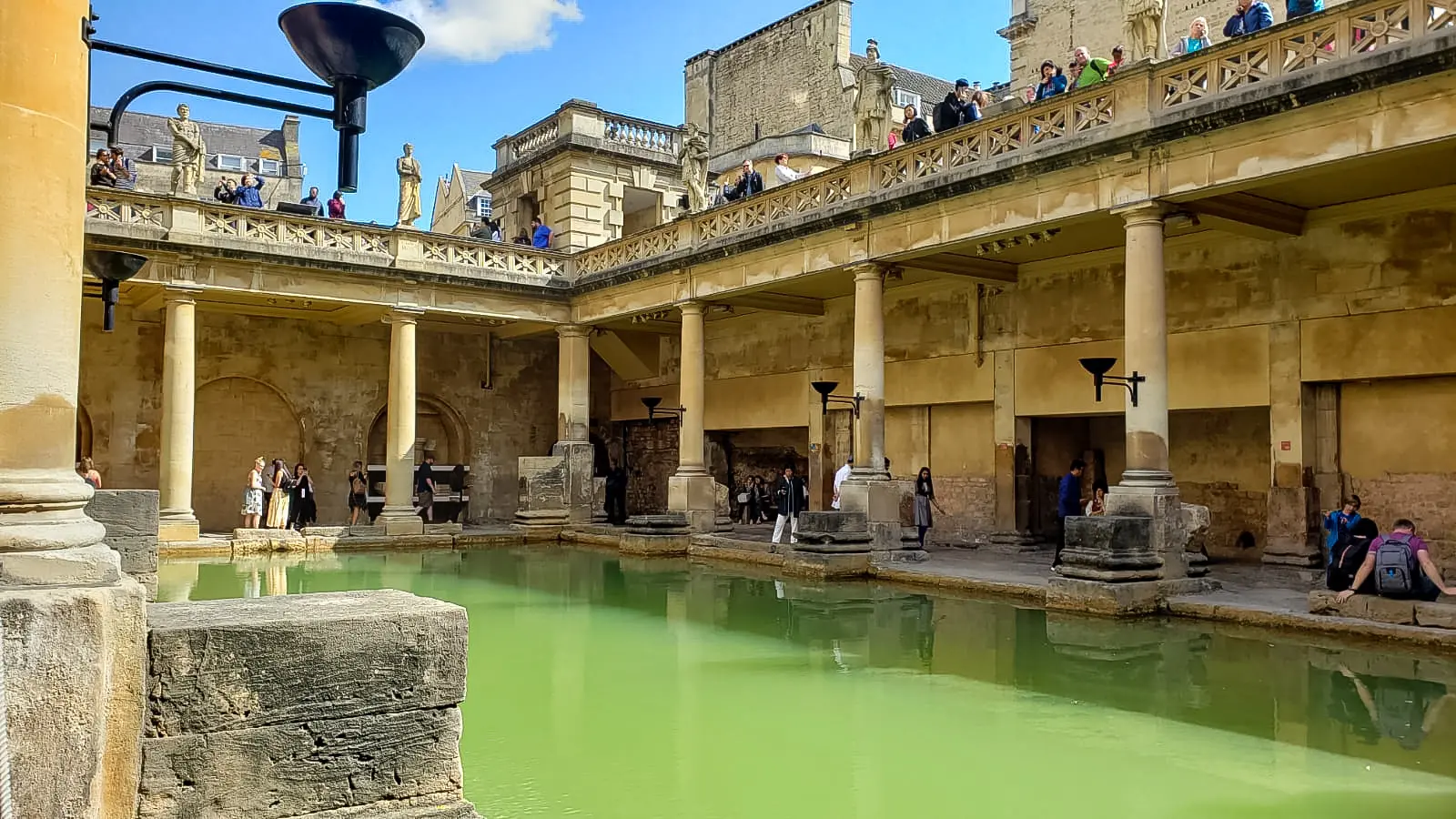
The one catch is that a day trip is for looking, not bathing. The Roman water is out of bounds, so the spring water visitors can actually get into runs through the modern Thermae Bath Spa nearby, which opened in 2006. The mineral water can still be tasted, though, from the fountain in the elegant Georgian Pump Room, which has stood over the spring since 1706. That gap between looking and soaking is exactly why Bath sits at the top of my return list. I want to go back, do the baths properly, and give the town the night or two a single day never allows.
Bath is about an hour and a half from London Paddington by train, with the fastest services doing it in just over an hour and ten.
Still on my list
Three is just the start. There are plenty more day trips I want to make from London, and I will add each one here after I have been, so the whole list stays first-hand.
Oxford and Cambridge are near the top, for their old colleges and the slow pleasure of punting flat boats along the river. The Cotswolds tempt me for a day among honey-coloured stone villages, Canterbury for its cathedral, and Hampton Court for Henry VIII’s palace and its hedge maze. Once I have wandered each with my camera, they will sit alongside Windsor, Stonehenge and Bath.
For now, three good ones make a fine place to begin, and this page will keep growing as I go.
Bubbly Tips
- Book timed tickets before you travel. Windsor, Stonehenge and the Roman Baths all use timed entry, and all three are cheaper booked in advance than on the door. In summer and around the Stonehenge solstices, slots go early, so do not leave it to the morning of.
- Decide between a coach tour and the train. Organised coaches from central London do the driving for you and often pair two sights in a day, usually Stonehenge with Bath or Windsor. Going by train gives you more freedom and time on site, but you plan the connections yourself.
- Pair Stonehenge with Bath if you are short on time. These two sit on the same route west and are the classic combined day out. If you only have one free day and want to bank two icons, this is the pairing to book.
- Check photography rules before you go in. At Windsor you can shoot the grounds but not the State Apartments or St George’s Chapel, phones off included. Stonehenge and the Roman Baths let you photograph freely, so save your battery for those.
- Skip Sunday if the Windsor chapel matters. St George’s Chapel closes to sightseers on Sundays for worship. Go another day if you want to see the fan vaulting and the royal tombs.
- Ask about annual passes. Windsor tickets can usually be converted to a one-year pass for free, and English Heritage membership can pay for itself if Stonehenge is one of several sites on your trip. Ask at the desk before you buy.
- Dress for an exposed site. Salisbury Plain is open and windy in every season, with no shelter at the stones. Layers and comfortable shoes make Windsor’s climbing wards and Bath’s walking easier too.
- Give each one at least half a day. None of these rewards a rushed hour. Between travel, security and the site itself, plan for half a day per trip, and a full day if you like to linger.
- Check current prices on the official sites. Admission and train fares shift by season and by how far ahead you book, so confirm the day’s numbers on English Heritage, the Royal Collection Trust and the Roman Baths sites before you commit.
Final Thoughts
Three day trips, three completely different centuries. A near-thousand-year-old castle, a 4,500-year-old circle of stones, and a Roman spa that has been running for two thousand years. Each one is close enough to London to see between breakfast and dinner, and each one sent me home glad I had made the early start.
If I had to rank them by the jolt they gave me, Stonehenge wins on awe, Windsor on sheer historical weight, and Bath on the surprise of finding Rome in the west of England. But that is splitting hairs. Any of the three makes a better day out than queuing for a fourth London museum.
Until next time!

🌟 Everything You Need to Plan Your Dream Trip in 2026
- 🌟 Luxury Hotels - Find premium stays with Booking.com & Hotels.com
- 🏡 Vacation Rentals - Discover unique properties on VRBO
- 🏞️ Guided Tours - Explore with Viator or GetYourGuide
- 🎫 Attraction Tickets - Skip the lines with Tiqets
- 🚢 Ocean Cruises - Set sail with Cruise Direct
- 📱 International SIMs - Stay connected with Saily
- 🚗 Car Rentals - Budget-friendly options from Discover Cars
- 🌐 Secure VPNs - Browse safely with NordVPN
- 💶 Currency Exchange - Best rates with Wise
- 🗣️ Learn Languages - Master the local language with Babbel and Rosetta Stone