
The first royal I was ever drawn to was not British at all. She was Austrian. On my early trips to Vienna I kept circling back to Empress Elisabeth, the one everyone calls Sisi: the beauty, the famous hair, the dresses, and underneath all of it a restless woman who never quite fit the rigid court she had married into, and who died suddenly and far from home. Years later, reading about Diana, I kept thinking of Sisi. The same magnetism in front of a camera, the same quiet rebellion against the rules, the same enormous public love, and the same abrupt ending.
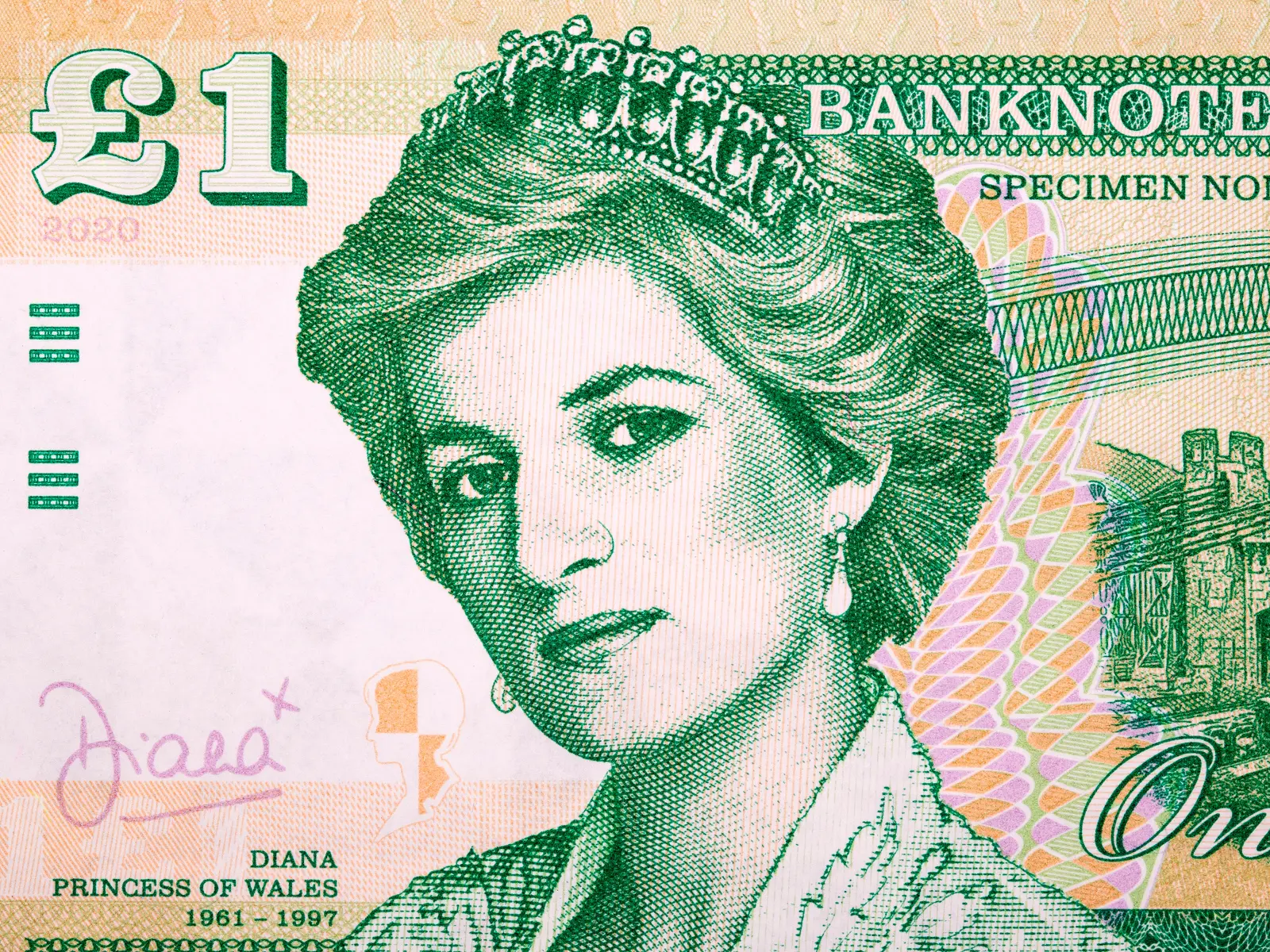
Diana, Princess of Wales, was born in 1961 and died in 1997, at thirty-six. In between she became one of the most photographed women in the world, a status symbol turned campaigner who used her fame to sit with people the rest of the world was frightened of. Her face ended up on everything, from magazine covers to commemorative souvenirs.
She is buried at her family’s estate, Althorp in Northamptonshire, on a small island in a lake that the public cannot reach. So the city that holds her memory is London, where she lived, married, campaigned and was mourned. These are the places that still carry her.
Finding Diana in London at a Glance
📍 Where to start · Kensington Palace, her London home from 1981 to 1997, with her statue in the Sunken Garden.
⛲ The Memorial Fountain · A free oval granite stream in the southwest corner of Hyde Park. You can sit on the rim and cool your feet.
🌹 The Memorial Walk · A seven-mile route through four royal parks, marked by 90 bronze rose plaques.
⛪ Two churches · St Paul’s, where she married in 1981, and Westminster Abbey, where her funeral was held in 1997.
💜 The causes · She opened the UK’s first dedicated HIV and AIDS unit in 1987 and campaigned against landmines in her final year.
🪦 Not in London · She is buried at Althorp in Northamptonshire, on a lake island closed to the public.
🎟️ Tickets · Kensington Palace is ticketed; the fountain, the walk and the parks are free.
Her home: Kensington Palace
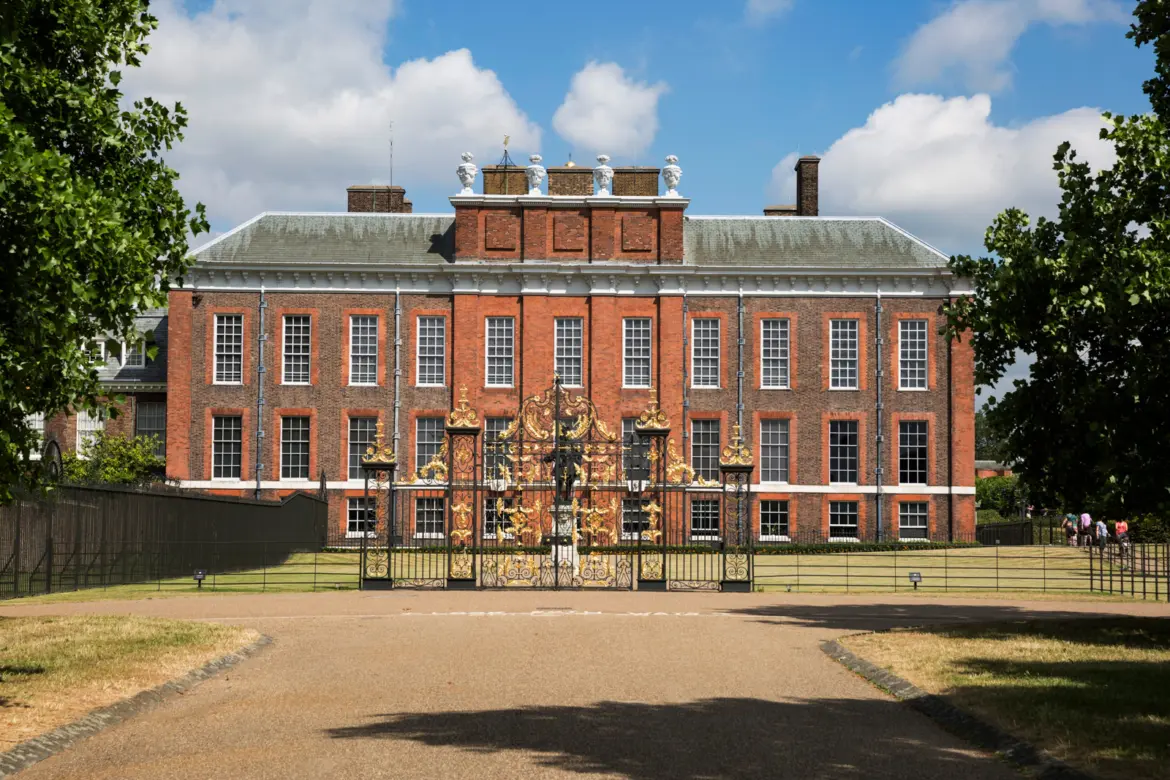
Kensington Palace was Diana’s London home from her marriage in 1981 until her death. She lived in apartments on the western side, and it was to these gates that Londoners came in their thousands in the late summer of 1997, leaving flowers stacked metres deep until the lawns disappeared under cellophane and candle wax. On the morning of the funeral, her coffin left from here.
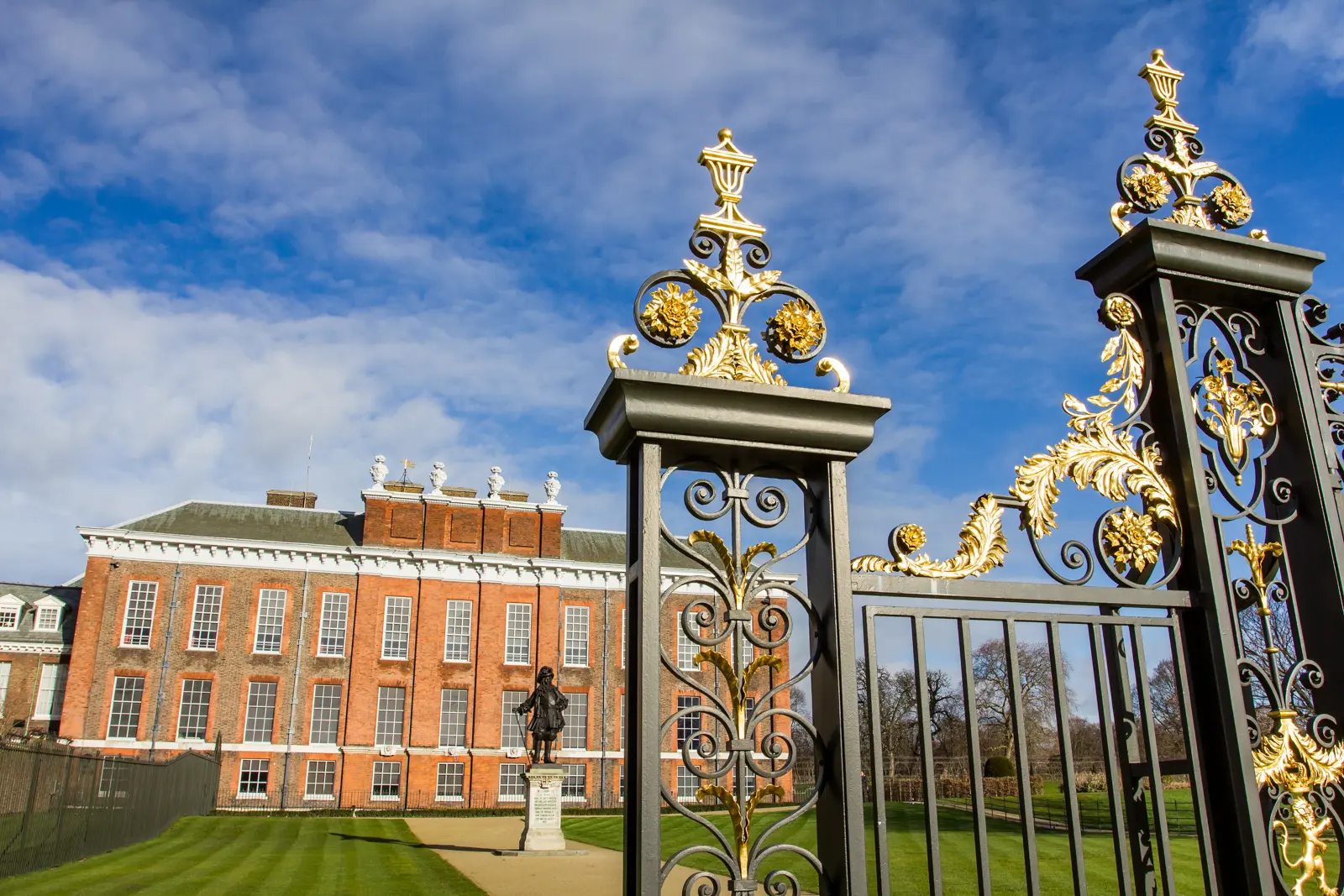
Today the palace is calmer, and the gardens she knew are open to walk. The one space most closely tied to her is the Sunken Garden, a terraced enclosure of lawns, paving and flower beds around a central pond, first laid out in 1908. It was a favourite of hers, and in 2017, to mark twenty years since her death, it was replanted as a temporary White Garden in her honour.
In 2021 it gained something permanent. Her sons, the Princes William and Harry, commissioned a bronze statue of their mother, which was unveiled on 1 July, what would have been her sixtieth birthday. The sculptor Ian Rank-Broadley shows her standing with three children gathered around her, a nod to her work for children around the world. A paving stone in front carries lines from a poem read at her memorial service, asking not what a person’s rank was but whether they had a heart. The garden itself is kept locked, but the statue and the pond are visible through the openings of an arched walk that runs along one side.
A moat without a castle: the Memorial Fountain
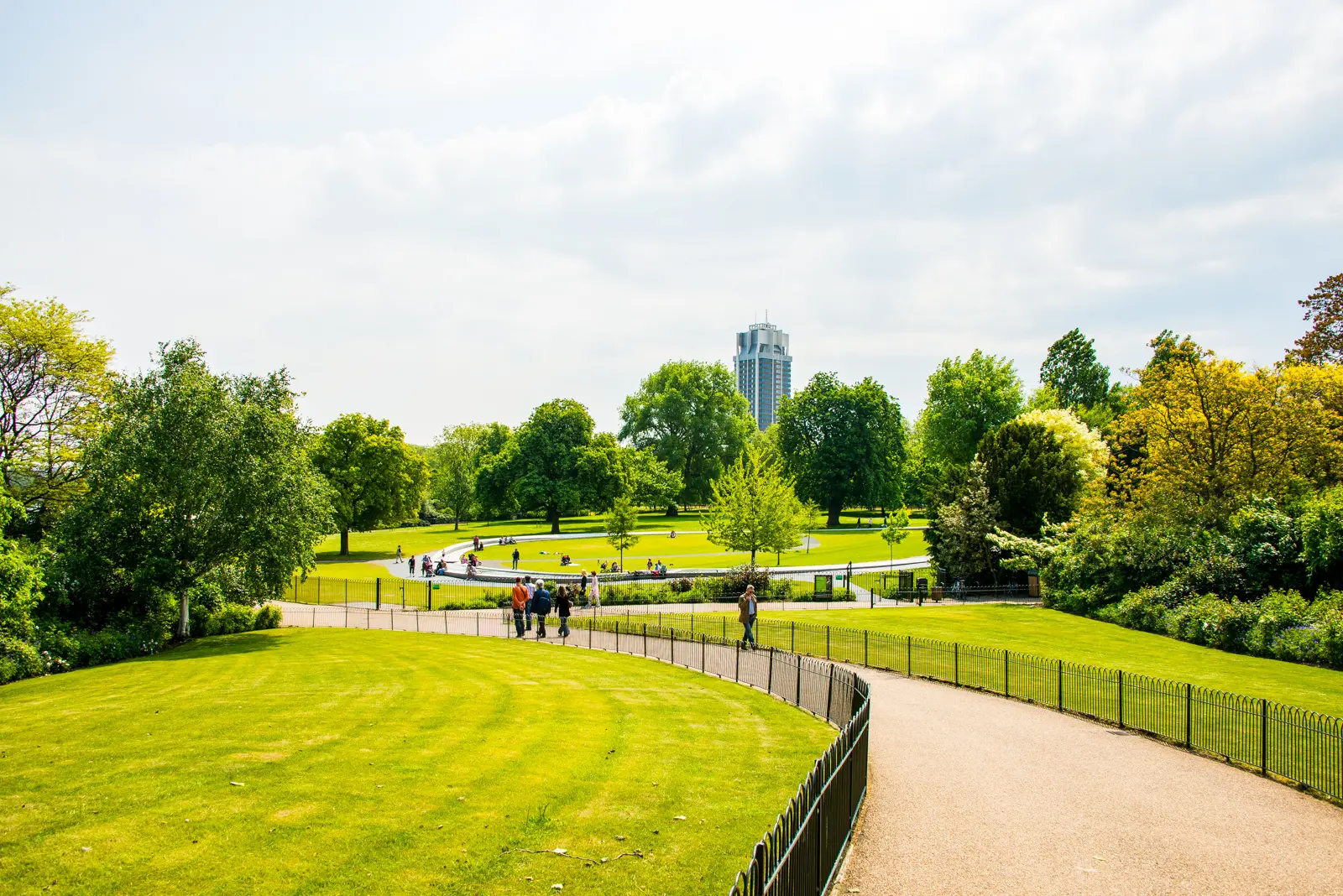
A short walk east, in the south-west corner of Hyde Park near the Serpentine, is the Diana, Princess of Wales Memorial Fountain. It is not a fountain in the usual sense. There is no jet, no basin, no statue. Instead a wide oval channel of pale stone runs through the grass like a ring laid flat, and water moves around it in two directions from the highest point.
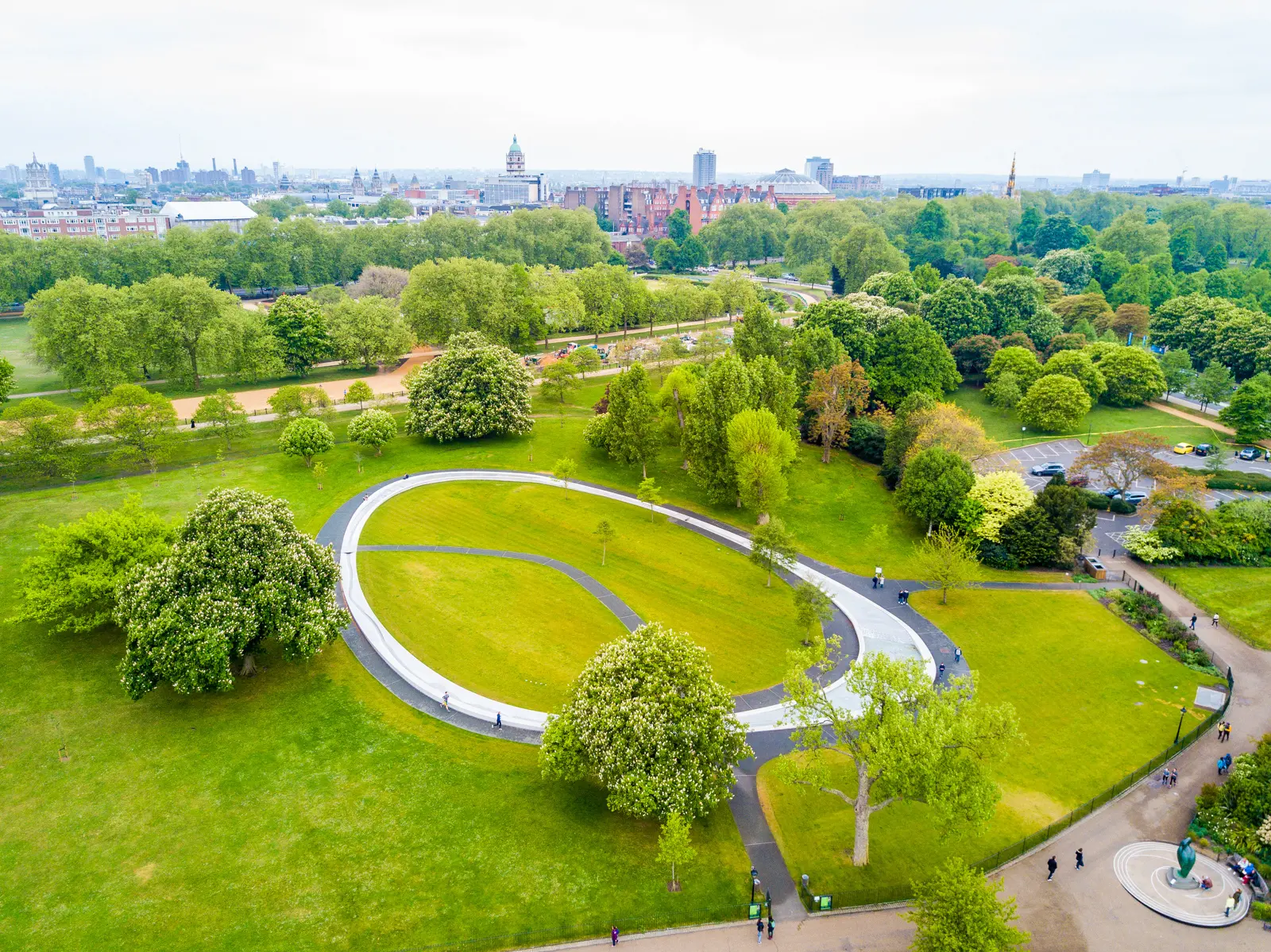
That split is the whole idea. The American landscape architect Kathryn Gustafson designed the two sides to trace the shape of Diana’s life. On one side the water slips down smoothly in gentle ripples. On the other it tumbles over steps and curves and small rapids before both streams meet in a still pool at the bottom. Three little bridges cross the channel and lead into the middle of it. On a warm day people sit along the granite edge with their feet in the water, which is exactly what it was built for.
Following the trail: the Memorial Walk
The fountain is one stop on a longer route that threads Diana’s London together. The Diana, Princess of Wales Memorial Walk runs for seven miles through four royal parks she knew well: Kensington Gardens, Hyde Park, Green Park and St James’s Park. It can be picked up anywhere and followed in either direction, and the Royal Parks website has a map to download before setting out.
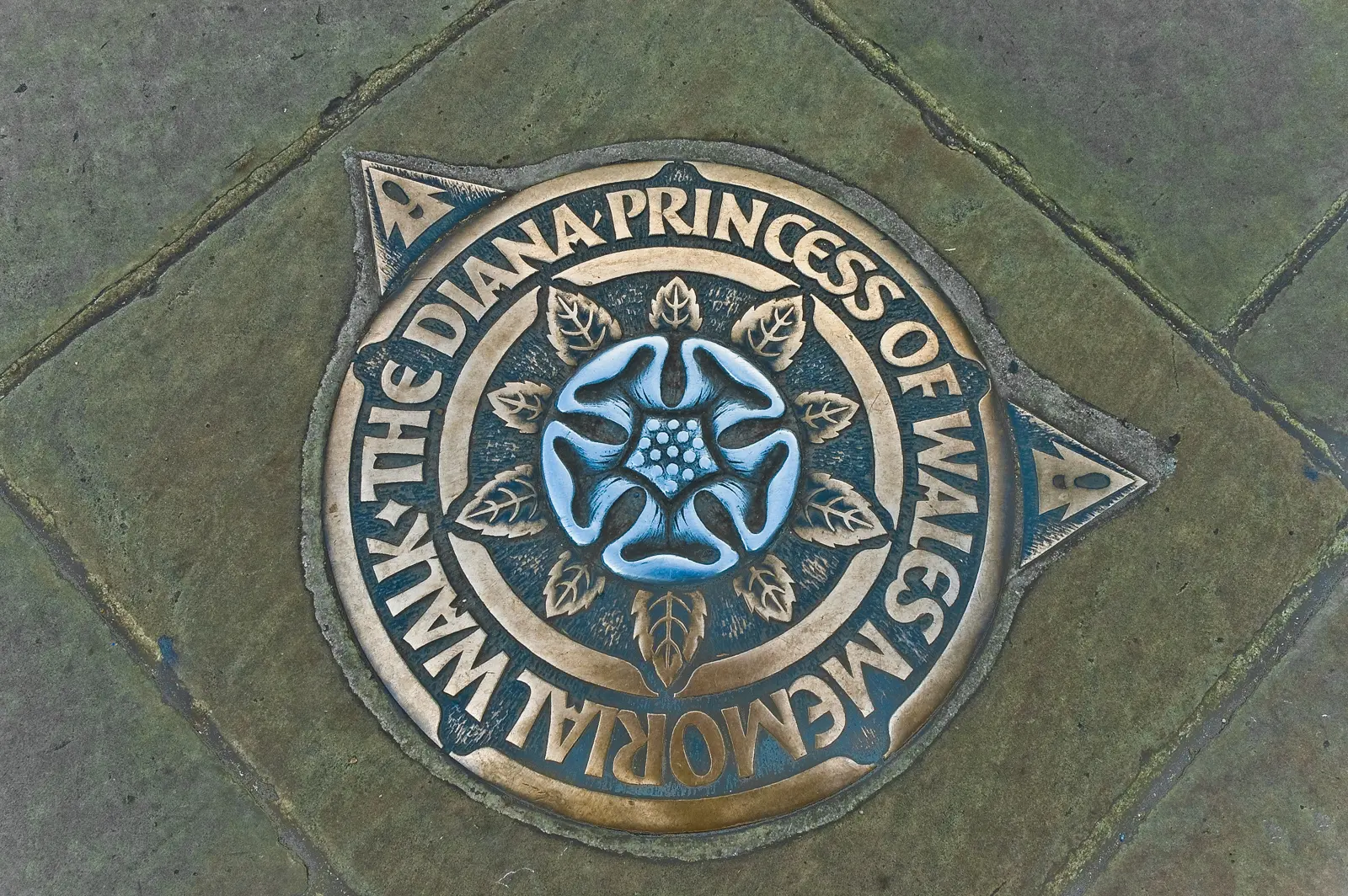
It is a gentle, low-key kind of memorial, easy to miss for anyone not looking down. I like that about it. There is no grand monument to queue for, just a quiet line drawn through the green heart of the city, passing the lakes and avenues where she would have walked herself.
The fairytale: St Paul’s Cathedral
For one morning in the summer of 1981, the centre of the story was St Paul’s Cathedral. Lady Diana Spencer married Charles, Prince of Wales, here on 29 July, in front of a congregation of around 3,500 and a global television audience estimated at 750 million. Hundreds of thousands more lined the route into the City.
The choice of church was itself a small break with tradition. Royal weddings usually happened at Westminster Abbey, but St Paul’s was chosen because it seated far more guests and allowed a longer, grander procession through London. Diana arrived with a dress whose train ran to twenty-five feet. At the altar she muddled the order of Charles’s names, and, at the couple’s request, she left the word “obey” out of her vows, which drew comment at the time.
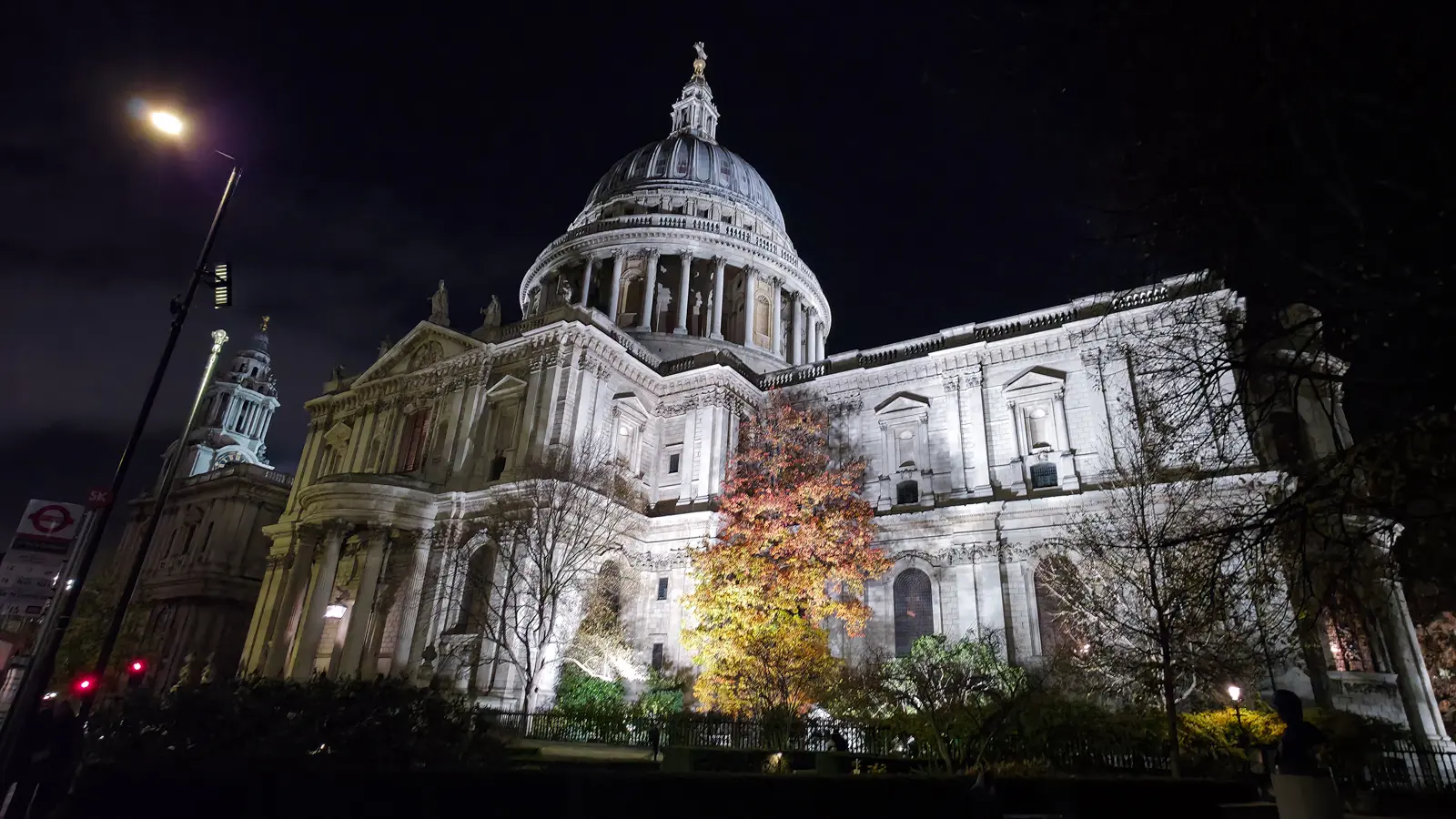
I came past St Paul’s on a December night, when the floodlights turn Wren’s stonework the colour of bone against a black sky. It is a building made for big public moments, and standing under that dome in the dark, it was not hard to picture the carriages and the crowds of that July morning more than forty years ago.
The farewell: Westminster Abbey
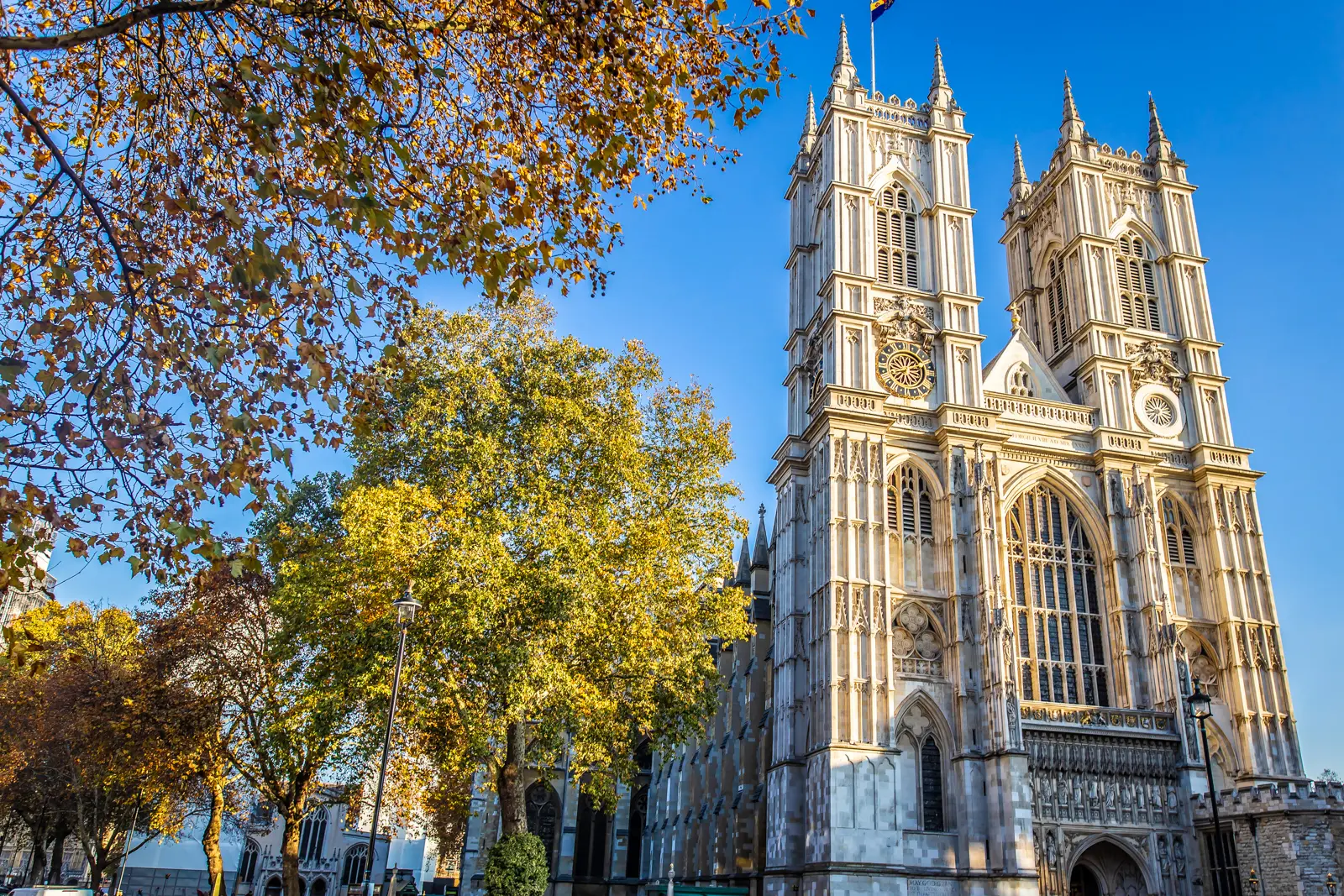
If St Paul’s holds the wedding, Westminster Abbey holds the goodbye. Diana died in a car crash in Paris on 31 August 1997, and the public grief that followed caught almost everyone off guard. Her funeral was held at the Abbey on 6 September. The cortège travelled from Kensington Palace, and an estimated two billion people watched around the world.
One small detail from that day stays with me. A few months before she died, Diana had chosen a rose for herself, picking a pure white variety from the British grower Harkness because white roses were her favourite. After her death the demand for it was overwhelming, and the growers supplied thousands of stems for the funeral. Some were gathered into the small wreath that rested on her coffin as it passed through the Abbey. After the service, she was driven home to Althorp for a private burial.
The causes she carried
It is easy, decades on, to remember Diana as a face and a wardrobe. What lasts longer is the work. In April 1987, when fear of HIV and AIDS was at its height and many believed the virus could be passed by touch, Diana opened the United Kingdom’s first dedicated HIV and AIDS unit, at the Middlesex Hospital here in London. In front of the cameras she shook a patient’s hand without gloves. It was a small gesture that did an enormous amount to break the panic of the time.
She kept going. In the last year of her life she campaigned against landmines, walking a cleared minefield in Angola, and in June 1997 she spoke at a landmines conference at the Royal Geographical Society in London. Charities she championed walked behind her coffin at the funeral, in place of soldiers.
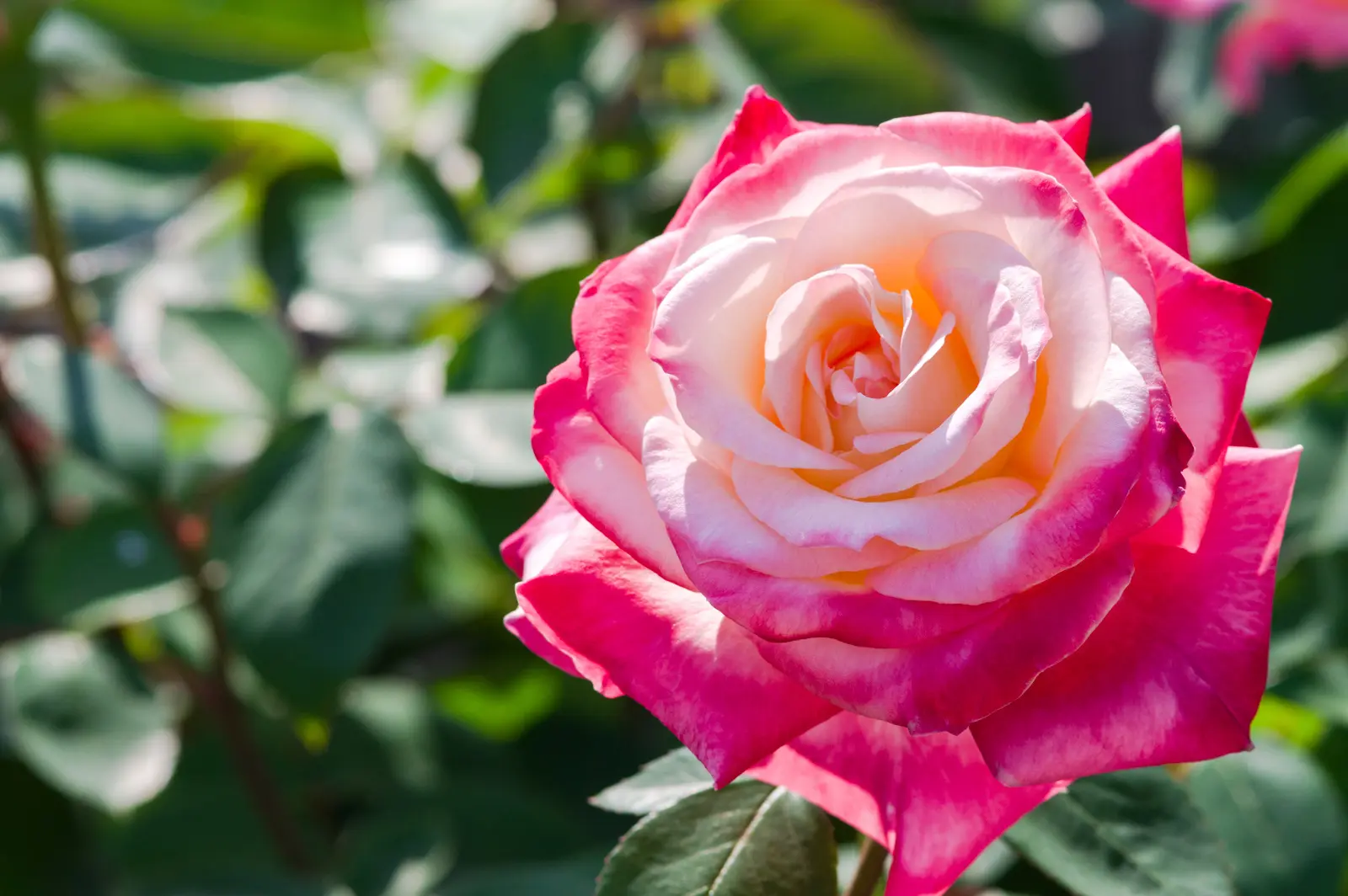
There are now two roses that carry her name: the white one she chose herself, and this cream-and-pink one, named for her the year after she died. A flower is a fitting thing to leave behind for someone whose memory in London is held less by statues than by gardens, parks and quiet walks.
Bubbly Tips
- Begin at Kensington Palace. Your entry ticket includes a view of the Sunken Garden and Diana’s statue. The garden is gated, so the best vantage point is along the covered Cradle Walk that runs beside it. Allow time for the State Apartments too.
- The fountain is free. You do not need a ticket for the Memorial Fountain in Hyde Park, and you are allowed to sit on the edge and dip your feet on a warm day. Bring a picnic and use the surrounding lawn.
- Download the Memorial Walk map. The seven-mile route is marked only by small ground plaques, which are easy to lose. Grab the official map from the Royal Parks website first, and remember you can walk just one park’s worth rather than the whole loop.
- See St Paul’s after dark. The cathedral is floodlit at night and far quieter than by day, which makes for a calmer photograph without crowds in the frame. The view from the eastern garden side is especially good.
- Pair the two churches. St Paul’s and Westminster Abbey bookend Diana’s story, the wedding and the funeral, and both reward a proper interior visit.
- Go early or late. Kensington Palace and the parks are quietest in the first hour after opening and the last before closing. Weekends and school holidays are the busiest times across all of these sites.
- Visit the gardens in summer. The Sunken Garden is at its best when the beds are in full bloom, roughly June to August, which is also when the parks along the Memorial Walk look their finest.
- Combine it into one day. Kensington Palace, the fountain and a stretch of the Memorial Walk sit close together in the west, and make a natural morning. Save St Paul’s and the Abbey, which are further east, for the afternoon.
Final Thoughts
There is no single grand monument to Diana in London, no tomb to file past. The one place that holds her body, the island at Althorp, is closed to the world. What the city offers instead is scattered and quiet: a locked garden with a statue glimpsed through an arch, a ring of water to paddle in, a line of bronze roses set into the pavement, two churches that watched her begin and end. Finding her takes a walk, which seems right for a woman who did so much of her best work on foot, hand outstretched.
I thought of Sisi again at the end of this trip, the other princess who never fit the mould and was loved all the more for it. Both of them turned into legends the moment they died. But legends can flatten a person. What I take from Diana’s London is smaller and more human than the legend: a hand offered without a glove, a white rose she picked because she liked it best, and a city that still, all these years later, leaves the light on for her.
Until next time!

🌟 Everything You Need to Plan Your Dream Trip in 2026
- 🌟 Luxury Hotels - Find premium stays with Booking.com & Hotels.com
- 🏡 Vacation Rentals - Discover unique properties on VRBO
- 🏞️ Guided Tours - Explore with Viator or GetYourGuide
- 🎫 Attraction Tickets - Skip the lines with Tiqets
- 🚢 Ocean Cruises - Set sail with Cruise Direct
- 📱 International SIMs - Stay connected with Saily
- 🚗 Car Rentals - Budget-friendly options from Discover Cars
- 🌐 Secure VPNs - Browse safely with NordVPN
- 💶 Currency Exchange - Best rates with Wise
- 🗣️ Learn Languages - Master the local language with Babbel and Rosetta Stone