
I found this place in Amsterdam by accident. I was hungry, it was late, I had no reservation and I wanted somewhere that would take me anyway. Four days later I went back, which is most of what needs saying.
It also leaves a great deal out, because I have a real reservation about this restaurant, and it is not about the cooking. The Greek food here is very good. The problem is that the Greek food is sharing a menu with Spanish tapas and Italian antipasti, and I do not think the three of them are helping each other.
I should say where I am standing. I am of Greek descent, I grew up eating this food, and I have eaten in a lot of Greek restaurants. That gives me a strong opinion about portion sizes and very little authority about anything else, so the rest should be read in that light.
Oresti’s Taverna at a Glance
🇬🇷 What it is · A Mediterranean café-restaurant on the Overtoom in Oud-West, strongest on Greek mezze, run now by the founder’s daughter.
🍽️ Order this · Kokinisto, soutzoukakia, patates lemonates, spanakopita, and a bougatsa to take away. The Greek dishes are the reason to come.
🤔 The caveat · The menu also runs Spanish tapas and Italian antipasti, and the Spanish plates are the weakest thing on the table.
📏 Portions · Tapas-sized rather than mezze-sized, so order more than you think, roughly two plates a head.
💡 Tip · Walk-ins are possible even on a Saturday, but the Greek dishes and a takeaway bougatsa are what to plan around.
The Room
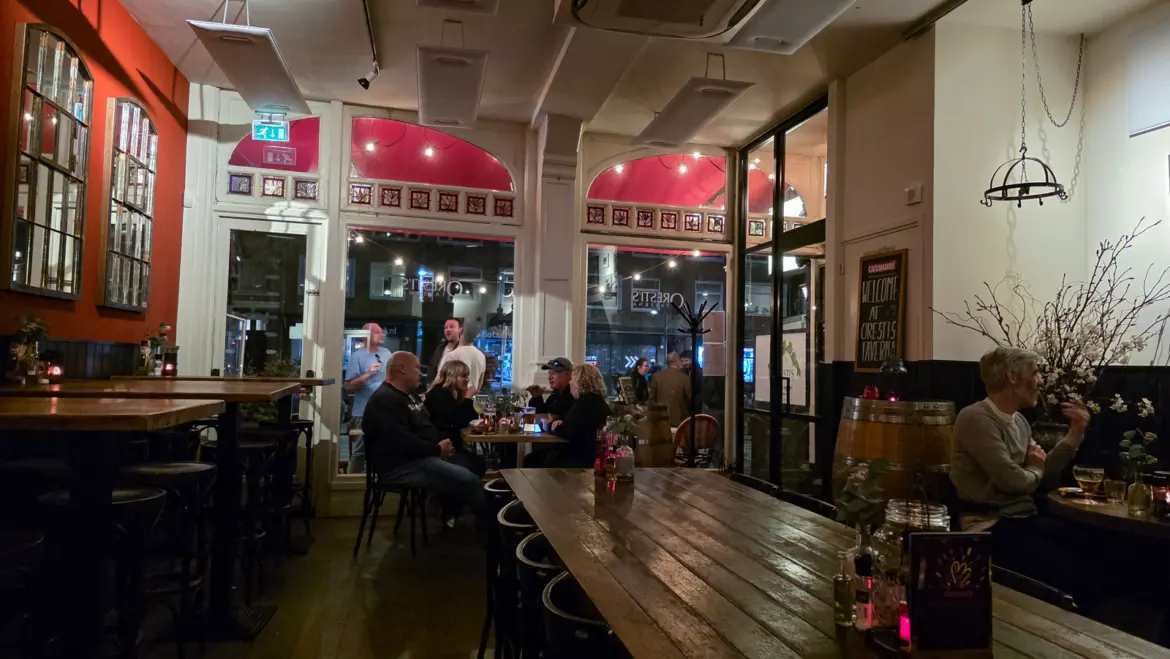
Overtoom is not a tourist street, which is part of the appeal. The room is brick and dark wood, with a wine barrel mounted on the wall, a guitar hanging beside it, a triptych of a tree behind the bar and candles on every table. It reads as a neighbourhood restaurant rather than a destination, and on both visits it was full of people who looked like they lived nearby.
The welcome was the best thing about the first evening. Walking in without a booking on a Saturday night and being found a table without any fuss is not nothing, and it is why there was a second visit at all.
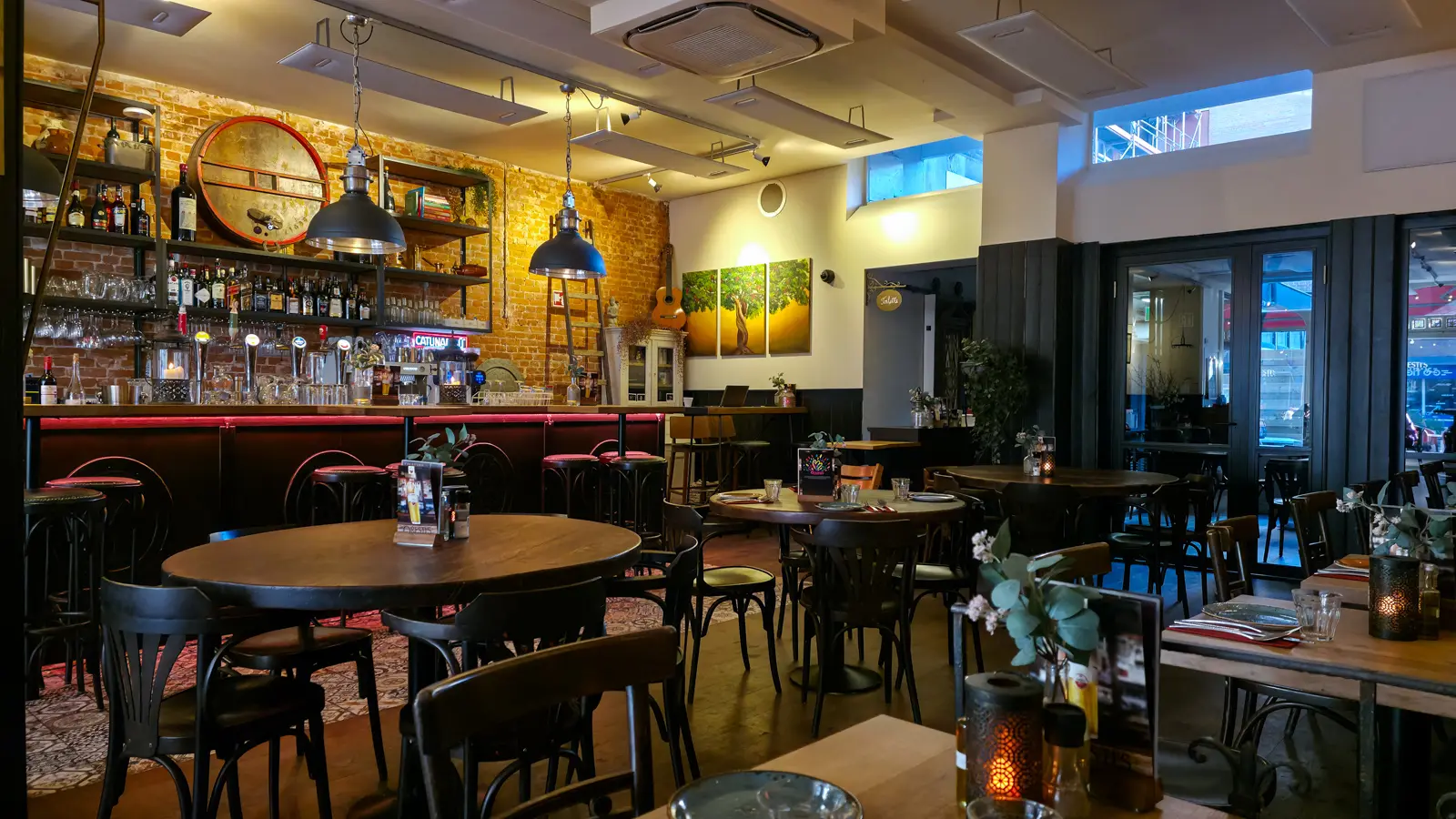
The founder was Orestis, who grew up in Piraeus. The restaurant’s own account describes him watching his mother and his aunts cook for the whole family under his grandmother’s eye, and says the smell of cumin, oregano and thyme still takes him back there, along with basil and mint and his grandmother’s patio in Amfiali. His daughter is running the place now. She was there on my second visit.
That story matters for what follows, because it is the restaurant’s own explanation of itself, and it is entirely Greek.
Where It Tastes Like Greece
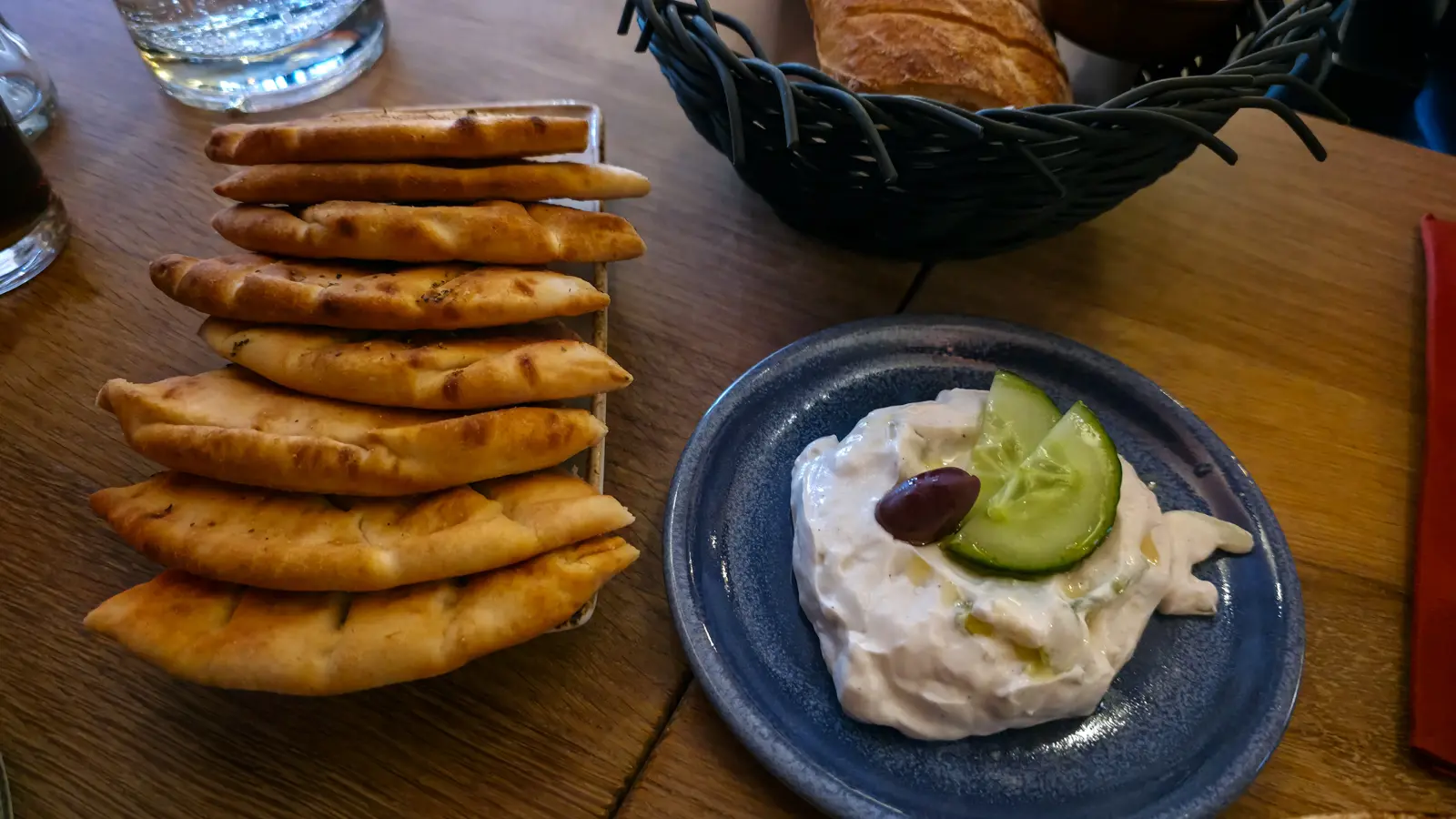
Start with the bread and the tzatziki, because that is where a Greek kitchen shows its hand. The pita came warm and stacked, properly soft, and the tzatziki was thick and sharp with garlic rather than the loose sour cream that passes for it in a lot of places.
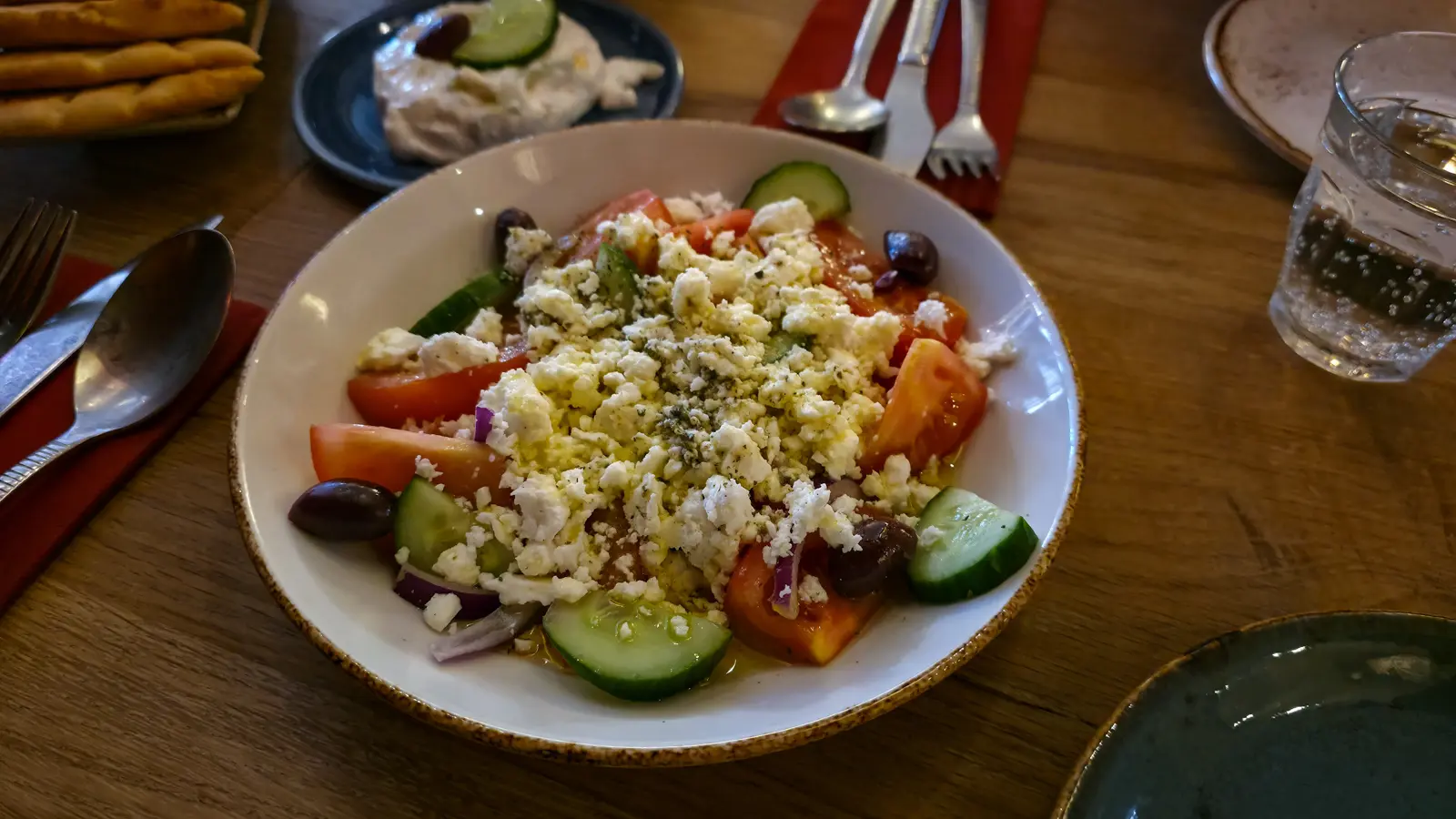
The salata horiatiki (Greek village salad) was good, though it arrived with the feta crumbled over the top rather than laid on as a slab.
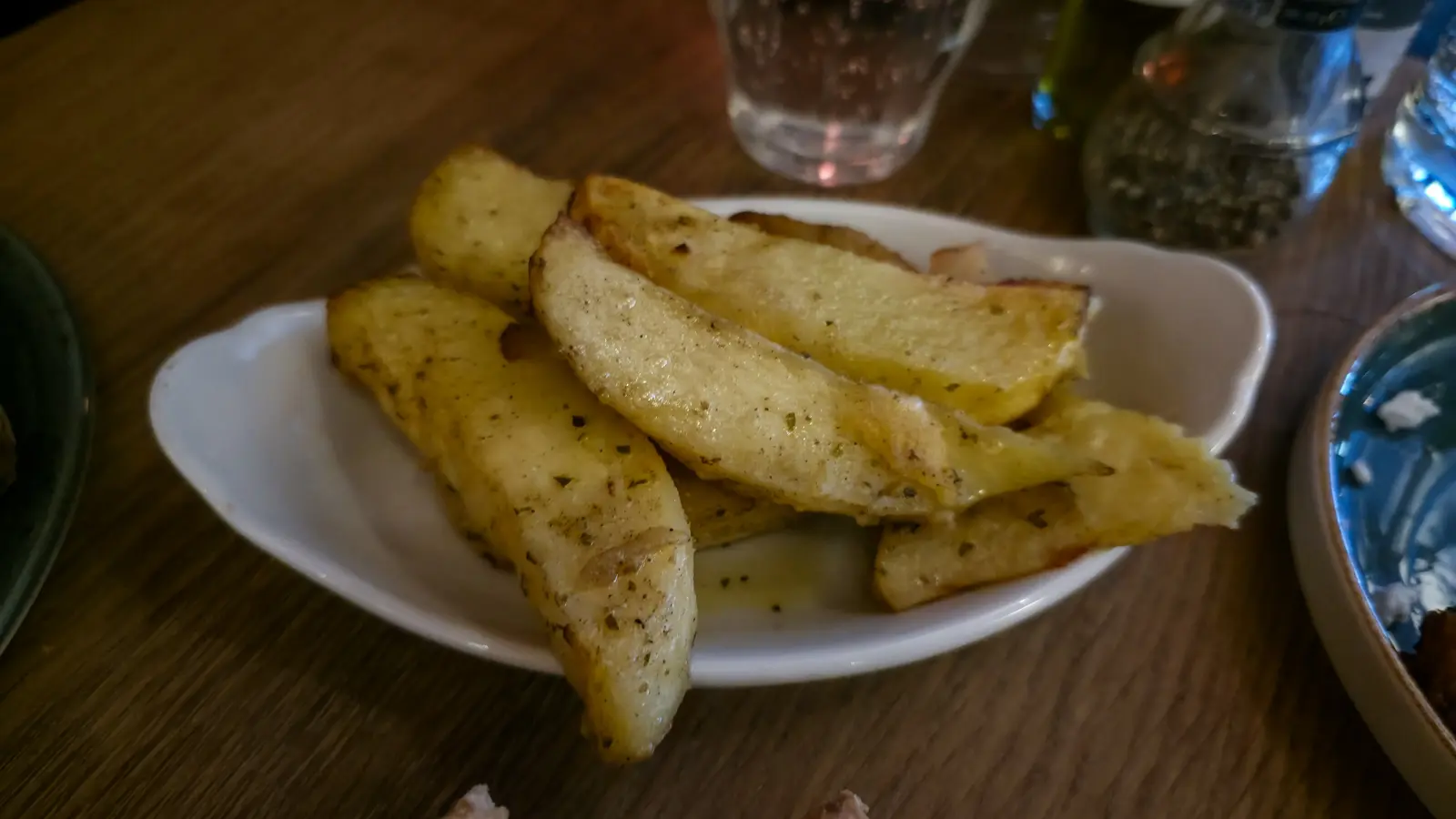
The patates lemonates were the moment the meal turned. Oven-roasted potatoes with olive oil, lemon and oregano, soft inside and lemony the whole way through. They tasted like my grandmother’s, and I do not say that as a figure of speech.
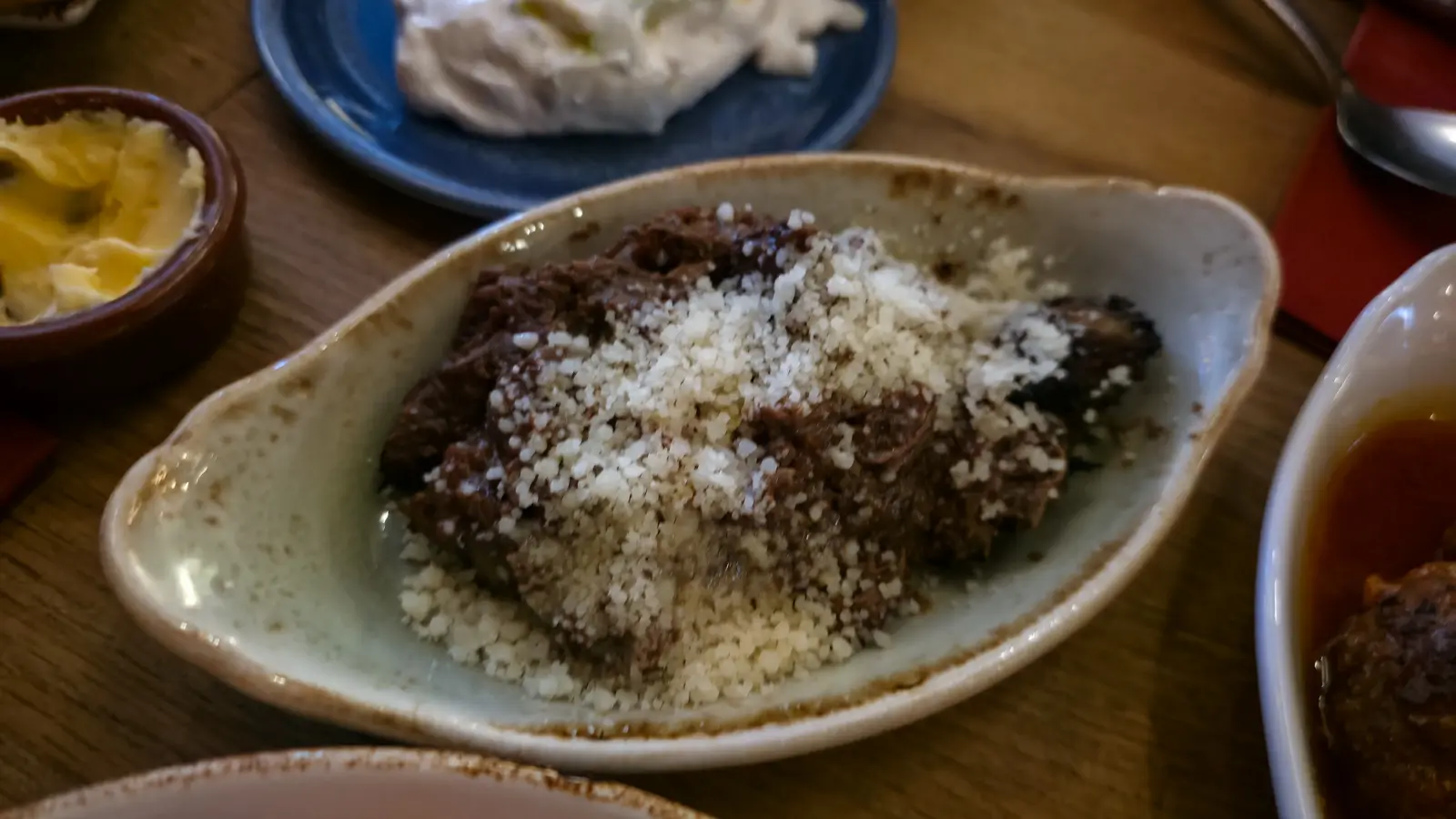
Then the kokinisto, a slow-cooked beef stew with tomato, white wine and cinnamon, and the cinnamon is the thing. It is what separates a Greek beef stew from every other beef stew, and it took me straight back to childhood.
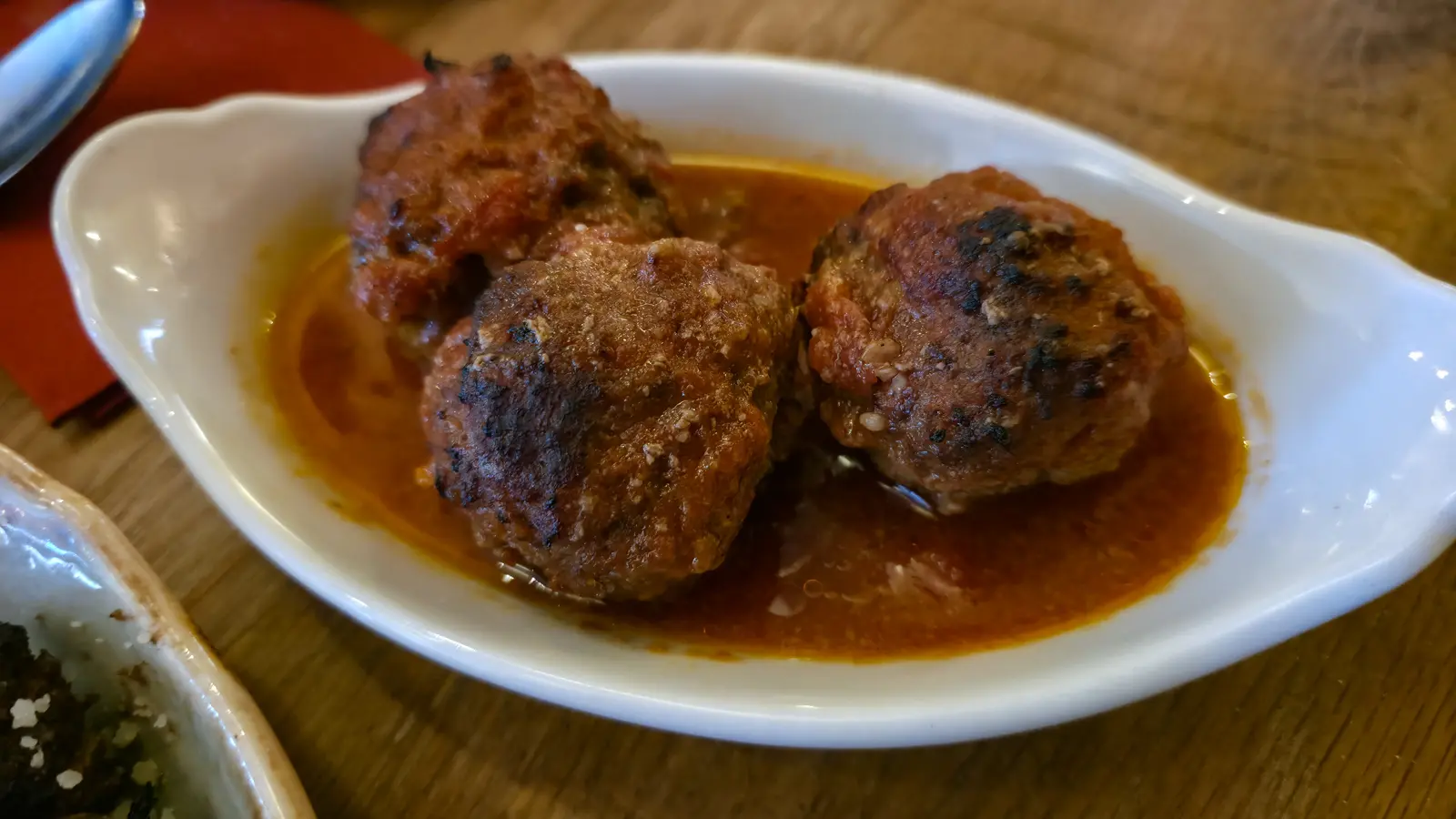
The soutzoukakia were the same story. Three oblong meatballs in tomato sauce, cumin all the way through, the shape right and the spicing right. My grandmother made them exactly like this.
The spanakopita was excellent too. Crisp filo, spinach, feta and dill, one triangle cut open so the layers showed, feta scattered over the plate.
There were two pieces. There were three of us.
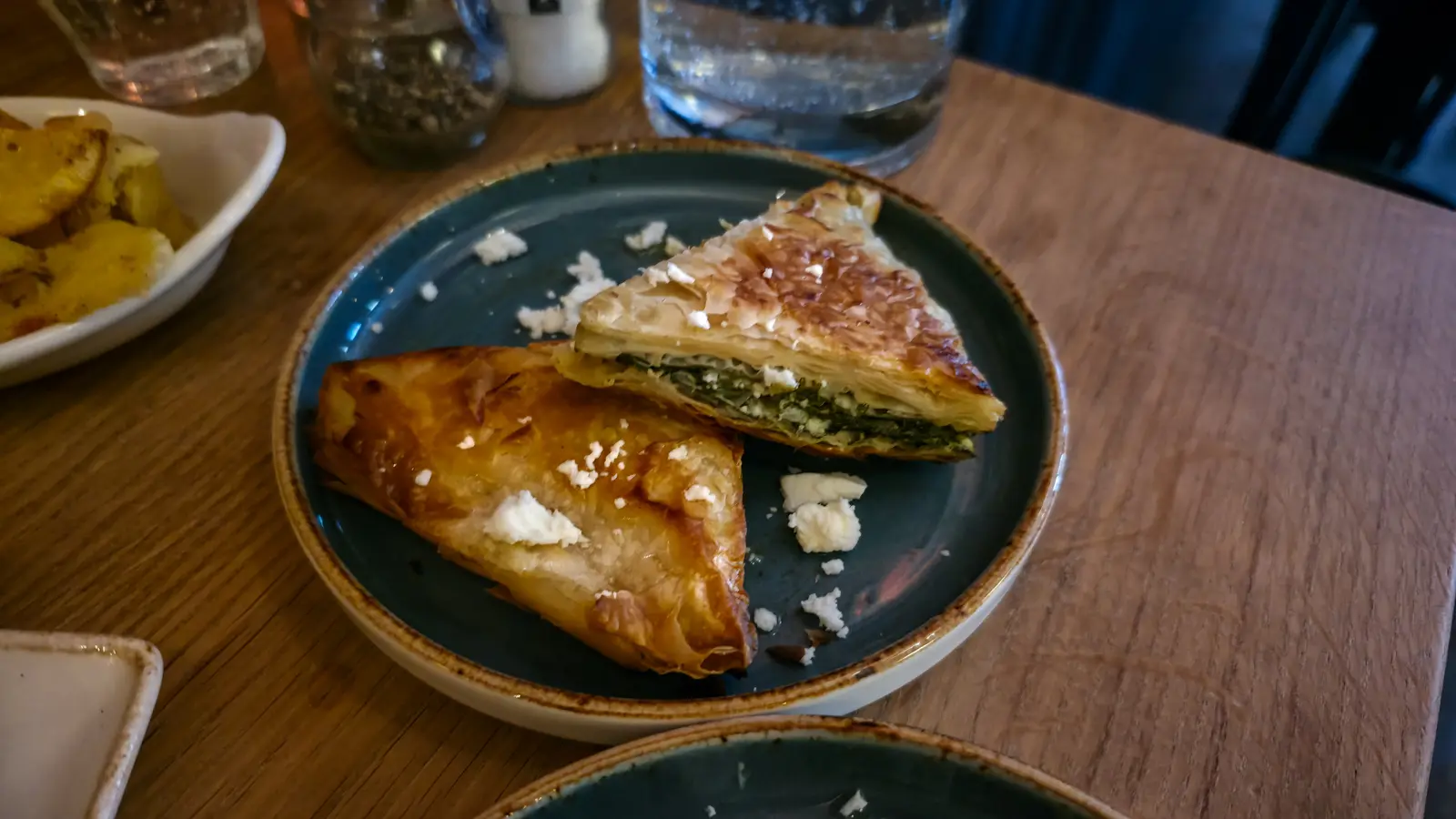
That plate is the whole argument, and it comes back later.
The Tapas Question
Here is my problem, and I want to put it fairly.
The menu is billed as Mediterranean. Greek mezze, Spanish tapas, Italian antipasti, all served small and all intended for sharing. As a commercial proposition that is easy to understand. It widens the audience, it suits a group who cannot agree, and plenty of small restaurants in expensive cities do some version of it in order to keep going.
But the Spanish dishes are the weakest things on the table. The gambas were fine. The calamares were fine. Fine is not what anyone wants to say about a plate of food, and both of them are done better in Spanish restaurants, where they are the point rather than an addition.
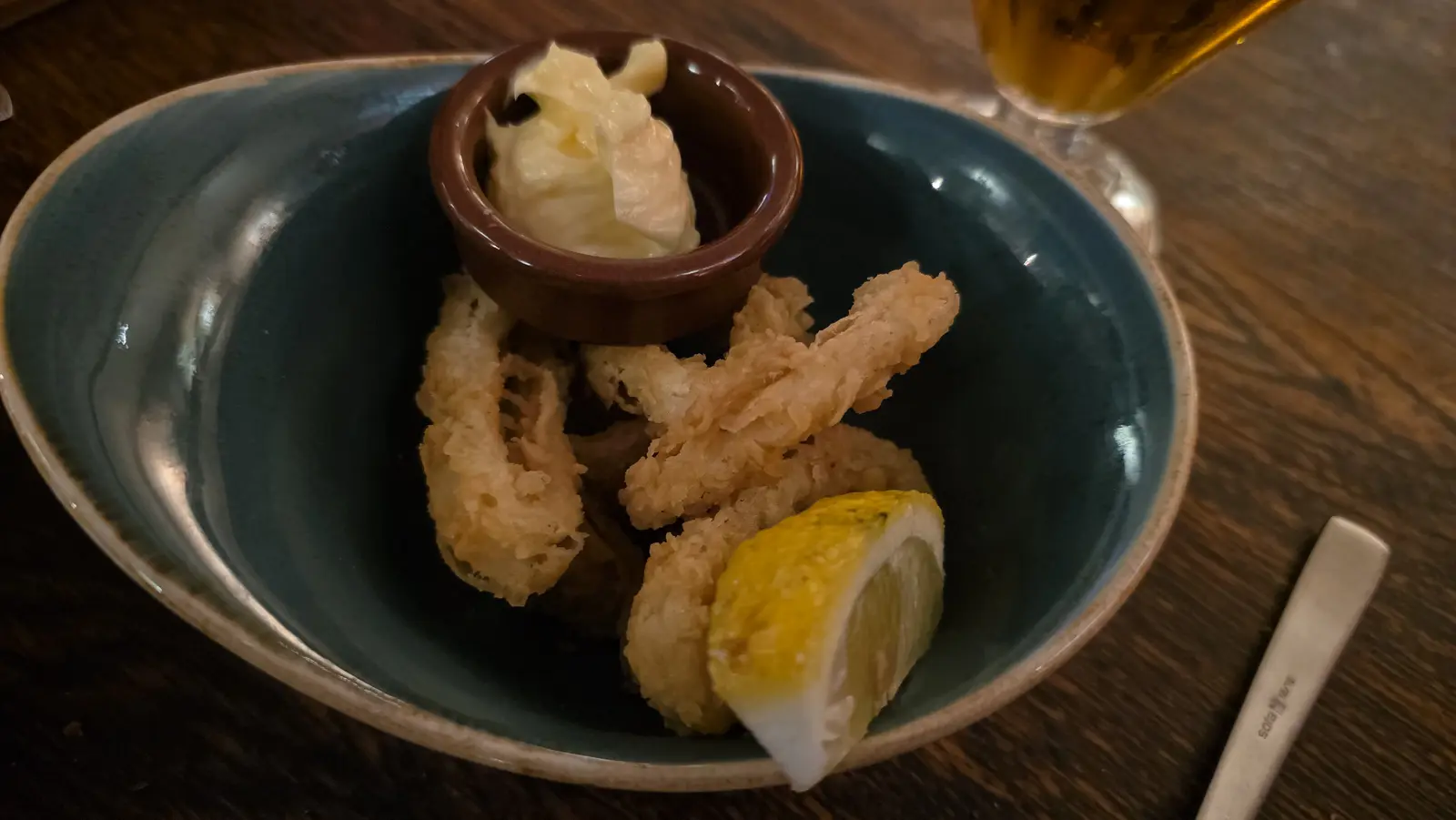
The prawns had the same problem. Perfectly decent, cooked properly, and completely unmemorable sitting on the same table as the kokinisto.
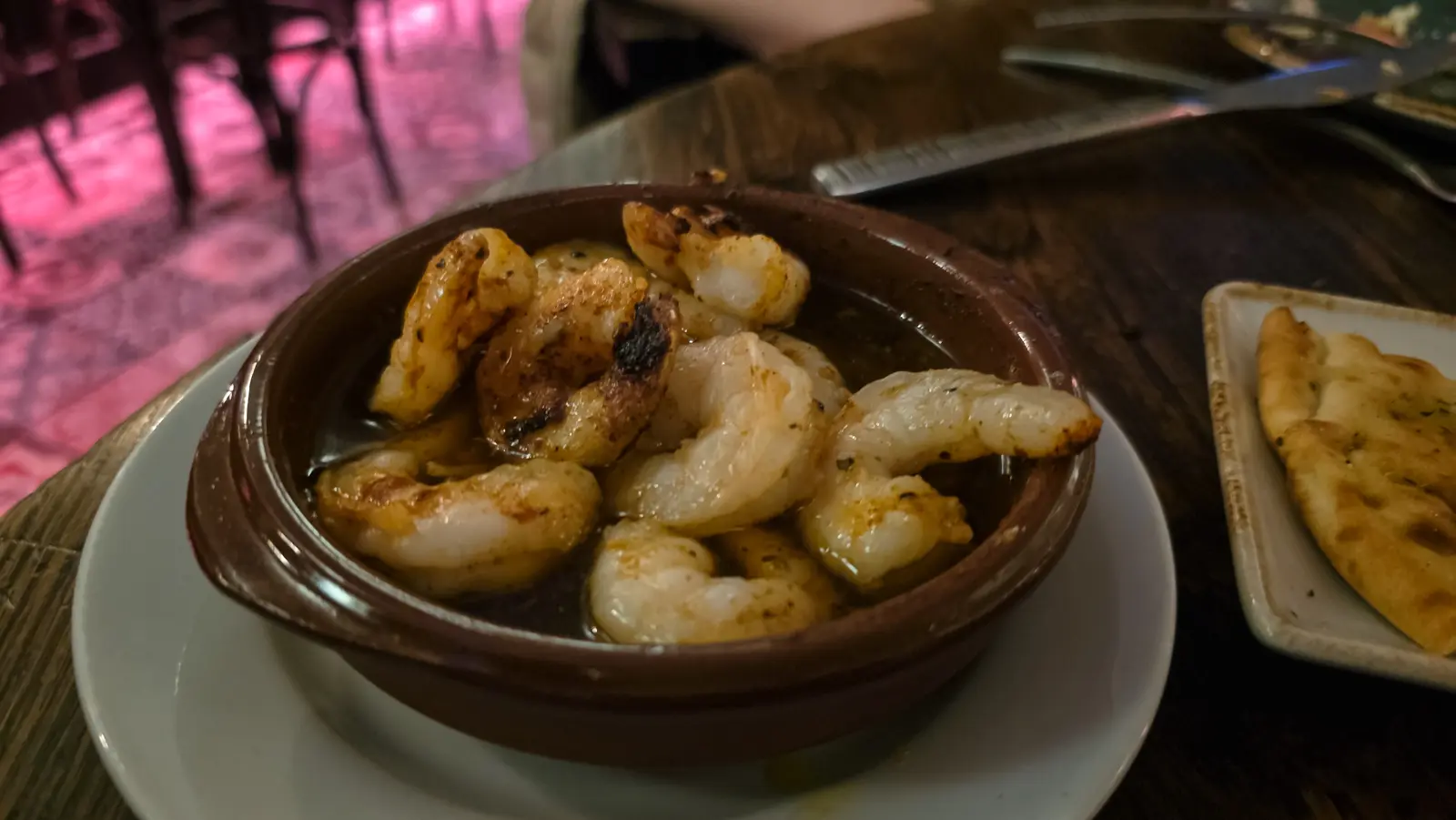
So the restaurant is at its best doing precisely the food its own founding story is about, and at its weakest doing food from a country that story never mentions. When the origin is Piraeus, a grandmother’s patio in Amfiali and the smell of cumin and oregano, the Spanish plates sit oddly against it.
I am not the only person who came away thinking this. I spoke to other people in Amsterdam who had eaten here and raised the same thing unprompted, which is why I am confident it is a real reaction rather than a personal preference.
There is a hopeful sign, though. Their Instagram now describes the place in Dutch as a family restaurant serving mezes to share, with no mention of tapas, and there is a new menu. If that is the direction, it is the right one.
Portions, and What Mezze Is Actually For
This is the more practical complaint and the one that matters more to anybody booking a table.
Greek mezze is not a tasting portion. It is a way of eating in which the table orders a spread and everyone reaches into everything, for as long as the conversation lasts. The plates are small in variety, not in quantity. Two pieces of spanakopita cannot be shared by three people without somebody performing an act of politeness, and that is the opposite of the point.
The fix would not be complicated. Larger portions on the Greek dishes, priced accordingly. I would happily pay more for a plate that three people can actually eat from than less for one that forces a negotiation.
The Bougatsa and the Drinks
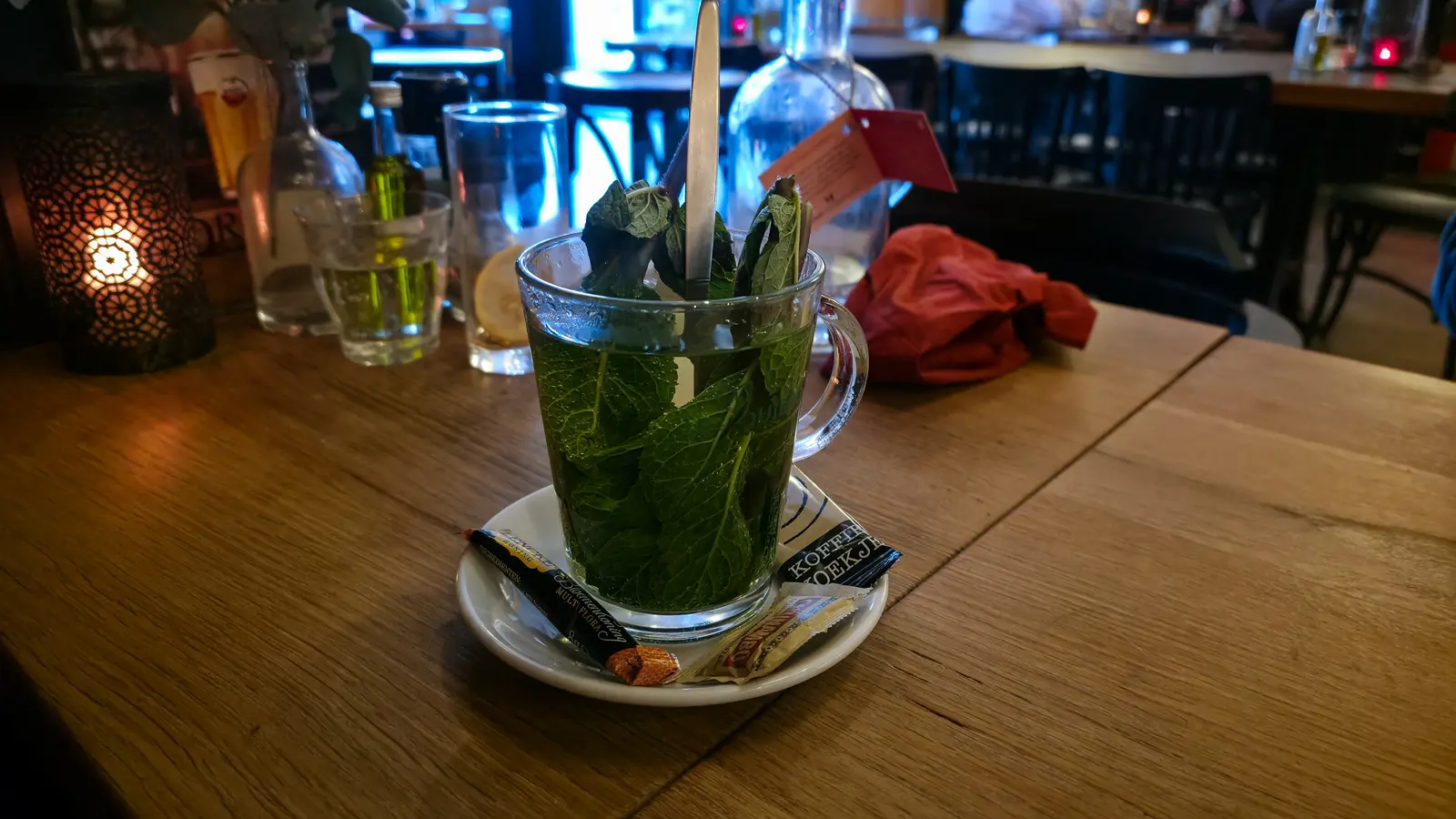
The mint tea was made with a glass packed full of fresh mint rather than a bag, which is the correct way and always a good sign.
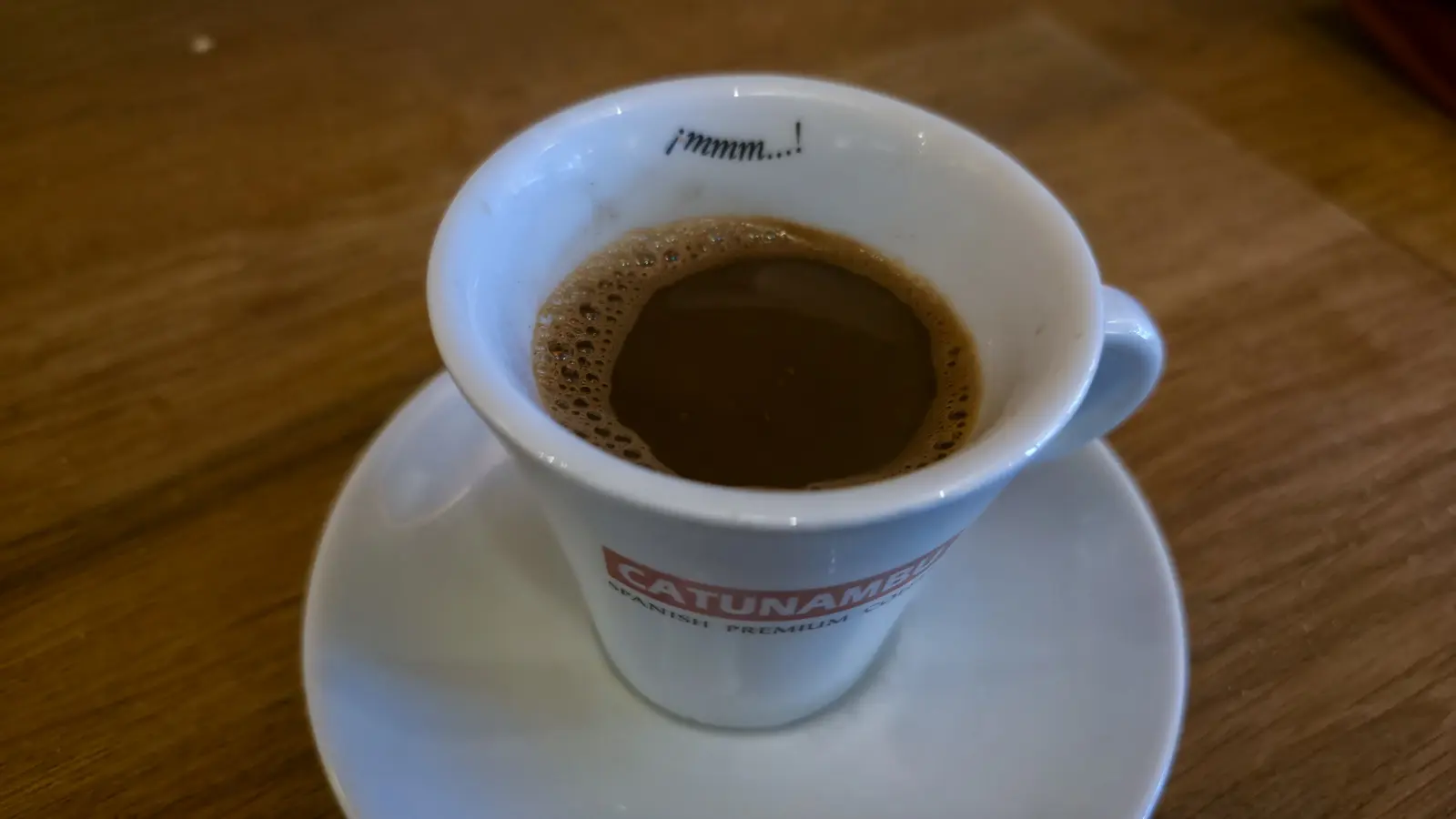
The Greek coffee was fine, and it arrived in a branded cup that made me laugh, because the brand is Spanish.
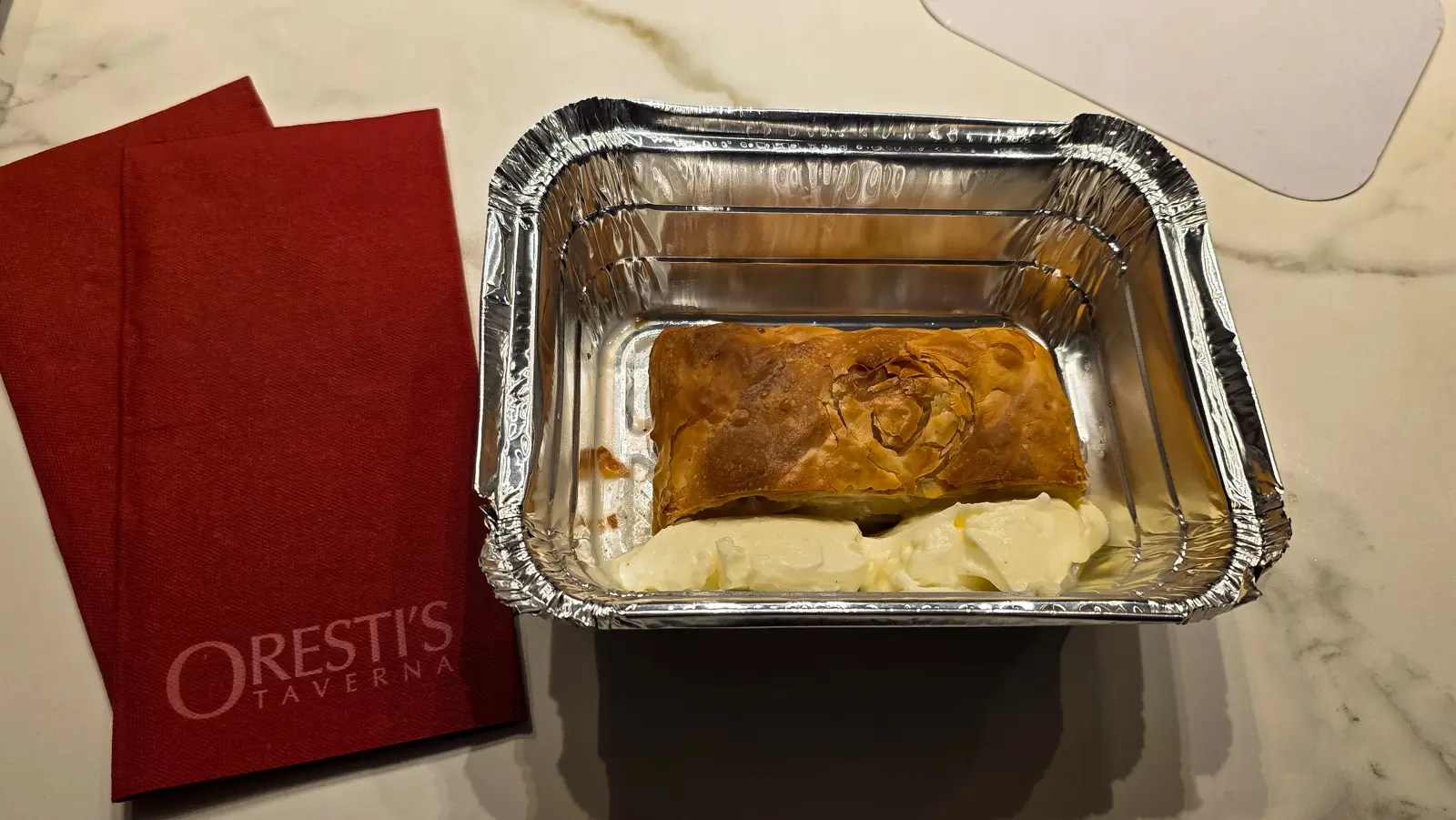
The best thing I ate here left the building with me. A bougatsa, packed to take away, filo pastry around semolina custard with cream alongside it, eaten later that night and worth every minute of the walk.
Bubbly Tips
- Book if you can, but walking in is possible. I got a table on a Saturday night without a reservation, which is rare enough in central Amsterdam to be worth knowing. It is not a guarantee.
- Order the Greek dishes and skip the Spanish ones. The kokinisto, the soutzoukakia, the patates lemonates and the spanakopita are the reason to come. The gambas and the calamares are not.
- Order more than you think you need. Portions are tapas-sized rather than mezze-sized, so a table of three should count on roughly two plates a head rather than one.
- Ask about the group menu if there are five or more of you. The kitchen puts together a set spread, which is closer to how this food is meant to arrive at a table.
- Get a bougatsa to take away. They pack it properly and it survives the walk home. It was the best single thing I ate across both visits.
- Check the opening days before you go. Their own listing says Tuesday to Saturday from five, but older directory entries still show different days, so trust the restaurant rather than the aggregators.
- Go for the neighbourhood, not the address. Overtoom is residential and unglamorous, about ten minutes on foot from the Museum Quarter, which is exactly why the room fills with locals.
- Ask for the pita to keep coming. The bread and tzatziki are among the best things on the menu and the cheapest way to make a small spread go further.
Final Thoughts
The honest answer to whether I would go back is that I already did, four days later, and that I am still not sure about a third time.
What is here is a kitchen that can cook Greek food properly. The potatoes tasted like my grandmother’s. The stew took me back twenty years. Whoever is standing at that stove knows exactly what they are doing, and that is not a thing that can be faked or bought in.
What is also here is a menu that keeps interrupting them to serve prawns. A restaurant built on one man’s memory of Piraeus, run now by his daughter, does not need Spanish tapas to justify itself. It needs bigger plates of the food it already makes better than almost anyone else on that street.
If that is where the new menu is heading, I will be first through the door.
Until next time!

🌟 Everything You Need to Plan Your Dream Trip in 2026
- 🌟 Luxury Hotels - Find premium stays with Booking.com & Hotels.com
- 🏡 Vacation Rentals - Discover unique properties on VRBO
- 🏞️ Guided Tours - Explore with Viator or GetYourGuide
- 🎫 Attraction Tickets - Skip the lines with Tiqets
- 🚢 Ocean Cruises - Set sail with Cruise Direct
- 📱 International SIMs - Stay connected with Saily
- 🚗 Car Rentals - Budget-friendly options from Discover Cars
- 🌐 Secure VPNs - Browse safely with NordVPN
- 💶 Currency Exchange - Best rates with Wise
- 🗣️ Learn Languages - Master the local language with Babbel and Rosetta Stone