
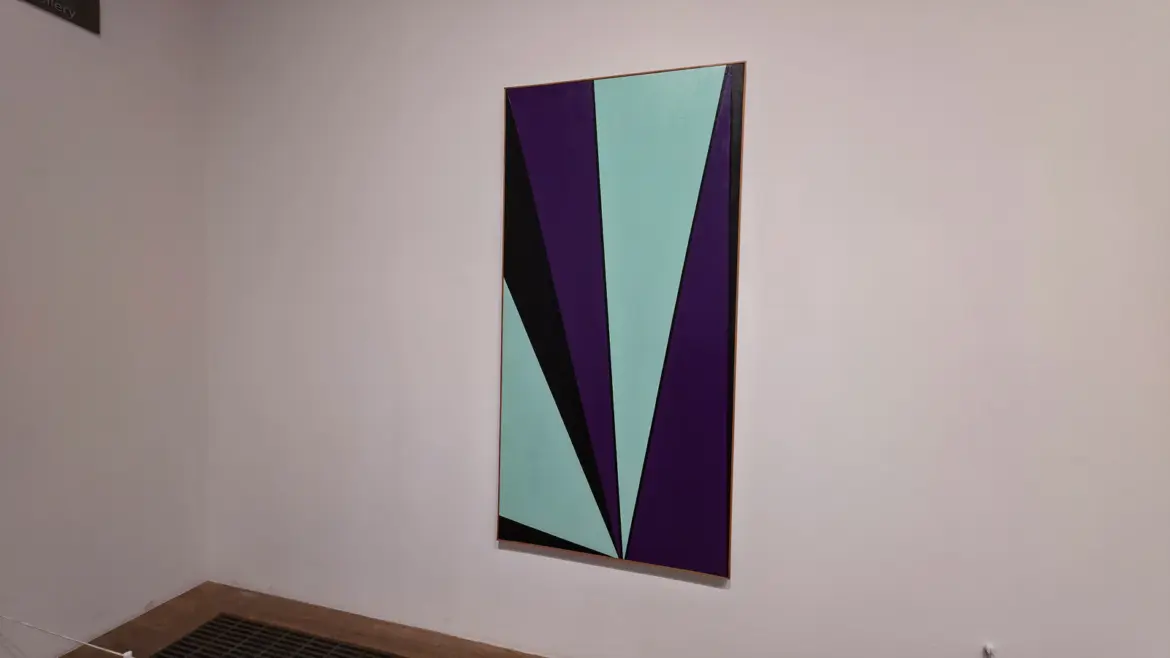
On my first visit to Tate Modern in London, I came for a giant spider and stayed for the paintings, which I did not see coming. One set of rooms held me longer than the rest: the abstract ones, full of squares, lines and flat colour, the kind of art I used to walk straight past.
What kept me there was a thread I only noticed once I started reading the labels. Pure geometric abstraction, painting stripped back to line, plane and primary colour, was a genuinely radical idea in modern art. Piet Mondrian and his red, yellow and blue grids are the face of it. But it did not begin and end in a few European studios. It travelled. From the Netherlands and Russia it spread to Britain, to Sweden, and across the Atlantic to New York and South America, changing a little with every border it crossed. This is that journey, told through the works I stood in front of.
Geometric Abstraction at Tate Modern at a Glance
🟥 Where it began · Just after the First World War, in two places at once: De Stijl in the Netherlands (Mondrian, Vantongerloo) and Suprematism in Russia (Malevich).
🧊 Off the wall · Russian Constructivism (Pevsner and his brother Naum Gabo) pushed abstraction into three dimensions.
🌍 The journey · The idea spread to Britain (Ben Nicholson), Sweden (Olle Baertling) and across the Atlantic to New York, Buenos Aires and Brazil, changing at every border.
🎟️ Cost · These are in the free collection displays. No ticket, no booking.
💡 Tip · Read the labels here more than anywhere. With a floating red square, the wall text is what turns a puzzle into a story.
Where it began: Europe
The idea took shape just after the First World War, in two places at once.
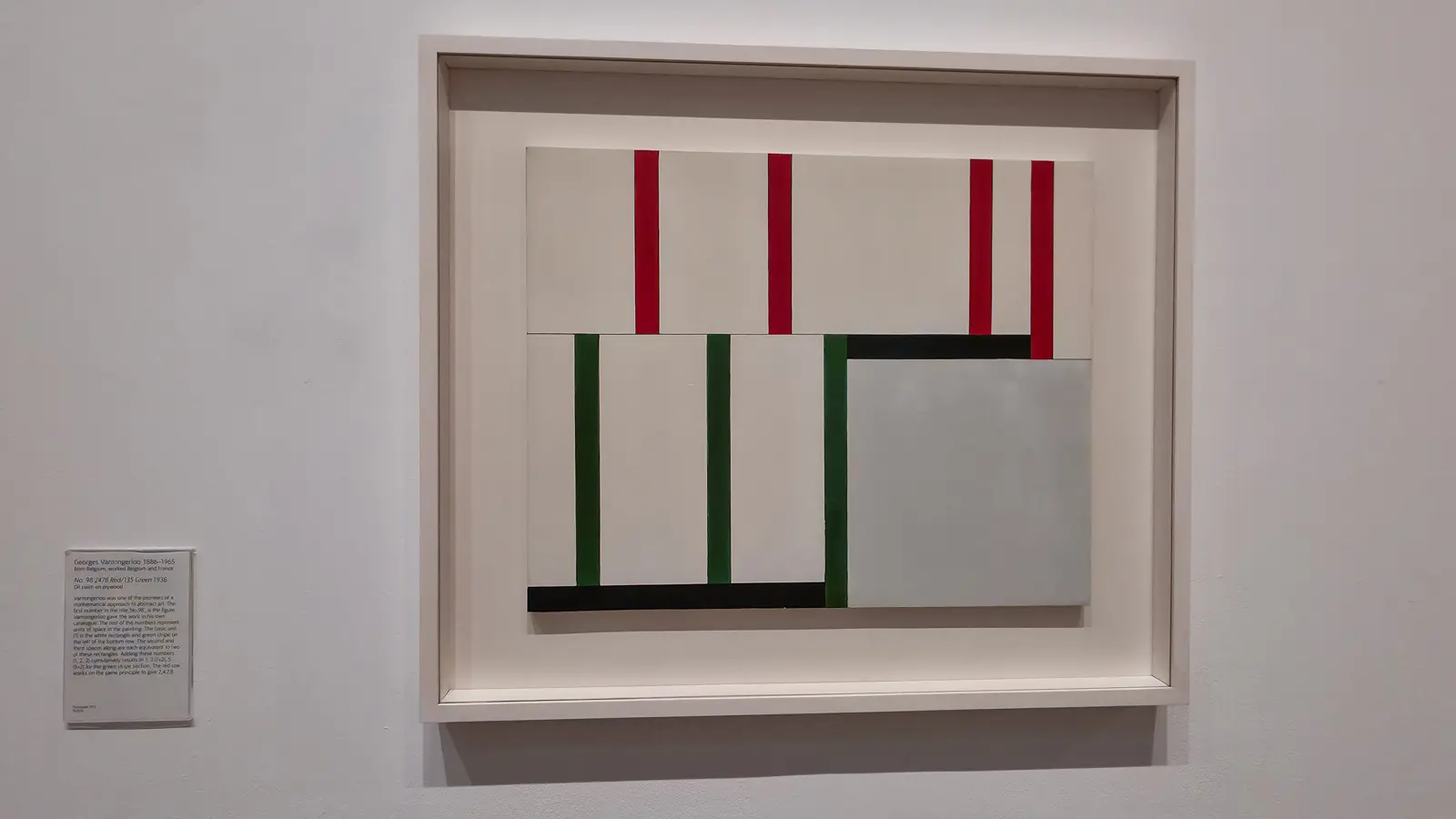
In the Netherlands, a group of artists called De Stijl, Dutch for “the style”, agreed to limit themselves to straight lines, right angles and the three primary colours, believing this pared-down language could express a kind of universal harmony. Mondrian is the famous name, but the Belgian Georges Vantongerloo was part of the same circle, and his paintings hide a surprise.
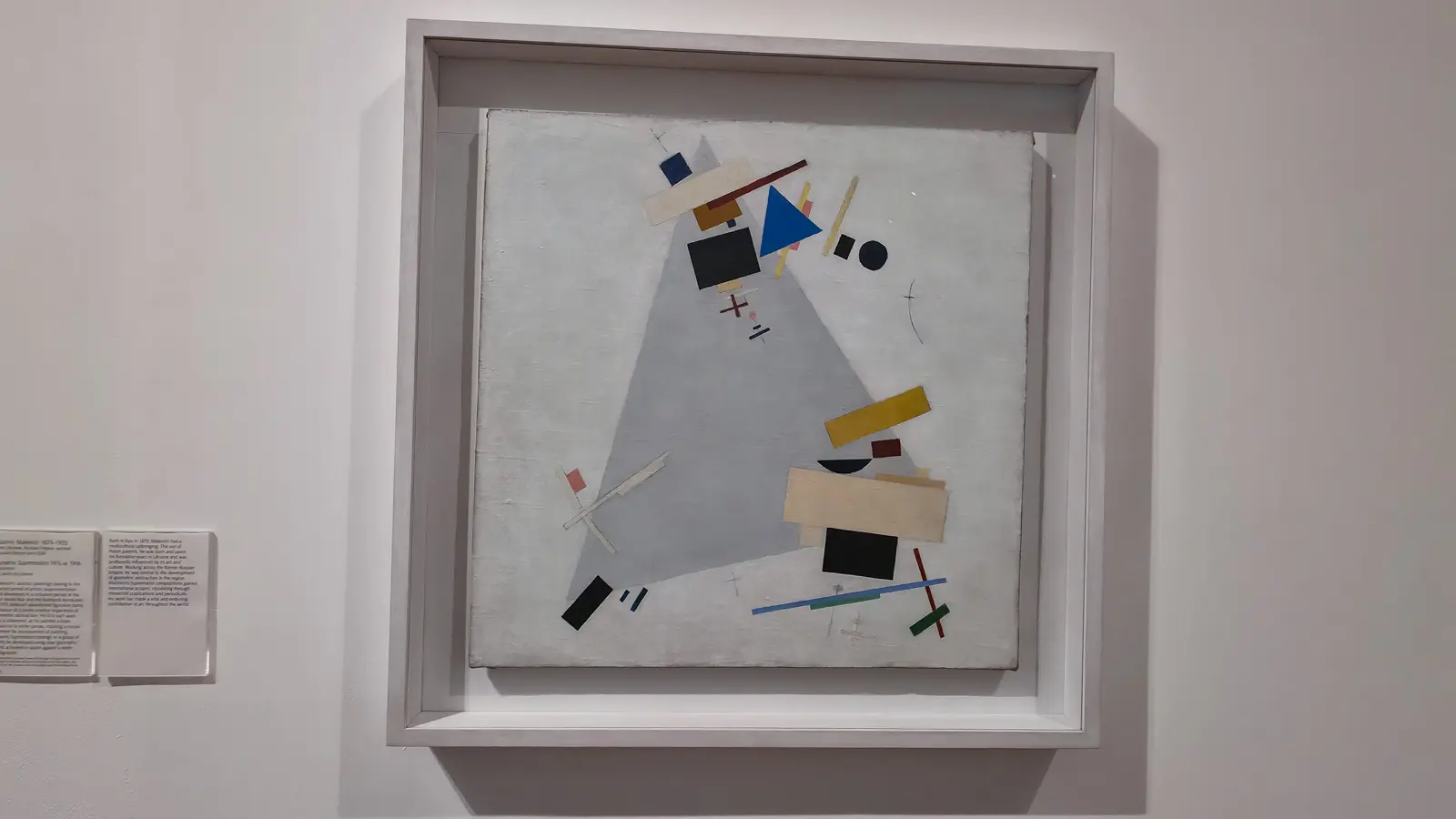
The other birthplace was Russia. In 1915, in the middle of revolution, Kazimir Malevich announced a new art he called Suprematism, built from pure geometric shapes floating free of any real-world subject.
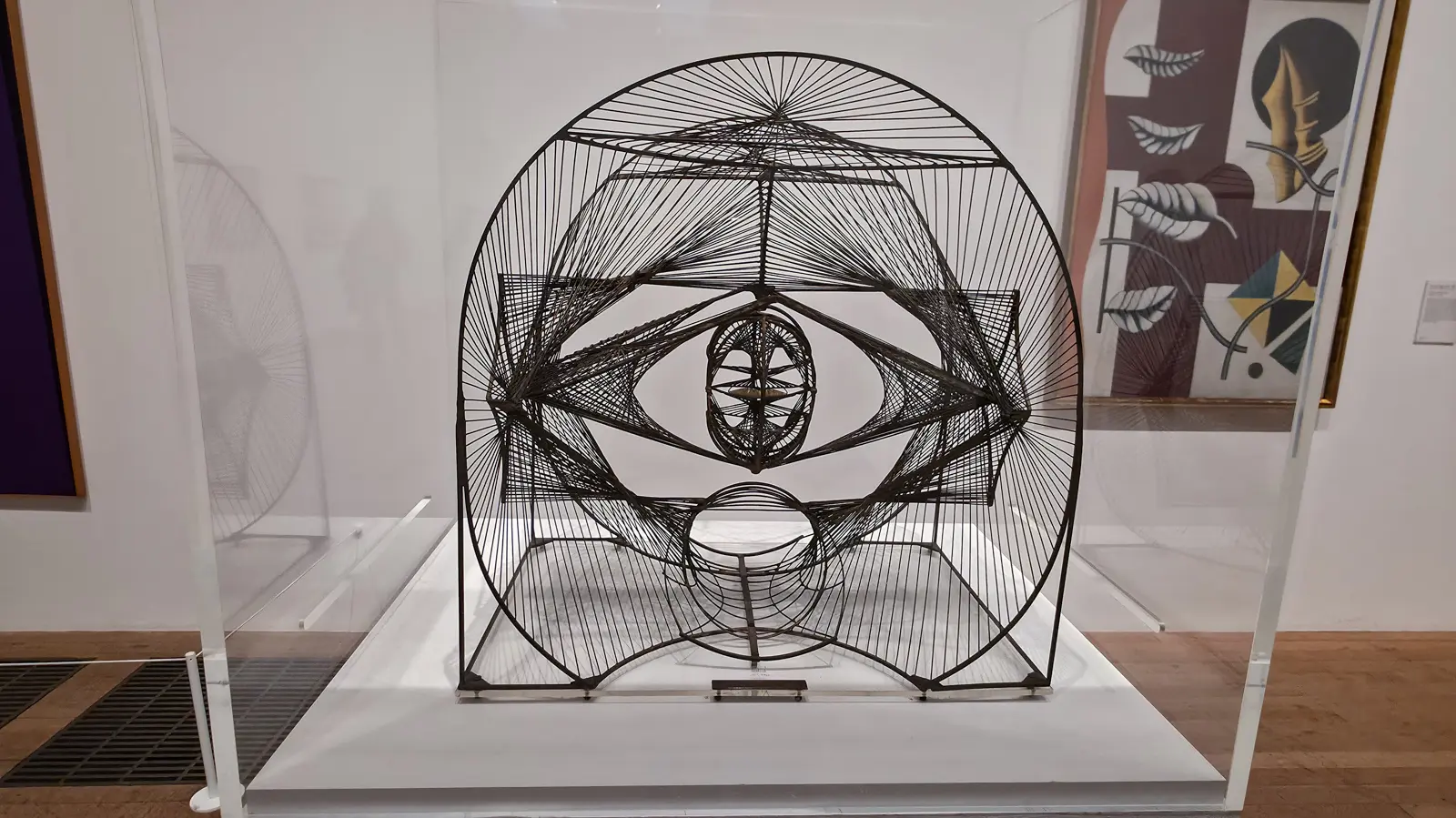
Out of the same Russian upheaval came Constructivism, which pushed abstraction off the wall and into three dimensions. Antoine Pevsner and his brother Naum Gabo were among its pioneers.
Three countries, one shared conviction: that a painting or a sculpture did not need to show anything at all to be worth making. That conviction was about to go travelling.
Across the Channel: Britain
The idea reached Britain in the 1930s, where Ben Nicholson became its boldest champion.
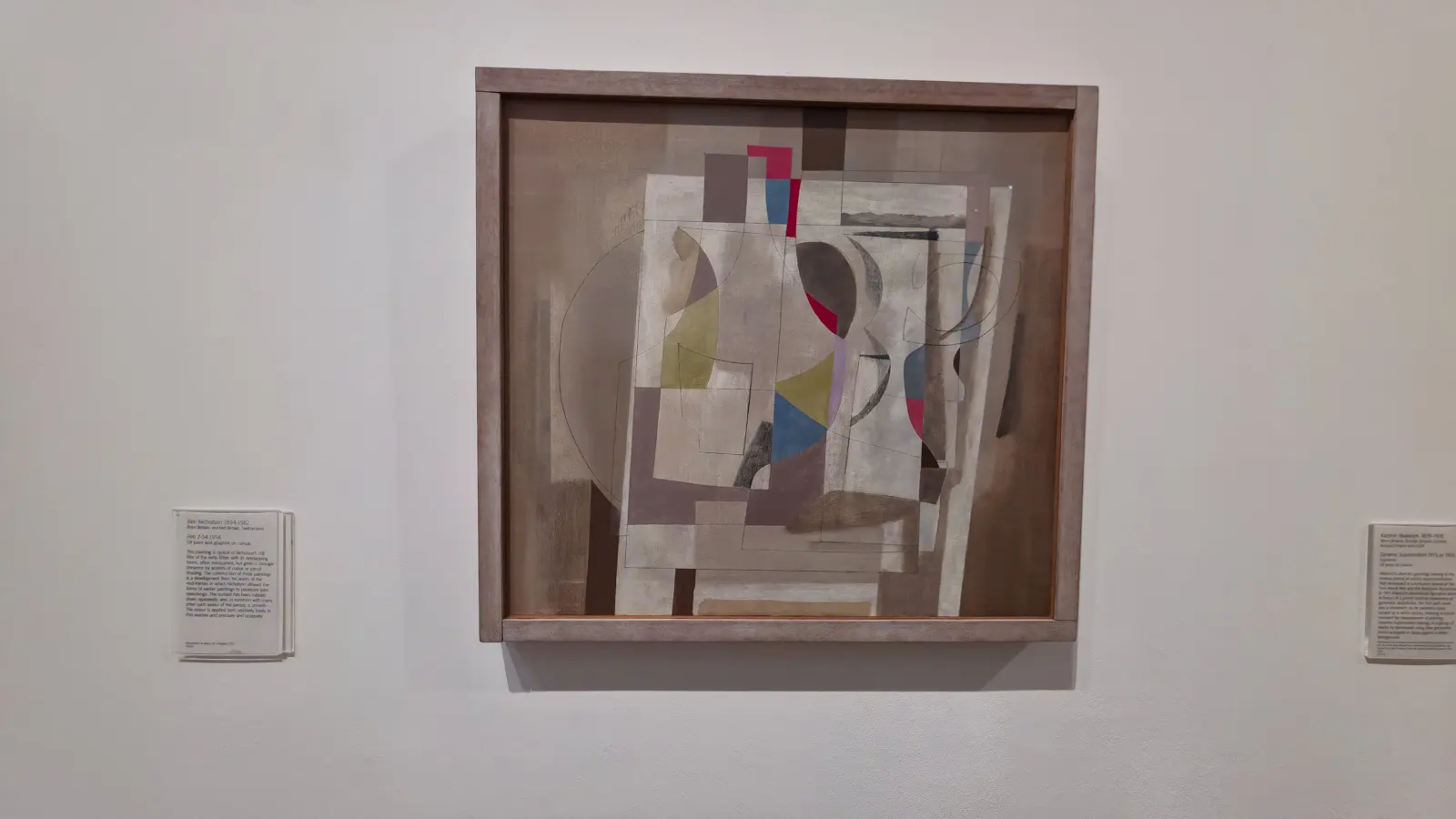
Nicholson’s abstraction is softer and greyer than the continental kind, closer to the light of the Cornish coast where he worked than to the hard primaries of Amsterdam. Standing in front of it, the shift is easy to see. The same basic language, spoken with a different accent.
North to Sweden
By the 1950s the idea had reached Scandinavia, and in Sweden it found one of its sharpest voices in Olle Baertling, whose Ardek opens this post.
Baertling trained in Paris under Fernand Léger, then pared everything back to hard-edged wedges of colour that shoot off the edges of the canvas. He called it open form, the notion that the lines carry on into the space beyond the frame. In 1963, the year he finished Ardek, he took the top prize at the São Paulo Biennial in Brazil. That prize sounds like a footnote, but it points at something bigger. By the 1960s, the story of geometric abstraction had its centre of gravity as much in South America as in Europe.
Across the Atlantic
Nowhere did abstraction travel further, or change more, than in the Americas. Tate hangs these works together under a fitting banner, a view from São Paulo, and the journey runs from New York down to Brazil.
The first stop was New York. Hedda Sterne reached the city in 1941, having fled Romania after narrowly escaping a massacre of Jews in Bucharest, and after years spent in and out of Paris in the 1930s.
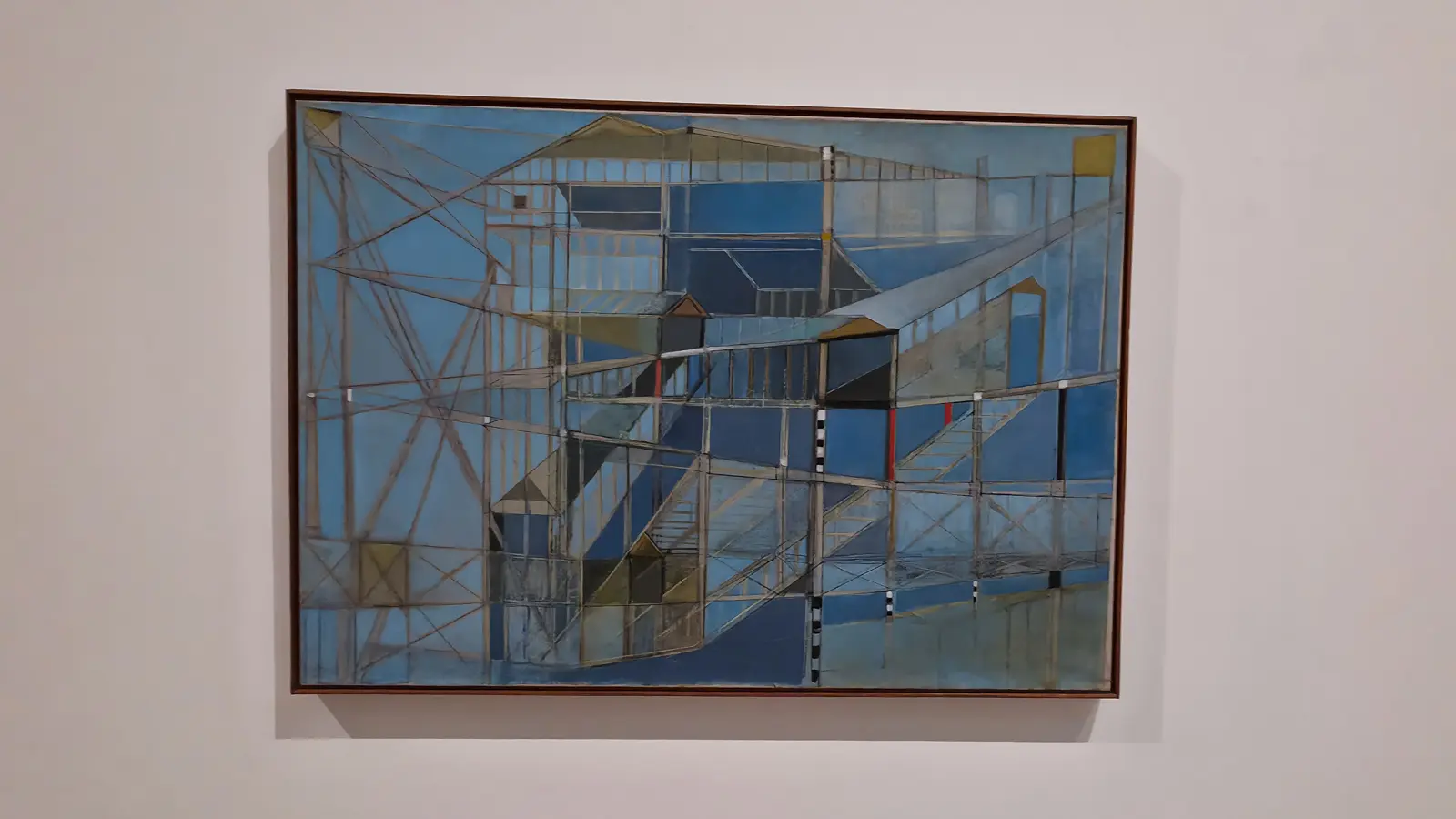
She turned the city itself into abstraction, its bridges and elevated railways broken down into a mass of overlapping lines and planes. New York, she once recalled, moved like a giant carousel that never stopped turning.
Further south, in Buenos Aires, the idea turned playful. In 1946 a Uruguayan artist, Carmelo Arden Quín, helped found a movement with the odd short name Madí, dedicated to breaking the one rule almost every painting had obeyed for centuries: the rectangle.
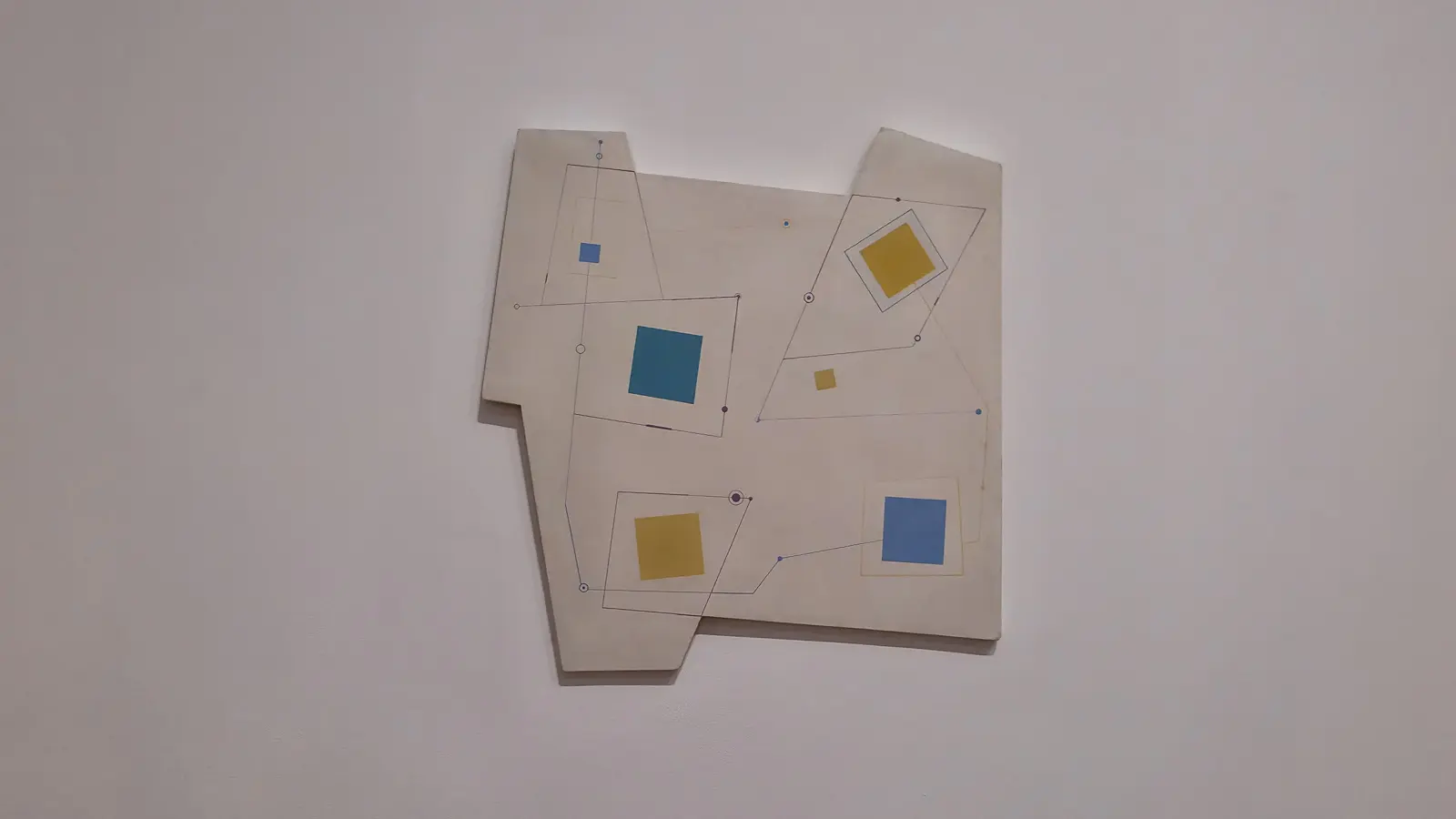
Arden Quín cut the support itself into an irregular shape, so the edge of the work zigzags instead of boxing it in. He said later that it was not Mondrian or Malevich who first made abstraction click for him, but seeing the work of Vantongerloo, the same De Stijl painter hanging a few rooms back. The thread loops right around on itself.
The last stop was Brazil, and the cheekiest work of the lot.
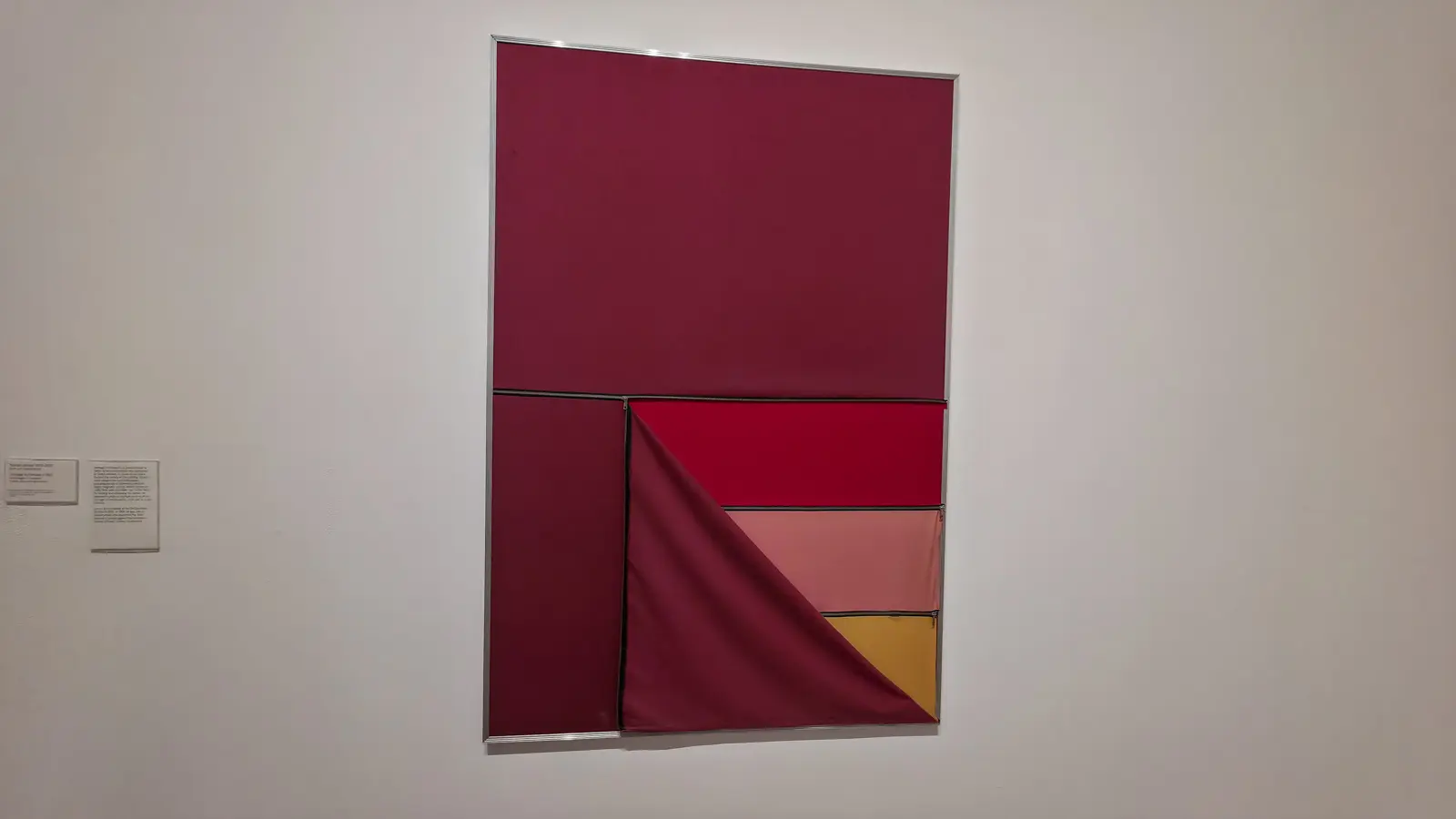
Nelson Leirner made it as a tribute to the Italian artist Lucio Fontana, who slashed his canvases with a knife to open up the space behind them. Leirner swapped the slashes for zips and invited people to open and close them at will, turning the viewer into part of the work. It is a long way from Mondrian’s austere grids, and that is the point. By the time abstraction reached Brazil, it had learned to play.
Bubbly Tips
- Find these in the free collection displays. The abstract rooms are part of Tate Modern’s permanent collection, which costs nothing and needs no booking. You can walk straight to them without a timed ticket.
- Read the labels, because here the story is the point. With a landscape you can just look. With a floating red square, the wall text is what turns a puzzle into a story. On these works the few minutes of reading pay off more than almost anywhere else in the building.
- Start with a name you know, then follow it outward. Find the Mondrian first, since the grid is familiar, then treat the surrounding rooms as a trail leading out of the Netherlands and across the world. It makes the whole wing click into place.
- Look for the São Paulo thread. Tate groups several of these works under the theme of abstraction spreading to Latin America. Once you spot the Swedish, Uruguayan and Brazilian names sitting together, the rooms stop being a jumble and start being a journey.
- Give the strange ones two minutes, not two seconds. The works that look like nothing, a zip, a scatter of bars, a shaped white panel, are the ones with the best stories. Slowing down is the whole trick with abstraction.
- Photography is fine without flash. You can take photos in the collection displays for your own use. Flat, evenly lit abstract works actually photograph very well, so it is a good wing for pictures.
- Pair it with the crowd-pleasers. If abstraction is not your whole day, these rooms sit near the Matisse, the Warhol and the other big names, so you can mix the challenging with the familiar in one visit.
- Take the free tour if it is running. Tate runs free guided tours of the collection through the day. For a wing that rewards a bit of context, having someone point out what to notice is worth the time. Check the board at the information desk when you arrive.
Final Thoughts
I walked into these rooms as someone who used to find abstract painting baffling, and I walked out with a map. Not of the art itself, exactly, but of how one stubborn idea, that a picture need show nothing at all, was carried from a handful of European studios to Britain, to Sweden, to New York and all the way to Brazil, picking up a new accent at every stop.
That is the quiet thrill of these rooms. A Mondrian grid and a zipped-up Brazilian fabric panel look like they have nothing to do with each other, until the line between them comes clear and turns out to cross half a century and most of the world. Loving every piece is not the point, and I did not. But I left knowing something I had not known walking in, which is about the most a gallery can offer.
Until next time!

🌟 Everything You Need to Plan Your Dream Trip in 2026
- 🌟 Luxury Hotels - Find premium stays with Booking.com & Hotels.com
- 🏡 Vacation Rentals - Discover unique properties on VRBO
- 🏞️ Guided Tours - Explore with Viator or GetYourGuide
- 🎫 Attraction Tickets - Skip the lines with Tiqets
- 🚢 Ocean Cruises - Set sail with Cruise Direct
- 📱 International SIMs - Stay connected with Saily
- 🚗 Car Rentals - Budget-friendly options from Discover Cars
- 🌐 Secure VPNs - Browse safely with NordVPN
- 💶 Currency Exchange - Best rates with Wise
- 🗣️ Learn Languages - Master the local language with Babbel and Rosetta Stone