
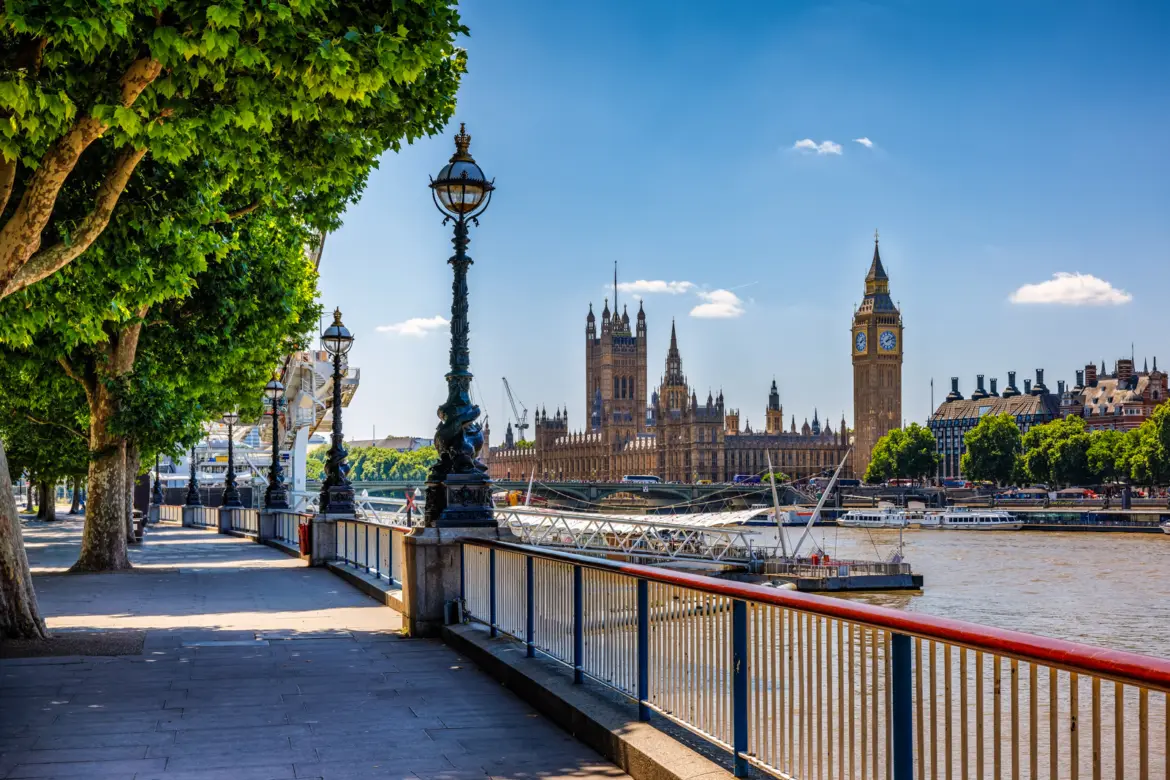
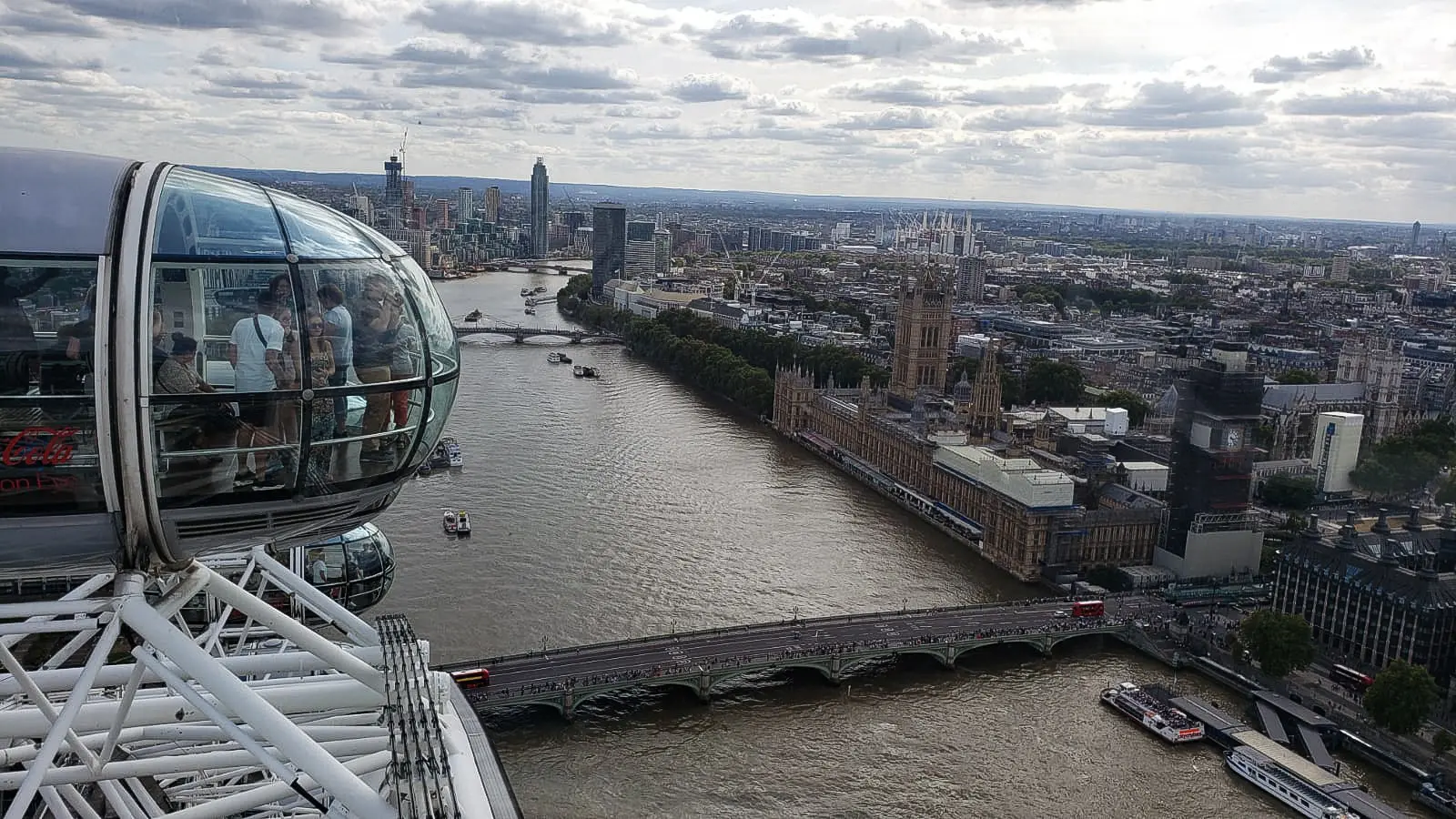
There is a stretch of the South Bank, somewhere between Westminster Bridge and the London Eye, where I always stop. Across the river, the Houses of Parliament line the water like a Gothic cliff face, gold in the afternoon light, with the clock tower at one end keeping time over the whole city. I have walked past dozens of times and it catches my eye every single one. I love the architecture. This is my attempt to explain why, and to sort out what the place is actually called, because almost everyone gets that wrong, myself included for years.
The Houses of Parliament at a Glance
🏛️ Real name · The building is the Palace of Westminster. It houses the Commons, with green benches, and the Lords, with red ones.
🔔 Big Ben is a bell · Big Ben is the 13.7-tonne Great Bell inside the tower, cast at the Whitechapel Bell Foundry. The tower is the Elizabeth Tower, renamed in 2012.
🔥 Younger than it looks · A fire gutted the medieval palace in 1834. Charles Barry and Augustus Pugin rebuilt it as Victorian Gothic, finished around 1870.
🏰 Two towers, not one · The slim northern clock tower is the Elizabeth Tower at 96 metres. The bulky square southern one is the taller Victoria Tower at 98.5 metres.
🪵 One very old room · Westminster Hall dates from 1097 and survived the fire. Its hammer-beam roof, built for Richard II in 1393, is the largest medieval timber roof in Northern Europe.
🎟️ Getting inside · Paid guided and audio tours run on Saturdays and during recess. Watching a debate from the public galleries is free, with no booking, when Parliament sits.
📸 Best view · Shoot from the South Bank between Westminster Bridge and the London Eye. Late afternoon turns the stone gold.
What it is actually called
Start with the names, because they trip up nearly everyone.
The building is the Palace of Westminster. You will also hear it called the Houses of Parliament, because it holds the two houses of the UK Parliament: the House of Commons, with its green benches, and the House of Lords, with its red ones. “Westminster” on its own usually means the same place, or the area around it.
Then there is Big Ben. Here is the bit most people get wrong, and I did too. Big Ben is not the tower. It is the nickname of the Great Bell that hangs inside the tower. The tower itself is the Elizabeth Tower, renamed in 2012 for Queen Elizabeth II‘s Diamond Jubilee. Before that it was simply the Clock Tower. The clock is the Great Clock. So when you point your camera at “Big Ben,” you are really photographing the Elizabeth Tower and listening for Big Ben.
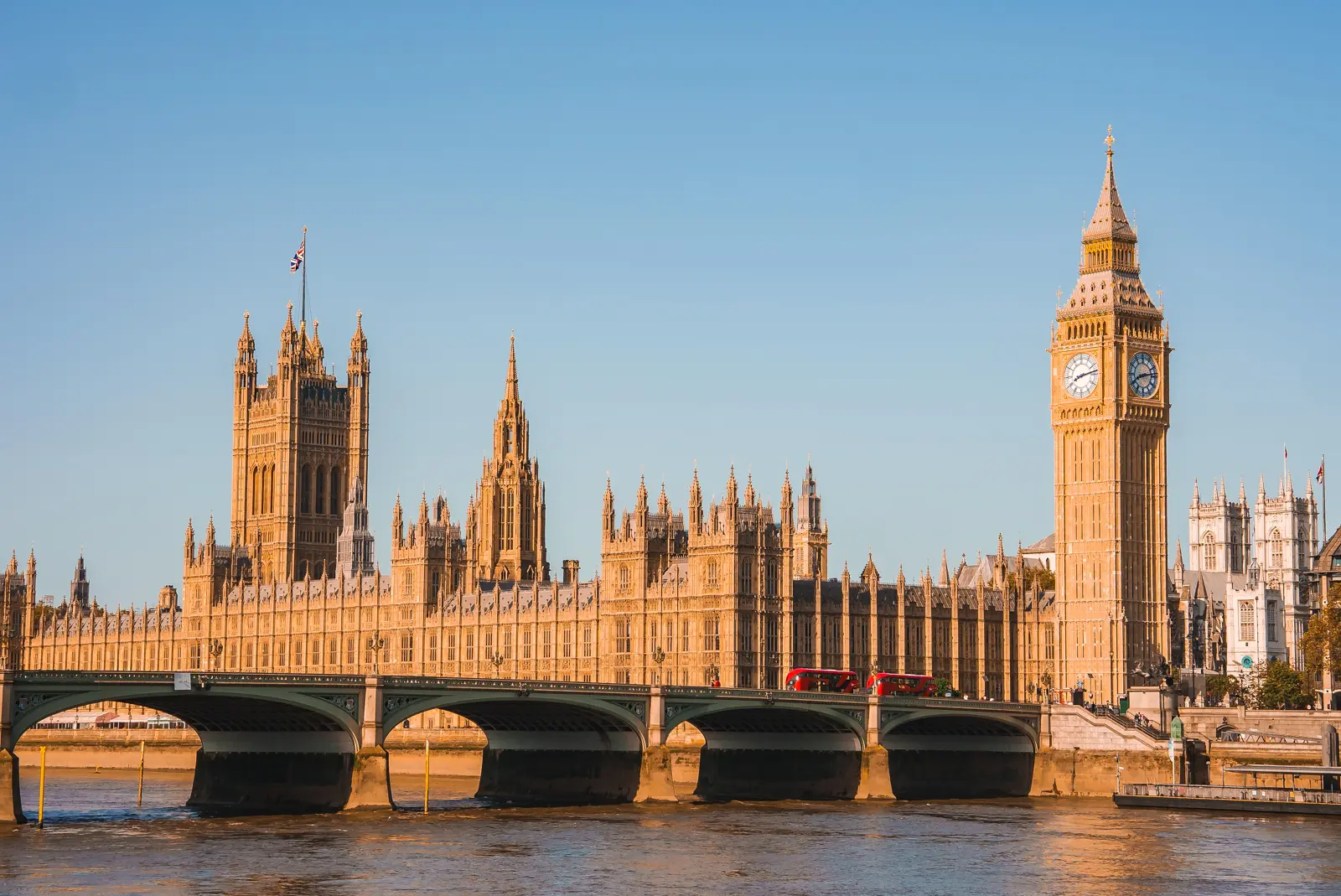
A Gothic palace that is younger than it looks
The first surprise is the age. The building looks medieval, all spires and pinnacles and pointed windows, but most of it is Victorian. On 16 October 1834, a fire started by burning the Exchequer’s old wooden tally sticks tore through the original medieval palace and destroyed almost all of it. Only a few parts came through, chief among them Westminster Hall.
What rose from the ashes is one of the great works of the Gothic Revival, and it came from an odd pairing. The 1835 competition was won by Charles Barry, a Westminster-born architect whose own taste ran to calm, classical symmetry. For the Gothic detail he leaned on Augustus Pugin, a young draughtsman who lived and breathed medieval design. Barry gave the palace its ordered plan and its long, even river front, almost 290 metres of it. Pugin wrapped that frame in Gothic dress. The two did not always see eye to eye. Pugin, passing the finished building by boat, is said to have dismissed it as “All Grecian, sir; Tudor details on a classic body”. The foundation stone went down in 1840 and the work dragged on for thirty years. Neither man lived to see it finished.
The roofline is where Barry’s order gives way to Pugin’s imagination. It bristles with pinnacles and turrets, broken by the great towers at each end and the octagonal Central Tower in the middle, which looks purely decorative but was in fact built as a giant ventilation shaft to draw stale air out of the chambers.
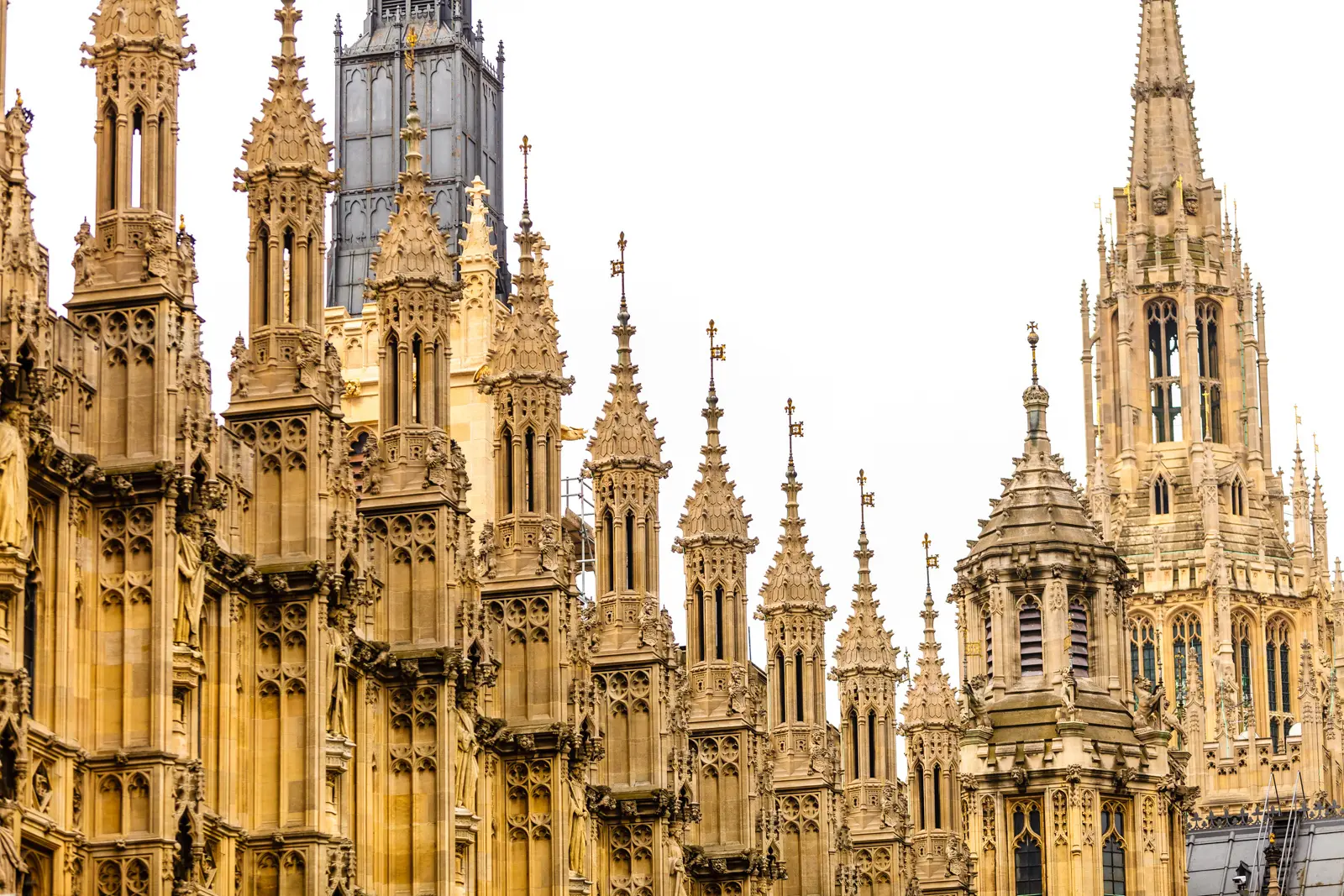
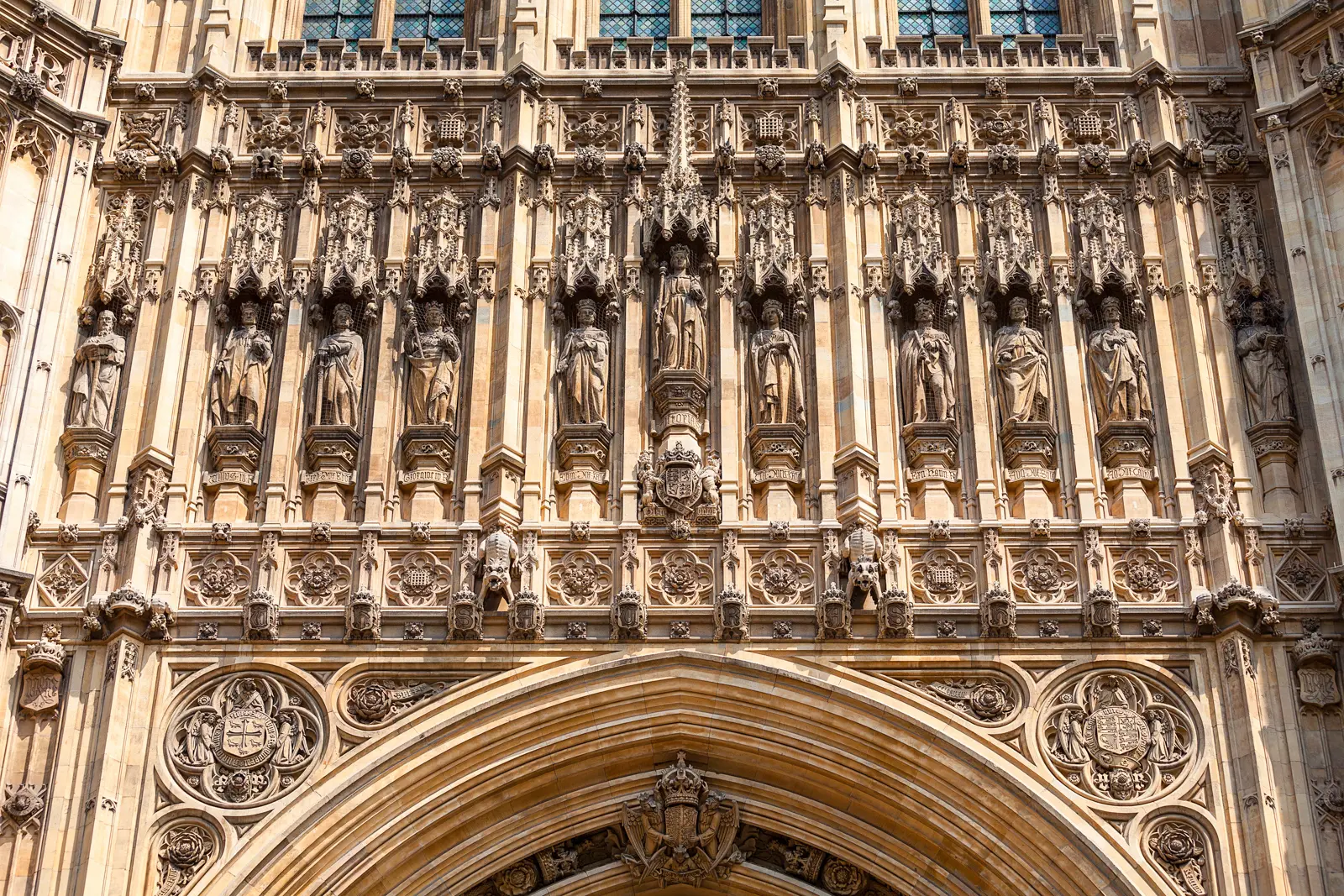
Come closer and the same handful of motifs repeat across every surface: Tudor roses, fleurs-de-lis and the crowned portcullis that is Parliament’s own emblem. Pugin believed in total design. He worked the heraldry into the stone outside and, inside, into the wallpaper, the stained glass, the encaustic floor tiles and the metalwork, right down to the door furniture.
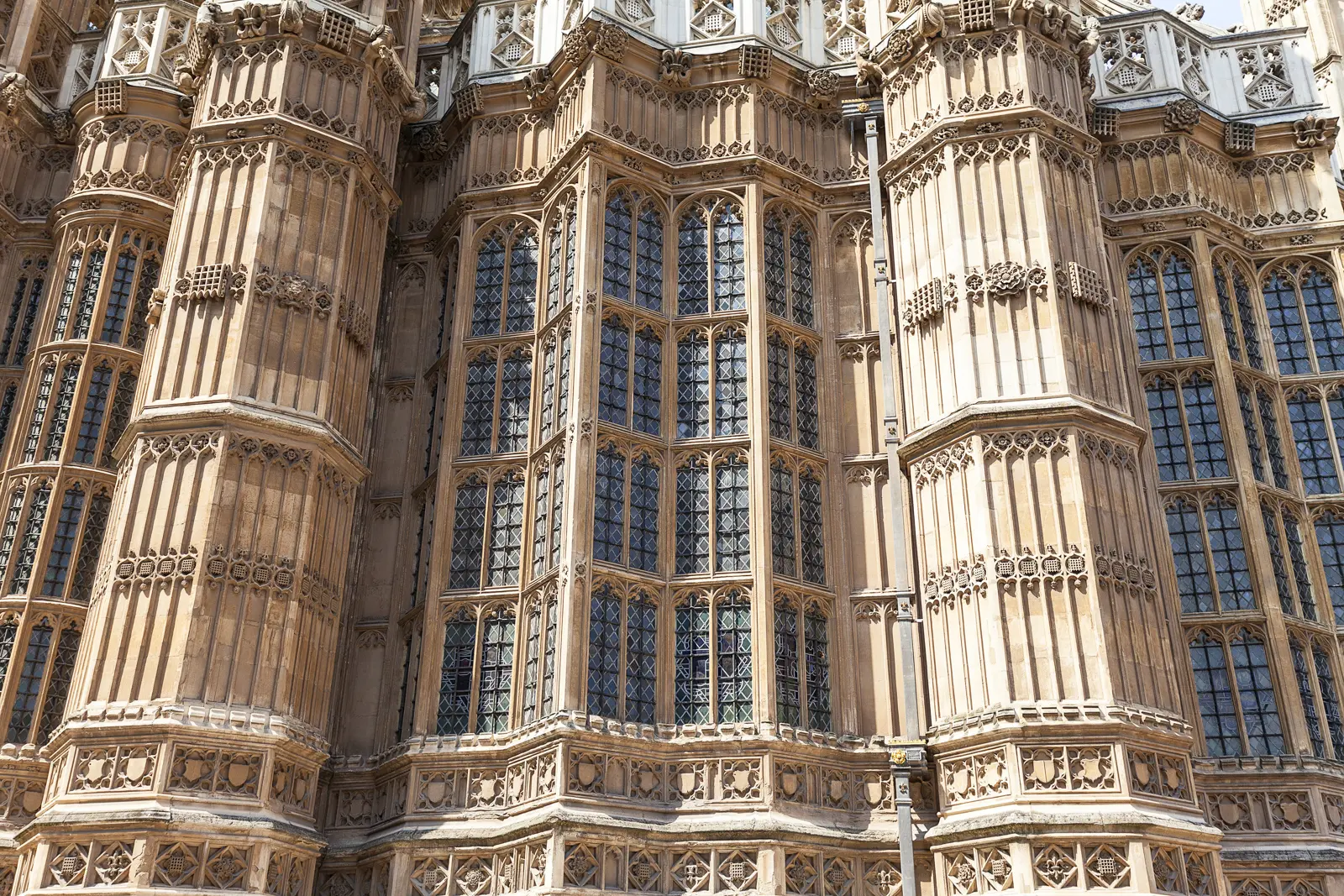
The walls carry people, too. Stone kings and queens stand in their niches along the facade, a long line of English monarchs looking down on the street.
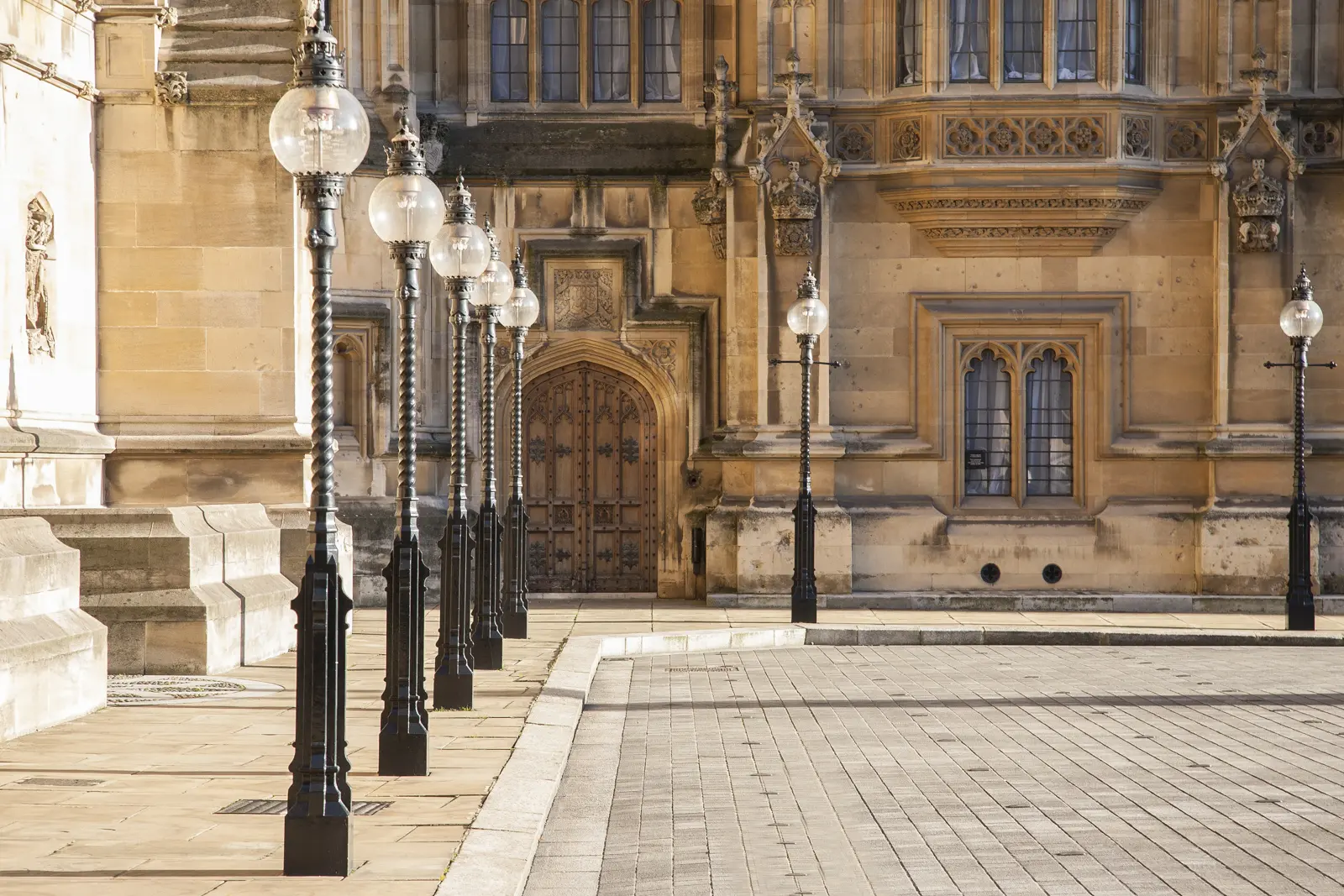
Even the lamps are part of the scheme. The cast-iron standards in the courtyards carry the same crowns and curling ironwork as everything around them.
The part that survived
Tucked inside all that Victorian Gothic is something far older. Westminster Hall dates from 1097, which makes it more than nine centuries old, and it came through the 1834 fire when almost nothing else did. Its hammer-beam roof, added in the 1390s under Richard II, is the largest medieval timber roof in northern Europe and spans the hall with nothing holding it up in the middle.
The hall has carried the weight of English history. Monarchs have lain in state here, Queen Elizabeth II among them in 2022. Kings have been put on trial here, including Charles I. You cannot see inside without going in, but knowing it is there changes how you read the building from across the river. The newest-looking palace in London is built around one of its oldest rooms.
Big Ben and the Elizabeth Tower
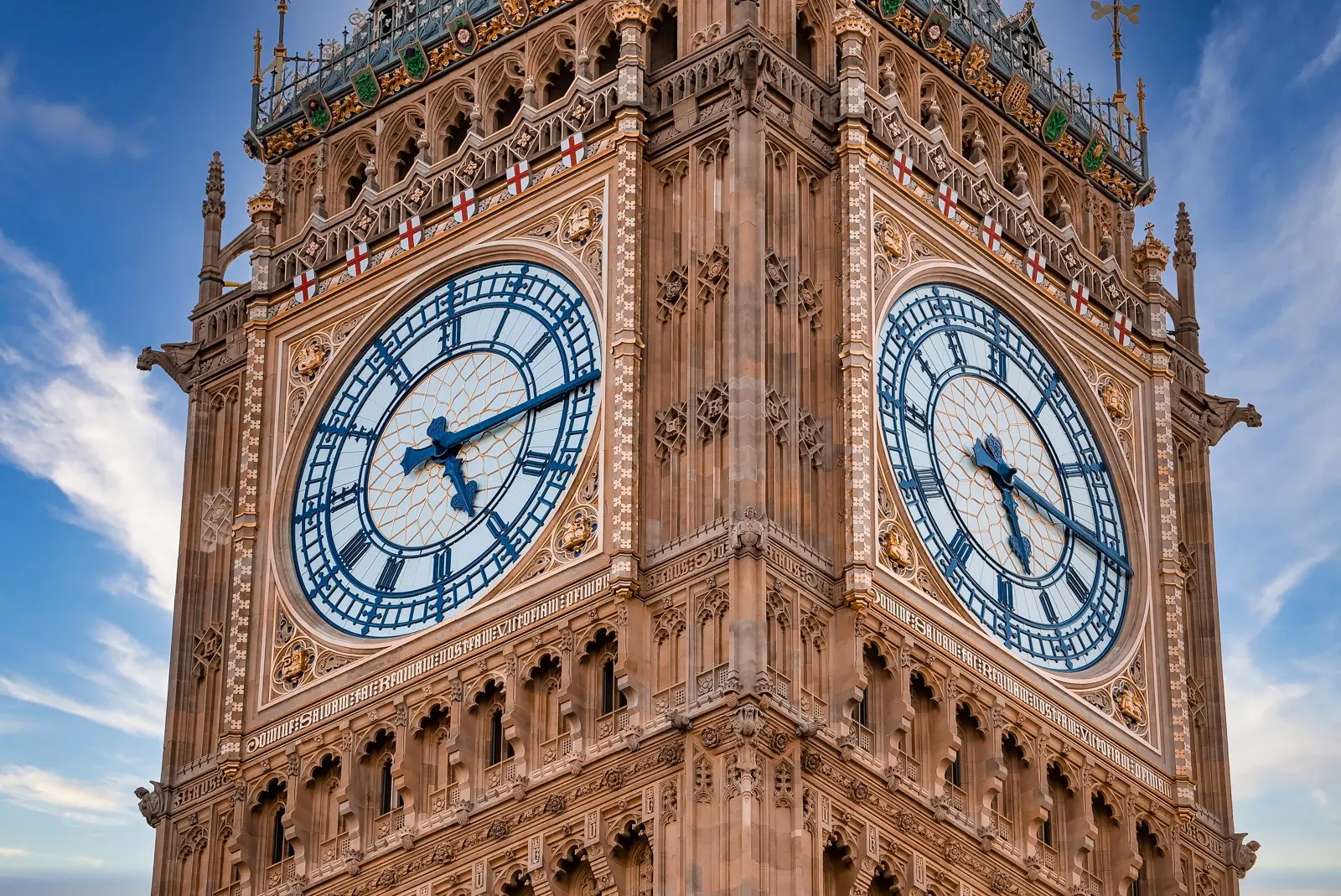
The clock tower stands at the north end, nearest Westminster Bridge. It is about 96 metres tall, with a 334-step staircase and no lift to the belfry. The Great Clock behind the four dials was known for its accuracy from the day it started in 1859. Each dial is seven metres across, and the minute hands are longer than a car. At night, a small light above the clock shines whenever Parliament is sitting late.
Big Ben, the Great Bell, hangs above the clock. It weighs about 13.7 tonnes, was cast at the Whitechapel Bell Foundry, and is thought to be named after Sir Benjamin Hall, the official in charge when it was installed. It cracked early in its life and carries the crack to this day, which is part of why its chime has that particular tone.
When I visited in 2019, I did not hear it and I barely saw it. The whole tower was wrapped in scaffolding for a major restoration that ran from 2017 to 2022, the largest conservation project in its history. The work cleaned the stone, overhauled the clock, and turned up a surprise: the dials and hands had originally been Prussian blue, not black, and they were put back to blue. The scaffolding is long gone now and the tower is in full view again, chiming since late 2022.
Two towers, not one
Here is the other mix-up worth sorting out. The palace has two great towers, and from a distance they are easy to confuse.
The Elizabeth Tower, the clock tower, is the slender one at the north end. The Victoria Tower is the huge square one at the south end, and it is actually the taller of the two, at about 98 metres. For a few years after it was finished around 1860, it was the tallest secular building in the world.
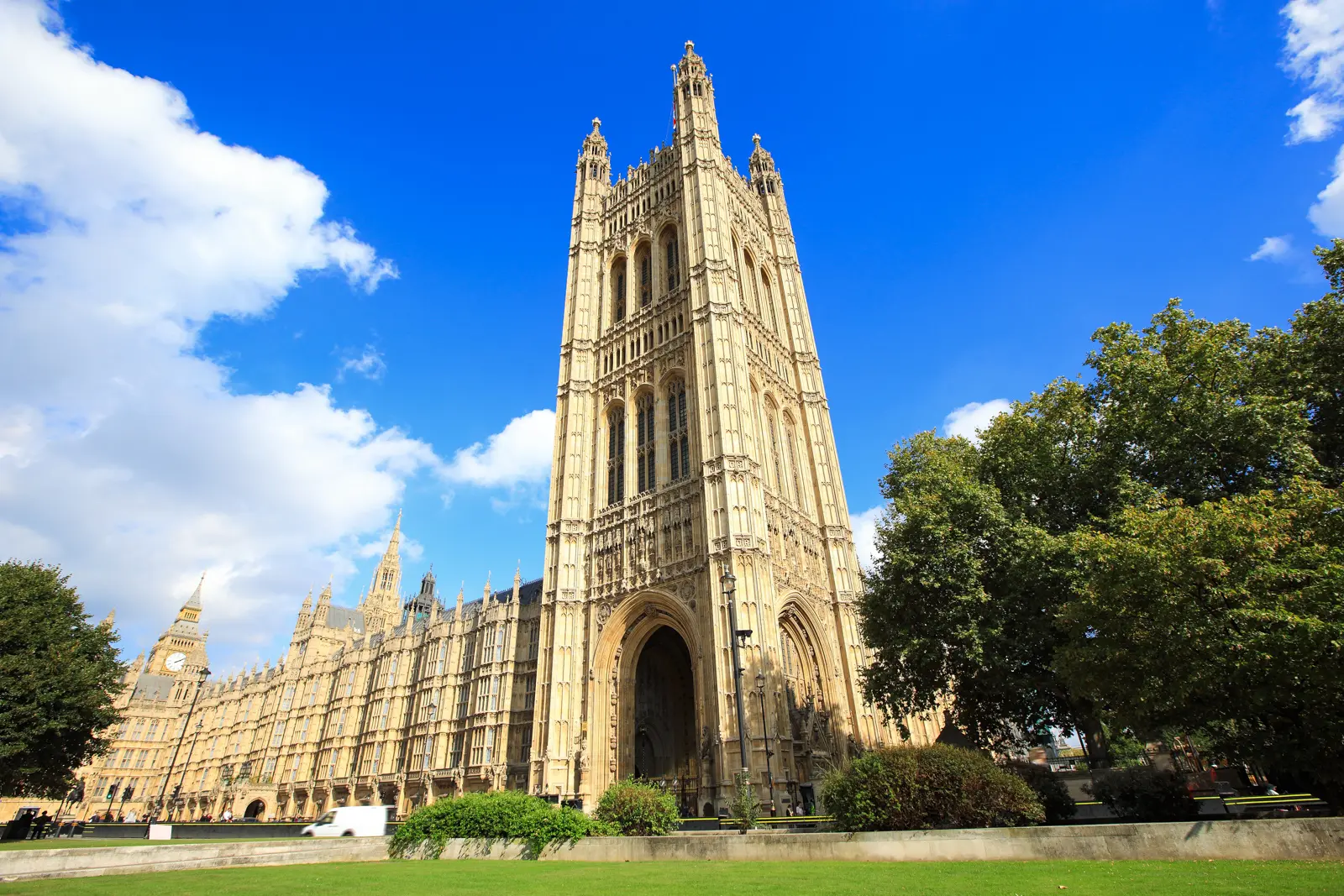
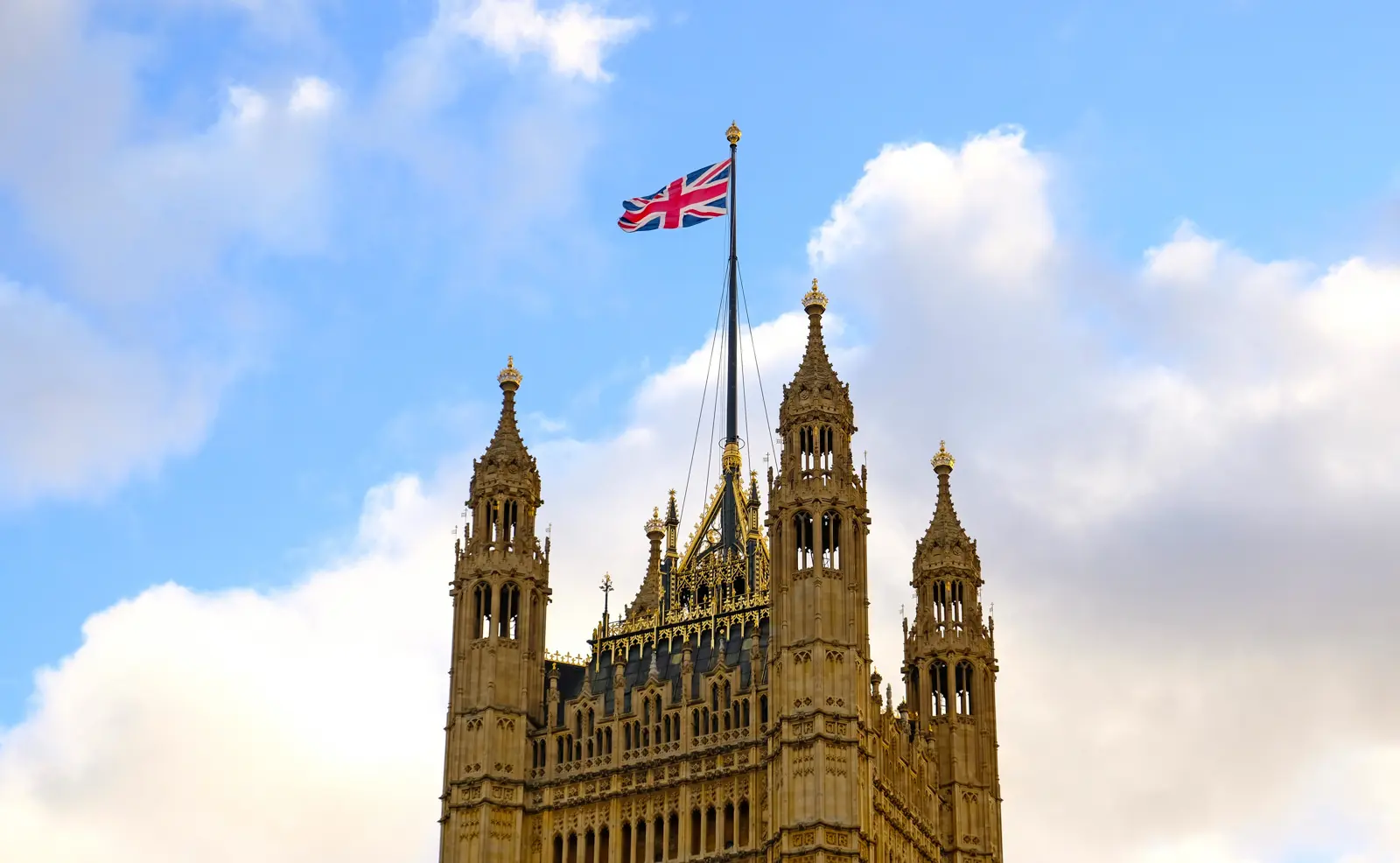
The Victoria Tower earns its bulk. Behind those walls sit the Parliamentary Archives, about 5.5 miles of steel shelving over twelve floors, holding the master copy of every Act of Parliament since 1497 along with treasures like an original Bill of Rights and the death warrant of Charles I. At street level is the Sovereign’s Entrance, the door the monarch uses for the State Opening of Parliament. The flag overhead tells you who is in: the Union Flag when either House is sitting, and the monarch’s own Royal Standard when the Sovereign is inside.
Can you go inside?
I did not go in, and you cannot simply wander through. But there are two ways in, and I am booking one for next time.
You can take a tour. Paid guided and audio tours run on Saturdays and on weekdays when Parliament is in recess, and they take you through Westminster Hall and both chambers. You book through the official UK Parliament website. Separately, when Parliament is sitting, you can watch debates from the public galleries of the Commons or Lords for free, with no booking needed, though you pass through airport-style security to get in. Climbing the Elizabeth Tower itself is a separate, very limited tour that sells out quickly.
Bubbly Tips
- Shoot it from the South Bank. The classic view is from the river’s south side, between Westminster Bridge and the London Eye. Morning light catches the river front; late afternoon turns the stone gold.
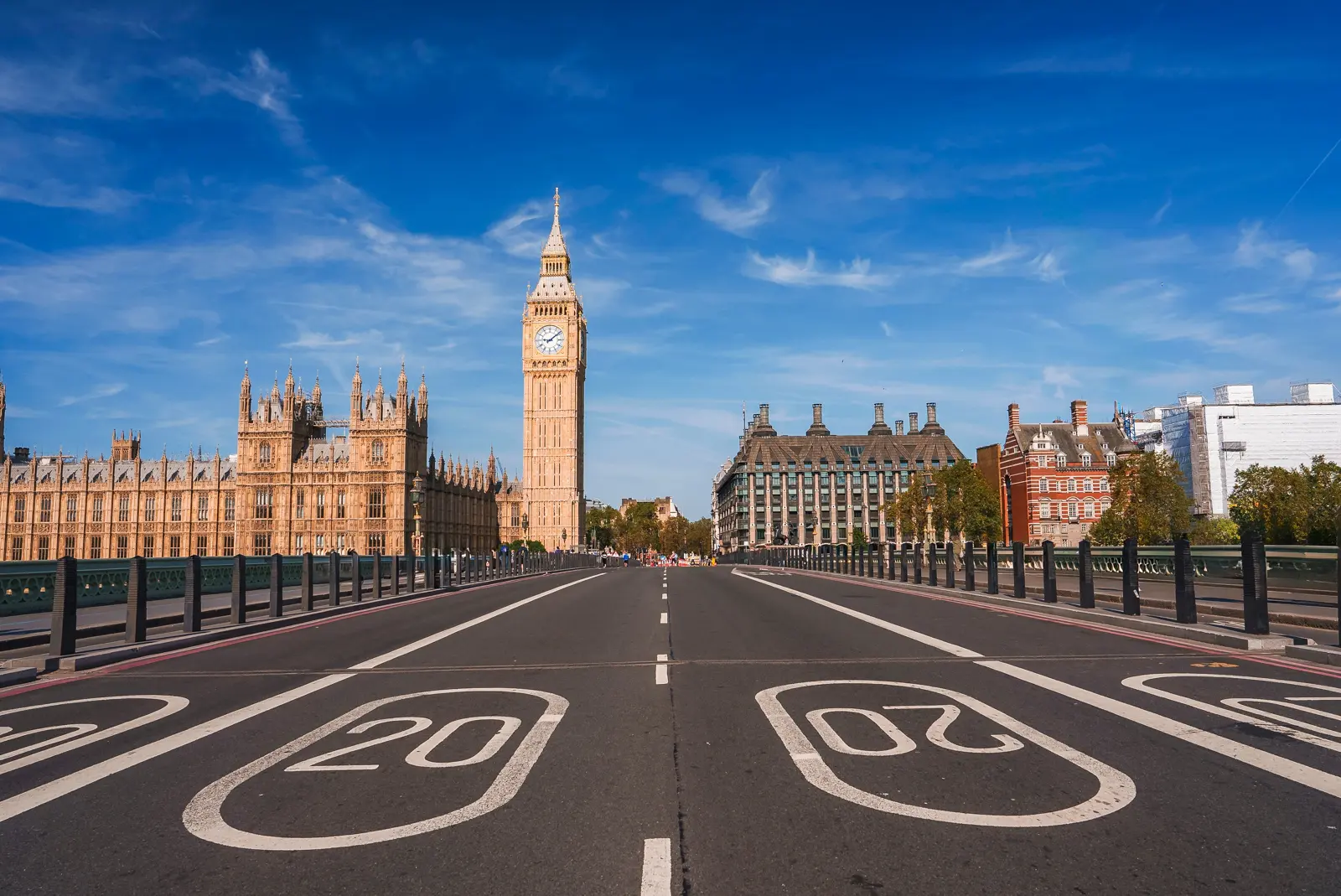
- Walk across Westminster Bridge. The bridge gives you the tower head-on and the whole river front in one sweep. The south end has the postcard angle.
- Know which tower is which. The clock tower is the Elizabeth Tower (Big Ben). The big square one is the Victoria Tower. Getting it right is half the fun.
- Book tours well ahead. Guided and audio tours run mainly on Saturdays and during recess, and they sell out. Book through the official UK Parliament site before you travel.
- Watch a debate for free. When Parliament is sitting, the public galleries are free and need no booking. It is the cheapest way inside, security checks aside.
- Listen on the hour. Big Ben chimes again after its restoration. Time your walk for the top of the hour to catch the full Westminster Quarters and the strike.
- Look for the blue. Since the restoration, the clock dials are Prussian blue, their original Victorian colour. A zoom lens helps, or just look closely from the bridge.
- Make a half-day of it. Westminster Abbey is next door, the London Eye and the South Bank are across the river, and St James’s Park is a short walk. The area rewards a slow afternoon.
Final Thoughts
For a building I have never set foot inside, the Palace of Westminster has given me a great deal. A thousand years of history folded into one river front, a Victorian fantasy of the Middle Ages built around a hall from 1097, and a clock tower whose real name almost nobody uses. I still stop on the South Bank every time.
Next time I am booking a tour, so I can finally see Westminster Hall and stand under that roof. Until then, the view from across the water is more than enough. Some buildings you admire from a list. This one I keep coming back to on purpose.
Until next time!

🌟 Everything You Need to Plan Your Dream Trip in 2026
- 🌟 Luxury Hotels - Find premium stays with Booking.com & Hotels.com
- 🏡 Vacation Rentals - Discover unique properties on VRBO
- 🏞️ Guided Tours - Explore with Viator or GetYourGuide
- 🎫 Attraction Tickets - Skip the lines with Tiqets
- 🚢 Ocean Cruises - Set sail with Cruise Direct
- 📱 International SIMs - Stay connected with Saily
- 🚗 Car Rentals - Budget-friendly options from Discover Cars
- 🌐 Secure VPNs - Browse safely with NordVPN
- 💶 Currency Exchange - Best rates with Wise
- 🗣️ Learn Languages - Master the local language with Babbel and Rosetta Stone