
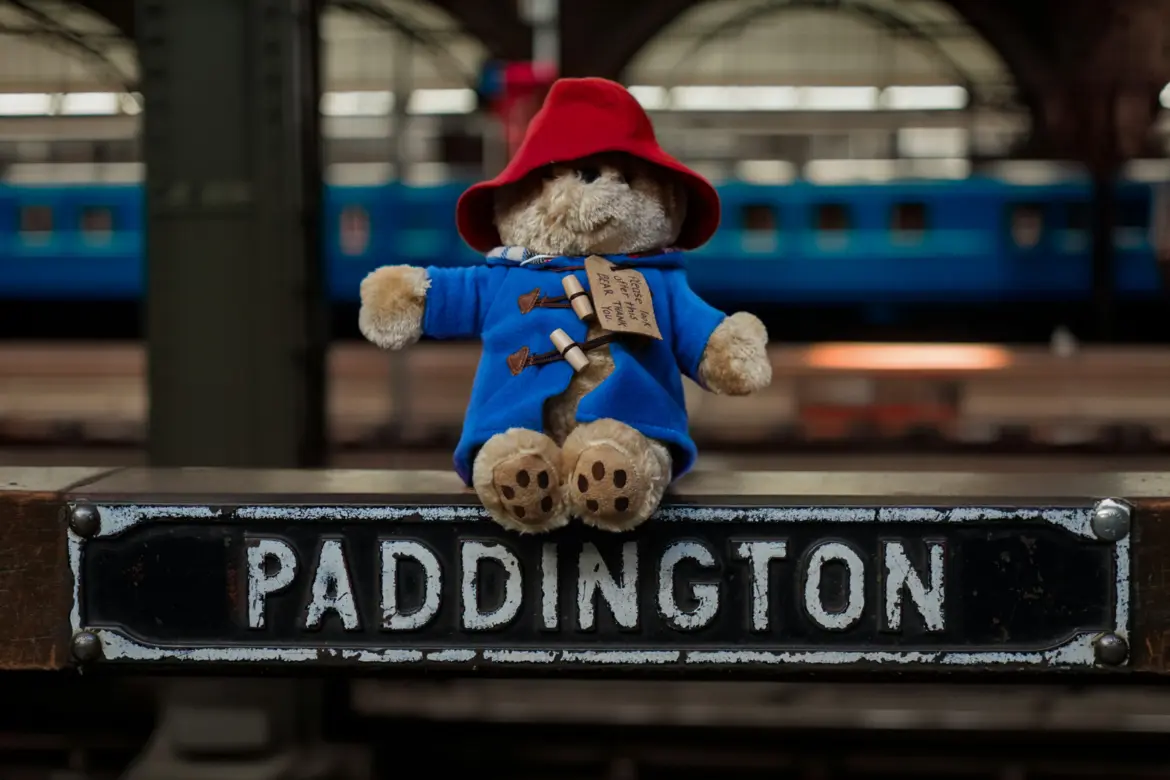
I have been a Paddington fan for as long as I can remember: the books first, then the films, and somewhere along the way a small bear in a red hat and blue duffle coat became one of the fixtures of my love of London. There is even a real bear of my own now, but more on him later.
This walk is my way of spending a day in his London. Not a list of film sets, because the movies mix real streets with studio trickery, but the real West London that stands in for Paddington’s world: the station that named him, the canal and the colourful streets nearby, and the great museum where a family day out belongs. Marmalade sandwich optional, but encouraged!
Paddington’s London at a Glance
🧸 Start on Platform 1 · Paddington Station, designed by Brunel and opened in 1854, gave the bear his name. A bronze statue by Marcus Cornish, unveiled by author Michael Bond in 2000, sits under the clock, and there is a dedicated Paddington shop.
🚤 Little Venice · A short walk north, where the Grand Union and Regent’s canals meet at Browning’s Pool, lined with narrowboats, cafés and white stucco houses.
🎨 Notting Hill and Portobello Road · Pastel terraces and, on Saturdays, one of the world’s best-known antiques markets.
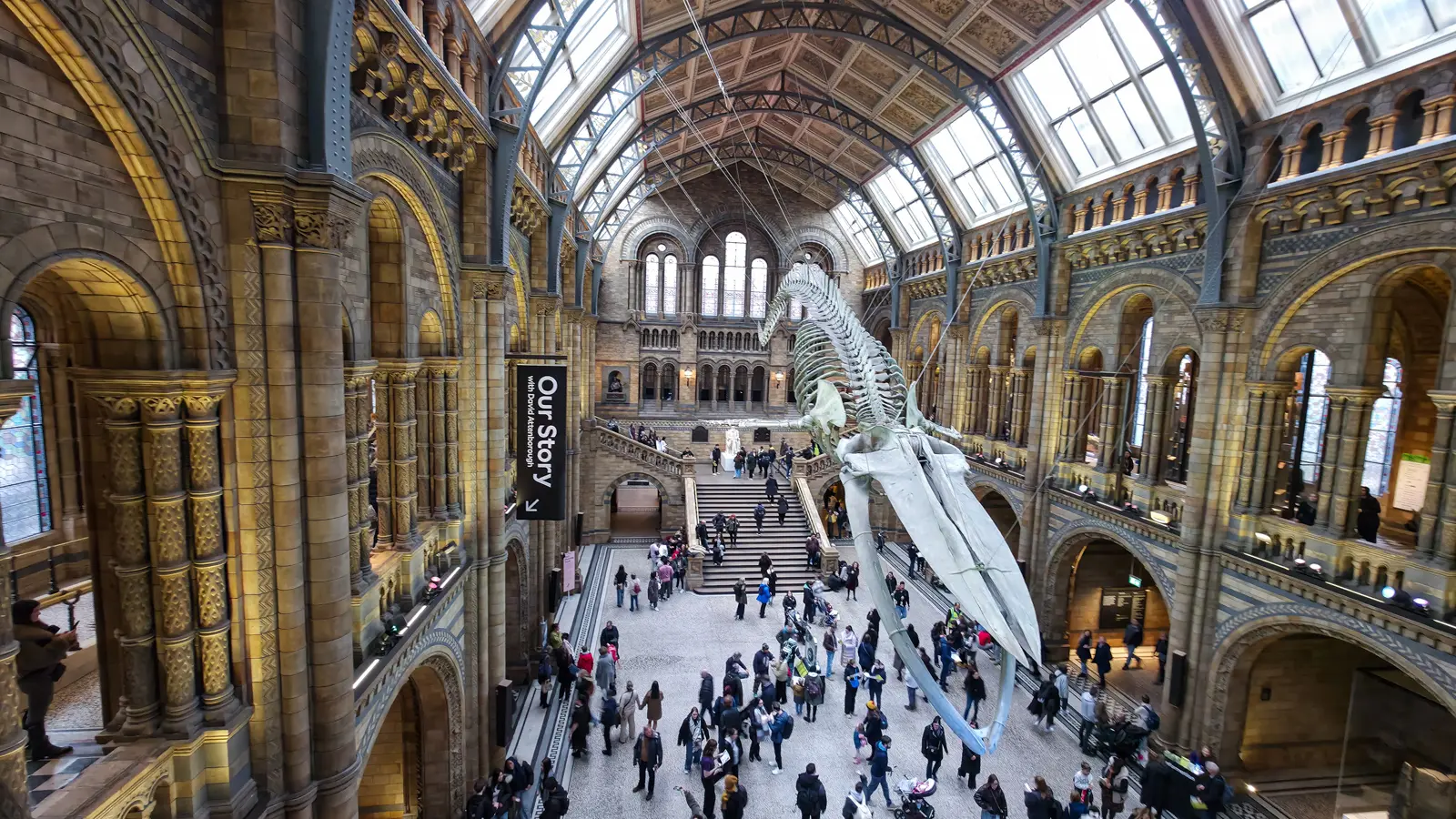
🐋 The Natural History Museum · A free family day out in South Kensington, crowned by Hope, the 25-metre blue whale skeleton in Hintze Hall.
💡 Tip · Bring a marmalade sandwich. Not essential, entirely in the spirit of the day.
Where It All Starts: Paddington Station
There is no better place to begin than the station itself, because it is the reason the bear is called Paddington at all. The author Michael Bond introduced him in the 1958 book “A Bear Called Paddington”, and named him after this station because Bond and his wife lived nearby. In the story, a small bear from darkest Peru is found on the platform with a label round his neck reading “Please look after this bear”, and the Brown family take him home.
The station is worth slowing down for on its own. It opened in 1854 to the design of Isambard Kingdom Brunel, and the sweep of its wrought-iron and glass roof is one of the great pieces of Victorian railway engineering, now Grade I listed. Above the concourse hangs the ornate station clock, and on Platform 1 a bronze statue of Paddington sits on his suitcase. It was made by the sculptor Marcus Cornish and unveiled by Michael Bond himself in 2000. There is a dedicated Paddington shop in the station too, for anyone wanting a bear of their own.
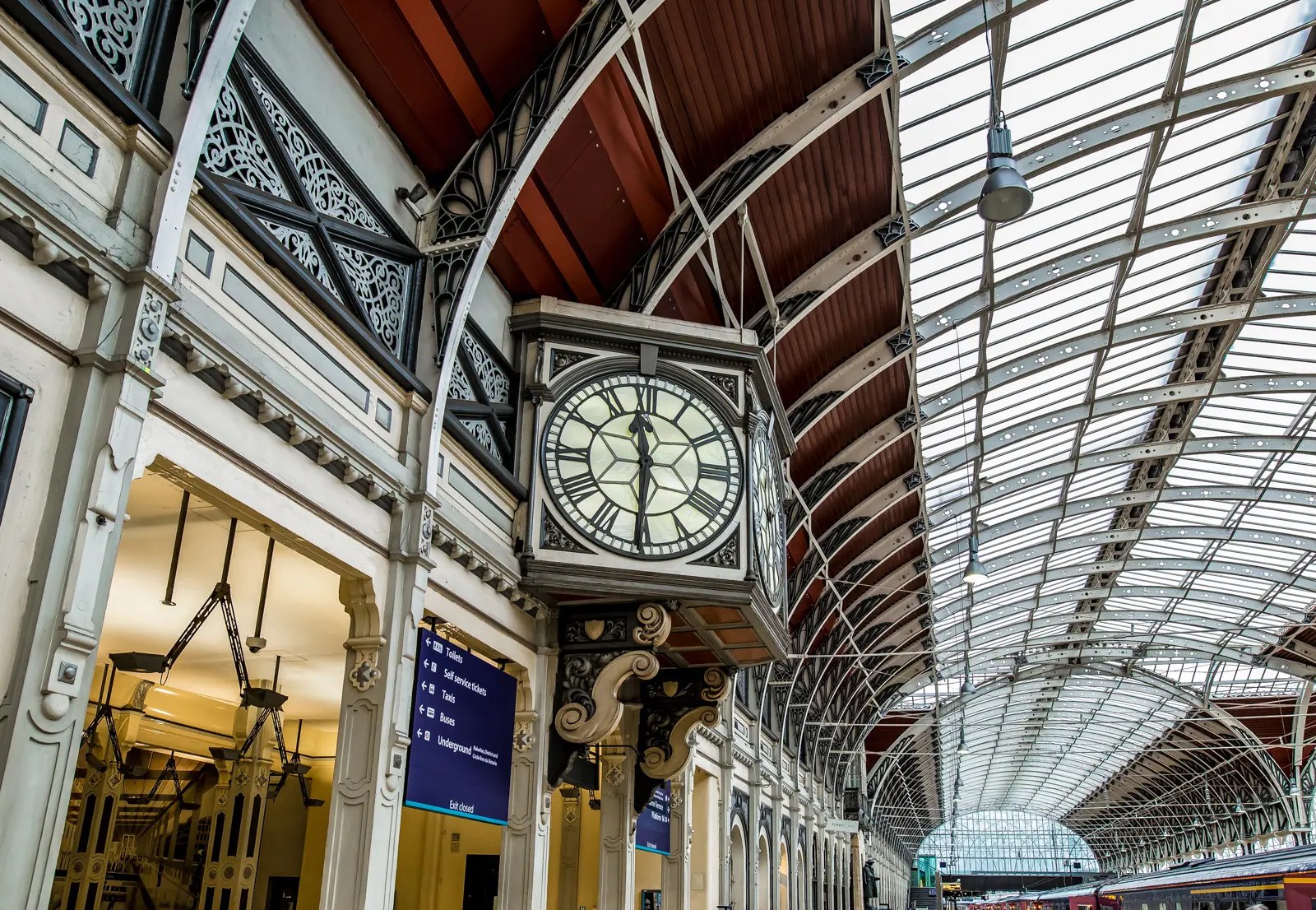
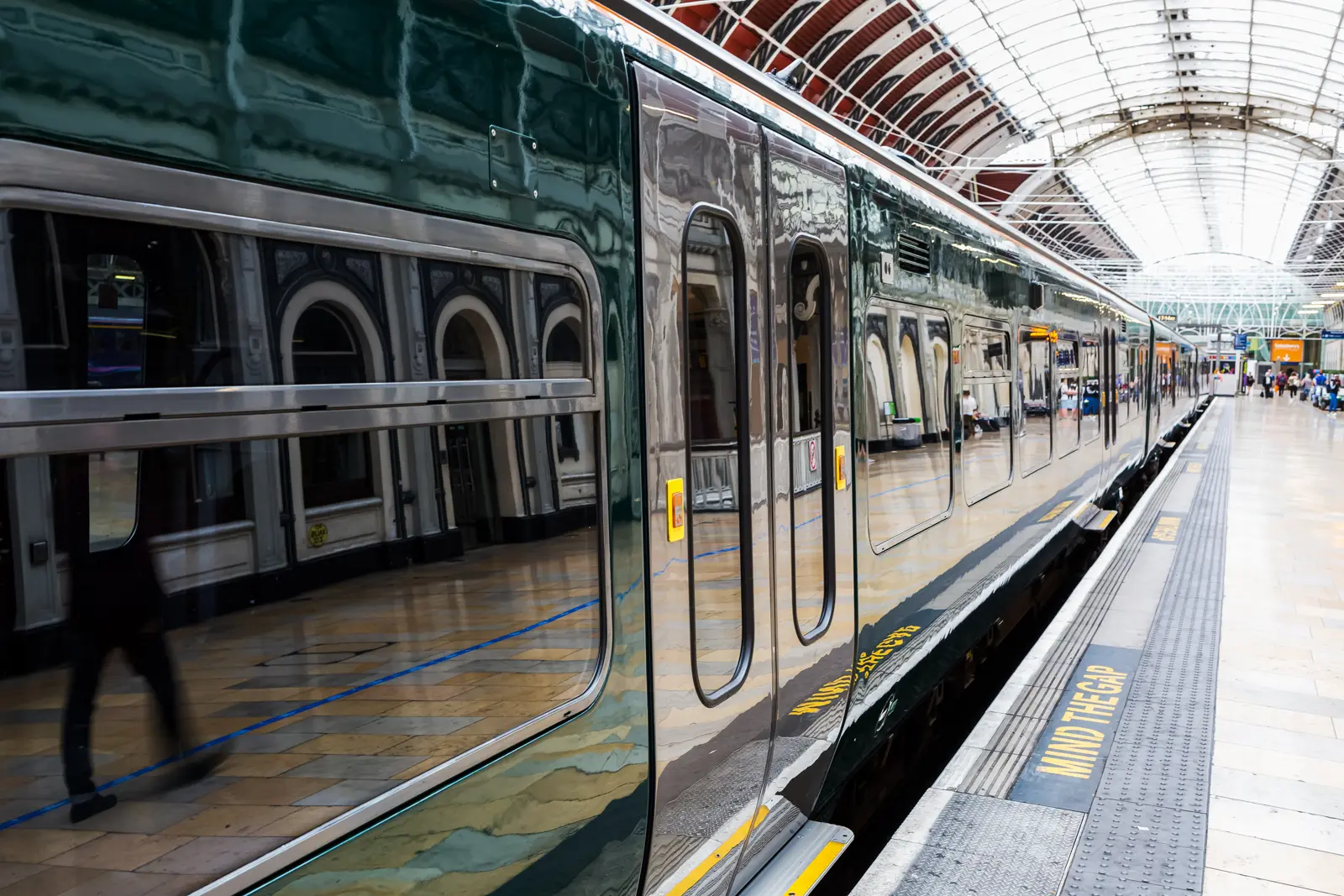
Beyond the statue and the shop, the working station is part of the appeal. This is the terminus for trains heading west out of London, and the platforms have their own quiet drama at the gap between train and edge, where a small bear once stood waiting to be found.
Along the Water: Little Venice
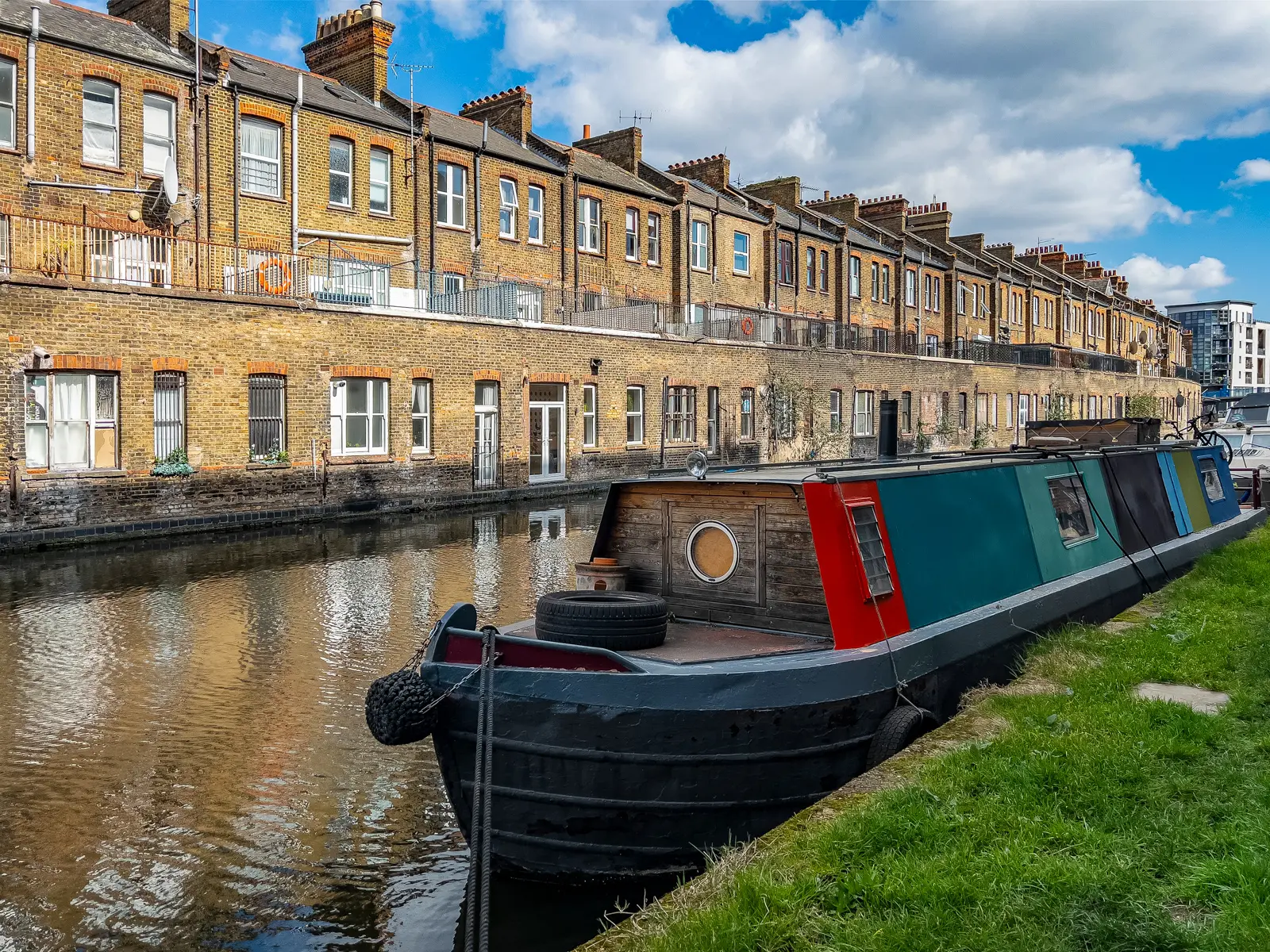
A short walk north of the station, the noise of the trains gives way to still water. Little Venice is the name given to the pretty basin where the Paddington arm of the Grand Union Canal meets the Regent’s Canal, lined with moored narrowboats, waterside cafés and grand white stucco houses. It is thought to have been named by the poet Robert Browning, who lived nearby in the 1860s, though some credit Lord Byron instead, so the origin stays a pleasant mystery.
This is the gentlest part of the day. The towpath runs on towards Camden in one direction and back to Paddington Basin in the other, and on a quiet morning it is all reflections, painted boats and ducks. Paddington himself would approve of somewhere this unhurried, ideally with a sandwich to hand.
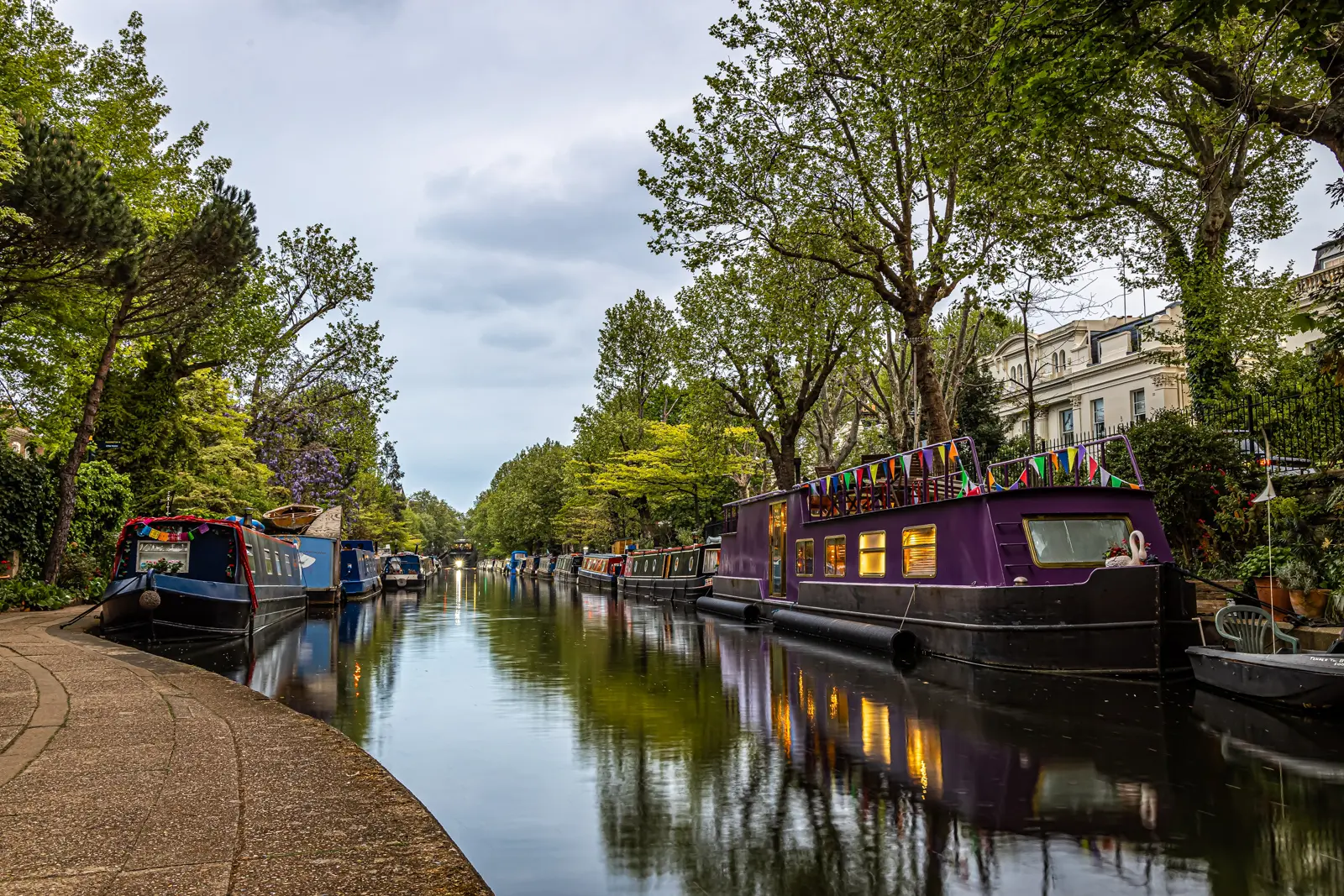
The narrowboats are homes, not props, so the towpath rewards a slow wander rather than a quick photo. Some have gardens on their roofs, others sell coffee or books from a hatch. Following the water, the brick terraces close in, the canal narrows, and the whole scene sits a world away from the station a few minutes behind.
Colour and Market Day: Notting Hill and Portobello Road
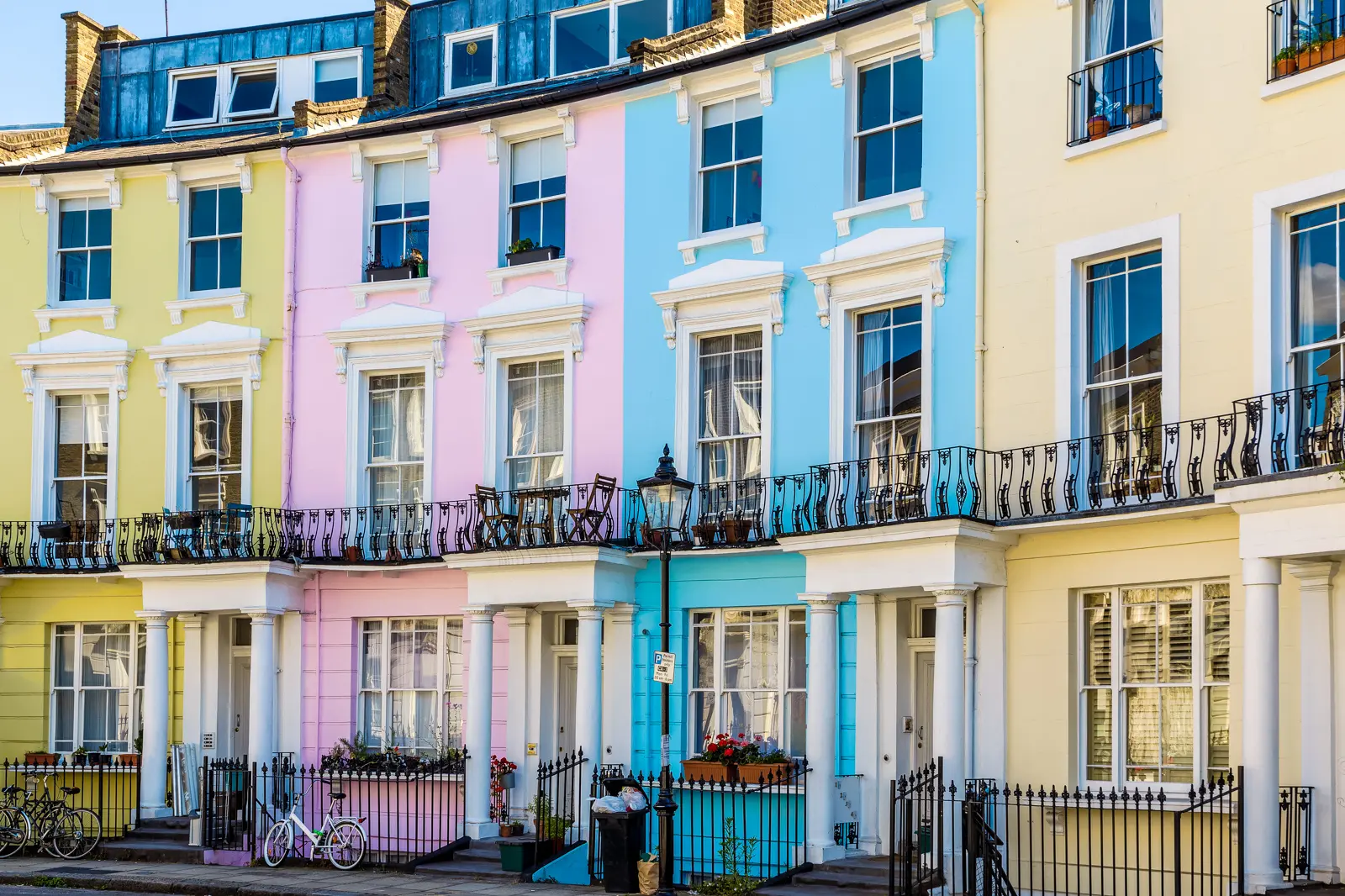
Keep heading southwest and the streets that launch a thousand postcards begin. Notting Hill is famous for its terraces painted in sherbet colours, house after house in pink, blue, yellow and mint, with black railings and front steps. It is one of the most photographed neighbourhoods in London, and on a bright day the pastel row really is as pretty as it looks.
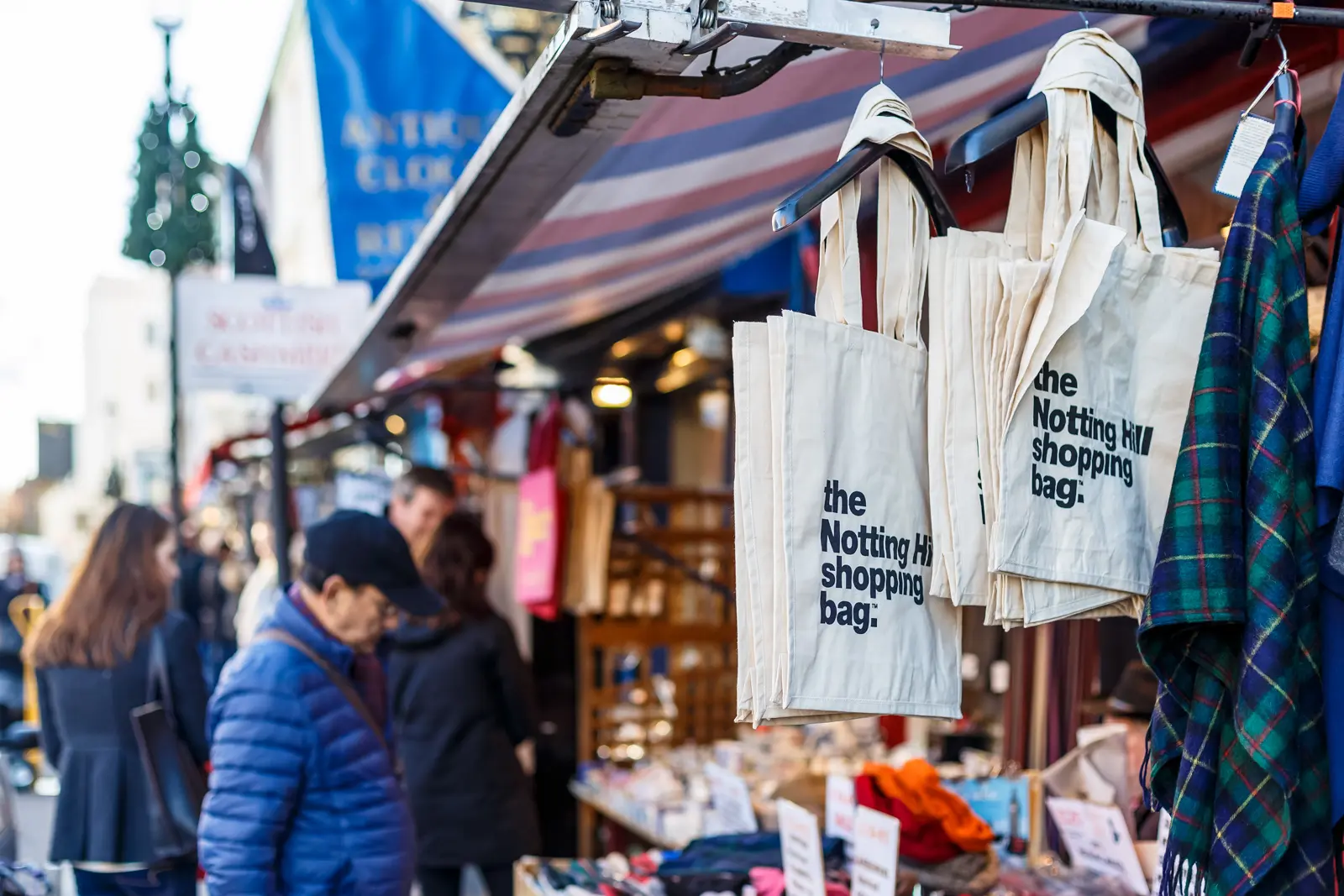
The heart of the area is Portobello Road and its market, one of the best known in the world. The street runs most days, but Saturday is the day to come, when the antiques dealers set up and the road hums from the Notting Hill Gate end down towards Ladbroke Grove, shifting from antiques to fashion to food along its length.
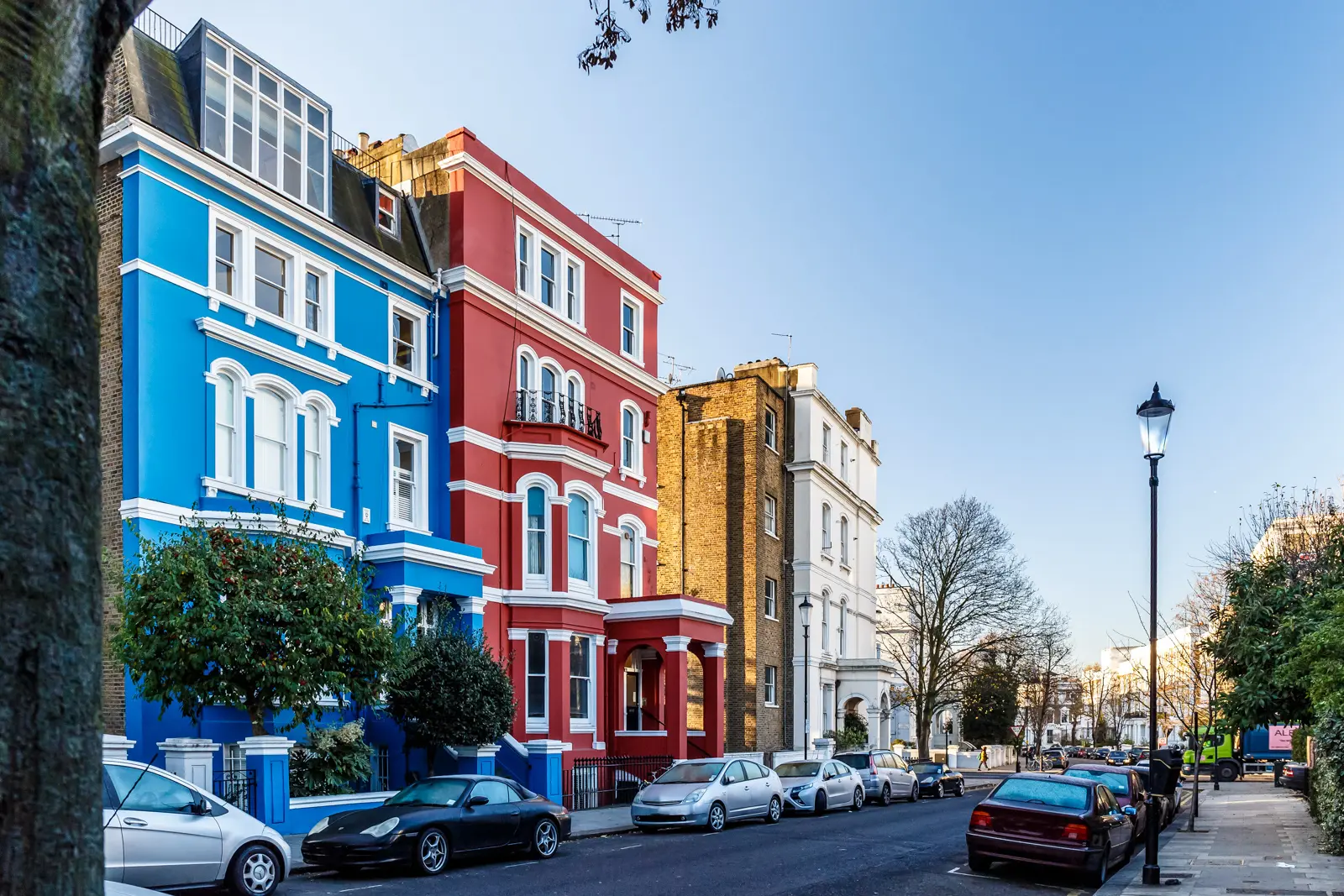
The colour does not stop at the market. Turn onto the side streets and the bold house fronts keep coming, deep blues and reds catching the low afternoon sun, the kind of corner that stops a passing walk for a photo.
A Family Day Out: The Natural History Museum
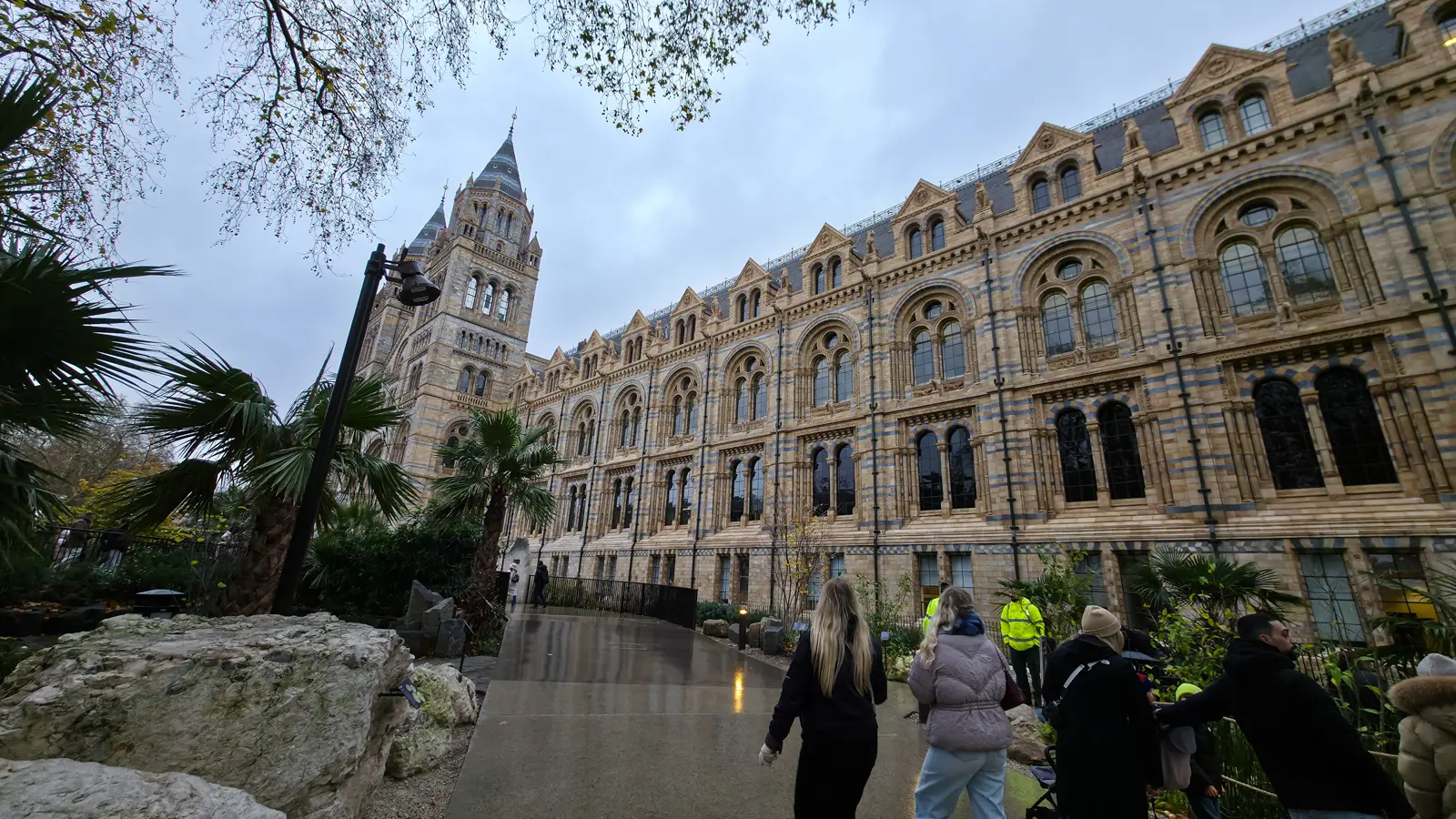
No Paddington day in London is complete without the kind of place the Brown family would take him, and the Natural History Museum is exactly that. It sits a little further south in South Kensington, and even from the street it is a spectacle: a vast cathedral of a building in pale terracotta, banded and carved with animals and plants, designed by Alfred Waterhouse and opened in 1881.
Step inside and the scale only grows. The central space, Hintze Hall, opens up like a nave, and suspended overhead is the museum’s showpiece: the 25-metre skeleton of a blue whale, named Hope, hung diving through the air above the crowds. She took her place in 2017, replacing the famous Diplodocus cast, and standing beneath the largest animal that has ever lived is the kind of thing a small bear, and the rest of us, never quite gets over.
My Own Bear, and a Bear at the Palace
I have saved the most personal part of the day for last, because it is really where my love of Paddington lives. On my most recent trip I could not resist the Paddington shop, and I came home with a small bear of my own, red hat, blue duffle coat, and those little padded paws.

He is the reason a walk like this means something to me, and the marmalade sandwich he is never without ties the whole story together. In the 2014 film Paddington, a soggy, lost little bear ends up at the gates of Buckingham Palace and shares his marmalade sandwich with a kindly guard. Eight years later, for the Queen‘s Platinum Jubilee in 2022, Paddington had tea with the Queen herself at the palace, and the two of them discovered they both keep a marmalade sandwich handy, him under his hat, her in her famous handbag “for later”. It was a beautiful, heartfelt surprise, and it landed all the harder when the Queen passed away just a few months on. A children’s bear from 1958 had become part of one of the monarch’s last and most-loved public moments.
Bubbly Tips for a Paddington Day in London
- Start at Platform 1. The Paddington Bear statue sits under the clock on Platform 1, and there is a dedicated Paddington shop in the station. Go early if you want the statue to yourself, since it is popular all day.
- Do Little Venice on a calm morning. The canal is at its prettiest and quietest before lunch. The towpath links back to Paddington Basin in about fifteen minutes on foot, so it folds neatly into the start of the day.
- Save Portobello Road for a Saturday. The antiques market is only in full swing on Saturdays. Start at the Notting Hill Gate end for antiques and work down towards the food stalls.
- Mind the colours are people’s homes. The pastel Notting Hill terraces are private houses. Photograph from the pavement and keep off the front steps.
- The Natural History Museum is free. General admission costs nothing, though a free timed ticket booked online saves queueing at busy times. Special exhibitions are ticketed separately.
- Wear comfortable shoes. From Paddington to the museum by way of the canal and Notting Hill is a proper walk. Take it in sections, or hop on the Tube between stops if legs are flagging.
- Bring a marmalade sandwich. Not essential. Entirely in the spirit of the day.
Final Thoughts
Paddington has been part of London since 1958, and part of my own life for as far back as I can remember. What I love about a day like this is that none of it is a film set or a stage. The station really did give him his name, the canal and the painted streets really are that lovely, and the museum really is the sort of place a bear from darkest Peru would gaze at open-mouthed.
The films are not needed to enjoy any of it, though they send me looking with fresher eyes. Walked slowly, from the clock on Platform 1 to the whale in the great hall, West London gives back a gentle, marmalade-coloured day out. The bear on my shelf would approve.
Until next time!

🌟 Everything You Need to Plan Your Dream Trip in 2026
- 🌟 Luxury Hotels - Find premium stays with Booking.com & Hotels.com
- 🏡 Vacation Rentals - Discover unique properties on VRBO
- 🏞️ Guided Tours - Explore with Viator or GetYourGuide
- 🎫 Attraction Tickets - Skip the lines with Tiqets
- 🚢 Ocean Cruises - Set sail with Cruise Direct
- 📱 International SIMs - Stay connected with Saily
- 🚗 Car Rentals - Budget-friendly options from Discover Cars
- 🌐 Secure VPNs - Browse safely with NordVPN
- 💶 Currency Exchange - Best rates with Wise
- 🗣️ Learn Languages - Master the local language with Babbel and Rosetta Stone