
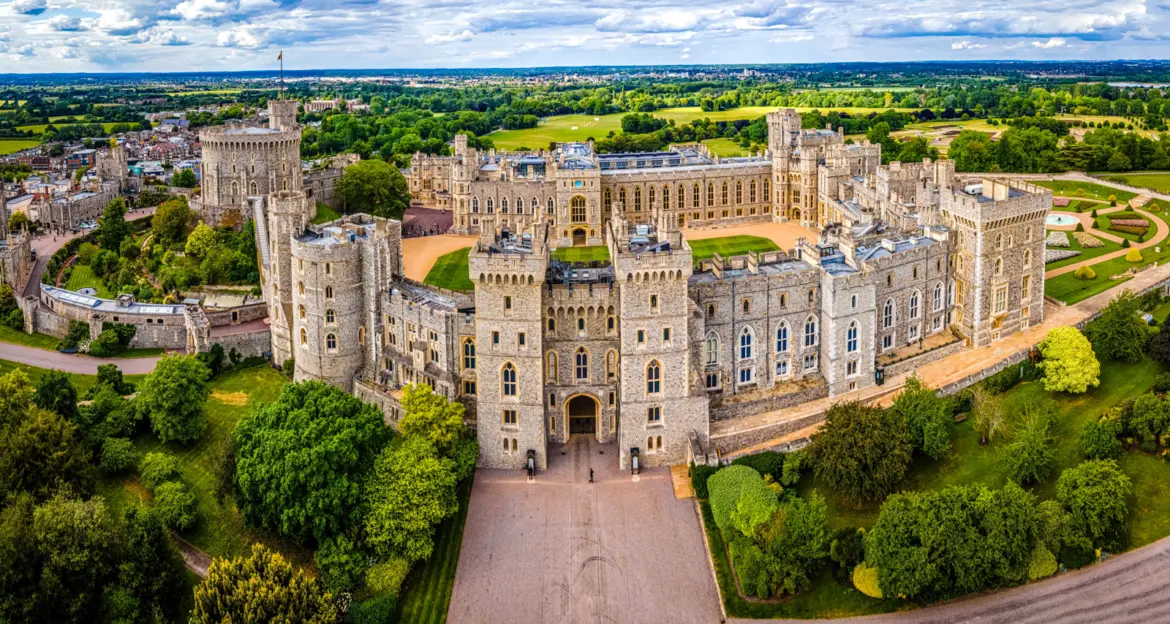
Some places make you stop and count the years. Standing in the Lower Ward at Windsor, below the chapel where Henry VIII lies buried, I worked out that the castle had already stood for the better part of a thousand years before I walked in. Kings and queens have been born, married and buried here since the Normans, and you can stand in one spot and be surrounded by all of it.
I came on an ordinary September day and stayed for hours. The State Apartments and St George’s Chapel are the high points indoors, though you will have to take my word for it, because photography is not allowed in either, and I will come back to that. Everything outside is fair game, and there is plenty of it: the grounds, the towers, the Round Tower on its green mound, and a long view over the Thames Valley that the monarchs kept to themselves for centuries.
What surprised me most was the calm. London is half an hour east and could be another country.
Windsor Castle at a Glance
📍 Location · Windsor, Berkshire, about half an hour west of London. Trains from Paddington (via Slough) and Waterloo run to roughly 30–60 minutes and leave you minutes from the gates. No visitor parking.
🏰 What it is · The oldest and largest occupied castle in the world, founded by William the Conqueror around 1070 and still a working royal residence. About 13 acres across three wards, and home to around 40 monarchs over nearly a thousand years.
⛪ Don’t miss · St George’s Chapel, a high point of English Perpendicular Gothic and the spiritual home of the Order of the Garter, where Henry VIII, Charles I and, since 2022, Elizabeth II are buried.
📸 Photography · Outside yes, inside no. Shoot freely in the precincts and gardens, but not in the State Apartments or St George’s Chapel, where phones must be off.
🎟️ Tickets · Timed advance tickets through the Royal Collection Trust, adult admission around £36. A standard ticket usually converts to a one-year pass for free, so keep it.
⏱️ Time needed · At least three hours, with airport-style security at the entrance. Give it half a day to linger, and leave time for the town.
👑 Still working · Around 150 people live and work inside the walls, and the castle still hosts state occasions, most recently President Trump’s state visit in September 2025.
💡 Tip · Skip Sunday if the chapel matters, as it closes to sightseers for services. Time the Changing of the Guard in the grounds around 11am on selected days, and save your photos for the Round Tower and the long green view.
Windsor, the quiet version of royal England
Windsor sits in Berkshire, a short hop west of London but a world away in pace. The town is small and wrapped around the castle, with the River Thames on one side and Eton across the water. Trains from London Paddington and Waterloo take somewhere between half an hour and an hour, and you arrive a few minutes’ walk from the gates.
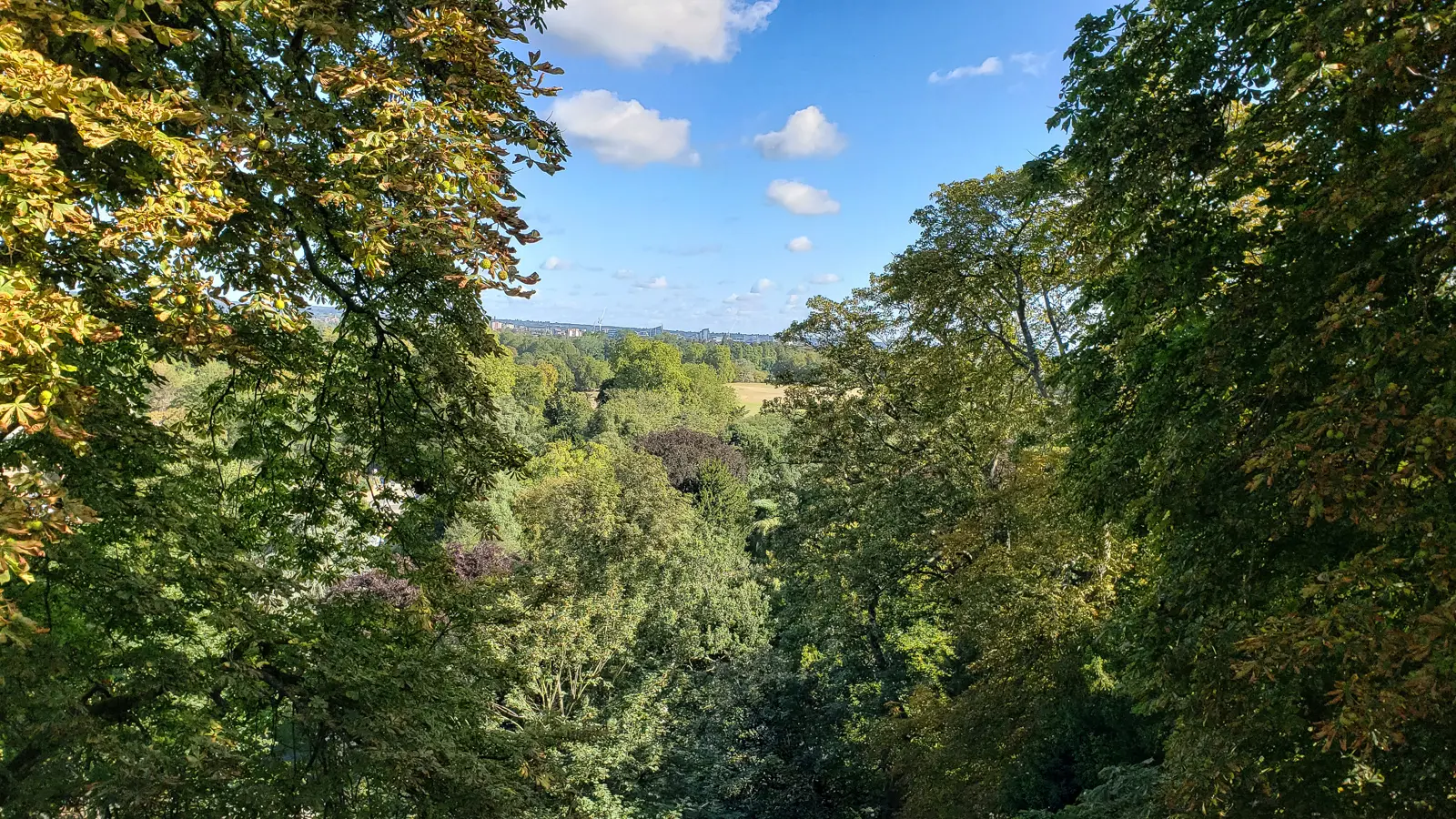
It is easy to see why the royal family treats Windsor as a refuge rather than a showpiece. The late Queen spent most weekends here and much of her final years in residence. William and Catherine moved their own family out of London to Windsor in 2022 for a quieter, more ordinary childhood for their children, and have stayed in the area since. Where Buckingham Palace is the shop window, Windsor is the home.
Nearly a thousand years
Windsor is the oldest and largest occupied castle in the world, and the dates back it up. William the Conqueror raised the first castle here around 1070, a timber motte-and-bailey on a chalk mound, built to guard the western approach to London along the Thames. It was one of a ring of forts thrown up around the capital, and the mound is still there beneath the Round Tower.
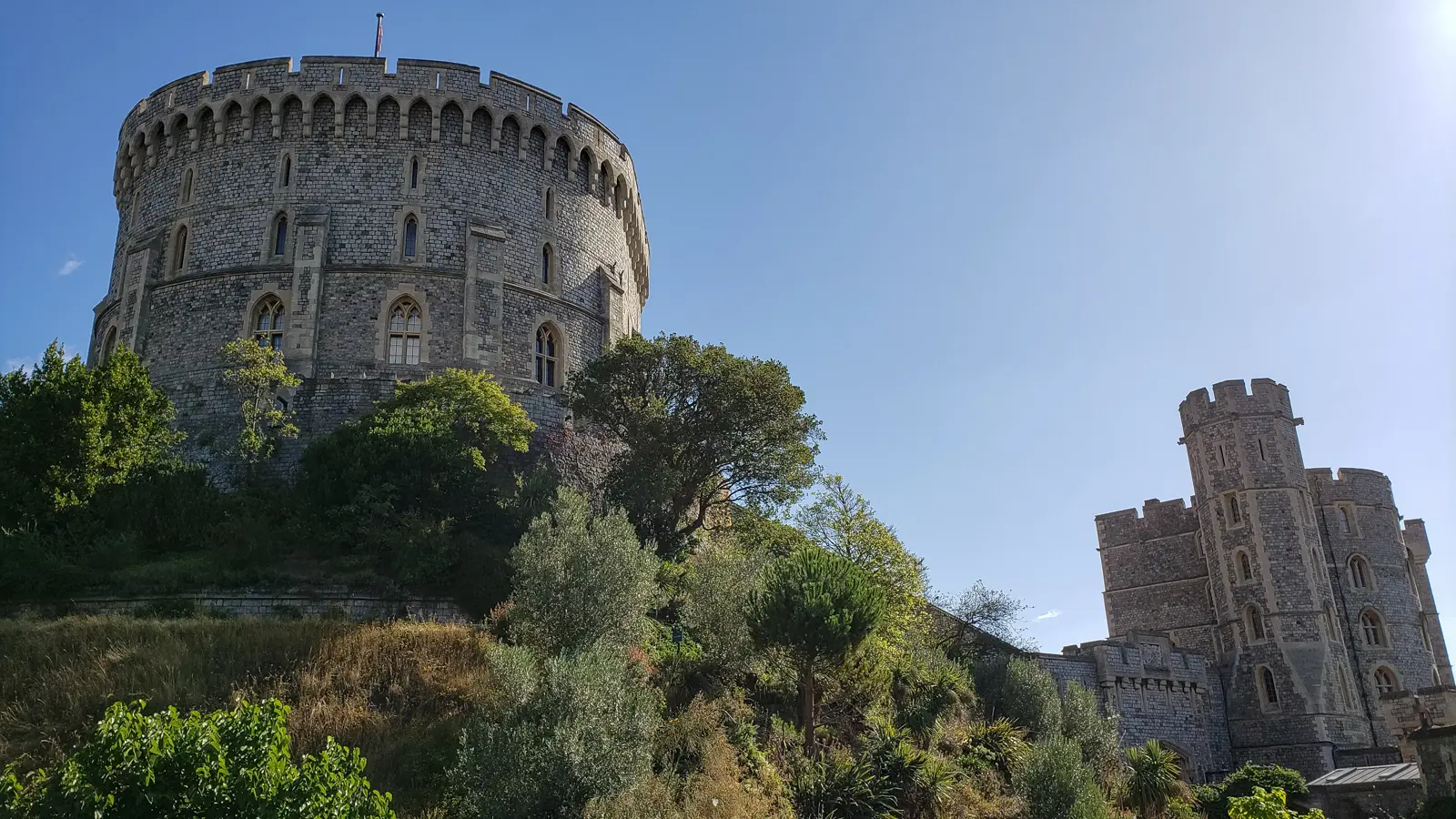
Henry II rebuilt Windsor in stone in the 12th century and put up the Round Tower that still crowns the site. Today that tower holds the Royal Archives, with around 12 million documents on the history of the monarchy. The castle grew outward over the centuries into three wards, served as a prison during the Civil War, and was nearly lost in 1992, when a fire tore through the State Apartments. The restoration that followed took five years and is part of what you see today. In all, around 40 monarchs have called Windsor home.
Walking the wards
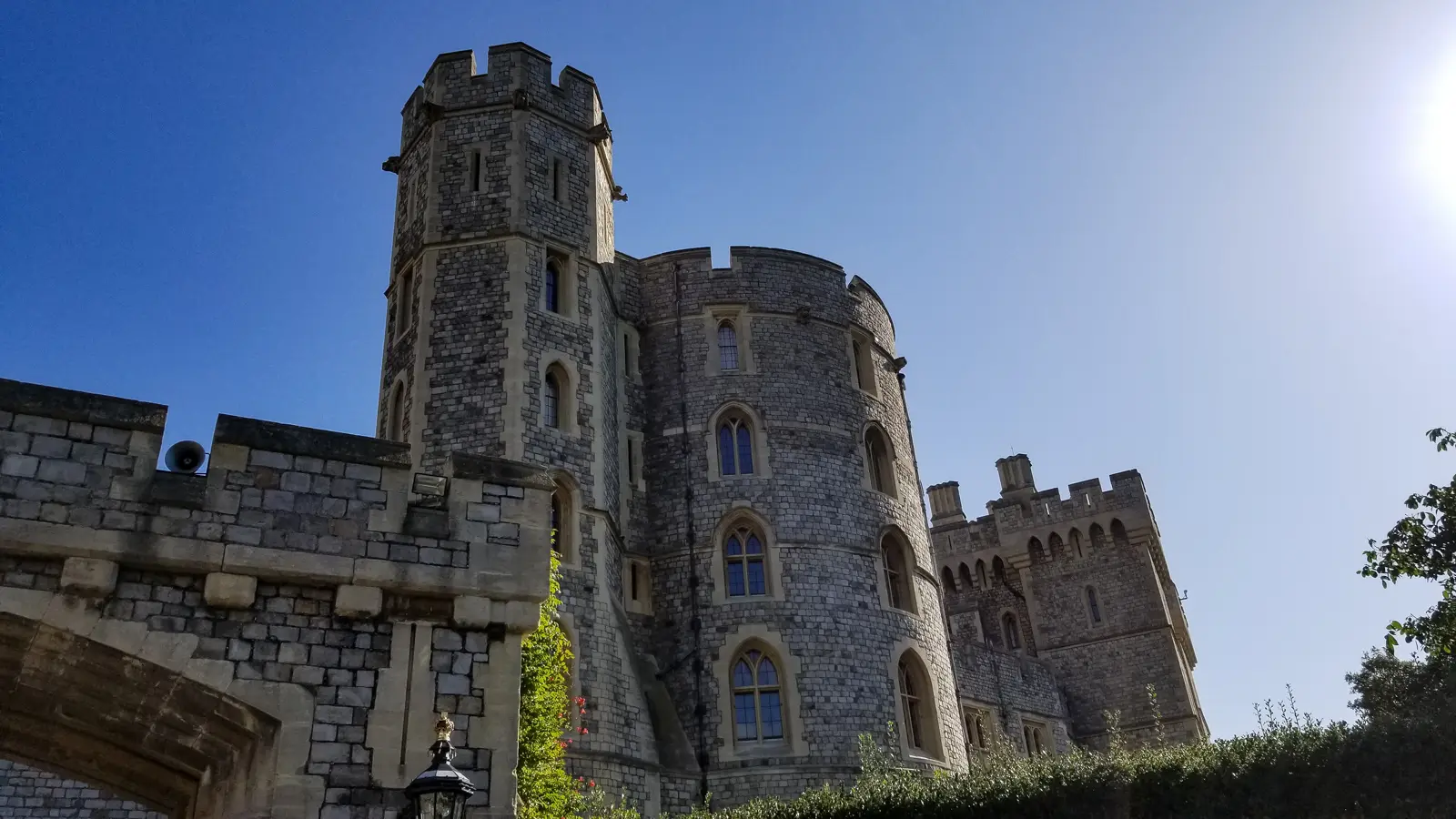
Windsor is laid out in three wards strung along a chalk ridge, and the visitor route runs through all of them. You pass through airport-style security at the bottom and climb from there. One quirk worth knowing: you come in through one gate and leave by another, the King Henry VIII Gate, so the whole visit is a one-way walk up the hill and back down into the town.
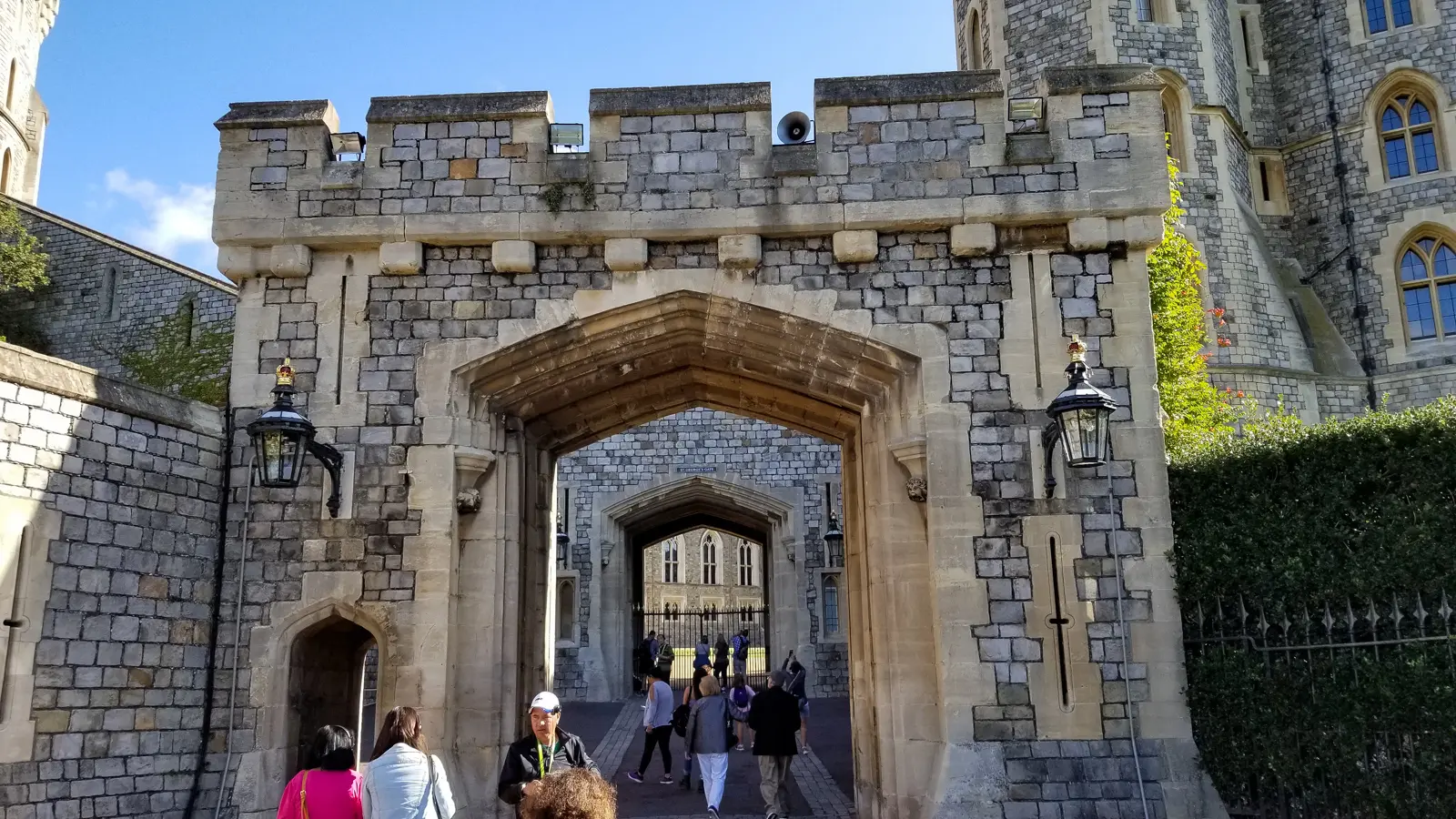
The Lower Ward is the oldest-feeling corner, and the one most people come to see. St George’s Chapel anchors it, and just to the west curves the Horseshoe Cloister, a brick-and-timber crescent that Edward IV built between 1478 and 1481 to house the chapel’s clergy, who live in it still. Behind it stands the Curfew Tower, one of the oldest parts of the whole castle, dating to the 1220s. Its upper floor holds the castle bells, hung in 1478, and a clock from 1689; lower down are a medieval dungeon and a sally port, a hidden passage that once let defenders slip out unseen during a siege. From the edge of this ward, the Hundred Steps drop steeply down into Windsor town.
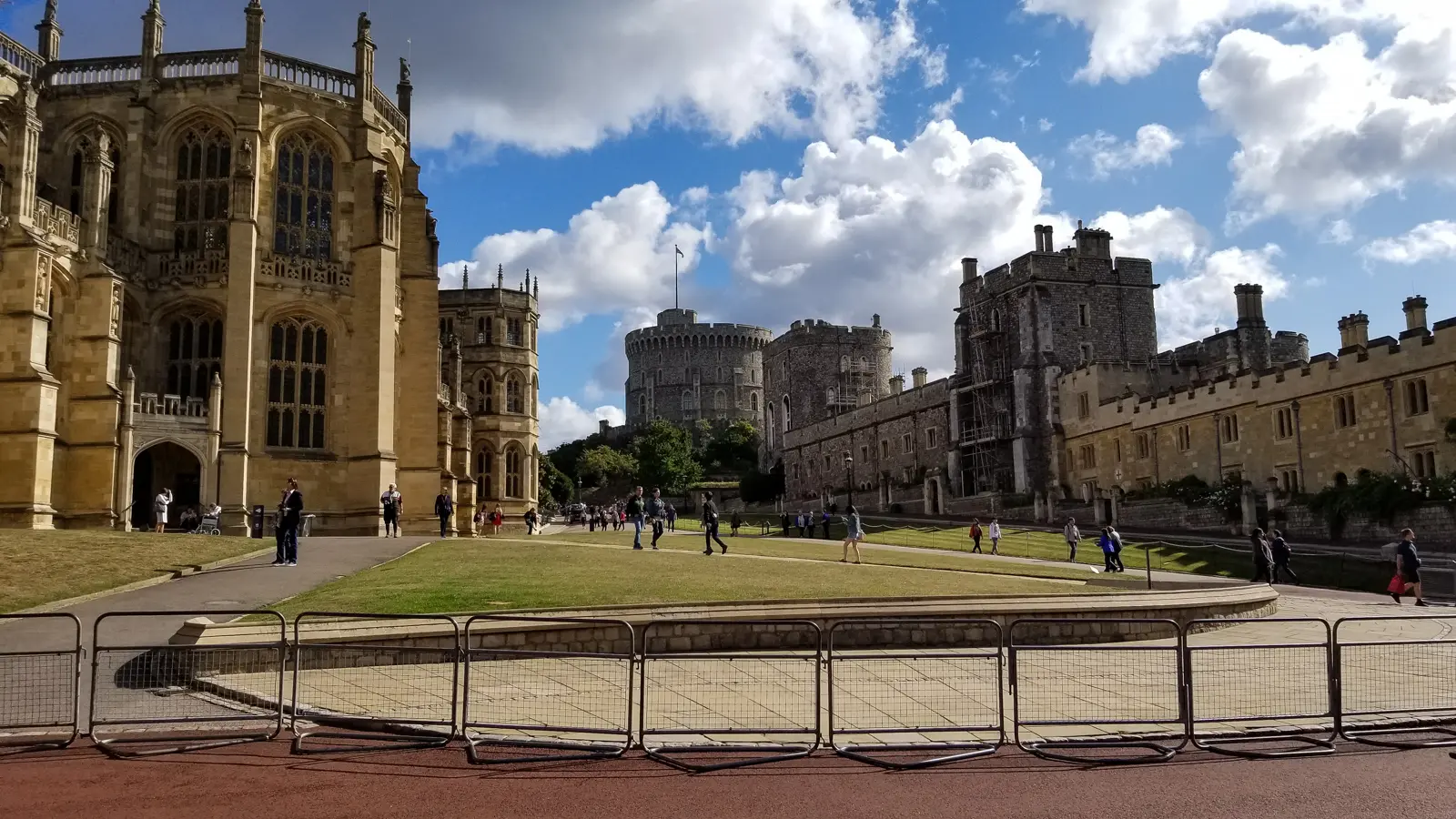
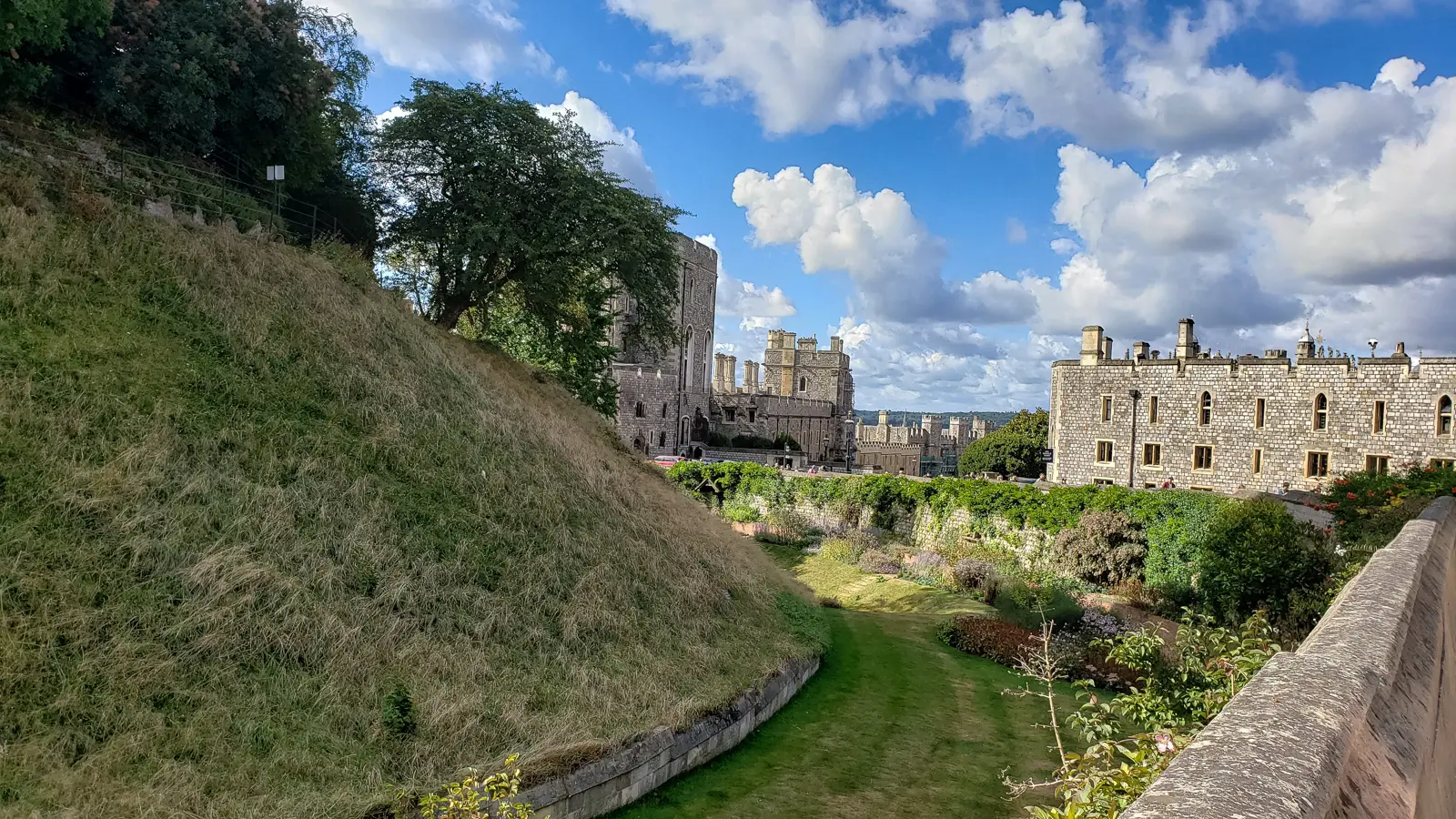
From there the ground climbs to the Round Tower, the hinge of the whole castle and the part you can see for miles. It stands on the motte William the Conqueror raised nearly a thousand years ago, ringed on three sides by the old defensive ditch. There is no water in it. The ditch has been planted instead as the Moat Garden, a steep, sheltered ribbon of roses, shrubs and clipped banks that softens the grey stone rising above it.
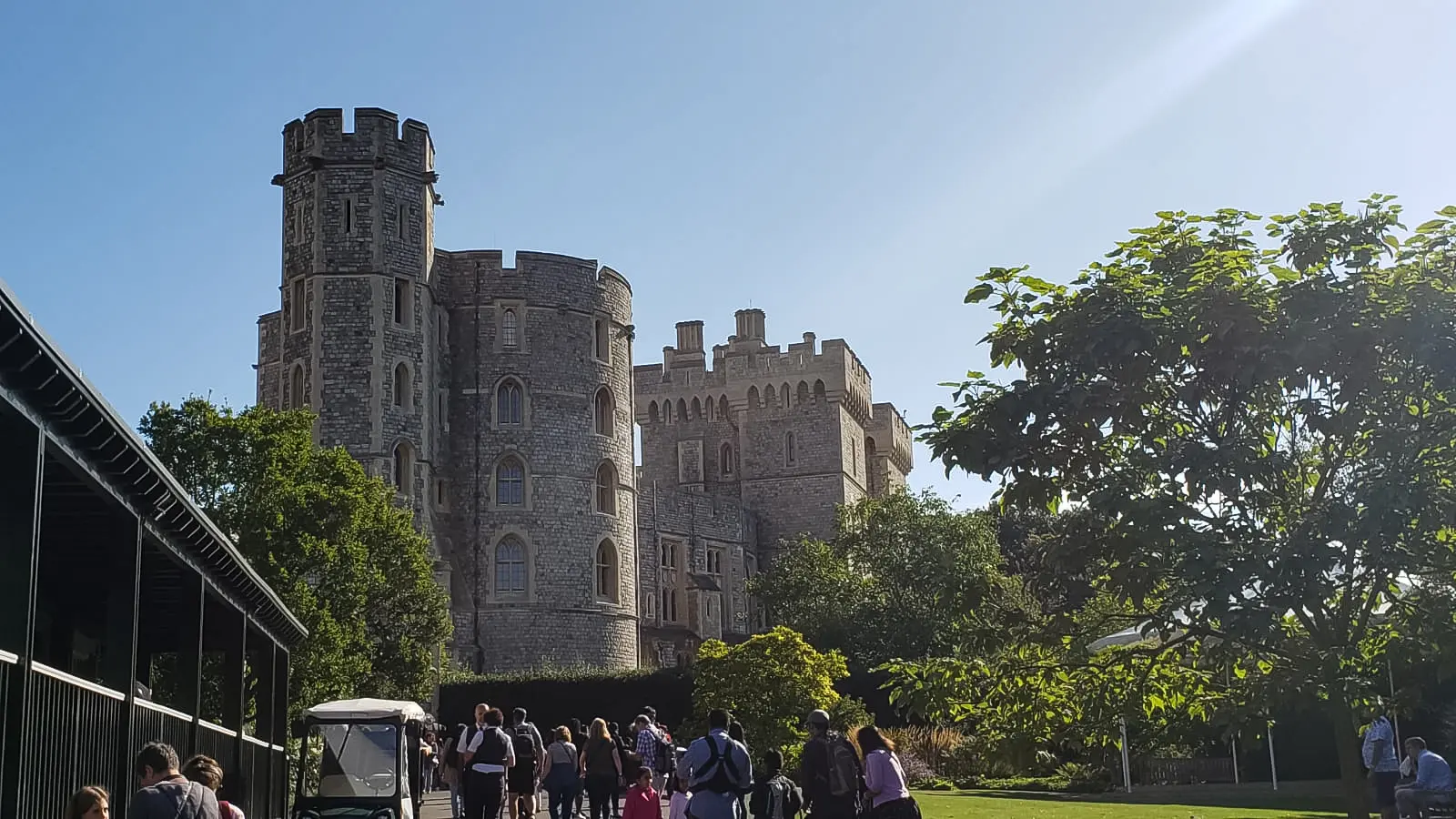
Past the Round Tower you come out into the Upper Ward, the grand end of the castle. The State Apartments line its north side, the private royal apartments fill the south and east, and the wide Quadrangle opens in the middle. This is the working core of Windsor, and it is where the castle still earns its keep.
St George’s Chapel
If you see one thing at Windsor, see St George’s Chapel. It is a high point of English Perpendicular Gothic, with a fan-vaulted ceiling and rows of carved wooden stalls.
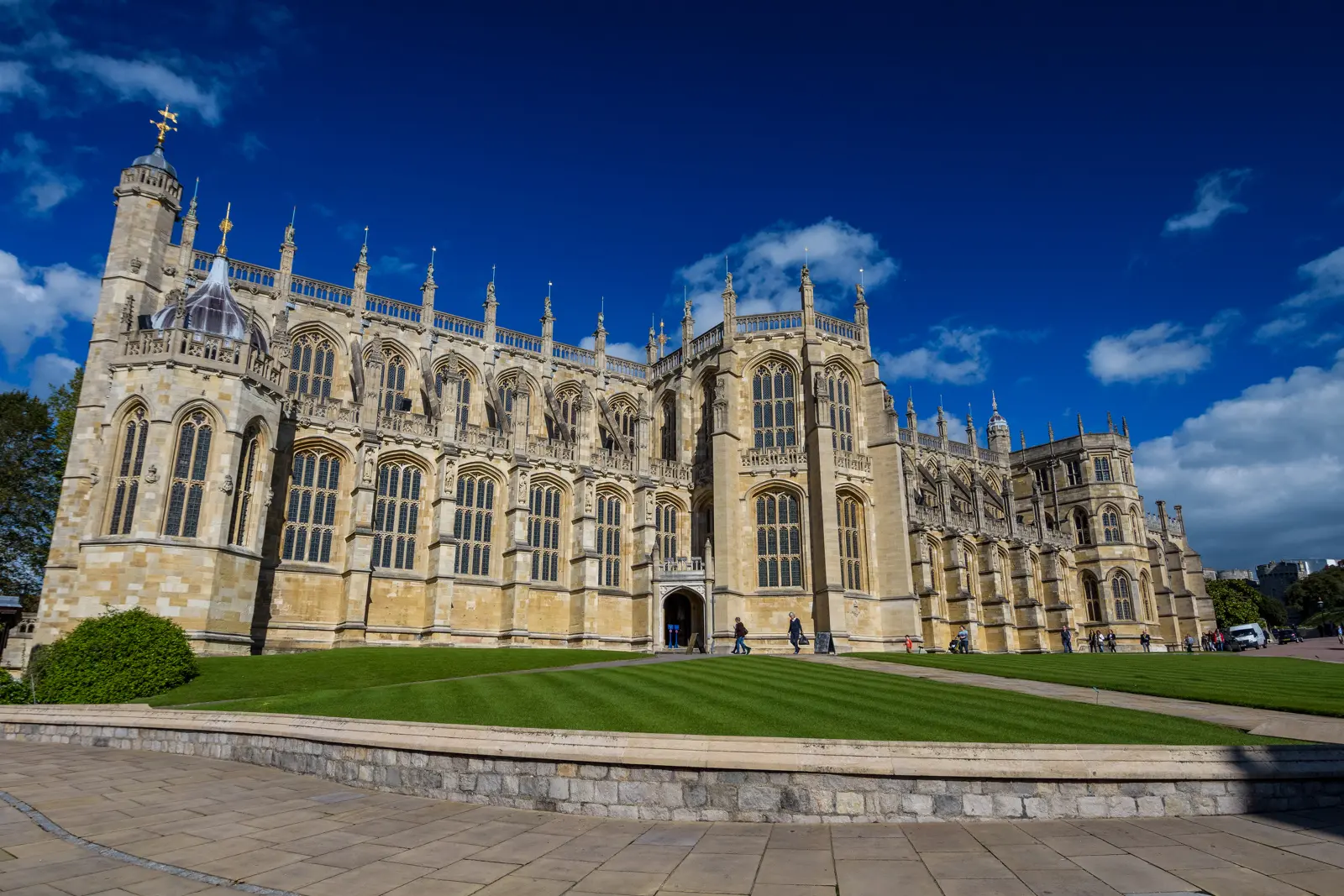
It is the spiritual home of the Order of the Garter, the oldest order of chivalry in England, founded by Edward III in 1348. And it is where a great deal of royal history comes to rest. Ten or eleven sovereigns are buried here, among them Henry VIII, Charles I, and, since 2022, Queen Elizabeth II and Prince Philip.
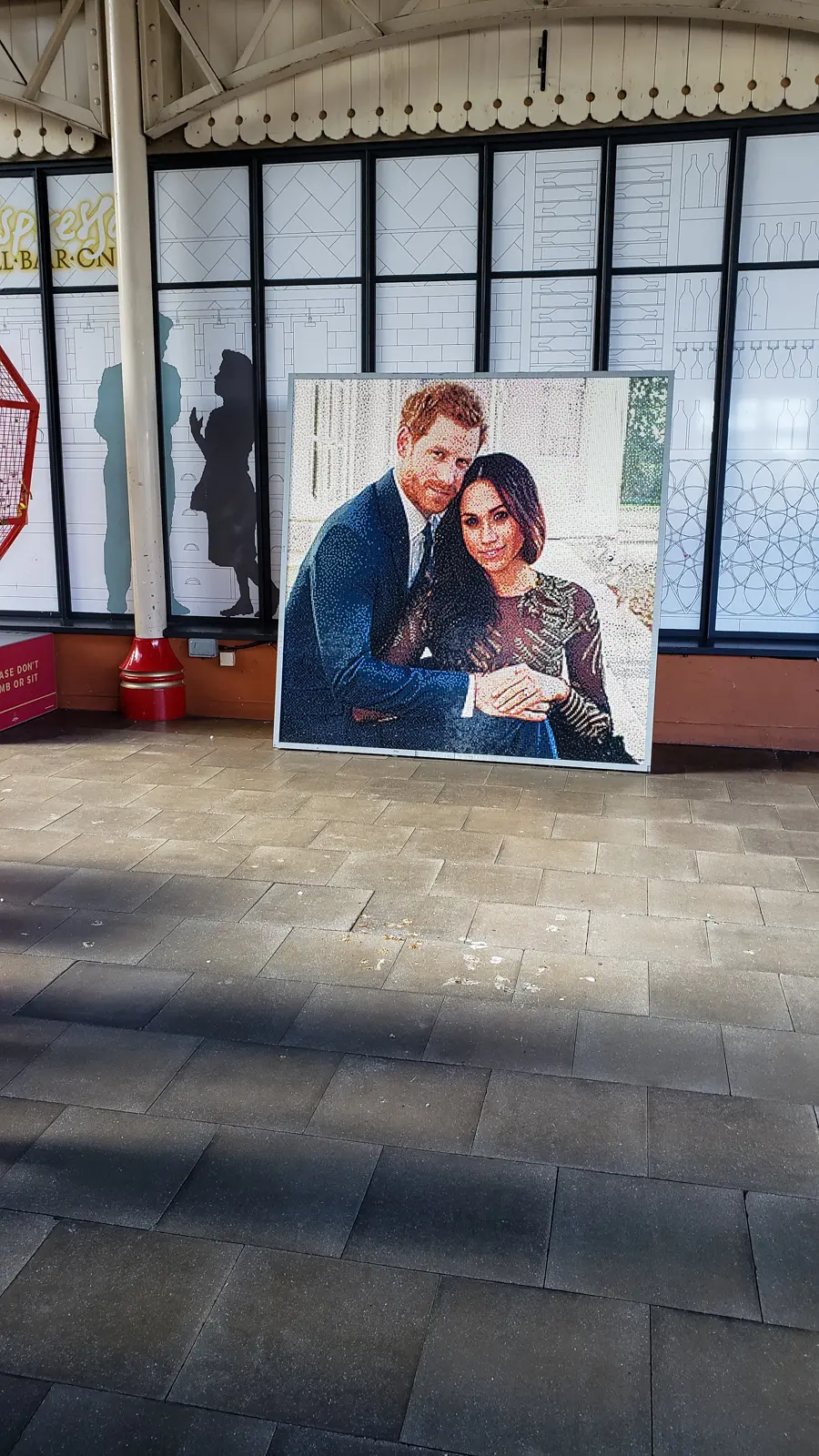
For most of us, though, the chapel will be familiar from one morning in particular. On 19 May 2018, Prince Harry married Meghan Markle here, in a service watched by millions. I was one of them, on a sofa a long way from Windsor, and walking past the same west door sixteen months later was a small, real thrill.
A working palace
Windsor is not a museum. Around 150 people live and work inside the walls, and the castle is still used for the real business of the monarchy. The clearest recent example came in September 2025, when King Charles hosted President Trump’s state visit here. The ceremonial welcome and guard of honour took place in the Quadrangle, the same courtyard visitors cross in the Upper Ward, and the state banquet was held in St George’s Hall.
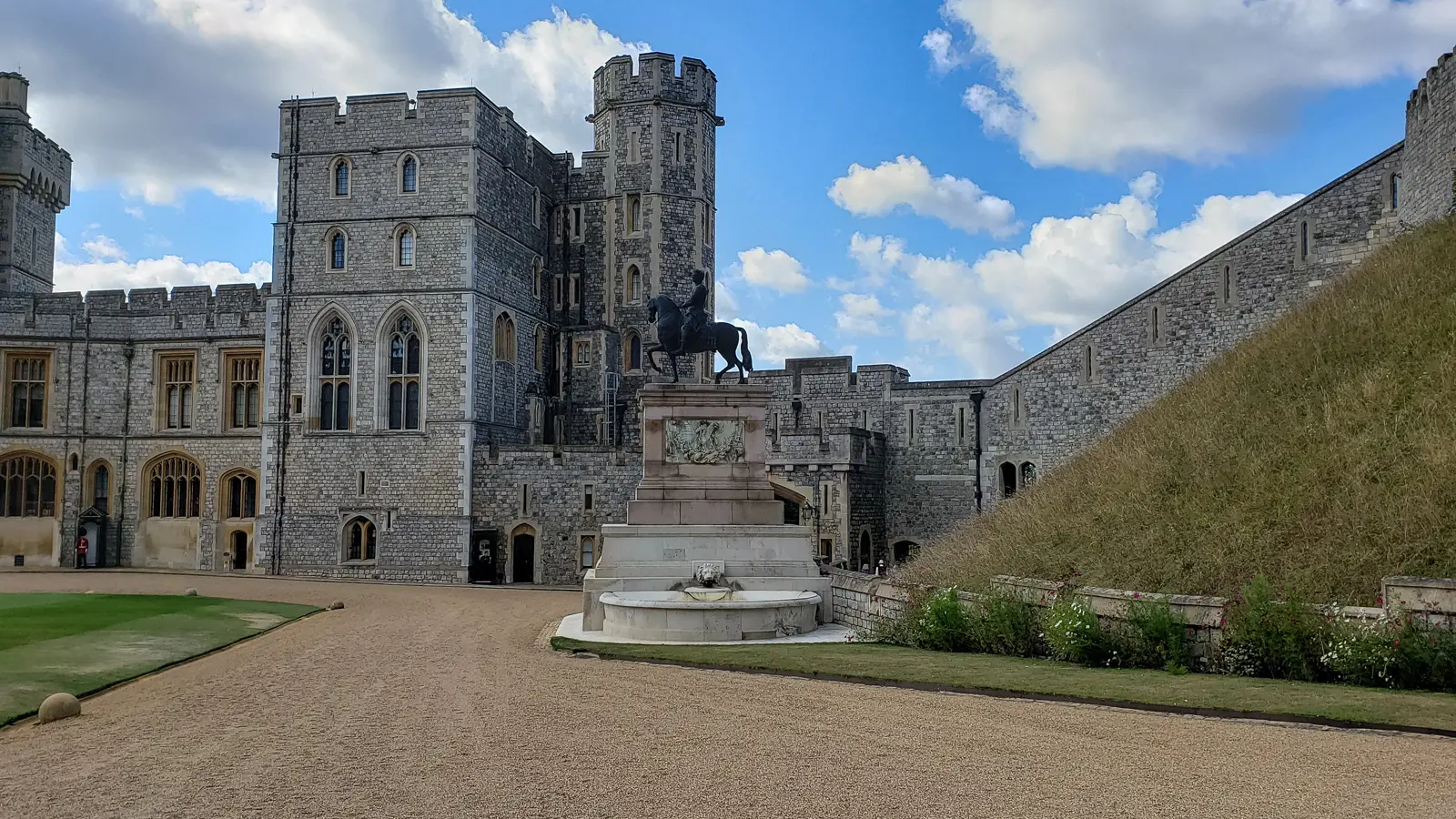
This is also why photography is not allowed inside the State Apartments or St George’s Chapel. The rule protects the artworks, and the chapel is a living church with daily services. It is easy to resent at the time and easy to understand afterwards. Outside, in the precincts and gardens, you can photograph as much as you like.
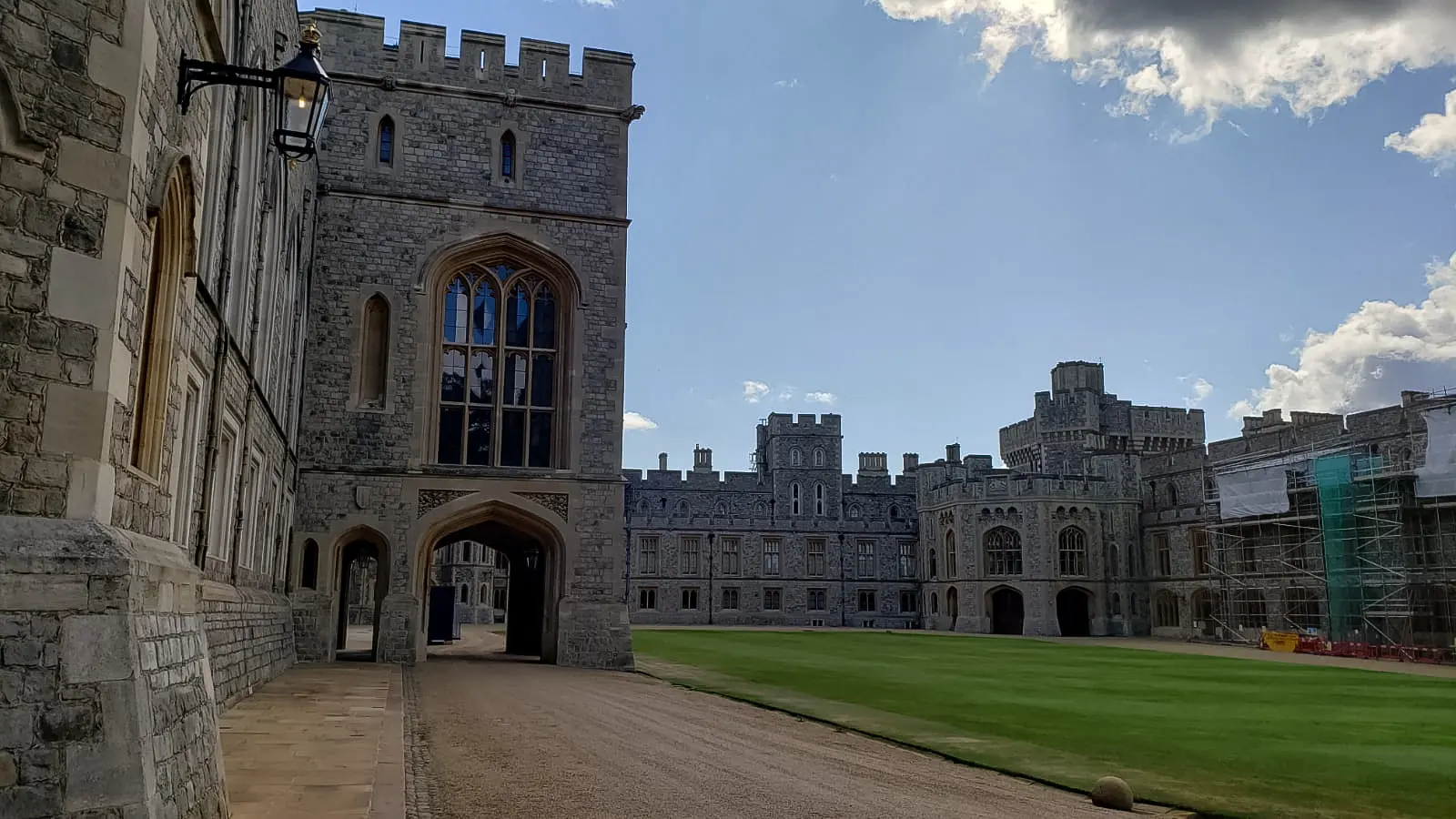
If you time it right, you can also catch the Changing of the Guard, which takes place inside the castle grounds around 11am on selected days.
Bubbly Tips
- Allow at least three hours. Between the security check, the grounds, the State Apartments and the chapel, a proper visit runs three hours or more. Give it half a day if you like to linger.
- Photography: outside yes, inside no. Shoot freely in the precincts and gardens, but not in the State Apartments or St George’s Chapel, where phones must be off too. Plan your photos for the grounds.
- Keep your ticket. A standard ticket can usually be converted to a one-year pass for free re-entry, so a rained-off afternoon is not wasted.
- Skip Sunday for the chapel. St George’s Chapel is closed to sightseers on Sundays and open only to worshippers for services. Go another day if the chapel matters to you.
- Time the guard change. The Changing of the Guard happens in the grounds around 11am on selected days, weather permitting. Check the schedule the morning you go.
- Take the train. There is no visitor parking at the castle. Trains from Paddington (via Slough) or Waterloo reach Windsor in roughly half an hour to an hour and leave you minutes from the gates.
- Travel light. Everyone passes through airport-style security, so the less you carry, the faster you are through.
- Make a day of Windsor. The Long Walk, Windsor Great Park, the Thames and Eton across the river are all close. The town is worth an afternoon once the castle is done.
Final Thoughts
Windsor does something Buckingham Palace cannot. You walk the same wards the court has used for nearly a thousand years, past a chapel where Henry VIII and Elizabeth II both lie, in a town quiet enough that you forget the capital is half an hour away. I went in expecting a grand day out and came away a little stunned by the sheer depth of it all.
If you go, give it time, leave the camera in your bag for the indoor rooms, and save it for the Round Tower and the long green view. Some places you remember for a single sight. Windsor you remember for the weight of everything that has happened in one place.
Until next time!

🌟 Everything You Need to Plan Your Dream Trip in 2026
- 🌟 Luxury Hotels - Find premium stays with Booking.com & Hotels.com
- 🏡 Vacation Rentals - Discover unique properties on VRBO
- 🏞️ Guided Tours - Explore with Viator or GetYourGuide
- 🎫 Attraction Tickets - Skip the lines with Tiqets
- 🚢 Ocean Cruises - Set sail with Cruise Direct
- 📱 International SIMs - Stay connected with Saily
- 🚗 Car Rentals - Budget-friendly options from Discover Cars
- 🌐 Secure VPNs - Browse safely with NordVPN
- 💶 Currency Exchange - Best rates with Wise
- 🗣️ Learn Languages - Master the local language with Babbel and Rosetta Stone