
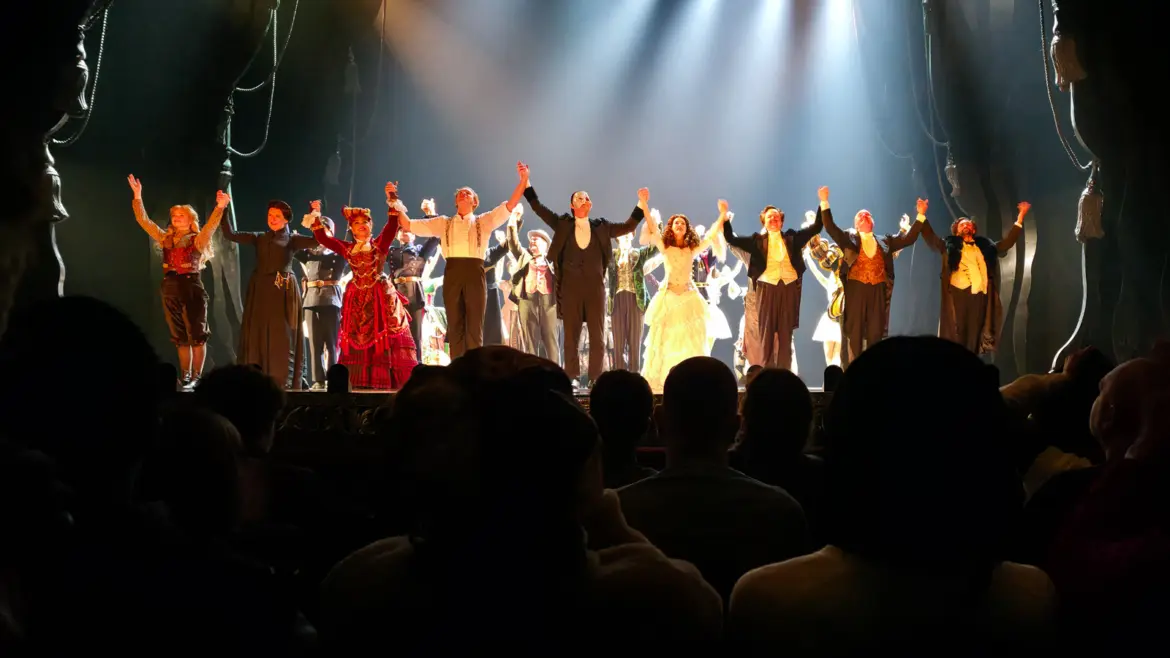
I had waited a long time for this one. I had listened to The Phantom of the Opera for years and learned most of the songs by heart, yet I had never managed to see it on a stage. On a December evening in London, I finally did. There was a rightness to seeing it here, because London is where it all began. The musical had its world premiere on 9 October 1986, and the theatre I walked into that night is the very same one where it opened.
Phantom at His Majesty’s at a Glance
🎭 The theatre · His Majesty’s Theatre, Haymarket. Opened in 1897; its name flips with the monarch, His Majesty’s again since the 2023 coronation.
👻 The show · Andrew Lloyd Webber’s musical had its world premiere here on 9 October 1986 and has run ever since.
🇫🇷 The real setting · The Palais Garnier in Paris, where box five is marked “Loge du Fantôme de l’Opéra.”
💡 The legend · A real 1896 chandelier-counterweight accident and the opera house’s underground reservoir inspired the story.
🎟️ Plan it · About two and a half hours with one interval; recommended for ages eight and over; nearest tube Piccadilly Circus.
🍸 Good to know · Drinks are allowed at your seat; no photos until the curtain call.
His Majesty’s Theatre, a stage that changes its name
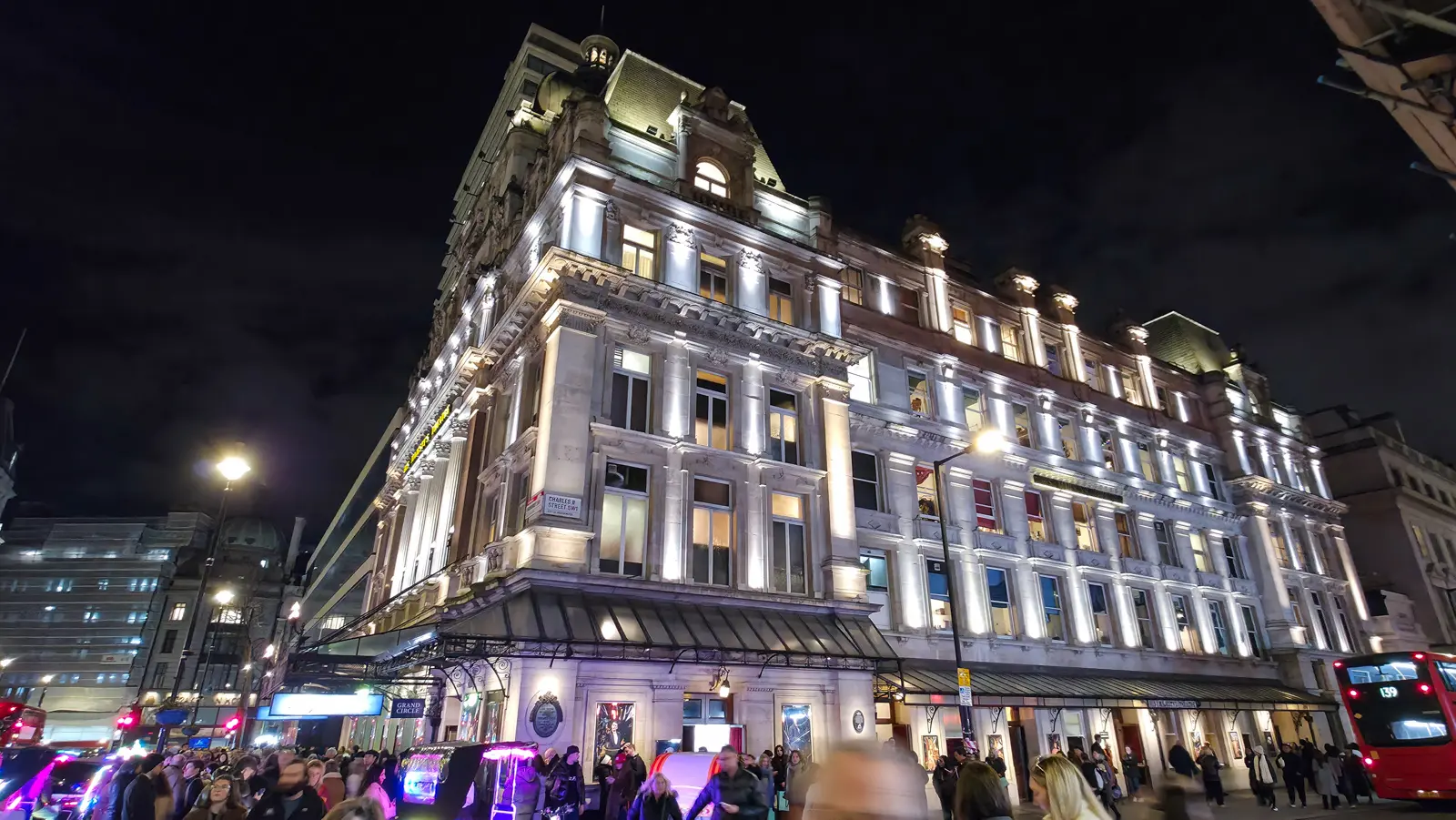
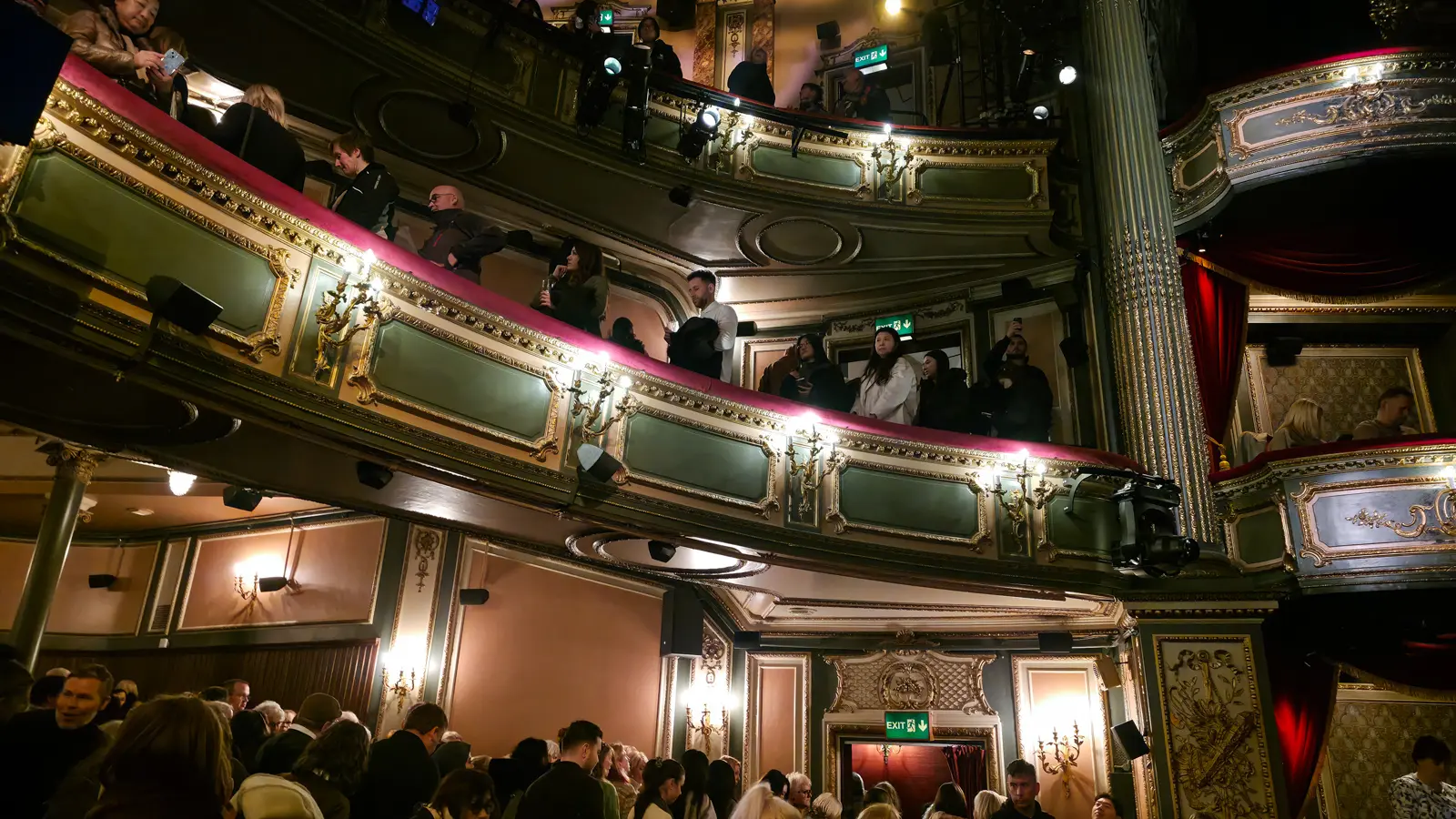
The building alone would have been worth the trip. The current theatre opened on 28 April 1897, designed by the architect C.J. Phipps for the actor-manager Herbert Beerbohm Tree. It is the fourth playhouse to stand on this Haymarket site, and inside it is all gilded plasterwork and deep red, with tiers of boxes curving towards the stage. I arrived early just to stand in it.
Here is the detail I loved most, and it ties straight to something close to my heart. The theatre’s name follows the monarch. Throughout the reign of Queen Victoria it was Her Majesty’s Theatre. It became His Majesty’s under Edward VII, then Her Majesty’s again in 1952 when Elizabeth II came to the throne, and on 6 May 2023, the day of King Charles III’s coronation, it was renamed His Majesty’s once more. So when Phantom opened in 1986 it opened at Her Majesty’s Theatre. The same stage now carries the King’s title.
Inside, the room sets the tone before a single note is played, warm with gold and deep red under a painted ceiling.
The show, and why it matters that it started here
The Phantom of the Opera is Andrew Lloyd Webber‘s, with lyrics by Charles Hart, and it draws on Gaston Leroux‘s 1910 novel. Hal Prince directed the original production, Cameron Mackintosh produced it, and Michael Crawford and Sarah Brightman led the first cast. It won the Olivier Award for Best New Musical, and across its life it has collected three Olivier Awards and seven Tony Awards.
Nearly four decades on, it has not lost its pull. It is the second-longest-running musical in the West End, behind Les Misérables, and it held the record as the longest-running show in Broadway history until that production closed in 2023. Since 1986 it has played to more than 160 million people in 217 cities, 58 territories and 23 languages. There was even a long Canadian run, which played in Toronto from 1989 to 1999 with Colm Wilkinson as the Phantom, so plenty of people back home grew up on it too.
The real opera house behind the story
Here is what makes the story richer once the curtain falls. Phantom is set in a real building, the Palais Garnier in Paris, and I have stood inside it. The opera house opened in 1875 to the designs of Charles Garnier, and Leroux used it as the setting for his novel.
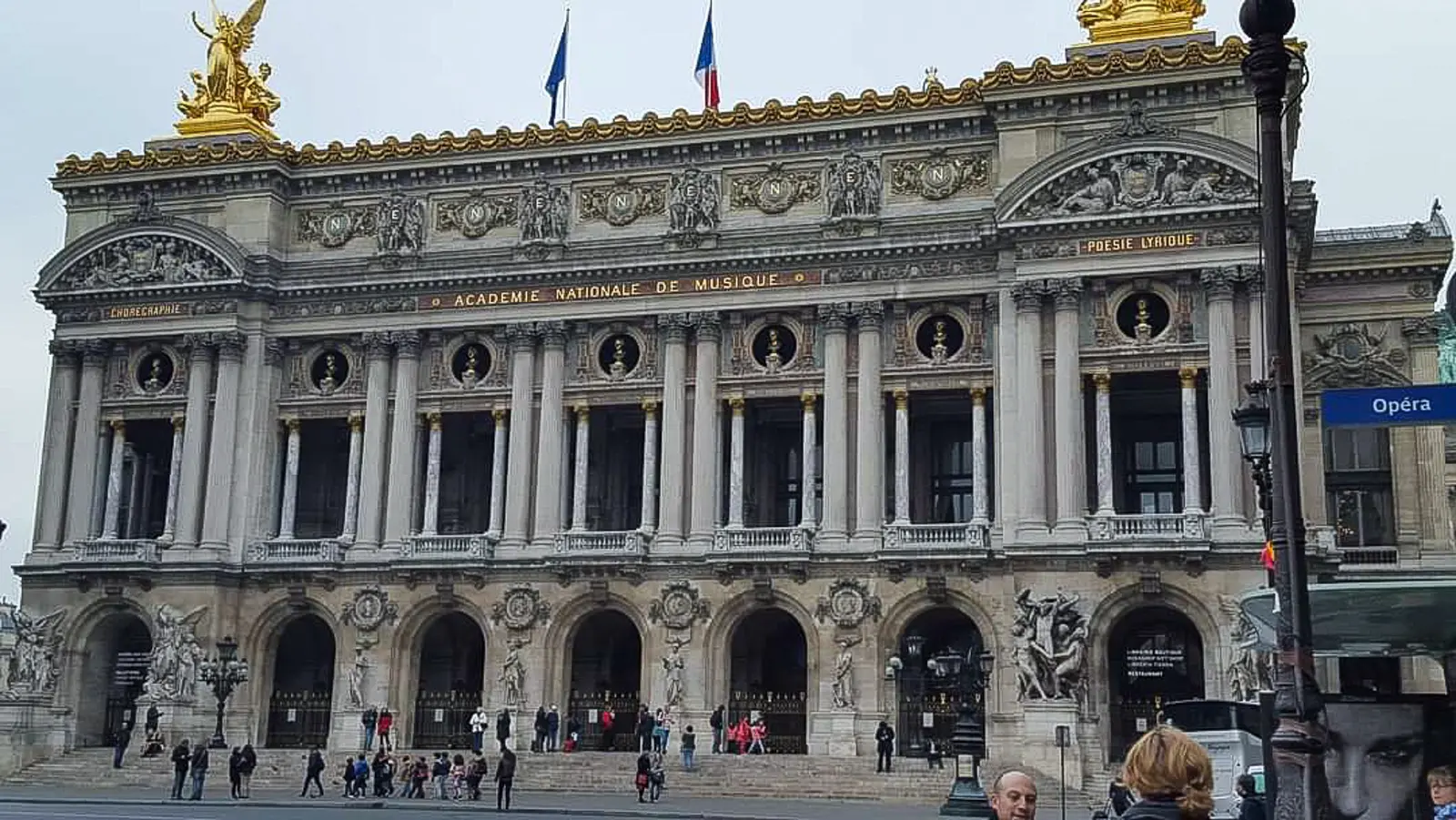
I visited the Garnier and found the Phantom’s box. The Paris Opera keeps the legend going by marking box number five with a golden plaque reading “Loge du Fantôme de l’Opéra”, the box he demands be kept empty for him in the story. Standing at it, with the auditorium spread out below, the fiction and the real building folded into one.
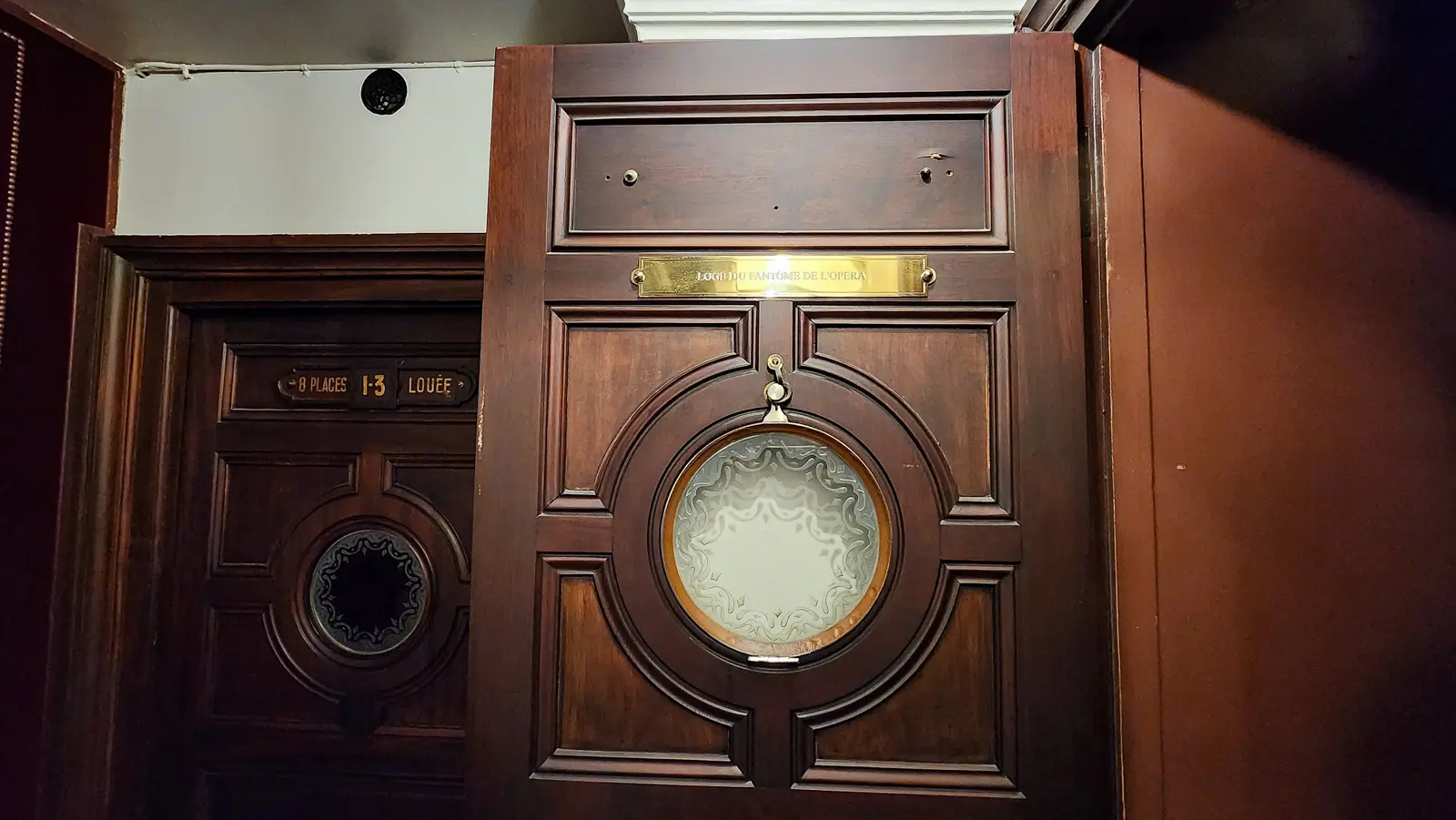
Two of the show’s most dramatic touches come straight from the real place. On 20 May 1896, one of the counterweights of the opera house’s great chandelier broke free and crashed through the ceiling into the auditorium, killing a concierge. That accident inspired the chandelier scene staged in London. And the Phantom’s underground lake is real in its own way. Beneath the Palais Garnier lies a large water reservoir, built by Garnier to manage the groundwater under the site, and it gave Leroux his subterranean world.
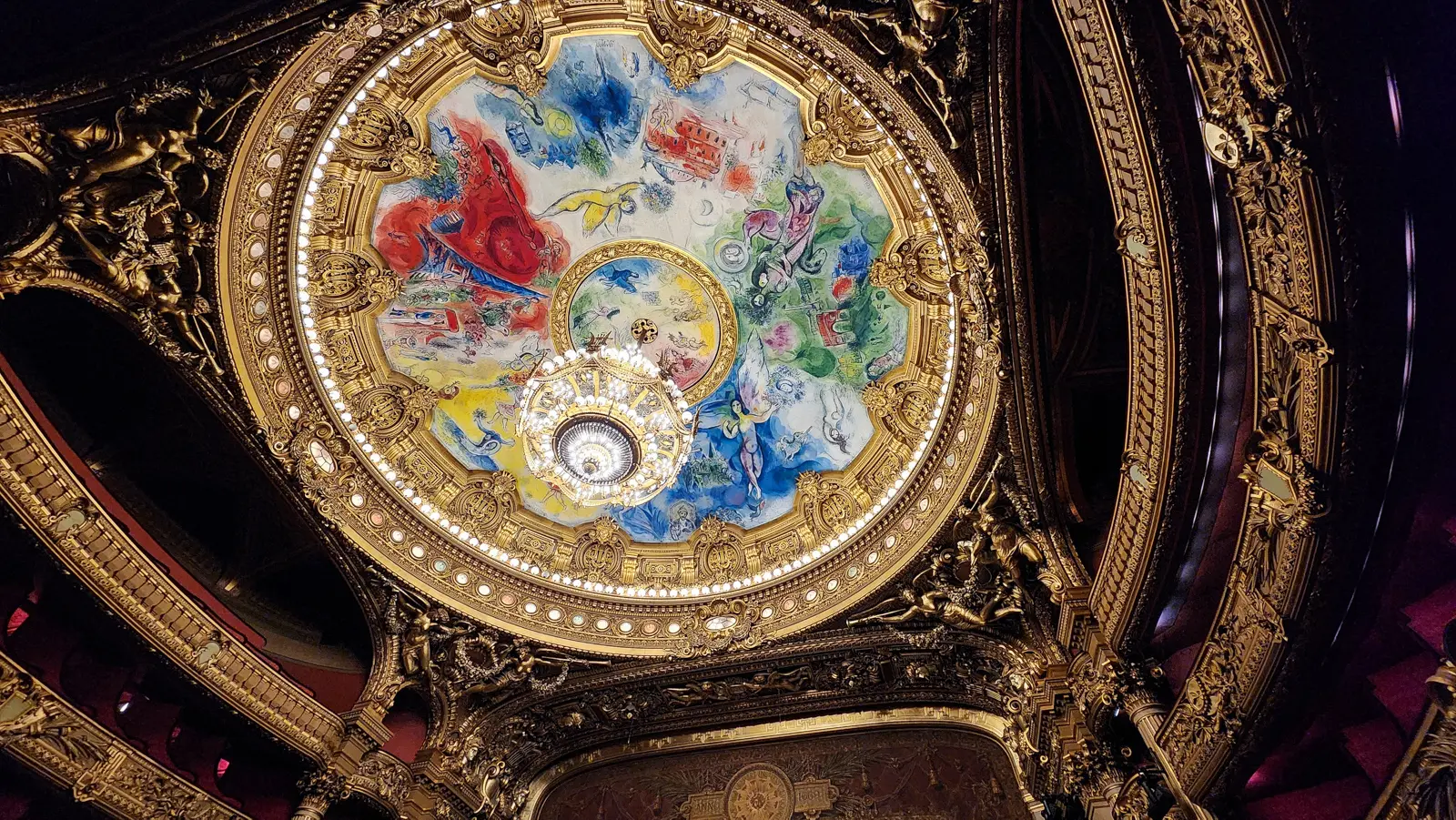
The night itself
Photographs are not allowed once the performance begins, so for two and a half hours there was nothing to do but watch, which was the gift of it. The house was full, every tier of it, nearly forty years into the run.
One lovely surprise: drinks and snacks are allowed at the seat. I watched the whole thing with a gin and tonic in hand, which was the right way to keep a long-held promise to myself. When the cast came forward for the curtain call, the cameras finally came out, and that one photograph is the only one I have from inside the show.
Bubbly Tips for The Phantom of the Opera at His Majesty’s Theatre
- Book ahead. The show still sells strongly after nearly four decades, and the best seats go early. Booking runs well in advance, so plan rather than chance it on the night.
- Arrive early for the building. The auditorium is part of the experience. Leave time before the lights dim to take in the gilt, the boxes and the ceiling.
- Drinks at your seat. A drink can come in with you, so a pre-show or interval gin and tonic travels to your row. It is a small pleasure that suits a special night.
- Cameras stay down. No photography during the performance. The curtain call is the moment to lift a phone, so wait for it rather than risk being asked to stop.
- Go in unspoiled. The famous chandelier effect lands best with a good view and no warning, so read as little as possible about the staging beforehand.
- Getting there. The theatre is at 57 Haymarket. The nearest Underground stops are Piccadilly Circus and Charing Cross, both a short walk away.
- Make a Paris pair of it. If a trip to Paris is ever in the plans, the Palais Garnier is the real setting, and box five, the Phantom’s box, is marked for visitors. Seeing both ends of the story is worth the effort.
- Check the age guidance. The show is recommended for ages eight and over, and under-sixteens need to be with an adult. It has dramatic moments and effects that very young children may find a lot.
- Plan the timing. Running time is about two and a half hours including one interval, so build it into dinner or last-train plans.
Final Thoughts
Some things live up to the waiting. I had carried this music around for years, and seeing it performed in the theatre where it first opened, with the King’s name now over the door and the real Paris opera house alive in my memory, was everything I had hoped. The Phantom of the Opera has had nearly forty years to lose its spell and has not. If it has been sitting on a someday list, it deserves a seat sooner than that.
Until next time!

🌟 Everything You Need to Plan Your Dream Trip in 2026
- 🌟 Luxury Hotels - Find premium stays with Booking.com & Hotels.com
- 🏡 Vacation Rentals - Discover unique properties on VRBO
- 🏞️ Guided Tours - Explore with Viator or GetYourGuide
- 🎫 Attraction Tickets - Skip the lines with Tiqets
- 🚢 Ocean Cruises - Set sail with Cruise Direct
- 📱 International SIMs - Stay connected with Saily
- 🚗 Car Rentals - Budget-friendly options from Discover Cars
- 🌐 Secure VPNs - Browse safely with NordVPN
- 💶 Currency Exchange - Best rates with Wise
- 🗣️ Learn Languages - Master the local language with Babbel and Rosetta Stone