
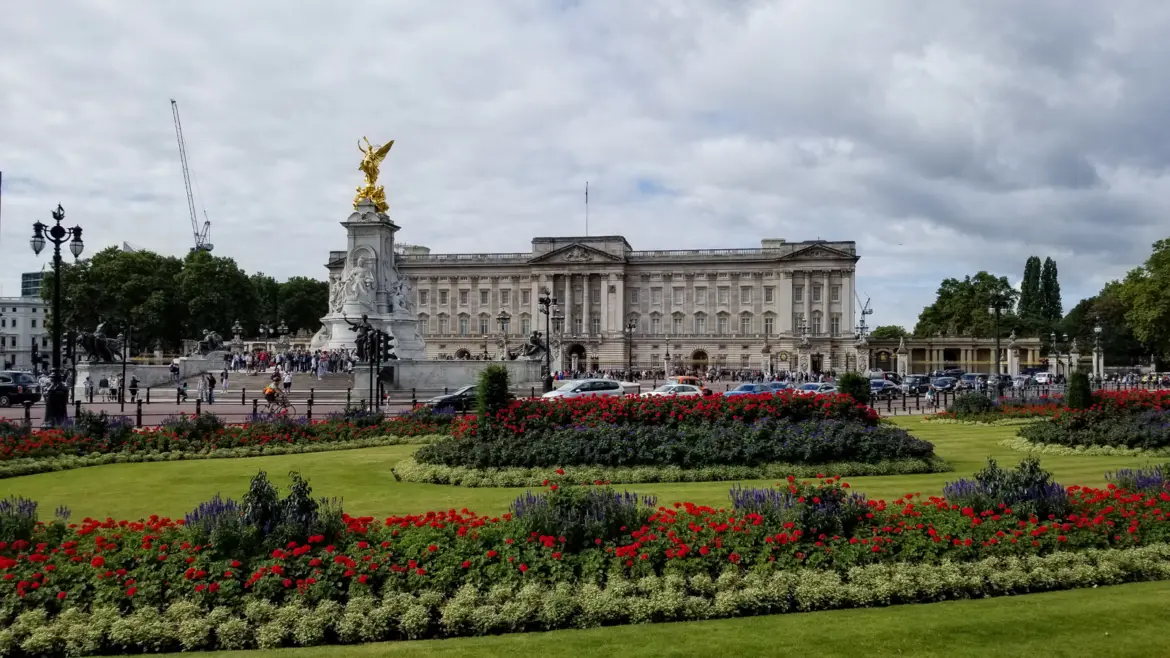
You do not need a ticket to see the best of Buckingham Palace. The building you picture when you think of London (the long pale front, the gold-tipped railings, the balcony) is all visible from the public side of the gates, and so is most of what makes the spot worth a morning.
Queen Elizabeth II was still on the throne when I went, and I will admit I kept half an eye on the gates, hoping a car might sweep in with someone from the family inside. I knew the odds were slim. They stayed slim. No matter. I came twice in a few days at the end of one summer: once for the guard change, with the crowds and the horses, and once on a quieter morning to walk the gates and the parks. Both are below.
Here is what to look at, and how to stand in the right place at the right time.
Buckingham Palace at a Glance
📍 Location · West end of The Mall, Westminster. Nearest tubes: Green Park, Victoria and St James’s Park, each under a ten-minute walk. The forecourt and approaches are flat and step-free.
🎟️ Cost · The best of it is free. The facade, the guard change, the Victoria Memorial and the gates cost nothing. Only the State Rooms inside are ticketed, and they open only in summer.
💂 Changing of the Guard · On selected dates, usually Monday, Wednesday and Friday at 11:00, sometimes 10:00 or 15:00, about 45 minutes, cancelled in heavy rain. Check the Household Division calendar the morning you go.
📸 Best viewing · Victoria Memorial steps for the elevated view, the north railings to get closest to the soldiers, The Mall or Wellington Barracks to watch the band march (easiest with children).
🏛️ The Memorial · Sir Thomas Brock’s marble monument to Queen Victoria, about 25 metres high, unveiled in 1911 and finished in 1924, funded across the British Empire.
🚩 Flag check · Royal Standard flying means the monarch is in; Union Flag means they are away.
🌳 Five minutes to green · Green Park through Canada Gate, or St James’s Park the other side for the lake view back toward Whitehall, the prettier of the two.
💡 Tip · For the palace-behind-the-flowers postcard, come from June on, when the red Memorial Gardens beds are at their fullest. Glance at the flagpole before you shoot: it dates your photo.
Down The Mall
Most people arrive along The Mall, the wide red avenue that runs from Admiralty Arch to the palace. It looks ancient. It is not. The whole ceremonial approach was laid out by the architect Aston Webb in the first decade of the 20th century as part of the Queen Victoria Memorial scheme, and before that there was no straight, formal route to the palace at all.
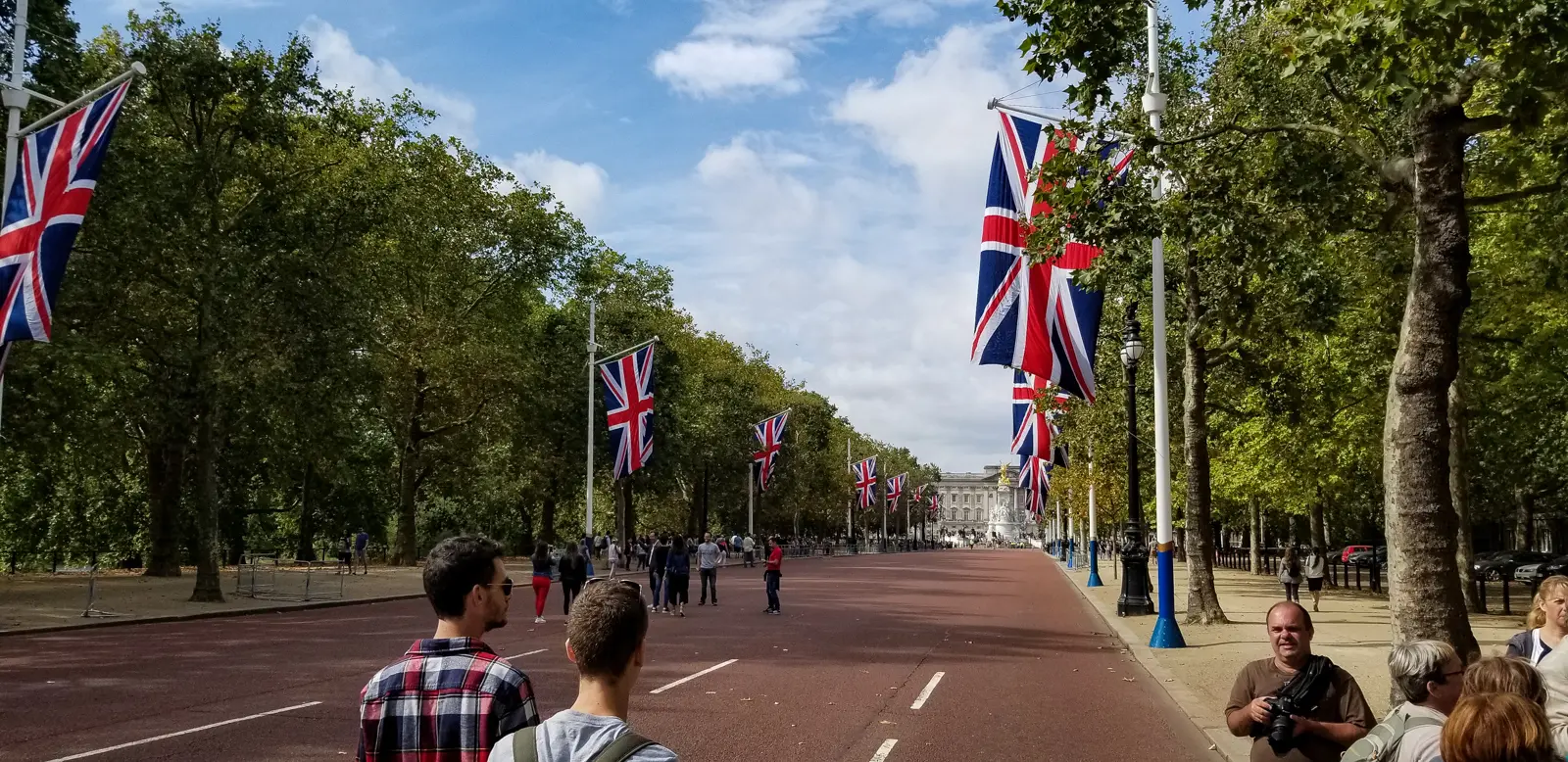
On a late-August morning the flags were up and the avenue was already filling an hour before the ceremony. The trees are London planes, the same species that lines half the city’s streets, chosen because they shrug off pollution. Keep walking and the palace grows at the end of the avenue until the Memorial blocks the view.
The front of the palace
The facade is younger than it looks. A house stood here from 1703, built for the Duke of Buckingham; George III bought it in 1761 for his wife, Queen Charlotte, and it was known for a while simply as the Queen’s House. The conversion into a palace began in 1825 under John Nash, working for George IV. Nash was dismissed for overspending, and Edward Blore finished the job, adding the east front that faces The Mall around 1850.
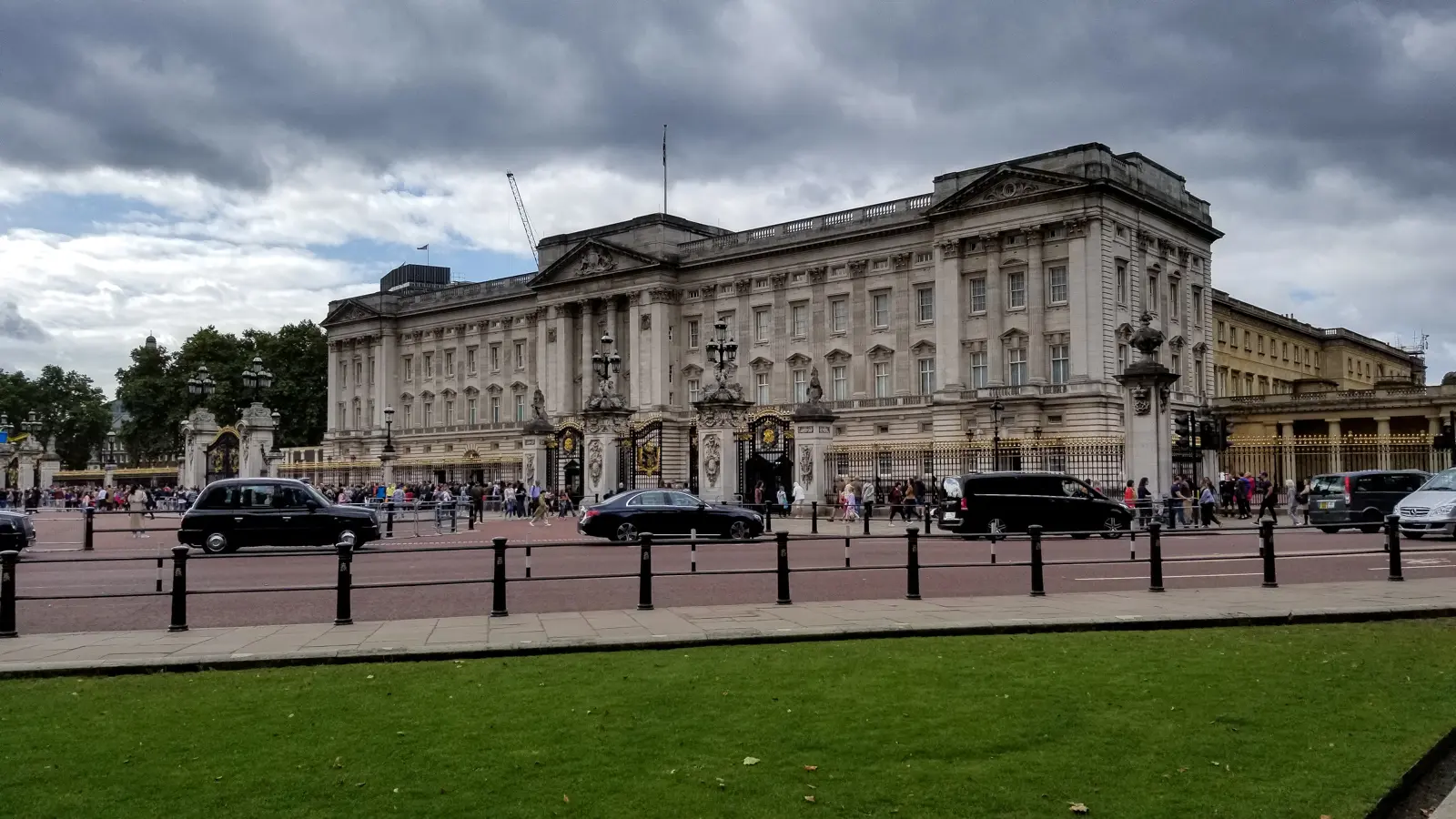
That front did not last. Blore’s soft French stone blackened fast in London’s coal smoke, and by 1913 it was replaced. Aston Webb refaced the whole thing in hard-wearing Portland stone, in the restrained French classical style you see today. The work was done at speed: some 800 men, working day and night shifts over roughly three months in the autumn, while the royal family was away at Balmoral. So the palace front everyone pictures went up, in its current form, in about thirteen weeks.
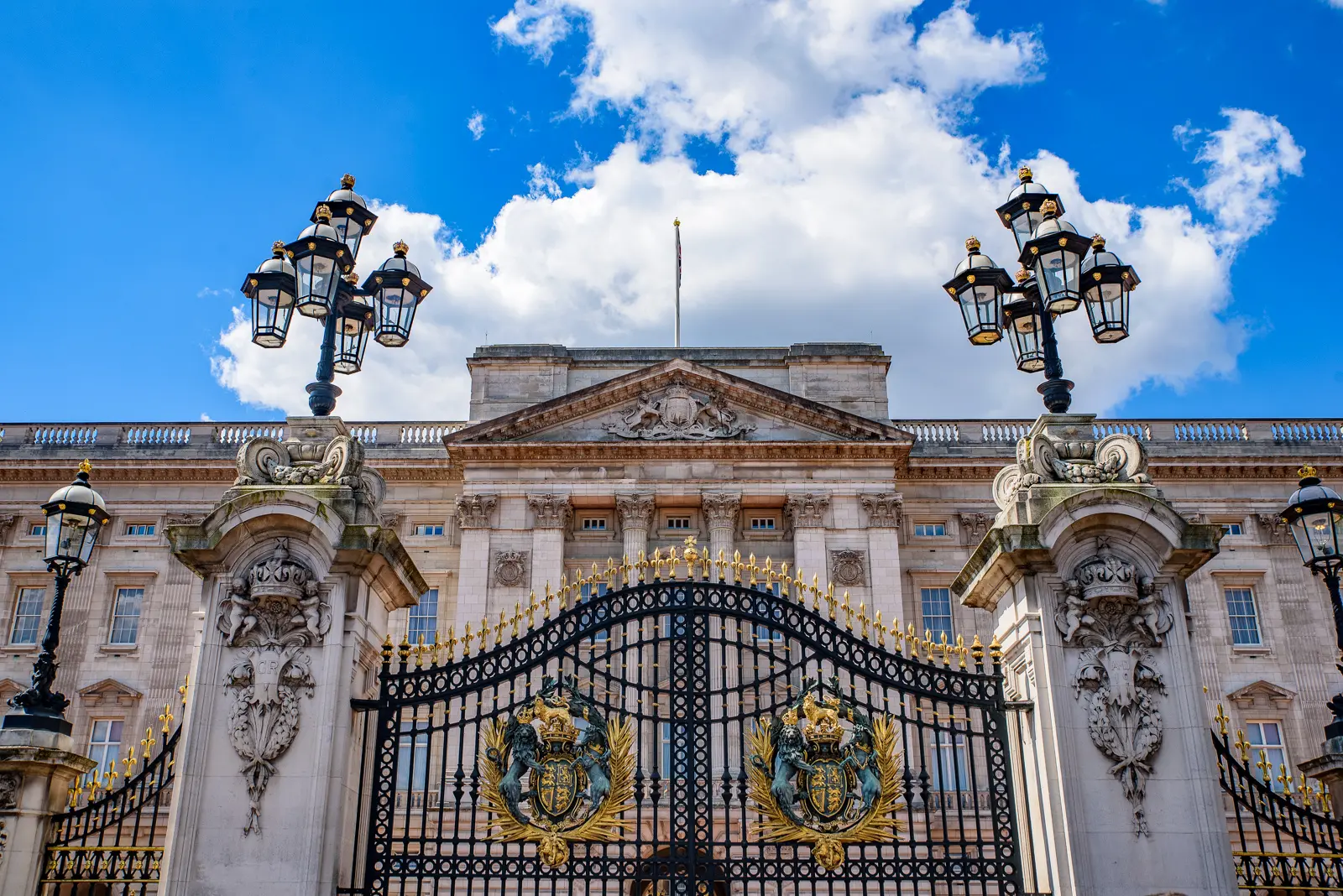
One thing worth a glance before you photograph it: the flagpole on the roof. The Royal Standard flying there means the monarch is in residence. The Union Flag means they are not. It is the quickest way to know whether anyone is home.
The Victoria Memorial
The white monument in front of the gates is easy to walk past on the way to the railings. It rewards stopping. It is the work of one sculptor, Sir Thomas Brock, took him the best part of a decade, and was unveiled by George V in May 1911, though the last pieces were not in place until 1924. It stands about 25 metres high and uses some 2,300 tonnes of white Carrara marble.
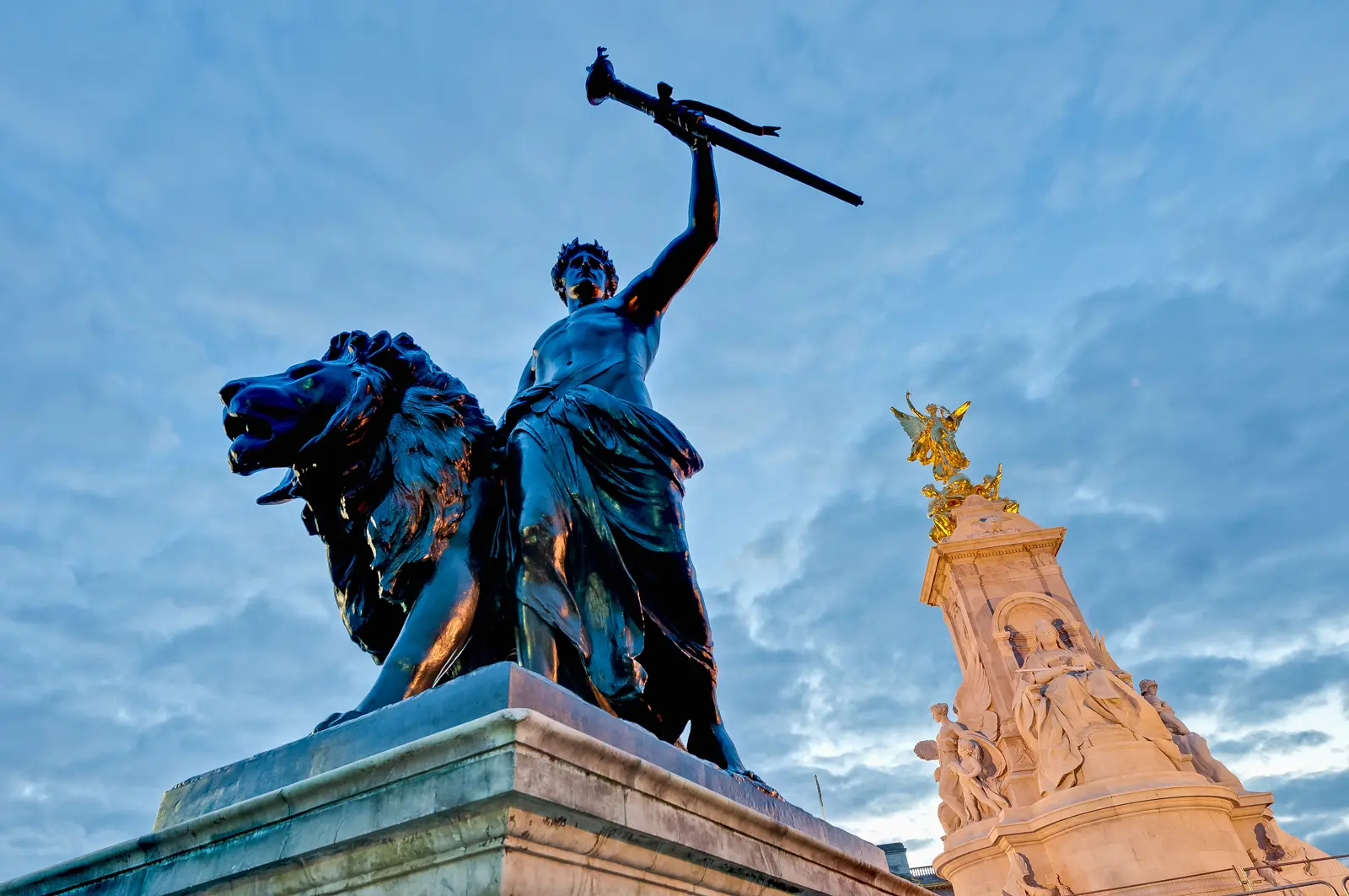
Read it from the top down. The gold figure on the orb is Winged Victory, a palm branch in one hand. Below her sit Constancy, holding a ship’s compass, and Courage, with a club. Lower again, on the two sides that face The Mall and the palace, a pair of eagles spread their wings for Empire. Below them are the marble figures: Queen Victoria herself, enthroned and facing back down The Mall toward the city; Motherhood facing the palace; Justice toward Green Park; and Truth. At the four corners stand the bronze lion groups for Peace, Progress, Agriculture and Manufacture. The whole monument was paid for by donations from across the British Empire.
Watching the guard change
This is what most people come for, and it is free. The King’s Guard hands over to a new detachment in the palace forecourt in a ceremony that runs about 45 minutes, with a military band. In 2019 it was the Queen’s Guard; the drill is the same.
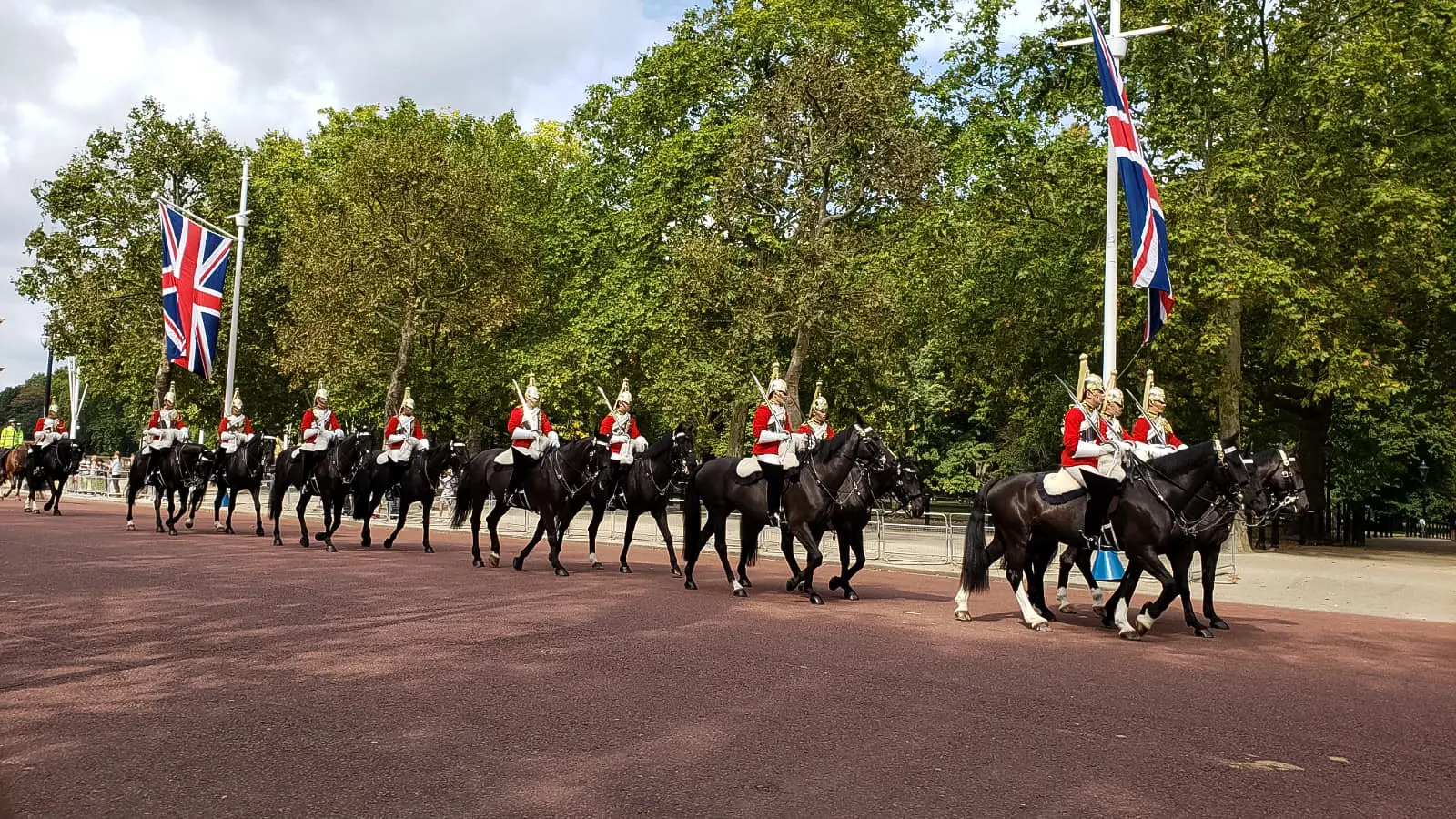
The part that surprised me was how much happens away from the gates. The guards and band march in from Wellington Barracks, and a separate detachment comes from St James’s Palace, so the movement is spread along The Mall and Spur Road rather than packed into one spot.
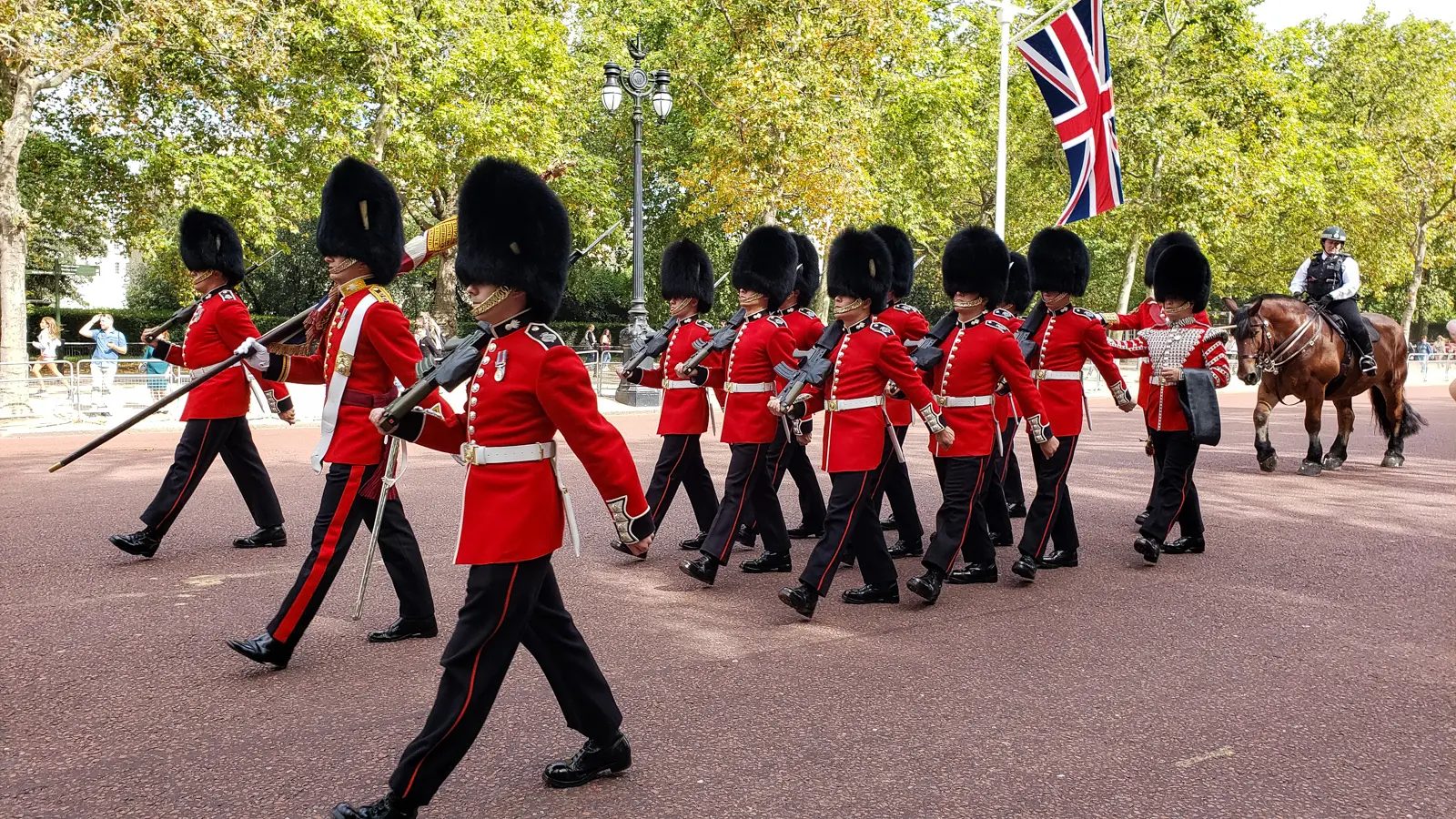
I will be honest: I am not really one for pomp and ceremony. But the craft is real, and the guards hold their drill in front of thousands of phones without a flicker. I left with a lot of respect for them.
A warning that the schedule has changed since older guidebooks were written: the full ceremony no longer runs on a fixed Monday-Wednesday-Friday loop year-round. It happens on selected dates, usually those days at 11:00, sometimes at 10:00 or 15:00, and it is called off in heavy rain. Check the Household Division calendar the morning you go.
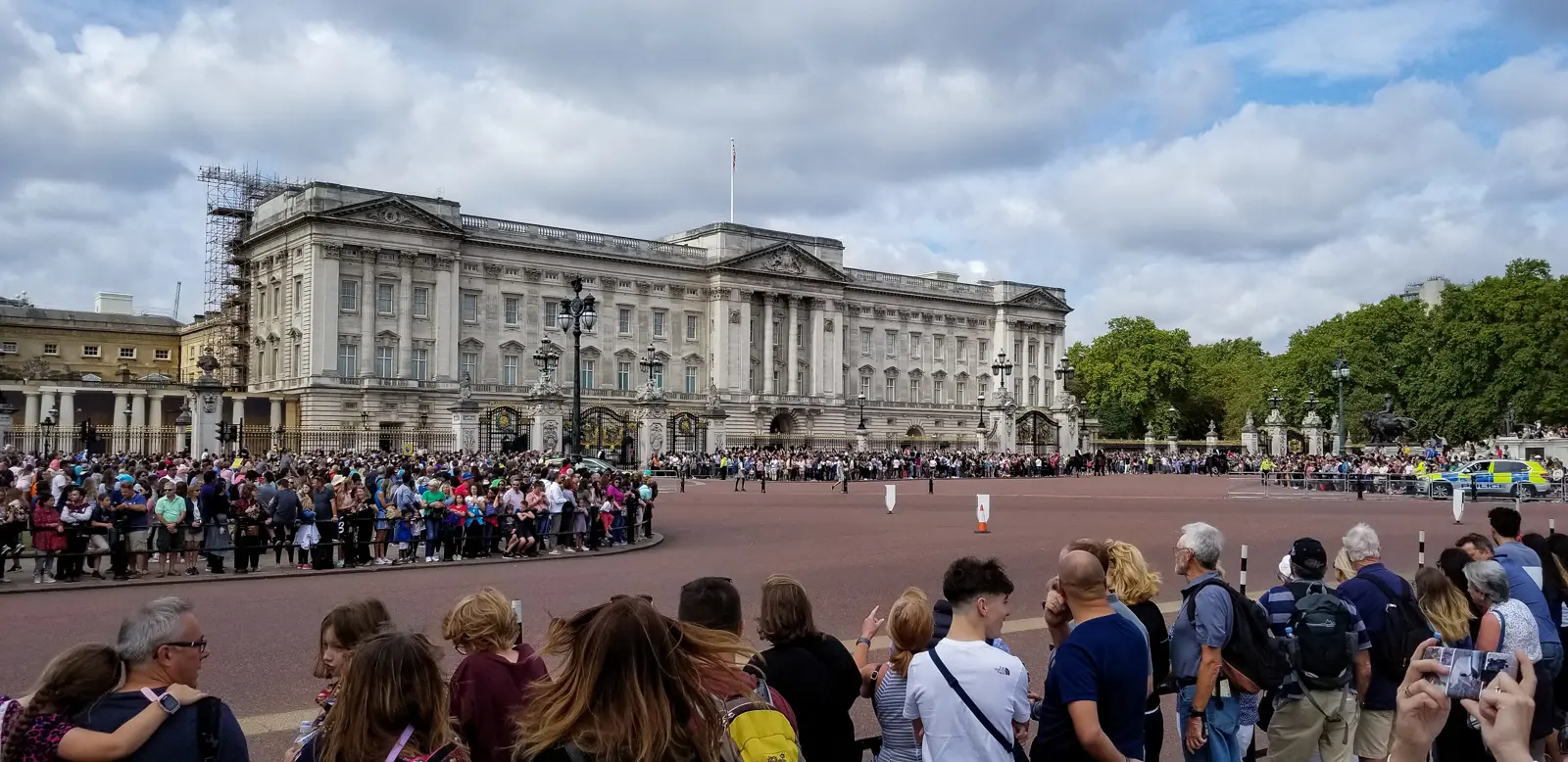
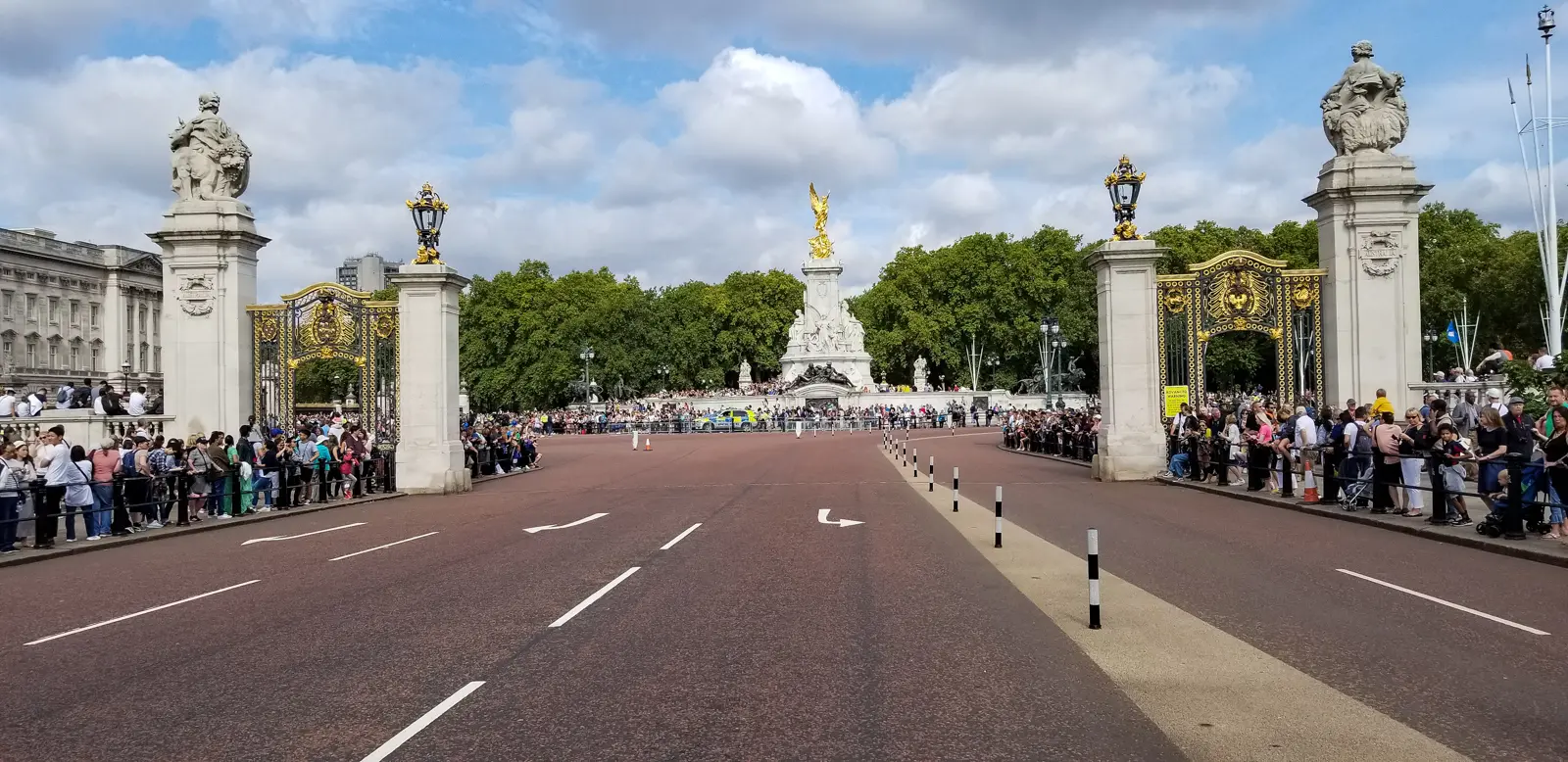
The best place to stand depends on what you want. The steps of the Victoria Memorial give the highest view over the forecourt. The railings, especially on the north side, put you closest to the soldiers. And The Mall or Wellington Barracks let you watch the band step off and march, which is the most fun if you have children with you.
The gates
Three sets of ceremonial gates ring the Memorial, presented by the senior dominions of the empire and known as the Dominion Gates. The grandest, on the Green Park side, is Canada Gate, given by Canada and completed in 1911. Its gilded ironwork carries the coats of arms of the Canadian provinces of the day.
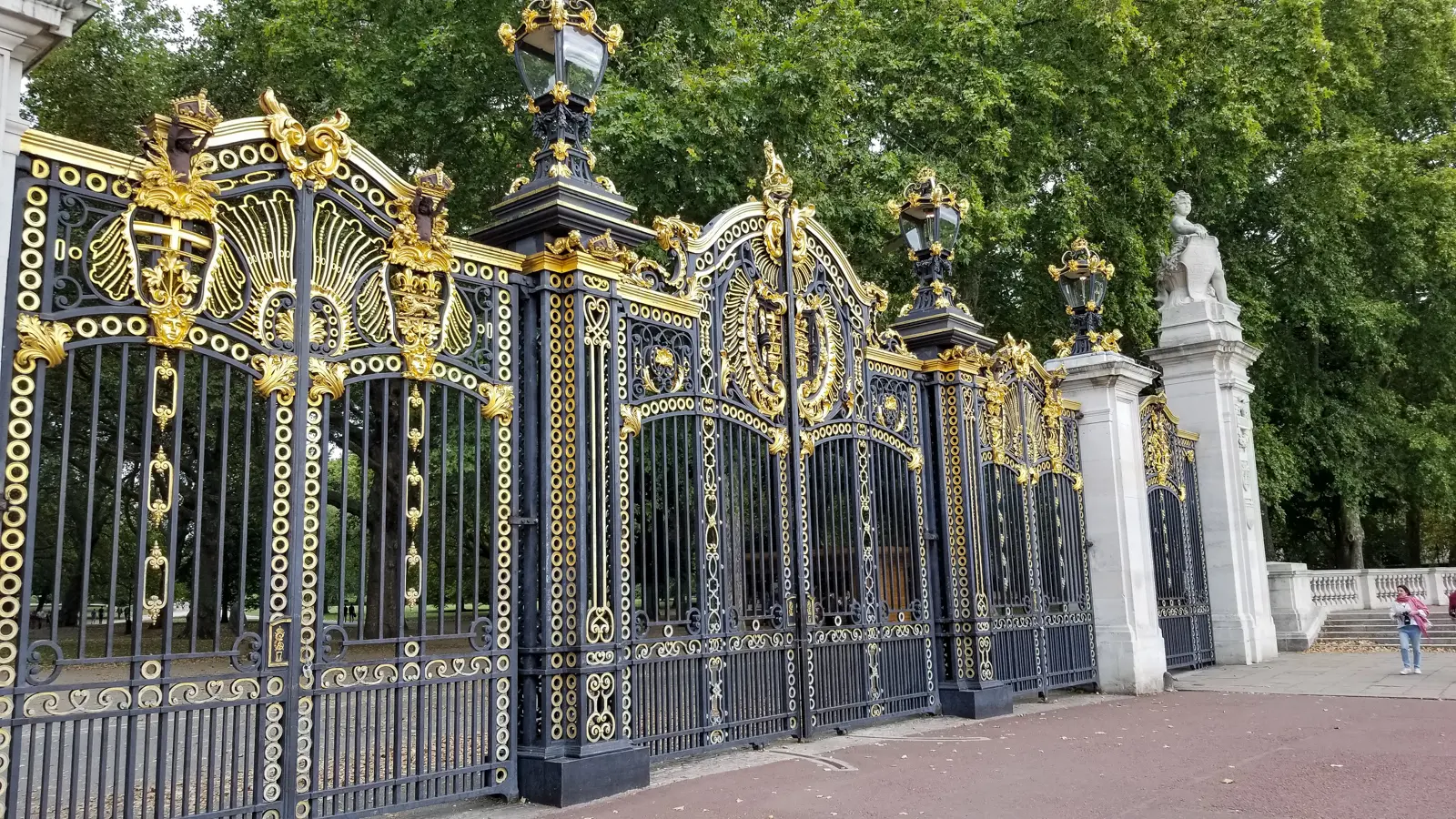
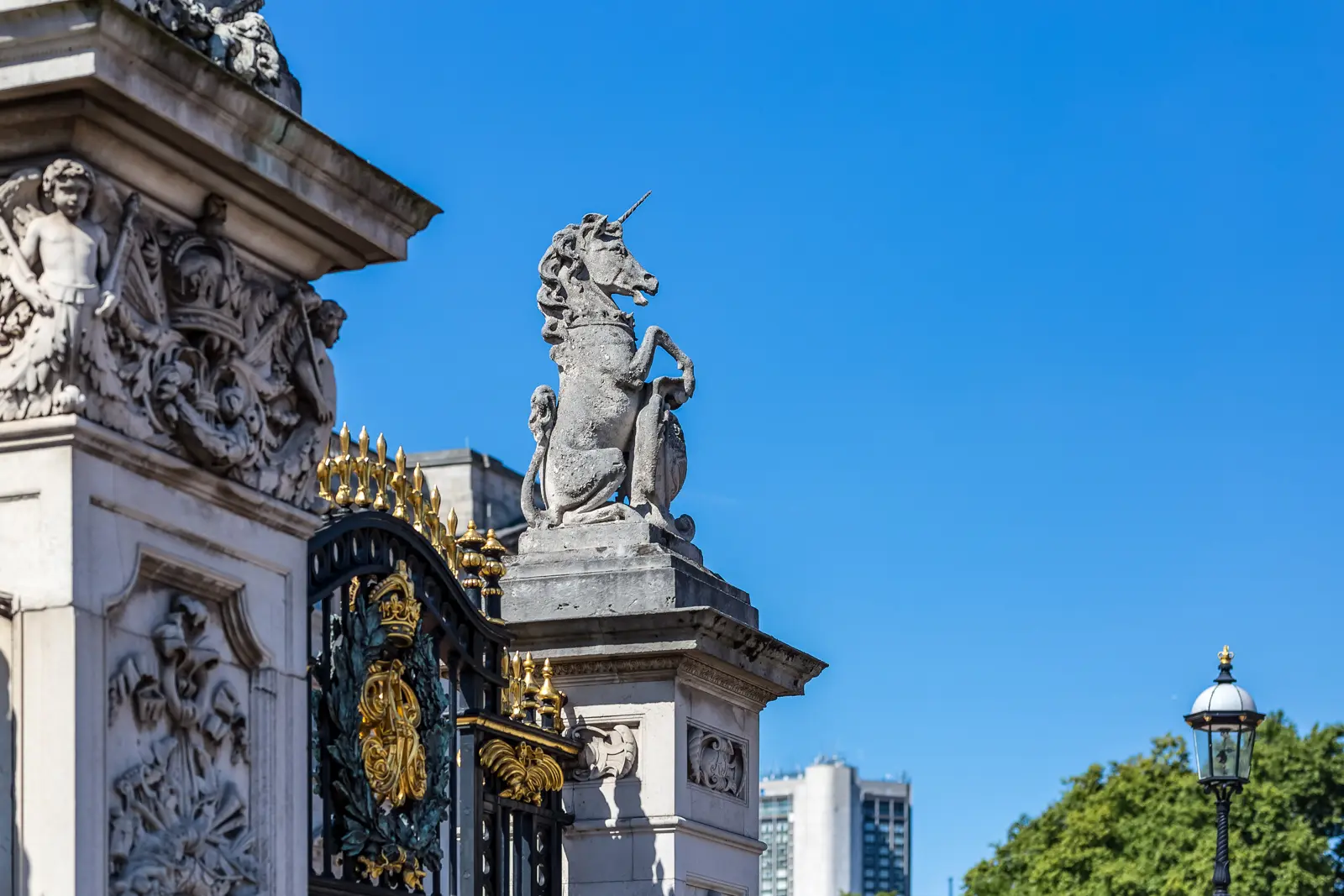
The smaller Australia and South & West Africa gates guard the pavements toward St James’s Park. On the main palace gates themselves, look for the two royal supporters: the lion for England and the unicorn for Scotland, set on the stone piers.
Five minutes to two royal parks
The palace sits between two of London’s eight Royal Parks, and stepping into either one is the fastest way out of the crowds. Green Park is straight through Canada Gate, all grass and plane trees, no flowerbeds by design. St James’s Park is the other side, and it is the prettier of the two.
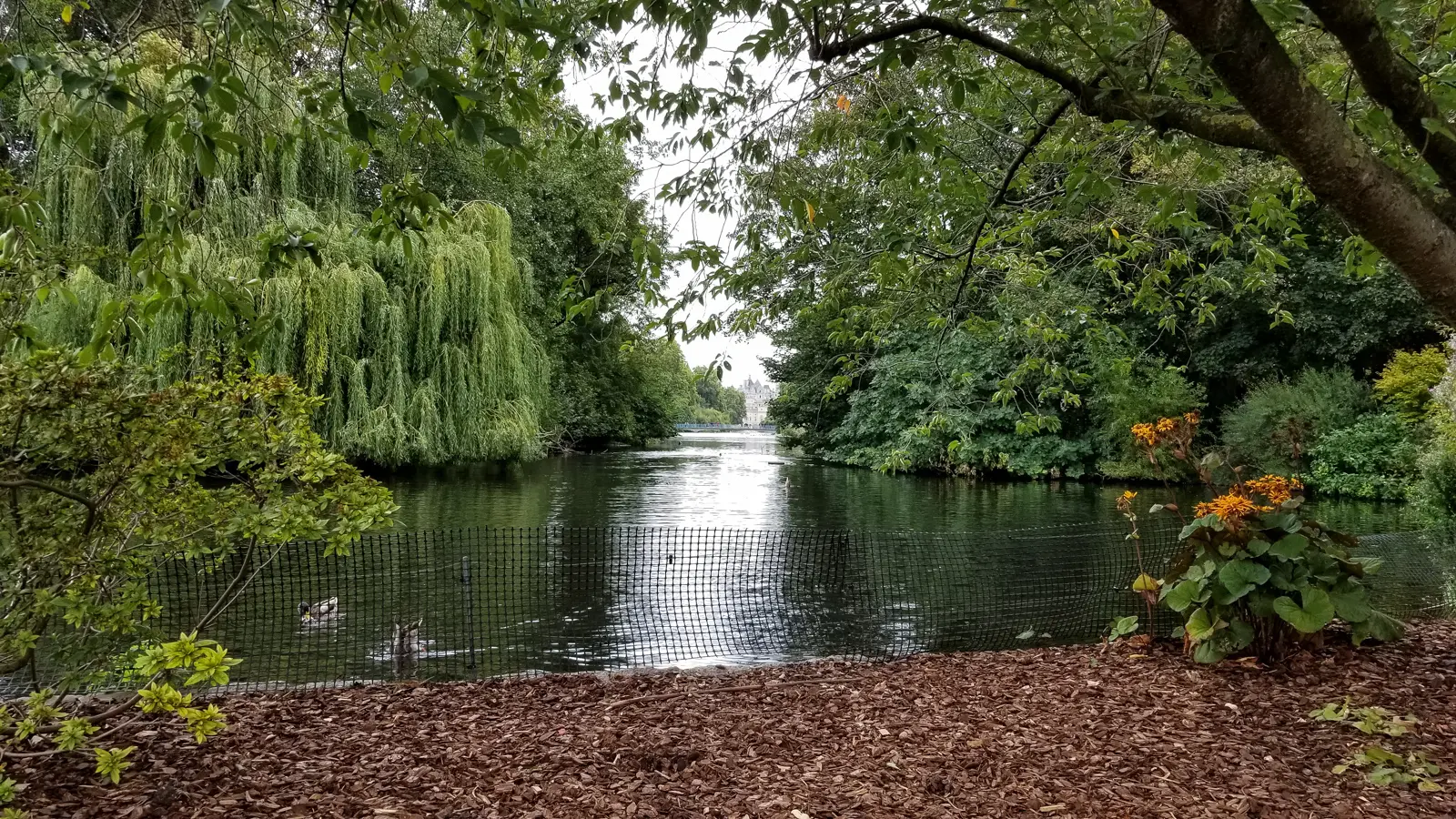
Walk to the bridge over the lake and look east, and the turrets and domes of the Whitehall buildings rise over the trees like a skyline borrowed from a fairy tale. Ducks, pelicans (a pair first given to Charles II in 1664) and willows do the rest. The view east along the water toward those rooftops is a London postcard in its own right, and it is hard to believe the guard-change crowds are a five-minute walk behind you.
Bubbly Tips
- Check the schedule that morning. The full guard change runs on selected dates, usually Monday, Wednesday and Friday around 11:00, occasionally 10:00 or 15:00, and lasts about 45 minutes. It is cancelled in heavy rain, so look at the Household Division calendar before you set out.
- Pick your spot by what you want to see. The Victoria Memorial steps give the best elevated view over the forecourt; the railings on the north side get you closest to the soldiers; The Mall and Wellington Barracks are best for watching the band march.
- Arrive early, or go where it’s calmer. For a front-row place at the railings on a busy day, be there 45 to 90 minutes ahead. Wellington Barracks is far less crowded and the easiest option with a pushchair or wheelchair.
- For the postcard shot, come in summer. The red and purple beds in the Memorial Gardens are at their fullest from June onward, which is when you get the palace-behind-the-flowers picture.
- Glance at the flagpole first. Royal Standard flying means the monarch is in; Union Flag means they are away. It is a small detail that dates your photo.
- Spot the heraldry. Look for the lion of England and the unicorn of Scotland on the main gate piers, and the national emblems worked into the Dominion gates around the Memorial.
- Pair it with a park. Walk through Canada Gate into Green Park, or cross toward St James’s Park and the lake view back to Whitehall. Both are a few minutes away and free.
- Getting there. The nearest Underground stations are Green Park, Victoria and St James’s Park, each under a ten-minute walk. The forecourt and the approaches are flat and step-free.
- Inside is a separate trip. The State Rooms open only in summer, roughly late July to September, and need a timed ticket booked ahead. The Royal Mews and the King’s Gallery run on their own schedules. I saved the inside for next time.
Final Thoughts
For a building most people only ever see from across a road, Buckingham Palace gives you a lot to stand and read: a hundred-year-old front built in thirteen weeks, a marble queen facing down her own avenue, and a guard change that spills along half a mile of London before it reaches the gates. None of it costs anything.
The monarchy’s part in all this is mostly symbolic now, as everyone knows, and the palace pays some of its way by letting the rest of us crowd the railings. I respect that the UK keeps the tradition running and keeps the forecourt open to anyone who turns up. You do not have to care about crowns to enjoy a free morning of it.
If you only have an hour, time it for the ceremony, take the Memorial steps, then walk it off in St James’s Park. That is the whole of the palace from the outside, and it is more than enough for one morning.
Until next time!

🌟 Everything You Need to Plan Your Dream Trip in 2026
- 🌟 Luxury Hotels - Find premium stays with Booking.com & Hotels.com
- 🏡 Vacation Rentals - Discover unique properties on VRBO
- 🏞️ Guided Tours - Explore with Viator or GetYourGuide
- 🎫 Attraction Tickets - Skip the lines with Tiqets
- 🚢 Ocean Cruises - Set sail with Cruise Direct
- 📱 International SIMs - Stay connected with Saily
- 🚗 Car Rentals - Budget-friendly options from Discover Cars
- 🌐 Secure VPNs - Browse safely with NordVPN
- 💶 Currency Exchange - Best rates with Wise
- 🗣️ Learn Languages - Master the local language with Babbel and Rosetta Stone