
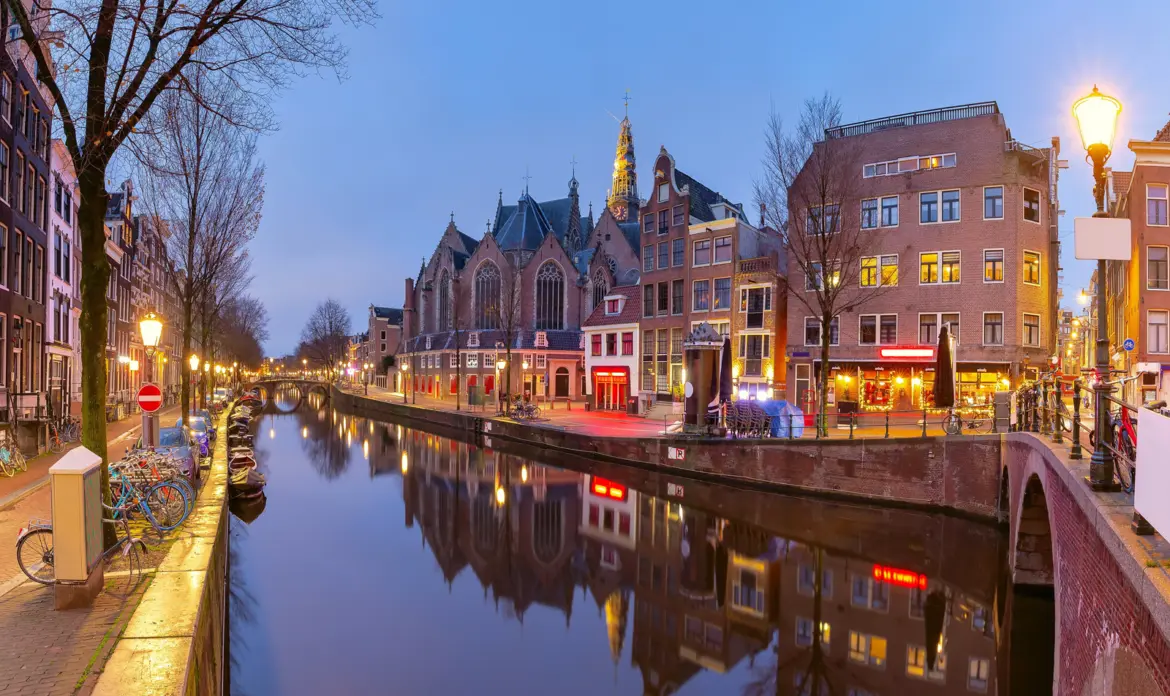
Amsterdam‘s Red Light District, known in Dutch as De Wallen, is one of those places almost every visitor to Amsterdam wants to see, and walking tours of it are very popular. So I took one. What I did not expect was how little it would focus on the windows themselves, and how much I would learn about the neighbourhood around them.
People come from all over the world to walk these streets, and I saw plenty of them, including more than a few bachelor parties. What struck me most, though, was the attitude of the locals. In Amsterdam, there is no big taboo attached to the district. Nobody seemed shocked by it.
Amsterdam’s Red Light District at a Glance
📍 What it is · De Wallen, Amsterdam’s oldest neighbourhood, built around the Oude Kerk — a working district, but also home to residents.
🚶 Tours · Since 1 April 2020, guided groups can’t pass the windows; good tours cover the history, rules and streets instead.
📵 Golden rule · Never photograph the workers or the windows — it’s offensive, and it’s why window tours were banned.
🚫 Know the rules · No outdoor cannabis since 2023 (€100 fine); limited alcohol sales (Thu–Sun after 4pm); keep noise down — people live here.
⛪ Don’t miss · The Oude Kerk (Amsterdam’s oldest building) and the Belle statue outside it; the Basilica of St Nicholas near Centraal.
Why Tours Stay on the Edges
Tours no longer take groups into the heart of the district. Since 1 April 2020, Amsterdam has banned guided groups from walking past the windows. The deputy mayor at the time said it was disrespectful to treat sex workers as a tourist attraction. Tours elsewhere in the area are still allowed, as long as they follow the city’s rules.
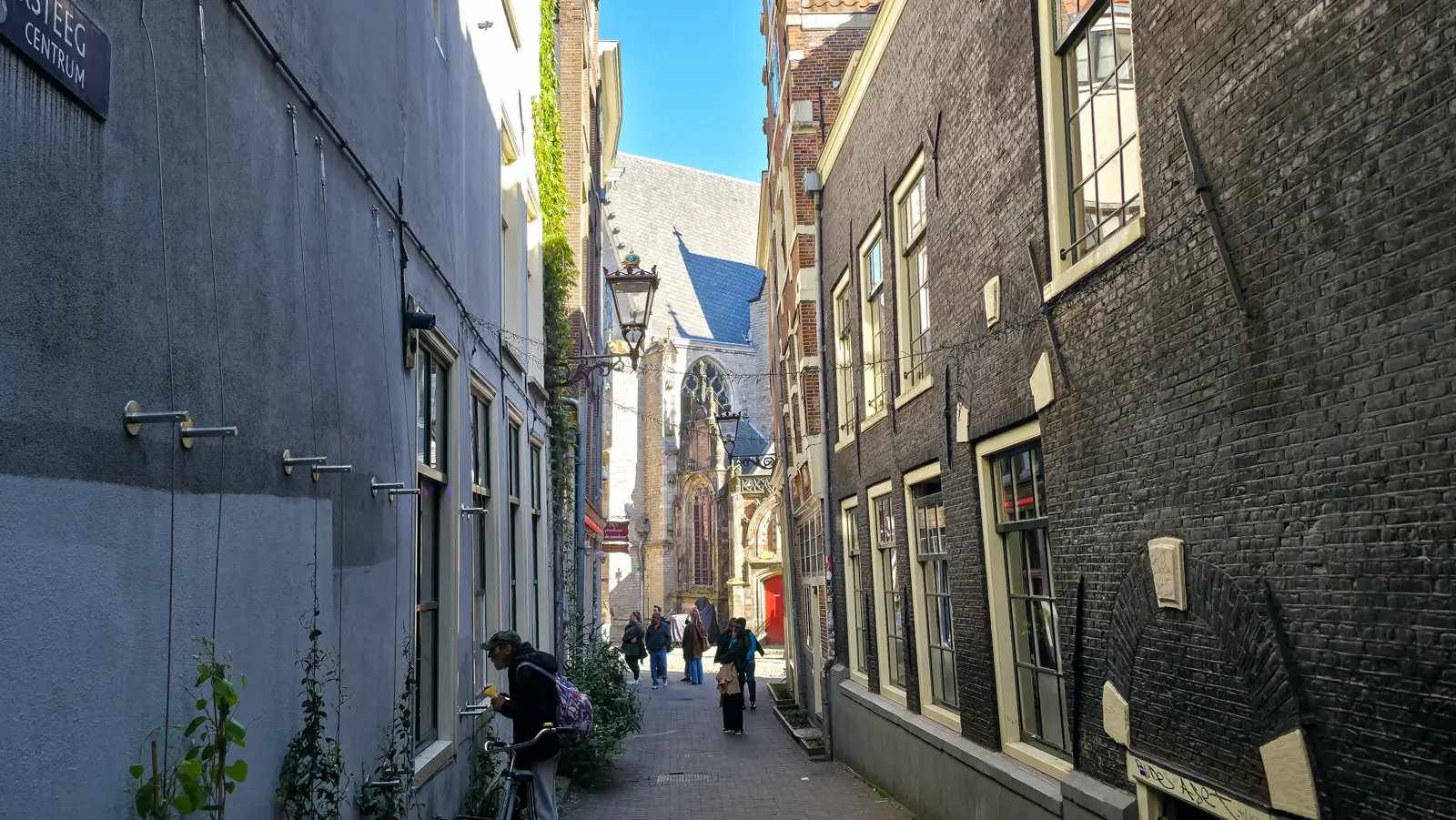
So our guide kept to the outskirts, and that turned out to be the best part. Instead of staring at windows, we got the history, the rules and the stories, with the old streets and the church tower as the backdrop.
A Neighbourhood, Not Just a District
The guide explained that the Red Light District is more of an ordinary neighbourhood than visitors assume. People live here. For several years the city has run a campaign called We Live Here, to remind visitors that the district is home to residents as well as businesses.
Our guide was proof of it. She had lived in the district herself, and her rent was cheap for a reason: by living there, she was protecting the home from being converted into a brothel.
She was also very matter-of-fact about the work itself. At one point she told us it was normal for a gentleman to want to relieve himself after a day at work. Between the language barrier and how casually she said it, the whole group burst out laughing. Nobody had expected that sentence on a walking tour.
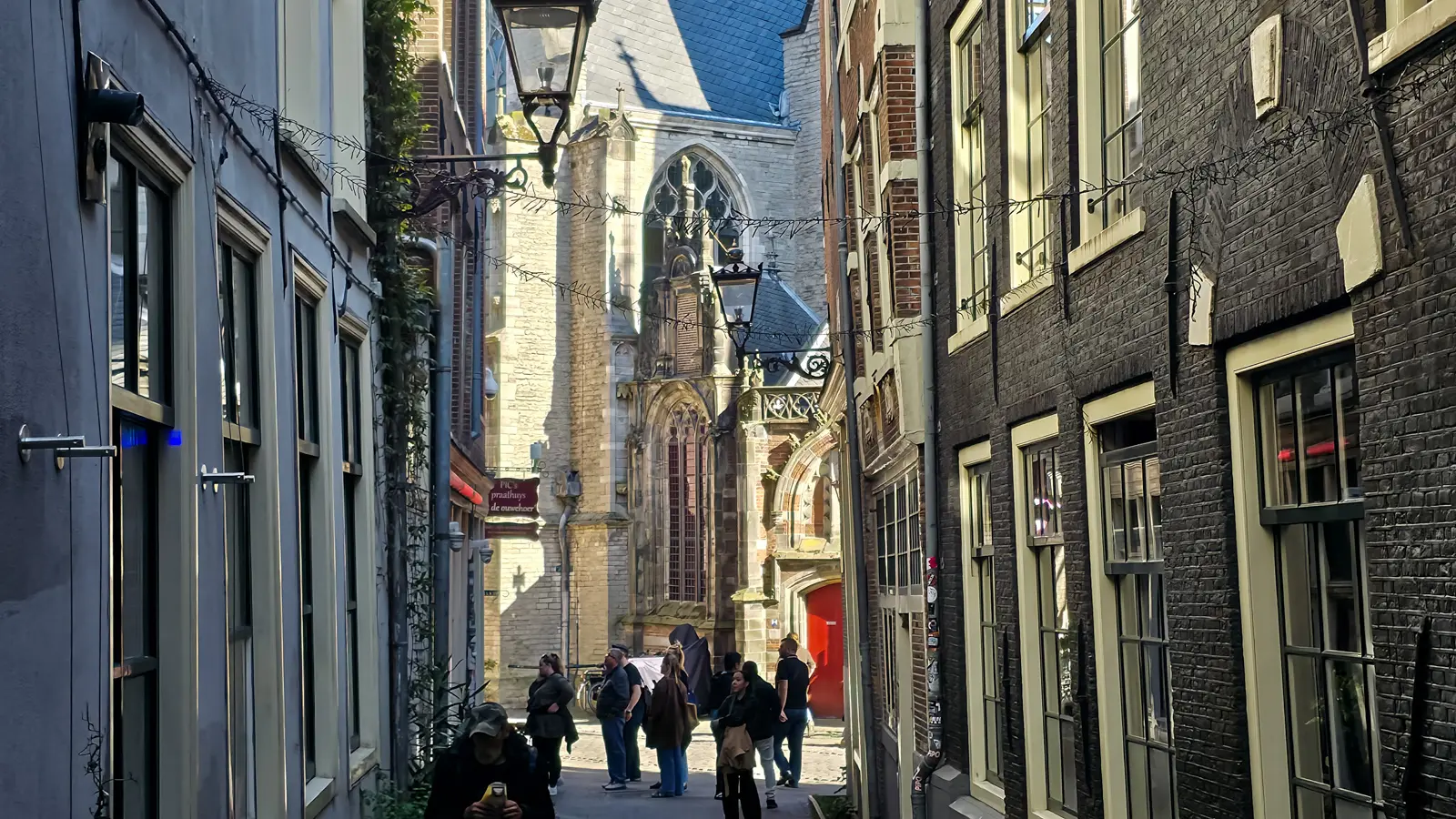
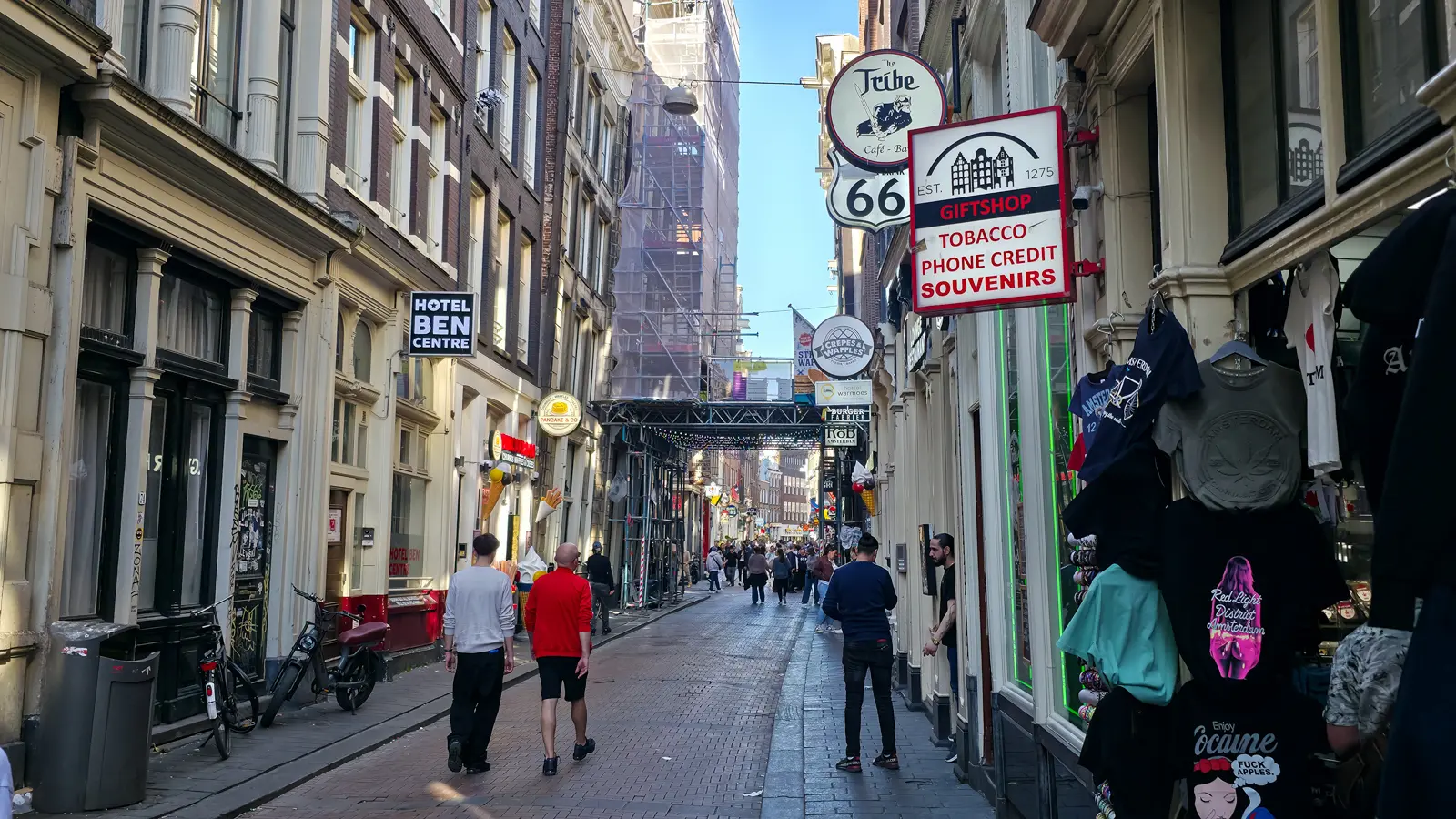
The streets on the edge of the district are busy all day, lined with souvenir shops, hotels, cafés and snack bars.
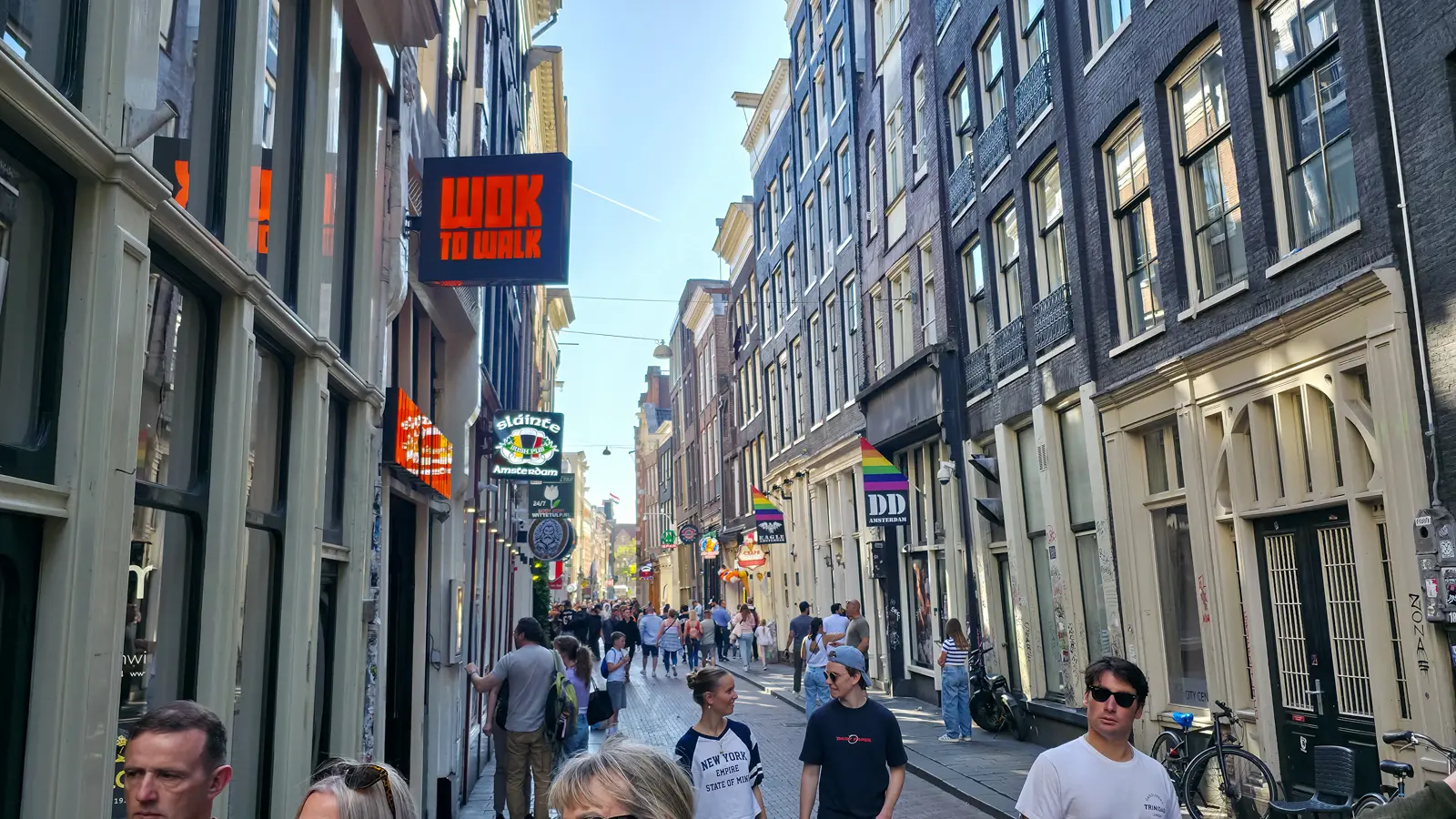
Further along, the shopfronts get louder, with souvenir T-shirts, waffle and pancake signs, and scaffolding over the street.
The Oude Kerk and the Guide’s Story
We caught only a glimpse of the church from the edges, but it is big, and it stands in the middle of the Red Light District. That is the Oude Kerk, the Old Church, a Gothic church and the oldest building in Amsterdam.
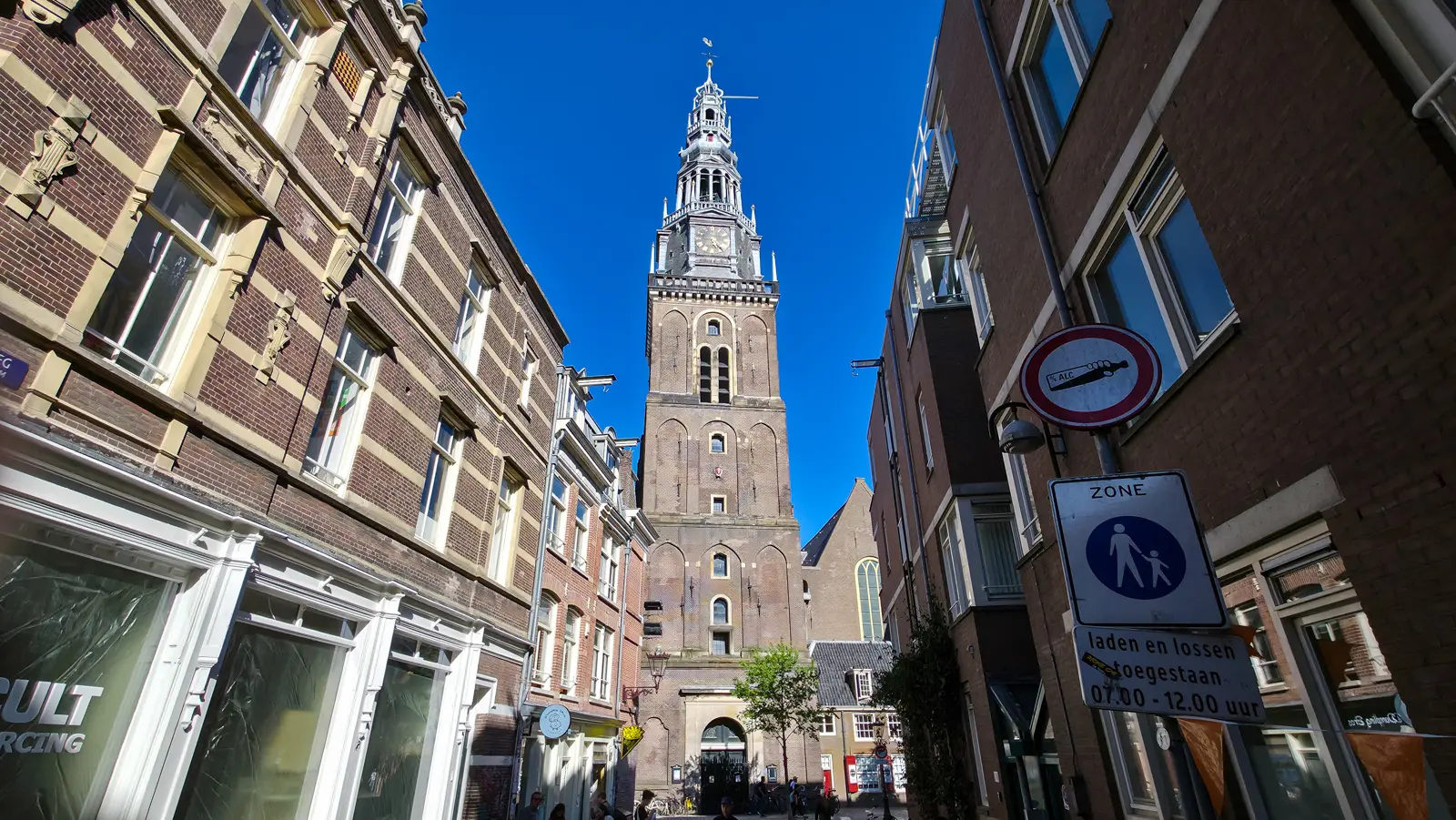
Our guide told us a story about why a church sits in the middle of a red light district. Before the Reformation, the Catholic Church sold indulgences, payments that were believed to reduce the punishment for sins. According to the story, the sailors and visitors who spent time in the district paid for forgiveness at the church, and the church prospered. Similar versions of the story are told all over the city.
It is a good story. What is documented is simpler: the Oude Kerk was the parish church of a port city full of sailors, dedicated to St Nicholas, their patron saint, and the red light trade grew up around it over the centuries. Outside its doors today stands a bronze statue called Belle, put up in 2007 as a tribute to sex workers around the world.
Legal, Regulated and Still Debated
The Netherlands legalised prostitution in 2000. Our guide’s view was that legalisation changed the mentality around it. In her words, it allows for oversight and controls, and inspections are meant to protect the people who work there.
That view is not universal. Critics argue that legalisation has not done enough to stop trafficking or to protect women. The debate continues in the Netherlands, and the city has kept adding rules.
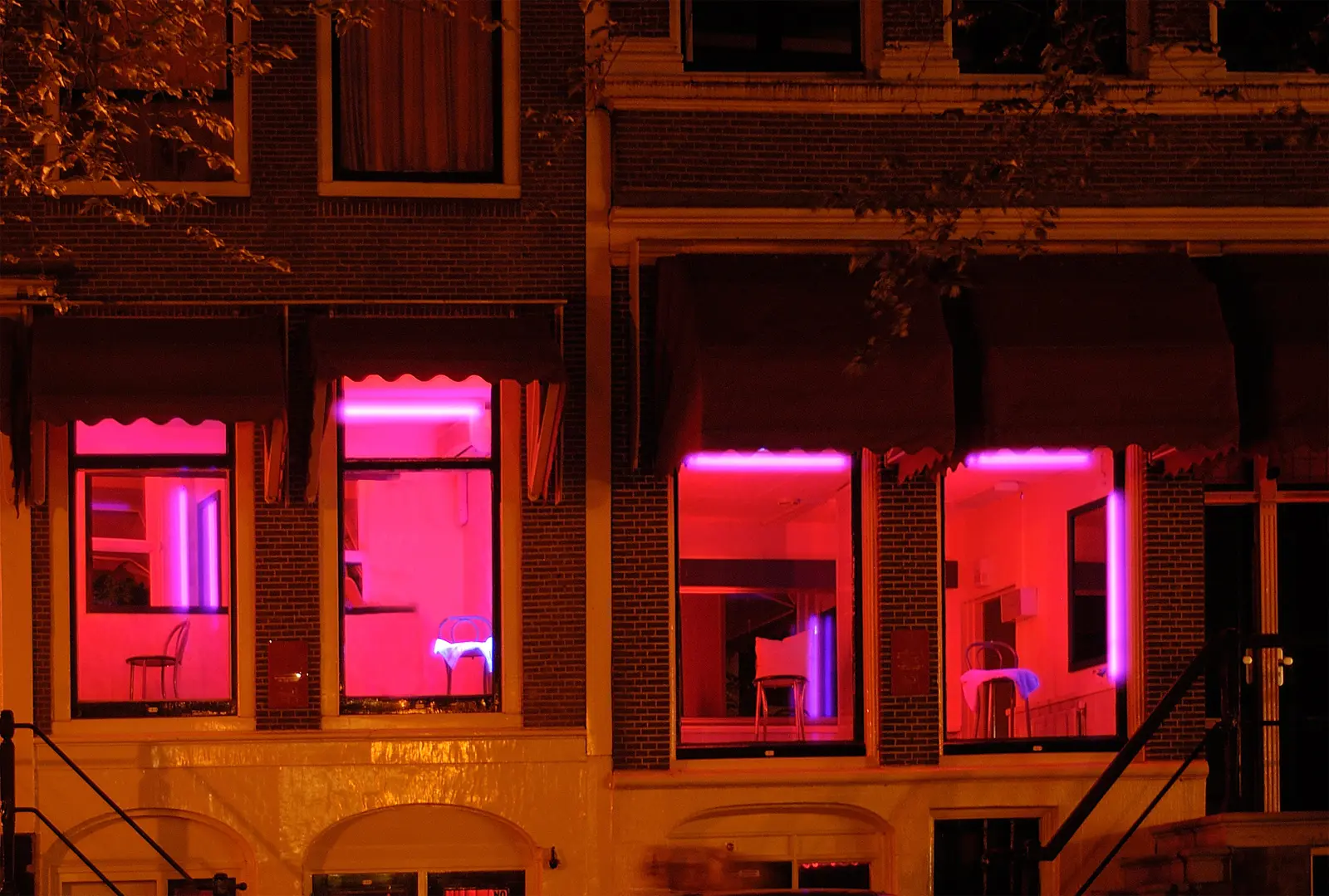
Cannabis is part of Amsterdam’s reputation too, but it is not actually legal in the Netherlands. It is tolerated: possession of small amounts is decriminalised, and licensed coffee shops may sell it under strict conditions.
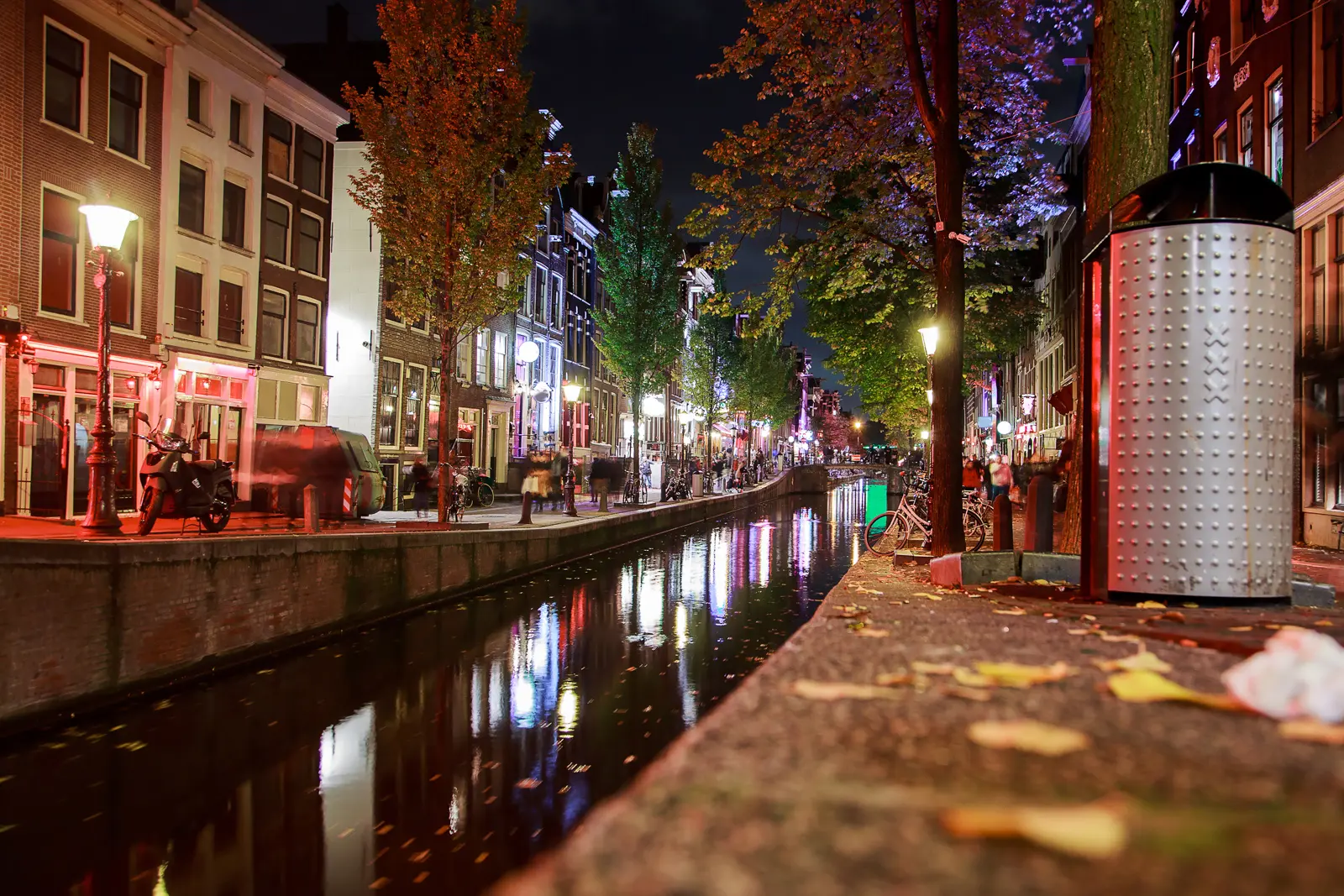
The city has also gone further. It has run a Stay Away campaign aimed at visitors who come only to party, and it has looked at moving part of the trade to a purpose-built erotic centre elsewhere in the city.
What I Noticed
Walking through, I noticed people stopping to look into the window of a place. I noticed how many groups were clearly out for a celebration. And I noticed that, around all of it, ordinary life carried on, with bikes, cafés and canals that look the way canals look everywhere else in Amsterdam.
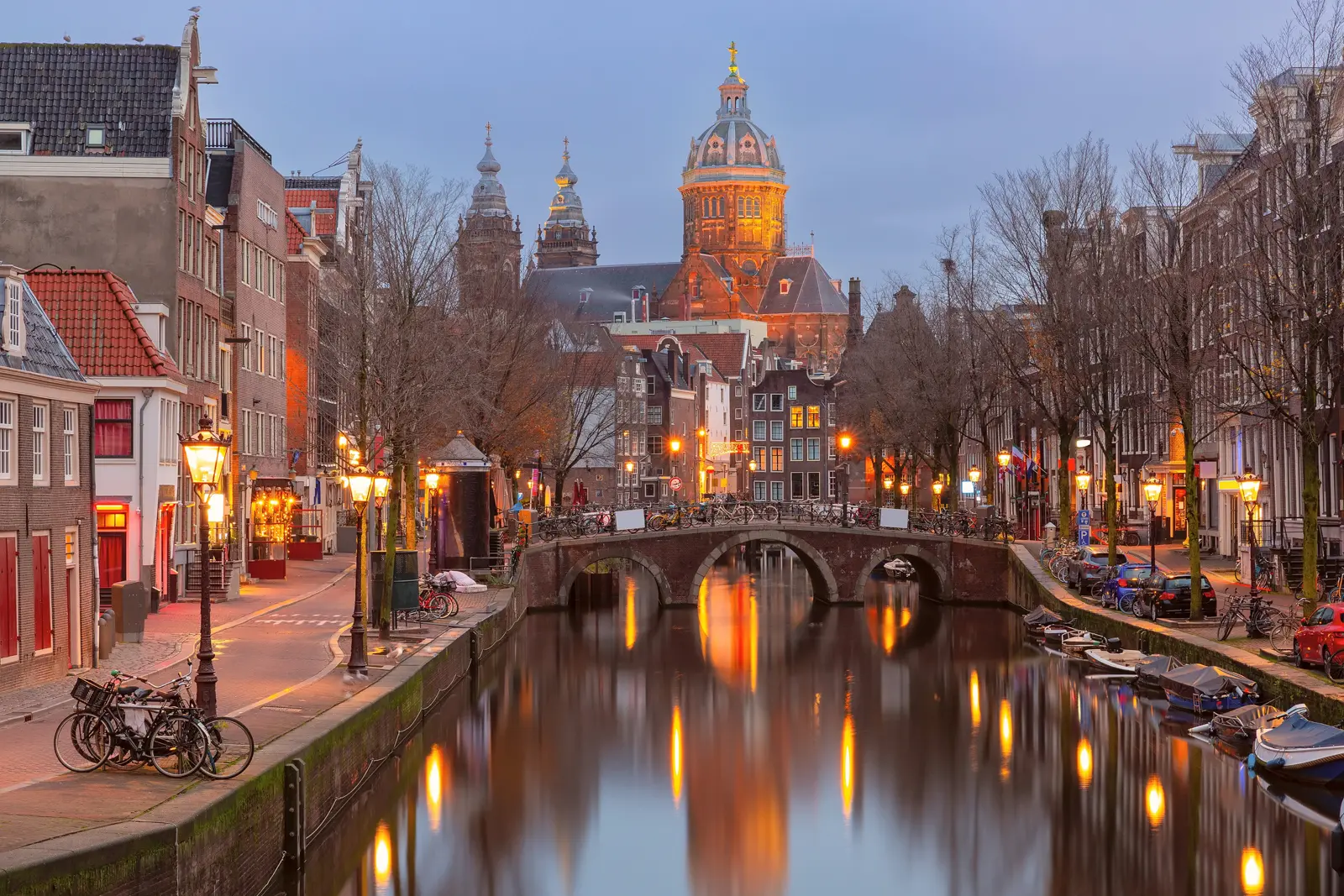
Near Centraal Station, at the edge of the district, a second church appears above the rooftops: the Basilica of St Nicholas.
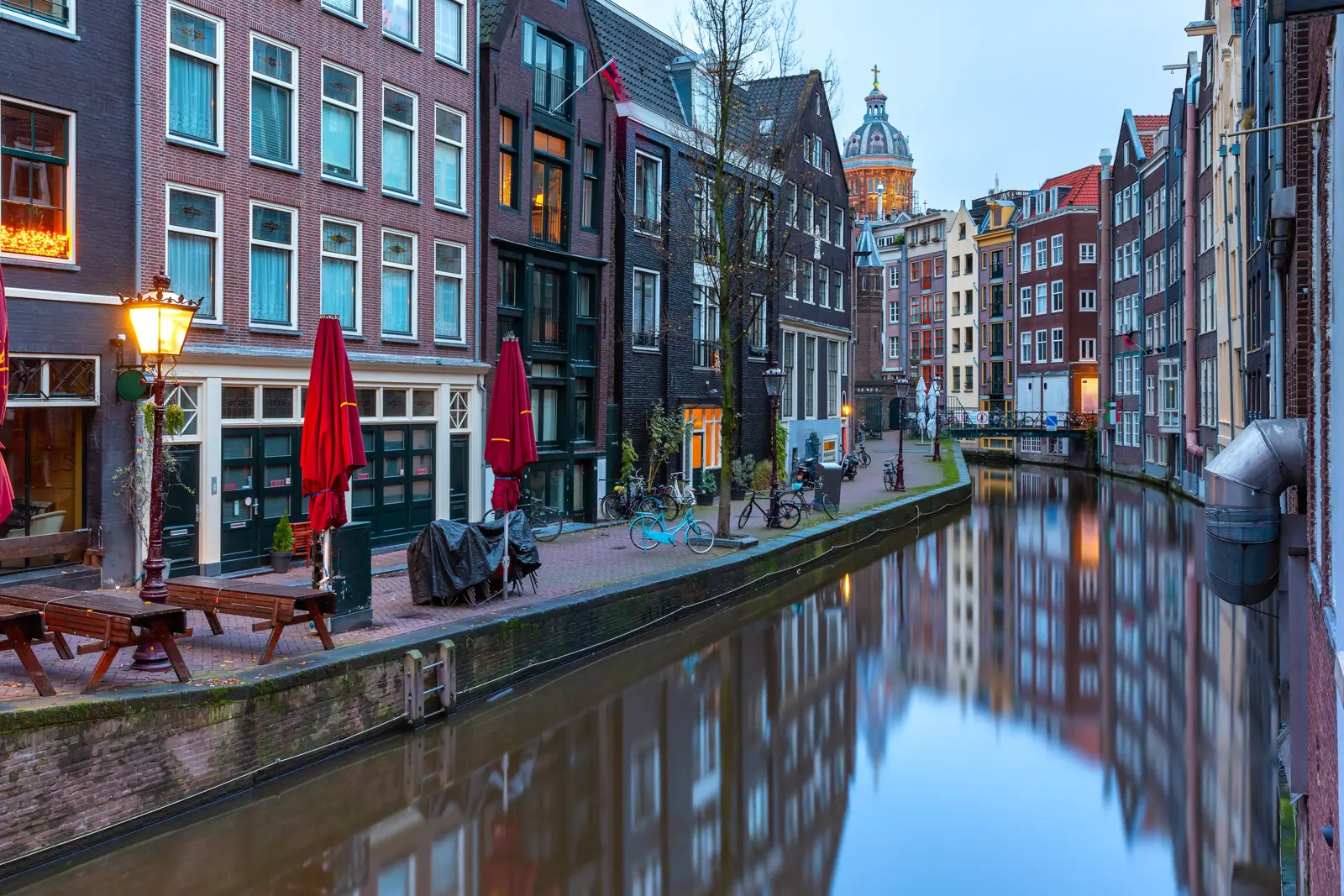
From the canal, the basilica’s dome and towers close off the view.
Bubbly Tips
- Never photograph the workers. It is considered offensive, and unwanted photos were one of the reasons the city banned window tours.
- Take a walking tour for the history. Tours can no longer pass the windows, but a good guide fills in the rules, the stories and the neighbourhood.
- Climb the Oude Kerk tower. The tower can be climbed on a guided tour, and admission to the church is by card only.
- Look for Belle. The bronze statue stands outside the Oude Kerk.
- Do not smoke cannabis on the street. It has been banned outdoors in the district since 2023, with a €100 fine.
- Do not plan on buying a drink to carry around. Shops may not sell alcohol in the district from Thursday to Sunday after 4pm.
- Remember that people live here. Keep the noise down, especially at night.
- See it by day as well as by night. In daylight, the architecture and the Oude Kerk are easier to appreciate.
Final Thoughts
I came expecting the windows and left with a lesson in how Amsterdam does things. The city treats the district as part of everyday life, regulates it, debates it and keeps adjusting the rules, and the locals seem completely unbothered by the visitors who come to stare.
Our guide summed it up best without meaning to. One very matter-of-fact sentence, lost a little in translation, and a whole group of tourists laughing on a street corner beside the oldest church in the city.
Until next time!

🌟 Everything You Need to Plan Your Dream Trip in 2026
- 🌟 Luxury Hotels - Find premium stays with Booking.com & Hotels.com
- 🏡 Vacation Rentals - Discover unique properties on VRBO
- 🏞️ Guided Tours - Explore with Viator or GetYourGuide
- 🎫 Attraction Tickets - Skip the lines with Tiqets
- 🚢 Ocean Cruises - Set sail with Cruise Direct
- 📱 International SIMs - Stay connected with Saily
- 🚗 Car Rentals - Budget-friendly options from Discover Cars
- 🌐 Secure VPNs - Browse safely with NordVPN
- 💶 Currency Exchange - Best rates with Wise
- 🗣️ Learn Languages - Master the local language with Babbel and Rosetta Stone