
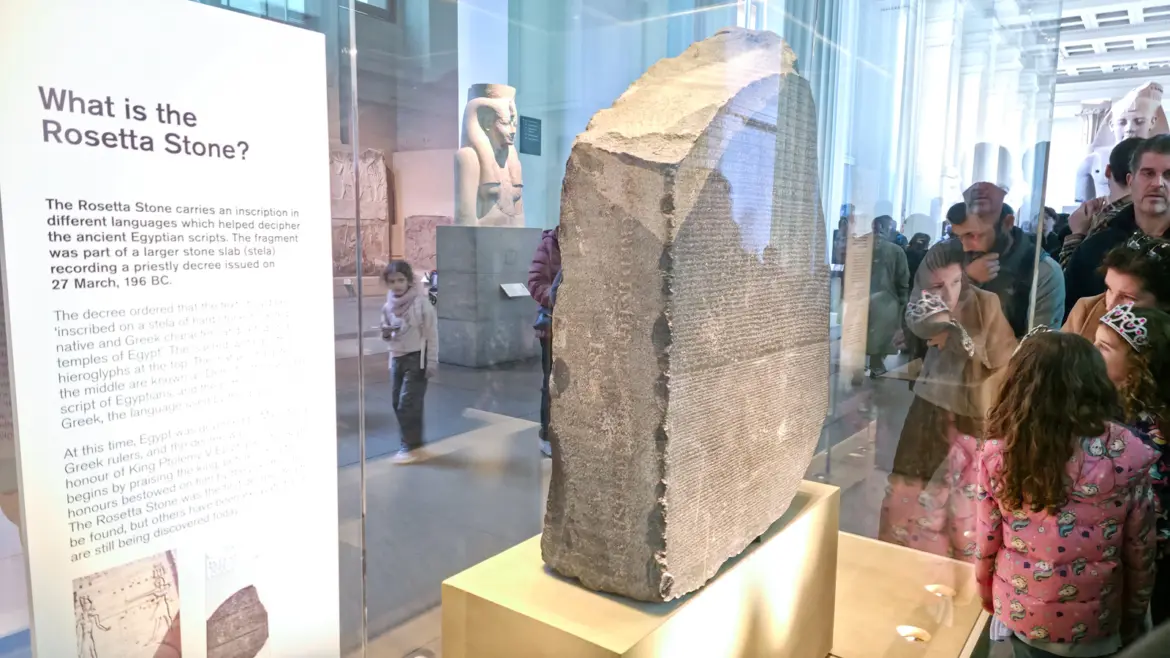
Here is the thing nobody puts in the caption. Almost nobody really sees the Rosetta Stone.
I have stood in front of it twice at the British Museum in London, six years apart, and both times went the same way. I spotted the case from the door. I joined the crowd around it and waited. I edged forward. And when I finally reached the glass there were people at my shoulder, people behind me, and my own reflection lying across two thousand years of carved text like a stain. Then I took a photograph I already knew was going to be bad, and I moved, because somebody else had been waiting exactly as long as I had.
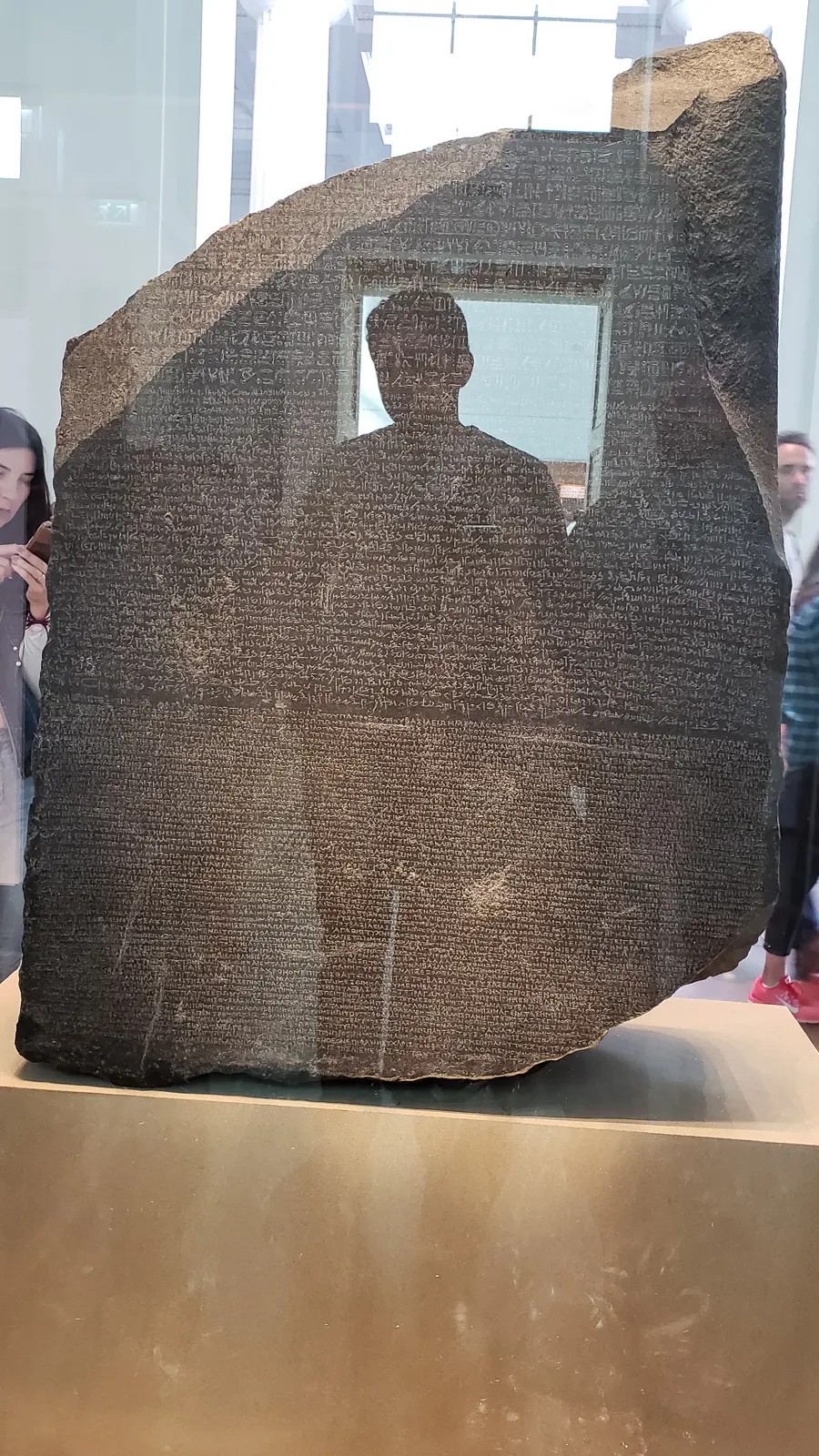
The glare is the other half of it. The case throws back the gallery lights, the windows, the crowd, everything. In one of my photographs a human silhouette is printed across the middle of the inscription, dead centre, like a shadow puppet. That is not a bad photograph of the Rosetta Stone. That is an accurate one.
The Rosetta Stone at a Glance
🪨 What it is · A broken slab of granodiorite carved with a single decree in 196 BC, written three times: hieroglyphs, Demotic and Greek. The Greek was the crib that let scholars finally read the other two.
🔑 Why it matters · The three-script repetition let Jean-François Champollion crack hieroglyphs in 1822, after they had been unreadable for roughly 1,400 years. Egyptology begins there.
📍 Where to find it · Room 4, the Egyptian Sculpture Gallery, on the main axis facing the entrance. It is the British Museum’s most visited object, so it is easy to find and hard to reach.
🎟️ Cost · Free. A timed ticket booked online speeds up entry at the gate.
💡 Tip · Go at opening or after about three in the afternoon, head straight to Room 4, and shoot the case slightly off-square to fight the glare.
What is actually in the case
The stone itself is a broken slab of grey granodiorite, chest height, with its top corner sheared away and a bite out of one side. It is not beautiful and it is not trying to be. It is a piece of government paperwork.
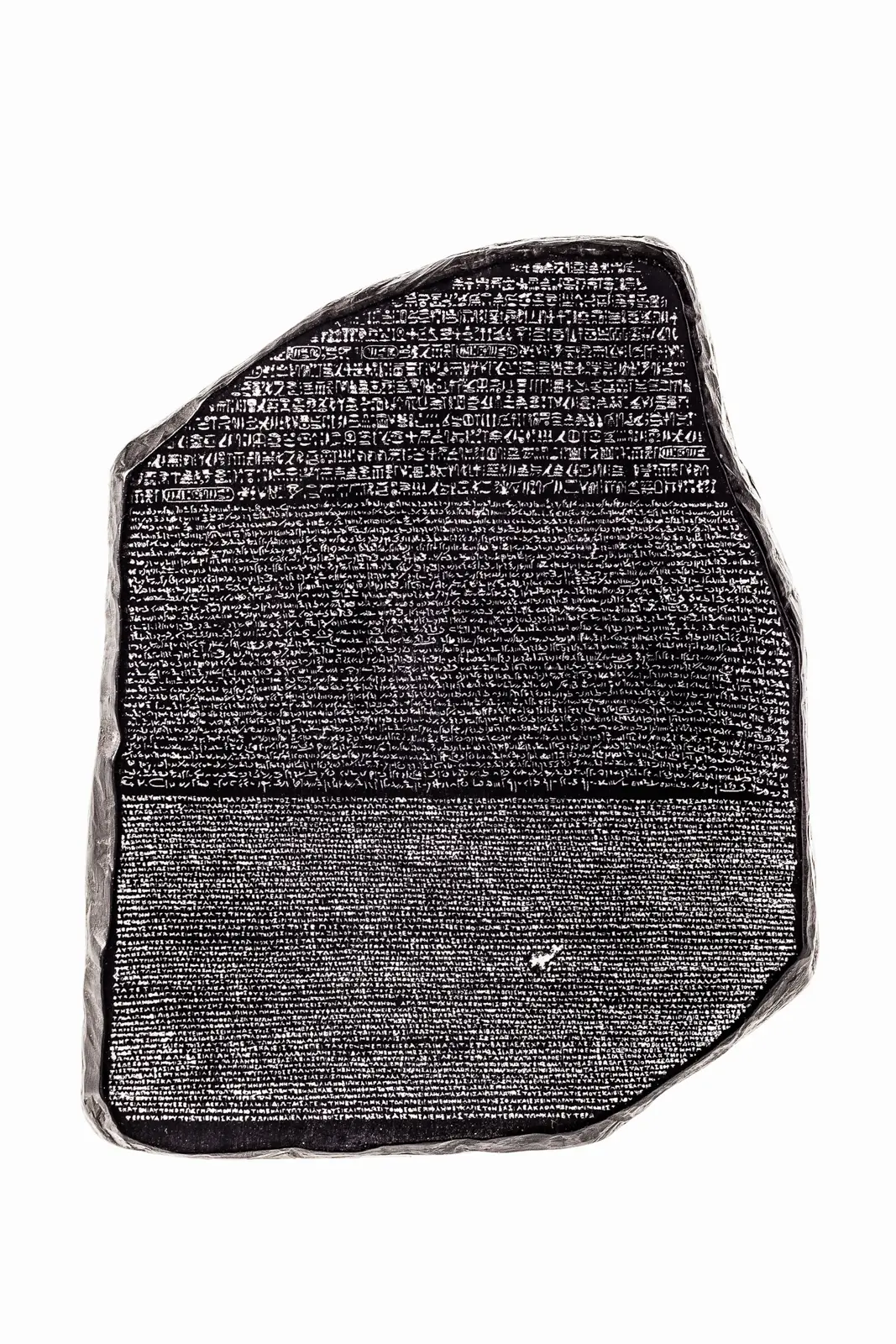
The text is a decree issued on 27 March 196 BC, in the name of Ptolemy V Epiphanes, a boy king of Egypt’s Greek dynasty. Egyptian priests agreed to establish a royal cult in return for concessions to their temples, and the decree was cut into stone and set up in a temple. What makes it the most famous rock in Britain is that they wrote it out three times: hieroglyphs at the top, Demotic in the middle, Greek at the bottom. The same words, three scripts.
That repetition is the whole point. Hieroglyphs had been unreadable for something like fourteen hundred years. Nobody could hear ancient Egypt speak. Because scholars could read the Greek, the stone became a crib: Thomas Young made real progress on it, and Jean-François Champollion, using his knowledge of Coptic as a surviving descendant of the Egyptian language, announced in September 1822 that he had cracked it. Egyptology begins there. Every tomb inscription, every papyrus, every temple wall that anyone has read since traces back through this slab.
All of which is easier to describe than to see. The three bands are perfectly clear in a photograph taken in a studio, with no glass, no lights and nobody’s shoulder in the way. Standing in Room 4, they are a grey blur behind a reflection of my own coat.
The label that changed
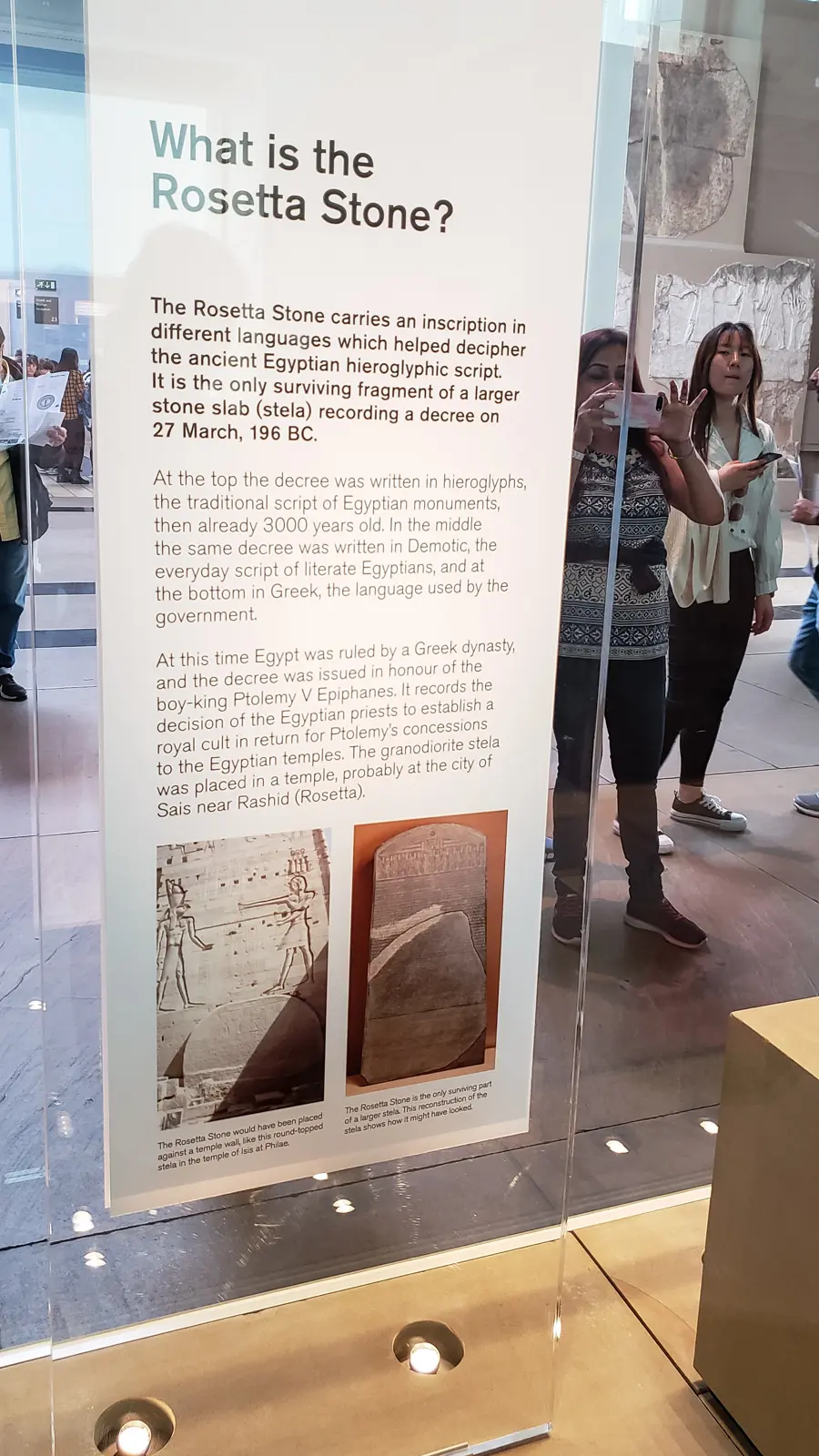
Here is something I only noticed because I am a person who photographs museum labels. I have a picture of the interpretation panel from my first visit and another from my second, and in the six years between them the British Museum changed what it says.
The older panel called the stone “the only surviving fragment” of the larger slab it was broken from. The newer one does not. It calls it simply “the fragment”, and adds that the Rosetta Stone was the first such decree to be found, but that others have since been excavated and more are still being discovered.
That is a small edit and a large one. The stone’s aura has always rested a little on being unique: the one lucky survivor, the single key. It is not the only copy of that decree. It is the first one found, and the one that did the work.
Which is a decent reminder that labels are not carved in stone, whatever the object standing behind them happens to be. They are written out of what is known at the time, and what is known keeps moving. I only caught it because I photographed the same wall twice, six years apart.
The gallery nobody looks at
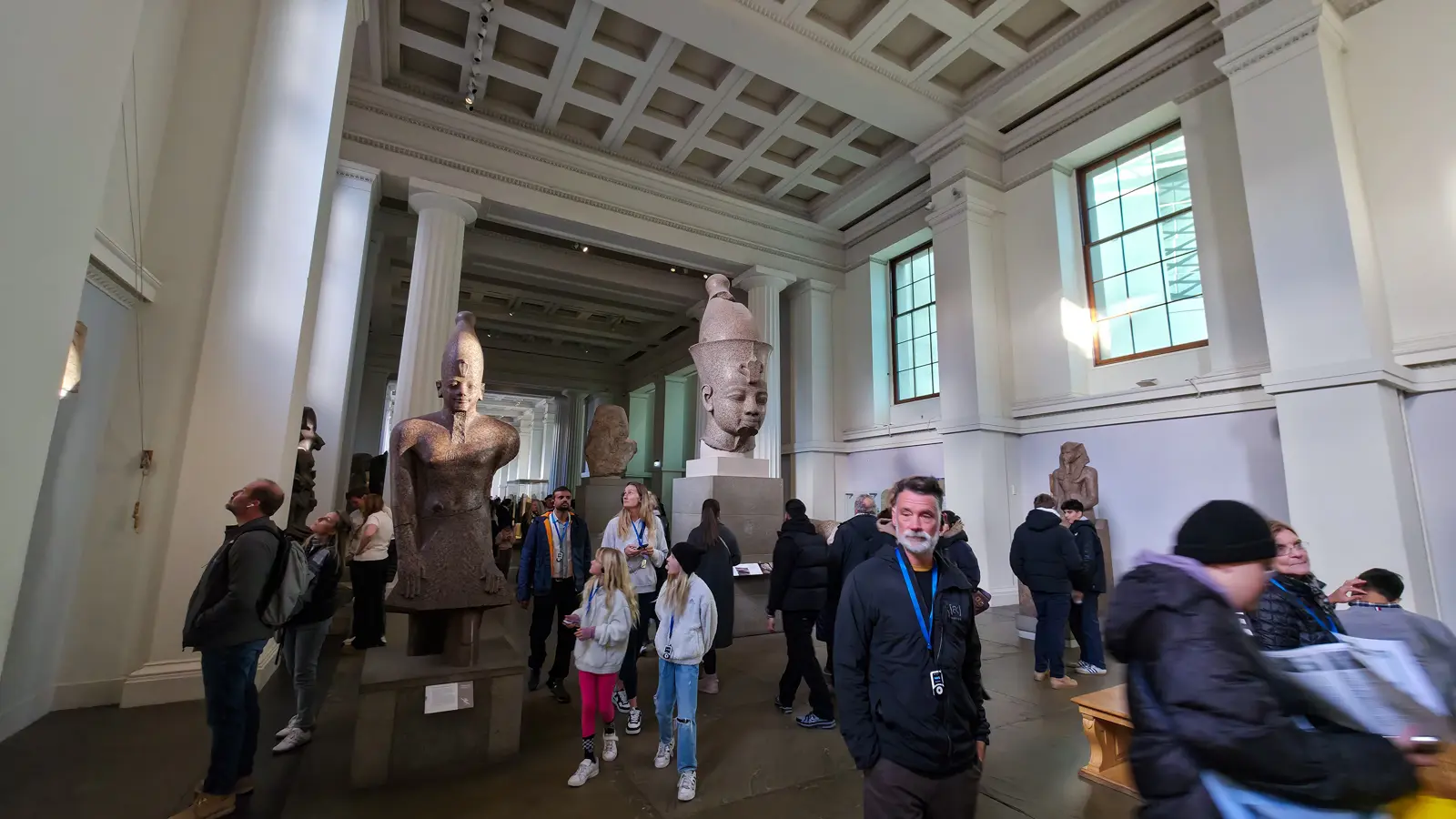
The other thing the crowd does is hide the room. Room 4 is the Egyptian Sculpture Gallery, and it is full of colossal stone: pharaohs’ heads the size of armchairs, torsos on plinths, granite faces looking over everyone’s heads at the far wall. Most visitors walk straight down the middle of it to reach a decree about tax concessions, photograph the decree, and walk out again.
Which is fair enough. But the stone sits in that room for a reason, and the reason is standing all around it. Ancient Egyptian art is soaked in writing. There is almost nothing in the gallery that does not carry an inscription. The stone is the key, and the room is the locked door it opens.
How it got here, and who wants it back
The stone was found in July 1799 by French soldiers at Rashid, in the Nile Delta, during Napoleon‘s Egyptian campaign. The French called the town Rosetta and the name stuck. When British forces defeated the French, the stone and a number of other antiquities passed to Britain under the Treaty of Alexandria in 1801, and it has been in the British Museum since 1802.
That history is now the argument. Egyptian campaigners have called for the stone’s return for years, and the case has sharpened since the Grand Egyptian Museum opened at Giza. Zahi Hawass, formerly Egypt’s antiquities minister, has run a petition gathering well over a hundred thousand signatures; a second, organised by the Egyptologist Monica Hanna, argues that the stone was taken illegally and amounts to a spoil of war. Hanna has described the museum’s continued possession as a symbol of cultural violence against Egypt. The broader case is one of decolonisation: that objects removed while Egypt was under foreign control belong at home, and that Egypt now has a world-class museum to put them in.
The British Museum’s answers run on two tracks. On the history, it points out that the 1801 treaty carries the signature of a representative of Egypt, which cuts against the claim that Egypt had no say. On the present, it says it has had no formal request from the Egyptian government, and as of late 2025 the current antiquities minister had not publicly called for the stone’s return, which leaves the campaigns as public pressure rather than a state claim. There is also a legal wall behind both: the British Museum Act largely prevents the museum from giving objects away, so even a willing board could not simply hand it over without Parliament changing the law. A petition asking Parliament to amend that Act has been lodged.
I am not going to pretend to settle that in a travel post. But it is worth knowing while standing at the glass that the argument is live, that it is not a fringe position, and that the queue shuffling past is looking at an object whose ownership a great many people dispute.
Going back
I did not do this properly. Both times I arrived mid-visit, mid-crowd, mid-museum, and gave the most consequential object in the building about four minutes because that was what the press of people allowed. I would like to go back and stand there without a shoulder in my ribs, and read the three scripts down the face slowly, and look at what the room is holding around it.
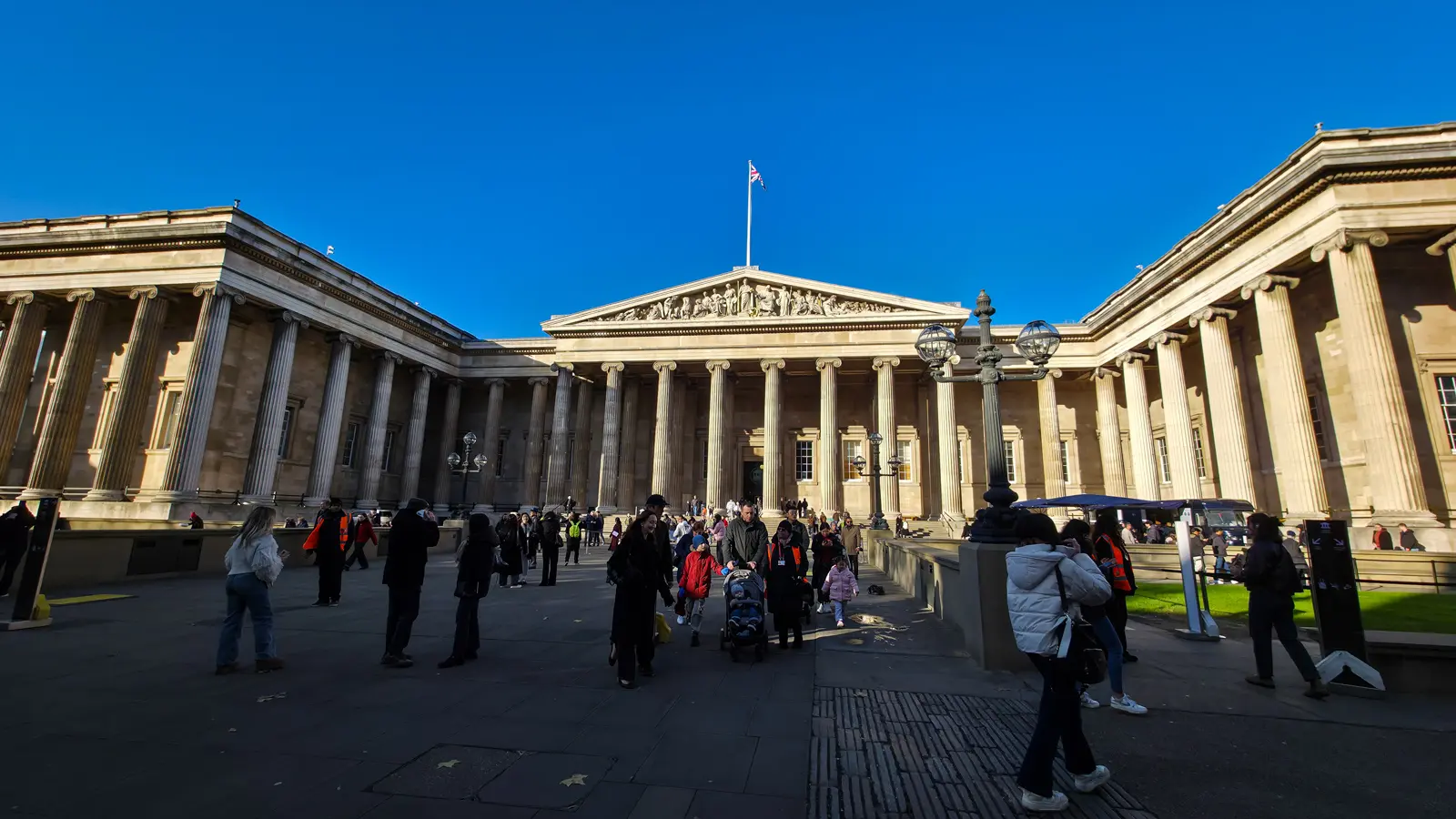
Next time: doors at opening, straight to Room 4, and everything else afterwards.
Bubbly Tips
- Go at opening or late afternoon. The stone is busiest through the middle of the day. Arrive when the doors open, or after about three in the afternoon, and the crowd around the case thins noticeably.
- Go to it first, not on your way round. Room 4 is a short walk from the main entrance: through the Great Court and follow the signs for Egyptian Sculpture. If the stone is the thing you came for, do it before the museum fills up rather than saving it for later.
- Entry is free. The British Museum does not charge admission, so seeing the Rosetta Stone costs nothing. A free timed ticket booked online can save queueing at the gate at busy times.
- Shoot at an angle to beat the glare. The case reflects the lights, the windows and everyone standing behind you. Get the lens close to the glass and shoot slightly off square, and accept that a clean shot may not be possible.
- Read the panel, not just the stone. The interpretation panel beside the case explains the three scripts better than the label does, and it is far easier to get near than the stone itself.
- Look at the room, not only the case. Room 4 is the Egyptian Sculpture Gallery, full of colossal granite, and nearly everything in it is inscribed. Turn round once you have had your look.
- Pair it with the Chessmen upstairs. Room 40 holds the Lewis Chessmen, and Room 41 the Sutton Hoo treasures, both on the upper floor. The three together make a strong half-day.
- Do not expect to be alone with it. This is the most visited object in the museum. Even at the quietest hour there will be people. Plan for a look rather than a communion.
- Check before a special trip. The stone has left Room 4 before, most recently for a major exhibition. If it is the reason for your visit, glance at the museum’s website first.
Final Thoughts
The Rosetta Stone is a strange sort of celebrity. It is a grey broken slab of tax law, put up by priests to flatter a boy king, and by any ordinary measure it is the least lovely famous object in London. And yet it is the one everyone walks to first, because of what happened to it seventeen centuries later: a stubborn Frenchman with a good ear for Coptic looked at three columns of text and gave a civilisation back its own voice.
That is worth the queue, even a bad one. But it deserves better than four minutes and a photograph of my own reflection, and next time it is getting a proper look. Doors at opening, no shoulder in my ribs, and a proper long look at the most important rock I am ever likely to stand in front of.
Until next time!

🌟 Everything You Need to Plan Your Dream Trip in 2026
- 🌟 Luxury Hotels - Find premium stays with Booking.com & Hotels.com
- 🏡 Vacation Rentals - Discover unique properties on VRBO
- 🏞️ Guided Tours - Explore with Viator or GetYourGuide
- 🎫 Attraction Tickets - Skip the lines with Tiqets
- 🚢 Ocean Cruises - Set sail with Cruise Direct
- 📱 International SIMs - Stay connected with Saily
- 🚗 Car Rentals - Budget-friendly options from Discover Cars
- 🌐 Secure VPNs - Browse safely with NordVPN
- 💶 Currency Exchange - Best rates with Wise
- 🗣️ Learn Languages - Master the local language with Babbel and Rosetta Stone