
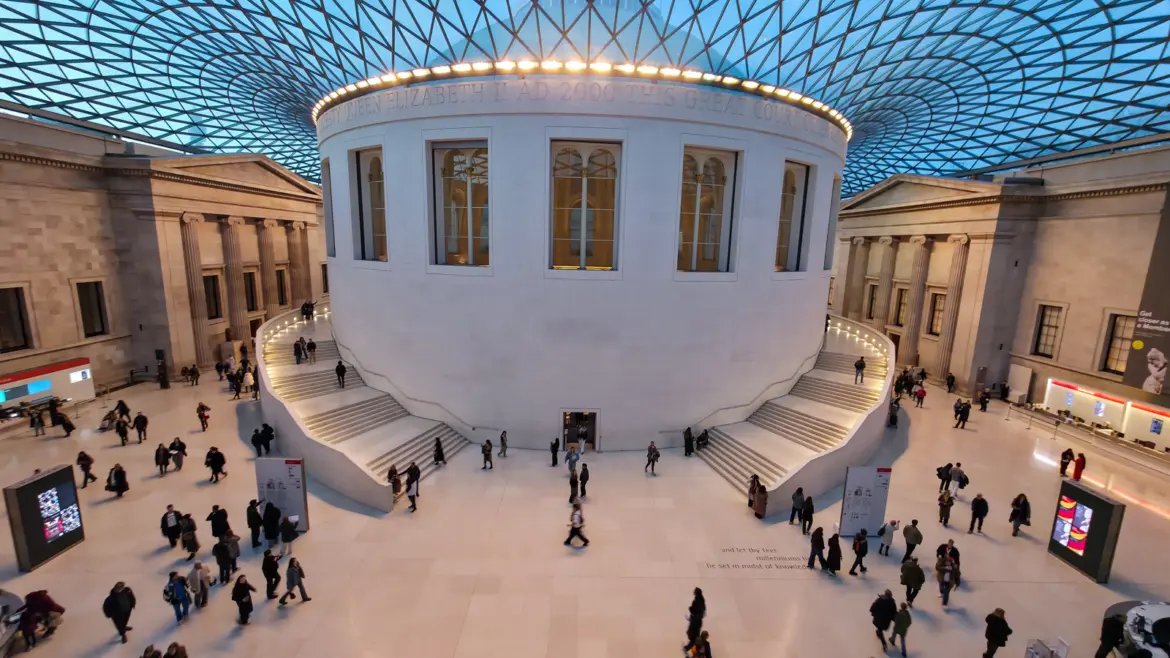
I have now been to the British Museum in London twice, in 2019 and again on a cold afternoon last November, and I still have not seen all of it. That is not a complaint. It is the whole point of the place. The collection runs across the ancient world and most of the rooms are free to walk into, so you can come back as often as you like and never repeat yourself. What follows is not a tour of everything. It is the handful of things that stopped me, with enough practical detail to plan your own few hours.
One thing to know before you go: general admission is free, and it remains free. Special exhibitions are ticketed, and donations are welcome at the door, but the permanent galleries cost nothing. For a building this full, that still amazes me.
The British Museum at a Glance
📍 Location · Great Russell Street, Bloomsbury, London WC1B 3DG. Main entrance on Great Russell Street; step-free Montague Place entrance on the north side. Nearest Tube: Tottenham Court Road, Holborn, Russell Square, Goodge Street — all roughly a 10-minute walk.
🎫 Admission · Free. Permanent galleries open every day. Special exhibitions are ticketed. Donations welcome at the door.
🕒 Opening hours · Daily 10 am to 5 pm, with a Friday late opening to 8:30 pm. The Friday evening is one of the calmer windows of the week, and free 20-minute spotlight tours run 5–7 pm.
🏛️ The building · Sir Robert Smirke’s Greek Revival design, 1823–1852, with 44 Ionic columns 14 metres tall modelled on the Temple of Athena Polias at Priene. The Queen Elizabeth II Great Court at the centre was added by Foster + Partners and opened in December 2000 — the largest covered public square in Europe.
💎 The institution · Parliament founded the British Museum in 1753 around the collection of Sir Hans Sloane (71,000 objects). It opened to the public in 1759 in Montagu House on this same site — the first free national public museum in the world. Free entry has been part of the plan from the start.
💡 Tip · The Rosetta Stone fills up first; if you want to reach the front of the case, head there in the first hour. Then move counter-clockwise through the Egyptian, Assyrian, and Greek galleries before lunch.
The building, and how it got here
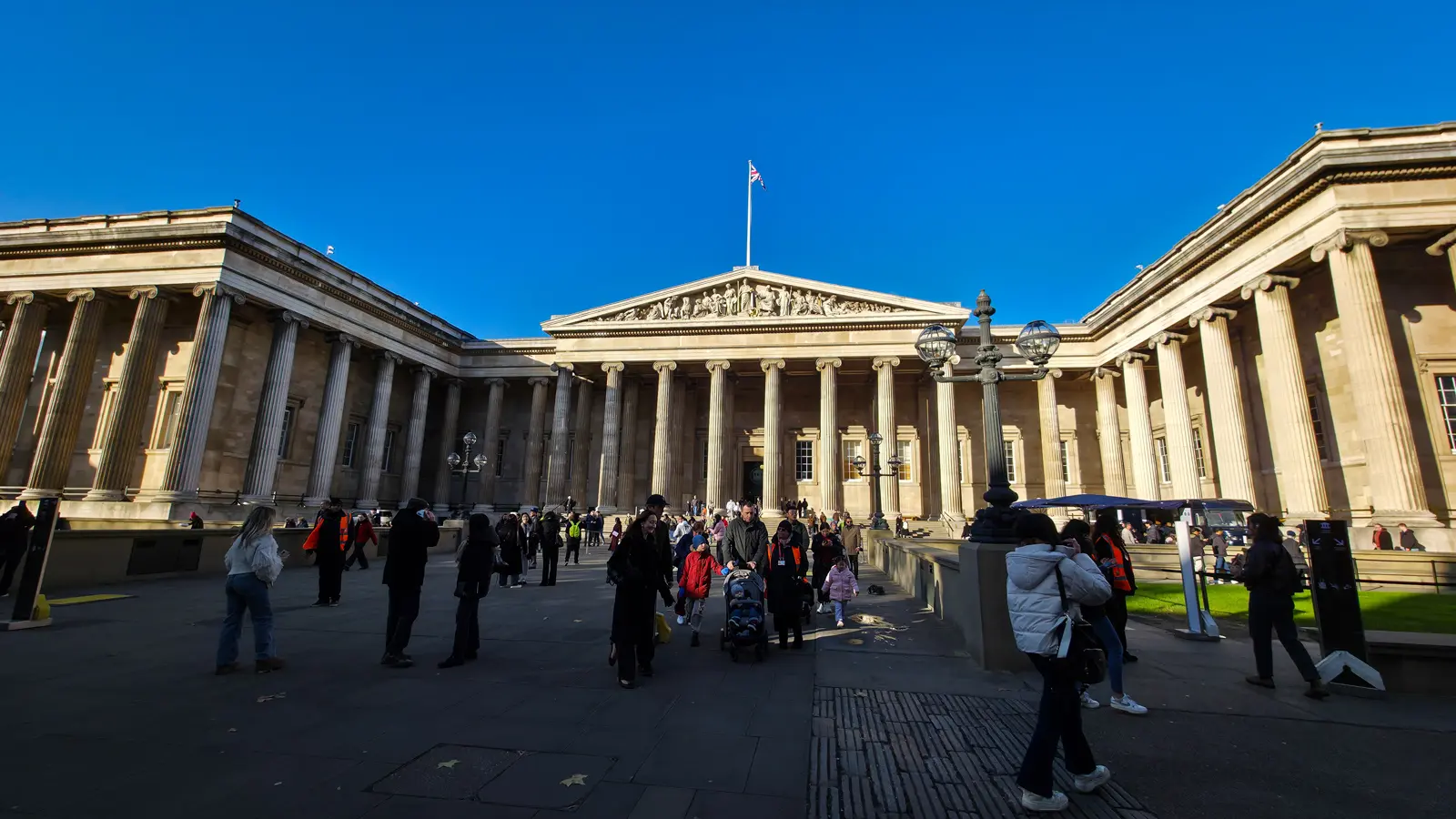
You come in off Great Russell Street, across the forecourt and up the steps under a long colonnade. It is a Greek temple front set down in central London, and on a clear day with the flag flying it makes the obvious first photo. Go through security and the scale changes at once.
The front is the work of Sir Robert Smirke, commissioned in 1823 to replace the museum’s first home and give it the Greek Revival face it still wears. The colonnade runs to 44 Ionic columns, each about 14 metres tall, modelled on an ancient temple at Priene in what is now Turkey. The carved scene in the triangular pediment over the entrance is “The Progress of Civilisation” by Richard Westmacott, fifteen figures finished around 1852, originally set against a painted blue background. It is worth knowing what that scene is arguing. It lays out a Victorian, empire-era idea of civilisation climbing from ignorance to learning, which is a view from 1850s London rather than a neutral one. The whole building took nearly thirty years to raise, from 1823 to 1852.
The institution is older than the building. Parliament founded the British Museum in 1753, the first free national public museum in the world, around the collection of Sir Hans Sloane, a physician who left more than 71,000 objects to the nation. It opened to the public in 1759 in Montagu House, the mansion that once stood on this spot, though in the early years you had to apply in advance and a visit in practice went to the well-connected. Smirke’s building later swallowed Montagu House whole. So the columns you walk under are Victorian, but the idea behind them is older, and free entry has been part of the plan from the very start.
The Great Court
Walk in and you land in the Great Court, the covered square at the centre of the Museum. The glass and steel roof went up in 2000 and turned what had been an open courtyard into the largest covered public square in Europe. The round drum in the middle is the old Reading Room, built in the 1850s by Smirke’s brother Sydney, where generations of researchers once worked. Most people stand on the ground floor and look up at the roof, which is the right instinct.
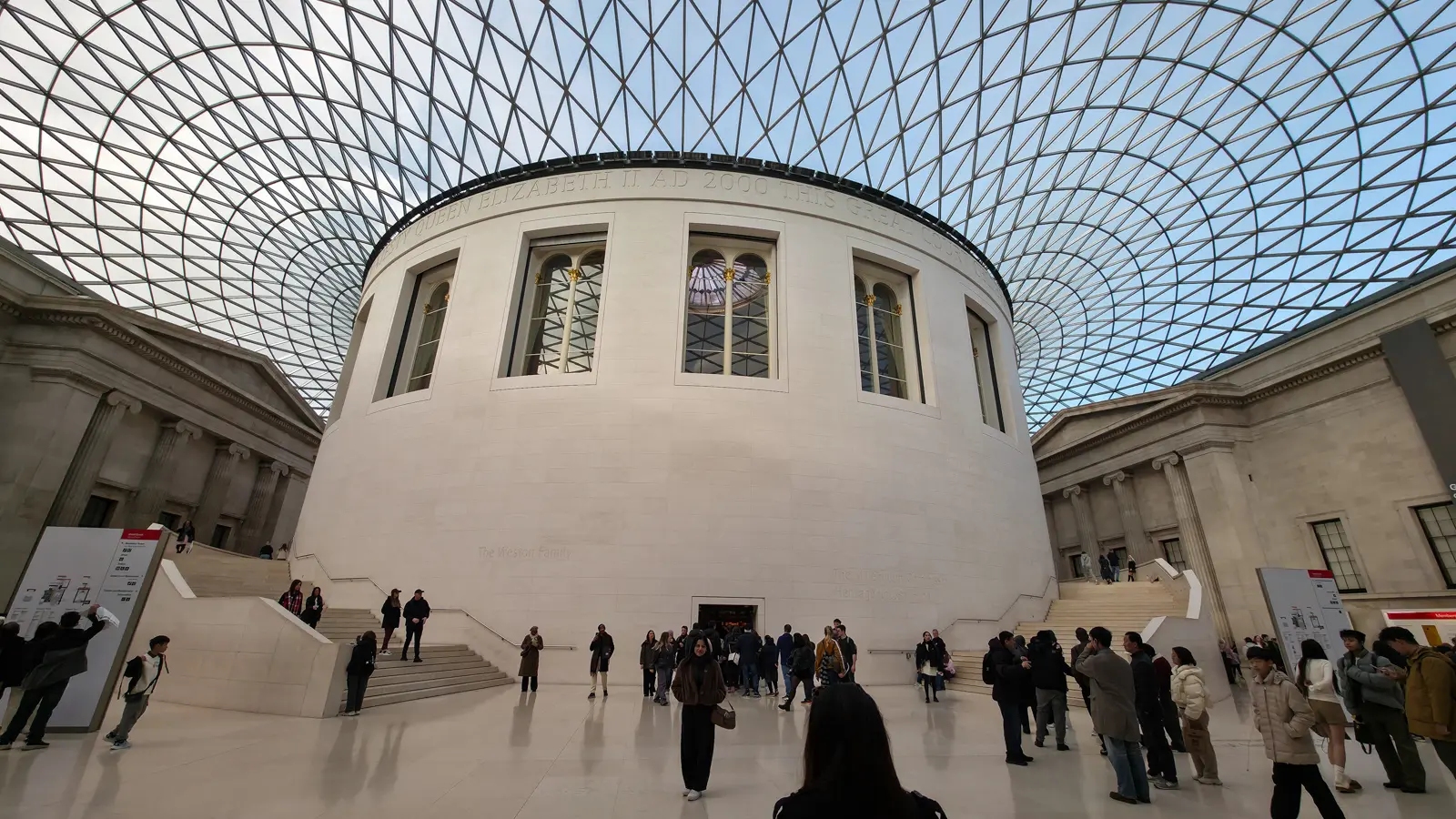
Here is the small thing I worked out on my second visit. Go up to the upper level. From there you look down across the whole court, the curve of the Reading Room, and the lattice of the roof all at once, and it is a far better view than the one everyone takes from below. It is also where the restaurant is, which I will come back to.
Egypt: the Younger Memnon and the Rosetta Stone
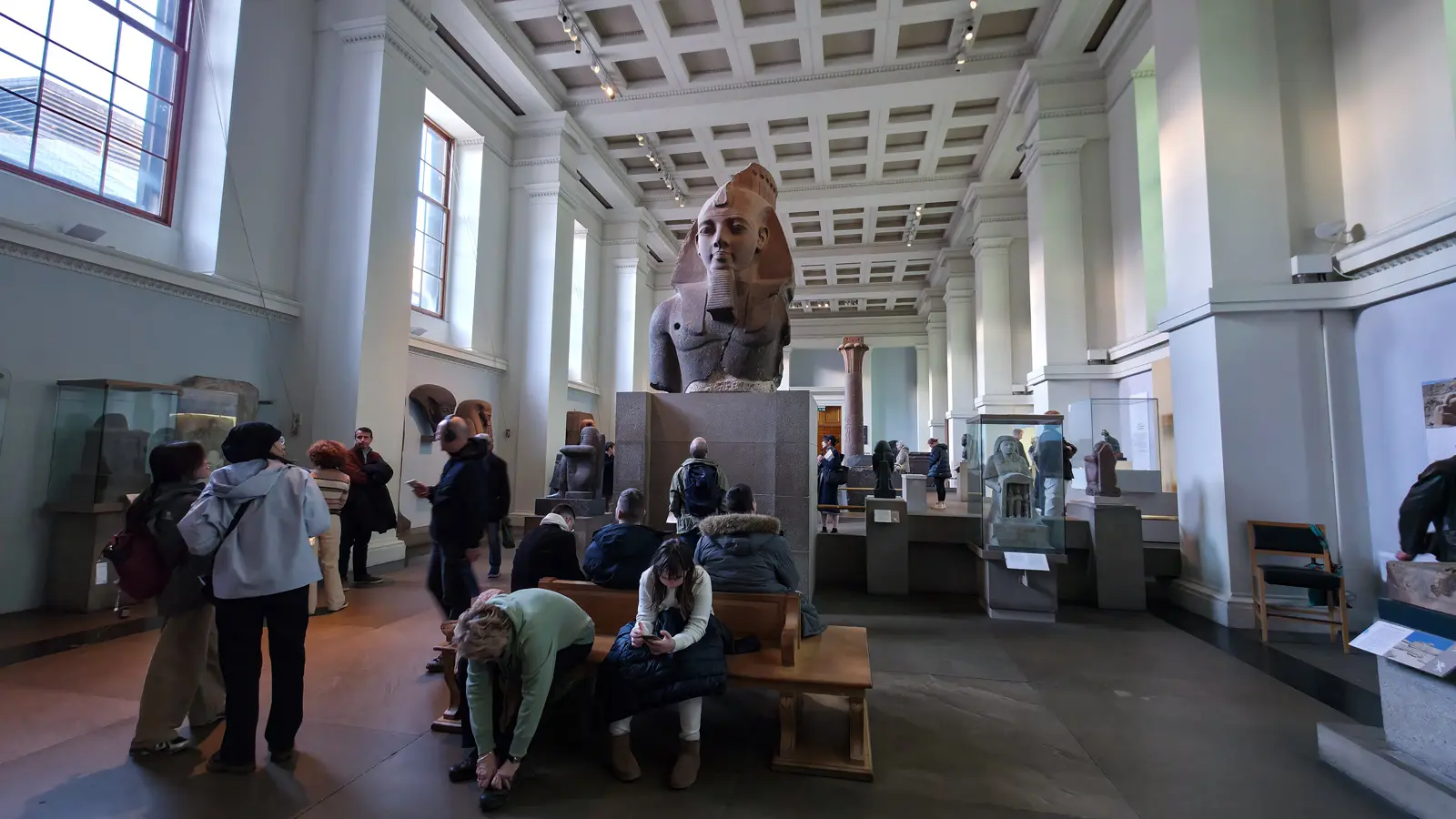
The colossal head and shoulders of Ramesses II, known as the Younger Memnon, sits in the Egyptian sculpture gallery on the ground floor. It came from the Ramesseum, the pharaoh’s memorial temple at Thebes, and it was hauled out and shipped to England by Giovanni Belzoni in 1816. Belzoni had been a circus strongman before he turned to moving antiquities, which tells you something about the job. The statue’s arrival in England in 1818 is what prompted Percy Bysshe Shelley to write “Ozymandias”, the sonnet about a ruined colossus in the desert. Ozymandias was a Greek name for Ramesses II. Stand in front of the calm stone face and the poem makes sense.
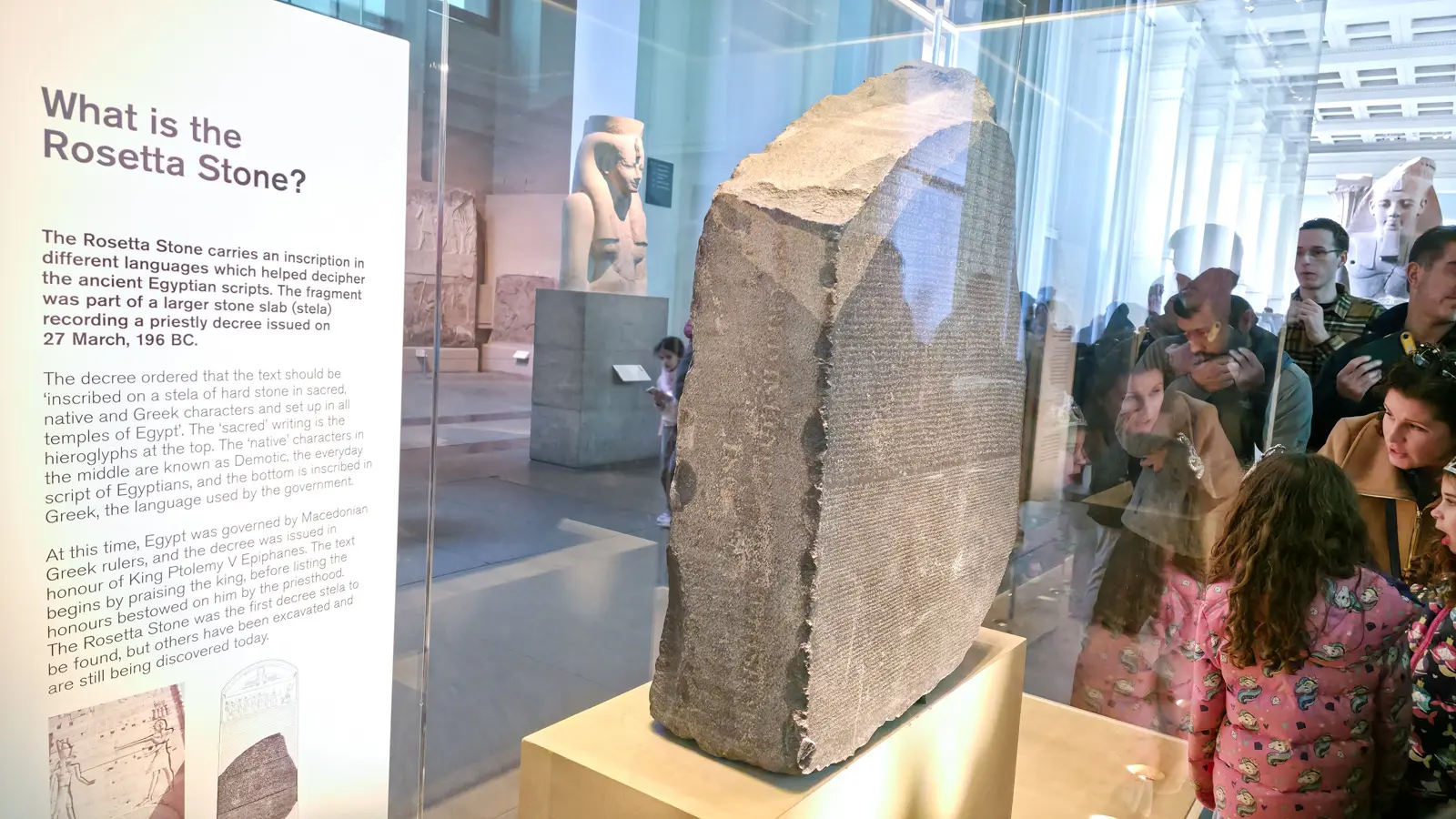
In the same gallery, behind glass and almost always behind a crowd, is the Rosetta Stone. It is the most visited object in the building, and when I reached it there was a tight ring of people around the case, two small girls in toy tiaras pressed against the front. The stone is a fragment of a larger slab carved with a priestly decree for King Ptolemy V, issued in 196 BC. The same text runs three times, in Egyptian hieroglyphs, in Egyptian Demotic, and in ancient Greek, and that repetition is the whole point. French soldiers found it in 1799 near the town of Rosetta during Napoleon‘s campaign in Egypt. It passed to Britain after the French defeat in 1801 and reached the Museum in 1802. Because scholars could already read the Greek, the stone gave them a route into the hieroglyphs, and in 1822 Jean-Francois Champollion used it to crack the script. It is smaller and darker than most people expect, and like the marbles and the Moai it sits on Egypt’s list of objects it would like returned. Worth the wait to get to the front.
Assyria: the winged bulls of Khorsabad
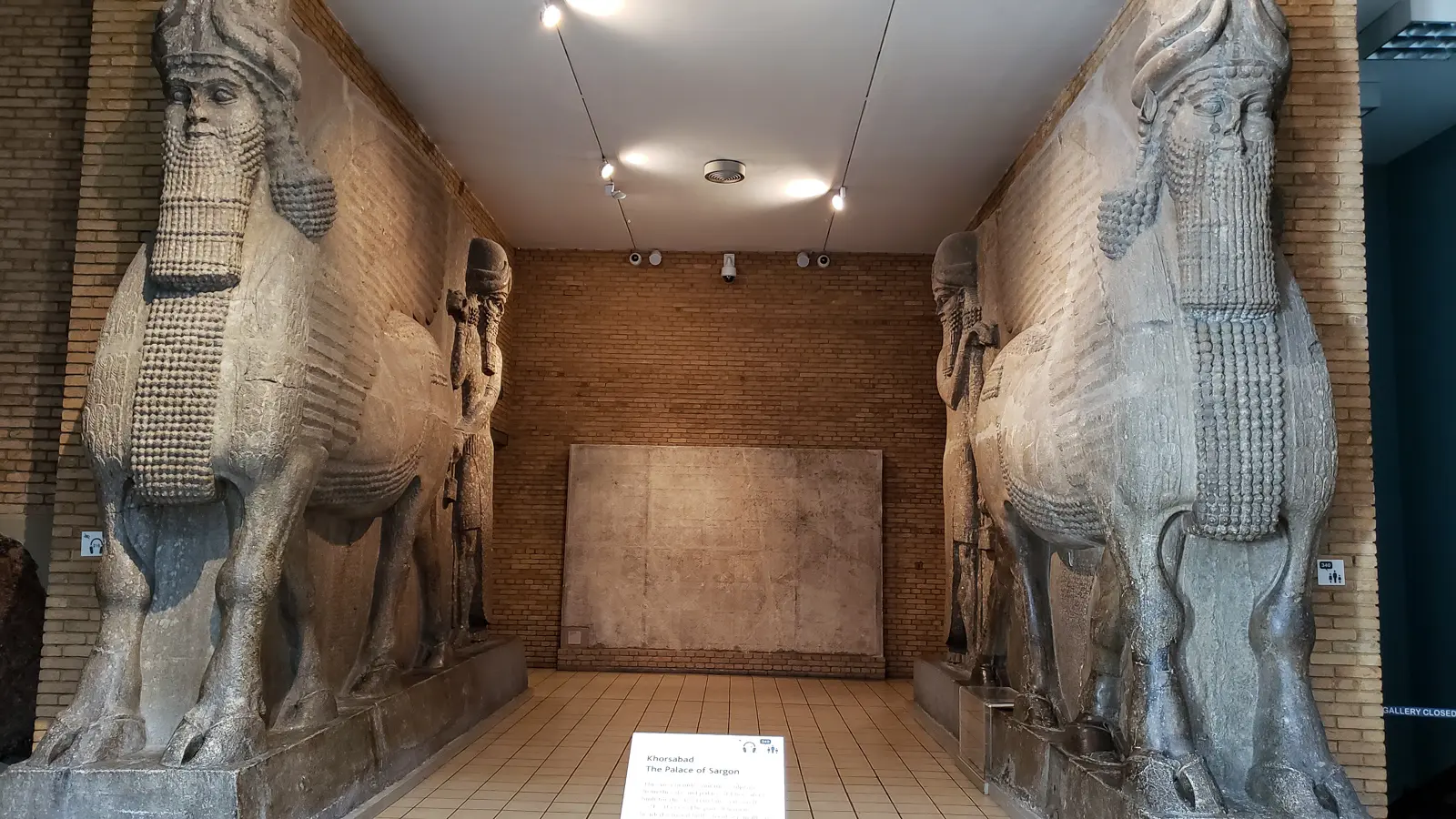
This was the room that held me longest, and on my first visit I did not even know what I was looking at. The two giant figures are lamassu, human-headed winged bulls. They guarded the gateways of the palace of the Assyrian king Sargon II at Khorsabad, in what is now northern Iraq, around 710 BC. The Museum’s pair were acquired in 1849. Here is the clever part. They were carved with five legs, so that from the front they stand still on guard, and from the side they appear to be striding forward. Walk past slowly and you can watch them seem to move. What a room, and what a civilisation.
The Parthenon sculptures
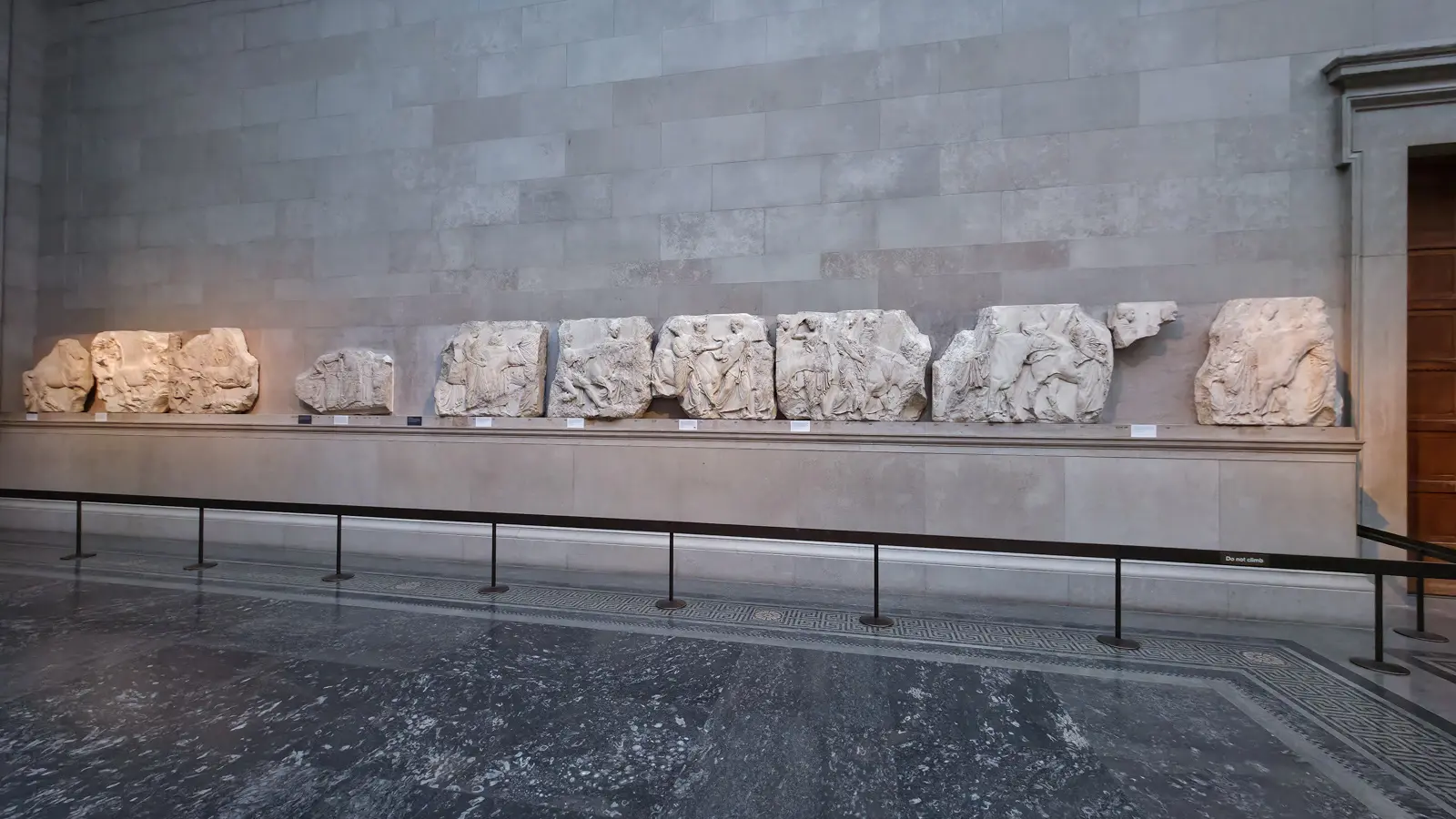
The Parthenon sculptures fill the long Duveen Gallery, and the carving is the reason to slow down. The frieze runs along the walls in a procession of horsemen and figures, and even broken and weathered, the sense of movement in the marble is hard to look away from. This is the highlight of the Greek rooms for me.
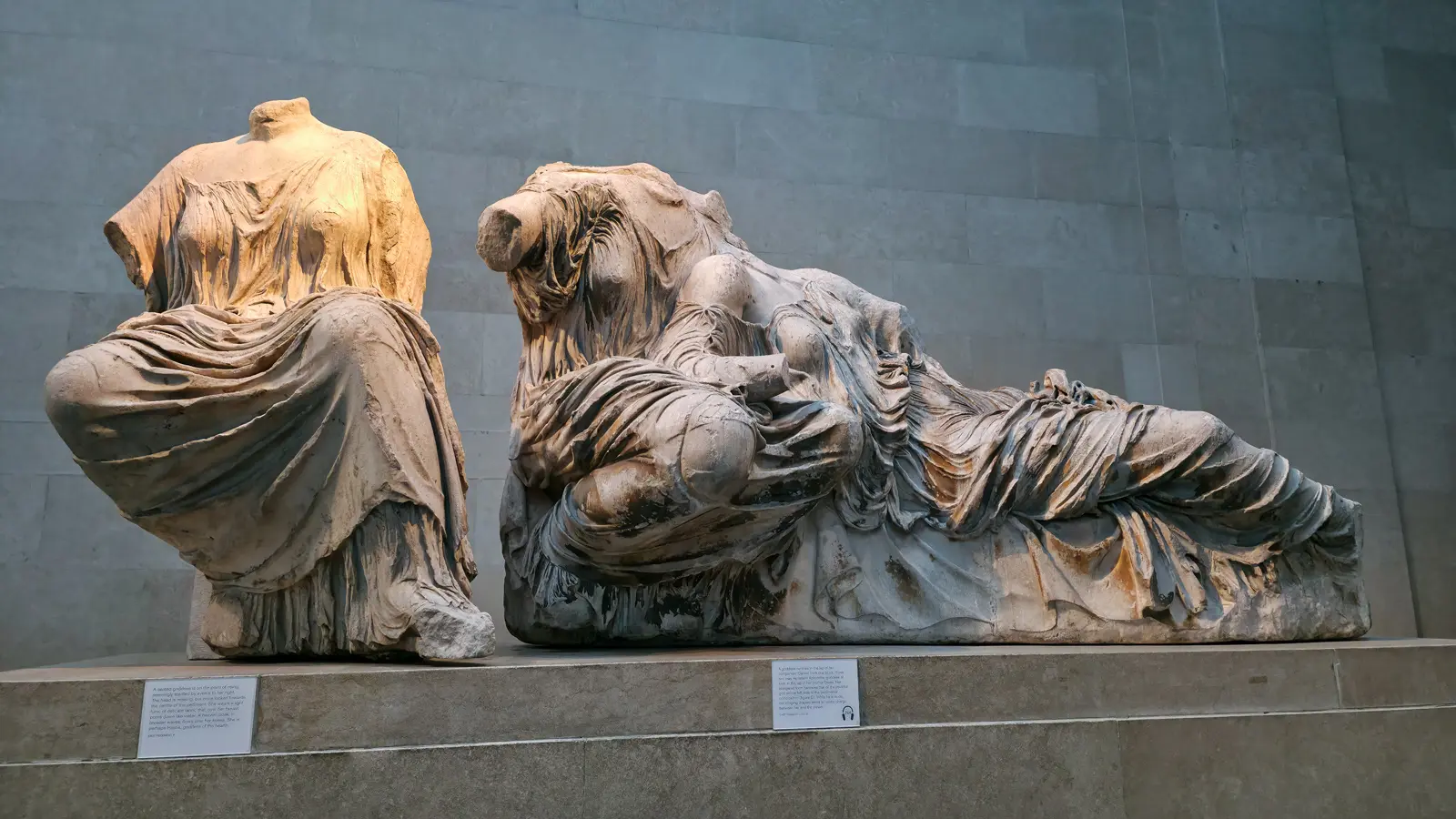
These sculptures are also the most argued-over objects in the building, so it is worth being honest about that. They were removed from the Parthenon in Athens by agents of Lord Elgin between 1801 and 1812, when Greece was under Ottoman rule, and later sold to the British government. About half of the surviving Parthenon sculptures are now here, the rest in the Acropolis Museum in Athens. Greece wants them back. The case for returning them is straightforward: they were taken from a single building and belong reunited at its foot. The case the Museum makes is that title passed legally, that the collection is free to see, and that the sculptures have been preserved here for two centuries. I find both sides reasonable. For me it comes down to whether they were taken rightfully in the first place, and that is exactly the part nobody fully agrees on. Worth thinking about while you stand there.
Around the world in two rooms
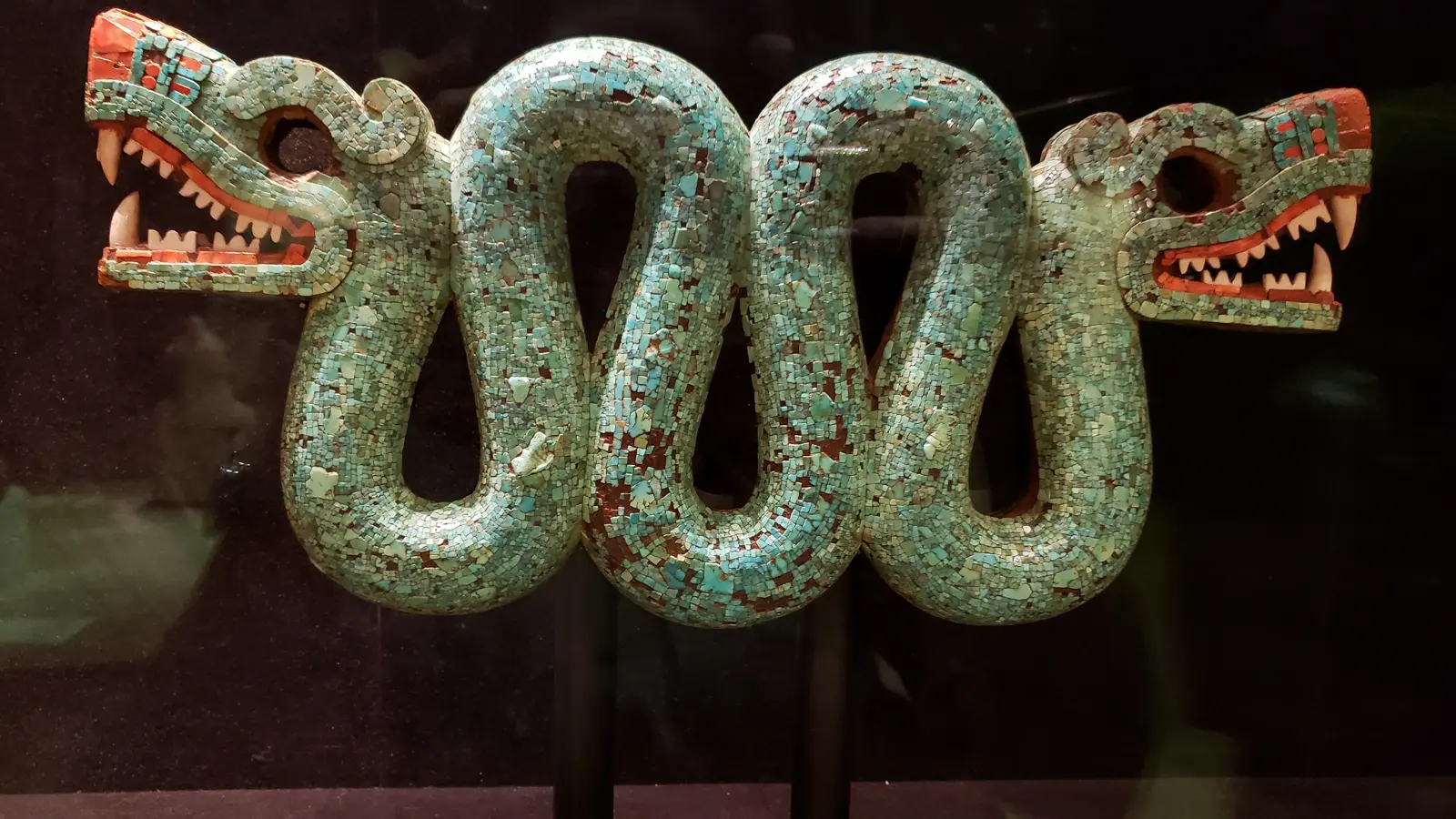
The Mexico gallery, with its deep red walls, holds a small object I keep going back to: a double-headed serpent in turquoise mosaic, Aztec or Mixtec work from the 15th or 16th century. It was probably worn on the chest at ceremonies. The serpent ran all through Aztec religion, tied to Quetzalcoatl, the Feathered Serpent, and up close the surface is thousands of tiny tiles laid over carved wood.
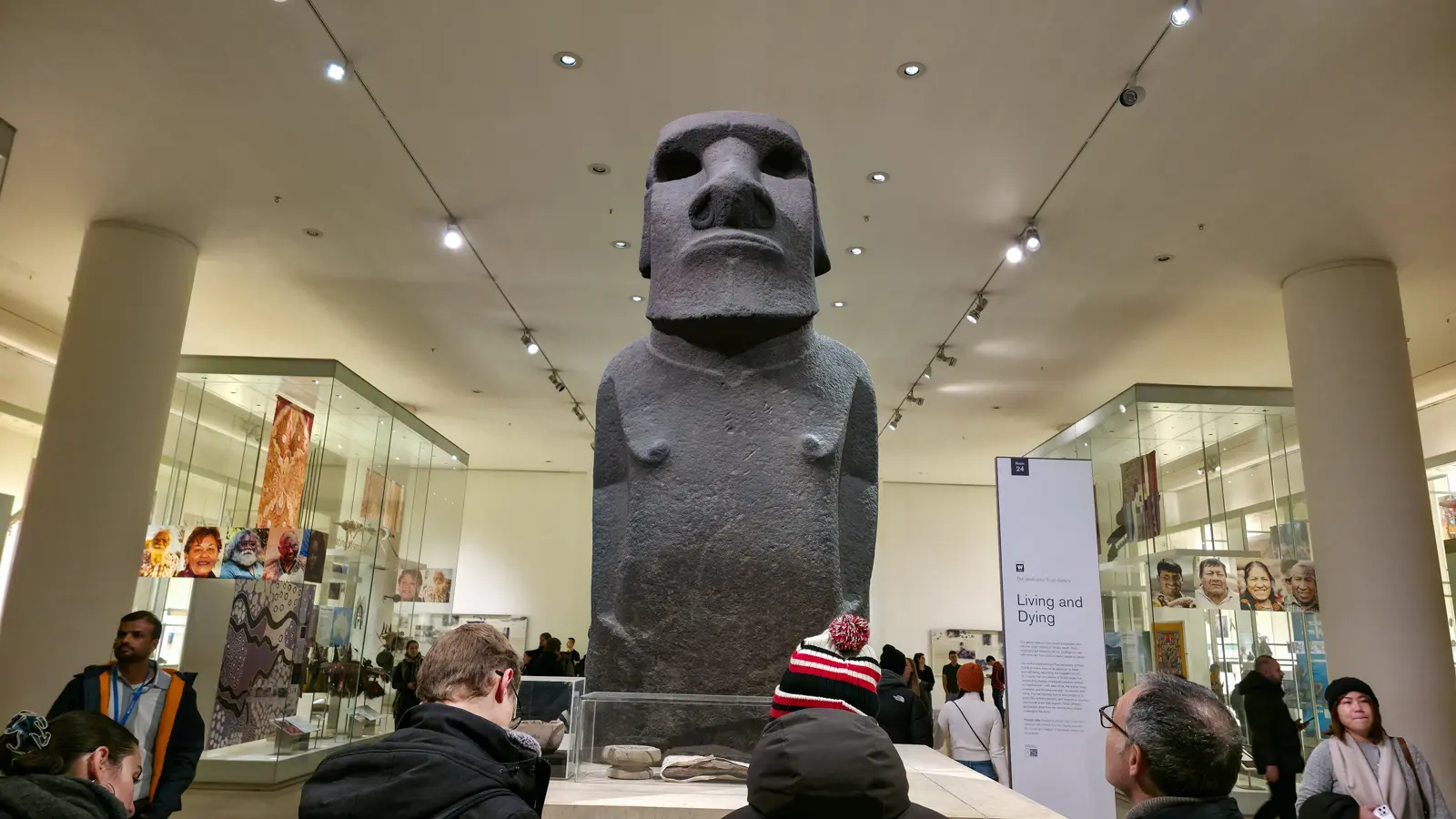
In the Living and Dying gallery stands the Museum’s Moai, named Hoa Hakananai’a, carved from basalt on Rapa Nui, the island also called Easter Island. It was taken from the island in 1868 and reached the Museum in 1869. Like the Parthenon marbles, it is a contested object, and Rapa Nui has asked for it back. The name is usually translated as something close to “lost or stolen friend”, which makes standing in front of it complicated in a good way.
Sutton Hoo and medieval Europe
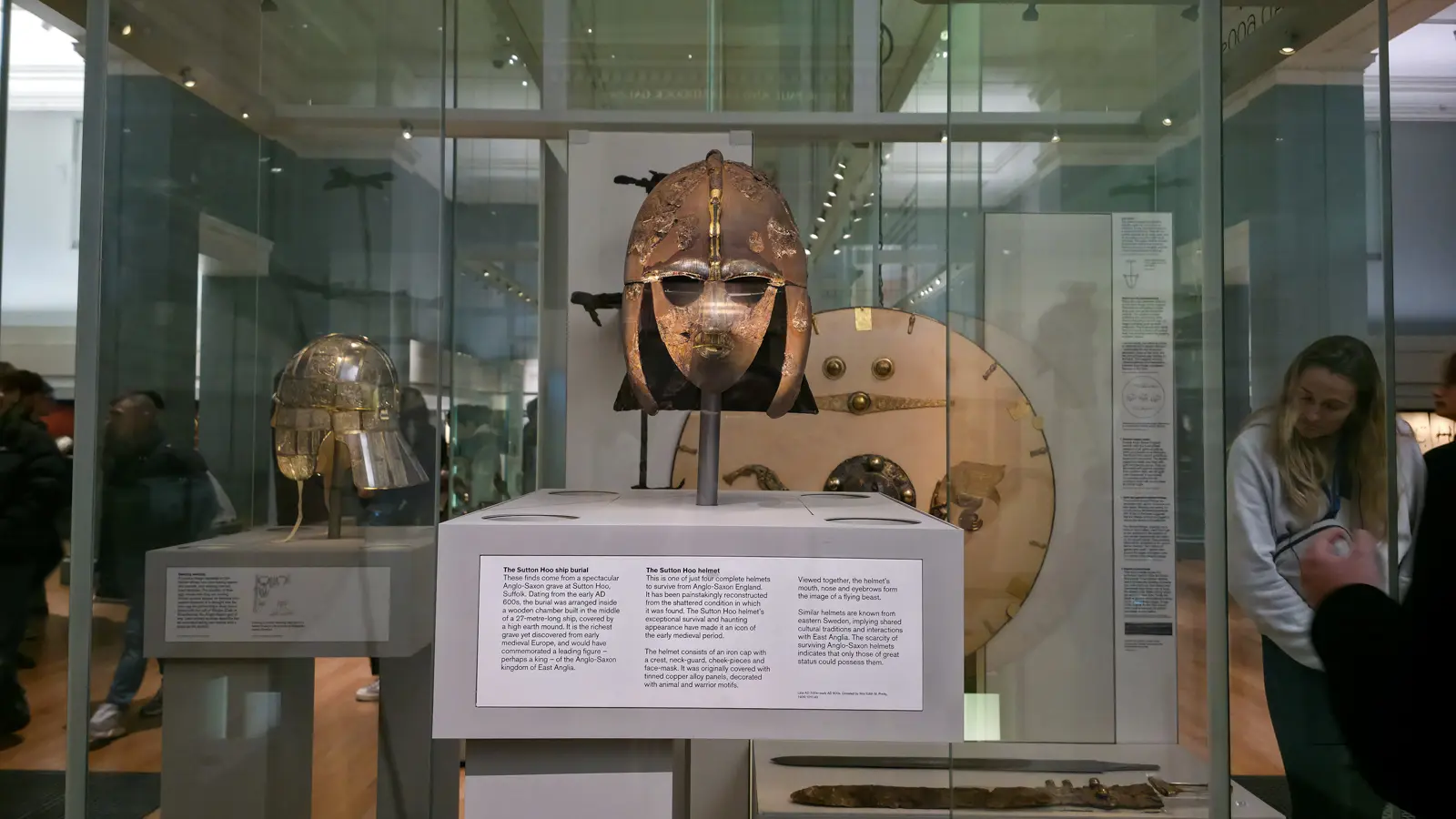
Room 41 holds the finds from Sutton Hoo, the Anglo-Saxon ship burial dug up in Suffolk in 1939. Edith Pretty, who owned the land, asked the archaeologist Basil Brown to open the largest mound, and underneath was the imprint of a 27-metre ship and a chamber packed with treasure. It dates to the early 600s and probably honoured a king of East Anglia, with Raedwald the favoured candidate. The body itself had dissolved in the acidic soil and left only a shape. The famous helmet is one of only four complete Anglo-Saxon helmets known, rebuilt from hundreds of corroded fragments, which is why it looks battered rather than gleaming. Two versions sit in the case. The real one is the dark, reconstructed helmet at the centre. The bright, whole helmet beside it is a modern replica, made to show how it looked when new.
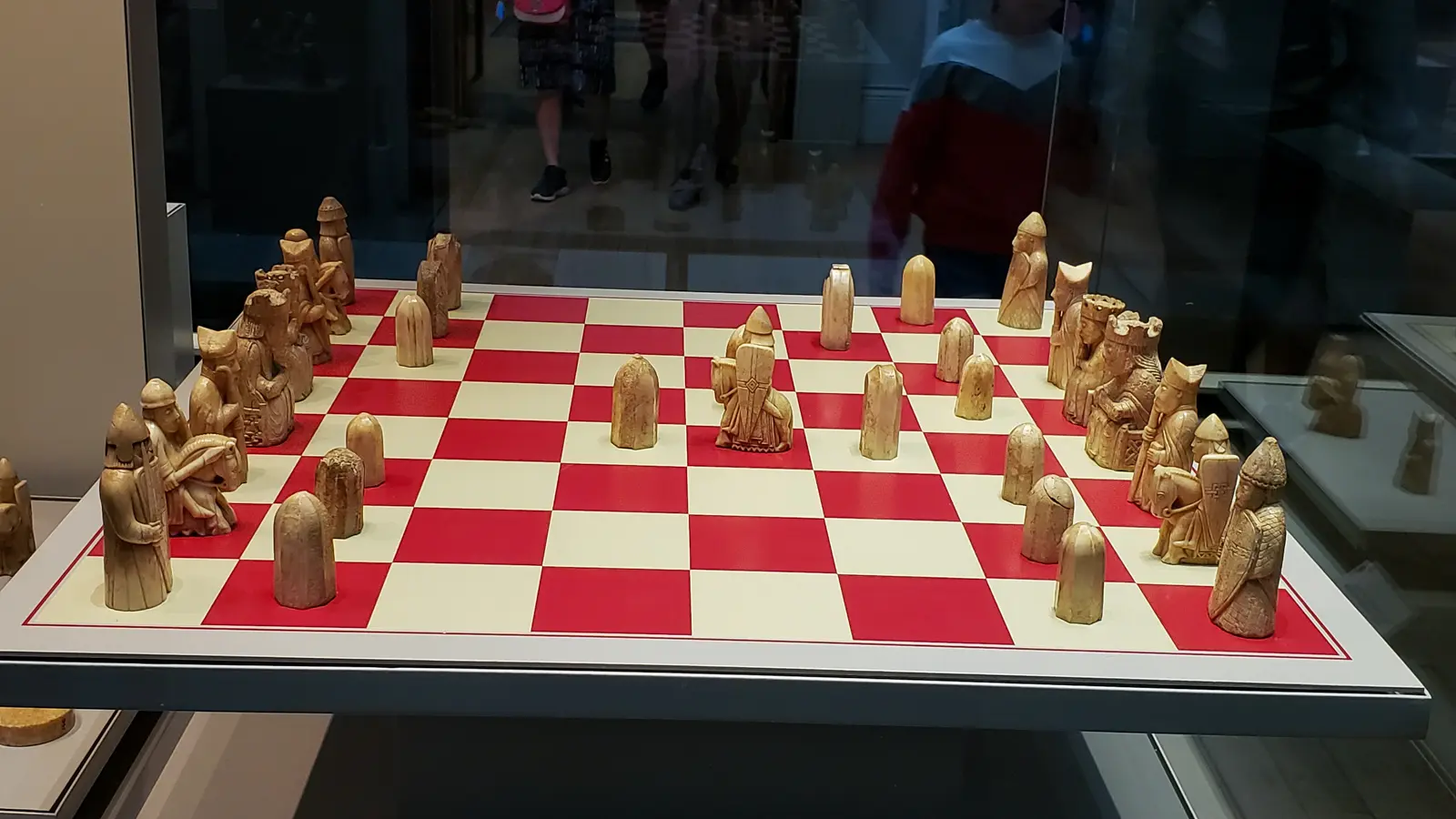
Nearby in the medieval rooms are the Lewis Chessmen, the small carved figures with the worried faces, and they were the pieces I lingered over longest. They were found in 1831 on the Isle of Lewis in the Outer Hebrides, carved from walrus ivory, with a few from whale teeth, in the second half of the 12th century. The faces are the whole appeal. The queens sit with a hand pressed to one cheek, a pose that has been read as grief, boredom, worry or cool calculation, and nobody agrees which. The fiercest pieces are the rooks, shown as berserkers, Norse warriors biting the rims of their shields to work themselves into a battle rage. As for who made them, the honest answer is that no one is sure. Most scholars point to Trondheim in Norway, a city full of skilled ivory carvers at the time, and the varied faces suggest several different hands. A contested minority theory, which the British Museum does not back, credits an Icelandic carver named Margret the Adroit, named in a medieval saga as the finest carver in Iceland. Why they ended up buried on a Hebridean beach is its own puzzle. Lewis was Norwegian territory in the 1100s, not Scottish, and the likeliest story is that they were a merchant’s stock, hidden for safekeeping on the trade route toward Ireland and never collected. They are tiny and strange and easy to spend ten minutes in front of.
Where to stop and rest
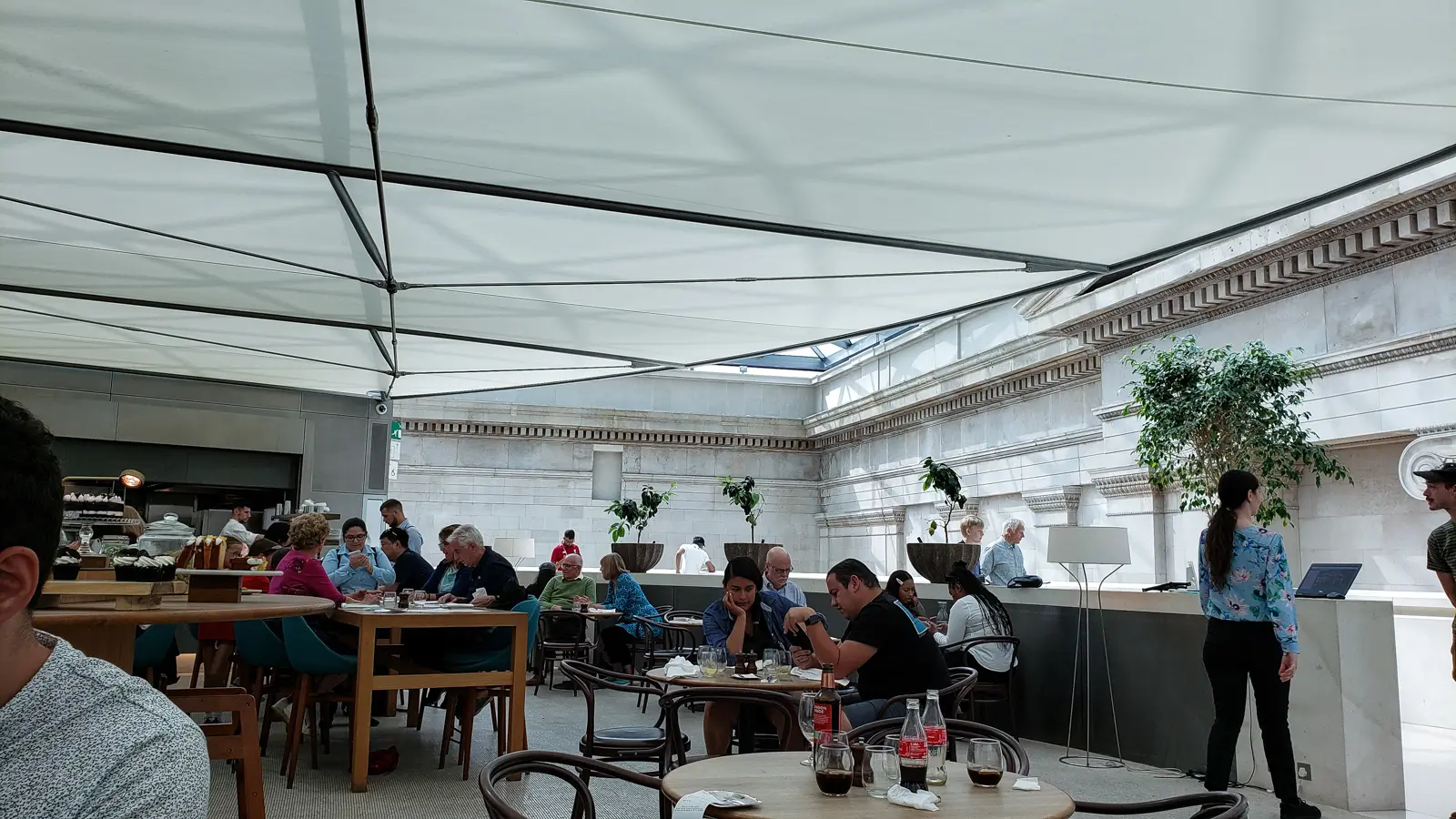
The Great Court Restaurant sits up on the upper level of the court, under that glass roof, and it is still serving lunch and afternoon tea. I will be honest with you about it. I had the fish and chips back in 2019 and they were fine, nothing more. You do not come here for the food. You come for the room and the view, and for the small thrill of sitting down to eat under the roof of the British Museum. My advice is to treat it as a stop rather than a meal. Book the afternoon tea, take the view, have a drink, and let your feet recover before the next gallery. If you want something quicker and cheaper, the Court Café on the ground floor does sandwiches and cakes.
The one I missed
I went looking for a frog. There is a famous little print of a sad-faced frog by the Edo-period artist Matsumoto Hoji, from an album published in 1814, and the Museum holds it. I ran out of time before I found it. I have since learned something that made me glad I will have to come back for it. The Japanese word for frog, kaeru, also means “to return,” and the frog is taken as a sign of good things coming back. That is about as neat a reason to plan a third visit as I could ask for. One warning if you go hunting for it too: it is a work on paper and light-sensitive, so it is not always on display. Check before you go.
Bubbly Tips
- Tickets: Entry is free, but in busy periods book a timed ticket online to skip the main queue. Donations are welcome at the door.
- Getting there: The nearest Underground stations are Tottenham Court Road, Holborn, Russell Square and Goodge Street, all about a ten-minute walk. The main entrance is on Great Russell Street.
- Timing: Arrive near opening, around 10am, or in the later afternoon. Midday is busiest, and the Egyptian and Parthenon galleries fill up first. The Rosetta Stone case in particular draws a constant scrum, so make it one of your first stops if you want to reach the front.
- Be selective: Do not try to see everything. Pick three or four galleries and do them properly. The collection is too big for one visit, which is the whole charm of it.
- The best Great Court view: Go up to the upper level and look down. Almost everyone stays on the ground floor and misses it.
- A proper sit-down: The Great Court Restaurant on the upper level is the place. Come for the afternoon tea and the setting rather than a full meal, and book ahead.
- A quick bite: Use the Court Café on the ground floor of the Great Court for something faster and cheaper.
- Photography: Allowed in the permanent galleries without flash. The Parthenon gallery and the Assyrian room are dim, so brace your phone against a rail for a sharper shot.
- Sutton Hoo: Look for both helmets. The shiny one is the replica and the original is just behind it.
- The frog: If you want to find the Matsumoto Hoji frog, check the Japanese gallery’s current display first, since works on paper are rotated.
FAQ
Is the British Museum wheelchair accessible? Yes. There is step-free access to almost all of the galleries by lift, and the Montague Place entrance on the north side is level, which is the easiest way in for wheelchair users. You can borrow a wheelchair for free from the Information Desk in the Great Court, first come first served, and there are accessible toilets on every level along with British Sign Language and audio guides.
Can I bring a bag or suitcase into the British Museum? Small and medium bags are fine, and every bag is checked at security on the way in. Anything larger than 40 by 40 by 50cm or heavier than 8kg, including wheeled suitcases, is not allowed in, and the cloakroom will not take it either. The cloakroom near the Great Court holds coats and smaller bags for a small charge per item. If you are travelling with luggage, leave it at a major rail station such as Euston, King’s Cross or Charing Cross first.
Are there free guided tours? Yes. Free volunteer-led eye-opener tours run through the day, last 30 to 40 minutes, and each one introduces a single part of the collection. You do not need to book, just turn up at the meeting point in the gallery, though places are limited. On the Friday late opening there are also free 20-minute spotlight tours between 5 and 7pm.
Is the British Museum good with kids? Very. Entry is free for everyone, and at weekends and during school holidays you can pick up an activity backpack or a Museum explorer trail from the Families Desk to give children objects to hunt for. There are hands-on desks where you can handle real artefacts, and the Ford Centre beneath the Great Court gives families space to picnic and store things.
What are the opening hours? The Museum is open every day from 10am to 5pm, and stays open later on Fridays until 8:30pm. The Friday late opening is one of the calmer times to visit, and it is when the free spotlight tours run.
Final Thoughts
The British Museum is the rare place that rewards not finishing. I have stood in front of a seven-tonne pharaoh, watched stone bulls pretend to walk, argued with myself about the Parthenon marbles, and still walked out with a frog left on my list. You need a few hours and comfortable shoes, and you need to make peace with leaving things unseen. That is not the museum failing you. That is the museum giving you a reason to come back, which, frog or no frog, I fully intend to do.
Until next time!

🌟 Everything You Need to Plan Your Dream Trip in 2026
- 🌟 Luxury Hotels - Find premium stays with Booking.com & Hotels.com
- 🏡 Vacation Rentals - Discover unique properties on VRBO
- 🏞️ Guided Tours - Explore with Viator or GetYourGuide
- 🎫 Attraction Tickets - Skip the lines with Tiqets
- 🚢 Ocean Cruises - Set sail with Cruise Direct
- 📱 International SIMs - Stay connected with Saily
- 🚗 Car Rentals - Budget-friendly options from Discover Cars
- 🌐 Secure VPNs - Browse safely with NordVPN
- 💶 Currency Exchange - Best rates with Wise
- 🗣️ Learn Languages - Master the local language with Babbel and Rosetta Stone