
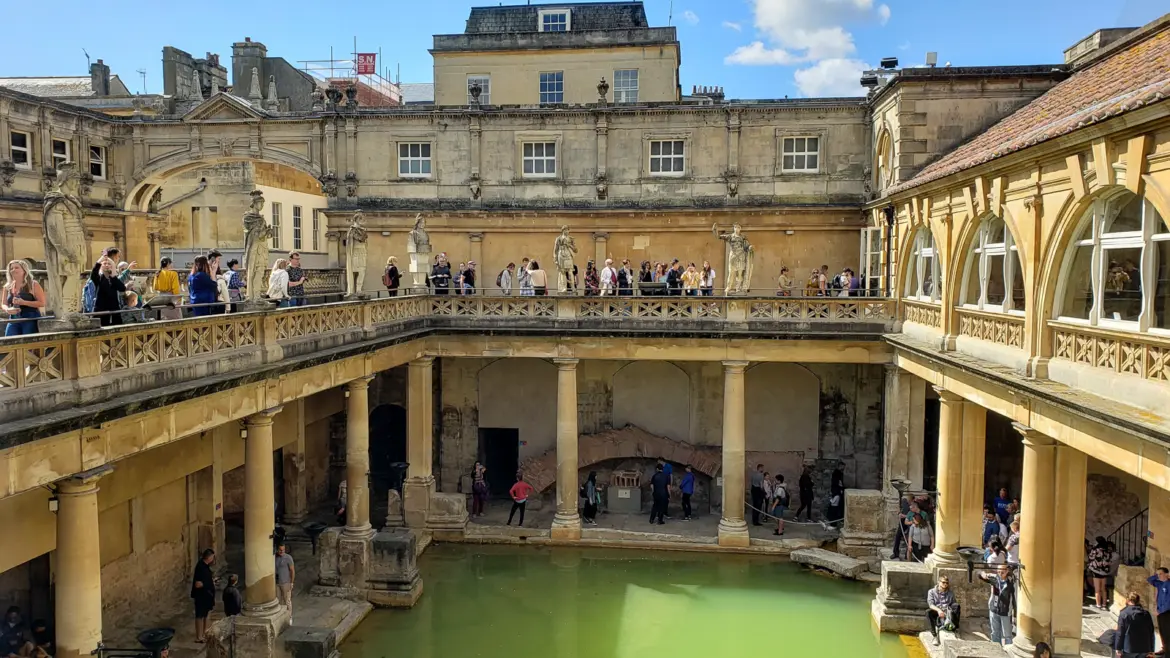
I did not expect Rome to have reached this far. I knew the Romans came to Britain. I had just never pictured them building a spa this far from home, in a quiet green corner of Somerset, and meaning to stay.
That is the thing the Roman Baths do to you. You stand on the terrace, look down at the steaming green water and the columns around it, and the empire stops being a chapter in a textbook. It becomes a pool someone filled, in a town someone built, two thousand years ago.
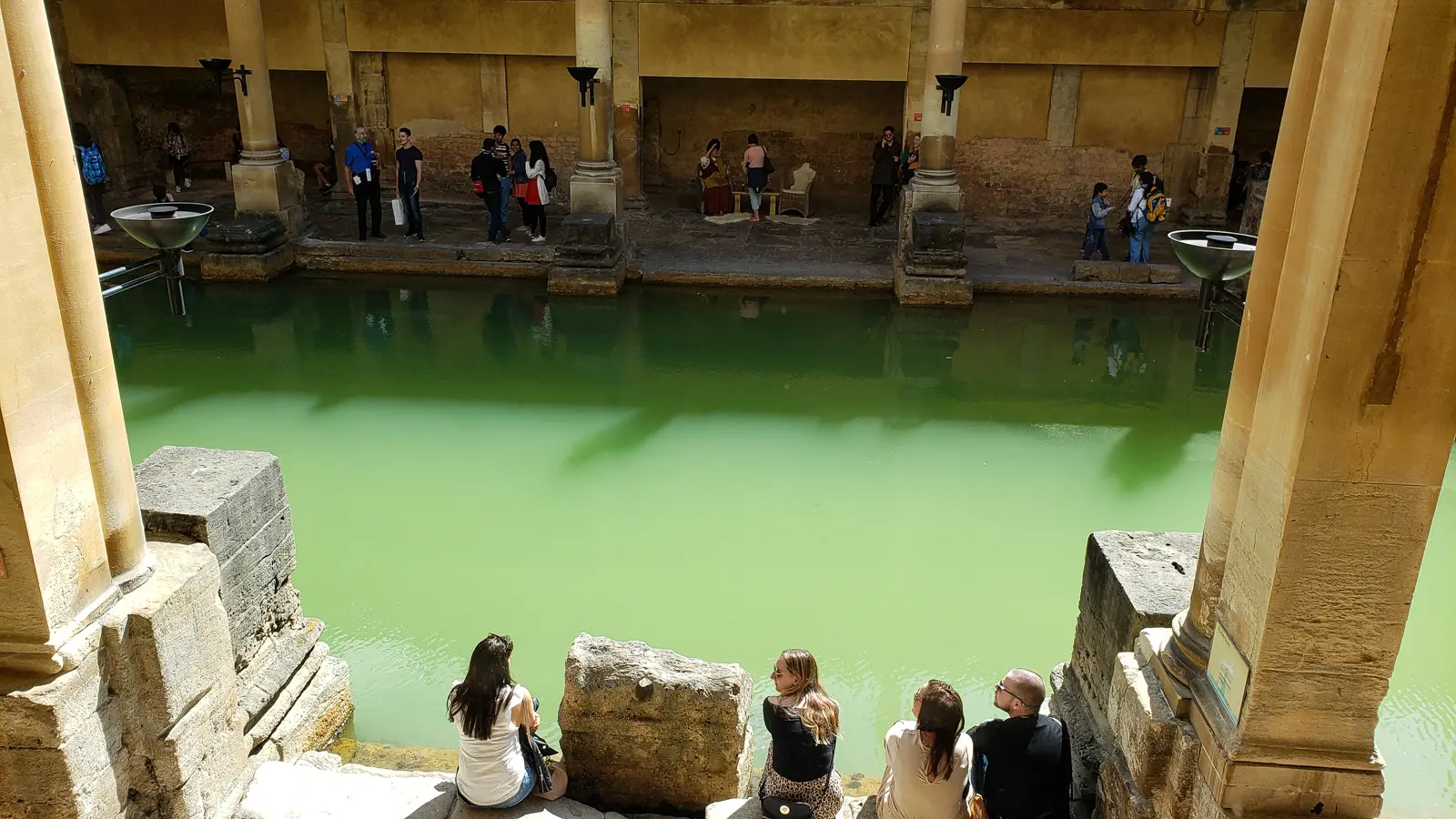
Then comes the twist nobody tells you at the railing. Almost nothing you can see from the terrace is Roman. The statues of emperors looking down, the balustrade, the grand columns above the pool, all of it was built by the Victorians in the 1890s. The Roman Baths were lost for centuries and only dug up in the late nineteenth century, and when the diggers found them they built a stage on top to show them off. So the first view, the one that takes your breath, is Victorian theatre wrapped around something genuinely ancient underneath.
The Roman Baths at a Glance
♨️ Britain’s only hot spring · Around 1.17 million litres rise here every day at 46°C, and have for thousands of years. The water fell as rain on the Mendip Hills and was heated deep underground before returning to the surface.
🏛️ A blended goddess · The Celts held the spring sacred to the goddess Sulis. The Romans merged her with their Minerva and built a temple around AD 60–70, and the town that grew up took the name Aquae Sulis, the waters of Sulis.
🪙 Offerings and curses · More than 12,000 Roman coins and around 130 lead “curse tablets” have been pulled from the Sacred Spring. Most of the curses are about petty theft, a stolen cloak, a ring, a pair of gloves.
🎭 Victorian theatre · The terrace, columns and emperor statues that frame your first view are Victorian, added in the 1890s after the baths were rediscovered. The Great Bath and its Roman lead lining below are the genuine ancient part.
🚫 No, you can’t bathe · After a swimmer died in 1978, the untreated water was closed to bathers for good. To soak in the same spring water, book the modern Thermae Bath Spa a few minutes away.
🚆 Easy from London · Trains from Paddington reach Bath in about 90 minutes, and the baths are a short walk from Bath Spa station. Many day tours pair Bath with Stonehenge.
🎟️ Visiting · Book online and arrive early, and take the free audioguide. The whole city is a UNESCO World Heritage Site, so leave time for more than the baths.
The spring, and the goddess it belonged to
Strip away the Victorian layer and the reason for all of it is simple. Hot water comes out of the ground here. It is the only place in Britain where it does. The water rises at around 46 degrees, hot enough to steam on a cold day, and it has been doing it for far longer than anyone has been watching. It fell as rain on the Mendip Hills, sank deep into the rock, warmed up, and found its way back to the surface in the middle of what is now Bath.
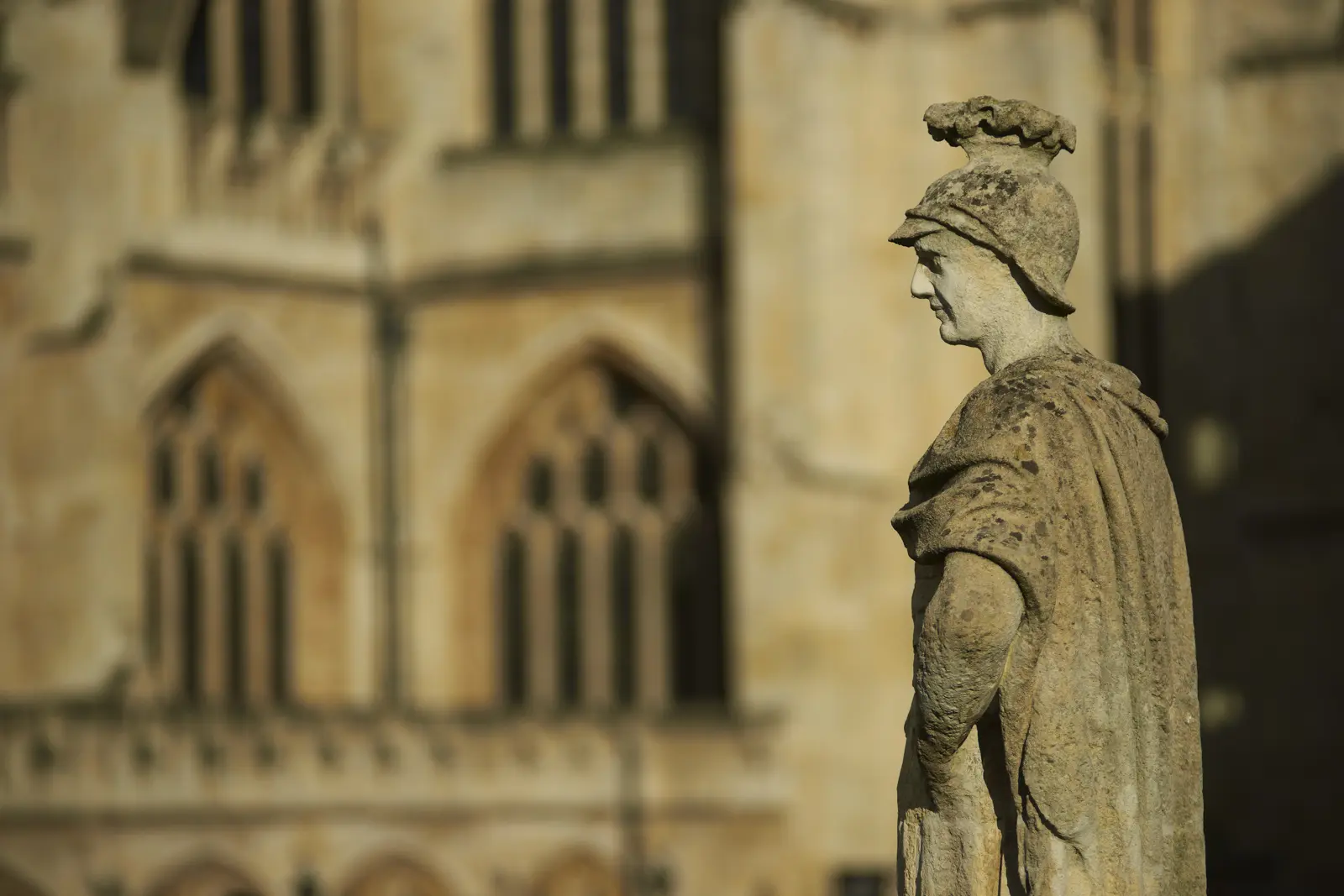
The Romans did not discover it. The local Celtic people already held the spring sacred, tied to a goddess called Sulis. When the Romans arrived, after the conquest of Britain in AD 43, they did what they often did. Rather than stamp the local goddess out, they merged her with one of their own. Sulis became Sulis Minerva, half Celtic water goddess, half Roman goddess of wisdom. They built a temple to her here around AD 60 to 70, and the town that grew up around it took the name Aquae Sulis, the waters of Sulis.
The Great Bath
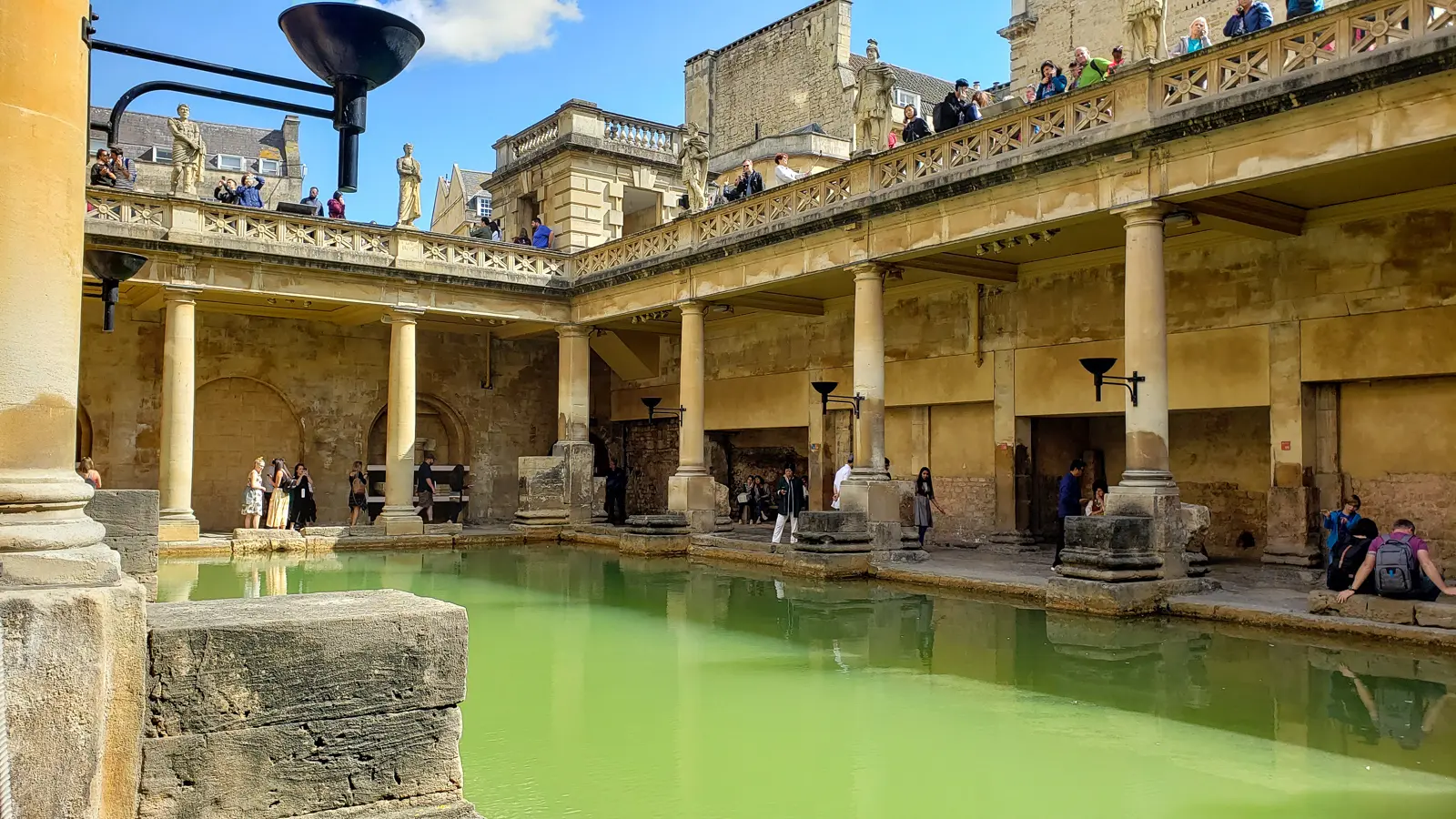
The heart of it is the Great Bath, and this part is the real thing. The pool is fed straight from the spring and lined with sheets of lead to hold the water, the same Roman lining still in place. Stand at the edge and the water moving past you is the same water the Romans bathed in, arriving at the same heat.
What is missing is the roof. The Great Bath once stood under a high vaulted ceiling, enclosed and full of steam. That roof is long gone, which is why the pool is open to the sky today, and why the water has turned the deep green you see in every photo. Sunlight on still mineral water grows algae. The Romans would have known their bath as a dim, warm, echoing room, not the bright open courtyard we walk around now.
A day at the baths
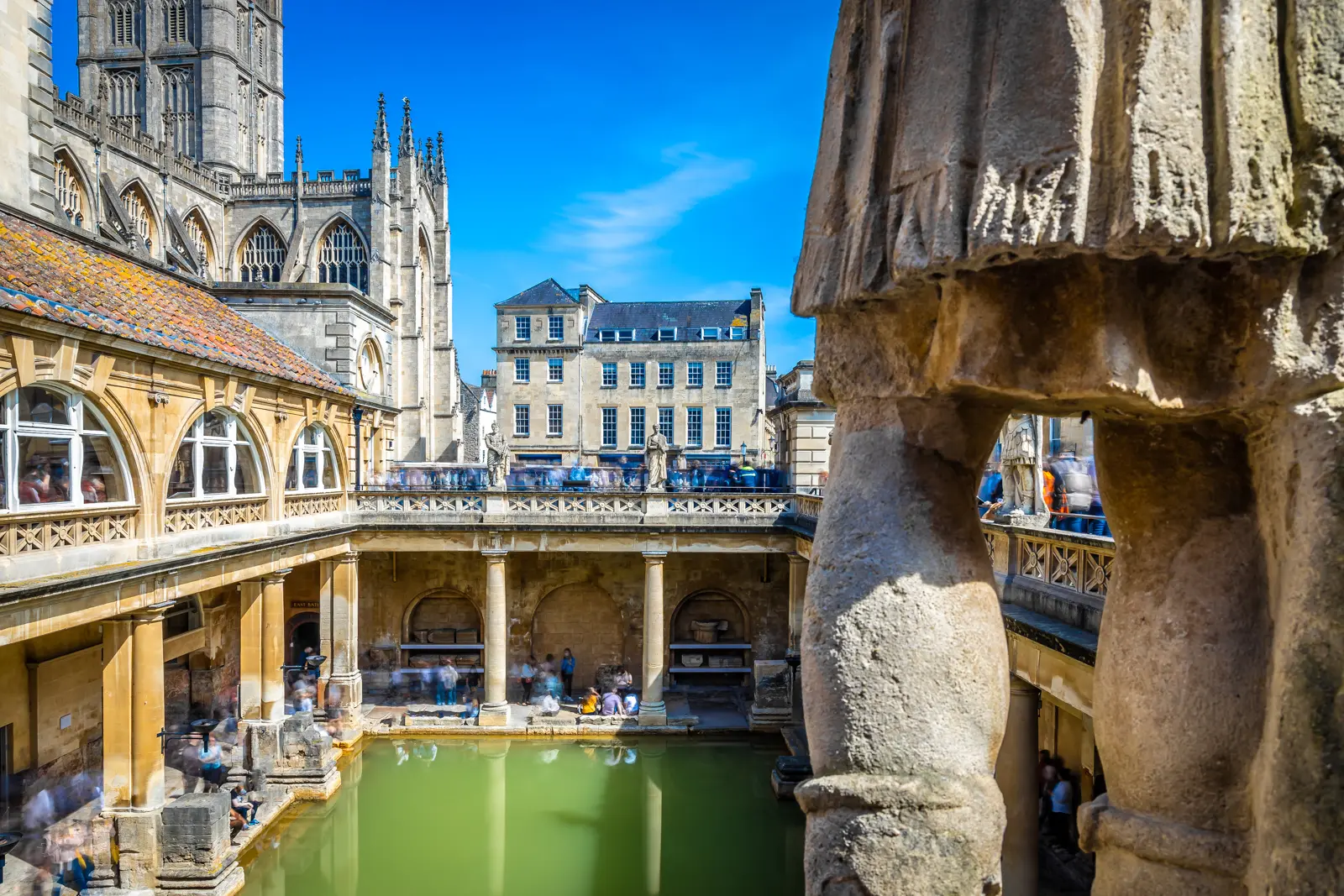
This was never only about getting clean. A Roman bath was where you came to meet people, do business, gossip, exercise and worship, all in the same few hours. Aquae Sulis pulled in visitors from across the empire, people who travelled a long way to bathe in water they believed could heal them.
The detail that stayed with me is the curse tablets. Bathers wrote messages on small sheets of lead and threw them into the spring, asking the goddess to settle their scores. Most of them are about petty theft. Someone has had a cloak stolen while bathing, or a ring, or a pair of gloves, and they want the goddess to deal with the culprit. One asks her to take the thief’s sleep, and his health, until the stolen item is returned. More than a hundred of these have been found. Two thousand years on, the most human thing in the whole place is someone furious about a nicked coat.
How they heated it
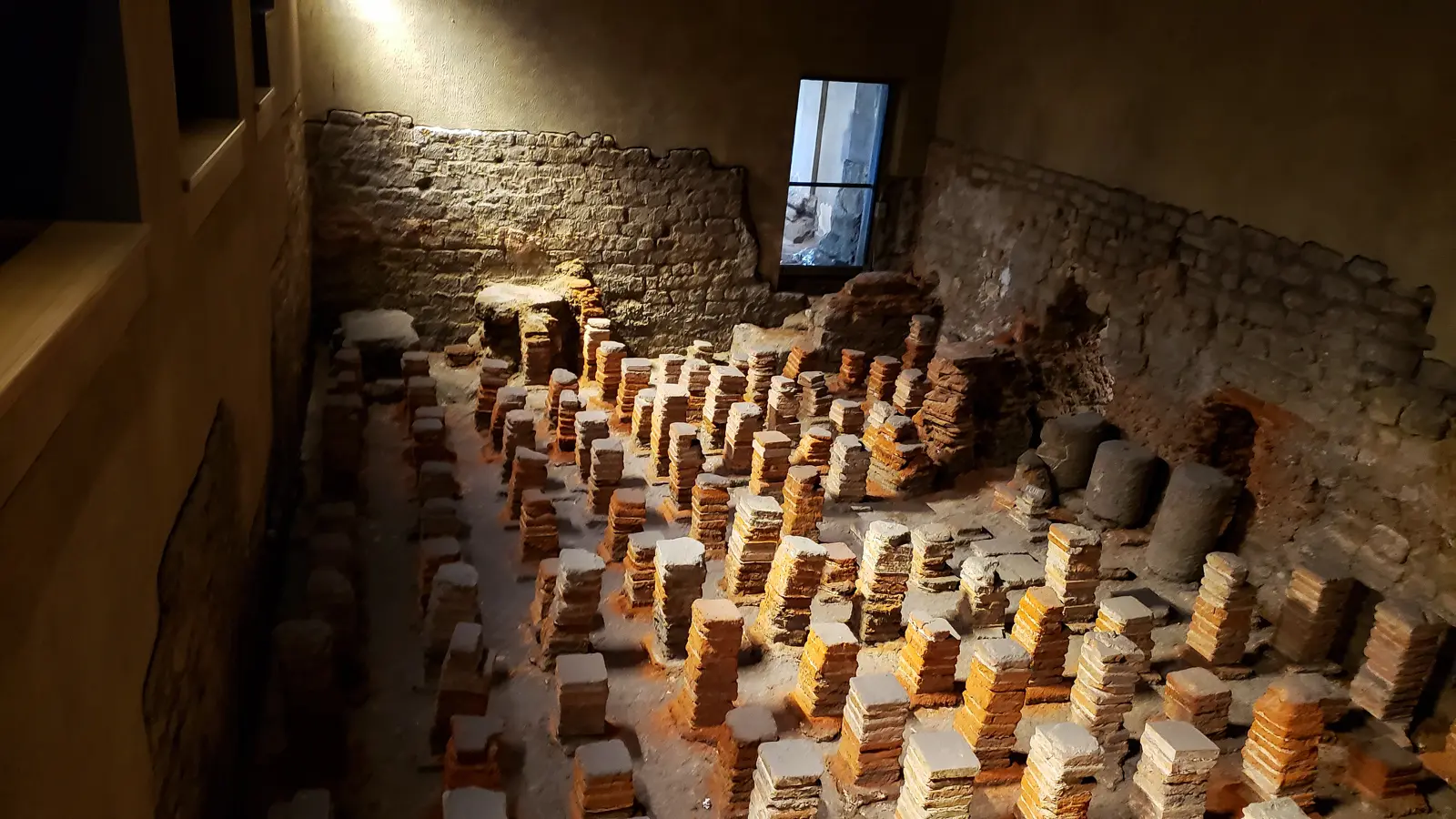
The part that made me stop and look twice was underneath. The Romans heated their bath rooms with a system called a hypocaust. They raised the floor on stacks of brick and tile pillars and ran hot air from a furnace through the gap, so the heat rose up through the floor and into the walls. Rooms ran from warm to very hot, a circuit you worked your way through, ending with a cold plunge.
Seeing the bare stacks of those little pillars, with the floor gone, is when the engineering lands. This was central heating, built by hand, before most of Britain had a stone house to put it in.
Can you still bathe in it?
Short answer, no. And the reason surprised me, because it is not that the spring dried up. The water still rises exactly as it always has, more than a million litres a day, still hot.
The problem is safety. In 1978 a young swimmer died after catching an infection from the water, and bathing was stopped for good. The water in the Great Bath is open to the air and still runs through the original Roman channels, so it is untreated, and untreated warm water can carry things you do not want. So the pool you walk around is to be looked at, not touched.
The water itself, though, is still very much in use. You can drink it, warm and faintly metallic, from the fountain in the elegant Pump Room next door. And if you want to actually get into Bath’s hot spring water, you can, just not here. A few minutes away, Thermae Bath Spa pipes the same thermal water through a clean modern system, including a rooftop pool you can soak in with the city spread out around you.
Bath beyond the baths, and getting there
Here is my honest confession. I did this as a day trip from London, and a day was not enough. I saw the baths, walked the old streets, and left wanting the part I did not have time for.
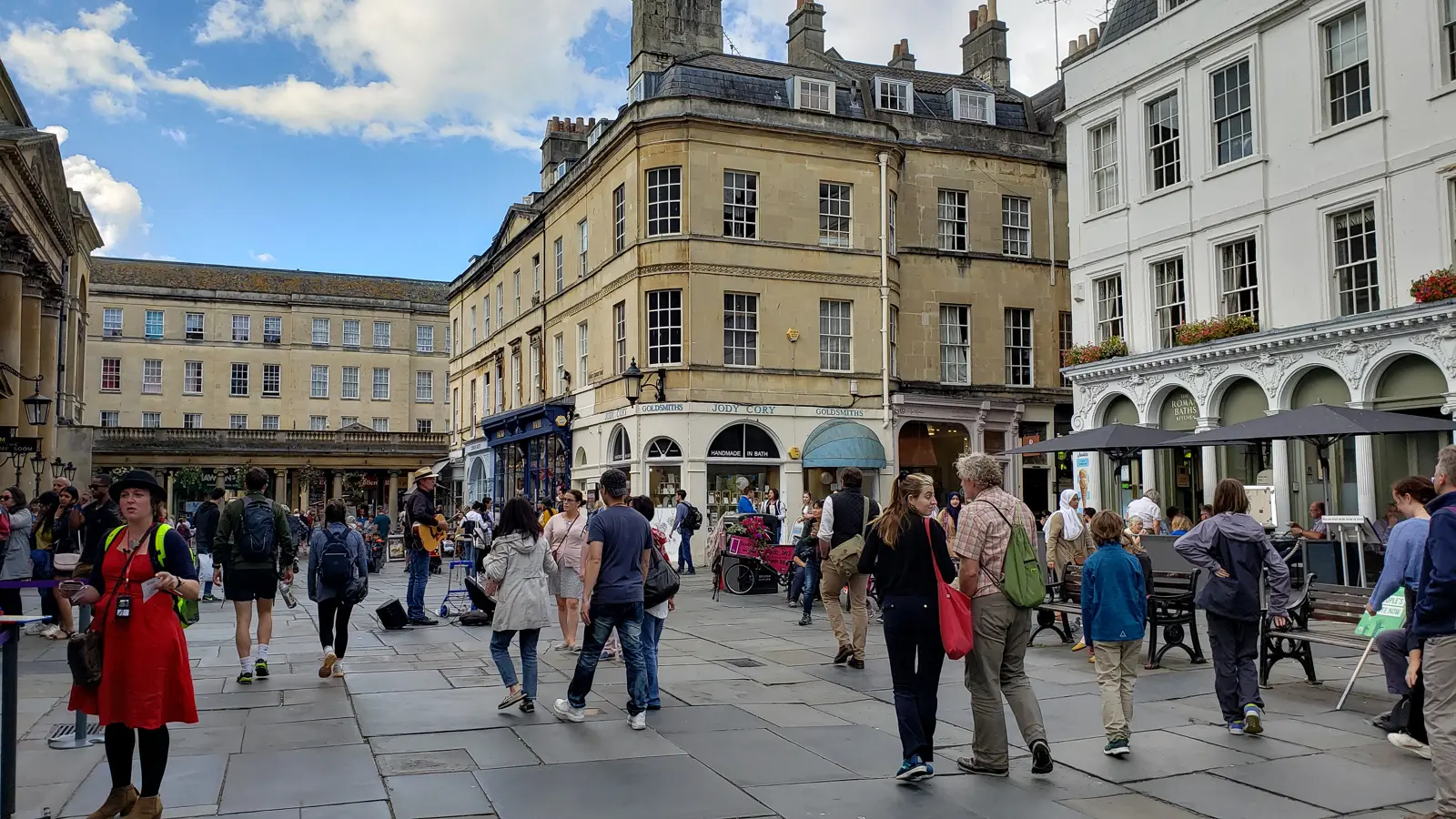
The baths sit in the middle of one of the loveliest cities in England, the whole of it a UNESCO World Heritage Site since 1986. Step outside and the honey-coloured streets pull you in every direction. There is a busker in the square, tea rooms, the soaring abbey right next door, and the famous Georgian crescents a short walk uphill. A day trip shows you the headline. The city itself asks for an overnight, maybe two, and next time it is getting them. I want to come back, do the baths slowly, finally get into the water at Thermae, and stay long enough to watch the evening light hit all that golden stone.
Getting there is easy, which is what makes it such a good day out from London. Trains from London Paddington reach Bath in around 90 minutes, and the baths are a ten-minute walk from Bath Spa station. If you would rather let someone else drive, plenty of organised day tours pair Bath with Stonehenge, which is close by and makes a natural double bill.
Bubbly Tips
- Book online and arrive early. Advance tickets cost a little less than buying on the day, and the site fills fast on summer weekends. First entry of the morning beats the coach crowds.
- Wear proper shoes. The floors are original and uneven, the walkways are narrow, and most of the site sits below street level.
- Take the free audioguide. It is included with entry, there is a version for children, and it carries the site far better than reading the signs alone.
- Start on the terrace, then get down to the water quickly. The terrace view is the postcard, but it shows only a small slice. The real site is below, so do not spend all your time up top.
- Taste the spa water in the Pump Room. It is warm, flat and a bit metallic. Worth one sip for the story, even if you pull a face.
- For an actual soak, book Thermae Bath Spa. You cannot bathe in the Roman water, but the rooftop pool nearby uses the same springs. Reserve ahead, and the twilight session is the one to get.
- Pair it with Stonehenge. The two sit close together and most London day tours do both. If you only have one day in the area, it is the obvious combination.
- Give Bath more than the baths. The Royal Crescent, the Circus and the abbey are all a short walk away. A day covers the Roman Baths. The city earns an overnight.
- Go late on a summer evening. In high summer the baths stay open into the night and are lit by torchlight, with far thinner crowds and the steam catching the light.
Final Thoughts
What I keep coming back to is not the grandeur. It is the small lead tablet from someone who had their cloak stolen and wanted the goddess to make the thief pay. Two thousand years, an empire risen and gone, a city lost and dug back up, and the most human thing in the room is still a person annoyed about their missing coat.
That is what Bath does. It takes something you thought you knew from a textbook and makes it a place where people queued, gossiped, healed and grumbled, in water that is still warm today. I came for a day and left already planning the trip back. Next time I am staying the night, and I am getting in the water.
Until next time!

🌟 Everything You Need to Plan Your Dream Trip in 2026
- 🌟 Luxury Hotels - Find premium stays with Booking.com & Hotels.com
- 🏡 Vacation Rentals - Discover unique properties on VRBO
- 🏞️ Guided Tours - Explore with Viator or GetYourGuide
- 🎫 Attraction Tickets - Skip the lines with Tiqets
- 🚢 Ocean Cruises - Set sail with Cruise Direct
- 📱 International SIMs - Stay connected with Saily
- 🚗 Car Rentals - Budget-friendly options from Discover Cars
- 🌐 Secure VPNs - Browse safely with NordVPN
- 💶 Currency Exchange - Best rates with Wise
- 🗣️ Learn Languages - Master the local language with Babbel and Rosetta Stone