
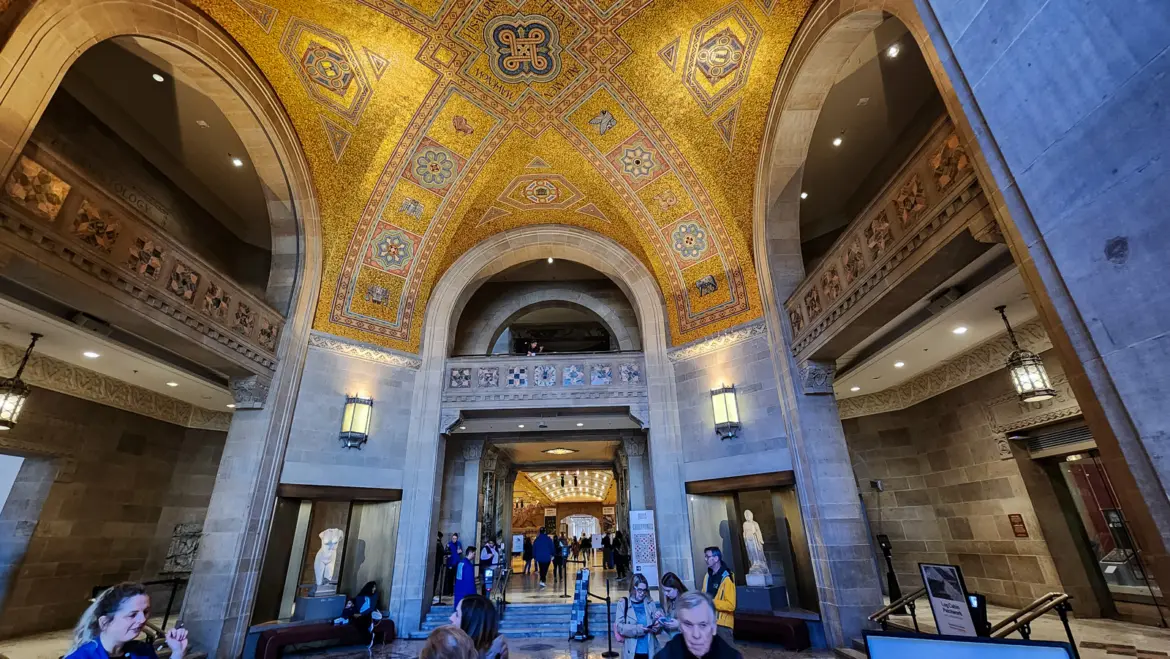
The first thing I saw at the Royal Ontario Museum in Toronto was a gold ceiling. Walking in through the rotunda, I had the impression I was entering a Byzantine basilica. It reminded me of St Mark’s Basilica in Venice. Then I spent most of the day with the dinosaurs and mammals, and rushed through the ancient galleries upstairs.
Looking back, I regret not lingering in the Egyptian, Byzantine, Greek and Roman galleries. At first it bothered me. Then I realised it is normal. Nobody sees the whole ROM in one day, and the treasures I glimpsed are the reason I am going back.
ROM Ancient Galleries at a Glance
🏛️ What · The Royal Ontario Museum’s ancient world-cultures galleries in Toronto — Egypt, Byzantium, the Bronze Age Aegean and Greece — plus the famous gold mosaic rotunda.
✨ The ceiling · A 1933 gold mosaic over the Queen’s Park entrance, laid by Italian craftsmen from imported Venetian glass — look for the Egyptian vulture and a line from the Book of Job.
🇪🇬 The highlight · The Egyptian gallery (the most important collection in Canada): a vividly preserved pharaoh relief, Hatshepsut’s Punt reliefs and a walk-in tomb chamber.
🗺️ Where · The ancient galleries are on Level 3; enter through the rotunda if you can.
💡 Tip · Split your visit — natural history one day, world cultures another — and shoot objects slightly off-centre to beat the glass glare.
The Rotunda
My Byzantine impression was not far off. The ROM describes the ceiling’s gold, rust and bronze background, with its red, blue and turquoise patterns, as evoking the mosaics of the Byzantine world and Eastern Europe. The Venice connection is real too. The museum imported thousands of plates of glass from Venice and cut them into more than a million small pieces, and the mosaic was laid by Italian craftsmen. From the upper floor, the ceiling is close enough to pick out the details, and the view is magnificent.
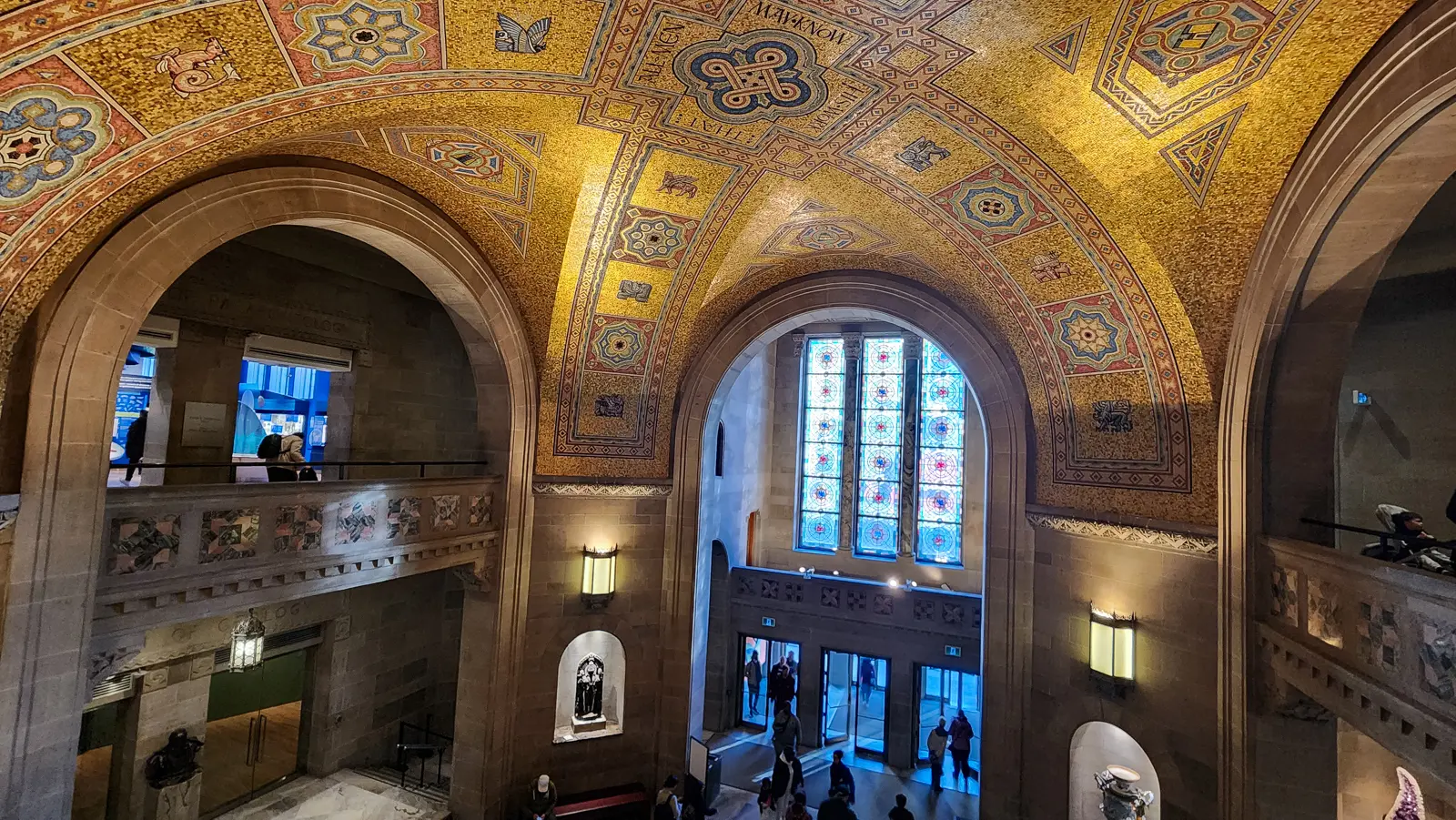
The ROM’s first director, Charles Trick Currelly, conceived the mosaic for the 1933 addition. It was designed to reflect the whole collection, so its panels hold symbols from cultures around the world. One is a vulture, a common motif on ancient Egyptian temple ceilings. The central panel carries a line from the Book of Job: “That all men may know his work”.
Ancient Egypt
The Egyptian gallery is beautifully designed. Walking in, I had the impression of entering a temple, with sand-coloured walls, warm light and a map of the Nile set into the floor.
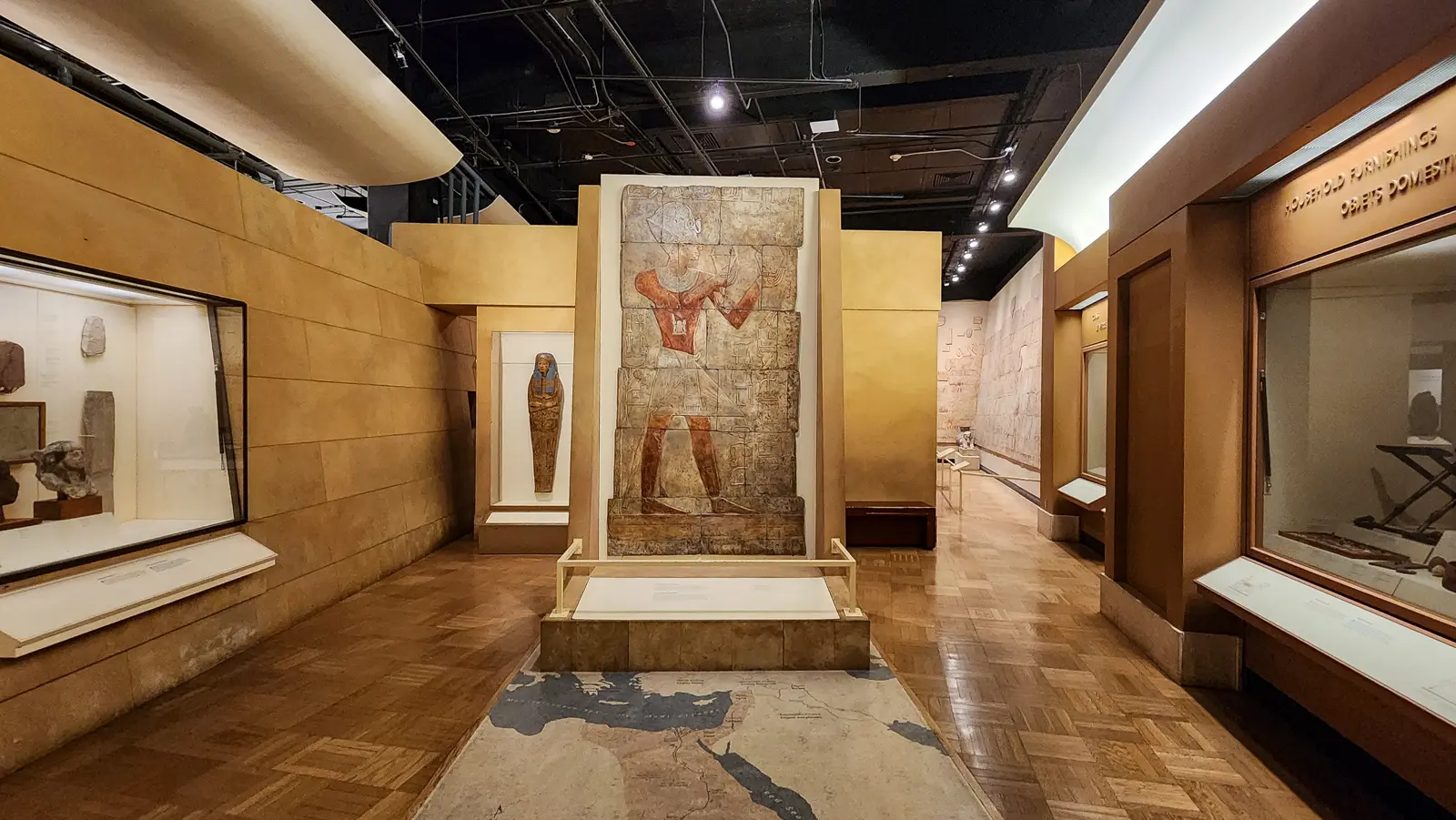
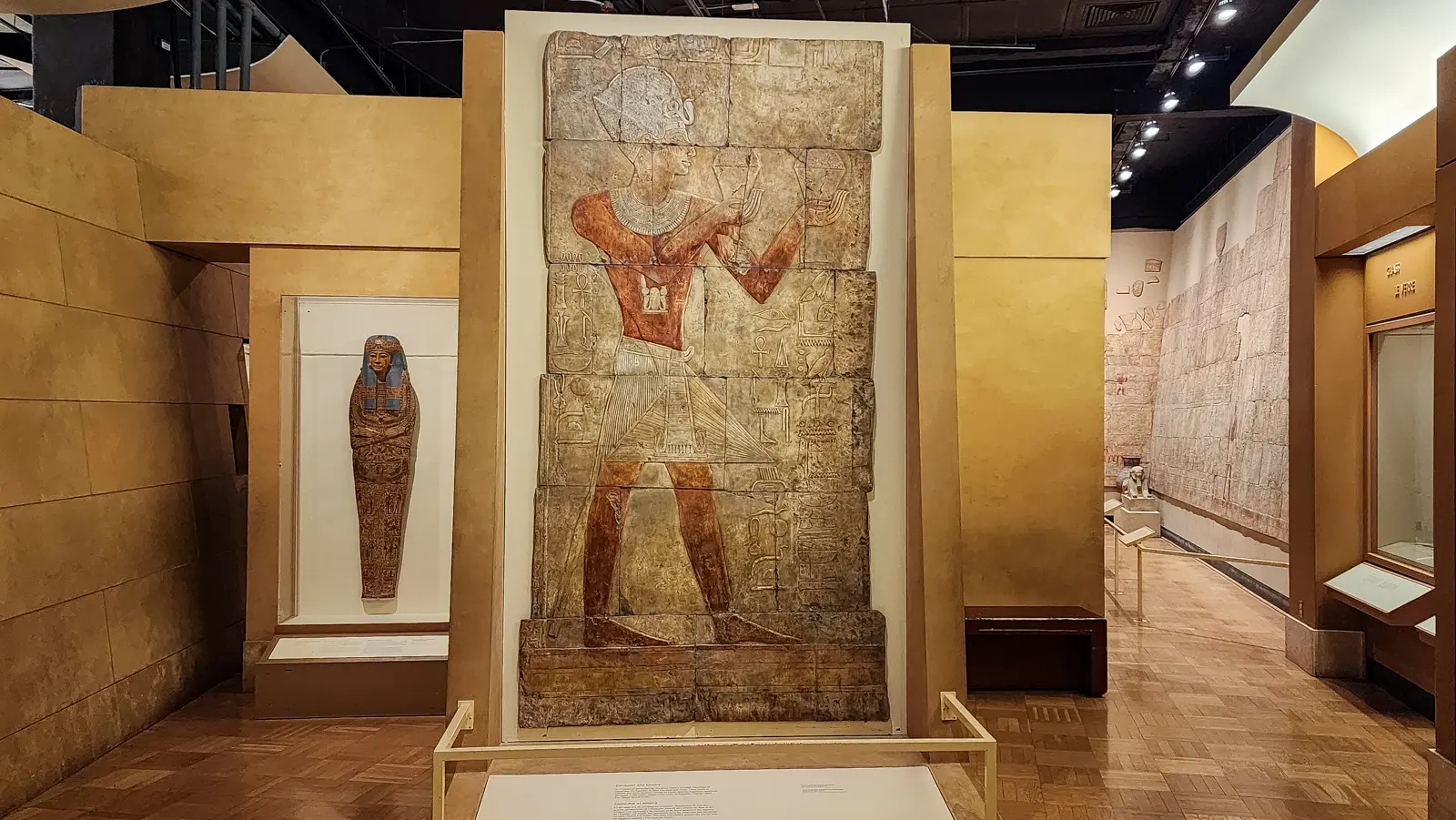
My favourite piece was the large painted relief of a pharaoh, displayed under a panel titled Conquest and Empire. He strides forward in a kilt and broad collar, holding offerings, with hieroglyphs carved around him. The colour is still strong, and the relief is so well preserved and majestic that I kept coming back to it.
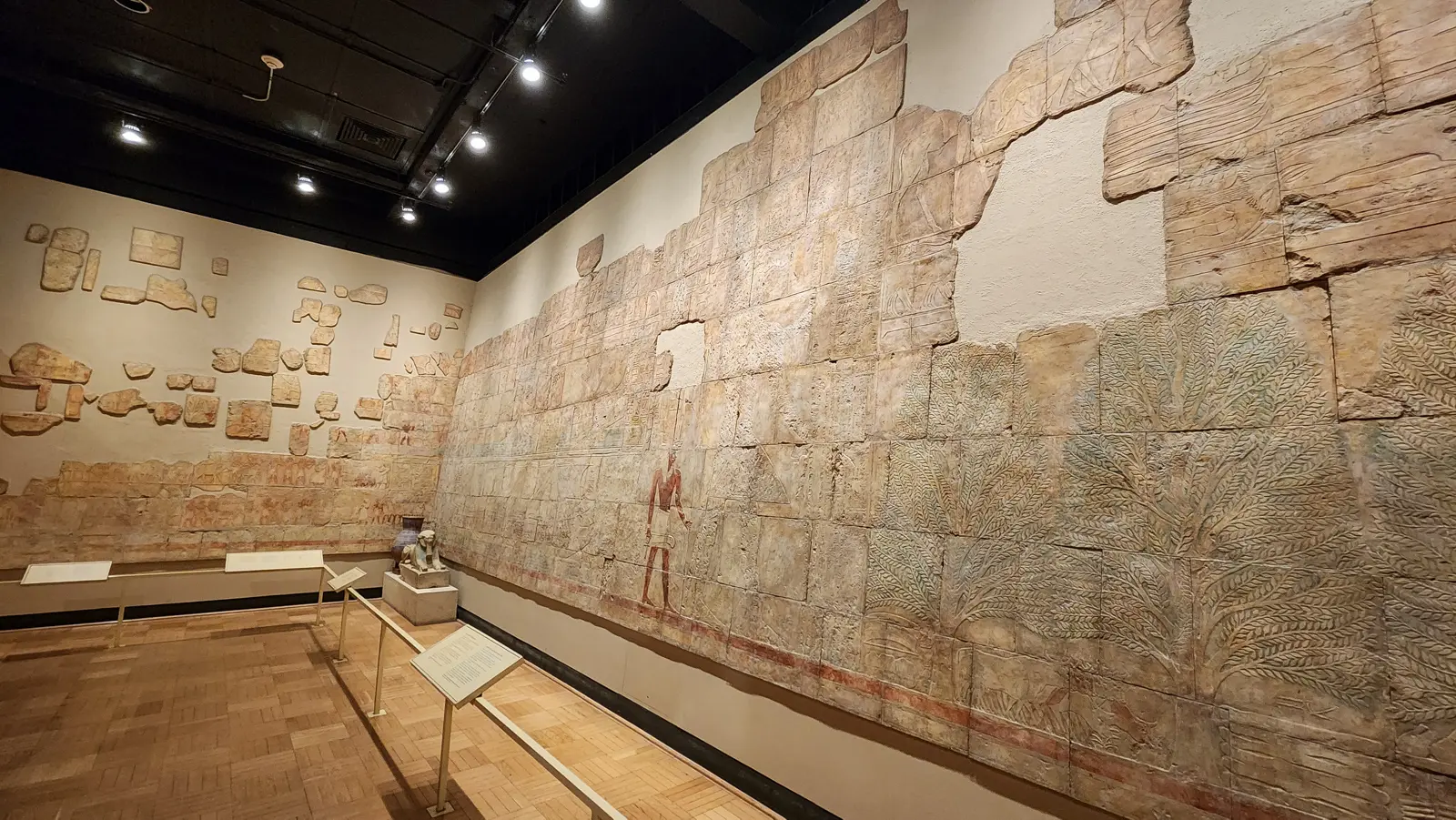
Further in, a whole wall is covered with painted reliefs of trees and a figure walking beside them. This is the ROM’s life-size cast of Queen Hatshepsut’s Punt expedition, copied from her mortuary temple at Deir el-Bahri. Punt was a trading partner Egypt reached by sea, probably near present-day Somalia.
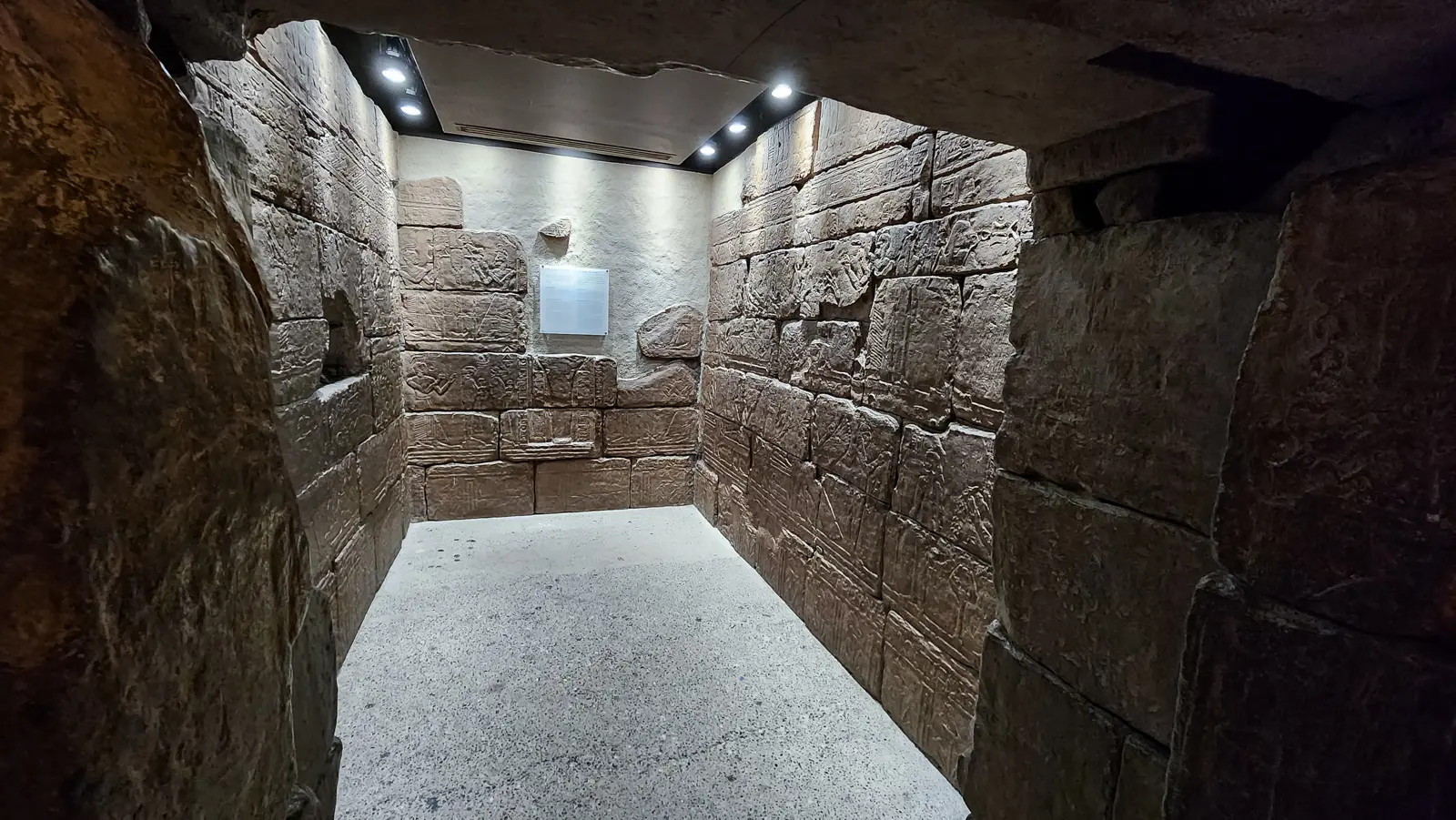
Then there is the tomb chamber. I remember walking inside, though it was full of people. Even with the crowd, it was eerie. This was a sacred place.
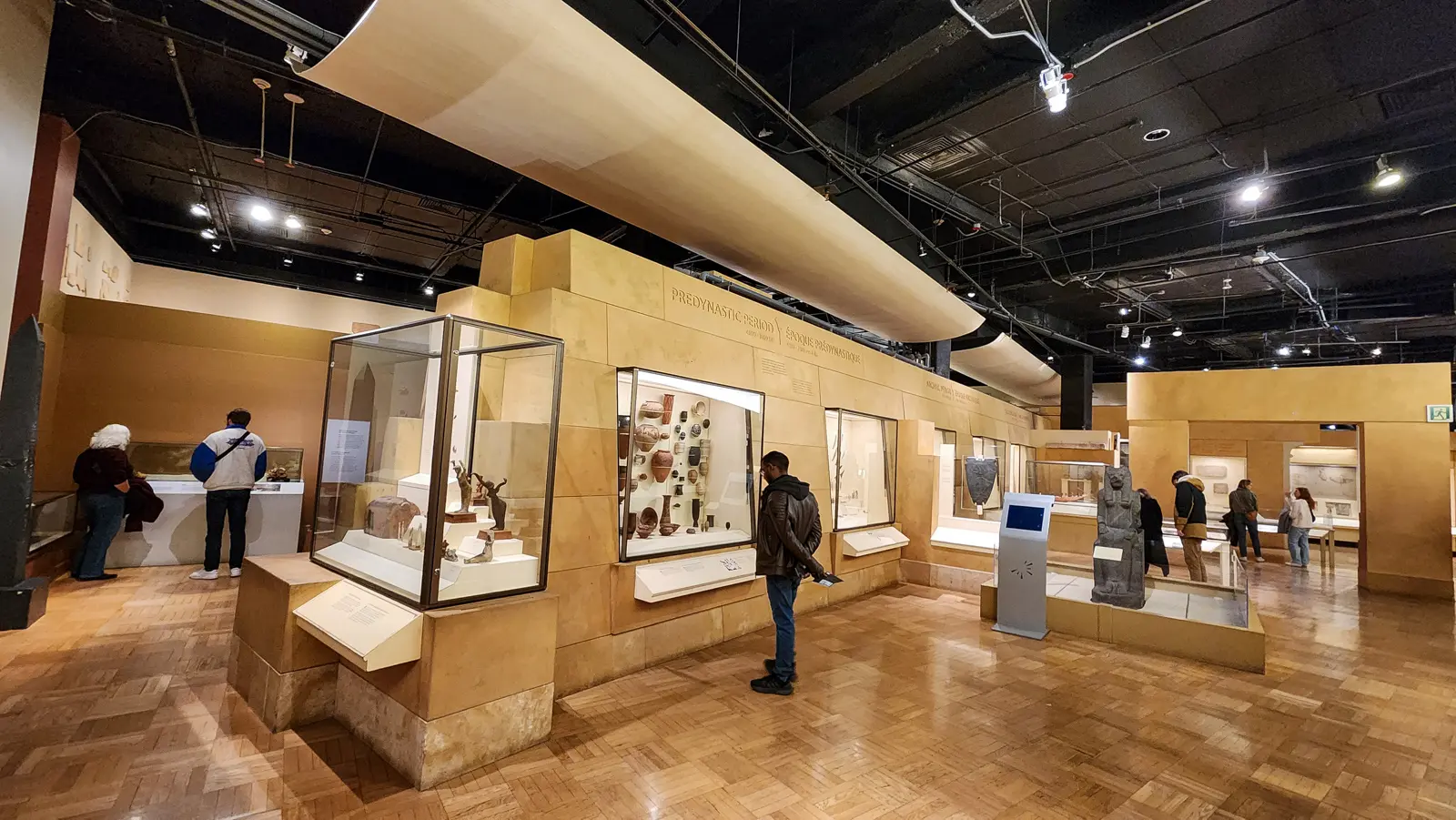
The story starts with the Predynastic Period, the time before Egypt’s first kings, with cases of painted pottery and small figurines. Nearby sits a dark stone statue with the head of a lioness.
Byzantium
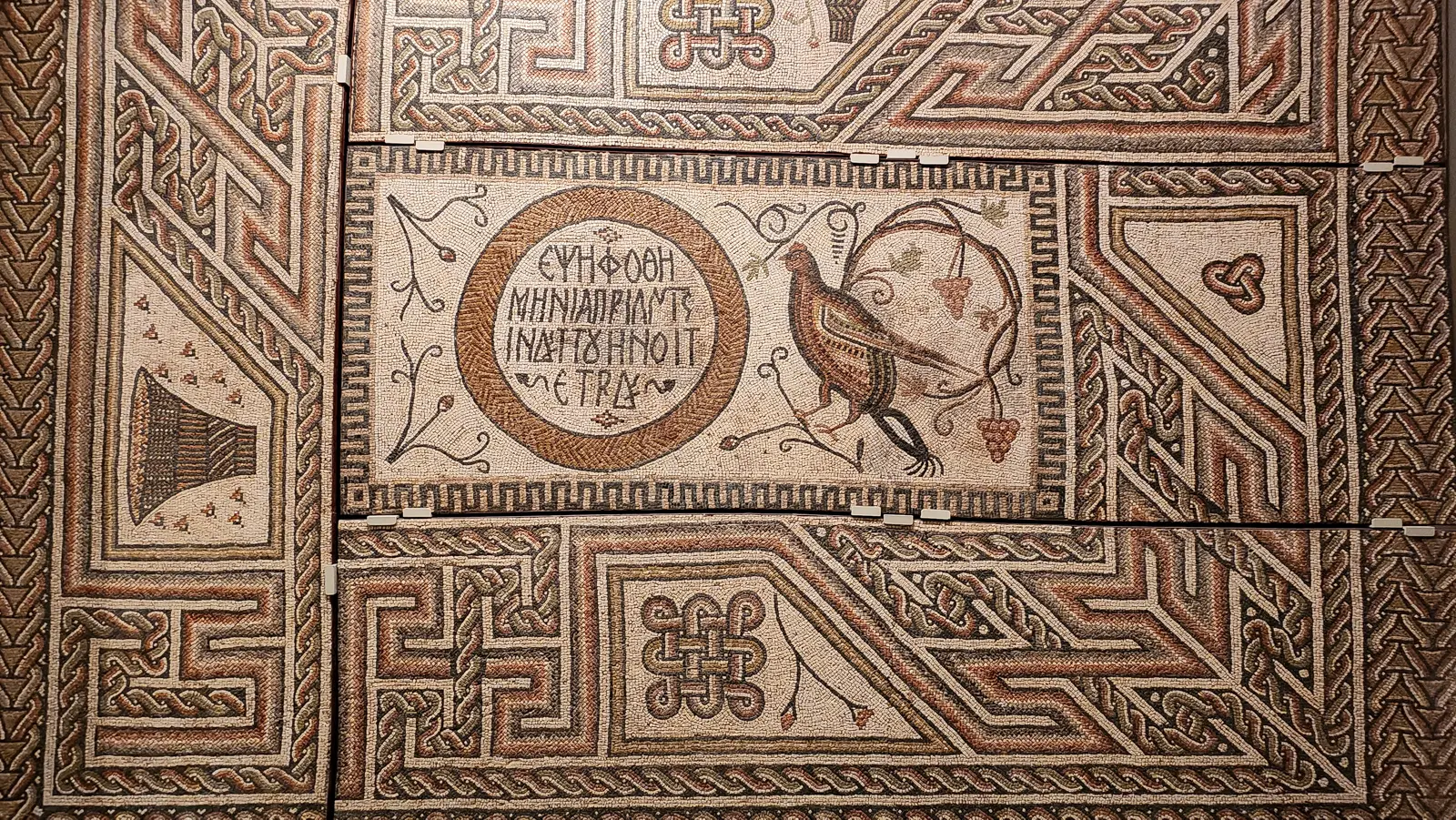
The Byzantine gallery had some interesting finds. The one that stopped me was a floor mosaic with a Greek inscription inside a gold ring, and a bird beside it under a trailing vine. Look at the art and creativity, centuries ago.
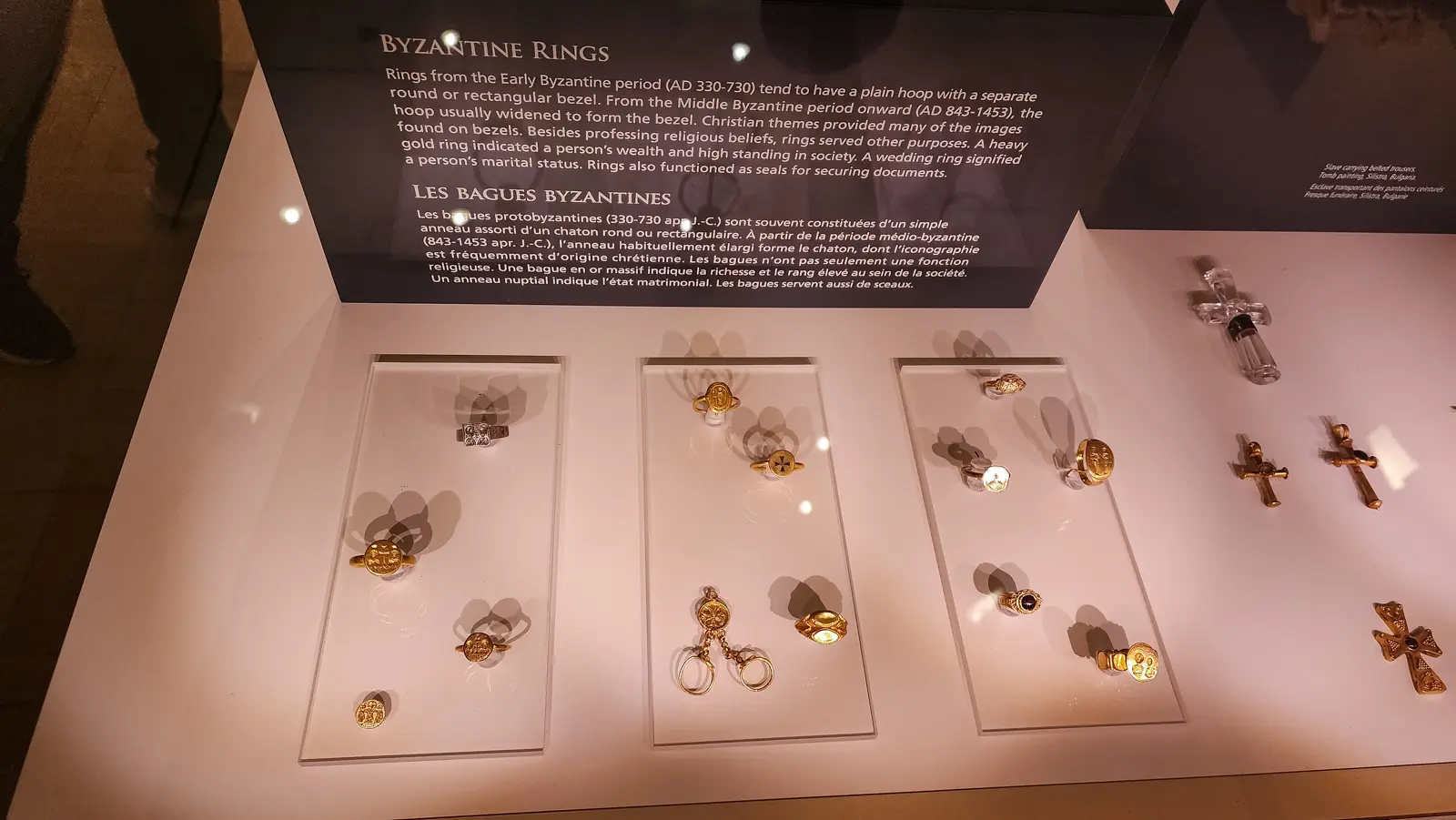
Next to it was a case of gold rings. The label explains that rings did more than show faith. A heavy gold ring signalled wealth and standing, a wedding ring showed that someone was married, and some rings worked as seals for securing documents.
The Aegean and Greece
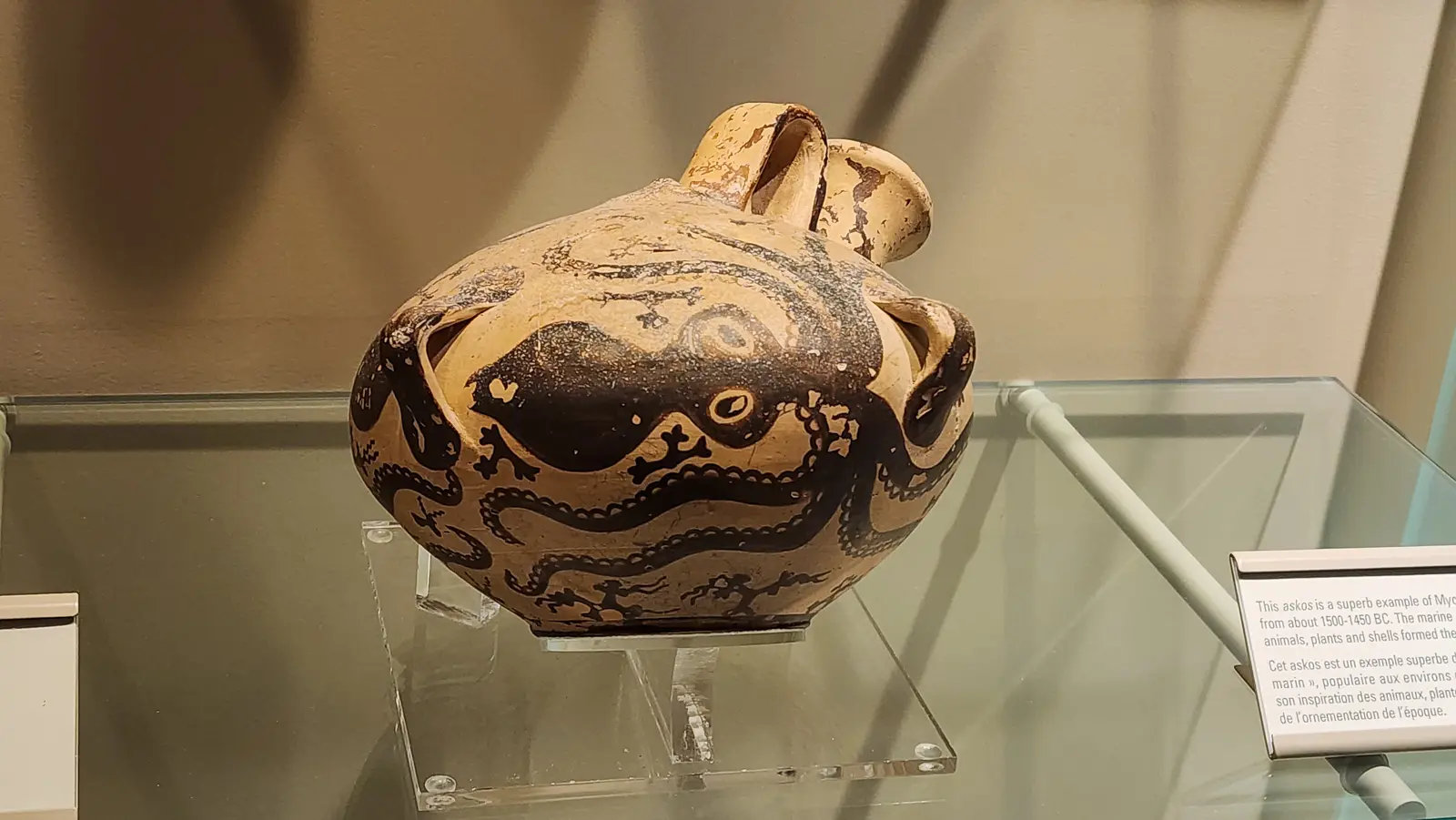
In the Bronze Age Aegean gallery, I noticed the octopus. It wraps around a pottery vessel called an askos, its tentacles spreading across the whole surface. The label calls it a superb example of Mycenaean “marine style” painting, popular around 1500 to 1450 BC, when sea creatures, plants and shells were the main decoration. To me, the octopus is the Mediterranean in one picture.
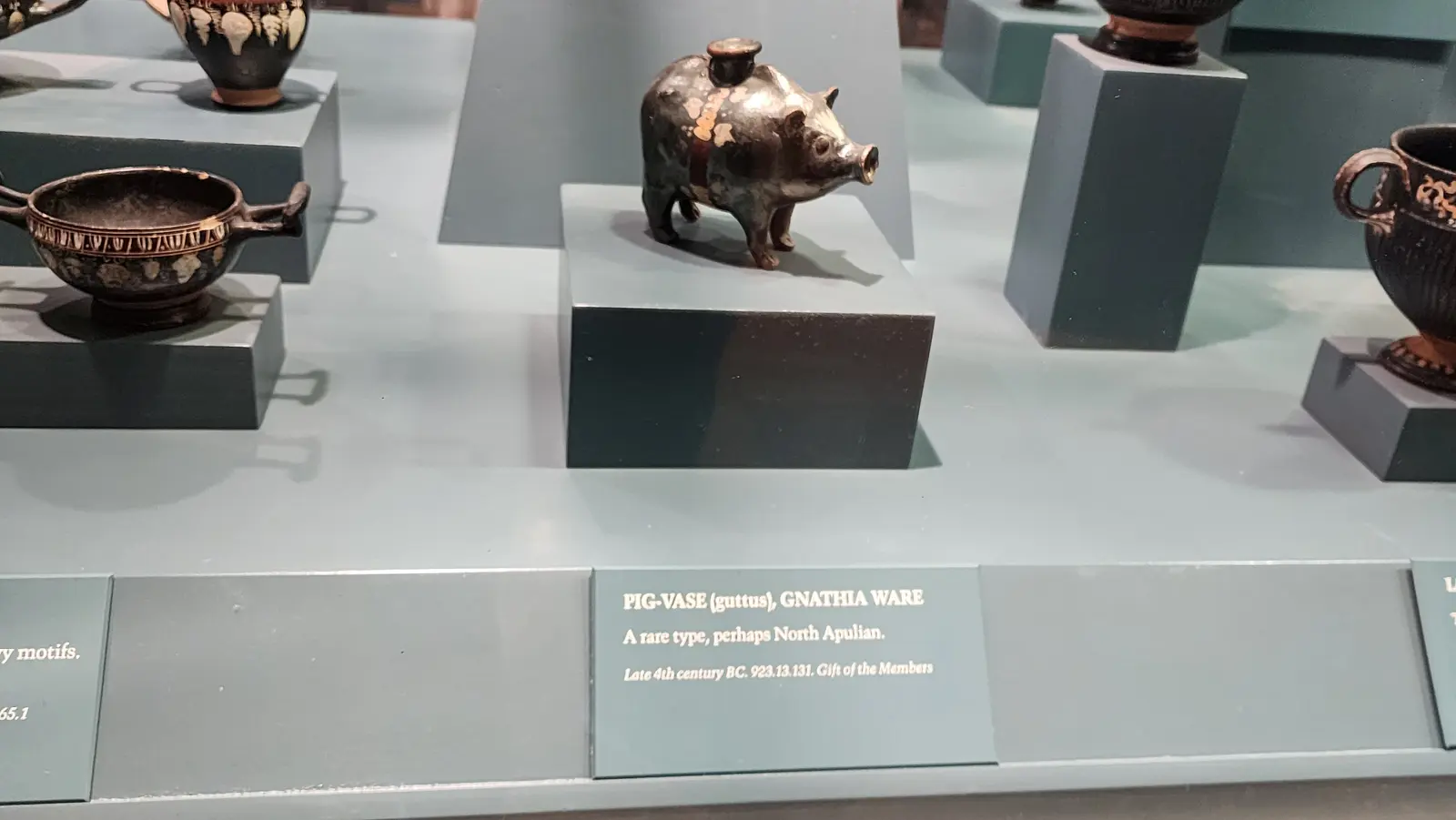
And then the little pig. It was so cute. It is a pig-shaped Gnathia ware vase, or guttus, with a spout on its back, and its label calls it a rare type, perhaps from North Apulia in southern Italy, made in the late 4th century BC.
Next Time
The Roman gallery is still to be discovered, and so are several others. The Eaton Gallery of Rome and the Galleries of Africa: Nubia opened together in 2011, alongside the Byzantine gallery. The A.G. Leventis Foundation Gallery of Ancient Cyprus holds around 300 objects from the Bronze Age to the Hellenistic period. The Sir Christopher Ondaatje South Asian Gallery and the Wirth Gallery of the Middle East are on my list too.
Bubbly Tips
- Split your visit. Give natural history one visit and the world cultures galleries another, or set a time limit at the dinosaurs.
- Enter through the rotunda if you can. The gold mosaic ceiling is over the Queen’s Park entrance. Check which entrances are open during the renovation.
- Look for the symbols in the ceiling. Find the Egyptian vulture and the line from the Book of Job in the central panel.
- Head for Level 3. The Egyptian, Byzantine, Roman, Nubian and Cypriot galleries are all on the third floor.
- Use the Egyptian gallery’s layout. Follow the centre displays for the story in order, then circle the outside for themes.
- Go back to the tomb chamber if it is crowded. It is small, and it is worth seeing with fewer people inside.
- Check what is open before you go. The ROM’s website has listed the South Asian and Middle East galleries as temporarily closed for a refresh.
- Shoot at an angle. Many objects are behind glass, so photograph slightly off-centre to avoid reflections.
Final Thoughts
Two pieces stayed with me long after I left. The first was the pharaoh relief. The red-brown paint on his skin is still strong, and every hieroglyph around him is crisp. For something carved and painted in ancient Egypt, it is in wonderful shape.
The second was the Byzantine mosaic. Someone set those small stones one at a time to make a bird under a vine, a ring of Greek letters and borders of interlaced knots. Then they recorded the month the floor was paved. Centuries later, the word April is still easy to read.
I will be back, and next time the ancient galleries get the time they deserve, starting with the Roman gallery I never reached.
Until next time!

🌟 Everything You Need to Plan Your Dream Trip in 2026
- 🌟 Luxury Hotels - Find premium stays with Booking.com & Hotels.com
- 🏡 Vacation Rentals - Discover unique properties on VRBO
- 🏞️ Guided Tours - Explore with Viator or GetYourGuide
- 🎫 Attraction Tickets - Skip the lines with Tiqets
- 🚢 Ocean Cruises - Set sail with Cruise Direct
- 📱 International SIMs - Stay connected with Saily
- 🚗 Car Rentals - Budget-friendly options from Discover Cars
- 🌐 Secure VPNs - Browse safely with NordVPN
- 💶 Currency Exchange - Best rates with Wise
- 🗣️ Learn Languages - Master the local language with Babbel and Rosetta Stone