
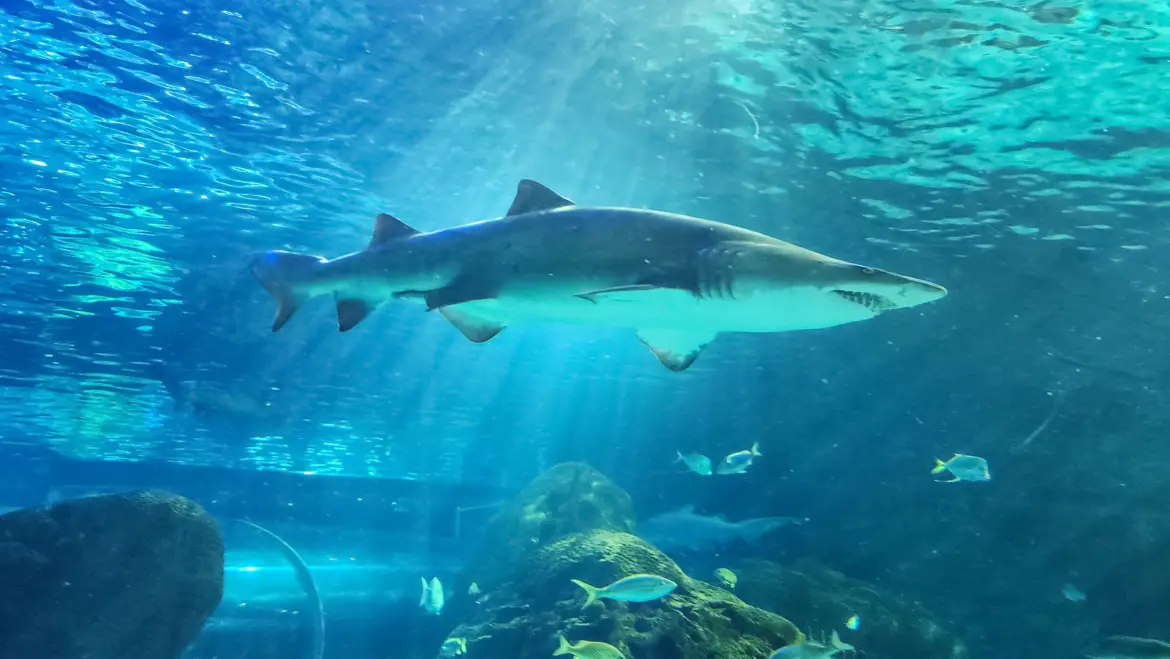
Ripley’s Aquarium of Canada, at the base of the CN Tower in Toronto, is a lot of fun, and the Dangerous Lagoon is the best of it. It is the aquarium’s largest tank, and a moving walkway carries visitors through a clear tunnel at the bottom of it, with sharks, sawfish, stingrays and a sea turtle passing beside and above.
I was scared at times. A sand tiger shark gliding over my head, teeth on show, takes some getting used to. Then I would remind myself that I was standing in a secure tunnel, under a tank built for exactly this, and go back to watching. Everyone around me, children and adults alike, was in awe as the sharks, fish and stingrays passed beside and above us.
Ripley’s Dangerous Lagoon at a Glance
🦈 What · The largest tank at Ripley’s Aquarium of Canada, at the foot of the CN Tower in Toronto — you ride a moving walkway through a clear tunnel at the bottom of it.
🚶 The tunnel · Billed as North America’s longest underwater viewing tunnel, close to 100 metres end to end.
🐠 Who’s in it · Sand tiger sharks, sawfish, stingrays, a green sea turtle and schools of reef fish passing beside and overhead.
⚠️ Scary but calm · The sand tigers look fearsome (teeth always showing) but are slow-moving; several species here are endangered in the wild.
💡 Tip · Step off the walkway to linger where the sharks are, and shoot upward toward the light. The aquarium is at 288 Bremner Blvd, by Union Station.
The Tunnel
The Dangerous Lagoon tunnel is billed as North America’s longest underwater viewing tunnel, close to 100 metres from end to end. The moving walkway runs through the middle, so the animals drift past without anyone needing to take a step.
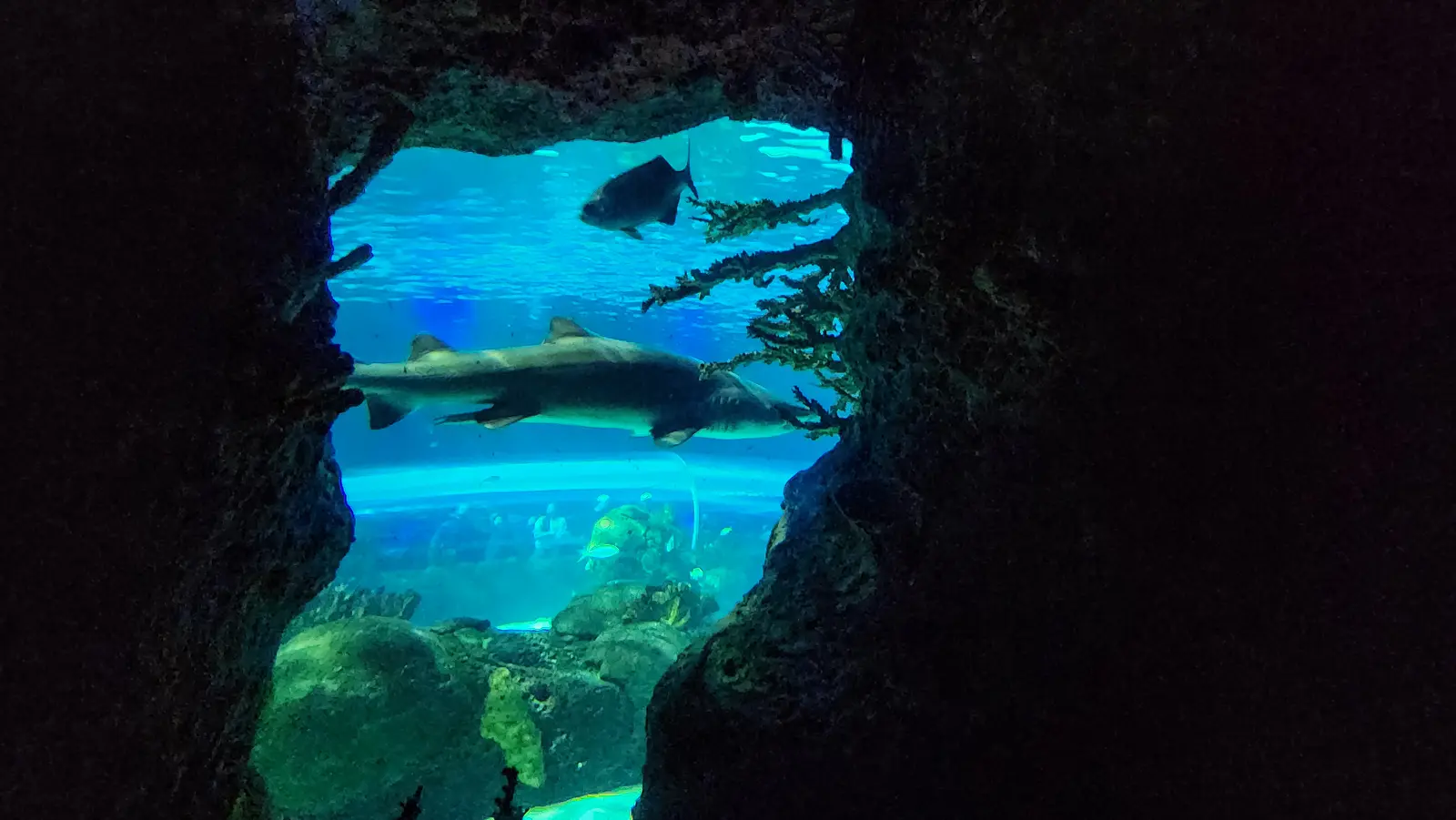
There are other ways to look in, too. Gaps in the rockwork along the route frame the tank like windows, and through one of them I could see a sand tiger shark crossing the water with the tunnel and its visitors below.
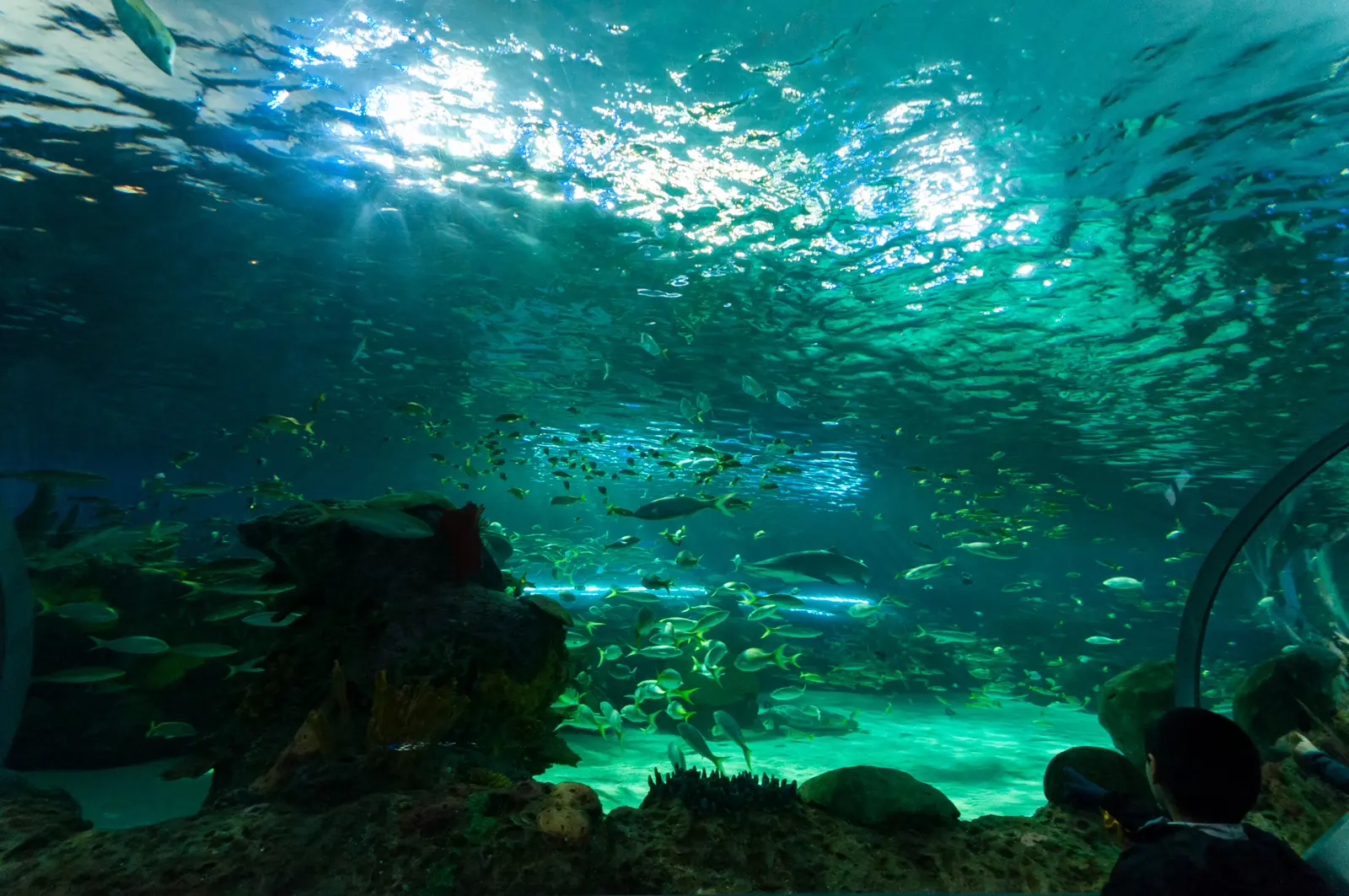
Inside the tunnel, the view goes all the way up to the surface. Light comes down through the water, and the fish school in the open space above the rocks.
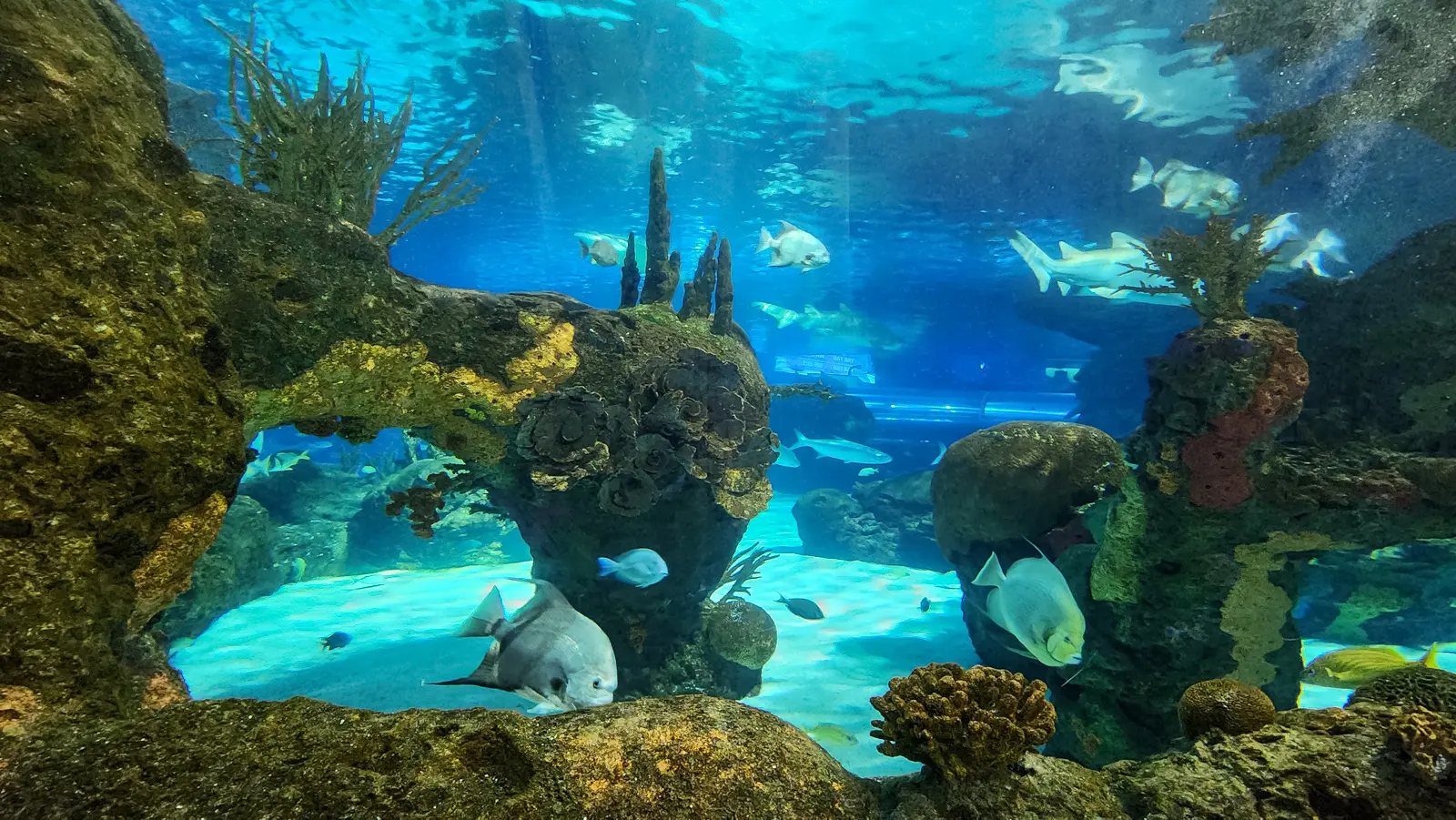
The lagoon’s rockwork is built with arches and pillars. In one view, angelfish and smaller reef fish swim among the arches while sand tiger sharks cruise further back.
Sand Tiger Sharks
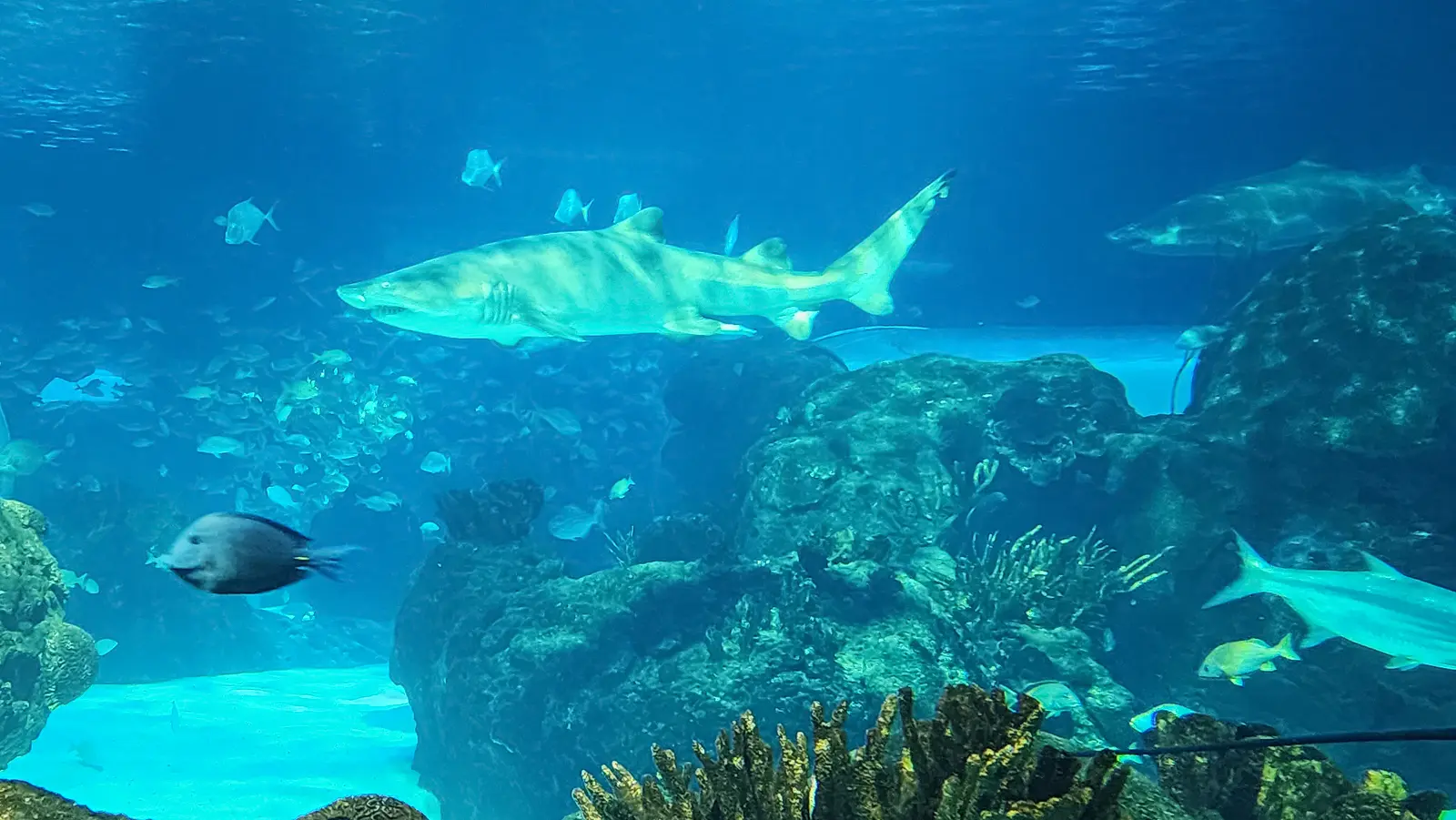
The sharks that scared me are sand tiger sharks, and they are the reason the lagoon looks so dangerous. Their long, pointed teeth stick out of the mouth and stay visible even when the jaws are closed. In person, every one of them looks as if it is about to bite.
Their behaviour doesn’t match the face. Sand tigers have a reputation for being slow-moving and not aggressive, and they tend to hover almost motionless in the water. In the wild, they are critically endangered on the IUCN Red List, with overfishing among the main threats.
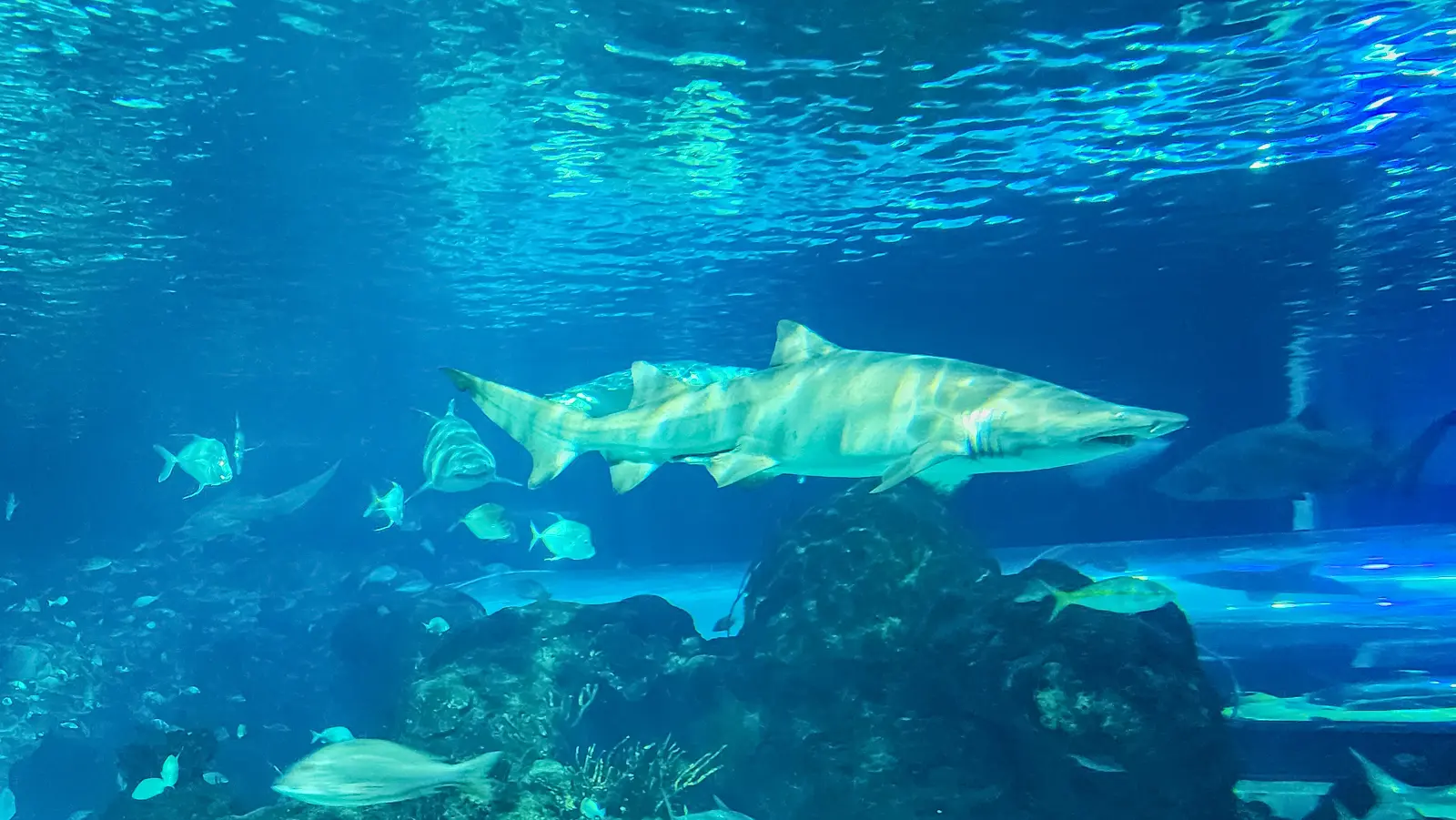
The silvery, flat fish with the steep foreheads swimming around them are lookdowns, one of the lagoon’s smaller residents.
The Sawfish
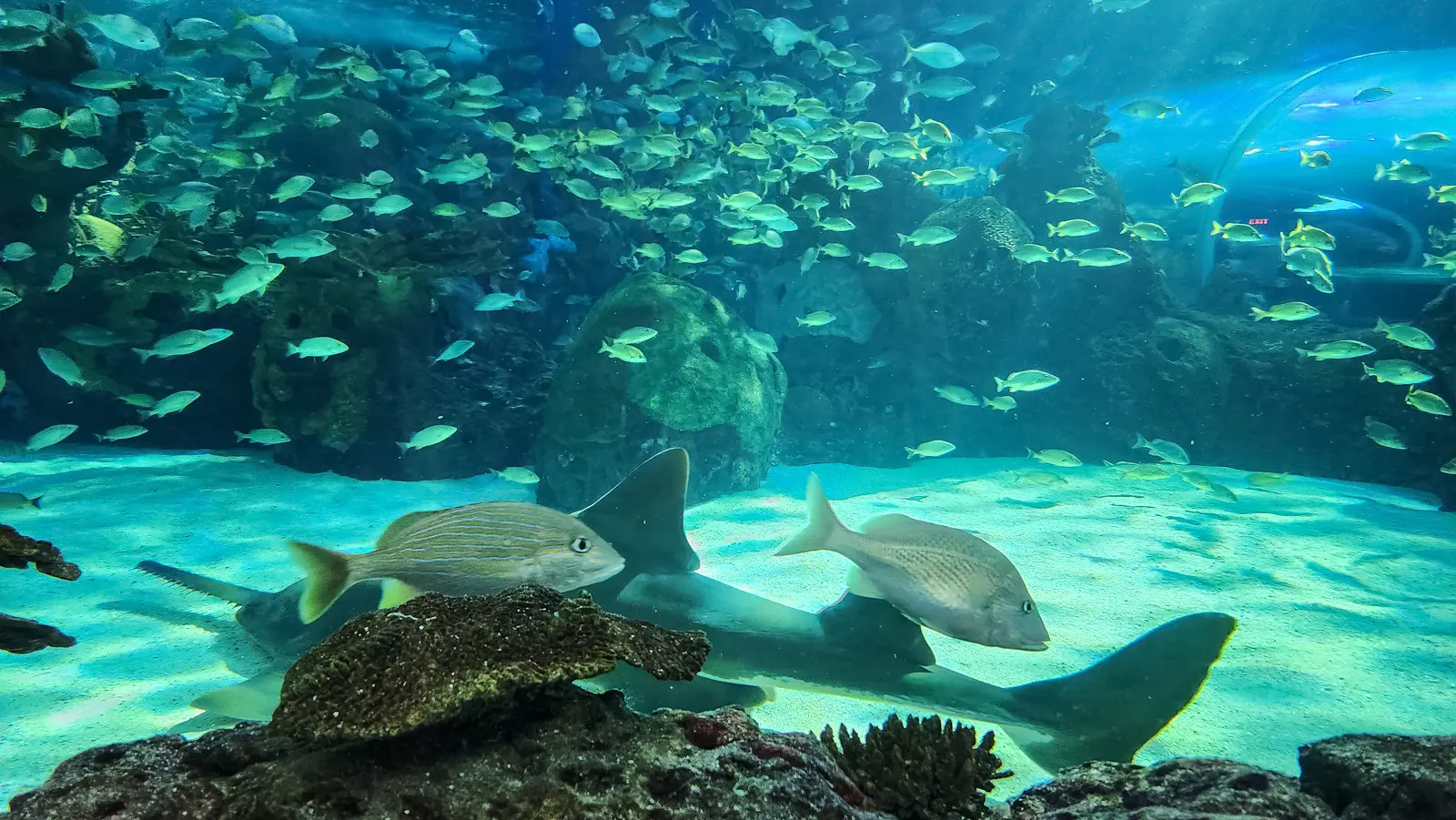
The sawfish has a shark’s body and fins, and a long, flat snout lined on both sides with teeth, like a saw blade. This snout is called the rostrum.
Sawfish look like sharks, but they are rays. Their large pectoral fins are fused to the head, as in other rays. All five sawfish species are now listed as endangered or critically endangered.
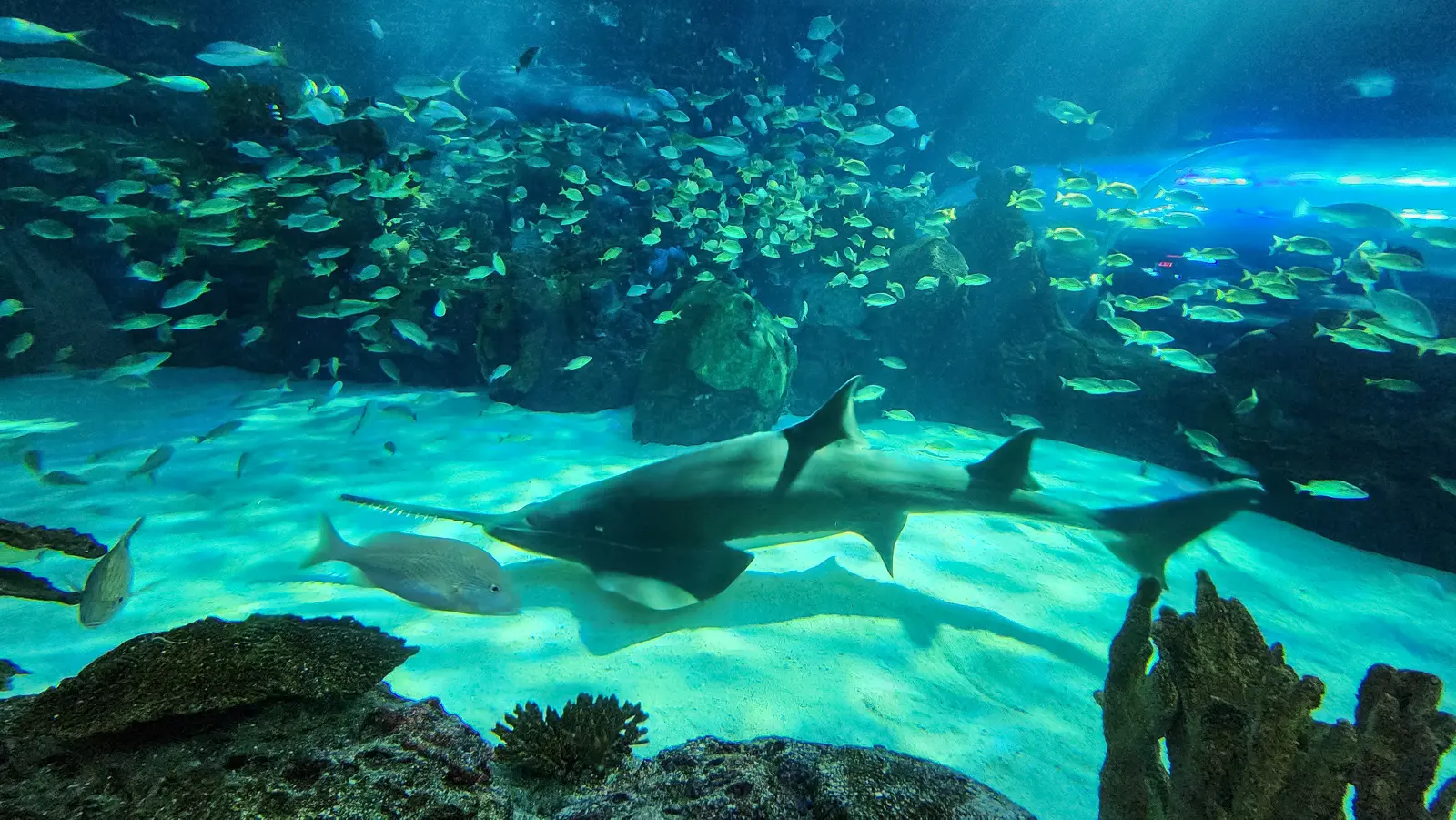
In this frame, grunts swim right past the sawfish’s head, close to that toothed snout.
Stingrays and the Sea Turtle
The sharks share the water with rays. Sources list the roughtail stingray among the lagoon’s residents, the largest whip-tailed stingray in the Atlantic. In one frame, I caught a stingray gliding over the rocks with two sand tiger sharks and a green sea turtle above it.
The turtle swims near the surface, well above the sharks. Green sea turtles are the largest of the hard-shelled sea turtles, and as adults they eat plants, mostly seagrass and algae. They are listed as endangered.
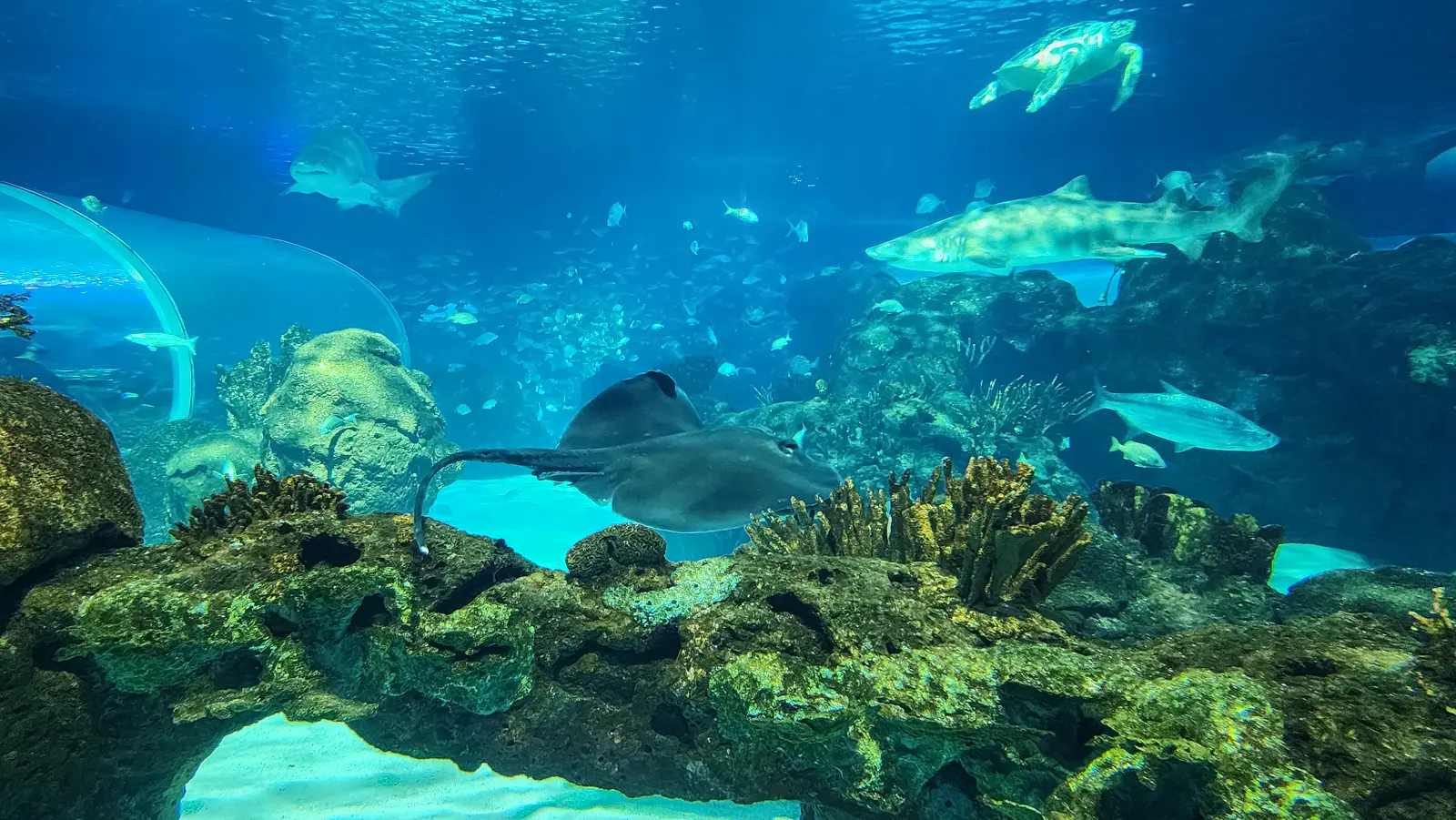
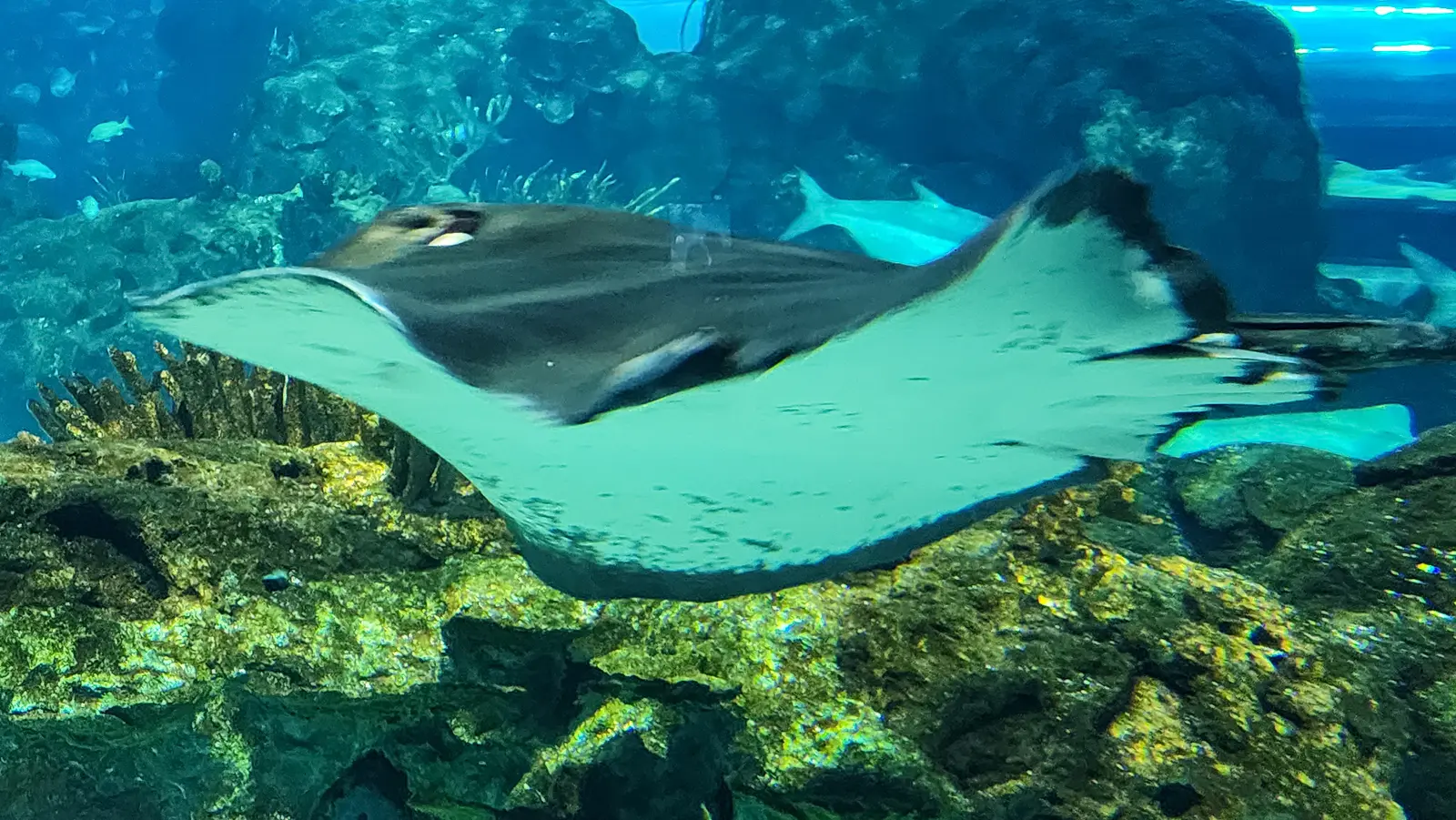
The stingrays swim close to the glass, close enough to see the eyes on top of the body and the openings just behind them.
Keeping the Lagoon Alive
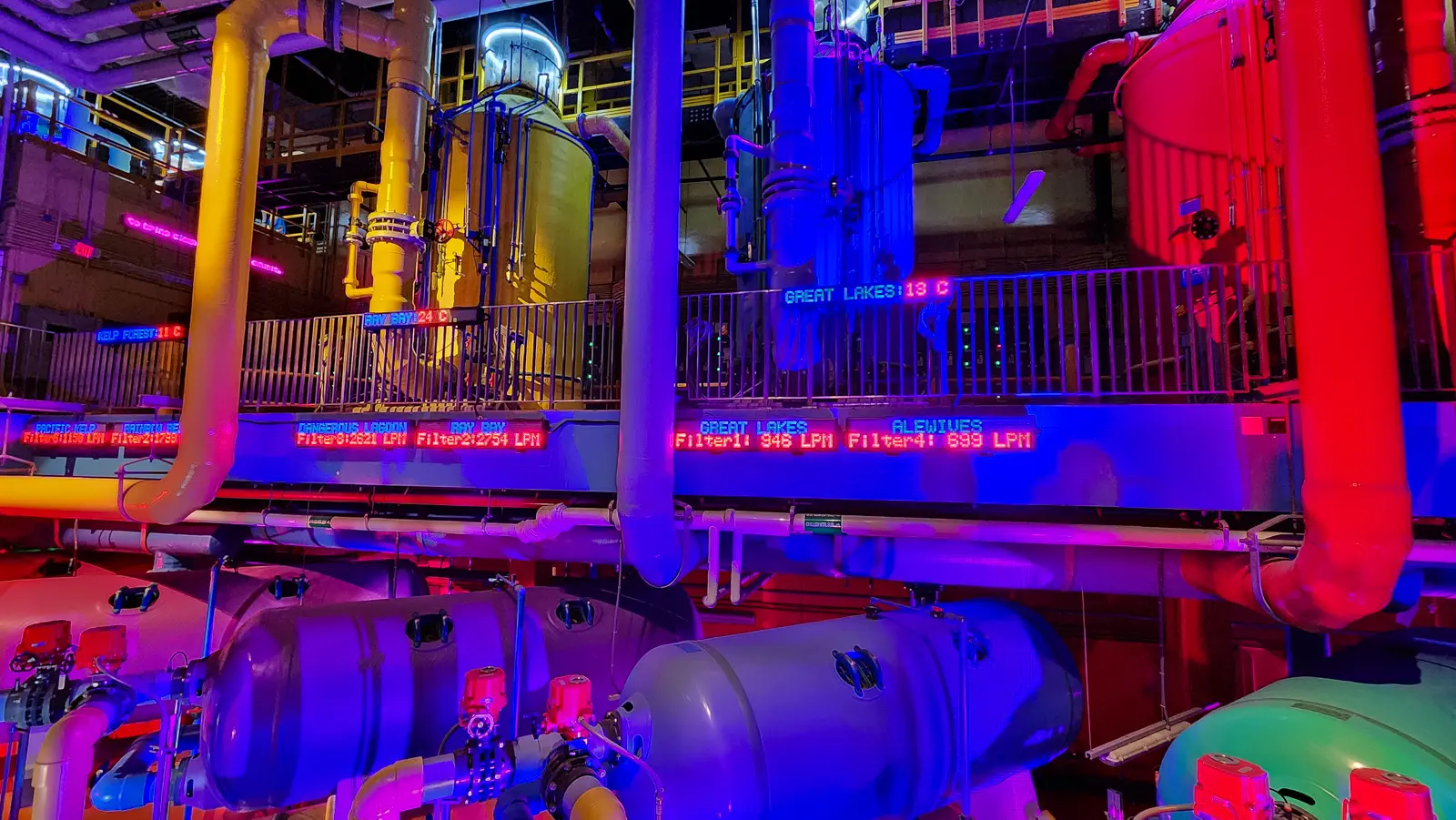
After the tunnel, the Life Support Systems gallery shows what keeps the lagoon running. Ripley’s opened it as a behind-the-scenes look at the systems for its two largest tanks, the Dangerous Lagoon and Ray Bay.
The room is full of coloured pipes, tanks and filters, with live readouts on display. On the day I visited, the Dangerous Lagoon’s Filter 8 was moving 2,621 litres a minute. Water temperatures were posted too: Ray Bay at 24 °C, the Great Lakes tank at 13 °C and the Kelp Forest at 11 °C.
Bubbly Tips
- Step off the walkway to linger. The moving walkway doesn’t cover the whole tunnel floor, so you can walk alongside it and stop where the sharks are.
- See the lagoon from above. The Dangerous Lagoon Overlook gives a view down onto the tank, with the sharks below and the tunnel visible through the water.
- Check the day’s schedule when you arrive. Dive shows and aquarist talks run on a schedule posted at the aquarium. Shark feedings don’t happen every day, so ask if you want to see one.
- Consider an evening visit. Ripley’s has offered a lower-priced ticket for entry after 5 p.m. Check the current hours and prices on the aquarium’s website.
- Look for the overnight programmes. If you want to sleep under the sharks, Ripley’s has run sleepovers in the tunnel.
- Dive it, if you are certified. The Discovery Dive has offered certified scuba divers a guided 30-minute dive in the lagoon. Check whether it is currently running.
- Shoot upward. Some of the best photos are taken looking up towards the surface, with the light coming down through the water.
- Don’t skip the Life Support Systems gallery. It is easy to rush past at the end, and it shows how much engineering keeps the lagoon running.
- Getting there. The aquarium is at 288 Bremner Boulevard, at the base of the CN Tower. Union Station is the nearest subway and train station.
Final Thoughts
The Dangerous Lagoon is built to look frightening, and it works. The sand tigers’ teeth, the sawfish’s saw and the stingrays’ whip-like tails all look like trouble from inside a tunnel. The sand tigers and sawfish are calmer than they look, and several of these species, from the sand tigers to the sawfish and the green sea turtle, are endangered in the wild.
I was scared at times, and I loved it.
Until next time!

🌟 Everything You Need to Plan Your Dream Trip in 2026
- 🌟 Luxury Hotels - Find premium stays with Booking.com & Hotels.com
- 🏡 Vacation Rentals - Discover unique properties on VRBO
- 🏞️ Guided Tours - Explore with Viator or GetYourGuide
- 🎫 Attraction Tickets - Skip the lines with Tiqets
- 🚢 Ocean Cruises - Set sail with Cruise Direct
- 📱 International SIMs - Stay connected with Saily
- 🚗 Car Rentals - Budget-friendly options from Discover Cars
- 🌐 Secure VPNs - Browse safely with NordVPN
- 💶 Currency Exchange - Best rates with Wise
- 🗣️ Learn Languages - Master the local language with Babbel and Rosetta Stone