
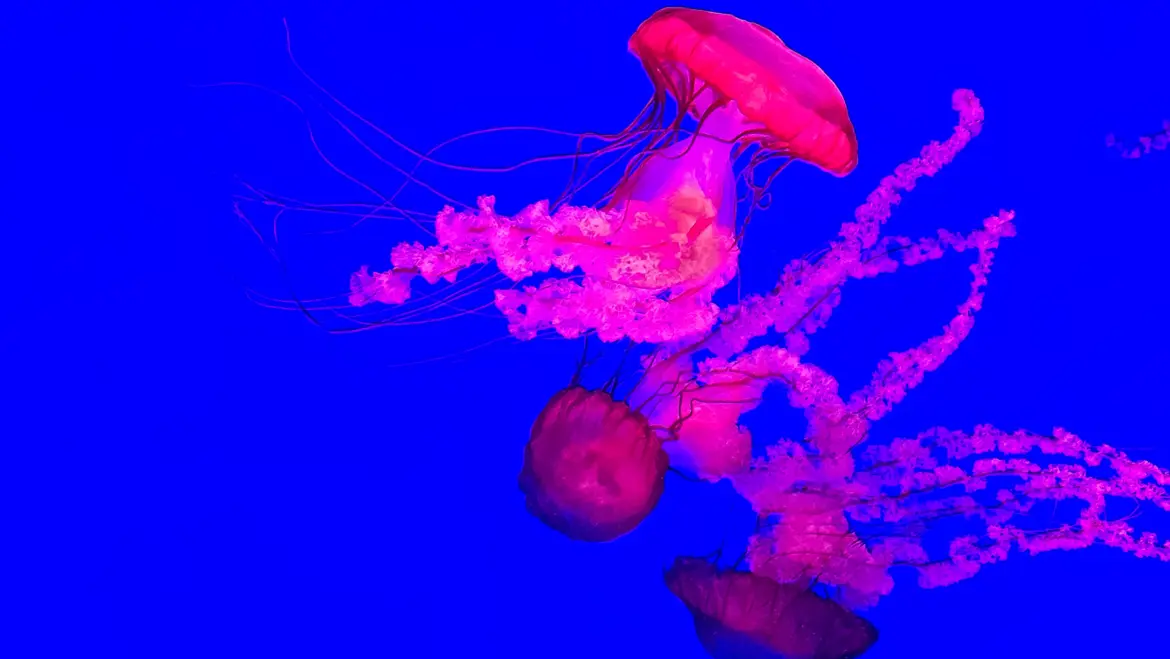
After the Dangerous Lagoon, with its sharks gliding overhead, Planet Jellies is a change of pace. The rooms are dark, the only light comes from the tanks, and the jellyfish drift through it in pink, purple and blue. After the bustle of the tunnel, it is the calmest part of Ripley’s Aquarium in Toronto. Out of this world is the only way I can describe it.
Planet Jellies at a Glance
🪼 What · The calm, dark jellyfish gallery at Ripley’s Aquarium of Canada in Toronto — backlit, colour-cycling tanks after the sharks of the Dangerous Lagoon.
💡 The glow · The colour isn’t the jellies — the tanks are lit from behind with lights that cycle, so the same jelly looks pink one moment and blue the next.
🌀 The tanks · Round, cornerless kreisel tanks (German for “spinning top”) with a slow circular current that holds the jellies up; Ripley’s bills its sea-nettle tank as the world’s largest.
🔬 The science · The green fluorescent protein that won the 2008 Nobel Prize in Chemistry came from a jellyfish.
💡 Tip · Turn off your flash, and wait at a tank for the colour you want before you shoot.
The Light Show
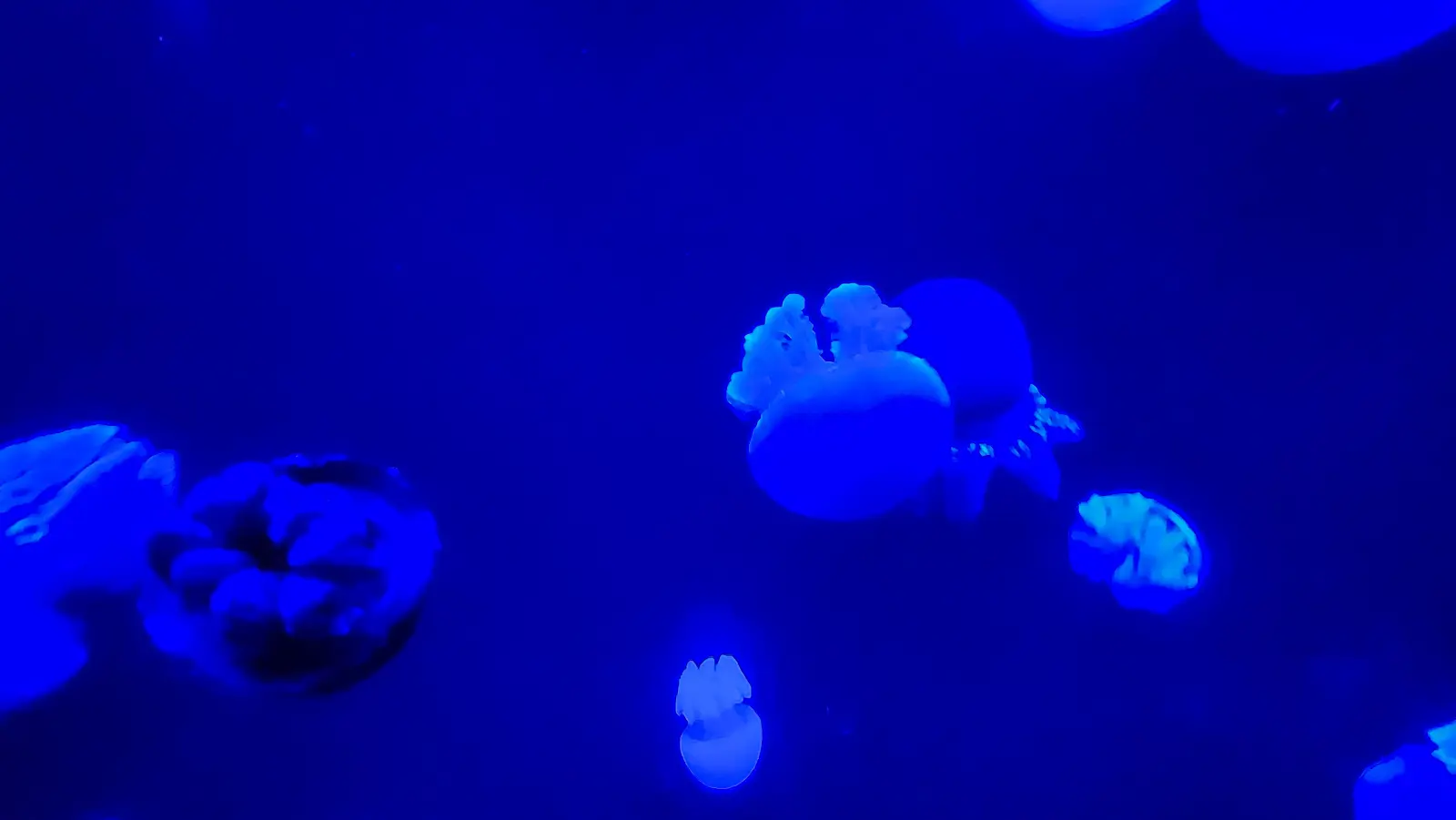
The glow in my photos is not the jellyfish. Planet Jellies is lit from behind, with displays that cycle through different colours, so the same jellies can look pink one moment and blue the next. In a dark room, with the colours shifting and the jellies pulsing through them, it is hard to walk away.
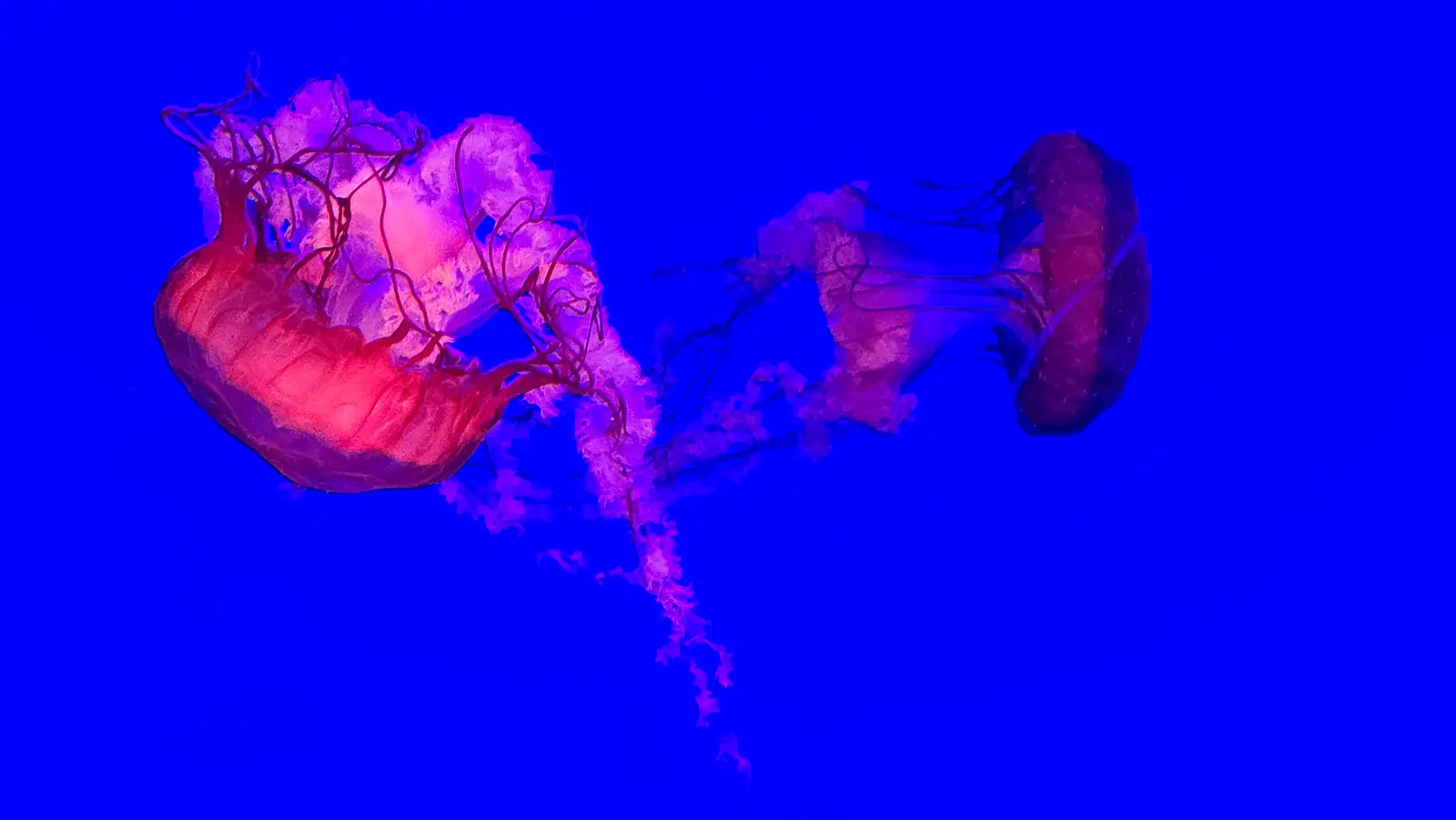
The tanks are shaped for the animals, too. Jellies cannot really swim against a current, so they need water that turns gently in a circle and holds them up. Ripley’s bills its round sea nettle tank as the world’s largest kreisel tank.
Pacific Sea Nettles
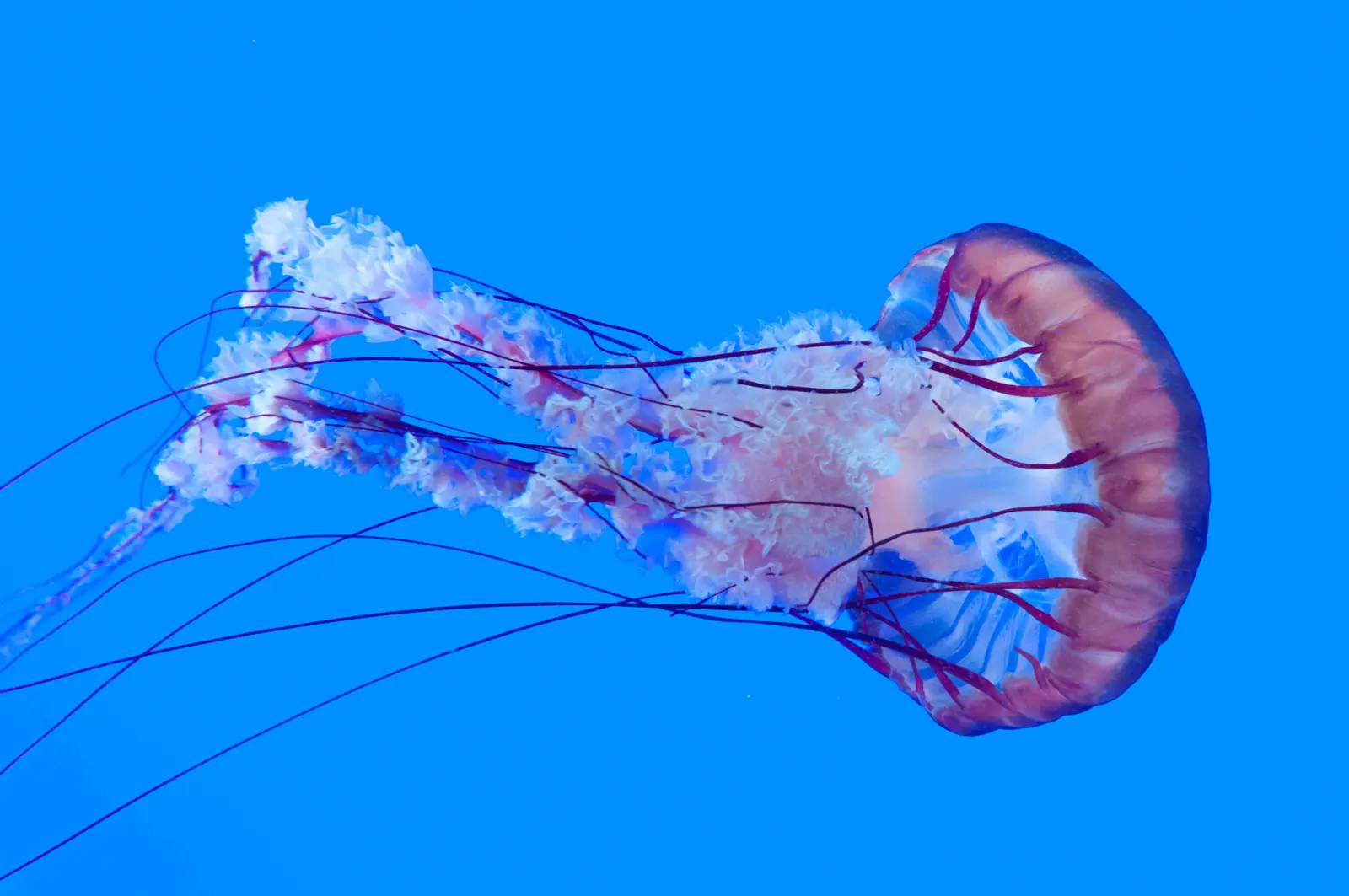
Most of my photos are of the Pacific sea nettles, and it is easy to see why. They have a wide bell, long frilly arms and fine tentacles that trail far behind. In the wild, those tentacles and arms can stretch up to about 4.6 metres behind the bell.

Under ordinary light, a sea nettle is not pink at all. Its bell is golden-brown with a reddish tint, darkest at the edge, and its tentacles are a deep maroon.
Upside-Down Jellies
At first glance, the upside-down jelly tank looks like a garden. The jellies lie on the sandy bottom among the seagrass, bells down and frilly arms pointing up, so they look more like flowers than animals.
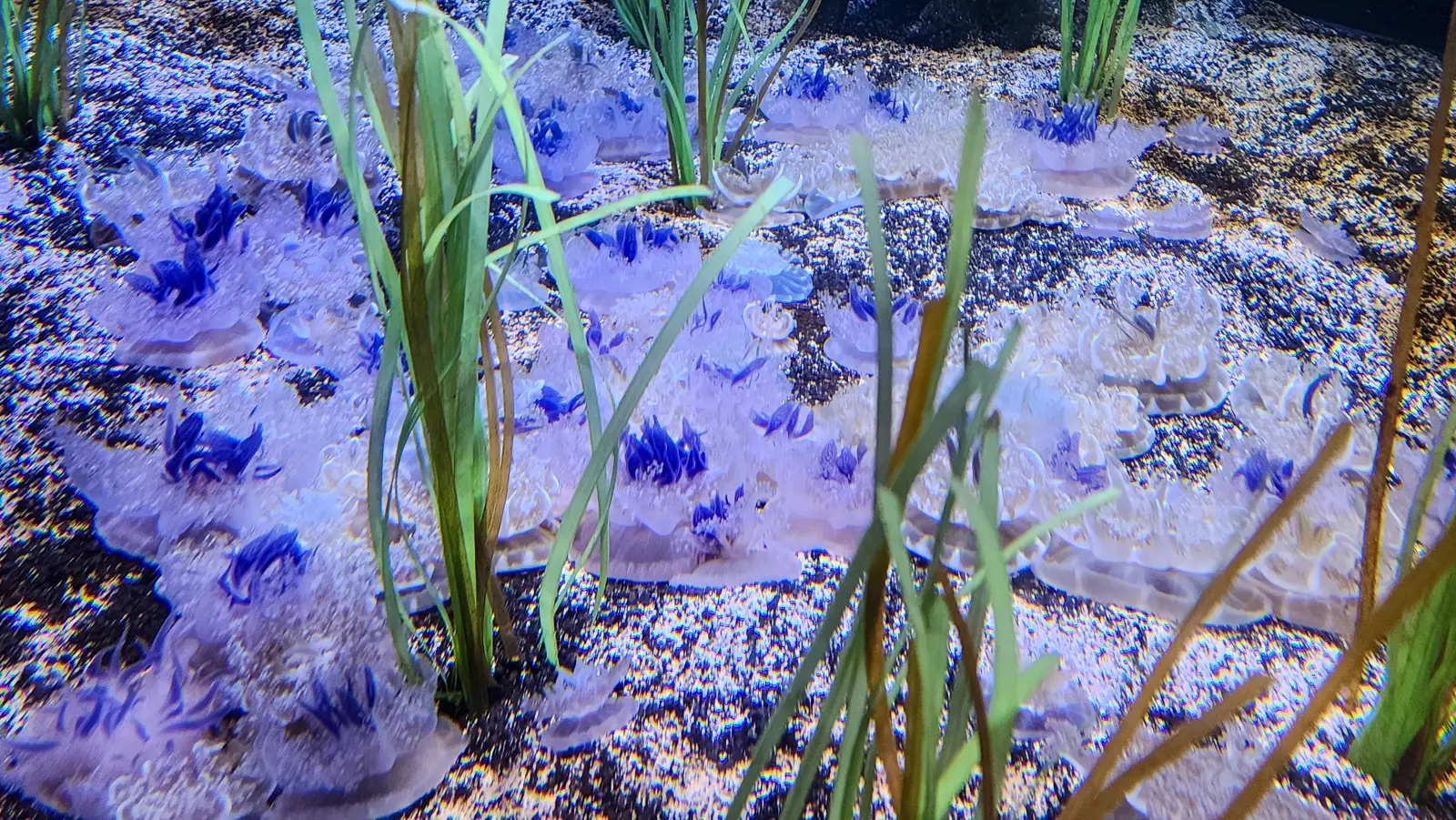
There is a reason for the odd posture. These jellies carry tiny algae inside their tissues, and the algae need sunlight to make food through photosynthesis, which the jelly then shares. Lying upside down in shallow water puts the algae as close to the light as possible.
Spotted Lagoon Jellies
Another tank held spotted lagoon jellies, small round bells with clusters of thick arms on top.
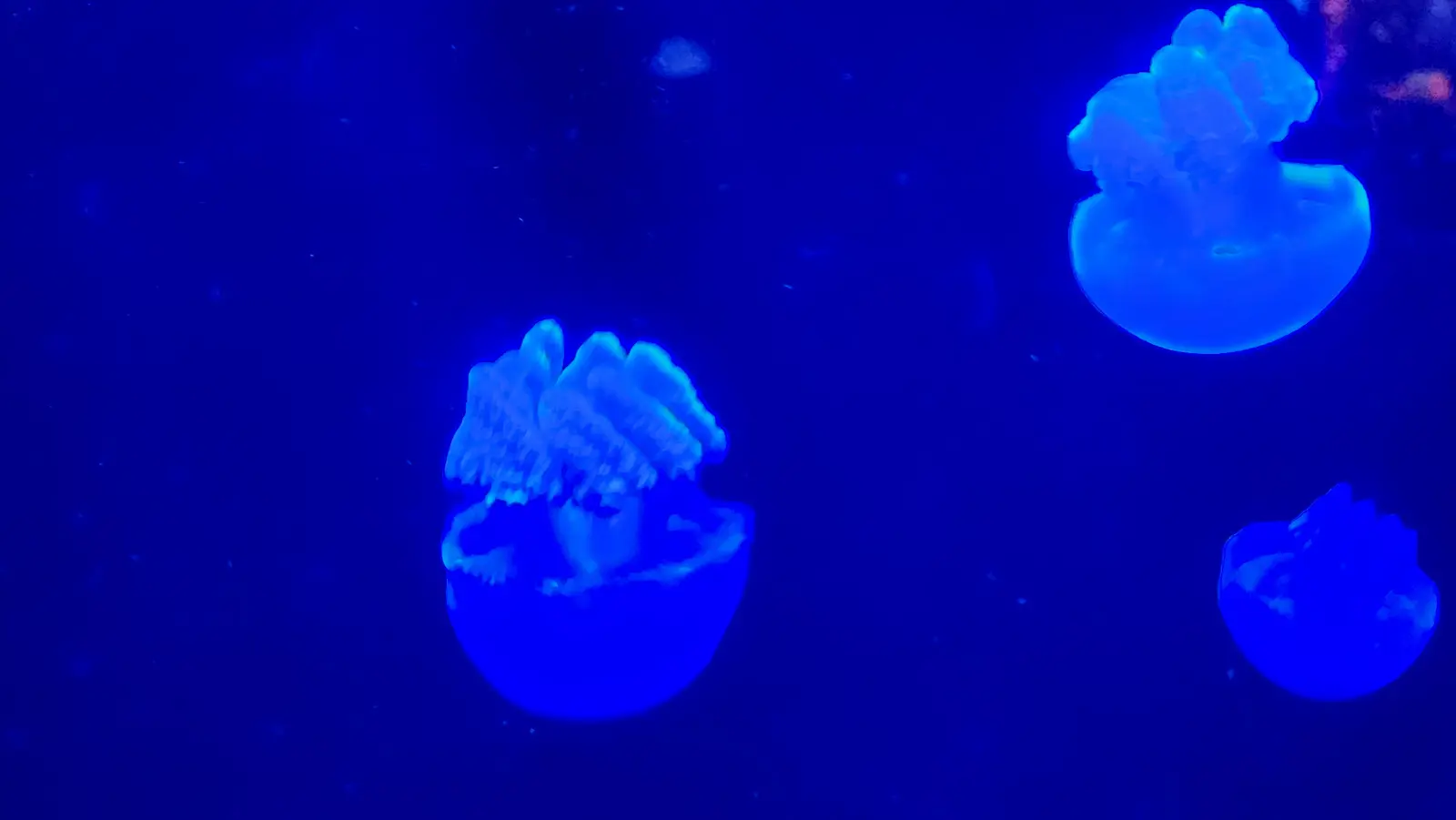
Like the upside-down jellies, they rely on algae living in their tissues for much of their food. Each one has eight oral arms ending in club-like tips, which is what gives them that clustered look.
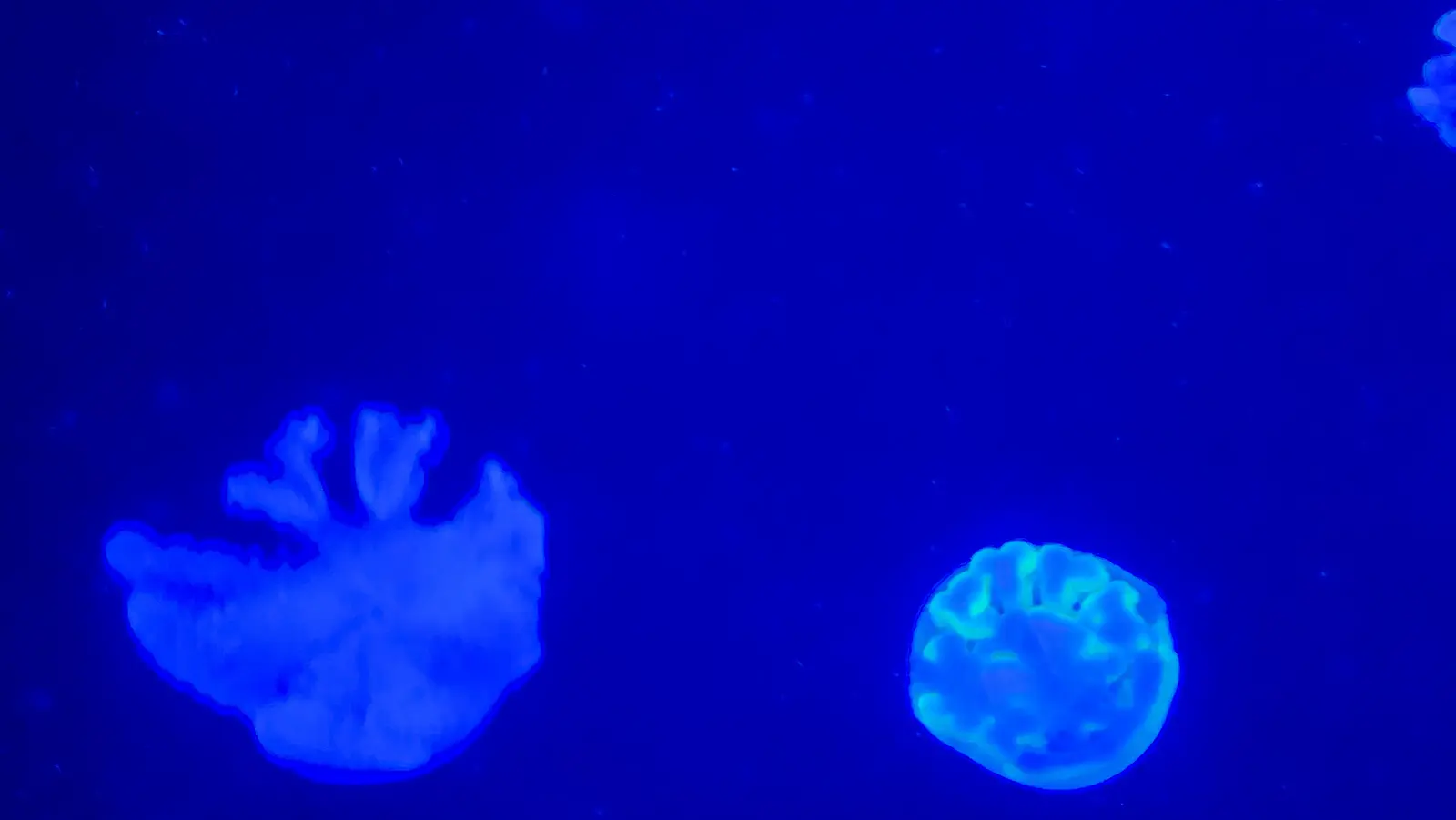
Seen from different angles, they change shape completely. From the side they look like small mushrooms, and from above they look like round, ruffled flowers.
Jellyfish and Medicine
I had heard that jellyfish have medicinal powers. That is not quite true, but the real story is better. In 1962, the Japanese scientist Osamu Shimomura isolated a protein from a jellyfish called Aequorea victoria that glowed bright green under ultraviolet light. Scientists later learned to use this green fluorescent protein as a glowing tag inside cells, which let them watch processes in living tissue that had been invisible before.
The protein became one of the most important tools in modern biology and medical research. In 2008, Shimomura, Martin Chalfie and Roger Tsien shared the Nobel Prize in Chemistry for discovering and developing it.
Delicate Creatures
Jellyfish are about 95 per cent water. They have no brain, no heart and no bones, only a simple network of nerves. That is what makes them so hard to keep, and so easy to damage, and why aquariums use special tanks to hold them. Watching them drift in Planet Jellies, it is easy to see how delicate they are.
No brain does not mean no learning, though. In 2023, researchers from Denmark and Germany trained Caribbean box jellyfish, barely a centimetre long, to avoid grey stripes that imitated the mangrove roots they navigate in the wild. The jellies learned to steer clear in three to six tries, about as quickly as a fruit fly or a mouse. Upside-down jellies, like the ones lying on the sand at Planet Jellies, even have a sleep-like state, something scientists once thought only animals with a central nervous system could have.
Bubbly Tips
- Visit after the Dangerous Lagoon. The calm, dark rooms of Planet Jellies are a good contrast after the sharks.
- Look up. Moon jellies float in a ceiling tank, so don’t forget to look above you.
- Turn off your flash. It bounces off the glass and washes out the colours. The tanks are bright enough on their own.
- Wait for the colour you want. The lights cycle through different colours, so stay at one tank for a few minutes and shoot when the colour suits you.
- Use the plain background. The backlit tanks give you a clean, single-colour background, so frame a single jelly against it for the simplest shot.
- Look closely at the upside-down jelly tank. They lie still on the sand and are easy to mistake for plants.
- Visit in the evening. Ripley’s has offered a lower-priced ticket after 5 p.m. Check current hours and prices on the aquarium’s website.
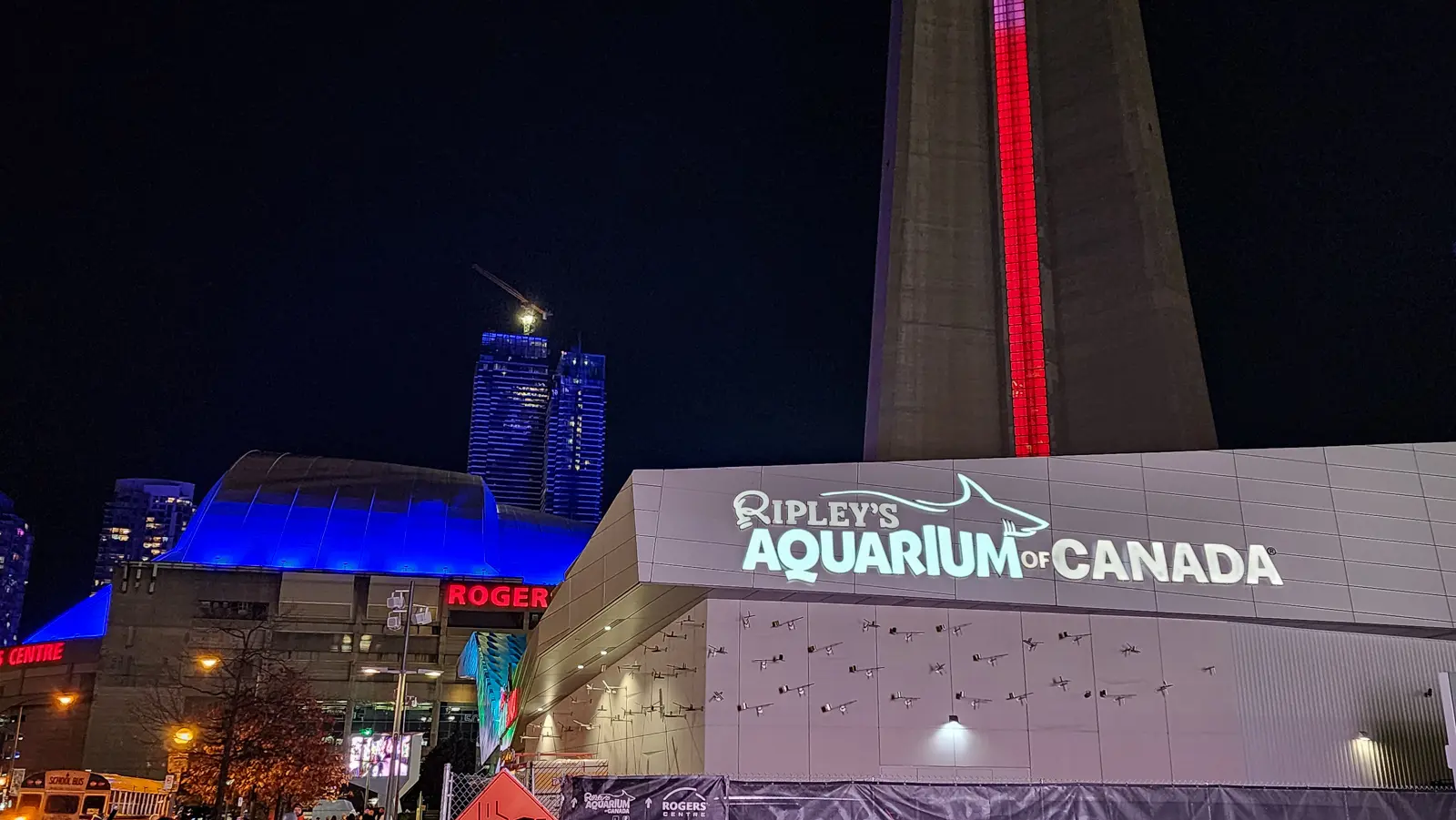
- Getting there. The aquarium is at 288 Bremner Boulevard, at the base of the CN Tower and beside the Rogers Centre. Union Station is the nearest subway and train station.
Final Thoughts
Planet Jellies is out of this world. After the sharks of the Dangerous Lagoon, the dark rooms and glowing tanks slow everything down, and the jellies take over.
They are delicate creatures, almost all water, with no brain and no heart. And yet one of their relatives, a jellyfish drifting off the west coast of North America, ended up changing medical research. Not bad for something so fragile.
Until next time!

🌟 Everything You Need to Plan Your Dream Trip in 2026
- 🌟 Luxury Hotels - Find premium stays with Booking.com & Hotels.com
- 🏡 Vacation Rentals - Discover unique properties on VRBO
- 🏞️ Guided Tours - Explore with Viator or GetYourGuide
- 🎫 Attraction Tickets - Skip the lines with Tiqets
- 🚢 Ocean Cruises - Set sail with Cruise Direct
- 📱 International SIMs - Stay connected with Saily
- 🚗 Car Rentals - Budget-friendly options from Discover Cars
- 🌐 Secure VPNs - Browse safely with NordVPN
- 💶 Currency Exchange - Best rates with Wise
- 🗣️ Learn Languages - Master the local language with Babbel and Rosetta Stone