
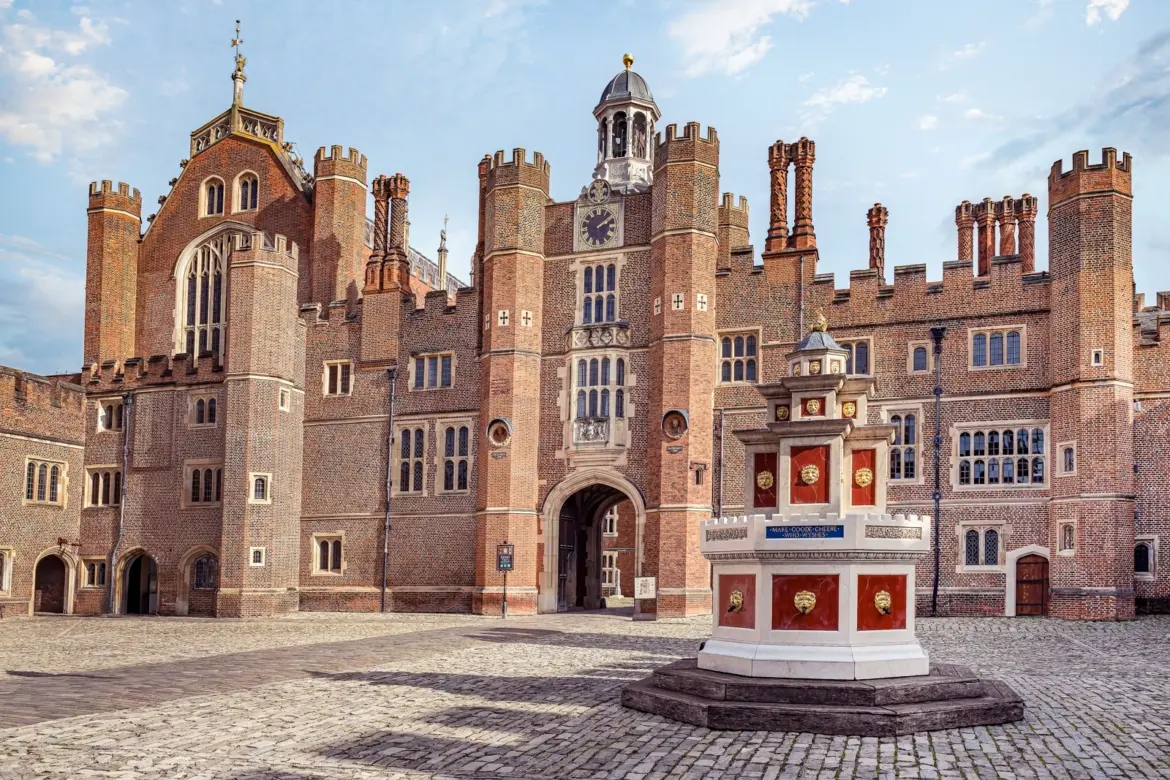
I expected to be charmed. Henry VIII is the king everyone knows, the one from the rhyme, the giant standing square in the famous portrait. I went round the places that carry his name expecting a larger-than-life Tudor showman. I came away loathing him. Not bored by him, not unimpressed. Loathing him.
To be fair to the man, he was a big deal in every sense. He built England a navy, kept a glittering court, wrote music, spoke several languages, jousted and hunted. The trouble is what sat underneath all of it. Six wives. Two of them executed. A whole church torn away from Rome so he could trade one queen for another. Old friends sent to the block the moment they stopped being useful. The more of his rooms I stood in, the less I liked the man who built them.
Here is the trail, roughly in the order his life ran, from the palace where he was born to the chapel where he lies.
Henry VIII at a Glance
👑 The king everyone knows · Henry VIII ruled from 1509 to 1547. Born at Greenwich, he began as a charismatic young athlete and curdled into a paranoid, ailing tyrant by the end.
💍 Six wives · Divorced, beheaded, died, divorced, beheaded, survived. Two queens, Anne Boleyn and Catherine Howard, were beheaded at the Tower of London.
⛪ He broke with Rome · Denied an annulment by the Pope, Henry made himself Supreme Head of the Church of England and dissolved the monasteries. He wanted a divorce, not a new religion, and stayed Catholic in his own beliefs.
🏰 His places · Hampton Court shows his appetite for spectacle, Greenwich was his birthplace, the Tower of London his execution ground, and Hever Castle in Kent was Anne Boleyn’s childhood home.
🤕 The turning point · A jousting fall at Greenwich in 1536 knocked him out for two hours and left a leg wound that never healed. Many historians date his darkest cruelty from here.
⚰️ The quiet end · He died in 1547, obese and in pain, and lies under a plain slab in St George’s Chapel, Windsor, beside Jane Seymour. The towering tomb he planned was never built.
🎟️ Walking the trail · The Tower and Hampton Court are the richest stops. Book online, arrive early, and give the full trail across London and Kent two days rather than one.
Greenwich, where it began
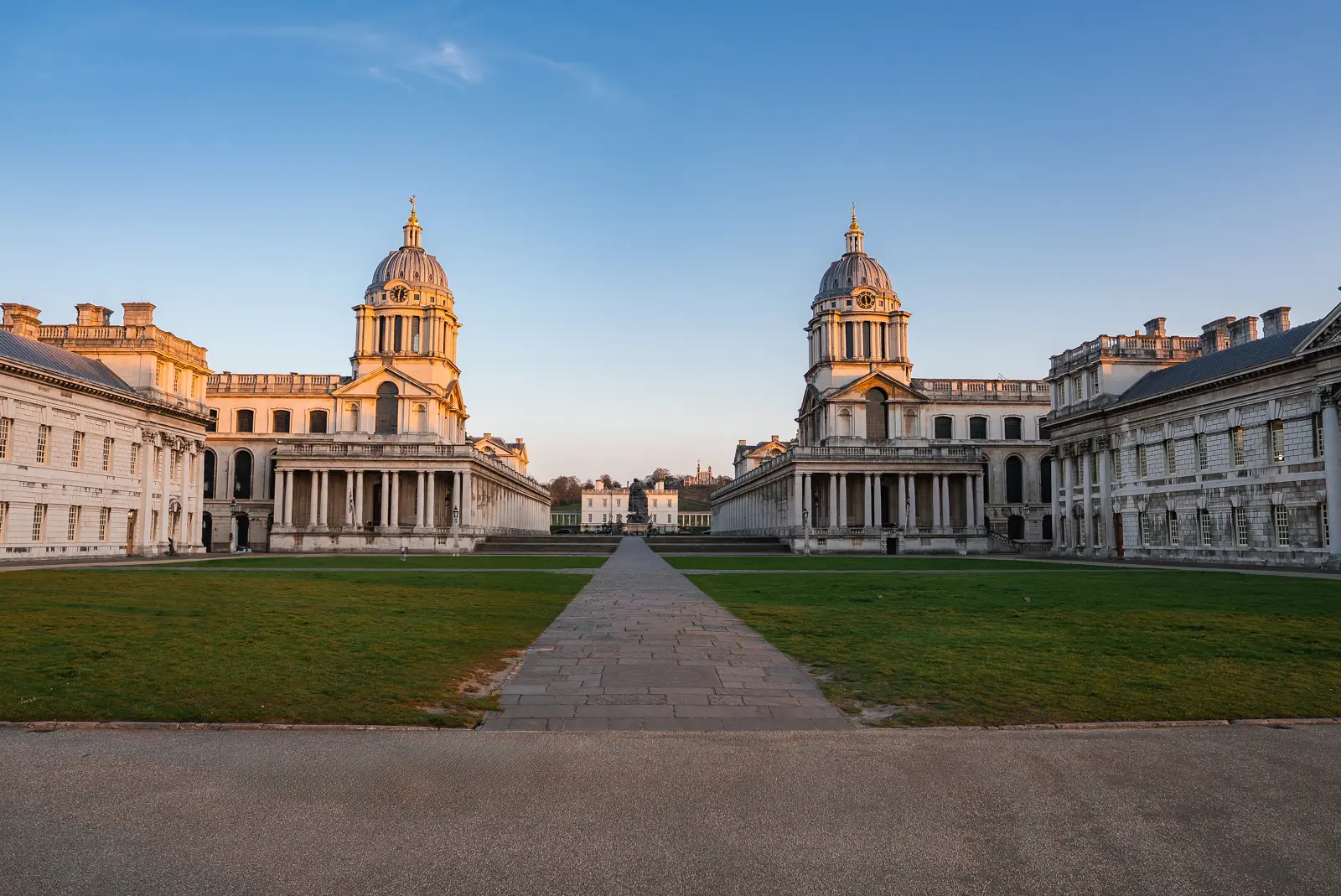
Henry was born by the river at Greenwich, east of London, in 1491. The palace itself is long gone, replaced by grand later buildings, but this was a favourite Tudor home, close to the royal shipyards he loved. Two of his weddings happened here, and both his daughters, the future Mary I and Elizabeth I, were born here.
Greenwich also holds the moment some historians treat as the hinge of the whole reign. In January 1536, jousting here at the age of 44, Henry came off his horse. The horse, also in armour, then fell on top of him, and he lay unconscious for around two hours. He never jousted again. The leg wound from around this time turned into an ulcer that never properly healed, and from here his health, his weight and his temper all turned for the worse.
Hampton Court, power and excess
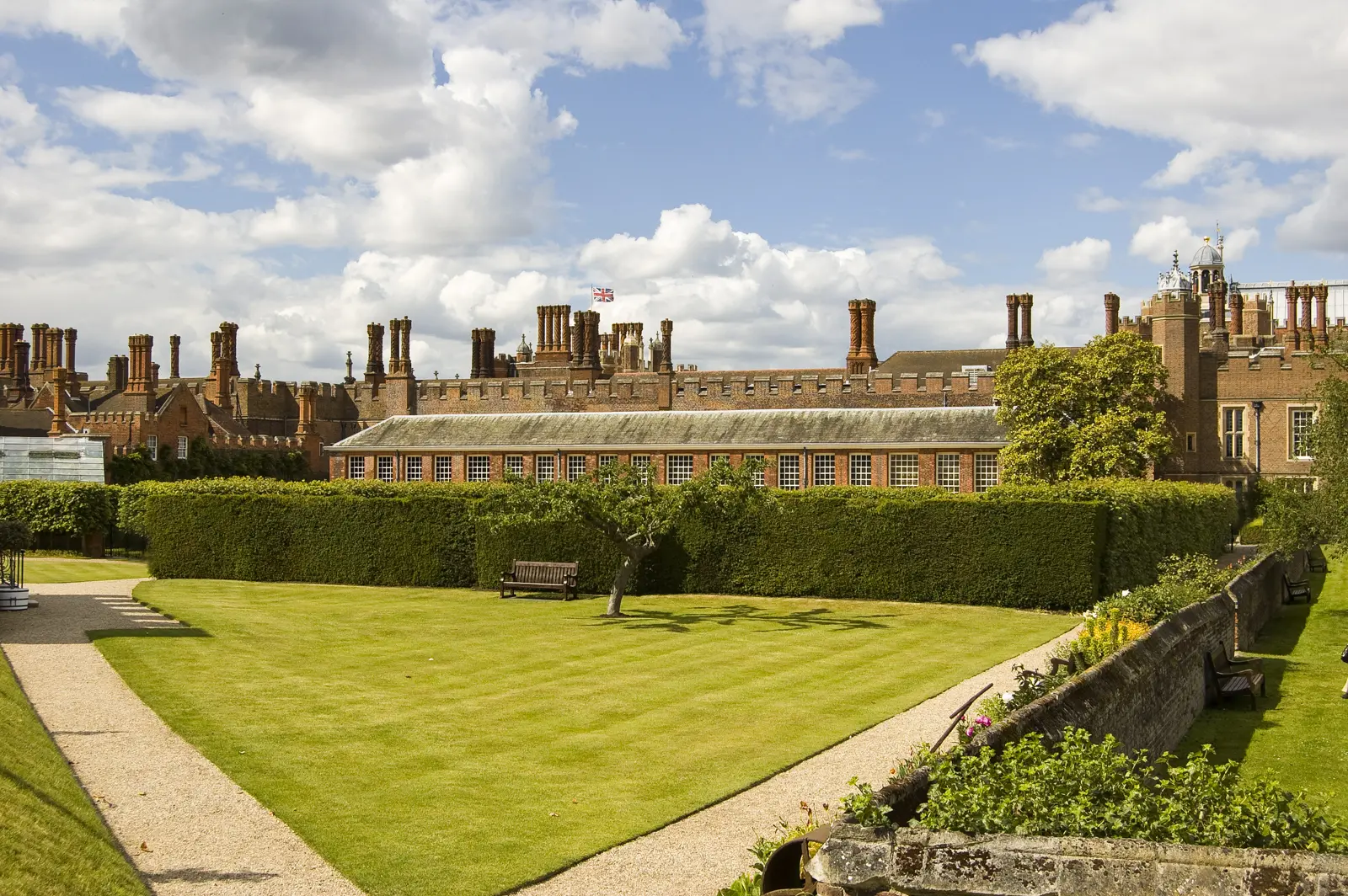
If you want to understand his appetite, go to Hampton Court. He did not even build it. It was Cardinal Thomas Wolsey’s, the most powerful churchman in England, until Wolsey fell from favour and the palace passed to the King. Henry then made it bigger, grander and more obviously his. The Great Hall, the vast Tudor kitchens built to feed a court of many hundreds, the sheer size of the place, all say the same thing. This was a man who wanted everyone to know exactly how much he had.
It is thick with his wives, too. Jane Seymour died here, days after giving him his only legitimate son. And there is the Haunted Gallery, where his fifth wife, Catherine Howard, is said to have been dragged screaming after her arrest, and where her ghost is said to scream still. A story, not a fact. But it tells you how the place remembers him.
Hever Castle, where Anne Boleyn grew up
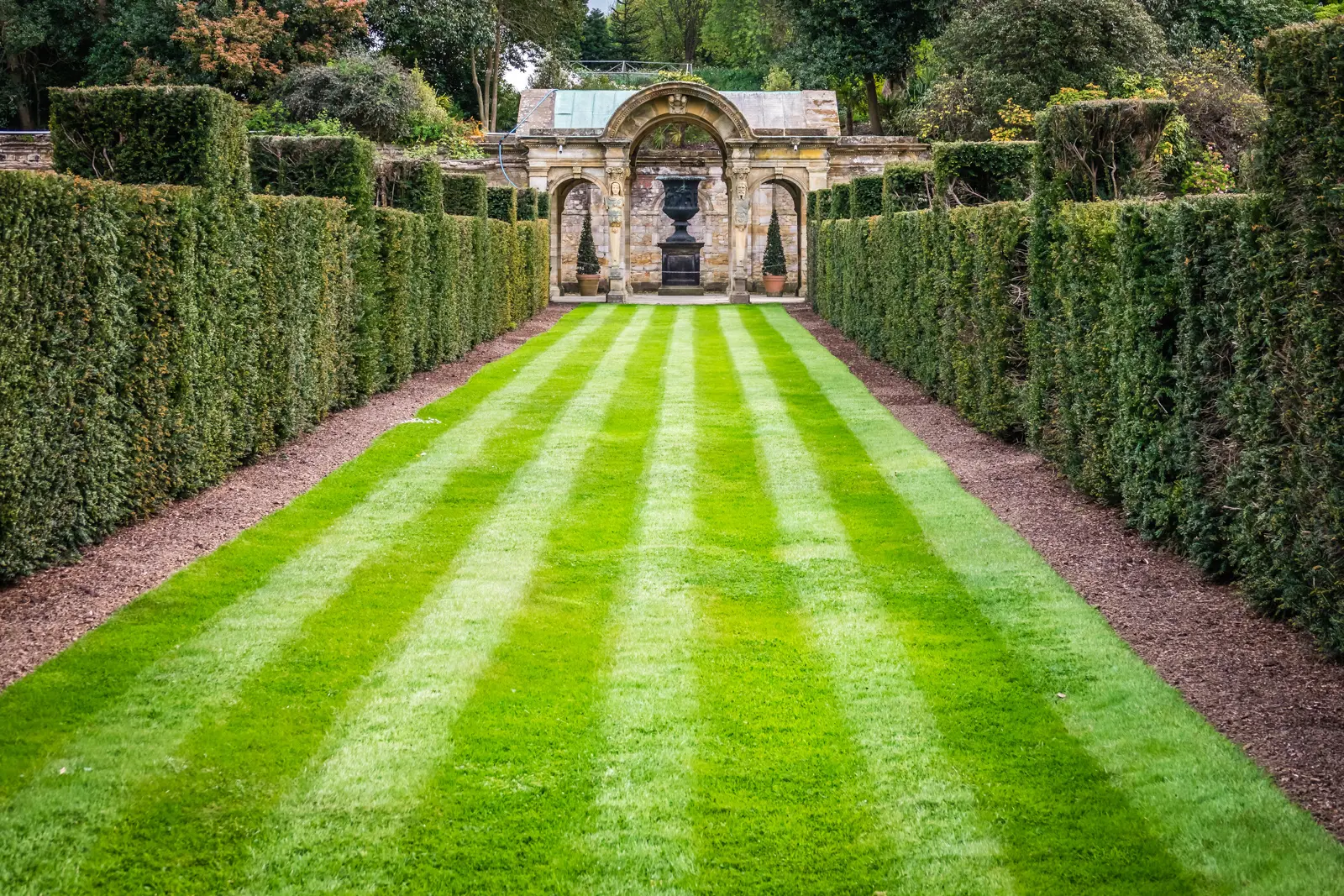
South of the city, in the Kent countryside, sits Hever Castle, the childhood home of Anne Boleyn. This is where the woman who changed England spent her early years. Henry’s pursuit of Anne, and her refusal to be just another passing mistress, is what pushed him to break with Rome and discard his first wife. A small moated castle down a Kent lane is an unlikely place for the spark that split a country from the Pope, but that is where it caught.
The Tower of London, where it ended for two of them
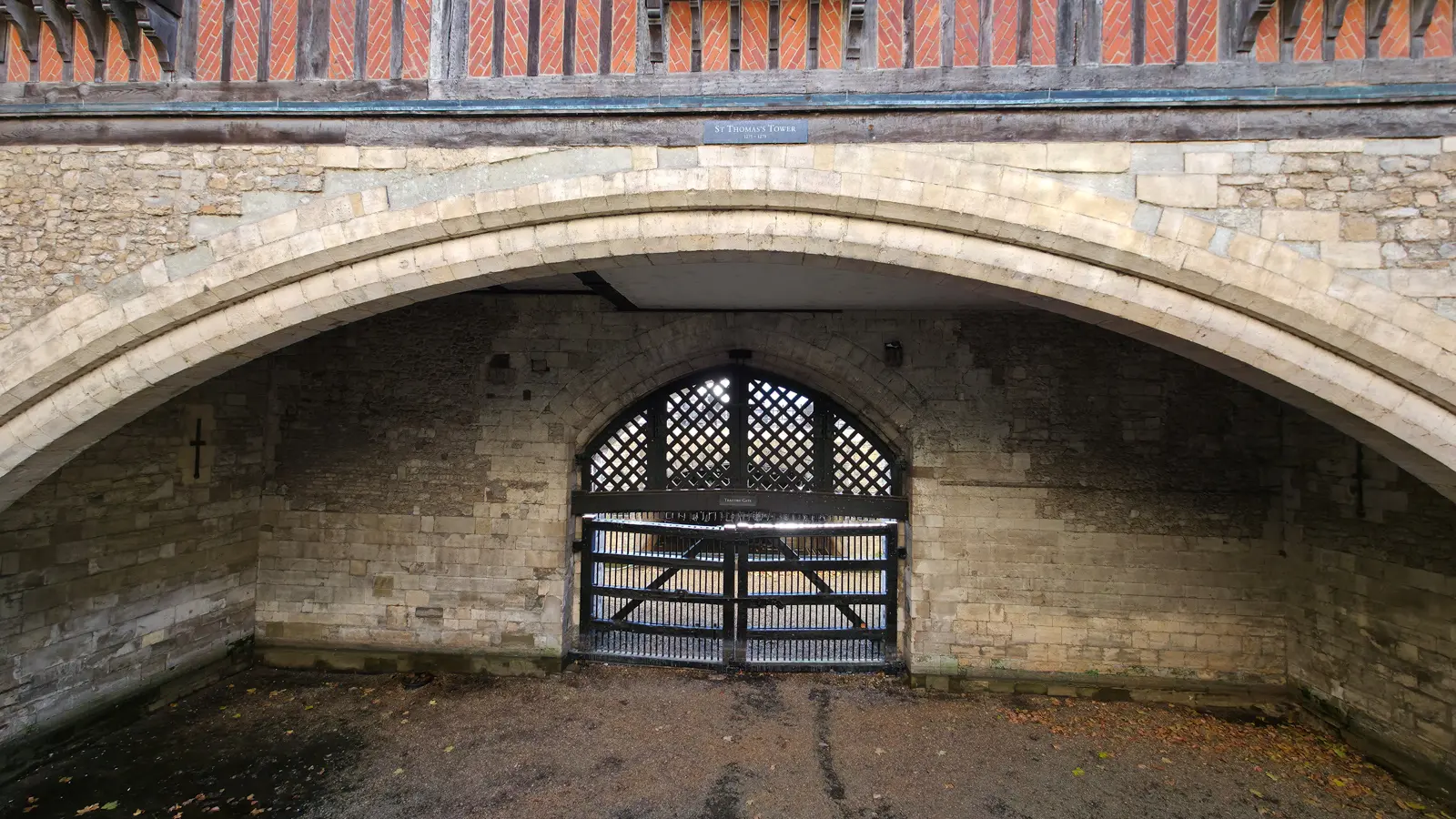
The Tower of London is where the story stops being glamorous. I have stood at Traitors’ Gate, the old water gate where prisoners were brought in by barge from the river, and it is a cold thing to look at. For centuries the condemned passed through here. Two of Henry’s queens, Anne Boleyn and Catherine Howard, were brought to this fortress to die, both beheaded within its walls.
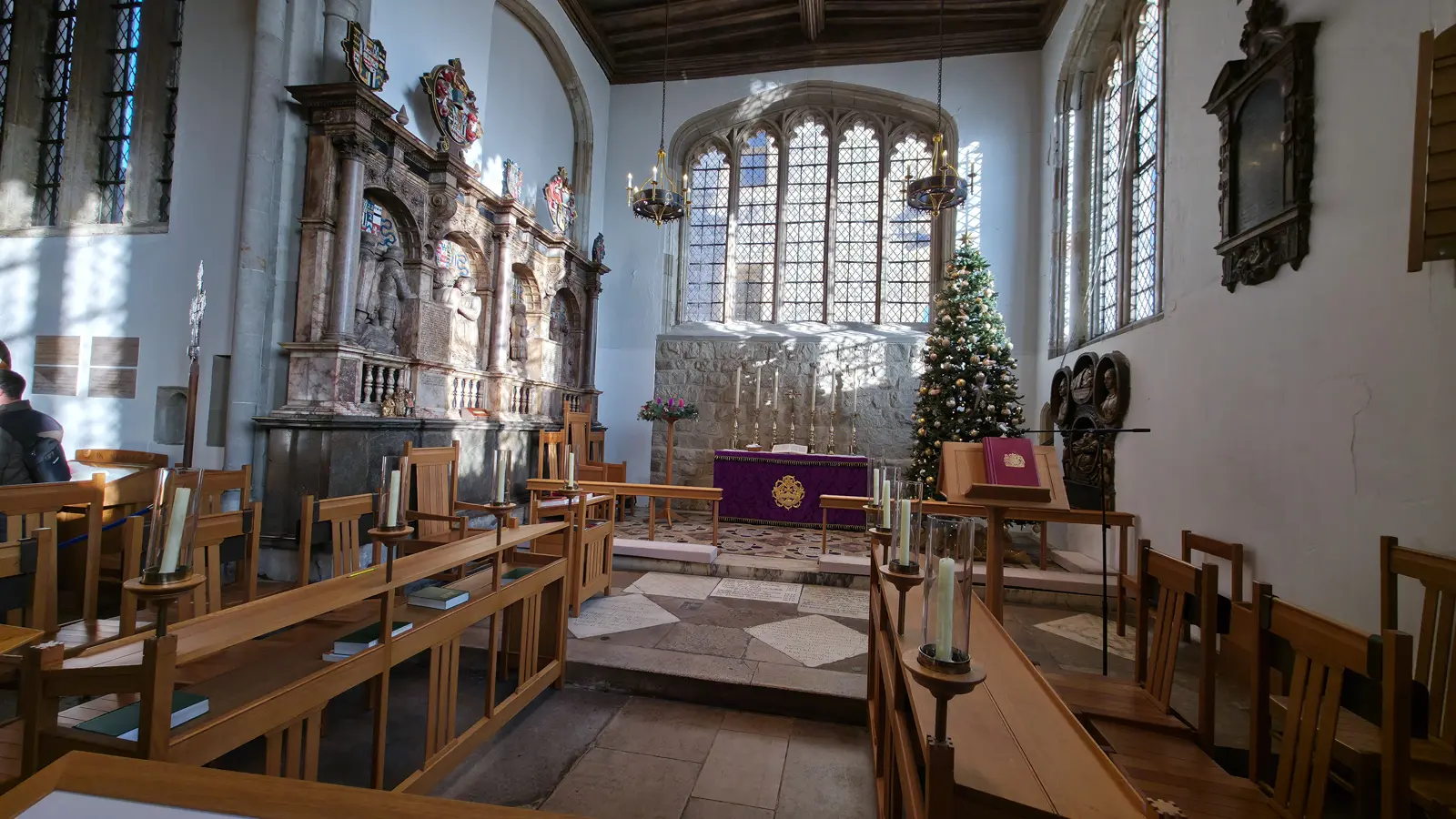
A few steps from where they died is where they still lie. Both Anne Boleyn and Catherine Howard were buried beneath the floor of St Peter ad Vincula, the small chapel beside Tower Green. They are not alone. A third queen rests here too: Lady Jane Grey, Henry’s great-niece, who was queen for just nine days and was executed seven years after Henry’s own death, on the orders of his daughter Mary I. The chapel also holds men Henry himself sent to the block, among them Thomas More and Thomas Cromwell. There is a bleak irony to it. Henry had rebuilt this very chapel earlier in his reign, long before it came to hold two of his own wives.
I went into the chapel and found the spot. Anne Boleyn lies near the altar, under a memorial pavement laid during the Victorian restoration, after her remains were uncovered in the chancel, her name and arms cut into the floor. Standing over that stone, I did not feel awe so much as plain sadness. You do not marry a king expecting him to have you killed. Whatever the charges said, the punishment was monstrous, and I left the little chapel angry on these women’s behalf.
There is one last detail I cannot shake. Every year on the anniversary of Anne’s execution, a bunch of red roses arrives at the Tower, with a card that reads simply “Queen Anne Boleyn 1536”, and a Yeoman Warder carries them in and lays them on her memorial. The order goes back to at least the 1850s and was placed anonymously for more than a century and a half. A former governor of the Tower eventually traced it to descendants of the Boleyn family in Kent, though it has never been openly confirmed. Someone has been quietly remembering her for well over a hundred and fifty years.
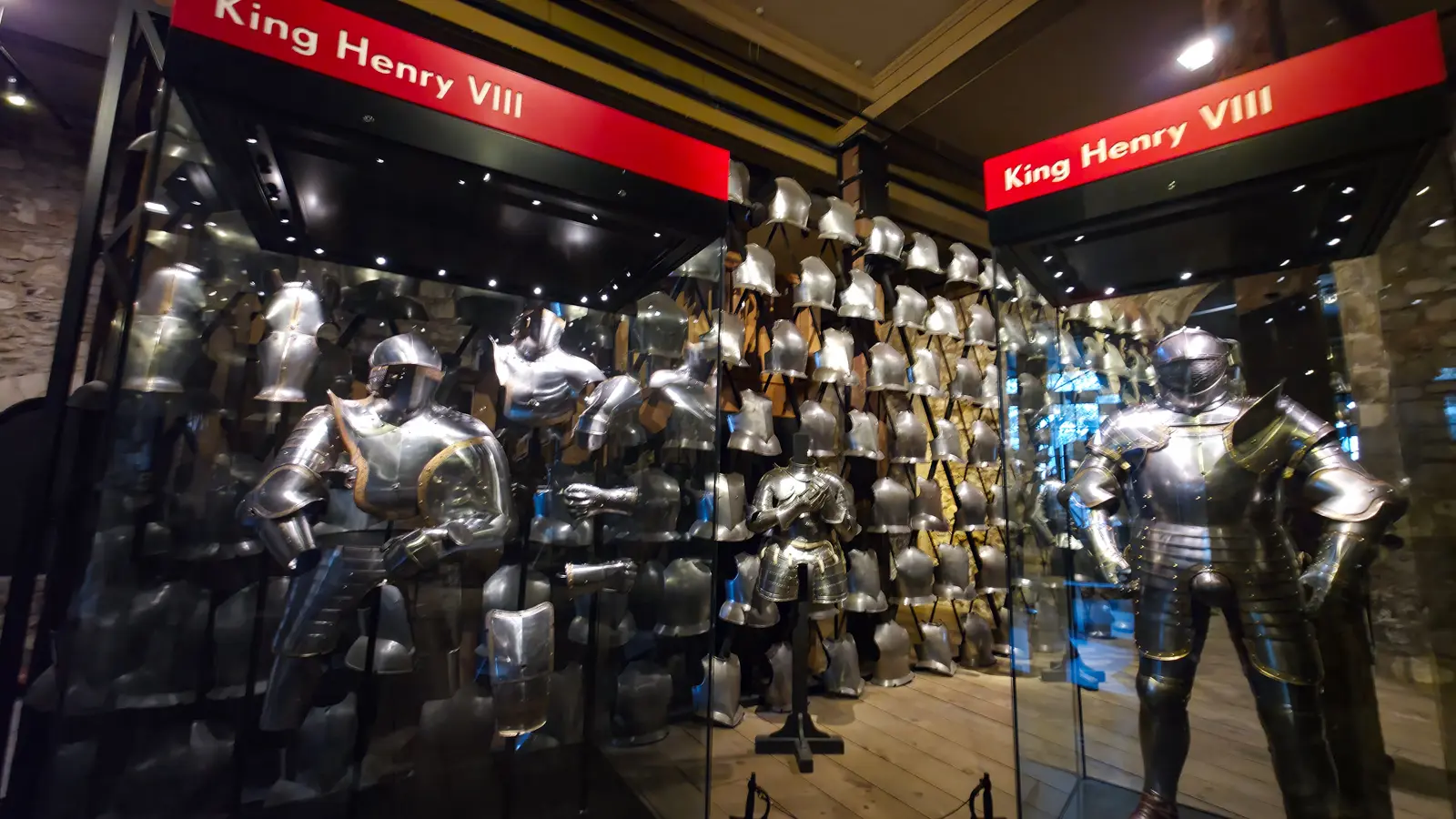
Inside the White Tower is the part that stayed with me longest. The Royal Armouries keep his armour here, in a display called the Line of Kings, and you can read his whole decline in metal. There is the slim, silvered armour made for him as a young man around 1510, when he was tall, athletic and in his mid-twenties. Then there is the later suit from 1540, by which point his waist had swollen past fifty inches. Standing between the two, watching his physiognomy balloon across thirty years, told me more than any portrait could. The golden prince became a vast, sick, frightening old man, and the armour does not let him hide it.
Six wives, and what became of them
The rhyme schoolchildren learn gets the shape right: divorced, beheaded, died, divorced, beheaded, survived. Catherine of Aragon was his wife for over twenty years and was cast aside when she could not give him a living son. Anne Boleyn, the great love he upended a country for, was beheaded on charges of adultery that most historians now believe were invented. Jane Seymour gave him his son and died days later, the only wife he chose to lie beside. Anne of Cleves was married for an alliance and set aside within months, but was clever enough to accept it and outlive him in comfort. Catherine Howard, young enough to be his daughter, was beheaded for adultery. Catherine Parr nursed him at the end and survived him.
The church he broke
All of it turned on one thing he could not get: a son. His first wife gave him a daughter, Mary, but no surviving boy, and Henry was certain a queen could not hold England together. When the Pope refused to annul that marriage so he could wed Anne Boleyn, Henry took the Church into his own hands. He broke from Rome, declared himself Supreme Head of the Church of England, and dissolved the monasteries, seizing their land and wealth as he went.
It is worth being precise here, because it is often got wrong. He did not turn Protestant. In his own beliefs he stayed close to Catholic to the end. What he wanted was not a new religion but a divorce, and a Pope who would not grant one. The English Reformation that followed went far beyond anything he set out to do. It began as one man’s determination to swap one wife for another.
Windsor, the quiet end
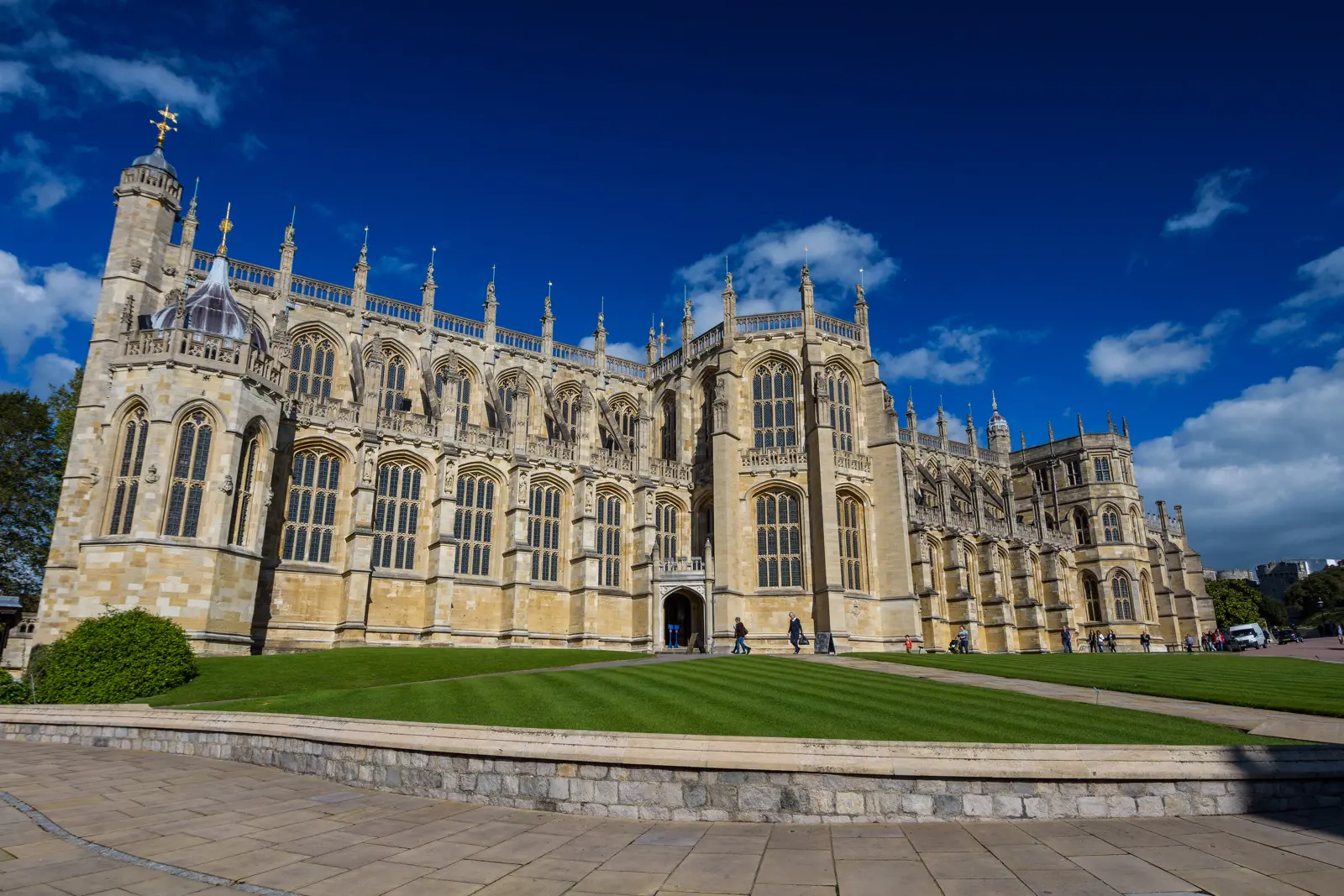
He died in 1547, obese and ailing, the wound in his leg long since turned septic. He lies at Windsor Castle, in a vault beneath the floor of St George’s Chapel, beside Jane Seymour.
This is the part that caught me off guard. I had walked round his enormous palaces, his armour and his execution sites, and then I came to a plain stone slab set into the chapel floor. That is it. The most feared king in English history, under a simple ledger stone you could step over without noticing. He had planned a towering marble and bronze tomb. It was never finished. I felt a pang standing there. Not for him, exactly, but at how small even the largest life ends up.
So what do I make of him?
I kept asking the same questions you probably would. Why could one wife never be enough? The honest answer is partly the heir. He believed everything rested on producing a son, and that fear drove him from marriage to marriage. But fear explains it without excusing it, and it does not begin to explain the cruelty. Catherine of Aragon was treated shamefully for years before any jousting fall. Two young women lost their heads. Loyal men who had built his power were destroyed the moment they became inconvenient.
What does seem true is that he got worse with age. Many historians, including the curators who run his own palaces, tie the change to that fall at Greenwich in 1536, after which a generous young prince curdled into a paranoid and vicious one, and the wives began to fall faster. Others push back, and fairly, pointing out that he was capable of great cruelty long before he ever hit the ground. The truth is likely somewhere between. A vain, controlling man, in constant pain, piling on weight, surrounded by people too frightened to tell him no, making bigger decisions on a shorter and shorter fuse.
I will not pretend to diagnose a man dead five hundred years. I will only say that I went looking for a great king and found someone I would not have wanted to share a room with.
Bubbly Tips
- Start with the Tower and Hampton Court. If you only have time for two, these are the richest. The Tower for the executions and the armour, Hampton Court for the sheer scale of his world.
- Arrive at the Tower early and book online. It is one of London’s busiest sites. First entry of the day beats the crowds to both the Crown Jewels and the armour.
- Seek out the Line of Kings in the White Tower. Henry’s armour is the thing to find. Stand the young suit next to the later one and you see thirty years of decline in a single glance.
- Go to Hampton Court by river if you can. Boats run up the Thames from Westminster in the warmer months. It is slow, but it is how the court itself once arrived.
- Treat Hever as a Kent day out, not a London afternoon. It is well outside the city, around an hour and a half by car, so pair the castle with its gardens and give it the day.
- At Windsor, look down. His grave is a slab in the floor of St George’s Chapel and easy to walk straight past. It is marked, but it is plain.
- Wear proper shoes everywhere. Tudor floors, cobbles, spiral stairs and a lot of standing. None of these sites are gentle on the feet.
- Give the trail two days, not one. The sites are spread across London, the Thames and Kent. A single day forces you to choose. Two lets you actually take it in.
Final Thoughts
What stays with me is not a palace or a painting. It is two things side by side. The slim silver armour of a golden young king, and a plain stone in a chapel floor. Everything Henry did, the wives, the church, the executions, the endless spending, sits in the gap between those two images.
I came for the most famous king England ever produced. I left rather glad I never had to meet him. Go and walk his rooms yourself, and make up your own mind.
Until next time!

🌟 Everything You Need to Plan Your Dream Trip in 2026
- 🌟 Luxury Hotels - Find premium stays with Booking.com & Hotels.com
- 🏡 Vacation Rentals - Discover unique properties on VRBO
- 🏞️ Guided Tours - Explore with Viator or GetYourGuide
- 🎫 Attraction Tickets - Skip the lines with Tiqets
- 🚢 Ocean Cruises - Set sail with Cruise Direct
- 📱 International SIMs - Stay connected with Saily
- 🚗 Car Rentals - Budget-friendly options from Discover Cars
- 🌐 Secure VPNs - Browse safely with NordVPN
- 💶 Currency Exchange - Best rates with Wise
- 🗣️ Learn Languages - Master the local language with Babbel and Rosetta Stone