
I had done the Louvre the day before.
That is worth stating plainly, because it explains the difference. At the Louvre I walked in knowing almost nothing and handed my afternoon to a guide. Twenty-four hours later I walked into the Orsay knowing exactly what I wanted and where it was.
I am an Impressionist devotee. I had read about these painters for years. If there is a single building on earth that works as the hub for that movement, this is it, and for once a museum gave me precisely what I had come for rather than something better and unexpected.
The Musée d’Orsay at a Glance
🚉 What it is · The world’s great Impressionist and Post-Impressionist collection, in a former 1900 railway station on the Left Bank of the Seine.
🖼️ The headliners · Monet (poppies, haystacks, the Thames in fog), Renoir’s Bal du moulin de la Galette, Van Gogh’s Starry Night Over the Rhône, Degas’s Little Dancer.
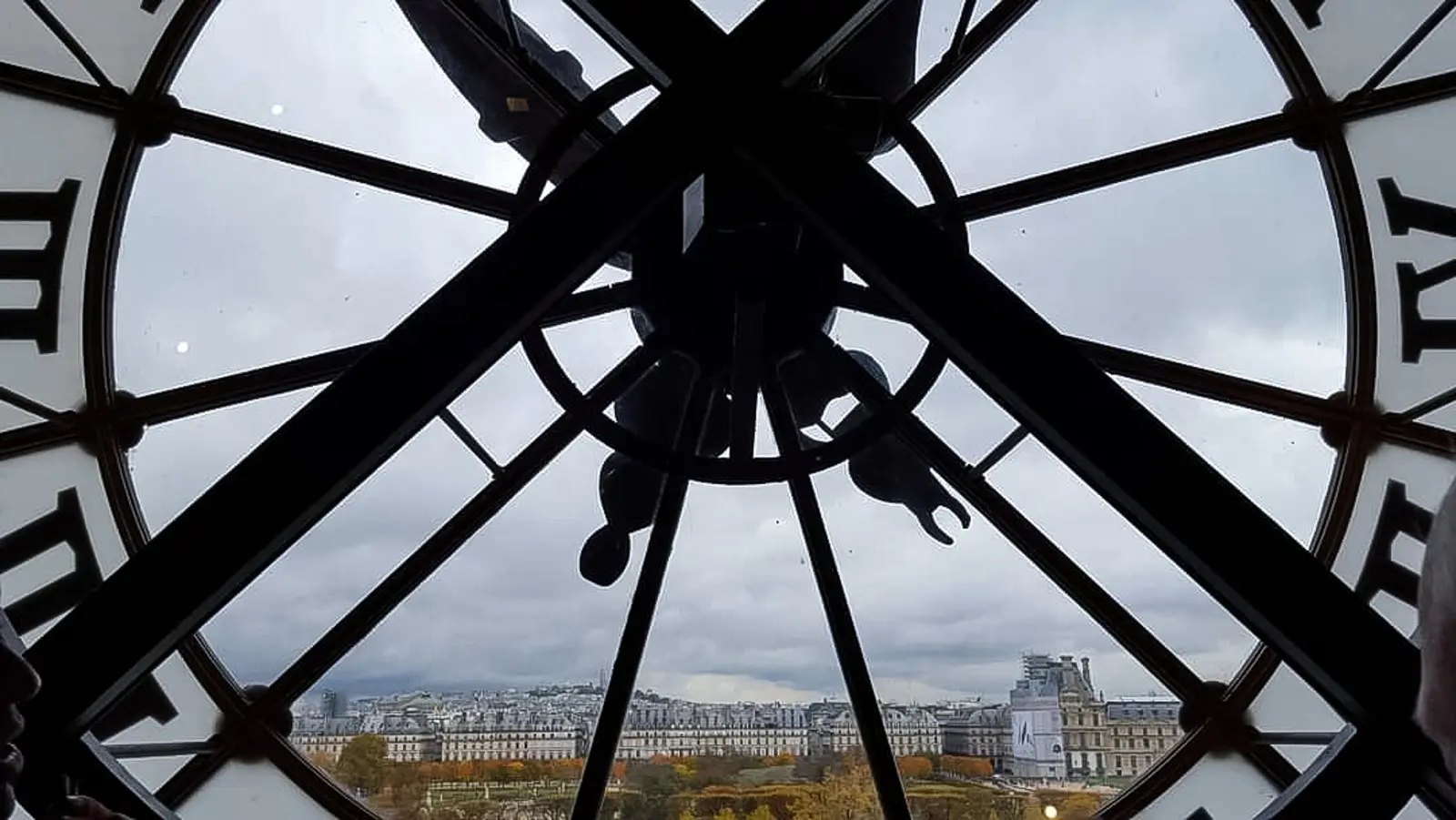
🕐 The clock · An upstairs window set into a giant station clock face looks out over the Seine to the Louvre. Grey weather suits it.
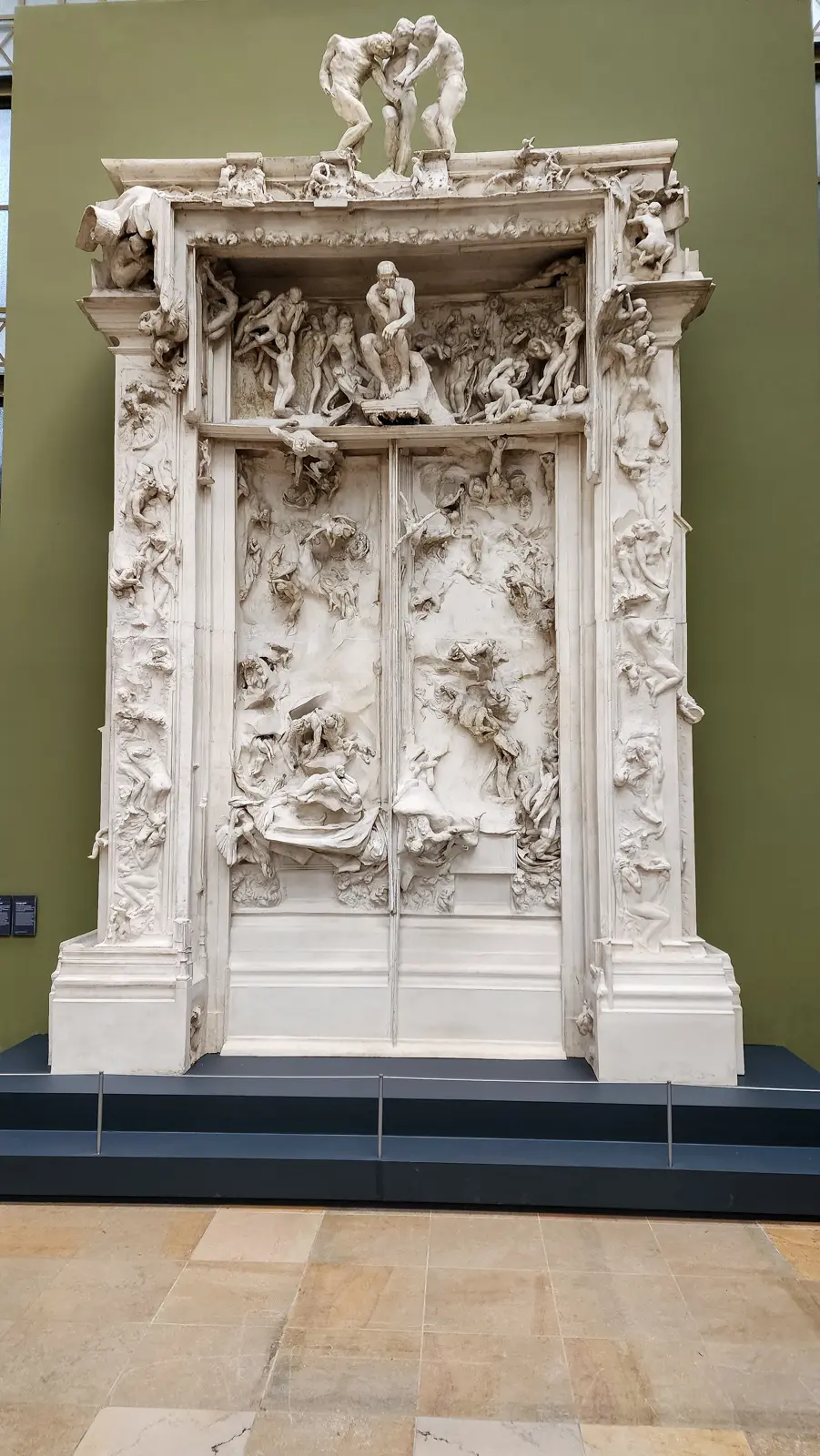
🗿 Don’t skip downstairs · Carpeaux, Pompon’s white bear, Claudel’s Mature Age, and Rodin’s original plaster Gates of Hell — the model every bronze in the world was cast from.
💡 Tip · The water lilies are at the Orangerie, not here. Pair the Orsay with one other big museum a day, not two.
It used to be a station
The building is the first thing in the collection.
Seen from the far bank it still reads as one long civic block on the river, with two clock faces set into the stone and the Seine running past the foot of it.
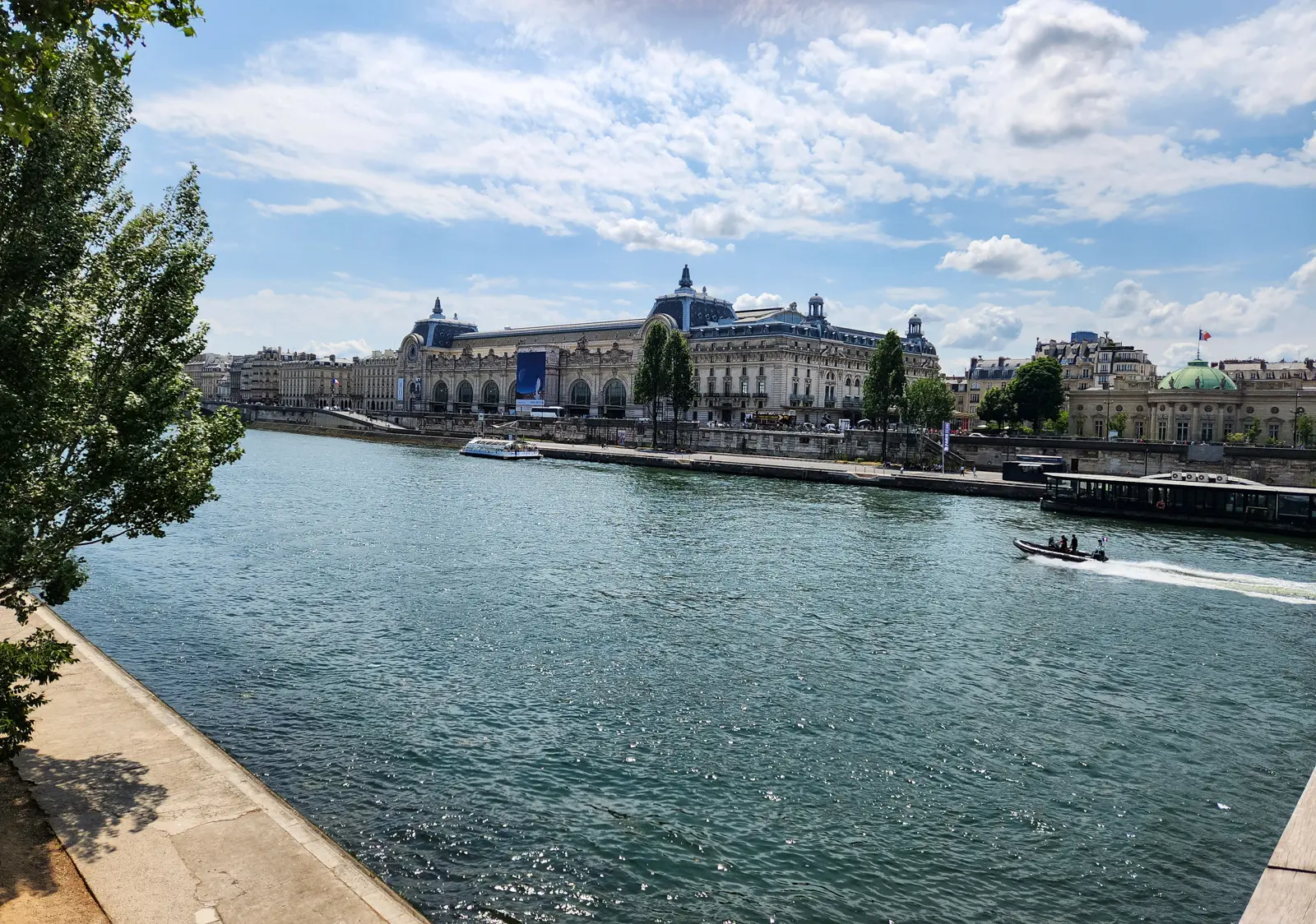
Victor Laloux was chosen in 1898 to design a railway terminus and a luxury hotel on the Left Bank, opposite the Louvre and beside the Legion of Honour. The neighbours set the problem: this had to be a station that would not embarrass a palace. So he wrapped a modern metal train shed in an eclectic stone facade. Station and hotel went up in two years and opened together on 14 July 1900, timed for the Exposition Universelle.
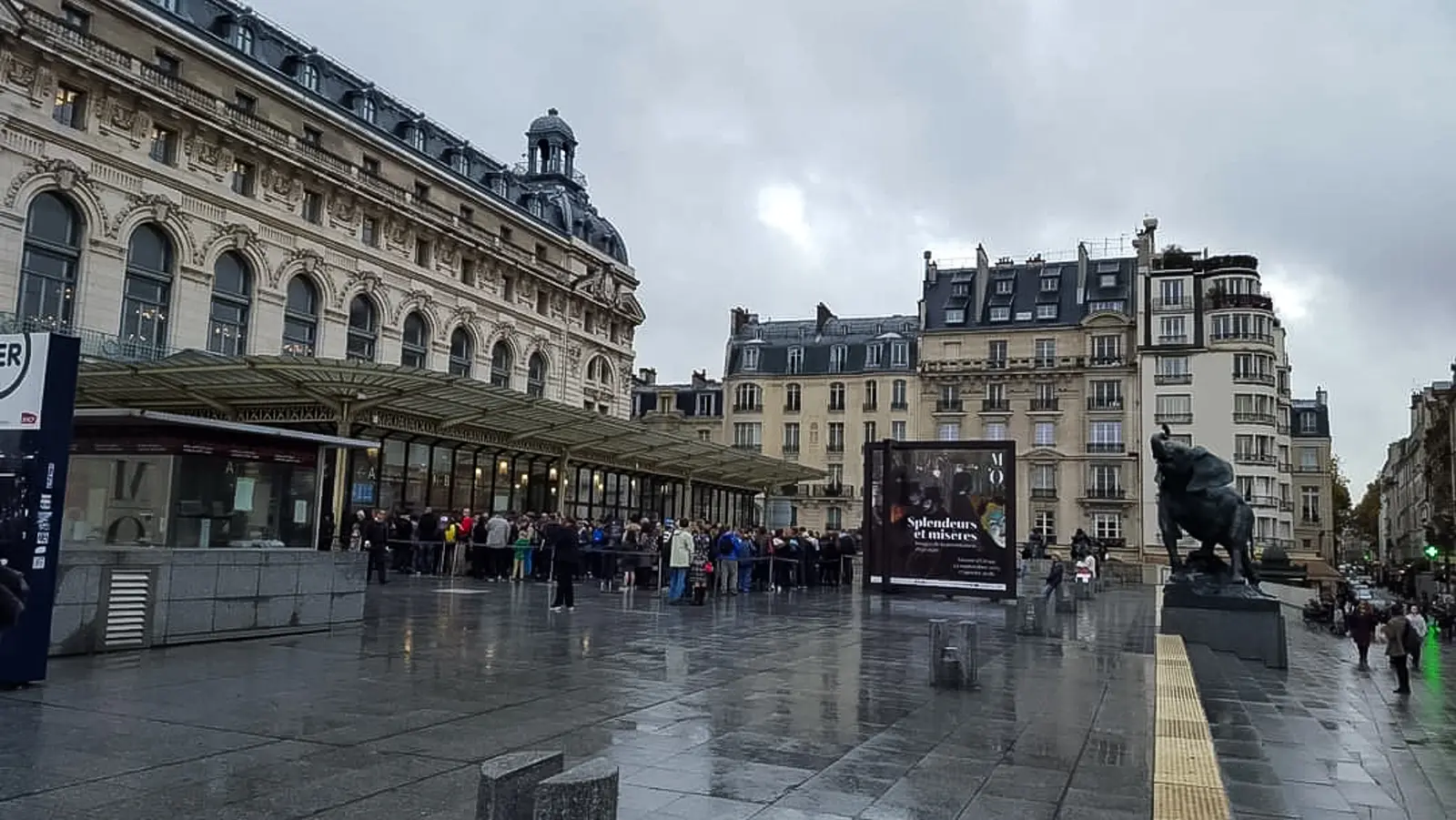
Then the trains outgrew it. By 1939 the platforms were too short for the longer mainline services and the station closed to long-distance traffic. The hotel held on until 1973. What saved the building from demolition was a government decision in the late 1970s to make it a museum, and it opened in that second life in December 1986.
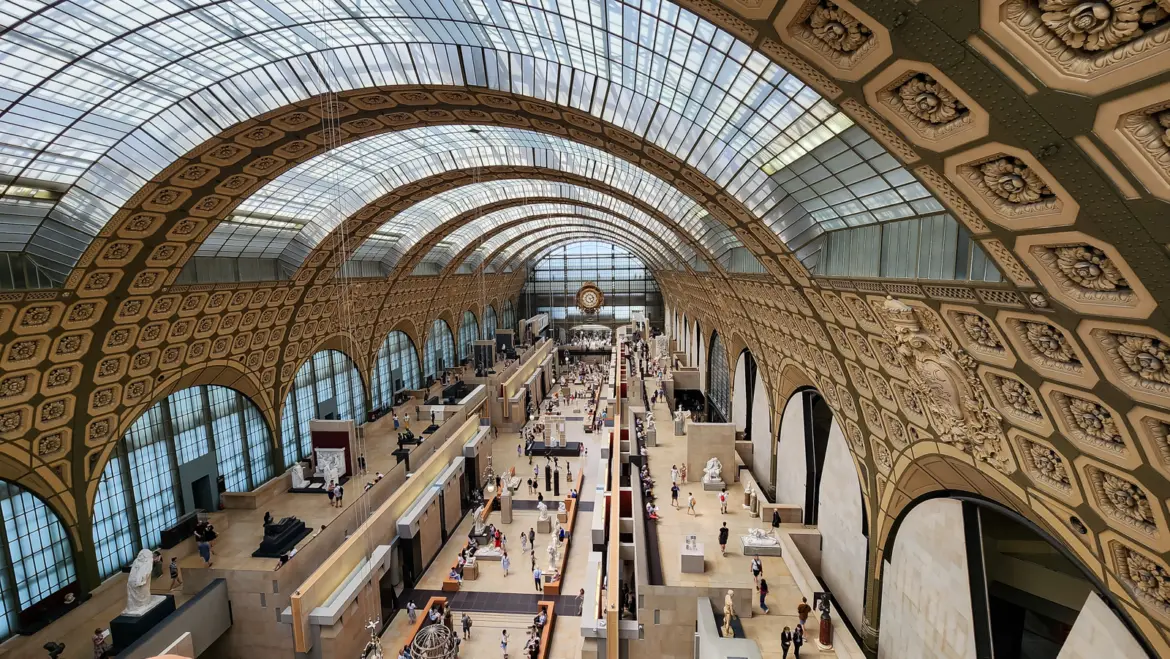
That history is the reason the art has room to breathe. Nobody designs a picture gallery with a vault this high. It is there because trains used to come in underneath it.
The clock
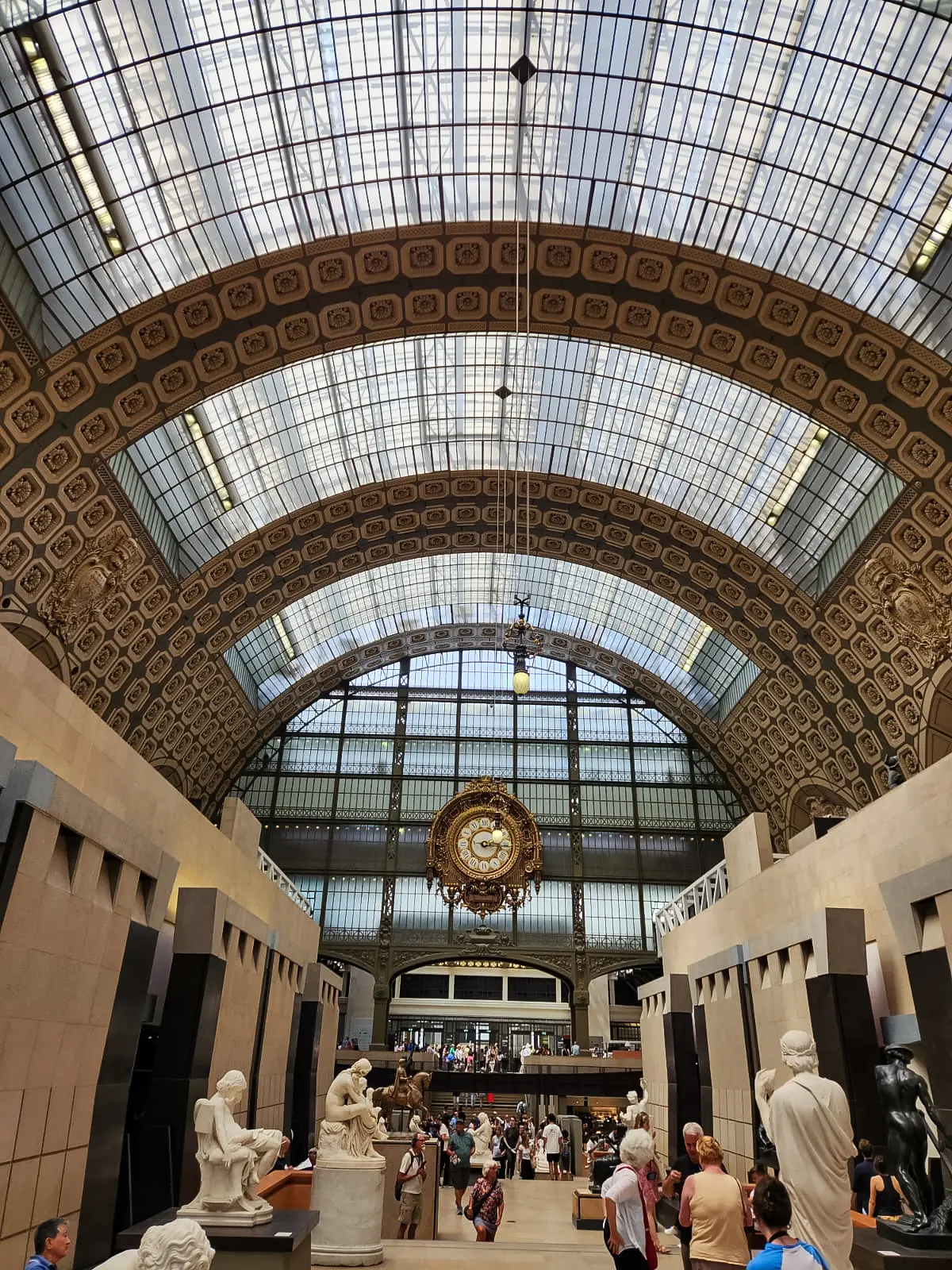
At the far end of the hall hangs the station clock. Upstairs there is a second one set into the wall with a viewing space behind it, so visitors look out at Paris through the glass of the dial itself.
There is usually a queue. It is worth it. Beyond the ironwork and the Roman numerals sit the Seine, the Tuileries Gardens, and the roofline of the Louvre on the far bank. A grey sky suits it better than a blue one, which is convenient, because on the day I did this the weather was doing what Paris weather does.
The Impressionist rooms
This is the reason people come and there is no point pretending otherwise.
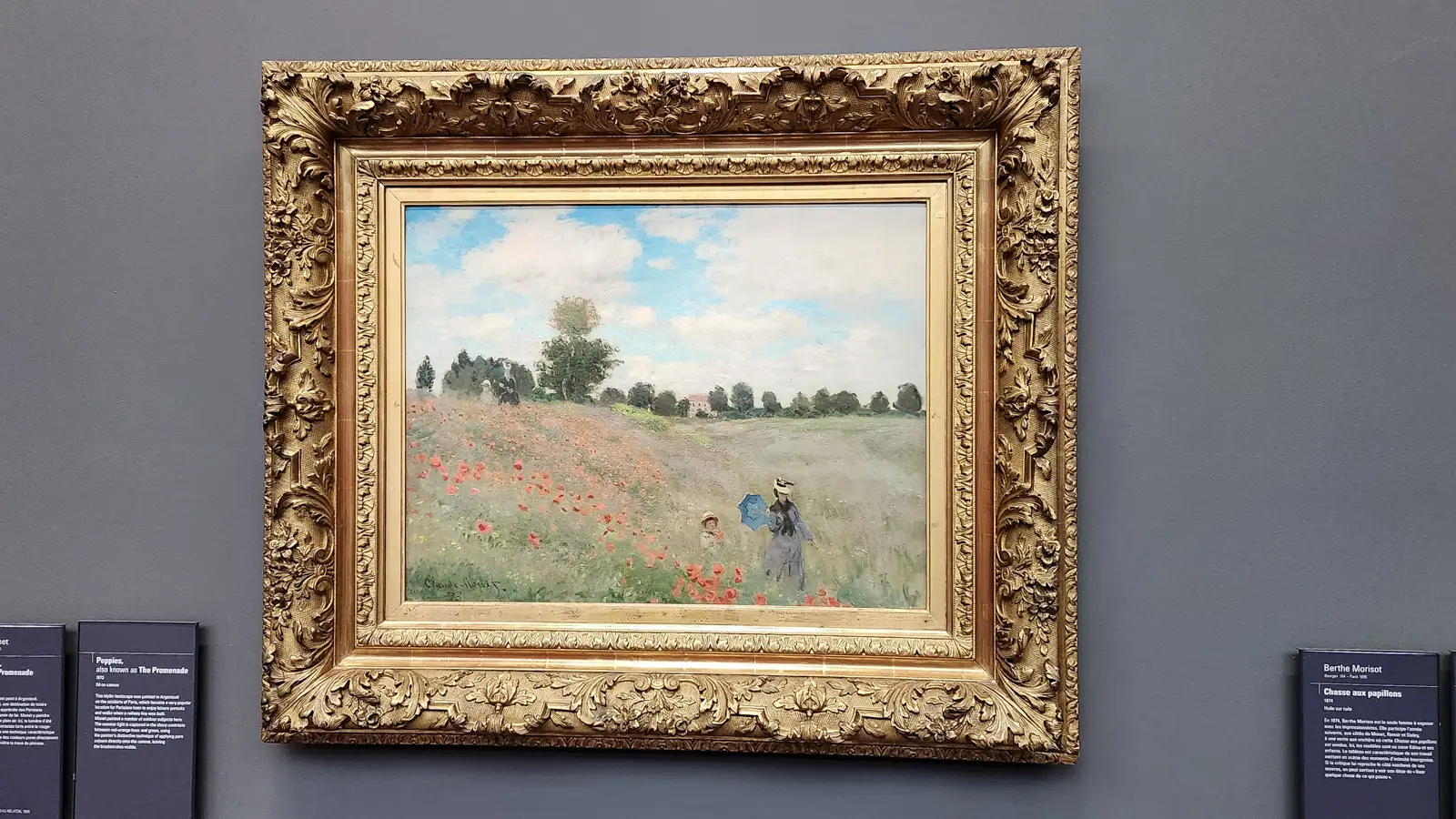
Monet is here in quantity and not only in water lilies. Those are at the Orangerie, a short walk across the river, which I went to separately and which is a different kind of experience altogether. What the Orsay has is the rest of him.
There are poppies at Argenteuil, a field of red under a moving sky with a woman and a child walking through it.
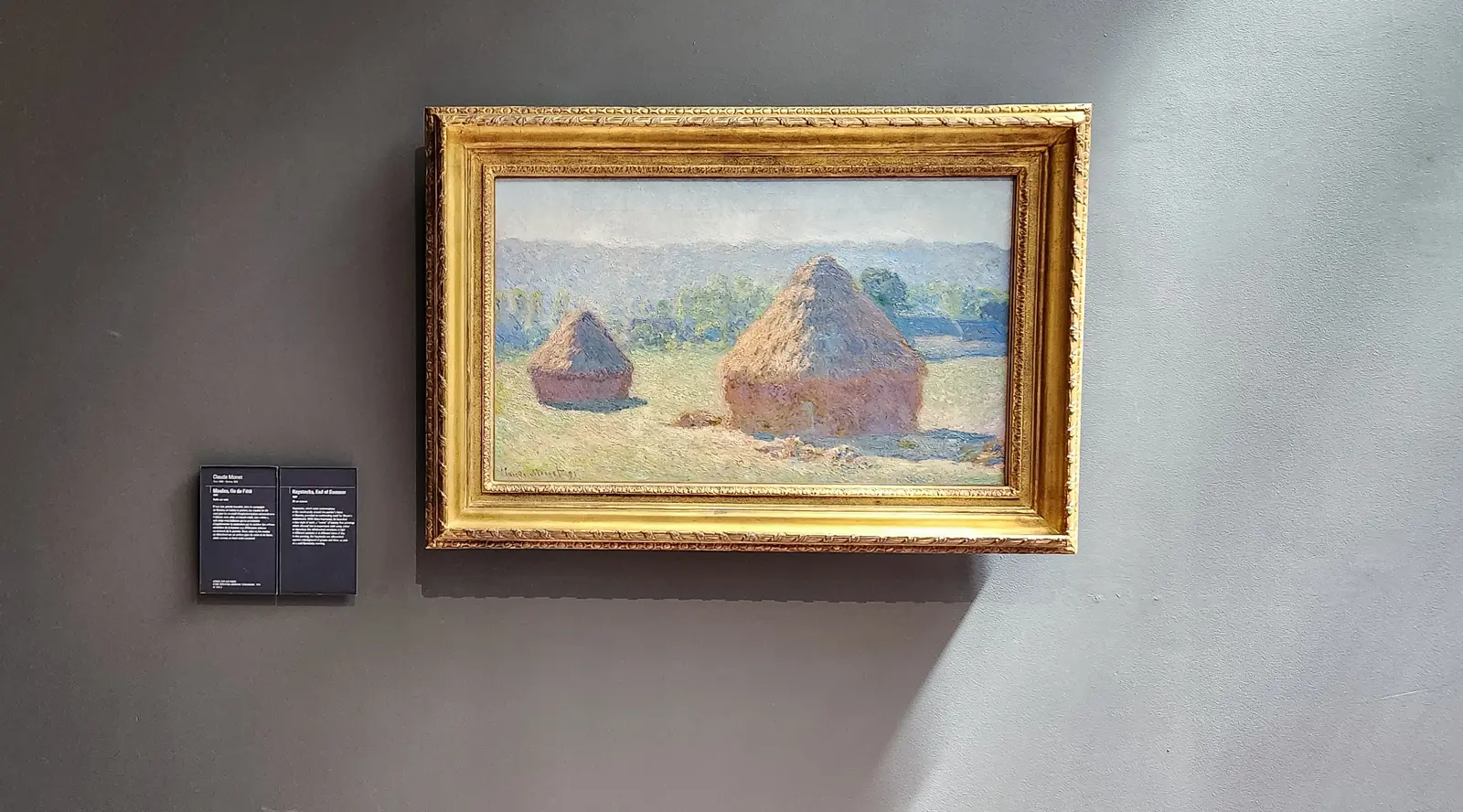
There are haystacks under late summer light, the first of a run he made of the same stacks over and over as the weather and the hour changed.
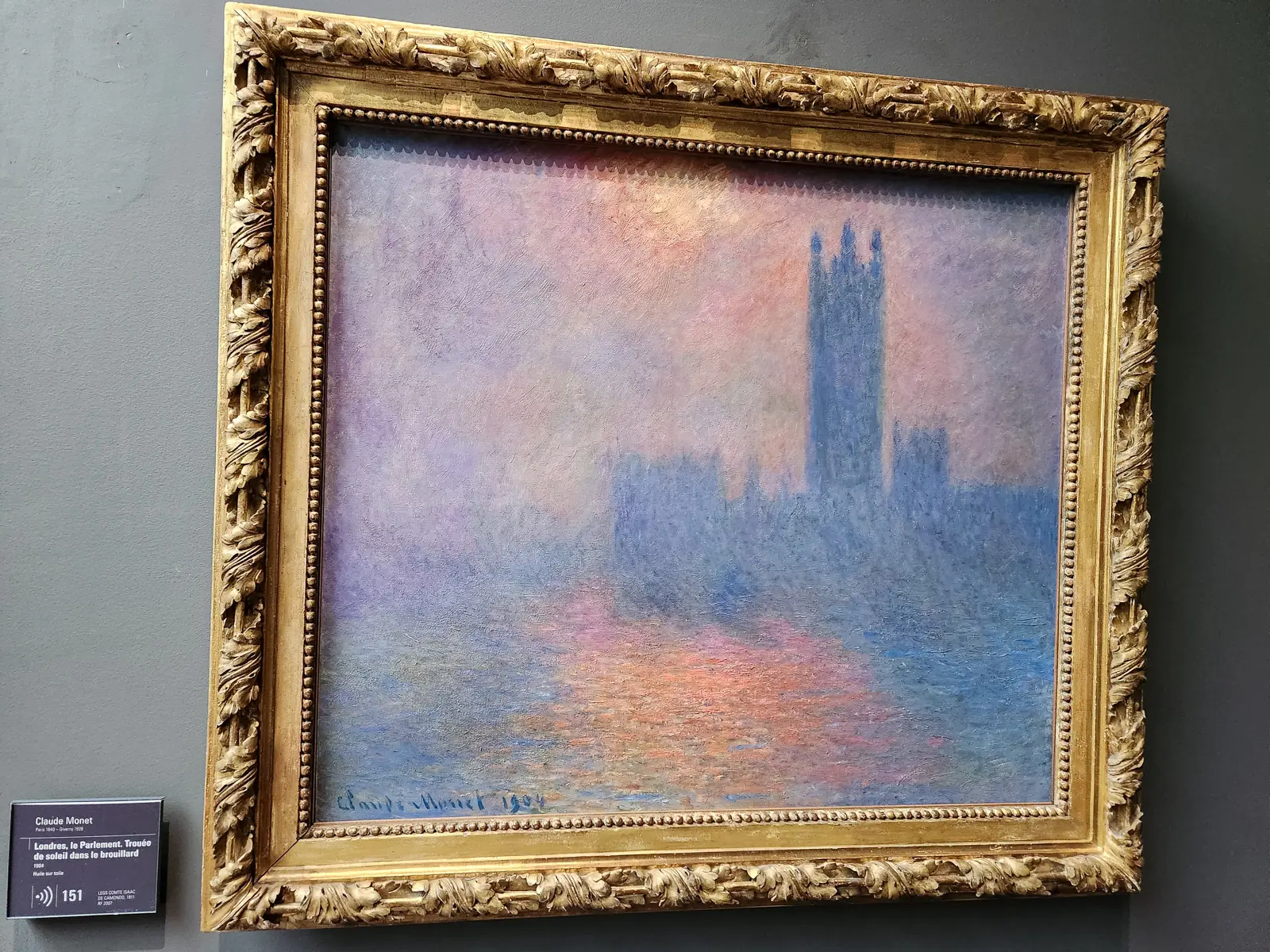
And there is the Houses of Parliament dissolving into Thames fog, which is a strange thing to stand in front of after walking past the real building on an ordinary London morning.
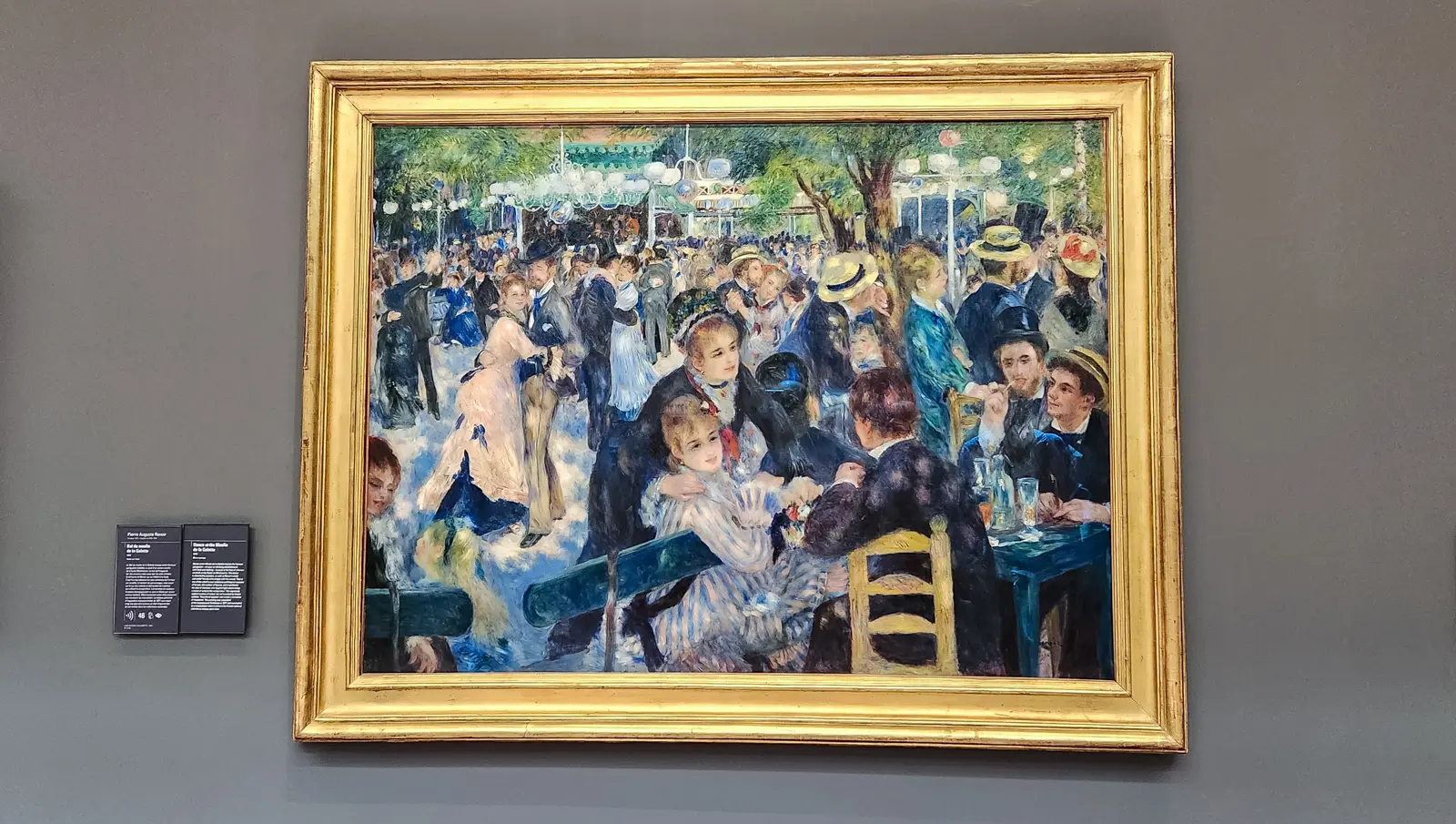
Renoir’s Bal du moulin de la Galette hangs nearby: an open-air dance floor in Montmartre, packed with people, dappled with light coming down through the trees. He rented a studio in the rue Cortot specifically to be near the mill and painted it across the summer of 1876, using his own friends as the crowd.
The floor scrapers, and who paid for all of it
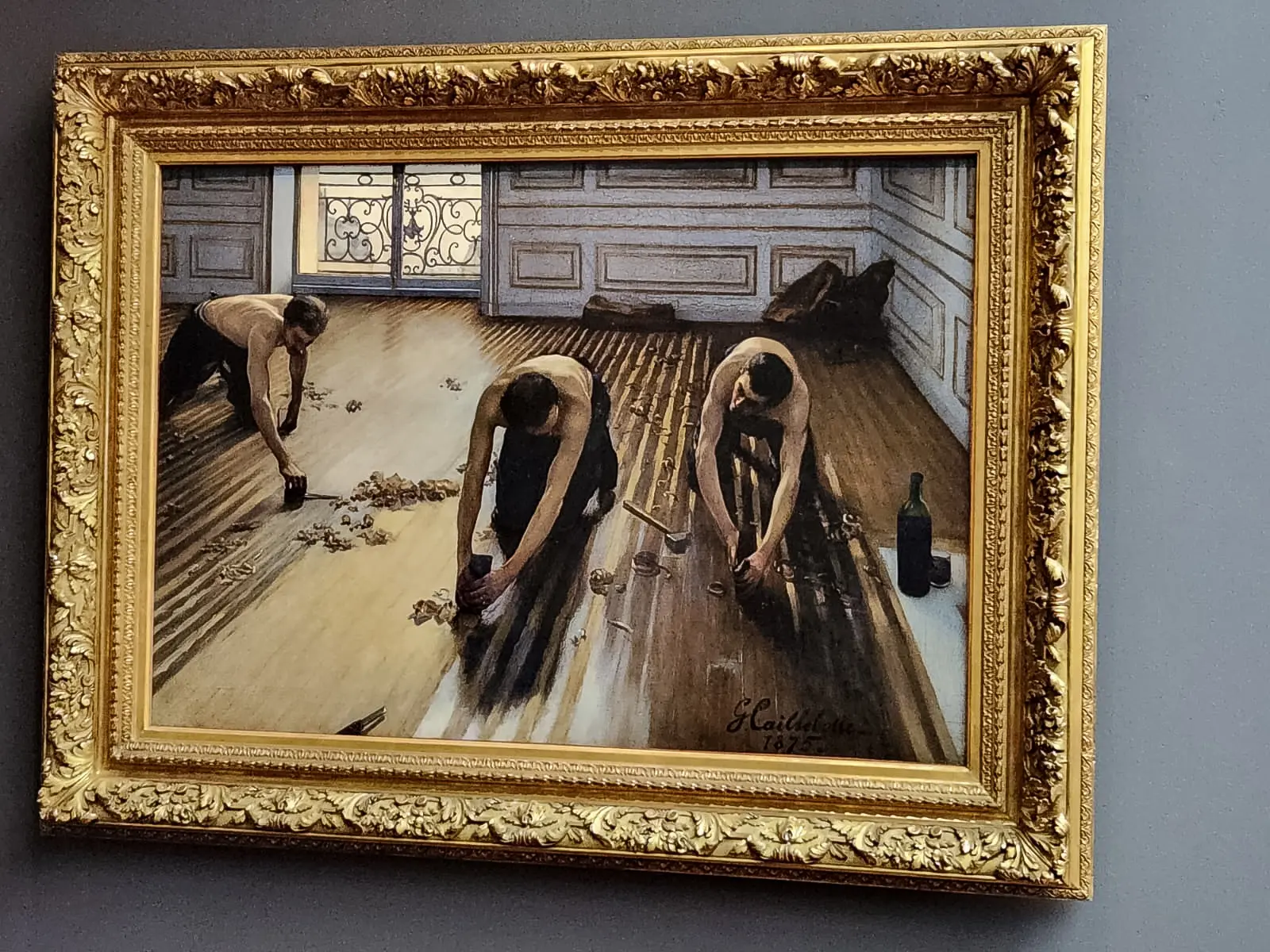
A few rooms away, three men on their knees plane the floorboards of an empty Parisian apartment. Bare backs, wood shavings, a bottle standing on the floor, light coming through a wrought-iron balcony.
Gustave Caillebotte submitted it to the Salon in 1875 and the jury threw it out. Some critics called the subject vulgar. Working men doing their job was not, in 1875, a fit subject for serious painting. So he took it to the Impressionists instead and showed it at their second exhibition the following year.
Here is the part that connects this whole floor. Caillebotte bought Renoir’s Bal du moulin de la Galette. When Caillebotte died in 1894 his collection went to the French state, handled by his executor, who was Renoir. The two of them carried each other’s work into the national collection in both directions, and a great many of the paintings in these rooms are here because of it.
Degas, and the parts of ballet nobody sees
Degas surprised me most, and it took a while to work out why.
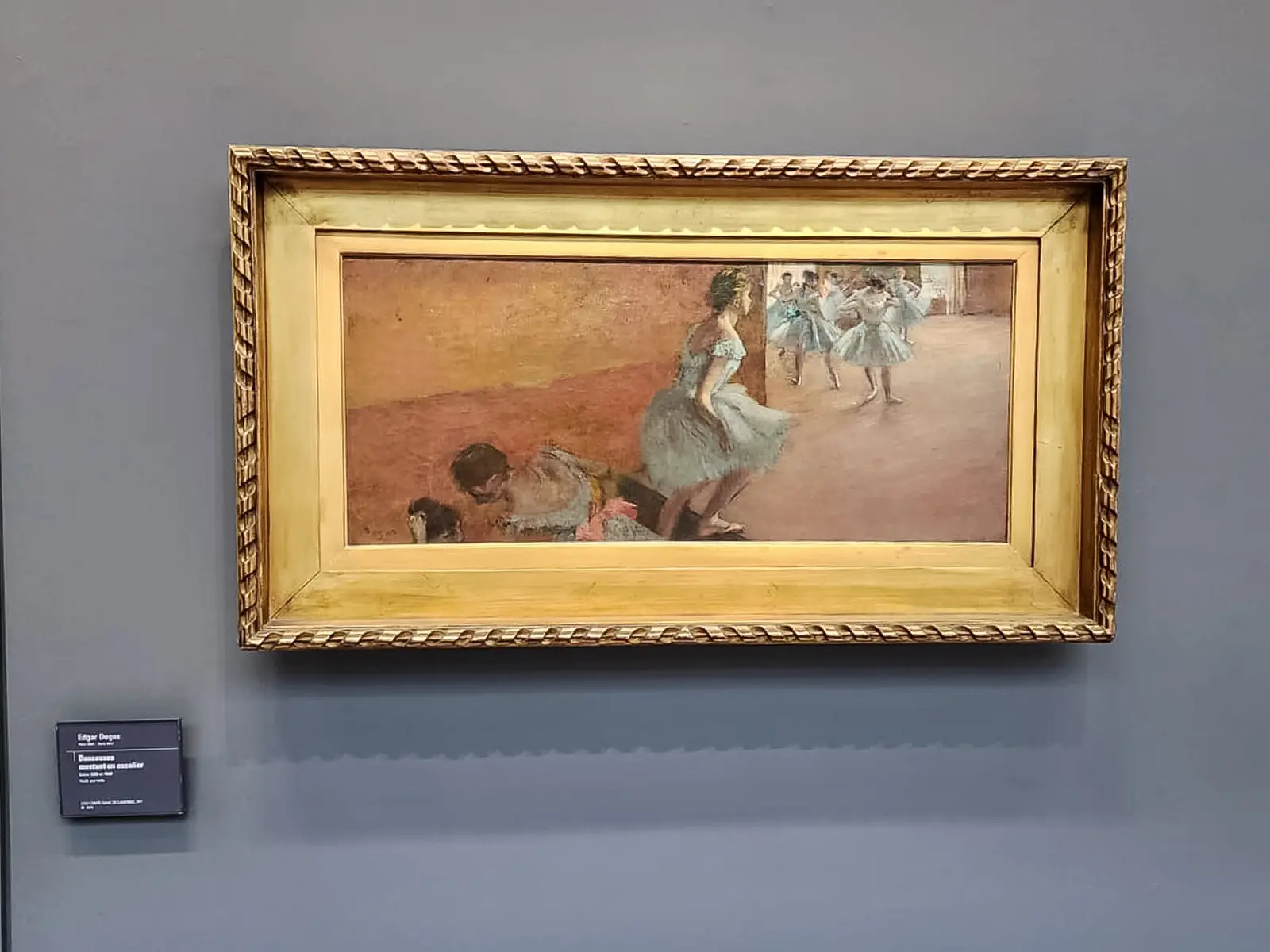
He does not paint performance. He paints rehearsal. A dance class in a bare room with a violinist and a master with a stick. Dancers climbing a staircase, one of them bent over adjusting something, nobody looking at anybody.
What he conveys is movement and discipline, and the discipline is the part nobody buys a ticket for. It is the hours before the thing an audience actually sees.
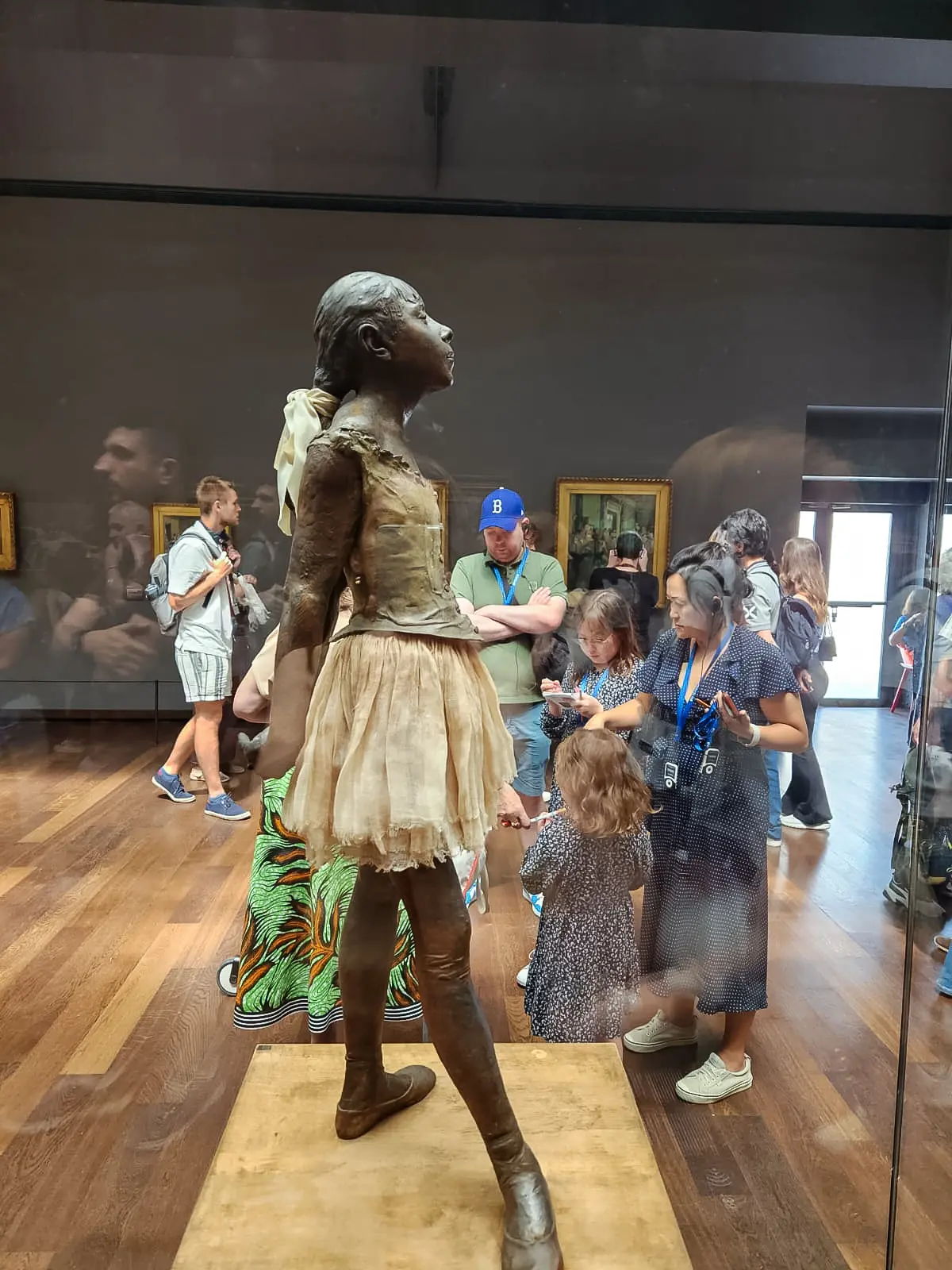
Then there is the Little Dancer, standing in her case with her chin up and her hands behind her back.
She was modelled on Marie van Goethem, a fourteen-year-old Belgian girl training at the Paris Opera ballet school, the daughter of a tailor and a laundress. Degas made her in wax and dressed her in a real bodice, a real tutu, real slippers and a wig of human hair, and showed her at the Impressionist exhibition of 1881. It is the only sculpture he ever exhibited publicly in his lifetime.
The critics hated her. They said, almost unanimously, that she was ugly. What unsettled them was that she was neither idealised nor pretending: a working-class child holding a difficult position, tired, and made of real things.
I saw Degas again some time afterwards, in London, in the Impressionist rooms of the National Gallery: five dancers resting in the wings in orange and turquoise, aching feet, one of them slumped with her head in her hand. Same painter, same refusal to prettify, a different country and a grey December afternoon.
Starry Night, and the one on my wall
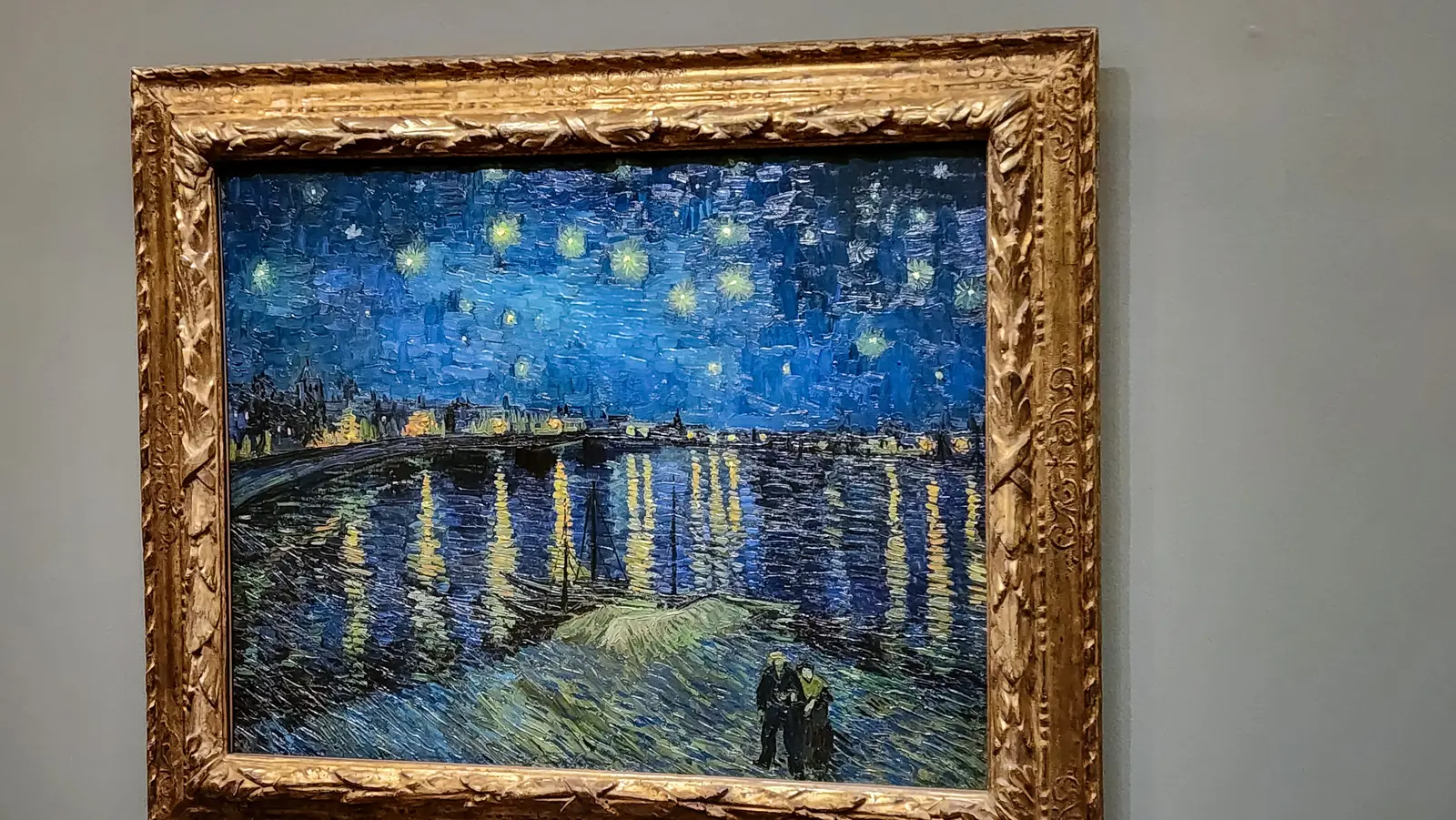
I grew up with a replica of Starry Night Over the Rhône at home. I know some people find replicas cheesy. I am not going to apologise for it. I cannot own the original, I love the painting, and the frame on mine is almost identical to the one it hangs in here.
So walking up to the real thing made me smile.
Van Gogh painted it at Arles in September 1888, on the bank of the Rhône a couple of minutes’ walk from the yellow house where he was living. He told his brother Theo it was, in his own words, “actually painted at night, under a gas-lamp”, and set out the colour scheme in the same letter: a green-blue sky, royal blue water, mauve ground, a town in blue and violet, yellow gaslight running down through red-gold into green-bronze. In the same letter he named the constellation. The Great Bear, the seven stars most people now call the Big Dipper, sits in the middle of his sky. Two small figures walk along the bank.
Here is the part I did not know. The real gas lamps on that embankment were feeble, spaced about a hundred metres apart, and the Rhône runs fast enough that it barely reflects anything. The most distant lamp in the picture would have been the better part of a kilometre away and invisible. So those long golden columns dropping into the water are not what was there.
The stars are the same story. The Great Bear is a northern constellation, visible only when facing north, and he was looking south-west towards the town. He drew it accurately and then put it in a part of the sky where it could not possibly have been.
None of that is a mistake. It is what he decided the night was doing.
Downstairs, where the sculpture is
The sculpture is not a supporting act here. Three pieces held me longer than anything on the walls, and they turn out to be connected to each other.
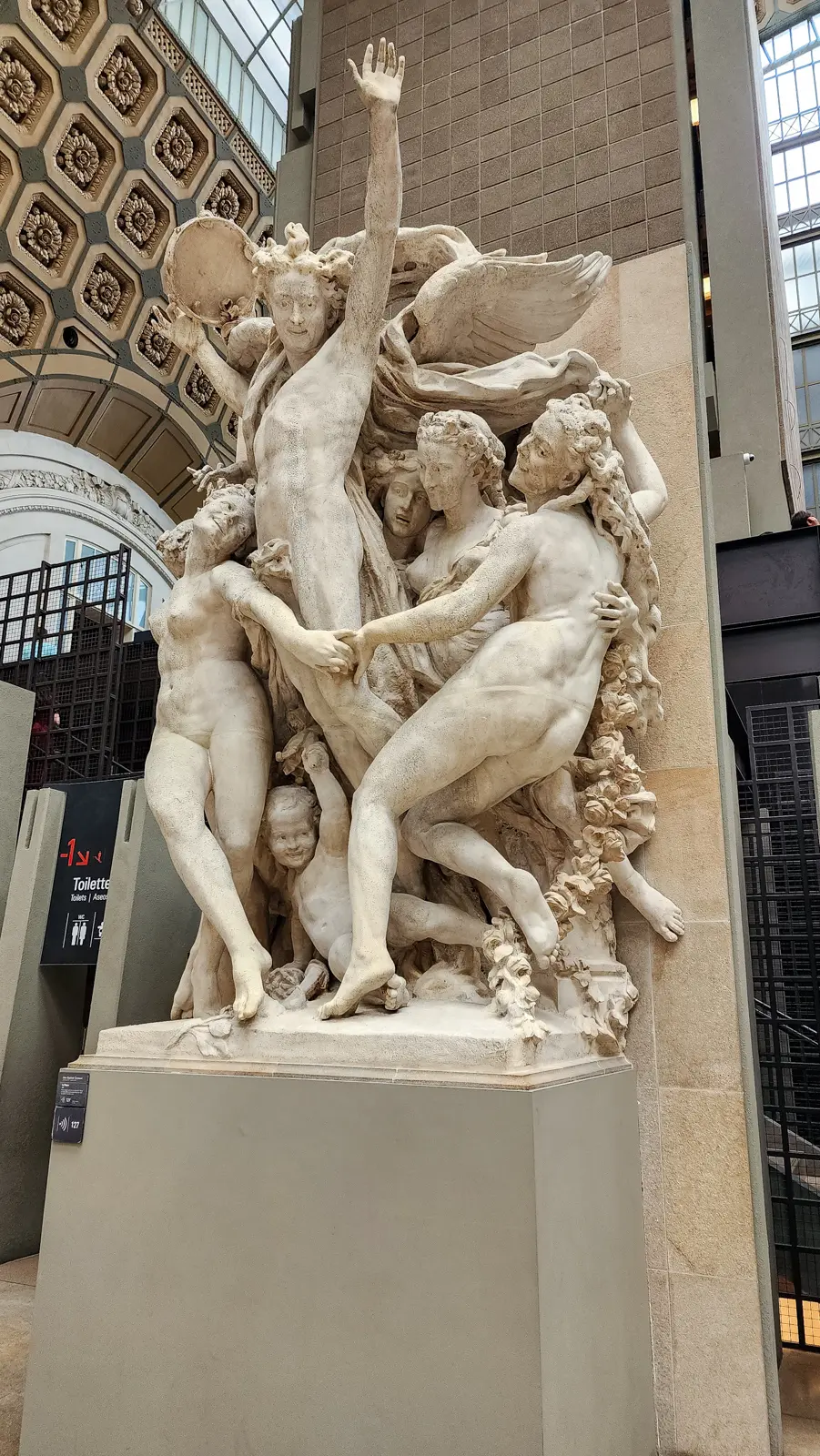
Start with the dancers in stone. The sculptor Jean-Baptiste Carpeaux made them: a knot of laughing figures spinning around a raised arm, carved for the front of the Paris opera house. Charles Garnier, the architect of that building, had studied alongside him years earlier and gave him the commission in 1863, one of four groups by four different sculptors.
When it went up in 1869, Paris decided it was obscene, and one night somebody threw a bottle of black ink over it. There was serious talk of taking it down. What ended the row was the war of 1870 and then Carpeaux’s own death in 1875, at forty-eight.
Next, the bear.
François Pompon’s white bear is the opposite of everything around it: one animal, smooth as a river stone, every detail stripped away until only the walk is left. It made me smile, and it made me think of Canada, which I did not expect from a French sculpture gallery.
Pompon spent almost his whole working life carving other people’s designs. He was sixty-seven before anyone paid attention to work of his own.
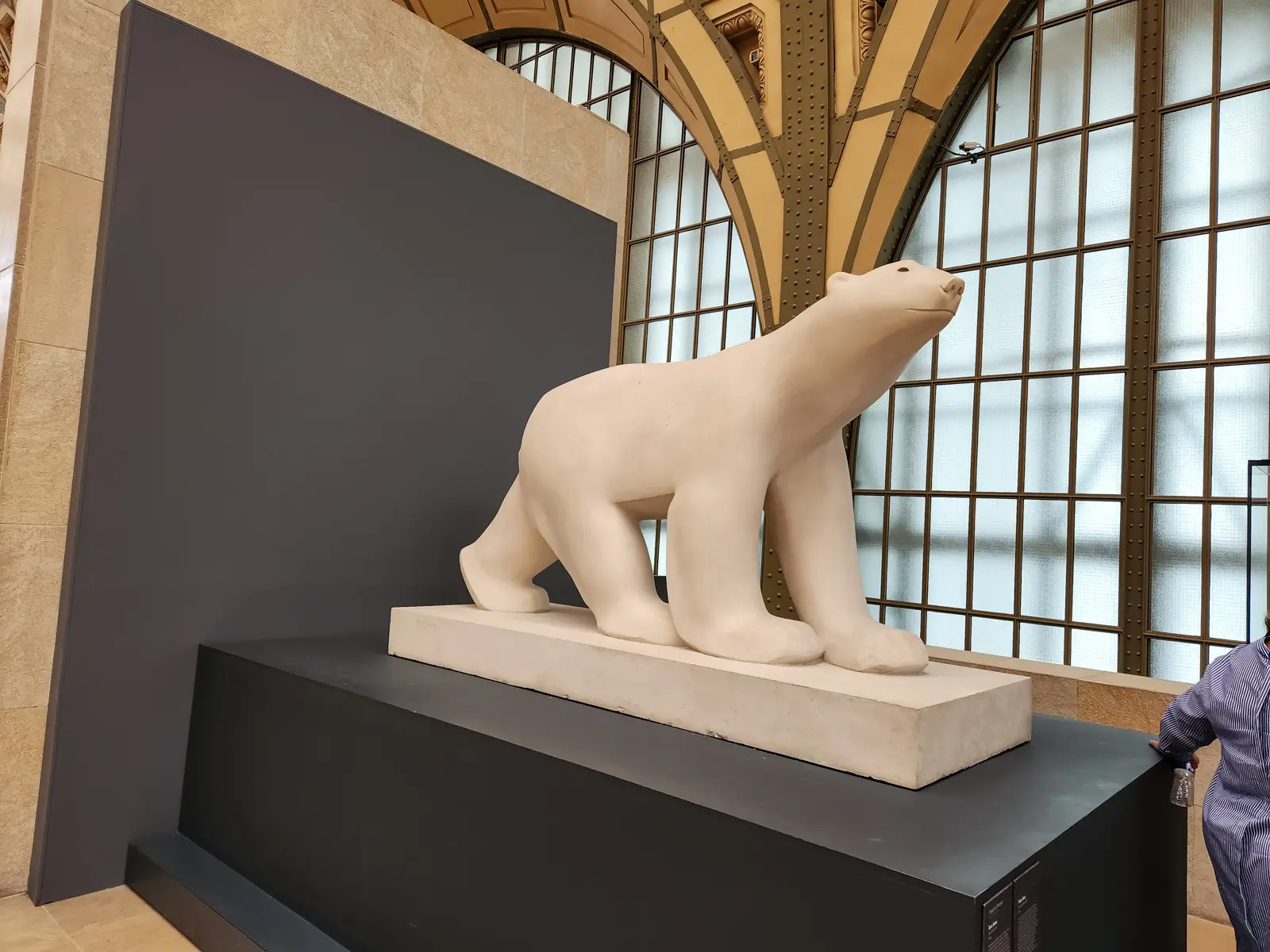
That is the connection. The man who carved the bear had worked for both of the sculptors standing a few metres away from it.
The Mature Age
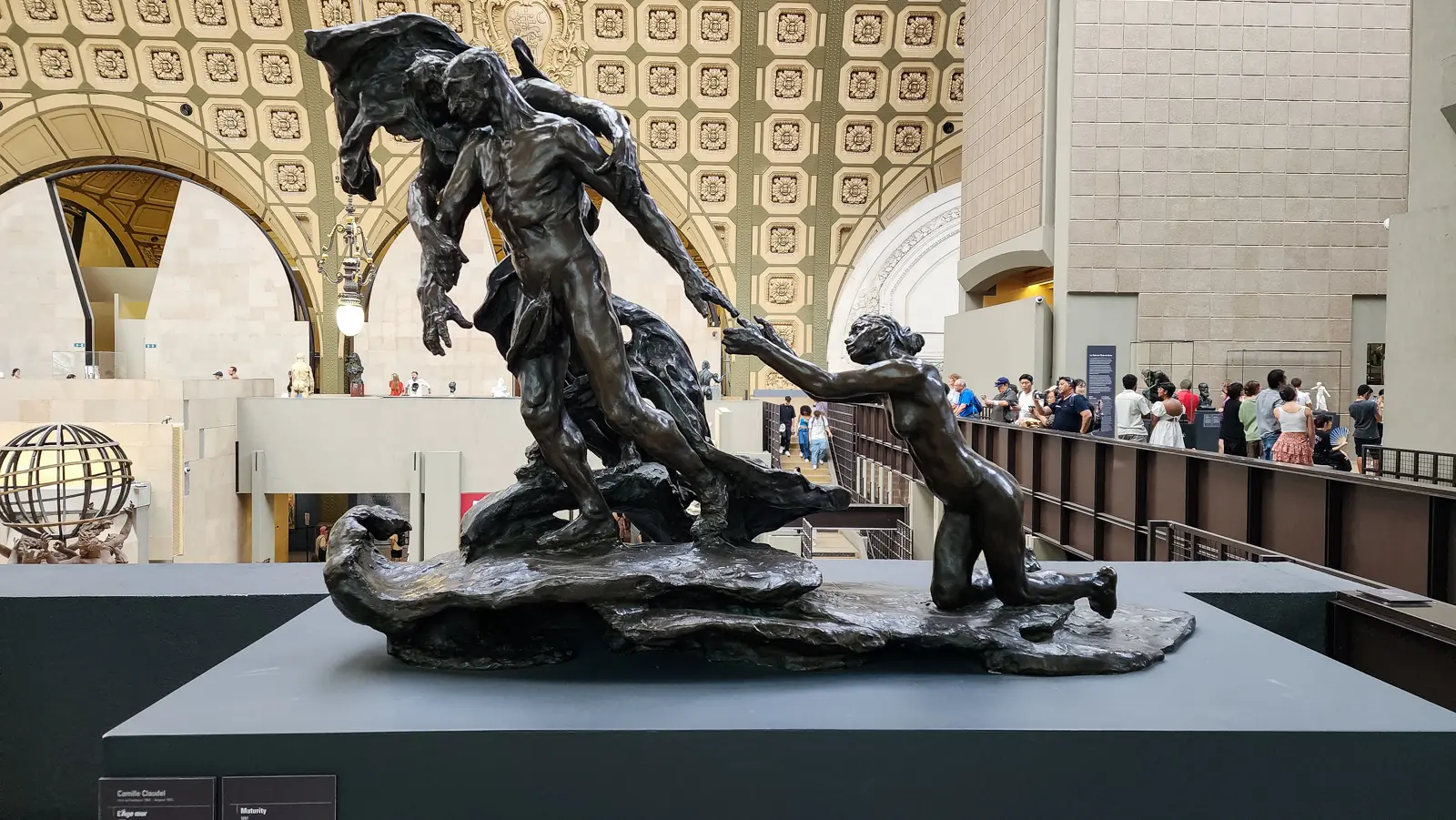
Three figures. An old woman pulling a man away. The man half-turned, already going. A young woman on her knees behind him, arm out, not quite reaching his hand.
Camille Claudel called it The Mature Age, and also Destiny, and also The Path of Life. When the plaster was first shown in 1899 that is exactly how people read it: an ageing man torn away from youth and love and life itself. It is what I saw standing in front of it. Time passing, and none of us getting a vote.
The other reading came later, and it is the one everybody now repeats. The young woman on her knees is Claudel. The man is Rodin. The old woman is Rose Beuret, the partner Rodin would not leave. Claudel had joined his studio around 1884 and was handed the hardest work in it, the hands and feet of figures for his monumental pieces, including the Gates of Hell. The museum that bears Rodin’s name warns against flattening her work into biography and describes it instead as private experience turned into something universal. Both things can be true at once.
The Gates of Hell
A few steps away stands the thing Claudel worked on as an assistant, and it is bigger than any photograph suggests: six metres high, four wide, with something like a hundred and eighty figures crawling over it.
I had assumed I was looking at a copy. I was not.
Rodin was commissioned in 1880 to make a door for a Museum of Decorative Arts. That museum was to be built on the site of the burnt-out Cour des Comptes, which is to say on this exact stretch of riverbank. It was never built. The railway station went up instead.
He worked on the doors for roughly thirty-seven years, the rest of his life, and they were never cast in bronze while he lived. The plaster standing here was assembled in 1917, the year he died. Every bronze version anywhere in the world was made afterwards from it: the first in the 1920s for Philadelphia, then Paris, then Stanford, Zurich, Seoul, Mexico City and Tokyo.
So the doors people queue to photograph in other cities are the copies. This is the model they all came from, and it is white, and it stands against a green wall with nobody making much fuss about it.
And it is standing exactly where it was meant to stand. Both the Musée d’Orsay and the Musée Rodin make the point themselves: the Gates ended up on the site they were commissioned for, a century late and through a railway station, and not functioning as doors at all.
Bubbly Tips
- Give the building its own look before the paintings. The hall was a train shed. Two minutes at the upper level looking down the vault changes how the rest of the visit reads.
- Queue for the clock. The view through the dial is the best thing here that is not a painting, and the queue moves.
- Grey weather suits this museum. The clock view is better under cloud than sun, and the building gives a wet afternoon somewhere to go.
- Do not skip the sculpture floor to reach the Impressionists. Carpeaux, Pompon, Claudel and Rodin are all down there and most visitors walk past them at speed.
- The water lilies are at the Orangerie, not here. What the Orsay holds is the rest of Monet: haystacks, poppies, and the Thames in fog.
- The Gates of Hell is the original, not a cast. Every bronze version in the world was made from this plaster after Rodin died.
- Take the Degas dance pictures slowly. He painted rehearsals rather than performances, and the effort is the subject.
- Check the current ticket price and free-entry rules before travelling. Both have changed and neither matches the older guidebooks.
- Pair it with the Orangerie or the Louvre, not both. One large museum in a day is the honest limit, as the day before this one proved.
Final Thoughts
Two paintings in this building look like moments caught on the spot and are not.
Van Gogh made up the reflections. The lamps on that riverbank were dim and far apart, the Rhône was moving too fast to hold an image, and he painted long ropes of gold falling through the water anyway. Monet began the Parliament canvases at a window in London and finished the series years later in France, partly from photographs, chasing a fog that had long since lifted.
Neither was cheating. Both were recording what it was like to be there, which is not the same as recording what was measurable. That is what these rooms are full of, and it is what I am doing, more modestly, every time I write one of these down. I have a replica of one of those paintings at home in a frame almost identical to the real one, and I like it more now than I did before I stood in front of the original.
Until next time!

🌟 Everything You Need to Plan Your Dream Trip in 2026
- 🌟 Luxury Hotels - Find premium stays with Booking.com & Hotels.com
- 🏡 Vacation Rentals - Discover unique properties on VRBO
- 🏞️ Guided Tours - Explore with Viator or GetYourGuide
- 🎫 Attraction Tickets - Skip the lines with Tiqets
- 🚢 Ocean Cruises - Set sail with Cruise Direct
- 📱 International SIMs - Stay connected with Saily
- 🚗 Car Rentals - Budget-friendly options from Discover Cars
- 🌐 Secure VPNs - Browse safely with NordVPN
- 💶 Currency Exchange - Best rates with Wise
- 🗣️ Learn Languages - Master the local language with Babbel and Rosetta Stone