
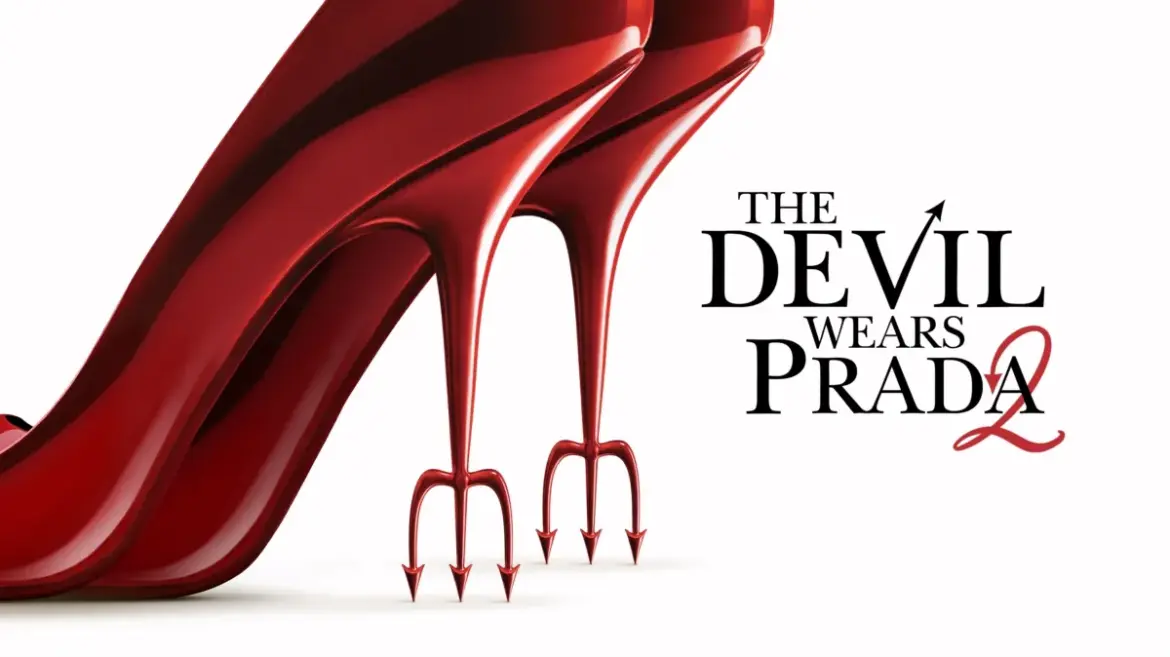
I loved the first one. Loved it enough that when a sequel was announced, twenty years after Andy first walked into Runway with the wrong shoes, I was equal parts thrilled and nervous. Twenty years is a long time to leave a story sitting. Sequels that arrive that late tend to arrive for the wrong reasons.
I need not have worried. The cast delivered, all four of them, and then the film did something I had not seen coming at all. It went to Milan. And because I had been to Milan myself, I spent a good part of the running time sitting up straighter, saying some version of “I stood right there” to nobody in particular.
The Devil Wears Prada 2 in Milan at a Glance
🎬 Where it filmed · The Milan act was shot through autumn 2025, partly during Milan Fashion Week. Real locations include the Duomo, the Galleria Vittorio Emanuele II, and the courtyard of the Palazzo di Brera, which stands in for Runway’s fashion show.
⛪ The Last Supper is a replica · The gala scene at Santa Maria delle Grazie was not shot in front of the real Leonardo. It is far too fragile, so the production built the refectory on a soundstage, mural and all.
🏰 Free to walk into · The Duomo square, the Galleria and the Sforza Castle courtyards all cost nothing. The Brera courtyard is free too. Tickets are only for the cathedral roof, the Pinacoteca and the Last Supper.
🚤 The Lake Como villa · The lakeside house is the 16th-century Villa Balbiano, on the western shore near Ossuccio, which also appeared in House of Gucci.
💡 Tip · Book the Last Supper months ahead. Entry is timed, capped and just fifteen minutes, and slots sell out weeks in advance.
Twenty years later
The setup, briefly and without giving too much away. Andy Sachs is laid off when her newspaper folds, and she comes back to Runway as its features editor. Miranda Priestly is fighting for a print empire that the industry has rather moved on from. Emily has become a serious player at a luxury brand. David Frankel directs again and Aline Brosh McKenna writes again, and Meryl Streep, Anne Hathaway, Emily Blunt and Stanley Tucci are all back, with Kenneth Branagh, Simone Ashley, Justin Theroux and Lucy Liu joining them.
Where the first film sent the Runway team to Paris, this one sends them to Milan. The crew shot there through the autumn of 2025, partly during Milan Fashion Week, with the Italian design houses lending their support. The reviews came in generally positive, the film took nearly seven hundred million dollars worldwide, and its opening weekend beat the original’s by a wide margin. It reached cinemas in May and landed on streaming in the summer.
The Duomo
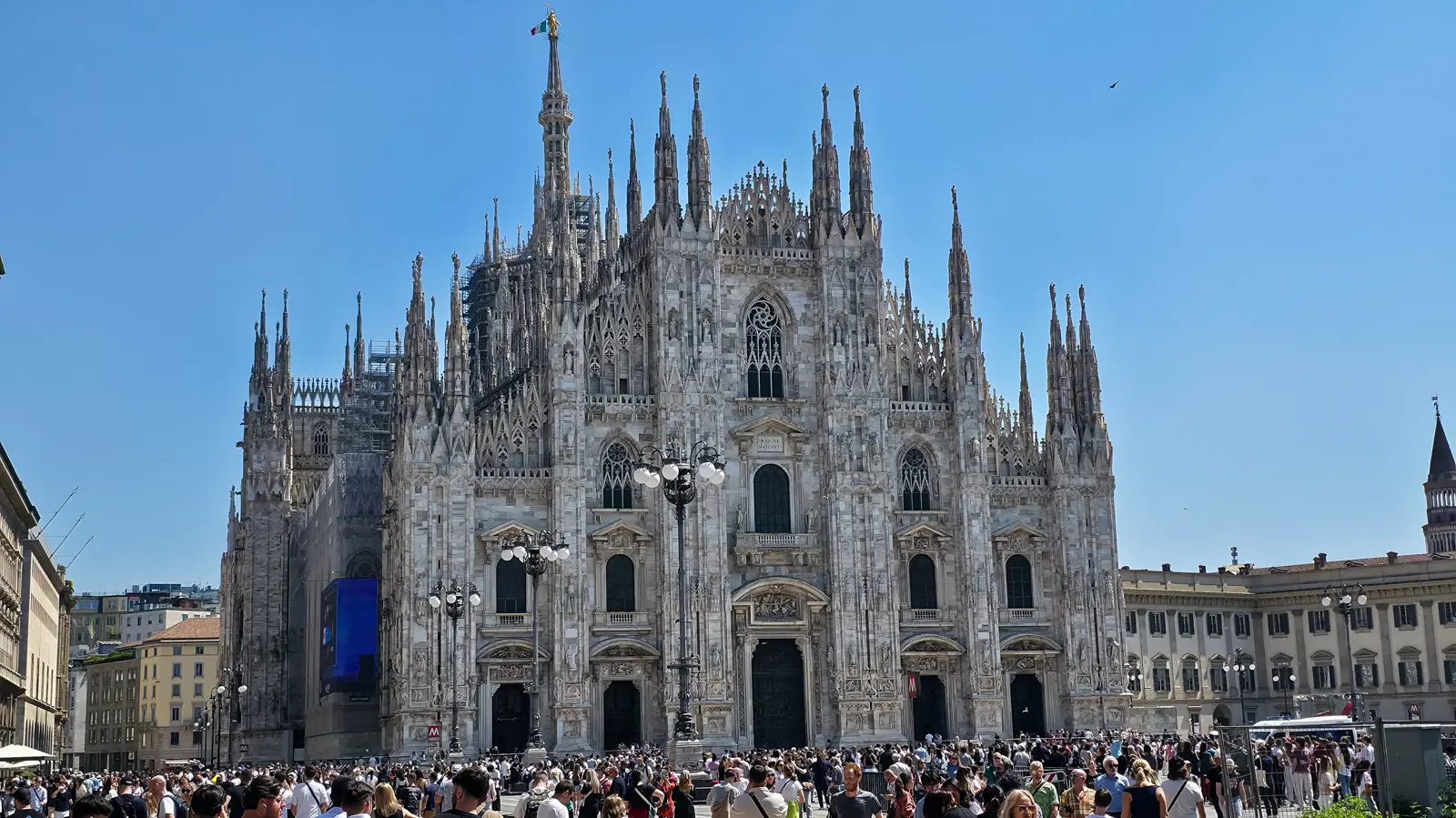
Milan arrives in the film the way it arrives in real life, all at once. The camera sweeps over the skyline and drops towards the cathedral, and there it is: the Duomo, that pale marble thicket of spires in the middle of the city. It is the first thing the film shows of Italy and it is the correct choice, because there is nothing else in Milan that does what it does.
I saw it first on a bright, hot afternoon, in a Piazza del Duomo so full of people that reaching the steps took a while. The marble is not white. Up close it carries a faint pink cast, and it changes with the light through the day.
The Galleria
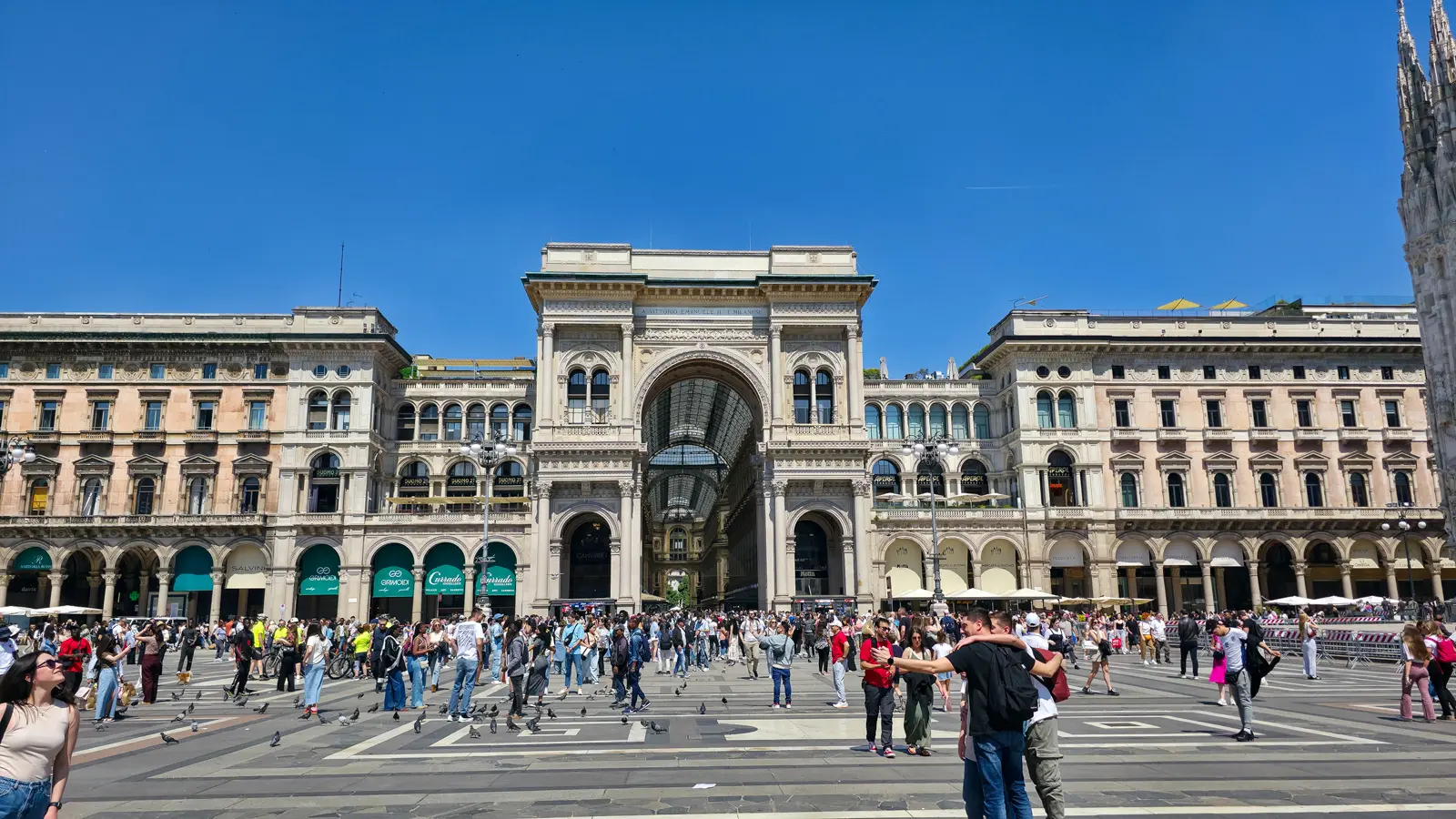
A few steps north of the cathedral stands the Galleria Vittorio Emanuele II, and this is where the film really lingers. Miranda takes a solitary walk through the arcade, past the flagship windows, which is a neat piece of scene-setting given that one of those windows belongs to Prada and the film has its name in the title.
From the piazza, the entrance is a monumental stone arch with a dedication carved across it. I remember stopping to read it before going in.
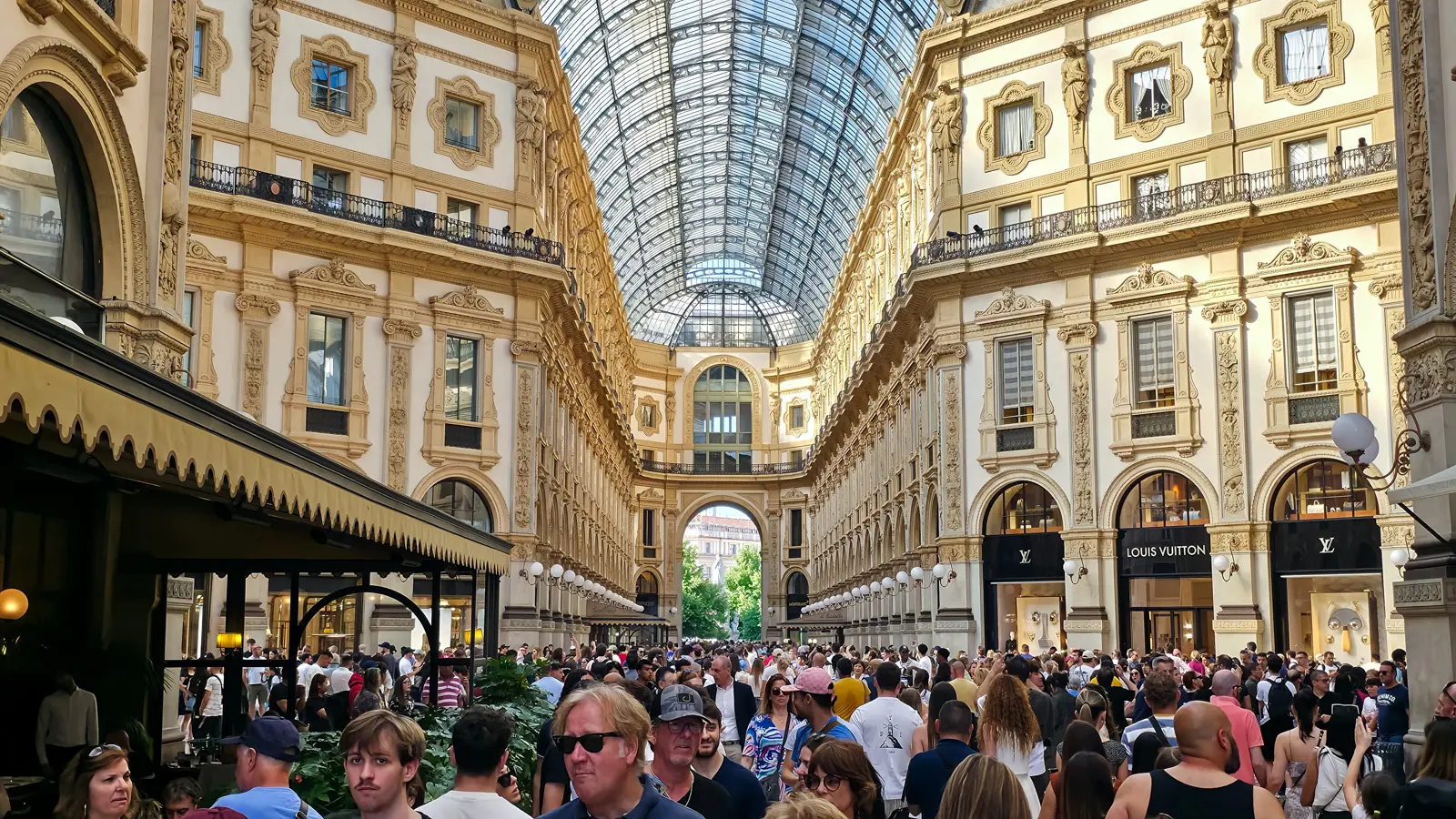
Inside, it is a covered street rather than a shopping centre, and the crowd moves through it in both directions at once. The glass roof is the whole point. Light pours down onto the mosaic floor, the boutique signs sit under stone caryatids, and every few metres somebody stops dead to photograph the ceiling, which is exactly what I did.
Down on the floor of the octagon, set into the mosaic, is the coat of arms of Turin with its bull. Tradition says a heel planted on the bull and three turns will bring luck, or, depending on who is telling it, a return to Milan. So many people have done it that the tiles wear through and have to be repaired every few years. I did it. Given that I am now planning a second trip, perhaps it worked.
The piazza after dark
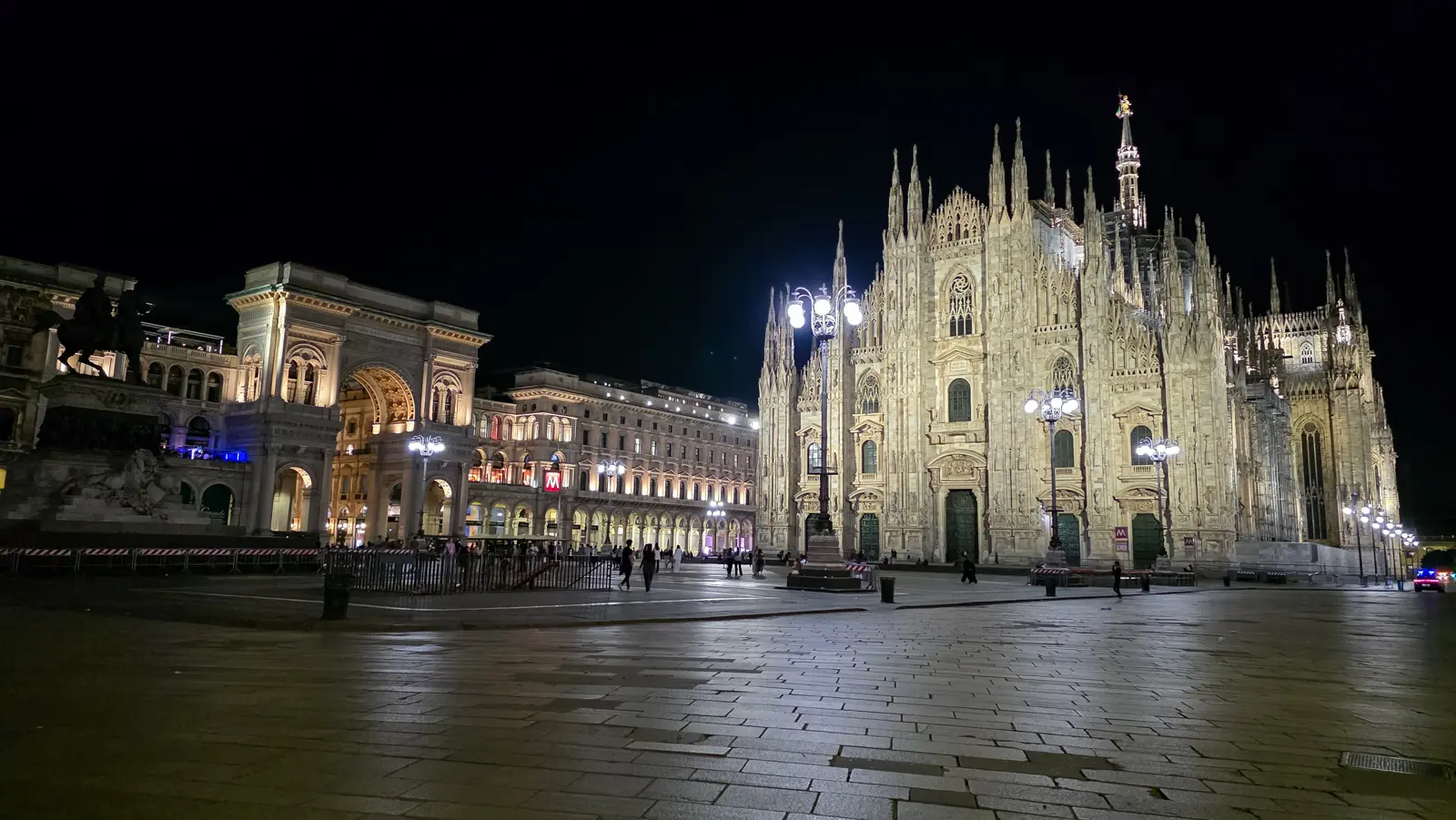
The film catches the piazza after dark too, in glimpses, lit and gleaming as the story passes through it. That was the version I recognised most, because it is the one I had liked best: the square late at night, long after the crowds have gone home.
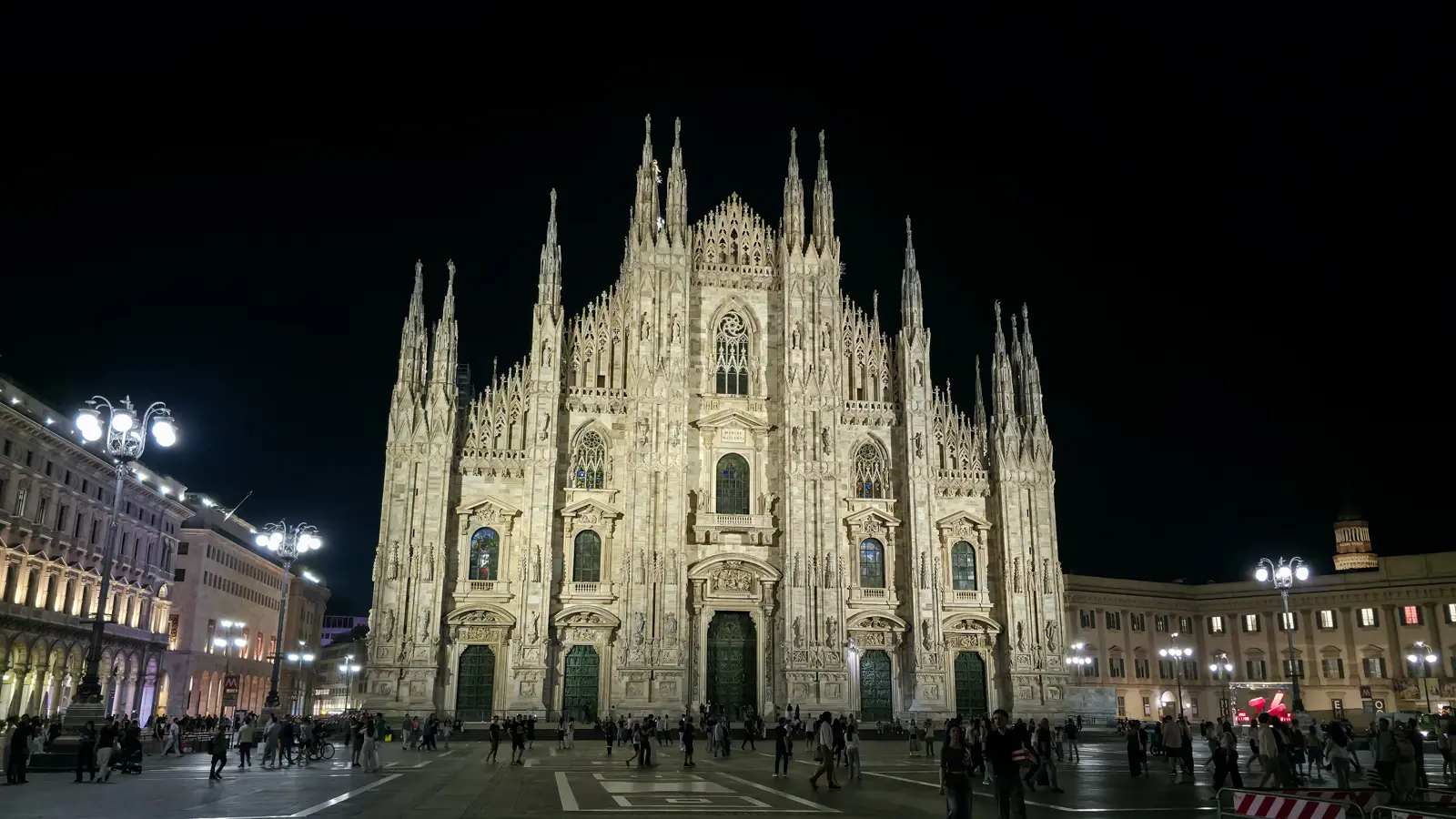
Out in the middle of the square at that hour, both landmarks line up together, the arch of the Galleria on one side and the cathedral on the other, lit up and almost unattended. It is the same view the film opens on, minus the helicopter and the crowd.
The castle in the aerial sweep
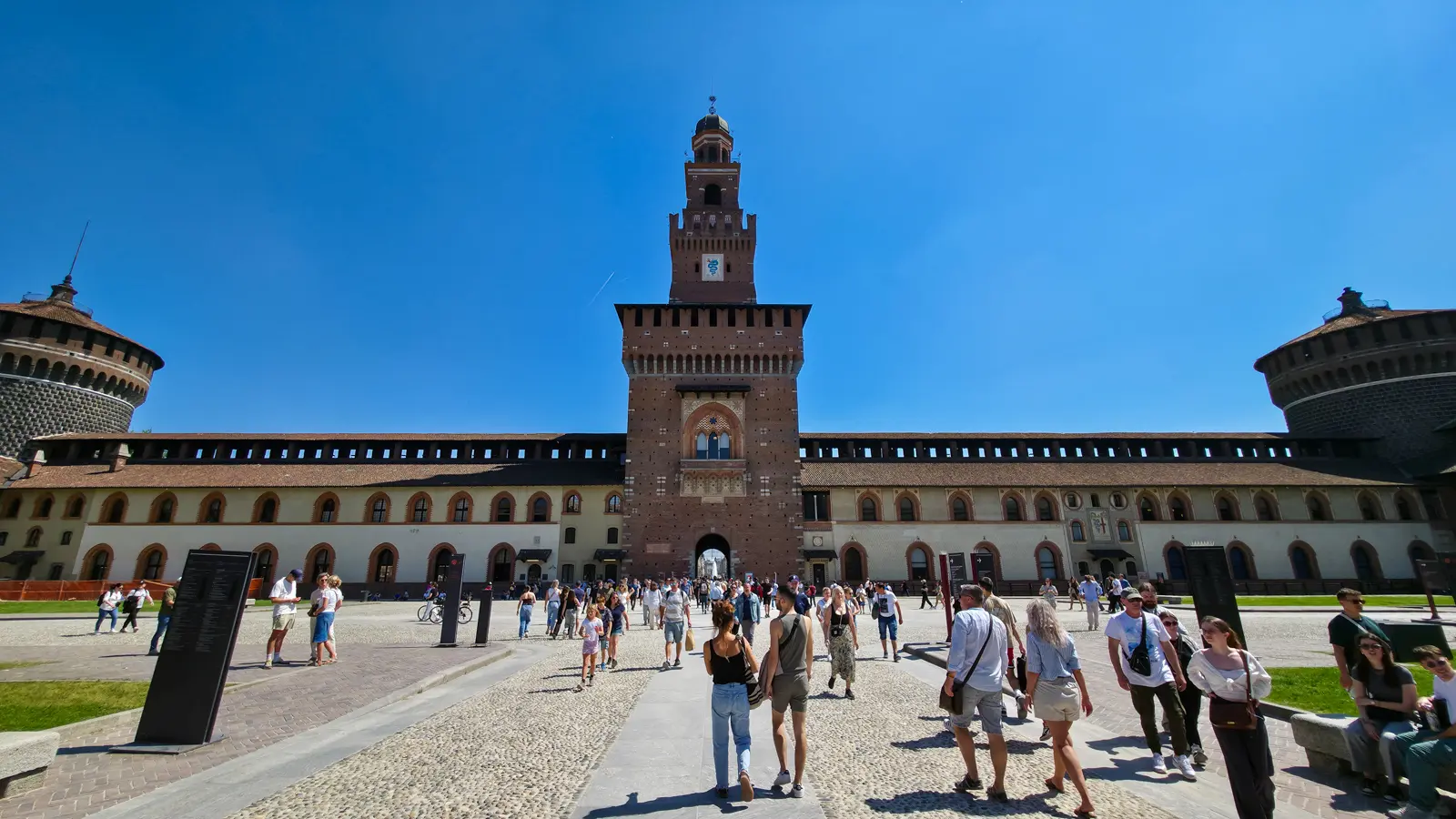
The Castello Sforzesco (Sforza Castle) goes past in a blink during that opening sweep, but it is there, a great red brick square with its tower in the middle of the city. It is not a filming location, so far as I can tell, just a few seconds of Milan seen from above. I noticed it because I had walked through it.
At ground level it is the scale that lands. The main gate leads into a parade ground so large that the crowds thin out inside it, and beyond that lies Parco Sempione.
The fashion show at Palazzo di Brera
Runway’s fashion show, the set piece the whole Milan act builds towards, was shot in the courtyard of the Palazzo di Brera. The palazzo stands on Via Brera, about fifteen minutes north of the cathedral, and from the street it gives almost nothing away. Behind the door is a courtyard of honour: two storeys of arcades running round a stone square, Doric columns below, Ionic above, and a bronze Napoleon standing in the middle of it all.
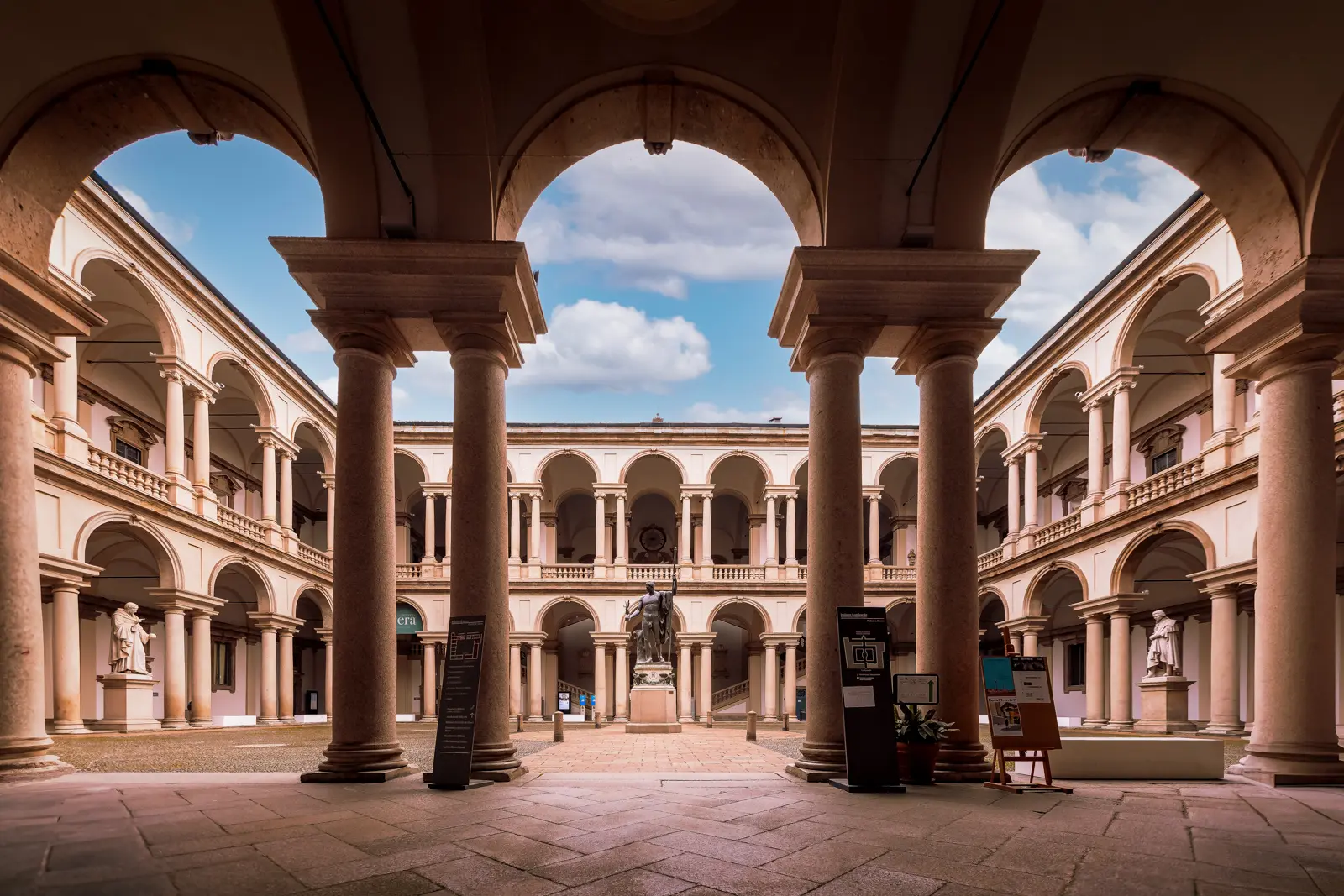
The building is worth knowing about beyond the film. Since the 1770s it has held an unlikely number of institutions at once, and it still does. The Accademia di Belle Arti, the fine arts academy founded in 1776, works out of it. So does the Pinacoteca di Brera, the picture gallery that grew out of the Academy’s own teaching collection and now hangs Raphael, Mantegna, Bellini and Caravaggio. There is a national library in there too, along with an astronomical observatory and a botanical garden. Academy and gallery are separate institutions sharing one address and one courtyard, which is why that courtyard gets called by both their names.
Lady Gaga stole it
That courtyard is also where Lady Gaga performs. She turns up as the musical guest at Runway’s fashion week show and walks off with the film. She shot her scenes in Milan in October 2025, in the middle of her own Mayhem Ball tour, which is a level of stamina I cannot begin to imagine.
I have never doubted that she can sing. Her acting had already convinced me in House of Gucci. What I had not expected was how much of the film’s music would be hers. She has three original songs on the soundtrack, all of which she had a hand in writing: “Shape of a Woman”, which is the one she performs on screen, “Glamorous Life”, and the lead single “Runway”, a duet with Doechii built for a dance floor and co-written with Bruno Mars, Andrew Watt, Cirkut and D’Mile among others. “Runway” went to number one on Billboard’s Dance Digital Song Sales chart and into the top fifty of the Hot 100. The beats are terrific. Her performance is the part of the film I would rewatch first.
The rest of the soundtrack deserves a mention too, because it is an all-female line-up: Dua Lipa, Miley Cyrus, SZA, Laufey, Olivia Dean, Raye, Ledisi and more, alongside newcomers writing original songs for the film.
The gala at Santa Maria delle Grazie
The film’s gala dinner is set at Santa Maria delle Grazie, the Dominican church and convent west of the centre. It is a low red brick building with a tall drum and dome at one end, and on the north wall of its old refectory hangs the most famous painting in Milan.
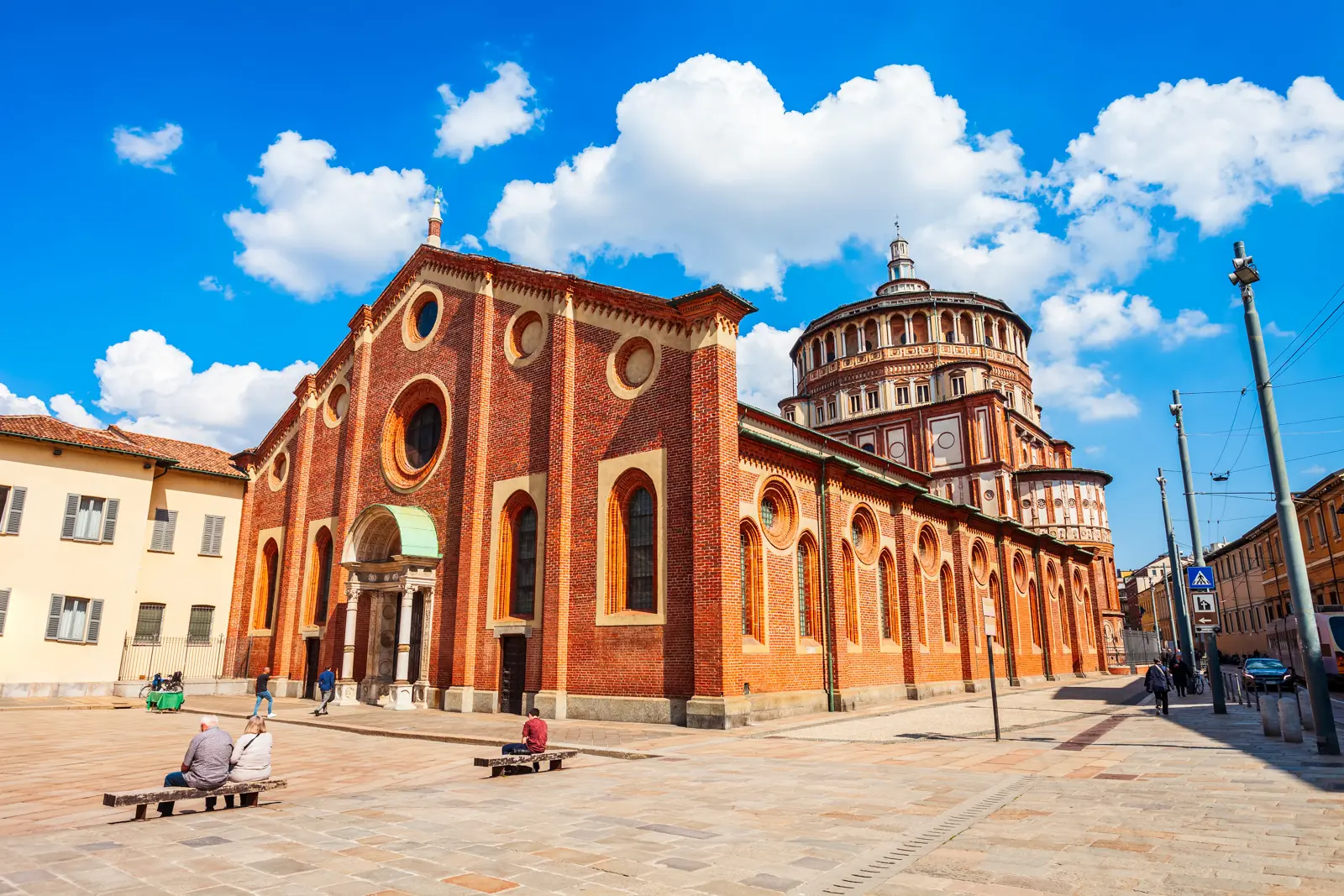
The dinner was not filmed in there, and it could not have been. Leonardo da Vinci‘s Last Supper covers that refectory wall, and it is far too fragile to host a film crew and a banquet, so the production built a replica of the room on a studio set, painting and all, and shot the scene in that.
The real thing has been living on borrowed time from the start. Leonardo worked in tempera and oil on dry plaster rather than true fresco, and the experiment began failing almost at once. Allied bombing in the Second World War took the roof off the refectory, and the wall came through it sandbagged and lucky.
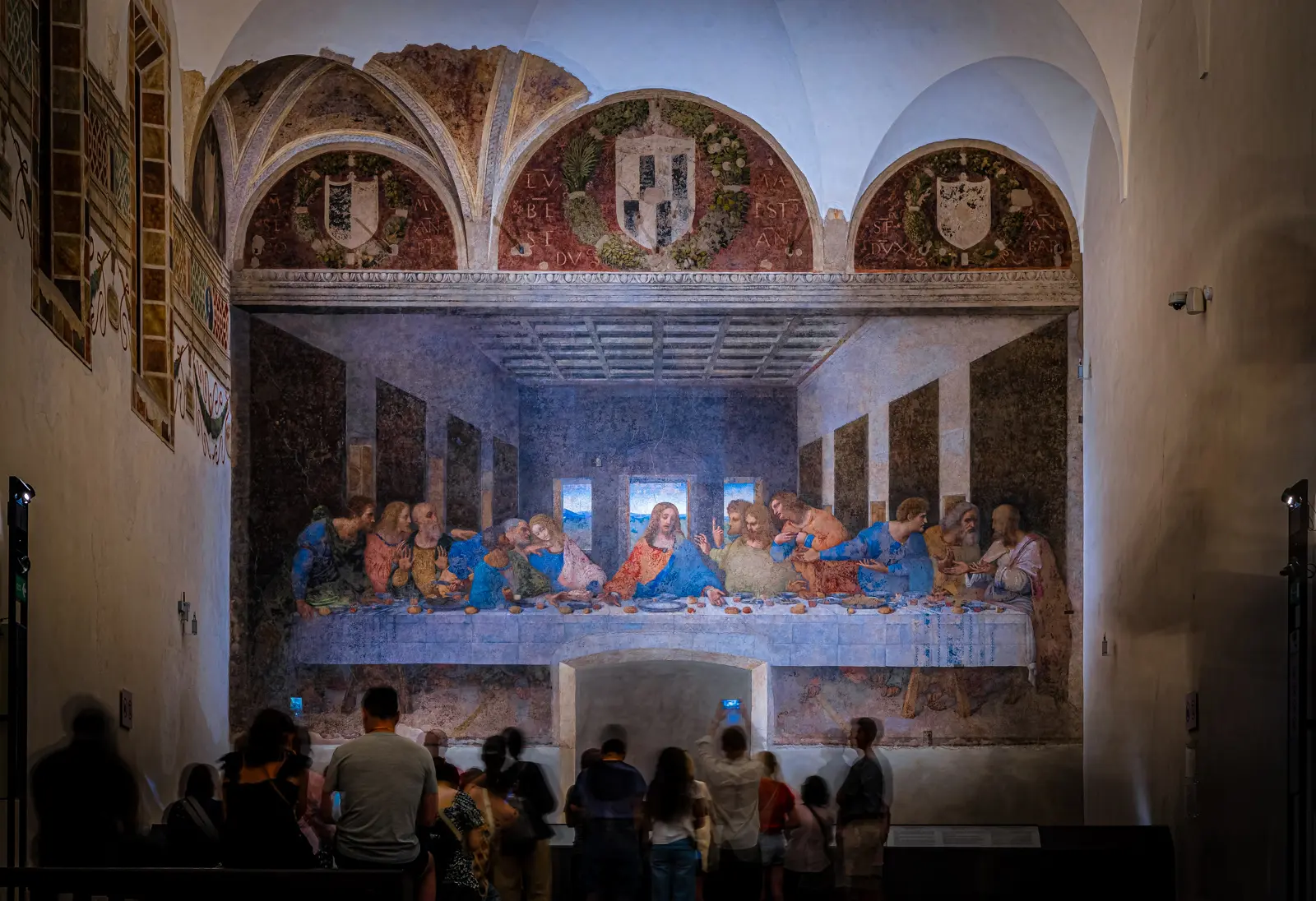
Getting in front of it is a small operation. The refectory has its own entrance and its own ticket, separate from the church, and visitors go in in small groups for exactly fifteen minutes before the doors move them along. The church itself is free.
What I am going back for
Here is what the film did to me. It sent me straight to my own photographs, and then it made me want to book another trip, because the Milan it shows is not quite the Milan I saw.
The Runway team stays at the Palazzo Parigi, a five-star hotel on Corso di Porta Nuova in the centre of the city, and I would like to at least have a drink in it. There is a fashion event at the Villa Arconati, a grand estate at Castellazzo, northwest of Milan, with formal gardens and painted staircases, sometimes called the Versailles of Lombardy, opened to the public in recent years. And the story slips out of the city altogether to Lake Como, where a sixteenth-century villa stands in as a tech billionaire’s Italian home.
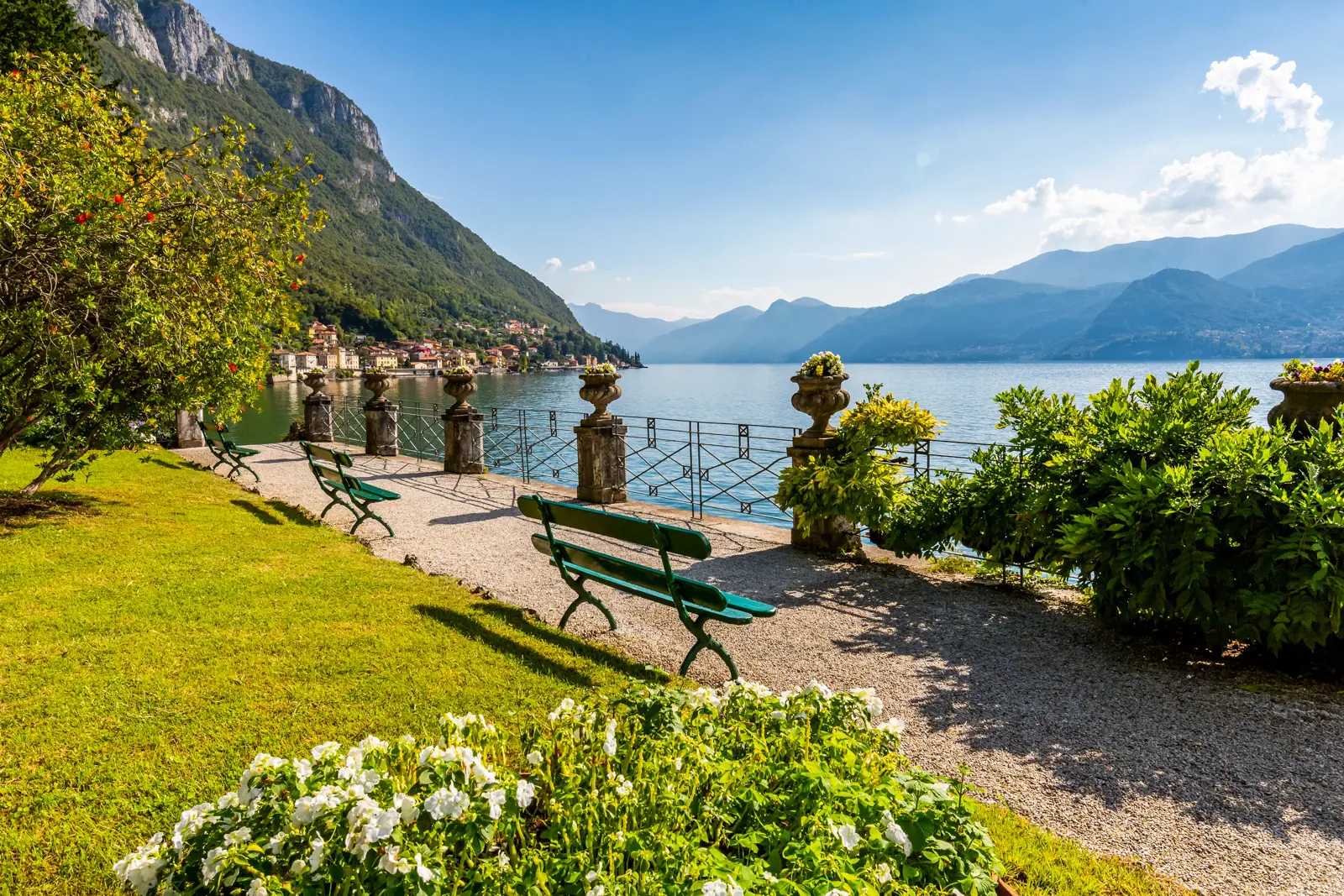
Mostly, though, it made me want to go back to Milan itself. Not for the film locations. Just for Milan.
Bubbly Tips
- Watch the first film again before this one. Twenty years is a long gap, and the sequel rewards you for remembering the details. It also makes the returning characters land harder.
- Go to the piazza twice, once in daylight and once late. The daytime Duomo is the one everybody photographs. The one at midnight, lit and nearly empty, is the one you will remember.
- Look for the bull, then look up. In the Galleria’s central octagon, find the Turin coat of arms in the floor and spin three times on your heel for luck. Then stop and look at the dome, which most people walk straight under.
- The Galleria is free and always open. It is a public passage, not a shop, so you can walk through and photograph it at any hour. Late evening is the calm version.
- Give the Sforza Castle a couple of hours. The grounds and courtyards are free to enter and worth it on their own. The museums are ticketed, and they hold Michelangelo‘s last sculpture, the Rondanini Pietà.
- The Duomo terraces are a separate ticket. Getting inside the cathedral and getting onto the roof are two different tickets. If you only do one, the roof puts you among the spires.
- The Brera courtyard is free to walk into. The Palazzo di Brera’s courtyard, the one the fashion show is shot in, costs nothing and is open to anyone who walks through the door on Via Brera. The Pinacoteca upstairs is a separate ticket, and worth it.
- Book the Last Supper months ahead, and expect fifteen minutes. Tickets are timed, capped and released in batches, and they go fast. The refectory entrance is not the church door. Non-flash photography is allowed, but the clock does not stop for it.
- Milan Fashion Week is glamorous and impossible. The film shot during it. If you want the city rather than the circus, avoid those weeks, when hotel prices climb and the centre fills up.
Final Thoughts
I went in worried that a sequel arriving twenty years late would trade on nostalgia and little else. Instead I got Streep and Hathaway back on form, Gaga rewriting the film’s pulse for three songs, and a whole act set in a city I had walked through, photographed, and thought I was finished with.
That last part is the odd gift of it. Films usually make you want to go somewhere new. This one sent me back through my own pictures of the Duomo and the Galleria, and then made me want to return to the same square and stand in it again, this time with a hotel bar and a villa or two on the list. Twenty years for a sequel; barely twenty minutes of screen time to talk me into a second trip.
Until next time!

🌟 Everything You Need to Plan Your Dream Trip in 2026
- 🌟 Luxury Hotels - Find premium stays with Booking.com & Hotels.com
- 🏡 Vacation Rentals - Discover unique properties on VRBO
- 🏞️ Guided Tours - Explore with Viator or GetYourGuide
- 🎫 Attraction Tickets - Skip the lines with Tiqets
- 🚢 Ocean Cruises - Set sail with Cruise Direct
- 📱 International SIMs - Stay connected with Saily
- 🚗 Car Rentals - Budget-friendly options from Discover Cars
- 🌐 Secure VPNs - Browse safely with NordVPN
- 💶 Currency Exchange - Best rates with Wise
- 🗣️ Learn Languages - Master the local language with Babbel and Rosetta Stone