
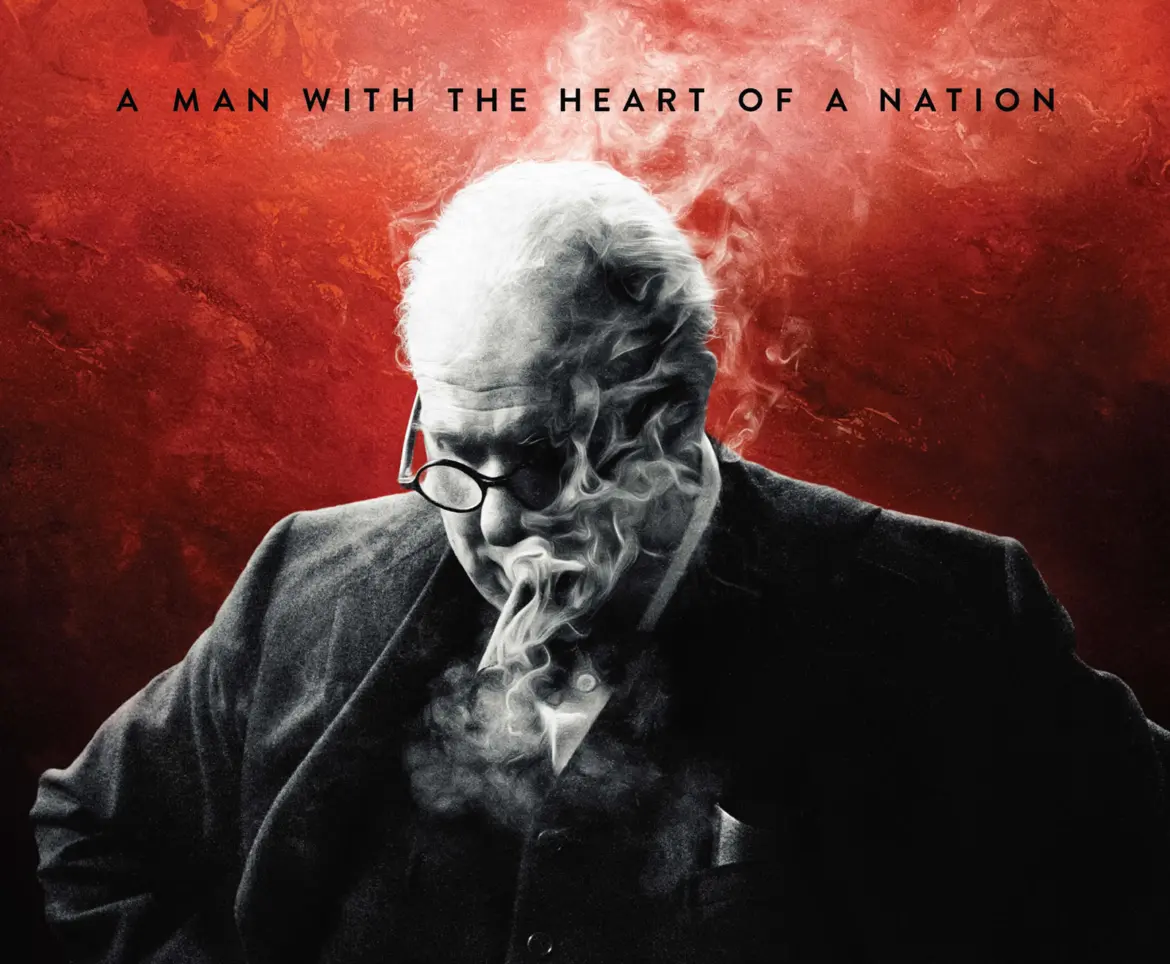
Darkest Hour came out in 2017, with Gary Oldman under layers of prosthetic makeup as Winston Churchill in the last weeks of May 1940. Joe Wright directed, and Oldman won the Academy Award for Best Actor for the role. The story covers a handful of desperate days. Churchill becomes Prime Minister on 10 May 1940, the German army drives through France and pins the British Expeditionary Force at Dunkirk, and the war cabinet argues about whether to fight on or sue for peace.
Most of the film happens in rooms, and here is the honest part before we set off. The House of Commons chamber was built from scratch at Warner Bros Leavesden Studios. The interior of Buckingham Palace in London was filmed at Wentworth Woodhouse in Yorkshire. The scene where Churchill rides the District line and talks to ordinary Londoners was shot on a studio set and is largely invented for the film. So this is not a stand-where-they-filmed-it tour of the big set pieces, because those places were sound stages.
What survives is the real Westminster and Whitehall the film is about, most of it walkable in a few hundred yards, along with the one place the film recreated almost exactly: the bunker under the Treasury where Churchill really did run the war. I walked it from Parliament Square north up Whitehall, and that is the route below.
Darkest Hour at a Glance
🎬 The film · Joe Wright’s 2017 drama; Gary Oldman’s Churchill won the Academy Award for Best Actor.
🎭 The honest part · The Commons chamber was a set at Leavesden, the palace interiors were Wentworth Woodhouse, and the tube scene is invented.
🏛️ What’s real · Whitehall itself — the Downing Street gates, King Charles Street, and the bunker under the Treasury where Churchill actually ran the war.
⛑️ The bunker · The Cabinet War Rooms went operational on 27 August 1939; Churchill’s War Cabinet met there 115 times.
🗿 The statue · Churchill picked the Parliament Square spot himself, drawing a circle on the redevelopment plans in the 1950s.
🚶 The walk · Parliament Square to Trafalgar Square, about twenty minutes on foot, and everything except the War Rooms is free.
Parliament Square and the speeches
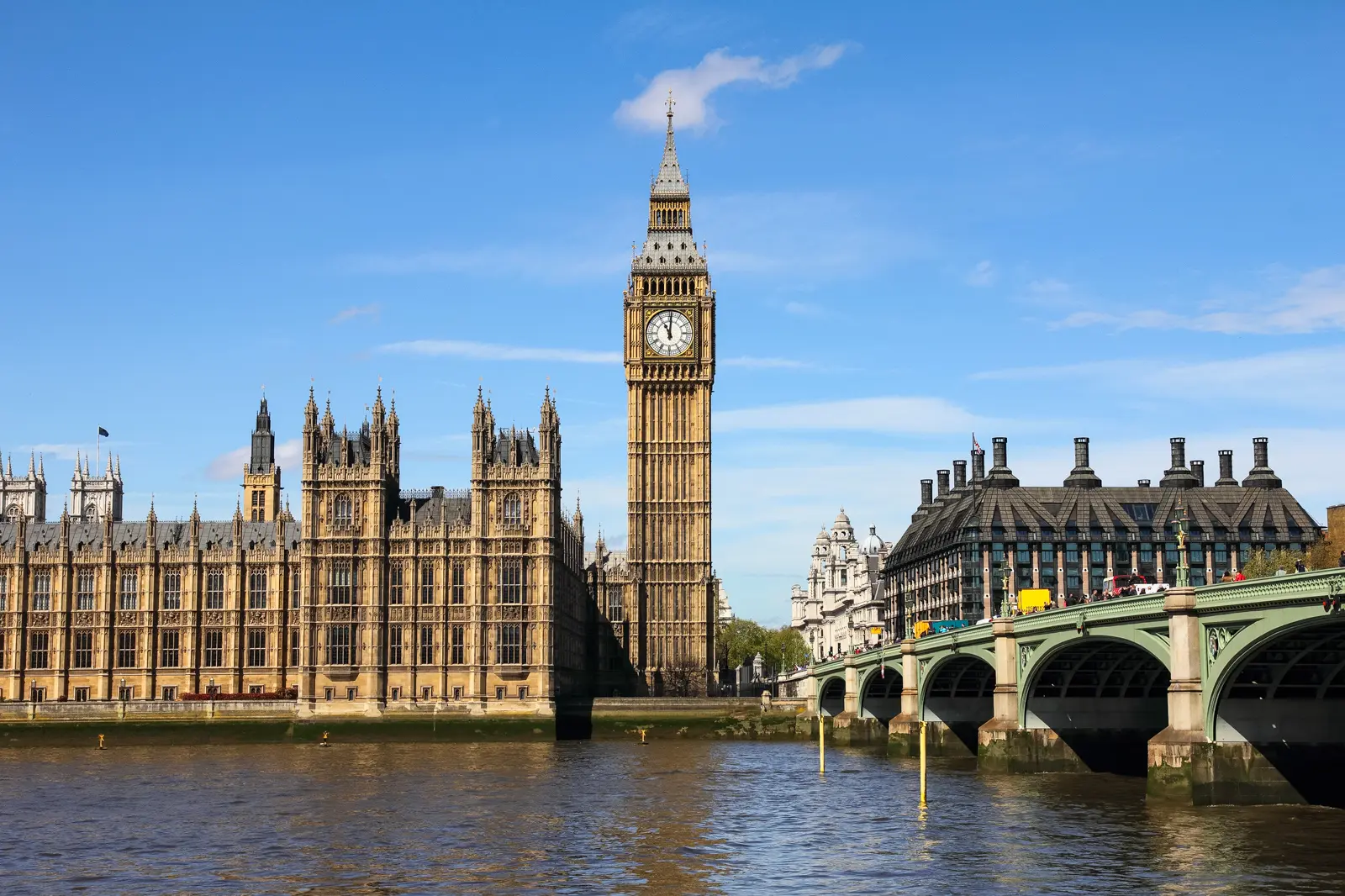
The film builds towards Churchill’s speeches to the House of Commons, the elected chamber of Parliament. They are its spine, the “we shall fight on the beaches” address among them, and the chamber is where the drama resolves. That chamber was a set, and other Parliament scenes were shot at Manchester Town Hall and the John Rylands Library. The real thing is here, on the far bank of the Thames.
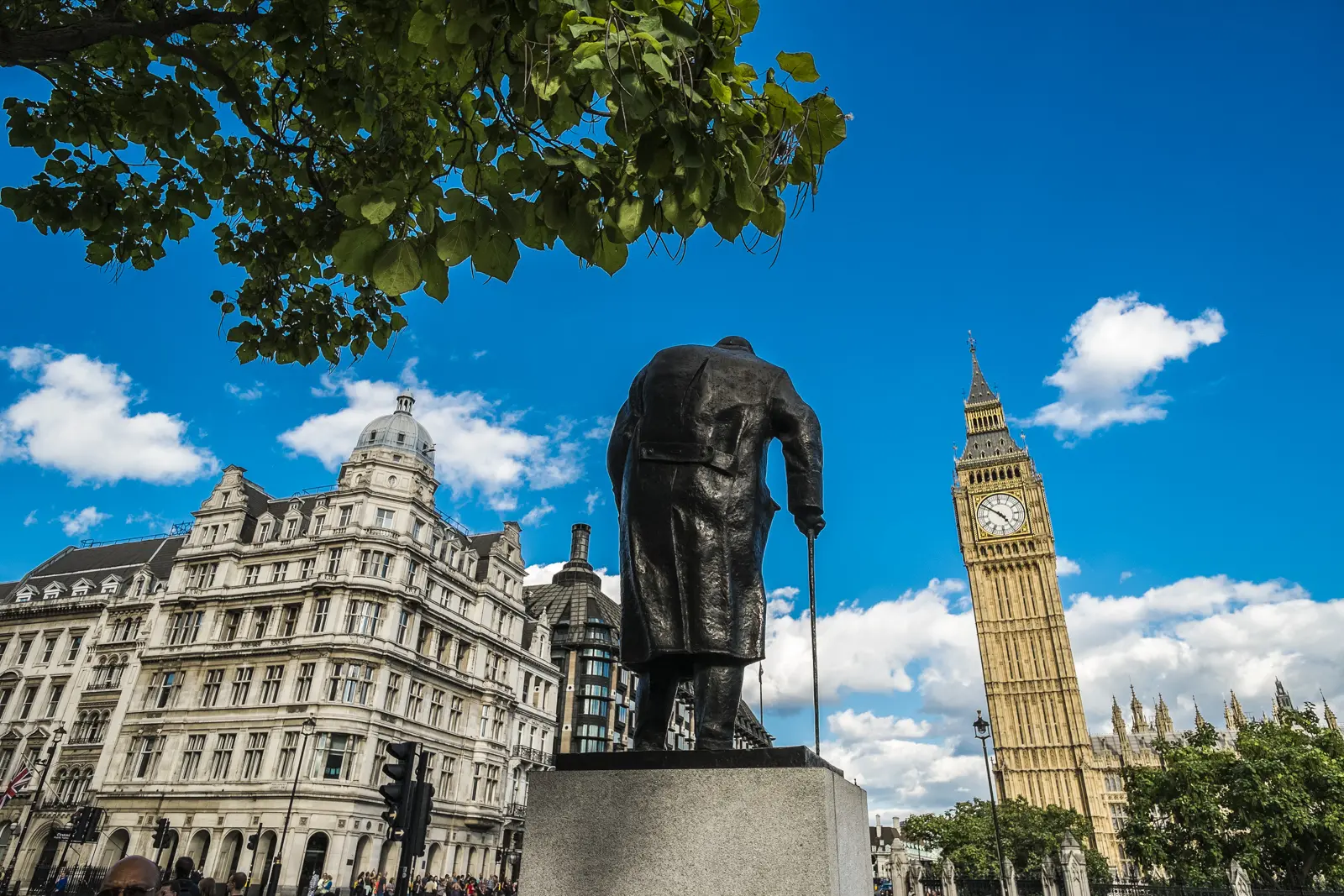
On the north-east corner of Parliament Square, facing the Palace across the road, Churchill stands in bronze in a greatcoat with his hand on a stick. He chose the spot himself. Shown redevelopment plans for the square in the 1950s, he drew a circle on the corner and said that was where his statue would go.
Down Whitehall to Downing Street
North out of Parliament Square runs Whitehall, the wide street that carries the machinery of British government. A short way up on the left are the gates to Downing Street.
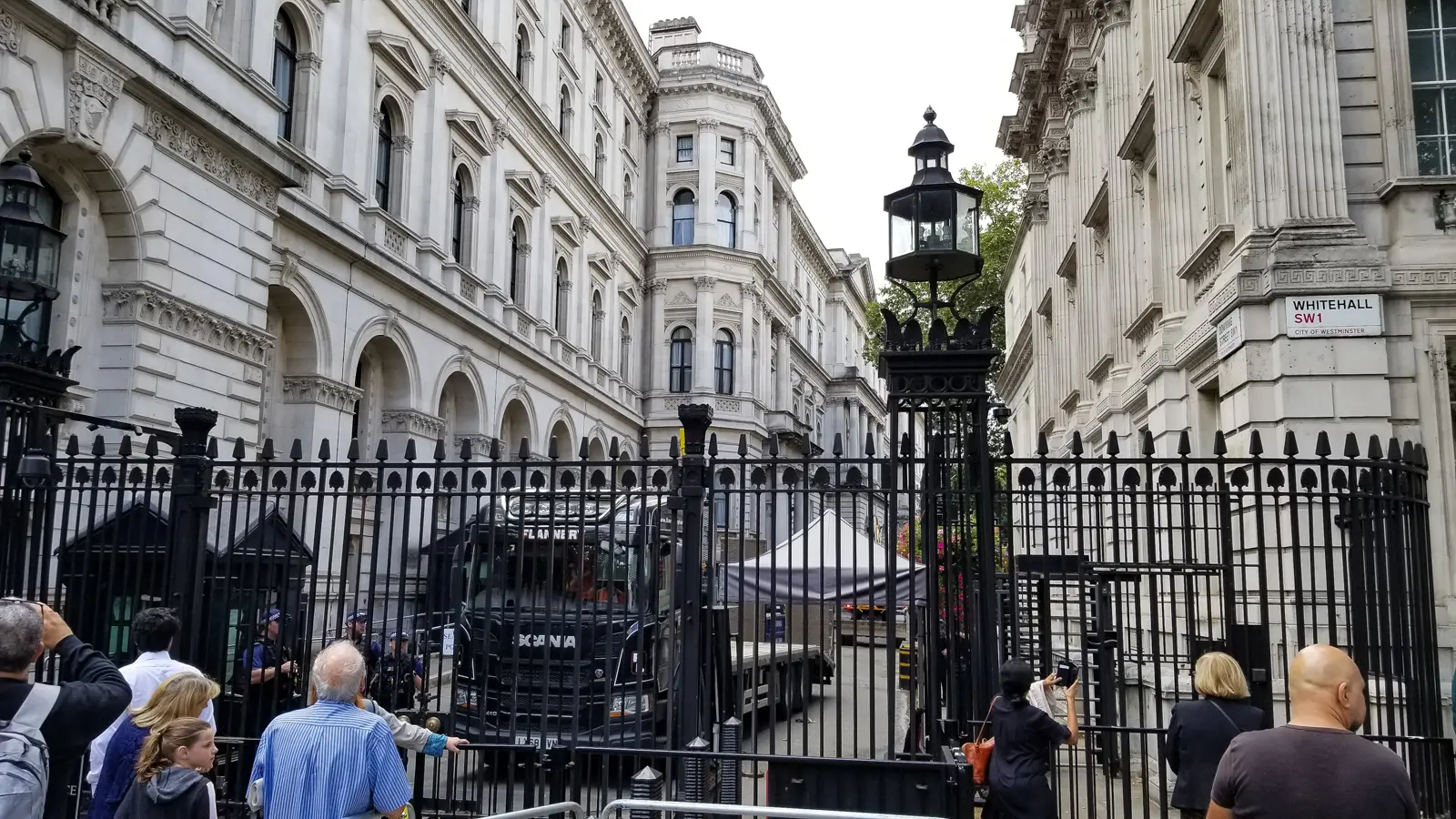
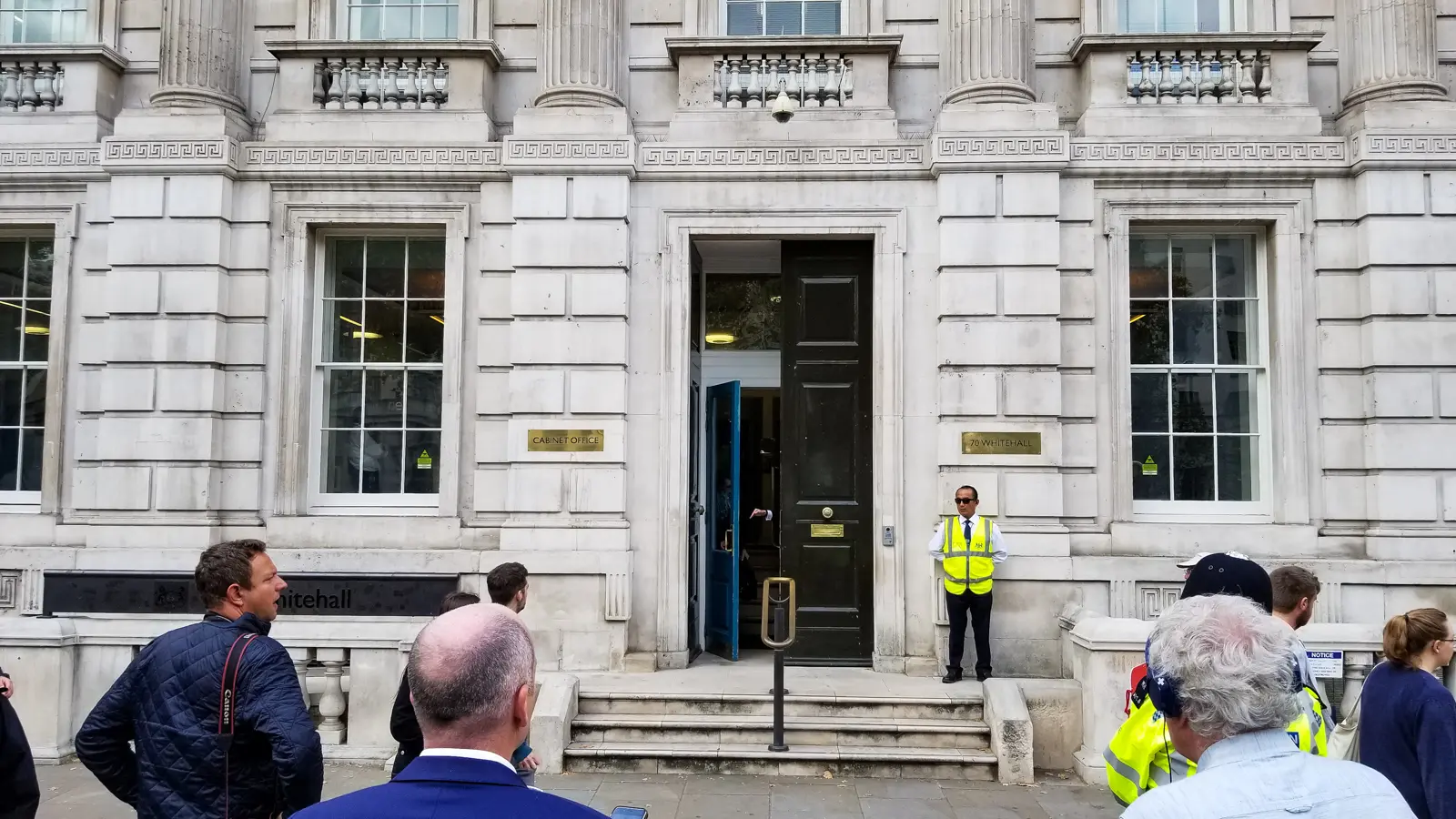
The film puts Churchill’s arrivals and departures at the Downing Street gates, filmed here with some post-production work. A few doors along is the Cabinet Office, the department that runs the centre of government.
King Charles Street and the Foreign Office
Off Whitehall, down King Charles Street, the film comes into sharper focus. This is where Churchill dictates a speech from the back of his car, and the Blitz sequence, where his secretary walks to work as the bombs fall, was filmed at number 33. The street is framed at its western end by George Gilbert Scott’s Foreign Office.
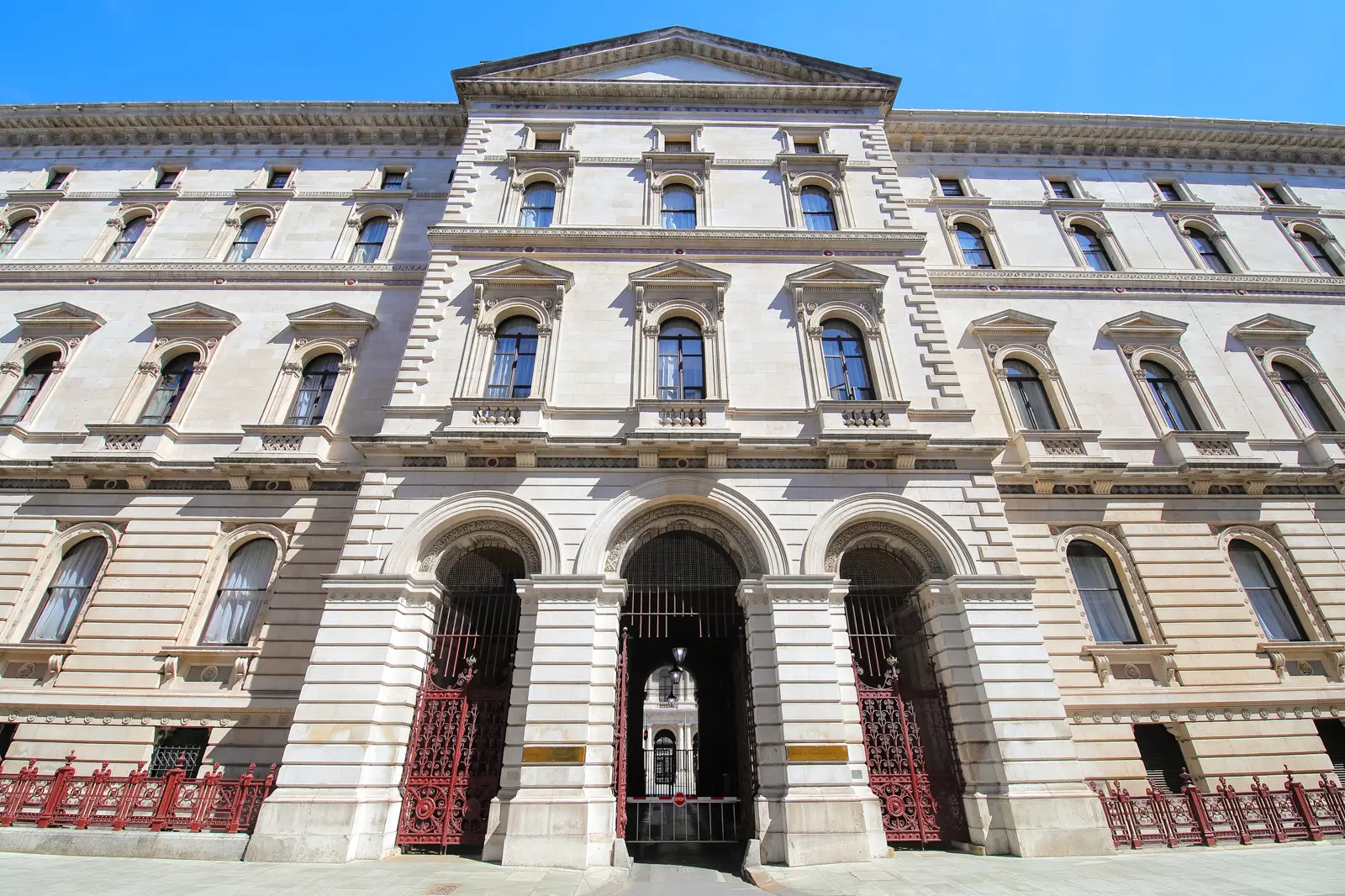
From the arch, the view across the road is of the Treasury, and below it the bunker that is the real heart of this story.
The Churchill War Rooms
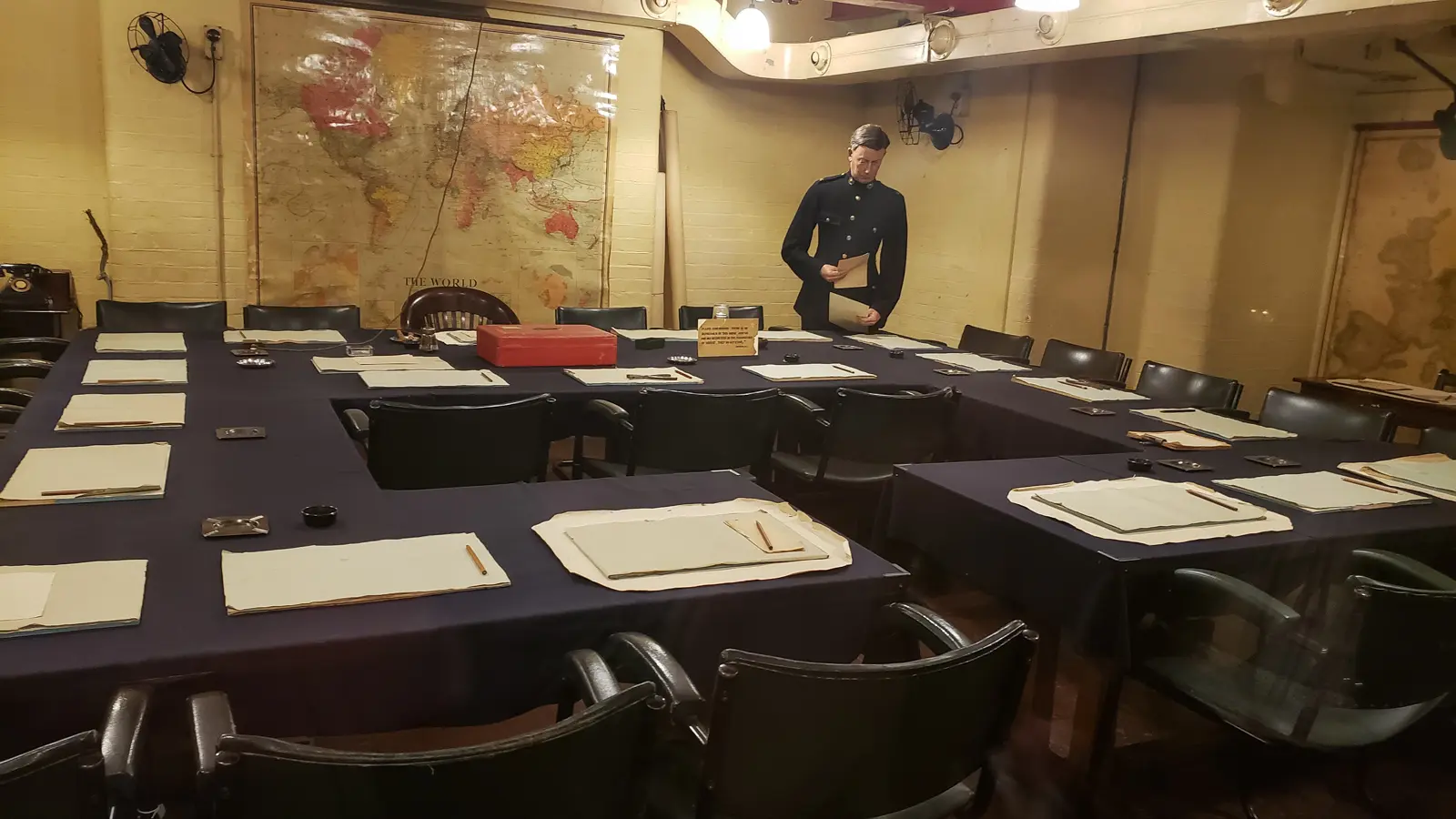
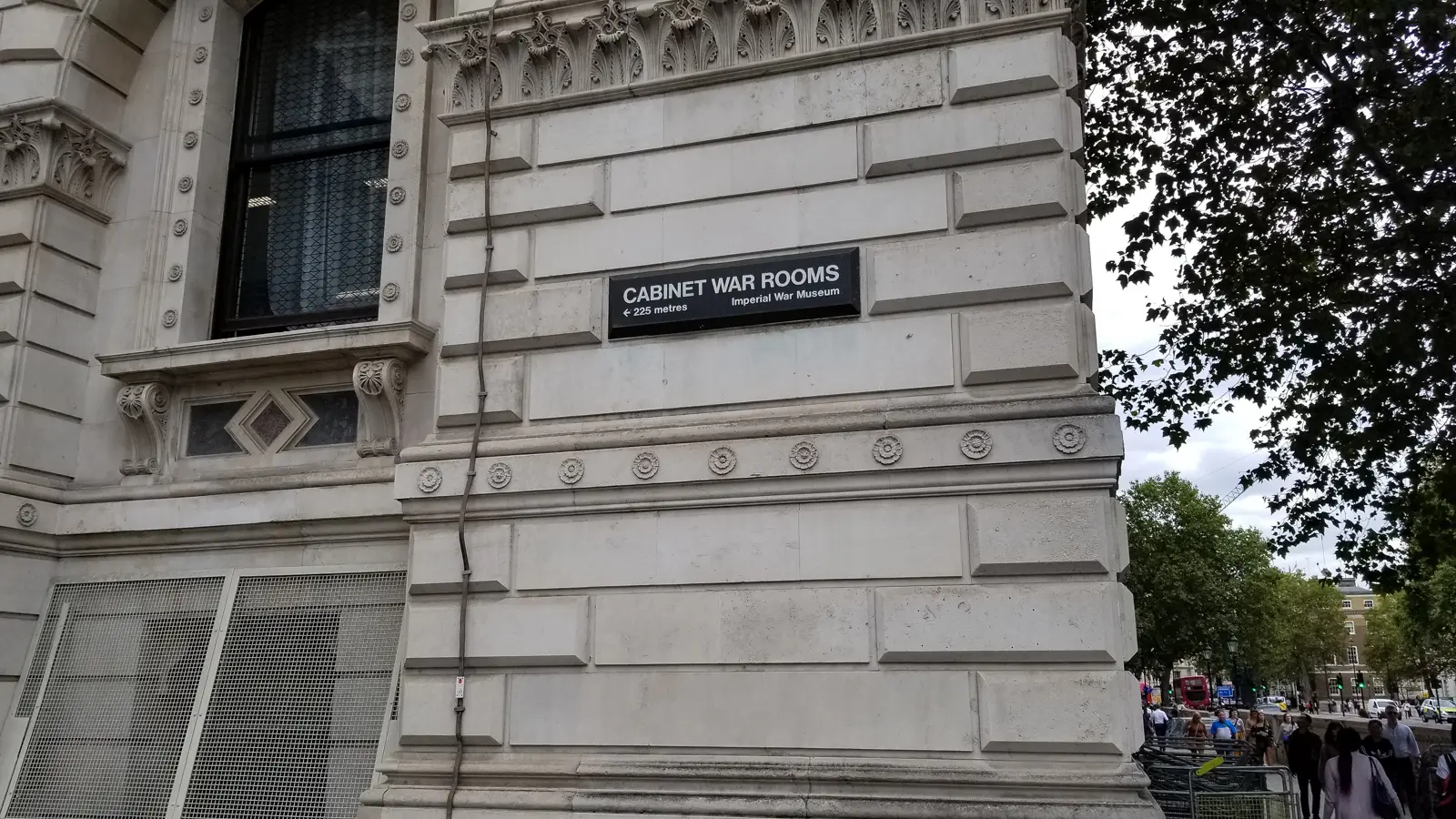
This is the one place the film did not have to invent, because it survives underneath the street. The Cabinet War Rooms are a basement complex beneath the Treasury building, and they became fully operational on 27 August 1939, a week before Britain declared war on Germany. Churchill’s War Cabinet met here 115 times. Down the stairs, the low ceilings and the recycled air are the real thing.
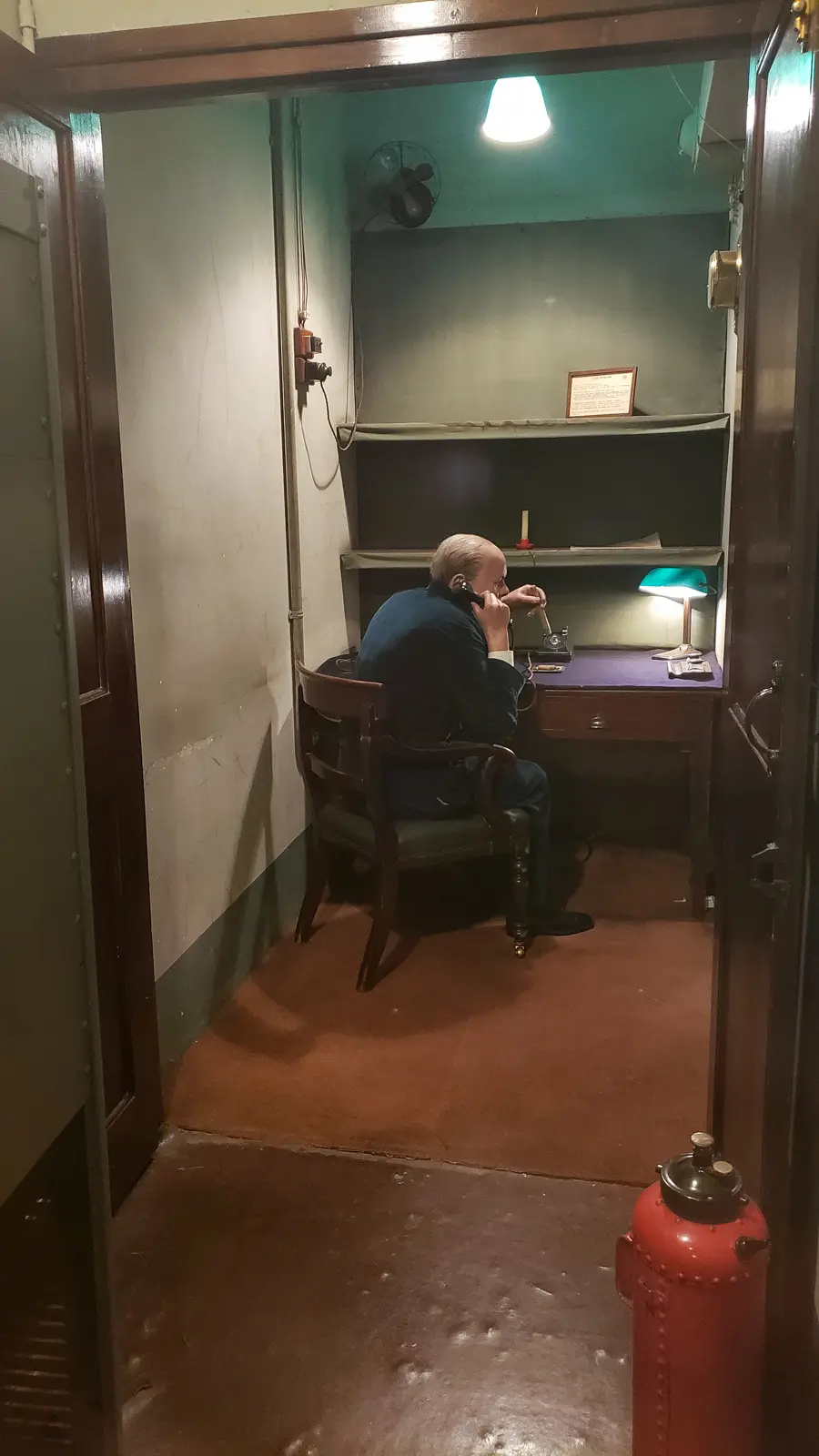
Off the main corridor is a small room that looks like a broom cupboard and held a closely kept secret of the war.
The rooms were used around the clock. The lights in the Map Room were finally switched off on 16 August 1945, the first time in six years, and the place was left almost as it stood.
Whitehall’s war memory
Back up on Whitehall, the street doubles as the nation’s memorial to the wars the film is set inside. In the middle of the road stands the Cenotaph, whose name is Greek for ’empty tomb’.
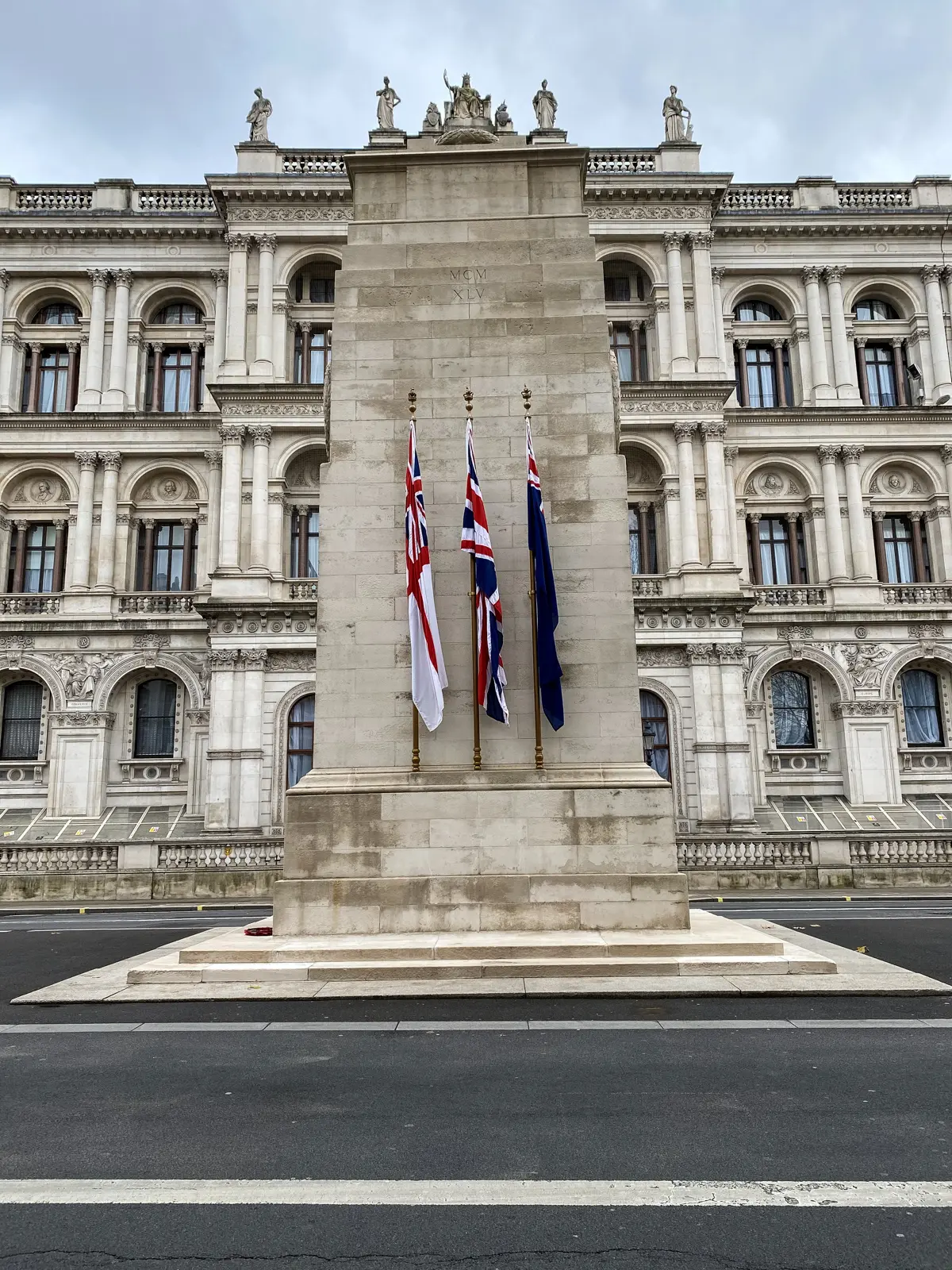
Edwin Lutyens designed it, first as a temporary structure for the victory parade of 1919, then in Portland stone for the following year. It carries no cross, no angel, no flag carved in stone and no national emblem, a decision made so it could stand for the dead of every faith and none. It reads only “The Glorious Dead”. A few steps north stands a later and very different memorial, the Monument to the Women of World War II.
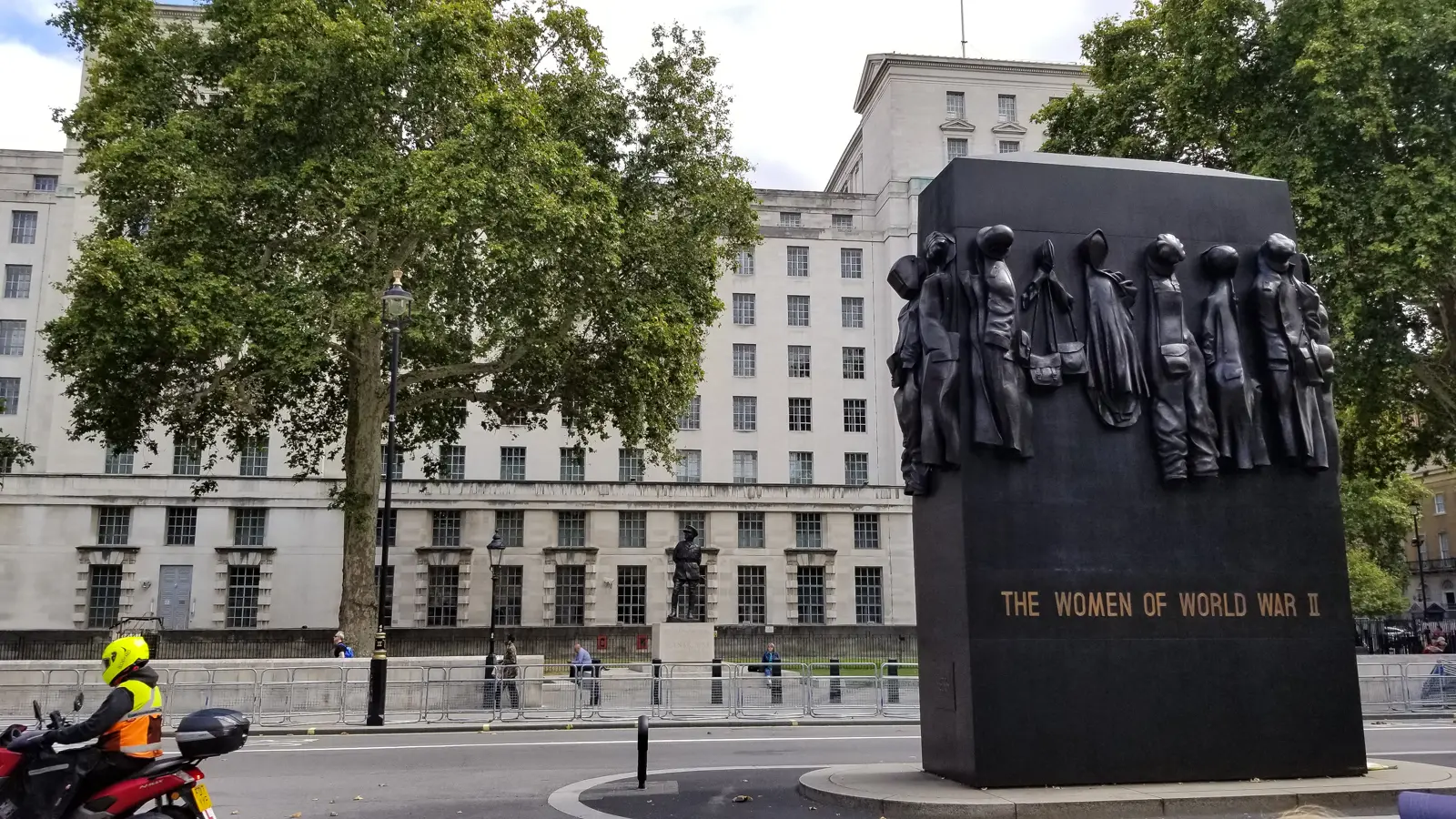
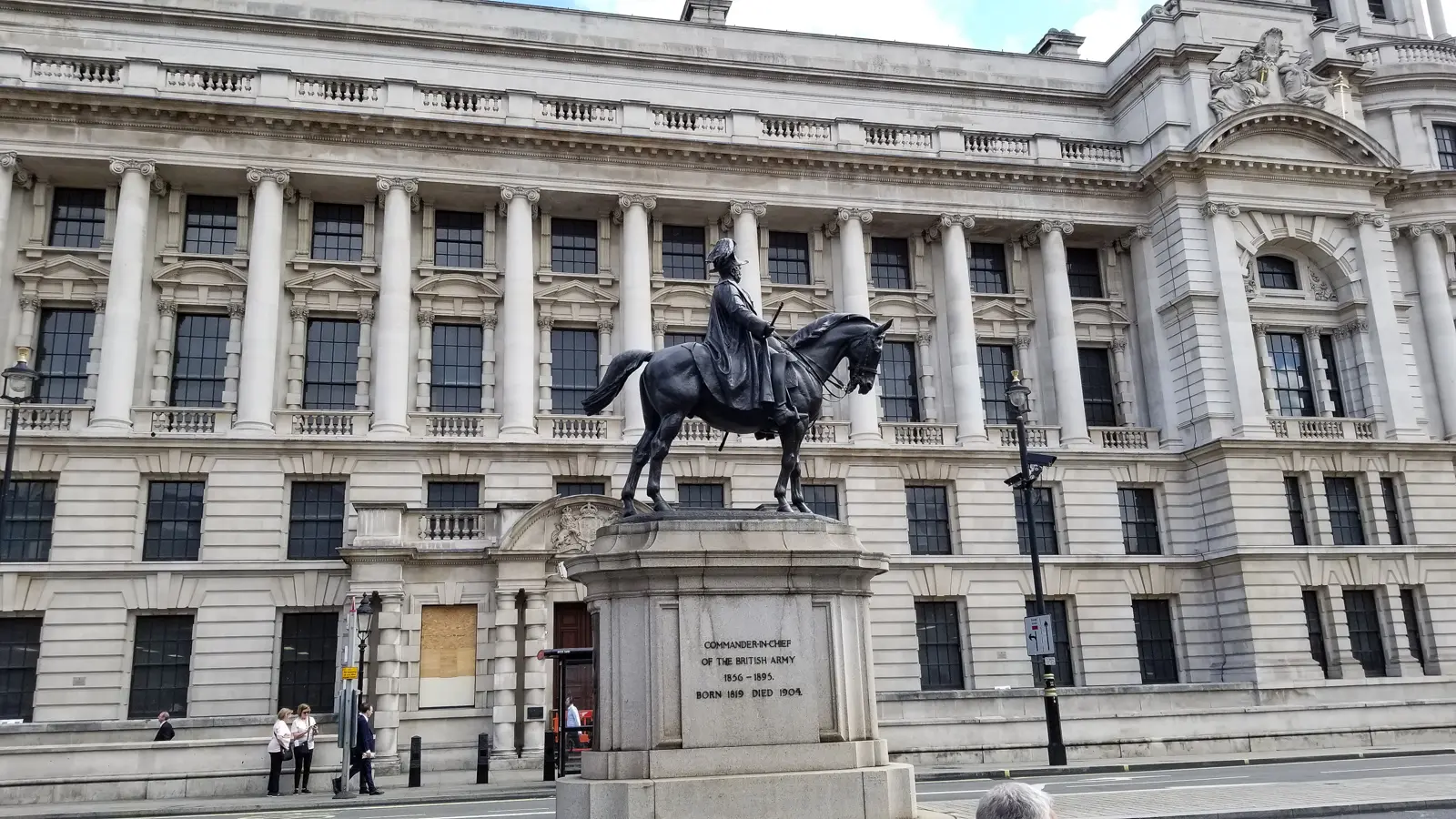
The pale building behind the memorial is the Ministry of Defence, and its Whitehall Gardens frontage on Horse Guards Avenue was one of Darkest Hour’s genuine filming locations. Further up, a bronze soldier on horseback rides in front of the Old War Office. He is Prince George, Duke of Cambridge, a cousin of Queen Victoria who commanded the British Army for nearly forty years, and the building behind him is where Churchill worked as Secretary of State for War after the First World War.
Churchill’s Admiralty and the King
Whitehall runs out at Trafalgar Square, and the grand arch across the top of it belongs to Churchill’s story too. Before he was Prime Minister he was First Lord of the Admiralty, the political head of the Royal Navy, a job he held in 1911 and again in 1939.
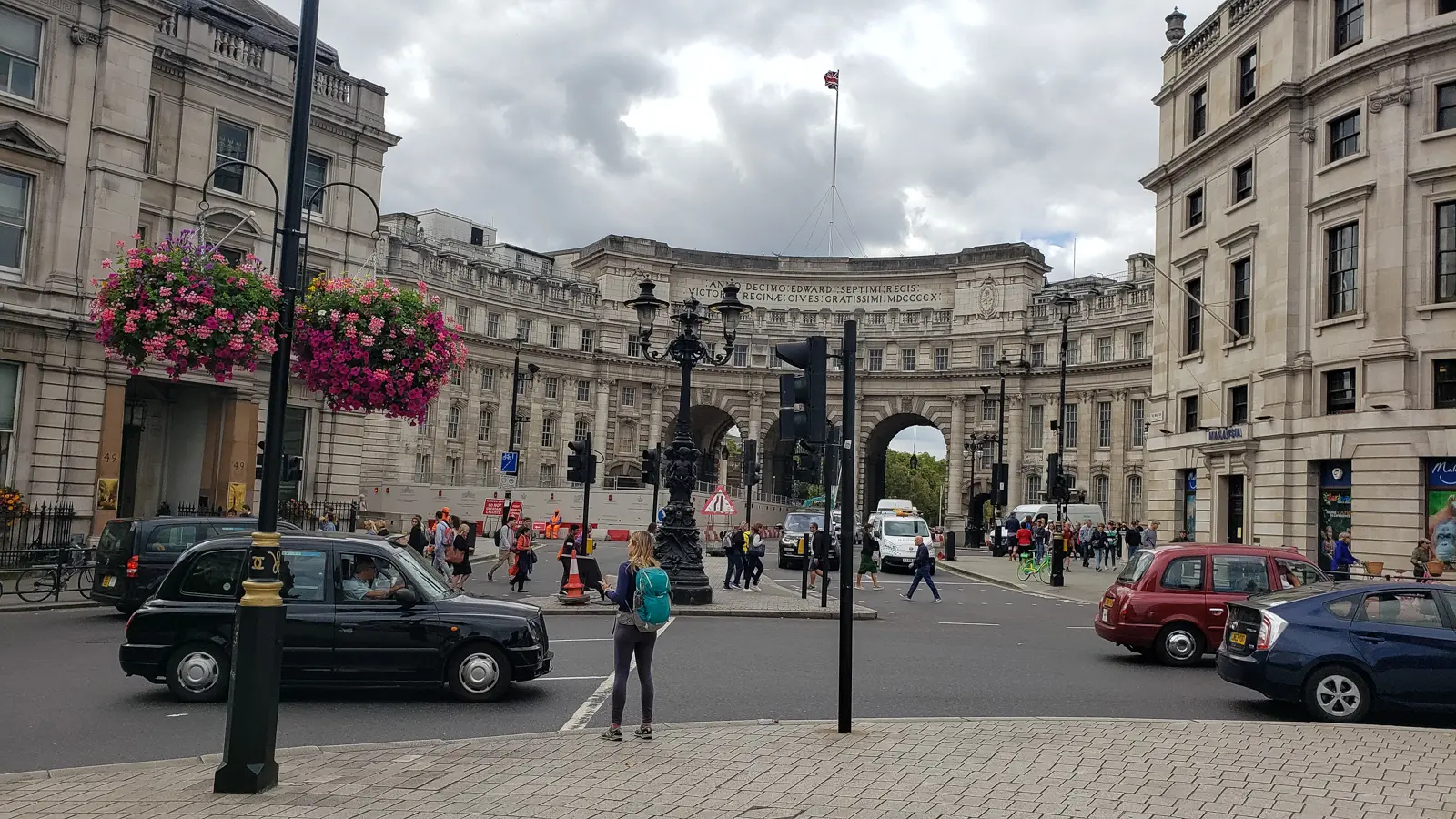
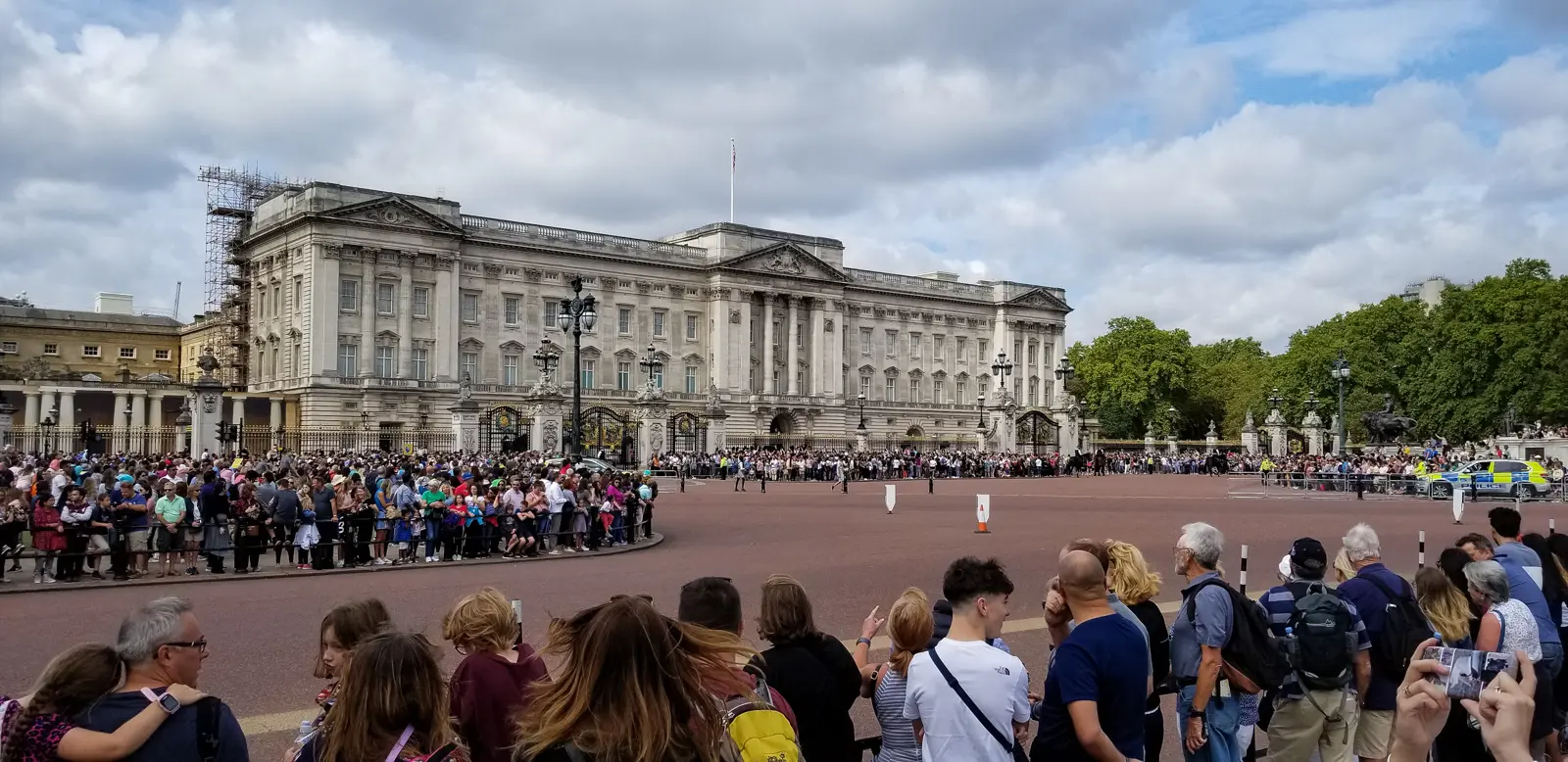
The other crown in the film belongs to the King George VI, played by Ben Mendelsohn, is the nervous monarch who comes to trust Churchill, and the same king Colin Firth played in The King’s Speech. His palace is a short walk down The Mall.
Bubbly Tips
- Walk it south to north. Start at Westminster tube or Parliament Square and head up Whitehall to Trafalgar Square. The whole route is about twenty minutes on foot without stops, and it runs past nearly everything in this post in order.
- Book the War Rooms ahead. Timed tickets sell out on weekends and in the school holidays. Weekday mornings are the quietest, and you want at least two hours underground for the rooms and the Churchill Museum.
- The War Rooms entrance is at Clive Steps. It is at the King Charles Street end, by St James’s Park, not on Whitehall itself. Follow the signs down towards the park rather than looking for a grand front door.
- You cannot go into Downing Street. The gates are as close as anyone gets. View them from the Whitehall pavement, and do not expect more than a look through the railings.
- Shoot the Cenotaph early. It stands in the middle of Whitehall’s traffic, so the best photographs come from the pavement islands, and early morning gives you the emptiest road.
- Pair it with St James’s Park and the Palace. The War Rooms back onto St James’s Park, and Buckingham Palace is about ten minutes’ walk across it, which makes a natural continuation of the route.
- Watch the film first, but know the sets. Darkest Hour rewards a rewatch before the walk. Just remember the Commons chamber and the palace interiors were sound stages, so those are scenes to picture, not places to enter.
- Nearest tubes. Westminster on the Jubilee, District and Circle lines drops you at Parliament. St James’s Park, on the District and Circle lines, is closest to the War Rooms.
- Almost all of it is free. Everything outdoors on this walk costs nothing. Only the Churchill War Rooms charge admission, so budget for that one ticket and enjoy the rest.
Final Thoughts
What makes this walk work is the gap between the film and the ground. The speeches, the palace, the vote of the Commons: those were built on sets, because a film needs to control its rooms. But the Downing Street gates are real, King Charles Street is real, and the bunker under the Treasury is as real as it gets, down to the scratch marks on the arm of Churchill’s chair. The Cabinet Room is not a recreation. It is the place itself.
The walk has its own arc. It begins with the bronze Churchill on the corner of Parliament Square, standing on the spot he picked himself, in his greatcoat, facing the Commons a few hundred yards from the bunker where he said he would direct the war. It ends at Buckingham Palace, down The Mall. The film closes on his speech to the House; the walk closes at the home of the King who, by its end, had come round to him.
Until next time!

🌟 Everything You Need to Plan Your Dream Trip in 2026
- 🌟 Luxury Hotels - Find premium stays with Booking.com & Hotels.com
- 🏡 Vacation Rentals - Discover unique properties on VRBO
- 🏞️ Guided Tours - Explore with Viator or GetYourGuide
- 🎫 Attraction Tickets - Skip the lines with Tiqets
- 🚢 Ocean Cruises - Set sail with Cruise Direct
- 📱 International SIMs - Stay connected with Saily
- 🚗 Car Rentals - Budget-friendly options from Discover Cars
- 🌐 Secure VPNs - Browse safely with NordVPN
- 💶 Currency Exchange - Best rates with Wise
- 🗣️ Learn Languages - Master the local language with Babbel and Rosetta Stone