
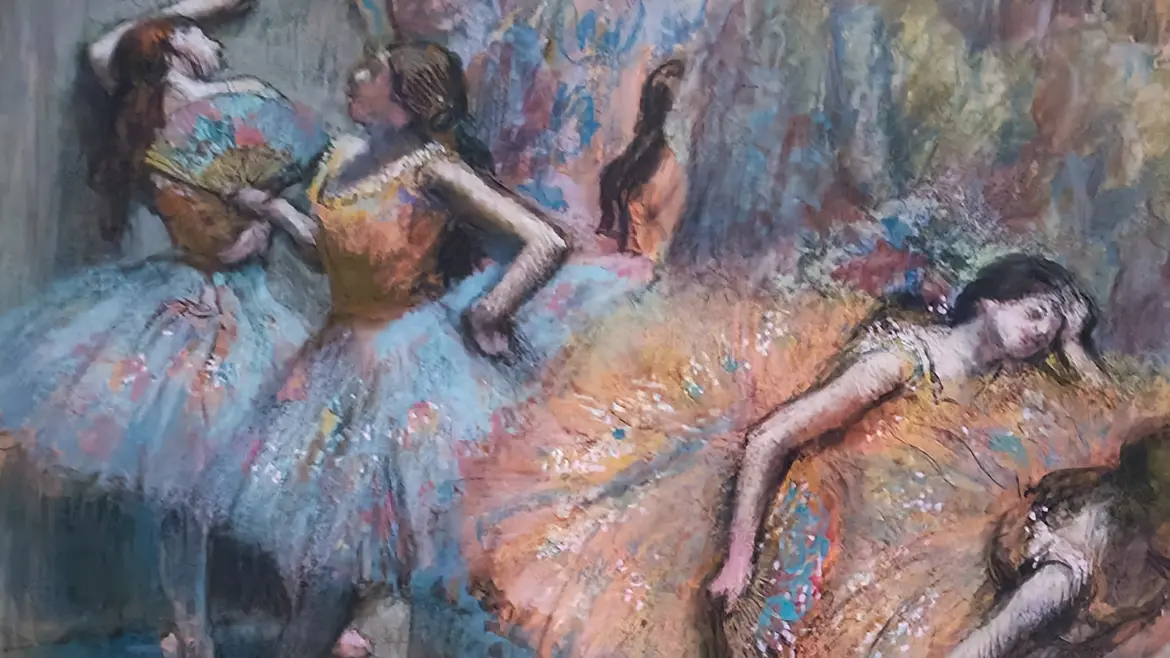
The National Gallery in London turned two hundred in 2025, and to mark it the whole collection was rehung and a few new works came in. One of them is this pastel by Edgar Degas: five ballet dancers resting in the wings, in orange and turquoise tutus, their poses less graceful than tired. Behind the colour are aching feet, and a dancer slumped with her head in her hand. I went to see it on a grey December afternoon, on a slow walk through the Gallery’s Impressionist rooms.
The Impressionists painted modern life as they found it: dancers and boulevards, railway stations and river fog, weather and crowds. A surprising number of the paintings in these rooms passed at some point through the hands of one man, the dealer Paul Durand-Ruel, who owned this very Degas and spent his life backing painters almost nobody else would buy. He turns up again a few steps away, in the story of how some of these artists came to be in London at all.
I knew a lot of these painters long before I reached this room. I had read about them for years, and I had stood in front of Monet, Renoir and Degas in Paris, at the Musée d’Orsay, the Orangerie and out at Giverny. What I did not expect was to find so many of them here in London. The Impressionist rooms were packed, shoulder to shoulder, and I left promising myself I would come back and linger.
The Impressionists at a Glance
🩰 The newcomer · Degas’s pastel Ballet Dancers, acquired in 2025 for the Gallery’s bicentenary and hung in Room 42.
🎨 The refuge story · Monet and Pissarro fled the Franco-Prussian War to London in 1870, met the dealer Paul Durand-Ruel there, and studied Turner and Constable.
🌫️ The London picture · Monet’s The Thames below Westminster, painted around 1871, with Parliament rising through the fog.
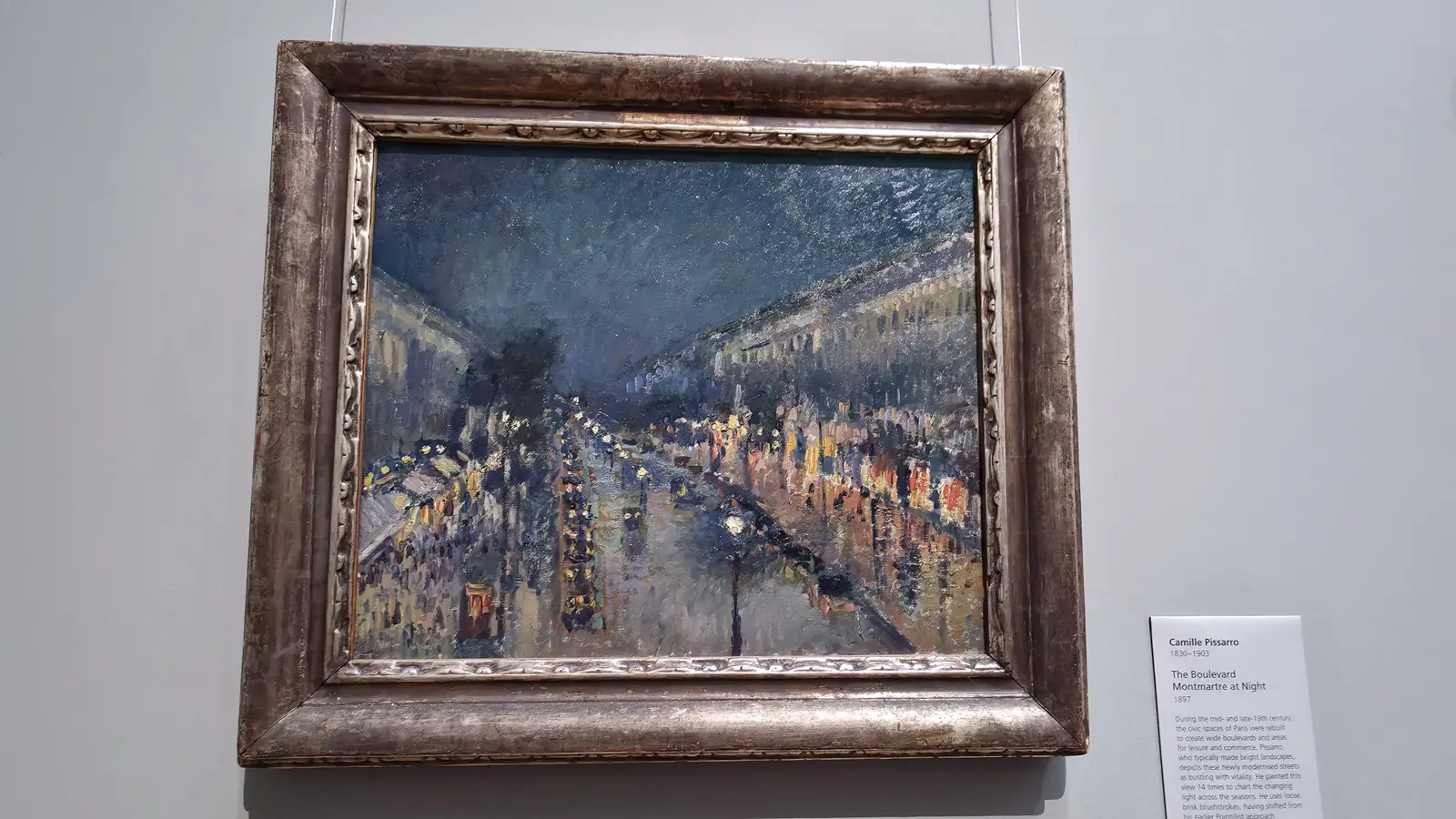
🌃 The night scene · Pissarro’s Boulevard Montmartre at Night, the only nocturne among his fourteen views of the boulevard.
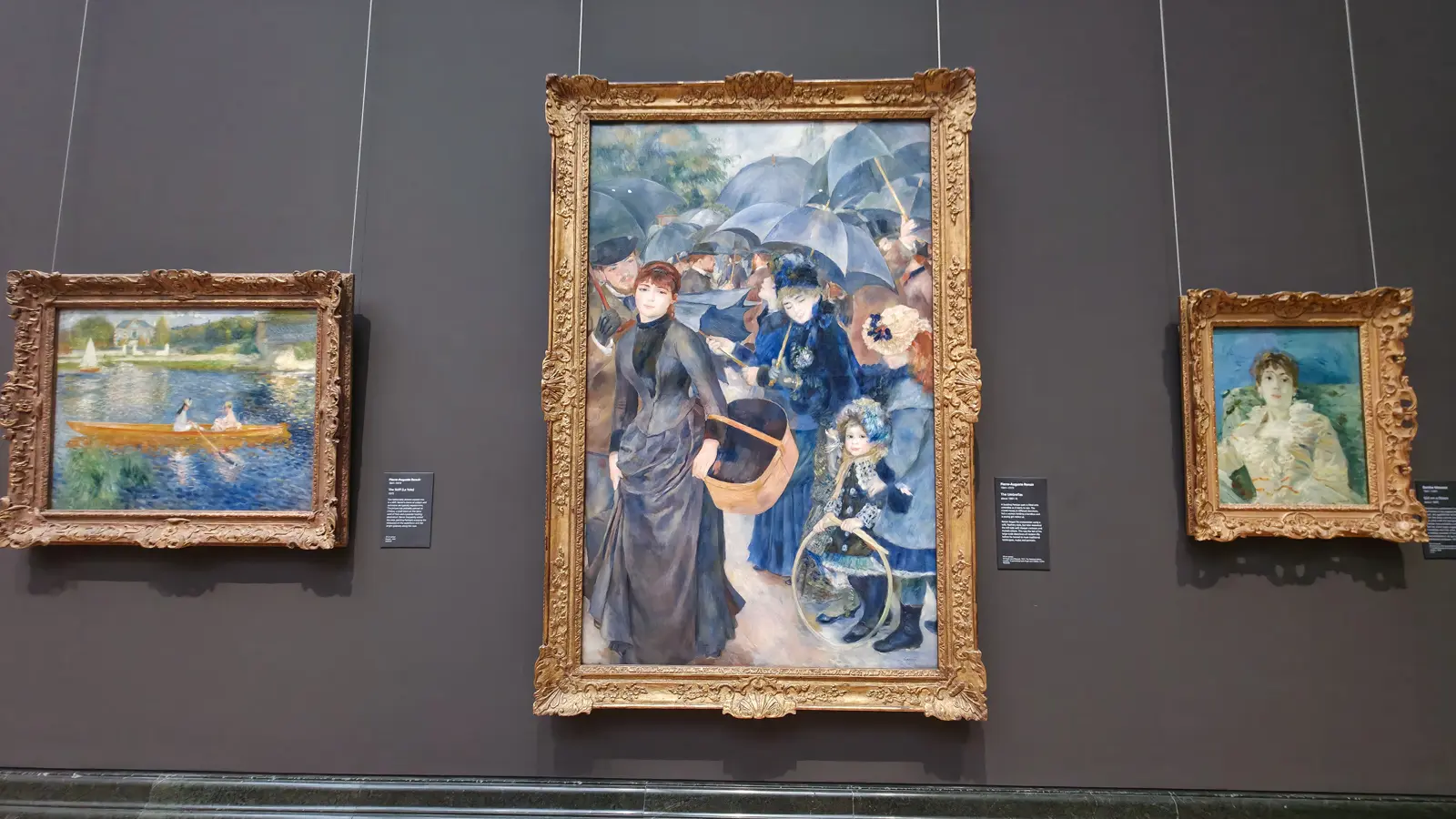
☔ The crowd-pleaser · Renoir’s The Umbrellas, painted in two stages in the 1880s, his style visibly changing inside one picture.
💷 Cost · Nothing. The permanent collection is free, and the Impressionist rooms sit together.
The war that sent them to London
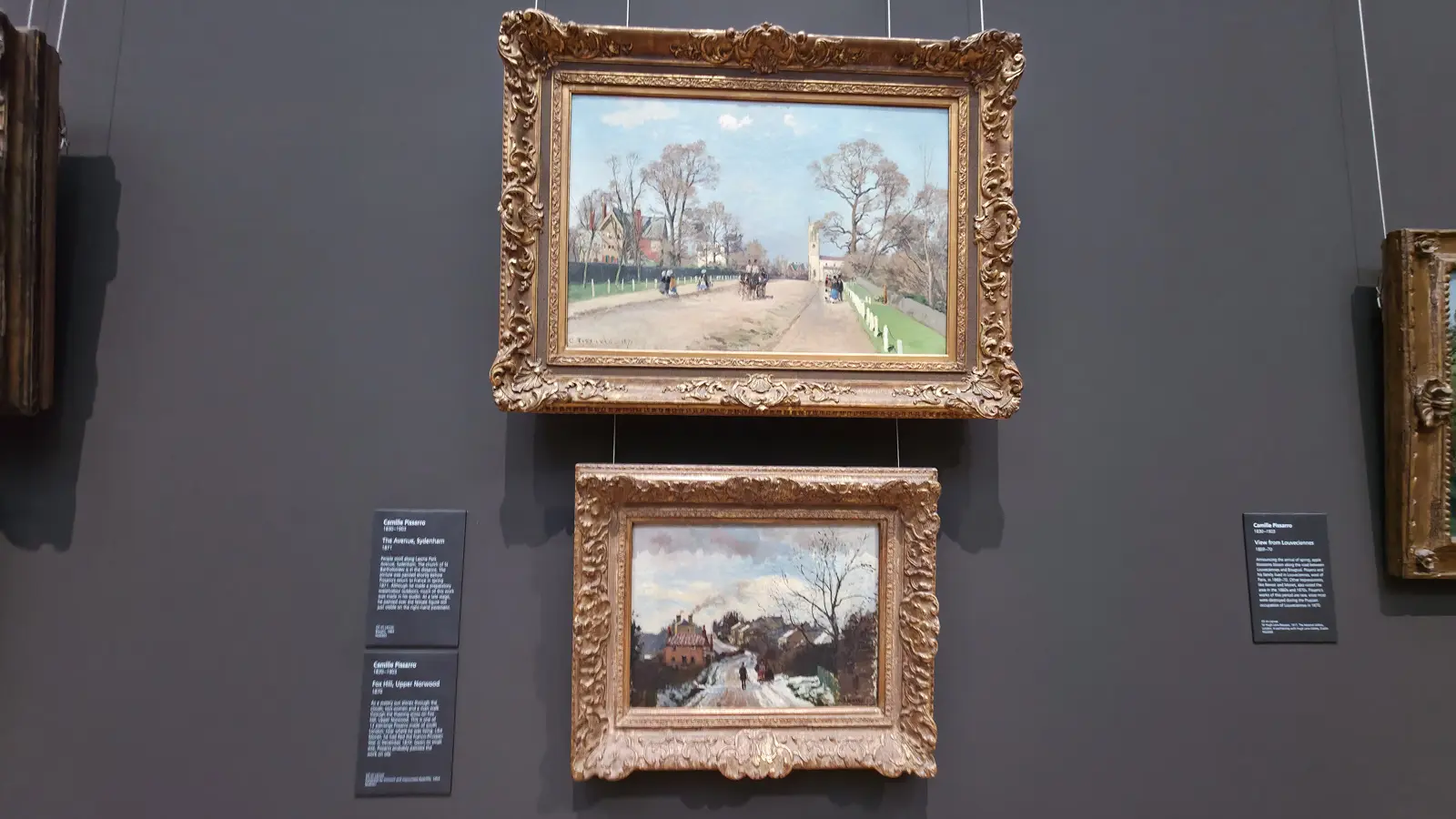
In the summer of 1870, France went to war with Prussia, and by the autumn some of the future Impressionists had crossed the English Channel to London. Claude Monet came first, twenty-nine and broke, dodging conscription and setting up home with his wife in Kensington. Camille Pissarro followed in December, joining relatives in the South London suburb of Norwood, his house near Paris turned into a stable and most of the paintings he left behind destroyed. English collectors were not buying, and Monet went home in 1871, disheartened. But it was in London that both men met Durand-Ruel, another refugee, and studied Turner and Constable in this very gallery.
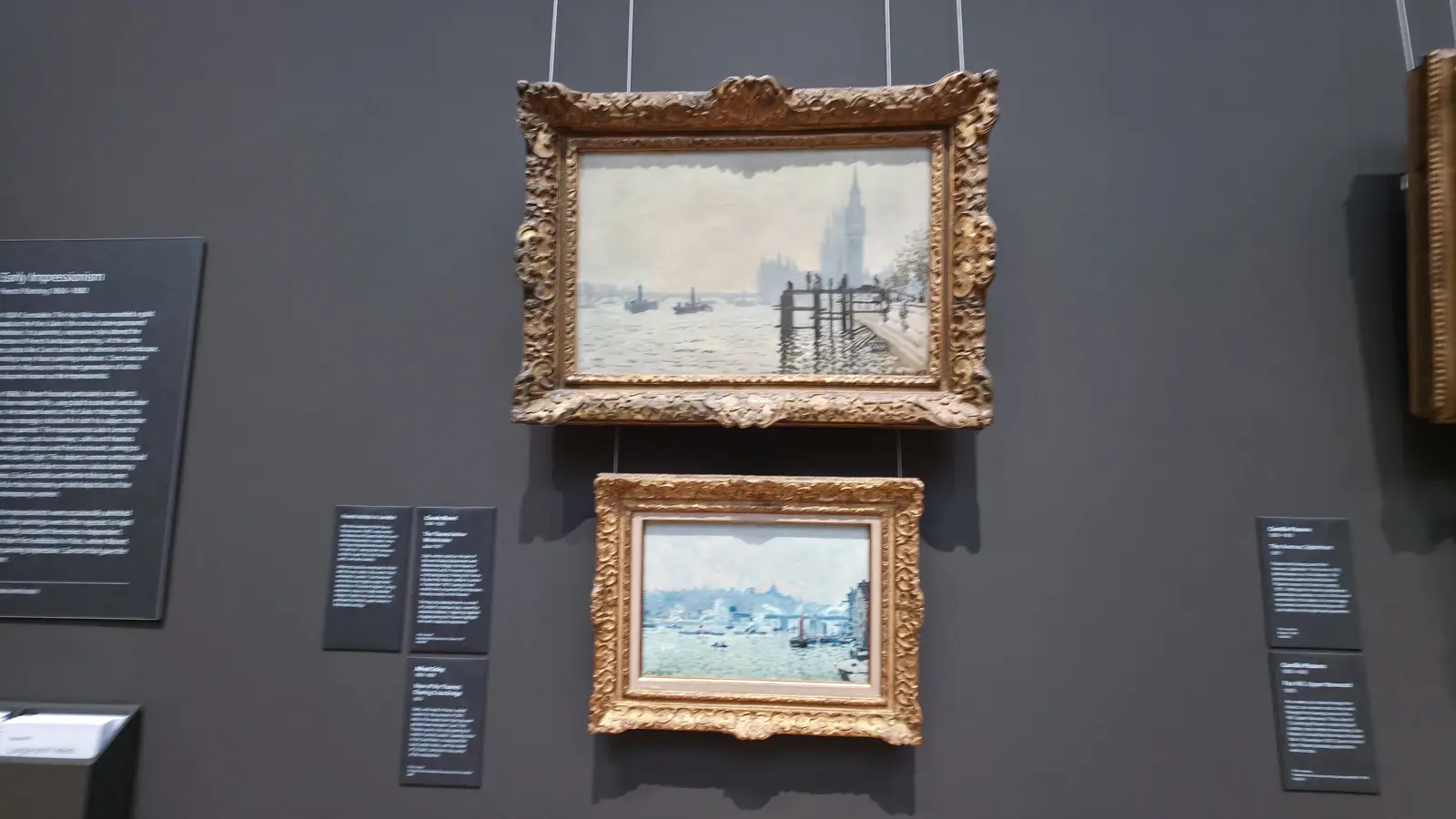
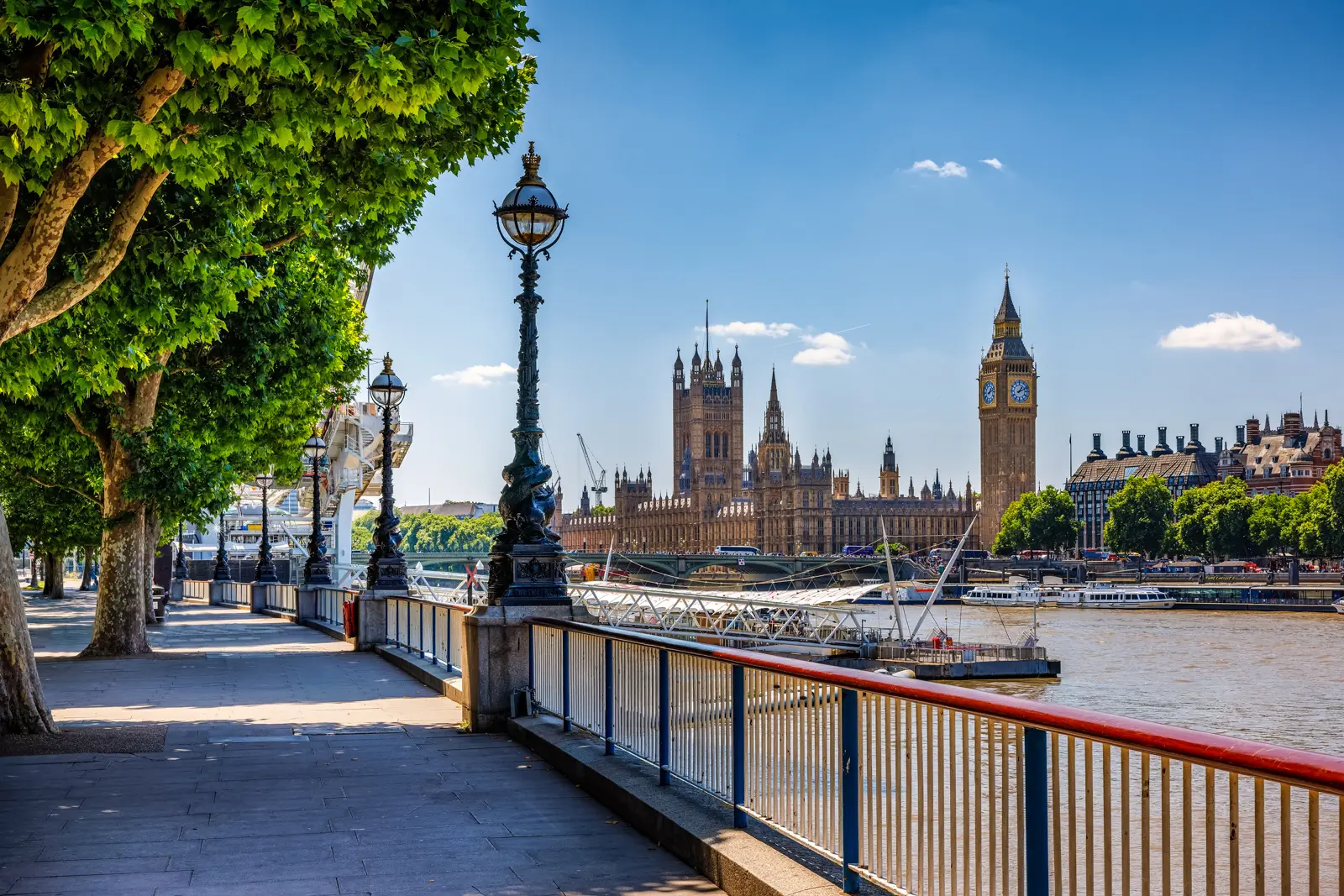
Monet painted the river, all haze and grey, with the new Houses of Parliament rising through the fog. His fog is long gone, but the view has not moved. The real Thames today is busier and brighter, and yet Parliament and Westminster Bridge sit exactly where he left them, which is the quiet pleasure of standing in front of a painted version of a place I already know.
Pissarro did the opposite. He barely touched central London and painted his own suburb instead, the snowy lanes and tree-lined roads of Norwood and Sydenham. Sydenham has a place in an earlier post of mine, too: this is where the Crystal Palace was rebuilt after the Great Exhibition of 1851, and Pissarro was painting the streets right around it.
Paris after dark
Back in France, the great subject was Paris itself, rebuilt in the mid-nineteenth century into the city of wide boulevards we know now. Pissarro painted one of those boulevards at night, glowing with gaslight and shop windows and the smear of traffic in the wet.
Renoir was drawn to people at their leisure. The Umbrellas, one of the most loved paintings in the building, is a crowd caught in sudden rain, and it holds a small secret: he painted it in two stages years apart, so the softer, feathery figures and the crisper, firmer ones show his style shifting inside a single picture.
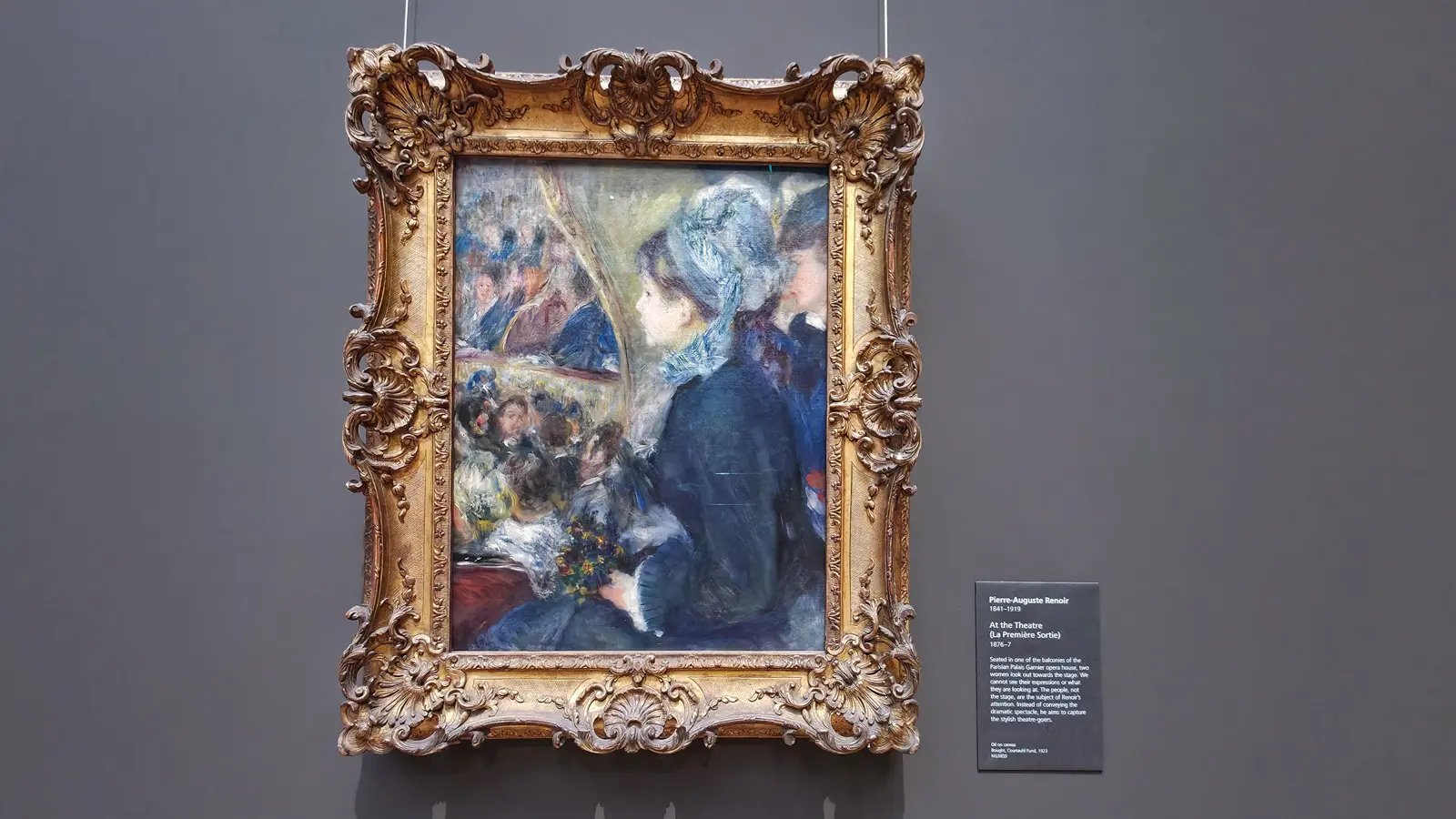
He painted the theatre, too. At the Theatre sets a young woman in a box at the Palais Garnier, the Paris opera house, looking out at the tiers of the auditorium. We never see the stage. The audience is the spectacle, which is exactly the point.
People, close up
This is the part of the collection that rewards standing close. Up close, where the brushwork breaks into separate strokes and smudges, something happens that no reproduction carries: a foot away from the real thing, the marks pull me straight into the painter’s own afternoon.
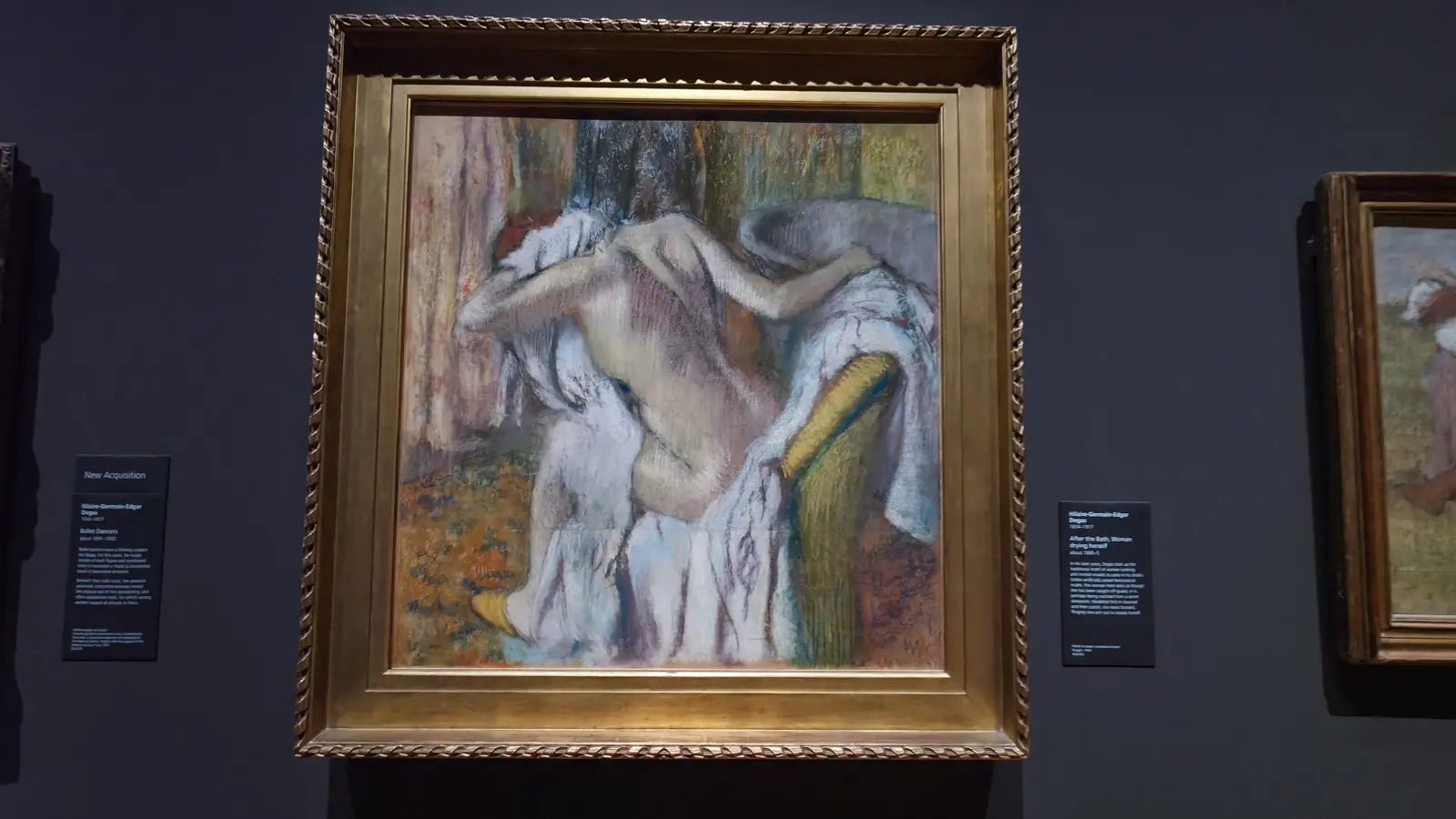
Degas returned again and again to women washing and drying themselves, caught as if by accident, in poses no one would strike on purpose. In After the Bath a woman bends awkwardly over the back of a chair, and the pastel is worked so densely that her body and the towel seem made of the same soft dust. It is intimate and a little uncomfortable, which is exactly what he was after.
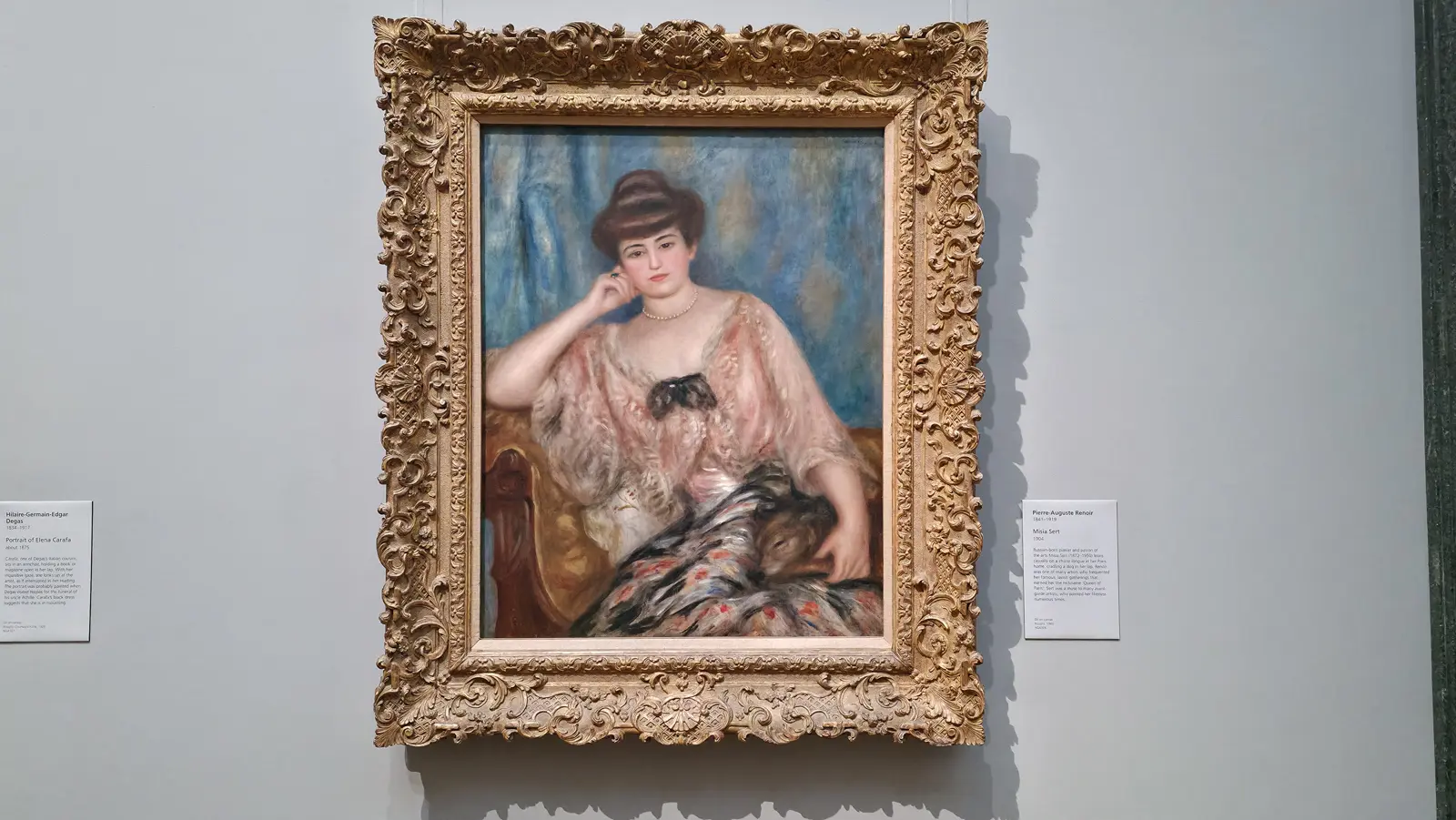
And Renoir, who opened this walk with a rain-soaked crowd, closes it with a single face. Misia Sert was a pianist, a muse and a patron of the arts, painted not only by Renoir but by half the artists of her Paris circle. She looks out of the frame with the easy confidence of a woman who knew everyone worth knowing in the city.
Bubbly Tips
- It is all free. The National Gallery charges nothing, and the Impressionist rooms sit together, so this is an easy hour or two with no ticket.
- Start with the new Degas in Room 42. It arrived in 2025 for the Gallery’s anniversary, so it is one of the freshest things on the walls.
- Look for one thread. The dealer Paul Durand-Ruel owned the Degas and rescued Monet and Pissarro in London. Spotting his name on the labels ties the whole collection together.
- See a Turner while you are here. Monet and Pissarro studied Turner in this building in 1870. A few minutes with the Gallery’s Turners shows you what they came to learn.
- Pair the paintings with the real places. Monet’s Thames looks across to Parliament, and Renoir’s theatre box is the Palais Garnier. Both are still there to stand in.
- Go on a grey day for the London pictures. Fog and drizzle are the whole point of Monet’s Thames, so soft light suits them better than sun.
- Give the Degas dancers a slow look. The tired feet and slumped shoulders are the subject as much as the tutus. He wanted the effort, not just the prettiness.
Final Thoughts
What holds these rooms together is not a place but a way of looking: at weather, at crowds, at a tired dancer or a rain-soaked street, at the ordinary moments most painters skipped. The men and women who made these pictures were often broke, often ignored, sometimes refugees. Their reward came late, if at all. And now they fill some of the busiest rooms in one of the busiest galleries in the world, still doing the thing they did best, which is making us look twice at something we would otherwise have walked straight past.
Until next time!

🌟 Everything You Need to Plan Your Dream Trip in 2026
- 🌟 Luxury Hotels - Find premium stays with Booking.com & Hotels.com
- 🏡 Vacation Rentals - Discover unique properties on VRBO
- 🏞️ Guided Tours - Explore with Viator or GetYourGuide
- 🎫 Attraction Tickets - Skip the lines with Tiqets
- 🚢 Ocean Cruises - Set sail with Cruise Direct
- 📱 International SIMs - Stay connected with Saily
- 🚗 Car Rentals - Budget-friendly options from Discover Cars
- 🌐 Secure VPNs - Browse safely with NordVPN
- 💶 Currency Exchange - Best rates with Wise
- 🗣️ Learn Languages - Master the local language with Babbel and Rosetta Stone