
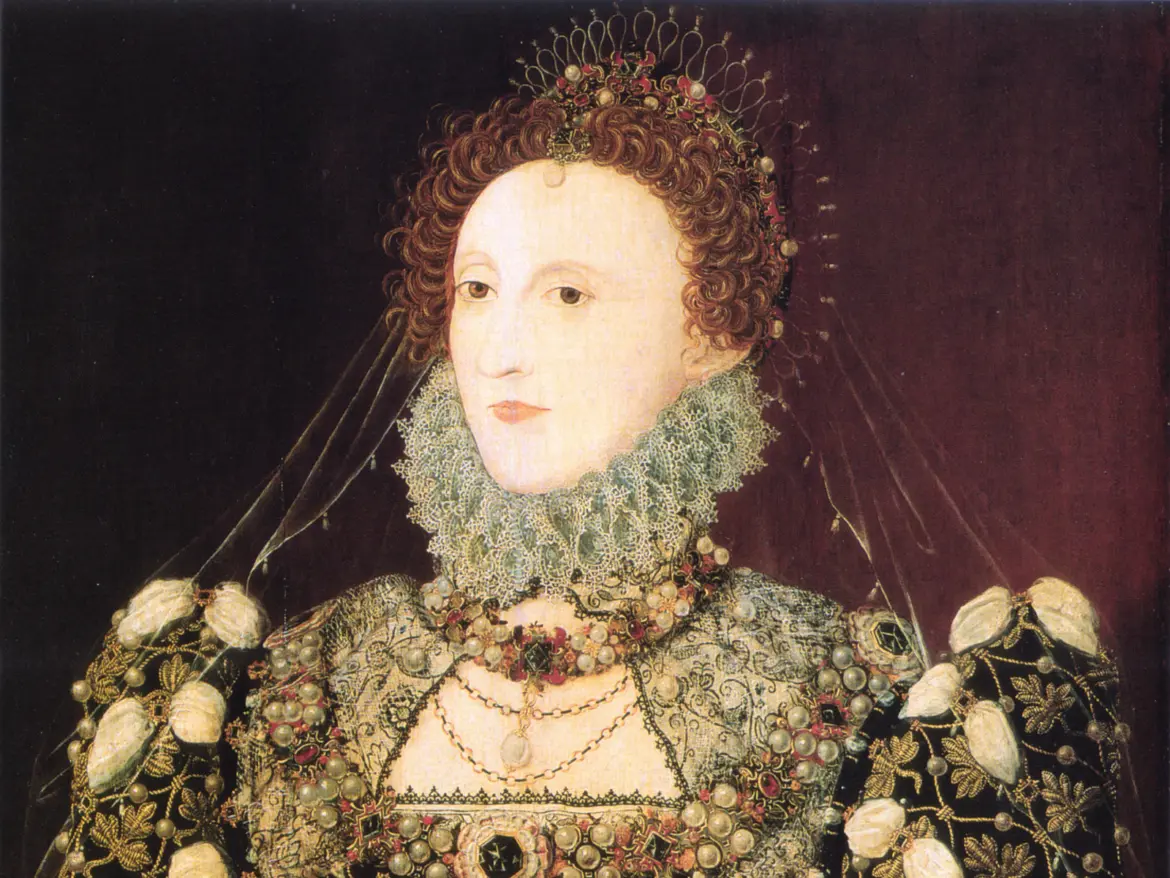
Most of us know Elizabeth I only as the powerful queen she became. The Virgin Queen. Gloriana. The pale, jewelled figure in the Phoenix portrait, a woman who ran England on her own terms for forty-four years and never let a husband near the throne. That is the version I arrived with, and I was already in awe of her.
I went looking for the feminist icon I had been promised. What I found was more complicated, and in some ways more impressive. Not a campaigner for women, but a girl who lost her mother to the executioner before she was three, was locked in the Tower of London at twenty, and still ended up outlasting everyone who wanted her gone and outshining the lot of them.
The places that tell that story sit across London and the South East, and most of them you can still walk into. Here is the trail, roughly in the order her life ran, from the palace where she was born a disappointment to the abbey where she lies crowned in marble.
Elizabeth I at a Glance
👑 The last Tudor · Elizabeth I reigned from 1558 to 1603, daughter of Henry VIII and Anne Boleyn. She never married, styled herself the Virgin Queen, and her death ended the Tudor line.
👶 Born a disappointment · She was born at Greenwich on 7 September 1533, when her parents wanted a son. Before she turned three, her mother had been beheaded and Elizabeth declared illegitimate.
🔒 From prisoner to queen · Under her Catholic half-sister Mary I she was kept under house arrest at Hatfield and briefly held in the Tower of London in 1554. She came to the throne in November 1558.
👸 Two rival Marys · She shares her Westminster Abbey tomb with her half-sister Mary I, and spent years shadowed by her cousin Mary, Queen of Scots, whom she imprisoned for nineteen years before signing her death warrant in 1587.
⚓ The Armada and Tilbury · In 1588, as the Spanish Armada threatened, she rallied her army near Tilbury and is said to have claimed “the heart and stomach of a king.” The speech sealed her legend.
⚰️ Crowned in marble · Crowned at Westminster Abbey in 1559, she lies there now beneath a white marble monument raised by her successor, James I, who gave it her effigy alone.
🎟️ Walking the trail · Pair the Tower and Westminster Abbey in one central day. Hatfield (Hertfordshire) and Tilbury (Essex) are separate trips. The Phoenix Portrait belongs to the National Portrait Gallery.
Greenwich, where she was born a disappointment
Elizabeth was born at Greenwich, by the Thames east of London, on 7 September 1533. Her mother, Anne Boleyn, had gone there to give birth certain she was carrying the son Henry VIII demanded. A daughter was a letdown, and the celebrations were muted. Within three years Anne had been beheaded at the Tower, and the little girl was declared illegitimate and stripped of the title of princess before she was three.
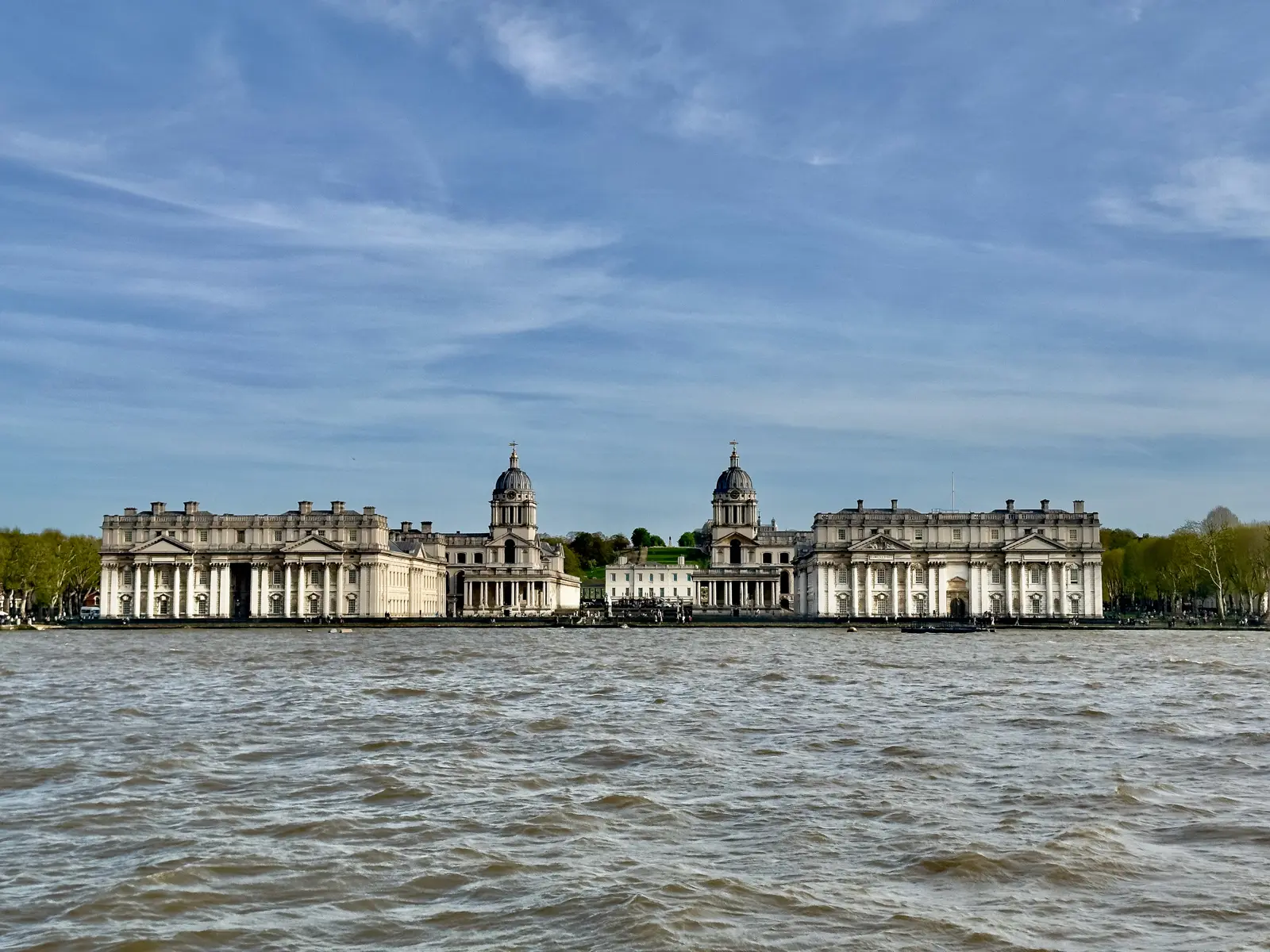
The Tudor palace where she was born is gone, the same as her father’s birthplace on this same stretch of river. The grand domed buildings on the site now are the later Old Royal Naval College.
Hatfield House, the waiting years
After her father’s death, Hatfield House in Hertfordshire became the centre of Elizabeth’s world. Henry had taken the palace in 1538 and used it as a nursery for his children. Under her Catholic half-sister Mary I, it turned into something closer to a cage. Elizabeth, a Protestant and an obvious figurehead for anyone plotting against the queen, was kept under house arrest there, watched and waiting.
By tradition she was sitting under an old oak in the park, reading, when riders brought news in November 1558 that Mary was dead and she was queen. She is said to have sunk to her knees and answered in Latin with a line from the psalms. It is a lovely story, and it may be only that. Historians have long doubted it, since the account was written down about seventy years after the event. What is certain is that the twenty-five-year-old who left Hatfield that winter had spent most of her life one accusation away from the scaffold.
The Tower of London, where her mother died
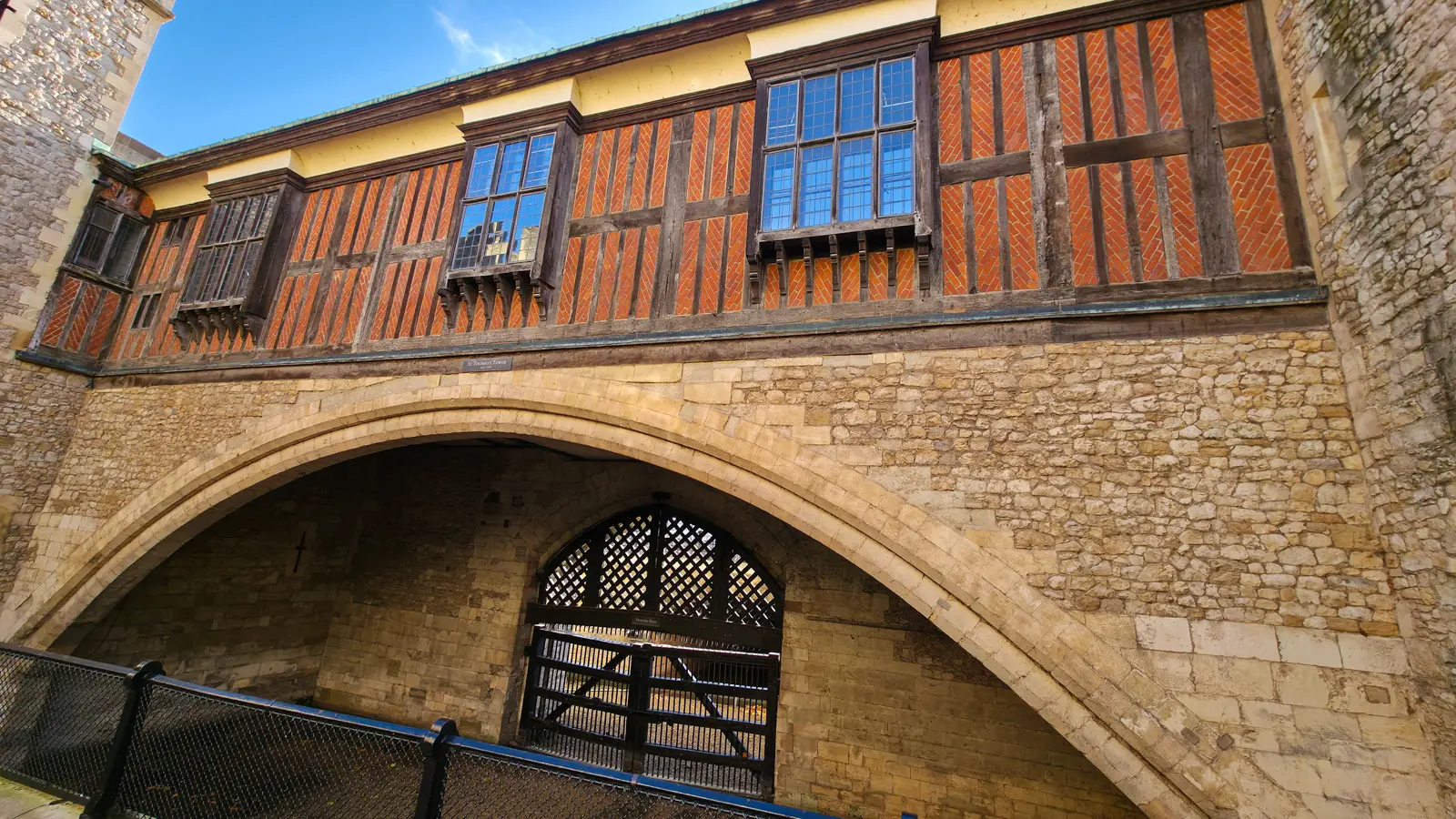
I had already stood in the Tower of London for Henry, at Traitors’ Gate and in the little chapel where two of his wives lie. Coming back to it for Elizabeth changed how it sat with me. In March 1554, aged twenty, she was brought here by barge as a prisoner. Her half-sister Mary suspected her of backing Wyatt’s rebellion against the queen’s Spanish marriage, and the Tower was where suspected traitors went.
The cruel part is where they put her. She was held in the royal lodgings in the inner ward, the very rooms her father had done up for Anne Boleyn’s coronation, in the same fortress where her mother had been held before her execution eighteen years earlier. She had every reason to think she would leave it the way Anne did. Tradition has her landing at Traitors’ Gate and refusing to climb the steps, declaring herself as true a subject as ever landed there, though historians point out the tide was wrong that day and she was most likely brought to the wharf instead. Either way, the man who led the rebellion never named her, even under pressure, and after about two months with no evidence against her she was released into house arrest. She walked out of the place that had killed her mother.
Westminster Abbey, the throne and the grave
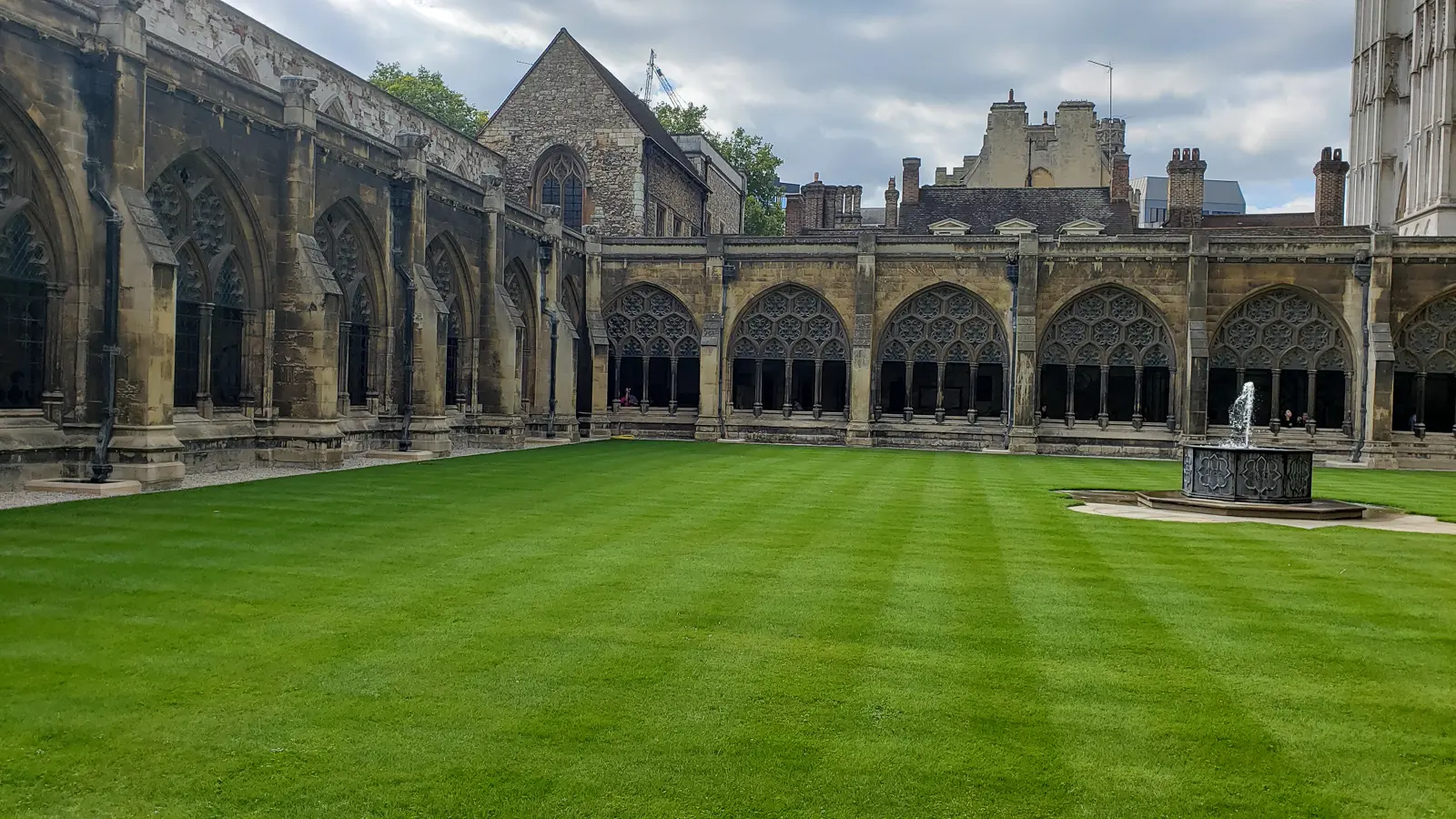
Westminster Abbey is where the whole story turns over. On 15 January 1559, a little over four years after she walked out of the Tower, Elizabeth was crowned queen here. The illegitimate daughter, the former prisoner, anointed in the great coronation church of English monarchs.
She never really left it. She lies in the Henry VII Lady Chapel, and here is the part I keep coming back to. She shares her tomb with Mary I, the half-sister who sent her to the Tower. James I raised the monument over them both in 1606 and gave it Elizabeth’s effigy alone, with Mary named only in the inscription below. That inscription, in translation, calls them partners both in throne and grave, two sisters in the hope of the Resurrection. Two women who spent their lives on opposite sides of faith and power, tidied into one grave by the man who came after them.
Worth a quick word, because the two get muddled. This is Mary I, the half-sister. The other Mary, Mary, Queen of Scots, lies in a separate and grander tomb at the far end of the same chapel. More on her in a moment.
Tilbury, the speech that made the legend
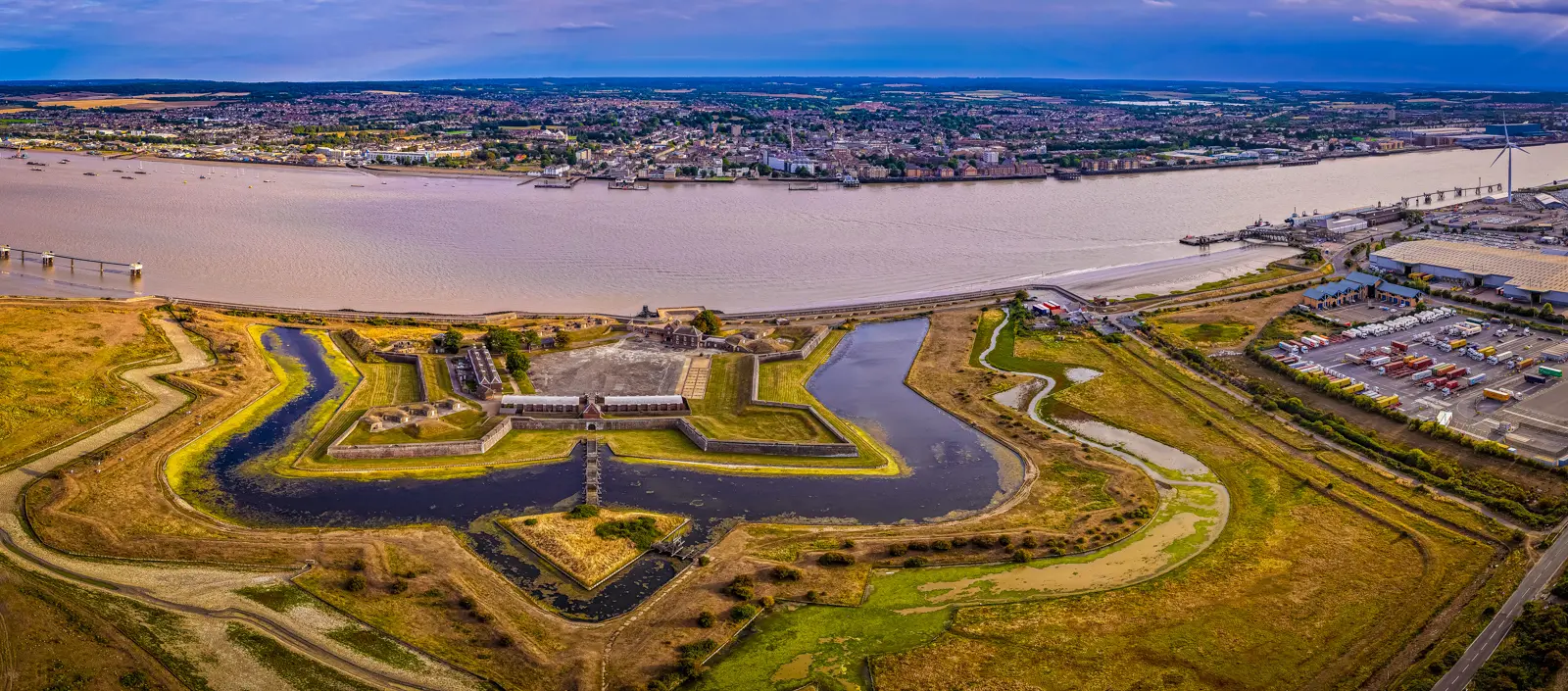
The picture most of us carry of Elizabeth comes from a field in Essex. In August 1588, with the Spanish Armada in the Channel and invasion expected, she rode to Tilbury to address the army gathered to defend London. The speech she is said to have given is the one every schoolchild meets. She told the troops she had “the body of a weak and feeble woman, but the heart and stomach of a king, and of a king of England too”.
The exact words reach us through a transcript written down later, and there has been a long argument over how faithful it is. The leading scholars of her reign think she very likely did say something close to it. What matters is the move she made. She did not claim power as a woman. She claimed it by setting herself above her own sex, a king in all but body. That is the knot at the centre of Elizabeth, and it is why the modern feminist-icon label sits a little awkwardly on her. The awe is earned. The label is ours.
Richmond, the quiet end of the Tudors
Elizabeth died at Richmond Palace, west of London, in the early hours of 24 March 1603. She was sixty-nine, and she was the last of the Tudors. She had never married and never plainly named an heir, and within hours her councillors proclaimed James VI of Scotland as king. He was the son of Mary, Queen of Scots, the cousin Elizabeth had sent to the block sixteen years earlier. The dynasty that began with her grandfather ended with her, and the crown passed to the child of the woman she had executed. Little of Richmond Palace still stands, so this is more a place to think than a place to photograph.
So what do I make of her?
For all the awe, she is not a tidy heroine, and the hardest thing to square is the cousin. Mary, Queen of Scots was a Catholic with a real claim to Elizabeth’s throne, which made her a magnet for plots to kill Elizabeth and put Mary in her place. Elizabeth kept her a prisoner for nineteen years rather than execute her, and signed the death warrant in 1587 only after a plot tied Mary directly to a scheme against her life. By the record she agonised over it and raged afterwards, blaming the men who carried it out. It can look cold and calculating. It reads more like a queen who saw a living rival as a threat she could not survive, and hated what she did about it.
What I keep landing on is this. Elizabeth was handed almost nothing. A dead mother, a bastard’s status, a sister’s suspicion, a cell in the Tower. She turned it into forty-four years on the throne and an age that still carries her name. You do not have to call her a saint, or a feminist, to find that staggering.
Bubbly Tips
- Pair the Tower and Westminster Abbey in one day. They are both central and they bookend her whole story, the prison and the throne. Doing them back to back is the cheapest way to feel the distance she travelled.
- Book the Tower for first entry. It is one of London’s busiest sites. Arriving at opening beats the queues to both the Crown Jewels and the chapel where her mother lies.
- At the Tower, look past Traitors’ Gate. The royal lodgings in the inner ward are where Elizabeth was actually held. The dramatic gate is the tradition, not the likely truth.
- No photography inside Westminster Abbey. You cannot shoot the Henry VII Lady Chapel yourself, so plan to buy a postcard or a licensed image of the tomb if you want one.
- Find the inscription on the Westminster tomb. The line about Elizabeth and Mary I being partners in throne and grave is easy to walk past, and it is the whole story in one sentence.
- Treat Hatfield House as a day trip, not a London stop. It is out in Hertfordshire, roughly half an hour by train from King’s Cross, then a short walk. Check the opening season before you go, as the house and park open on limited months and days.
- At Hatfield, head for the Old Palace. The surviving Tudor brick range is the part tied to Elizabeth. The grand house beside it is the later Jacobean one the Cecils built.
- Tilbury is for completists. Tilbury Fort sits out in Essex, looked after by English Heritage, and is a separate trip from everything else here. Worth it only if you want to see the spot where England braced for the Armada, though the speech itself was given at an army camp nearby at West Tilbury, of which almost nothing survives.
Final Thoughts
The Henry trail left me cold. This one did the opposite. Stand in the Tower where a frightened twenty-year-old waited to learn whether she would die like her mother, then stand in Westminster Abbey where that same woman lies crowned in marble, and the gap between the two is the whole point of her.
Her father broke a church and a line of wives trying to secure his dynasty. It ran out anyway. The crown went to a Scottish king, the son of the cousin she executed, and the most successful Tudor of them all turned out to be the daughter Henry never wanted. I went in already in awe. I came out more so.
Until next time!

🌟 Everything You Need to Plan Your Dream Trip in 2026
- 🌟 Luxury Hotels - Find premium stays with Booking.com & Hotels.com
- 🏡 Vacation Rentals - Discover unique properties on VRBO
- 🏞️ Guided Tours - Explore with Viator or GetYourGuide
- 🎫 Attraction Tickets - Skip the lines with Tiqets
- 🚢 Ocean Cruises - Set sail with Cruise Direct
- 📱 International SIMs - Stay connected with Saily
- 🚗 Car Rentals - Budget-friendly options from Discover Cars
- 🌐 Secure VPNs - Browse safely with NordVPN
- 💶 Currency Exchange - Best rates with Wise
- 🗣️ Learn Languages - Master the local language with Babbel and Rosetta Stone