
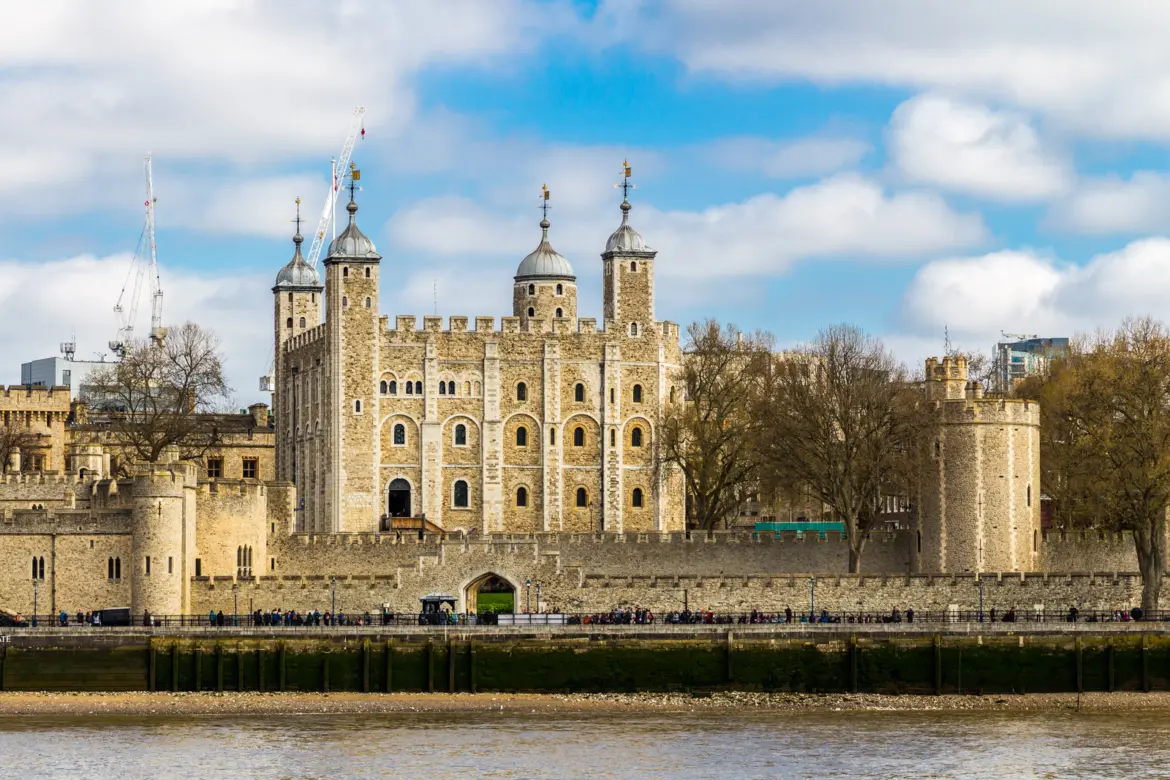
There are few places in London where history feels as immediate and layered as it does at the Tower of London. Rising beside the River Thames with its imposing stone walls, towers, battlements, and fortified gates, the Tower of London feels less like a museum and more like a surviving fragment of another era – one where monarchy, warfare, imprisonment, and political survival shaped the destiny of England itself.
What makes the Tower of London so compelling is that it contains centuries of history within a single complex. Over the course of nearly a thousand years, it has served as a royal palace, military fortress, prison, treasury, mint, armory, menagerie, and execution site. Kings and queens once lived behind its walls while political prisoners awaited uncertain fates only steps away. The Tower witnessed coronations, betrayals, executions, disappearances, and dynastic struggles that helped shape British history.
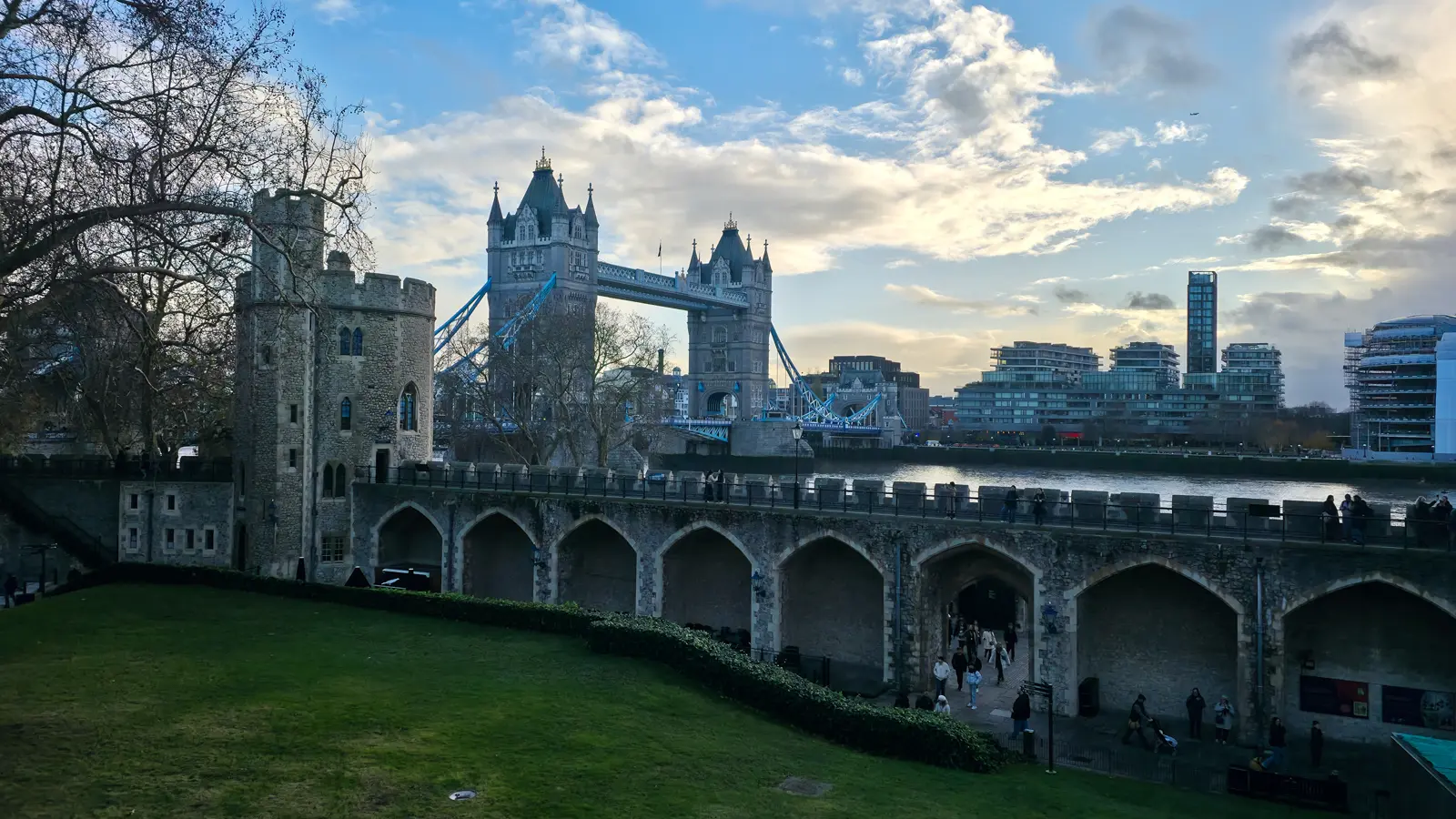
Yet despite the weight of its past, the Tower of London never feels frozen in time. Standing within the fortress today, visitors encounter a remarkable contrast between medieval stone architecture and the modern skyline rising beyond the walls. Nearby, Tower Bridge spans the Thames while glass skyscrapers rise across the City of London, creating a visual reminder that London continues evolving around one of its oldest and most symbolic landmarks.
Walking through the Tower grounds, there is a persistent sense that history lingers everywhere: within the narrow passages, ancient towers, and weathered stone walls that have witnessed nearly a millennium of human ambition, fear, power, and survival.
Tower of London at a Glance
🏰 Founded · Begun in 1078 by William the Conqueror, with the White Tower at its core.
👑 Past lives · Royal palace, fortress, prison, treasury, mint, armoury, menagerie, and execution site.
⚔️ Famous prisoners · Anne Boleyn, the Princes in the Tower, Guy Fawkes, Sir Walter Raleigh, and the future Elizabeth I.
💎 Crown Jewels · Housed in the Jewel House since 1967, including St Edward’s Crown and the Imperial State Crown.
🐦⬛ Ravens · At least six live at the Tower at all times, a tradition tracing to King Charles II.
🎩 Yeoman Warders · Around 32 retired military veterans, all with 22+ years of service, who live inside the fortress and lead the tours.
🚇 Nearest station · Tower Hill (District and Circle lines), a two-minute walk from the entrance.
The Origins of the Tower of London
The story of the Tower of London begins shortly after the Norman Conquest of England in 1066. Following his victory at the Battle of Hastings, William the Conqueror sought to consolidate Norman control over London and establish visible symbols of royal authority throughout the kingdom. The Tower of London became one of the most important of these symbols.
Construction of the original central keep, now known as the White Tower, began around 1078 under the supervision of Gundulf, Bishop of Rochester, who was renowned for his architectural and engineering expertise. Built primarily from Kentish ragstone and imported Caen stone from Normandy, the White Tower was designed not only as a defensive structure, but also as a powerful statement of Norman dominance over the city.
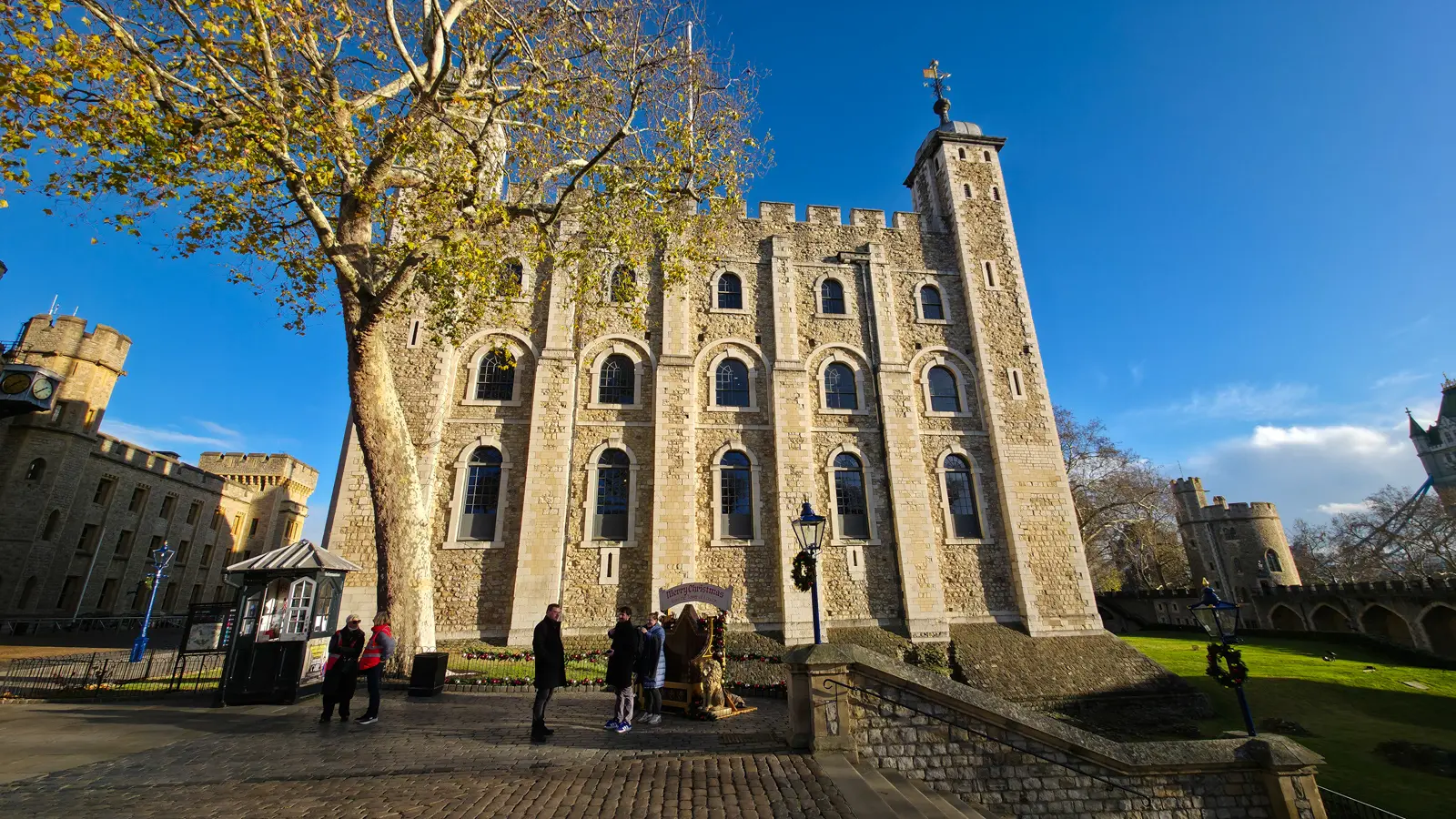
At the time of its construction, the White Tower would have appeared dramatically imposing against the medieval London skyline. Its massive walls, elevated position, and fortified design communicated strength and authority to both Londoners and potential enemies. Over the following centuries, successive monarchs expanded the complex significantly, adding curtain walls, towers, defensive gates, moats, and additional royal residences that transformed the site into the sprawling fortress visitors see today.
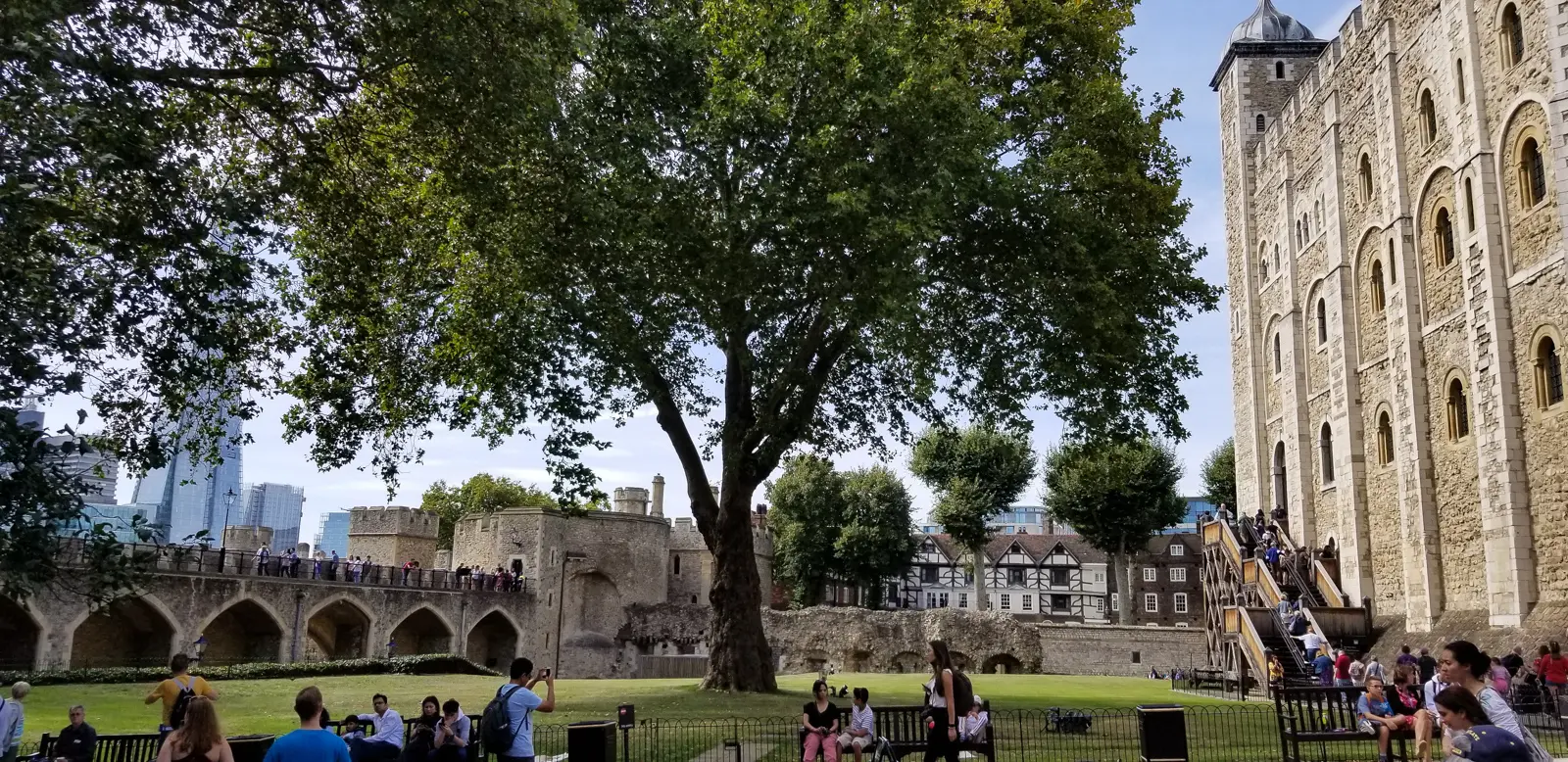
What makes the Tower of London particularly fascinating is that its architecture reflects layers of history rather than a single period. Norman foundations coexist beside medieval additions, Tudor associations, and later restorations, allowing visitors to witness nearly a thousand years of architectural evolution within one enclosed space.
The White Tower and Medieval Power
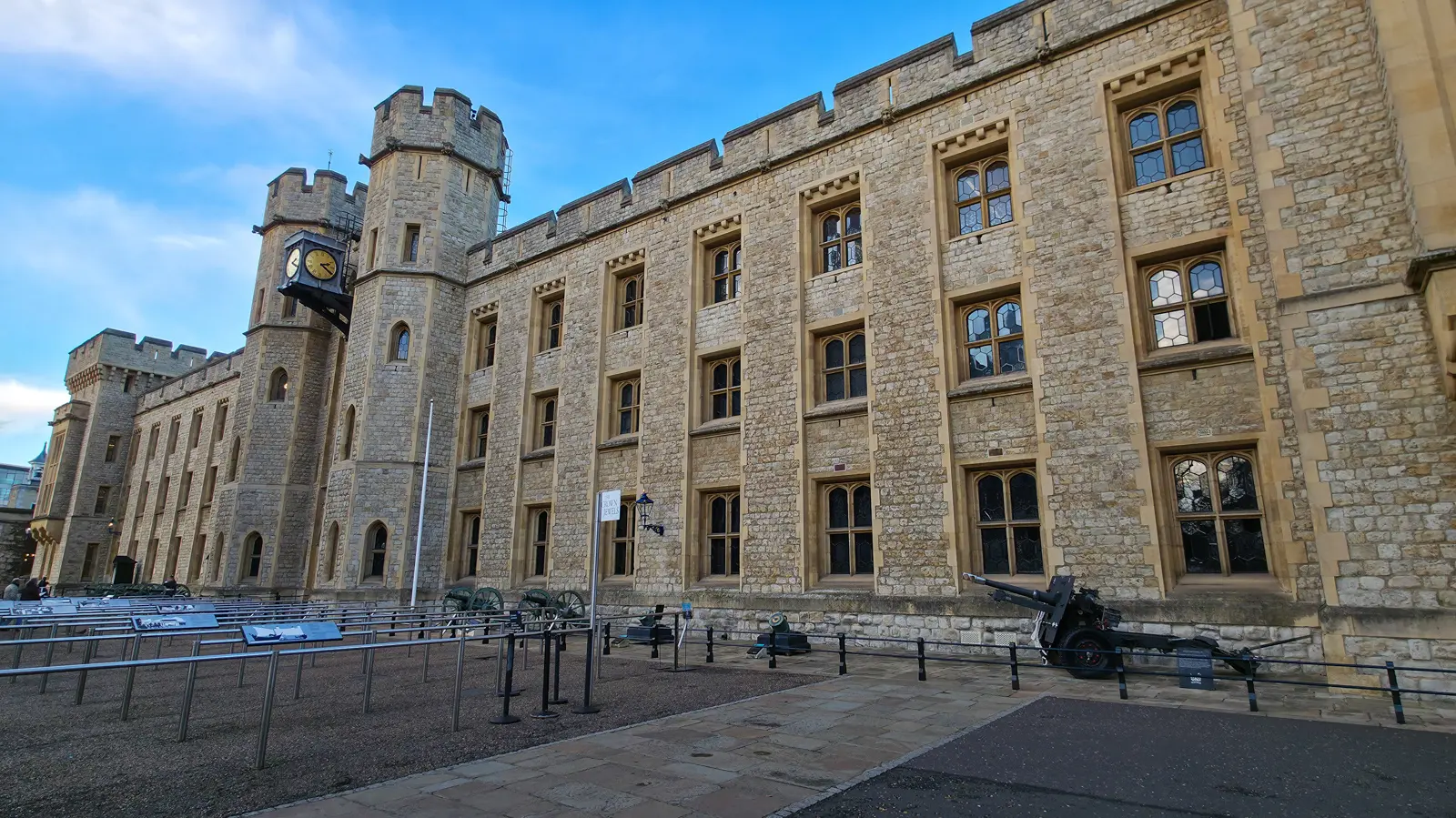
At the heart of the complex stands the White Tower, the oldest surviving part of the fortress and one of the most important examples of Norman military architecture in Europe. Even today, its scale remains striking. Thick defensive walls, narrow windows, and elevated entrances reveal how deeply security and military control shaped medieval architecture.
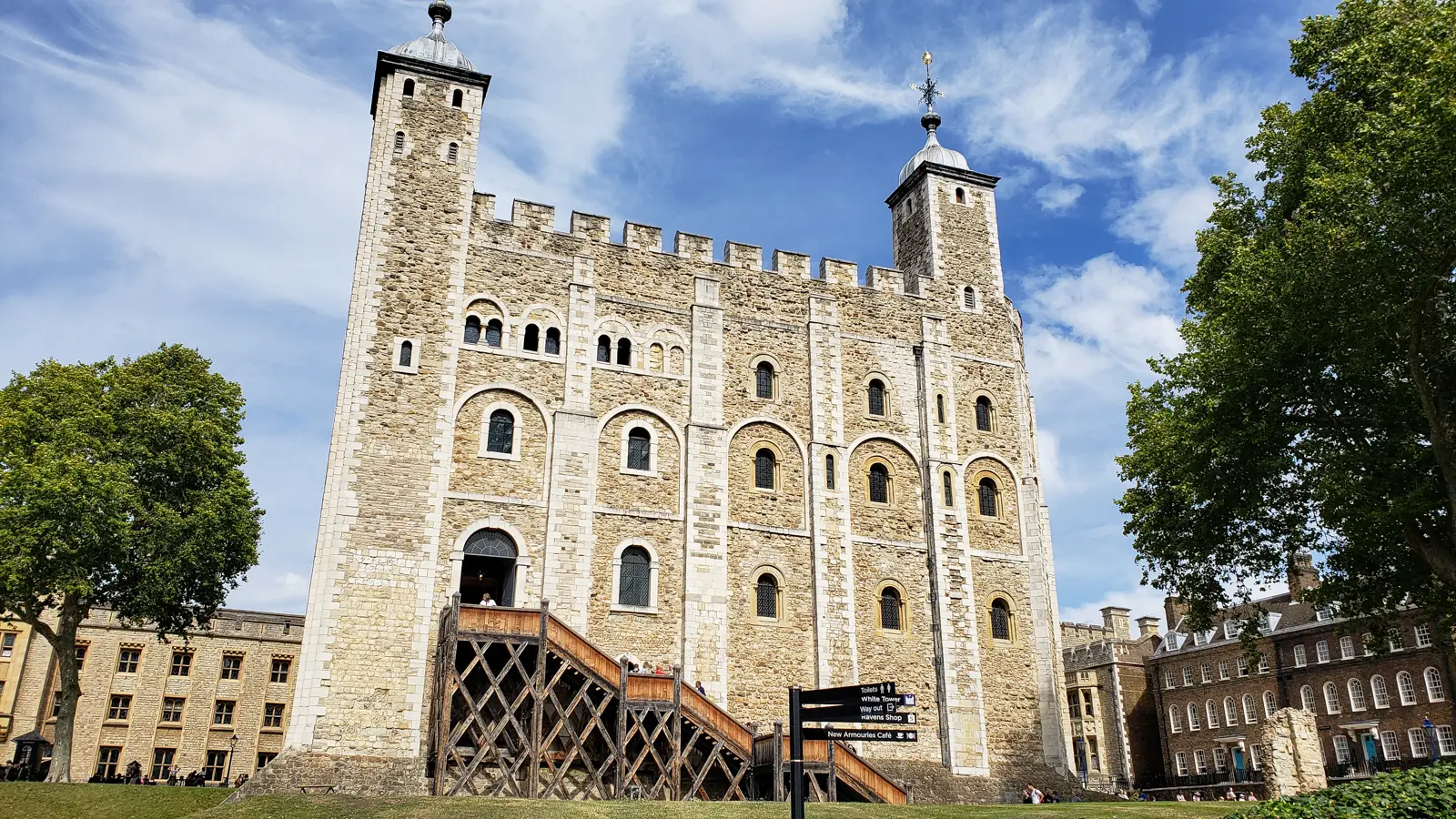
Inside the White Tower, visitors encounter the Royal Armouries collections, including ceremonial weapons, medieval military artifacts that illustrate the evolution of warfare and monarchy throughout English history. One of the most famous displays includes the elaborate armour of Henry VIII, whose towering physical presence and dramatic reign continue to fascinate visitors centuries later.
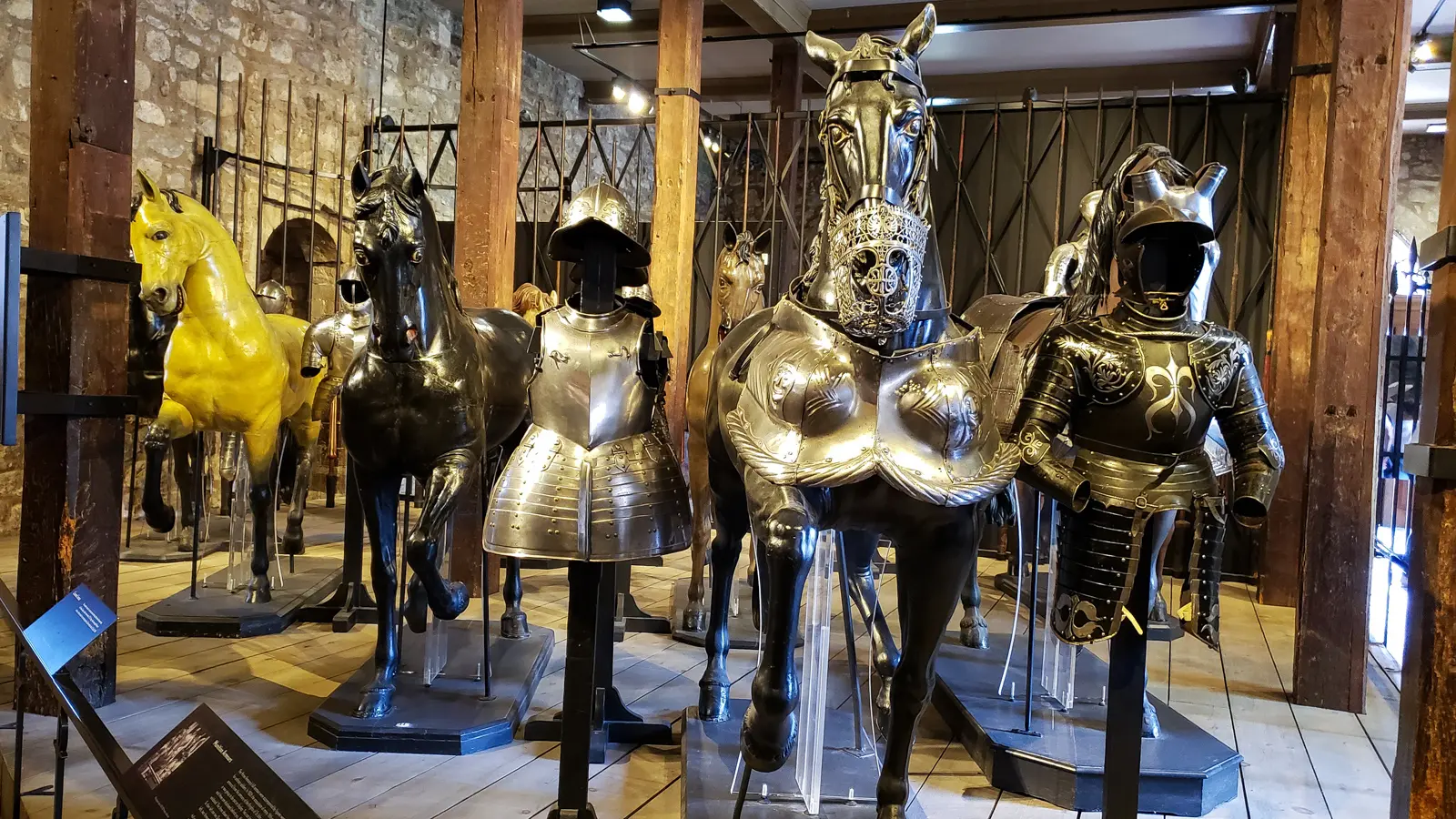
What makes the White Tower especially powerful is the atmosphere itself. Unlike more decorative royal residences, the White Tower still conveys a sense of intimidation and authority. The heavy stone interiors, narrow staircases, and fortress-like proportions create an environment that feels defensive, controlled, and deeply connected to medieval political power.
At the same time, standing atop the fortress walls or looking outward from the Tower grounds reveals modern London rising around the site, with Tower Bridge spanning the River Thames nearby and contemporary skyscrapers emerging beyond the historic stone walls. The contrast between medieval fortress architecture, Victorian engineering, and the evolving modern skyline creates one of the most striking historical juxtapositions in the city.
Prisoners, Executions, and Royal Intrigue
Although the Tower of London functioned primarily as a royal fortress and palace for much of its history, it became equally famous for its role as a prison. Over the centuries, many of England’s most important political prisoners passed through its gates – and more specifically, through Traitors’ Gate, the water entrance through which prisoners arriving by barge from the River Thames were brought into the fortress. The gate’s name reflects its grim associations: for many prisoners, passing beneath its archway signaled that there would be no return.
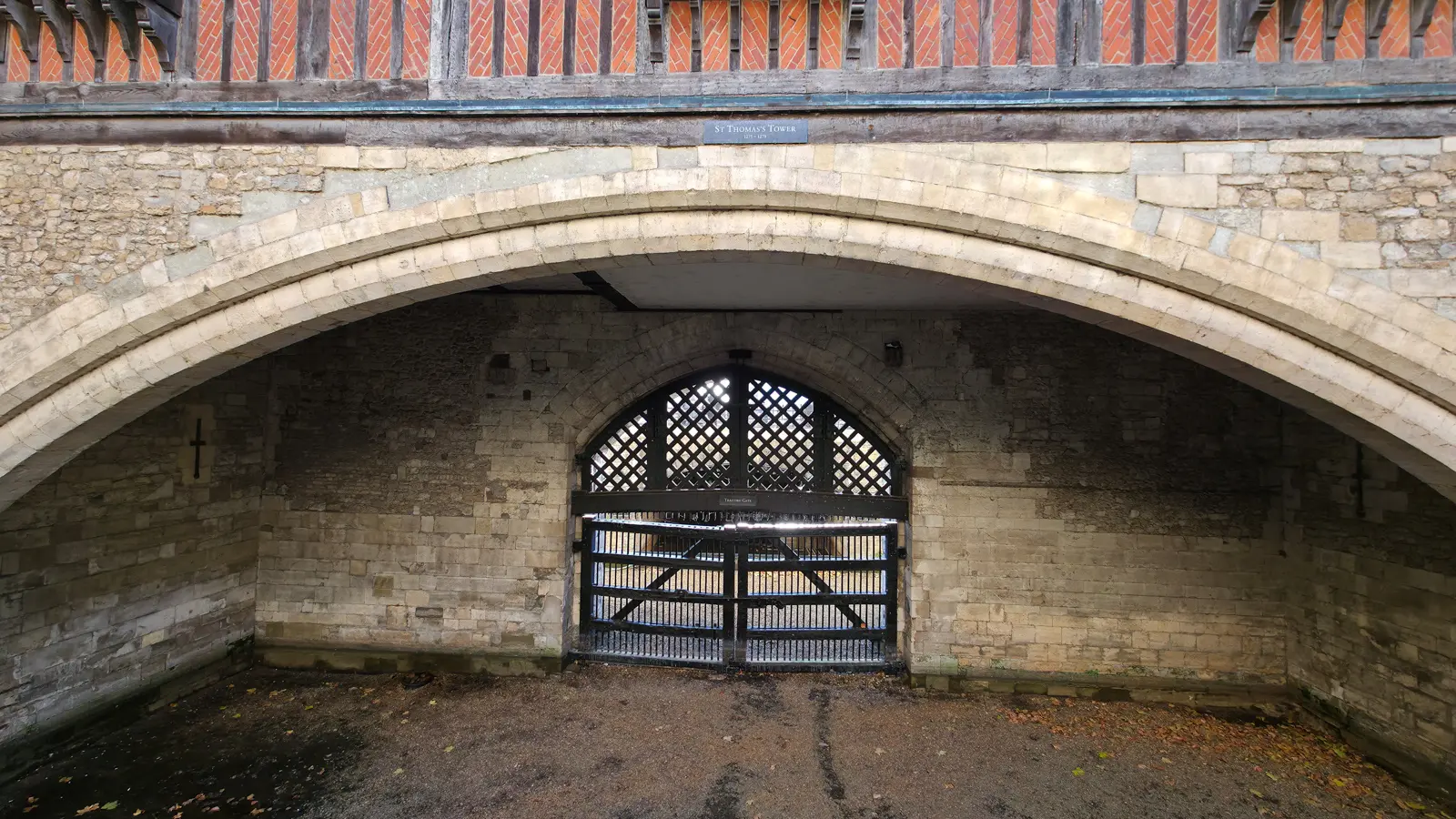
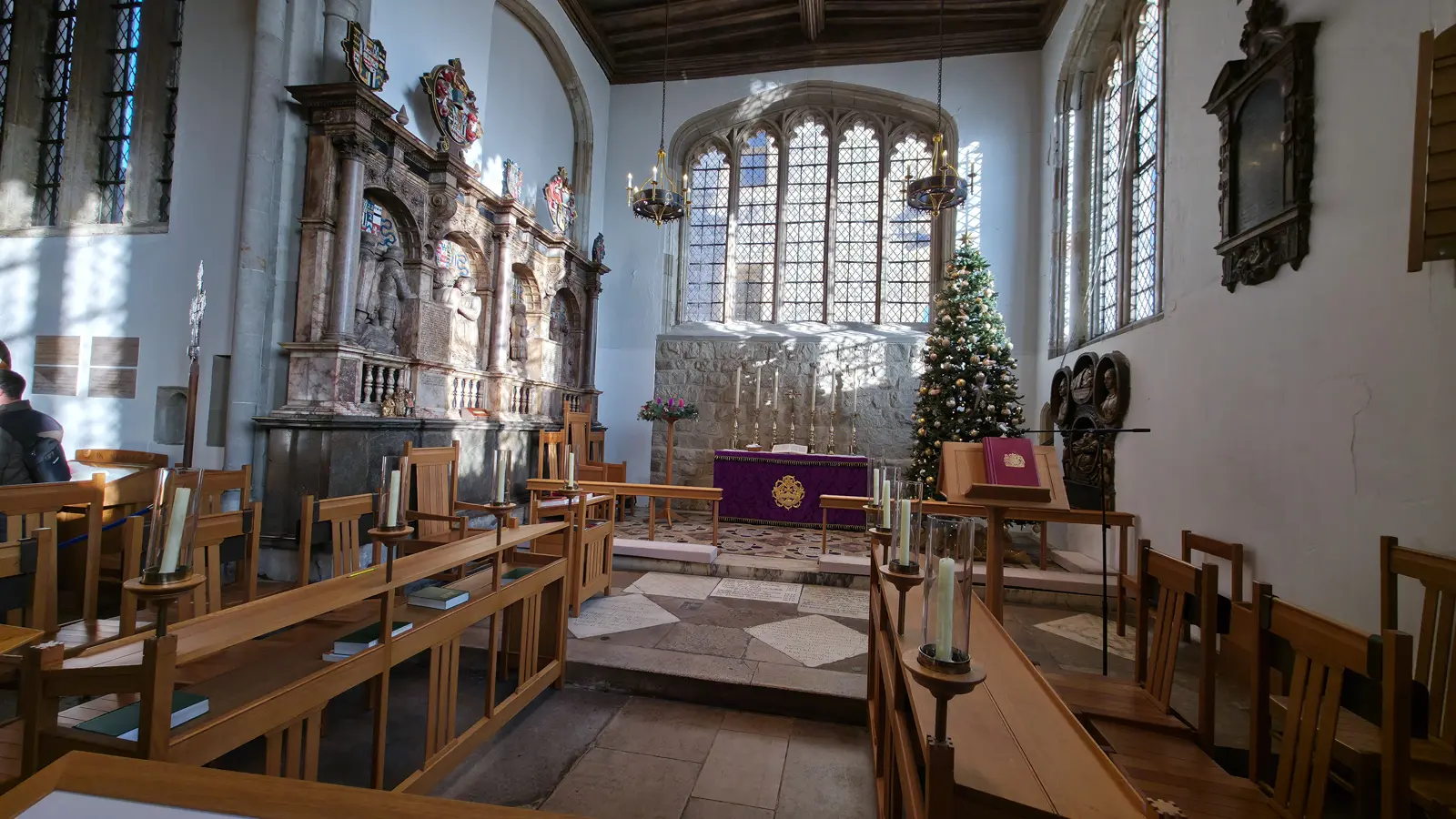
Among the Tower’s most famous prisoners was Anne Boleyn, the second wife of Henry VIII. Accused of treason, adultery, and conspiracy, she arrived by barge from Greenwich in May 1536 and entered the Tower through Traitors’ Gate. She was executed within the Tower walls on 19 May 1536, a private execution reserved for high-status prisoners, away from the public crowds that gathered at Tower Hill outside the walls for most executions. In a final gesture from Henry, an expert swordsman was brought from France to ensure a swift death. Anne was buried in the nearby Chapel Royal of St Peter ad Vincula, within the Tower grounds.
The Tower is also closely connected to the enduring mystery of the Princes in the Tower, the young sons of Edward IV who disappeared within the fortress in 1483 during the political turmoil surrounding the rise of Richard III. Their fate remains one of the greatest unsolved mysteries in British history. Other notable prisoners included Guy Fawkes, Sir Walter Raleigh, and Elizabeth I before she became queen – herself entering through Traitors’ Gate in 1554, acutely aware that her mother Anne Boleyn had been executed within those same walls. The fact that future monarchs, powerful nobles, and famous historical figures all passed through the Tower’s prison chambers reinforces the site’s extraordinary historical significance.
Walking through these spaces today, it becomes difficult not to reflect on the uncertainty, fear, and political tension that once filled these walls. The Tower does not simply preserve history intellectually, the stories that unfolded within its walls still seem to linger throughout the fortress today.
The Crown Jewels and Royal Symbolism
One of the Tower of London’s most famous attractions is the collection of Crown Jewels housed within the Jewel House. These ceremonial objects continue to play an active role in British coronations and state ceremonies, connecting the medieval origins of the monarchy to the present day. The collection includes crowns, sceptres, orbs, swords, and ceremonial regalia containing thousands of precious stones. Among the most famous pieces is St Edward’s Crown, used at the moment of crowning during coronation ceremonies, and the Imperial State Crown – set with 2,868 diamonds, 17 sapphires, 11 emeralds, 269 pearls, and 4 rubies, and containing some of the world’s most celebrated individual gemstones, including the Black Prince’s Ruby, the Stuart Sapphire, and the Cullinan II diamond.
The collection’s history is itself dramatic. Most of the original medieval Crown Jewels were destroyed on the orders of Parliament in 1649 following the execution of Charles I – the gold was melted down into coins and the precious stones sold off. Only the 12th-century Coronation Spoon survived, making it the oldest piece in the collection. The regalia seen today was largely created for the coronation of Charles II in 1661, giving the collection a history that is both ancient in origin and surprisingly recent in its current form.
Photography is not permitted inside the Jewel House, which adds to the sense of security, ceremony, and exclusivity surrounding the collection. Visitors move through the heavily protected exhibition while surrounded by some of the most symbolically important objects in British history.
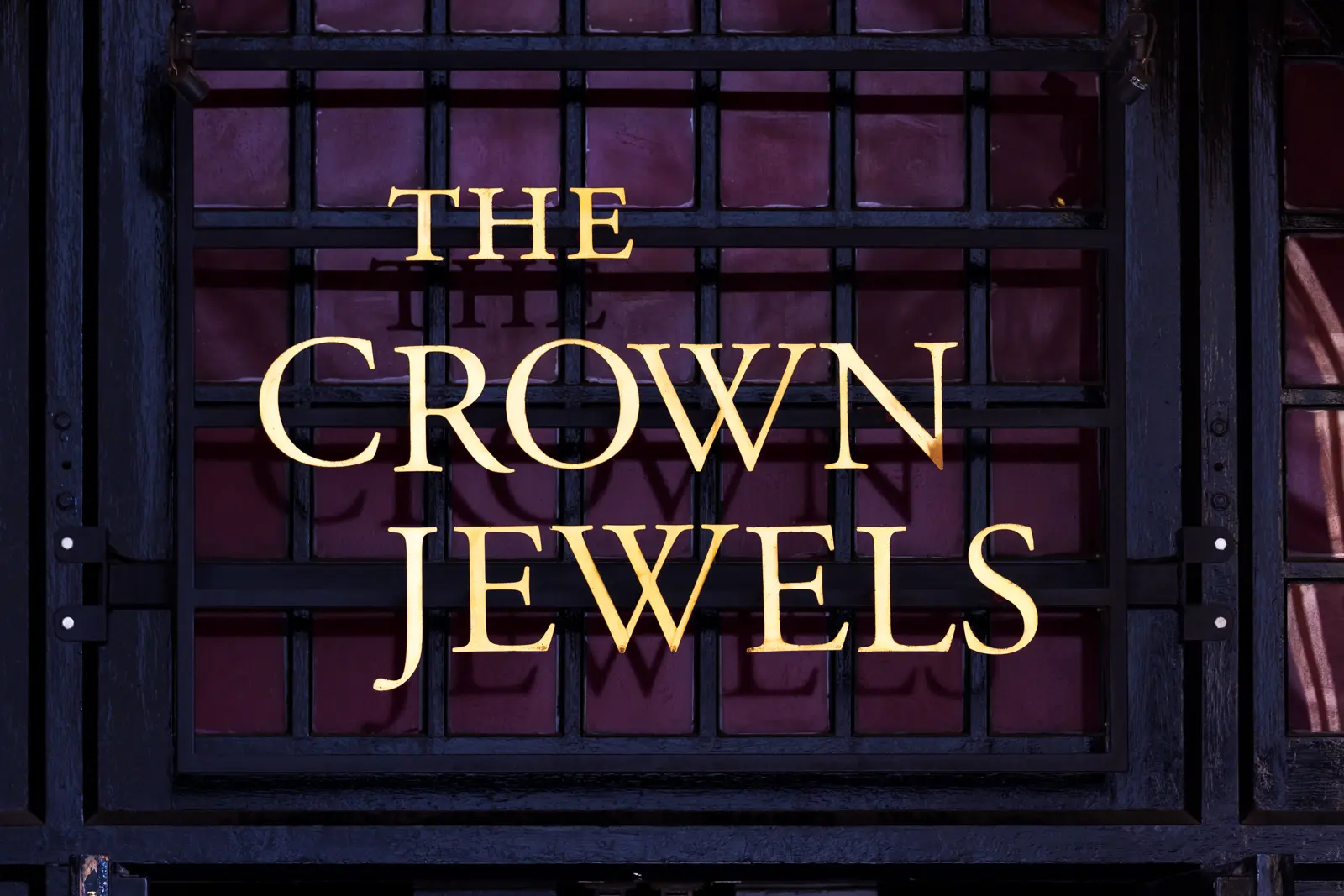
Beyond their material value, the Crown Jewels symbolise continuity, monarchy, and state authority. Seeing them within the fortified environment of the Tower reinforces the longstanding relationship between royal power and the fortress itself. Even visitors less interested in monarchy often find the atmosphere surrounding the Jewel House surprisingly powerful because the objects remain connected to living traditions rather than existing purely as historical artefacts.
Ravens, Legends, and Superstitions
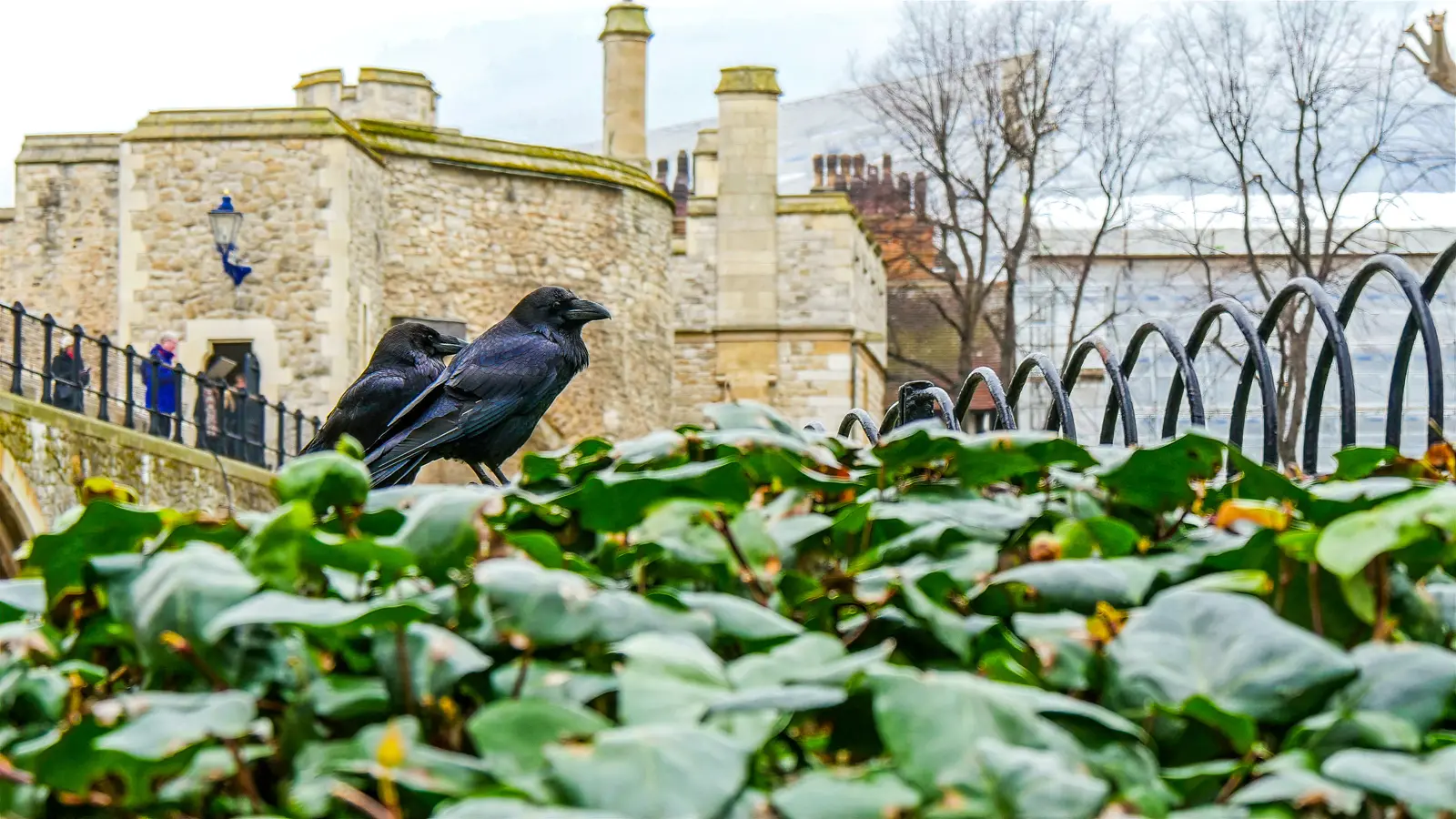
The Tower of London is also deeply associated with myth and legend, particularly its famous ravens. According to longstanding tradition, the kingdom, and the Tower itself, will fall if the ravens ever leave the fortress. To prevent this, ravens continue to be cared for at the Tower today by the Ravenmaster, one of the Yeoman Warders. Whether viewed as folklore or symbolism, the ravens contribute enormously to the Tower’s atmosphere. Their presence adds an almost gothic quality to the fortress, reinforcing the sense that the site exists somewhere between documented history and legend.
The Tower is also frequently associated with ghost stories and supernatural lore, including tales connected to Anne Boleyn and other former prisoners. Even for visitors who approach these stories skeptically, the fortress’s atmosphere, particularly within darker corridors and quieter corners, naturally lends itself to mystery and imagination.
The Tower and the Thames
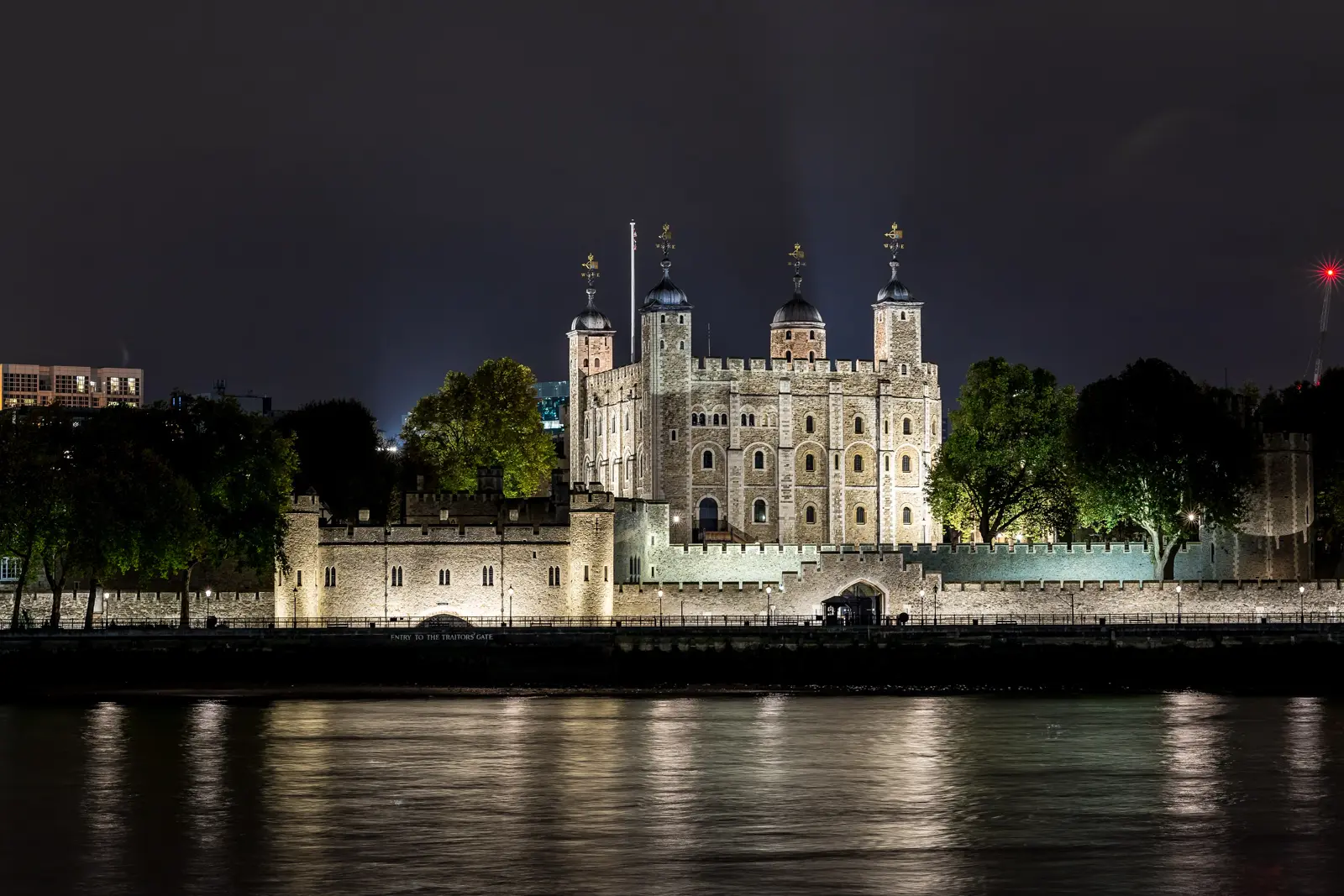
The relationship between the Tower of London and the Thames has always been essential to understanding the fortress itself. For centuries, the river functioned as one of London’s primary transportation and trade routes, and the Tower’s riverside position gave it enormous strategic importance. Prisoners often arrived by boat through Traitors’ Gate, entering the fortress directly from the Thames beneath the watch of armed guards and towering stone walls. Merchants, soldiers, monarchs, and diplomats all passed through the surrounding riverfront during different periods of London’s history.
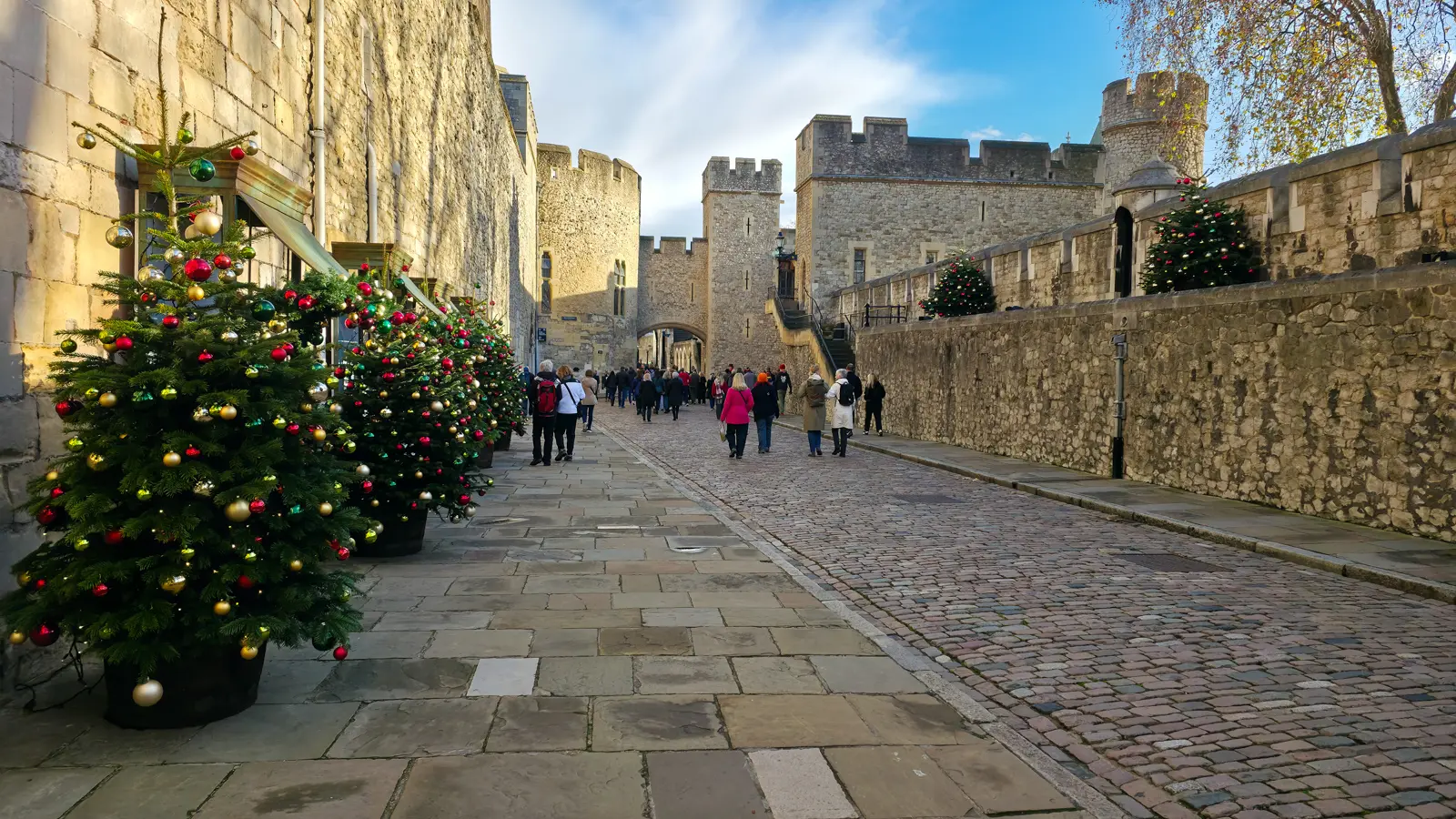
Today, the atmosphere along the Thames surrounding the Tower remains one of the most visually striking areas in London. Medieval walls stand beside modern riverside promenades while Tower Bridge rises dramatically nearby. This coexistence between ancient fortress architecture and contemporary London creates one of the city’s most compelling urban landscapes. Walking along the river near the Tower especially at sunset or into the night reveals how deeply the Thames continues to shape London’s identity, just as it did centuries ago.
The Yeoman Warders and Living Tradition
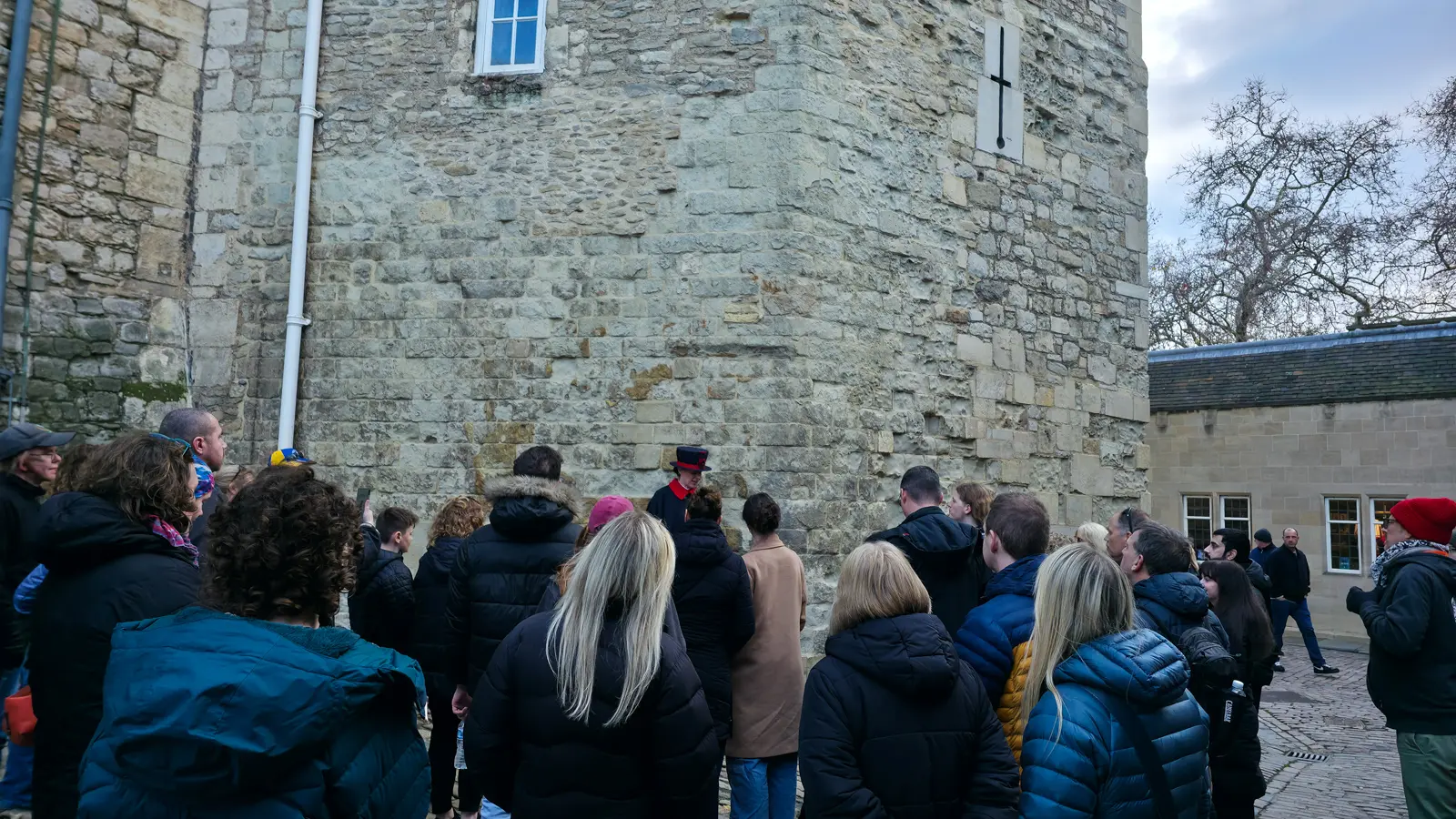
One of the most recognizable aspects of the Tower of London today is the presence of the Yeoman Warders, often informally referred to as “Beefeaters”. Dressed in their distinctive ceremonial uniforms, the Yeoman Warders continue centuries-old traditions while also serving as guides and guardians of the fortress.
Far from being purely ceremonial figures, Yeoman Warders are retired senior members of the British Armed Forces who possess deep knowledge of the Tower’s history. Their guided tours combine historical detail, humour, storytelling, and legend, helping bring the fortress’s complex past vividly to life for visitors. Their presence reinforces one of the Tower’s most unique qualities: although it functions as a historic site and museum, it also remains tied to living traditions that continue evolving today.
Bubbly Tips for Visiting the Tower of London
- Arrive early if possible: The Tower is one of London’s most visited attractions, and arriving earlier allows for a calmer experience before larger crowds arrive.
- Allow several hours for your visit: The site is much larger and more layered than many visitors initially expect.
- Join a Yeoman Warder tour: The storytelling and historical context add tremendous depth to the experience.
- Visit the Crown Jewels early in your visit: Lines tend to grow significantly throughout the day.
- Take time to explore the riverfront surroundings: The views of Tower Bridge and the Thames are spectacular.
- Look for smaller architectural details: Ancient stonework, inscriptions, defensive towers, and narrow passageways reveal fascinating traces of the Tower’s evolution over centuries.
- Experience the area at different times of day if possible: The atmosphere shifts dramatically between daylight, sunset, and nighttime illumination.
- Location: The Tower of London is located along the northern bank of the Thames beside Tower Bridge in central London.
Final Thoughts
The Tower of London is far more than a historic fortress. It is a place where nearly a thousand years of English history continue to feel present within the walls themselves. Few landmarks in London combine architecture, monarchy, political intrigue, symbolism, legend, and atmosphere so powerfully within a single space.
What makes the Tower especially unforgettable is the emotional complexity of the experience. It is simultaneously beautiful and intimidating, grand and unsettling, historic yet deeply connected to modern London. Walking through its towers and courtyards, it becomes impossible not to reflect on the countless lives shaped by the events that unfolded there.
Even surrounded today by modern skyscrapers, busy riverfront promenades, and contemporary London life, the Tower of London continues to command attention much as it did centuries ago. It remains one of the city’s most enduring symbols of power, survival, and history.
Have you visited the Tower of London before? I would love to hear what stood out most during your experience exploring this extraordinary fortress.
Happy travels!

🌟 Everything You Need to Plan Your Dream Trip in 2026
- 🌟 Luxury Hotels - Find premium stays with Booking.com & Hotels.com
- 🏡 Vacation Rentals - Discover unique properties on VRBO
- 🏞️ Guided Tours - Explore with Viator or GetYourGuide
- 🎫 Attraction Tickets - Skip the lines with Tiqets
- 🚢 Ocean Cruises - Set sail with Cruise Direct
- 📱 International SIMs - Stay connected with Saily
- 🚗 Car Rentals - Budget-friendly options from Discover Cars
- 🌐 Secure VPNs - Browse safely with NordVPN
- 💶 Currency Exchange - Best rates with Wise
- 🗣️ Learn Languages - Master the local language with Babbel and Rosetta Stone