
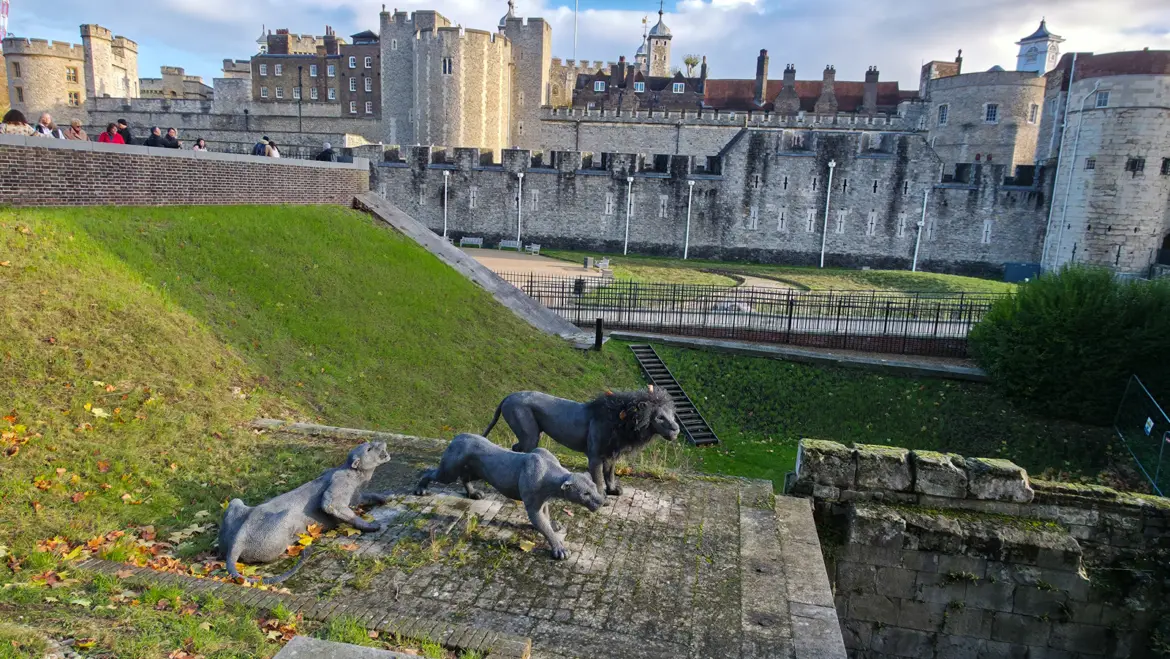
The Tower of London is famous for the Crown Jewels, the executions, the medieval fortress walls, and the ravens. Of all the things to do in London, a visit here is one of the most history-dense on a single site. What most visitors don’t know, until they walk in, is that scattered across the Tower grounds today are thirteen life-size animal sculptures made of galvanised wire mesh. A polar bear leaning over the moat. A trio of big cats prowling the western entrance. Baboons climbing a stone wall. An African elephant peering out of an arched window. They commemorate something most visitors have never heard of: the Royal Menagerie that lived at the Tower for more than 600 years.
I went in December 2025. The Tower was decked out for Christmas, with trees by the Jewel House and quiet grounds. The wire-mesh animals were the unexpected highlight.
Animals at the Tower at a Glance
🦁 Royal Menagerie · Founded 1235 when Henry III received three “leopards” (almost certainly lions) from the Holy Roman Emperor. Animals were kept continuously until 1835.
🐻❄️ The Polar Bear · Gifted by Haakon IV of Norway in 1252. Allowed to fish in the Thames on a long chain by royal order in 1253.
🐘 The Elephant · A gift from Louis IX of France in 1255, the first elephant seen in England since Roman times. Died at the Tower on 14 February 1257.
🎨 Royal Beasts Sculptures · 13 life-size galvanised wire-mesh animals by British artist Kendra Haste, commissioned by Historic Royal Palaces in 2010 and installed across the Tower grounds in 2011.
🦅 The Ravens · At least seven live at the Tower at any time, looked after by the Ravenmaster. The legend that the kingdom falls if they leave is largely Victorian; the earliest visual record of captive ravens here is from around 1883.
🌳 London Zoo Connection · Most of the Tower’s surviving animals were transferred to the new Zoological Gardens in Regent’s Park starting in 1828, founding what became London Zoo.
🚇 Access · Included with Tower of London admission (Tower Hill tube). No separate “Royal Beasts” trail — you spot the sculptures as you walk.
The Menagerie That Began with Three Cats
The Royal Menagerie at the Tower of London began in 1235, during the reign of Henry III. That year, Henry received three big cats from Frederick II, the Holy Roman Emperor, marking Frederick’s marriage to Henry’s sister Isabella. The chronicles called them “leopards”. Historians today think they were biologically lions, and the discrepancy is a medieval heraldic quirk: in the French tradition English heralds inherited, “leopard” described a pose, not a species. A lion walking with its head turned to face the viewer was formally blazoned as a “leopard”. The three lions on the English royal shield, in exactly that pose, were officially called “three leopards” until the late 14th century. Frederick’s gift put live versions of Henry’s heraldic beasts in his fortress.
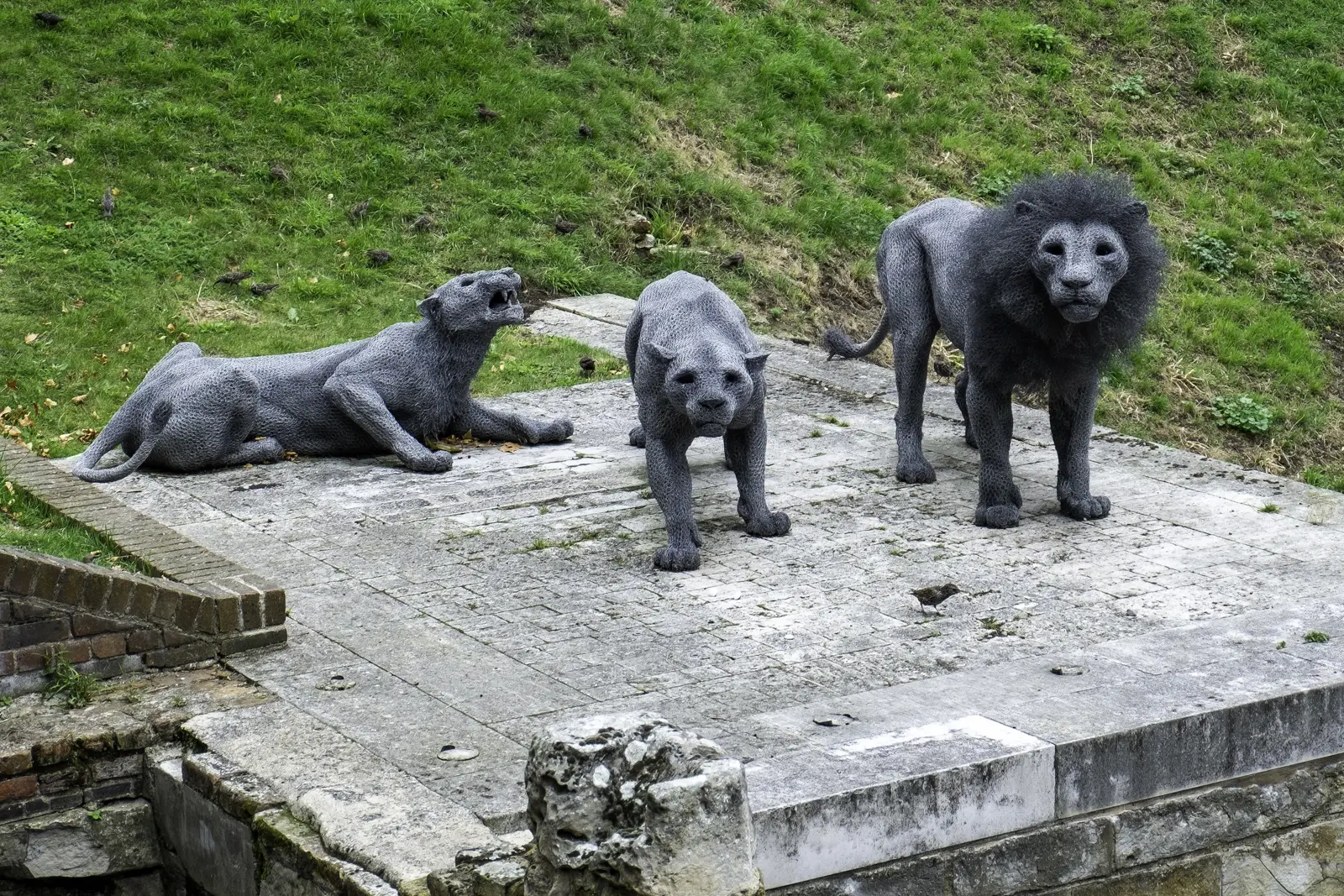
The animals were housed in the Lion Tower, a now-demolished barbican at the western entrance to the fortress. Over the centuries the collection grew. By the 17th century the public could pay an admission fee, or in some periods bring a dog or cat as feed for the lions, to view the menagerie. Standards of animal welfare were not modern. Many of the creatures died of cold, malnutrition, or stress. The Tower as a zoo is not a sentimental story.
The Polar Bear That Fished in the Thames
The single most famous resident of the menagerie was a polar bear. In 1252, Haakon IV of Norway sent Henry III a “white bear” (almost certainly a polar bear, given Norway’s Arctic reach in that period). The bear came with its own Norwegian keeper.
The next part of the story is the famous one. The cost of feeding the bear was so high that Henry III delegated the bill to the Sheriffs of London, who issued an order in 1253 that the bear should be allowed to swim and fish for itself in the Thames. The bear was kept on a long chain and a stout muzzle, led down to the river by its keeper, and let in to catch dinner. A polar bear in the medieval Thames, beside the Tower walls, with boats moving up and down the river. The Kendra Haste polar bear sits today in a niche near the western entrance, leaning out toward the moat. It looks alive at certain angles. The mesh catches the light.
The Elephant of 1255
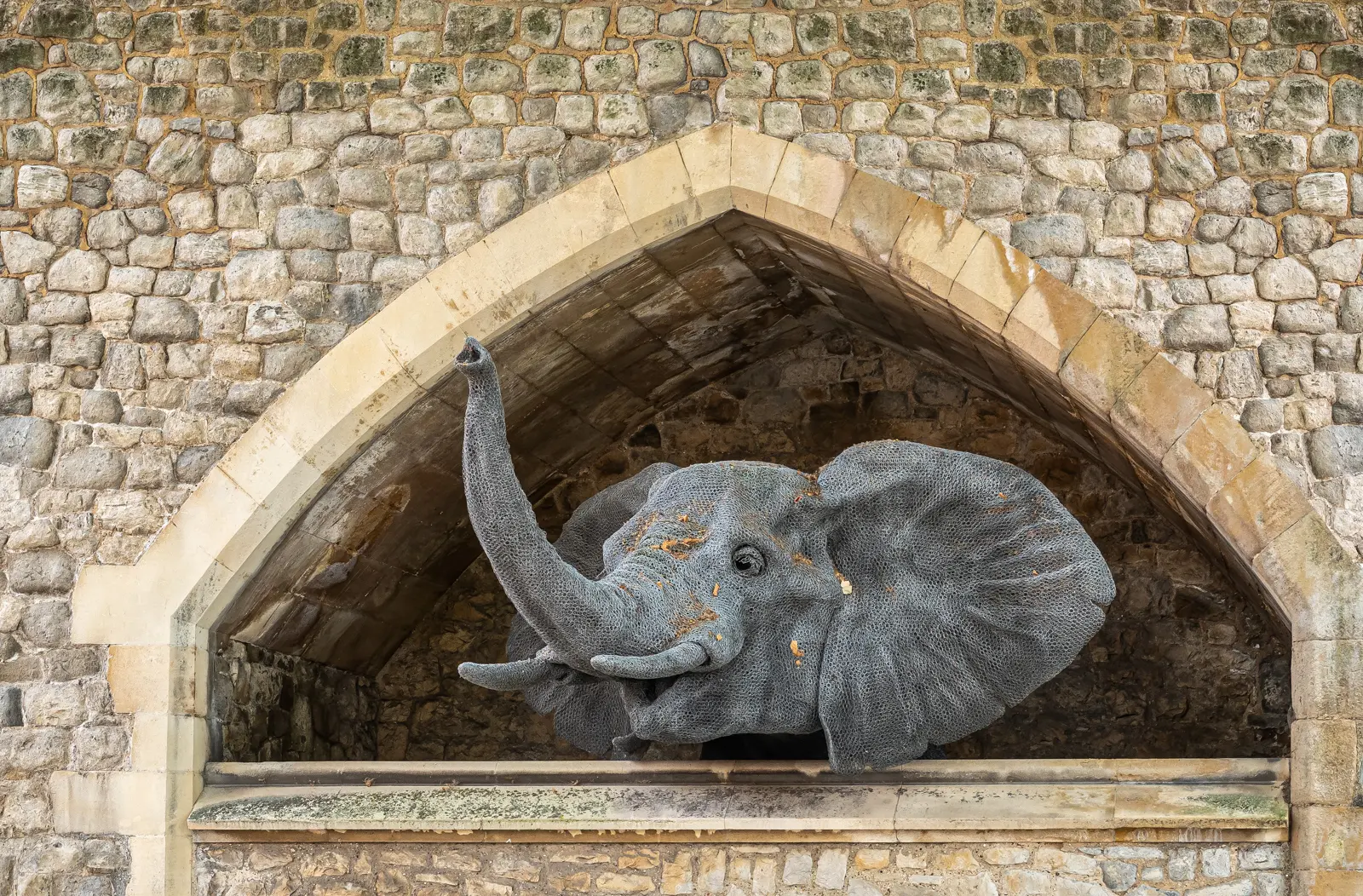
Three years after the polar bear, Louis IX of France gifted Henry III an African elephant. The elephant had originally been a diplomatic gift from Egypt to Louis during the Seventh Crusade. It was likely the first elephant seen in England since Roman times. The medieval chronicler Matthew Paris drew the elephant from life at the Tower, and his drawings survive in the Parker Library at Corpus Christi College, Cambridge.
The elephant did not live long. It died on 14 February 1257, about two years after arriving, at around twelve years old. The conditions weren’t survivable: climate, diet, and the medieval understanding of elephant care. Henry III taxed Londoners to build a dedicated elephant house, but by then the animal was already failing.
The Kendra Haste elephant today peers out of an arched stone window in the inner ward, which is where many visitors first realise the Tower has these sculptures at all. It is the crowd favourite. Visitors of every age stop. I watched a small child point at it and say “it’s a real one”. It is hard not to think it is a little bit cute.
The Baboons on the Wall
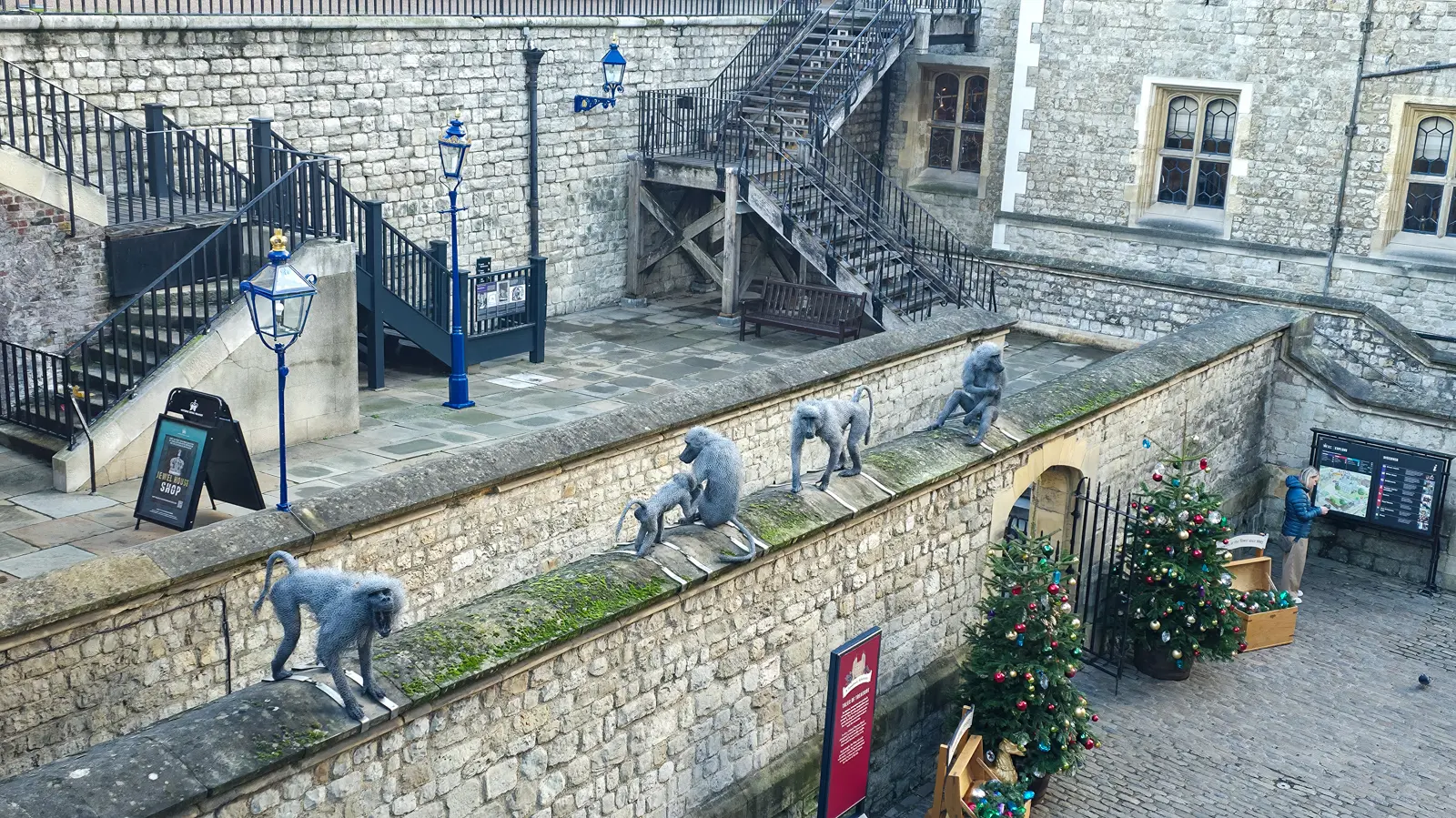
Apes and monkeys were kept at the Tower throughout the menagerie’s 600 years. Records mention baboons, mandrills, and other primates, often gifts from rulers in North Africa and the Mediterranean.
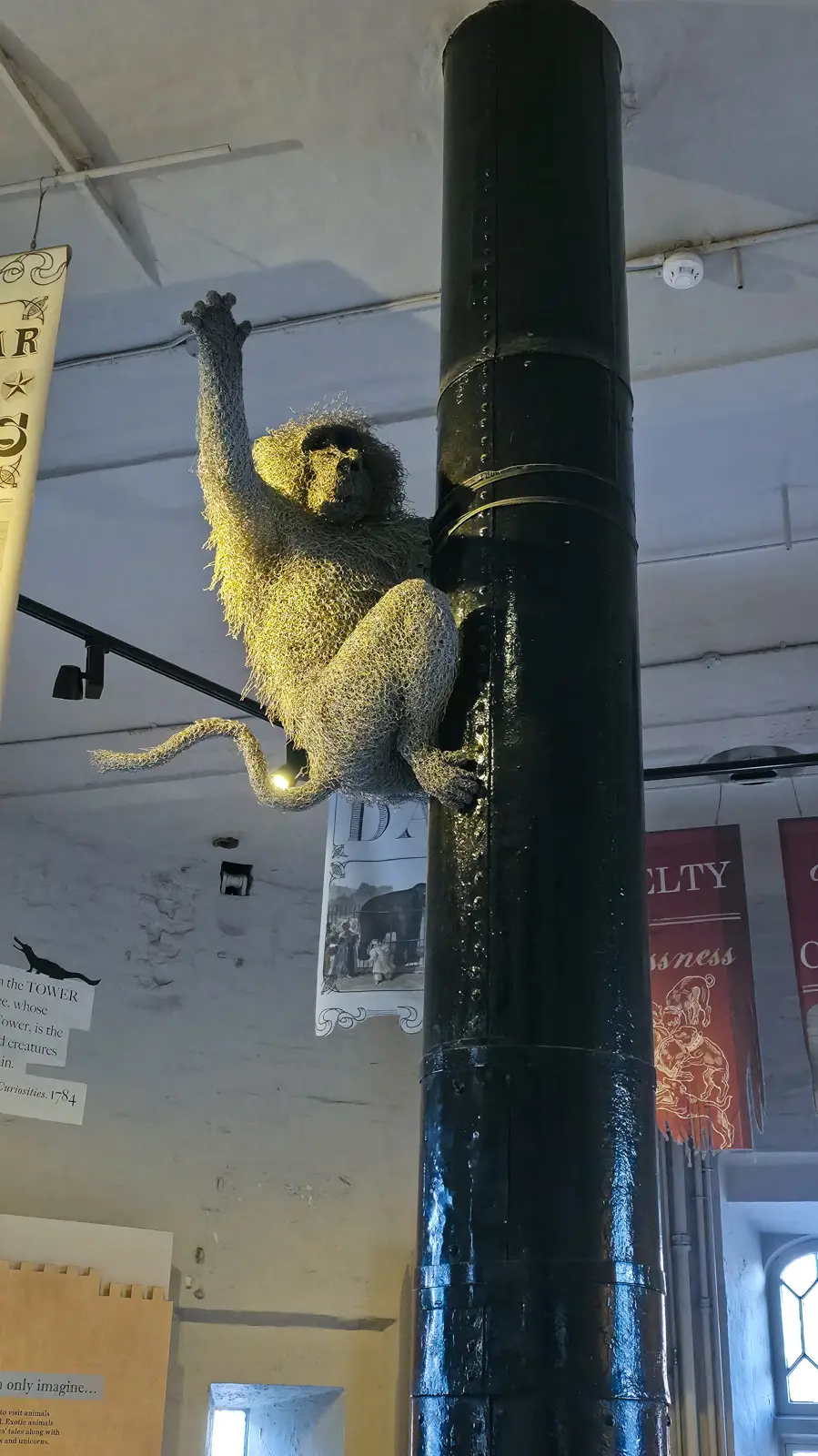
The Kendra Haste baboon group is the funniest piece in the installation. The sculptures climb a low stone wall near the Jewel House, mid-motion: one crouching, one looking back, one mid-step along the wall’s edge, one ambling up to join. They look like they’re plotting something. On a December afternoon, the Christmas tree at the corner of the path framed them perfectly, and a family with two small children stood there for ten minutes pointing and laughing. The baboons land for everyone. Kids think they’re funny. Adults think they’re funny. You can see how, six hundred years ago, real baboons would have been the mischief of the castle. The ones that stole things and broke things and got into trouble.
The End of the Menagerie
By the early 19th century, the Tower’s menagerie was clearly out of date. Modern zoological thinking was emerging at the Zoological Society of London, founded in 1826. In 1828, most of the Tower’s animals were transferred to the new London Zoo at Regent’s Park. The last animals left the Tower by 1835, ending more than six hundred years of the Royal Menagerie. The Lion Tower itself was demolished in the same period.
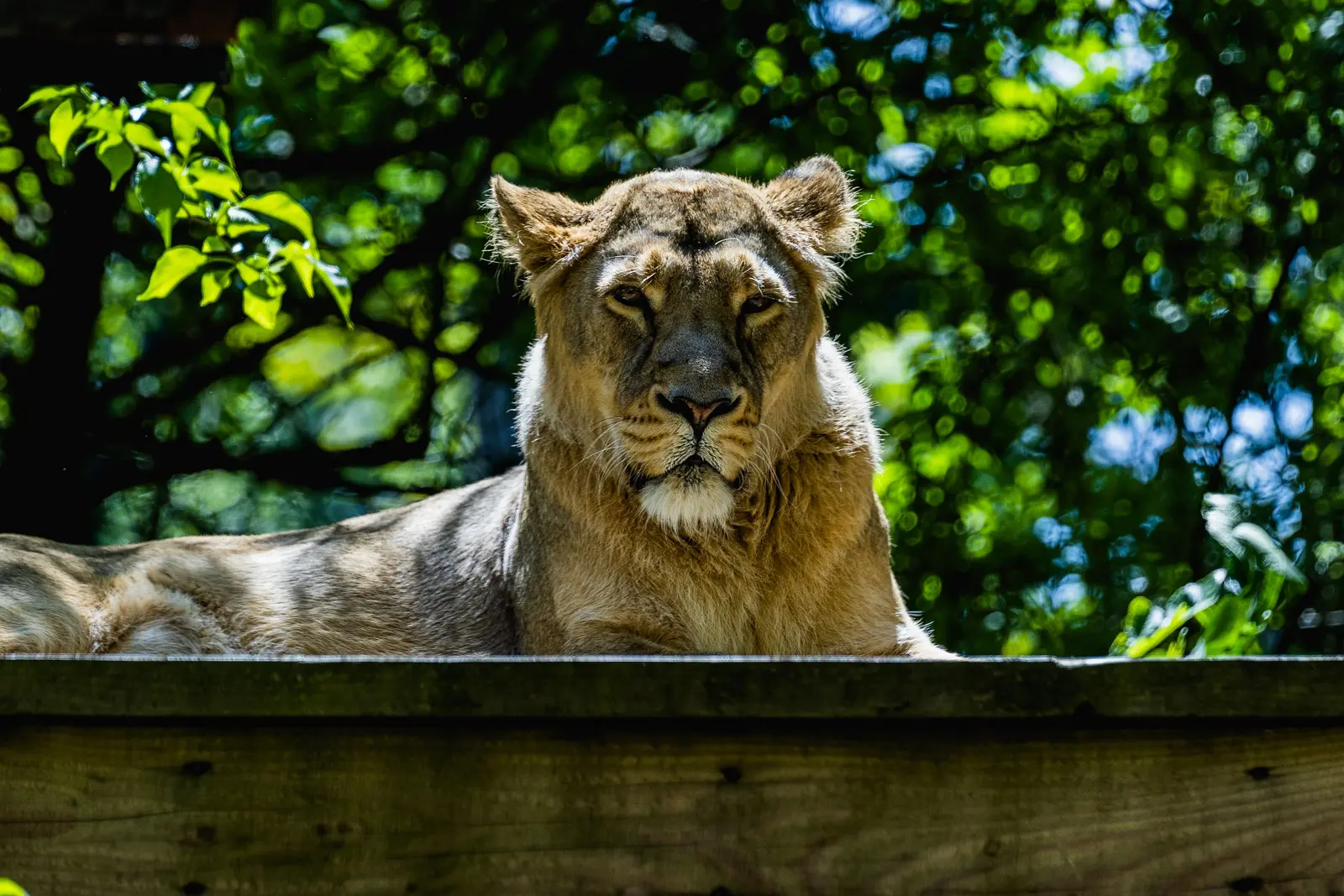
If you want to see the real descendants of what the Tower once held, London Zoo is a forty-minute Tube ride away. Camden Town station, then a short walk through Regent’s Park. The Asiatic lions are the closest thing to what stood in the Lion Tower cages, though their lives are unrecognisably better.
Ravens, Good Luck, and the Yeoman’s Story
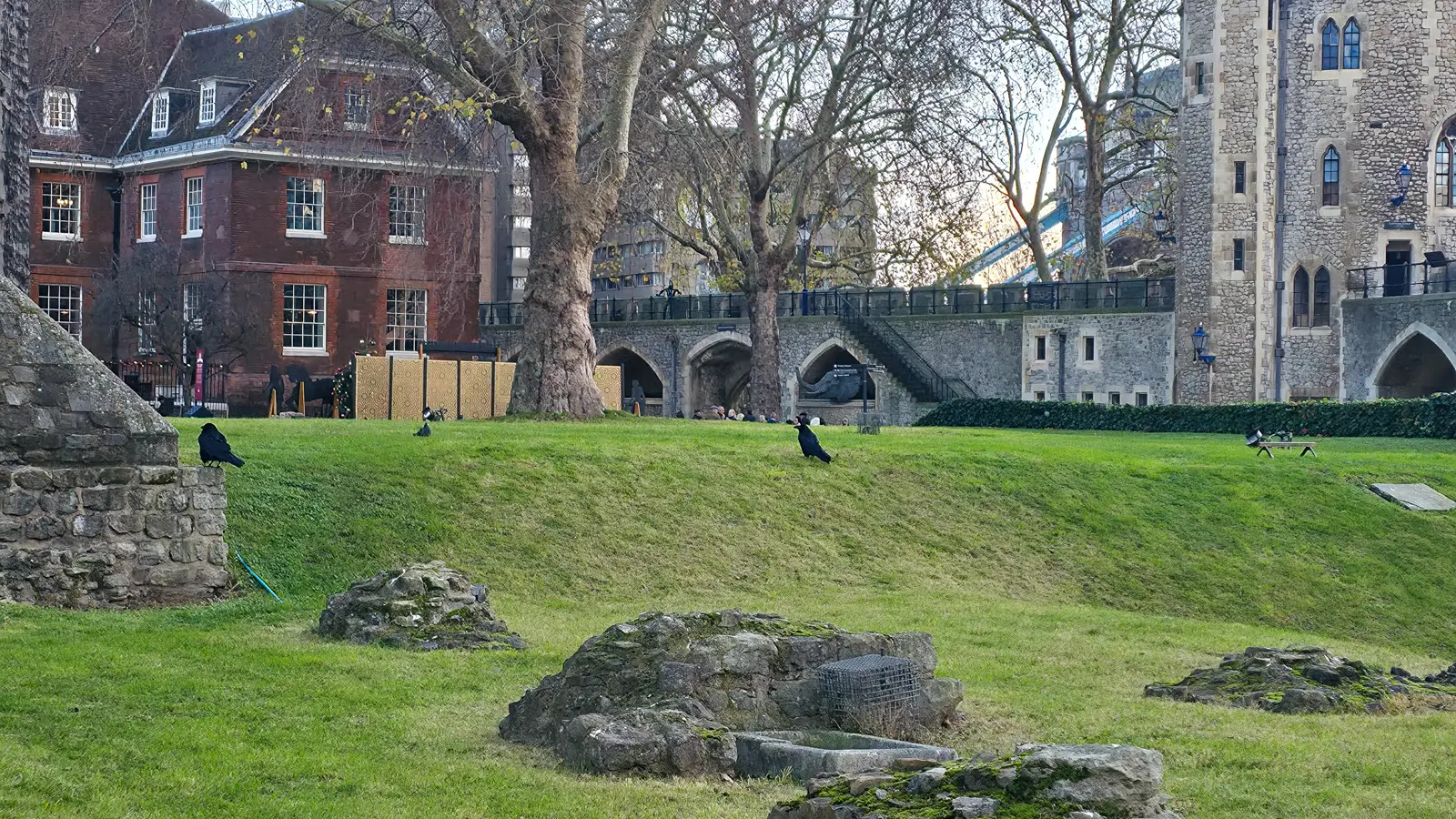
The ravens are the part of the Tower’s animal story that doesn’t fit the medieval narrative. Going in, I expected them to feel a little sinister. They are black, they are huge (a Tower raven is much larger than a city crow), and the legend (“if the ravens ever leave the Tower, the kingdom will fall”) doesn’t help. The reality is the opposite. The ravens I watched in December stood on the grass in the inner ward, calm, unbothered by tourists walking three metres away, watching everything with curiosity. They are completely habituated.
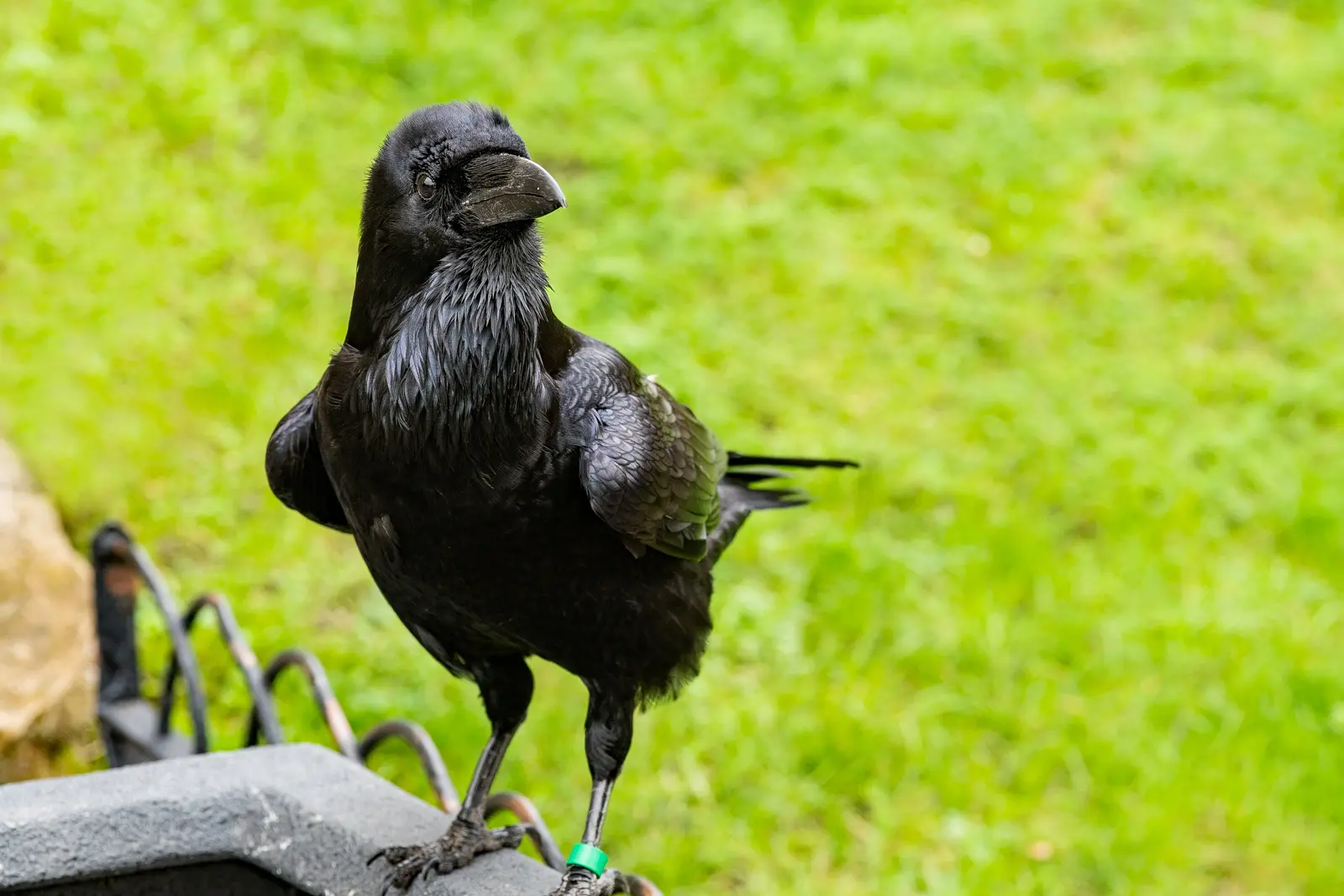
A Yeoman Warder explained it on the tour. He said something I didn’t expect: the ravens are considered good luck. The legend is a protection legend, not a curse. The kingdom falls if they leave, so they are kept, fed, looked after, given names and identity tags. They are symbols of stability, not doom. The Yeoman’s framing flipped the whole thing for me. After that the ravens did not look like ominous omens. They looked like the resident staff.
Worth knowing if you read into the legend later: most scholars now think the “ravens have always been at the Tower” story is largely Victorian. The earliest visual record of captive ravens at the Tower is from around 1883, and the dramatic prophecy about the kingdom falling probably entered the public imagination between the late 1800s and the early 1900s. It is an excellent story regardless.
Where to Find the Royal Beasts Sculptures
The wire-mesh sculptures are by British artist Kendra Haste, commissioned by Historic Royal Palaces in 2010 and installed in 2011. They are permanent and included with general Tower admission. Worth knowing where they sit:
- The lions / big cats: near the former Lion Tower at the western entrance, just inside the moat as you walk in
- The polar bear: at the western entrance, leaning over toward the moat
- The elephant: peering out of an arched window in the inner ward, visible from multiple paths near the White Tower
- The baboons: climbing a stone wall near the Jewel House entrance or inside the Brick Tower.
There is no separate “Royal Beasts trail” map, which is part of the fun. You spot them as you walk around.
Bubbly Tips for Visiting the Animal History of the Tower of London
- Look out for the wire sculptures from the moment you arrive. The big cats are by the western entrance and easy to miss if you’re rushing toward the Crown Jewels queue. Stop and look at them before you head up.
- Take a Yeoman Warder tour. They’re free with admission, run about every 30 minutes, and the Yeomen know things about the ravens and the menagerie that aren’t on the plaques. The raven legend in particular makes a lot more sense after a Yeoman has explained it.
- The Crown Jewels queue is shortest first thing in the morning or in the last hour before closing. Doing the Royal Beasts walk first, before the queue forms, is a good plan. The sculptures don’t have queues.
- Bring a long lens for the ravens if you want close shots. They’re calm but they’re working birds, not pets. The Ravenmaster’s team manages how close visitors get. A 70-200mm or a decent phone zoom does fine.
- Visit in December if you can. The grounds are decorated for Christmas, the crowds are lower than summer, and the wire sculptures photograph beautifully against the seasonal greenery and dark stone.
- Combine with London Zoo if you have a Tower-and-Zoo day in you. Tower Hill to Camden Town on the Tube is about 25 minutes, then a short walk through Regent’s Park. Seeing real lions after the wire ones makes the contrast land.
- Allow 3 to 4 hours for the Tower itself. The Royal Beasts walk adds roughly 30 minutes if you stop properly. Photographers will want more.
- The gift shop carries Kendra Haste postcards. A cheap and good-looking souvenir if any of the sculptures particularly land for you.
Final Thoughts
The Tower of London is layered enough that you can visit it three times and miss something. The Royal Menagerie is one of those layers. Most visitors walk past the wire-mesh lions on their way to the Crown Jewels without registering that the western entrance was once the Lion Tower, or that an actual polar bear once fished in the Thames a few metres from where they’re standing.
The Kendra Haste sculptures are the best kind of public art. They don’t shout. They sit in the spaces the animals once occupied, made of mesh instead of fur and feather, and they make the history visible in a way no plaque could. The baboons make people laugh. The elephant makes children point. The ravens, calmer than their reputation, walk between them all. It’s a strange and lovely layer of a fortress mostly known for darker things.
Until next time!

🌟 Everything You Need to Plan Your Dream Trip in 2026
- 🌟 Luxury Hotels - Find premium stays with Booking.com & Hotels.com
- 🏡 Vacation Rentals - Discover unique properties on VRBO
- 🏞️ Guided Tours - Explore with Viator or GetYourGuide
- 🎫 Attraction Tickets - Skip the lines with Tiqets
- 🚢 Ocean Cruises - Set sail with Cruise Direct
- 📱 International SIMs - Stay connected with Saily
- 🚗 Car Rentals - Budget-friendly options from Discover Cars
- 🌐 Secure VPNs - Browse safely with NordVPN
- 💶 Currency Exchange - Best rates with Wise
- 🗣️ Learn Languages - Master the local language with Babbel and Rosetta Stone