
I have stayed at Sea Containers London twice. Once in 2019, when it was still in its first design era. Again this past December, just before Christmas. Both stays were in a Standard Room with a city view. Both stays gave me reasons to come back. This post is about why.
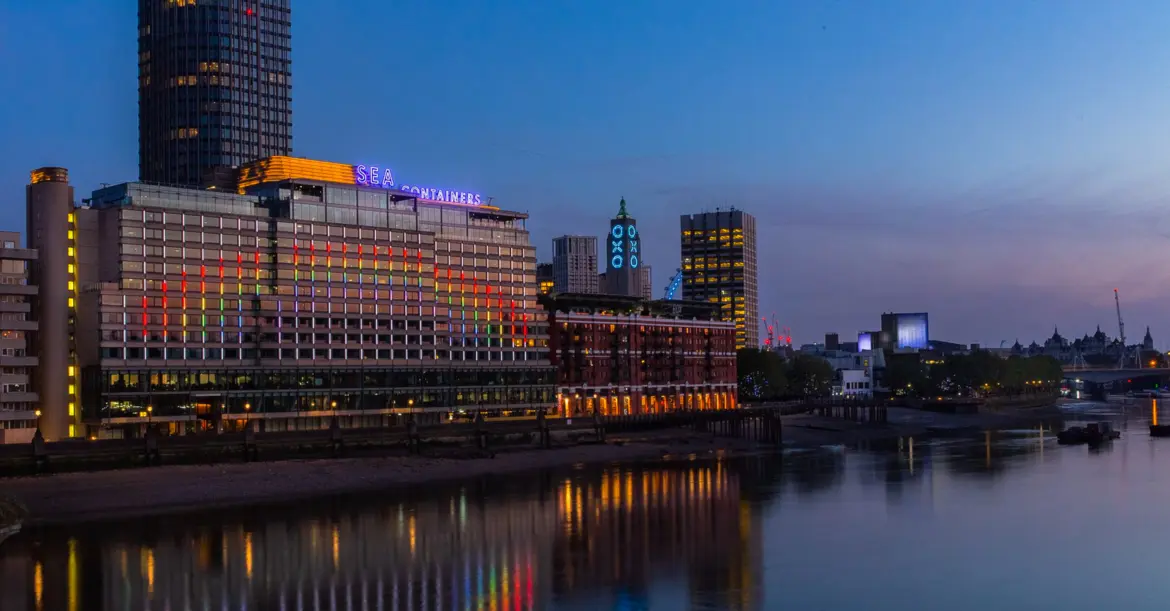
Sea Containers London is the rare hotel where the building has a story almost as interesting as the stay. It sits on the South Bank of the Thames, between the OXO Tower and Blackfriars Bridge, in a 16-storey Brutalist concrete block that looks more like an office building than a five-star hotel because for forty years it was an office building. The building was always meant to be a hotel. The 1970s oil crisis got in the way. It took until 2014 for the original intention to be honoured.
That long delay is part of what makes the hotel feel the way it does. The building was designed in 1974 by the American architect Warren Platner, the man who designed the Windows on the World restaurant at the top of the World Trade Center in New York. Platner had also designed ferry interiors for the Stena Sealink line. He thought about ships when he designed buildings. The 16-storey concrete block on the South Bank was originally commissioned as a luxury hotel for the Sea Containers shipping company, and Platner intended the whole structure to evoke the geometry and proportions of an ocean liner moored on the river. The oil crisis hit before construction finished. The hotel plan was scrapped. The building opened as offices in 1978 and stayed that way for nearly four decades.
In 2011, the developer Archlane bought the building and decided to give Platner’s original vision a second life. The project went to Tom Dixon’s Design Research Studio, which created the entire interior aesthetic with one premise: this building had always wanted to be a 1920s transatlantic ocean liner, and now it would be one. The hotel opened in 2014 as the Mondrian London at Sea Containers under the Morgans Hotel Group brand. A few years later, it left Morgans and went independent under the simpler name Sea Containers London. Same hotel, same design, different ownership.
I came in for the first time in 2019 when it was still the Mondrian. I came back in December 2025 to find the design had matured into itself, with the occasional small refresh, and the bones of Tom Dixon’s vision absolutely intact.
Sea Containers London at a Glance
📍 Location · 20 Upper Ground, South Bank, London SE1 9PD. Between the OXO Tower and Blackfriars Bridge on the Thames Path. Nearest Tube: Blackfriars (Circle, District) 4 min walk; Southwark (Jubilee) 8 min; Waterloo (multiple lines) 10 min.
🏛️ The building · Sea Containers House, a 16-storey Brutalist riverside block designed by American Modernist Warren Platner in 1974. Originally commissioned as a luxury hotel, it opened in 1978 as offices for the Sea Containers shipping company. It returned to its original use in 2014 — 40 years after Platner drew it.
🎨 The interiors · By Tom Dixon’s Design Research Studio. The whole hotel was designed to evoke a 1920s transatlantic ocean liner, with a 68-metre hand-beaten copper hull running from the entrance through the lobby into the riverside restaurant, brass detailing throughout the building, porthole-shaped mirrors in the public bathrooms, and bespoke artwork in every room.
🛏️ The room · Standard Rooms are queen beds with Carrara marble bathrooms, rainfall showers, Nespresso machines, 55–65″ LG TVs with AirPlay and Chromecast, and D.S. & Durga ‘Debaser’ bath amenities. Standard Rooms face the city rather than the river — book a Riverview category for the iconic Thames-and-St-Paul’s outlook.
🍸 The bars · 12th Knot rooftop bar (open to non-residents, panoramic St Paul’s views). Lyaness on the ground floor — the first bar ever to receive a 3 PIN award from the Pinnacle Guide, by cocktail legend Ryan Chetiyawardana (Mr. Lyan). The Den lobby lounge. Sea Containers Restaurant for all-day dining.
🎬 The extras · A 61-seat blue-velvet screening room (operated by Curzon, accessed through the lobby). The Agua London spa with a submarine-feel design. Pet-friendly for dogs under 20 lbs (£100 deposit).
💡 Tip · The flip-board signs in the lobby are worth a walk-in even if you’re not staying. Different message every visit. Combine with a Thames Path walk to Tate Modern, Borough Market, or across the Millennium Bridge to St Paul’s Cathedral.
The Lobby and Public Spaces
The first thing you see when you walk in is the copper. A hand-beaten copper wall sweeps from the entrance through the lobby and into the restaurant beyond, shaped to look like the hull of a ship that has somehow surfaced inside the building. The reception desk is built into the curve of it. The whole reception area is meant to suggest, in Tom Dixon’s words, that you are checking in just above the waterline of a docked ocean liner. It does suggest that. It also looks fantastic.
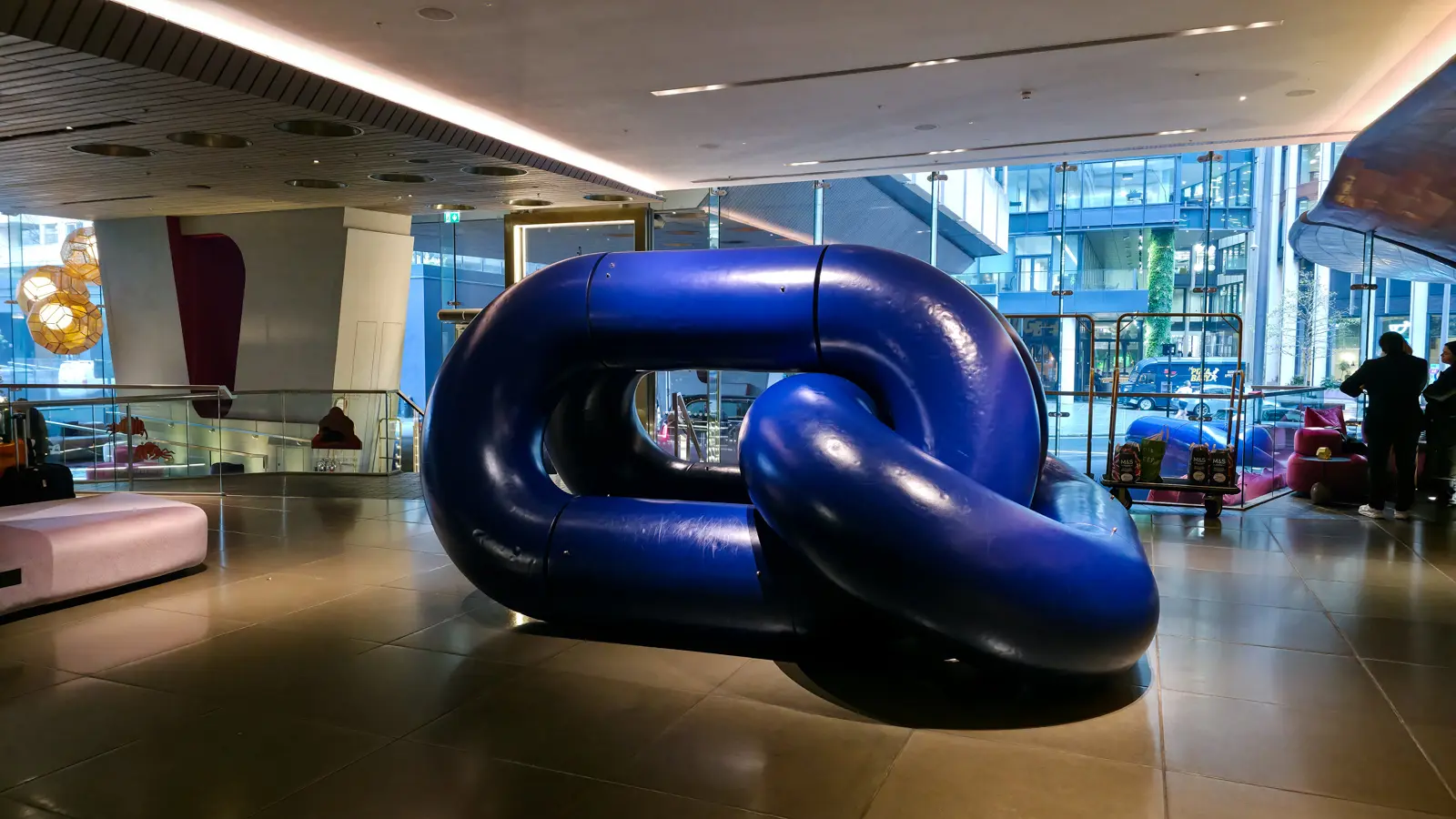
A few steps from the reception desk sits a large blue sculpture, a glossy abstract knot of dark blue tubular forms folded back on themselves, mounted on a black plinth. It is meant to evoke a sailor’s knot, and it is one of several modernist nautical installations Tom Dixon placed throughout the hotel’s public spaces when the redesign opened in 2014. The whole space leans into the idea of maritime references reinterpreted as contemporary sculpture: a knot that is not a knot, a hull that is not a hull, copper everywhere, brass elsewhere, the colours and textures of a ship redeployed as a design language.
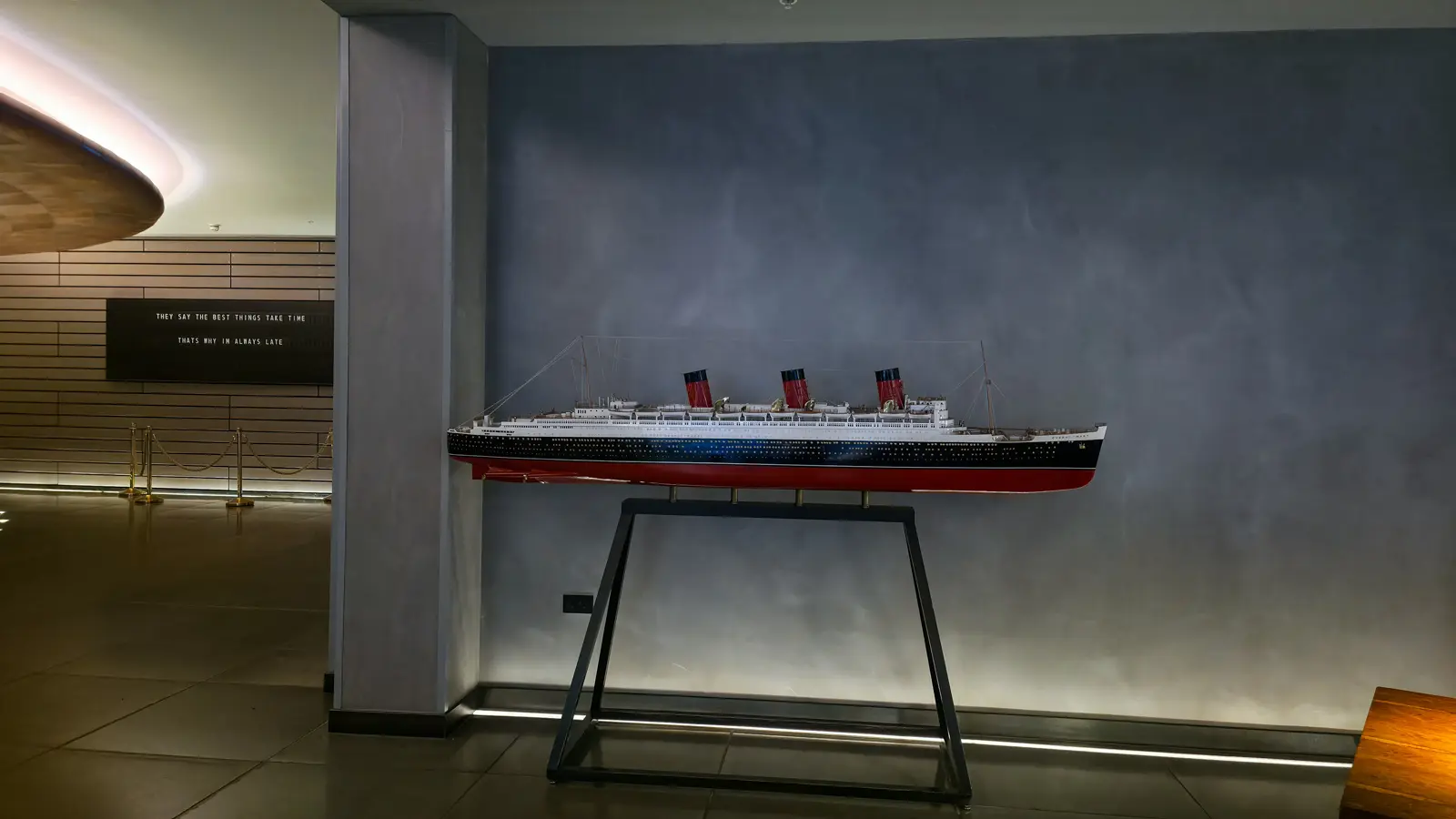
Along the same wall, mounted on a tall black metal stand and lit dramatically against the soft grey paint behind it, sits a detailed scale model of the RMS Queen Mary. The ship is in full Cunard livery: black hull with the red waterline below, white superstructure, and the three iconic red-and-black funnels that made the Queen Mary one of the most recognised ocean liners of the twentieth century. The model is one of the most photographed objects in the lobby. It is also the design key to the whole hotel. The Queen Mary entered service in 1936, at the peak of the transatlantic liner era, and Tom Dixon used the ship and its contemporaries as the explicit reference point for the interior aesthetic. Every nautical detail in Sea Containers, the copper hull at reception, the porthole mirrors in the public bathrooms, the brass running along the door frames, the rope-and-knot sculptural language, traces back to this specific ship and its era. The model in the lobby is not decoration. It is the source material.
One of the hotel’s flip-board signs is mounted on the wooden-panelled wall directly behind the Queen Mary, reading “They say the best things take time, that’s why I’m always late”. The contrast between the 1936 ocean liner and the 2020s sense of humour, framed in the same composition, is the whole hotel in one image.
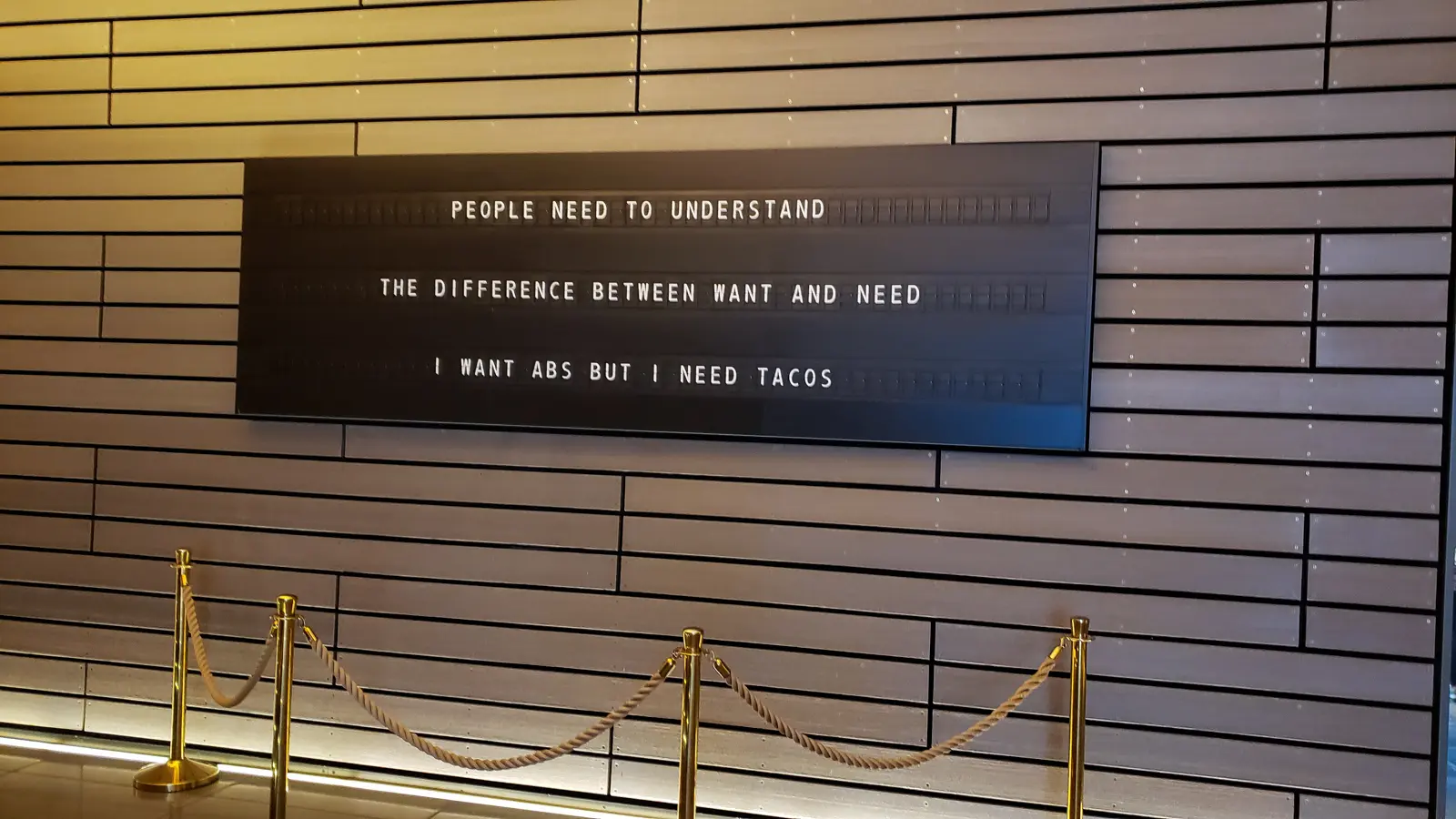
The detail I love most about the public spaces, and the one that genuinely sets Sea Containers apart from other London hotels I have stayed at, is the flip-board signs. These are old mechanical split-flap displays, the kind that used to announce departures at train stations and airports before they were all replaced by digital screens. The hotel has several of these mounted on the wooden-panelled walls of the lobby and corridors, and the messages on them change regularly. Always something funny.
On my 2019 stay, one of the boards read: “LIFE IS NOT A FAIRYTALE IF YOU LOSE YOUR SHOE AT MIDNIGHT YOU’RE DRUNK”. Another said: “I AM NOT LAZY I AM ON ENERGY SAVING MODE”.
A third: “PEOPLE NEED TO UNDERSTAND THE DIFFERENCE BETWEEN WANT AND NEED I WANT ABS BUT I NEED TACOS”
This is a hotel that has decided not to take itself too seriously. In a luxury category where so many five-star properties default to hushed reverence and perfectly composed marble lobbies, Sea Containers is willing to put a sign in its lobby that says “I want abs but I need tacos”. That kind of confidence is rare and worth noting. The signs are also clever marketing. Every guest who walks past them takes a photograph, and the photograph ends up on Instagram, and a different message will be on the board next time the guest walks past it. It is one of the most photographed details in the hotel and it is essentially just a clever staff member with a box of letters.
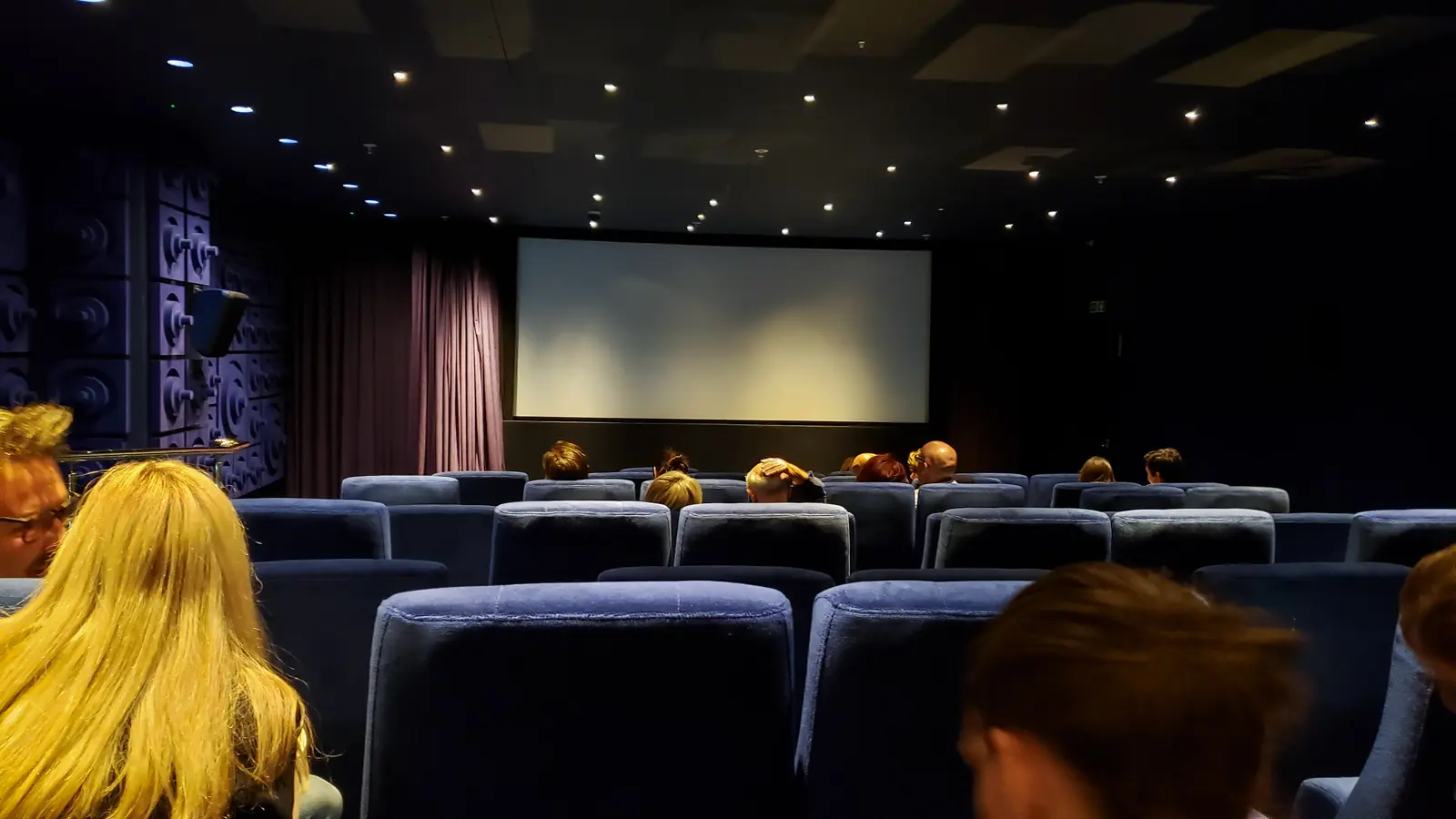
There is also a small screening room in the hotel, a 61-seat cinema decorated in deep blue velvet seating with brass handrails. The wall to the left of the screen is decorated with a repeating porthole motif. It hosts film premieres and small events. Guests can occasionally use it for private screenings. I saw a screening here in 2019 and it remains one of the better small cinemas I have been in. The blue velvet, the dimmed star ceiling, the wide screen, the absence of the chain-cinema crowd. If you have a partner who likes movies, sitting in a hotel cinema after a long day on the South Bank is a genuinely lovely way to end an evening.
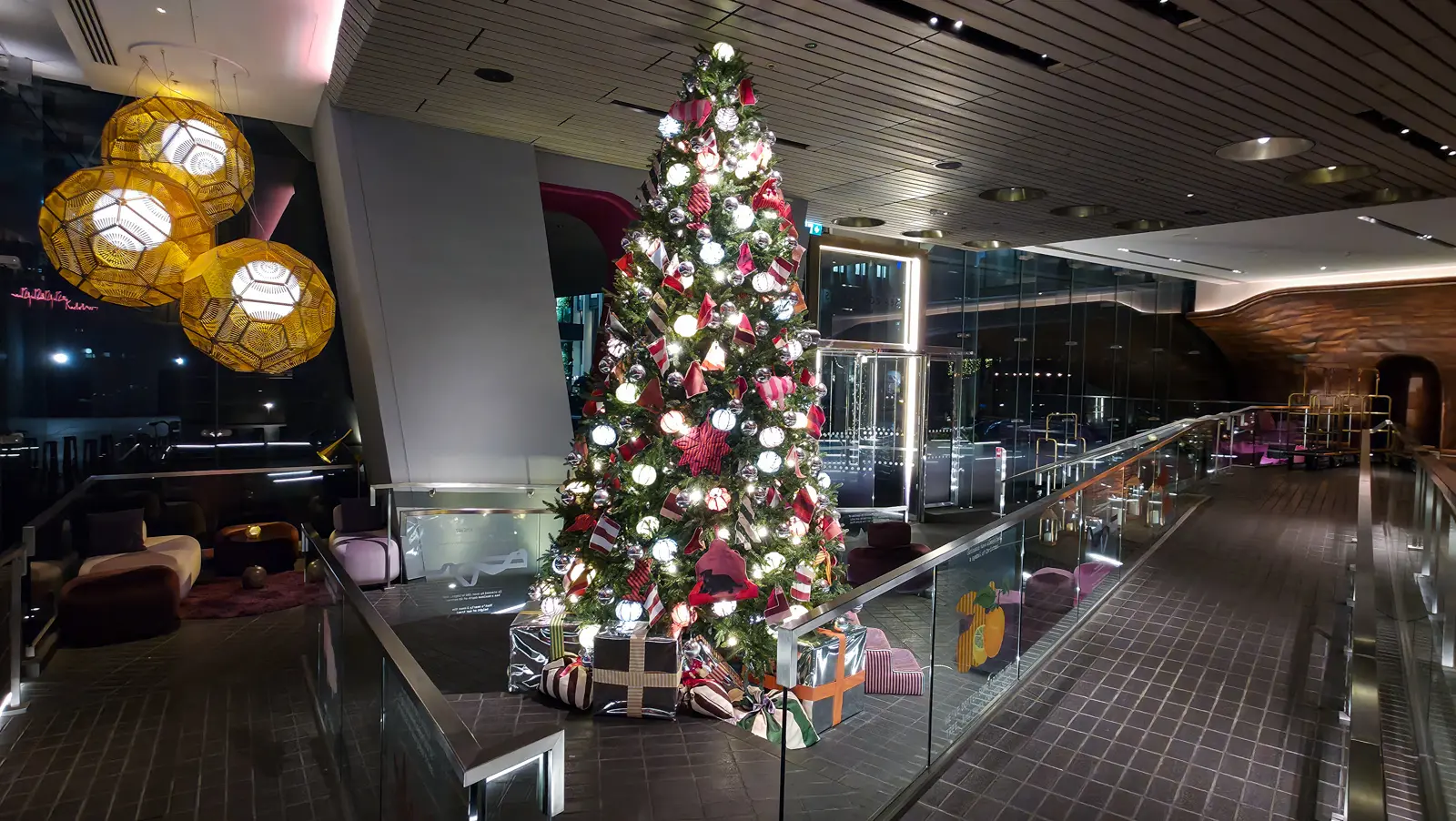
In December, the hotel decorates the lobby for the season. A large Christmas tree with warm white lights and red and silver ornaments stands in the lobby, framed by the copper-clad walls and the brass detailing that runs throughout the public spaces. The tree picks up the warm metallic tones of the design behind it. Hotel lobbies in December often go one of two ways: too much (the over-decorated grand-hotel-Christmas-spread that buries the building underneath tinsel) or too little (the obligatory three-foot tree near the elevators). Sea Containers does neither. The hotel does Christmas well. Not garish, not minimalist, just done.
The Room
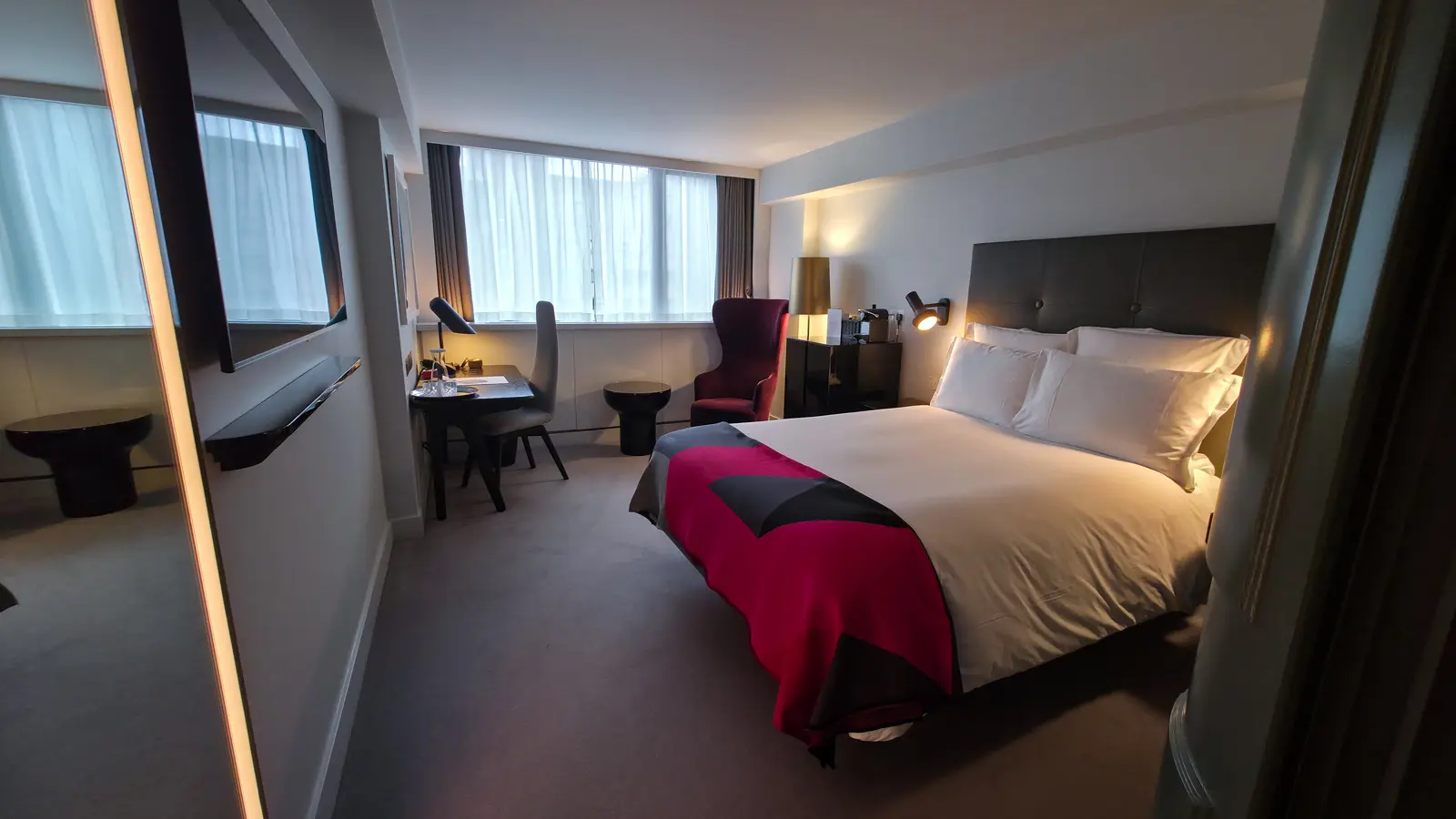
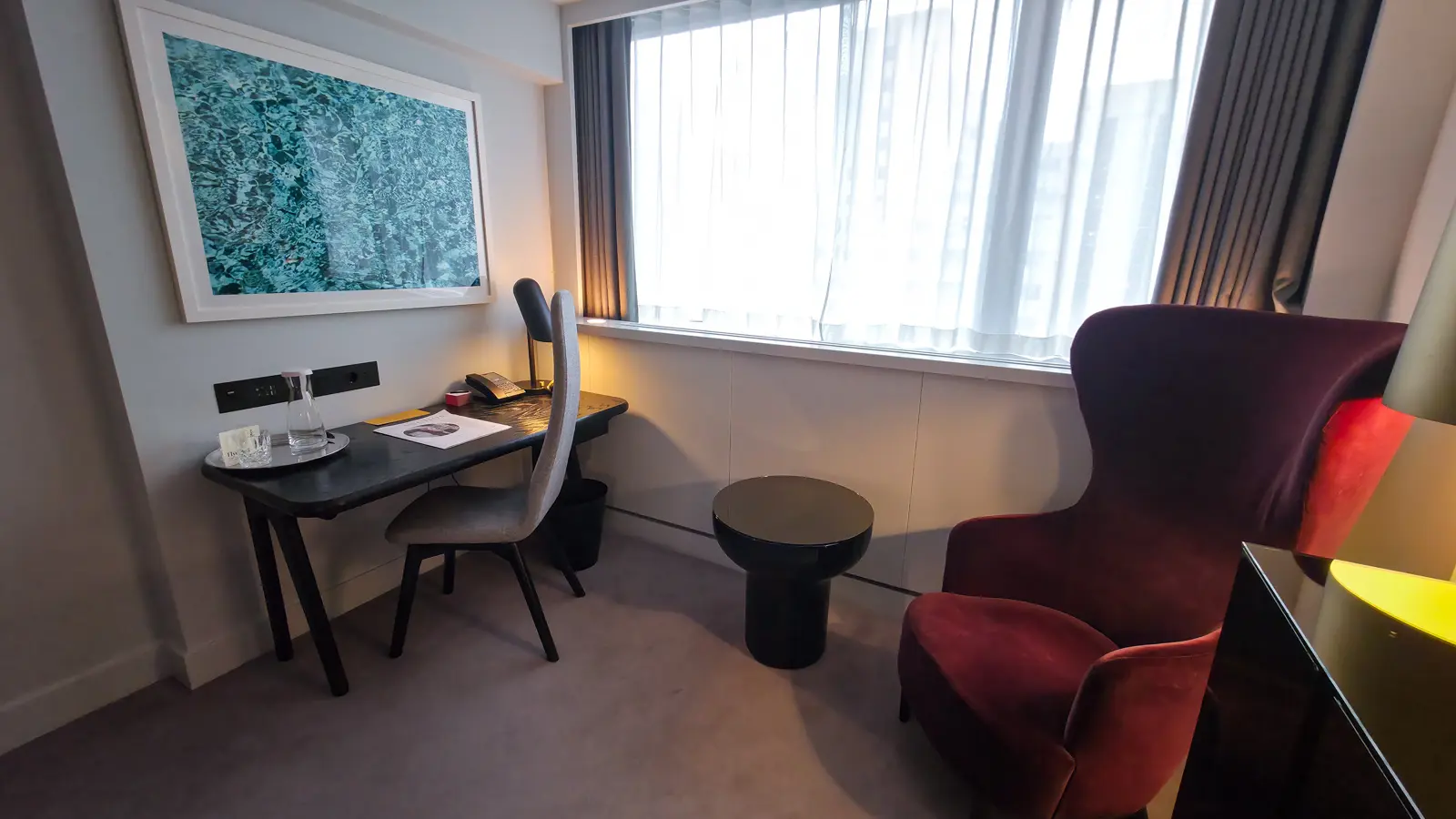
A Standard Room at Sea Containers is 312 square feet, which is generous by London standards, and decorated in a palette that the hotel describes as “transatlantic wanderlust”. In practice that means a queen bed with crisp white linens and a geometric pink-and-charcoal throw at the foot, a wingback armchair in deep burgundy velvet, a polished black writing desk, and brass details running along the door frames and the bedside lamps. The walls are pale, the carpet is grey, and the windows are wide. The whole effect is meant to evoke a cabin on a 1920s ocean liner without descending into kitsch, which it manages. There is no porthole on the wall, no anchor on the desk, no ship-in-a-bottle on the side table. The design works by suggestion rather than literalism.
The standard amenities are exactly what you would want them to be: complimentary WiFi, air conditioning, a Nespresso machine with the capsules included, a fully stocked mini-bar, an in-room safe, a flat-screen HDTV, an iron and steamer, tea and coffee, and adaptable plug sockets (the kind that accept both UK and European plugs without needing an adapter, which is the small detail I appreciate every time I travel internationally). Bathrobes and slippers come standard. The bed is genuinely soft. The room was very quiet.
The bathroom is Carrara marble, with a rainfall shower, a black stone vessel sink that looks almost like a polished pebble, an oversized vanity mirror with three round bulbs running down the left side like the kind a stage performer would use, and amenities by D.S. & Durga, a Brooklyn-based perfumer whose products are genuinely lovely (the shampoo smells like cedar and something faintly green). The towels are thick. The water pressure is excellent. The space is compact but well-designed.
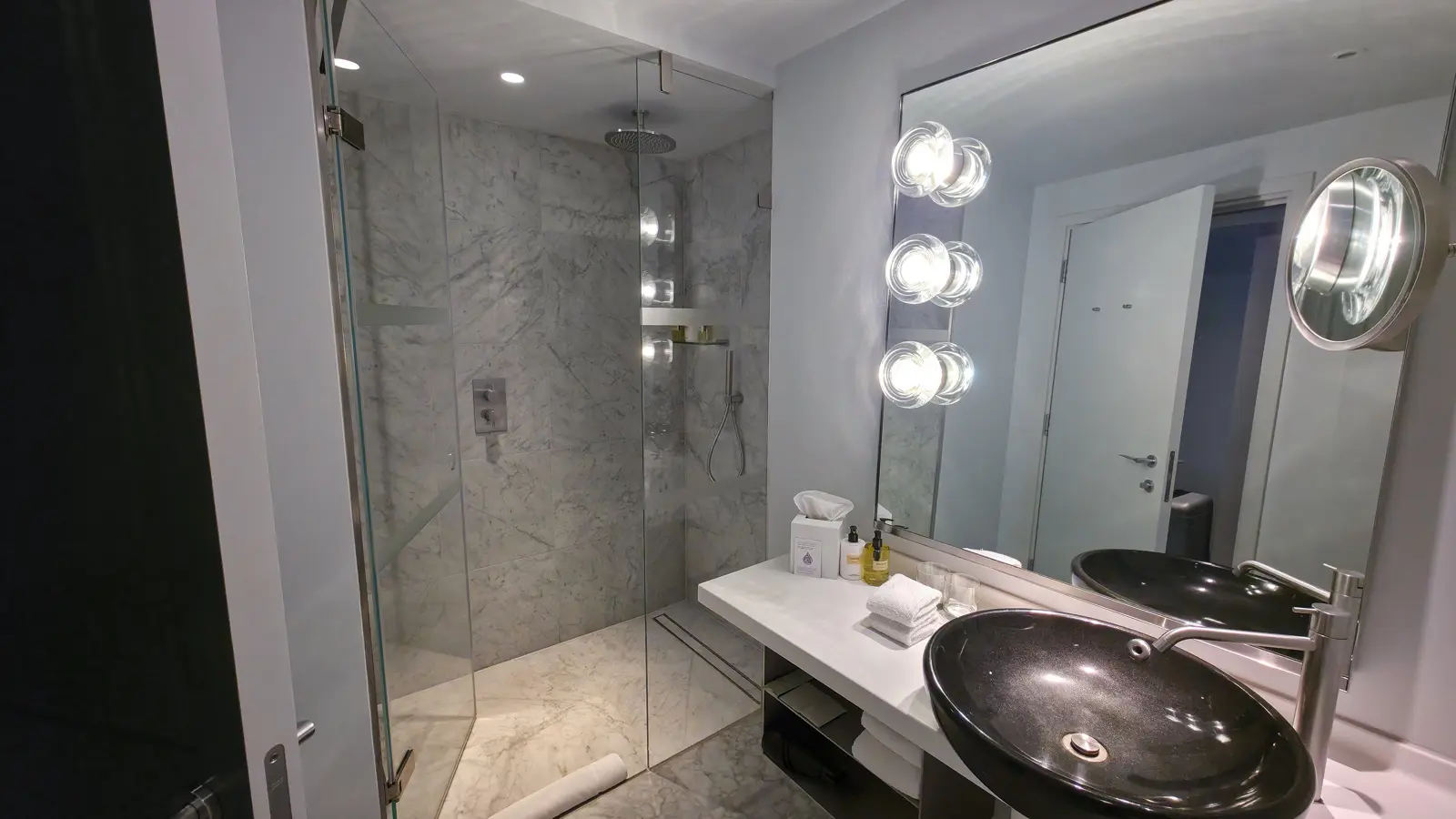
The view from the Standard Room is across to the south, looking out over the South Bank rather than the river. For a river view, you need a Riverview Studio Suite, which costs significantly more. The Standard Room’s city view is fine but not the photogenic Thames view some guests come specifically for. If the river view is the thing you want, book up.
The Service
I want to talk about the service honestly, because it shaped both my stays and there is a story to tell.
The front desk has consistently been excellent. Across both visits, every interaction at reception was warm, attentive, and unrushed. Check-in was smooth on both occasions. Concierge recommendations have been useful, including a few South Bank spots that ended up in my Borough Market and Tate Modern walks. The hotel obviously trains its front-of-house team well.
The hotel’s Sea Containers Restaurant, where we had dinner, was where I ran into a service issue this December. I will write a separate post about the restaurant, but the short version is that the service at our table was inattentive in a way that did not match the hotel’s tone. I raised it politely. The assistant manager apologised genuinely, took the issue seriously, and resolved it promptly. The food was excellent though. The recovery was the kind that turns a complaint into a recommendation, which is exactly how a five-star hotel should handle it.
Housekeeping had one notable miss. Early in our stay everything was on track: rooms turned over promptly, fresh towels and toiletries replaced daily. But on one of our last days we noticed that the towels and toilet paper had not been replenished during the morning service. We called housekeeping in the afternoon to ask for a few extras. They overcompensated. Six towels arrived. Four rolls of toilet paper. The housekeeping staff member who delivered them apologised in person for the earlier oversight. The correction was generous, prompt, and the verbal apology felt sincere rather than scripted. That kind of recovery is unusual in London hotels and worth noting.
Overall, the service over two stays has been very good with one weak link (the restaurant on one specific evening), and the recoveries when issues were raised were prompt and generous.
The View and the South Bank Location
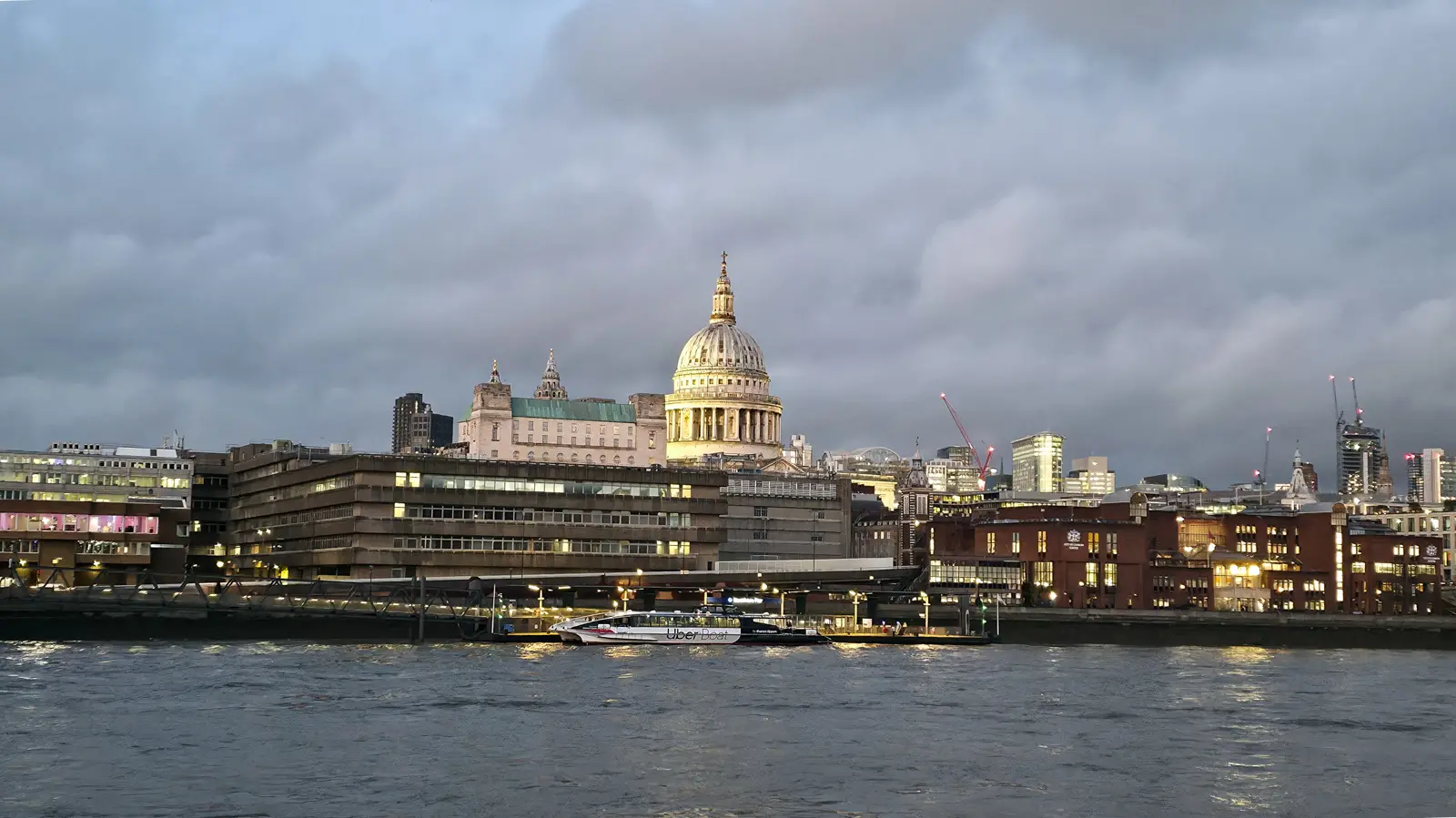
The location is one of Sea Containers London’s strongest assets. The hotel sits in the centre of the South Bank, equidistant from the Tate Modern (a 5-minute walk east), Borough Market (a 12-minute walk east), the OXO Tower (next door), Gabriel’s Wharf (a 2-minute walk), and the river crossings at Blackfriars Bridge (a 3-minute walk west) and the Millennium Bridge (an 8-minute walk east). The Thames Path runs directly past the hotel. The South Bank Centre, the BFI, the National Theatre, and the London Eye are all walkable along the river.
From the hotel’s terraces and the rooftop bar, the view across the Thames is genuinely iconic: St Paul’s Cathedral sits dead centre, with Christopher Wren’s dome rising above the City skyline, flanked by the Walkie-Talkie, the Cheesegrater, and the Shard. On a clear evening from the rooftop bar, this is one of the best views in London. The South Bank itself is the quieter, more cultural side of the river, with fewer tourists than the City but better restaurants and a more walkable atmosphere.
I have written about the South Bank as a neighbourhood in a separate post. If you are deciding between a Westminster hotel and a South Bank hotel for a London stay, the answer almost always comes down to whether you want to be near the political and royal landmarks (Westminster) or the cultural and artistic ones (South Bank). Sea Containers makes the South Bank case as well as any hotel in the city.
The Restaurant and Lounge
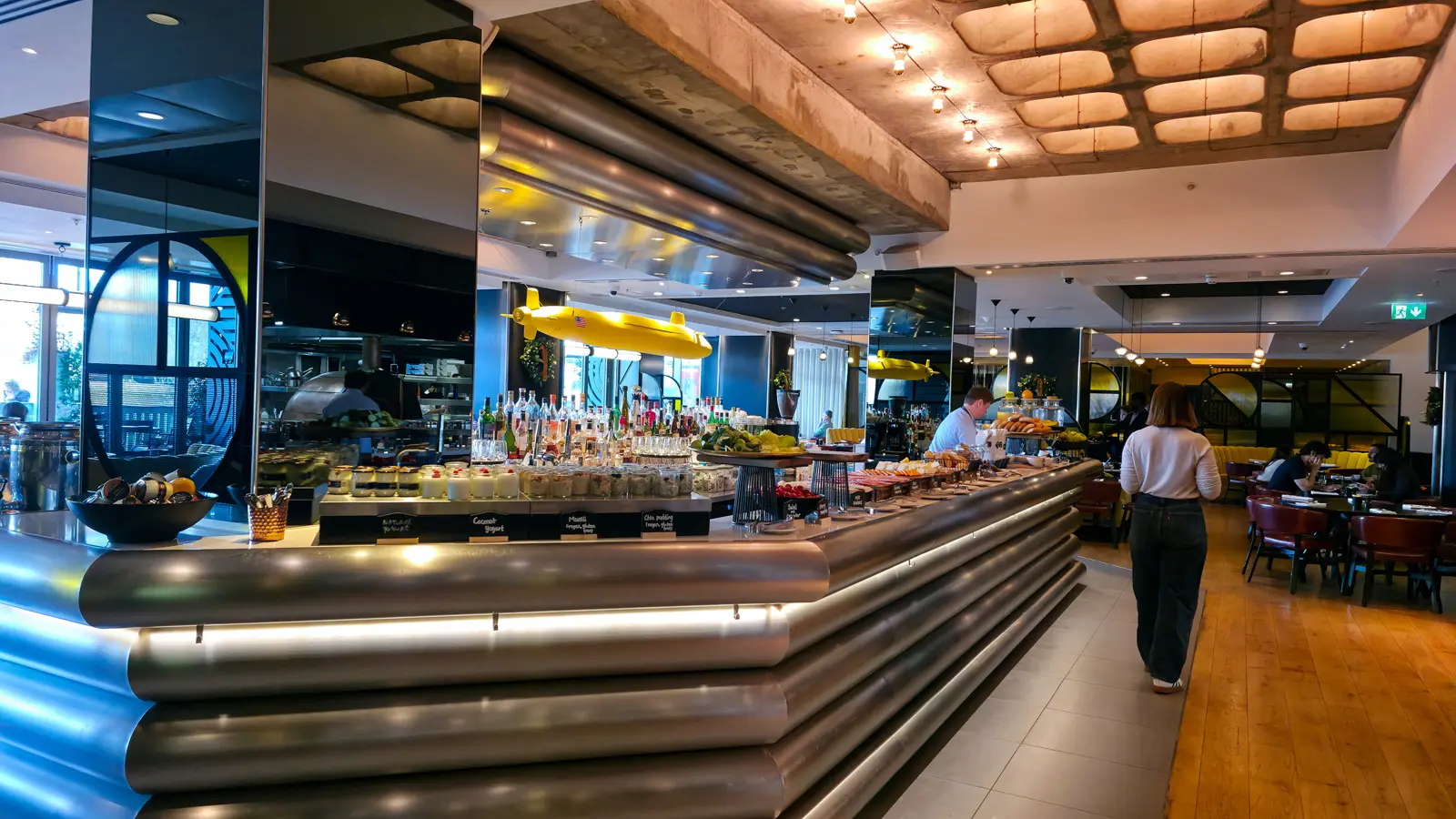
The hotel’s main restaurant, Sea Containers Restaurant, runs breakfast through dinner with riverside views. The most photographed feature of the restaurant is the yellow submarine that hangs from the ceiling above the buffet counter, a literal model with a small American flag, in obvious homage to both the Beatles song and to the building’s connection to a shipping company. Breakfast there over both visits has been one of the better hotel breakfasts in London, with a generous buffet alongside an à la carte menu.
The hotel also has a lounge area with Art Deco-inspired seating and a bar that runs cocktail service throughout the day. I will be writing about both the restaurant and the lounge in separate posts, so for now I will leave it at: both worth visiting, even if you are not staying at the hotel.
Bubbly Tips for Staying at Sea Containers London
- Book a Riverview room if the view matters. Standard Rooms have city views, not river views. If you want the iconic Thames-and-St-Paul’s outlook from your room, the Riverview category costs more but is worth it for a special occasion. Check whether a Riverview Studio Suite is available before booking.
- The rooftop bar, 12th Knot, is open to non-residents. If you cannot stay at Sea Containers, you can still see the view from the rooftop. The 12th Knot bar serves cocktails until late, and the view across to St Paul’s from the open-air terrace is one of the best in London. Get there before sunset on a clear evening.
- Stop in to see the flip-board signs even if you are not staying. The signs are visible in the lobby and are worth a five-minute walk-in for a photograph. Different message every visit. The reception staff are used to people taking photographs of them.
- Use the South Bank Path as your transport. The hotel sits directly on the Thames Path. From the front door, you can walk east to the Tate Modern, Borough Market, and Tower Bridge, or west to the London Eye, the South Bank Centre, and the BFI, without ever needing the Tube. For most South Bank visits, this is the fastest way to get around.
- The Curzon screening room is occasionally available for private events. Ask at reception if the screening room is bookable during your stay. Even if not bookable, popping in to see it during a public event is worth it.
- Use the adaptable plug sockets in the room. Most London hotels make you bring a UK adapter for European plugs and vice versa. Sea Containers’ sockets accept both, which is genuinely useful for international guests.
- D.S. & Durga amenities are full-size enough to use. Unlike many hotels with tiny refillable bottles, the shampoo, conditioner, and body wash here are generous. If you want to try the brand at home, the products are sold at major beauty retailers in the UK and the US.
- The hotel is well-suited for a weekend stay rather than a single night. The location is best appreciated over a few days. If you are coming for one night before catching an early flight, a Heathrow or Paddington area hotel will be more practical.
Final Thoughts
I have stayed at Sea Containers London twice across six years, and the things that brought me back are the same things I would have called out after the first stay. The building. The design. The location. The flip-board signs. The view from the rooftop. The South Bank itself.
The hotel is not perfect. Room service had a miss on this last visit. The restaurant had a service issue that required a complaint to resolve. The Standard Room view faces the city rather than the river, which is a small disappointment if you assumed otherwise. None of this stopped me from coming back, and none of it would stop me from coming back a third time.
What Sea Containers gets right is the rare combination of design ambition, location, and a sense of humour. The Tom Dixon design is now over a decade old and still feels current. The location on the South Bank is unmatched for cultural London. The flip-board signs and the yellow submarine and the copper hull and the blue knot all add up to a hotel that knows exactly what it is and is happy to be photographed.
If you are looking for a London hotel that takes itself seriously enough to be excellent and not so seriously that it forgets to put a sign in the lobby reading “I want abs but I need tacos”, this is the one.
Happy travels!

🌟 Everything You Need to Plan Your Dream Trip in 2026
- 🌟 Luxury Hotels - Find premium stays with Booking.com & Hotels.com
- 🏡 Vacation Rentals - Discover unique properties on VRBO
- 🏞️ Guided Tours - Explore with Viator or GetYourGuide
- 🎫 Attraction Tickets - Skip the lines with Tiqets
- 🚢 Ocean Cruises - Set sail with Cruise Direct
- 📱 International SIMs - Stay connected with Saily
- 🚗 Car Rentals - Budget-friendly options from Discover Cars
- 🌐 Secure VPNs - Browse safely with NordVPN
- 💶 Currency Exchange - Best rates with Wise
- 🗣️ Learn Languages - Master the local language with Babbel and Rosetta Stone