
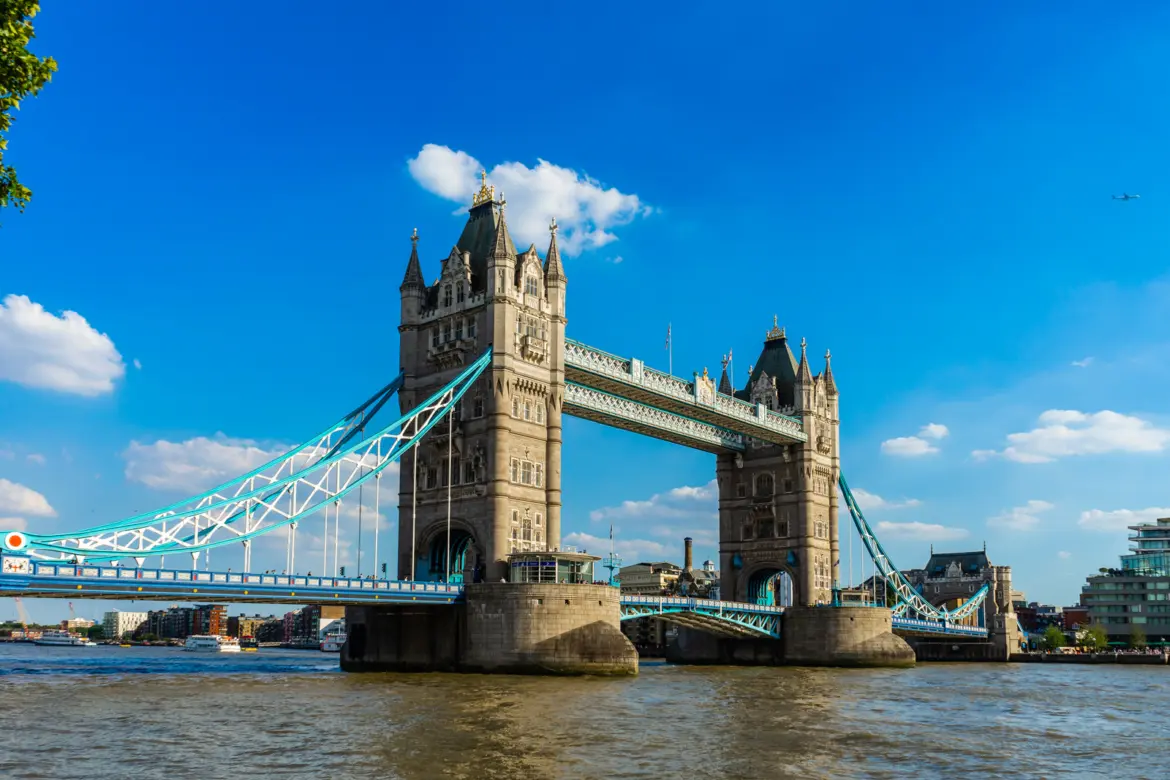
There are few landmarks in the world as instantly recognizable as Tower Bridge. Rising above the River Thames with its dramatic towers, suspension elements, and distinctive blue details, Tower Bridge has become one of the defining symbols of London itself. Whether viewed from the riverbanks, illuminated at night, or emerging through shifting London skies, the bridge possesses a theatrical presence that feels deeply tied to the city’s identity.
What makes Tower Bridge especially fascinating is the way it combines beauty, engineering, history, and atmosphere all within a single structure. It is not merely a crossing point over the Thames, but a landmark that reflects the ambition and transformation of Victorian London at the height of the British Empire. At the same time, despite being more than a century old, Tower Bridge continues to feel remarkably alive within the rhythm of modern London, surrounded by evolving skylines, river traffic, and constant movement along the Thames.
Standing near the bridge for the first time, it becomes immediately clear why so many visitors mistakenly believe it is London Bridge itself. Tower Bridge possesses the grandeur, scale, and visual drama people instinctively associate with London. Yet its story is even more interesting than its appearance alone suggests.
Tower Bridge at a Glance
🏛️ Style · Gothic Revival stonework cladding a steel framework.
📅 Opened · 30 June 1894 by the Prince and Princess of Wales.
📏 Length · 290 metres including its abutments along the Thames.
🗼 Towers · Each rises 65 metres above the river.
🌉 Crossing · Spans the Thames between Tower Hamlets and Southwark.
🎟️ Visit · The Tower Bridge Exhibition includes the glass walkways and original Victorian engine rooms.
🚇 Nearest stations · Tower Hill (District/Circle) and London Bridge (Northern/Jubilee).
The Story Behind Tower Bridge
The origins of Tower Bridge are deeply connected to the rapid growth of London during the 19th century. By the late Victorian era, London had become one of the largest and busiest cities in the world, while the Port of London remained one of the world’s major centres of global trade and shipping. The eastern side of the city was expanding quickly, and increasing congestion along the River Thames created an urgent need for a new river crossing downstream from London Bridge.
The challenge, however, was extraordinarily complex. Any new bridge needed to allow both pedestrian and road traffic to cross the river while still permitting large ships to continue accessing the busy Pool of London docks upstream. A conventional fixed bridge would obstruct river navigation, while a tunnel was considered impractical for the level of horse-drawn and commercial traffic required at the time.
After years of debate and a public competition that attracted over 50 submitted designs, the final bascule and suspension design by architect Sir Horace Jones and engineer Sir John Wolfe Barry was approved by Parliament in November 1884, with the Tower Bridge Act receiving Royal Assent in 1885. Construction officially began on 22 April 1886, with Henry Marc Brunel, son of the legendary engineer Isambard Kingdom Brunel, serving as Barry’s assistant engineer. Tragically, Jones died just one year into construction in 1887, never seeing his design realised. Barry completed the project over the following seven years, overseeing hundreds of labourers, engineers, and skilled craftsmen. Tower Bridge finally opened on 30 June 1894 in a ceremony attended by the Prince and Princess of Wales, later King Edward VII and Queen Alexandra.
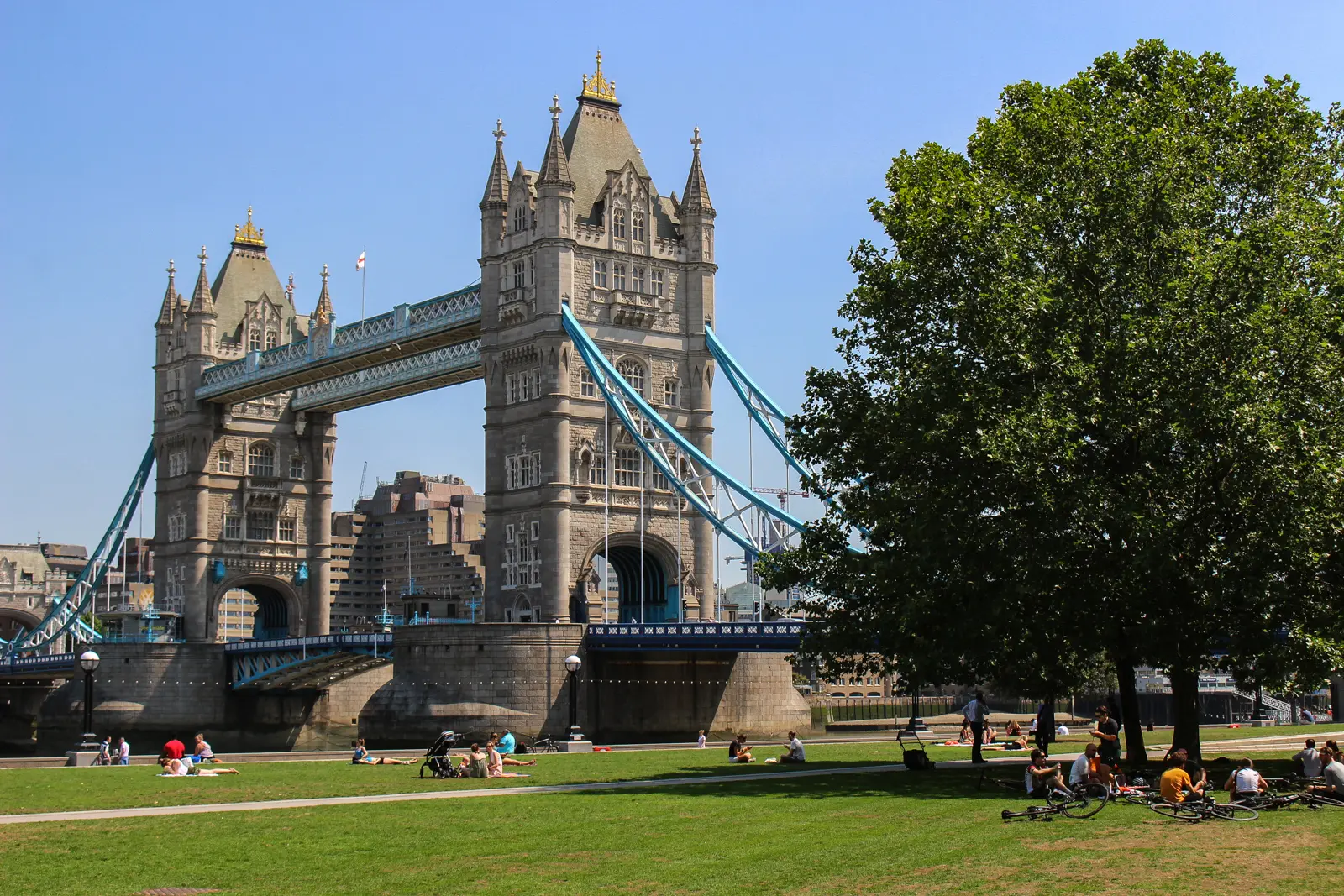
What emerged was unlike any bridge London had ever seen before: a combined bascule and suspension bridge that solved the city’s transportation problem while simultaneously creating one of London’s most visually striking landmarks.
Victorian Engineering and Architectural Design
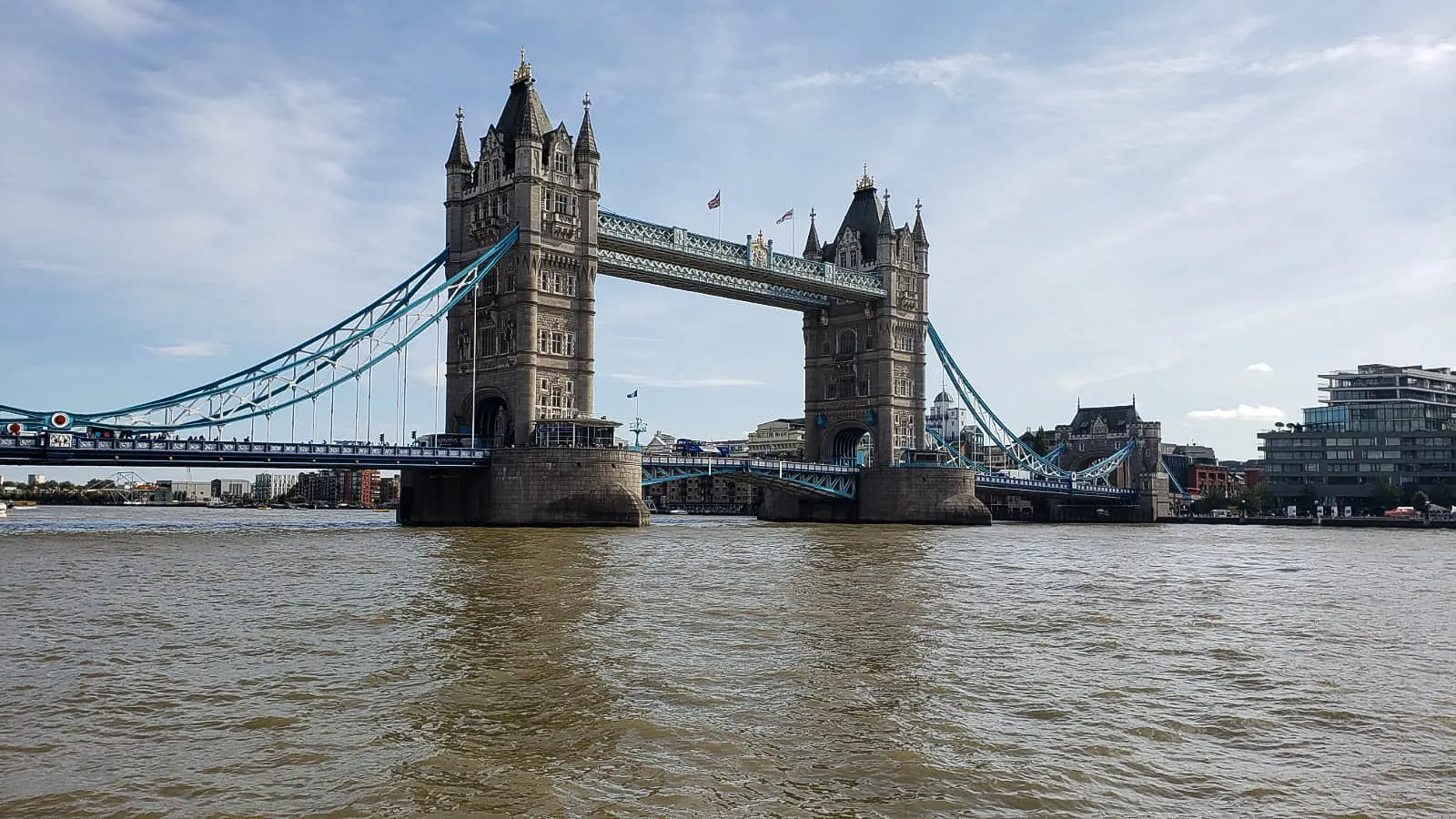
One of the reasons Tower Bridge feels so extraordinary is that it was designed not only for practicality, but also to harmonise visually with its historic surroundings, particularly the nearby Tower of London. Rather than constructing a purely industrial-looking bridge, the designers chose a Gothic Revival style, deliberately cladding the steel framework in Cornish granite and Portland stone to give the towers their distinctive castle-like appearance and ensure the bridge complemented rather than clashed with its medieval neighbour.
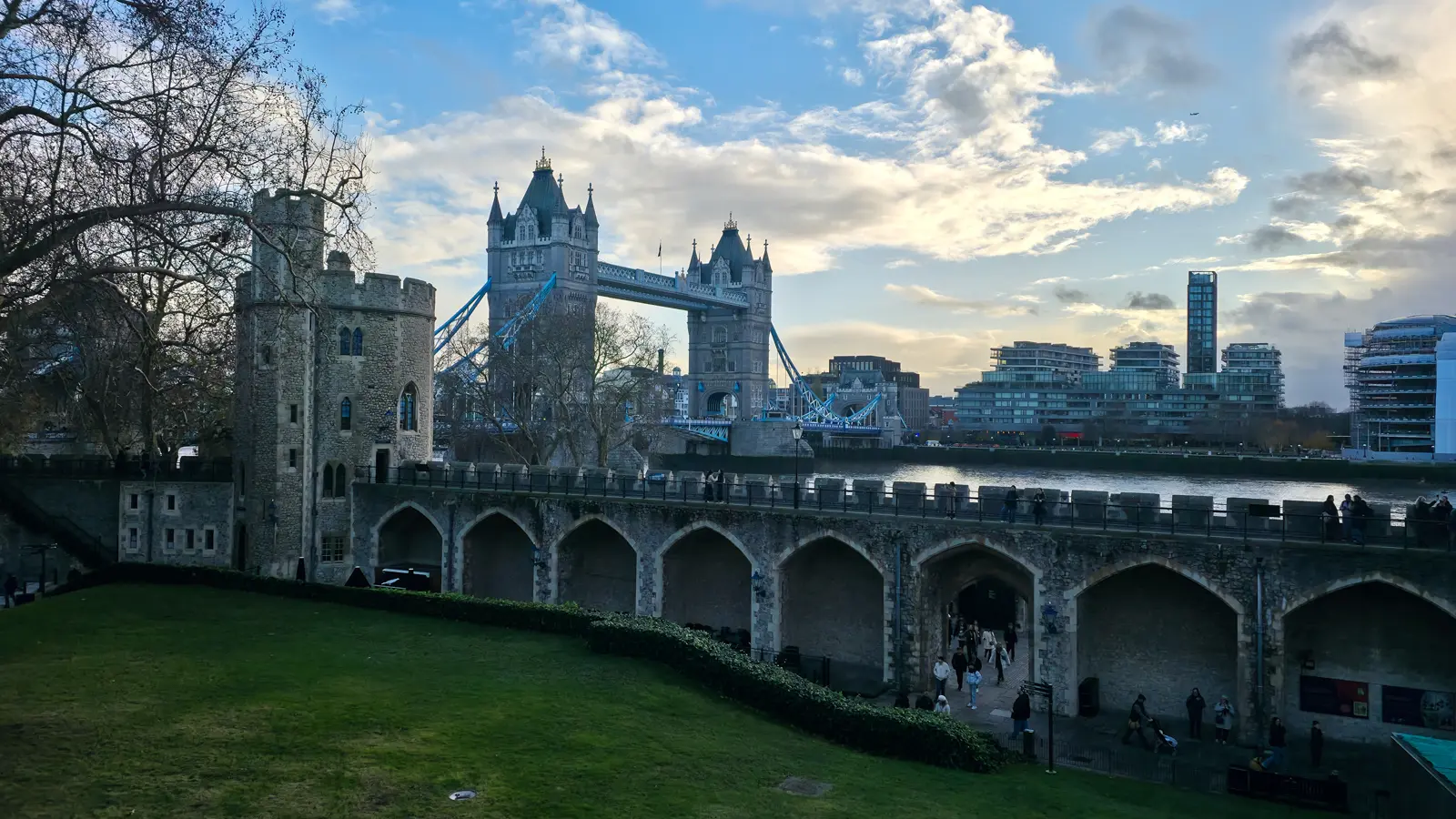
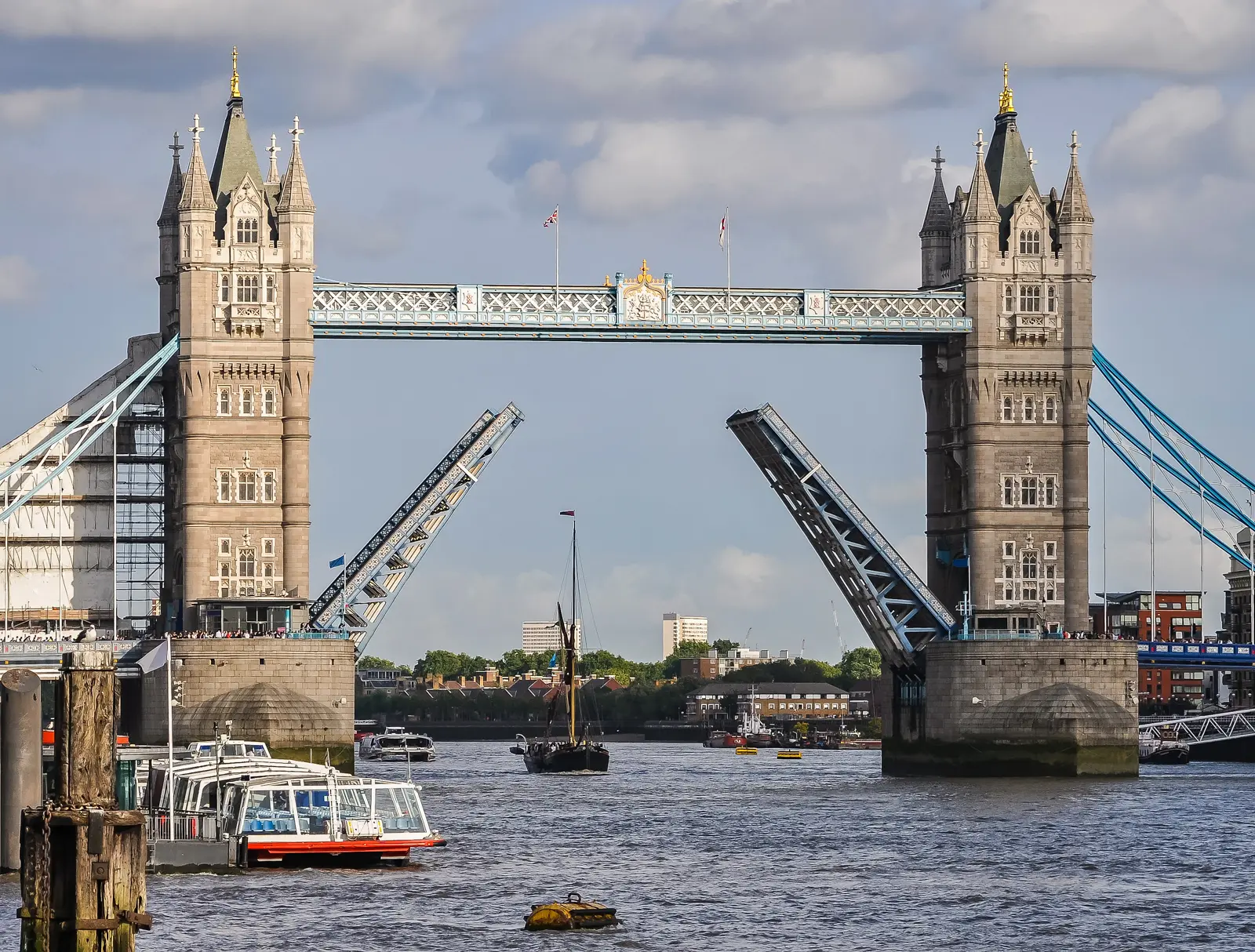
Beneath this ornate exterior lies an impressive feat of Victorian engineering. Tower Bridge is approximately 290 metres long including its abutments, with two massive towers rising 65 metres above the River Thames. The bridge’s most famous feature is its pair of bascules, the movable roadway sections capable of lifting to an angle of 83 degrees to allow ships to pass beneath, an operation that takes just over a minute and remains one of the most dramatic engineering spectacles along the Thames. Originally, the bascules were powered using a sophisticated hydraulic system driven by two 360-horsepower steam engines that pumped pressurised water into six accumulators, which then released the stored energy to raise the bascules on demand. In 1974, this system was largely replaced by a modern electro-hydraulic system, though much of the original Victorian machinery still remains preserved within the bridge’s engine rooms and can be visited today.
The upper-level walkways between the towers were originally intended to allow pedestrians to cross even while the bascules were raised for river traffic below. However, they gained an unfortunate reputation as a haunt for prostitutes and pickpockets, and since they were only accessible by stairs rather than lifts, regular pedestrians largely avoided them. They were closed in 1910 and only reopened in 1982 as part of the Tower Bridge Exhibition, which now welcomes hundreds of thousands of visitors annually.
What makes the bridge particularly remarkable is how successfully it balances strength and elegance. Despite its enormous scale and industrial function, Tower Bridge never feels heavy or purely utilitarian. Instead, its proportions, towers, and suspension elements create a silhouette that feels almost theatrical against the Thames skyline.
Experiencing Tower Bridge From Above and Below
Walking across Tower Bridge offers one of the most memorable urban experiences in London. Unlike many major bridges that function primarily as transportation infrastructure, Tower Bridge feels immersive and experiential from the moment you approach it. Visitors can experience the bridge both from the main roadway and pedestrian crossings at street level, as well as from the elevated walkways high above the Thames through the Tower Bridge Exhibition.
At street level, the towers rise dramatically overhead while the River Thames stretches outward in both directions, creating constantly shifting perspectives across the river and skyline. From the bridge, visitors can see the contrast that defines so much of modern London: historic landmarks standing beside contemporary skyscrapers, centuries-old riverfronts beside glass towers, and traditional architecture framed against a constantly evolving cityscape.
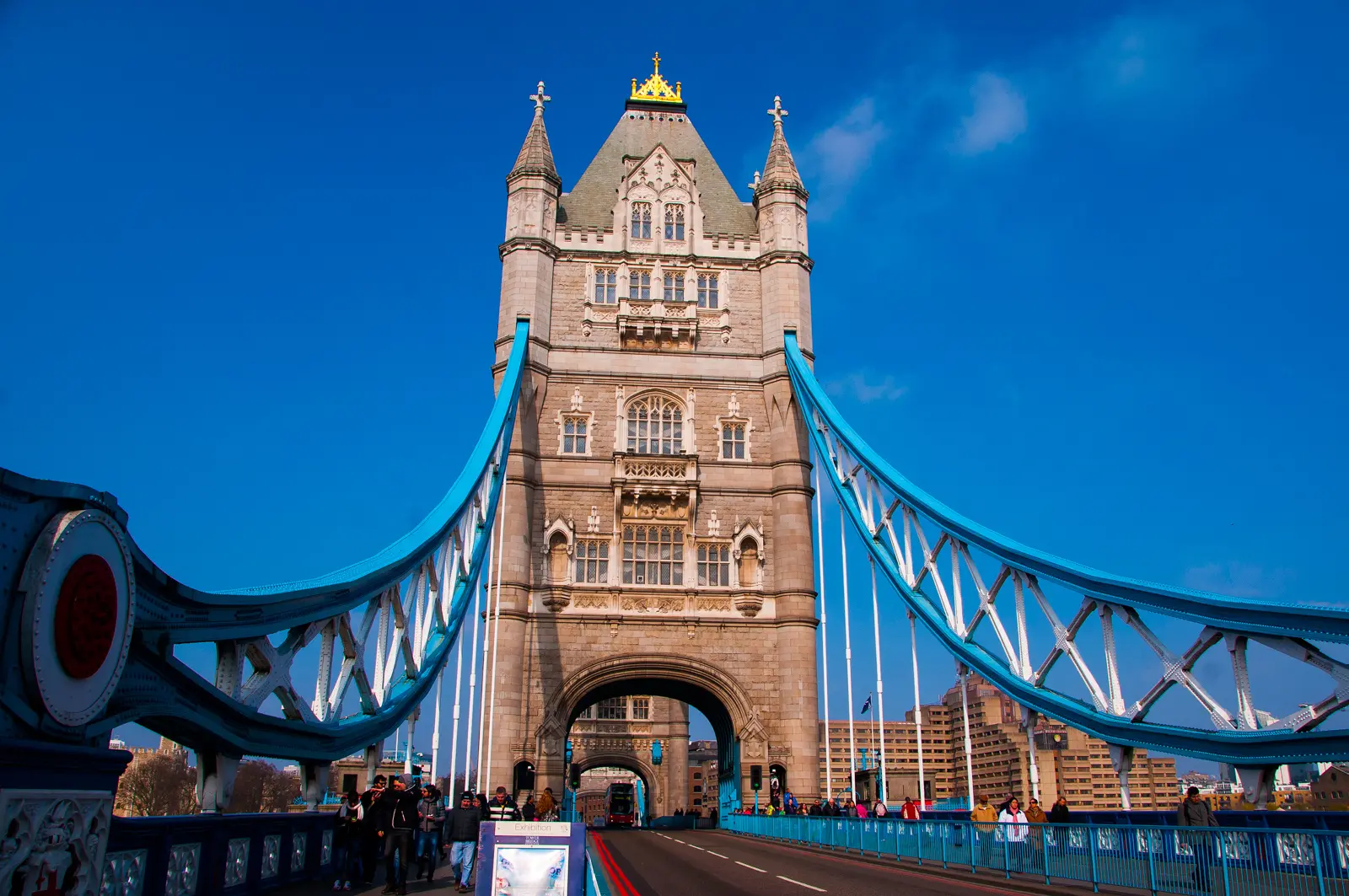
The atmosphere changes noticeably depending on the time of day. In the morning, the bridge feels energetic as London begins moving around it. During the afternoon, sunlight reflects across the Thames while riverboats pass below. By evening, the entire structure becomes especially atmospheric as the towers illuminate against the sky and reflections begin shimmering across the water.
One of the most fascinating aspects of standing on Tower Bridge is the constant awareness of movement happening around you. Boats navigate the Thames below, traffic flows across the roadway, pedestrians pause to admire the skyline, and trains move through nearby districts. The bridge feels less like a static monument and more like a living part of London itself.
The Tower Bridge Exhibition adds another dimension to the experience by allowing visitors to explore areas normally inaccessible from the roadway below. One of the highlights is the elevated glass floor walkway suspended between the towers, offering dramatic views directly down toward the traffic, pedestrians, and river activity beneath the bridge. From this height, the relationship between the Thames, the surrounding skyline, and the movement of the city becomes even more striking.
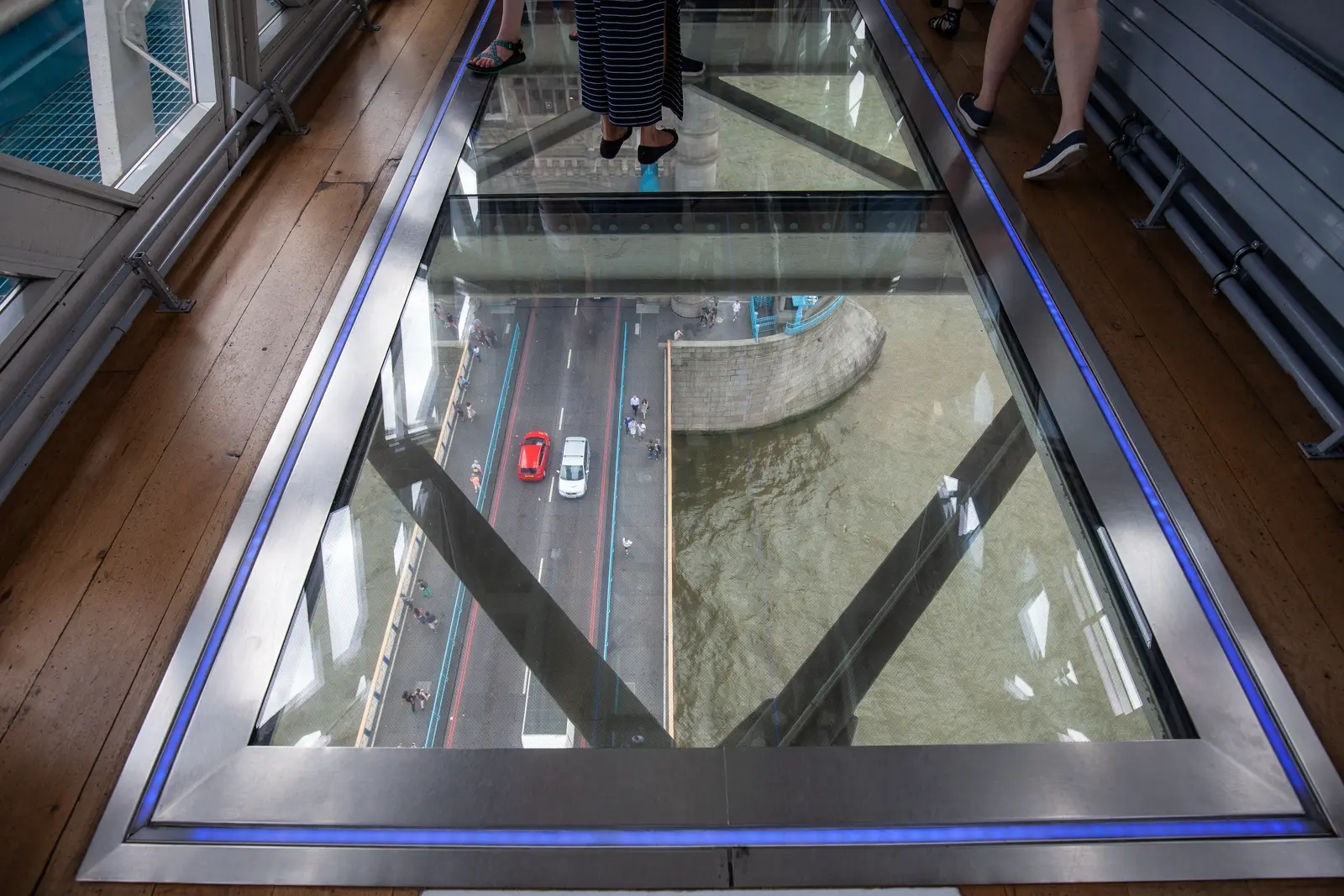
The exhibition also provides insight into the bridge’s engineering history through preserved Victorian engine rooms and interactive displays explaining how the original hydraulic lifting mechanisms functioned. These spaces reveal the extraordinary technical ambition behind Tower Bridge while connecting visitors more directly to the people and machinery that helped operate it during the Victorian era. For visitors interested in architecture, engineering, or London history, the exhibition adds a fascinating layer of depth to the experience beyond simply admiring Tower Bridge from the outside.
Tower Bridge and the Thames
Tower Bridge cannot truly be separated from the Thames itself. The river is fundamental to understanding not only the bridge’s purpose, but also London’s historical development more broadly. For centuries, the Thames functioned as the city’s commercial lifeline, connecting London to international trade routes and helping transform it into one of the world’s great global capitals. Tower Bridge emerged during a period when river traffic remained essential to the city’s economy, and its movable bascules reflected the need to maintain navigation access for tall-masted ships entering the Pool of London.
Today, although commercial shipping no longer dominates the central Thames in the same way, the river continues to shape the atmosphere of the city profoundly. From Tower Bridge, the Thames feels expansive and dynamic, framed by layers of architecture, riverside walkways, modern developments, and historic landmarks.
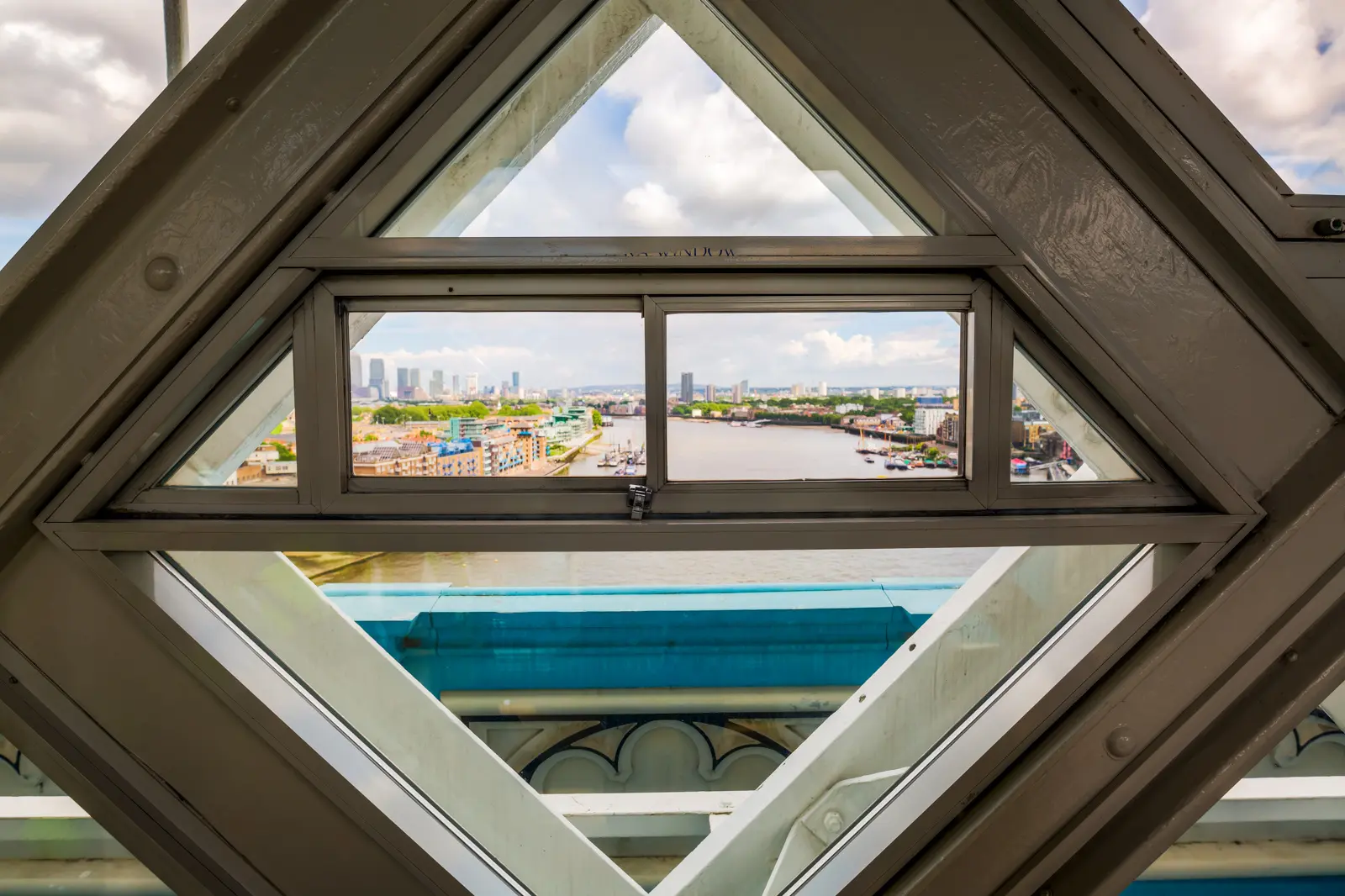
The surrounding area has also transformed dramatically over time. Once dominated by docks and industrial activity, the riverfront near Tower Bridge now combines business districts, cultural spaces, luxury developments, restaurants, and pedestrian promenades. Yet despite these changes, the bridge itself continues to anchor the area visually and historically.
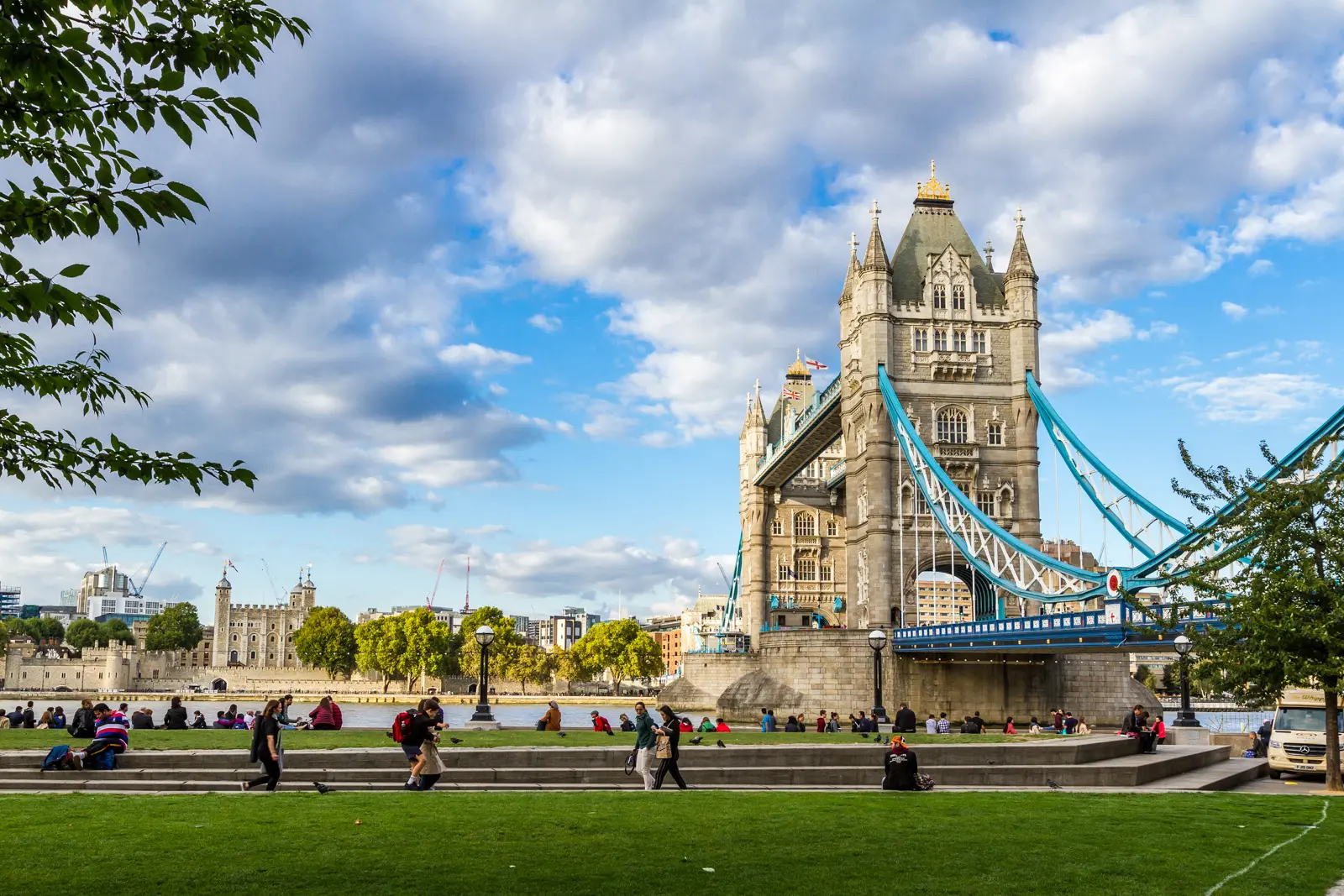
Tower Bridge at Night
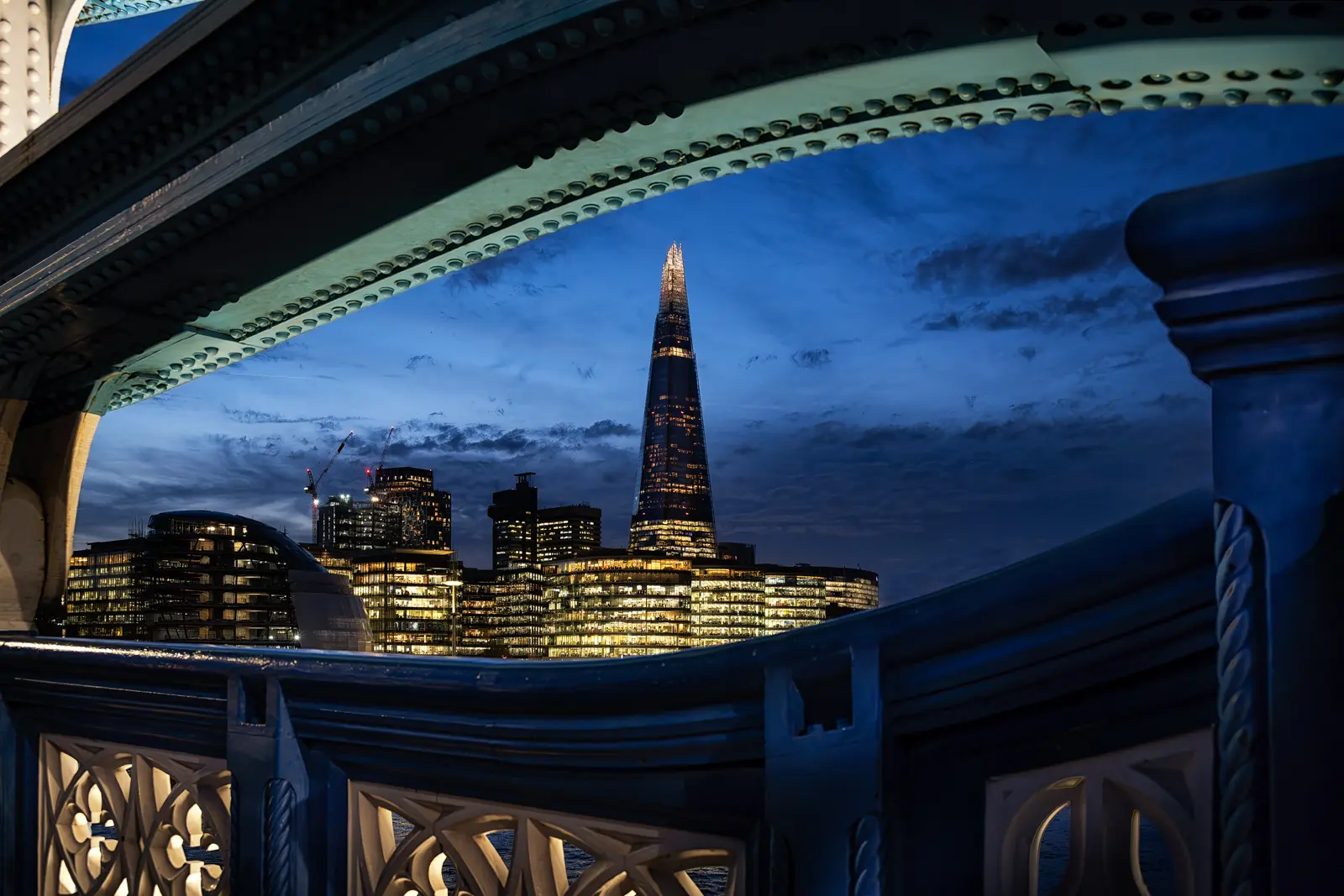
Few places in London become as atmospheric after dark as Tower Bridge. As the city lights begin reflecting across the Thames, the illuminated towers create a scene that feels almost cinematic. The contrast between the historic Gothic-inspired structure and the surrounding modern skyline becomes even more dramatic beneath the night sky. Walking near the bridge in the evening reveals a quieter and more reflective side of London compared to the daytime crowds. The river slows visually, lights shimmer across the water, and the bridge’s architectural details become more pronounced under illumination. From nearby riverbanks and walkways, Tower Bridge often feels less like infrastructure and more like a monumental piece of urban theatre suspended above the Thames.
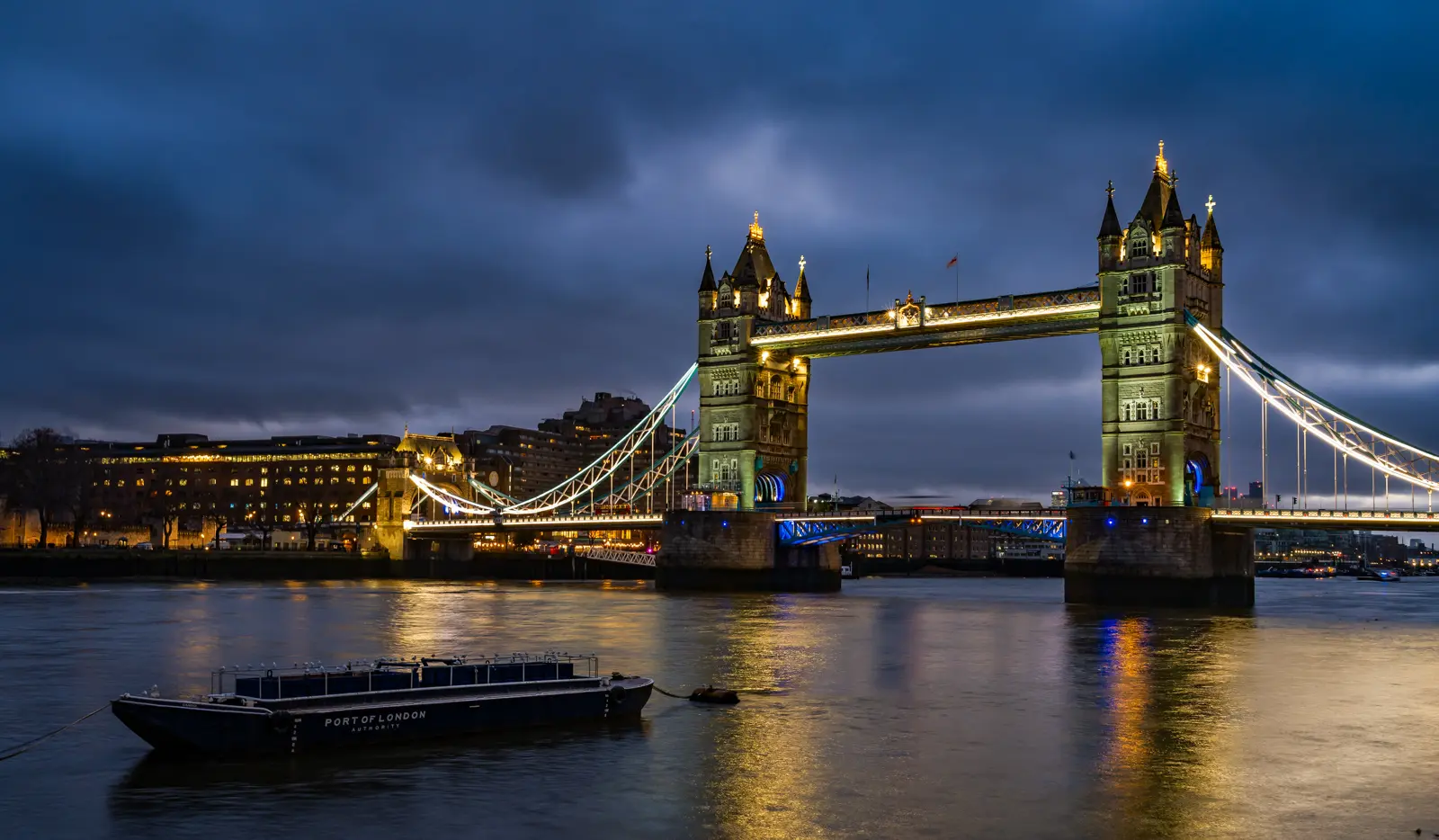
The surrounding skyline also contributes to the atmosphere. Modern towers, historic buildings, and riverside lights frame the bridge from multiple angles, constantly transforming its appearance depending on weather, reflections, and time of night. Even after seeing countless photographs of Tower Bridge, experiencing it illuminated in person feels surprisingly powerful.
Tower Bridge vs. London Bridge
One of the most common misconceptions among visitors is confusing Tower Bridge with London Bridge. While Tower Bridge is the ornate Victorian structure with towers and bascules, London Bridge is actually a far simpler modern bridge located upstream. The confusion is understandable because Tower Bridge appears far more monumental and visually dramatic. In popular culture, films, photography, and tourism imagery, Tower Bridge has effectively become the visual symbol many people associate instinctively with London itself.
Bubbly Tips for Visiting Tower Bridge
- Visit both during the day and at night if possible: The atmosphere changes dramatically once the bridge becomes illuminated above the Thames.
- Walk along both sides of the river: Different perspectives reveal completely different moods and skyline compositions.
- Explore the Tower Bridge Exhibition: The glass walkways and Victorian engine rooms add fascinating historical and engineering context.
- Check bridge lift schedules online: Watching the bascules rise for passing vessels remains one of London’s most unique sights.
- Pair your visit with nearby landmarks: Tower of London, St Katharine Docks, and the riverside walkways are all nearby.
- Bring a camera or phone with good low-light capability: Tower Bridge becomes especially photogenic during blue hour and nighttime illumination.
- Location: Tower Bridge spans the Thames between Tower Hamlets and Southwark in central London, near the Tower of London and the eastern section of the South Bank riverside area.
Final Thoughts
Tower Bridge is far more than a beautiful Victorian bridge. It represents London’s ability to combine history, engineering, atmosphere, and visual identity within a single landmark. More than a century after its construction, it continues to function not only as vital infrastructure, but also as one of the city’s most enduring symbols.
What makes Tower Bridge especially memorable is the way it captures so many different versions of London simultaneously. It is historic yet modern, functional yet theatrical, monumental yet deeply integrated into the everyday rhythm of the city. Standing beside the Thames beneath its towers, it becomes easy to understand why Tower Bridge continues to fascinate visitors from around the world.
Whether viewed from a riverside promenade, crossed on foot beneath shifting London skies, or illuminated dramatically at night, Tower Bridge remains one of the most unforgettable experiences in London.
Have you visited Tower Bridge before? I would love to hear what stood out most during your experience along the Thames.
Happy travels!

🌟 Everything You Need to Plan Your Dream Trip in 2026
- 🌟 Luxury Hotels - Find premium stays with Booking.com & Hotels.com
- 🏡 Vacation Rentals - Discover unique properties on VRBO
- 🏞️ Guided Tours - Explore with Viator or GetYourGuide
- 🎫 Attraction Tickets - Skip the lines with Tiqets
- 🚢 Ocean Cruises - Set sail with Cruise Direct
- 📱 International SIMs - Stay connected with Saily
- 🚗 Car Rentals - Budget-friendly options from Discover Cars
- 🌐 Secure VPNs - Browse safely with NordVPN
- 💶 Currency Exchange - Best rates with Wise
- 🗣️ Learn Languages - Master the local language with Babbel and Rosetta Stone