
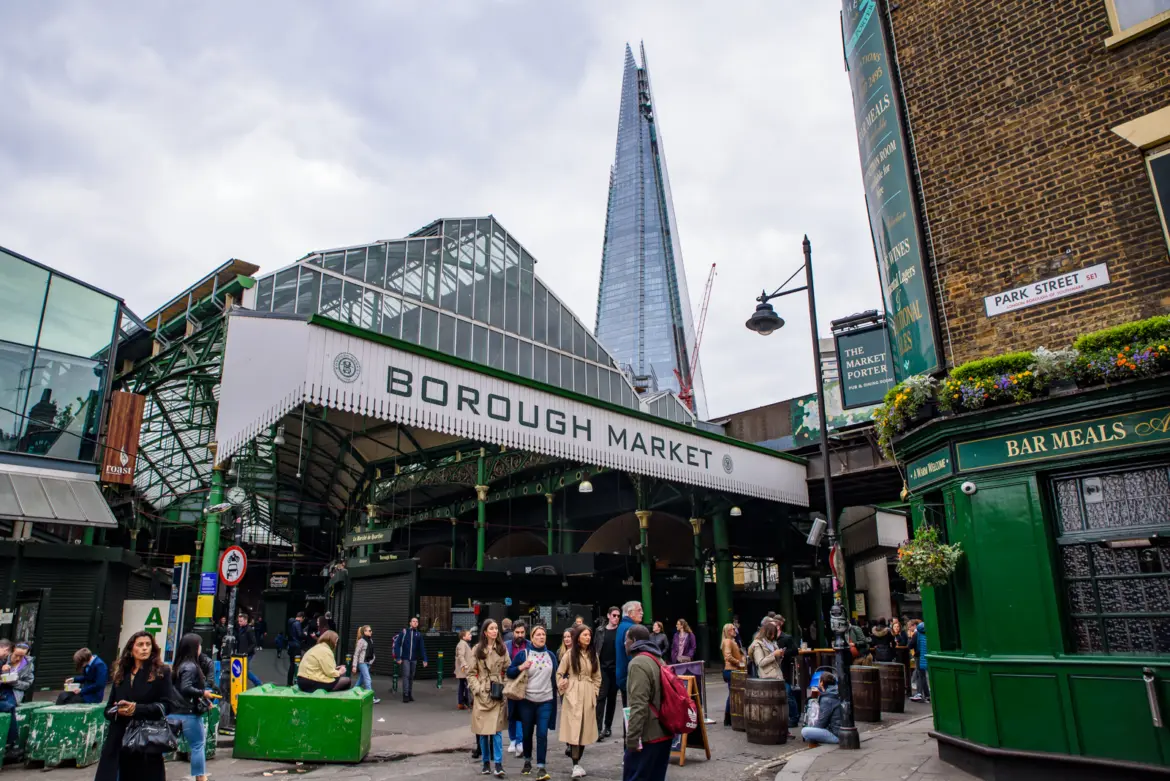
After a morning at the Tate Modern, I walked east along the south bank of the Thames toward Borough Market. The walk takes about fifteen minutes if you stay along the river. I came in from the north side, on Park Street, beside The Market Porter pub. I arrived on a December afternoon, light fading, the air cold enough that the breath of the crowds at the market entrance was visible against the green wrought-iron arches.
I’d heard the hype. Borough Market is on every London food list, every “best of” round-up, every guide to the city. I wanted to see for myself whether it earned the reputation, and whether a market that famous could still feel like a market rather than a tourist set-piece. The short answer is that it does, mostly. The longer answer is what this post is about.
Borough Market at a Glance
📍 Location · 8 Southwark Street, London SE1 1TL. Nearest tube: London Bridge (Northern & Jubilee lines), 3 minutes on foot. Wedged between Borough High Street, Southwark Cathedral, and the railway viaducts coming into London Bridge station.
🥖 What it is · Britain’s oldest food market, trading on or near this site since at least 1014. A working market managed by a charitable trust under the 1756 Borough Market Act, with a mix of fresh-produce stalls (fruit and veg, fish, cheese, meat, bakeries) and hot-food traders.
🏛️ The buildings · Iron-and-glass Victorian hall designed by Henry Rose in 1851, with later additions by Edward Habershon in 1863–64. The railway viaducts overhead are a “flying” leasehold negotiated with the railway in 1860 so the market could keep trading underneath.
🕐 When to go · Tuesday–Friday for the calmest browsing. Saturday is the busiest day. Sunday has shorter hours and fewer stalls. Monday is mostly closed except in December when the market opens daily for the festive season.
🍽️ What to eat · Cheese toasties at Kappacasein (Stoney Street), Bomba Paella from Furness Food Hut, Spanish tapas at Brindisa (opened 2004), oysters at the Furness Fish Grill counter. Hot dishes typically £8–£15; oysters £3–£4 each.
🎄 December trade · Borough goes full festive — wreaths, garlands, mulled wine, panettone, Italian truffles, handmade fudge. Visibly the busiest period of the year. Weekday mornings are still manageable; Saturday afternoons in December are not.
🕊️ 2017 attack · After the 3 June 2017 London Bridge attack, the market closed for eleven days. Stallholder Paul Wheeler rang the bell to reopen on 14 June. An olive tree was planted in the grounds of Southwark Cathedral on the first anniversary as a permanent memorial.
💡 Tip · Don’t skip the produce just because you’re not cooking — the fruit, fish, and cheese counters are what make Borough a market rather than a food court. Cheese tastings are free and expected.
A Quick History of London’s Oldest Food Market
A market has stood on or near this site for more than a thousand years. The earliest documented reference is from 1014, when Snorri Sturluson, writing in Heimskringla, described Southwark as a “great market town”. London Bridge was for centuries the only crossing of the Thames in London, and the southern bridgehead naturally became a gathering point for traders bringing grain, fish, vegetables and cattle into the city. By 1276, a fruit-and-vegetable market on the High Street was formally documented.
The market caused such severe traffic chaos on Borough High Street that in 1754 Parliament abolished it by act. The story of how it came back is the part I found most interesting. In 1756, Southwark residents raised £6,000, the equivalent of over £1 million today, to buy “The Triangle” site and create their own market through a new act of Parliament. The act declared that the market site would “remain an estate for the use and benefit of the parish forever”. The 1756 Borough Market Act also established a charitable trust that still manages the market today.
The current iron-and-glass market buildings were constructed in the 1850s, during the Victorian railway boom that put the elevated viaducts directly through the market site. The mix of cast-iron columns, glazed roofs, and railway arches gives Borough its distinctive Victorian-industrial character. Many of the stallholders today are still tenants of that 1756 charitable trust.
On 3 June 2017, three terrorists drove a van into pedestrians on London Bridge and then attacked people in the Borough Market area with knives, killing eight and injuring 48. The market closed. Eleven days later, on 14 June 2017, traders gathered for a minute’s silence and one of them, a fruit-and-veg stallholder named Paul Wheeler, rang the market bell to signal the return. He couldn’t stop ringing it. In the grounds of Southwark Cathedral, an olive tree was planted as a permanent memorial, and a service is still held there every year on the anniversary.
That story was part of why I wanted to come. Cities recover in big public ways (speeches, memorials, anniversaries) but markets recover in small daily ones, by traders opening their stalls again and visitors coming back to buy bread and cheese. Borough did both. The bell still rings. The olive tree is still standing. The market has been a market for a thousand years. It survived plague, fire, and war. It survived 2017 too.
Walking In: The Market’s Layout
Borough is not a single hall, it’s a network of connected and overlapping sections, and knowing which is which makes the visit easier. The main covered hall, the Victorian iron-roofed structure, sits at the centre. Around it run the Green Market, the Three Crown Square area, and a sprawl of outdoor stalls along Stoney Street and Bedale Street. The whole thing is wedged between Borough High Street, Southwark Cathedral, and the elevated railway lines coming into London Bridge station.
The market sells across two different speeds. The fresh-produce vendors (fruit and vegetable, fishmongers, butchers, cheesemongers, bakeries) are mostly there to sell ingredients to people taking food home. The hot-food and prepared-food stalls (paella, raclette, oysters, Spanish tapas, salt-beef sandwiches, fudge) are mostly there to feed visitors on the spot. The two streams flow through the same aisles. You can spend an hour browsing produce without buying anything, or you can eat your way through three lunches in twenty minutes. Most people do some of both.
The Produce: Where Borough Earns Its Name
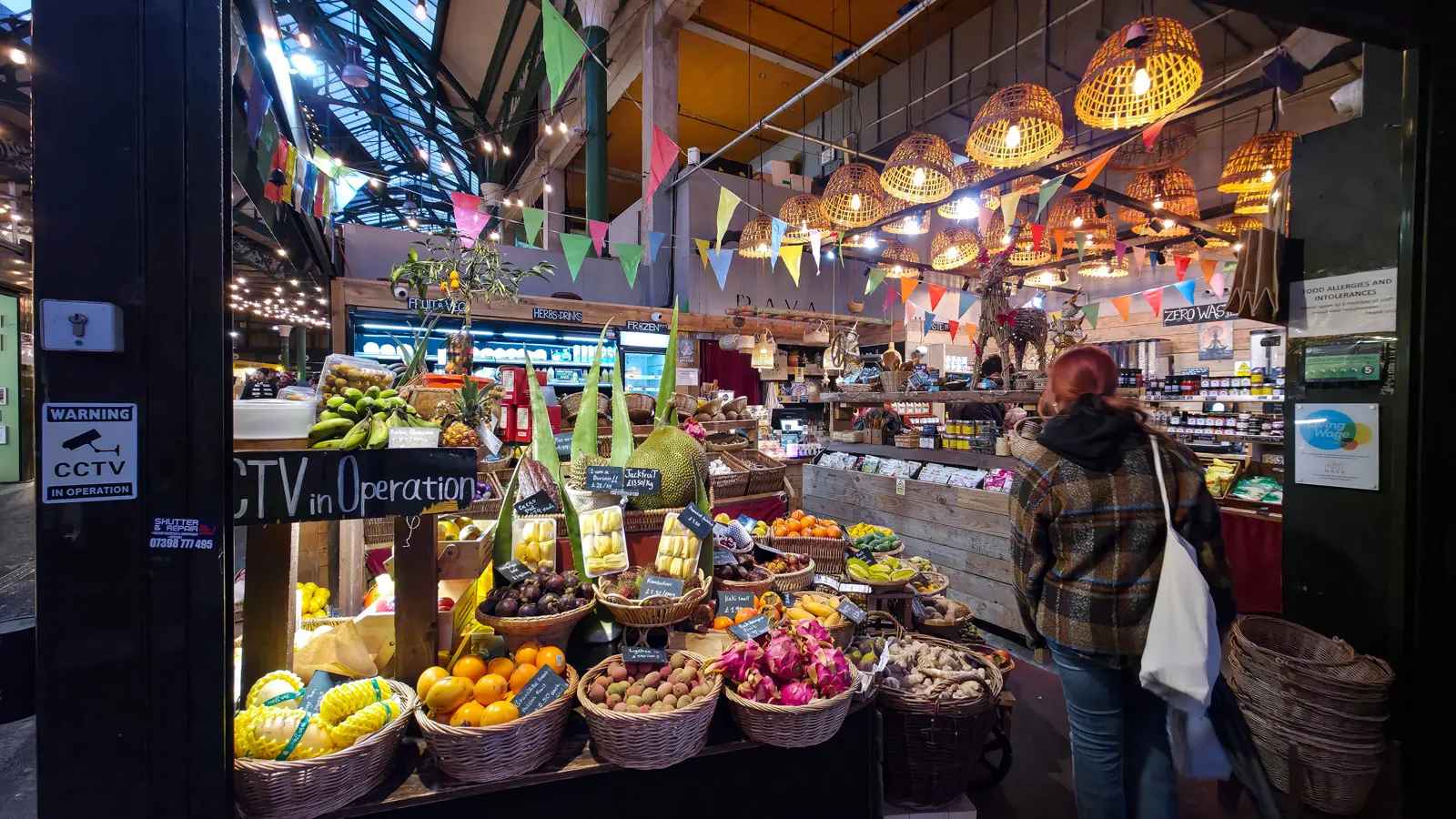
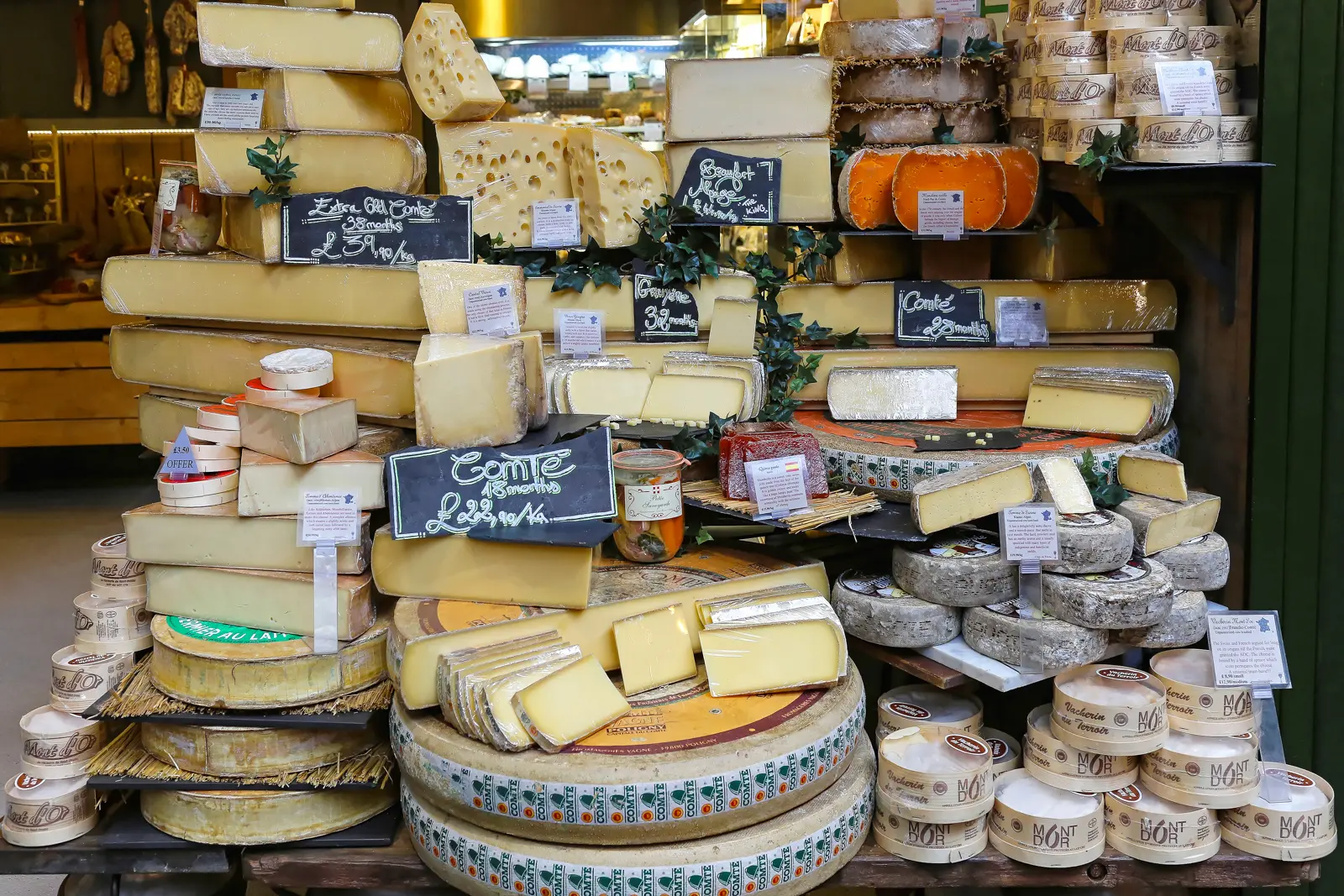
The produce is where Borough Market still earns its name as a market rather than a food court. Walking the fresh-fruit stalls in December, I found rambutans, mangosteens, jackfruit, durian, kaki, three kinds of dragon fruit, and baby bananas, most of which I wouldn’t see in a London supermarket. The cheese counters held wheels of Stilton and Comté next to fresh Stracciatella. The fishmongers had Cornish scallops, Madagascan tiger prawns, and oysters from half a dozen English coasts.
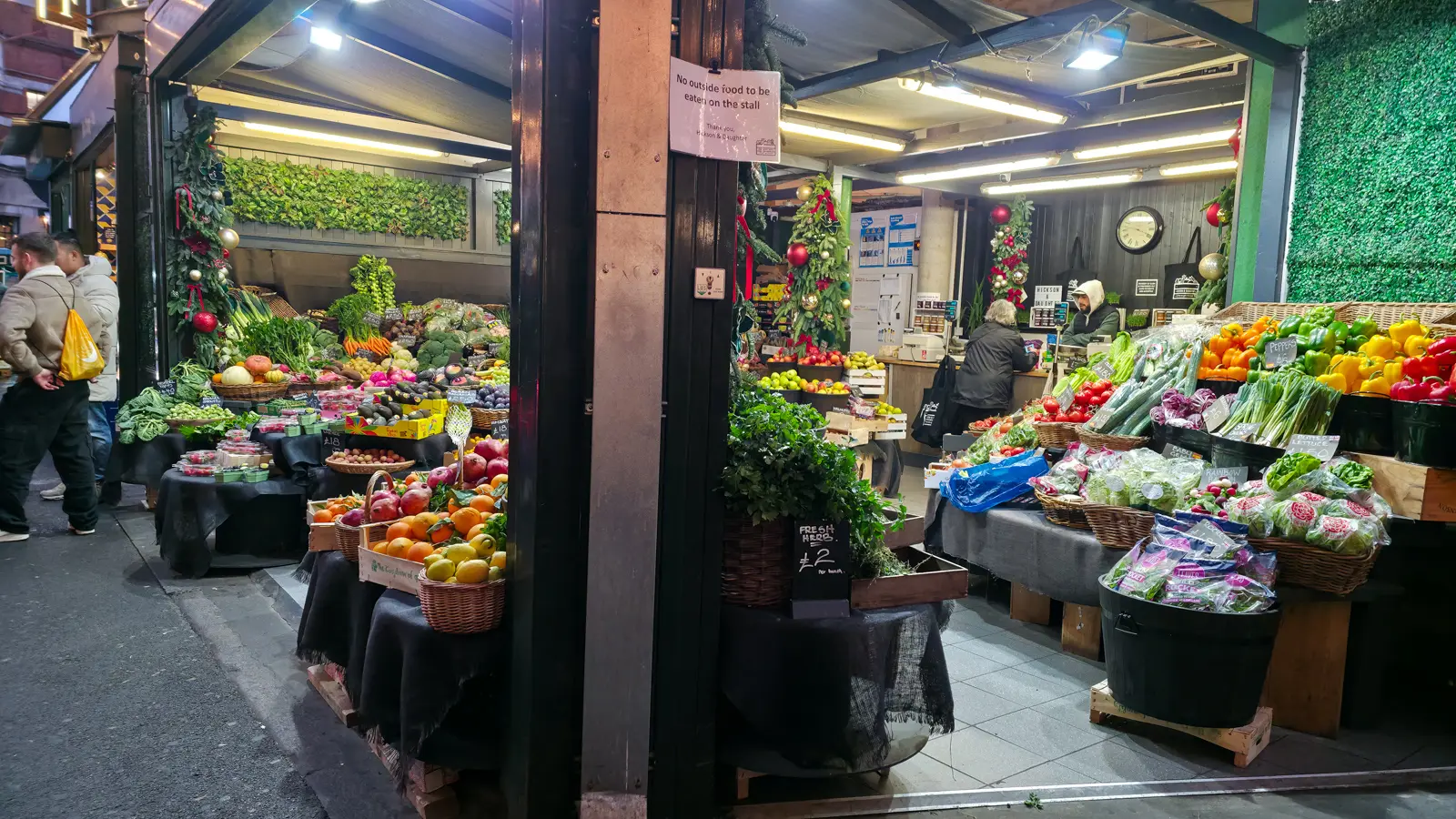
It’s expensive. The honest version is that Borough Market is not where you go for cheap groceries. It’s where you go for quality, variety, and provenance that most supermarkets can’t match. A bunch of fresh herbs runs around £2. Specialty cheese can climb past £25 per kilo. The shoppers buying full bags of groceries here are either Borough-area locals who treat it as their weekly market, restaurant chefs sourcing for kitchens, or visitors taking home one or two indulgences. Most casual visitors browse, eat lunch, and buy small amounts.
The Food Stalls: Hot Lunches and Lines
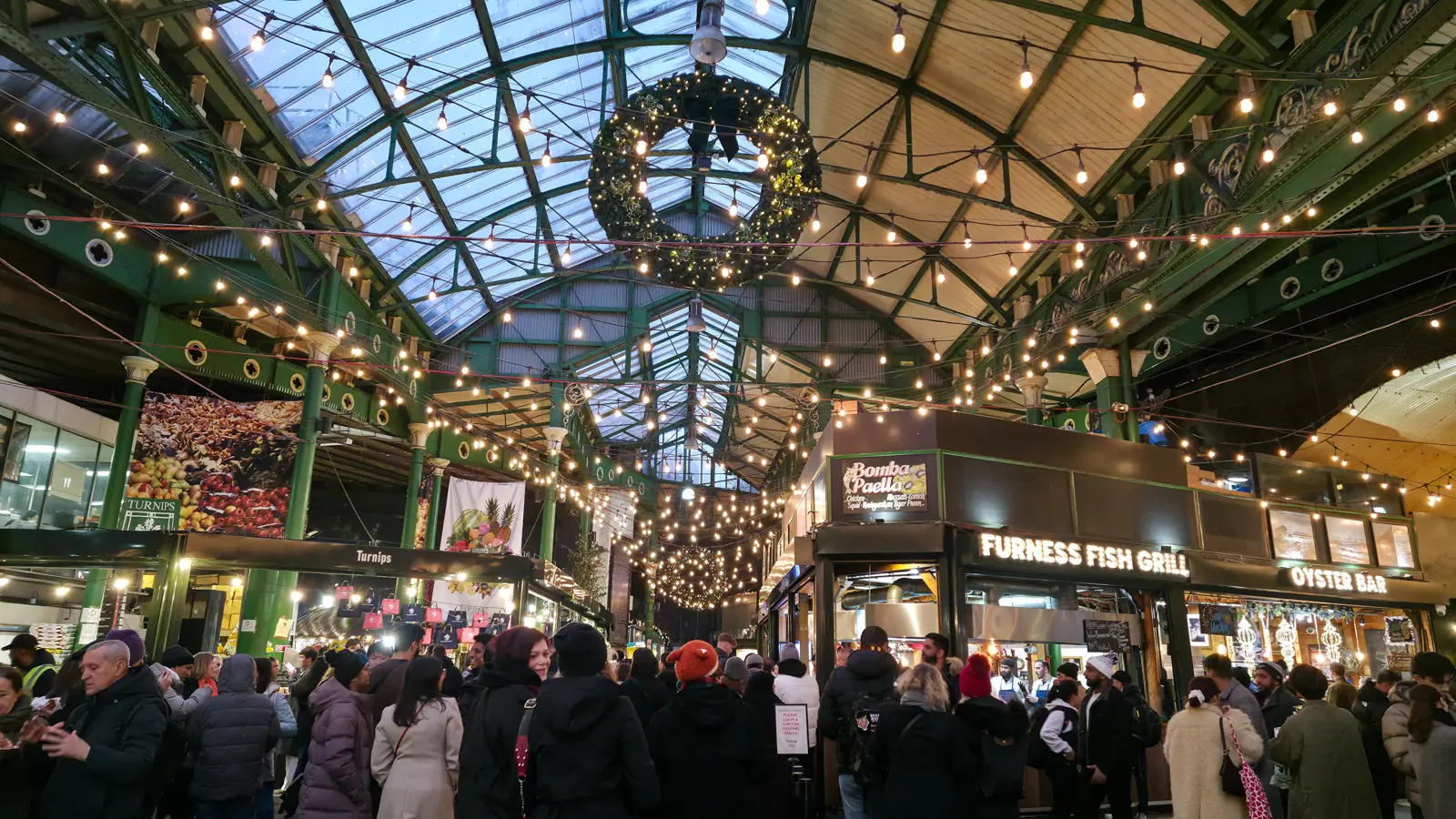
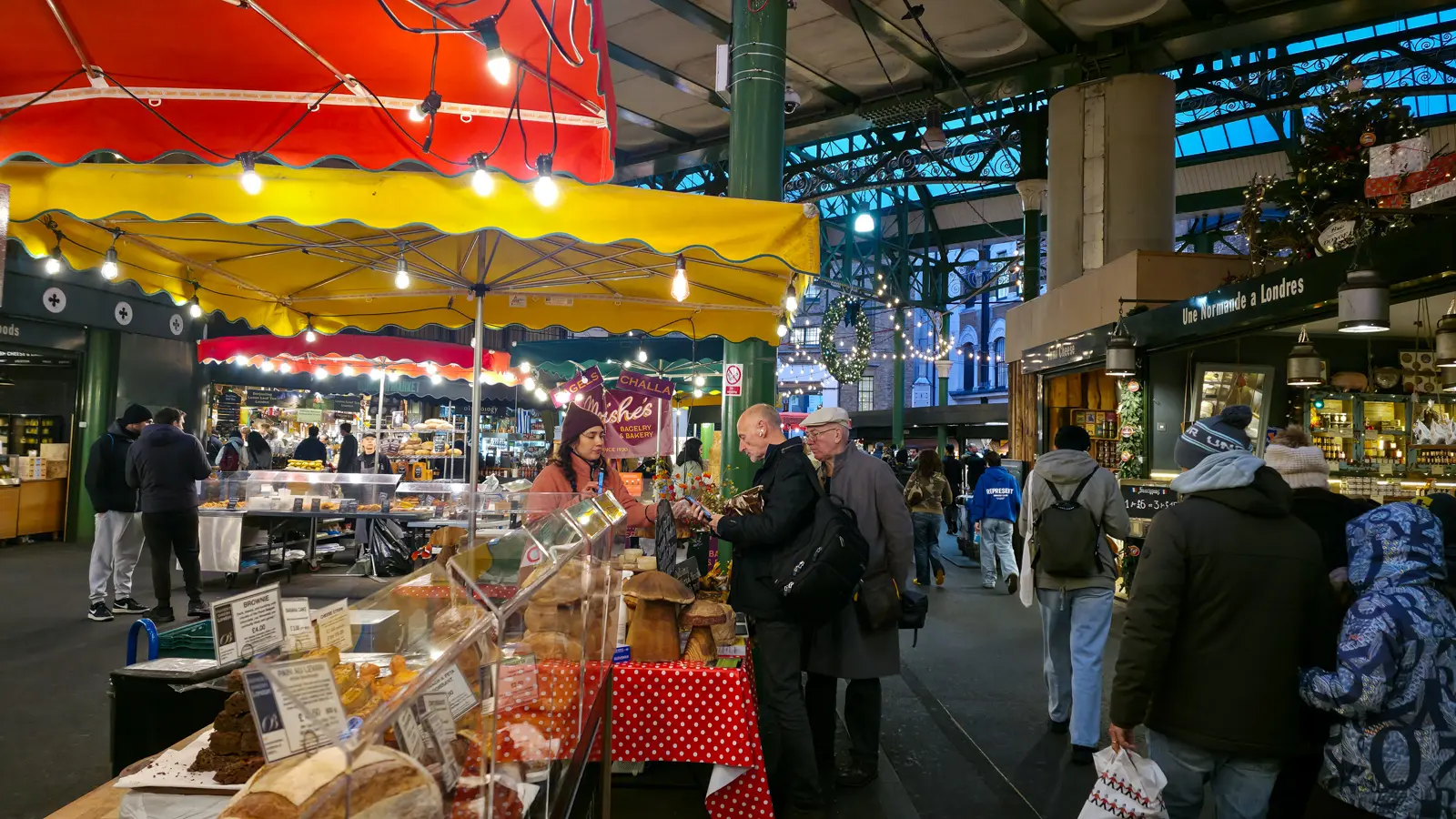
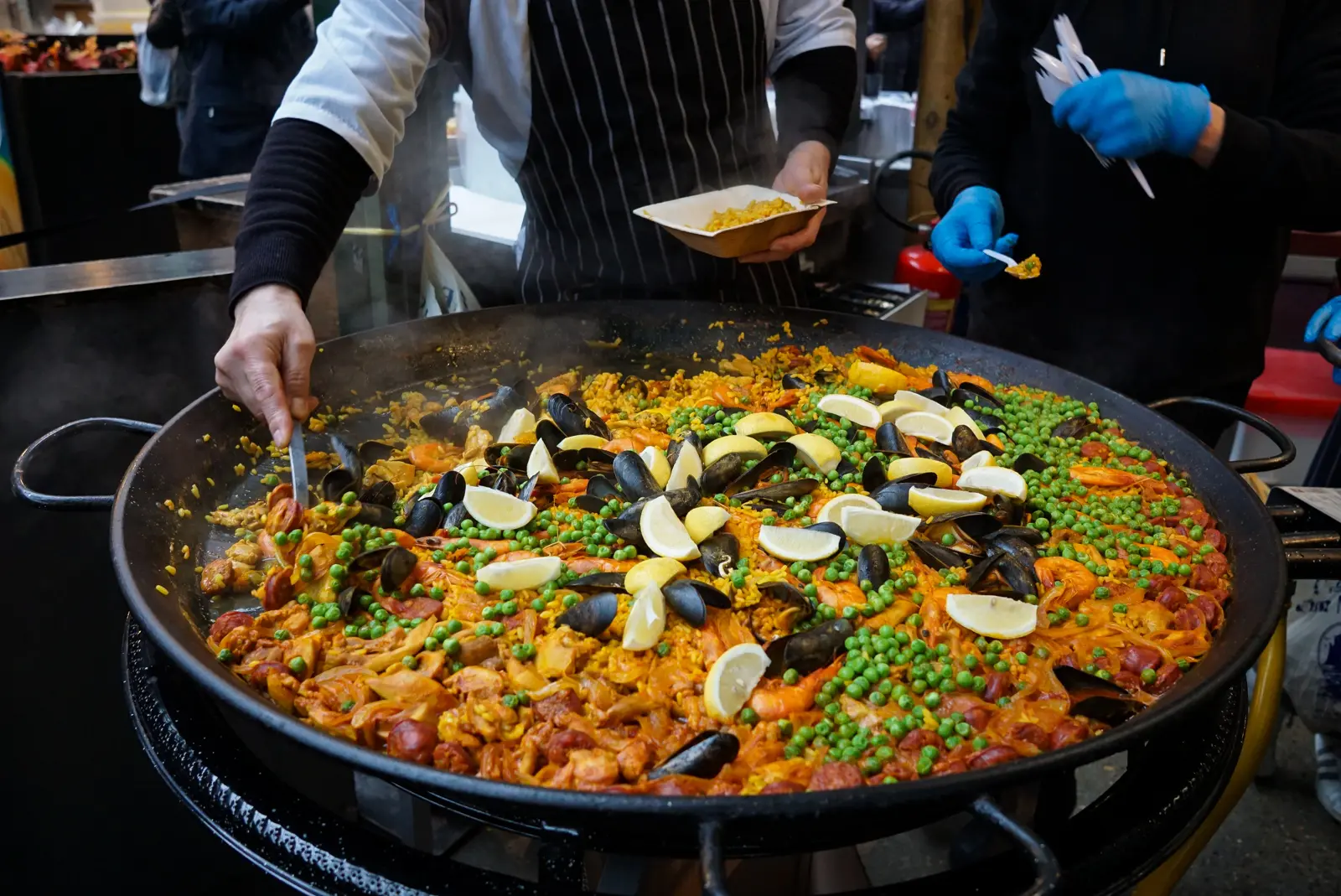
The hot-food stalls are where most visitors actually spend money. The smell hits you before you see them: paella pans the size of bicycle wheels, oysters being shucked at a counter, frying onions from the salt-beef stand at Nana Fanny’s, run by the same family that operates the Moishe’s Bagelry stall visible at the market entrance, the toasted-cheese sandwiches at Kappacasein Dairy that come out of a press in molten cascades. The queues at Kappacasein and at the paella stall in particular can stretch twenty deep on a Saturday lunchtime.
Prices for hot food run roughly £8-£15 a dish, fair for central London, not cheap. Oysters at the bar are typically £3-£4 each. A cheese toastie at Kappacasein is around £8. Spanish tapas at Brindisa, the restaurant that helped put Borough on the modern food map in the early 2000s, is full sit-down restaurant pricing. People line up for the paella anyway, because it’s the kind of theatrical, communal lunch that works well in a market setting.
The Holiday Atmosphere: Borough at Christmas
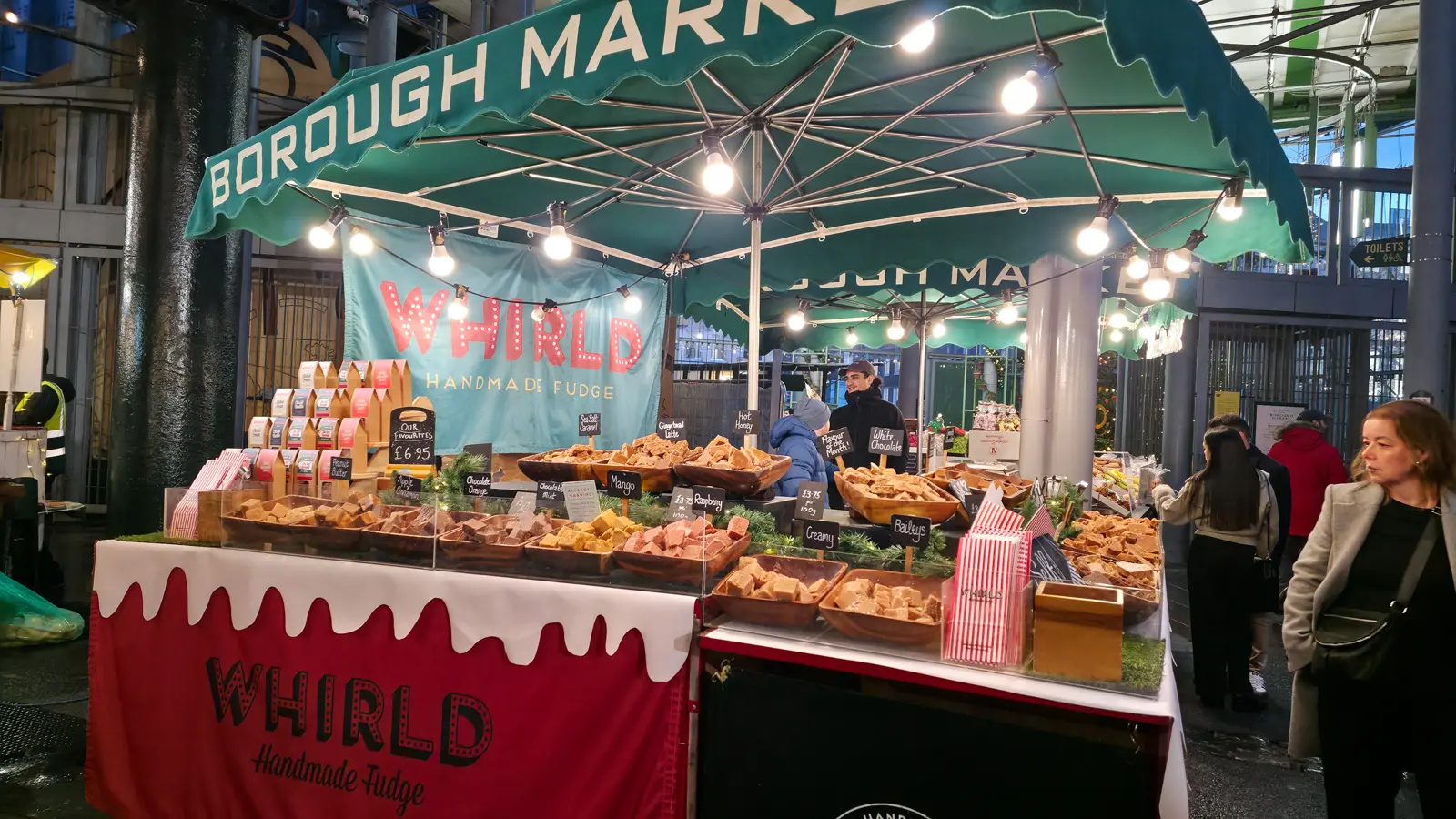
December is when Borough Market does its full peacock display. The whole hall is strung with warm white lights and oversized Christmas wreaths. Every column gets a garland. The outdoor stalls grow a layer of seasonal extras: handmade fudge, Italian truffle chocolates, mulled wine, panettone, gingerbread, hot honey. The festive trading section sits mostly along the Stoney Street side, beside the regular trading.
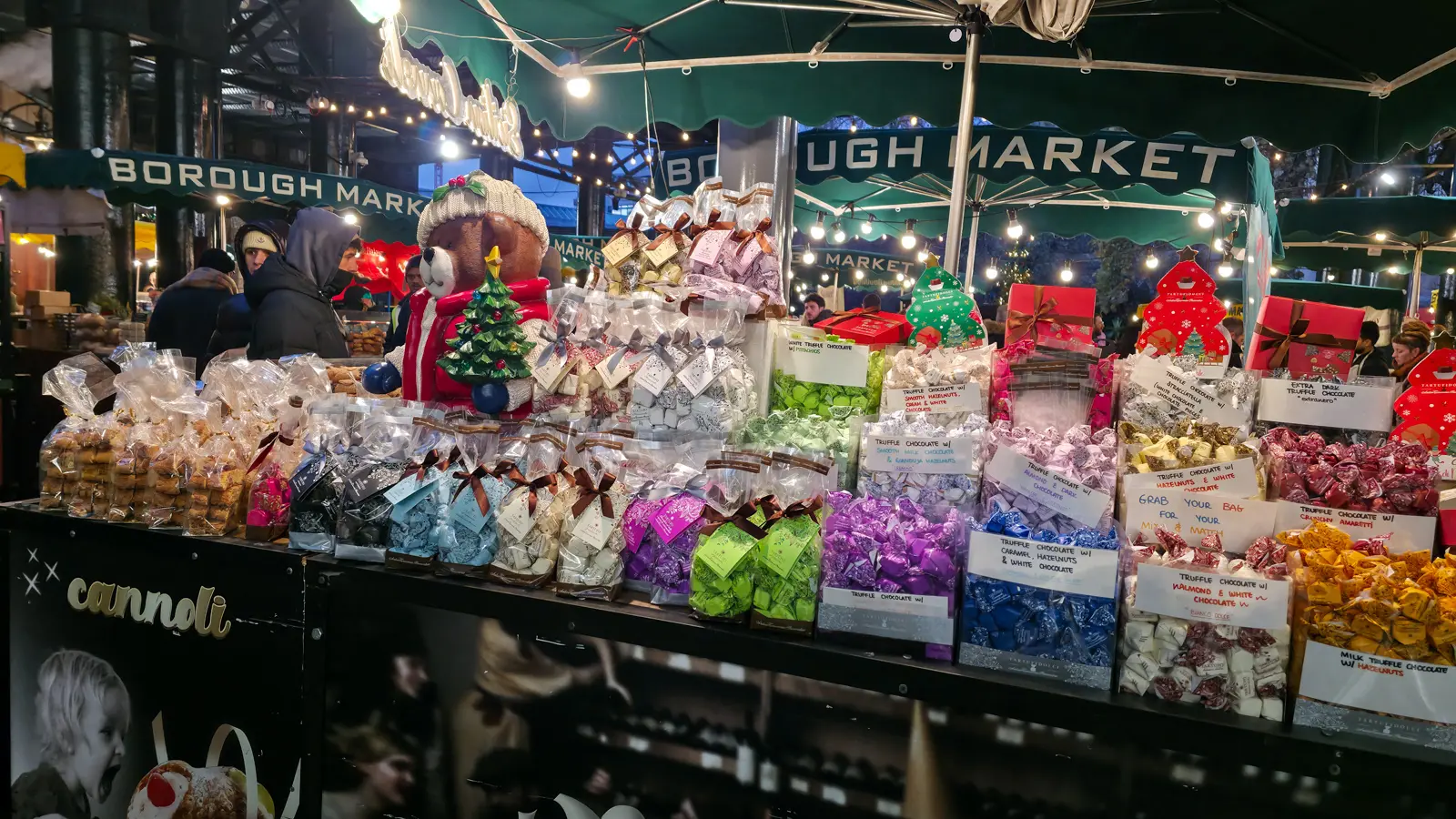
It is busier in December. Visibly busier. The market in the photos I took at 3pm on a weekday looked at first like a Saturday lunch in summer. The festive month is one of the peak periods for footfall. If you want to browse rather than push, come on a weekday morning or arrive early; Saturday afternoons in December are properly packed.
Outside the Hall: Stoney Street and Bedale Street
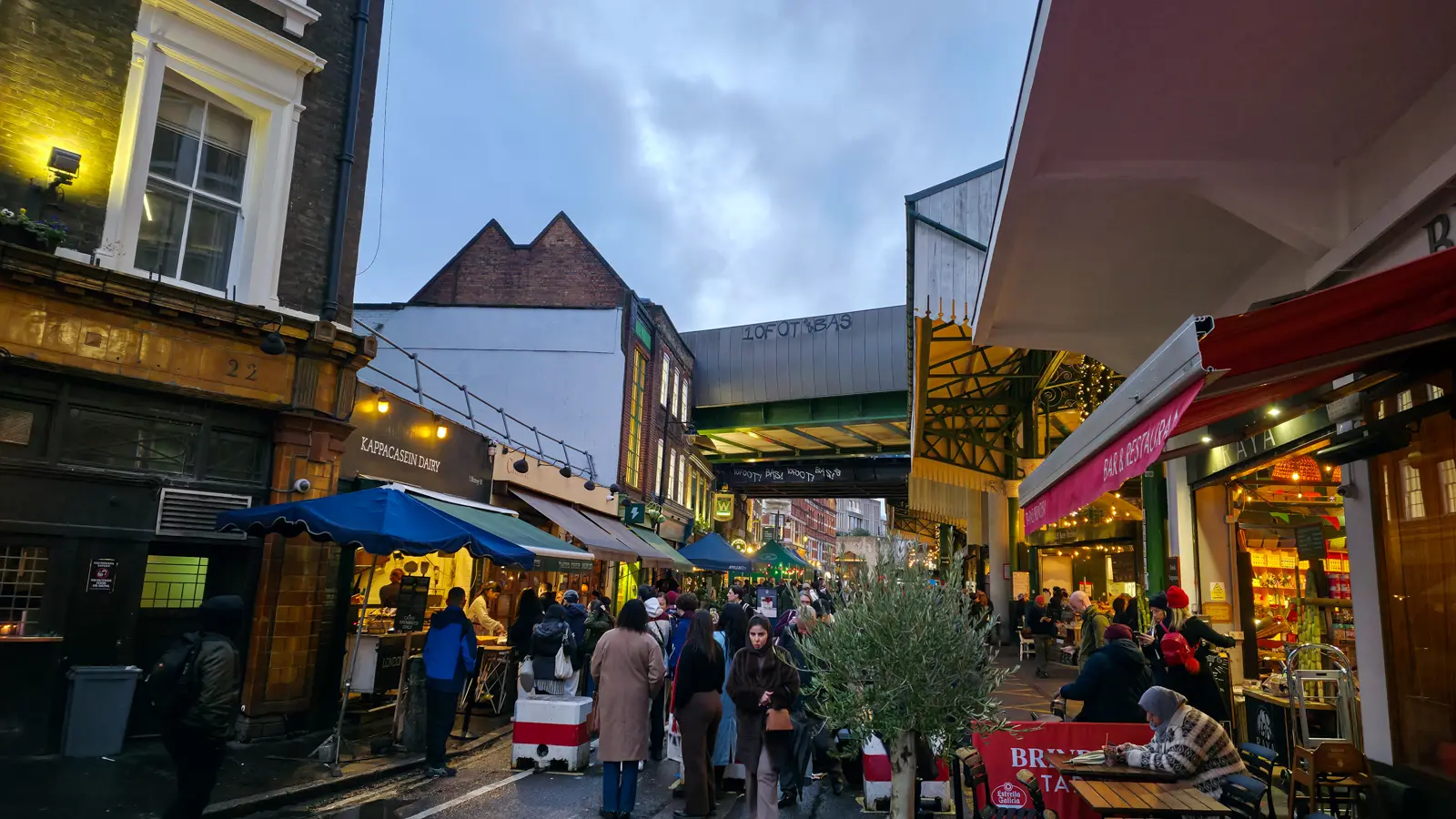
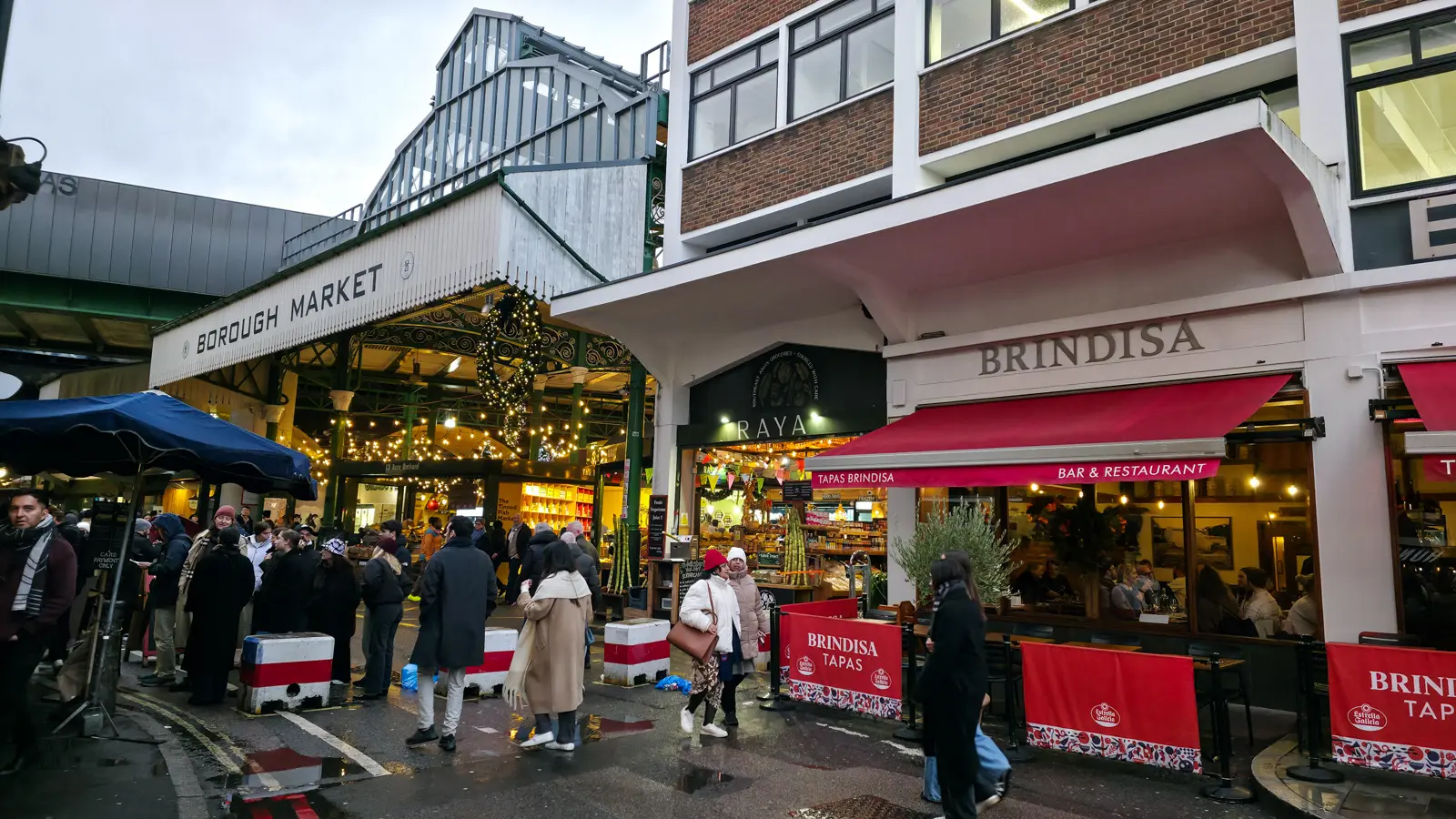
The outdoor section of Borough, along Stoney Street and Bedale Street, just outside the covered hall, is where many of the best food queues form. Kappacasein’s cheese-toastie counter is here. So is one of the entrances to Brindisa Tapas Bar, where the Spanish chorizo sandwiches helped launch Borough’s modern food reputation in the early 2000s. On weekday evenings this section starts to function as much like a casual dinner destination as a market.
I Visited in Summer Too
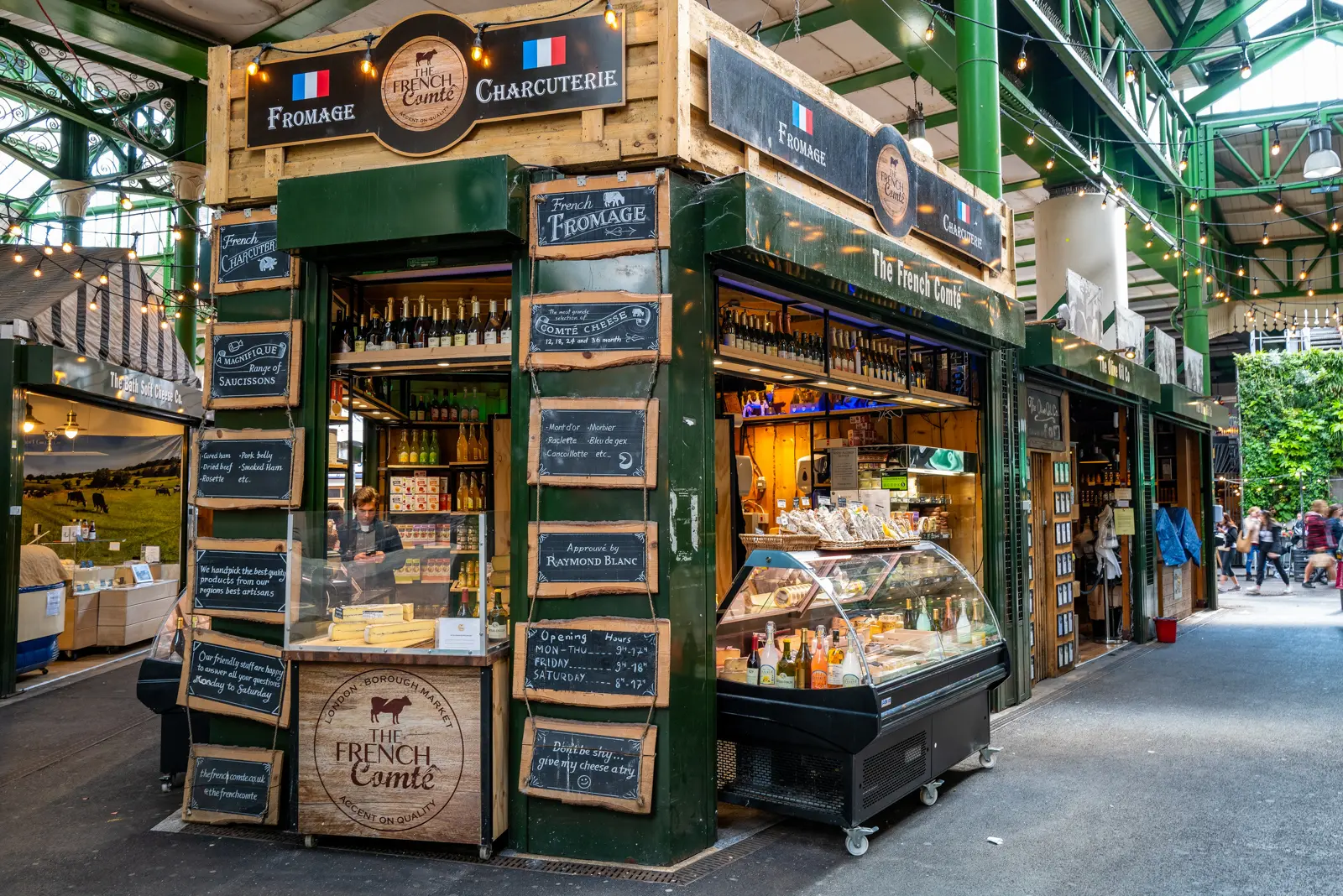
I’d been to Borough Market once before in summer, and the contrast is worth knowing. Summer Borough is brighter, less dense, and more focused on produce-as-shopping rather than food-as-event. The outdoor stalls extend further into the streets, the cheese tasting feels more leisurely, and the queues are shorter outside lunch hours. December Borough is denser, festive, and tilted toward visitors and gifts. Both are good. Both are crowded at peak. They’re variants of the same market in different costume.
Bubbly Tips for Visiting Borough Market
- Best days are Tuesday through Friday for the full market without weekend crowds. Saturdays are the busiest. Sundays operate with shorter hours and fewer stalls. Mondays are mostly closed except in December when the market opens daily.
- Arrive between 10am and noon for the easiest browsing. The food-stall queues start building around 12:30 and stay long until mid-afternoon.
- Bring cash for some stalls. Most accept card now, but a handful of smaller traders are still cash-preferred or cash-only, particularly the older fruit-and-veg stallholders.
- Don’t skip the produce just because you can’t take it home. Even if you’re a visitor not cooking, the fruit and cheese counters are part of what makes Borough a market rather than a food court. Walk through them.
- Cheese tastings are free and expected. Most cheesemongers will offer you a sample if you stop. Take them up on it. Buy what you love; the wedges travel home well in a checked bag if you’re flying.
- For lunch, queue at Kappacasein, Bomba Paella, or the oyster bar. All three are signature Borough experiences. Expect £8-£15 for hot food and £3-£4 per oyster.
- December is festive but properly crowded. If you want the holiday decorations without the crush, come on a weekday morning. Christmas Eve and the weekends before Christmas are the worst for footfall.
- Combine with Southwark Cathedral and the Tate Modern. The cathedral sits directly beside the market and is free to enter. Tate Modern is a fifteen-minute walk west along the Thames. The three together make a strong half-day in Southwark.
Final Thoughts
Borough Market earns most of its hype. Yes, it’s pricey in spots, and the tourist density is undeniable, but beneath the visitors and the Instagram glow it’s still a market doing what markets have done on this corner of London for a thousand years. People come to buy fish and bread and vegetables. Other people come to sell them. The fact that some of those people now queue for tiger‑prawn paella under Christmas wreaths doesn’t change the core of the place.
What surprised me most was how much I enjoyed it as an observer rather than a buyer. I didn’t sample everything this time; instead, I walked, watched, and listened. A fishmonger breaking down a whole turbot with the kind of confidence that only comes from repetition. A Spanish woman at the Brindisa counter explaining Iberico ham to a couple from Glasgow. A small child pointing at a dragon fruit and asking her father what planet it came from.
Borough Market is good food, but it’s also good theatre. The two have lived side by side here since the 11th century, and they show no signs of parting ways.
Until next time!

🌟 Everything You Need to Plan Your Dream Trip in 2026
- 🌟 Luxury Hotels - Find premium stays with Booking.com & Hotels.com
- 🏡 Vacation Rentals - Discover unique properties on VRBO
- 🏞️ Guided Tours - Explore with Viator or GetYourGuide
- 🎫 Attraction Tickets - Skip the lines with Tiqets
- 🚢 Ocean Cruises - Set sail with Cruise Direct
- 📱 International SIMs - Stay connected with Saily
- 🚗 Car Rentals - Budget-friendly options from Discover Cars
- 🌐 Secure VPNs - Browse safely with NordVPN
- 💶 Currency Exchange - Best rates with Wise
- 🗣️ Learn Languages - Master the local language with Babbel and Rosetta Stone