
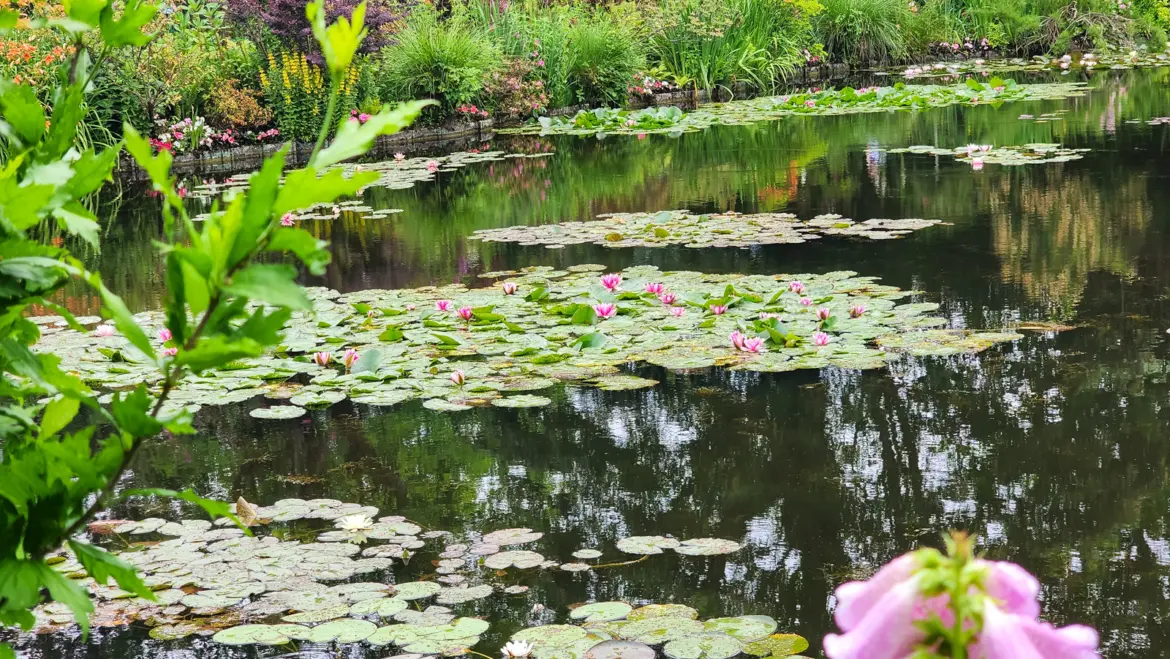
I have stood at the edge of Monet‘s pond in Giverny, watched the water lilies wrap around me in the Orangerie in Paris, and then, not expecting it at all, found the same lilies hanging on a wall in London. That is the strange, lovely thing about Monet. He spent the last decades of his life painting one small pond in Normandy, and pieces of that pond ended up scattered across the world.
The National Gallery in London has a whole clutch of his paintings, and I have been round them twice now, with a third visit already in mind. They cover almost his entire life, from a crowded river resort in his twenties to the dissolving water gardens of his old age. This is a walk through that arc, from the water to the canvas and, at the very end, back to the water.
Monet at a Glance
🎨 The collection · A substantial group of Monets across the National Gallery’s Impressionist rooms, free to see, spanning almost his whole life.
🐸 Where it starts · Bathers at La Grenouillère, 1869, painted beside Renoir at a Seine bathing resort — often called the birthplace of Impressionism.
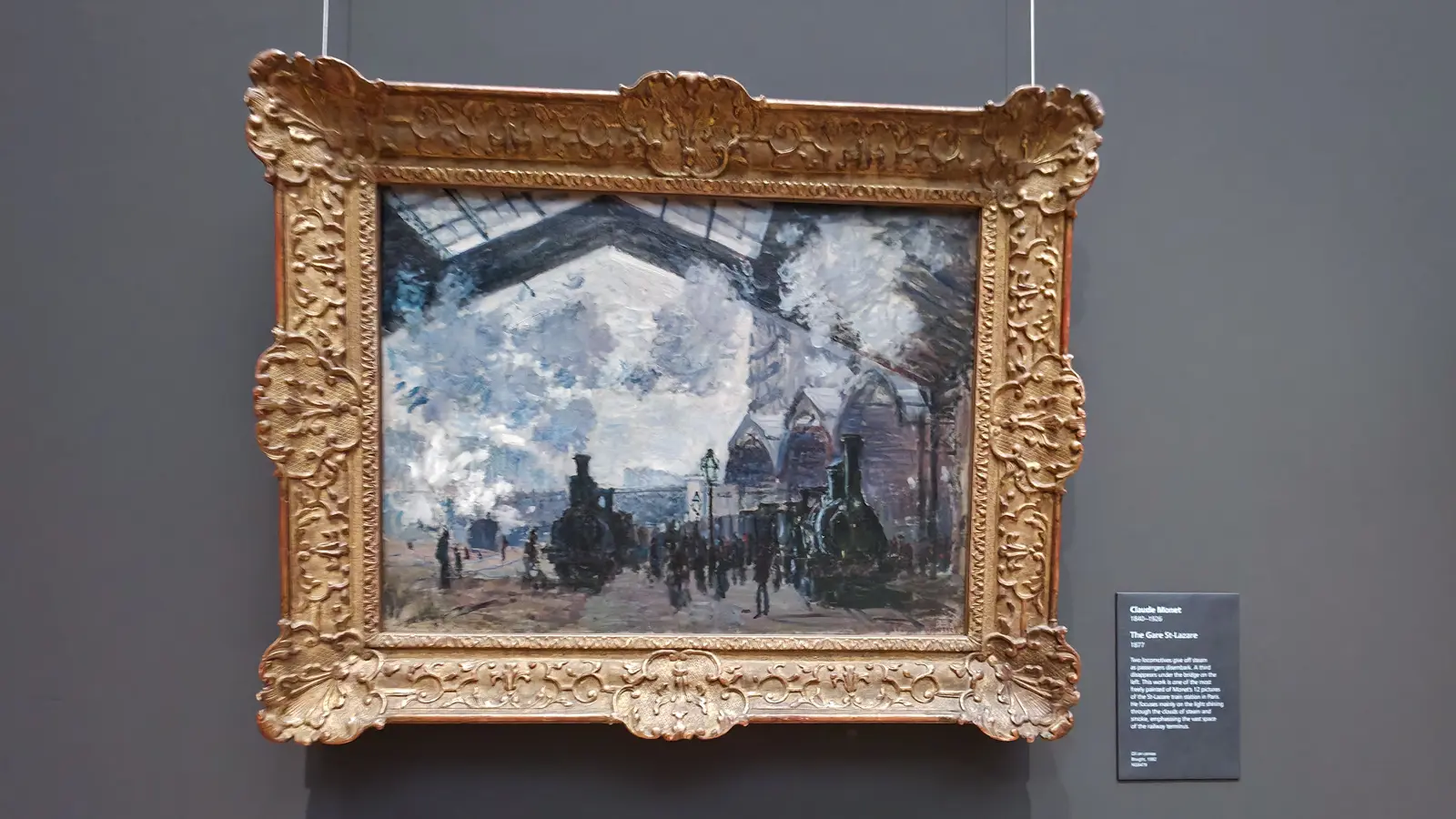
🚂 The modern world · The Gare St-Lazare, one of a dozen views of the station’s steam and glass Monet painted in early 1877.
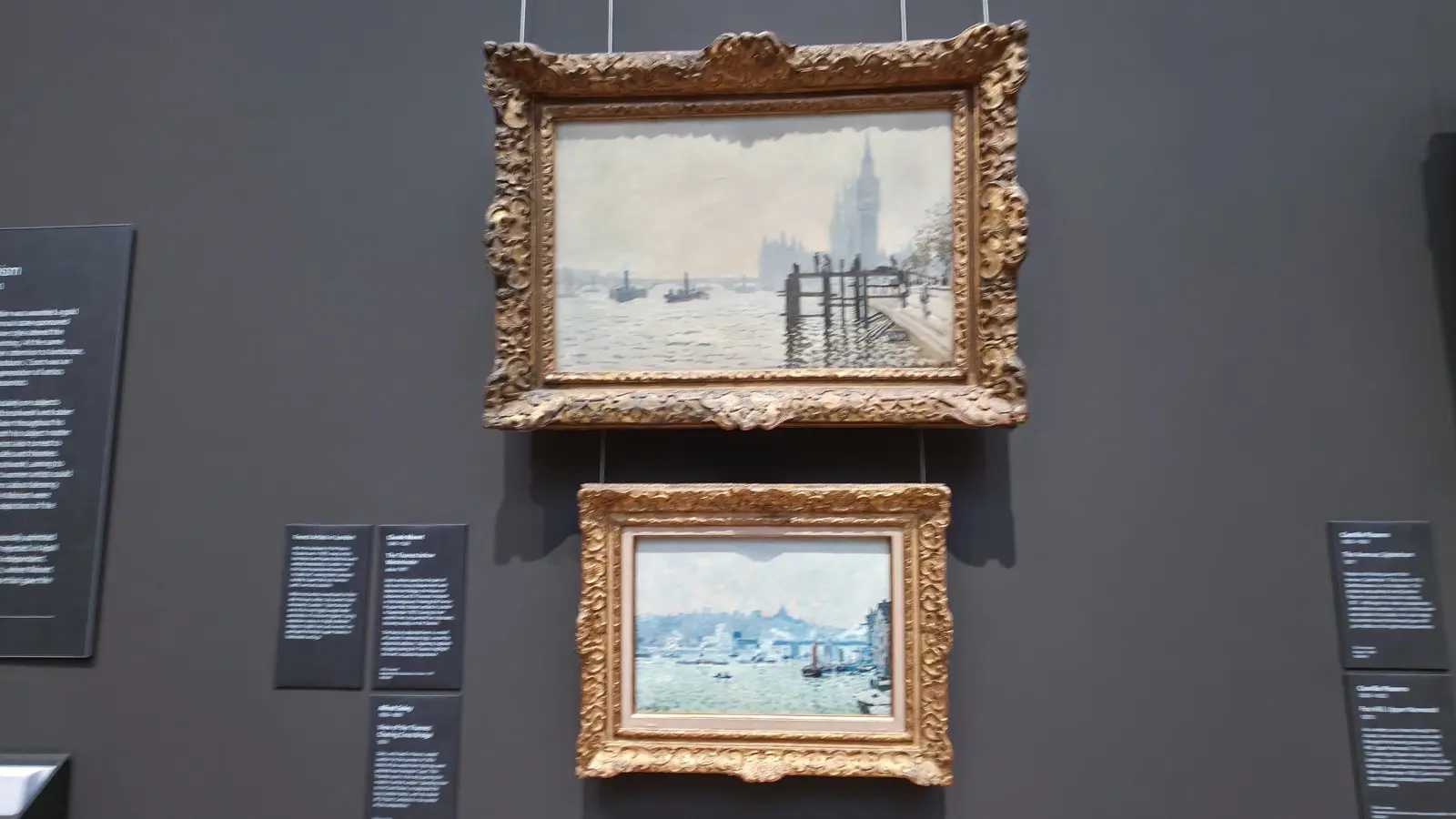
🌫️ The London one · The Thames below Westminster, painted around 1871 while he sat out the Franco-Prussian War, Parliament dissolving in fog.
💧 Where it ends · The water garden he dug at Giverny in 1893, painted for thirty years until the pond was all that was left.
🇫🇷 The full loop · Pair the London canvases with the Orangerie’s oval rooms in Paris and the real pond at Giverny, April to early November.
The young Monet
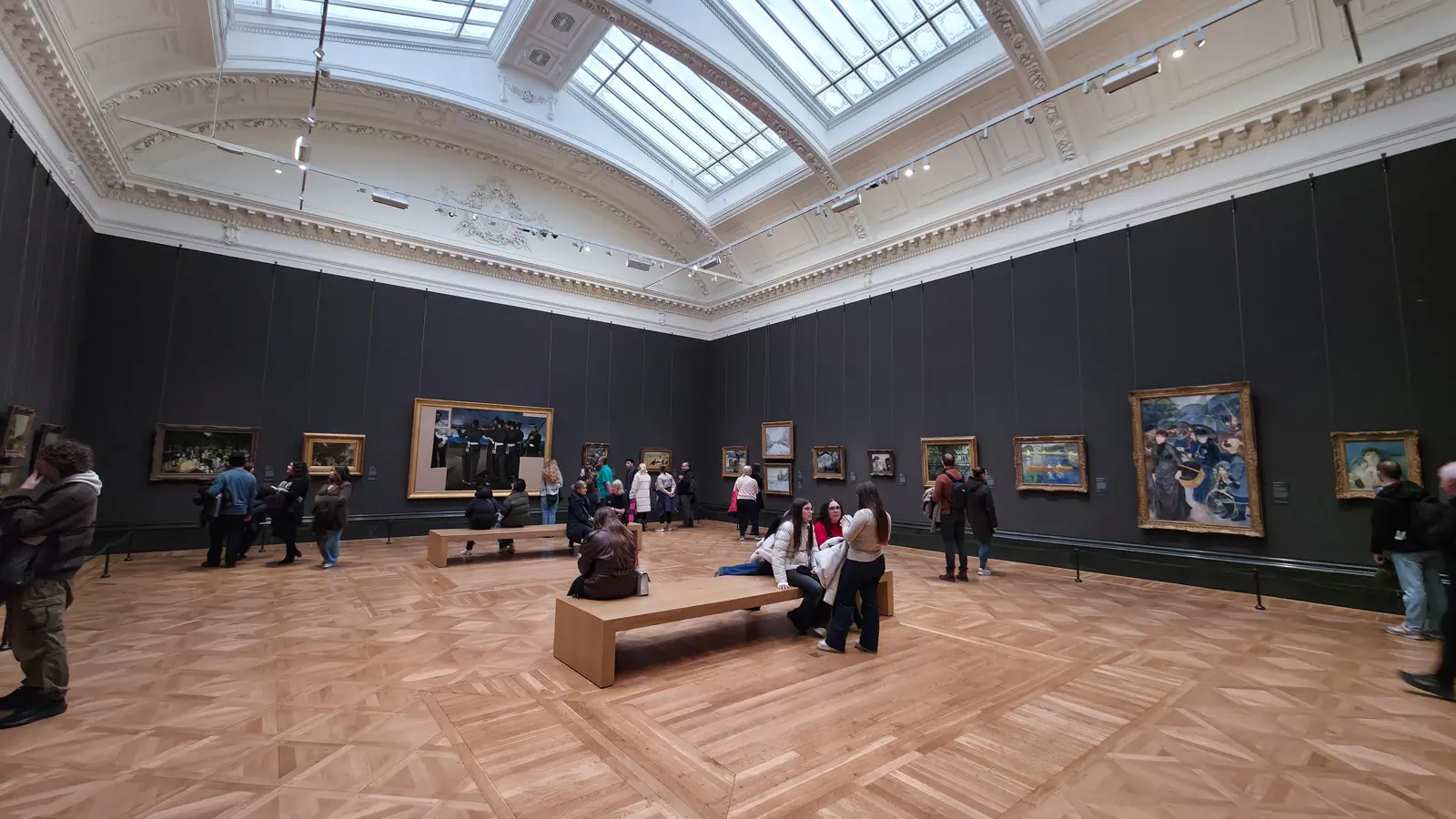
It starts in the big Impressionist rooms, which are among the busiest in the building. Monet anchors them, and it is worth remembering how radical this work once looked. Painting ordinary people at their leisure, in loose visible strokes and none of the high finish the Paris Salon wanted, was close to scandalous in its day. The movement even took its name from an insult, after a critic mocked a hazy Monet harbour scene called Impression, Sunrise.
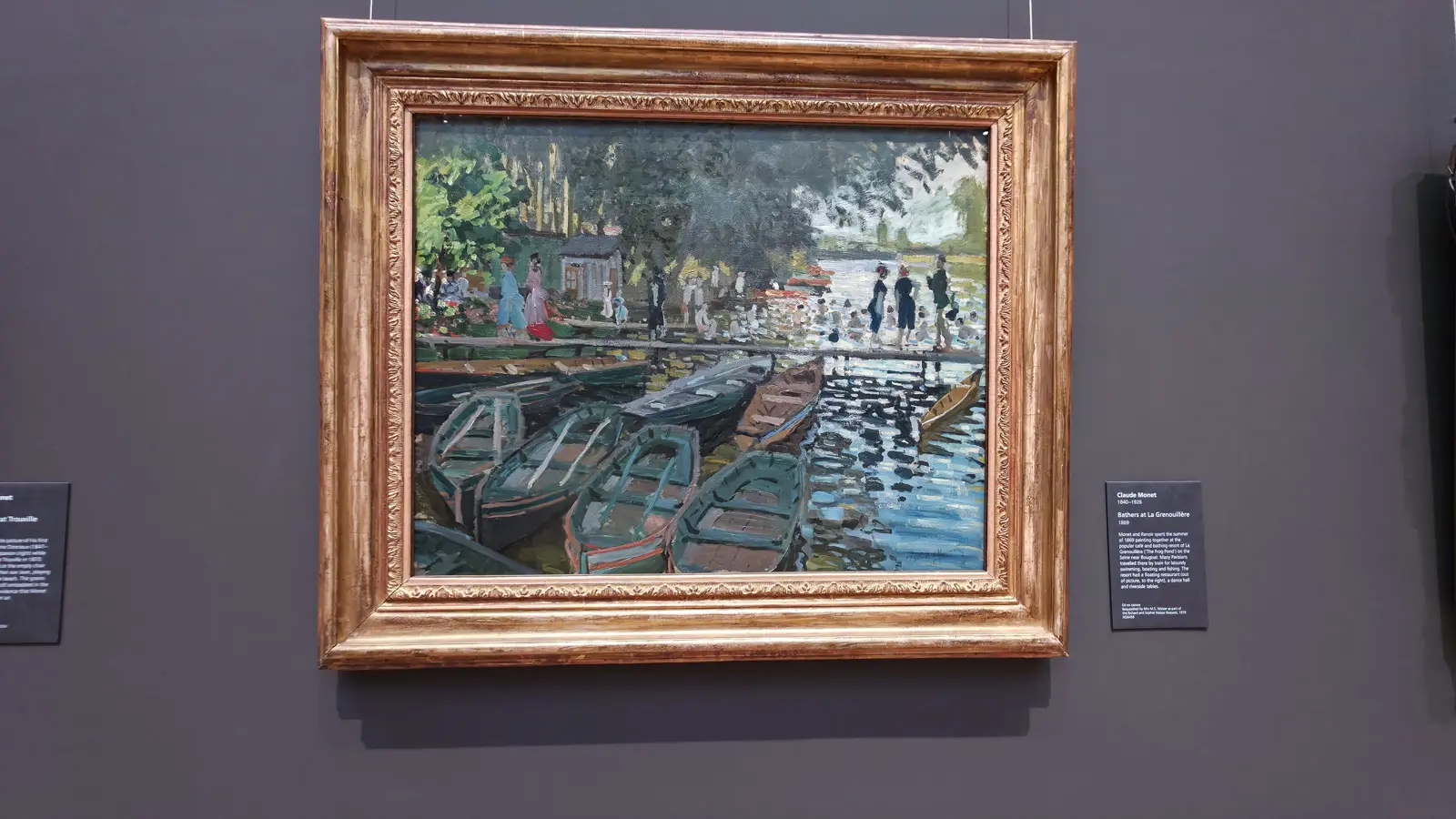
Monet was young and often broke in these years. He had grown up along the Normandy coast at Le Havre, where an older painter, Eugène Boudin, first talked him into carrying an easel outdoors and painting whatever was in front of him. He never really stopped. In the summer of 1869 he was working beside his friend Renoir at a riverside bathing resort on the Seine called La Grenouillère, the Frog Pond. The two of them set up side by side and painted the same boats and bathers in quick, broken dabs of colour. Those small, unfinished-looking canvases are often pointed to as the moment Impressionism began.
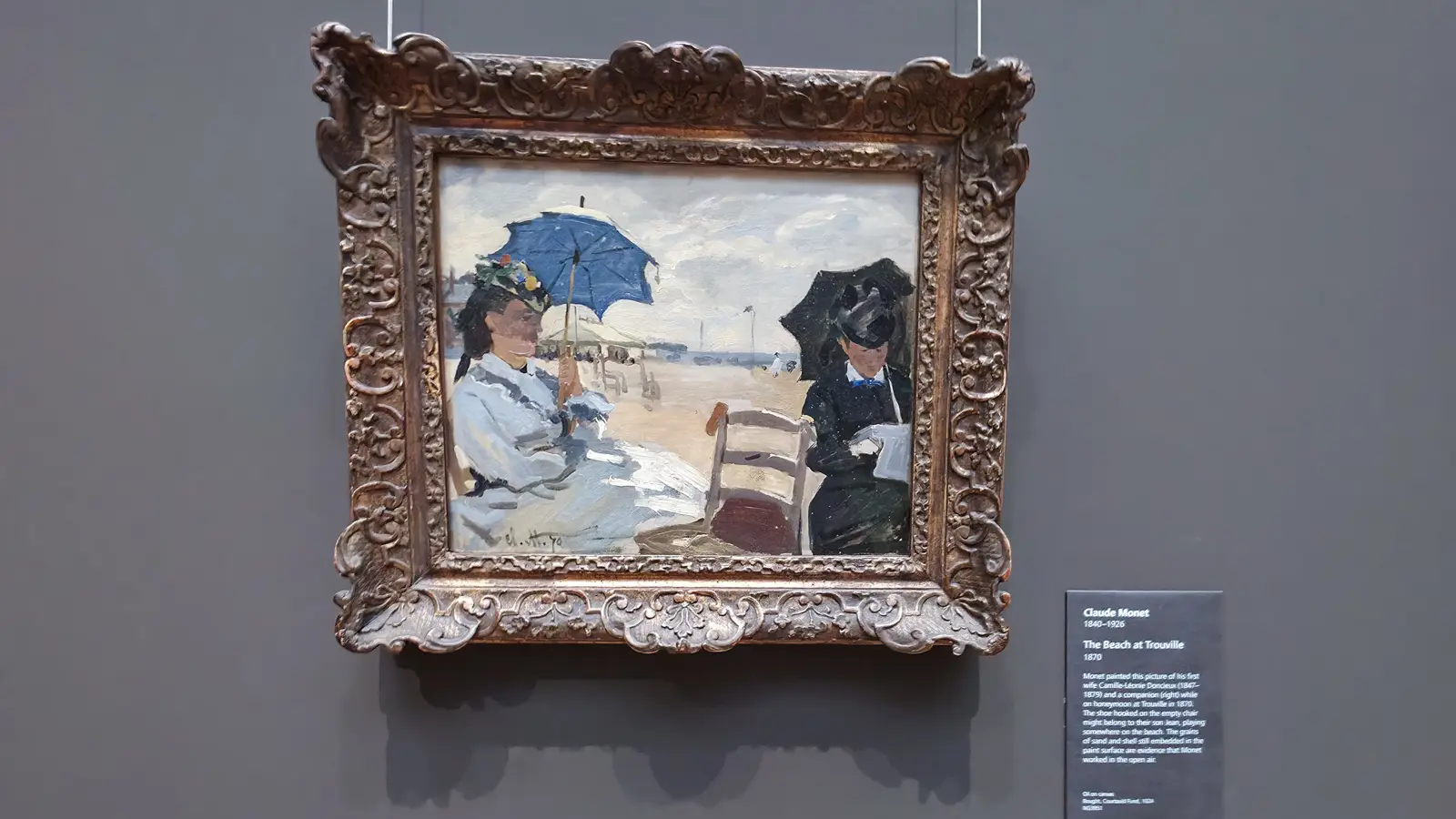
The next year he married Camille Doncieux, the model and companion who had seen him through the lean times, and took her to the Normandy coast at Trouville, more or less a honeymoon. He painted her there on the sand, quick and bright, the sea and a wide pale sky behind her. It is a small canvas, but it holds a whole summer in it.
Steam and the city
By the 1870s Monet had moved to Argenteuil, a boating town on the Seine just outside Paris, and had even rigged a small boat as a floating studio so he could paint the river from the water itself. He was drawn to the modern world as much as the countryside, to the trains and the smoke and a city remaking itself. In early 1877 he got permission to set up inside the Gare Saint-Lazare and painted the steam rolling up under its great glass roof, over and over, chasing a subject that would not hold still.
London he knew from harder days. He had crossed the Channel in the winter of 1870 to sit out the Franco-Prussian War, poor and unknown, and it was there, through a chance introduction, that he met the dealer Paul Durand-Ruel, who would go on to back the Impressionists and slowly turn Monet’s fortunes around. While he was there he painted the Thames from the new embankment, the water busy with boats. The city would call him back at the turn of the century, when he took rooms at the Savoy and painted the river from his window over and over.
Snow and the series painter
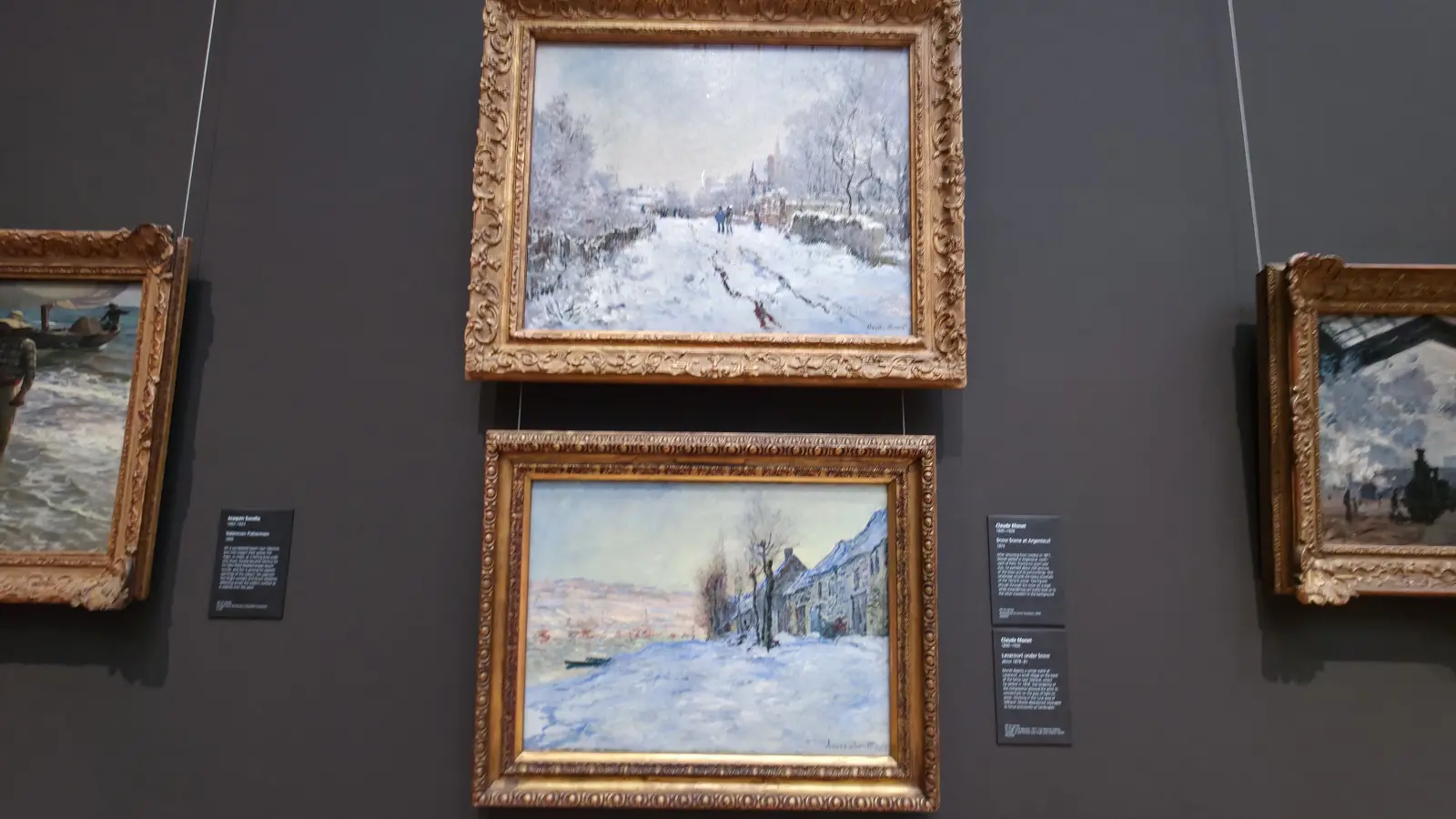
Monet never stopped chasing the weather. He painted snow again and again, not as flat white but as a surface throwing back pink, blue and violet in the low winter light. Catching that meant standing out in the cold for hours at a stretch, working fast before the light moved on, which is more or less how he painted everything outdoors.
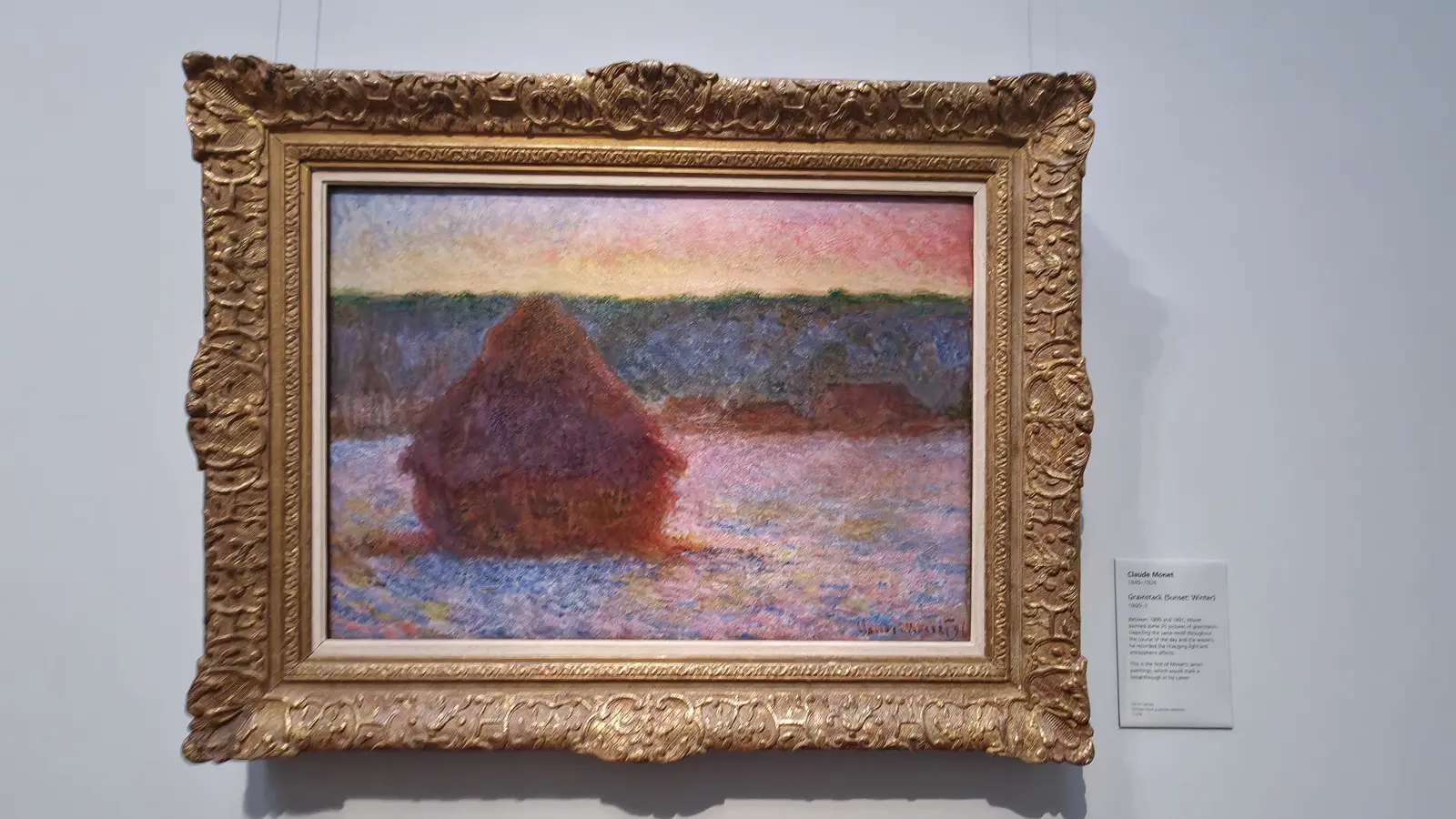
At the start of the 1890s he pushed the idea to its limit. He set up in a field near his home and painted the same grainstack morning and evening, autumn through winter, watching the light rather than the object underneath it. It worked so well that he did the same with a row of poplars, and then with the west front of Rouen Cathedral, whole series of a single subject under shifting light. By now Monet was successful and comfortable, a long way from the broke young man at the Frog Pond, and he could paint exactly as he pleased.
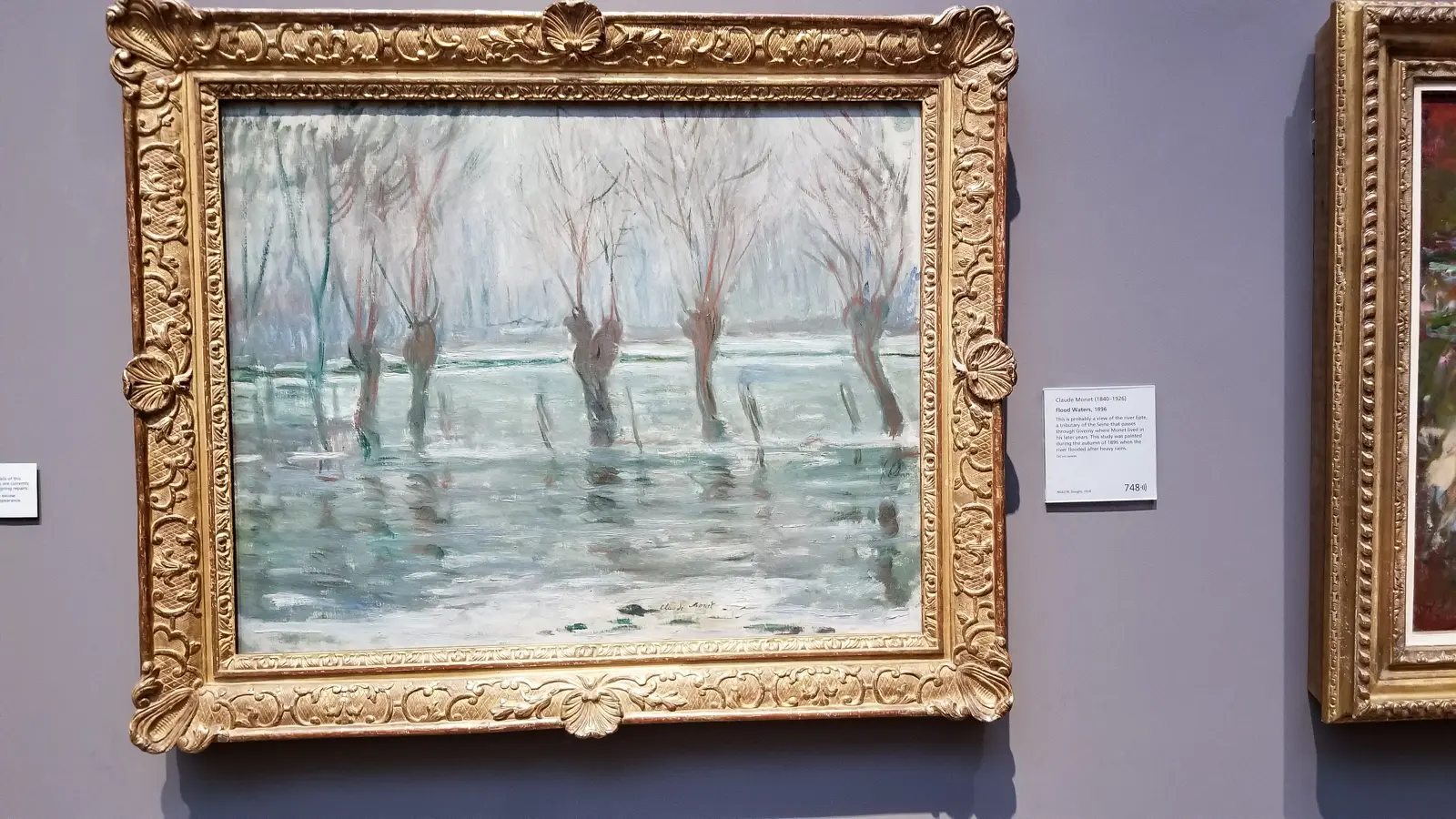
He had settled for good at Giverny, the village west of Paris where he would live out the rest of his life. He painted the country around it in every mood, including the flat riverside meadows in the grip of a hard winter.
The water garden
Then came the pond. In 1893 Monet bought a strip of land across the railway line from his house and dug a water garden, channelling water from a nearby stream to fill it. The village objected, sure his strange foreign plants would poison the water and their cattle, but he got his way. He stocked the pond with new hybrid water lilies bred for colour, planted willows and irises around the banks, and built a green Japanese bridge across one end. Then he began to paint it, and for the next thirty years he painted almost nothing else.
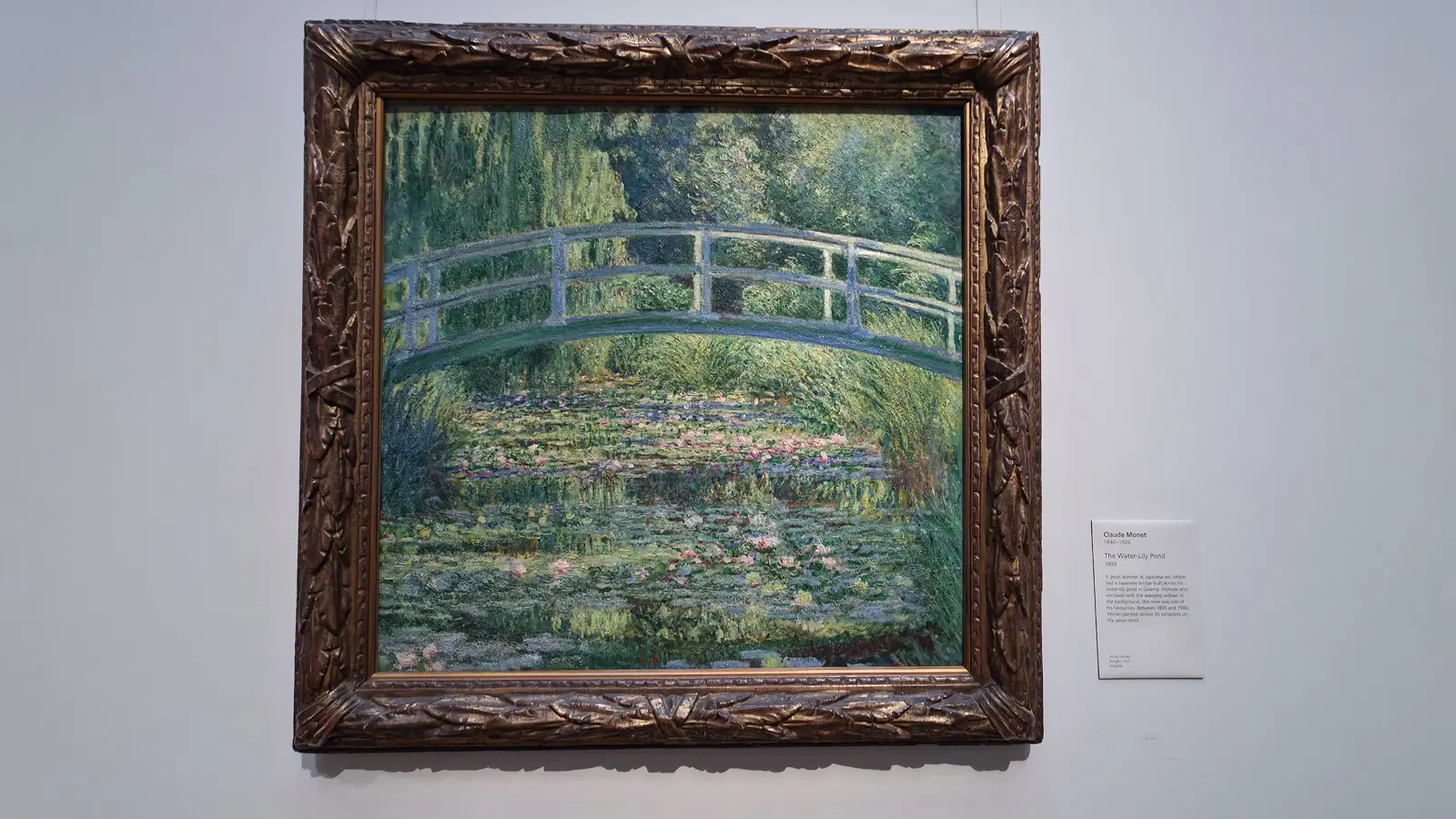
At first he kept the bridge and the banks in the frame. But these turned into hard years, and the work drew inward with them. His first wife Camille had died young, back in 1879; his second wife Alice and then his son Jean died in the years just before the First World War; and his own eyes were failing, cataracts slowly muddying the colours he had chased his whole life. Through all of it he kept painting the pond, and it grew quieter and stranger as he went, the world beyond the water dropping away.
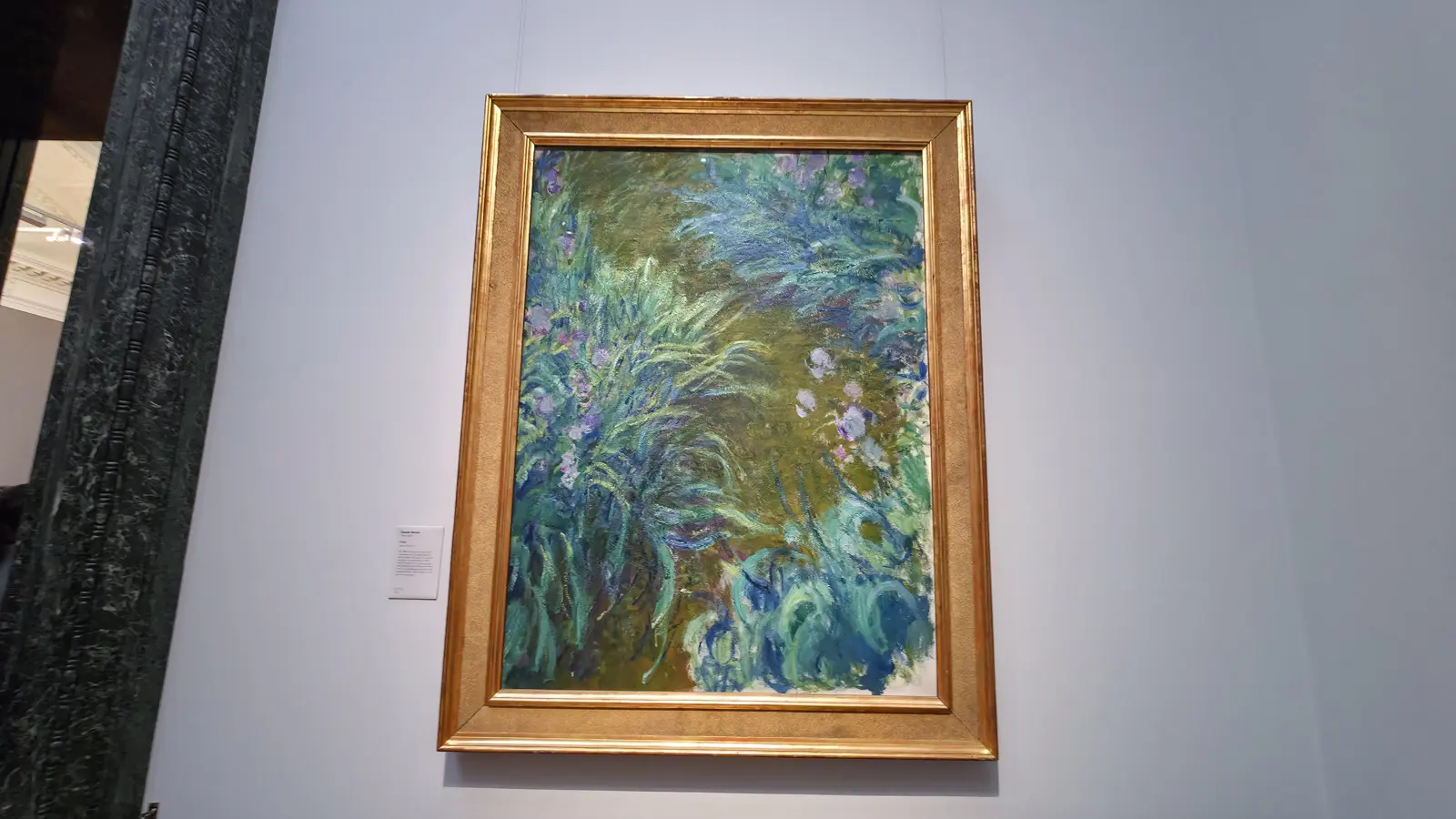
The irises along the banks got their own canvases too, painted from so close and so low that the flowers seem about to tip into the pond.
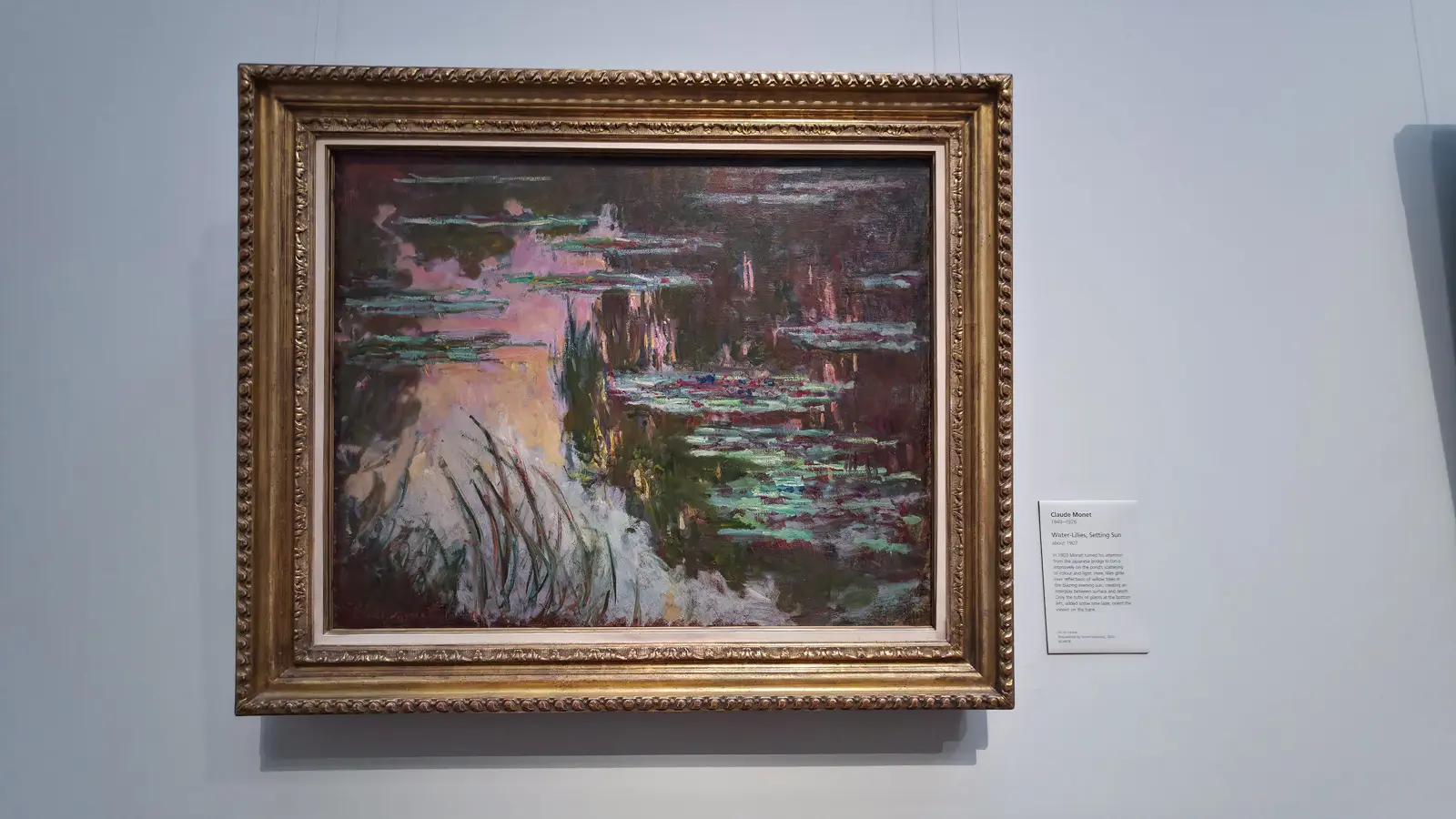
And in his last years the paintings grew enormous and very loose, the pond spreading into a soft wall of colour with barely a lily left to hold onto.
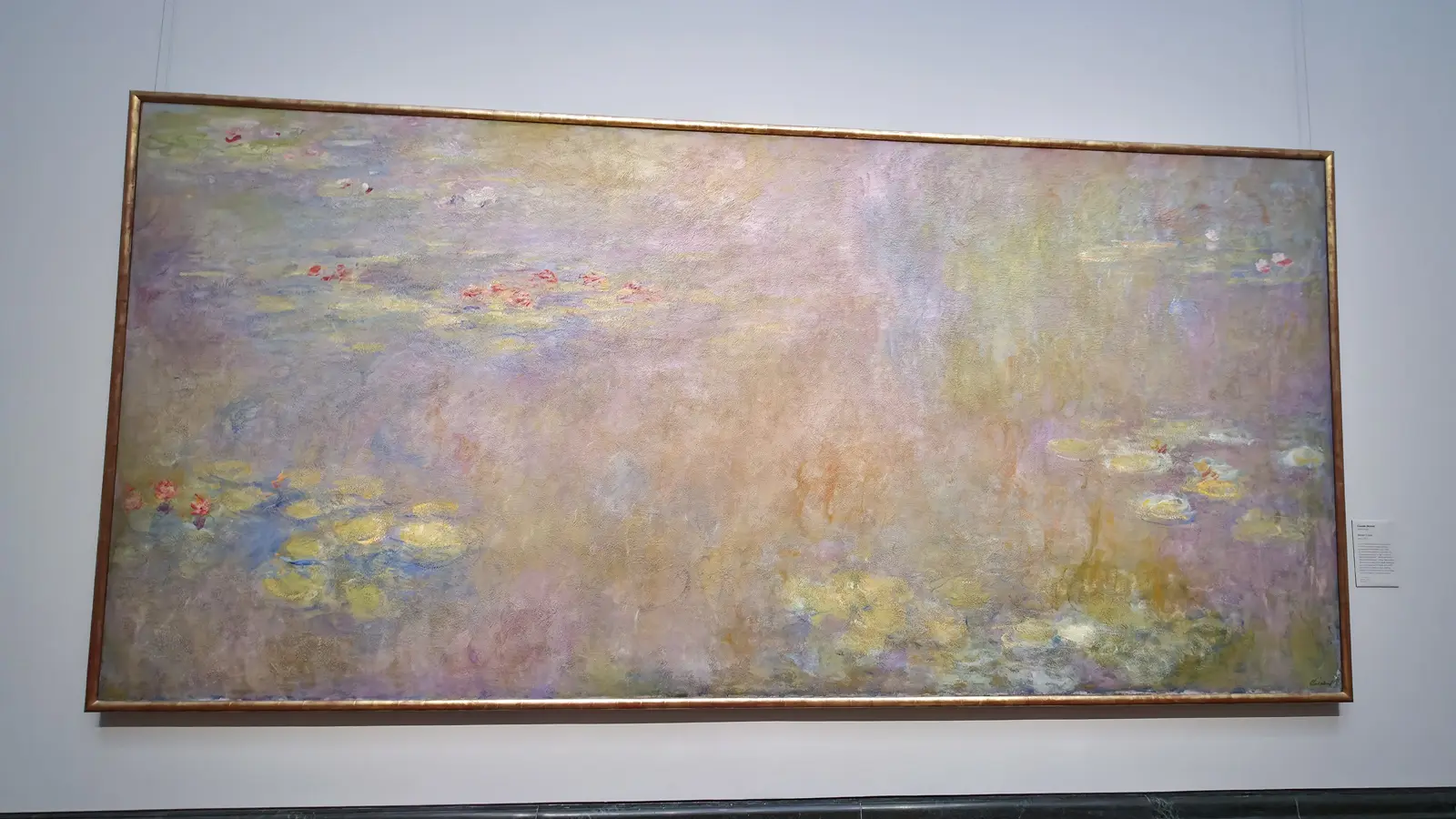
This is the part that stopped me on both my visits. I have stood at the edge of the real pond at Giverny, in June, with the lilies open and the whole garden reflected on the surface, and here it was again on a quiet wall in London. The same water, painted by the man who dug it.
The Orangerie
Monet finished the whole project in Paris, though he did not live to see it hung. During the First World War, half-blind and grieving, he built a vast new studio at Giverny and set about painting the pond at enormous scale, canvases made to run right around the walls of a room. The day after the Armistice in 1918 he offered a group of them to France as a monument to the dead and to peace. His old friend Georges Clemenceau, who had led the country through the war, made sure the gift went through. Monet kept reworking the panels almost to the end, and died at Giverny in December 1926, a few months before they opened to the public.
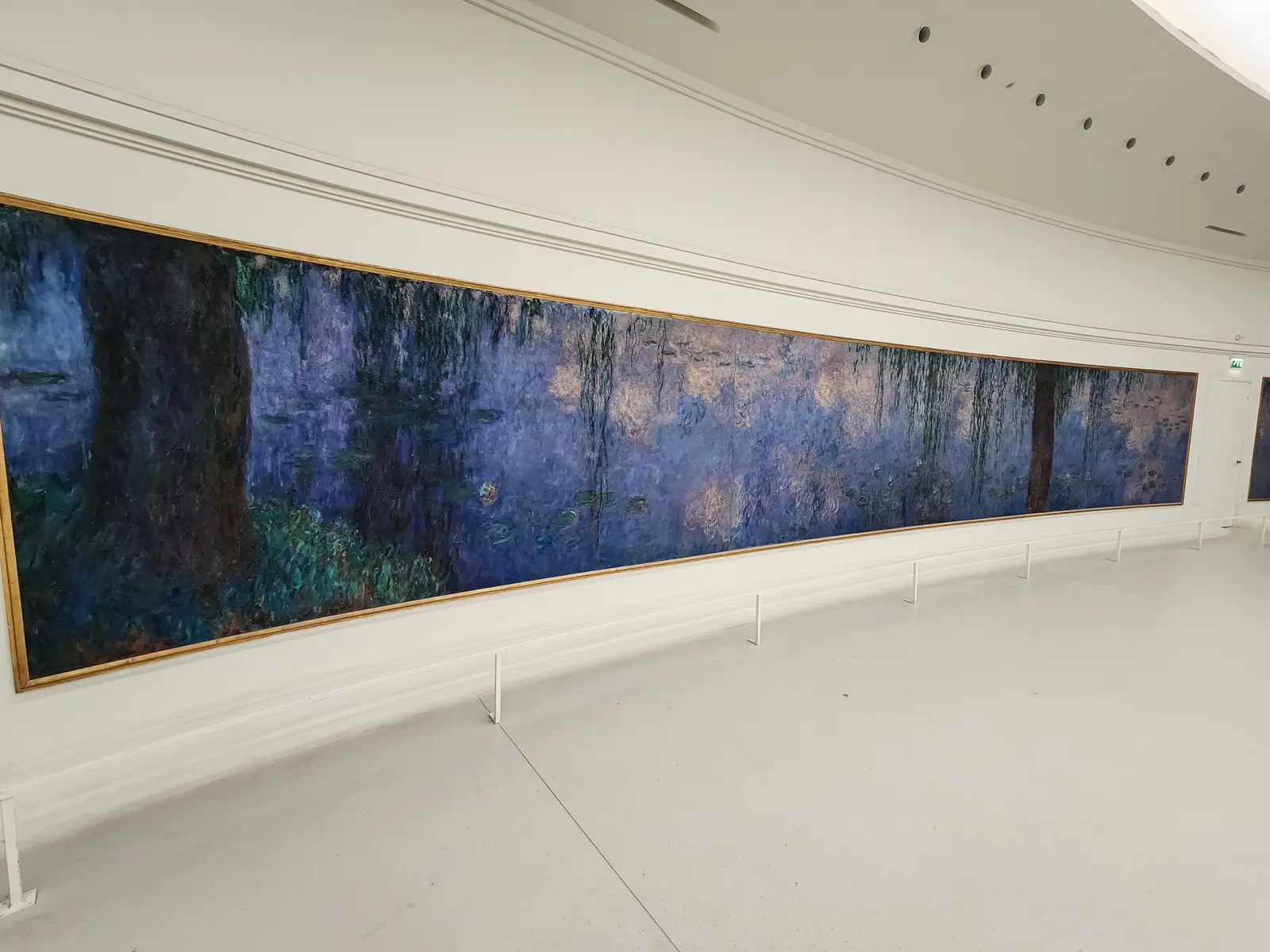
I have stood in those rooms in Paris, turning slowly on the spot while the water runs all the way round, and it is the nearest painting comes to standing in the pond itself. That is where this loop shuts. The quiet lilies in these London frames, the ones I nearly walked straight past, are pictures of the very same water that fills the Orangerie, and that still opens pink and white every summer in the garden at Giverny.
Bubbly Tips
- It is free. The National Gallery has never charged for entry, and the Monets hang in the permanent Impressionist rooms. Walk in off Trafalgar Square, no ticket needed.
- Grab a map or ask. The Monets are spread across a few rooms rather than gathered in one, so pick up a floor plan or ask a warden to point you to the Impressionist galleries, or you will miss half of them.
- Go close. The sand in the Trouville beach and the thick ridges of paint on the lilies only show up when you are a foot away. Get near the surface, then step back to let it resolve.
- Time it for a quieter room. Weekday mornings and the last hour before closing are calmest. The Water-Lily Pond corner draws a crowd on weekends.
- Photography is allowed. You can take photos in the permanent collection without flash. Check the signs, since rules can change for loans and special exhibitions.
- Chase the whole loop if you can. The Orangerie in Paris is where the giant panels wrap around you, and the Musée d’Orsay nearby holds more Monets. The two make a natural pair on a Paris trip.
- Giverny is a day out from Paris. Take the train to Vernon and a shuttle bus to the garden. The house and water garden open roughly from April to early November, and early arrival beats the coach tours.
- Aim for the lilies in bloom. The Giverny pond flowers from late spring into early autumn, with June about the peak. That is when the water looks most like the paintings.
- Pair it with the rest of the square. The National Gallery sits right on Trafalgar Square, a short walk from Whitehall and Westminster, so it slots easily into a wider day in central London.
Final Thoughts
What I had not expected, walking the National Gallery’s Monets, was how much of one small pond is folded into them. He painted a river resort, a train station, a foggy Thames and a snowy field, and then spent the rest of his life on the water in his own back garden, until the water was all that was left.
I came to Monet young and I have chased him ever since, to the pond at Giverny and the oval rooms of the Orangerie. Finding the lilies again in London, almost by accident, tied the whole thing together: the real water in Normandy, the panels that wrap around a room in Paris, and a handful of quiet canvases on a wall off Trafalgar Square, every one of them the same pond.
Until next time!

🌟 Everything You Need to Plan Your Dream Trip in 2026
- 🌟 Luxury Hotels - Find premium stays with Booking.com & Hotels.com
- 🏡 Vacation Rentals - Discover unique properties on VRBO
- 🏞️ Guided Tours - Explore with Viator or GetYourGuide
- 🎫 Attraction Tickets - Skip the lines with Tiqets
- 🚢 Ocean Cruises - Set sail with Cruise Direct
- 📱 International SIMs - Stay connected with Saily
- 🚗 Car Rentals - Budget-friendly options from Discover Cars
- 🌐 Secure VPNs - Browse safely with NordVPN
- 💶 Currency Exchange - Best rates with Wise
- 🗣️ Learn Languages - Master the local language with Babbel and Rosetta Stone