
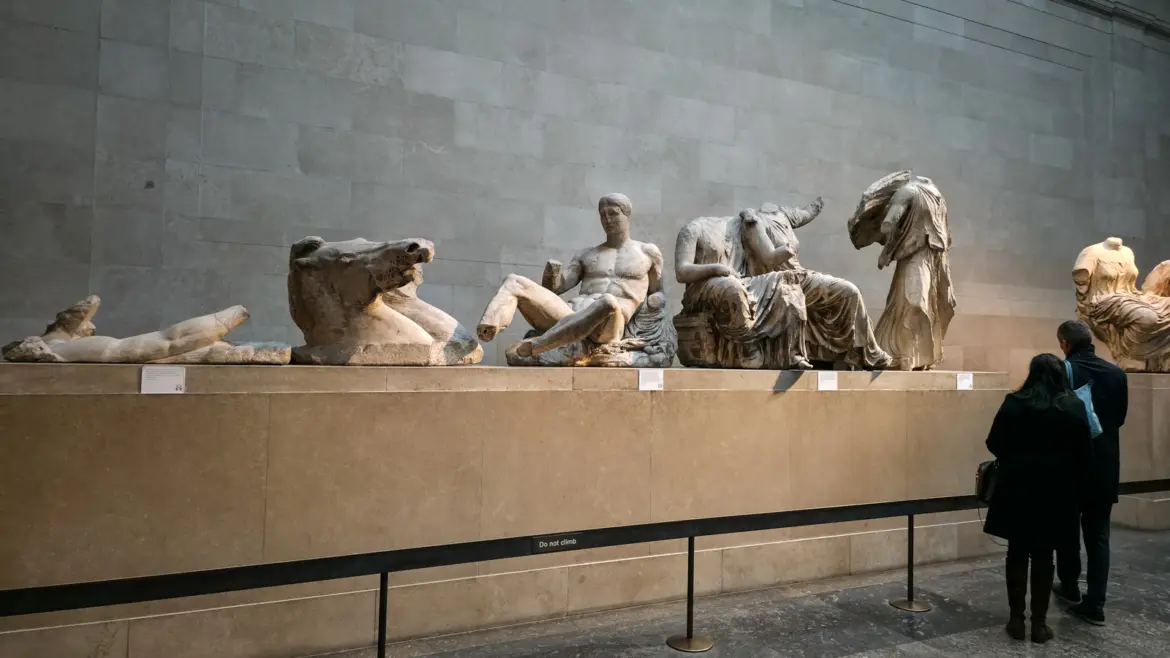
There is one room in the British Museum where wonder and unease sit side by side. Room 18 is a long, top-lit hall lined with marble, and the carving in it is about as fine as carving gets. All of it came off a single building in Athens, the Parthenon, made in the 440s BC and stripped of its sculpture in the early 1800s. I saw it on a guided tour last November, the famous pieces and little else, so a second visit is already half-planned. This is the room I did not expect to take personally.
The Parthenon Marbles at a Glance
📍 Location · Room 18, the Duveen Gallery, on the ground floor west of the Great Court. The Nereid Monument is next door in Room 17. Free entry.
🏛️ What they are · The architectural sculpture of the Parthenon, the temple of Athena built on the Acropolis between 447 and 432 BC, its carving directed by Pheidias.
📐 What London holds · 15 of the 92 metopes, 17 pediment figures and about 75 of the original 160 metres of frieze. Roughly half of what survives; most of the rest is in Athens.
🐎 Star piece · The Horse of Selene, the utterly spent head of a moon-goddess’s chariot horse from the east pediment.
⚖️ The dispute · Removed between 1801 and 1812 by Lord Elgin’s agents under a disputed Ottoman permission, then sold to the British government in 1816. Greece has formally sought their return since the 1980s, and talks continue.
⏰ Hours · Daily 10:00 to 17:00, with Friday late opening until 20:30. Room 18 is calmest at opening or in the last hour.
⏱️ Time needed · Half an hour minimum for Room 18. An hour covers it and the Nereid Monument properly.
💡 Tip · On the temple the frieze ran high overhead inside the colonnade. Here it hangs at eye level, which is the whole luxury of the room.
Next door first: the Nereid Monument
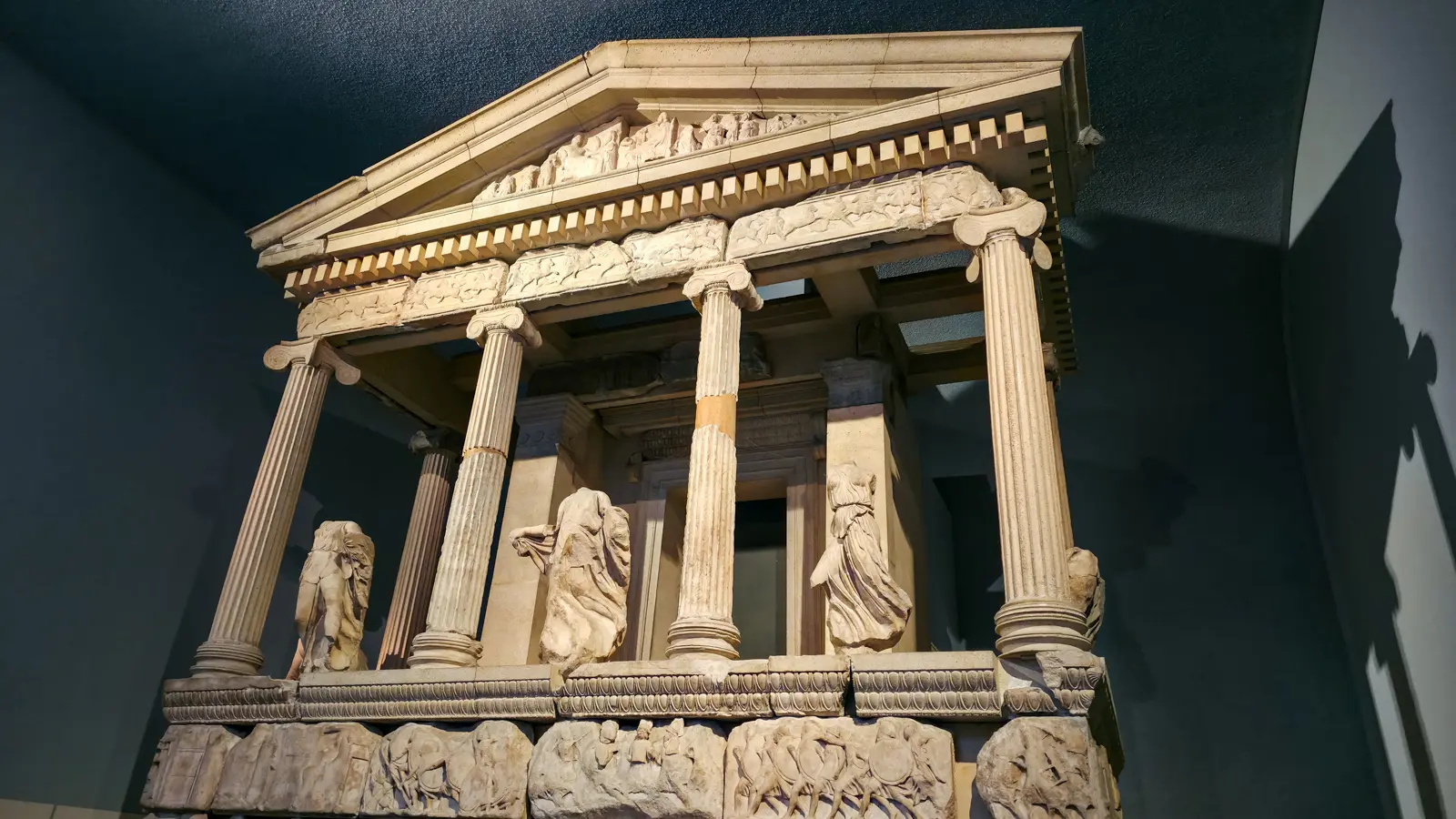
Before the Parthenon, step into Room 17. Filling it is a whole reconstructed building, the Nereid Monument. It is a tomb, built around 390 to 380 BC at Xanthos in Lycia, in what is now south-west Turkey, for a local ruler named Arbinas who governed under the Persian Empire. He was not Greek, but he chose to be buried in something shaped like a Greek Ionic temple, raised on a high podium in the Lycian style. It takes its name from the statues of Nereids, the sea-nymphs of Greek myth, set between its columns. The British archaeologist Charles Fellows brought it to England in the 1840s. It is a good thing to see first, because it shows how far “Greek” design traveled, turning up as a Persian-ruled Lycian’s tomb.
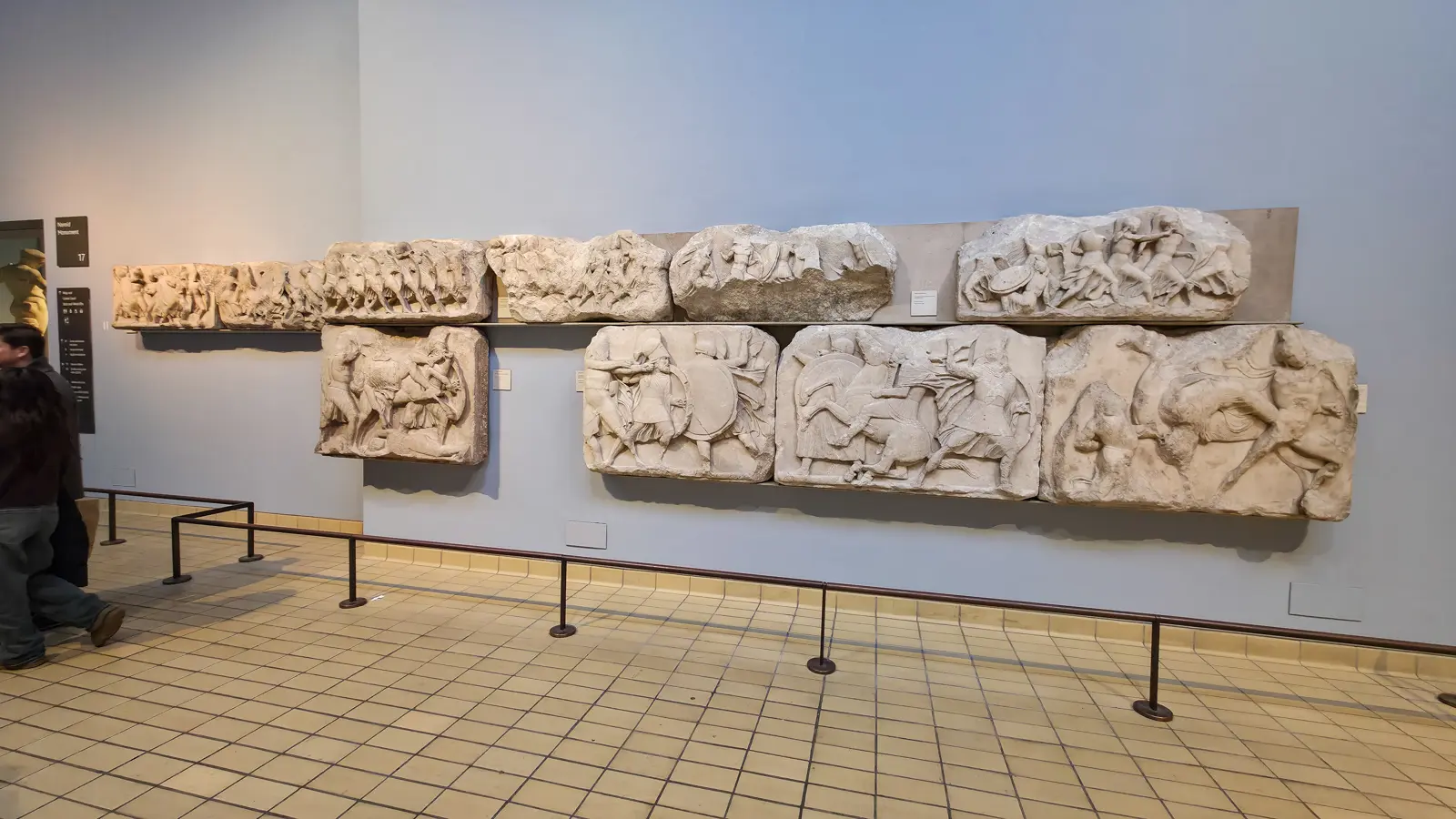
Around the walls of the same room run the friezes that once wrapped the base of the tomb. They are battle scenes, carved in band after band: a city under siege, horsemen, men fighting hand to hand. They are not myth. They are advertising, the military life of the king buried inside, told in stone so that anyone passing the tomb would know what he had done.
The temple the marbles came from
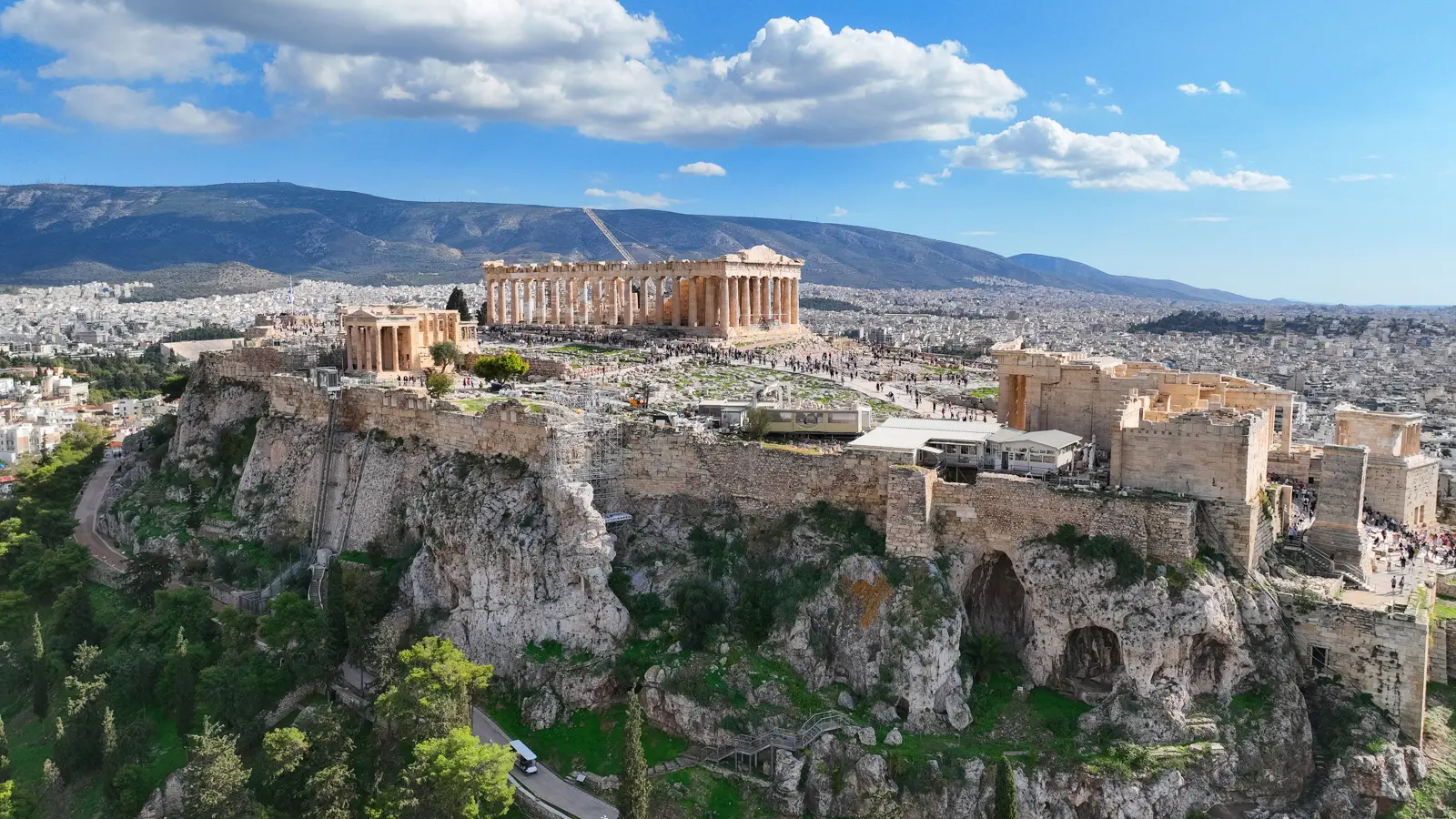
To make sense of the Parthenon room, it helps to know what you are looking at. These are not statues that stood on the floor. They are the architectural decoration of a single building, the Parthenon, the temple of the goddess Athena on the Acropolis in Athens. It was built between 447 and 432 BC, under the statesman Pericles, at the height of Athens’ power and wealth, out of fine white Pentelic marble. The whole sculptural programme was directed by Pheidias, the most celebrated sculptor of the ancient world, who also made the temple’s centrepiece, a statue of Athena some twelve metres high, covered in gold and ivory, now long lost.
The decoration came in three kinds, and the room is arranged around them: a long frieze, the square metope panels, and the figures from the two pediments. The British Museum holds about half of what survives, which works out as 15 metopes, 17 pediment figures, and roughly 75 metres of the frieze. The other half is mostly in Athens.
The frieze
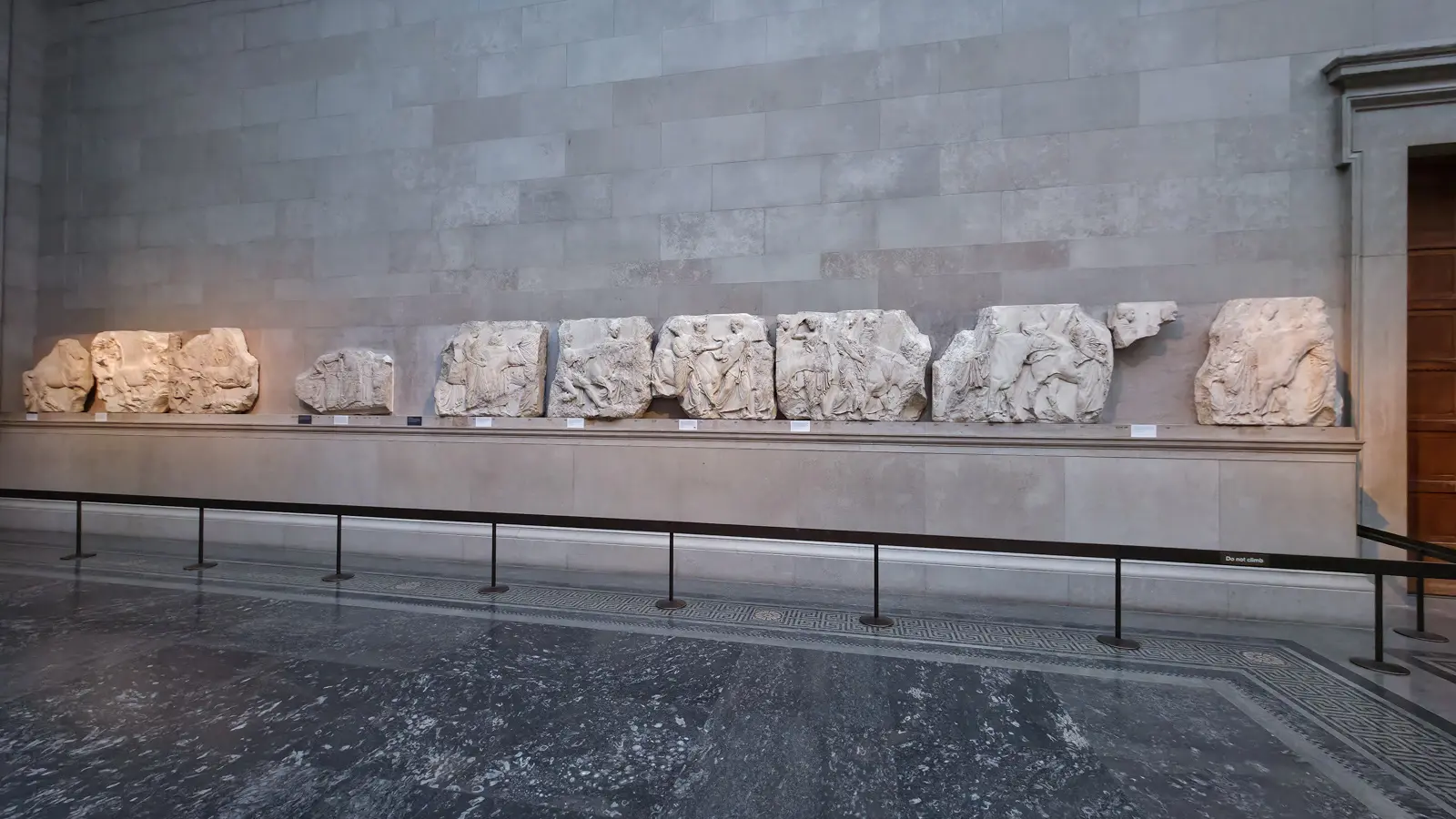
The frieze is the part I kept coming back to. It is a low-relief band, and it shows the Panathenaic procession, the great festival held in Athens for Athena’s birthday. Horsemen ride in a long cavalcade, reining in, crowding together, a whole city on the move. Here is the unusual thing. Greek temples were decorated with gods and myths. The Parthenon frieze shows the people of Athens themselves, the only temple known to do it, though they are carved as an ideal version of a city rather than real portraits. The Athenians wanted to be remembered at their best.
The metopes
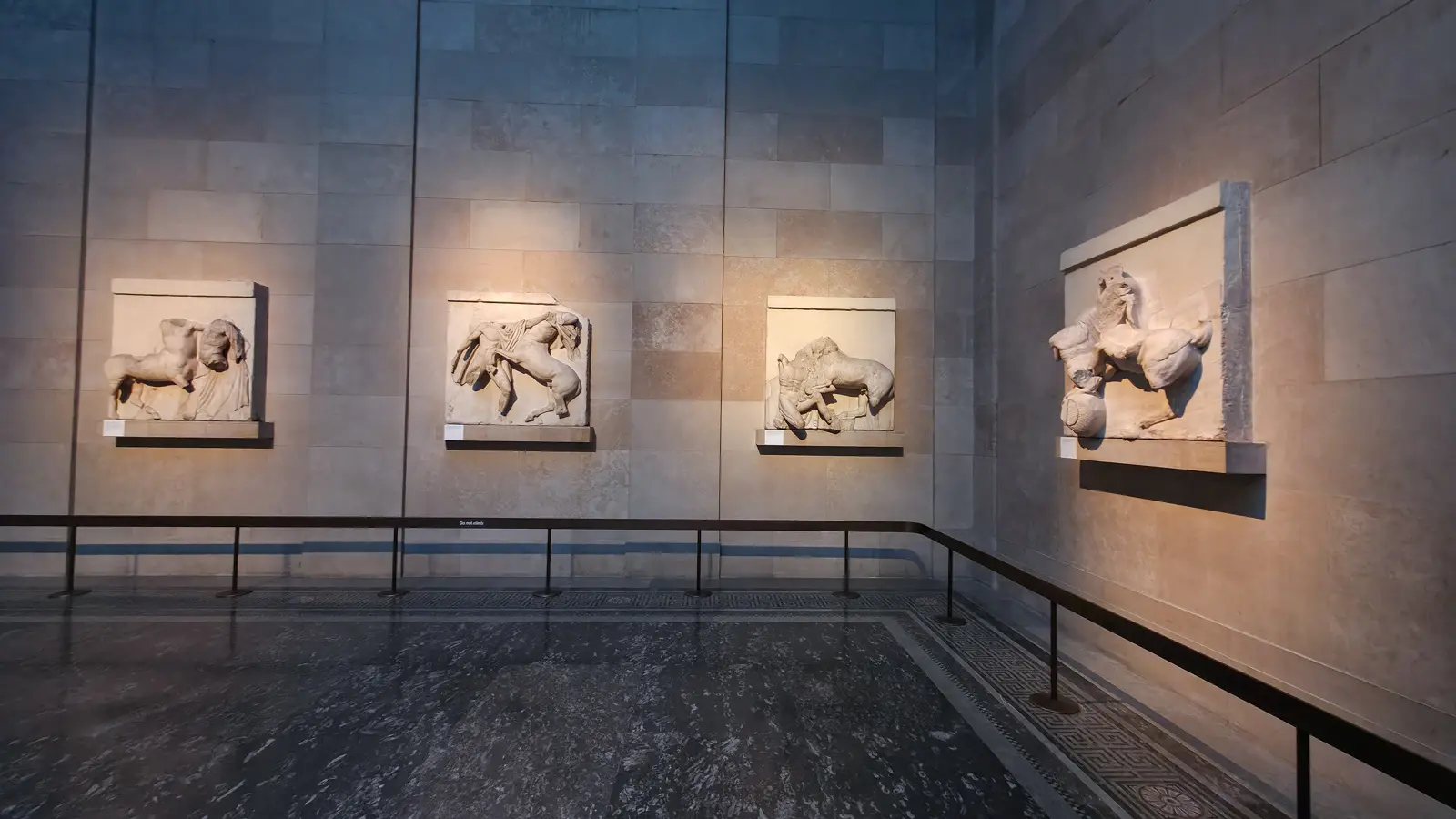
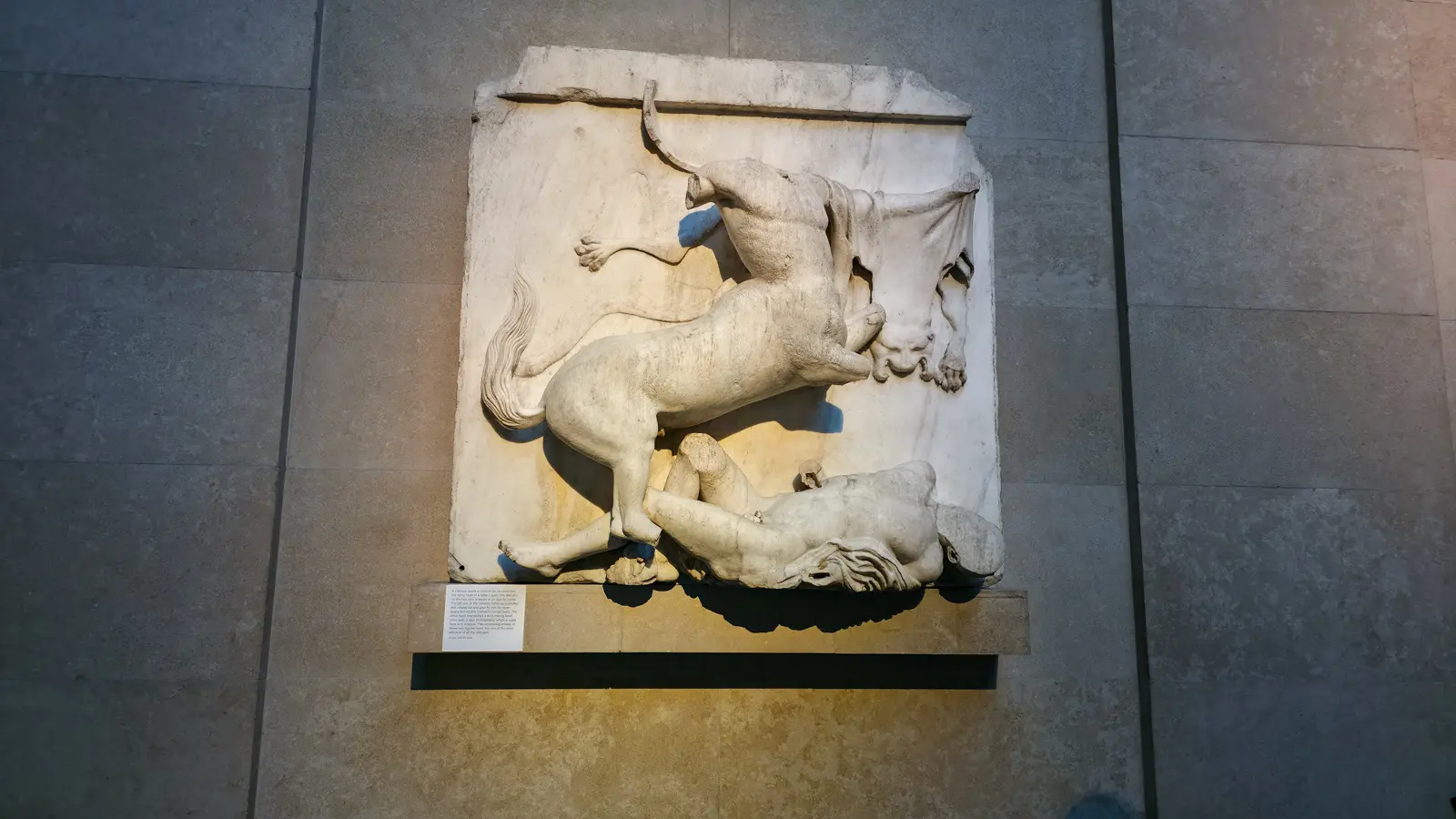
The metopes are the square panels, carved in deep relief, that ran around the outside of the temple above the columns. The ones in London come mostly from the south side, and they show the same story over and over: the battle between the Lapiths, a Greek people, and the Centaurs, half-man and half-horse, who were invited to a wedding feast and turned it into a brawl. It reads as an argument in stone, order against chaos, civilisation against the half-wild, an echo of the Greeks’ own wars against Persia. In the panel here a centaur rears in triumph over a fallen young Lapith, and the museum’s own label admits the pity of it, the boy barely old enough for the fight.
The pediments
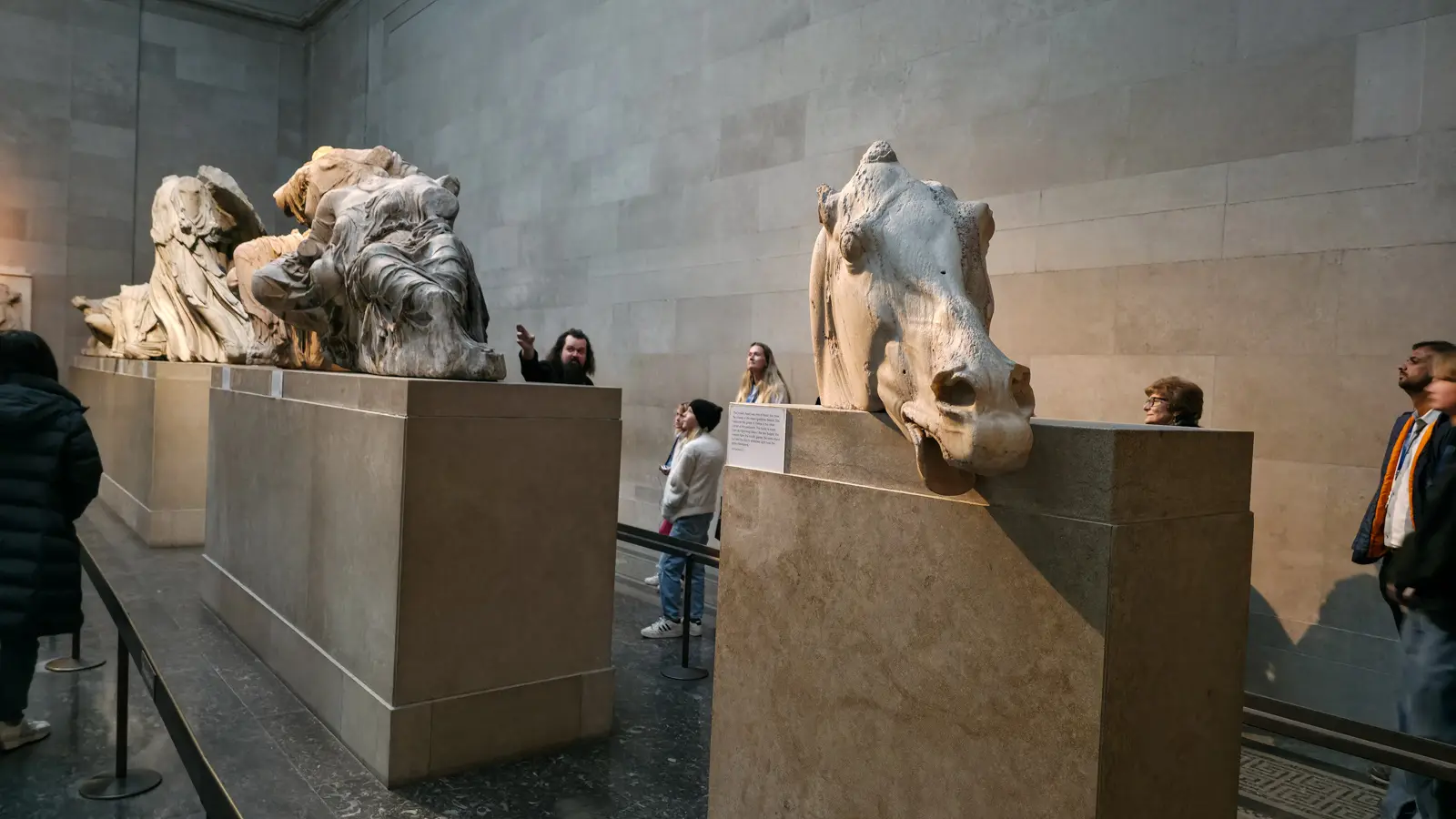
The pediments are the figures from the two triangular gables at the ends of the roof. The east pediment, the one most of the surviving figures come from, showed the birth of Athena, who in the myth sprang fully grown from the head of Zeus. The scene was framed by time itself: the horses of the sun rose at one corner as the horses of the moon sank at the other. The single most affecting piece in the room, for me, is the Horse of Selene, the head of one of those moon-horses at the end of its night’s work, mouth open, eyes bulging, utterly spent. Centuries of weather have only made it more alive.
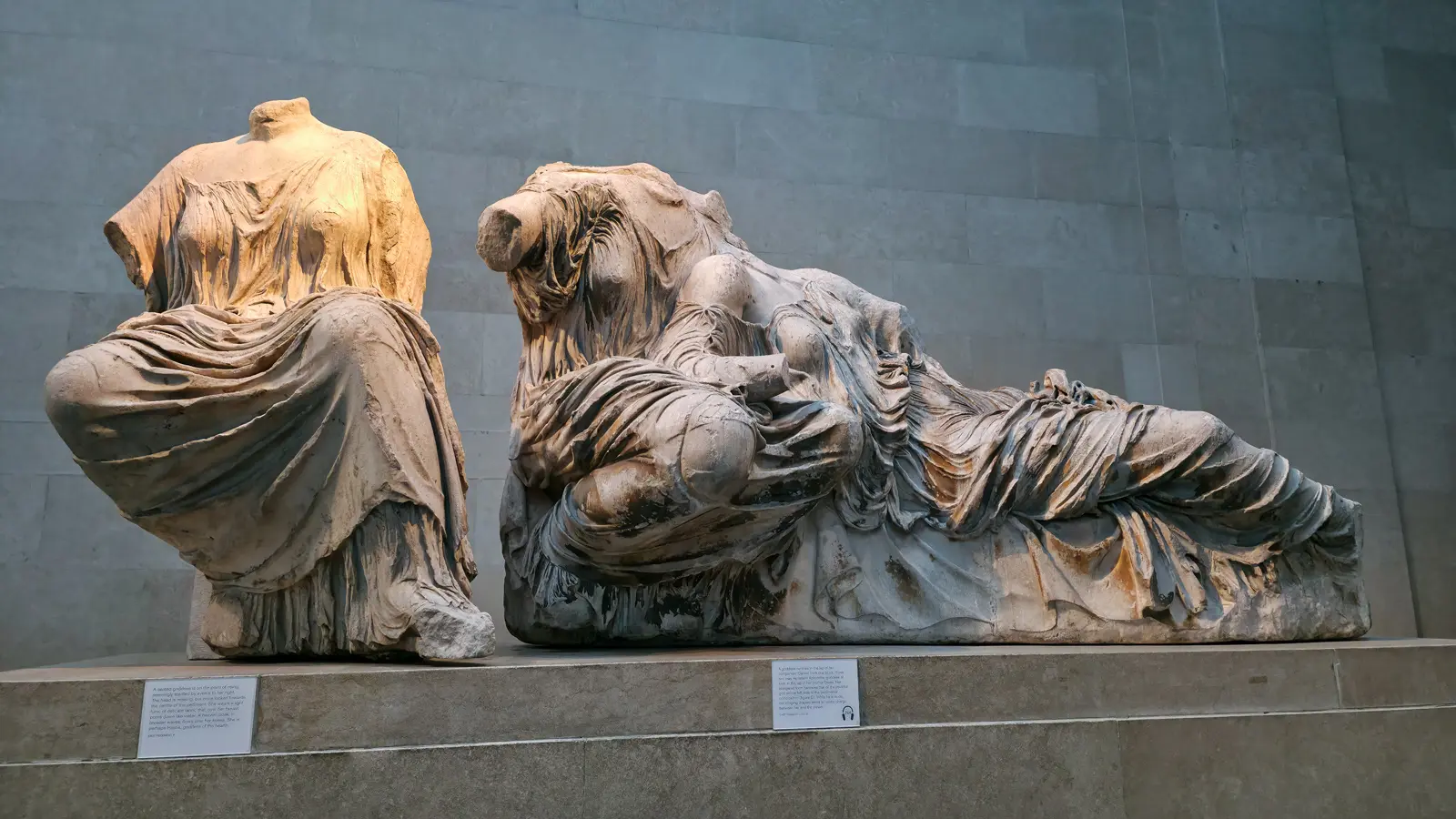
The goddesses nearby are where you see what Pheidias’s workshop could do with cloth. The drapery clings and pools and falls as if it were wet, and the bodies are completely convincing underneath it, even with the heads long gone. The museum is careful about naming them. The seated figure may be Hestia, the reclining pair perhaps Aphrodite in the lap of her mother Dione. The honest answer is that nobody is certain, and the figures are extraordinary either way.
The argument over the marbles
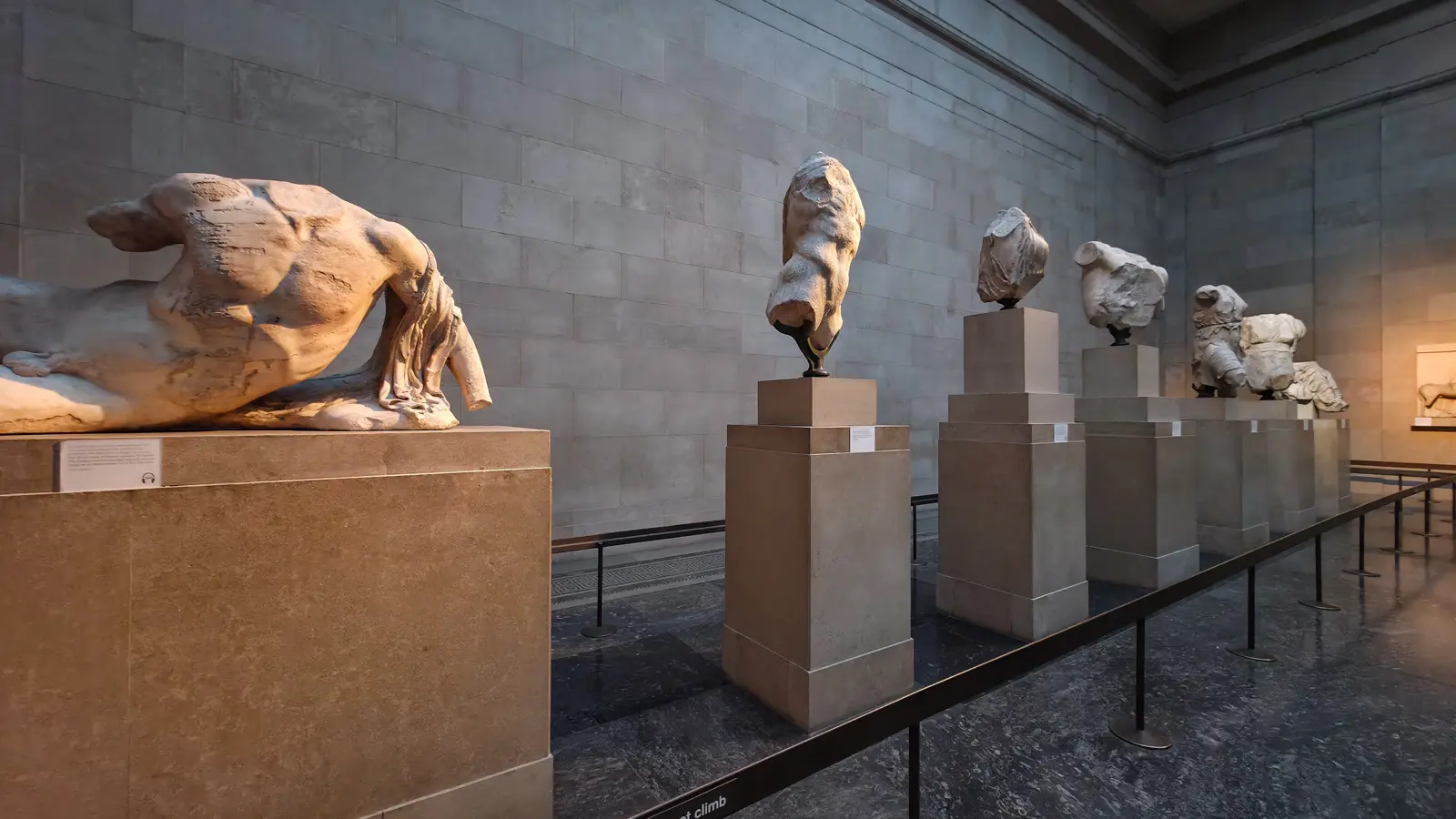
You cannot stand in this room and ignore the question hanging over it, so here it is plainly. The sculptures were removed from the Parthenon between 1801 and 1812 by agents working for Lord Elgin, the British ambassador, at a time when Athens was under Ottoman rule. Elgin claimed the Ottoman authorities had given him permission, though what that permission actually allowed is disputed, and the original document does not survive. He sold the collection to the British government in 1816. About half of the surviving Parthenon sculptures are now in London. Most of the rest are in the Acropolis Museum in Athens, which opened in 2009 with a top floor built to hold the whole frieze, reunited, in sight of the temple it came from.
Greece wants them back. The case for return is clean: they were made for one building, and they belong together at its foot. The case the British Museum makes is that it holds legal title, that the sculptures are free to see by millions, and that they have been preserved here for two centuries. Both arguments are serious. Anyone who tells you this is simple is selling you something.
I should be honest that I didn’t come to this room neutral. My family is Greek, and these stones did something to me that the rest of the museum did not. Standing there, I was not looking at someone else’s history. I was looking at mine. And yet I left still able to see the other side. They have been kept and shown here, free, for two hundred years, and the museum would lose a whole wing of itself without them. So I carry both at once: the pull that says they belong home, and the honest admission that the answer is not as clean as I want it to be. For me it still comes down to one question, whether they were taken rightfully, and that is the part no one has ever been able to settle.
Bubbly Tips
- Where it is: The Parthenon sculptures are in Room 18, the long Duveen Gallery, on the west side of the ground floor. Free entry.
- Don’t skip Room 17: The Nereid Monument sits right next door and most people walk straight past it on the way to the marbles. It deserves ten minutes.
- Timing: Room 18 is calmest near opening or in the last hour. Tour groups cluster in the middle of the day.
- Look up in your mind: The frieze sits at eye level here, but on the temple it ran high overhead. Picture it up there and the achievement lands harder.
- Photography: Allowed without flash. The pediment figures and the Horse of Selene take strong side light well.
- Read the metope labels: They point out details that are easy to miss, like the young age of the fallen Lapith.
- Give it time: The room rewards slowing down. Half an hour minimum, more if you want to follow the frieze along.
FAQ
Where are the Parthenon Marbles in the British Museum? In Room 18, the Duveen Gallery, on the west side of the ground floor near the Great Court. Admission is free.
Are the Elgin Marbles and the Parthenon Marbles the same thing? Yes. “Elgin Marbles” is the older name, after Lord Elgin, who removed them. “Parthenon Sculptures” or “Parthenon Marbles” is now the more common term, partly because many feel naming them after Elgin takes a side in the argument.
Are these the originals or casts? They are the original marble sculptures. The Acropolis Museum in Athens displays the sculptures that remained in Greece alongside casts of the ones held in London.
Where are the rest of the Parthenon sculptures? About half of what survives is in London. Most of the rest is in the Acropolis Museum in Athens, with a few fragments in other European museums.
Can I photograph them? Yes, without flash.
Final thoughts
The Parthenon room is the strangest in the building, because the wonder and the unease sit in the same place. The carving is as good as carving has ever been, and the question of whether it should be in London at all never quite leaves the air. I came to it with a stake I did not expect to feel so strongly, and I left without a tidy answer, which feels right. I also left with a whole Greek wing unseen, the Mausoleum and the rest still on my list. So I will be back. With this museum, I always am.
Until next time!

🌟 Everything You Need to Plan Your Dream Trip in 2026
- 🌟 Luxury Hotels - Find premium stays with Booking.com & Hotels.com
- 🏡 Vacation Rentals - Discover unique properties on VRBO
- 🏞️ Guided Tours - Explore with Viator or GetYourGuide
- 🎫 Attraction Tickets - Skip the lines with Tiqets
- 🚢 Ocean Cruises - Set sail with Cruise Direct
- 📱 International SIMs - Stay connected with Saily
- 🚗 Car Rentals - Budget-friendly options from Discover Cars
- 🌐 Secure VPNs - Browse safely with NordVPN
- 💶 Currency Exchange - Best rates with Wise
- 🗣️ Learn Languages - Master the local language with Babbel and Rosetta Stone