
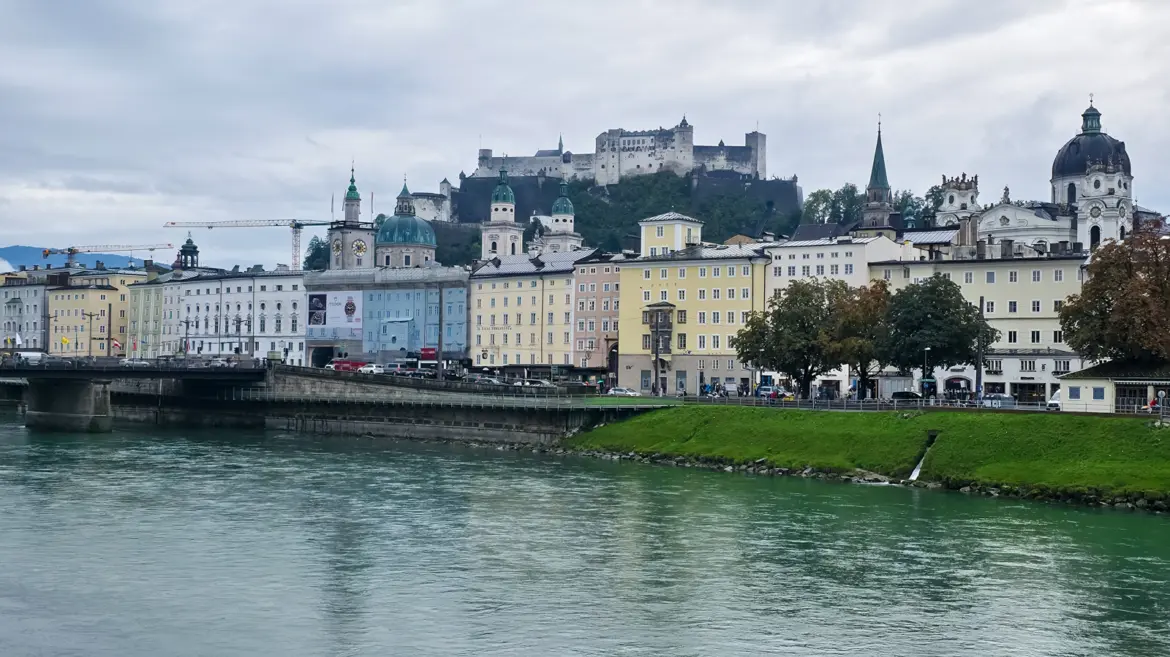
Some places are defined by landmarks. Others are defined by the spaces between them. In Salzburg, it is the latter that lingers, and nowhere is this more evident than in Salzburg Old Town. This is not simply a historic district, but a living composition shaped by centuries of continuity. Streets narrow and open without warning, façades rise in quiet alignment, and each turn reveals a new relationship between architecture, light, and movement. Here, the experience is not about arriving somewhere specific, it is about moving through a sequence of spaces that unfold gradually, each one layered with memory and intention. The Old Town feels less like a fixed place and more like an evolving narrative, one that reveals itself step by step.
Salzburg Old Town at a glance
🏛️ UNESCO since 1996 · The 236-hectare historic centre, with its roughly 1,000 protected buildings, was inscribed as a World Heritage Site in 1996 (formal certificate 1997). UNESCO cites it as the meeting point of northern and southern European architectural traditions.
🏰 Three layers of history · The Roman town of Juvavum was granted municipium status in 45 AD; the Christian rebirth came in 696 AD with St. Rupert and St. Peter’s Abbey; the Baroque transformation began in the late 16th century under Wolf Dietrich von Raitenau.
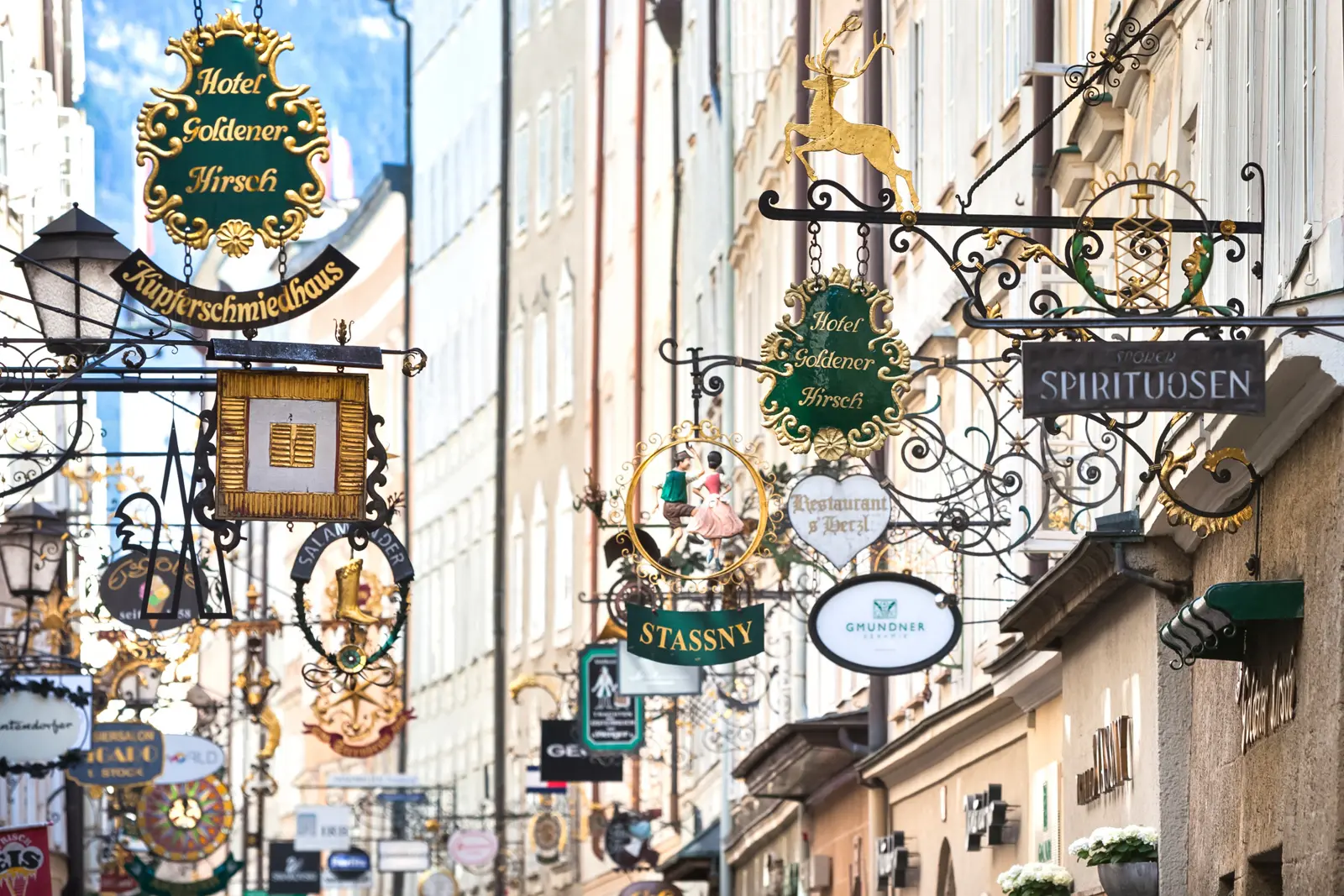
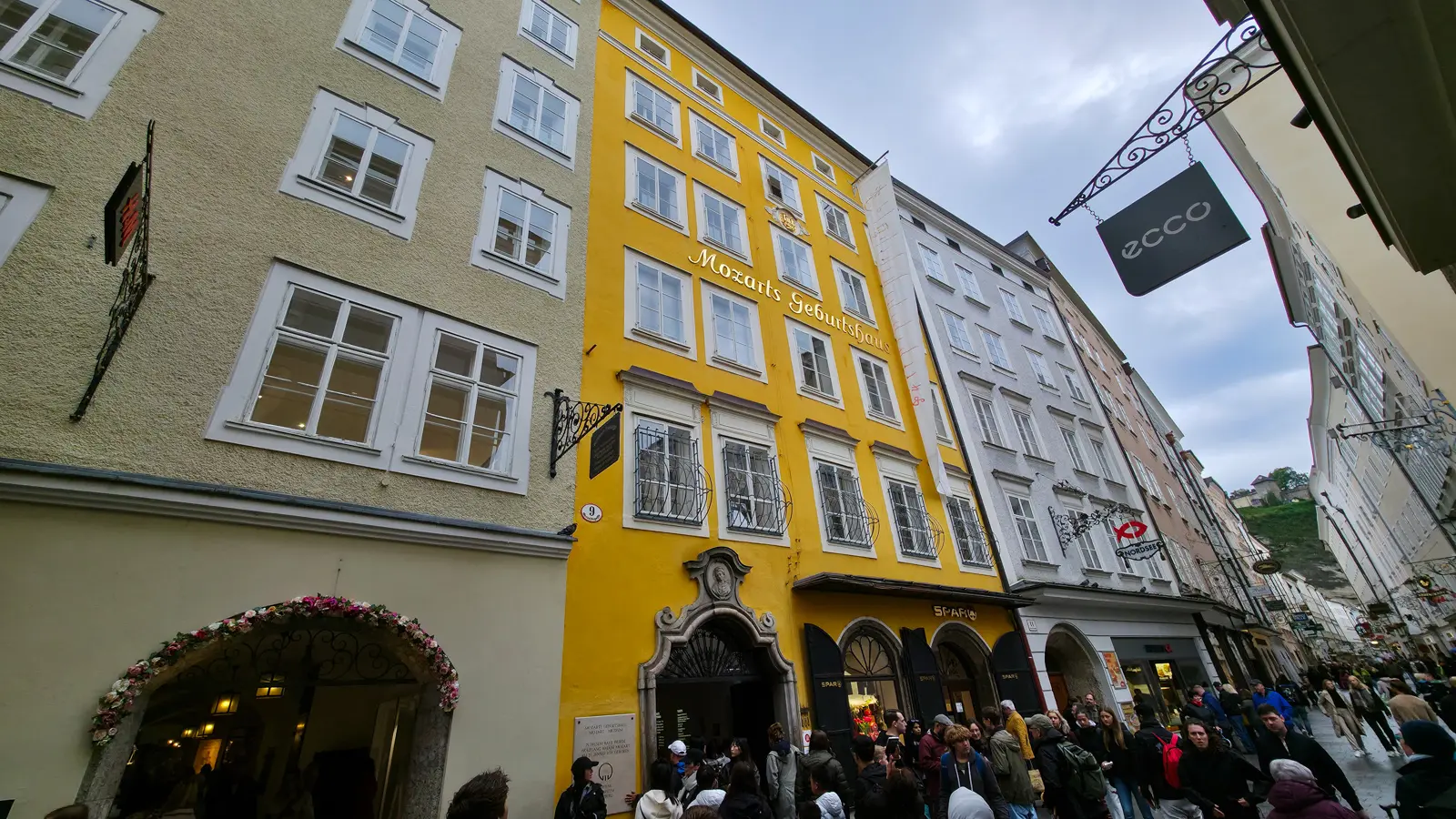
🛍️ Getreidegasse · The most famous shopping street in Salzburg, with wrought-iron guild signs above every shop. Mozart was born at number 9 on January 27, 1756.
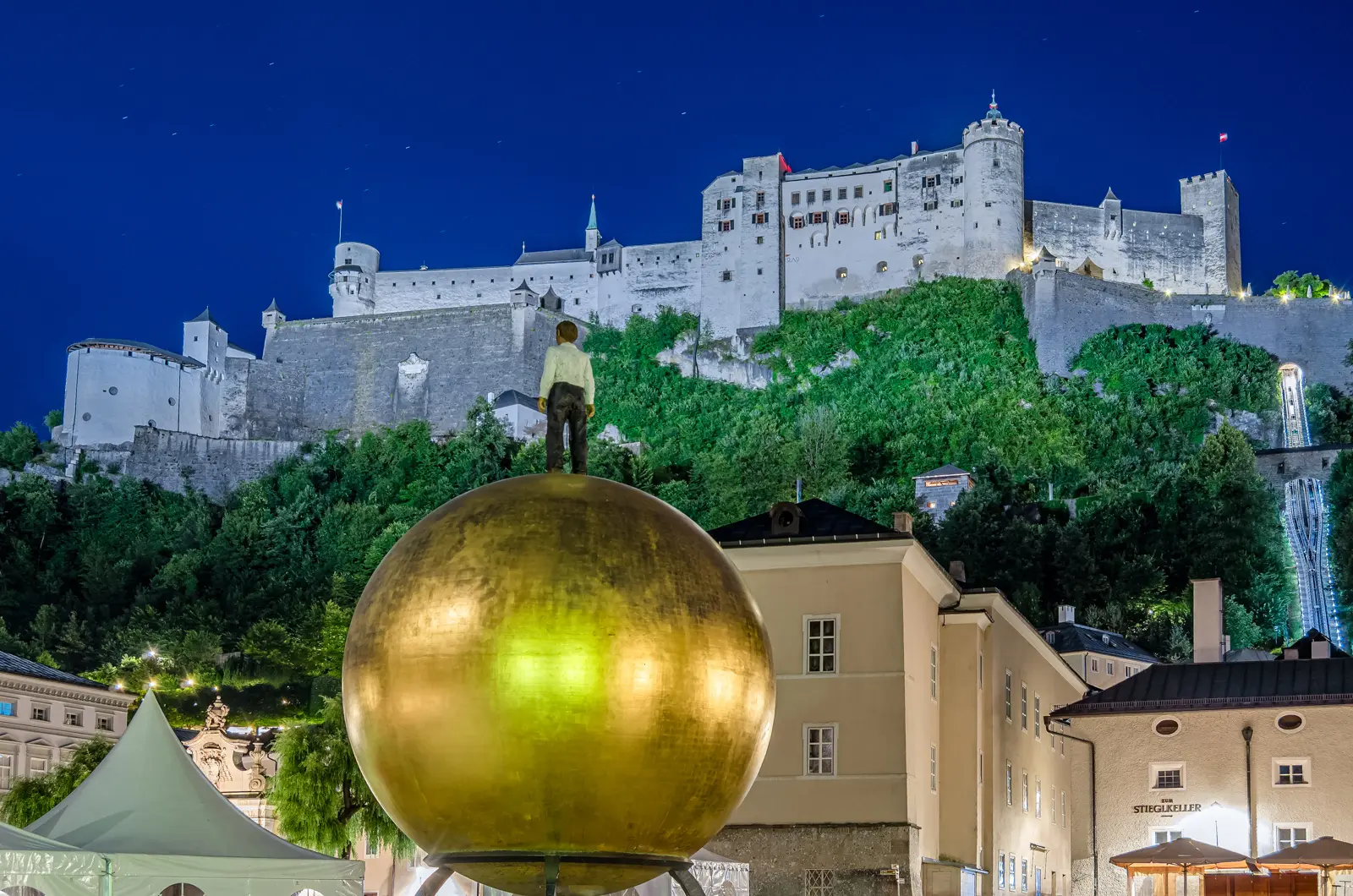
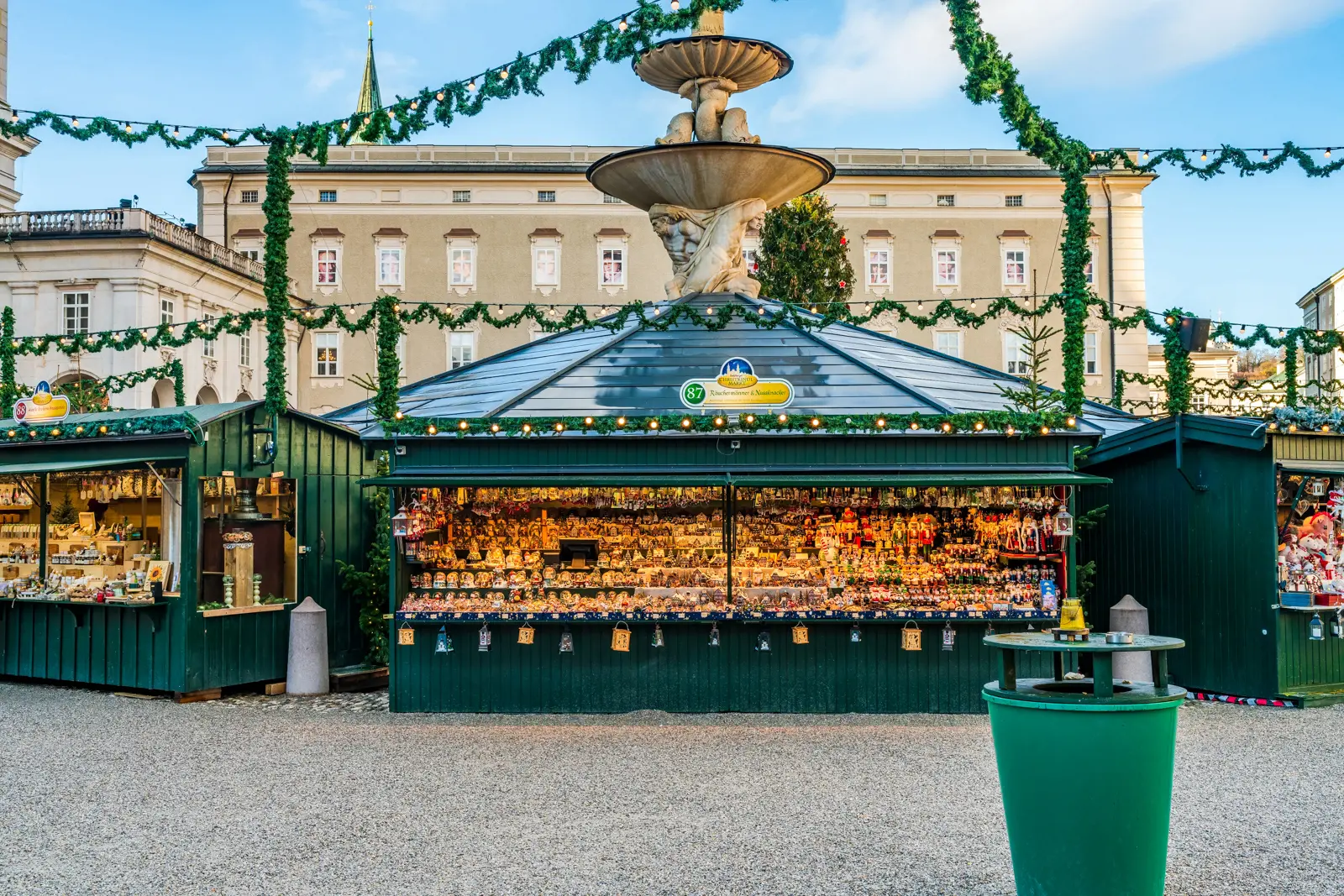
⛪ The squares · Domplatz (with the Cathedral), Residenzplatz (with the Residenzbrunnen and Glockenspiel), and Kapitelplatz (with Sphaera) form the ceremonial heart of the Old Town.
🎬 Sound of Music · “I Have Confidence,” “Do-Re-Mi,” and several other key sequences were filmed in the Old Town’s streets and squares.
🚶 Practical tip · The Old Town is compact enough to walk in a single day, but rewards multiple visits at different times. Early morning is quietest; late afternoon catches the best light on the Cathedral façade.
The Structure: Layers of History
Salzburg Old Town is a UNESCO World Heritage Site, recognised for its remarkably preserved urban fabric and architectural cohesion. Its origins trace back to the Roman settlement of Juvavum, granted municipium status in 45 AD as Municipium Claudium Iuvavum under Emperor Claudius — not merely a trading post but a fully established Roman town, reflecting a significant level of civic organisation and anchoring Salzburg’s early importance as a strategic and commercial centre along major trade routes. During the medieval period, the city developed into a dense network of narrow streets, fortified structures, and enclosed spaces, many of which remain intact today. These medieval foundations are still visible in the tight street patterns and irregular building lines that define the Old Town’s inner structure.
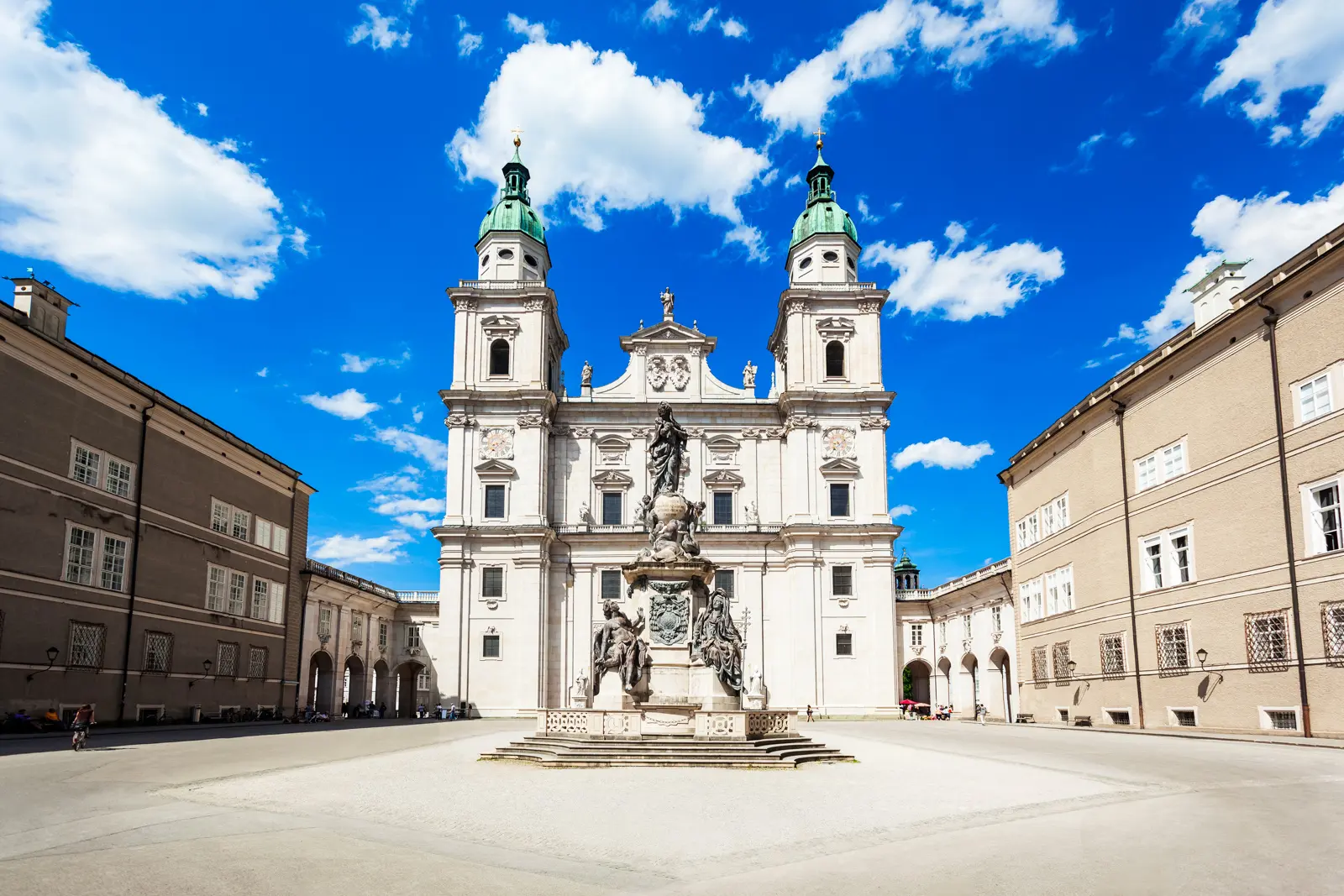
The transformation of Salzburg into the Baroque city we recognise today occurred in the late 16th and 17th centuries under the prince-archbishops, particularly Wolf Dietrich von Raitenau and his successors. Inspired by Italian models, they introduced a new architectural vision defined by symmetry, openness, and visual coherence. Rather than replacing the medieval city, they layered this vision onto it, creating a rare coexistence of medieval and Baroque elements, with traces of earlier Romanesque structures, that gives the Old Town its distinctive character and depth. A central expression of this transformation is the Salzburg Cathedral, whose early Baroque design helped shape the surrounding squares and spatial relationships of the Old Town. Its presence anchors not only Domplatz, but the broader architectural identity of Salzburg itself.
Salzburg’s UNESCO inscription rests on three criteria: its role as a meeting point of Italian and German cultural traditions (criterion ii), its status as an exceptionally well-preserved European ecclesiastical city-state with high-quality secular and ecclesiastical buildings (criterion iv), and its association with the life and work of Wolfgang Amadeus Mozart (criterion vi). Together they describe a city that is at once a meeting point of cultures, a Baroque city-state shaped by its prince-archbishops, and a place inseparable from the music that emerged from its streets and squares.
Movement: Streets, Passages, and Openings
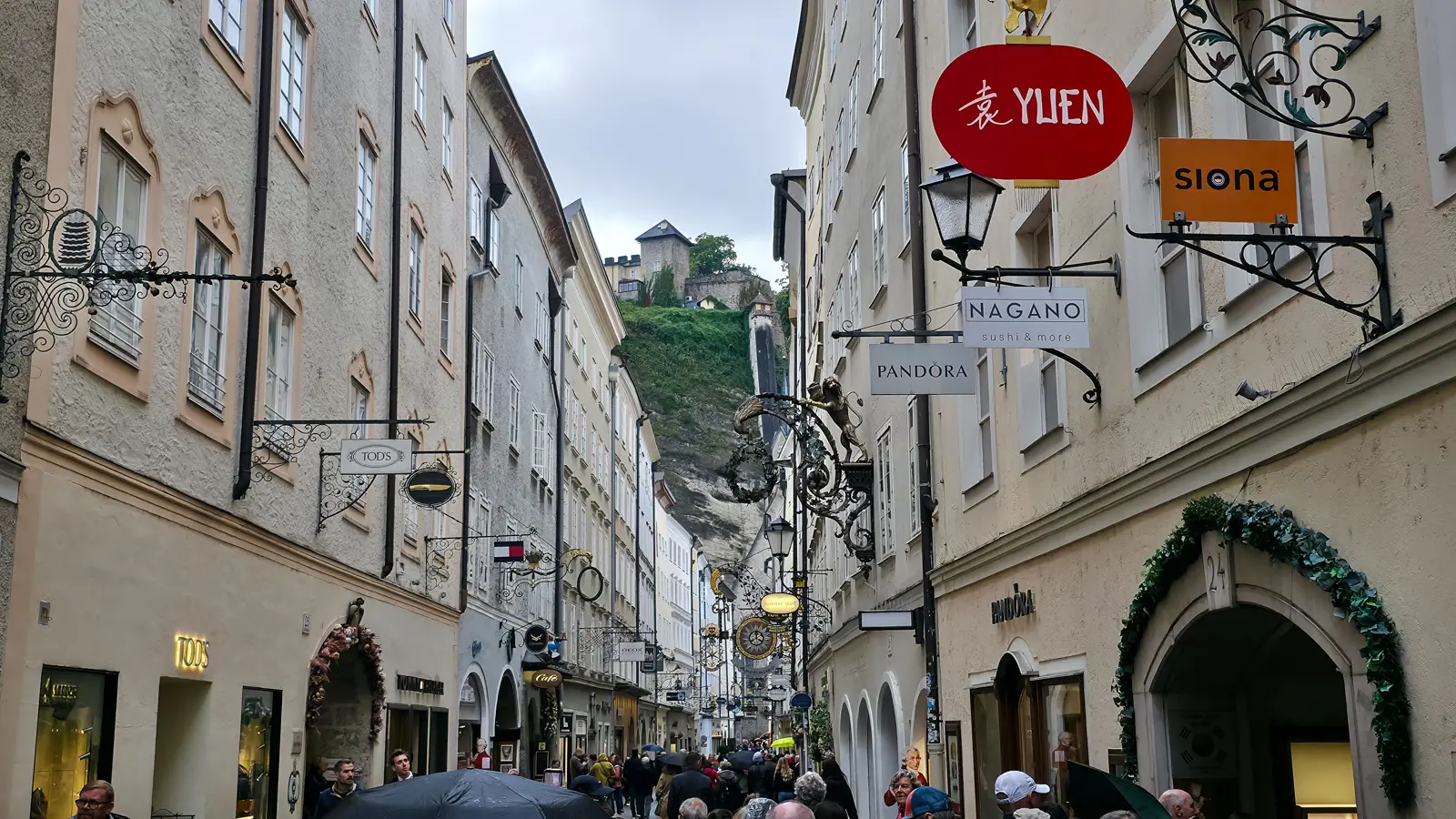
Walking through Salzburg Old Town is defined by rhythm, a continuous interplay between enclosure and release. Streets such as Getreidegasse guide movement in a narrow, almost compressed way, their façades rising closely on either side. These spaces feel intimate and directional, drawing you forward while limiting your field of vision.
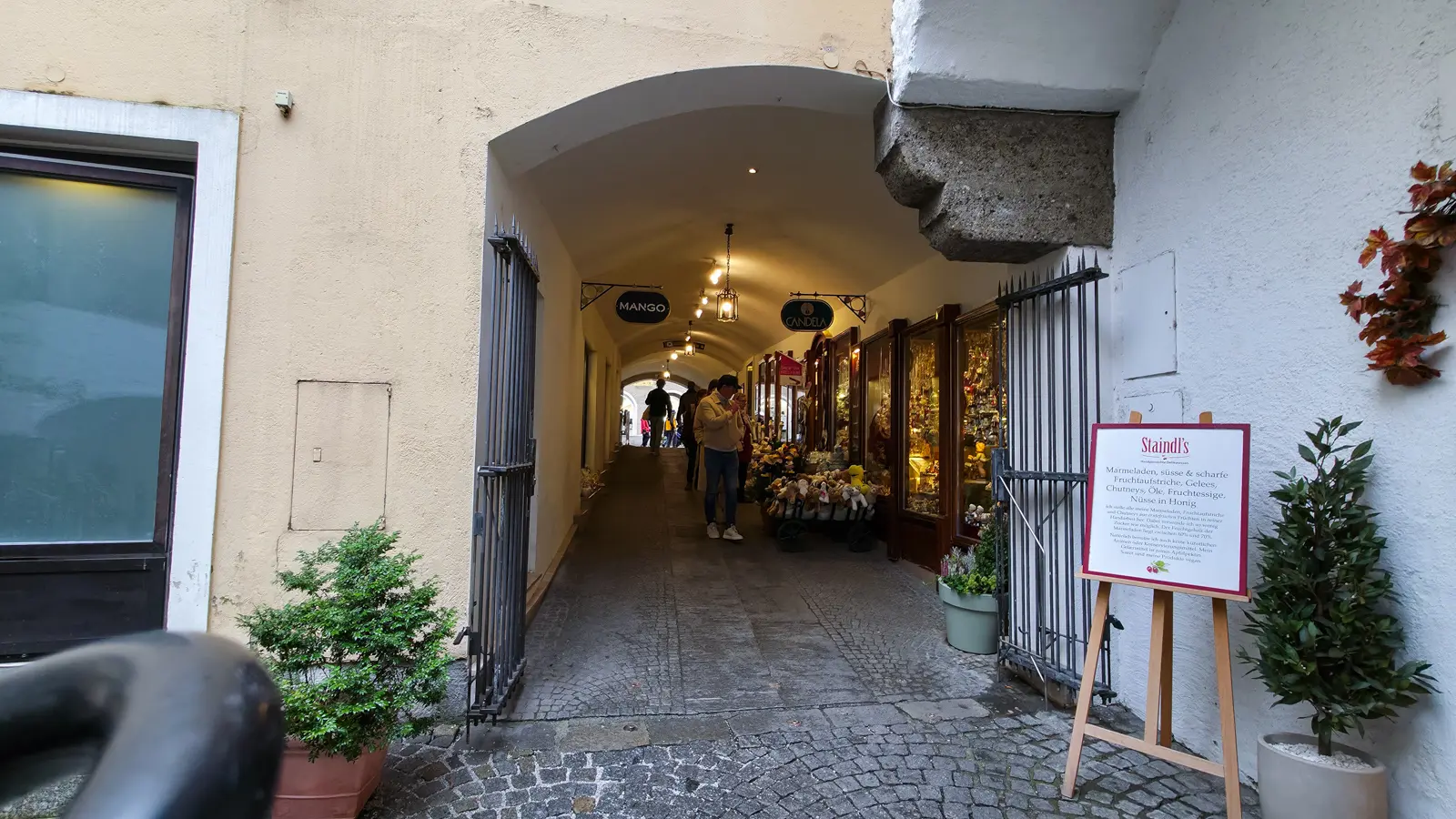
Yet the Old Town resists predictability. Hidden passageways, known as Durchhäuser, cut through buildings and connect parallel streets, creating unexpected routes and moments of discovery. These transitions slow movement and shift perspective, allowing the city to unfold in layers rather than all at once. And then, quite suddenly, the space opens. A narrow street gives way to the expansive clarity of Residenzplatz, where the sky becomes visible again and the architecture reorders itself around a central axis.
Nearby, Kapitelplatz introduces yet another variation, where contemporary elements like Sphaera stand in dialogue with centuries-old surroundings. This constant alternation between compression and openness creates a sense of movement that is both physical and perceptual, keeping the experience of the Old Town dynamic and engaging.
Detail: Craftsmanship and Texture
Beyond its structure, the Old Town reveals itself through detail – in the textures, materials, and craftsmanship that define its surfaces. The façades along streets like Getreidegasse are adorned with elaborate wrought iron guild signs, each one uniquely designed and often reflecting the history of the trade or business it represents. These signs extend outward into the street, creating a layered visual rhythm that draws the eye upward and outward.
Windows, doorways, and arcades introduce further variation. Stone frames, painted ornamentation, and subtle colour differences create a richness that becomes more apparent the longer you look. Courtyards hidden behind street-facing buildings offer quieter spaces, where the scale shifts and the atmosphere softens. Materials play a defining role. The use of local stone, including Untersberg marble, gives the city a cohesive visual identity, while weathering and time have added depth and variation to these surfaces. The Old Town is not static. It bears the marks of centuries of use, adaptation, and care.
Atmosphere: Sound, Light, and Rhythm
The Old Town is as much an atmospheric experience as it is a visual one. Sound carries differently here. Footsteps echo softly against stone, voices travel through narrow passages, and the ringing of church bells, particularly from the cathedral and surrounding churches, punctuates the day.
Light transforms the space continuously. In the morning, it filters gently through narrow streets, creating contrasts between shadow and illumination. At midday, the city feels more open and animated, while in the evening, the light softens, and the atmosphere becomes quieter and more reflective. Seasonal shifts deepen this transformation. In winter, the presence of the Salzburger Christkindlmarkt in squares like Residenzplatz and Domplatz introduces warmth, light, and sound, while in warmer months, the city feels more fluid, shaped by movement and open-air life.
A Cultural Layer: Music and Memory
Salzburg Old Town carries a cultural presence that extends far beyond its architecture. It is the birthplace of Wolfgang Amadeus Mozart, who was born on January 27, 1756, on the third floor of the Hagenauer House at Getreidegasse 9, where his family lived from 1747 to 1773. His early life unfolded along Getreidegasse, and his musical legacy continues to define the city’s identity. His presence is not confined to a single site, but felt throughout the Old Town: in concert halls, churches, and public spaces where his compositions are still performed. This continuity gives the city a living musical dimension, where past and present remain closely intertwined. Even beyond formal venues, the influence of Mozart lingers subtly, shaping the cultural atmosphere in ways that feel both visible and intangible.
The Old Town is also deeply embedded in cinematic memory. Scenes from The Sound of Music move through its streets and squares, capturing the natural rhythm of the city. What makes this connection enduring is that the city itself has not been altered for the film. Rather, the film drew from the qualities already present. The movement through open squares like Residenzplatz and the transitions between narrow streets and expansive spaces translate effortlessly to the screen. As a result, the cinematic experience feels less like an interpretation and more like an extension of the city itself.
Music, history, and storytelling intersect here in a way that feels organic, creating a layered narrative that continues to evolve. These cultural references do not exist in isolation, but overlap and reinforce one another, shaping how the Old Town is experienced and remembered. Whether encountered through a piece of music, a familiar film scene, or the atmosphere of the streets themselves, each layer adds depth to the experience. Over time, these impressions accumulate, turning the city into something that is not only seen, but felt and recalled long after the visit ends.
Spaces of Stillness
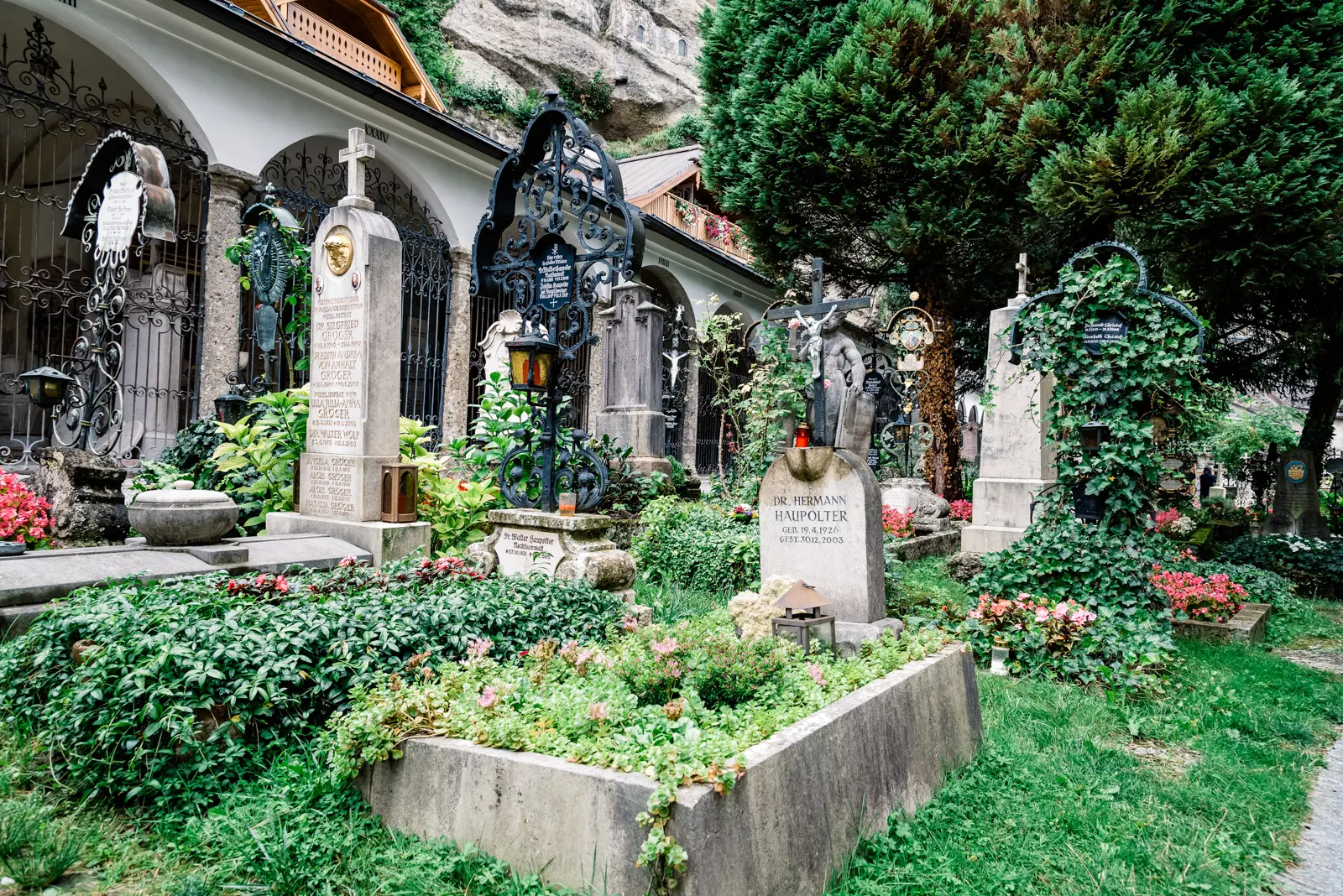
Amid the movement and activity, the Old Town offers moments of stillness. Just steps away from its busiest streets lies St. Peter’s Cemetery, where the atmosphere shifts dramatically. Surrounded by greenery and framed by the rock face of the Festungsberg, it introduces a sense of calm and reflection that contrasts with the surrounding urban rhythm. From here, the experience expands again: upward toward the catacombs carved into the rock, or outward along the Salzach River, where the relationship between city and landscape becomes more apparent. These transitions – between movement and stillness, enclosure and openness – give the Old Town its depth and complexity.
The Experience: Wandering Without Direction
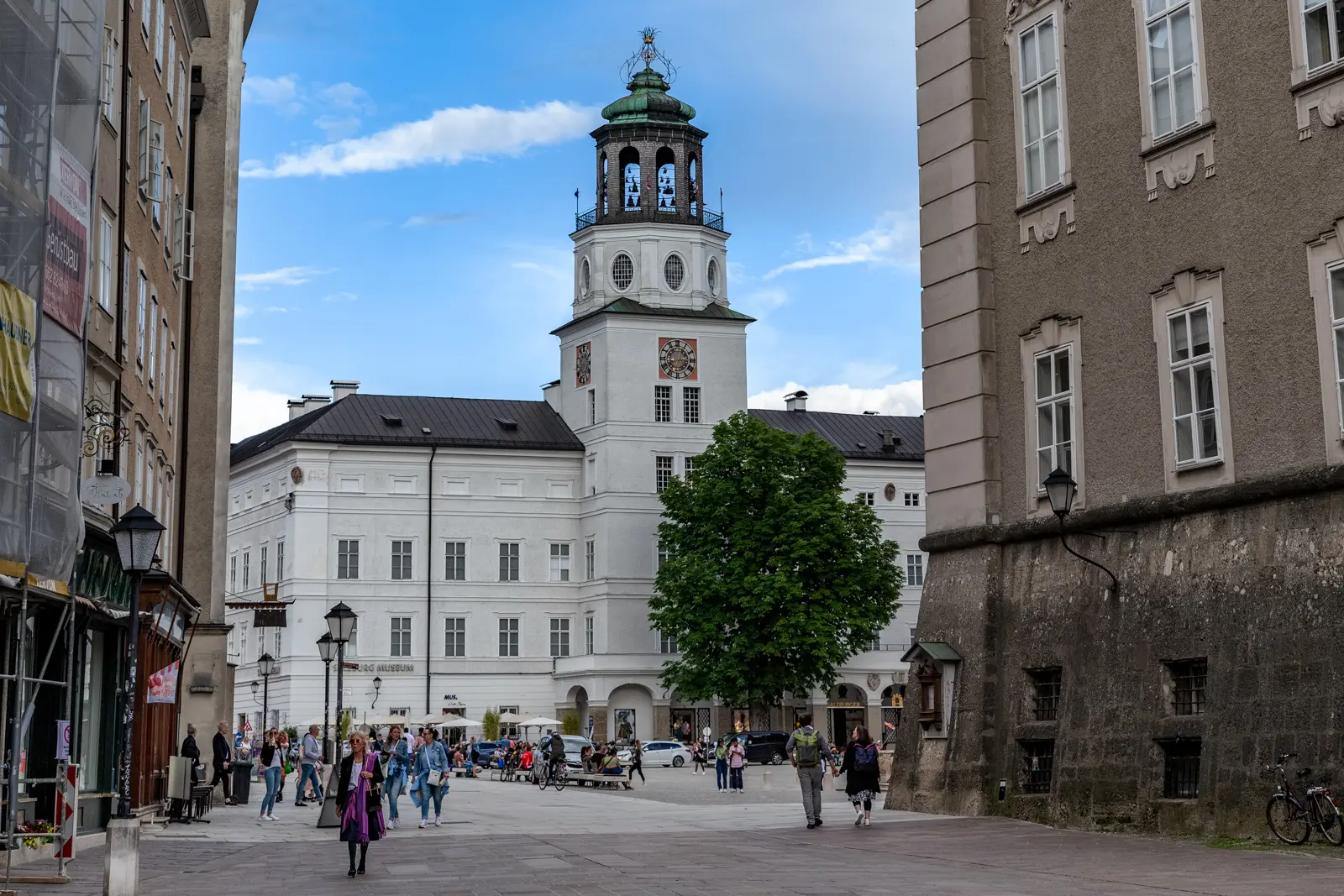
To experience Salzburg Old Town fully is to let go of a fixed plan, and I quickly realised that this is where the magic happens. The moment I stopped trying to “get somewhere”, the city began to unfold differently. I found myself following a street simply because it narrowed, drawn into a passageway without knowing where it would lead, pausing in a square like Residenzplatz just to take it all in. There’s a quiet joy in not rushing here, in allowing the rhythm of the Old Town to guide you instead.
Over time, these moments begin to accumulate in the most unexpected way. A façade catching the soft glow of late afternoon light, the sound of distant church bells echoing through the streets, the stillness of a hidden courtyard tucked just beyond a busy path, these are the impressions that stay with you. I found that the experience became less about what I was seeing, and more about how I was moving through it – slowly, curiously, and completely present. And in that shift, Salzburg revealed itself not as a place to visit, but as something to feel.
Bubbly Tips for Visiting
- Wander intentionally: Allow yourself to explore Salzburg Old Town without a strict itinerary – the city reveals itself gradually.
- Look upward: Many of the most beautiful details are above eye level, especially along Getreidegasse in Salzburg.
- Follow the rhythm: Notice how narrow streets open into squares like Residenzplatz and Domplatz.
- Visit at different times: Morning, afternoon, and evening each offer a distinct atmosphere in Salzburg’s Old Town.
- Balance movement with stillness: Pair busy streets with quieter spaces like St. Peter’s Cemetery or a walk along the Salzach River.
Final Thoughts
Salzburg Old Town is not defined by a single landmark, but by the way space unfolds over time. It is a place where history is not confined to monuments, but embedded in the relationships between streets, buildings, and the people who move through them.
In walking through it, you do not simply observe the city, you become part of its rhythm. And it is in that movement, between one space and the next, that Salzburg reveals itself most fully.
Do you prefer wandering through historic districts like this, or do you gravitate toward specific landmarks when you travel? I’d love to read your thoughts in the comments section below.
Happy travels!

🌟 Everything You Need to Plan Your Dream Trip in 2026
- 🌟 Luxury Hotels - Find premium stays with Booking.com & Hotels.com
- 🏡 Vacation Rentals - Discover unique properties on VRBO
- 🏞️ Guided Tours - Explore with Viator or GetYourGuide
- 🎫 Attraction Tickets - Skip the lines with Tiqets
- 🚢 Ocean Cruises - Set sail with Cruise Direct
- 📱 International SIMs - Stay connected with Saily
- 🚗 Car Rentals - Budget-friendly options from Discover Cars
- 🌐 Secure VPNs - Browse safely with NordVPN
- 💶 Currency Exchange - Best rates with Wise
- 🗣️ Learn Languages - Master the local language with Babbel and Rosetta Stone