
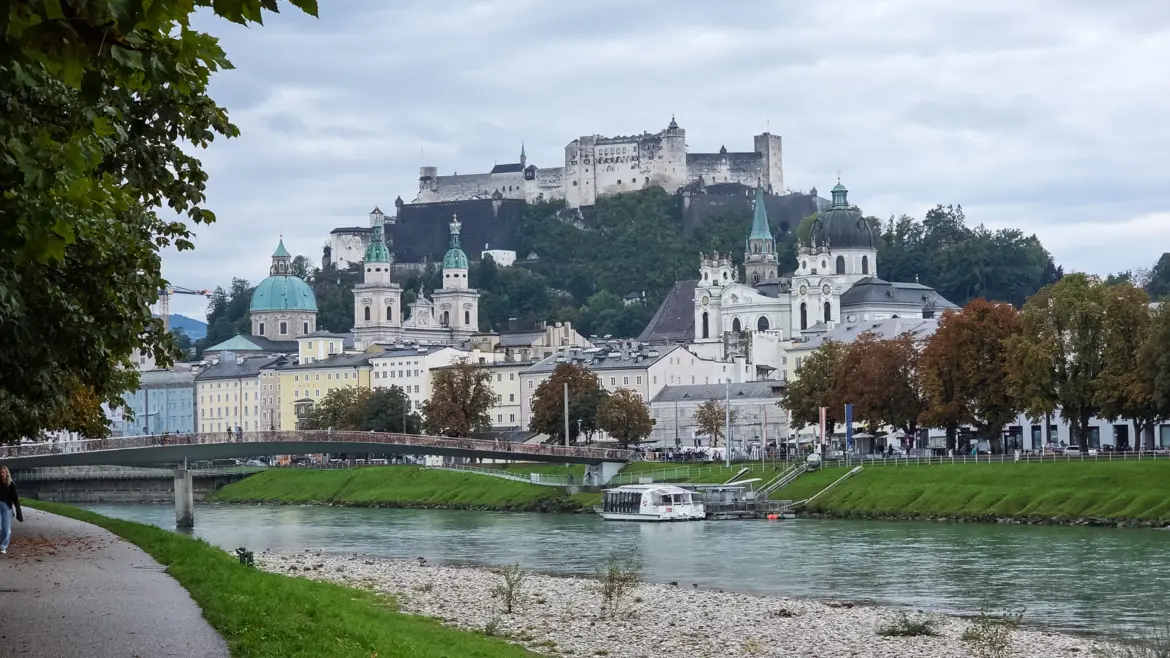
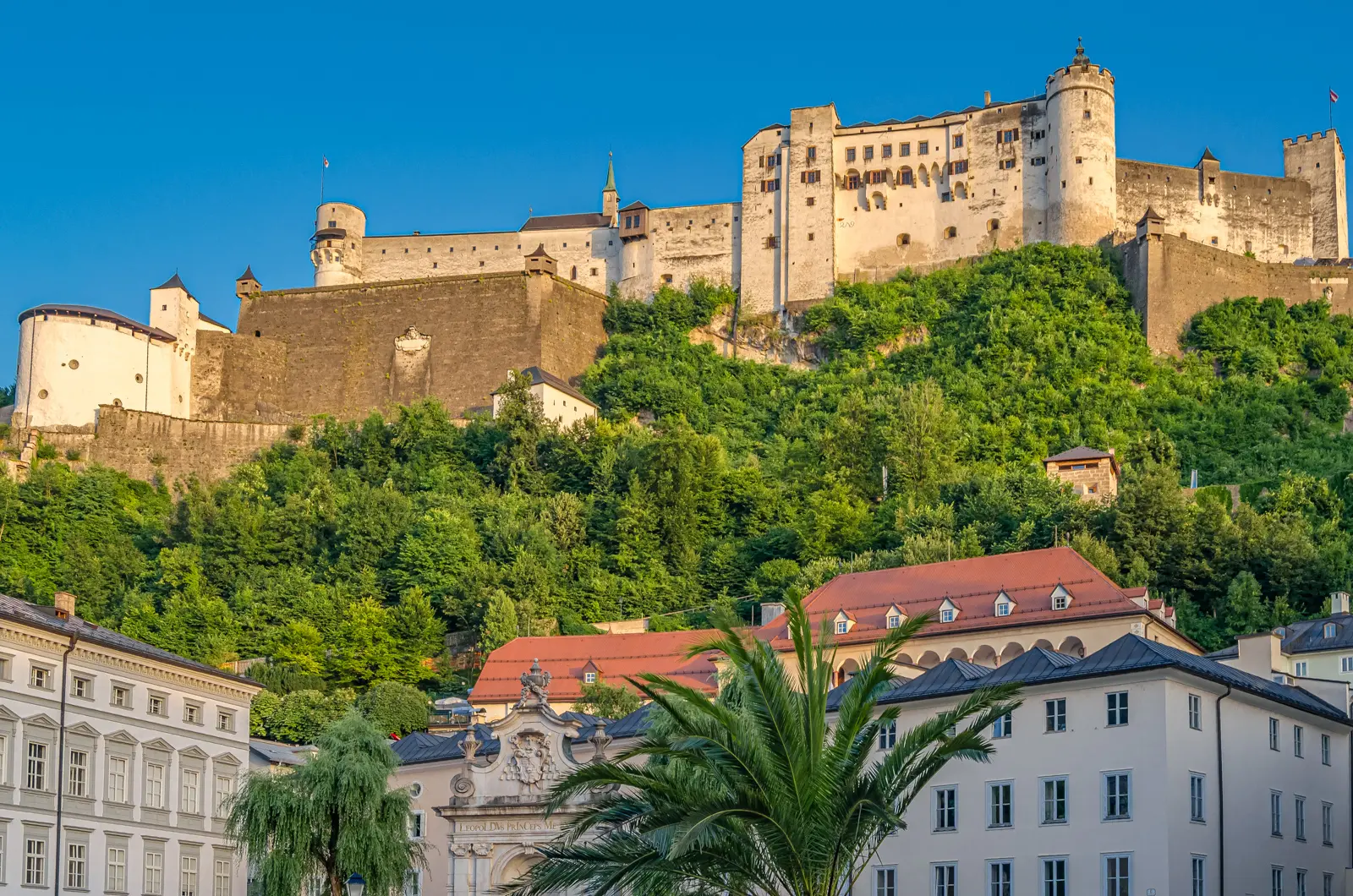
Some places define a city quietly, almost without effort. Hohensalzburg Fortress is one of them. Perched high above Salzburg, it is not something you seek out, it is something that is always there, shaping your sense of place long before you step inside its walls. From nearly every street, every square, and every bridge, the fortress is visible, its silhouette anchoring the skyline and giving the city a sense of orientation and permanence.
From the streets below, the fortress feels distant yet constant, a presence that is both protective and watchful. Its pale stone surfaces shift subtly with the light, sometimes blending into the sky, sometimes standing in sharp contrast against it. But once you begin the ascent, that relationship changes. What once felt like a backdrop becomes an experience, and what seemed fixed from afar reveals itself as layered, expansive, and deeply connected to everything around it. The act of approaching it transforms your understanding of scale, turning something monumental into something navigable, almost personal.
Hohensalzburg Fortress at a Glanc
🏰 One of Europe’s largest medieval fortresses · Sitting atop the Festungsberg hill at about 506 metres, Hohensalzburg is among the largest and best-preserved medieval fortifications in Central Europe.
⏳ Founded in 1077 · Built by Archbishop Gebhard von Helfenstein during the Investiture Controversy, when Salzburg sided with Pope Gregory VII against Emperor Henry IV.
🛡️ Never taken by force · The only siege in the fortress’s history came during the German Peasants’ War of 1525, when rebels failed to breach the walls. Surrendered peacefully to French troops in 1800.
👑 Keutschach’s masterpiece · The current appearance largely dates from Prince-Archbishop Leonhard von Keutschach (1495–1519), who tripled the fortress size and commissioned the Golden Hall and Golden Chamber state apartments.
🎛️ The Salzburg Bull · A mechanical pipe organ built in 1502 by Keutschach and housed in the Krautturm tower. Plays daily at 7 AM, 11 AM, and 6 PM — one of the oldest surviving instruments of its kind.
🚠 Two funiculars, five centuries apart · The medieval Reisszug (first documented in 1515) still hauls freight up the north face; the modern Festungsbahn, which carries visitors, was built in 1892.
🎨 1501 tile stove · The Golden Chamber contains a remarkable ceramic tile stove from 1501, still intact after five centuries.
A Fortress Through Time
The origins of Hohensalzburg Fortress date back to 1077, when Archbishop Gebhard von Helfenstein commissioned its construction during the Investiture Controversy, a period marked by tension between church and imperial authority within the Holy Roman Empire. What began as a strategic stronghold gradually expanded over centuries into a vast fortified complex, reflecting both the evolving needs of defence and the growing ambitions of Salzburg’s prince-archbishops.
Each phase of construction introduced new elements – thicker walls, additional towers, fortified gates, and expanded courtyards – resulting in a layered architectural composition that reveals its history through its structure. The fortress was continuously adapted rather than replaced, which is why it feels cumulative rather than singular. Its development mirrors broader shifts in medieval and early modern Europe, where power was expressed through both protection and permanence.
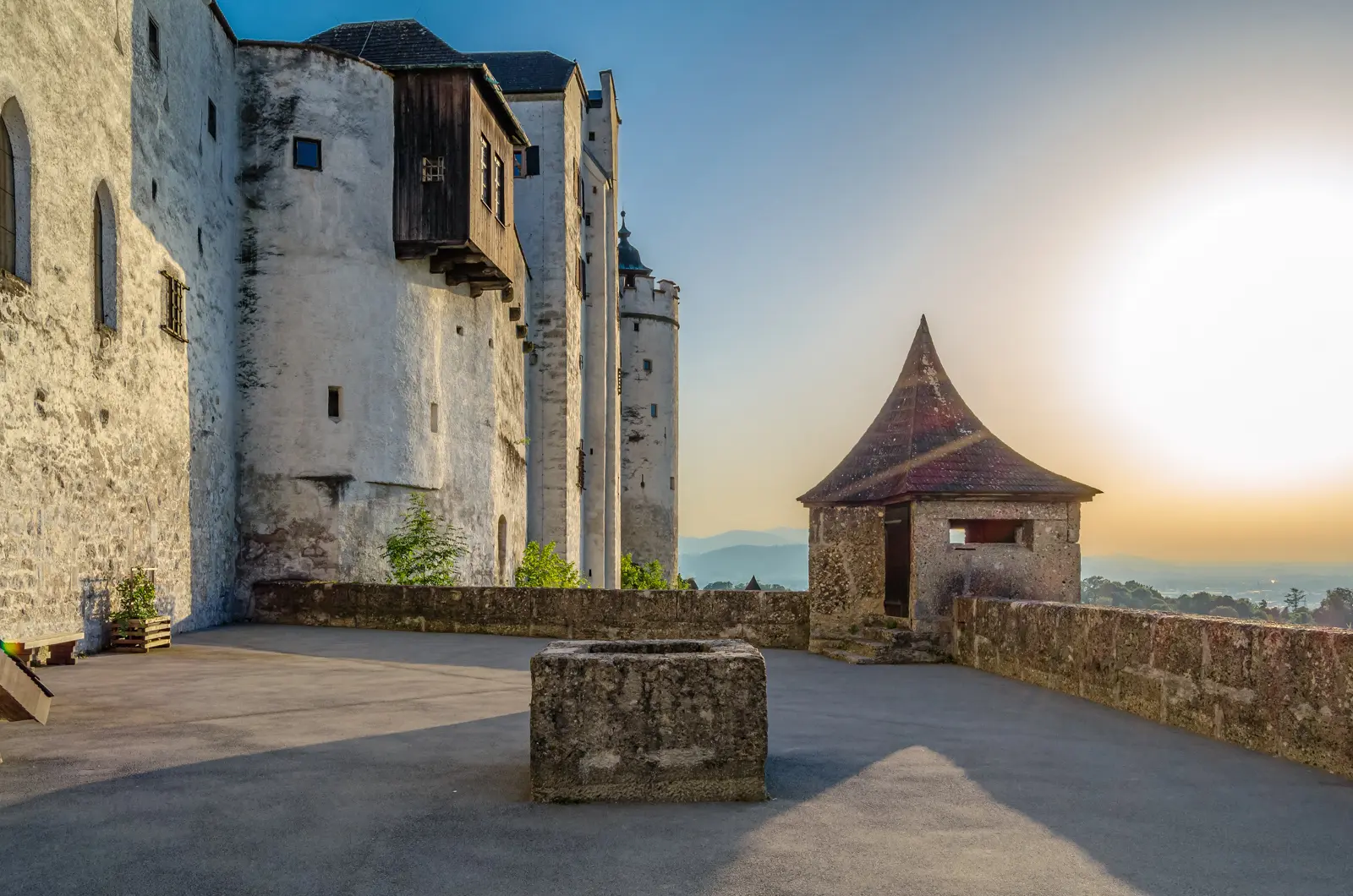
What makes the fortress particularly remarkable is not only its scale, but its endurance. Its resilience was tested during the German Peasants’ War in 1525, when rebels laid siege to the fortress in an attempt to oust Prince-Archbishop Matthäus Lang, yet they failed to breach its walls. Despite this and other periods of conflict and unrest, it was never captured by invading forces, a testament to both its strategic positioning atop Festungsberg and the strength of its fortifications. Over time, its role evolved beyond defence. It became a residence, a seat of authority, and later a symbol of the city itself. Today, it stands as one of the largest and best-preserved medieval fortresses in Europe, carrying its past forward in a way that feels both tangible and continuous.
The Views: A City Revealed
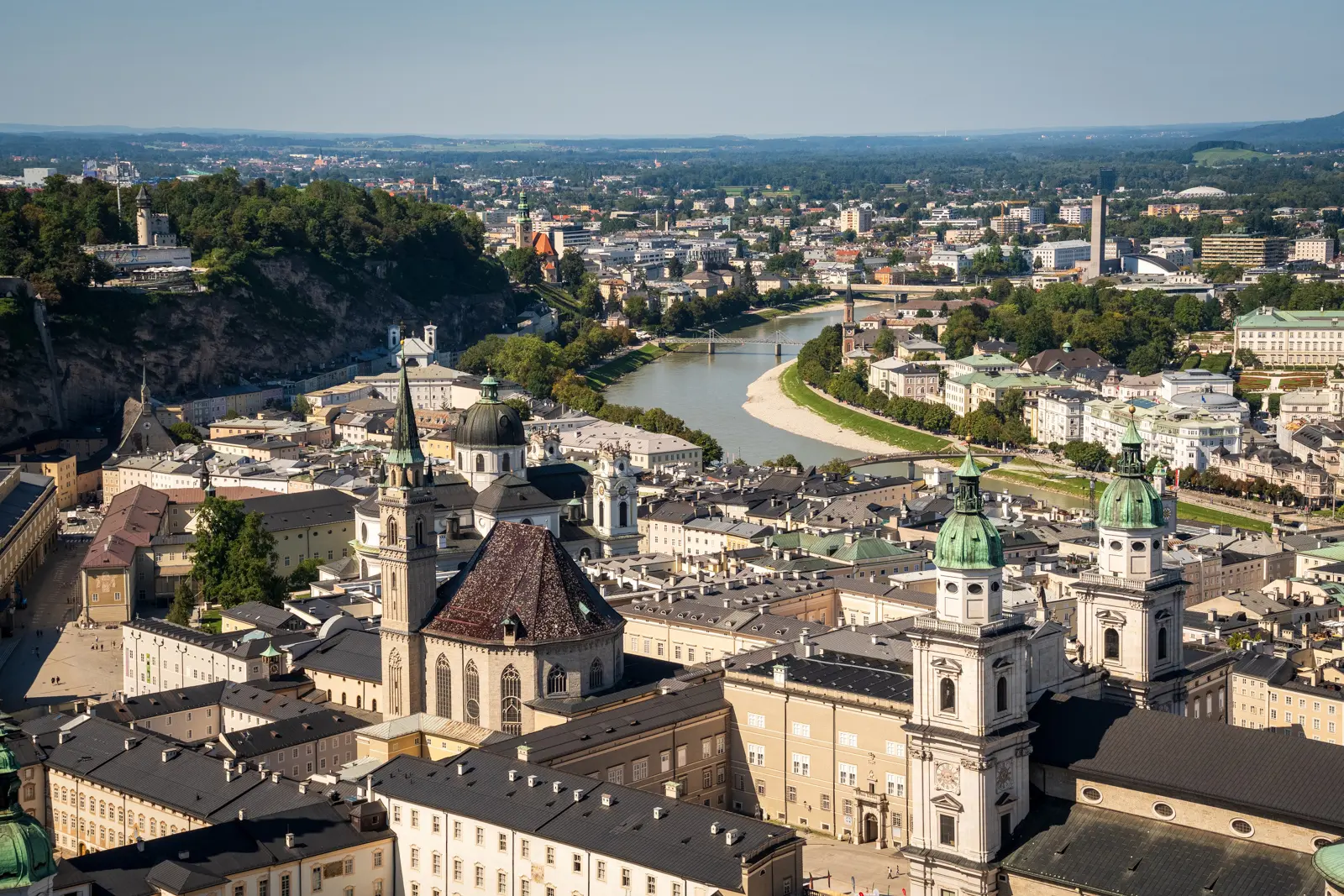
If the fortress defines Salzburg from below, it reveals it from above. From its terraces, towers, and defensive walls, the city unfolds in a way that is both expansive and legible. The rooftops of the Old Town form a dense, textured pattern, their tones shifting between warm earth hues and muted reds. The Salzach River moves quietly through the landscape, its path creating a natural division that organizes the city into distinct yet connected parts.
Beyond the urban fabric, the surrounding mountains rise with a quiet presence, framing the city and extending the view into the distance. This broader landscape provides a sense of scale that is not immediately apparent from within the city itself. From above, Salzburg feels both contained and expansive, defined by clear boundaries yet open to its surroundings.
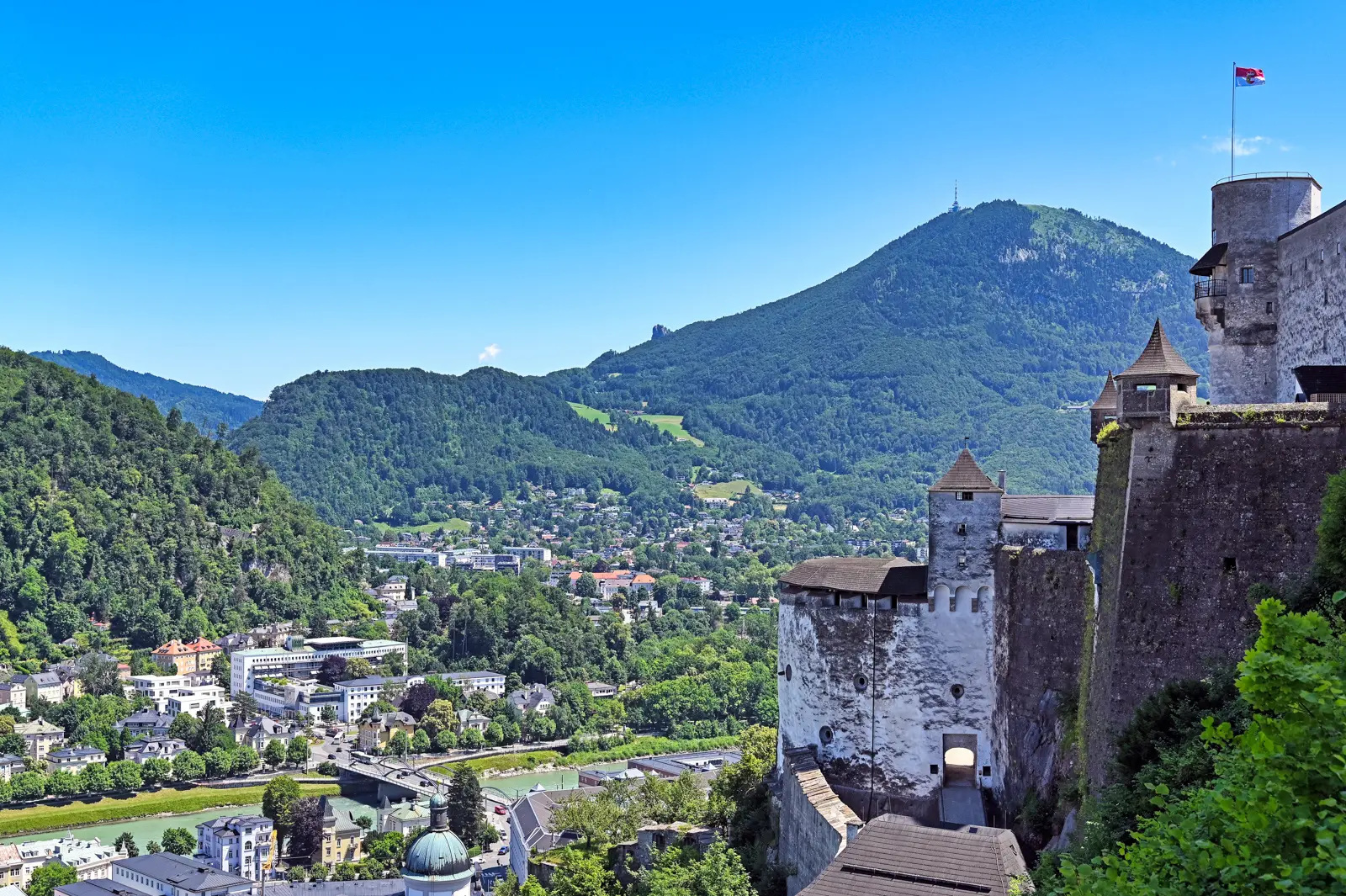
What becomes most striking is the relationship between elements. Landmarks you have experienced at ground level – Mirabell Palace, Mirabell Gardens, and the winding streets of the Old Town – are recontextualized. They are no longer isolated destinations, but part of a larger composition where geometry, geography, and movement align. The city becomes readable in a different way, less about individual moments and more about the connections between them.
The Ascent: A Shift in Perspective
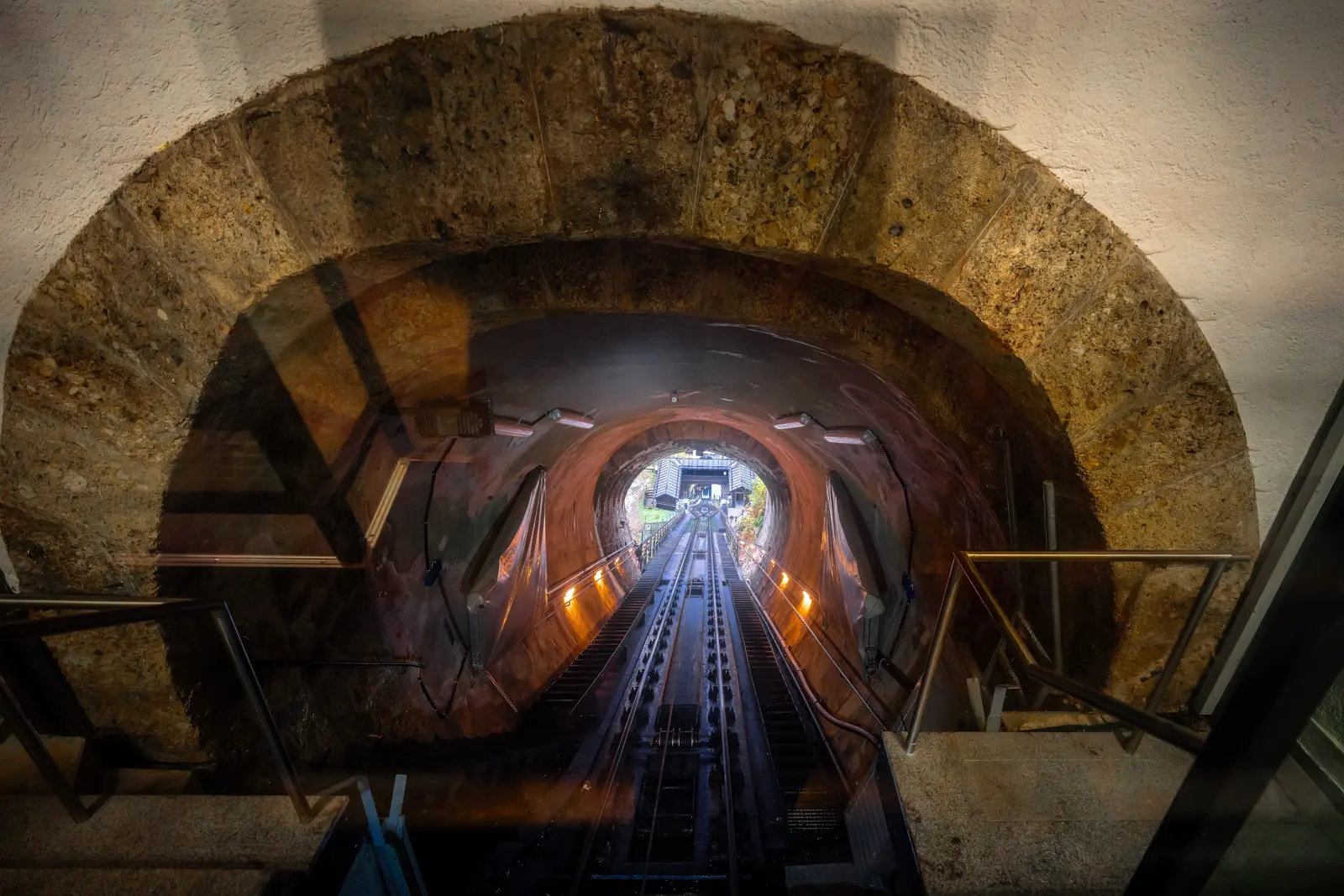
Reaching Hohensalzburg Fortress is an experience in itself, one that gradually reorients your relationship with the city. The path upward, whether taken on foot or by funicular, introduces a deliberate shift in pace and perspective. Walking allows you to experience this transition more gradually, moving through shaded paths, sloped streets, and fortified passageways that reveal glimpses of the city below at unexpected intervals.
The funicular offers a different experience – more direct, yet still marked by a sense of progression. What is easy to overlook is that this mode of ascent has a surprisingly deep history: a predecessor known as the Reisszug, first documented in 1515, making it one of the earliest known funicular systems in the world, originally used to transport supplies and freight to the fortress rather than visitors. As the modern funicular ascends, the city recedes and the fortress grows in presence, creating a visual transition that mirrors the physical one. This movement between levels is subtle but meaningful. The sounds of the city soften, the density of the streets gives way to openness, and the focus shifts from immersion to observation.
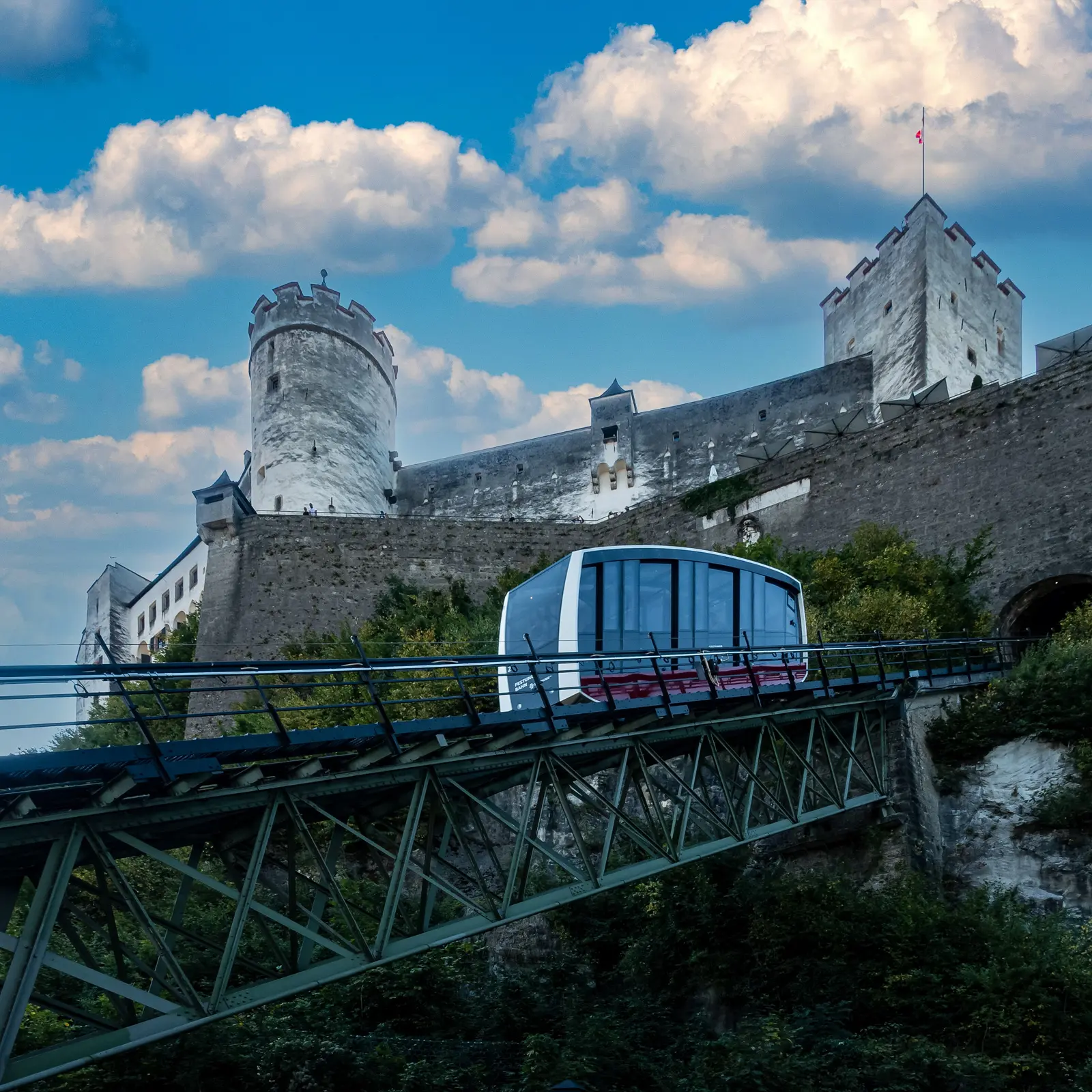
By the time you reach the entrance, there is a clear sense that you have moved not only in space, but in perspective. The fortress is no longer something you look at; it is something you move through, engage with, and begin to understand from within.
Inside the Fortress: Space and Structure
Within the walls of Hohensalzburg Fortress, the experience becomes more layered and exploratory. What appears imposing from a distance reveals a network of spaces that vary in scale and function. Courtyards open unexpectedly, offering moments of light and openness, while corridors and passageways create a sense of continuity between different areas of the fortress.
The architecture reflects its long history of adaptation. Stone surfaces show subtle variations in texture and colour, indicating different phases of construction. Defensive features – thick walls, narrow openings, elevated walkways – coexist with more refined elements introduced in later periods. This combination creates a space that feels both functional and expressive, shaped by necessity but enriched over time.
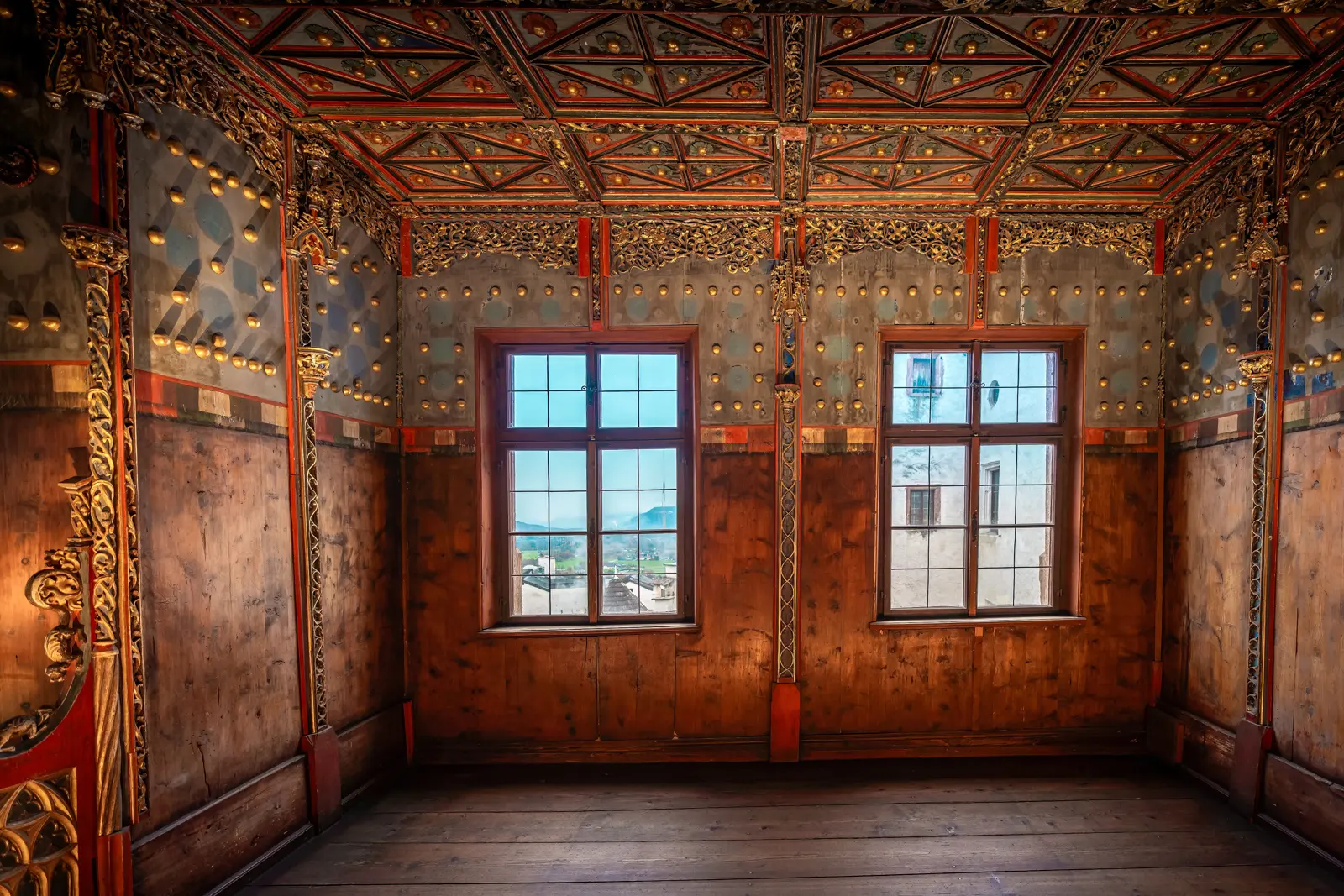
The State Rooms provide a striking contrast to the more austere areas of the fortress. The Golden Hall and the Golden Chamber are the most celebrated of these spaces, commissioned by Archbishop Leonhard von Keutschach around 1500 and featuring intricate late Gothic wood carvings, gilded decorations, and a beautifully crafted ceramic tile stove from 1501, widely regarded as a remarkable example of its kind. Richly composed and carefully preserved, these rooms offer insight into the ceremonial and residential aspects of life within the fortress, a reminder that the space was not solely defined by defence, but also by authority, culture, and representation.
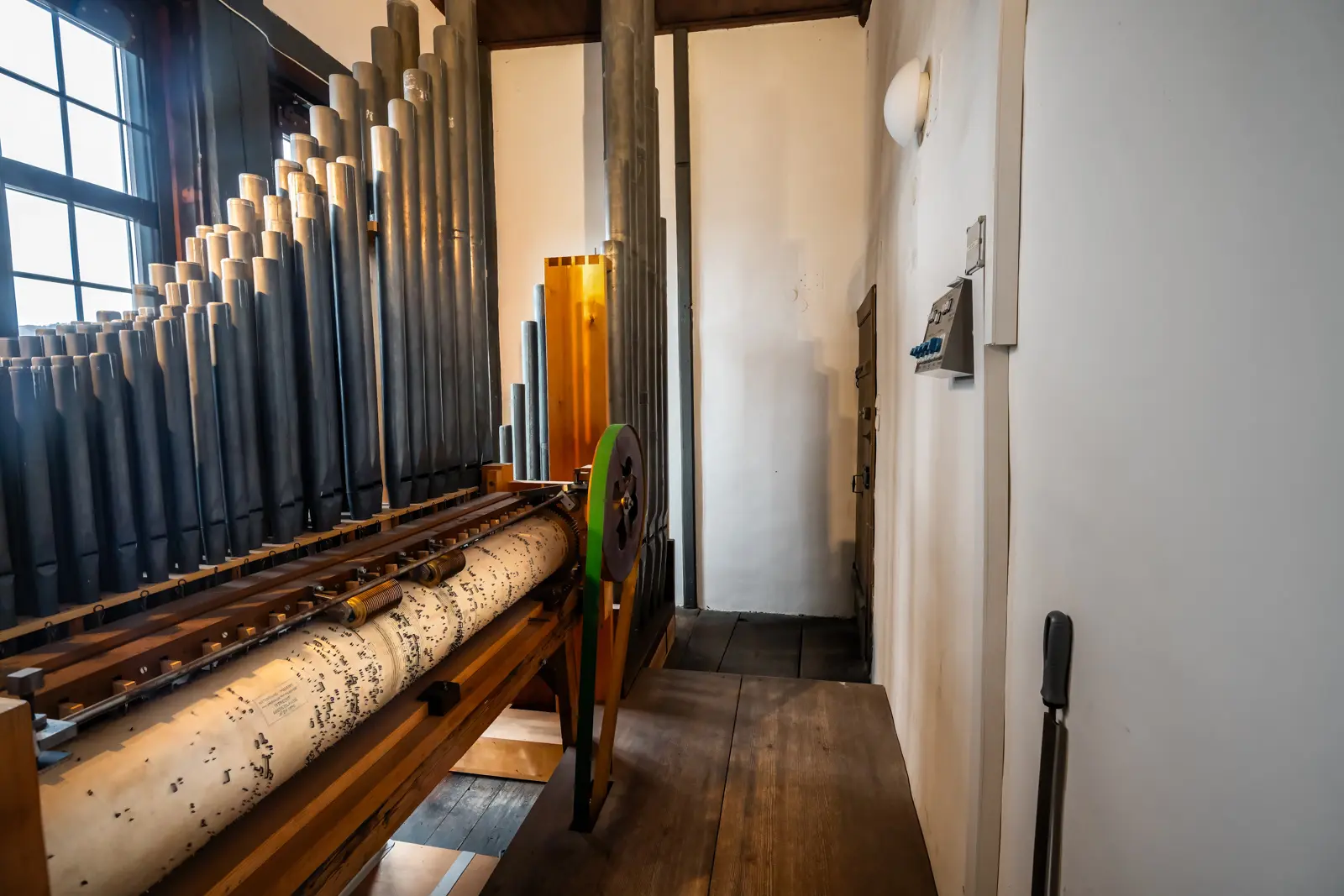
Equally memorable, though in a very different way, is the Salzburg Bull, a mechanical organ built in 1502 and housed in the Krautturm tower. One of the oldest surviving instruments of its kind, it plays daily at set times throughout the day, its sound carrying across the rooftops of the city below. Moving between these different environments, the experience shifts continuously, revealing new aspects of the fortress with each step.
The Experience: Stillness, Scale, and Presence
What defines the experience of Hohensalzburg Fortress is not a single highlight, but a gradual accumulation of impressions. There is a distinct sense of stillness that contrasts with the movement of the city below, a quiet that allows you to engage more fully with the space and the view. The scale of the fortress, combined with its elevated position, creates a sense of distance that is both physical and perceptual. You are removed from the immediacy of the streets, yet more aware of the city as a whole. This dual perspective, being both within the fortress and above the city, shapes the experience in a way that feels expansive yet grounded.
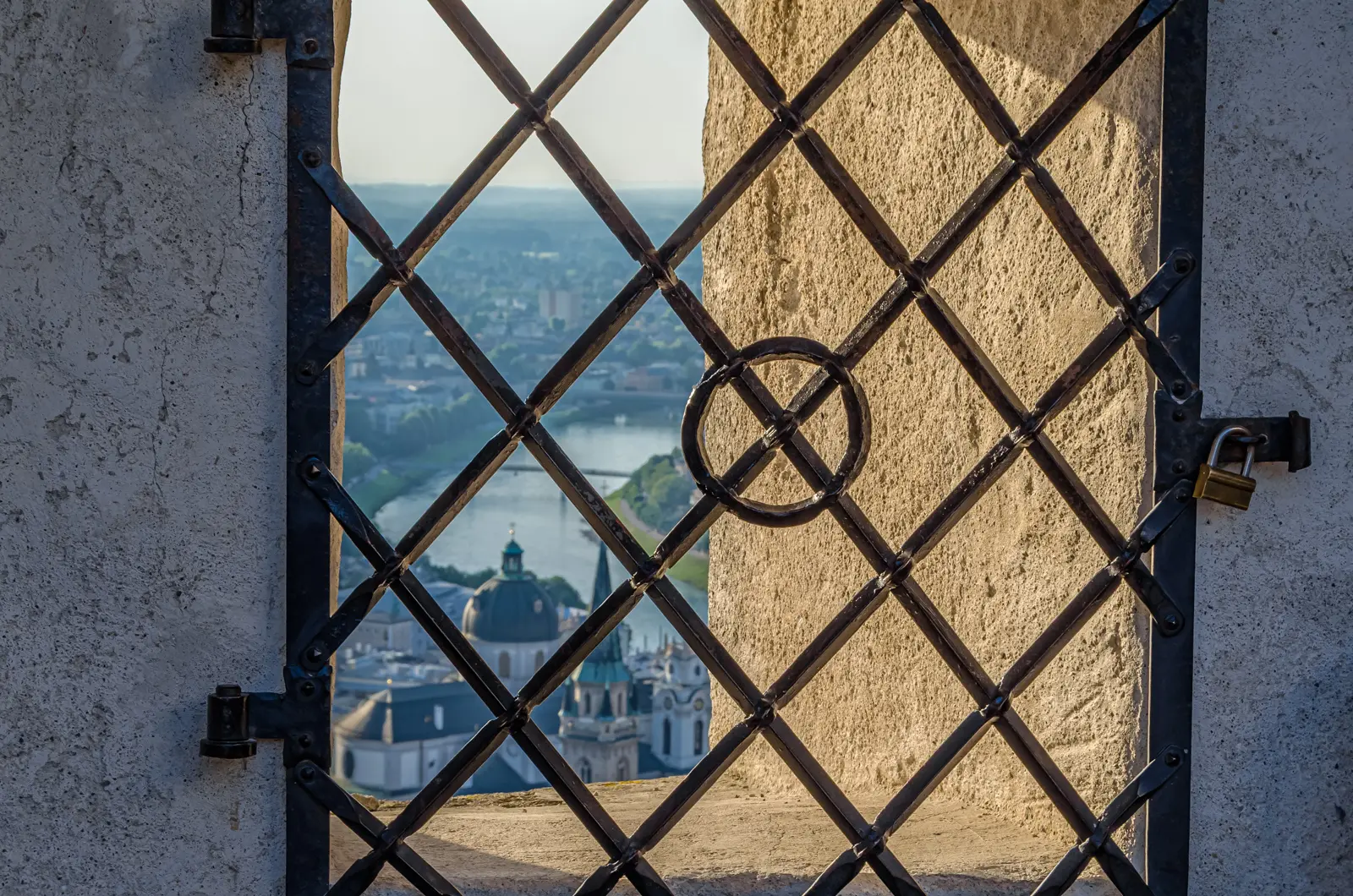
Moments of pause become central. Standing along the walls, looking out across the rooftops and toward the mountains, there is a shift from observation to reflection. The fortress becomes less about movement and more about presence, a place where time feels slightly extended and where the relationship between past and present becomes more perceptible. It is this quiet, sustained awareness that defines the experience and allows it to linger long after the visit.
Bubbly Tips for Visiting Hohensalzburg Fortress
- Location: Situated atop Festungsberg hill overlooking Salzburg, visible from nearly every part of the city.
- What to expect: One of the largest and best-preserved medieval fortresses in Europe, offering panoramic views, historic interiors, and expansive open spaces.
- Best time to visit Hohensalzburg Fortress Salzburg: Early morning or late afternoon for softer light, fewer crowds, and a more contemplative atmosphere.
- Don’t miss: The panoramic viewpoints, fortress courtyards, defensive walls, and the State Rooms.
- Getting there: Accessible via a scenic uphill walk or by funicular from the Old Town, both offering distinct experiences.
- Time to explore: Plan for at least 2 to 3 hours to fully experience both the views and the interior spaces at a comfortable pace.
- Pair your visit: Combine with a walk through Salzburg’s Old Town and nearby landmarks to connect the elevated perspective with ground-level experience.
Final Thoughts
Hohensalzburg Fortress is more than a landmark, it is a perspective. It changes the way you see the city, not by adding new elements, but by revealing the relationships between those already present. From above, Salzburg becomes something more than a collection of streets and buildings; it becomes a composition, shaped by history, geography, and time.
What stays with you is not only the view, but the shift in awareness that comes with it. The realization that a city can be experienced in layers, and that understanding often comes not from moving through it, but from stepping back and seeing it as a whole. In this way, the fortress offers something both simple and profound, a reminder that perspective has the power to transform experience.
Would you take the walk up or the funicular to experience it? I’d love to hear your thoughts.
Happy travels!

🌟 Everything You Need to Plan Your Dream Trip in 2026
- 🌟 Luxury Hotels - Find premium stays with Booking.com & Hotels.com
- 🏡 Vacation Rentals - Discover unique properties on VRBO
- 🏞️ Guided Tours - Explore with Viator or GetYourGuide
- 🎫 Attraction Tickets - Skip the lines with Tiqets
- 🚢 Ocean Cruises - Set sail with Cruise Direct
- 📱 International SIMs - Stay connected with Saily
- 🚗 Car Rentals - Budget-friendly options from Discover Cars
- 🌐 Secure VPNs - Browse safely with NordVPN
- 💶 Currency Exchange - Best rates with Wise
- 🗣️ Learn Languages - Master the local language with Babbel and Rosetta Stone