
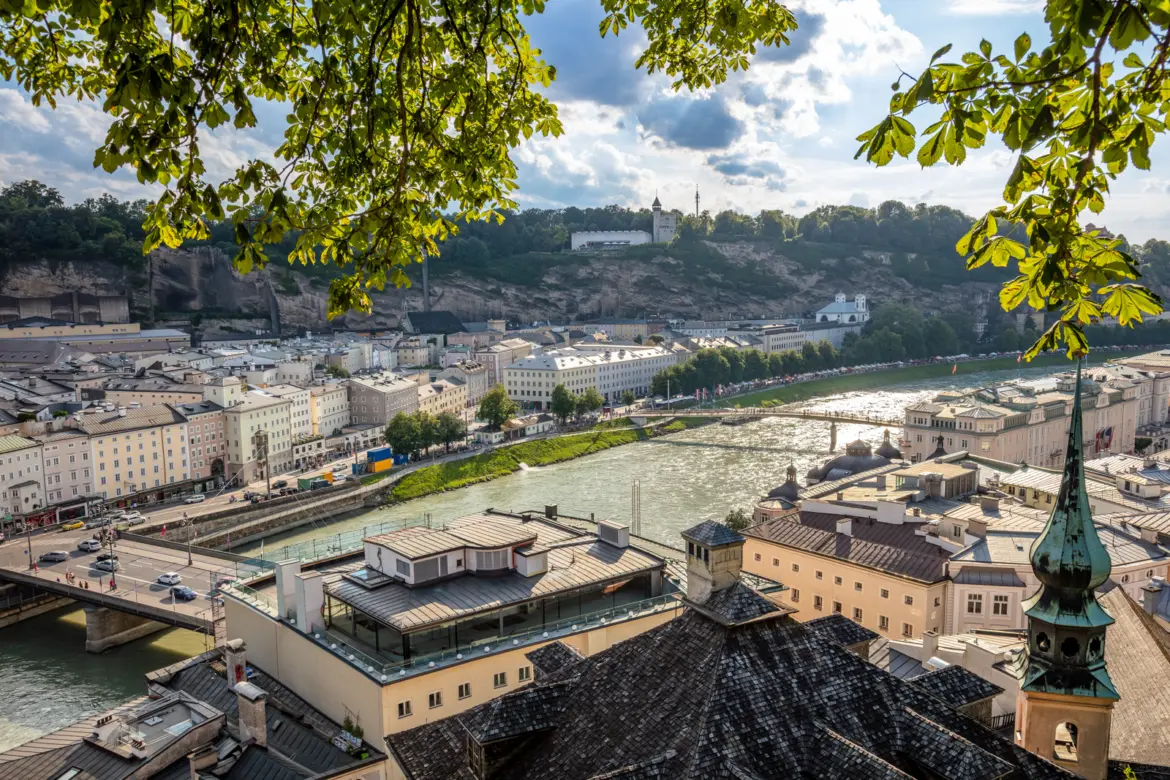
There are elements of a city that define it quietly, not through landmarks or monuments, but through presence. In Salzburg, the Salzach River is one of them. It does not demand attention, yet it shapes how the city is seen, experienced, and remembered. Its presence is constant, appearing and reappearing as you move through different parts of the city, offering glimpses of openness between moments of architectural density.
Flowing between the Old Town and the newer districts, the river creates both a boundary and a connection. It introduces space into the urban landscape, allowing architecture, light, and movement to unfold with greater clarity. What might otherwise feel dense becomes balanced, framed by the openness of water and sky. This interplay between built form and natural element gives Salzburg a rhythm that feels measured rather than crowded, where transitions between spaces are gradual and intentional.
The Salzach River at a glance
🏞️ The river · 227 km long, originating in the Kitzbühel Alps near Krimml. It is a right tributary of the Inn, which in turn feeds the Danube at Passau. Its turquoise daytime colour comes from suspended glacial silt.
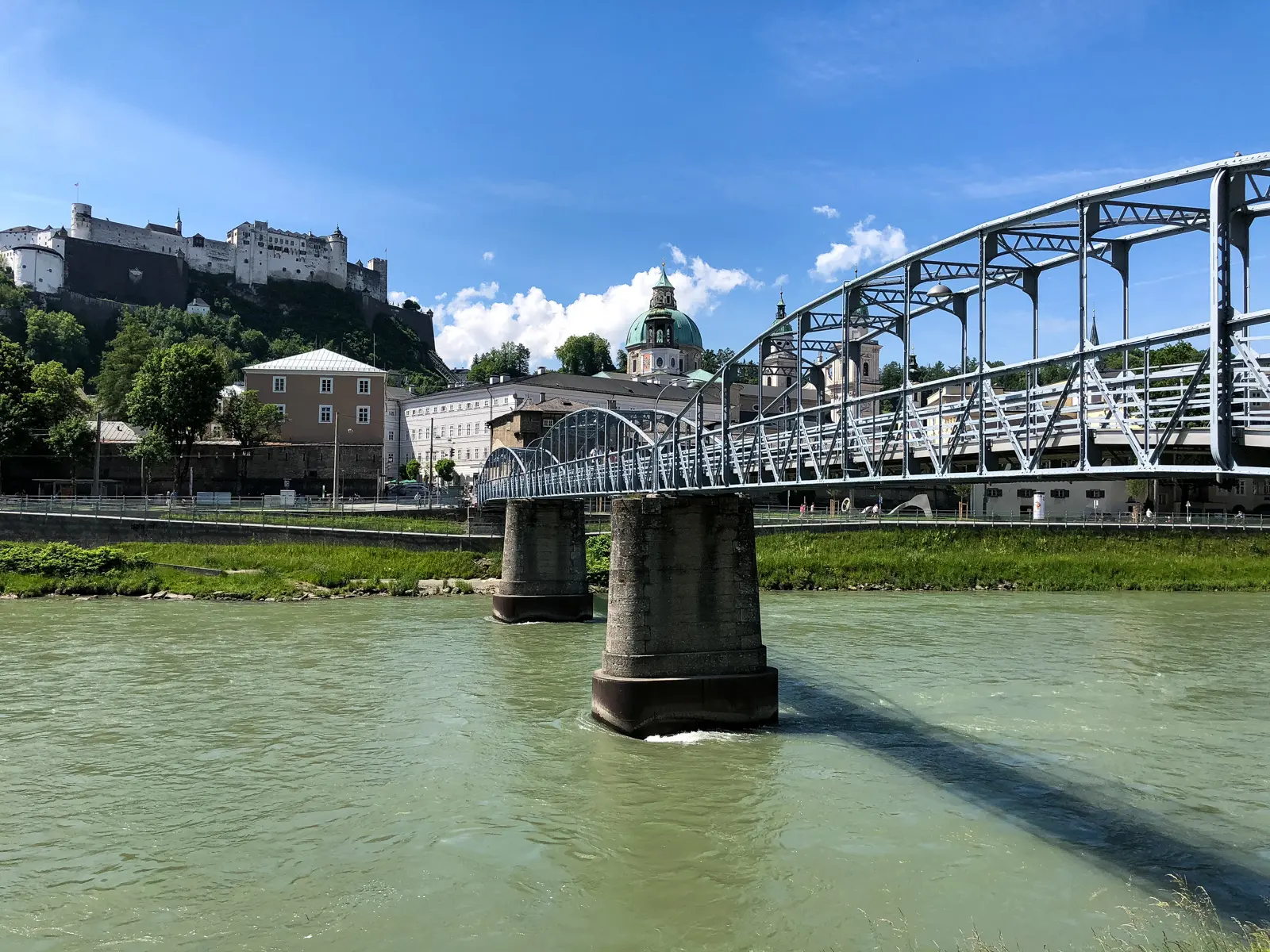
🌉 Mozartsteg · 1903 Jugendstil pedestrian bridge, originally a private toll bridge funded by café owner Georg Krimml. Featured briefly in The Sound of Music.
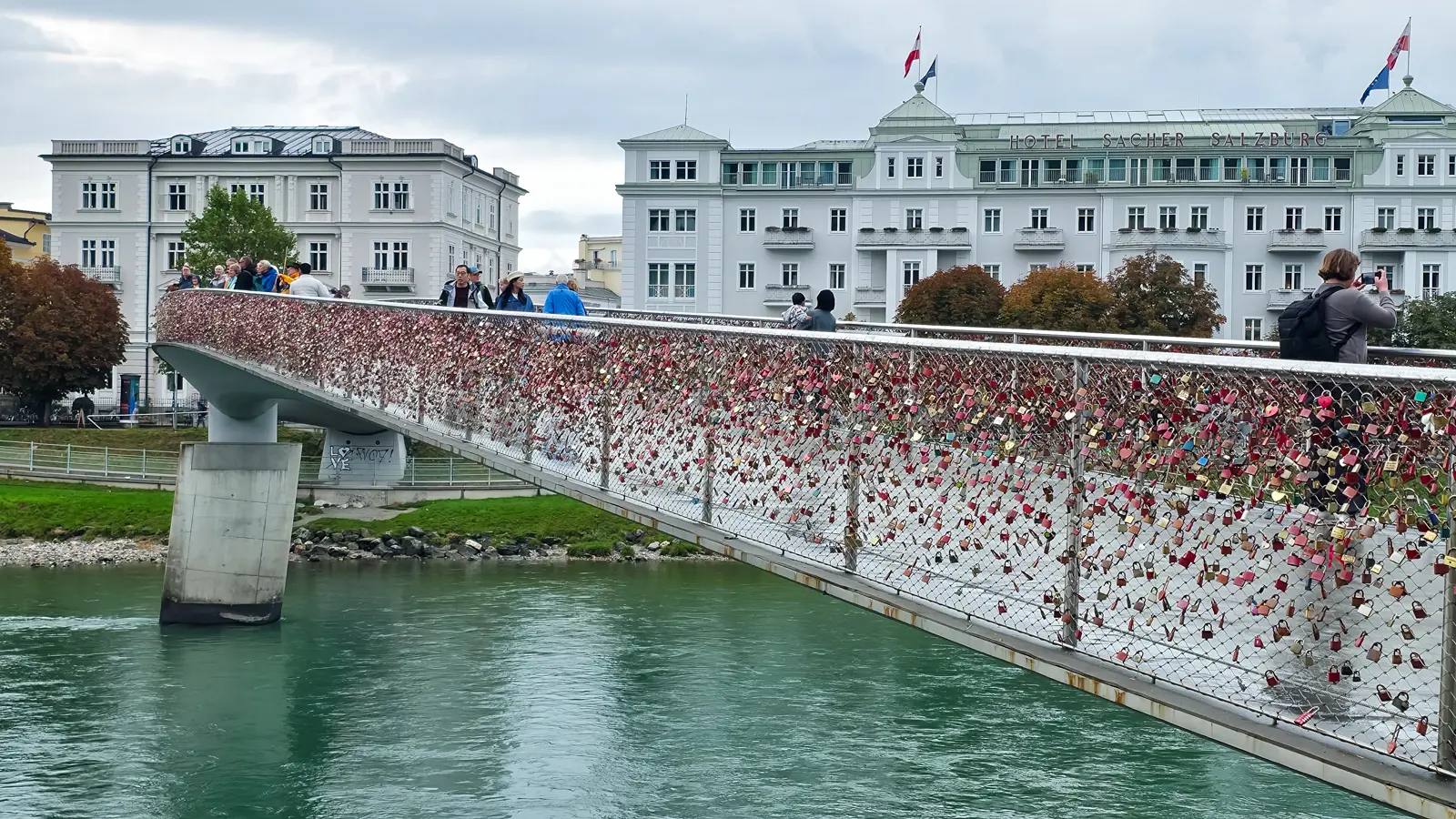
💕 Makartsteg (Marko-Feingold-Steg) · The current steel span opened in 2001 and is the third iteration on the site. The love-lock tradition took hold around 2011. Officially renamed in 2019 after Austria’s oldest Holocaust survivor.
🌅 Best viewpoints · Looking south from Makartsteg for the fortress-and-Old-Town panorama; looking north from Mozartsteg for the softer, intimate composition along the Rudolfskai.
☀️ Best light · Early morning for soft diffused reflections; evening blue hour (~20 minutes after sunset) for the deepest layered mirror effects on the water.
🚶 Riverside path · The left-bank and right-bank paths form part of the 327 km Tauernradweg cycle route from Krimml to Passau — Salzburg’s stretch is equally pleasant on foot.
A River That Shapes the City
The Salzach River runs through the heart of Salzburg, defining its geography in a way that feels both practical and poetic. On one side, the historic Old Town rises with its Baroque façades, church domes, and narrow streets, where the layering of centuries is visible in stone and structure. On the other, the city expands more openly, with wider avenues and a lighter architectural rhythm that reflects later periods of development. This division is not rigid. Instead, it creates a dialogue between two different urban identities, each complementing the other. The river becomes the space where these identities meet, allowing for a visual and spatial contrast that enriches the experience of moving through the city.
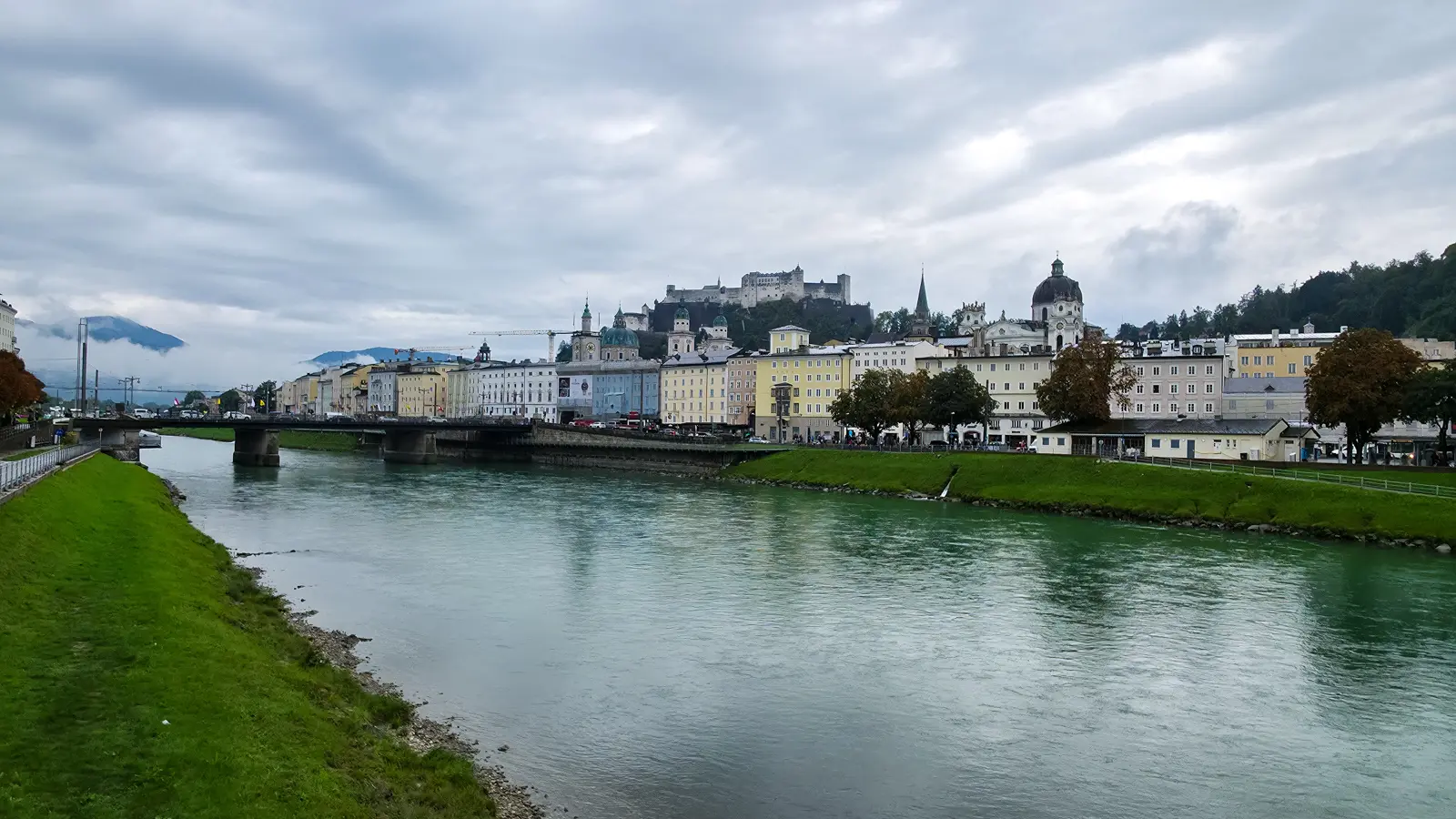
Bridges punctuate this connection, creating moments where movement slows and perspective shifts. Crossing the river is less about reaching a destination and more about pausing within the transition, observing how the city aligns, how distances compress or expand, and how the skyline reveals itself in layers.
Bridges and Perspective
Among the crossings, Mozartsteg offers one of the river’s most intimate, pedestrian-focused experiences. Built in 1903 in a light Jugendstil style, its narrow iron span naturally slows movement, encouraging people to pause and take in the long, uninterrupted views along the Salzach River. From its central position, the alignment of Old Town façades, the rhythm of rooftops, and the steady presence of the fortress above form a composition that feels both deliberately framed and organically unfolding. It is also a subtle cinematic reference point, appearing briefly in The Sound of Music, where everyday movement becomes part of the film’s visual rhythm. The bridge reveals Salzburg at a human scale: quiet, balanced, and closely tied to the river’s flow.
By contrast, Makartsteg (officially renamed Marko-Feingold-Steg in 2019) introduces a more contemporary and expressive layer to the river landscape. Its sleek, modern structure has become a canvas for thousands of love locks, each one a small personal gesture that collectively creates a dense, shimmering texture along the railings. The visual weight of these accumulated tokens stands in subtle tension with the bridge’s engineered lightness and the constant movement of the water below. It is a place where sentiment, design, and the river’s dynamism intersect.
Together, these bridges function not only as connectors but as elevated viewing platforms. They open Salzburg outward, offering perspectives that streets and riverbanks cannot, shifting the city into a series of framed vistas where architecture, landscape, and daily life come into alignment. Crossing them becomes a moment of observation as much as movement, grounding visitors in the city while giving them space to look beyond it.
Light and Reflection
What defines the experience of the Salzach River most strongly is its relationship with light. Throughout the day, the river acts as a reflective surface, capturing fragments of the city and reinterpreting them in motion. This reflective quality transforms the river into an extension of the urban landscape, doubling façades, lights, and sky in ways that shift continuously.
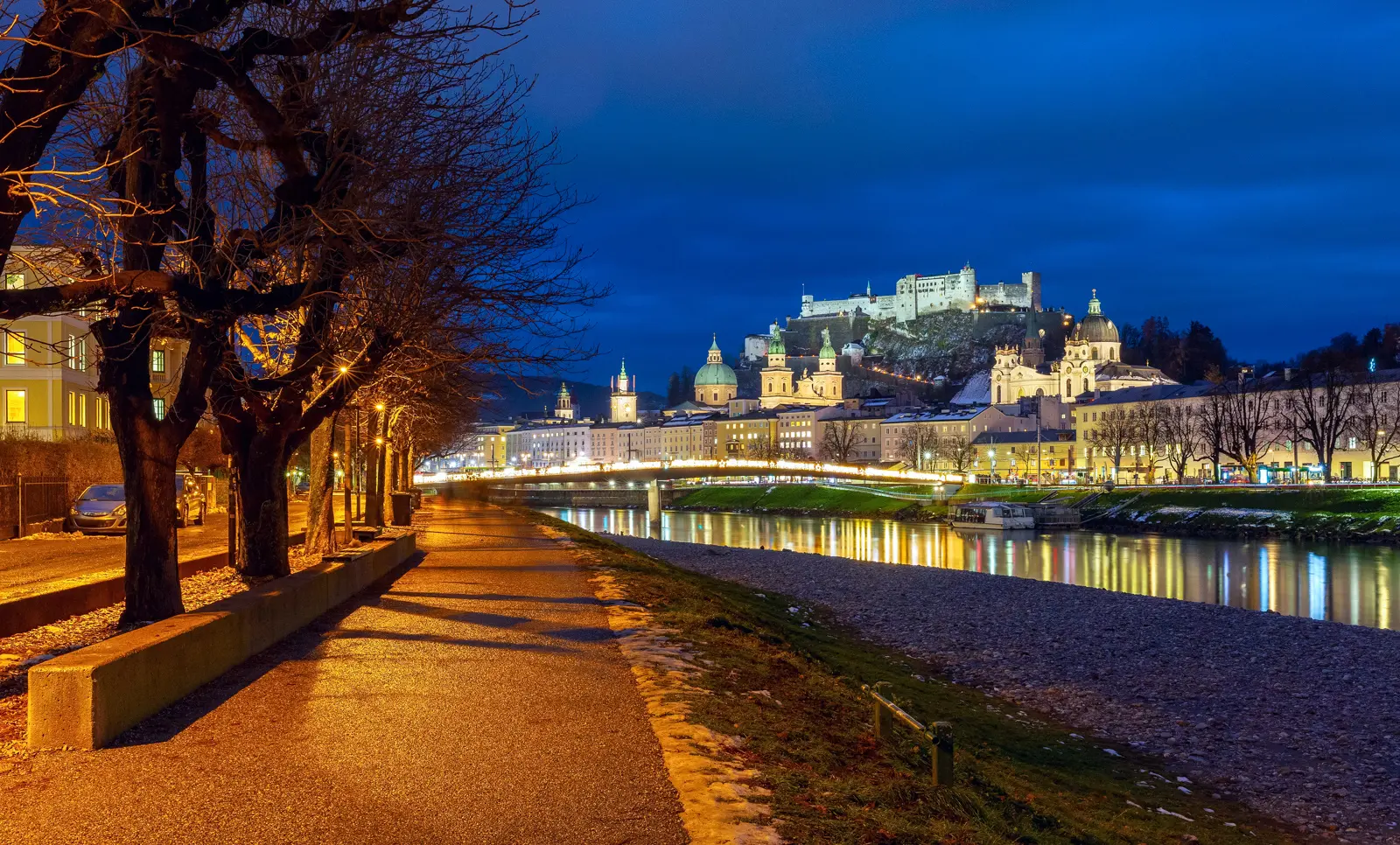
In the early morning, light is soft and diffused, creating gentle reflections that blur the boundary between water and sky. As the day progresses, contrast increases, and reflections become sharper. Architectural details appear more defined, colours more saturated. Subtle ripples in the water introduce movement into these reflections, preventing them from ever feeling static. By evening, the transformation is complete. Artificial lighting from buildings, bridges, and street lamps is mirrored across the water’s surface, creating layered patterns of light that extend the city downward. The river becomes darker, deeper, and more reflective, amplifying the atmosphere and introducing a sense of quiet intensity to the scene.
Framing Salzburg’s Landmarks
The Salzach River offers some of the most compelling vantage points from which to experience Salzburg’s landmarks. From its banks and bridges, the city reveals itself in a way that feels composed rather than fragmented, allowing individual elements to align into a cohesive whole. The silhouette of Hohensalzburg Fortress rising above the Old Town becomes particularly striking when viewed from across the water. The elevation of the fortress, combined with the openness of the river in the foreground, creates a layered sense of scale that is difficult to perceive from within the city’s narrower streets.
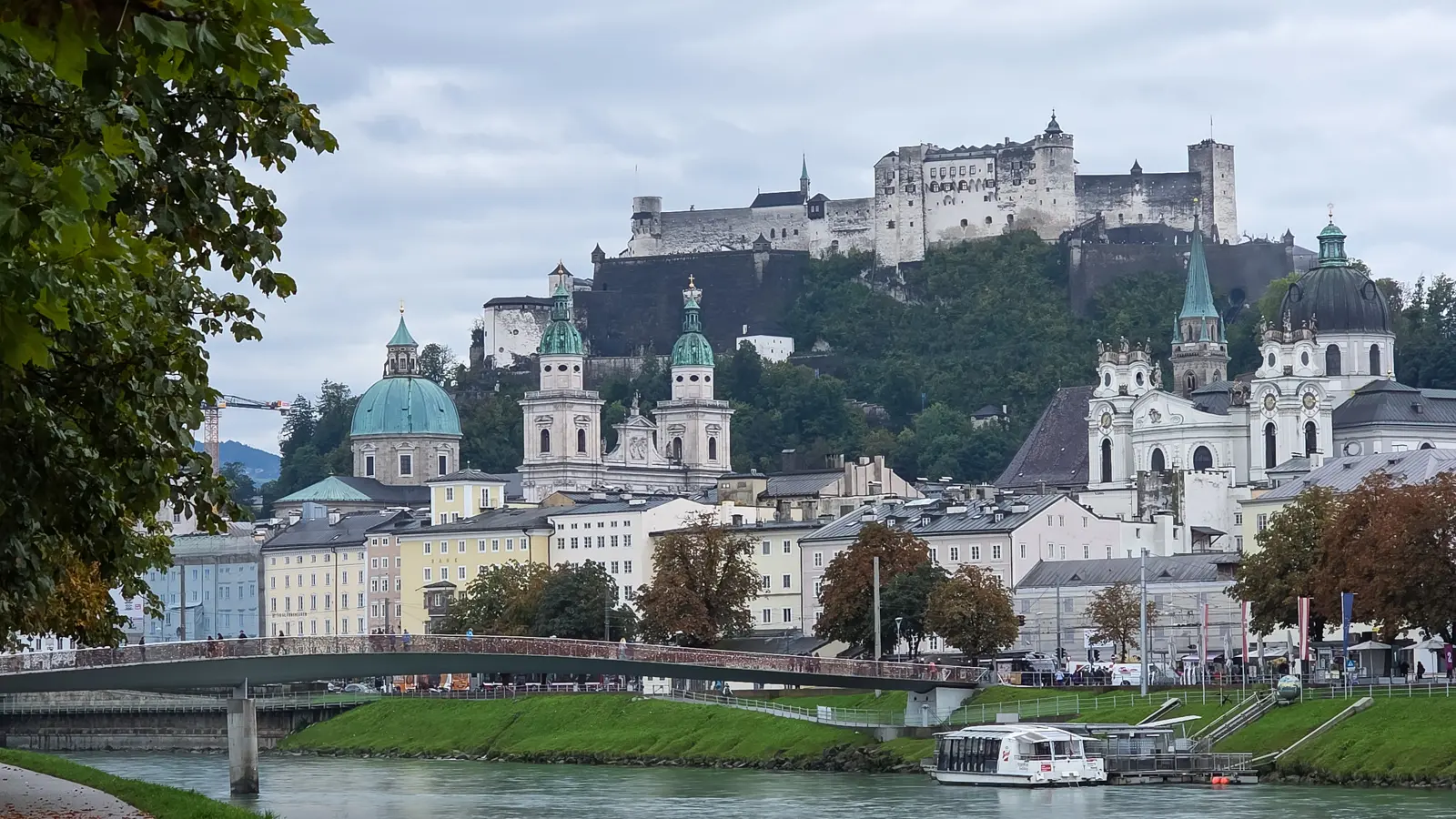
Church domes, towers, and façades form a continuous architectural line along the river’s edge, their repetition and variation creating visual rhythm. The river does not compete with these elements; it provides the space necessary for them to be fully appreciated, allowing their proportions, materials, and alignment to become more apparent.
Walking Along the River
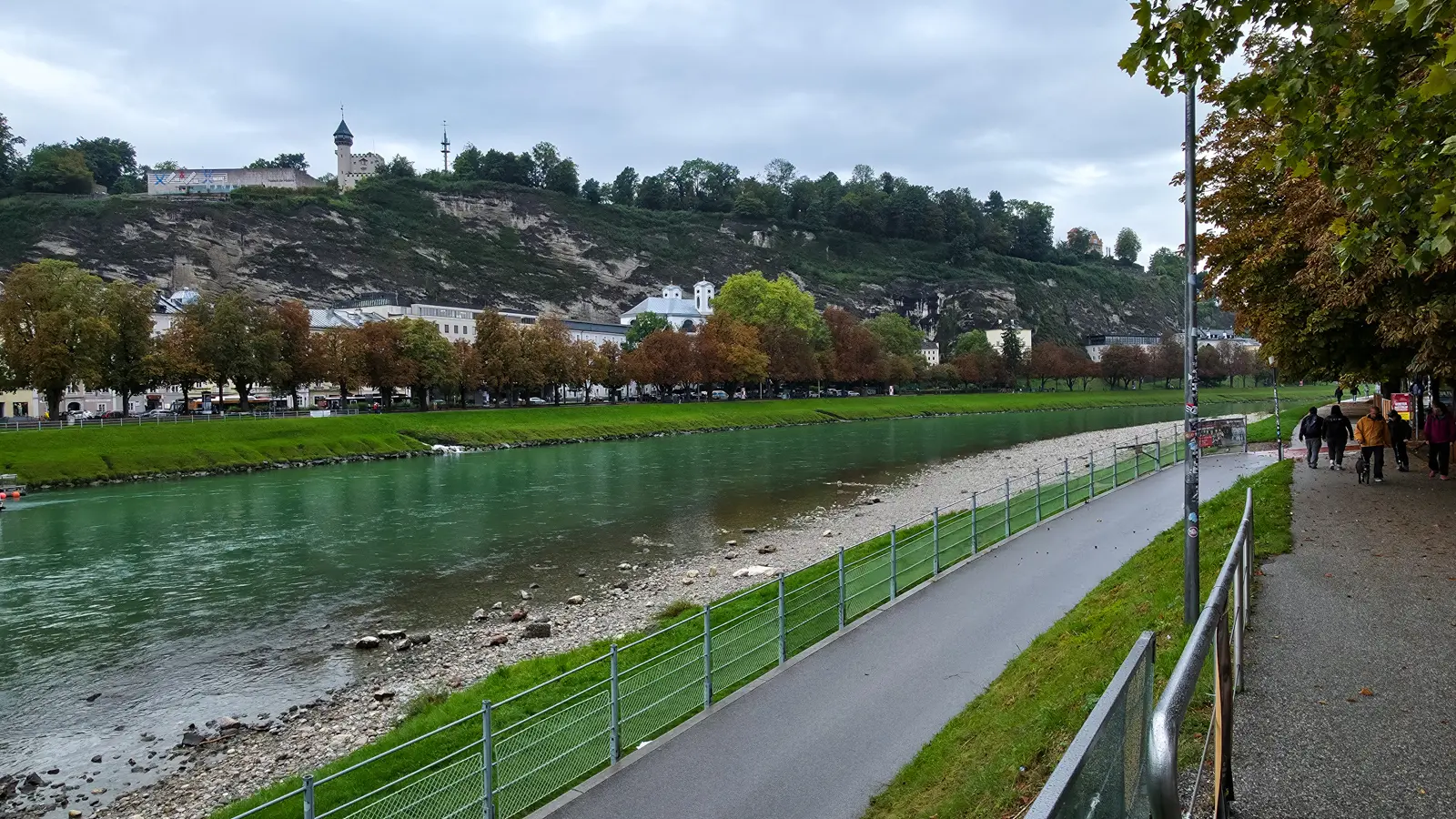
Experiencing the Salzach River on foot introduces a different rhythm to exploring Salzburg. The pathways that run alongside the water offer a sense of openness and continuity that contrasts with the enclosed and often winding nature of the Old Town’s streets. Movement along the river feels less directed and more fluid. There is no single route that must be followed, no sequence imposed by architecture. Instead, the experience unfolds gradually, shaped by changing views, shifting light, and the subtle sounds of water and city life. Cyclists pass, pedestrians pause, and the city reveals itself incrementally.
These walks often become moments of transition: between landmarks, between districts, or between different times of day. Yet they are not merely functional. They create space for observation, reflection, and a deeper awareness of how the city is structured and experienced.
The Experience: Stillness and Movement
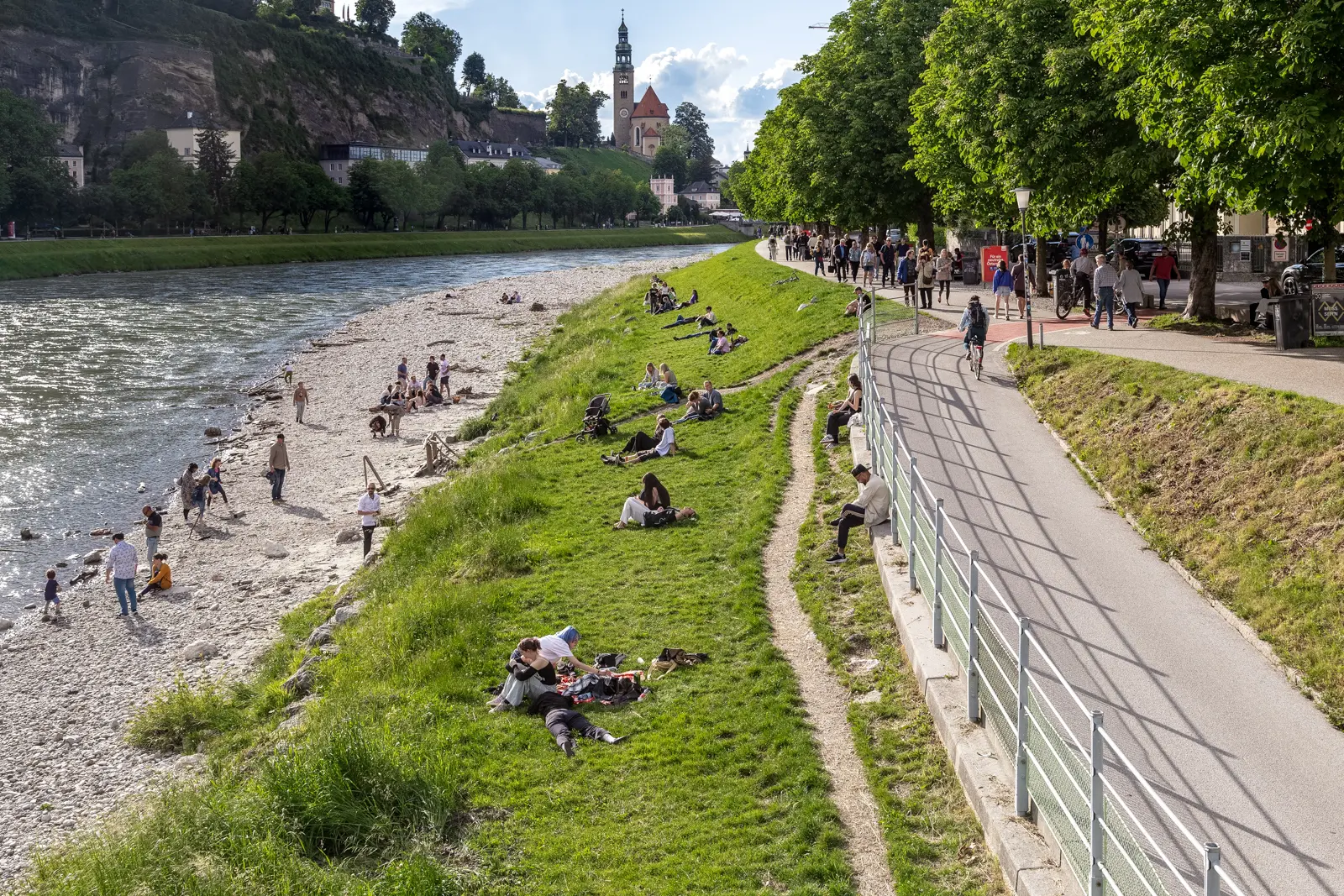
What makes the Salzach River so compelling is the balance it creates between stillness and movement. The water flows continuously, yet the experience of being alongside it often feels calm, measured, and reflective. There are moments of activity – people crossing bridges, gathering along the banks, pausing to take in the view – and moments where the pace slows significantly, allowing the environment to take precedence. The river absorbs and diffuses sound, softening the intensity of the city and creating a quieter backdrop against which movement unfolds.
This duality mirrors the broader character of Salzburg itself, where historical continuity and contemporary life coexist without tension. The river becomes a space where these elements are not only visible, but felt – where observation replaces urgency, and where the experience of the city becomes more expansive and reflective.
Bubbly Tips for Experiencing the Salzach River
- Best time to visit: Early morning for soft, diffused light or evening for atmospheric reflections.
- Don’t miss: The views from Mozartsteg and Makartsteg, each offering a distinct perspective of the city.
- For a unique moment: Walk along the river at sunset as the light shifts and reflections deepen.
- Photography tip: Use the water to frame reflections of Salzburg’s architecture and landmarks, especially at golden hour.
- Combine your visit: Pair a riverside walk with Old Town exploration or a visit to the fortress viewpoints.
Final Thoughts
The Salzach River is not a landmark in the traditional sense, yet it is essential to understanding Salzburg. It provides space, perspective, and continuity, elements that allow the city’s architecture and atmosphere to be fully experienced.
What remains most memorable is not a single view, but the way the river accompanies you, appearing and reappearing throughout your journey, offering new angles, shifting reflections, and moments of stillness that feel both quiet and expansive. It is this constant yet understated presence that defines its role, shaping the experience of Salzburg in ways that are subtle, fluid, and enduring.
Would you explore Salzburg along the river, or let it guide you as you discover the city? Drop me a line in the comments section below.
Happy travels!

🌟 Everything You Need to Plan Your Dream Trip in 2026
- 🌟 Luxury Hotels - Find premium stays with Booking.com & Hotels.com
- 🏡 Vacation Rentals - Discover unique properties on VRBO
- 🏞️ Guided Tours - Explore with Viator or GetYourGuide
- 🎫 Attraction Tickets - Skip the lines with Tiqets
- 🚢 Ocean Cruises - Set sail with Cruise Direct
- 📱 International SIMs - Stay connected with Saily
- 🚗 Car Rentals - Budget-friendly options from Discover Cars
- 🌐 Secure VPNs - Browse safely with NordVPN
- 💶 Currency Exchange - Best rates with Wise
- 🗣️ Learn Languages - Master the local language with Babbel and Rosetta Stone