
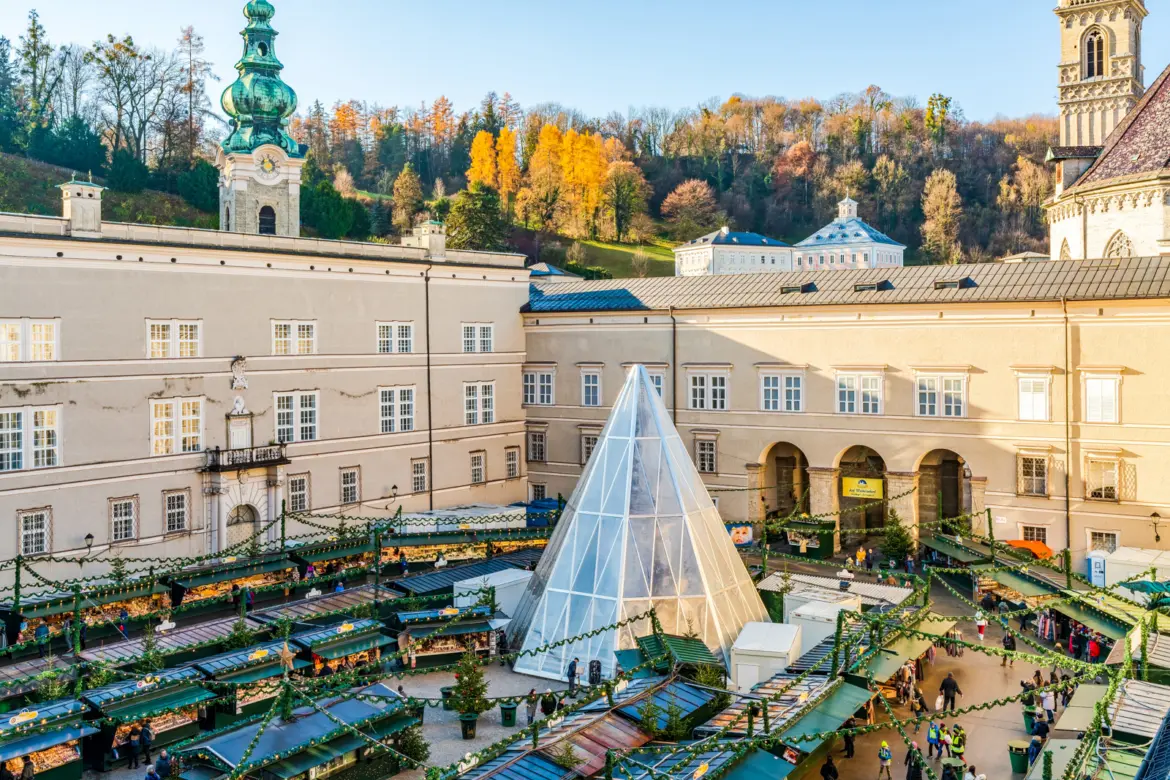
There are places that feel as though they were made for a particular season, and in winter, Salzburg becomes one of them. As the temperature drops and the first lights appear, the city transforms in a way that feels both natural and deliberate, its Baroque architecture, narrow streets, and surrounding mountains creating a setting that seems almost designed for the season. The crisp air sharpens the outlines of buildings, while the early dusk allows the city’s illumination to emerge gradually, drawing attention to details that might otherwise go unnoticed.
What defines Christmas here is not a single moment, but an atmosphere that builds layer by layer. It is found in the glow of lights against historic façades, in the quiet movement of people through decorated squares, and in the subtle interplay of sound, scent, and texture. Church bells echo softly in the distance, the aroma of warm spices drifts through the air, and the rhythm of footsteps on stone streets becomes part of the experience. Salzburg does not simply celebrate Christmas, it inhabits it, allowing its setting and traditions to shape a season that feels both intimate and expansive.
Christmas in Salzburg at a glance
🎄 Christkindlmarkt · Roots to 1491’s “Tandlmarkt”; continuous in its current form since 1974. Around 100 stalls spread across Domplatz and Residenzplatz from late November through January 1.
👹 Krampuslauf · On December 5 (Krampusnacht), the Old Town run starts at the Festspielhaus and winds through Getreidegasse and Alter Markt. A second run follows at the Christkindlmarkt on the same evening.
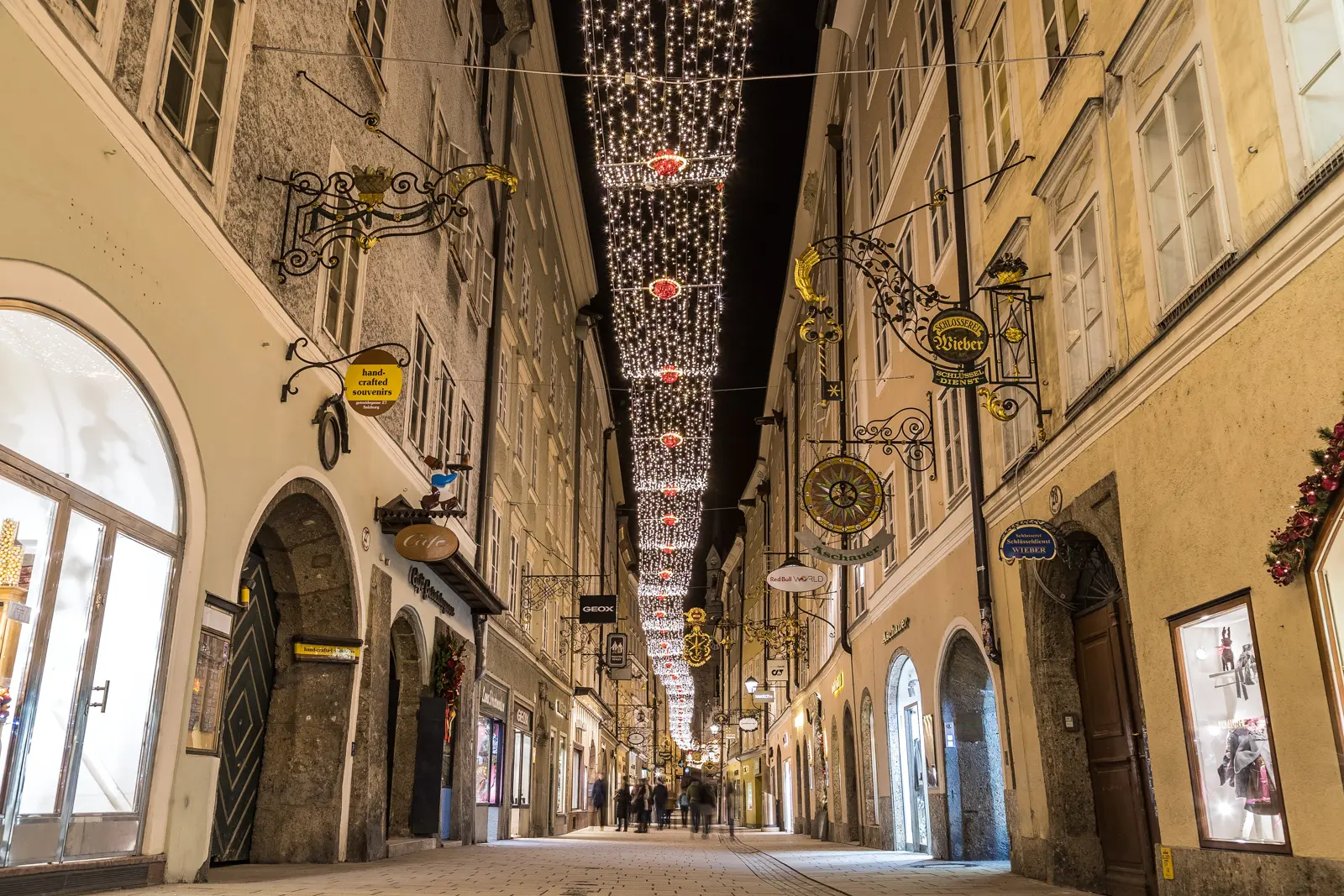
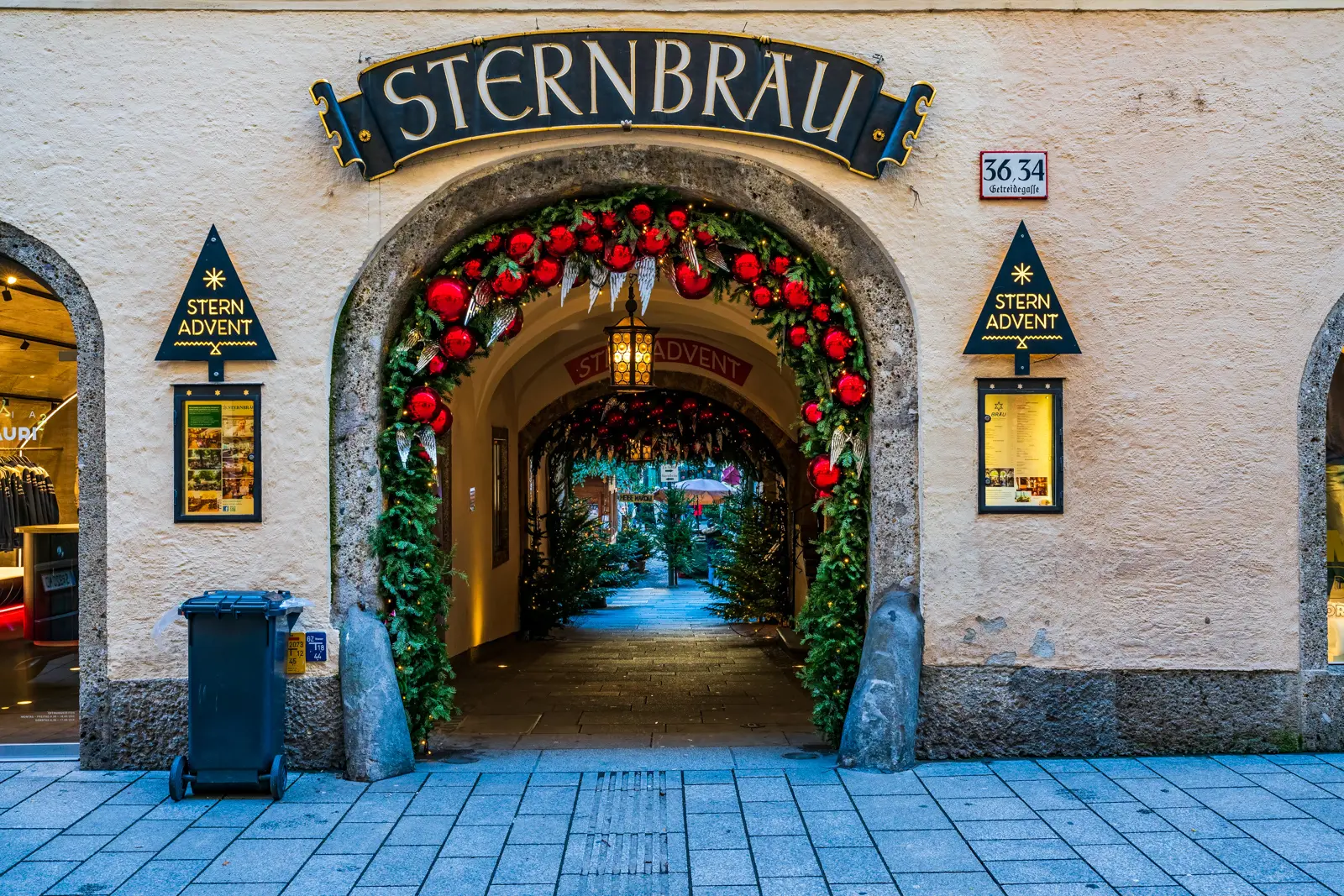
✨ Old Town lights · Getreidegasse is tunnelled with overhead fairy lights, and the Salzach reflects the illumination. Most atmospheric after sunset, which falls as early as 4 pm in December.
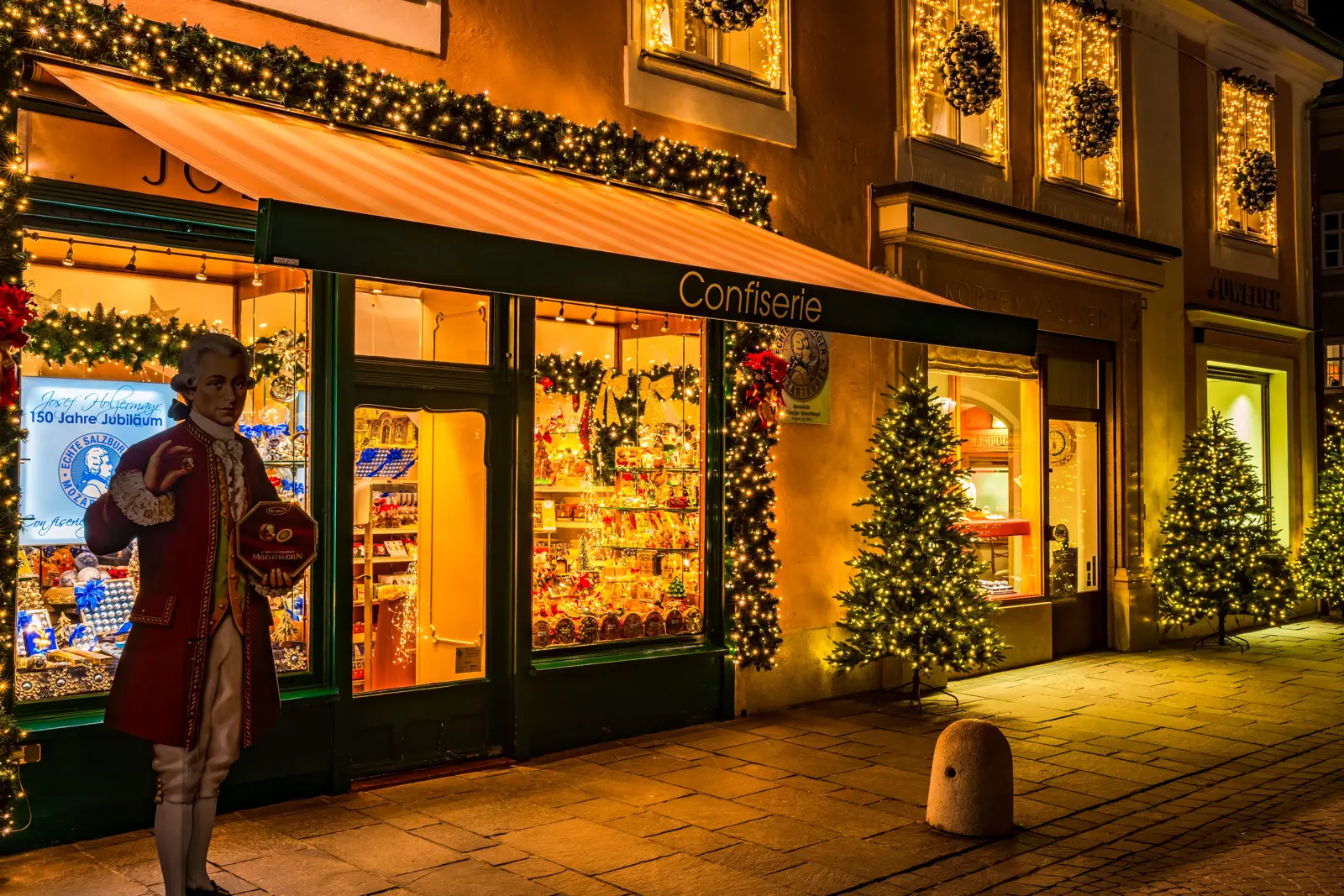
🍫 Edible souvenirs · Pick up an “Echte Salzburger Mozartkugel” from Confiserie Holzermayr (Alter Markt 7, est. 1865) — the shop is the direct successor to the sphere’s 1880 Salzburg inventor, Rudolf Baumann.
🧥 Practical tip · Temperatures routinely drop below freezing after dark. Pack layers and waterproof footwear; most stalls are outdoors and the Old Town cobblestones get slick.
🚆 From Vienna · Roughly 300 km (about 2.5 hours by ÖBB Railjet, 3 hours by car) — easy to pair with a longer Austria itinerary.
Christmas Markets: A Tradition of Place
At the heart of the experience are Salzburg’s Christmas markets, most notably those set within Domplatz and Residenzplatz, where the historic centre becomes a gathering space defined by warmth and light. Wooden stalls are arranged with careful symmetry, their roofs dusted with seasonal decoration, creating pathways that naturally guide visitors through the space while encouraging moments of pause and observation.
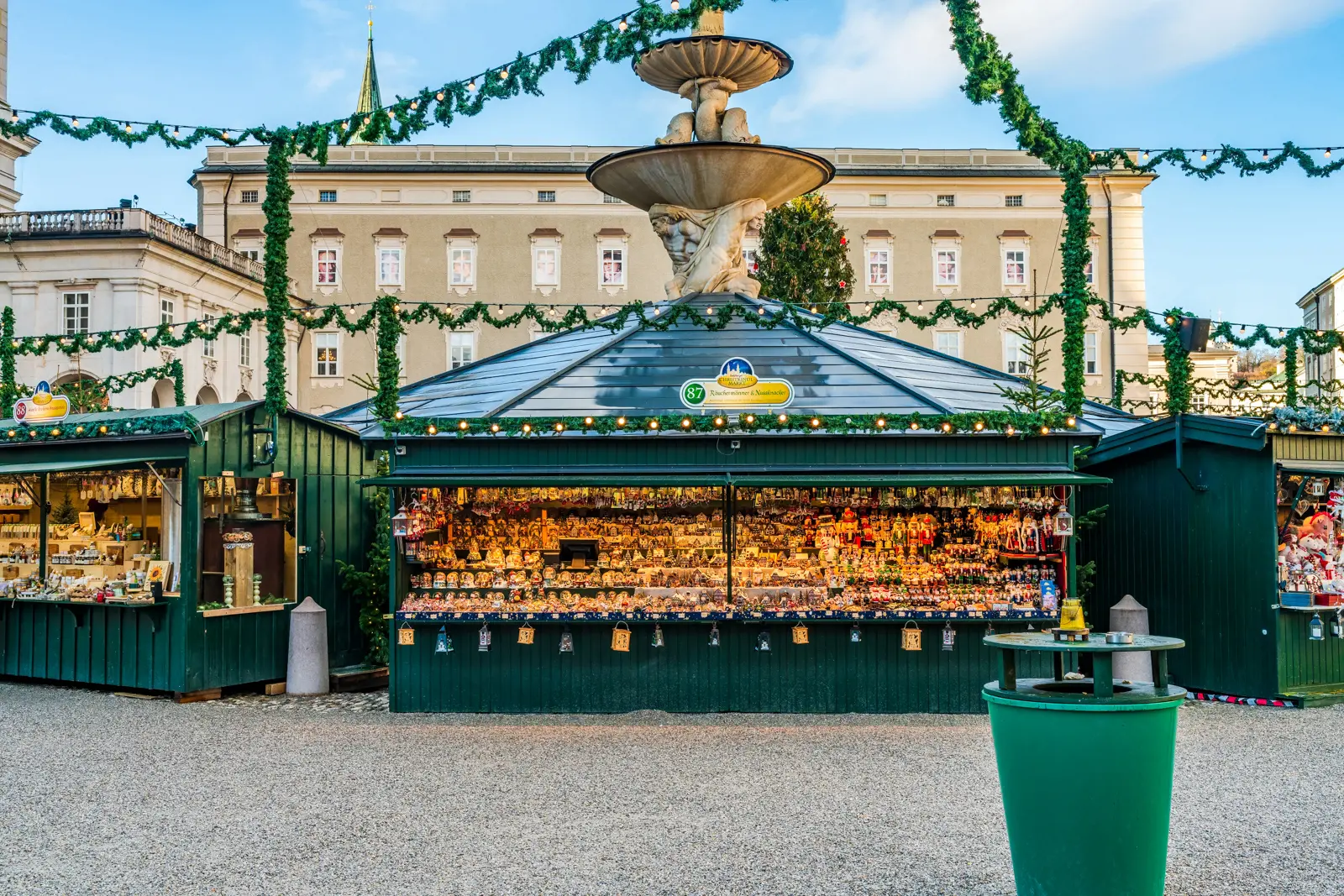
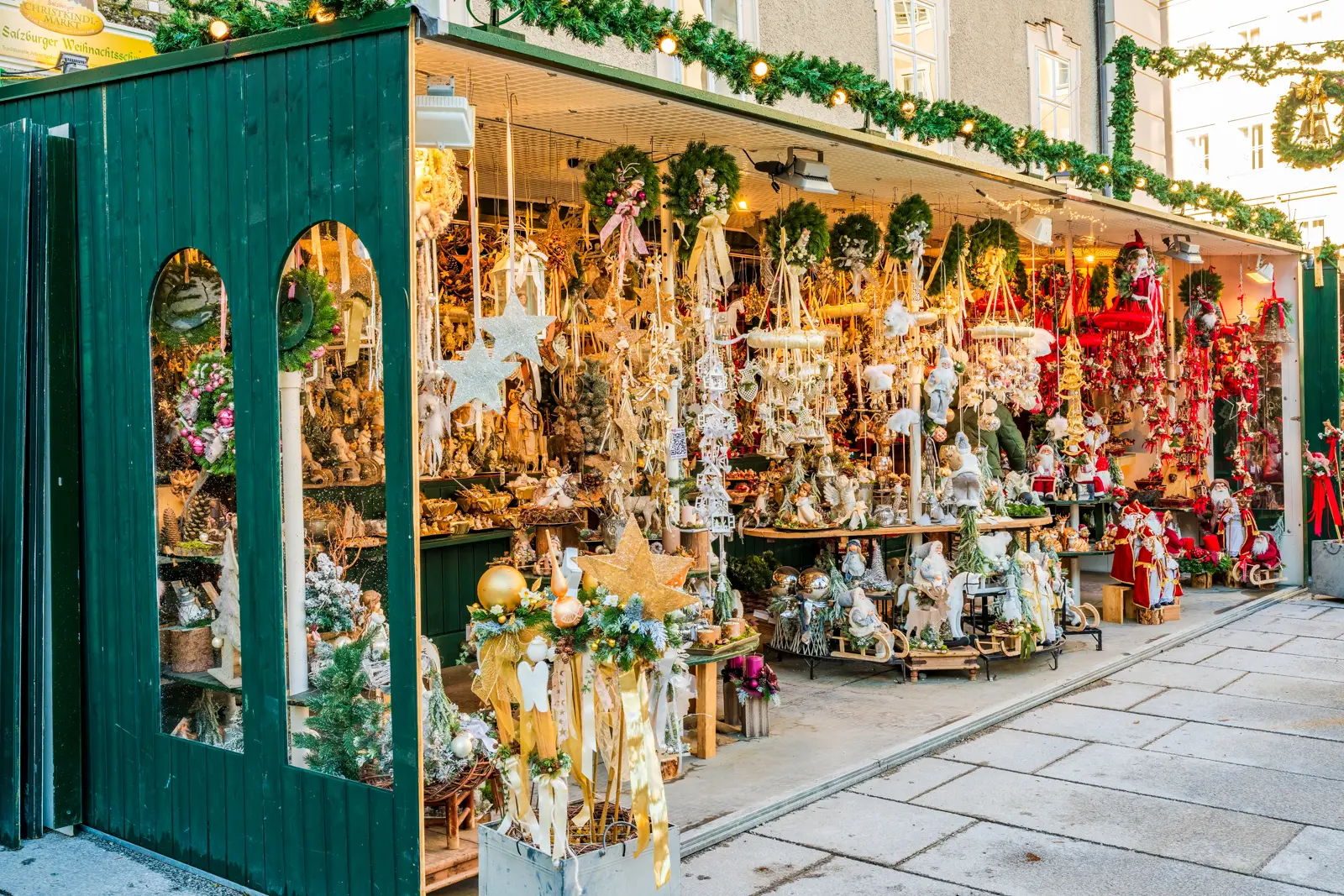
The offerings extend beyond simple souvenirs. Handcrafted ornaments, textiles, and artisanal goods reflect regional craftsmanship, while seasonal treats provide both comfort and continuity. The experience is not driven by urgency, but by presence. Browsing becomes a slow, deliberate activity, where each stall invites attention rather than competition. The surrounding architecture – the cathedral’s façade, the arcades, the historic buildings – frames the market in a way that feels integrated rather than staged, reinforcing the sense that this is a continuation of tradition rather than a temporary installation.
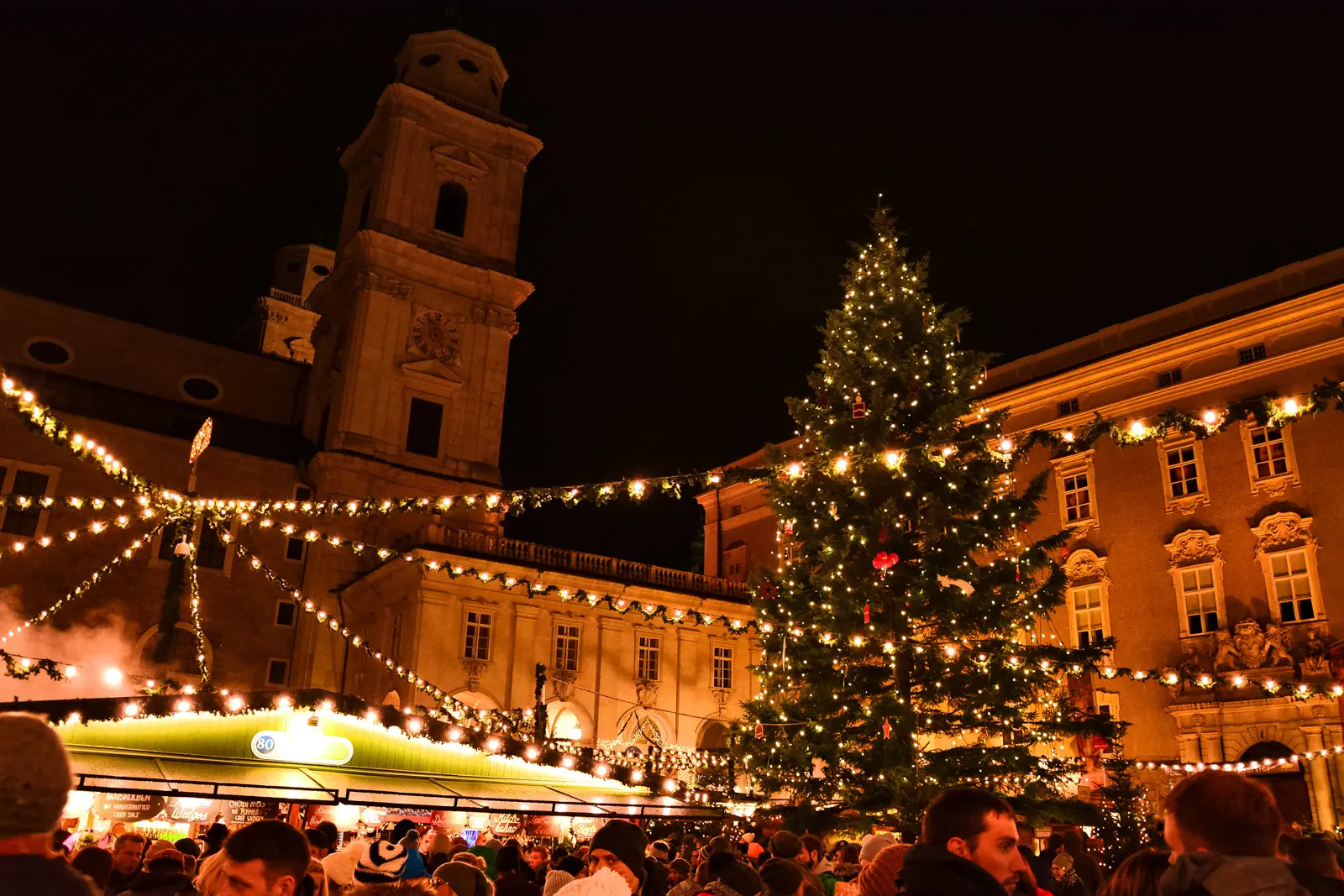
As evening settles, the markets shift in tone. Light becomes more concentrated, shadows deepen, and the atmosphere transitions from active to reflective. The glow of individual stalls contrasts with the darkness of the surrounding sky, creating a visual balance that feels both dynamic and calm. It is in these evening hours that the markets feel most atmospheric, when sound softens and the experience becomes more immersive.
Light and Atmosphere: A City Transformed
Beyond the markets, the city itself becomes an extension of the celebration. Streets are illuminated with a restrained elegance, where lighting enhances architectural detail rather than overwhelming it. Garlands, wreaths, and subtle decorative elements are integrated into façades, balconies, and passageways, creating continuity without excess.
Moving through the Old Town, there is a perceptible shift in pace. The usual flow of movement slows, replaced by a more intentional wandering. Along streets such as Getreidegasse, festive lighting is woven delicately across the narrow passageways, enhancing the historic façades without overwhelming them. Light reflects off windows, polished surfaces, and the river, creating layered visual effects that change with each step. The contrast between illuminated areas and shadowed corners adds depth, allowing familiar streets to feel newly discovered.
The Salzach River plays a quiet but important role in this transformation. Its surface captures and reflects the city’s lights, extending the visual experience beyond the streets themselves. Bridges become vantage points, offering moments of stillness where the movement of water and the glow of the city intersect. Even away from the central squares, the atmosphere remains consistent, reinforcing the sense that the entire city participates in the season.
Krampuslauf: Tradition and Folklore
Alongside the warmth and beauty of the season, Salzburg embraces a tradition that introduces a striking contrast. The Krampuslauf brings Alpine folklore into the present, creating an experience that is both theatrical and deeply rooted in cultural history. It takes place around December 5th – Krampusnacht, the eve of St Nicholas Day – situating it within the broader rhythm of the Advent season and giving it a distinct place in the calendar that reinforces its role as a counterpart to the gentler celebrations that surround it.
Participants dressed as Krampus – figures defined by horns, fur, and intricately hand-carved wooden masks – move through the streets in dynamic, often unpredictable processions. The craftsmanship of these costumes is remarkable, each mask uniquely detailed, reflecting a tradition that values both artistry and symbolism. The soundscape shifts dramatically during these events: the ringing of large cowbells, the clanking of chains, and the rhythm of movement create an atmosphere that is immersive and, at times, intense.
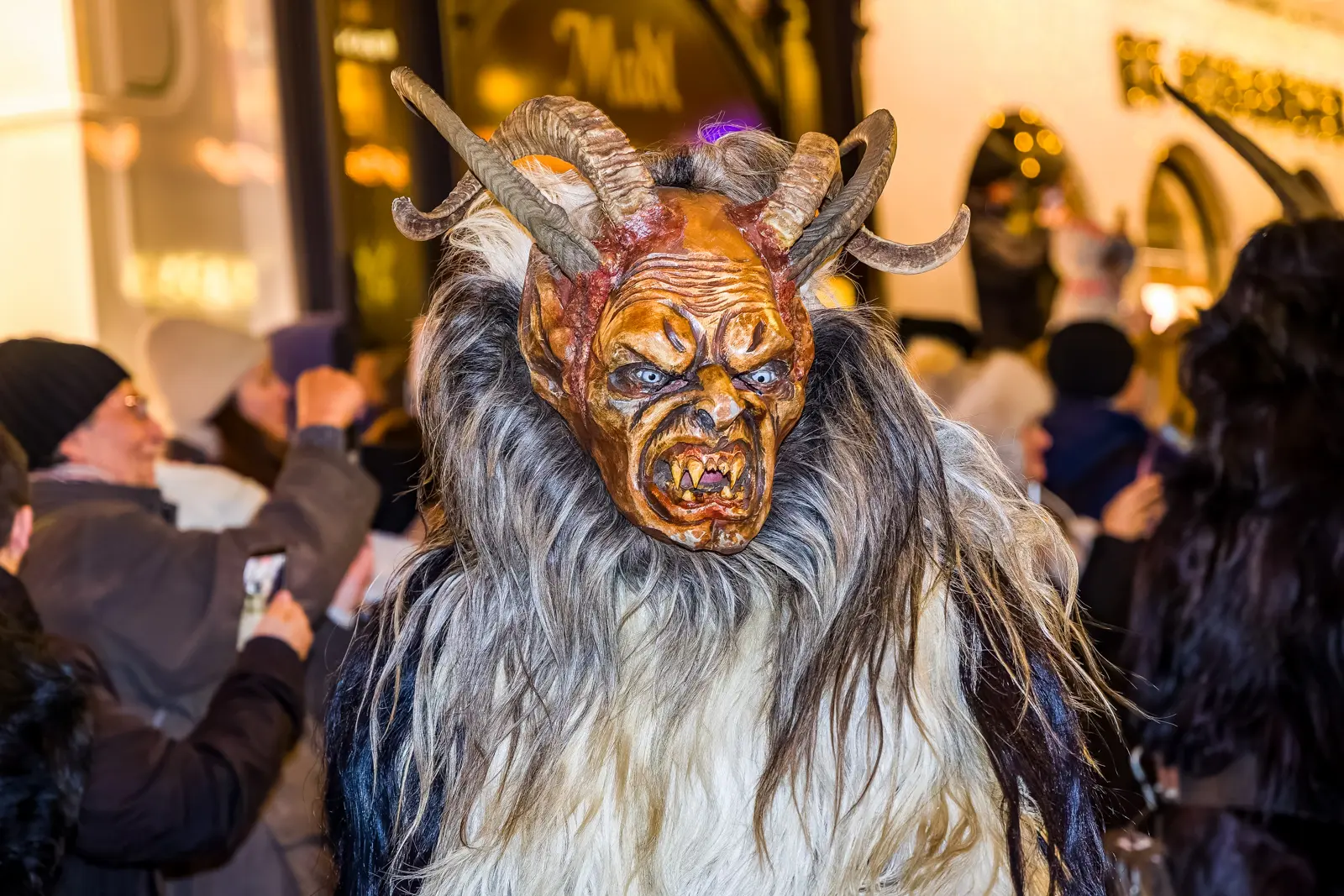
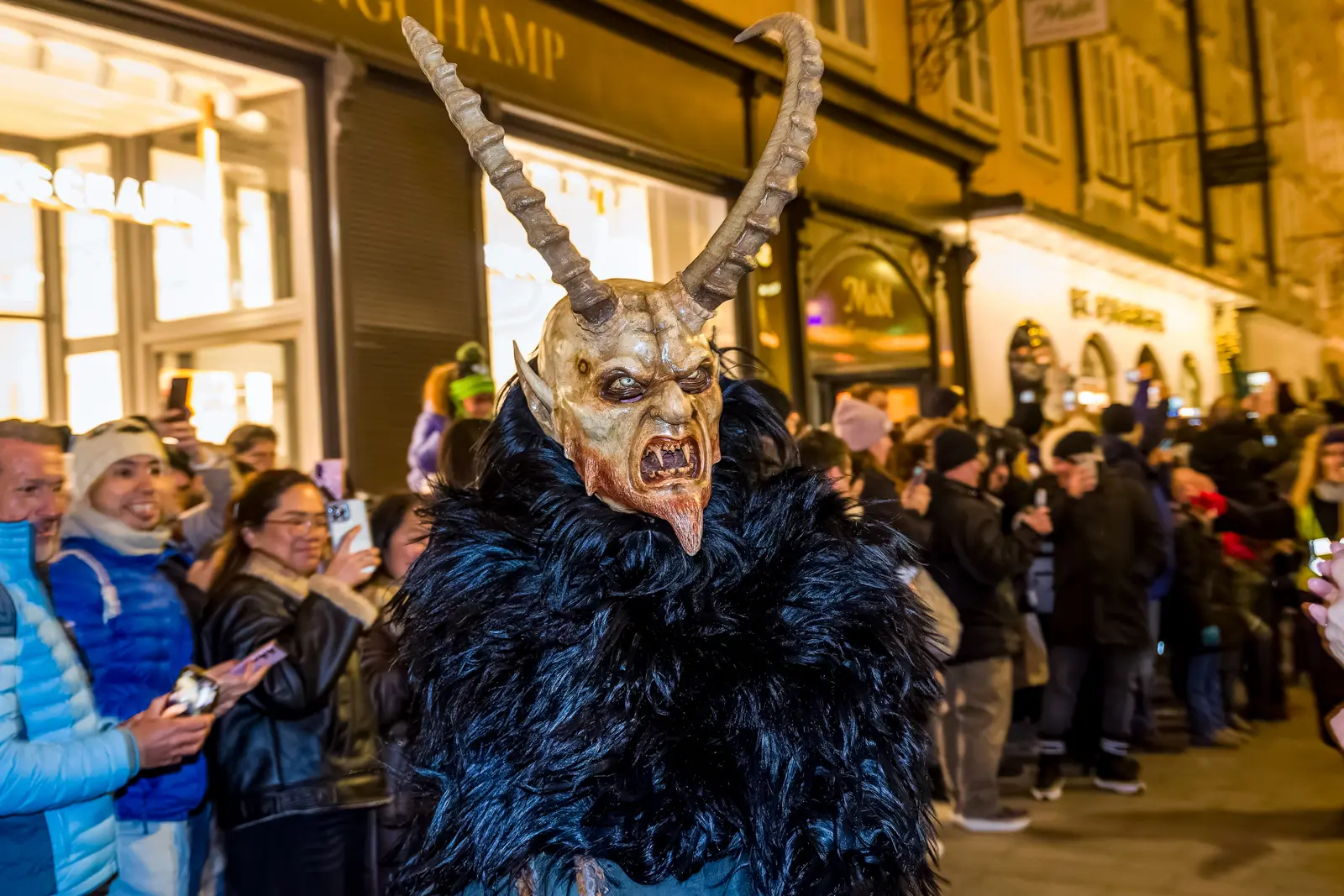
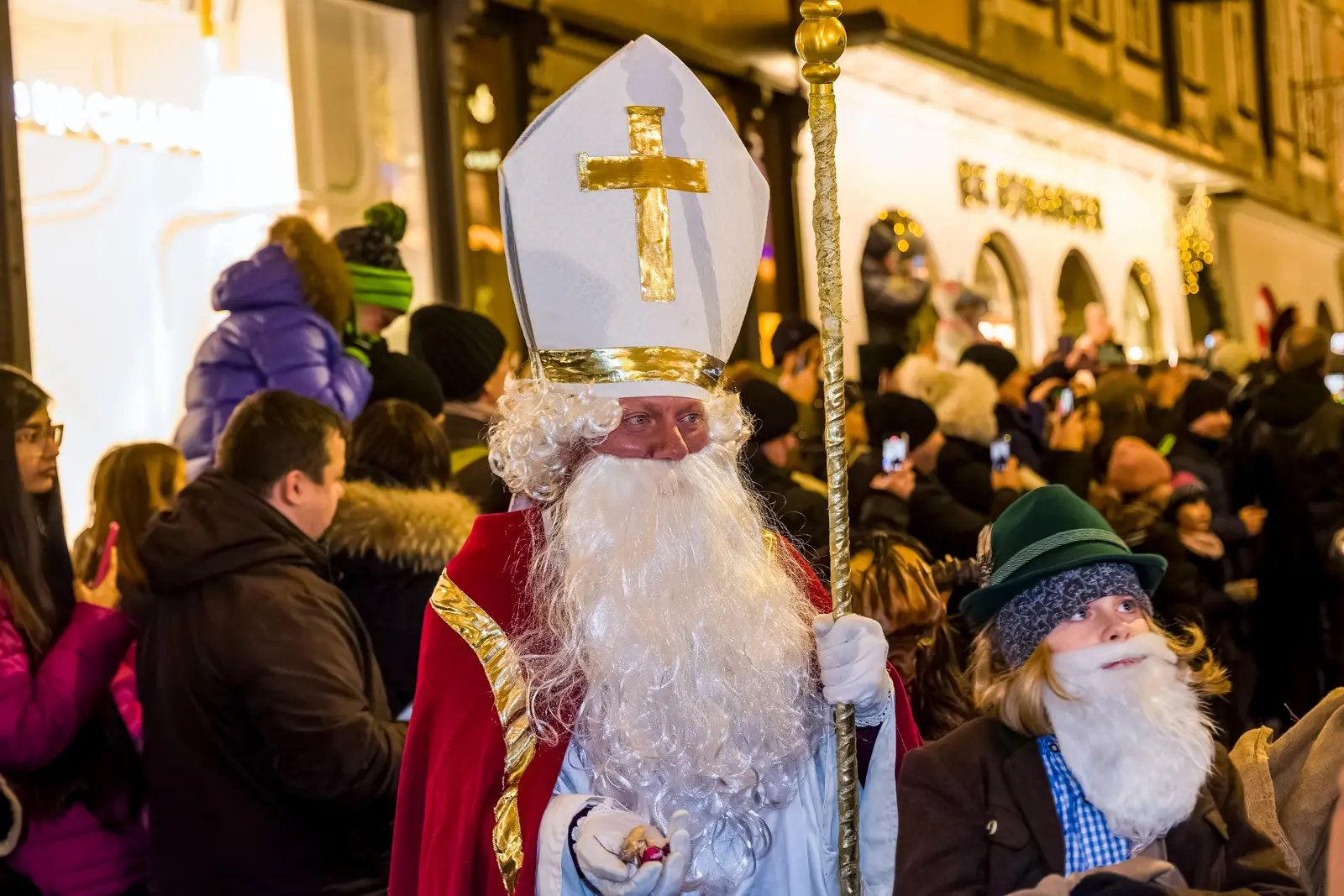
What makes the Krampuslauf particularly compelling is not only its visual impact, but its place within the broader narrative of the season. It reflects an older understanding of winter traditions, where celebration was intertwined with cautionary storytelling. Krampus exists as the counterpart to St Nicholas. Where Nicholas rewards the good, Krampus serves as a warning to the wayward, and this duality is central to the tradition’s meaning. The presence of Krampus introduces a balance of light and shadow, reward and consequence, that deepens the festive atmosphere rather than detracting from it. It is a reminder that tradition is not always singular in tone, but layered and complex.
Food and Warmth: The Comfort of the Season
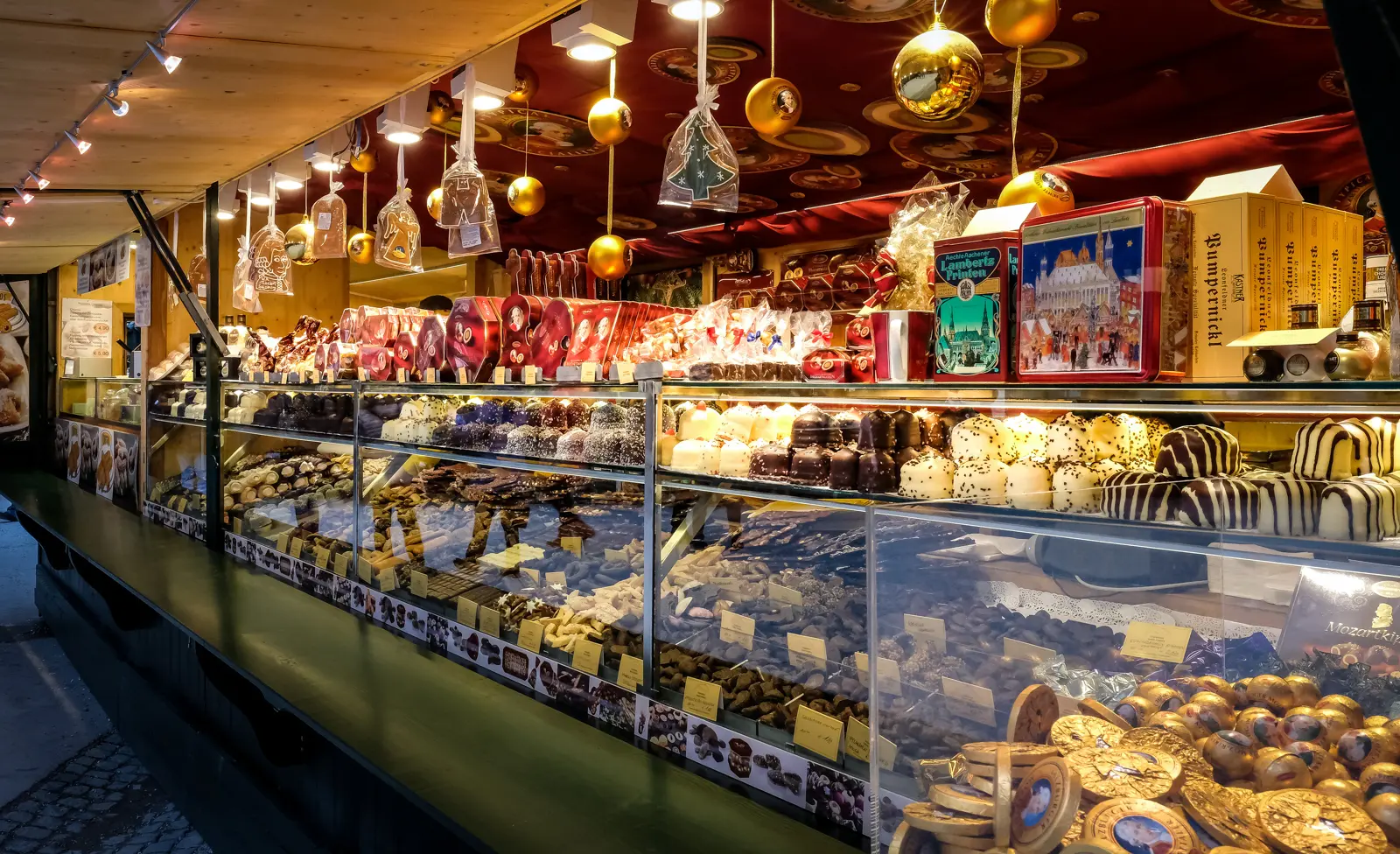
Food plays a central role in shaping the Christmas experience in Salzburg, offering both warmth and continuity throughout the season. Warm drinks, particularly mulled wine, are a constant presence, their aroma – a blend of spices, citrus, and sweetness – becoming part of the sensory landscape of the markets. Served in simple cups, they provide not only comfort from the cold, but a rhythm to the experience, something to return to as you move through the city.
Seasonal treats add further depth. Roasted chestnuts, baked pastries, and regional specialties create moments of pause that punctuate the experience. These foods are not elaborate, but they are intentional, tied to tradition, seasonality, and the climate. Eating becomes less about necessity and more about participation, a way of engaging with the environment and its customs. What stands out is how naturally these elements integrate into the overall atmosphere. Food is not separate from the experience, but embedded within it, contributing to the sense of immersion that defines Salzburg during the winter months.
The Experience: Stillness and Contrast
What makes Christmas in Salzburg truly memorable is the way contrasting elements coexist in a way that feels balanced rather than opposing. Warm light meets cold air, quiet streets intersect with moments of activity, and historic architecture frames contemporary movement. There is a rhythm to the experience that unfolds gradually. Busy squares transition into quieter streets, bright illumination gives way to shadow, and movement slows as attention deepens. These shifts are subtle, yet they shape how the city is experienced, encouraging a form of engagement that is both active and reflective.
It is within this balance that Salzburg reveals itself most fully. The city does not rely on spectacle, but on composition, the careful alignment of space, light, and tradition. Christmas here is not defined by a single highlight, but by the accumulation of moments that feel connected, deliberate, and enduring.
Bubbly Tips for Visiting Christmas in Salzburg
- Best time to visit: Late November through December for the full market experience and festive atmosphere.
- Don’t miss: The Christmas markets in Domplatz and Residenzplatz, particularly in the evening when the atmosphere is most immersive.
- For something unique: Experience the Krampuslauf for a deeper look into Alpine folklore.
- Dress warmly: Temperatures can drop significantly, especially after sunset.
- Time your visit: Late afternoon into evening offers the most dynamic transition of light and atmosphere.
- Pair your visit: Combine with Salzburg’s historic landmarks to fully appreciate the contrast between day and evening experiences.
- Distance from Vienna: Approximately 300 km (about 2.5 to 3 hours by train or car) from Vienna, making it an ideal addition to a winter itinerary.
Final Thoughts
Christmas in Salzburg is defined not by a single tradition, but by the way multiple elements come together to create a cohesive and immersive experience. It is a season shaped by light, architecture, and cultural depth, where each detail contributes to a broader sense of place.
What remains long after the visit is not only the visual impression, but the atmosphere itself: the quiet glow of the streets, the layered traditions, and the balance between warmth and contrast. Salzburg does not present Christmas as a spectacle, but as a lived experience, one that unfolds gradually and stays with you in a way that feels both subtle and enduring.
Would you want to experience Christmas in Salzburg, even with a little Krampus along the way? Drop me a line!
Happy travels!

🌟 Everything You Need to Plan Your Dream Trip in 2026
- 🌟 Luxury Hotels - Find premium stays with Booking.com & Hotels.com
- 🏡 Vacation Rentals - Discover unique properties on VRBO
- 🏞️ Guided Tours - Explore with Viator or GetYourGuide
- 🎫 Attraction Tickets - Skip the lines with Tiqets
- 🚢 Ocean Cruises - Set sail with Cruise Direct
- 📱 International SIMs - Stay connected with Saily
- 🚗 Car Rentals - Budget-friendly options from Discover Cars
- 🌐 Secure VPNs - Browse safely with NordVPN
- 💶 Currency Exchange - Best rates with Wise
- 🗣️ Learn Languages - Master the local language with Babbel and Rosetta Stone