
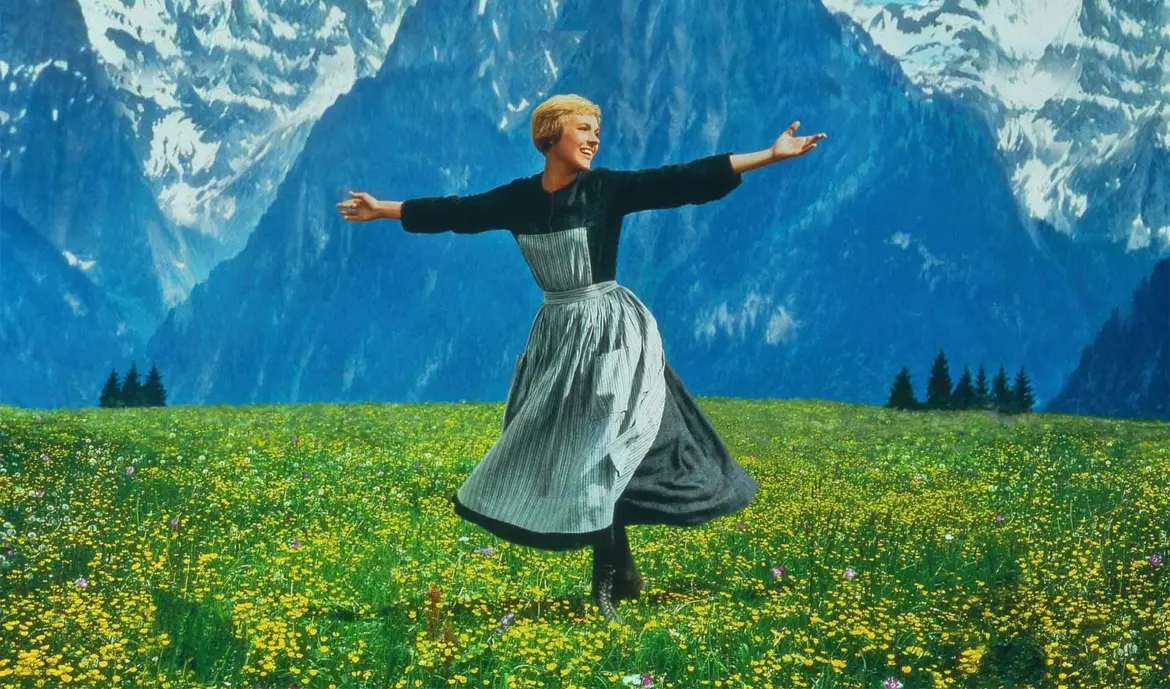
There are films that you watch, and there are films that seem to linger in the places where they were made. The Sound of Music belongs firmly to the second category. Even decades after its release, it continues to shape how visitors experience Salzburg, not as a backdrop, but as a living, recognisable landscape where music, memory, and place quietly intertwine.
What makes Salzburg so compelling as a filming location is not only its beauty, but its natural sense of rhythm and composition. The city’s Baroque architecture, open squares, structured gardens, and surrounding alpine landscape already feel cinematic in themselves. The film did not transform Salzburg; it revealed what was already there – framing its spaces in a way that highlighted movement, light, and perspective. This subtle alignment between place and storytelling is what gives the film its lasting visual resonance.
The Sound of Music in Salzburg at a glance
🎬 Released 1965 · The Robert Wise-directed musical won five Academy Awards, including Best Picture, and was filmed on location across Salzburg and the Salzkammergut during the summer of 1964.
🌸 Mirabell Gardens · The “Do-Re-Mi” finale, with the children dancing around the Pegasus Fountain and up the Baroque staircase (now universally known as the Do-Re-Mi steps).
🏰 Leopoldskron & Frohnburg · Leopoldskron’s lake-facing rear façade stands in for the Von Trapp lakeside; Schloss Frohnburg on Hellbrunner Allee plays the street-facing front of the villa.
⛪ Nonnberg Abbey · The real convent where Maria was a postulant in 1924. Founded c. 714 AD — the oldest continuously existing nunnery in the German-speaking world.
💍 Gazebo & Wedding · The “Sixteen Going on Seventeen” gazebo now stands in Hellbrunn’s gardens (relocated from Leopoldskron in 1991). The wedding was filmed at Mondsee Basilica.
💡 Practical tip · Allow a full day to see everything; book a guided Sound of Music tour if you want Mondsee included, since it’s about 35 km east of Salzburg in the Salzkammergut.
Salzburg as a Living Film Set
Unlike studio-based productions, The Sound of Music was filmed extensively on location, allowing real spaces in Salzburg to become part of its visual identity. This creates a rare continuity between fiction and reality, where walking through the city today often feels like moving through scenes you already know, even if you cannot immediately place them.
What is particularly striking is how naturally the film integrates into Salzburg’s urban fabric. Streets, gardens, palaces, and religious sites were not altered for spectacle; instead, they were observed, framed, and choreographed. Camera movement follows pathways that visitors can still walk today, and compositions often rely on symmetry, depth, and architectural framing that remain unchanged. This gives the film a quiet authenticity, one that continues to resonate with visitors who encounter these spaces not as staged environments, but as part of a living city.
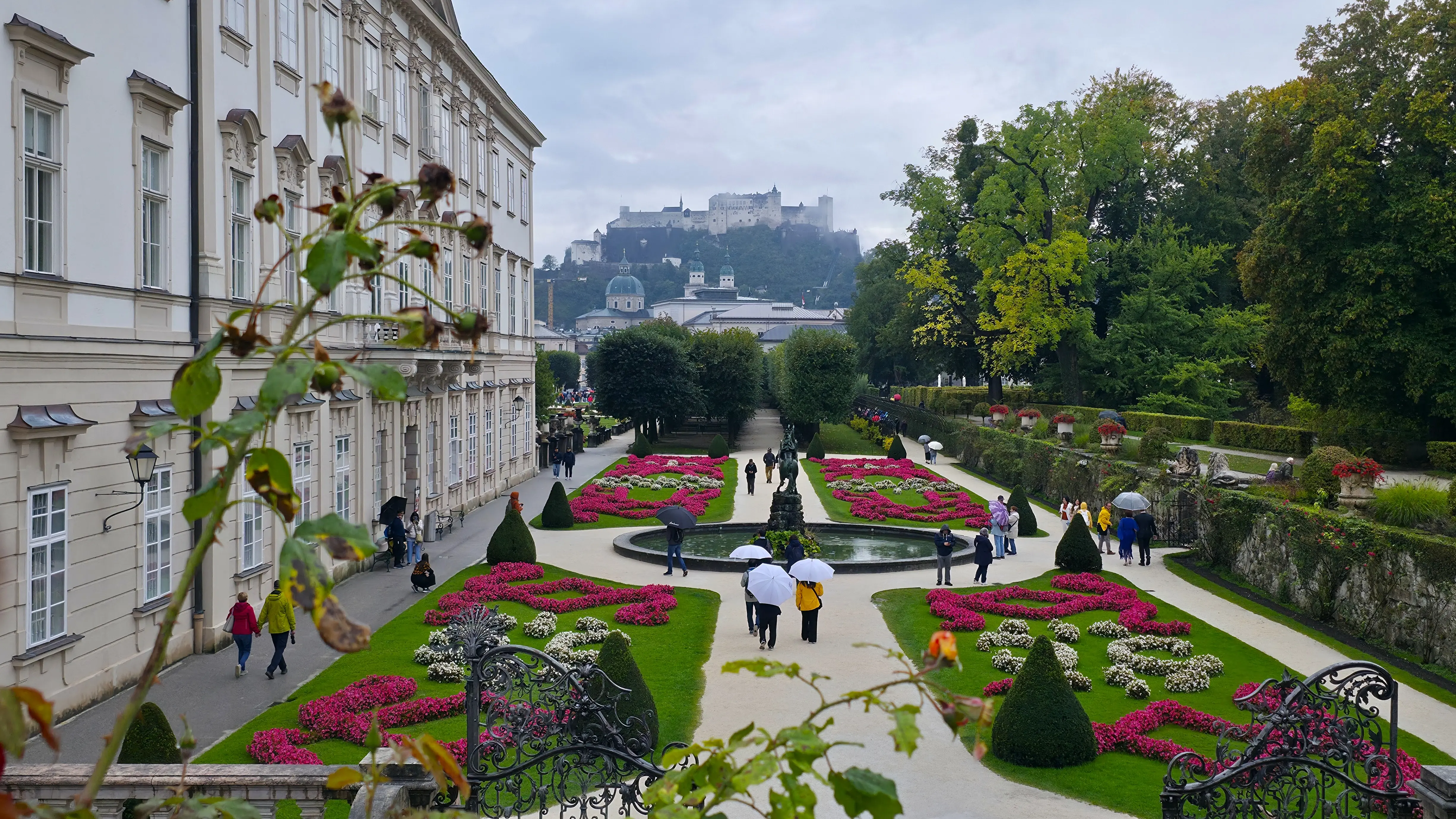
Mirabell Gardens & Pegasus Fountain
One of the most recognisable locations is Mirabell Gardens, which features prominently in the “Do-Re-Mi” sequence, though it is worth noting that the sequence was filmed across several Salzburg locations, with the gardens forming its most iconic setting. The Pegasus Fountain, marble statues, and precisely arranged flower beds form a structured yet playful backdrop, while the staircase alongside the palace (now widely known as the Do-Re-Mi steps) provides one of the sequence’s most memorable moments, as Maria and the children use each step as a musical note.
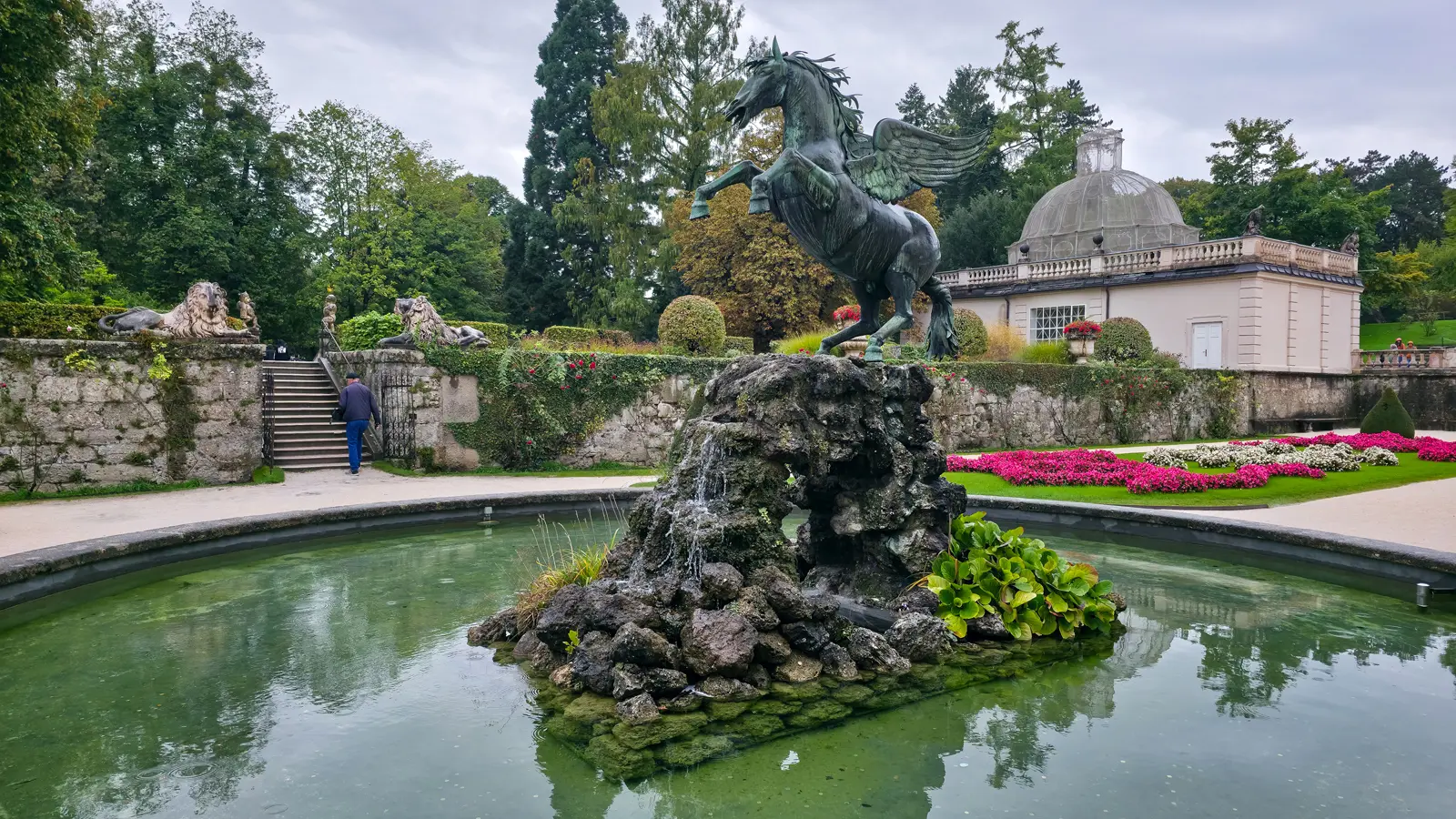
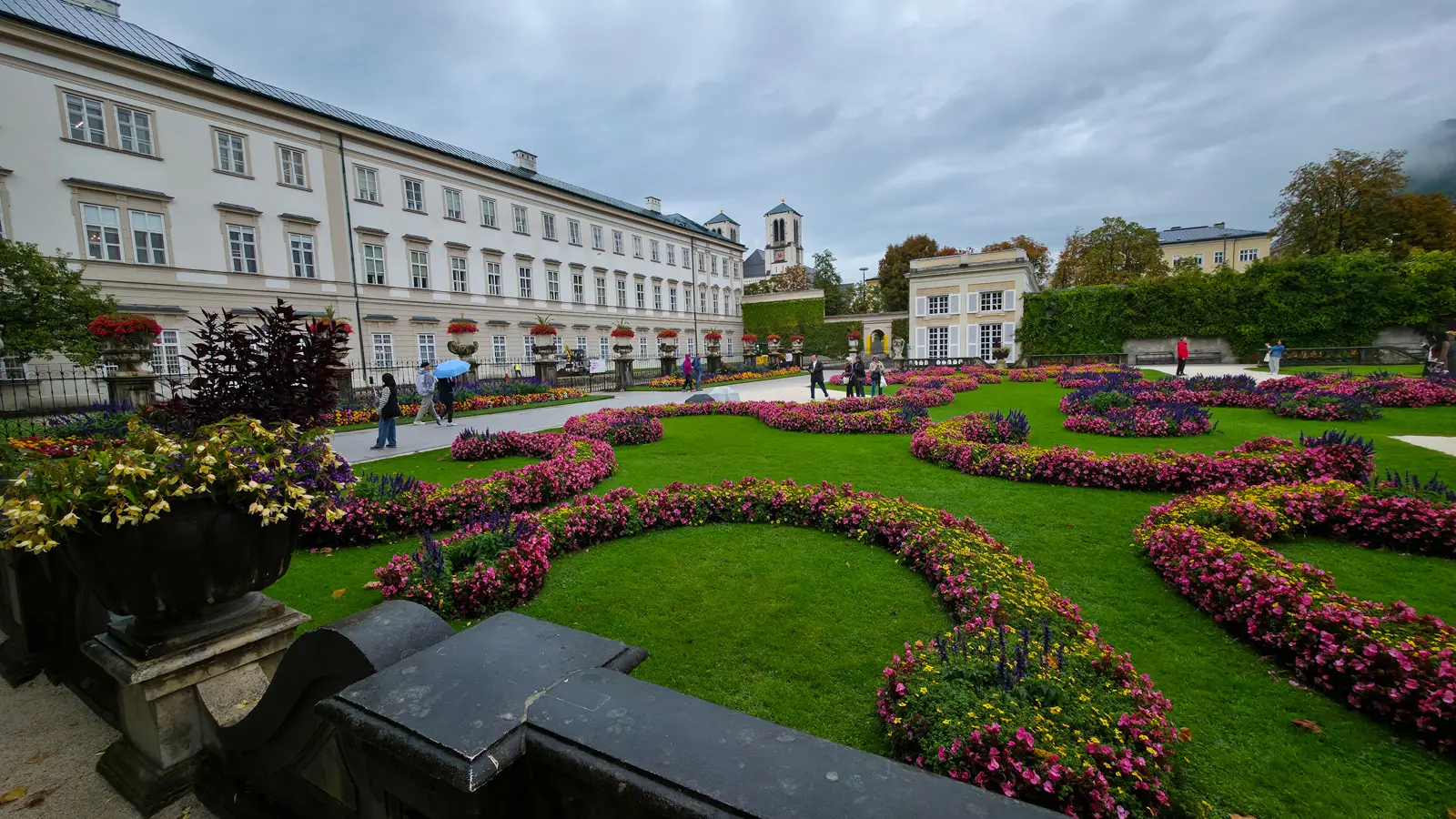
The choreography moves through the space in a way that highlights its geometry. Steps, pathways, and sightlines become part of the performance, the garden’s Baroque structure lending itself naturally to the rhythm of the song. Walking through the gardens today, that sense of movement remains embedded in the layout. The Do-Re-Mi steps, the Pegasus Fountain, and the pathways the children follow all remain intact, offering a tangible connection to the film. Yet the experience extends beyond recognition. Seasonal changes alter the colour and texture of the gardens, while the presence of visitors adds a contemporary layer of activity. The result is a space that exists simultaneously as a film location and a living public garden.
Leopoldskron Palace: Reflections on the Lake
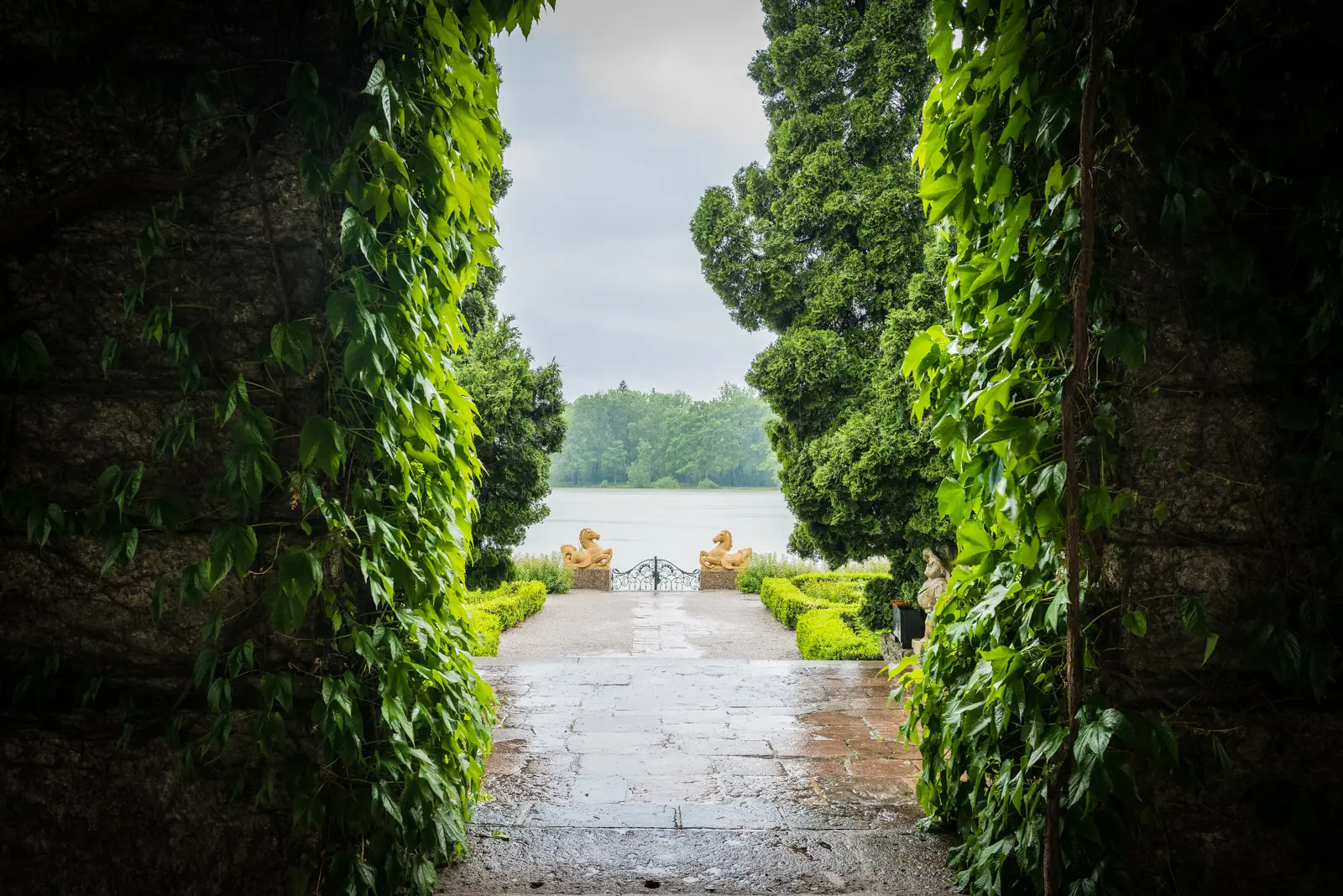
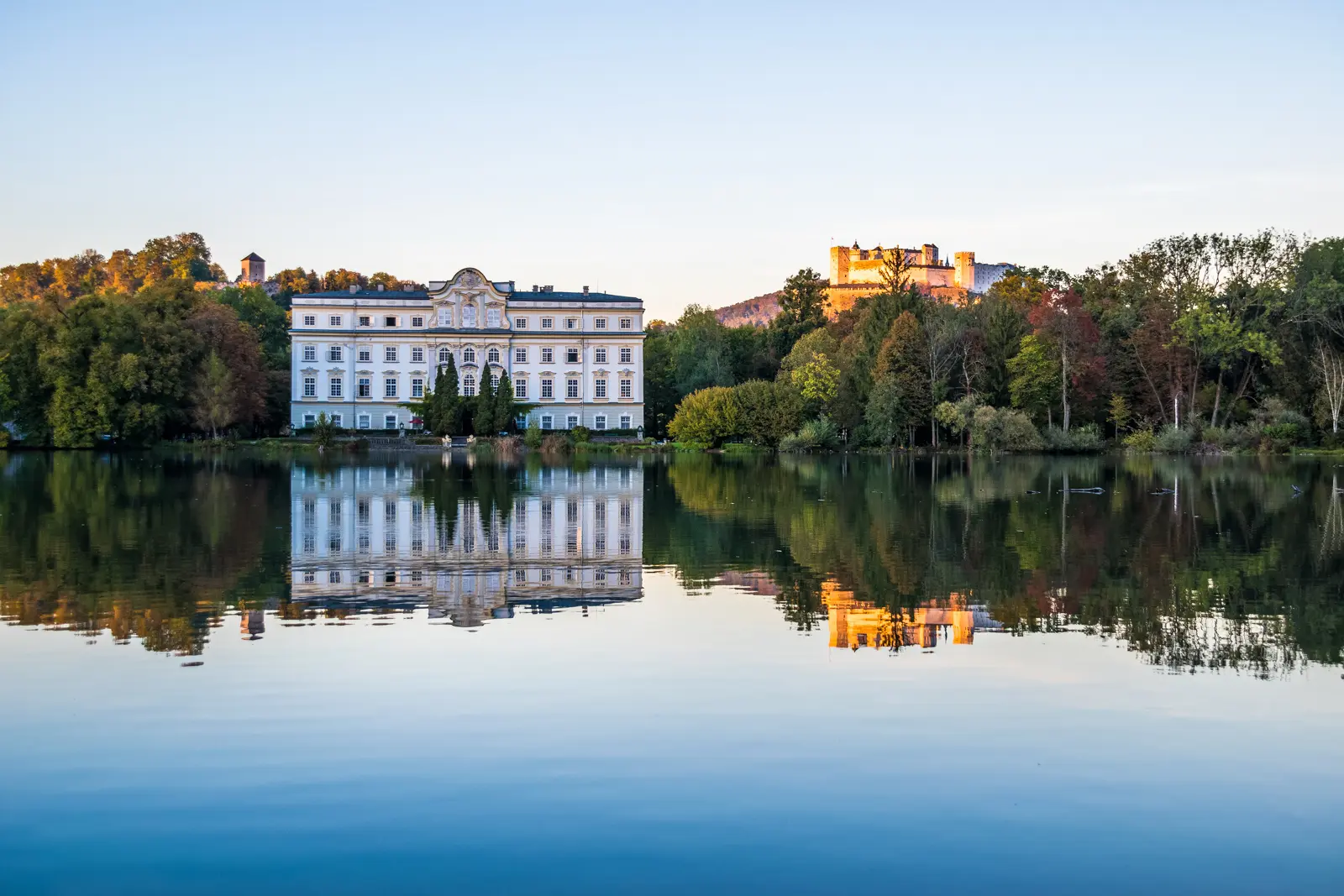
Leopoldskron Palace occupies a fascinating and somewhat complex place in the history of The Sound of Music. The lake and surrounding grounds were used as the lakeside setting associated with the Von Trapp family home, it is here that the famous scene of Maria and the children falling from the rowboat was filmed. The rear façade of the palace, facing the lake, appears on screen, while other elements of the house were created through a combination of alternate locations and studio work.
Because of access limitations, replicas of Leopoldskron’s terrace and distinctive seahorse gate were constructed on the adjacent Meierhof property, while the front façade of the Von Trapp home seen on screen is actually Schloss Frohnburg. A matte painting extending the view toward the Leopoldskron pond completed the illusion, blending multiple elements into a seamless cinematic setting.
Despite this behind-the-scenes complexity, the association between Leopoldskron and the film has endured strongly in cultural memory. The Rococo palace reflected in the still water of the lake creates a composition defined by balance and symmetry, a visual effect that feels both natural and carefully framed, and which continues to draw visitors regardless of the technical distinctions. Today, the palace operates as a hotel, and while access to the grounds is limited, the lakeside view remains one of the most evocative cinematic landscapes in Salzburg.
Hellbrunn Palace & the Gazebo
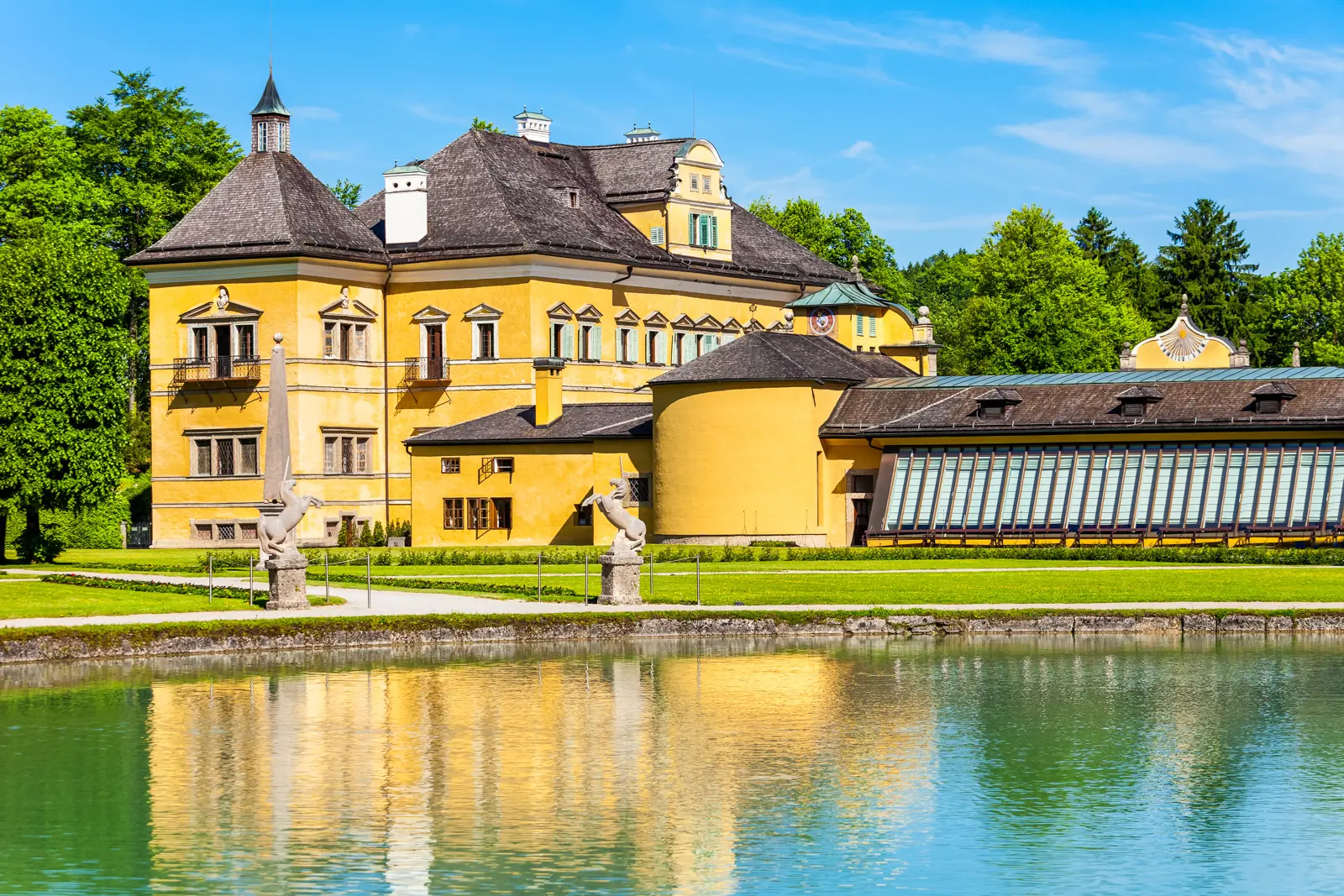
Hellbrunn Palace holds a unique place in the story of The Sound of Music, not because the palace itself appears on screen, but because its gardens now house one of the film’s most recognizable elements: the gazebo associated with “Sixteen Going on Seventeen”. Relocated here after filming, the structure has become a focal point for visitors, linking the cinematic moment to a real, accessible setting.
The palace and its surrounding grounds provide the context for this experience. Designed as a Baroque pleasure palace, Hellbrunn is defined by its landscaped gardens, open spaces, and a sense of movement that contrasts with the more formal geometry of Salzburg’s city centre. Even without direct film scenes tied to the palace itself, the setting enhances the experience of the gazebo, situating it within an environment that feels both natural and curated. Visiting Hellbrunn becomes less about a single filmed moment and more about how that moment has been integrated into a broader landscape, where architecture, garden design, and cinematic memory intersect.
Nonnberg Abbey: A Place of Quiet Continuity
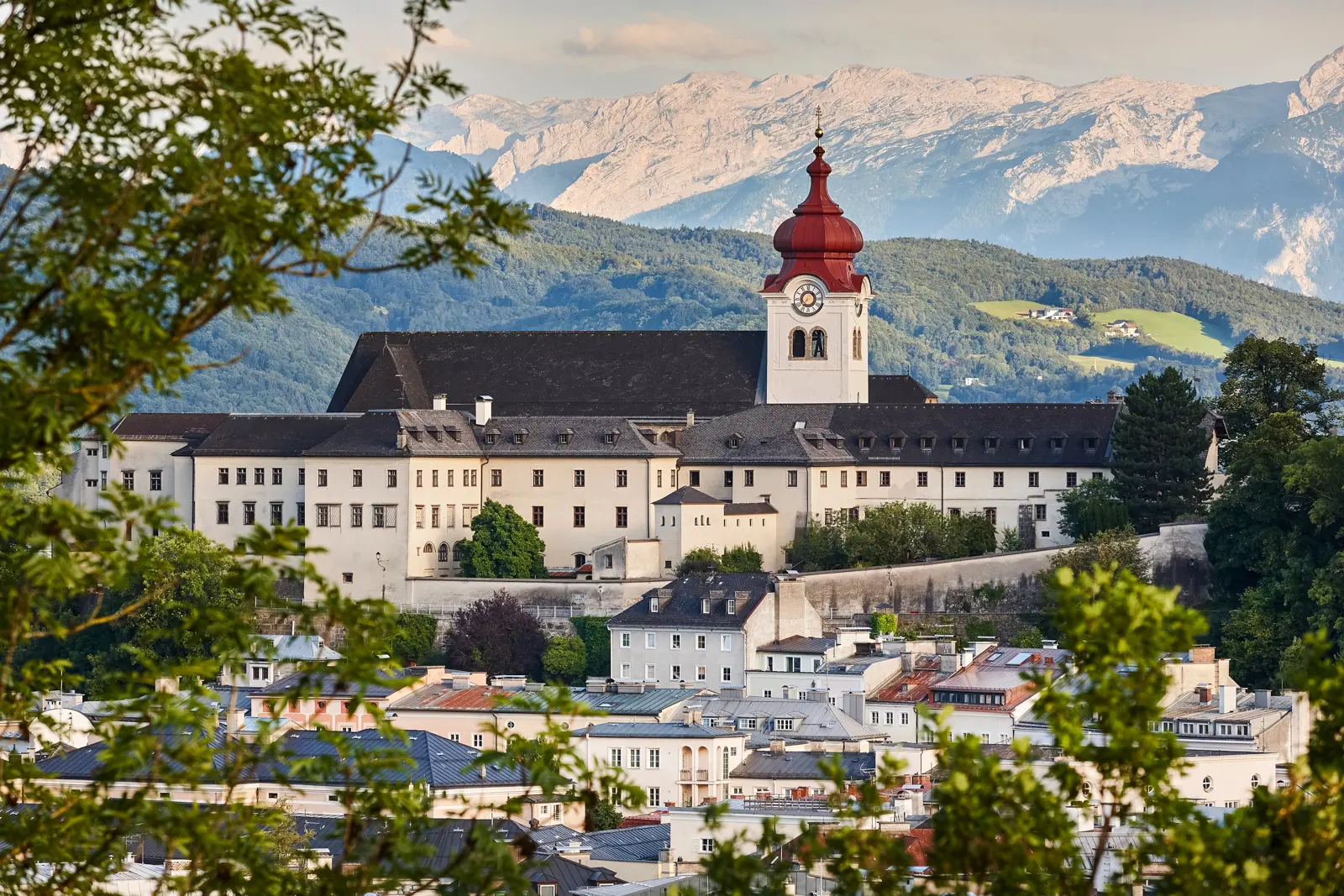
Nonnberg Abbey provides one of the strongest connections between The Sound of Music and historical reality. It is the actual convent where Maria was a novice, and its exterior appears in early scenes of the film. This dual significance, historical and cinematic, gives the site a distinct presence, where narrative and place converge without needing reconstruction. Founded in 714 AD, it is the oldest continuously inhabited convent north of the Alps, a detail that reinforces the sense of continuity that defines the experience. This is not a space preserved for observation, but one that has remained active across centuries, carrying its purpose forward with quiet consistency.
Situated above the Old Town, the abbey introduces a shift in atmosphere. The movement and sound of the city soften as you ascend, replaced by a sense of stillness that reflects its function. Unlike more visually dynamic locations, Nonnberg Abbey is defined by restraint. Its simplicity, elevation, and continuity of use create a space where the narrative of the film feels grounded in something more enduring. As an active convent, access is limited – visitors are generally able to enter only the abbey church – a condition that further reinforces the sense of privacy, separation, and lived tradition that shapes the site.
Residenzplatz & the City Centre Scenes
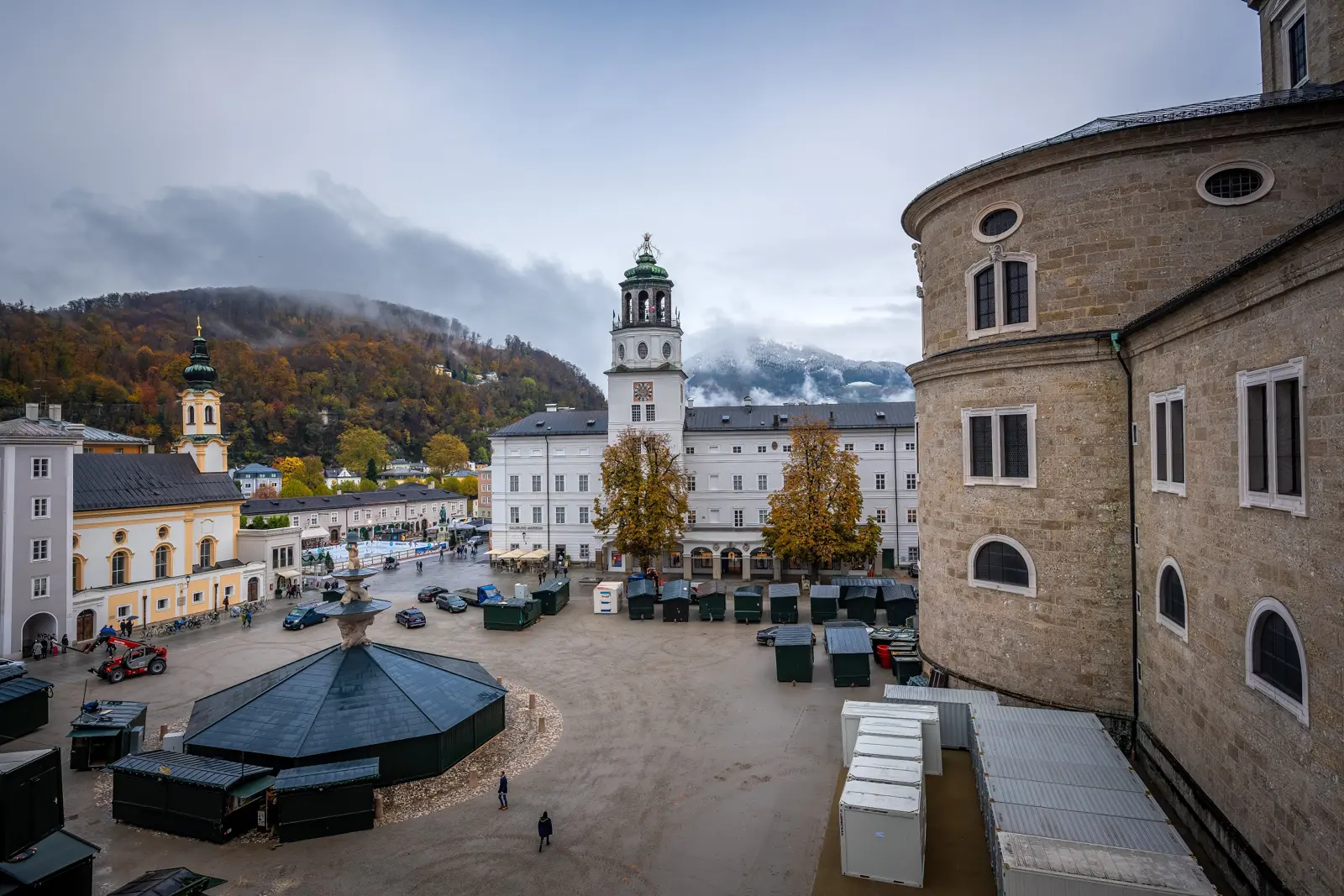
In the heart of Salzburg, Residenzplatz appears during Maria’s spirited “I Have Confidence” sequence. She enters through the Domplatz arches and crosses the broad Baroque square, its rhythm defined by long façades and the monumental Residenzbrunnen. The choreography of her movement – stepping into open space, passing architectural thresholds, and flowing deeper into the city – mirrors the spatial cadence of the square itself.
Today, Residenzplatz remains a lively civic hub, hosting markets, festivals, and daily foot traffic. What makes this location so compelling for visitors is how little it has changed: the same pathways, sightlines, and architectural relationships remain intact. Walking across the square, you can trace Maria’s route almost exactly as it appears on screen, without the need for reconstruction or reinterpretation.
Mozartsteg & Everyday Salzburg
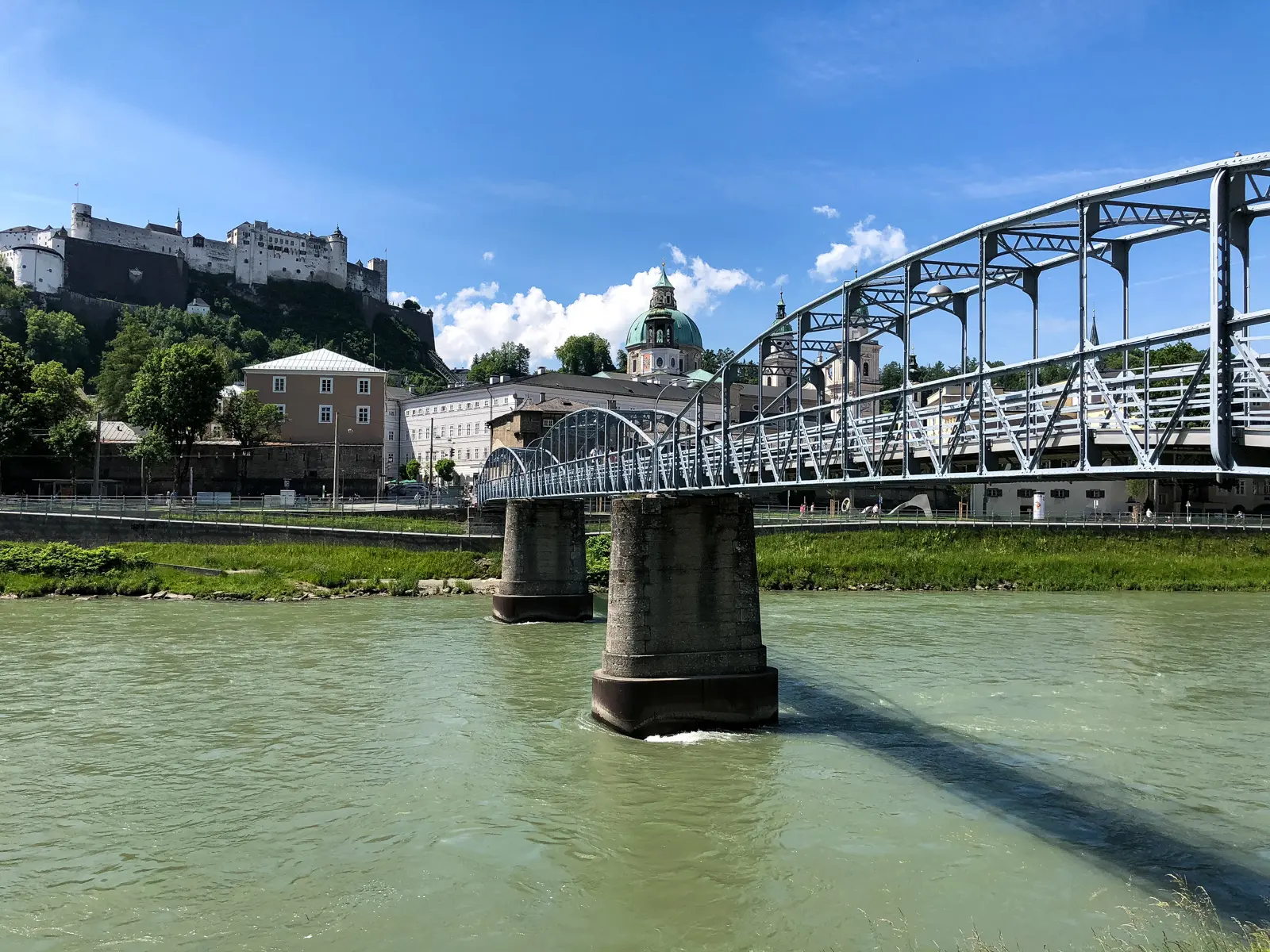
Smaller in scale but equally significant, Mozartsteg appears in montage sequences such as “My Favorite Things”. This 1903 Jugendstil pedestrian bridge links the Steingasse side of the river to the Old Town, offering open views across the Salzach toward the historic skyline and the fortress. Its light iron structure and everyday function give the scene a sense of informality and movement, capturing a more lived‑in perspective of Salzburg.
Unlike the grander locations, this setting feels transitional. It is a space defined by passage rather than arrival, where the rhythm of daily life is most visible. The bridge remains structurally unchanged today, allowing visitors to cross it exactly as Maria and the children do in the film. Its inclusion reinforces that Salzburg’s cinematic identity is not limited to its monumental landmarks, but extends into its ordinary pathways, connections, and the small-scale spaces that shape the city’s daily flow.
Mondsee Basilica: The Wedding Scene
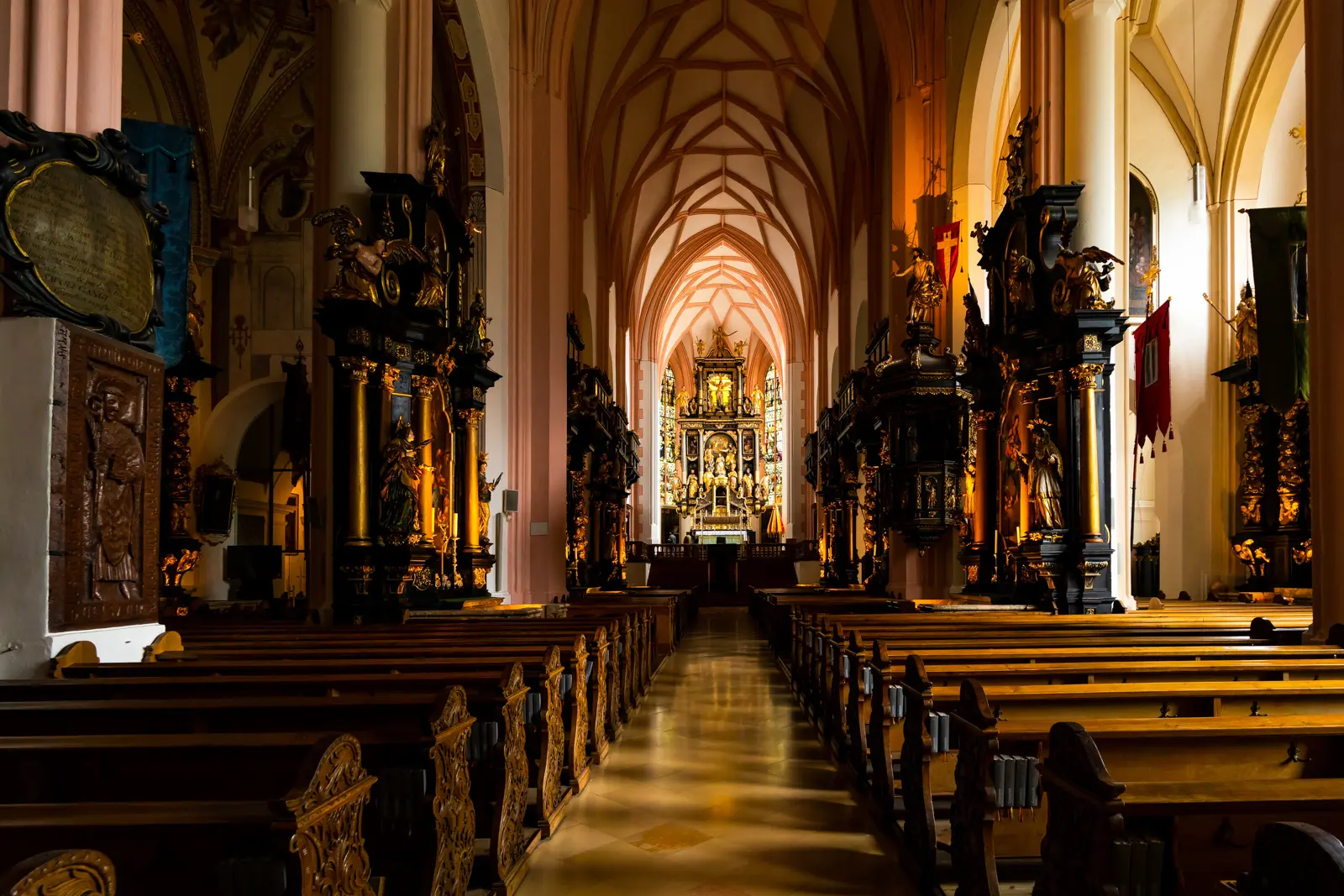
Beyond Salzburg itself, the wedding scene was filmed at Mondsee Basilica (Basilika St. Michael), a former Gothic church later transformed into one of the region’s most striking Baroque interiors. Its richly decorated nave – with gilded altars, sculptural details by Meinrad Guggenbichler, and warm-toned stucco – creates a ceremonial atmosphere that stands in deliberate contrast to the film’s open, natural settings. The basilica’s scale, ornamentation, and long central aisle heighten the sense of occasion, aligning perfectly with the significance of the moment.
Although it requires a short journey beyond the city, the basilica remains almost unchanged since filming, allowing visitors to walk the same aisle seen on screen. Its inclusion expands the film’s geography into the surrounding Salzkammergut region, adding depth and variety to the overall Sound of Music experience.
The Experience: Walking Through Memory and Place
What makes exploring Salzburg through the lens of The Sound of Music so compelling is the way memory and reality overlap in subtle, continuous ways. These locations are not preserved as static film sets, but exist as active parts of the city’s cultural and architectural life, where everyday movement unfolds within spaces that carry cinematic familiarity. Recognition emerges gradually, a pathway in a garden, a façade along a square, a bridge crossing the river, each moment echoing something known while remaining fully grounded in the present. This layering creates an experience that is both personal and shared, shaped by individual memory, collective recognition, and the quiet realization that the film did not construct these places, but revealed them. It is this interplay between observation and remembrance that defines the experience, allowing visitors to move not only through the city, but through a sequence of impressions that feel at once familiar and newly discovered.
Bubbly Tips for Exploring The Sound of Music in Salzburg
- Best way to explore: Join a guided tour or create a self-guided walking route through the Old Town and nearby landmarks.
- Must-see locations: Mirabell Gardens, Nonnberg Abbey, Residenzplatz, and Mozartsteg.
- Don’t miss: Hellbrunn Palace for the gazebo experience and Mondsee Basilica for the iconic wedding scene.
- Timing tip: Early morning or late afternoon offers softer light and fewer crowds, especially in gardens and open squares.
- Combine with history: Pair your visit with Salzburg’s Baroque landmarks to better understand the architectural context of the film.
- Distance from Vienna: Approximately 300 km (about 2.5–3 hours by train or car) from Vienna, making it an easy addition to a broader Austrian itinerary.
Final Thoughts
The Sound of Music continues to shape how Salzburg is seen, not by altering it, but by revealing it. Its locations remain part of the city’s everyday life, allowing visitors to experience them not as preserved scenes, but as spaces that continue to evolve.
What lingers most is not a single location, but a series of connections, between memory and movement, between film and place, and between what is recognised and what is newly discovered. In Salzburg, these layers coexist effortlessly, creating an experience that feels both familiar and entirely your own.
What are your favorite Sound of Music locations in Salzburg? I’d love to hear from you.
Happy travels!

🌟 Everything You Need to Plan Your Dream Trip in 2026
- 🌟 Luxury Hotels - Find premium stays with Booking.com & Hotels.com
- 🏡 Vacation Rentals - Discover unique properties on VRBO
- 🏞️ Guided Tours - Explore with Viator or GetYourGuide
- 🎫 Attraction Tickets - Skip the lines with Tiqets
- 🚢 Ocean Cruises - Set sail with Cruise Direct
- 📱 International SIMs - Stay connected with Saily
- 🚗 Car Rentals - Budget-friendly options from Discover Cars
- 🌐 Secure VPNs - Browse safely with NordVPN
- 💶 Currency Exchange - Best rates with Wise
- 🗣️ Learn Languages - Master the local language with Babbel and Rosetta Stone