
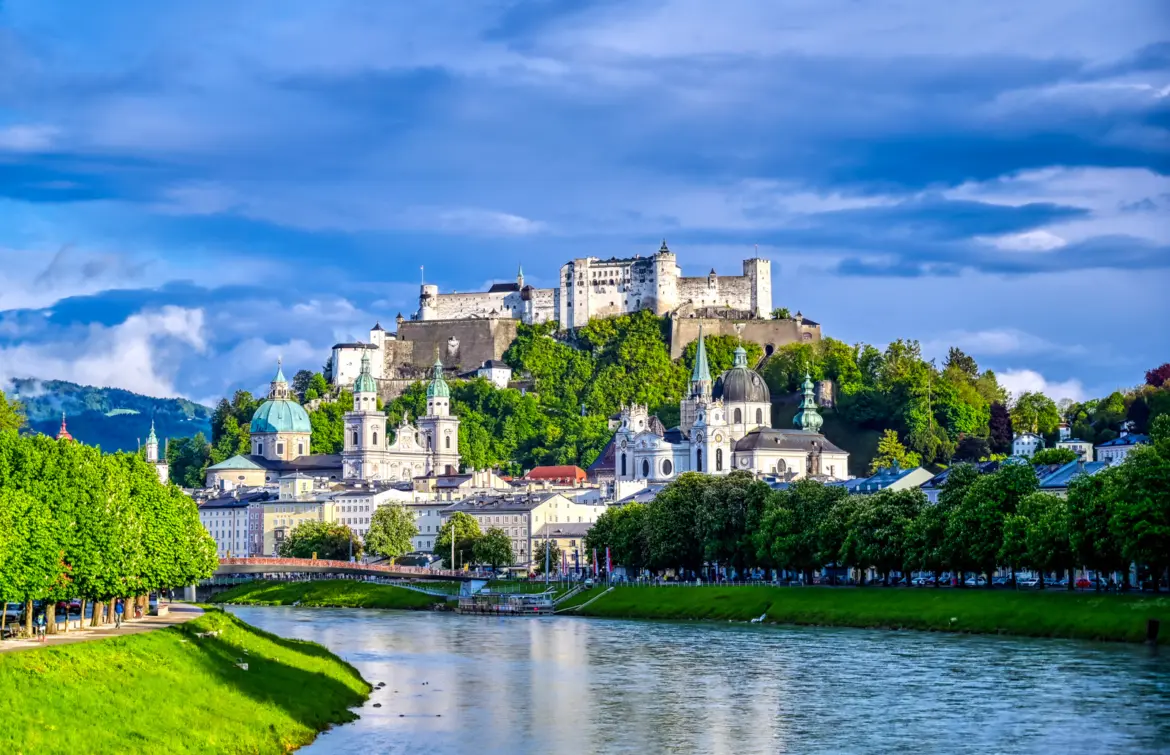
There are places you visit, and then there are places that feel as though they were written into existence: carefully composed, layered with history, and shaped by a quiet sense of beauty that unfolds gradually. Salzburg is one of those places, where every element seems to exist in harmony, creating a setting that feels both intentional and effortless. From the moment you arrive, there is a sense that the city reveals itself slowly, not through grand gestures, but through details that invite you to look closer and stay longer.
What makes Salzburg so captivating is not only its visual beauty, but the atmosphere it creates as you move through it. It feels intimate yet expansive, historic yet alive, familiar yet entirely distinct. The combination of landscape, architecture, and culture produces a kind of quiet coherence, where nothing feels out of place and everything contributes to a larger experience. It is a city that does not rush to impress, but instead invites you to slow down, to observe, and to become part of its rhythm.
Salzburg at a Glance
🏰 Hohensalzburg Fortress · One of the best-preserved medieval castles in Europe. Reach it on foot or by the Festungsbahn funicular.
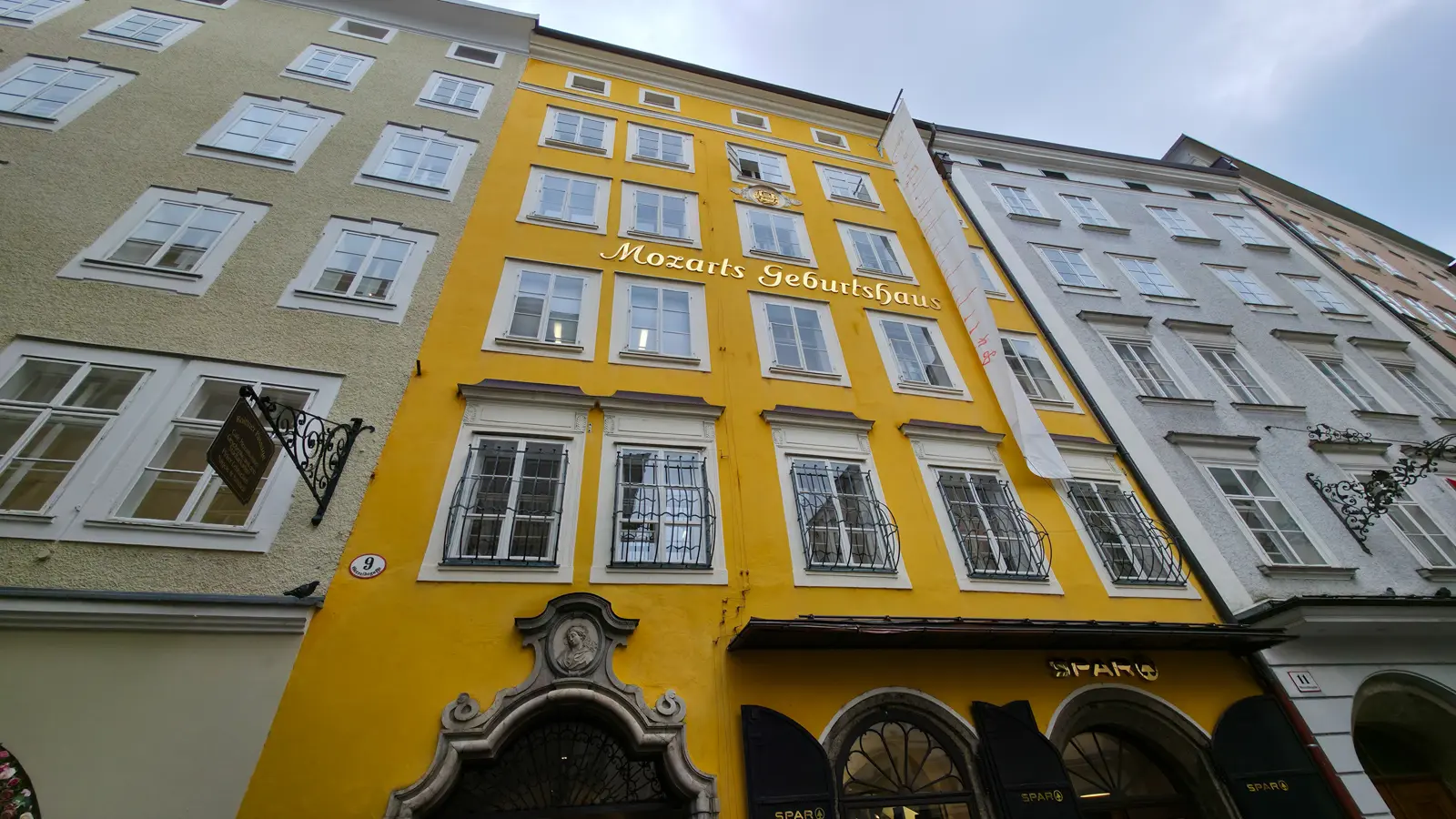
🎼 Mozart’s Birthplace · Getreidegasse 9. Open daily 9 AM–5:30 PM (until 8:30 PM during the Salzburg Festival).
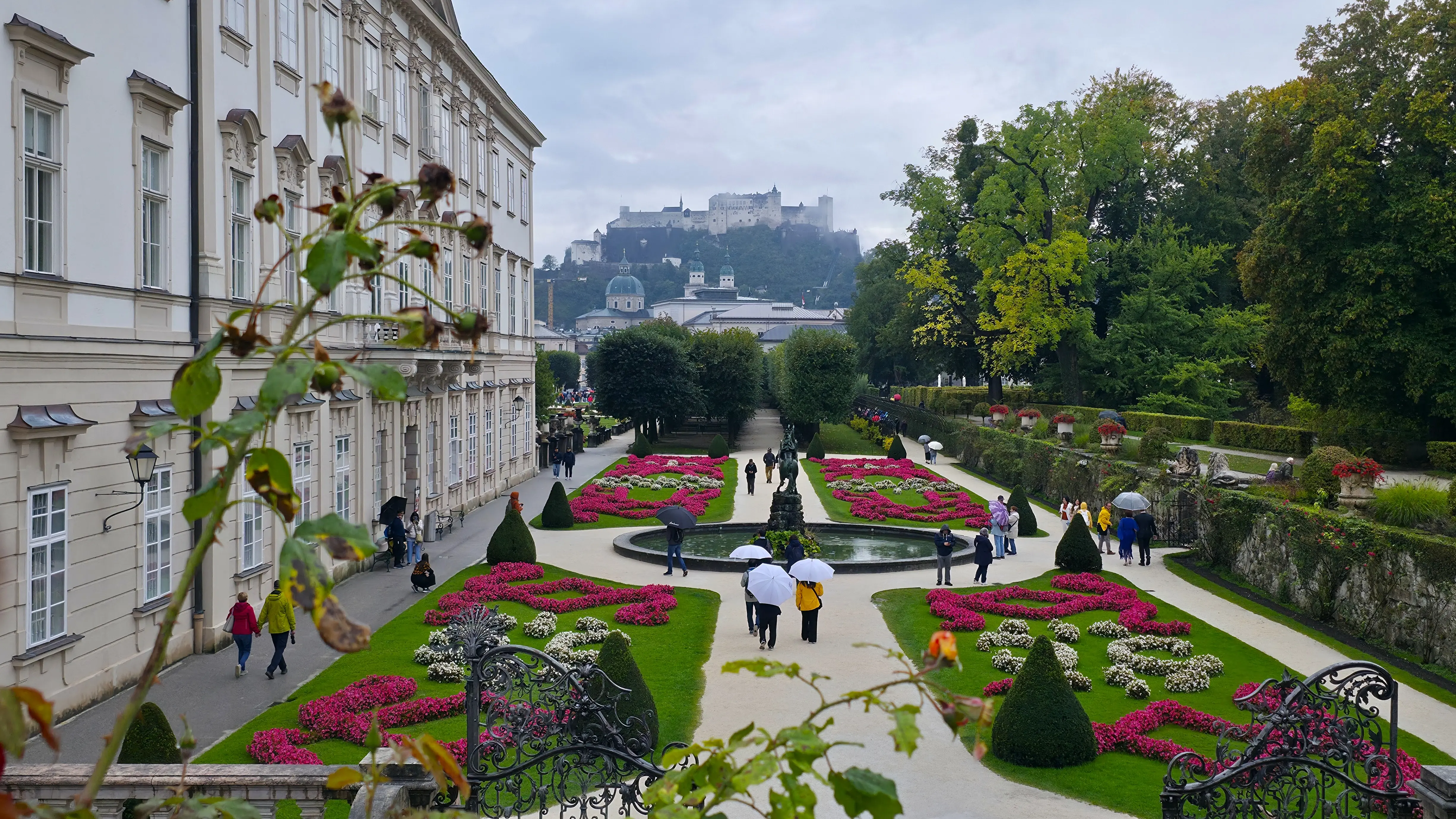
🌼 Mirabell Palace & Gardens · Palace built 1606, gardens laid out 1687 by Fischer von Erlach. Home to the Do-Re-Mi view from The Sound of Music.
🗻 Mönchsberg · A quieter elevated ridge with tree-lined paths. Museum der Moderne sits at the summit.
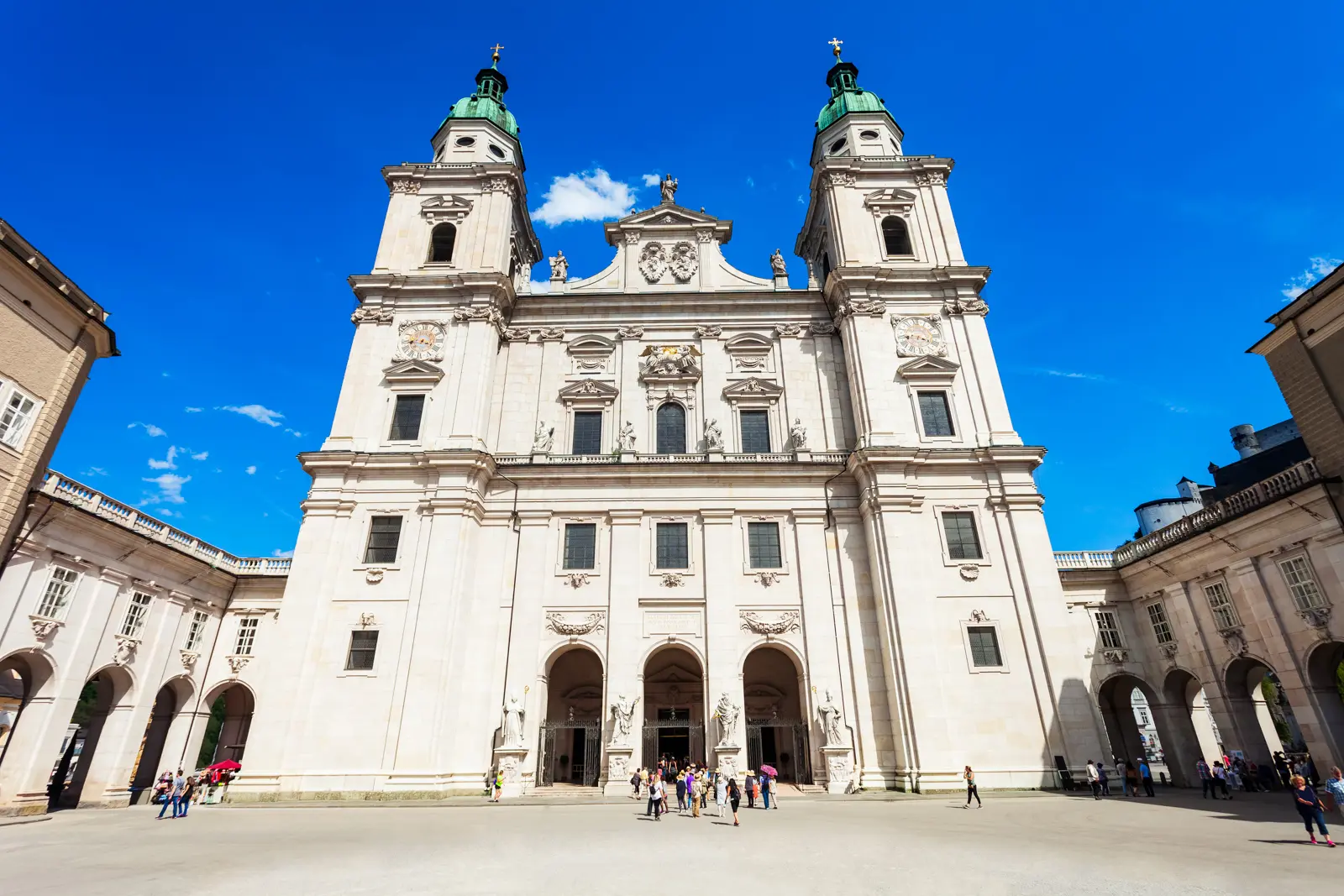
⛪ Salzburg Cathedral (Salzburger Dom) · Where Mozart was baptised in 1756. The heart of the Baroque Old Town.
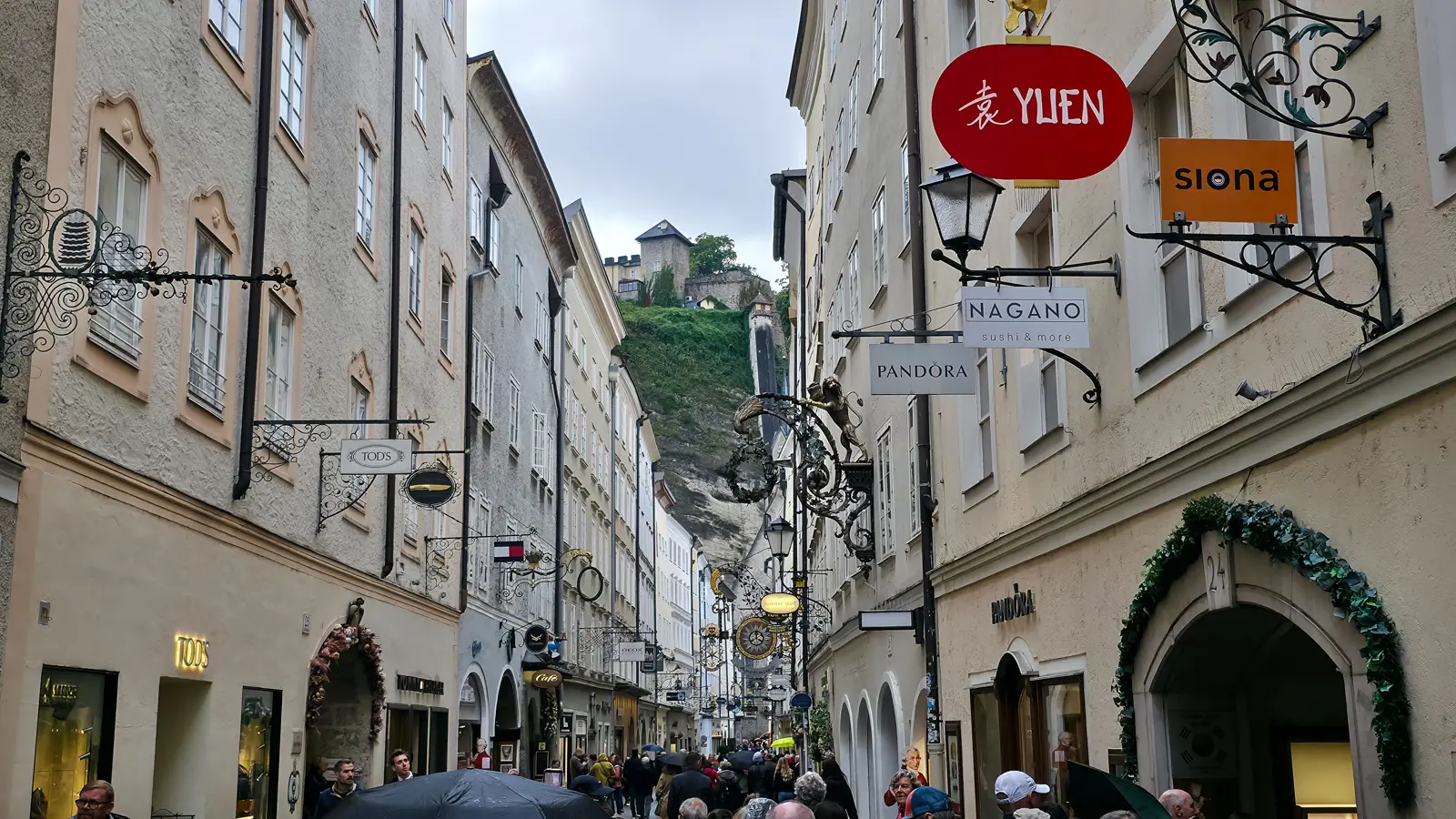
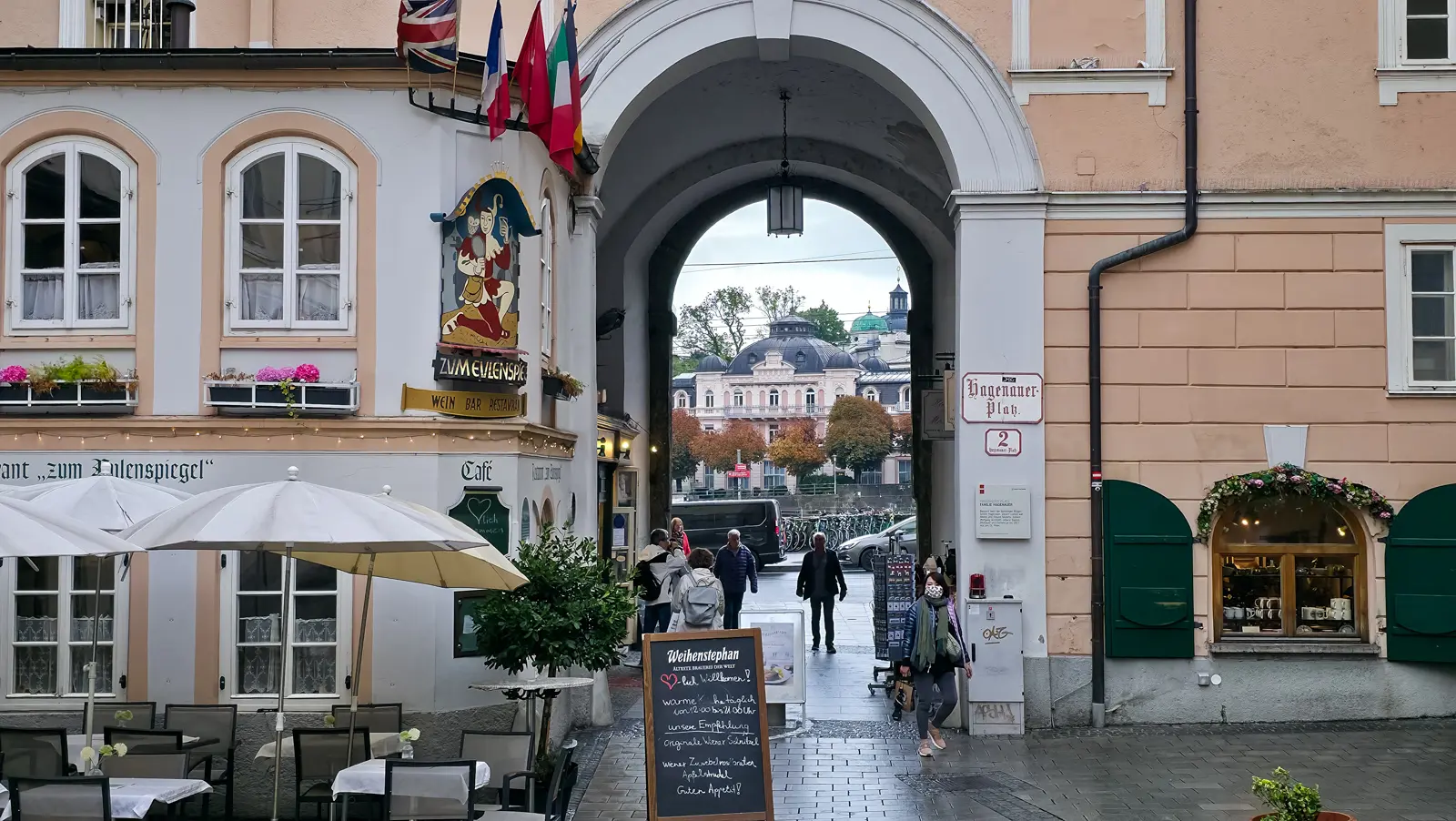
🛍️ Getreidegasse · Historic main street with wrought-iron guild signs and hidden courtyards.
🚆 From Vienna · 2.5 to 3 hours by ÖBB Railjet (Wien Hbf → Salzburg Hbf), roughly hourly.
⏰ Best time · Early morning and golden hour for photography. Spring and early autumn for fewer crowds. Festival season (late July–August) is vibrant but packed.
The Setting: Between Mountains and River
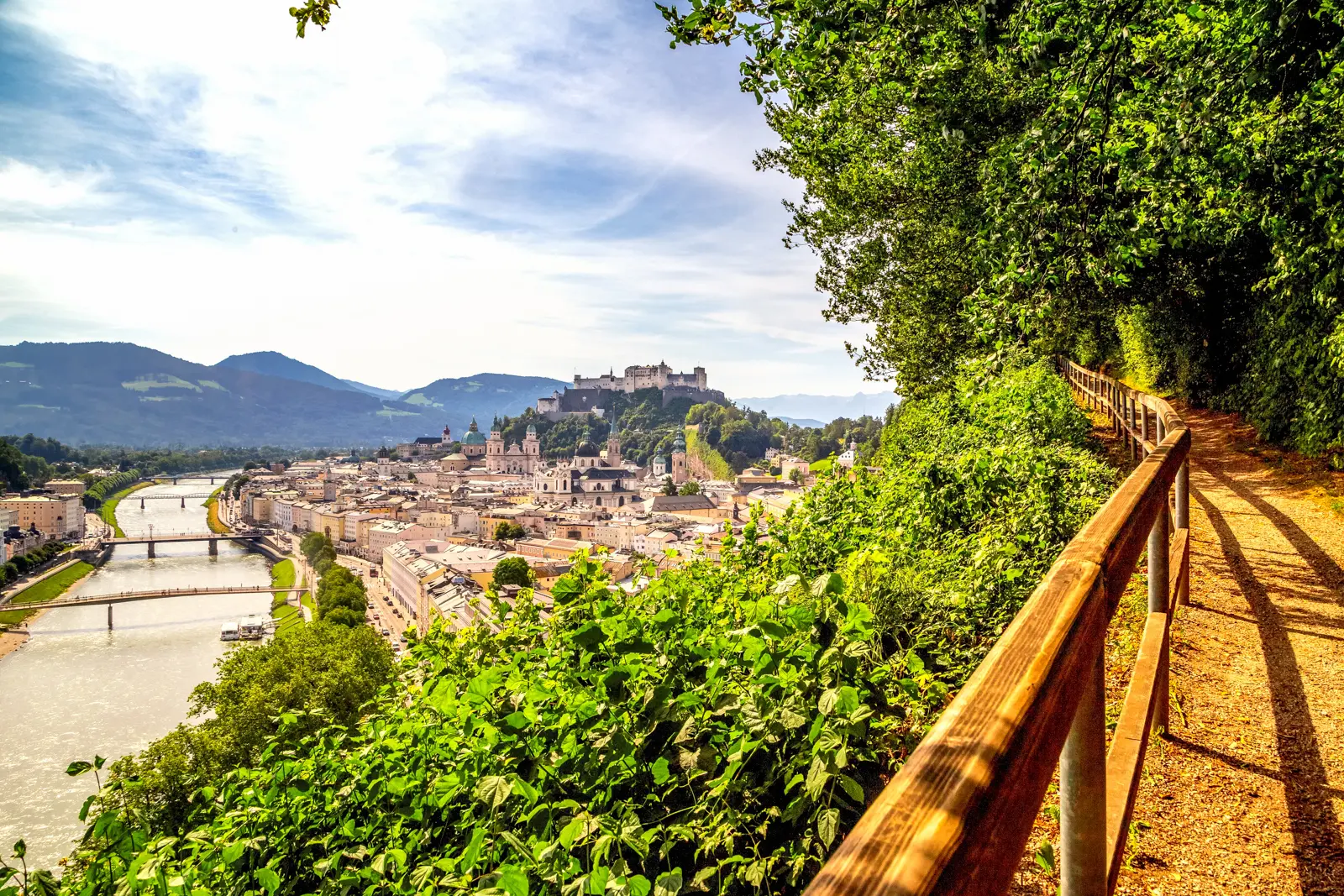
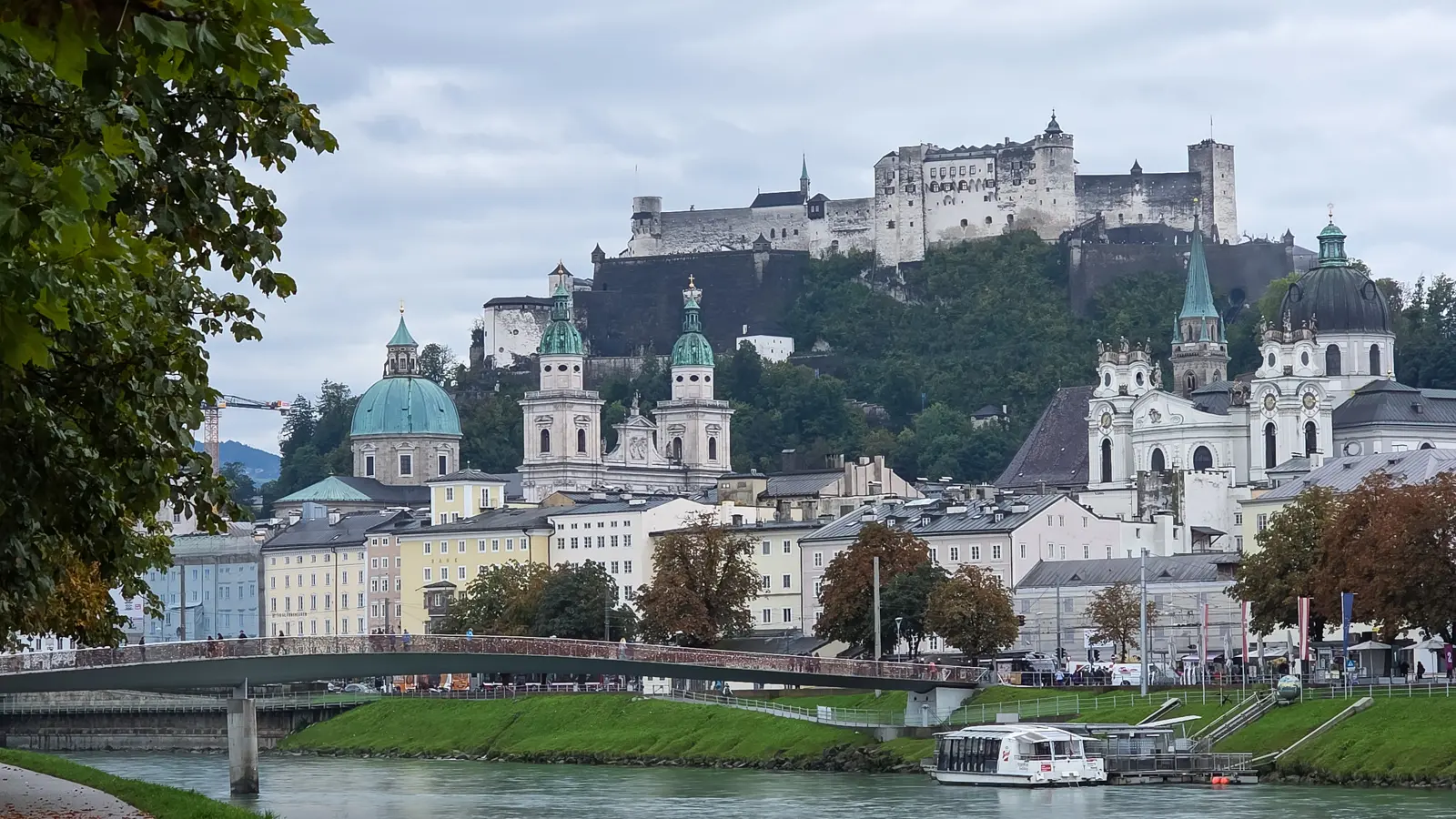
Set along the banks of the Salzach River, Salzburg is defined by a remarkable balance between natural landscape and architectural form. The district of Altstadt rises with its baroque façades, domes, and towers, while beyond it the landscape opens toward rolling hills and distant alpine peaks. This contrast is not abrupt, but gradual, creating a transition between built environment and nature that feels seamless and deeply integrated.
The river itself plays a central role in shaping this experience. It introduces movement and reflection, creating ever-changing perspectives as light interacts with the water. Bridges crossing the Salzach offer vantage points that shift your understanding of the city, revealing new alignments between buildings, sky, and landscape. At times, the river feels like a mirror, softening the edges of the city; at others, it carries a gentle sense of motion that anchors Salzburg in the present moment.
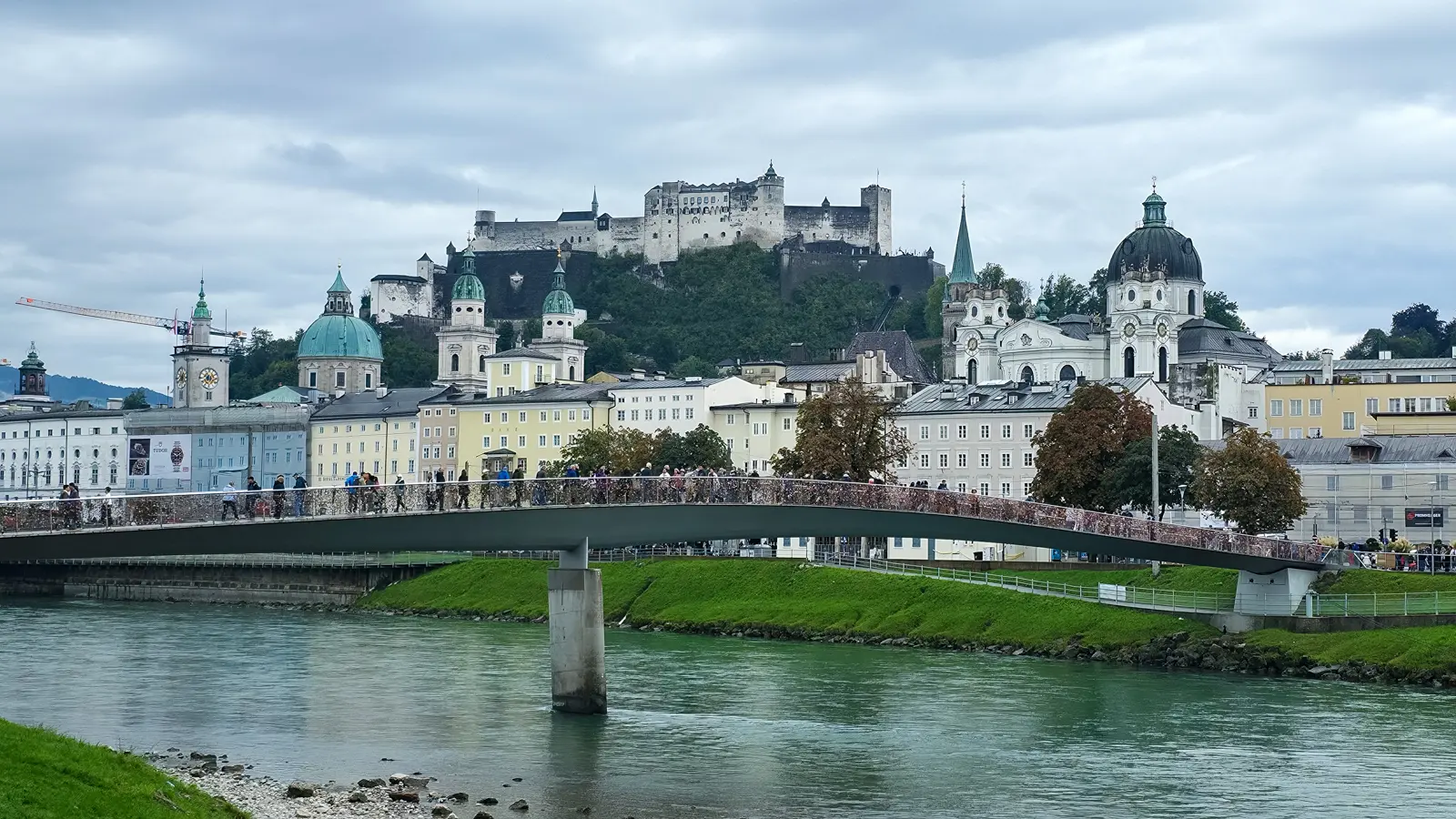
The Old Town: Layers of History
Walking through Salzburg’s Old Town feels less like navigating a city and more like moving through a sequence of interconnected spaces, each revealing a different aspect of its history. Streets such as Getreidegasse unfold with a refined intimacy, lined with historic façades, wrought-iron guild signs, and passageways that open into quiet courtyards. These transitions between open and enclosed spaces create a rhythm that encourages exploration, where each turn feels both deliberate and surprising.
The architectural language of the Old Town is deeply rooted in its baroque heritage, shaped by centuries of ecclesiastical and cultural influence. Landmarks such as the Salzburg Cathedral anchor the city with their scale and presence, while smaller elements – carved doorways, textured walls, layered rooftops – add a richness that becomes more apparent the longer you observe. What makes this area so compelling is not simply its preservation, but the way it continues to function as a living environment, where history and contemporary life coexist seamlessly.
The Views: A City from Above
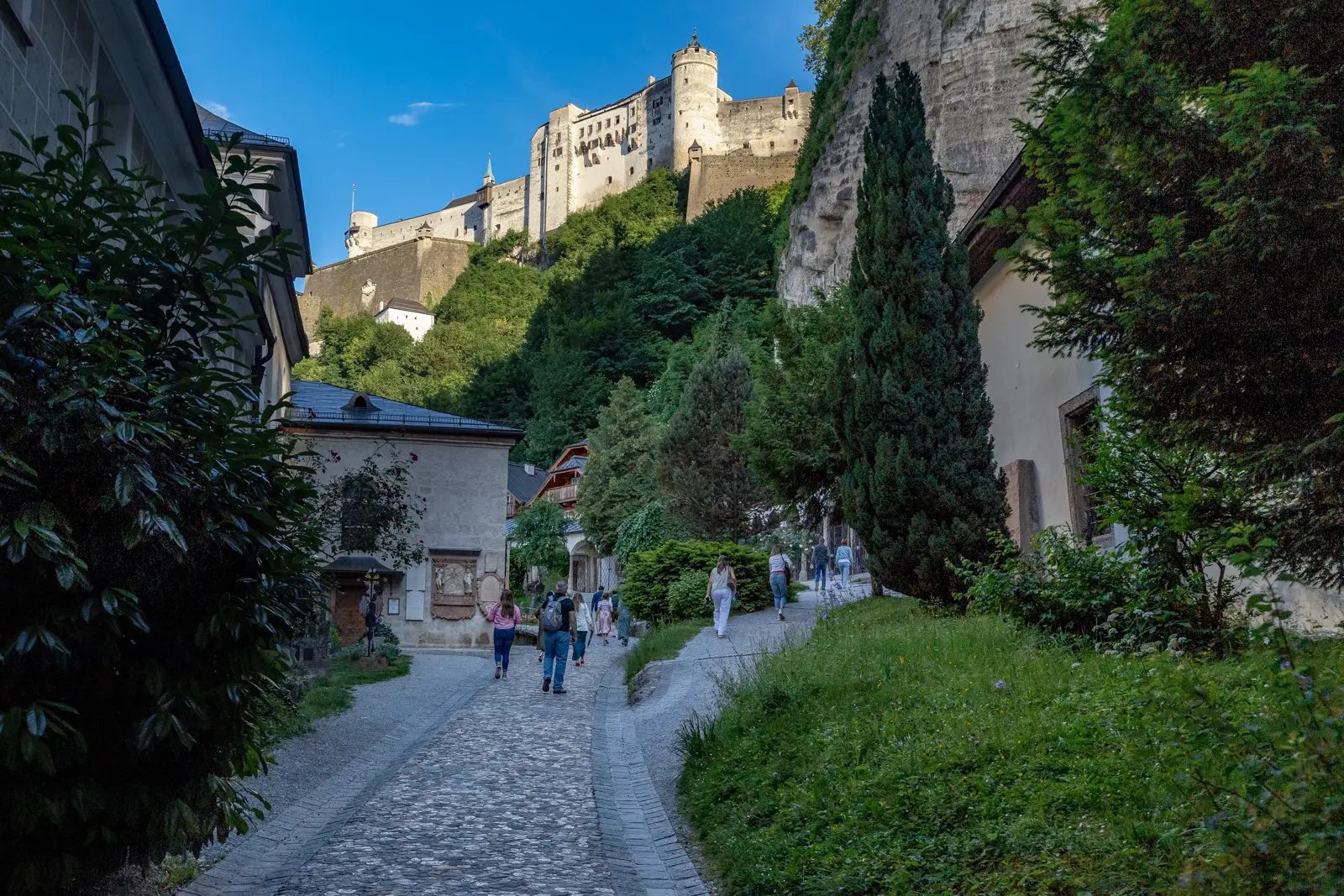
One of the defining experiences of Salzburg is seeing it from above, where its full composition becomes visible. The Hohensalzburg Fortress rises prominently above the city, one of the largest and best-preserved medieval castles in Europe, offering panoramic views that bring together Salzburg’s architectural and natural elements in a single, cohesive frame. From this vantage point, the Salzach River traces its path through the city, the rooftops form a textured pattern across the Old Town, and the surrounding mountains provide a sense of scale that extends far beyond the urban landscape.
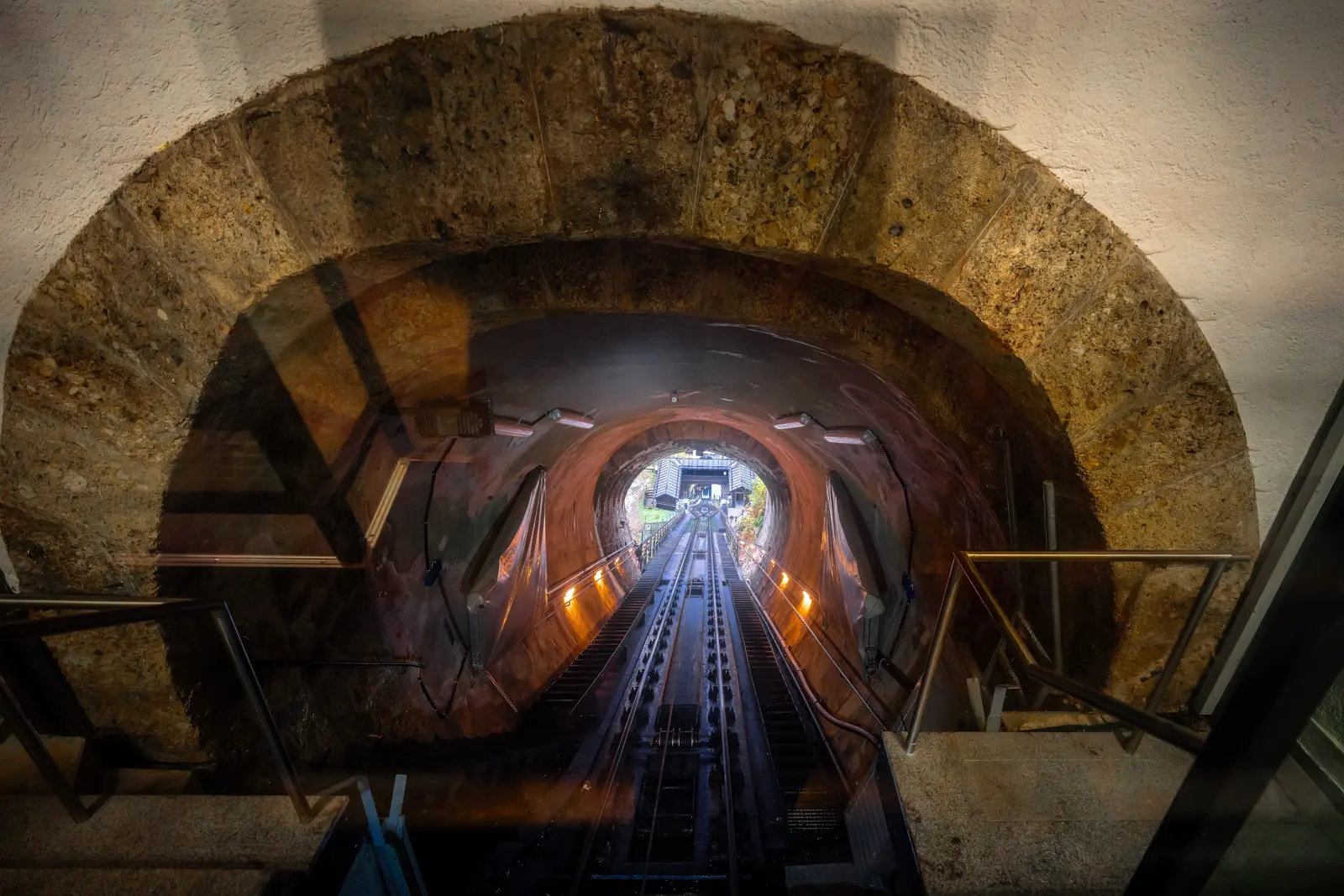
Reaching the fortress is part of the experience itself, whether by walking up through the historic pathways or taking the funicular. The gradual ascent introduces a natural shift in perspective, allowing the city to unfold beneath you in stages, each view revealing new relationships between streets, buildings, and open spaces. Once at the top, the sense of elevation creates clarity, making visible the structure and rhythm of Salzburg in a way that is not apparent at street level. It is here that the city feels both expansive and contained, shaped as much by its geography as by its history.
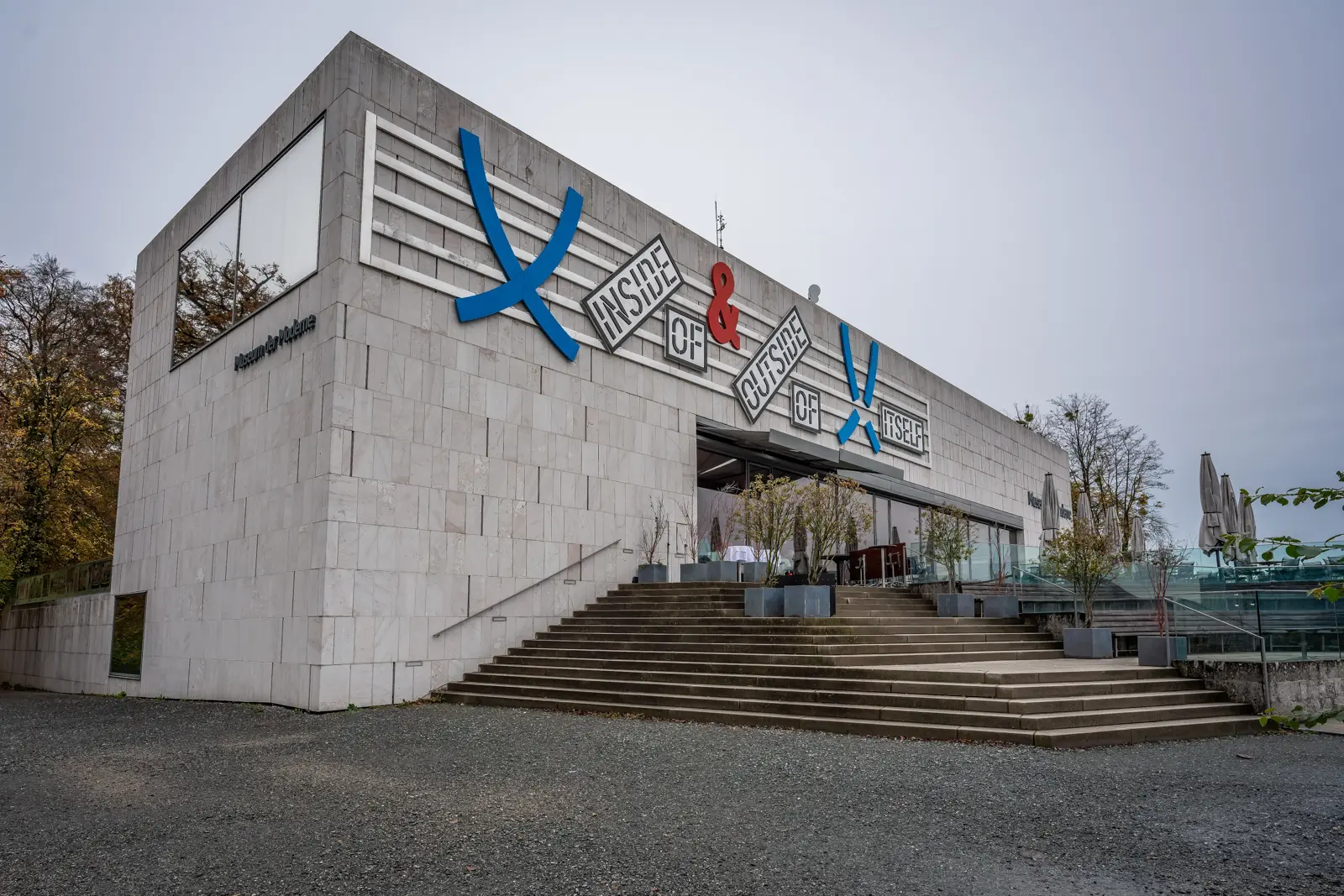
For those seeking a different elevated perspective, the Mönchsberg mountain offers an equally rewarding alternative. Running alongside the Old Town, it is easily accessible on foot or by lift, and its long, tree-lined paths provide a more continuous and unhurried view of the city below. The Museum der Moderne sits at its summit, making the ascent as culturally engaging as it is scenic. Together, the fortress and the Mönchsberg offer two distinct ways of experiencing Salzburg from above, one monumental and historic, the other quieter, more contemplative, and deeply connected to the surrounding landscape.
The Atmosphere: Music, Light, and Movement
Salzburg carries an atmosphere that is subtle yet deeply present, shaped by light, sound, and the cultural identity of the city. As the birthplace of Wolfgang Amadeus Mozart, music feels embedded in its character, influencing not only its history but also its present-day identity. Mozart’s Birthplace – his Geburtshaus on Getreidegasse, now a museum – offers a direct point of connection to that legacy, drawing visitors into the story of the composer’s early life and the world he inhabited. This musical heritage finds its fullest contemporary expression in the Salzburg Festival, founded in 1920 and now one of the world’s most prestigious performing arts events, attracting musicians, conductors, and audiences from across the globe each summer for opera, theatre, and concert performances of the highest calibre. Together, these two threads, the historical and the living, give Salzburg’s musical identity a depth that extends well beyond the merely symbolic.
Throughout the day, the city evolves in tone and rhythm, shaped as much by light as by movement. Morning light softens architectural details and quiets the streets, midday introduces clarity and activity, and evening brings a more reflective, almost contemplative atmosphere. As dusk settles, the interplay between natural light and illumination transforms the city into something more intimate and layered. Reflections along the Salzach River, the glow of streetlights, and the quiet presence of the surrounding landscape create moments that feel almost cinematic, where the experience becomes less about observation and more about immersion.
Mirabell and Beyond: Spaces to Pause
Spaces such as the Mirabell Gardens offer a different perspective on Salzburg, one that emphasizes openness, structure, and calm. The palace itself was commissioned in 1606 by Prince-Archbishop Wolf Dietrich von Raitenau as a residence for his beloved Salome Alt. It was originally called Schloss Altenau. After Wolf Dietrich’s deposition in 1612, his successor Markus Sittikus renamed it Mirabell, from the Italian mirabile (“admirable”) and bella (“beautiful”). The gardens came later. They were laid out from 1687 under Archbishop Johann Ernst von Thun to plans by Johann Bernhard Fischer von Erlach, one of Austria’s most important Baroque architects. Their symmetry, order, and visual clarity still reflect that original design. Ottavio Mosto added his four groups of mythological sculptures around 1690, and the palace grounds also include a famous Dwarf Garden — considered the oldest of its kind in Europe.
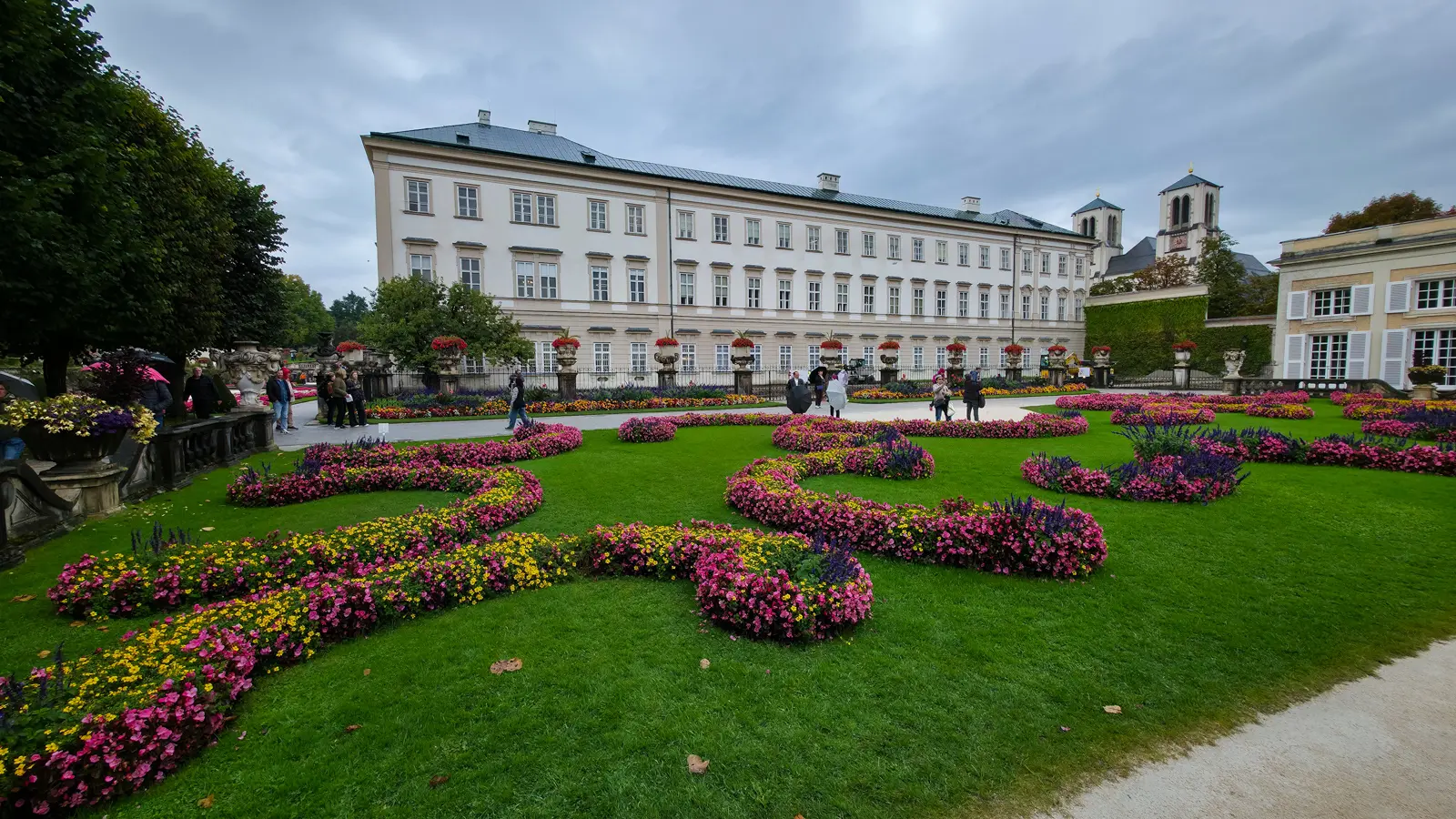
The gardens themselves are carefully composed, with geometric layouts, sculptural elements, and pathways that guide movement while still allowing for moments of stillness. From here, the view toward the Hohensalzburg Fortress creates one of the most iconic compositions in the city, where nature and architecture align with striking clarity. This perspective is widely recognized, not only for its visual balance, but also as one of the memorable filming locations from The Sound of Music, adding a layer of cultural familiarity to the experience.
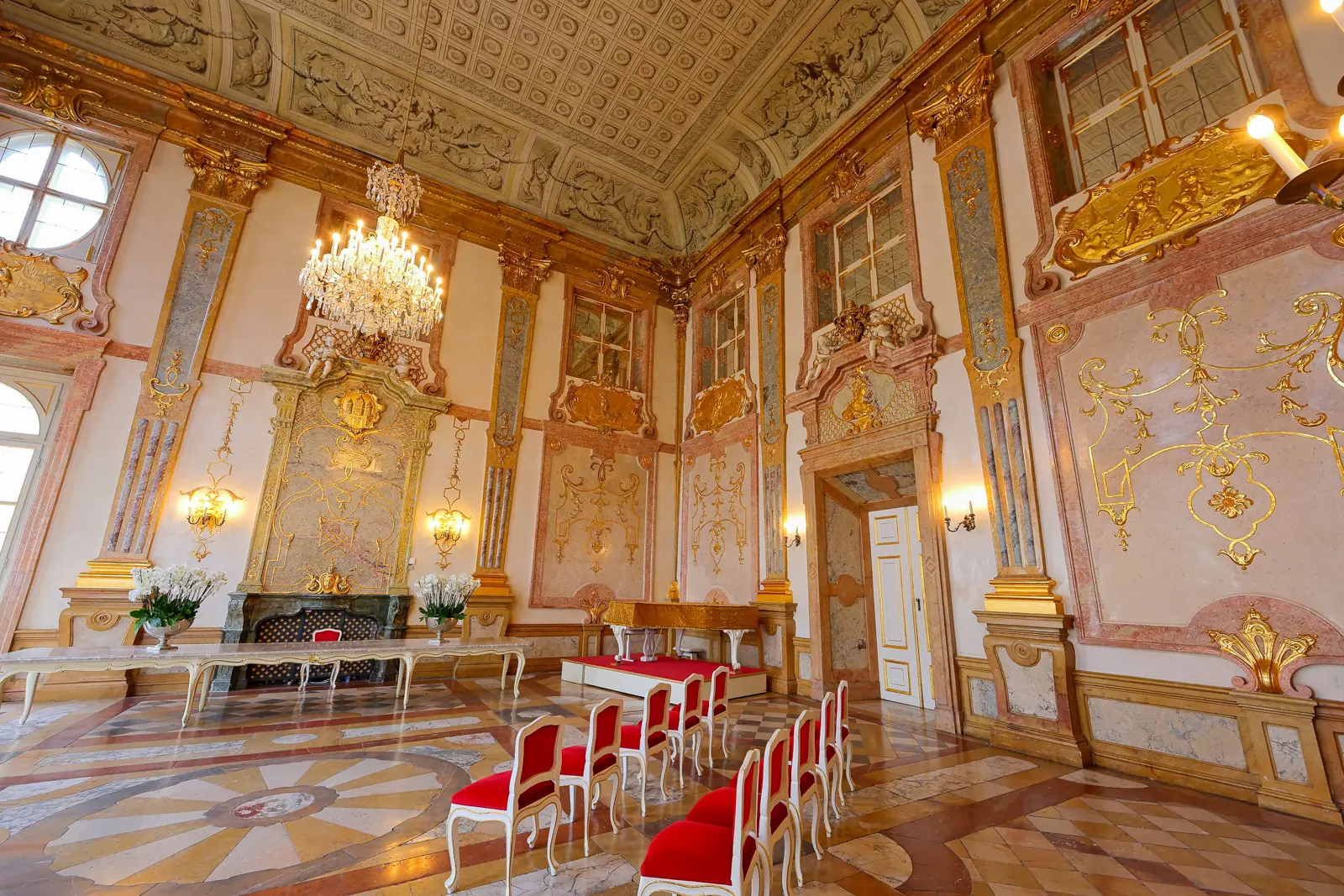
The palace itself is equally worth noting. Its Marble Hall (Marmorsaal) is considered one of the finest Baroque interiors in Salzburg, a space known for its elegance, proportions, and historical significance. The hall we see today dates to the 1721–1727 rebuild under Prince-Archbishop Franz Anton von Harrach, designed by Johann Lukas von Hildebrandt (the same architect who gave Vienna its Belvedere Palace). A young Wolfgang Amadeus Mozart and his sister Nannerl performed here as children, and Mozart’s music is still played here regularly today. Leading up to it is the Angels’ Staircase (Engelsstiege), designed by Hildebrandt and decorated in 1726 with marble putti by the sculptor Georg Raphael Donner. Locals often call it the Donnerstiege, a pun on Donner’s name and the German word for thunder. Even if you aren’t attending a concert, the staircase is worth the short detour.
These spaces provide an essential counterbalance to the density of the Old Town. They invite you to pause, to sit, and to take in the surroundings without urgency. Whether along the riverbanks, within the gardens, or in quieter corners of the city, these moments of stillness become an integral part of the experience. Salzburg reveals itself most fully when you allow time for these pauses, where observation turns into reflection.
The Experience: A City That Stays With You
What makes Salzburg truly memorable is not defined by a single landmark or moment, but by the way the city feels as a whole. There is a coherence to it, a sense that architecture, landscape, and culture exist in quiet dialogue with one another. Nothing feels imposed or out of place; instead, each element contributes to an environment that feels complete, balanced, and naturally composed. It is a city that reveals itself gradually, where the experience is shaped not by highlights alone, but by the continuity between them.
As you move through Salzburg, it is often the smaller, more fleeting moments that leave the strongest impression: the sound of footsteps echoing softly through a narrow street, the pause at a bridge as the river moves below, the subtle shift in atmosphere as day transitions into evening. These are not dramatic moments, yet they carry a quiet sense of significance that lingers. Time feels slightly extended here, as though the city encourages you to slow your pace and remain present within it.
In this way, Salzburg becomes less about what you see and more about how you experience it. It is a place that stays with you not through a single image, but through a collection of impressions – a rhythm, a feeling, a sense of balance that continues to resonate long after you leave.
Bubbly Tips for Visiting Salzburg
- Where is Salzburg located: Salzburg is located in western Austria near the German border, approximately 2.5 to 3 hours from Vienna by train, making it an ideal destination for a day trip or a longer stay.
- Best time to visit Salzburg Austria: Spring and early autumn offer mild weather and fewer crowds, while winter brings a magical atmosphere with Christmas markets. Summer is vibrant and lively, especially during festival season.
- Top things to see in Salzburg: Don’t miss Hohensalzburg Fortress, Salzburg Cathedral, Getreidegasse, Mirabell Gardens, and scenic views along the Salzach River.
- How to explore Salzburg Old Town: The historic center is best explored on foot. Wander slowly through its streets, allowing time to discover hidden courtyards and quieter corners.
- Photography tips Salzburg Austria: Early morning and golden hour provide the most beautiful light, especially for capturing the fortress, river reflections, and architectural details of the Old Town.
- Take your time: Salzburg is best experienced slowly. Pause often, observe your surroundings, and allow the city’s atmosphere to unfold naturally.
Final Thoughts
Salzburg is a city that feels both timeless and present, where history is not something you observe from a distance, but something you experience as you move through it. It is elegant without being overwhelming, detailed without being crowded, and atmospheric without needing to try.
What stays with you is not only the beauty of the city, but the feeling it creates – a sense of calm, balance, and quiet connection. Salzburg lingers not as a checklist of places, but as an experience that continues to unfold in memory, shaped by moments that felt both simple and complete.
Is Salzburg on your list, or have you already experienced its charm? I’d love to hear your thoughts!
Happy travels!

🌟 Everything You Need to Plan Your Dream Trip in 2026
- 🌟 Luxury Hotels - Find premium stays with Booking.com & Hotels.com
- 🏡 Vacation Rentals - Discover unique properties on VRBO
- 🏞️ Guided Tours - Explore with Viator or GetYourGuide
- 🎫 Attraction Tickets - Skip the lines with Tiqets
- 🚢 Ocean Cruises - Set sail with Cruise Direct
- 📱 International SIMs - Stay connected with Saily
- 🚗 Car Rentals - Budget-friendly options from Discover Cars
- 🌐 Secure VPNs - Browse safely with NordVPN
- 💶 Currency Exchange - Best rates with Wise
- 🗣️ Learn Languages - Master the local language with Babbel and Rosetta Stone