
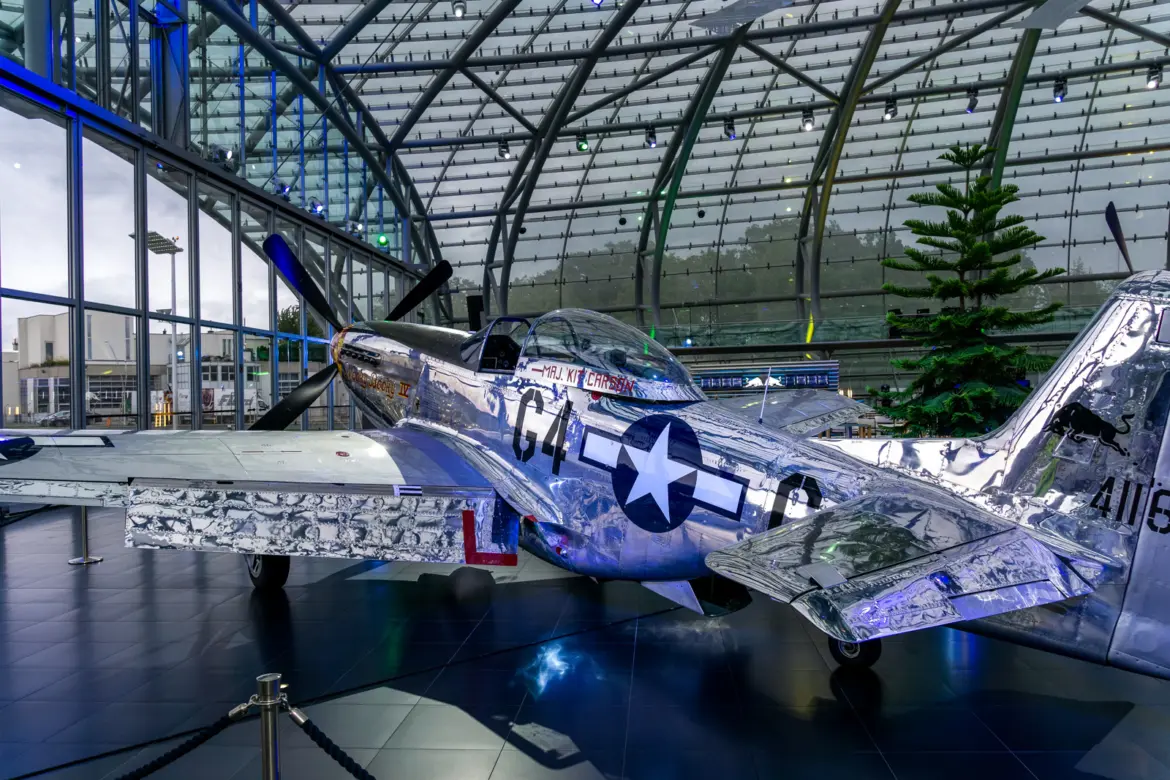
There are places that surprise you not because they are hidden, but because they feel entirely unexpected within their surroundings. Red Bull Hangar-7 is one of those spaces. Set against the backdrop of Salzburg – a city defined by Baroque elegance, layered history, and architectural continuity – it introduces a completely different language, one that is contemporary, fluid, and shaped by light.
At first glance, the structure feels almost weightless. Its steel framework and glass surface curve seamlessly into one another, creating a form that appears both engineered and organic, a design that subtly echoes the aerodynamic forms associated with aviation. Unlike traditional buildings that clearly separate interior from exterior, Hangar-7 dissolves that boundary. The sky becomes part of the ceiling, the mountains part of the backdrop, and the surrounding environment subtly integrates into the experience. It is not simply a building you enter; it is a space you move through, observe from multiple angles, and experience in relation to its surroundings.
Red Bull Hangar-7 at a glance
🏛️ Architecture · Designed by Volkmar Burgstaller, opened August 22, 2003. Airfoil-shaped glass-and-steel shell spans 67 × 100 metres with 1,754 custom-shaped panels — no two identical.
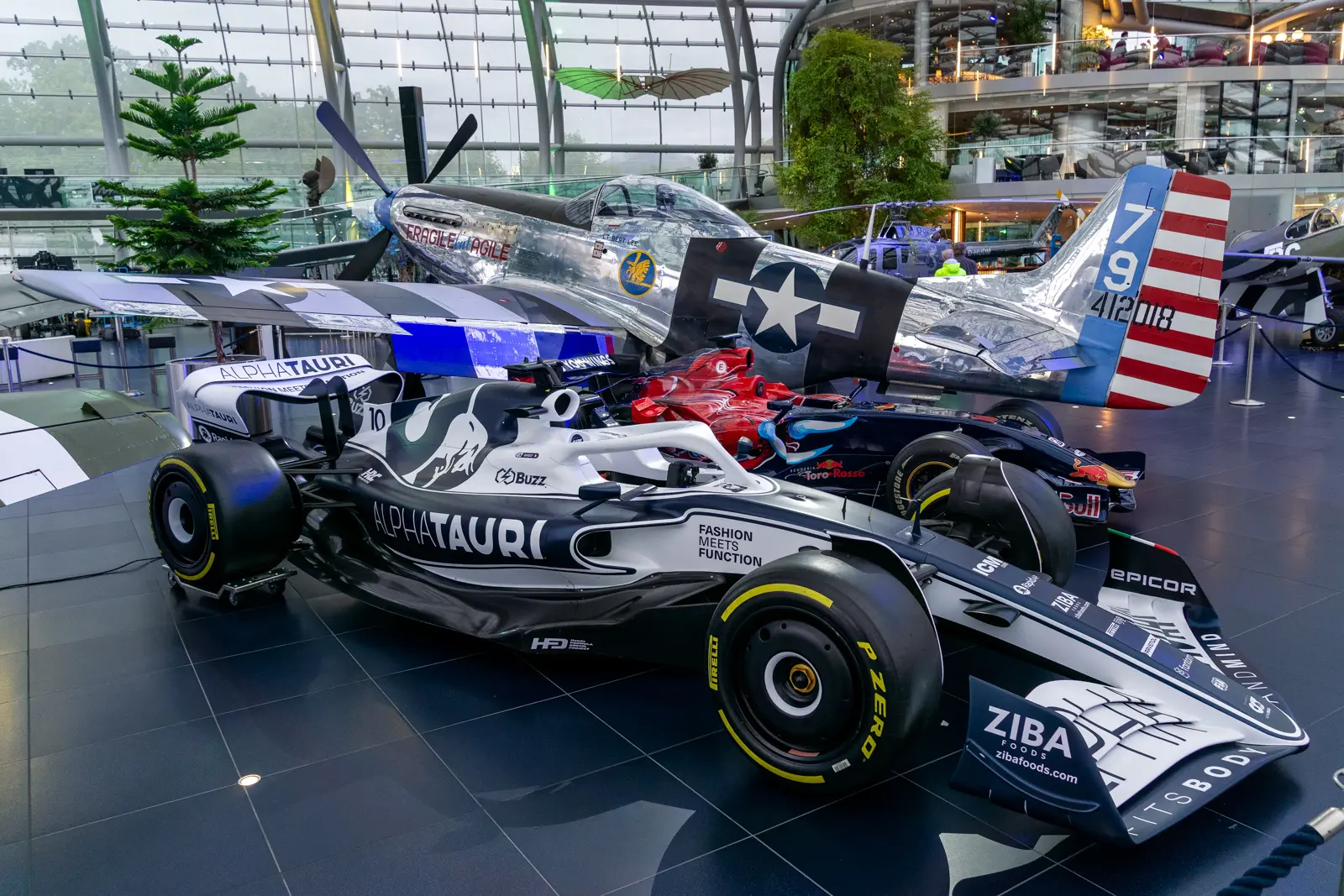
✈️ Flying Bulls collection · Historic aircraft, helicopters and Formula One cars on rotating display. The fleet includes a P-51D Mustang, P-38 Lightning, F4U-4 Corsair and Douglas DC-6B.
🍽️ Restaurant Ikarus · Two Michelin stars. A different guest chef creates the menu every month — a concept running since 2003 under patron Eckart Witzigmann.
🎟️ Free admission · The exhibition area is free to visit. Open Mon–Sat 9:00–22:00, Sun 9:00–17:00 (confirm hours on the official site before your visit).
🚍 Getting there · Bus 2 to Karolingerstraße or bus 10 to Pressezentrum from central Salzburg. About 70 free parking spaces opposite the entrance.
Architecture and Design: Transparency and Form
What defines Red Bull Hangar-7 most immediately is its architecture. Designed by Salzburg-based architect Volkmar Burgstaller and completed in 2003, the building is composed of a complex system of curved glass panels supported by a steel lattice structure, forming a distinctive shell that spans approximately 67 by 100 metres. The expansive interior is largely column-free, creating an open space that emphasizes both scale and continuity, a notable engineering achievement at the time of its construction. Each of the 1,754 glass panels was individually custom-made, with no two panels exactly the same shape, giving the surface its fluid, seamless quality despite its geometric precision.
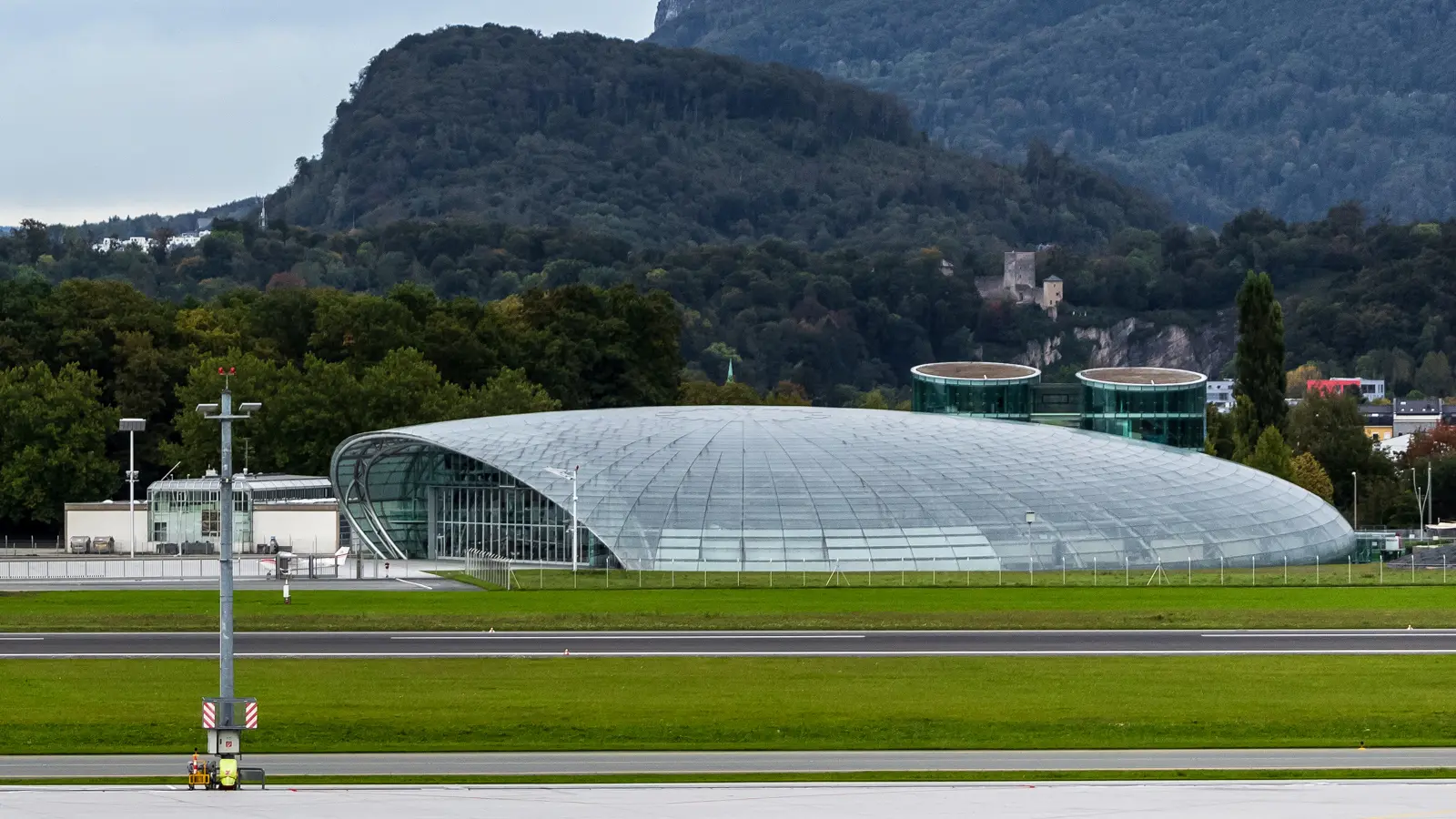
Transparency plays a central role in shaping the experience. During the day, natural light floods the interior, illuminating the structure from within and revealing the subtle interplay between glass, steel, and shadow. Reflections shift constantly, layering the interior with glimpses of the exterior landscape. The mountains, sky, and surrounding environment become part of the visual composition, creating a space that feels open and expansive.
As the day transitions into evening, the atmosphere changes dramatically. Artificial lighting introduces warmth and contrast, and the glass begins to reflect rather than reveal. Surfaces that once appeared transparent take on a mirrored quality, creating depth and complexity within the space. The structure becomes more intimate, more enclosed, yet still retains its openness through light. This duality – transparency by day, reflection by night – gives Hangar-7 a dynamic presence that evolves continuously.
What makes the design particularly compelling is its restraint. Despite the complexity of its construction, it does not feel excessive. Lines remain clean, proportions are balanced, and every element appears carefully considered. The architecture does not compete for attention; it guides it.
Inside the Space: Movement and Collection
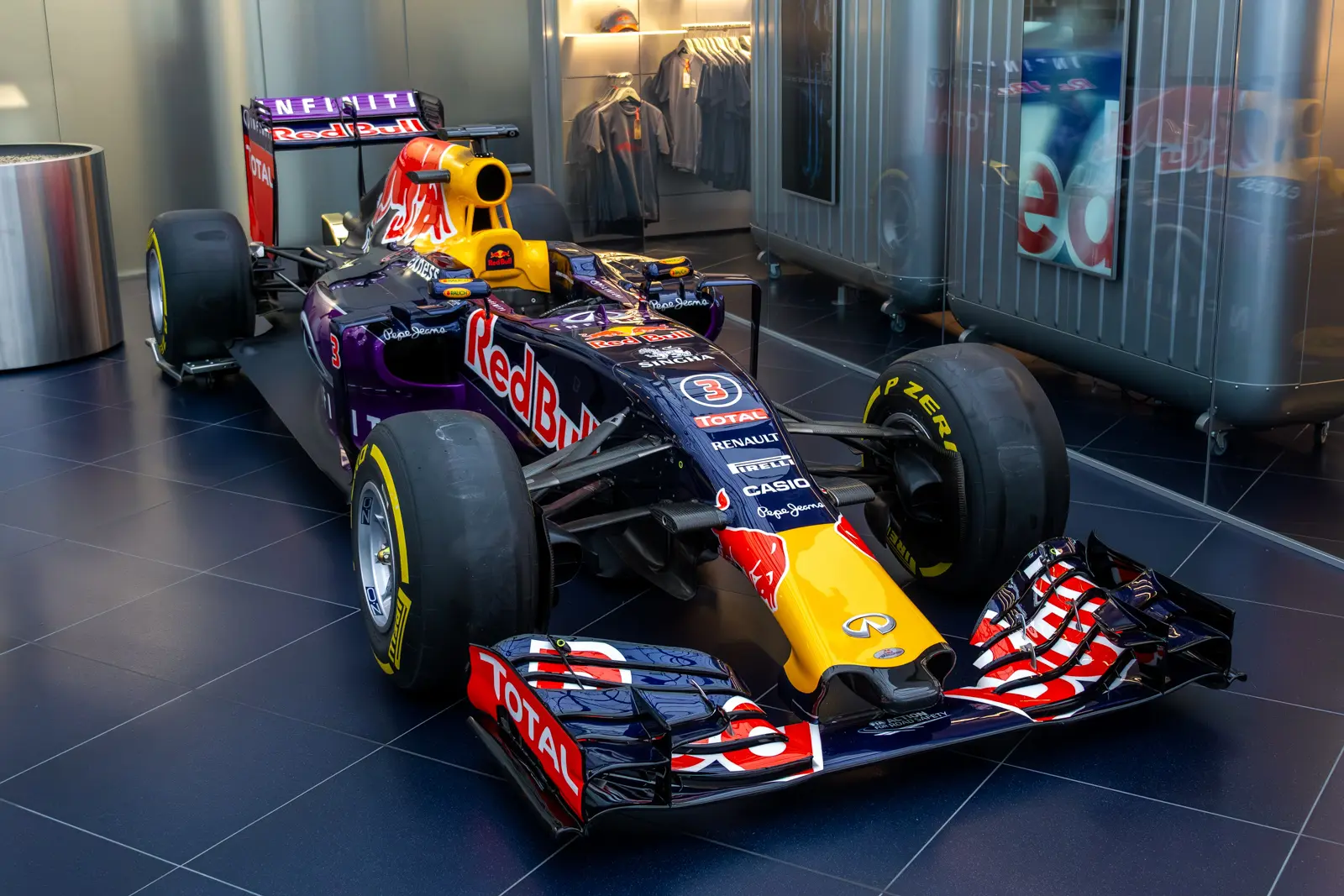
Stepping inside Red Bull Hangar-7, the experience shifts from observing architecture to moving through it. The interior is organized around a large central open space, allowing for unobstructed views across the entire structure. This openness creates a sense of continuity, where movement is fluid and unforced. Within this expansive environment, a curated collection unfolds – featuring historic aircraft, helicopters, Formula One racing cars, and other engineering icons, often presented as part of rotating exhibitions that evolve over time.
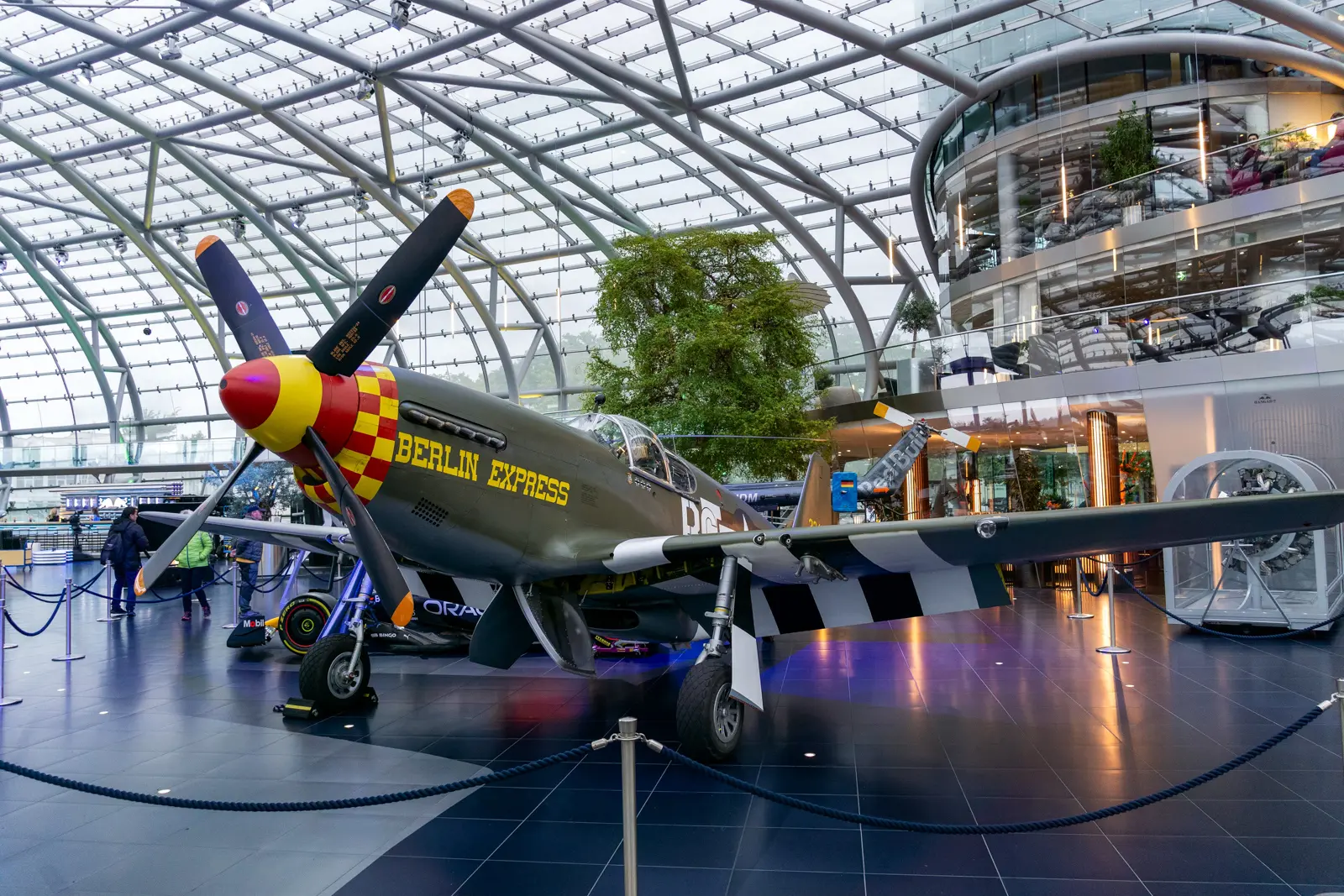
Aircraft, helicopters, and racing cars are positioned throughout the space, yet they are not arranged in a traditional museum format. Instead, they are integrated into the architectural composition, placed in a way that emphasizes their form, scale, and relationship to the surrounding environment. Many of the aircraft belong to the Flying Bulls collection – meticulously restored historic planes that carry both technical and cultural significance – while the racing cars reflect advancements in speed, precision, and design. Their polished surfaces reflect light and structure, contributing to the visual rhythm of the space.
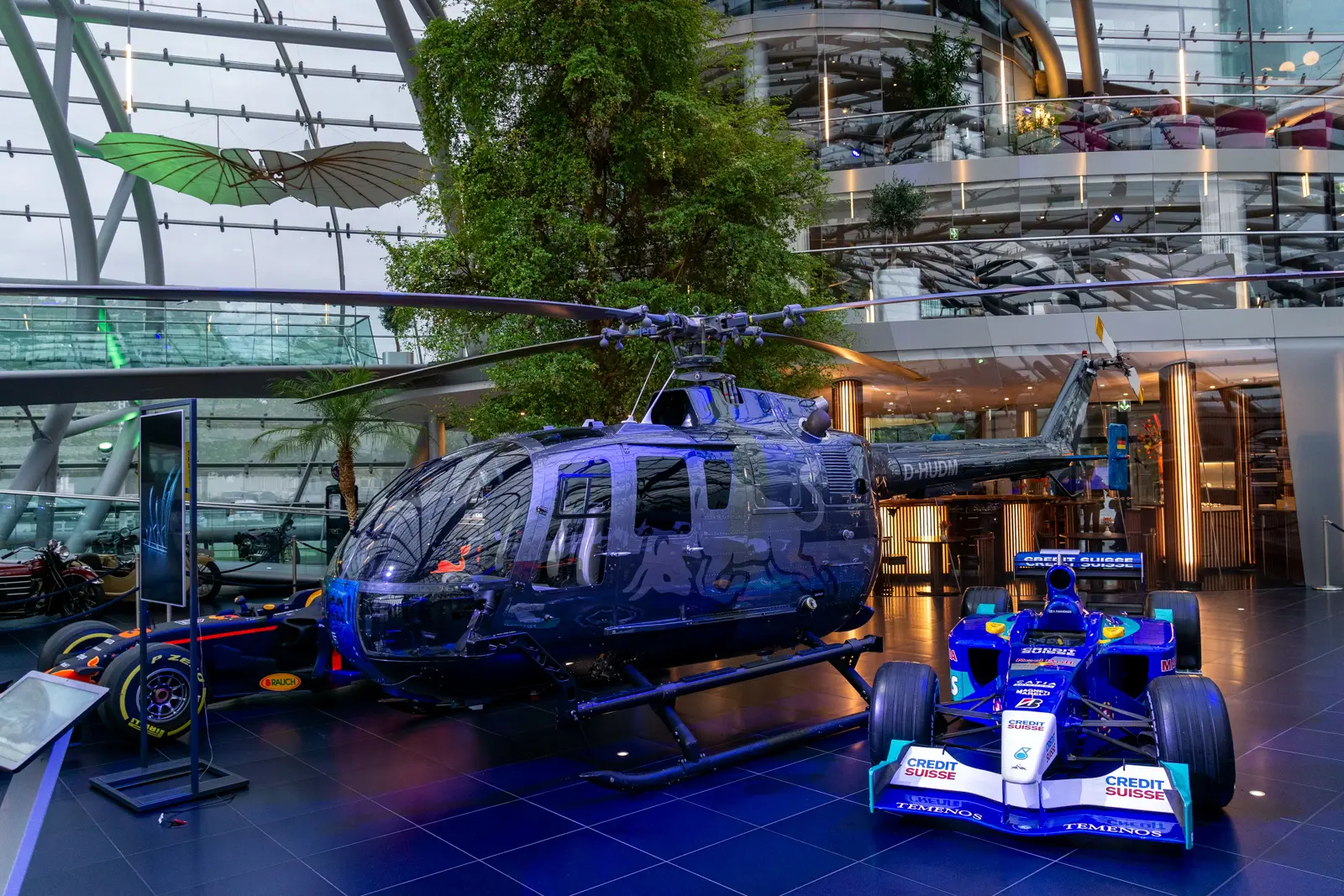
As you move, perspectives shift continuously. What appears distant becomes immediate, reflections overlap, and lines intersect in unexpected ways. The curvature of the building influences how you see each object, guiding your movement without dictating it. There is no fixed path, no singular direction, only a gradual unfolding of space that invites exploration.
Despite the presence of highly engineered machines, the atmosphere remains calm and measured. The space does not feel crowded or overly curated. Instead, it allows for moments of pause, where observation becomes more important than movement, and where the relationship between object and space becomes more apparent. The rotating nature of the displays reinforces this sense of discovery, ensuring that each visit offers a slightly different perspective on the collection.
The Experience: Atmosphere and Sensory Detail
Beyond its architectural presence, Red Bull Hangar-7 offers a multi-layered sensory experience that extends well beyond what you see. The inclusion of restaurants, cafés, and lounges introduces a different rhythm, one that encourages you to slow down and engage with the space more fully. At the heart of this offering is Restaurant Ikarus, a two-Michelin-starred dining destination known for its unique concept of hosting rotating guest chefs from around the world. This constant evolution is mirrored in the atmosphere itself, where the culinary experience becomes part of the broader narrative of movement, innovation, and design. The space also serves as a venue for high-profile events and gatherings, further reinforcing its role as a place where architecture, culture, and contemporary lifestyle intersect. Whether seated for a refined tasting menu or enjoying a more relaxed moment at one of the bars or café areas, the experience invites you to linger rather than simply pass through.
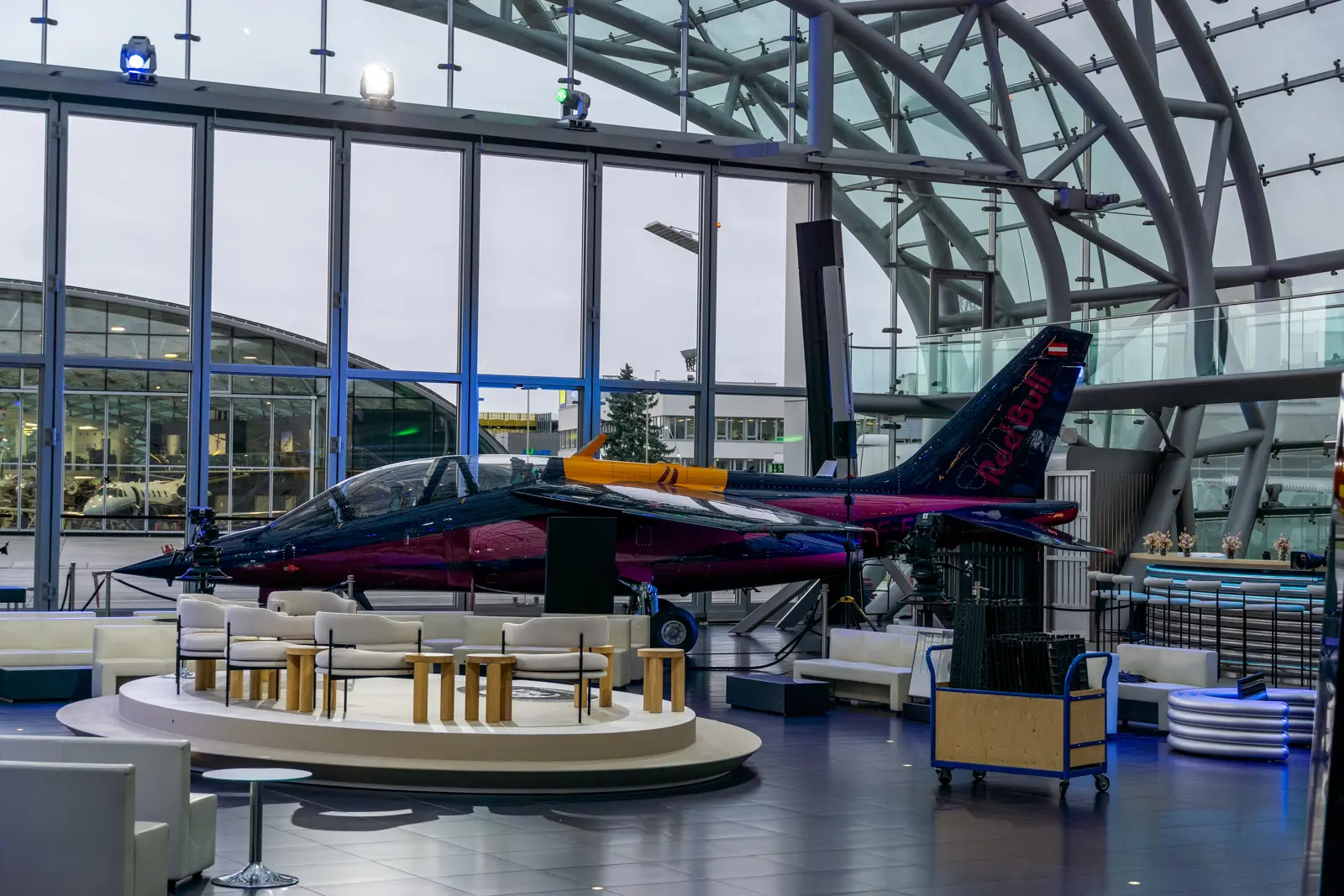
Seated within the structure, the experience becomes more intimate. The scale of the building remains, but it is softened by proximity and perspective. Light filters differently depending on where you are, reflections shift with movement, and the ambient sounds of the space create a subtle background that feels present but unobtrusive. Conversations, footsteps, and the quiet hum of the environment blend together, creating an atmosphere that is both active and calm. Materials – glass, metal, polished surfaces – interact with light in ways that emphasize texture and form, reinforcing the connection between design and experience. The environment feels curated yet fluid, structured yet open, inviting you not only to observe, but to inhabit – a place where architecture, cuisine, and atmosphere come together in a way that feels both refined and effortless.
A Different Side of Salzburg
Experiencing Red Bull Hangar-7 adds a distinct layer to your understanding of Salzburg, not by replacing its historic identity, but by reframing it. After moving through the city’s Baroque architecture, fortified landscapes, and centuries-old streets, this contemporary space introduces a shift in perspective, one that feels deliberate rather than disruptive. It reflects a different kind of precision, one rooted in engineering, design, and innovation, yet expressed with the same clarity and restraint found in Salzburg’s historic spaces. In this way, Hangar-7 does not stand apart from the city, but alongside it, offering a reminder that place is shaped not only by its past, but by the way its layers continue to evolve and coexist.
Bubbly Tips for Visiting Red Bull Hangar-7
- Location: Situated near Salzburg Airport, a short drive from the city centre, making it easily accessible by taxi or car.
- What to expect: A modern architectural space combining design, engineering, and curated displays within a glass-and-steel structure.
- Best time to visit Red Bull Hangar-7 Salzburg: Late afternoon into evening to experience the transition from natural light to illuminated reflections.
- Don’t miss: The overall structure, the interplay of light and reflections, and the way objects are integrated into the space.
- Time to explore: Around 1 to 2 hours, longer if you choose to sit and enjoy the atmosphere.
- Distance from Vienna: Approximately 300 km (about 2.5 to 3 hours by train or car) from Vienna, making it an easy and worthwhile addition to a broader Austria itinerary.
- Pair your visit: Ideal after exploring Salzburg’s Old Town, offering a striking contrast to historic sites.
Final Thoughts
Red Bull Hangar-7 is a reminder that travel is not only about discovering the past, but also about engaging with the present. In a city known for its history and tradition, it introduces a space that feels entirely contemporary, yet equally intentional.
What stays with you is not only the architecture, but the way it shapes your perception. The openness of the structure, the movement of light, and the interplay between interior and exterior create an experience that feels both expansive and reflective. It is a place that invites you to look differently, to slow down, and to appreciate the relationship between design and experience in a new way.
I’d love to hear your thoughts: would you expect to find a space like this in Salzburg?
Happy travels!

🌟 Everything You Need to Plan Your Dream Trip in 2026
- 🌟 Luxury Hotels - Find premium stays with Booking.com & Hotels.com
- 🏡 Vacation Rentals - Discover unique properties on VRBO
- 🏞️ Guided Tours - Explore with Viator or GetYourGuide
- 🎫 Attraction Tickets - Skip the lines with Tiqets
- 🚢 Ocean Cruises - Set sail with Cruise Direct
- 📱 International SIMs - Stay connected with Saily
- 🚗 Car Rentals - Budget-friendly options from Discover Cars
- 🌐 Secure VPNs - Browse safely with NordVPN
- 💶 Currency Exchange - Best rates with Wise
- 🗣️ Learn Languages - Master the local language with Babbel and Rosetta Stone