
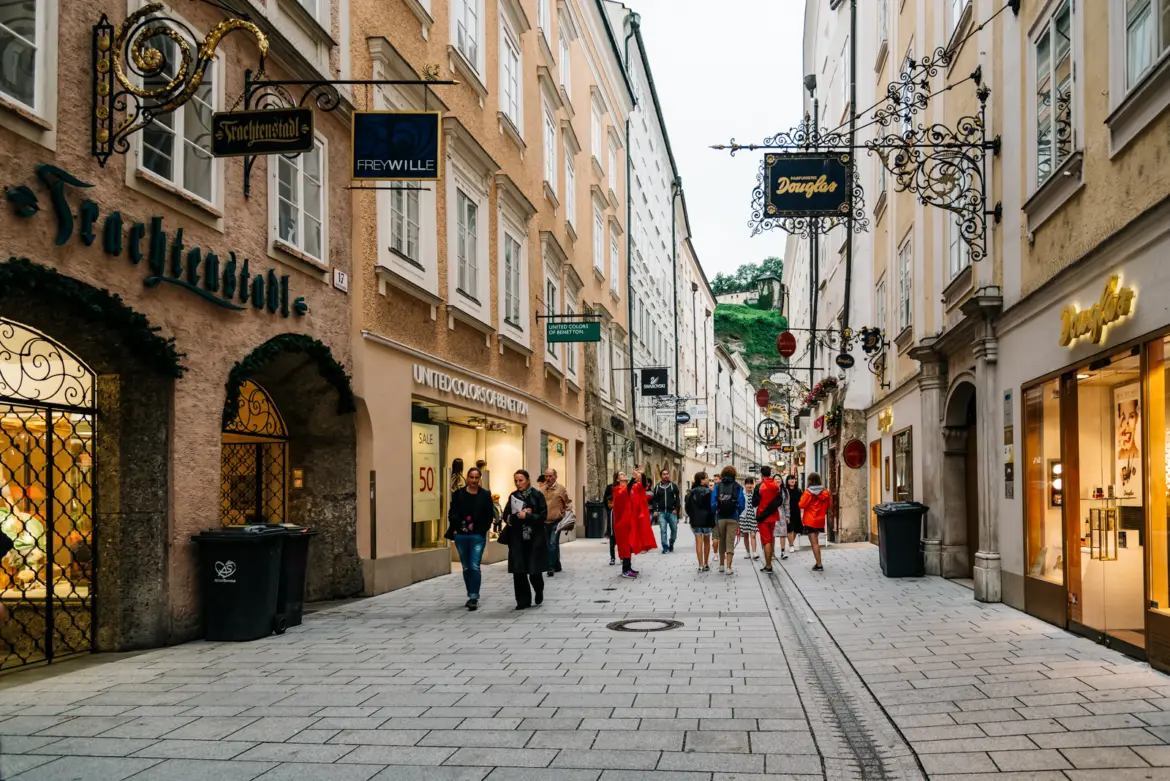
There are streets you walk through, and then there are streets you experience. Getreidegasse in Salzburg belongs to the latter, a place where history is not simply preserved, but lived, unfolding through every façade, every sign, and every quiet passageway. From the moment you step onto this narrow street in the heart of Salzburg’s Old Town, there is a sense that you are entering a space shaped as much by time as by design, where centuries of activity have left subtle traces in the architecture and rhythm of the street.
What makes Getreidegasse so captivating is not its scale, but its density of detail. The street does not overwhelm through grandeur, but draws you in through layers – architectural, cultural, and atmospheric. As you move through it, your attention naturally shifts from destination to observation: the curve of a doorway, the texture of a wall, the interplay between shadow and light along the façades. Even the sound of footsteps changes slightly on the stone beneath you, reinforcing the sense that this is a space to be experienced slowly and attentively.
Getreidegasse at a Glance
🪧 The wrought-iron signs · Medieval guild tradition still alive. Even modern chains like McDonald’s commission iron signs in the historic style. The Wieber metalworking shop on the street has been forging them by hand since 1415.
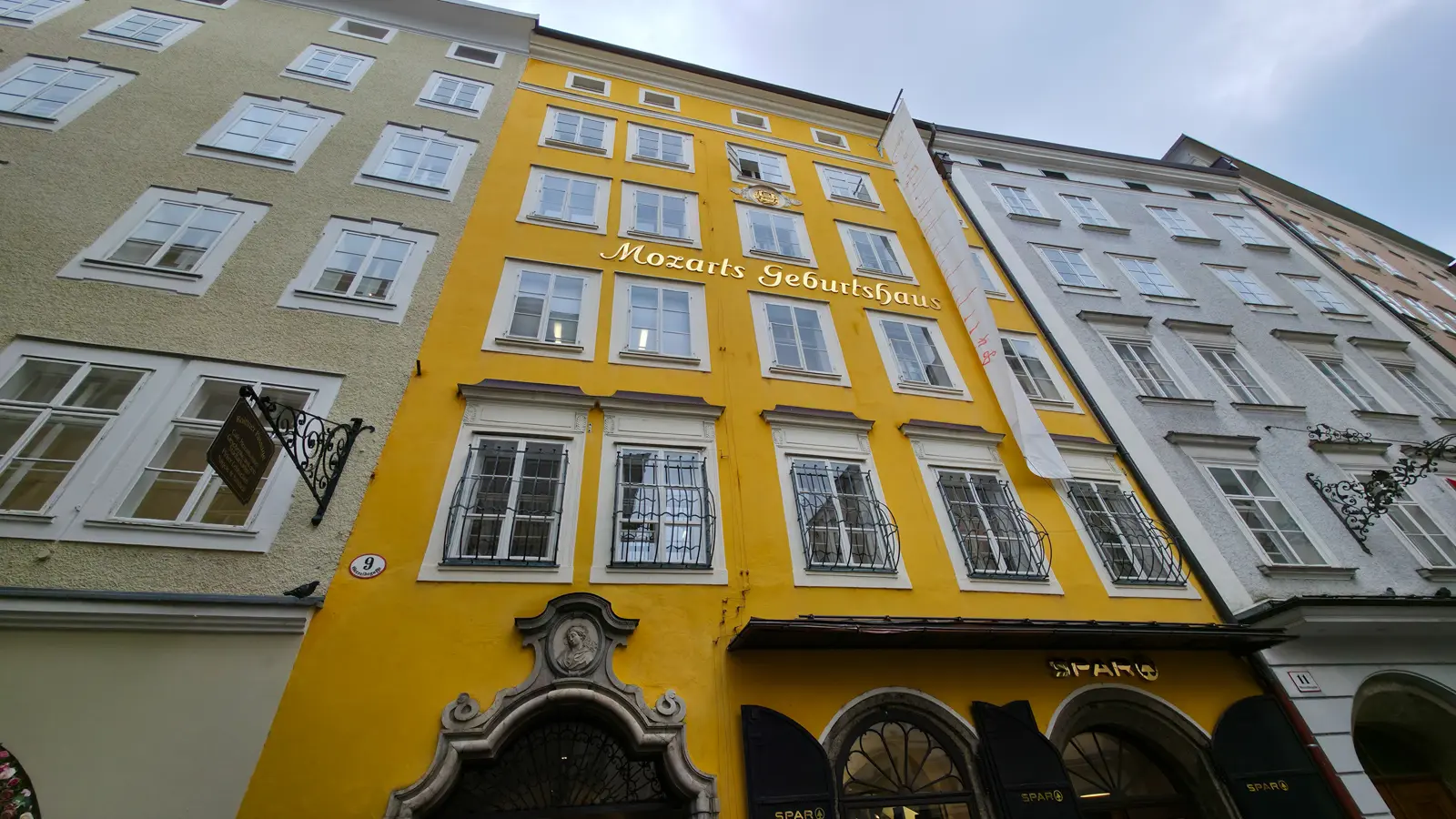
🎼 Mozart’s Birthplace · Getreidegasse 9 — the yellow façade in the middle of the street. Mozart was born here in 1756 and lived here until age 17. Open daily 9 AM to 5:30 PM.
🏛️ The name · Getreidegasse means “Grain Lane” in modern German — but the etymology is a coincidence. The medieval name was Trabgasse, from traben (to trot), describing how merchants rushed through.
🚪 The passageways · 13 covered Durchhäuser run through the ground floors. Odd numbers lead south to Universitätsplatz, even numbers lead north to the Salzach. The Schatz House passage at No. 3 hides both a Madonna relief and — stranger — a whale rib with a dried shark hanging from the ceiling.
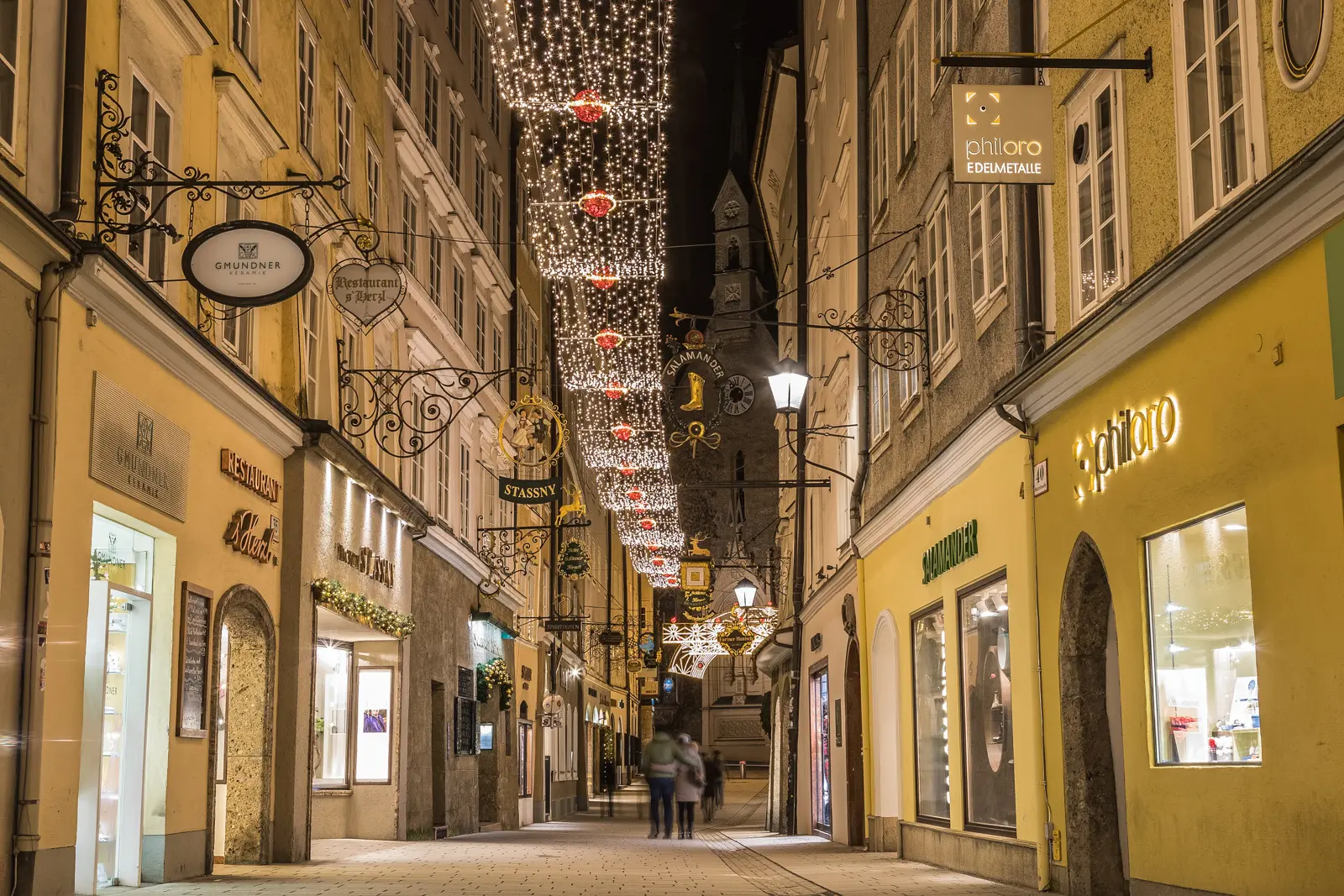
🎄 At Christmas · Festive lights strung across the narrow street. The Sternadvent market runs in the Sternbräu courtyard (between Getreidegasse 34 and Griesgasse 23) from late November to January 6, continuing as a winter market after Christmas.
📍 Location · Left bank of the Salzach, Salzburg Altstadt. Pedestrian zone, no cars. About 15 minutes walk from Salzburg Hauptbahnhof.
⏰ Best time · Early morning before 10 AM for empty streets and good light on the signs. Late evening once shops close for moody atmosphere. Avoid midday July–August.
A Street with History: From Trade Route to Cultural Icon
Getreidegasse is one of the oldest and most historically significant streets in Salzburg, with origins closely tied to the city’s early role as a trading centre. The name has a misleading ring to it. In modern German, Getreide means “grain”, so readers naturally assume the street was once a medieval grain market. It wasn’t. The earliest records from around 1150 call it Trabgasse, from the verb traben, meaning “to trot” or “to hurry,” describing how merchants rushed through the narrow street during trading hours before the city gates closed at dusk. Over the centuries the spelling drifted: Trab became Trav, then Traid, then Getreid, and by the time the modern form settled in, the word had shifted meanings. The street’s narrow form is characteristic of medieval urban planning, where streets were designed for function and density, accommodating commerce, transport, and daily life within limited space. Under the staple rights granted by the prince-archbishops in the 14th century, foreign merchants crossing the Alps from Venice were required to offer their goods for sale here for three days before continuing on, turning the street into a hub for wine, textiles, glass, jewellery, and spices. Over time, it developed into a central artery of economic activity, linking the Old Town to broader trade routes and contributing to Salzburg’s growth as a prosperous and culturally significant city.
The buildings that line the street reveal this long evolution in subtle but meaningful ways. Behind their carefully maintained façades lie structures that have been adapted, expanded, and reimagined across centuries, often combining elements from different architectural periods. This layering creates a sense of continuity rather than uniformity, a visual narrative that reflects both preservation and transformation. Walking through Getreidegasse, you are not simply observing a historical setting; you are moving through a living environment that has continuously evolved while retaining its identity.
The Signs: A Language of Craft and Identity
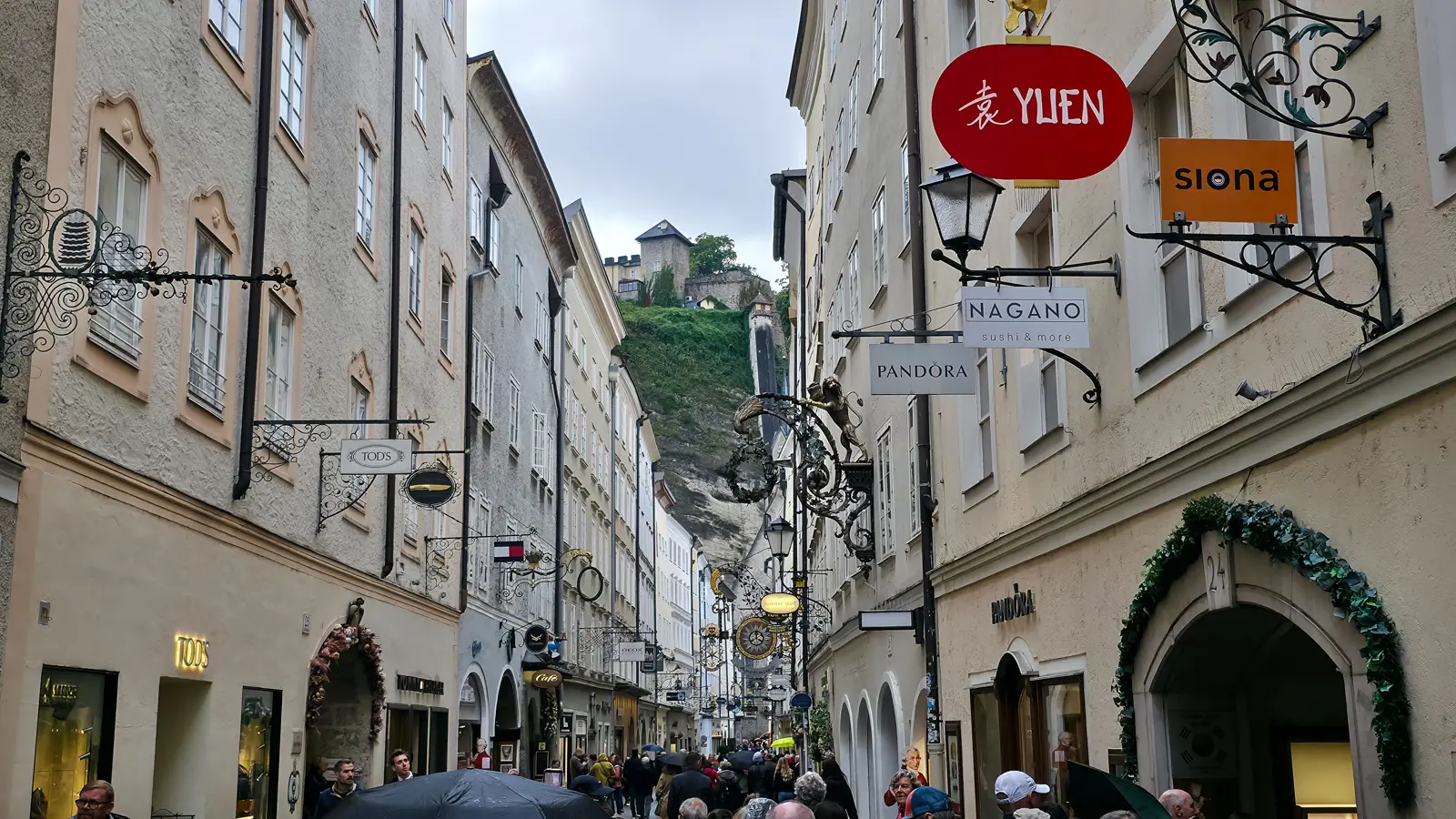
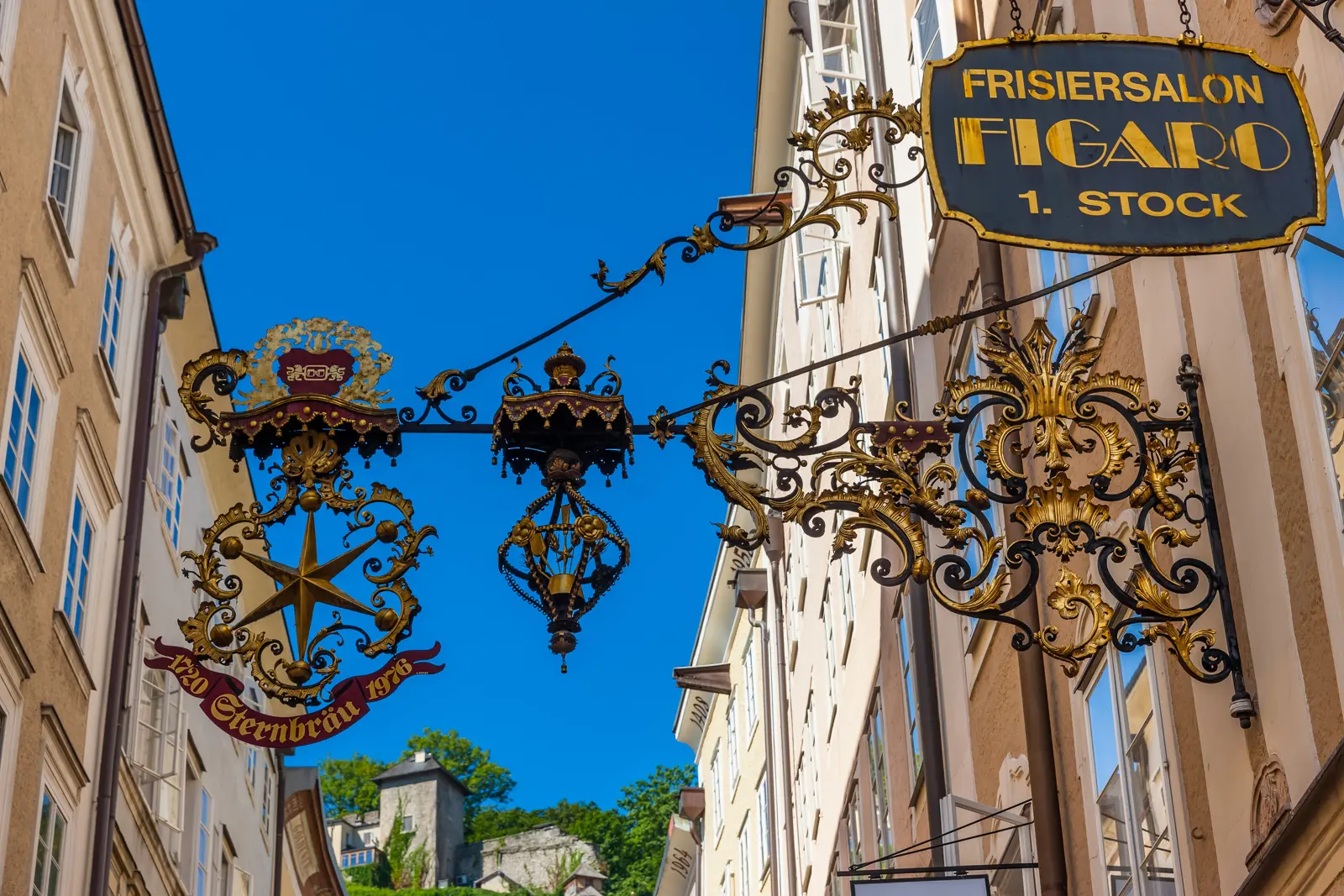
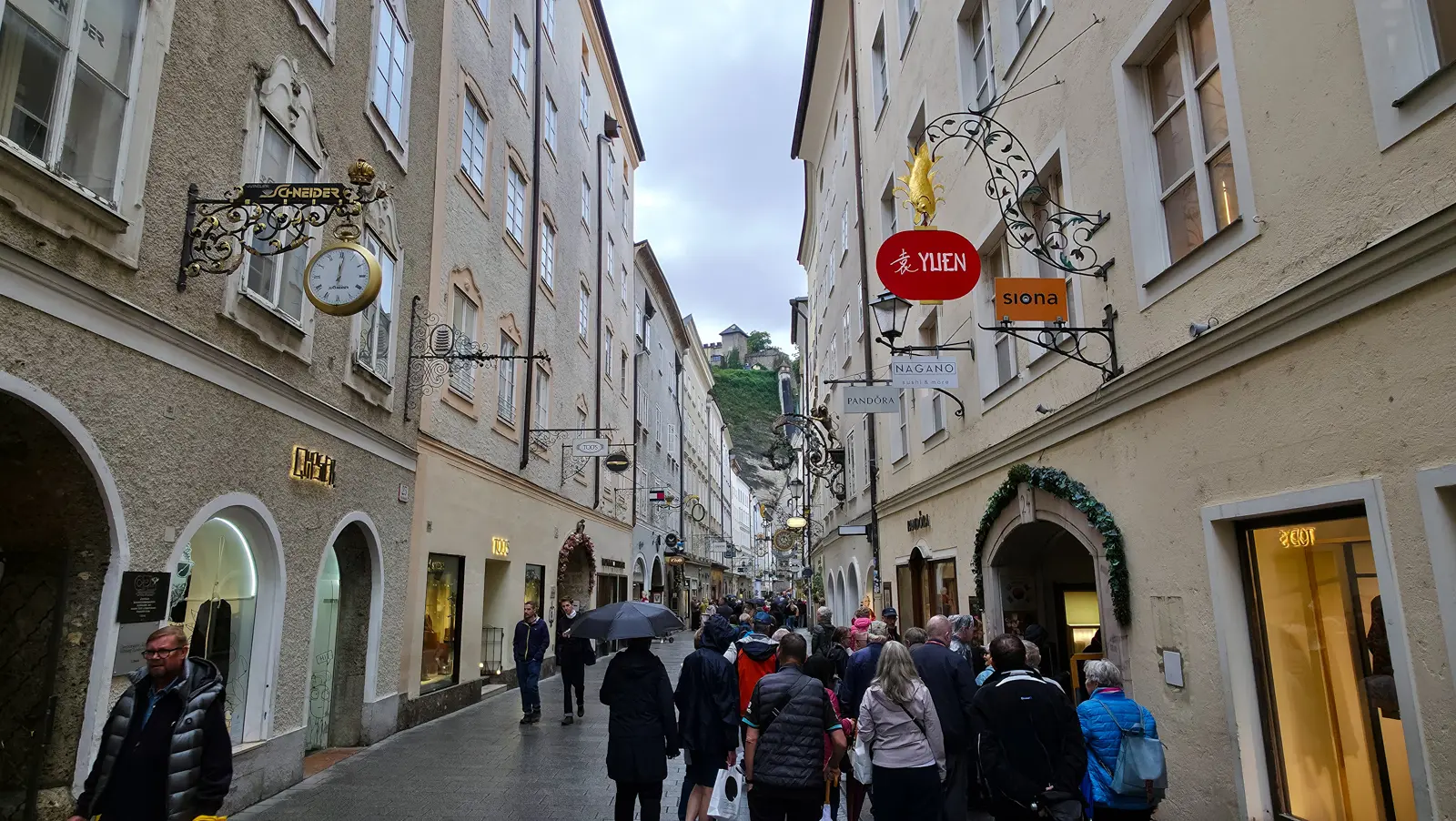
One of the most distinctive and visually striking features of Getreidegasse is its collection of wrought-iron guild signs. Suspended above the street, these intricately crafted pieces once served a practical purpose, identifying the trade or craft practiced within each building at a time when literacy was not widespread. Today, they remain a defining characteristic of the street, forming a continuous visual rhythm that draws the eye upward and adds depth to the experience.
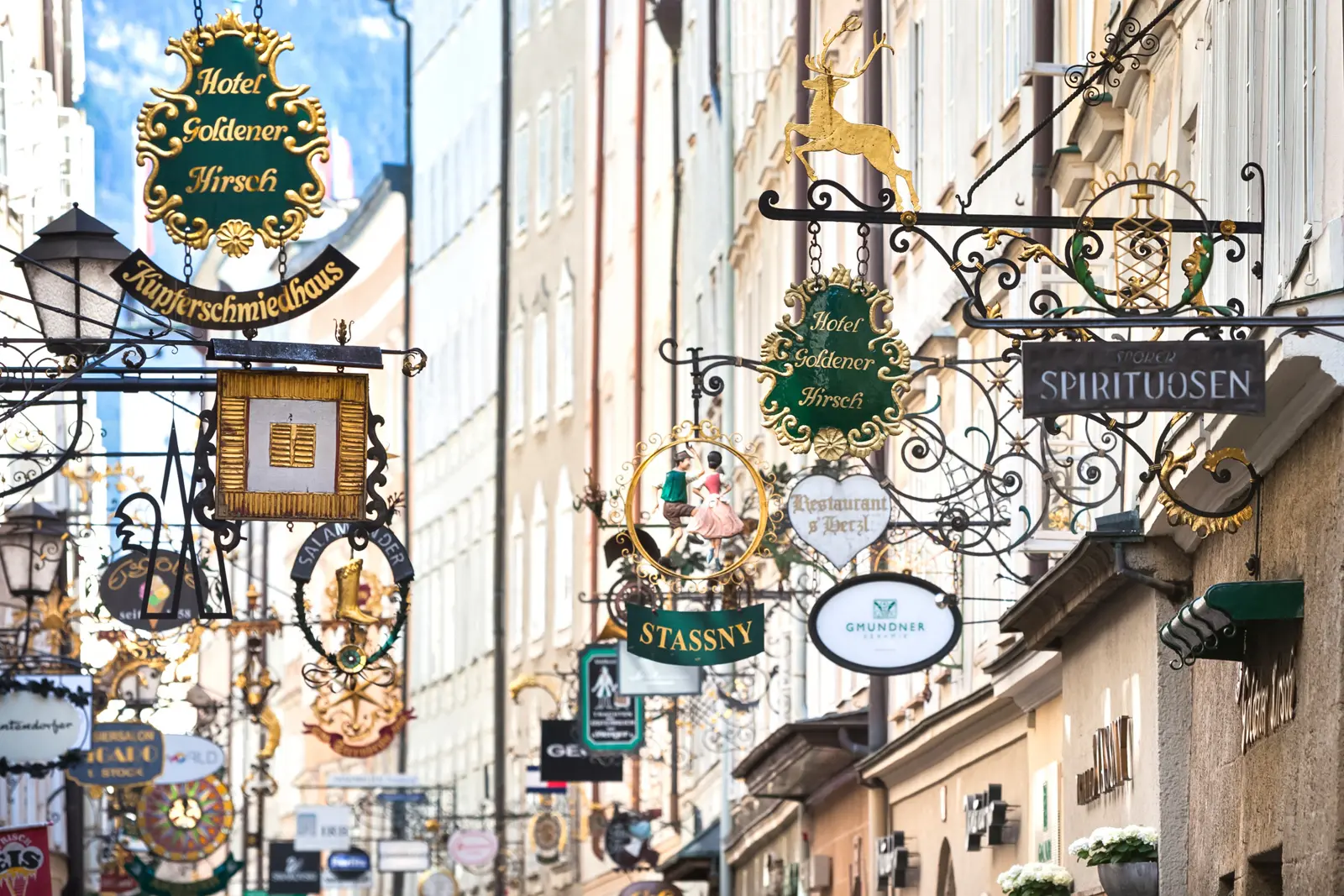
Each sign reflects a high level of craftsmanship, often combining symbolic imagery with decorative elements that give it a unique identity. Some reference traditional trades, while others have been adapted to represent modern businesses, creating an interesting dialogue between past and present. The repetition of these signs along the length of the street creates a sense of cohesion, while their individuality invites closer observation. They transform the act of walking into a visual exploration, where meaning is conveyed not through text, but through form, material, and design.
Shops and Passageways: Between Tradition and Modern Life
While deeply rooted in history, Getreidegasse remains a vibrant and active part of Salzburg’s contemporary life. The street is lined with a diverse mix of boutiques, international brands, and long-established shops, all integrated into historic buildings. This coexistence feels organic rather than imposed, as modern retail adapts to the architectural framework, preserving the character of the street while allowing it to evolve with time.
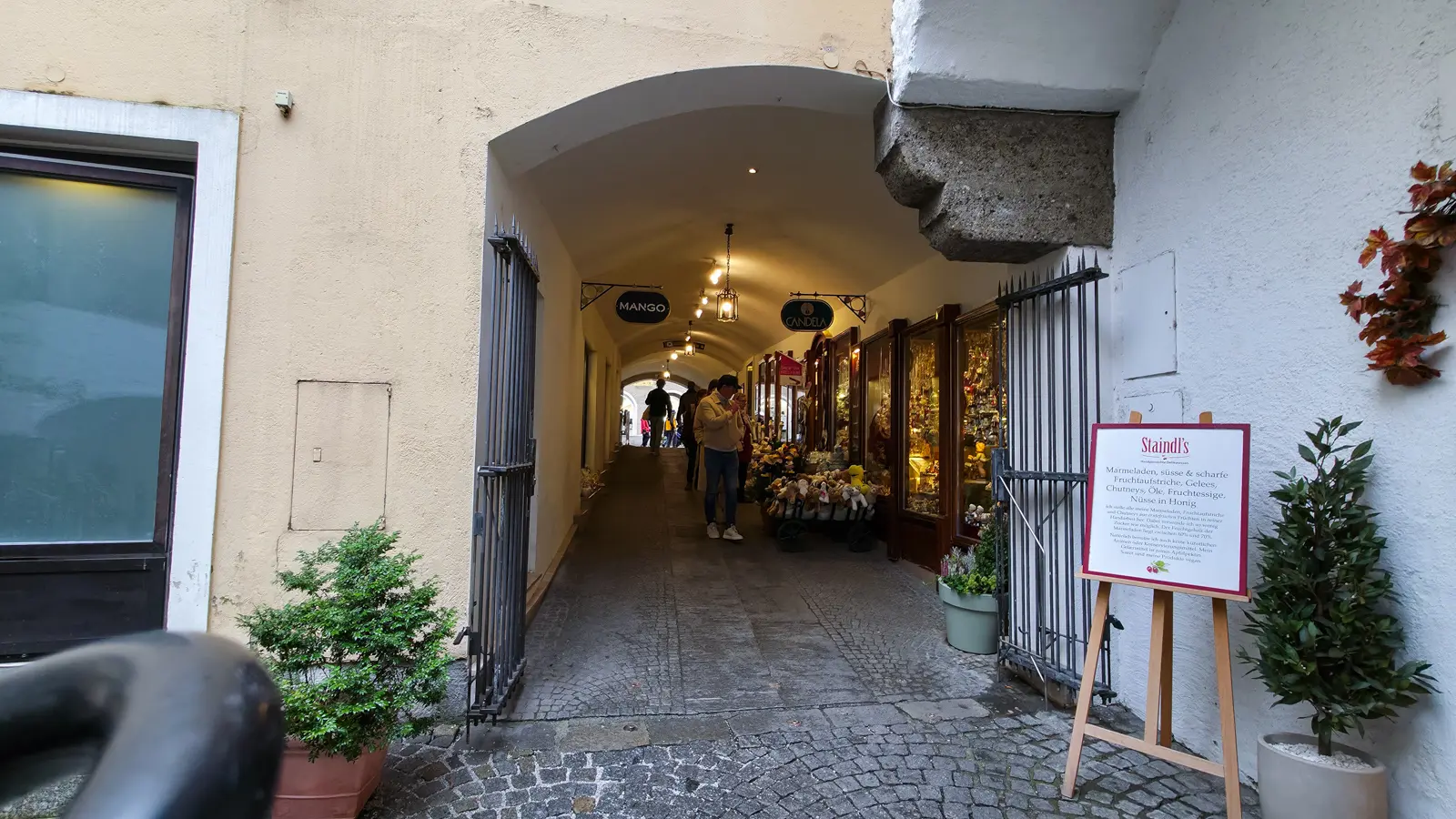
Equally compelling are the passageways that extend from the main street into the spaces beyond. These narrow corridors, often marked by modest entrances, lead into hidden courtyards that reveal a quieter, more intimate side of Salzburg. Within these enclosed spaces, the atmosphere shifts noticeably – the noise softens, the pace slows, and the sense of enclosure creates a feeling of separation from the main thoroughfare. These transitions between openness and intimacy are part of what makes Getreidegasse so engaging, as they allow you to experience the city from multiple perspectives within a relatively small area.
A Cultural Connection: Mozart’s Presence
Getreidegasse is closely associated with one of Salzburg’s most influential cultural figures, Wolfgang Amadeus Mozart. His birthplace is located along this very street and is now preserved as a museum, its distinctive yellow façade standing out among the surrounding buildings. For many visitors, it offers a direct point of connection to Mozart’s early life and the environment in which he was raised. What makes this association particularly meaningful, however, is how naturally it integrates into the identity of the street itself. Mozart’s presence is not isolated as a singular attraction, but woven into the broader narrative of Getreidegasse, adding cultural depth without overshadowing its everyday rhythm. In this way, the street allows you to experience both its historical significance and its contemporary vitality at the same time, where legacy and daily life quietly coexist.
The Atmosphere: Movement, Light, and Rhythm
The atmosphere of Getreidegasse evolves throughout the day, shaped by shifting light, changing activity levels, and the natural rhythm of the city. In the early morning, the street feels quieter and more contemplative, with softer light accentuating the details of the façades and wrought-iron signs. As the day progresses, the energy increases, with a steady flow of visitors and locals bringing movement and liveliness to the space, creating a dynamic interplay between architecture and activity.
By evening, the character of the street transforms once again. Artificial lighting introduces warmth and contrast, illuminating storefronts, façades, and the iconic guild signs that hang above the street. During the holiday season, this transformation becomes even more pronounced, as festive lights are carefully strung across the narrow street, reflecting softly against windows and metalwork, and adding a gentle glow that enhances the intimacy of the space without overwhelming its historic character. The interplay between light and shadow softens the edges of the buildings, while reflections and subtle illumination deepen the visual texture of the street. It is during these moments that Getreidegasse feels most immersive, as the balance between activity and stillness becomes more pronounced, and the atmosphere shifts from movement to quiet presence.
The Experience: Details That Stay With You
What makes Getreidegasse truly memorable is not defined by a single landmark or feature, but by the accumulation of details that gradually shape your experience. It is the repetition of signs overhead, the texture of the façades, the subtle shifts in perspective as you move through the space, and the transitions between open street and enclosed courtyard that create a sense of continuity.
These elements may seem small individually, yet together they form a cohesive and lasting impression. The street encourages a slower pace, inviting you to observe, to notice, and to engage with your surroundings more fully. In this way, Getreidegasse becomes less about what you see and more about how you experience it, a place that lingers not as a single image, but as a series of moments that continue to resonate long after you have left.
Bubbly Tips for Visiting Getreidegasse
- Location: Getreidegasse is located in the heart of Salzburg’s Old Town, within easy walking distance of major landmarks and the Salzach River.
- Best time to visit Getreidegasse Salzburg: Early morning or evening offers a quieter, more atmospheric experience, ideal for appreciating the architectural details and capturing photographs.
- Don’t miss: The wrought-iron guild signs, hidden passageways, Mozart’s Birthplace, and the layered façades that define the street.
- Shopping in Getreidegasse Salzburg: Expect a mix of luxury boutiques, international brands, and traditional shops, all integrated into historic buildings.
- Photography tips: Look upward to capture the iconic signs, explore passageways for unique perspectives, and use natural light to highlight textures and depth.
- Distance from Vienna: Salzburg is approximately 300 km west of Vienna. The train journey takes around 2.5 to 3 hours, making it an easy and scenic addition to a Vienna itinerary.
- Take your time: Getreidegasse is best experienced slowly. Pause often, explore side passages, and allow the street’s details to reveal themselves naturally.
Final Thoughts
Getreidegasse is a street that captures the essence of Salzburg in a way that feels both immediate and enduring. It is not defined by spectacle, but by the richness of its details and the continuity of its history. Here, craftsmanship, architecture, and daily life come together to create a space that feels complete without being overwhelming.
What stays with you is not simply the visual beauty of the street, but the experience of moving through it – the rhythm, the atmosphere, and the quiet moments of observation that shape your understanding of it. It is a place that invites you to slow down, to look more closely, and to appreciate the subtle details that often go unnoticed.
I’d love to hear your thoughts: would you explore Getreidegasse for its history, its shops, or simply its atmosphere?
Happy travels!

🌟 Everything You Need to Plan Your Dream Trip in 2026
- 🌟 Luxury Hotels - Find premium stays with Booking.com & Hotels.com
- 🏡 Vacation Rentals - Discover unique properties on VRBO
- 🏞️ Guided Tours - Explore with Viator or GetYourGuide
- 🎫 Attraction Tickets - Skip the lines with Tiqets
- 🚢 Ocean Cruises - Set sail with Cruise Direct
- 📱 International SIMs - Stay connected with Saily
- 🚗 Car Rentals - Budget-friendly options from Discover Cars
- 🌐 Secure VPNs - Browse safely with NordVPN
- 💶 Currency Exchange - Best rates with Wise
- 🗣️ Learn Languages - Master the local language with Babbel and Rosetta Stone